Chihuahua: Personality, Size, Care and Breed Guide
Meet the Chihuahua through a practical look at personality, size, exercise, training, grooming, health, family fit and everyday care before choosing this tiny companion.
Petful is reader supported. As an affiliate of platforms like Amazon and Chewy, we may earn a commission when you buy through links on this page. There is no extra cost to you.
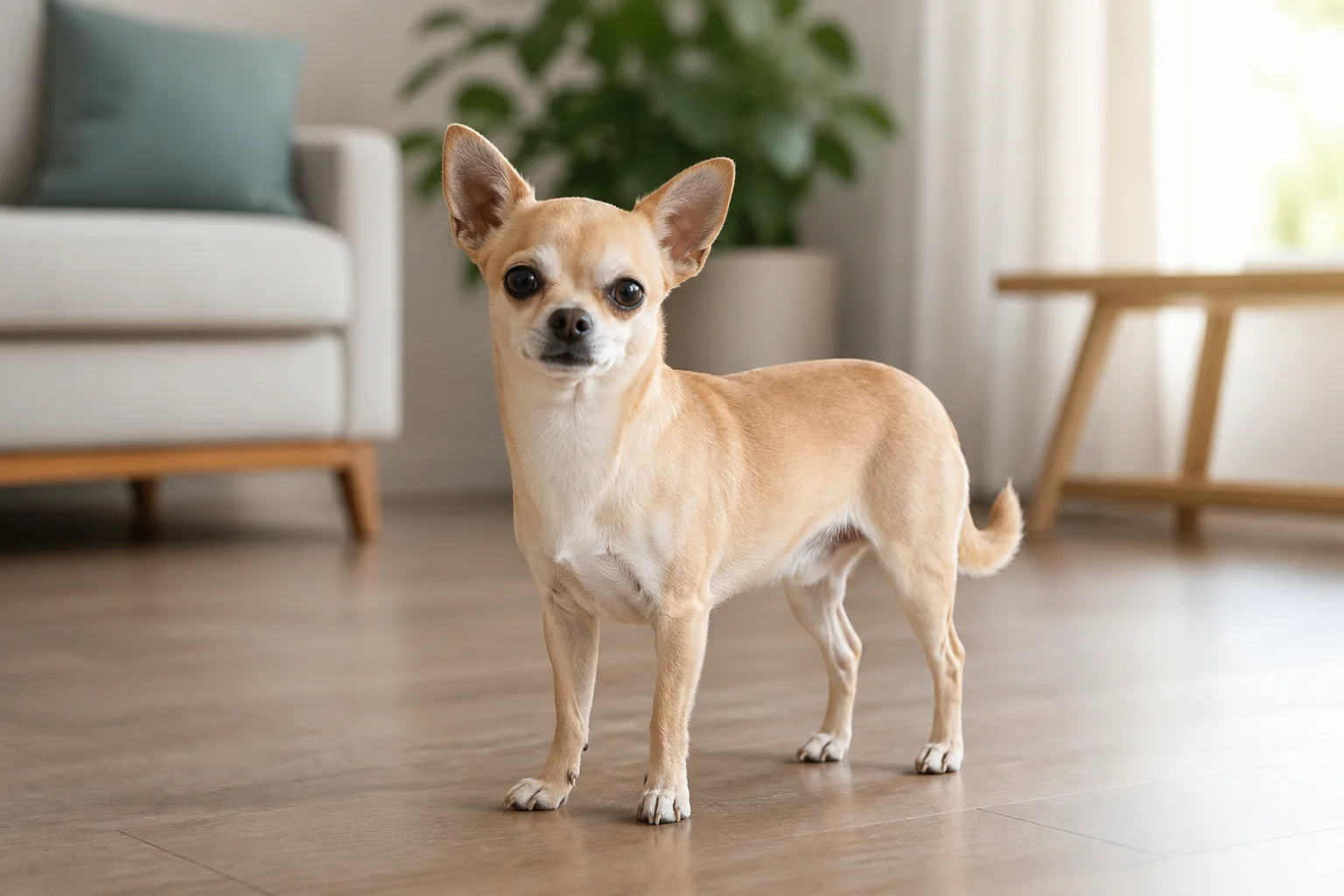
The Chihuahua is a tiny companion dog with a large presence, but size alone does not tell you whether one will fit your home. This Chihuahua dog guide covers personality, size, exercise, training, grooming and daily care while keeping specialized questions on their own pages.
Individual Chihuahuas vary. Breed tendencies can help you plan, but a dog's health records, observed behavior, age, learning history and response to your household matter more than a stereotype. The best decision compares all of those signals before you commit.

Sign up for expert-backed reviews and safety alerts all in one place.
Chihuahua at a glance
- 1The Chihuahua is a very small companion breed that can be alert, affectionate and lively
- 2Individual dogs vary, so records and direct observation matter more than a stereotype
- 3Adults need carefully scaled exercise, reward-based training, dental care and protection from rough handling and temperature extremes
- 4Smooth and long coats are both recognized, and color or head-shape marketing does not prove ancestry
- 5Small size reduces neither a dog's training needs nor the cost and responsibility of lifelong care
The American Kennel Club Chihuahua profile describes a compact toy dog with a saucy expression, erect ears and a rounded apple-dome skull. The Chihuahua Club of America breed standard recognizes smooth and long coats. Standards describe an ideal for evaluation, not a checklist that proves a pet's ancestry or predicts its behavior.

| Question | Practical comparison | What to verify for the individual dog |
|---|---|---|
| Adult size | Very small, but body condition and proportions matter more than chasing the lowest number | Current weight, body condition, veterinarian assessment and parent records when available |
| Daily activity | Short walks, play, sniffing and training can provide meaningful activity | Comfort, weather, surface temperature, breathing and recovery |
| Training | Fully trainable with consistent rewards and safe management | Response to handling, strangers, dogs, household sounds and alone time |
| Coat care | Smooth coats are lower volume; long coats need more brushing and tangle checks | Skin, shedding, nails, ears, teeth and coat condition |
| Household fit | Often close to their people, but individual confidence and sociability vary | Direct observation, history, safe child and pet management, and care schedule |
Size is not a shortcut
The Chihuahua's small frame can make transport and apartment living easier, but it also creates specific safety needs. Falls, rough play, gaps in fencing, large-dog interactions and cold weather can have greater consequences for a tiny dog. A Chihuahua still needs time, exercise, training, veterinary care and a secure routine.
Petful may earn a commission when you click through to Chewy, at no extra cost to you.
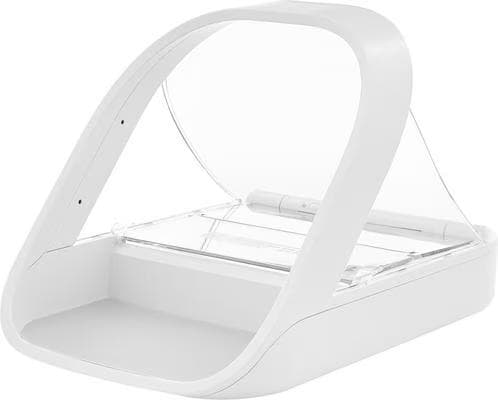
Measure the individual dog before buying equipment. If a separate feeding station would prevent another pet from stealing food, compare the SureFeed Microchip Small Dog and Cat Feeder with the dog's tag or microchip compatibility, bowl space, cleaning needs and feeding plan. A selective feeder manages access; it does not determine calories or treat a medical problem.
A useful three-part fit test
Evaluate a prospective Chihuahua through three different evidence levels:
- Breed pattern: common size, coat and companion-dog tendencies help you anticipate a basic routine.
- Individual evidence: veterinary records, direct observation and known behavior show what this dog needs now.
- Household reality: schedules, children, other pets, stairs, weather, travel and budget determine whether those needs are practical.
No single level replaces the others. A breed description cannot promise how one dog will behave, and a charming meeting cannot replace health records or a long-term care plan.
Breed tendencies describe populations, not every individual dog. Appearance, seller wording and documented records answer different questions. A practical comparison therefore considers the individual dog, available records and household routine before deciding.
Chihuahua history and purpose
The Chihuahua takes its name from the Mexican state of Chihuahua and is closely associated with Mexico. Much of the breed's more distant origin story is debated, so distinguish documented breed history from attractive legends. Modern breed organizations describe the Chihuahua as a companion and toy dog rather than a miniature working breed.
That companion background helps explain why many Chihuahuas pay close attention to people and household activity. It does not mean every dog wants constant holding, accepts strangers immediately or tolerates abrupt handling. Temperament develops from inherited traits, early experience, health, learning and current context.
What history can and cannot predict
Breed history can frame likely motivations. A small companion dog may find proximity, warmth, observation and interaction especially rewarding. It cannot tell you whether an individual will enjoy busy social events, coexist with a particular cat or remain relaxed when home alone.
Use history as the opening hypothesis, then collect evidence:
- Ask how the dog responds to unfamiliar adults, calm children and other animals.
- Observe recovery after a mild surprise instead of judging only the initial bark.
- Ask about house training, handling, confinement and separation history.
- Review veterinary and behavior records rather than relying on a label.
- Arrange gradual introductions and safe retreat spaces at home.
For ancestry questions, registration or a documented pedigree answers a different question than appearance. A DNA test can estimate genetic ancestry, but neither a photograph nor a seller's head-shape label is proof.
Chihuahua personality and daily life
Chihuahua personality is often described as alert, confident, devoted and lively. Those words are tendencies, not guarantees. Some individuals greet visitors readily, while others need distance and careful introductions. Some enjoy other dogs, while others prefer people or a quieter home.
The most useful assessment looks at what the dog does, what happens immediately before the behavior, and how quickly the dog can recover. Barking at the door might reflect alerting, fear, excitement or a reinforced routine. The right plan depends on that function.
Affection and independence
Many Chihuahuas form strong attachments and enjoy resting close to a trusted person. Give affection while also teaching comfortable independence in small, achievable steps. A dog who can settle on a bed, forage safely or relax behind a gate has more choices than a dog who has only learned to be carried.
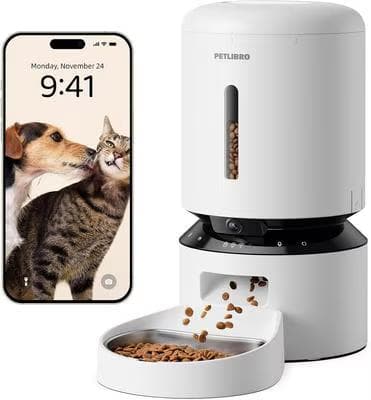
If scheduled meals support a consistent routine, the Petlibro Granary WIFI Automatic Feeder with Camera is one tracked option to compare for kibble compatibility, measured portion accuracy, cleaning, power backup and security. Confirm every dispensed amount and keep a manual feeding plan. Tiny dogs have little margin for casual portion errors.
Petful may earn a commission when you click through to Chewy, at no extra cost to you.
Children and other pets
A Chihuahua can live successfully with respectful children, but supervision and physical safety are essential. Children should sit for interactions, allow the dog to approach, avoid lifting, and leave the dog alone while eating or resting. The dog needs a protected retreat that no child enters.
With other pets, match individuals rather than assuming size creates compatibility. Manage introductions, food, toys, doors and resting places. A calm large dog can still injure a Chihuahua accidentally during play. A small dog can still guard resources or overwhelm another pet.
For a deeper plan addressing confidence, barking, household introductions and cooperative care, use Petful's Chihuahua temperament and training guide.
Exercise, training and enrichment
Chihuahua exercise should be scaled to the dog, not omitted because the breed is small. Several short walks, sniffing opportunities, play and training may suit many healthy adults. Puppies, seniors and dogs with medical limitations need individualized plans from their veterinarian.
For a practical equipment decision, WebVet compares harnesses and collars for small dogs and explains how fit and handling goals should guide the choice.
Chihuahua training works best when skills are broken into achievable steps and reinforced consistently rather than excused or punished because the learner is small.


Start with skills that protect a tiny dog
Prioritize practical behaviors:
- Responding to a name and coming when called.
- Walking comfortably on a measured harness.
- Settling on a mat away from a doorway.
- Entering a carrier voluntarily.
- Allowing gentle mouth, paw, ear and body handling.
- Waiting at exterior doors and vehicle exits.
- Toileting on a predictable schedule.
Use food, play, access and praise as rewards. Keep sessions short enough that the dog remains engaged. Avoid leash corrections, intimidation and forced exposure. Fear can be easy to miss when a small dog freezes or is simply picked up.
For walks, compare the EliteField Padded Reflective No Pull Dog Harness in Small with the individual dog's chest, neck and movement. Check the manufacturer's current measurements and test whether the dog can back out. No harness makes pulling safe or replaces gradual loose-leash training.
Weather and surfaces matter
Small bodies can lose heat quickly, while pavement can become dangerously hot in warm weather. Check conditions at the dog's level. Shorten or move activity indoors when the Chihuahua shivers, lifts paws, slows, seeks shelter or otherwise shows discomfort.
Indoor enrichment can include scent searches, food puzzles, gentle tug, trick training and supervised exploration. Choose items that cannot be swallowed and remove damaged pieces. Enrichment should make the dog more comfortable and capable, not simply keep the dog busy.
House training without punishment
Small bladder capacity, weather aversion, missed signals and an inconsistent schedule can complicate house training. Take the dog to the same appropriate area after waking, eating, play and confinement. Reward immediately after elimination. Supervise or use a safe, appropriately sized space when you cannot watch.
Clean accidents with an appropriate enzymatic product and adjust the schedule. Punishment can teach a dog to hide elimination without teaching where to go. Sudden accidents, straining, increased thirst or urinary changes require veterinary guidance.
Grooming, feeding and daily care
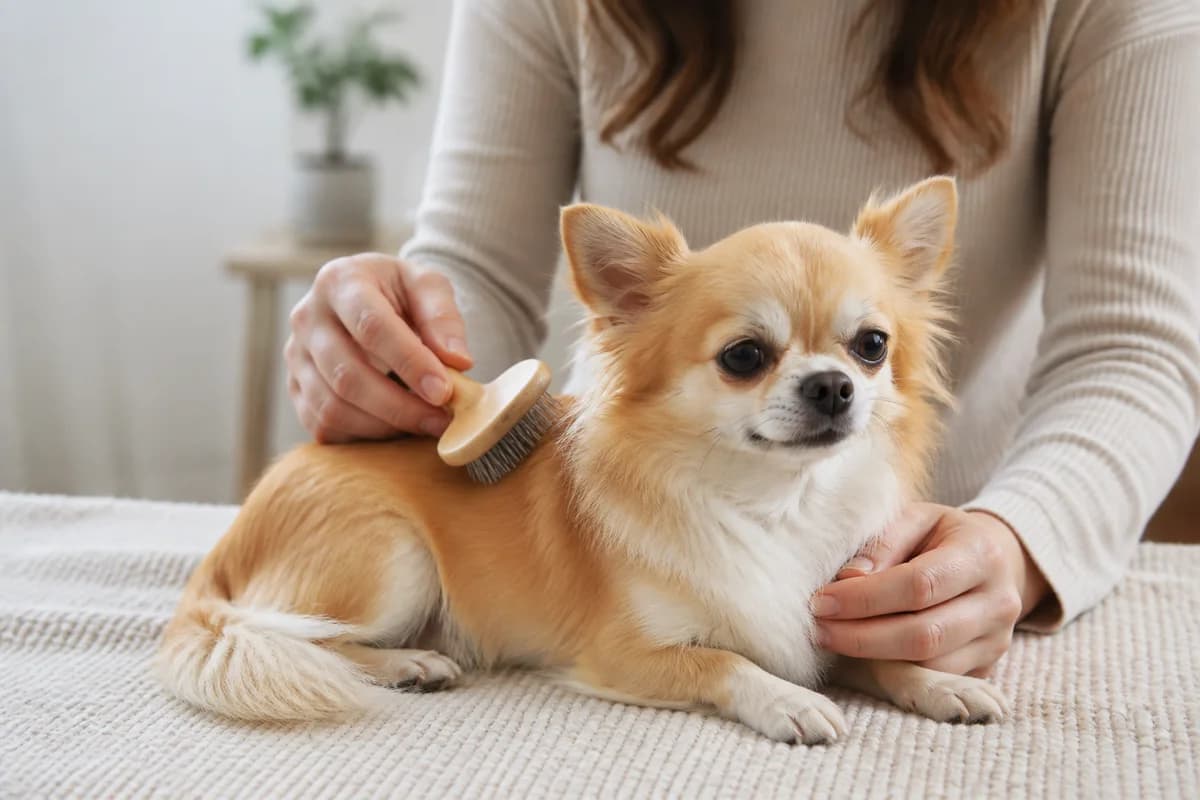
Chihuahua grooming depends partly on coat type, but every dog needs nail, dental, skin and ear care. Smooth coats generally need periodic brushing. Long coats need more frequent checks for tangles around the ears, chest, legs and tail.
Chihuahua care should also include daily observation of appetite, toileting, movement, breathing and comfort so meaningful changes are noticed early.
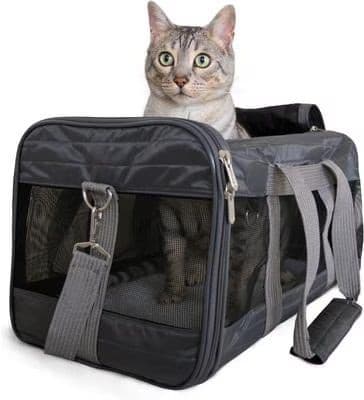
An airline-approved soft-sided carrier with mesh ventilation windows, a top-rated travel pick for cats and small dogs.
Petful may earn a commission when you click through to Chewy, at no extra cost to you.
Build cooperative care
Pair brief handling with rewards before a problem develops. Touch one paw, reward and stop. Lift a lip for a second, reward and stop. Gradually add duration and tools while keeping the dog on a non-slip surface. If handling causes pain, fear or aggression, pause and seek professional guidance.
Dental care deserves daily attention. Small dogs can develop significant oral disease, and bad breath, bleeding gums, loose teeth, facial swelling, dropping food or reluctance to eat should prompt veterinary evaluation. Home care should follow the veterinarian's plan and never substitute for needed treatment.
Feeding by condition, not by appearance
Choose a complete and balanced food appropriate to life stage and measure the total daily amount, including training rewards. The American Veterinary Medical Association healthy-weight guidance recommends working with a veterinarian on body condition and weight.
Petful's best dog food for Chihuahuas provides a separate commercial comparison. A product list cannot diagnose food sensitivity, dental pain, low blood sugar or another cause of appetite change.
In a multi-pet home, the SureFeed Microchip Small Dog and Cat Feeder may help restrict access to one bowl. Verify that the Chihuahua is comfortable using it and that no pet can trap or intimidate another around the station. Continue monitoring weight and intake. Petful’s guide to best microchip cat feeder has the full breakdown.
Carrier training and travel
A carrier can protect a Chihuahua during transport only when it is correctly sized, secured and introduced gradually. The Sherpa Original Deluxe Airline-Approved Dog and Cat Carrier Bag is one tracked soft-sided option to compare with the dog's standing height, body length, ventilation needs, escape risk and the carrier rules of the actual airline or transport provider.
Leave the open carrier in a calm area, scatter rewards inside and practice short closures before travel. When considering the Sherpa Original Deluxe Carrier, verify current dimensions and structural support rather than relying on the phrase airline-approved. Provider rules and aircraft space can change.
Safe equipment routines
Check small-dog gear frequently because minor fit changes can matter. A harness should not rub the armpits or allow backing out. Tags and collars should not catch on crate wire. Bowls should be stable and easy to clean. Bedding should provide warmth without blocking airflow or creating chewing hazards.
If using the Petlibro Granary WIFI Automatic Feeder with Camera, measure several dispensed portions on a kitchen scale and compare them with the dog's written feeding plan. Automation can improve timing, but a caregiver must still notice appetite change, vomiting, stool changes and weight trends.
Chihuahua puppies in brief
Chihuahua puppies need safe social exposure, frequent toileting opportunities, measured meals, gentle handling and protection from falls and rough play. A puppy's tiny size does not make hurried purchase decisions safer.
Ask a breeder, rescue or shelter for the dog's identity, veterinary record, age, microchip information, source history and written agreement. For breeder puppies, verify parent health-screening results under registered names. Meet the puppy and, when applicable, the dam in the environment where the litter is raised.
- Petful's records-first guide to Chihuahua puppies, breeders, adoption and buying safely covers seller verification, teacup marketing, contracts, deposits and scam warnings. It also addresses questions about puppy behavior and sleeping arrangements without turning this breed hub into a buying page.
- Use Petful's Chihuahua price and lifetime budget guide to separate acquisition, first-year setup, annual care, services and emergency planning.
Health and lifespan in brief
Chihuahuas can live for many years, but no breed-wide number predicts one dog's outcome. Preventive care, genetics, body condition, dental health, environment and access to treatment all matter. Common breed discussions include dental disease, kneecap problems, heart disease, eye issues and neurologic concerns, but only a veterinarian can assess an individual dog.

A padded, reflective no-pull harness that spreads leash pressure across the chest instead of the throat, the switch most vets recommend for a dog with a cough, a collapsing trachea, or any airway irritation so the leash never presses on
Petful may earn a commission when you click through to Chewy, at no extra cost to you.
Petful's DVM-authored Chihuahua health issues and lifespan guide explains screening, preventive care, symptoms that need veterinary attention and the limits of population estimates. The Chihuahua size, weight and growth guide helps owners track a puppy's trend without treating a chart as a diagnosis.
Seek prompt veterinary guidance for collapse, trouble breathing, repeated vomiting or diarrhea, inability to keep water down, seizure activity, severe pain, a swollen abdomen, inability to urinate, traumatic injury or rapid decline. Breed assumptions should never delay care.
Colors, coats and head shape in brief
Chihuahuas occur in smooth and long coats and many colors and patterns. Color can be described visually, but it cannot prove pedigree, quality, health or rarity. Lighting, age and photographs can also change how a coat appears.
The Chihuahua colors, patterns and coat types guide provides realistic examples and grooming differences. The apple head vs. deer head Chihuahua comparison explains that apple head reflects breed-standard language, while deer head is an informal appearance label rather than a separate recognized breed.
Do not pay a premium based only on words such as rare, teacup, miniature, blue or deer head. Ask for verifiable identity and health records, then evaluate the individual dog.
A practical first-month plan
The first month should reveal what the individual Chihuahua needs, not test how quickly the dog can tolerate every new experience. Keep food, sleep, toileting and medication schedules predictable while the dog learns the home. Introduce rooms, people, handling and outings in small steps, and preserve enough distance that the dog can still eat, explore and recover.
During the first week, confirm the veterinary record, microchip details, diet, medications and next appointments. Photograph or scan source documents, note emergency clinic information and schedule an independent examination when appropriate. A new dog who is not eating, is repeatedly vomiting, seems painful, has trouble breathing or declines rapidly needs veterinary guidance, not more time to adjust.
Track a few observable measures instead of relying on impressions:
- Meals offered and eaten, plus meaningful appetite changes.
- Toileting times, location and any straining or discomfort.
- Sleep, activity and ability to settle away from a person.
- Responses to handling, household sounds, visitors and other pets.
- Walk duration, weather, body language and recovery afterward.
- Weight and body-condition changes discussed with the veterinarian.
After the dog has settled, choose one or two priority skills and practice them in brief sessions. A reliable response to a name, comfortable carrier entry or relaxed mat settle may improve daily safety more than a long list of novelty tricks. Add difficulty by changing only one variable at a time, such as duration, distance or distraction.
Review the plan after 30 days. Keep the routines that reduced stress, adjust equipment that does not fit, and seek qualified help for persistent fear, guarding, separation distress or handling difficulty. Early support is not a sign that the dog has failed. It is a way to prevent rehearsed problems and protect the relationship.
Audit an ordinary week before committing
A weekend with unlimited attention does not show whether a Chihuahua fits the household's usual rhythm. Map a normal workweek by hour, including wake-up, meals, toileting, travel, visitors, child activities, exercise, training and sleep. Add the days when weather prevents the easiest outdoor routine.
For each period when no primary caregiver is available, name the person or service responsible for the dog. Confirm how that caregiver enters the home, prevents escapes, follows the feeding plan and recognizes a medical concern. A backup that has never met the dog is not yet a workable plan.
Then test the physical environment:
- Check doors, balcony gaps, railings and fence openings at Chihuahua height.
- Identify safe routes around stairs, furniture and reclining mechanisms.
- Separate the dog from chaotic entrances and unsupervised child activity.
- Protect food and rest from other pets.
- Confirm warm and cool resting options without trapping the dog under bedding.
- Locate a secure carrier before an emergency or evacuation.
Finally, calculate the attention budget. Daily companionship is valuable, but the dog should also learn to rest safely without being held. Schedule short independent-settling practice, cooperative care and reward-based training. If every need depends on one person being continuously available, the plan is fragile.
Review the same week from the dog's perspective. Count how often the Chihuahua can toilet, move, sniff, choose distance, sleep without interruption and interact comfortably. A small home can meet those needs well, while a large home can fail when the routine is unpredictable.
This written audit provides a stronger fit decision than a list of generalized pros and cons. It also reveals which questions belong to the individual dog, such as current alone-time comfort, history with children or ability to use stairs safely.
What to verify before you decide
- Seek documented evidence for identity, health history and screening, then use direct observation for behavior and professional guidance from a veterinarian or qualified reward-based trainer when a medical or behavior concern needs interpretation. A seller label, photograph or short meeting should not override those records.
Record the setting, distance, trigger, body language and recovery time when you observe behavior. Labels such as stubborn, protective or jealous are less useful than descriptions another caregiver or professional can evaluate. This creates a practical next step if the dog needs a safer introduction or a tailored care plan.
Is this the right dog for your household?
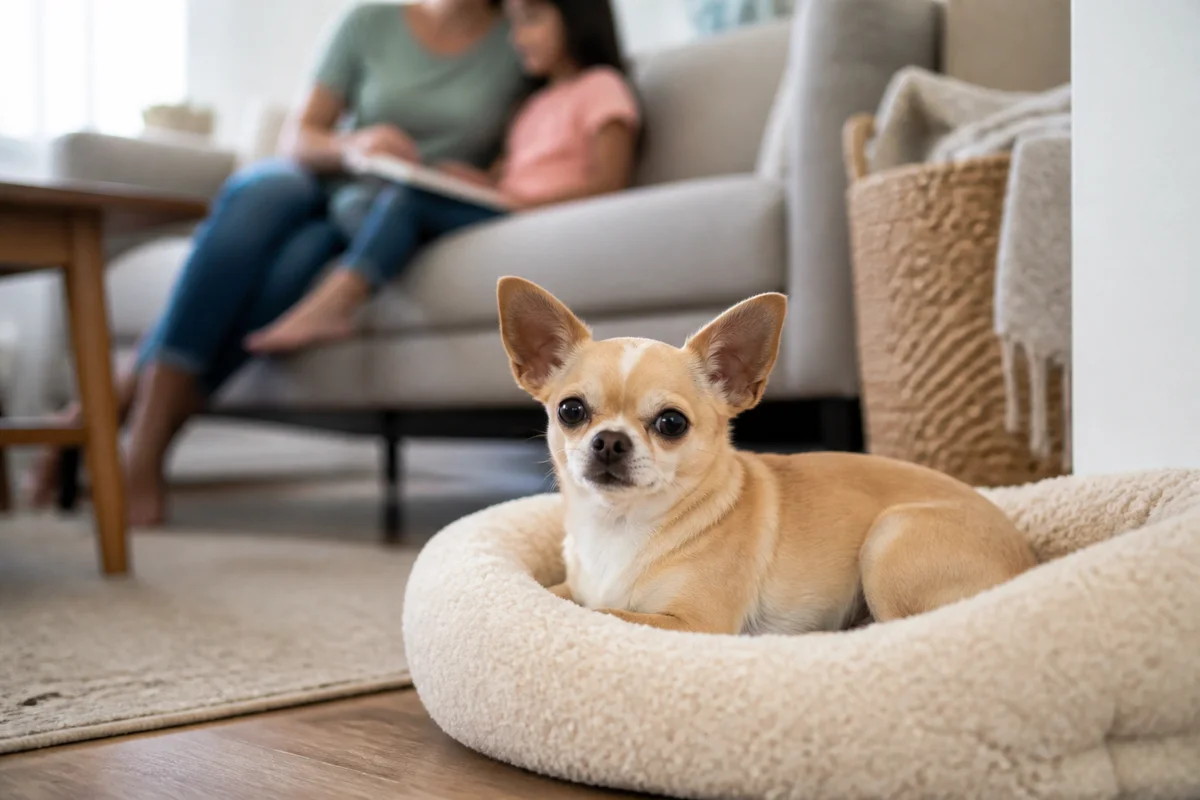
A Chihuahua may fit a household that wants a very small, engaged companion and can provide safe handling, daily training, weather-aware exercise, dental care and close observation. The breed may be a poor fit when the plan depends on unsupervised young-child contact, chaotic large-dog play, long isolation or dismissing barking and fear because the dog is small.
- Small size can simplify transport and space needs for the right household fit
- Many enjoy close companionship and interactive training
- Exercise can often be divided into short walks, play and indoor enrichment
- Smooth and long coats offer different grooming routines
- Tiny size increases injury risk from falls, rough handling and larger animals
- House training may require a very consistent schedule
- Dental and preventive care remain substantial responsibilities
- Alert barking and stranger caution require attention to individual behavior
Before deciding, write down the household's ordinary week. Include work hours, exercise time, children, visitors, other pets, travel, toileting access, veterinary budget and backup care. Compare that reality with the individual dog's needs rather than the easiest breed description.
For equipment, a measured EliteField Padded Reflective No Pull Harness in Small may be one option for supervised walks. Check fit at every use and pair it with training. For meal timing, compare the Petlibro automatic feeder only if it solves a real schedule need and the dog eats dry food safely.
Chihuahua FAQs
Yes, Chihuahuas can be good pets for households prepared for a very small, alert companion that still needs training, exercise, dental care and safe handling. The answer depends on the individual dog's behavior and health, not size alone. Review verified records, observe the dog around relevant people and pets, and make the clear next step a supervised meeting or veterinary review before committing.
Common problems discussed in Chihuahuas include dental disease, injury risk, kneecap problems, heart or eye concerns, house-training difficulty, barking and fear. These are planning topics, not a diagnosis or a guarantee for every dog. Use verified records and a veterinary exam to understand the individual, then choose a clear next step such as screening, treatment guidance or a safer behavior plan.
A Chihuahua can be expensive when acquisition, first-year setup, routine veterinary care, dental care, food, training, equipment, services and emergencies are counted together. A low purchase price does not predict low lifetime cost. Compare the seller or rescue's verified records with a written household budget, then make the clear next step obtaining current veterinary estimates and reserving an emergency fund.
The most important thing to know about a Chihuahua is that tiny size does not erase normal dog needs or guarantee an easy temperament. Use a practical comparison of exercise, training, safety, grooming, health care and budget against your ordinary week. Then meet the individual dog and judge observed behavior, medical history and recovery from everyday situations instead of relying on a breed stereotype.
For a Chihuahua dog, verify identity, age, veterinary history, microchip details, vaccination records, current medications and any health-screening results that a breeder claims for the parents. Documented evidence should carry more weight than appearance or seller wording. Seek professional guidance from a veterinarian when interpreting health records, and use direct observation or a qualified trainer for behavior questions.
After learning about Chihuahua history and breed tendencies, audit your real schedule, safety setup, training time, veterinary budget and backup care. Decide whether the likely routine supports household fit, then meet the dog more than once when possible. Let individual behavior, current records and the dog's response to your family guide the next step rather than appearance or a generalized profile.
Sources

Kristine Lacoste has been researching dog and cat breeds for nearly a decade and has observed the animals up close at dog shows in both the United States and the United Kingdom. She is the author of the book One Unforgettable Journey, which was named as a finalist for a Maxwell Award from the Dog Writers Association of America, and was host of a weekly pet news segment on the National K-9 Academy Radio Show. In addition, she was the New Orleans coordinator for Dogs on Deployment, a nonprofit that helps military members and their pets, for 3 years. Kristine has researched and written about pet behaviors and care for many years. She holds a bachelor’s degree in psychology, another bachelor’s degree in English and a Master of Business Administration degree.
Sign up for expert-backed reviews and safety alerts all in one place.