Cavapoo Lifespan: How Long Do Cavapoos Live?
The average Cavapoo lifespan is 12 to 15 years. A veterinary surgeon breaks down the inherited health risks from the Cavalier and Poodle parents, the leading cause of death, and how to help your Cavapoo live longer.

BVMS, MRCVS

Petful is reader supported. As an affiliate of platforms like Amazon and Chewy, we may earn a commission when you buy through links on this page. There is no extra cost to you.
The average Cavapoo lifespan is 12 to 15 years, and as a veterinary surgeon I can tell you that most healthy, well-cared-for Cavapoos land right in that window, with a good number reaching their mid to late teens. The Cavapoo is a cross between the Cavalier King Charles Spaniel and the Poodle (usually a Miniature or Toy Poodle), so its lifespan sits between its two parent breeds. Poodles are famously long-lived, with Miniature and Toy Poodles commonly reaching 14 to 16 years, while the Cavalier King Charles Spaniel is sadly one of the shorter-lived toy breeds at roughly 9 to 14 years, largely because of inherited heart disease. Where any individual Cavapoo falls in that 12 to 15 year range comes down to genetics, size, body weight, dental and heart health, and the quality of care it receives across its life. This guide walks through the real numbers, the inherited conditions that matter most, the warning signs by life stage, and the concrete things that genuinely add healthy years.
- 1The average Cavapoo lifespan is 12 to 15 years, sitting between the long-lived Poodle and the shorter-lived Cavalier King Charles Spaniel
- 2The two biggest genetic risks come straight from the parent breeds: mitral valve disease from the Cavalier and eye and joint conditions from both sides
- 3Keeping your Cavapoo at a lean body weight is the single most powerful lever you have over how long it lives
- 4Yearly (then twice-yearly in seniors) vet checks catch heart murmurs, dental disease, and early organ changes while they are still treatable
- 5Responsible breeding with health-tested parents is the biggest factor you can influence before you even bring a puppy home

Sign up for expert-backed reviews and safety alerts all in one place.
What Is the Average Cavapoo Lifespan?
The average Cavapoo lifespan is 12 to 15 years. That figure is not a marketing number from a breeder website: it is what you would expect from a small crossbreed whose parents are the Poodle and the Cavalier King Charles Spaniel, and it matches what most veterinary sources and breed clubs report for dogs of this size and type.
Small dogs simply live longer than large dogs. It is one of the most consistent findings in canine longevity research, backed by large studies from groups such as the Royal Veterinary College and the UK Kennel Club. A Great Dane may be considered elderly at 7, while a small dog like a Cavapoo is often still spry at 10 or 11. The Cavapoo's compact size (usually 9 to 25 pounds depending on the Poodle parent) is a genuine longevity advantage.
It is worth being clear about what "average" means here, because breeders and sellers often quote a single tidy figure. An average is the middle of a spread. Some Cavapoos, usually those from carefully health-tested lines and kept lean and well cared for, live beyond 15 years. Others, often from poorly bred lines that inherited a serious condition young, fall short of 12. The 12 to 15 year figure is the honest center of that distribution, not a promise, and where your individual dog lands depends far more on the factors you control (weight, dental care, veterinary monitoring) and the ones you choose before purchase (the health status of the parents) than on luck alone.
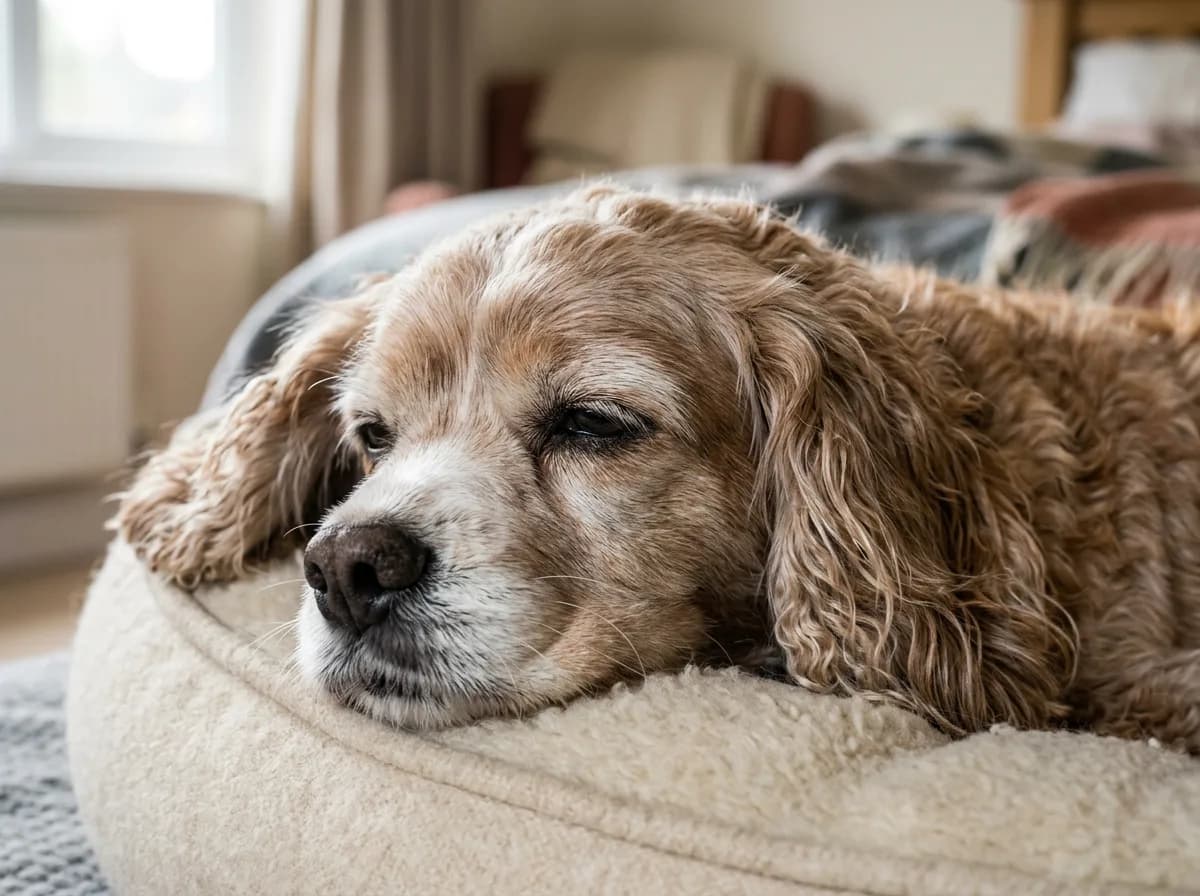
The catch is the Cavalier King Charles Spaniel half of the family. The Cavalier is one of the shortest-lived toy breeds, and the reason is almost entirely a single inherited heart condition (more on that below). The Poodle side pulls the average back up, which is one of the arguments for hybrid vigor in this cross: a Cavapoo often avoids the extreme concentration of Cavalier heart disease that a purebred Cavalier faces, while borrowing the Poodle's hardier longevity.
Daily dental chew that cleans teeth, freshens breath, and is accepted by the Veterinary Oral Health Council. Sized for dogs 25 to 50 lbs.
Petful may earn a commission when you click through to Chewy, at no extra cost to you.
- Toy and Miniature Poodles routinely live 14 to 16 years. Cavalier King Charles Spaniels average roughly 9 to 14 years, dragged down by early-onset heart disease. A Cavapoo blends the two, which is why 12 to 15 years is the honest, evidence-based estimate rather than the 15-plus some sellers advertise.

 Sponsored
Have a health question about your pet?
Talk to a licensed vet at Dutch over video or message, including nights and weekends.
Use code Pets60
Plans start at $12/month · covers up to 5 pets
- Licensed vets in most states
- Rx for 150+ conditions
- 4.7 on Trustpilot
Do Toy and Miniature Cavapoos Live Longer?
Within the breed, size still matters. A Toy Cavapoo (bred down using a Toy Poodle, often 7 to 13 pounds) tends to sit at the upper end of the lifespan range, while a slightly larger Miniature Cavapoo is still very long-lived but may average marginally less. The difference is modest and should never be your main reason for choosing one size over another, because a smaller dog also brings its own risks such as dental crowding and fragile joints. Body condition matters far more than a pound or two of adult size. For the full breakdown of adult sizes, see our guide to the full-grown Cavapoo.
There is a genuine trade-off at the very small end. Teacup or so-called "micro" Cavapoos, marketed as extra-tiny, are not a longevity upgrade. Breeding for extreme smallness tends to concentrate exactly the fragilities that cost years: hypoglycemia in young puppies, delicate long bones that fracture from a jump off the sofa, worse dental crowding, and, in some lines, an open fontanelle (a soft spot in the skull that never fully closes). A healthy Toy or Miniature Cavapoo in the normal weight range is the sweet spot for a long life. Anyone selling you a "teacup" for a premium is selling fragility, not longevity.
Cavapoo Lifespan vs. the Parent Breeds
Understanding the Cavapoo lifespan means understanding the two dogs behind it. The table below shows how the crossbreed compares.
| Cavapoo | 12 to 15 years | Blends both parents; benefits from hybrid vigor |
|---|---|---|
| Toy Poodle | 14 to 16 years | Long-lived; watch dental and eye health |
| Miniature Poodle | 13 to 15 years | Long-lived; hardy small breed |
| Cavalier King Charles Spaniel | 9 to 14 years | Shortened mainly by inherited heart disease |
The pattern is clear. The Poodle contributes longevity and a lower burden of breed-specific killers, while the Cavalier contributes the single biggest health risk this cross carries forward: mitral valve disease. A well-bred Cavapoo from health-tested parents is likely to live closer to the Poodle end of the range than the Cavalier end.
This is also why the generation of the cross can matter. A first-generation (F1) Cavapoo is 50 percent Cavalier and 50 percent Poodle, so it carries a full half-share of Cavalier genetics, including the heart risk. Later generations and backcrosses shift the ratio, and some breeders deliberately breed back to a Poodle to dilute the Cavalier health burden while keeping the low-shedding coat. None of this is a substitute for health testing the actual parents, but it is a useful piece of context when a breeder tells you the generation of a litter. The specific dogs in front of you, and their test results, always matter more than the label.
- Crossing two breeds can reduce the odds of inheriting two copies of a harmful gene, and that is a genuine benefit. But it does not erase risk. A Cavapoo can still inherit mitral valve disease, syringomyelia, or a Poodle-linked eye condition. Hybrid vigor lowers the odds; it does not cancel the biology.
How Cavapoo Lifespan Compares to the Cockapoo and Other Doodles
People choosing between doodle crosses often ask whether one lives longer than another. In practice, the small Poodle crosses cluster in a similar range. A Cockapoo (Cocker Spaniel crossed with Poodle) also averages roughly 12 to 15 years, a Maltipoo (Maltese crossed with Poodle) often 12 to 16, and a Cavapoo 12 to 15. The differences between them are driven less by the crossbreed label and more by the health risks of the non-Poodle parent. The Cavapoo's specific vulnerability is the Cavalier's heart; the Cockapoo's is the Cocker's ears and eyes; the Maltipoo's is the Maltese's teeth and knees. In every case, a Poodle parent from tested, long-lived lines is the common thread that lengthens life. Choosing between them on lifespan alone is splitting hairs: choose on temperament, size, and, above all, the breeder. If you are weighing the Cavapoo against its closest cousin, our Cockapoo guide breaks down the differences in detail.
For another Cavalier cross, see our Cavachon lifespan and health guide and its discussion of screening and everyday care.
The Health Conditions That Affect Cavapoo Lifespan
A Cavapoo inherits its health risks from both parent breeds. Knowing these conditions is not about worrying; it is about catching problems early, when treatment works best and adds the most years. These are the ones that genuinely move the needle on the Cavapoo lifespan.

Pumpkin-flavored probiotic soft chews that support healthy gut flora and digestion in dogs.
Petful may earn a commission when you click through to Chewy, at no extra cost to you.
Mitral Valve Disease (the big one)
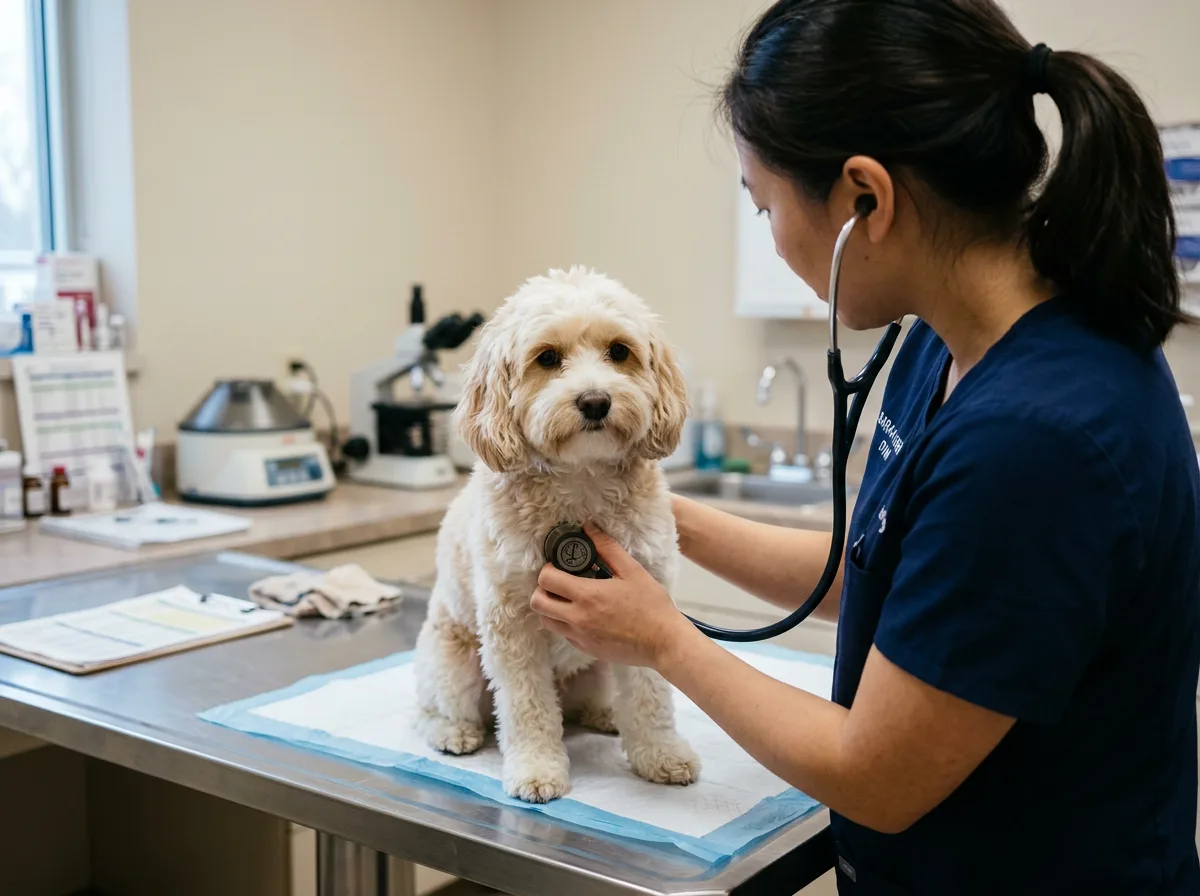
Mitral valve disease (MVD) is the most important condition to understand, because it comes from the Cavalier side and is the single biggest reason Cavaliers are short-lived. In MVD, one of the heart's valves degenerates and starts to leak, forcing the heart to work harder until, in advanced cases, it leads to congestive heart failure. In Cavaliers it often starts young, sometimes before age 5. Your vet detects it first as a heart murmur during a routine check, which is one of the strongest arguments for never skipping the annual (or twice-yearly senior) exam. Caught early, MVD is managed for years with medication, diet, and monitoring. A Cavapoo may inherit a lower risk than a purebred Cavalier, but the risk is real and worth screening for.
It is worth knowing how the disease is staged, because it changes what your vet does. Cardiologists use a system (stages A through D) that runs from an at-risk dog with no murmur, through a murmur with no heart enlargement, to an enlarged heart, and finally to active heart failure. The landmark EPIC clinical trial showed that starting a medication called pimobendan once the heart has begun to enlarge but before failure sets in significantly delayed the onset of congestive heart failure and extended survival. That is the entire reason the check-up matters: the window where treatment buys the most time is a silent one, detectable only by a vet listening to the chest and, if needed, an x-ray or echocardiogram. A dog that only sees a vet once symptoms appear has often already lost that window.
- Responsible Cavapoo breeders should be able to show that the Cavalier parent came from a line with delayed-onset heart disease, ideally with cardiac clearance from a veterinary cardiologist. A breeder who cannot or will not discuss heart testing is a red flag for exactly the condition most likely to shorten your dog's life.
Syringomyelia and Chiari-Like Malformation
Also inherited from the Cavalier side, syringomyelia is a serious neurological condition in which fluid-filled cavities form in the spinal cord, often because the skull is too small for the brain. Signs include scratching at the neck and shoulder (sometimes without making contact, called an "air scratch"), sensitivity around the head and neck, and yelping in pain. It varies enormously in severity. Reputable breeders screen the Cavalier line for it, and the Poodle cross may reduce but does not eliminate the risk. Because signs can be subtle at first and are easy to mistake for an itch or a skin problem, persistent scratching aimed at the neck and shoulders, especially when the dog is excited or wearing a collar, is always worth a vet's attention rather than a wait-and-see.
Eye Conditions
Both parent breeds carry inherited eye disease. Poodles are linked to progressive retinal atrophy (PRA), a gradual degeneration of the retina that leads to blindness, and to cataracts. Cavaliers can carry inherited cataracts and retinal problems too. The good news is that PRA has a reliable DNA test, so a responsible breeder can confirm the Poodle parent is clear. Ask for the results. Cavaliers can also pass on dry eye (keratoconjunctivitis sicca), where the eye fails to make enough tears, leaving it sore and prone to ulcers. It is manageable for life with daily eye drops once diagnosed, but it needs catching, so mention any persistent squinting, redness, or thick discharge to your vet.
Patellar Luxation and Joint Issues
Small dogs, including both parent breeds, are prone to patellar luxation, where the kneecap slips out of its groove. Vets grade it from I to IV: grade I slips only when the vet manipulates it and pops back on its own, while grade IV sits permanently out of place and needs surgical correction. Most Cavapoos with the condition are at the mild end, showing an occasional skipping hop in the back leg that resolves in a step or two, and never need an operation. Keeping your Cavapoo lean takes real load off those joints and can keep a low-grade case from progressing. Larger or heavier individuals may also face hip dysplasia, which is why keeping weight down matters at every size.
Dental Disease
This is the most overlooked longevity issue in small breeds and it is entirely within your control. Small mouths crowd teeth, which traps plaque and drives periodontal disease. Untreated dental disease is not just bad breath; the chronic infection strains the heart, liver, and kidneys and shortens life. Daily tooth brushing and regular professional cleanings are among the cheapest, highest-return things you can do for your dog's lifespan. Start brushing early, before there is a problem, so your dog accepts it as routine rather than a battle, and use a dog-specific toothpaste (human toothpaste contains ingredients that are unsafe for dogs).

Petful may earn a commission when you click through to Chewy, at no extra cost to you.
Ear Infections
The Cavapoo's floppy, hairy ears trap moisture and are prone to infection. Ear infections rarely shorten a life on their own, but chronic untreated infections cause real suffering and vet bills. Routine cleaning and keeping the ear canal hair managed during grooming prevents most of them. Our Cavapoo grooming guide covers ear care in detail.
- Listing these conditions does not mean your Cavapoo will get them. Plenty of Cavapoos live long, healthy lives and never develop any of them. The point is that knowing the risk profile lets you screen, catch things early, and choose a breeder who tests. Awareness adds years; anxiety does not.
What Is the Leading Cause of Death for Cavapoos?
The leading cause of death for Cavapoos is heart disease, specifically mitral valve disease inherited from the Cavalier King Charles Spaniel side of the cross. Because the Cavalier is so strongly affected by degenerative mitral valve disease, and because a Cavapoo carries Cavalier genetics, heart failure from a leaking mitral valve is the condition most likely to end a Cavapoo's life, particularly in older dogs.
That said, cancer becomes an increasingly common cause of death in any dog as it ages, and Cavapoos are no exception in their senior years. For younger and middle-aged Cavapoos, the heart is the organ to watch most closely. This is exactly why annual veterinary heart auscultation (listening to the chest with a stethoscope) is so valuable: a murmur is often the first and only sign, years before your dog shows any symptom at home.
If your vet does detect a murmur, do not panic. A soft, early murmur does not mean your dog is about to go into heart failure. It means the two of you now have a head start. Your vet may recommend a chest x-ray or an echocardiogram (an ultrasound of the heart) to grade the disease, and in the right cases medication started at the correct stage has been shown to delay the onset of congestive heart failure. That is time bought, and it is the direct payoff of the routine check-up that caught the murmur in the first place. Watch at home for a soft persistent cough, tiring quickly on walks, faster or more labored breathing at rest, or a swollen belly, and report any of these to your vet promptly. Counting your resting dog's breaths per minute while it sleeps is a simple, powerful home monitoring tool your vet can teach you: a healthy resting or sleeping dog usually breathes fewer than about 30 times a minute, and a sustained climb above that is one of the earliest at-home warnings of fluid building up around the heart.
Cavapoo Life Stages: What to Expect and When
Knowing what normal aging looks like helps you tell the difference between a dog that is simply maturing and one that needs a vet. Here is the arc of a typical Cavapoo lifespan.
 Sponsored
Vet care that's always there
Unlimited video calls and messaging with licensed vets for less than a typical vet visit. One membership covers up to five pets.
Use code Pets60
Plans start at $12/month · covers up to 5 pets
- Licensed vets in most states
- Rx for 150+ conditions
- 4.7 on Trustpilot
Puppy and Young Adult (0 to 2 years)
High energy, rapid growth, and the foundation years. This is when you establish the habits that pay off for a decade: a healthy weight, dental care, socialization, and a good vaccination and parasite-prevention routine. Do not overfeed a growing puppy; excess weight in this window sets up joint problems later. Very small puppies also need frequent meals in their first few months to avoid hypoglycemia (a dangerous drop in blood sugar), so follow your vet's feeding schedule closely rather than long gaps between meals.
Prime Adult (2 to 7 years)
The steady middle. Your Cavapoo is at full strength, and this is where consistent routine care quietly protects longevity. Keep up the annual vet visit, watch the waistline, and stay on top of dental care. Many heart murmurs first appear in this window, so do not skip check-ups just because your dog seems perfectly well.
Hide capsules in a soft, chicken-flavored treat your dog actually wants. Vet-recommended, with real chicken as the #1 ingredient.
Petful may earn a commission when you click through to Chewy, at no extra cost to you.
Senior (8 to 12 years)
Most Cavapoos start to visibly slow down between 8 and 10 years of age, easing off the pace on walks, sleeping more, and being a little slower to rise. This is a normal part of aging, not a problem in itself. It is also the stage where twice-yearly vet visits pay off, because catching early heart, kidney, or dental changes here is what turns a good lifespan into a long one. Senior blood work becomes genuinely worthwhile, giving your vet a baseline and catching kidney or liver changes long before they cause symptoms.
Geriatric (12 years and up)
The bonus years. A Cavapoo reaching this stage is doing well, and care shifts to comfort and quality of life: soft bedding, easy access to favorite spots, joint support, and close monitoring for pain, cognitive change, and appetite. Watch too for signs of canine cognitive dysfunction (a dementia-like syndrome), such as night-time restlessness, staring at walls, or getting stuck in corners, because much of it can be eased with diet, enrichment, and medication when caught early. Many Cavapoos live happily well into this stage with attentive care.
- Most Cavapoos begin to noticeably slow down between 8 and 10 years old, which lines up with the start of their senior years. You will see shorter bursts of play, more napping, and a gentler pace on walks. A sudden or dramatic drop in energy, though, is not normal aging and warrants a vet visit to rule out heart or other disease.
How to Help Your Cavapoo Live Longer
You cannot change your dog's genetics after you bring it home, but a large share of lifespan is driven by care, and that is entirely in your hands. These are the levers that genuinely work, in rough order of impact.
Keep Your Cavapoo at a Lean Body Weight
This is the single most powerful thing you can do. A landmark long-term study in Labrador Retrievers found that dogs kept lean lived roughly two years longer than their overweight littermates, and the principle holds across breeds. Excess weight strains the heart, worsens joint disease, and raises the risk of diabetes. You should be able to feel your Cavapoo's ribs easily under a thin layer of fat and see a visible waist from above. If you cannot, cut back the food and the treats. On a small dog, even an extra pound is a large share of body weight: a 12-pound Cavapoo carrying one pound too many is proportionally like a 180-pound person carrying an extra 15, so the small numbers matter far more than they look.
Petful may earn a commission when you click through to Chewy, at no extra cost to you.

Feed a Complete, Quality Diet in the Right Amount
Feed a diet that meets AAFCO nutritional standards for your dog's life stage, and measure the portions rather than free-feeding. Portion control matters more than the exact brand for longevity. Treats should make up no more than about 10 percent of daily calories. Weigh the food on a kitchen scale rather than using a cup, which is far less accurate, and remember that the feeding guide on the bag is a starting point to adjust from, not a fixed rule, since the right amount depends on your individual dog's body condition.
Prioritize Dental Care
Brush your Cavapoo's teeth daily if you can, and have your vet perform professional cleanings as recommended. In small breeds, this is one of the most underrated longevity interventions, because chronic dental infection quietly damages the heart, liver, and kidneys. Dental chews and vet-approved water additives help, but nothing replaces brushing and the periodic scale-and-polish under anesthetic that removes plaque below the gum line where disease actually does its damage.
Do Not Skip Veterinary Check-Ups
An annual exam for adults, moving to twice-yearly for seniors, is where early heart murmurs, dental disease, lumps, and organ changes get caught while they are still treatable. Keep vaccinations and parasite prevention current. This is the routine that catches the mitral valve disease that would otherwise go unnoticed until it becomes an emergency.
Provide Daily Exercise and Mental Stimulation
A moderate daily walk plus play keeps weight, muscle, joints, and mood in good shape. Cavapoos are intelligent and bond closely with their people, so mental enrichment matters as much as physical exercise. A bored, under-stimulated dog is a stressed dog. Puzzle feeders, scent games, and short training sessions tire an intelligent Cavapoo more thoroughly than an extra walk and help stave off the boredom-driven anxiety the breed is prone to.
Consider Pet Insurance Early
Because the most serious Cavapoo conditions (heart disease especially) can require years of medication and monitoring, insuring your dog while it is young and healthy, before any condition becomes a pre-existing exclusion, means cost is far less likely to limit your treatment options later. That directly protects lifespan for a breed with a known cardiac risk.
- The biggest single influence on your Cavapoo's lifespan is decided before you meet the puppy: whether the parents were health tested. Insist on cardiac screening on the Cavalier parent and DNA and eye testing on the Poodle parent. Adopting? Ask the rescue everything they know about the dog's background and get a full vet work-up early.
What Does It Cost to Support a Long Cavapoo Life?
Longevity has a price tag, and being honest about it up front is part of responsible ownership, because the owners who budget for care are the ones who do not have to ration it when their dog needs it most. The figures below are typical United States ranges and vary widely by region: expect the higher end in major metro areas and the lower end in rural and small-town practices.
| Annual wellness exam and vaccines | 200 to 500 dollars a year | Twice yearly, so roughly double, in the senior years |
|---|---|---|
| Professional dental cleaning | 300 to 800 dollars per cleaning | Needed every 1 to 3 years in most small breeds |
| Quality complete diet | 400 to 900 dollars a year | Portion control matters more than premium branding |
| Routine grooming | 60 to 100 dollars per visit, every 6 to 8 weeks | The non-shedding coat needs regular professional care |
| Pet insurance premium | 30 to 70 dollars a month | Cheapest when started young, before conditions arise |
| Heart disease management | 50 to 150 dollars a month if diagnosed | Medication and periodic monitoring for MVD |
The single biggest cost driver over a lifetime is a serious inherited condition, above all heart disease, which is precisely why the money spent on a health-testing breeder up front and on insurance while your dog is young pays back many times over. A Cavapoo managed for mitral valve disease across several senior years can run into thousands of dollars in medication, x-rays, and cardiologist visits, and those are exactly the years where good care most extends life. Budgeting for care is not a luxury; it is one of the levers that keeps cost from quietly capping your dog's lifespan.
- The most expensive path is skipping the affordable annual check-up and only seeing a vet once a crisis hits, when the cheap early window for treating heart or dental disease has already closed. Preventive care is not just kinder; over a lifetime it is almost always cheaper than crisis care.
What Are the Downsides of a Cavapoo?
No breed is perfect, and being honest about the trade-offs is part of responsible ownership. The main downsides of a Cavapoo are the inherited health risks covered above (chiefly heart disease from the Cavalier line), a coat that needs regular professional grooming and brushing to prevent painful matting, and a tendency toward separation anxiety because the breed bonds so intensely with its people. Cavapoos genuinely do not like being left alone for long stretches. There is also the marketplace problem: because "doodle" crosses are popular and profitable, the breed attracts irresponsible breeders and puppy mills that skip the health testing that protects lifespan. That last downside is the one most directly tied to how long your dog will live, which is why breeder choice matters so much. If temperament is your main question, our Cavapoo temperament guide goes deeper.
Cavapoo Lifespan FAQs
The leading cause of death for Cavapoos is heart disease, specifically mitral valve disease inherited from the Cavalier King Charles Spaniel parent. This degenerative valve condition can progress to congestive heart failure, which is why annual veterinary heart checks are so important, since a murmur is usually detectable years before any symptom appears at home. Cancer also becomes a common cause of death in senior Cavapoos, as it does in most aging dogs.
The main downsides of a Cavapoo are its inherited health risks (chiefly mitral valve heart disease, plus possible syringomyelia, eye conditions, patellar luxation, and dental disease), a coat that requires regular brushing and professional grooming to avoid matting, and a strong tendency toward separation anxiety because the breed bonds so closely with its family. The popularity of doodle crosses also means many are bred by irresponsible breeders who skip health testing, which is the downside most directly tied to how long the dog lives.
There is no official record-keeping body for the oldest Cavapoo, since it is a crossbreed rather than a formally recognized pedigree breed, so no verified record age exists. That said, individual Cavapoos have been widely reported by owners to live to 17, 18, and occasionally 19 years with excellent care and good genetics, comfortably beyond the 12 to 15 year average. Treat any specific "world record" claim with caution, as none is formally documented.
Most Cavapoos begin to noticeably slow down between 8 and 10 years of age, which marks the start of their senior years. You will see them nap more, play in shorter bursts, and take walks at a gentler pace. This gradual change is normal aging. A sudden or dramatic drop in energy, by contrast, is not normal and should prompt a vet visit to check for heart disease or other problems.
The single biggest downside of a Cavapoo is its inherited risk of heart disease (mitral valve disease from the Cavalier side), which is the condition most likely to shorten its life. Beyond health, the other notable downsides are the ongoing grooming commitment its coat demands and its dislike of being left alone, which can lead to separation anxiety. Choosing a breeder who health tests the parents is the best way to reduce the health downside.
The Cavapoo is not among them; it is a small, gentle companion breed with no aggression reputation. When people ask about the deadliest dogs, they usually mean breeds most often cited in fatal bite statistics in the United States, which have historically included Pit Bull type dogs, Rottweilers, and German Shepherds. It is worth stressing that bite risk is driven far more by individual training, socialization, and handling than by breed alone, and these figures say nothing about a breed's typical temperament.
Cavapoos often form an especially close bond with one person in the household, typically whoever feeds, walks, and spends the most time with them, but they are affectionate, people-loving dogs that generally love the whole family. They are not a one-person breed in the guarding sense; they simply tend to have a favorite while still being warm and sociable with everyone, including children and visitors.
The Cavapoo itself is frequently listed among the nicest and calmest companion breeds, thanks to the gentle, affectionate Cavalier King Charles Spaniel temperament combined with the friendly Poodle. Other breeds often described as among the nicest and calmest include the Cavalier King Charles Spaniel, the Golden Retriever, the Bichon Frise, and the Greyhound (which, despite its racing image, is famously mellow indoors). Calmness varies by individual dog, upbringing, and exercise as much as by breed.
To see how all of this fits into the breed as a whole, from temperament and grooming to size and cost, start with our complete Cavapoo breed guide, or compare the closely related Cockapoo if you are still weighing which doodle cross is right for you.
BVMS, MRCVS
Dr. Pippa Elliott, BVMS, MRCVS, is a veterinarian with nearly 30 years of experience in companion animal practice. Dr. Elliott earned her Bachelor of Veterinary Medicine and Surgery from the University of Glasgow. She was also designated a Member of the Royal College of Veterinary Surgeons. Married with 2 grown-up kids, Dr. Elliott has a naughty Puggle named Poggle, 3 cats and a bearded dragon.
Sign up for expert-backed reviews and safety alerts all in one place.