Catahoula Bulldog: Traits, Size, and Care Needs
A Catahoula Bulldog's parents, health records, and individual behavior matter more than a striking coat. Learn how to assess size, exercise, training, and household fit before choosing this cross.

BVMS, MRCVS
Petful is reader supported. As an affiliate of platforms like Amazon and Chewy, we may earn a commission when you buy through links on this page. There is no extra cost to you.
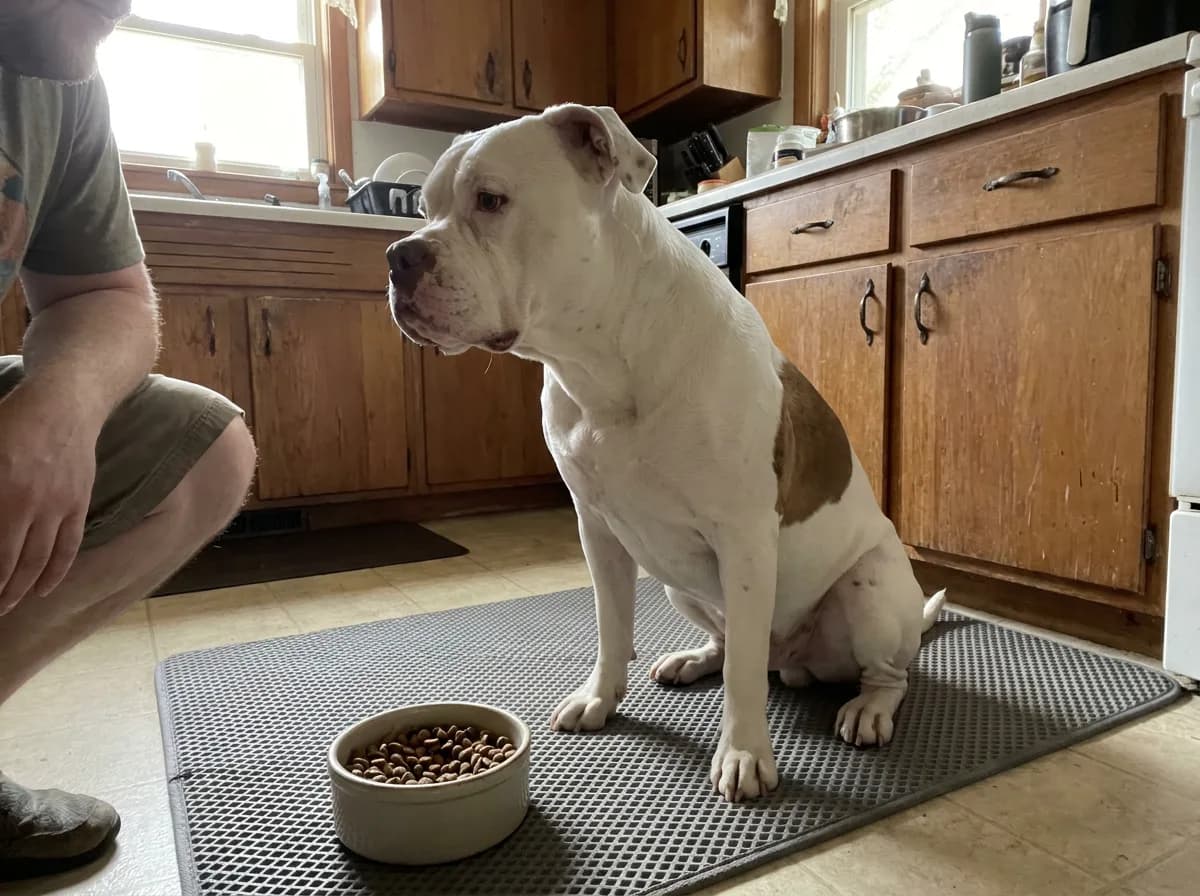
A Catahoula Bulldog combines American Bulldog and Catahoula Leopard Dog ancestry. That working-dog background makes exercise, handling, and safe management worth thinking through before you choose one. It does not tell you exactly how large a puppy will grow, how the dog will behave around cats, or whether a particular home will suit them.
The most useful picture comes from the actual parents, health records, and the individual dog's behavior. A striking coat can catch your attention, but a comfortable daily routine depends on much more than appearance.

Sign up for expert-backed reviews and safety alerts all in one place.
What is a Catahoula Bulldog?
Catahoula Bulldog generally means an American Bulldog Catahoula mix. The Catahoula parent is the Louisiana Catahoula Leopard Dog, a distinct breed described by the United Kennel Club. The cross is not another name for a purebred Catahoula, and the word Bulldog should not be assumed to mean an English Bulldog.
| Question | Useful evidence | What remains uncertain |
|---|---|---|
| Which breeds are involved? | Parent records and an identified source of the ancestry claim | An appearance-based label may be an estimate |
| How big will the dog be? | Adult measurements or the actual parents' sizes | A puppy's exact adult dimensions |
| Can the dog live with small animals? | Observed prey response and detailed household history | Behavior in situations the dog has not experienced |
| Does the dog have health concerns? | Identified screening reports and veterinary records | Future illness cannot be ruled out by a normal result |
People also use Catahoula American Bulldog or Catahoula Bulldog mix for this pairing. Ask what the description means in the particular litter or adoption listing. A first-generation cross, a dog with several generations of mixed ancestry, and a rescue given a visual breed estimate do not come with the same information.
Prepare walking equipment from measurements rather than the cross name. The PetSafe Easy Walk Medium/Large harness is one option if the actual chest fits its size guide; check that the dog can move comfortably and cannot slip out.

Compare current chest measurements with this Medium/Large harness size guide. The Catahoula Bulldog label does not settle fit or prevent escape.
Petful may earn a commission when you click through to Chewy, at no extra cost to you.
When comparing Catahoula Bulldog breeders, look for records you can connect to the actual dogs. A name attached to a kennel, a confident advertisement, or a long account of working ancestry cannot replace those records. The practical questions are straightforward:
- Who are the parents, and what supports their breed identification?
- Which health screening results are available for each parent?
- How have the puppies been raised and introduced to ordinary household experiences?
- What does the seller know about adult relatives' behavior away from work?
- Who will provide support if the placement does not work out?
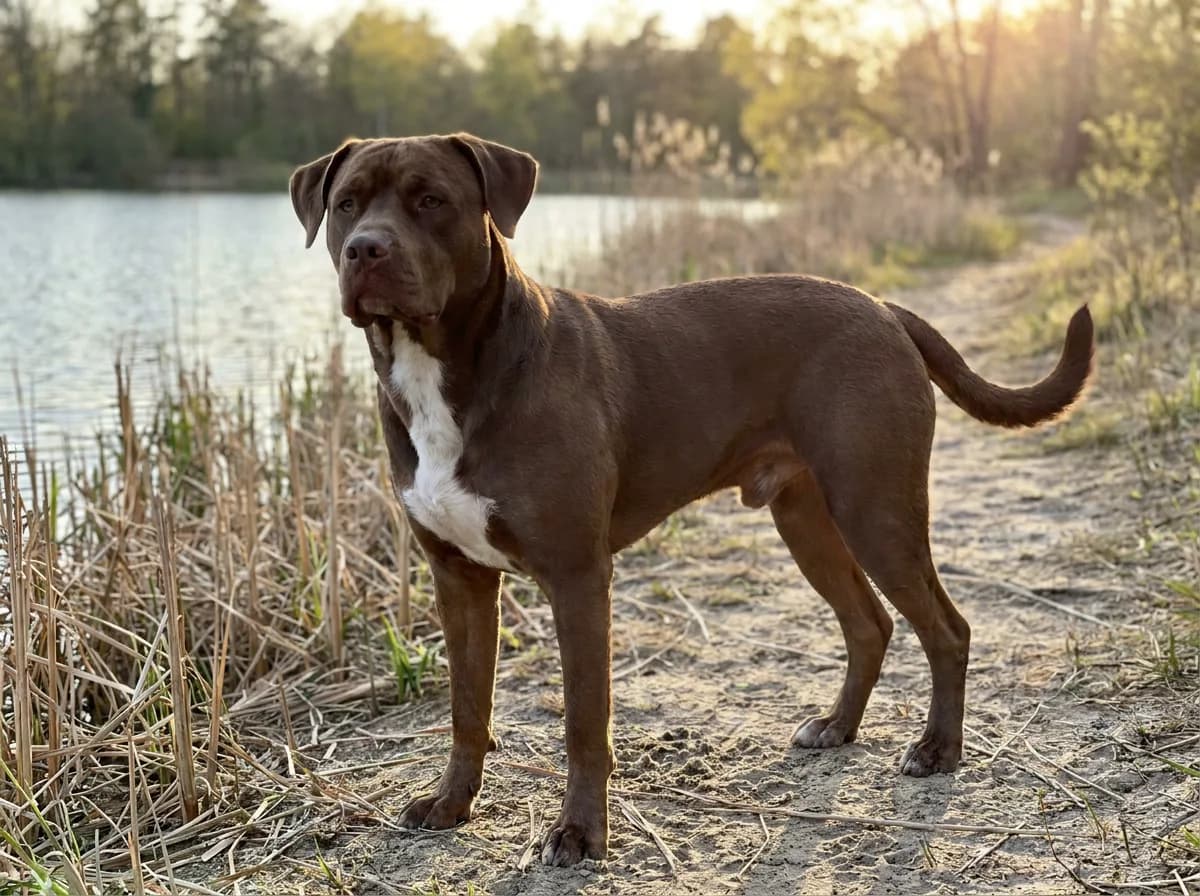
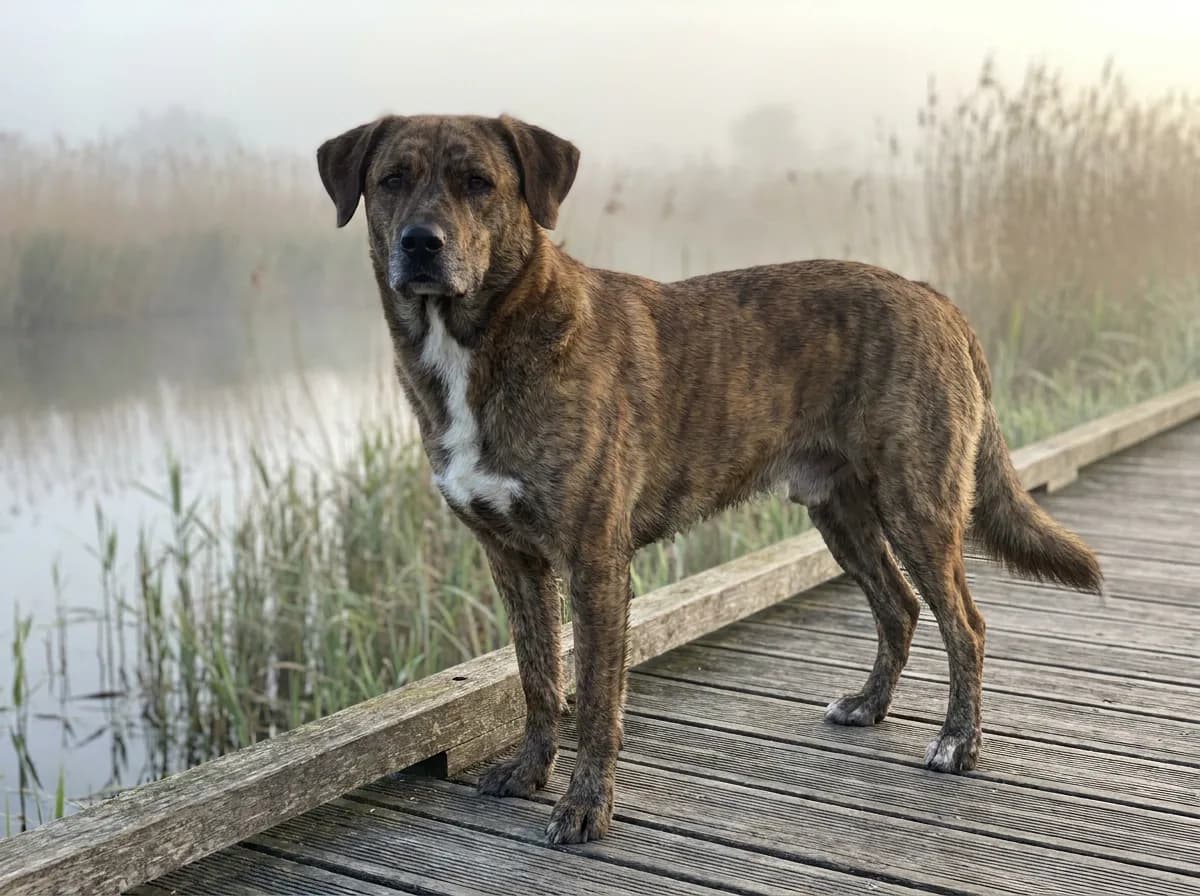
The UKC Catahoula Leopard Dog standard describes a versatile working background, including trailing and managing livestock. It also recognizes varied colors and patterns. A brindle Catahoula Bulldog need not have leopard markings, and spotted coats or blue eyes do not establish this ancestry. Use photographs to understand visible features, then ask separately about parentage.
For an initial controlled walk with the caregiver, the Frisco six-foot traffic leash offers ordinary and shorter handles. Use a slack lead where possible and assess the dog's walking skills; this leash is not a long line for scent work.
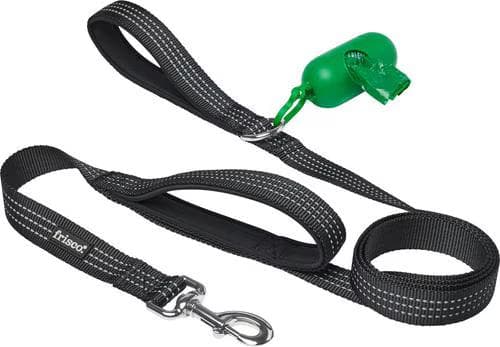
A six-foot traffic leash for controlled everyday walks with an active mixed dog. Choose separate purpose-appropriate equipment for distance scent activities.
Petful may earn a commission when you click through to Chewy, at no extra cost to you.
The American Bulldog parent
The American Bulldog parent brings its own farm-working background and considerable variation in build. Some dogs are heavier in outline; others are leaner and more athletic. Even where both parents are well documented, their puppies need not inherit an identical blend of features.
In a Catahoula Bulldog versus American Bulldog comparison, the important difference is the additional parent ancestry and the uncertainty that comes with it. Neither label supplies a reliable shortcut to choosing the calmer dog. Ask about the particular adult's response to visitors, handling, frustration, and nearby animals, rather than assuming that one side of the family determines everything.
Size and inherited traits vary between dogs
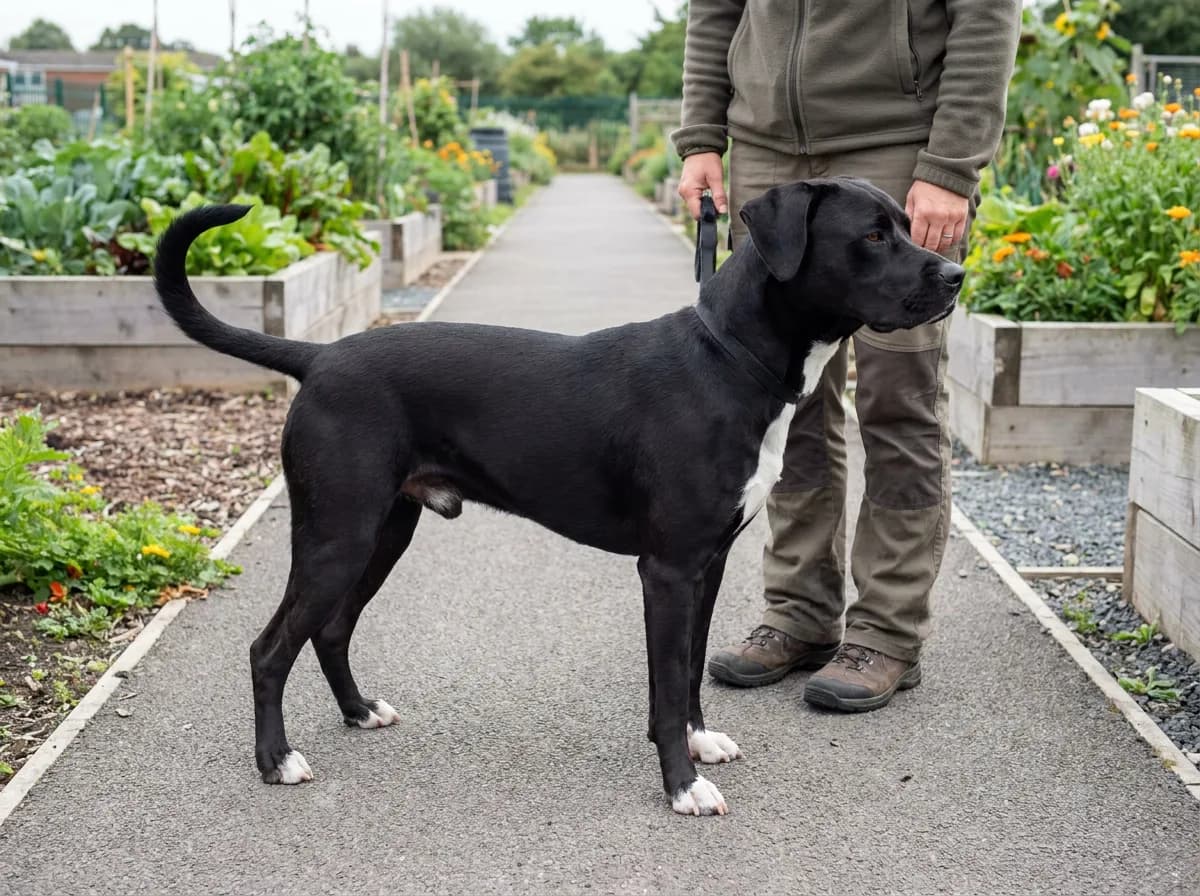
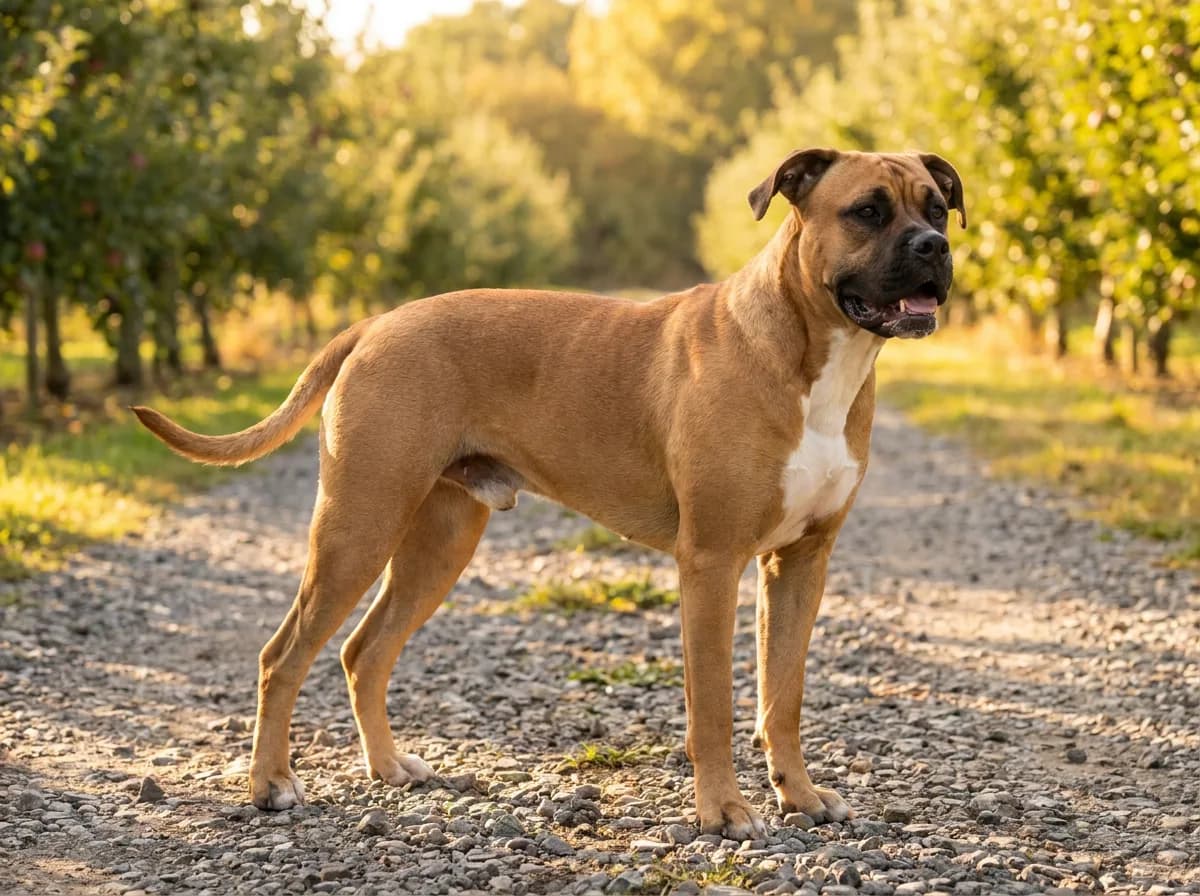
A full-grown Catahoula Bulldog can be measured; a puppy can only be estimated. Ask for weight, shoulder height, body condition, and recent photographs of the actual dog. For a puppy, measurements of both parents and adult relatives are useful context, but averaging the parents' weights is not a dependable prediction.
A Catahoula Leopard Dog American Bulldog mix may be lean and long-legged, broader through the chest, or somewhere between those outlines. Do not transfer the Catahoula parent's breed-standard measurements into a size chart for the cross. Those figures describe a different population and cannot establish a minimum or maximum for your puppy.
- 1Parent records help explain ancestry and family history.
- 2Measured adult size is stronger evidence than a puppy-size promise.
- 3Observed prey response matters more to a small-animal household than coat pattern.
Translate size into the things your home needs to accommodate. A dog who fits comfortably in a room may still be difficult to lift into a vehicle, hold during an unexpected lunge, or help upstairs after an injury. Meet an adult dog with the person who will do most of the walking, and assess how manageable that partnership feels.
- Measure the dog's chest and neck before choosing a harness.
- Check crate and vehicle space against the dog standing, turning, and lying comfortably.
- Plan how you would transport the dog if they could not jump into the car.
- Inspect doors, gates, and fencing for practical escape routes.
- Recheck equipment fit as a puppy grows or an adult's condition changes.
Coat care is usually less elaborate than for a long-coated dog, but short hair still needs attention. Introduce gentle brushing gradually, check the skin while grooming, and stop if the dog seems uncomfortable. Persistent itching, scaling, bald patches, or painful areas deserve a veterinary assessment rather than increasingly frequent baths.
A short coat also does not establish heat tolerance. Make weather part of the day's plan: choose cooler conditions, provide water and shade, and shorten or cancel strenuous activity when necessary. An enthusiastic dog may keep trying to work even when the conditions are unsuitable. Breathing difficulty, weakness, or collapse warrants urgent veterinary help; do not assume the dog only needs more conditioning. AAHA explains emergency warning signs.
Exercise, training, and living with other animals
Catahoula Bulldog temperament is an individual assessment, not a fixed consequence of combining two working breeds. The useful question is how the dog responds to the life you can provide. A household may enjoy purposeful outdoor activity yet struggle with a dog who cannot settle while people work, becomes distressed when left alone, or pursues the resident cat.
Plan a balance of physical activity, sniffing, learning, and rest. A fenced yard makes some activities easier to manage, but simply leaving the dog outside does not tell you whether their needs are being met. Equally, a long outing cannot substitute for teaching comfortable household routines.
Small Pet Botanics chicken training rewards can make check-ins and easy supervised searches practical when the dog tolerates them. Use appropriately sized pieces and count them in daily intake. Rewards do not make an unsafe animal introduction appropriate.
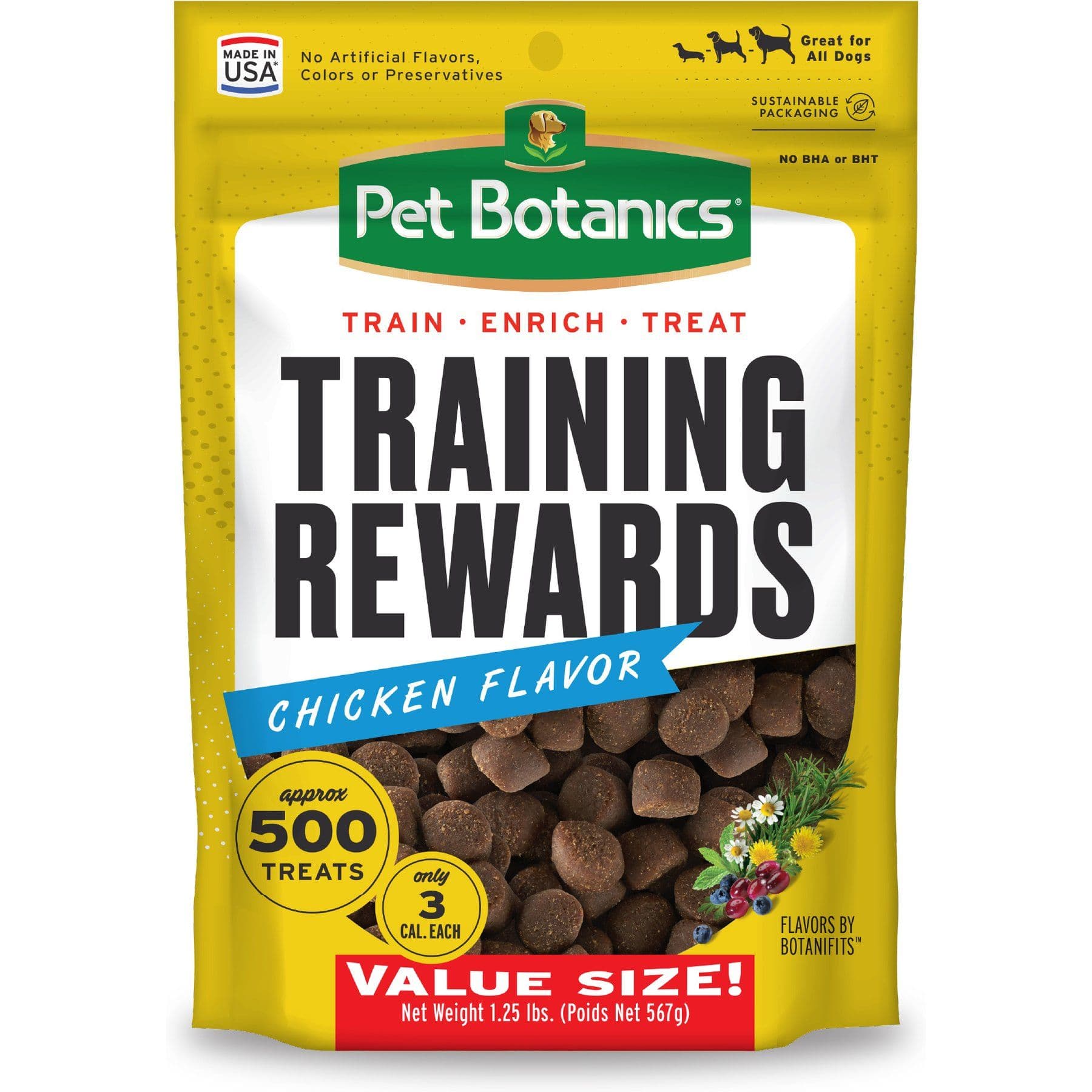
Chicken-flavor rewards for check-ins and supervised searching at a manageable difficulty. Count treats in the dog's daily food allowance.
Petful may earn a commission when you click through to Chewy, at no extra cost to you.
Build from activities the dog can perform calmly and safely:
- Let the dog investigate a quiet walking route at a manageable pace.
- Practice checking in with the handler before adding harder distractions.
- Hide a few suitable rewards in an easy search area under supervision. A Pet Parents Forager snuffle mat can provide one such search; remove it if the dog chews the material.
- Teach a comfortable resting place away from busy doorways.
- End a session while the dog can still respond, rather than waiting for exhaustion.
Use reward-based training and clear, repeatable cues. The American Veterinary Society of Animal Behavior recommends reward-based methods. Describing a dog as independent is not a reason to intimidate them or force contact. If a skill breaks down, reduce the difficulty and examine what the dog is reacting to.
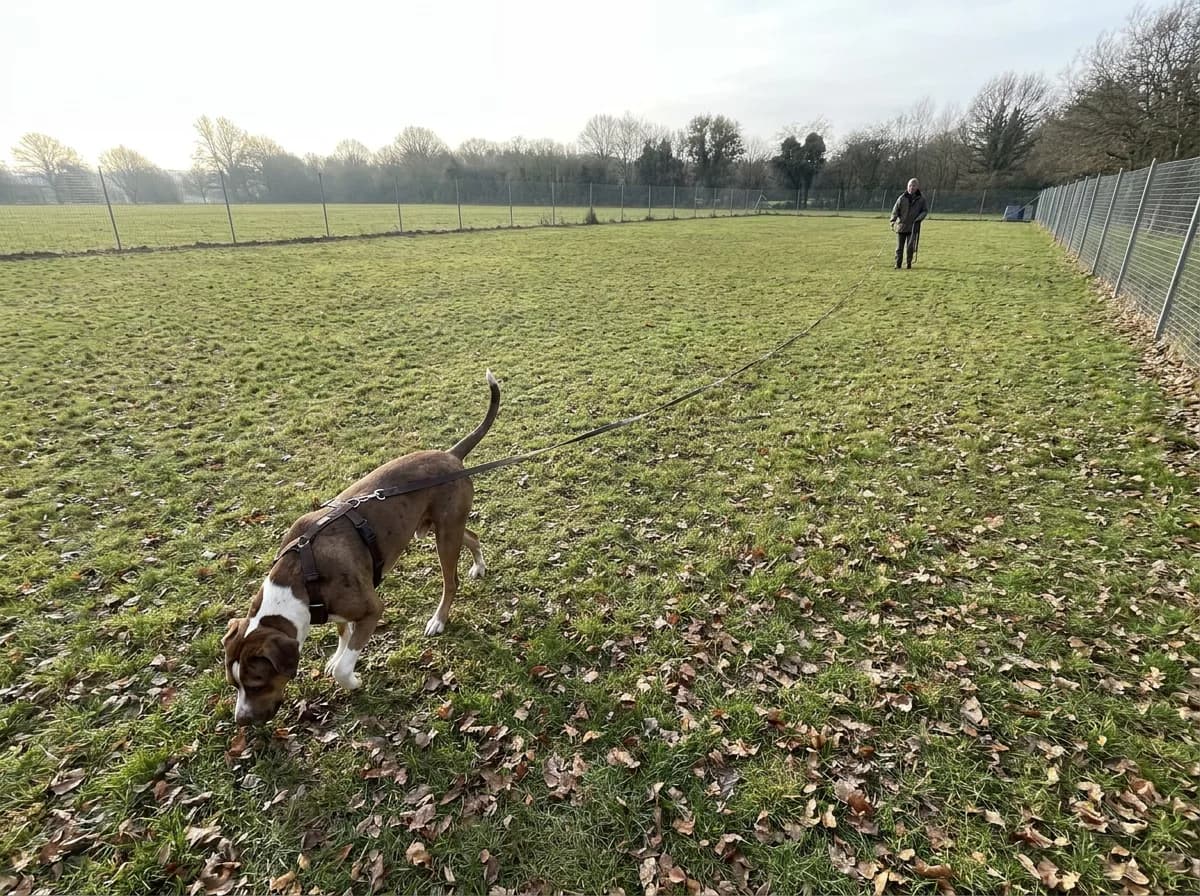
For ordinary controlled walks, a Frisco traffic leash is one option to assess for comfortable handling and secure attachment. A six-foot leash is not a long training line. For a scent activity that needs more distance, choose purpose-appropriate equipment and an open area where the line cannot wrap around people, dogs, or obstacles.
Managing chase and introductions
Ask specifically about cats, poultry, livestock, wildlife, and small dogs. “Good with animals” is too broad to guide a placement. Calm behavior beside one familiar dog does not establish safety around a running cat, and a brief introduction cannot test every situation the dog will later encounter.
- Use secure physical separation while you learn about an unfamiliar dog.
- Give resident animals escape routes and protected resting areas.
- Arrange dog introductions with enough distance for both dogs to disengage.
- Avoid using livestock or a small pet to test whether a dog will chase.
- Get qualified help if you see stalking, fixation, repeated rushing, or an inability to recover.
Cooperative grooming is another useful handling skill. On a short coat, the Four Paws Magic Coat glove and curry brush can remove loose hair gently while you reward calm contact. Stop if the dog is uncomfortable or the skin is sore.

A glove and curry brush for gentle short-coat care and comfortable handling practice. Avoid sore skin and do not restrain a distressed dog to groom it.
Petful may earn a commission when you click through to Chewy, at no extra cost to you.
The goal is a workable household arrangement, not proving that instinct can always be trained away. Some homes can maintain careful separation; others cannot do so reliably. Discuss that reality before committing to a dog. A rescue or foster caregiver who has observed the dog over time may be able to give useful examples, including circumstances where management was necessary.
Choosing a puppy or an adult
When looking at Catahoula American Bulldog puppies for sale, investigate the upbringing as carefully as the photographs. Ask to see where the litter lives, how the puppies respond to ordinary handling, and what records accompany them. A Catahoula Bulldog puppy advertised as a ready-made protector still needs humane training and safe social experiences; that promise should not replace a temperament discussion.
Adopting an adult Catahoula Bulldog mix may make size and some household behaviors easier to assess. It does not eliminate uncertainty. Ask which observations came from a foster home, a kennel, or a single meeting, and whether the dog has actually lived with animals or children similar to those in your home.
- Request vaccination, parasite-control, and veterinary records for the individual dog.
- Clarify which parentage and screening claims are documented and which are estimates.
- Ask how the dog copes with being alone, travelling, and routine handling.
- Discuss the written return or support arrangements before paying a deposit.
- Include equipment, training, preventive care, and unexpected treatment in your budget. If comparing Lemonade pet insurance, obtain a current quote and read exclusions, waiting periods and reimbursement terms before budgeting on coverage.
There is no well-established Catahoula Bulldog lifespan figure that can predict an individual dog's future. Do not combine two parent-breed ranges and present the result as measured evidence about this cross. Age, current health, family history, body condition, and access to care are more useful starting points for a veterinary discussion.
Use the American Bulldog puppy guide for parent-breed growth-record, teething and handover questions. For this cross, neither a male nor female purebred weight chart predicts the puppy’s final build. Request dated veterinary weights and a clear account of early care or the adult dog’s rehoming history.
American Bulldog parent health considerations
Review American Bulldog parent health considerations alongside the Catahoula side of the family. Mixing breeds does not make documented inherited conditions irrelevant, and a general “vet checked” statement is not the same as completed breeding-dog screening. Ask your veterinarian which records are appropriate for the actual ancestry.

Hip screening deserves a specific conversation. Request the parents' identified results, including the testing organization and date, rather than accepting “good hips” as a report. Screening helps inform breeding decisions; it does not guarantee that every puppy will remain free of joint problems. A dog who becomes stiff, lame, or reluctant to rise needs an examination. The American College of Veterinary Surgeons describes hip dysplasia and its assessment.
Hearing and eye questions also deserve evidence. Louisiana State University's deafness resources identify Catahoulas among breeds affected by inherited deafness and explain the value of BAER hearing testing. A dog may compensate for hearing loss on one side, so responding to a noise at home does not establish normal hearing in both ears. Ask what testing was performed and obtain the actual report. See LSU's hearing information.
- Ask about the parents' eye examinations and any diagnosed eye disease in relatives.
- Ask whether hearing was assessed formally, including each ear's result.
- Discuss coat-genetic testing where merle ancestry is relevant to breeding decisions.
- Have squinting, eye pain, discharge, or a change in vision examined promptly.
Merle genetics can be associated with hearing and eye defects, as explained by the UC Davis Veterinary Genetics Laboratory. That is a reason to seek appropriate records and professional interpretation, not to diagnose a dog from a photograph. Blue eyes, white markings, or a spotted coat cannot tell you whether this particular dog hears and sees normally. Equally, an ordinary-looking coat cannot substitute for screening.
Comparing other American Bulldog mixes
When comparing other American Bulldog mixes, keep the same questions in view: documented parentage, manageable adult size, household behavior, health records, and the support available after placement. A different cross name does not make those checks unnecessary.
For this pairing, the working background is especially useful as a prompt to investigate activity and prey response. It is less useful as a promise that every dog will enjoy the same sport or tolerate the same environment. Choose the dog whose observed needs match the routine you can sustain on ordinary weekdays as well as weekends.
Questions about catahoula bulldog
Some can fit family life well, but assess the individual prey drive and handling needs of the dog you are considering. Plan supervised family interactions, protected resting areas, and separation when adults cannot actively supervise. A dog comfortable with familiar adults may still need help around children, visitors, or busy play. Ask for specific household history rather than accepting a general family-friendly label.
Obtain a current breeder or rescue quote for the actual dog; there is no universal current price for this cross. Check what the quoted amount includes, such as veterinary care, identification, and documented screening. Compare those details and the placement support, then budget separately for everyday care and emergencies. A higher price alone does not establish responsible breeding or better health.
A working-breed background does not guarantee safe behavior around either. Ask for specific history with the species in your household and whether the dog has chased, grabbed or injured animals. Maintain secure separation while assessing the placement with qualified help. Being comfortable with another dog does not establish safety around a running cat, poultry or livestock.
There is no reliable daily minute quota for this cross. Build the day around suitable movement, sniffing, short reward-based lessons and quiet rest, then adjust to age, health and recovery. A yard alone is not an activity plan. Difficulty settling calls for a review of the routine and possible distress, not automatically a longer or harder outing.
BVMS, MRCVS
Dr. Pippa Elliott, BVMS, MRCVS, is a veterinarian with nearly 30 years of experience in companion animal practice. Dr. Elliott earned her Bachelor of Veterinary Medicine and Surgery from the University of Glasgow. She was also designated a Member of the Royal College of Veterinary Surgeons. Married with 2 grown-up kids, Dr. Elliott has a naughty Puggle named Poggle, 3 cats and a bearded dragon.
Sign up for expert-backed reviews and safety alerts all in one place.