Biewer Terrier: Temperament, Care, and Breed Guide
Meet the Biewer Terrier, a distinct toy companion breed. Learn about temperament, training, careful handling, coat maintenance, health questions, and the responsibilities behind its small size.

BVMS, MRCVS

Petful is reader supported. As an affiliate of platforms like Amazon and Chewy, we may earn a commission when you buy through links on this page. There is no extra cost to you.
The Biewer Terrier is a small companion breed with a long, silky, tricolor coat and an affectionate, playful reputation. Pronounced “beaver terrier,” it is a recognized breed in its own right, not simply a present-day Yorkshire Terrier cross. Its manageable size comes with substantial responsibilities for grooming, careful handling, and everyday care.
Before choosing one, look beyond the long hair and bright expression. The important questions are whether your household can provide gentle handling, regular coat maintenance, patient training, and reliable companionship. Those commitments matter whether you want a puppy, an adult companion, or a dog for the show ring.

Sign up for expert-backed reviews and safety alerts all in one place.
What is a Biewer Terrier?
The Biewer Terrier's history began with tricolor puppies born to Yorkshire Terriers bred by Werner and Gertrude Biewer in Germany in 1984. Subsequent breed development led to a distinct identity. The American Kennel Club recognized the Biewer Terrier in 2021, placing it in the Toy Group. The United Kennel Club breed standard records UKC recognition in 2016.
- 1Plan for gentle handling around children, larger pets, furniture, and doorways.
- 2Choose a coat maintenance routine you can sustain between grooming appointments.
- 3Judge the individual dog's health and temperament alongside its breed background.
Measure the chest before choosing walking equipment. The Frisco Padded No Pull Harness in Small is an option only if the dog's measurements fit its chart; “toy breed” does not establish the correct product size. Check adjustment and movement before a walk.

A padded walking-harness option only when the individual dog fits this exact Small model. Measure before buying and check for slipping and restricted movement.
Petful may earn a commission when you click through to Chewy, at no extra cost to you.

Appearance, names, and paperwork
The recognized breed's long coat includes white with black or blue and tan or gold markings. The head and body have specified color patterns in the standard. Black-and-white Biewer Terrier pictures may hide the tan on the head; lighting, cropping, and a haircut can also obscure features. Photos help illustrate appearance, but they do not verify a dog's pedigree or registration.
- Labels such as “gold dust,” “chocolate,” or “Biro Biewer” should prompt questions about the exact breed and registry being claimed, rather than an assumption that they describe standard Biewer colors.
- A mostly white or black-looking dog still needs assessment against the complete breed description, not a single color word in an advertisement.
- Ask which registry issued the paperwork and how the dog's identity and parentage can be checked.
- If a listing names the Biewer Terrier Registry of America or refers to FCI recognition, verify the specific claim with the named organization. Those words are not substitutes for the document itself.
Reviews that reduce the breed's pros and cons to “cute and easy” miss its practical needs. Its small size can make transport easier, but does not eliminate exercise or house training. A silky coat can be attractive, but needs attention. A loyal, people-oriented companion still needs to learn how to relax when a familiar person is briefly unavailable.
If you are comparing a male and female, ask about the actual dogs rather than assuming sex determines personality. The AKC lists adult height at 7–11 inches and weight at 4–8 pounds. Those are breed ranges, not a prediction for a puppy. In English, the pronunciation of Biewer Terrier is “beaver terrier”; “piebald” describes white spotting, not a separate Biewer breed.
Biewer Terrier temperament and daily life
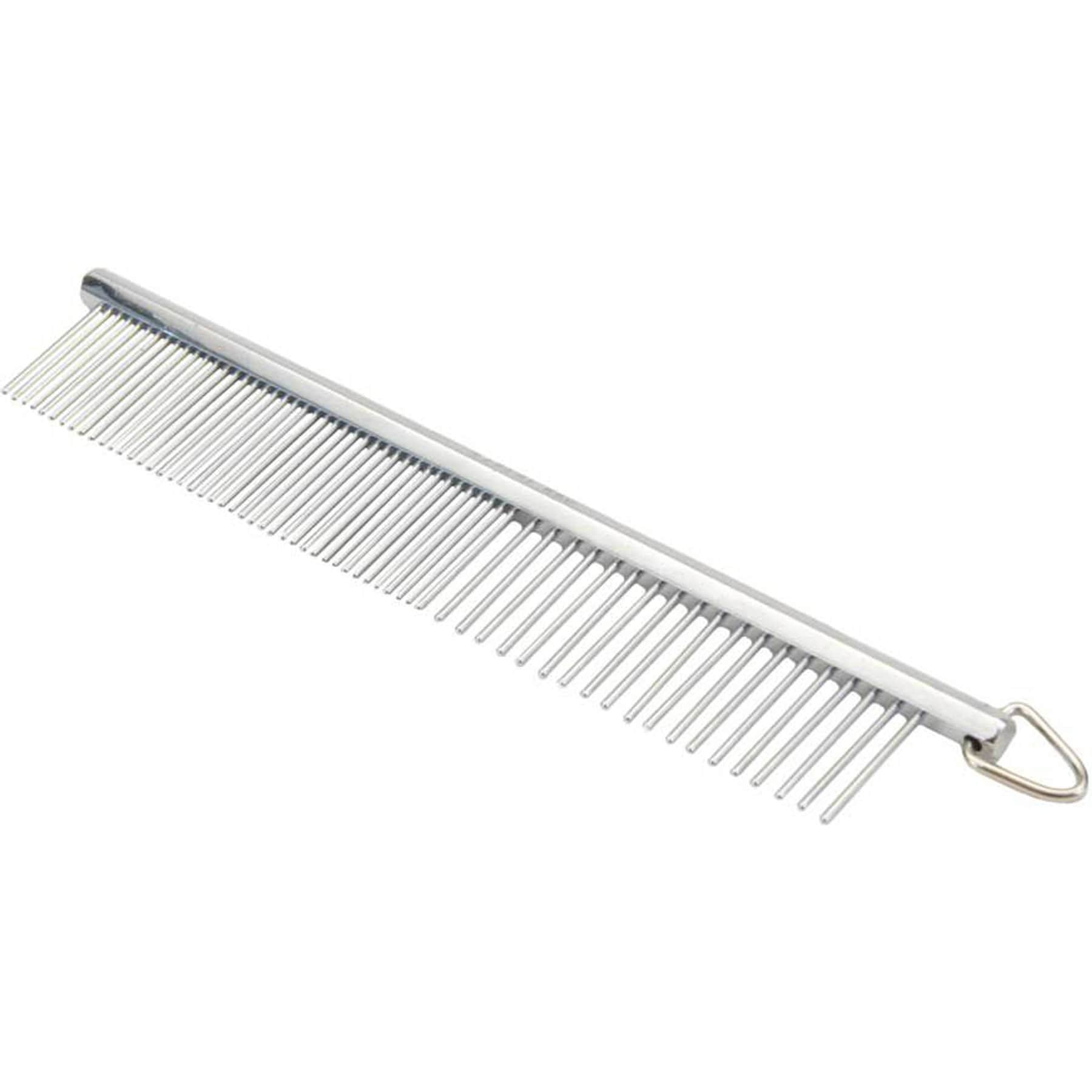
Check gently through brushed hair if the tooth spacing suits the coat. Ask your groomer to demonstrate and stop at resistance or discomfort.
Petful may earn a commission when you click through to Chewy, at no extra cost to you.
The breed standards describe an intelligent, devoted companion, and many prospective owners are drawn to the playful character. Treat those descriptions as an introduction to the breed rather than a guarantee for every Biewer Terrier adult or puppy. Ask the current caregiver how the individual dog behaves with visitors, other pets, handling, and time alone.
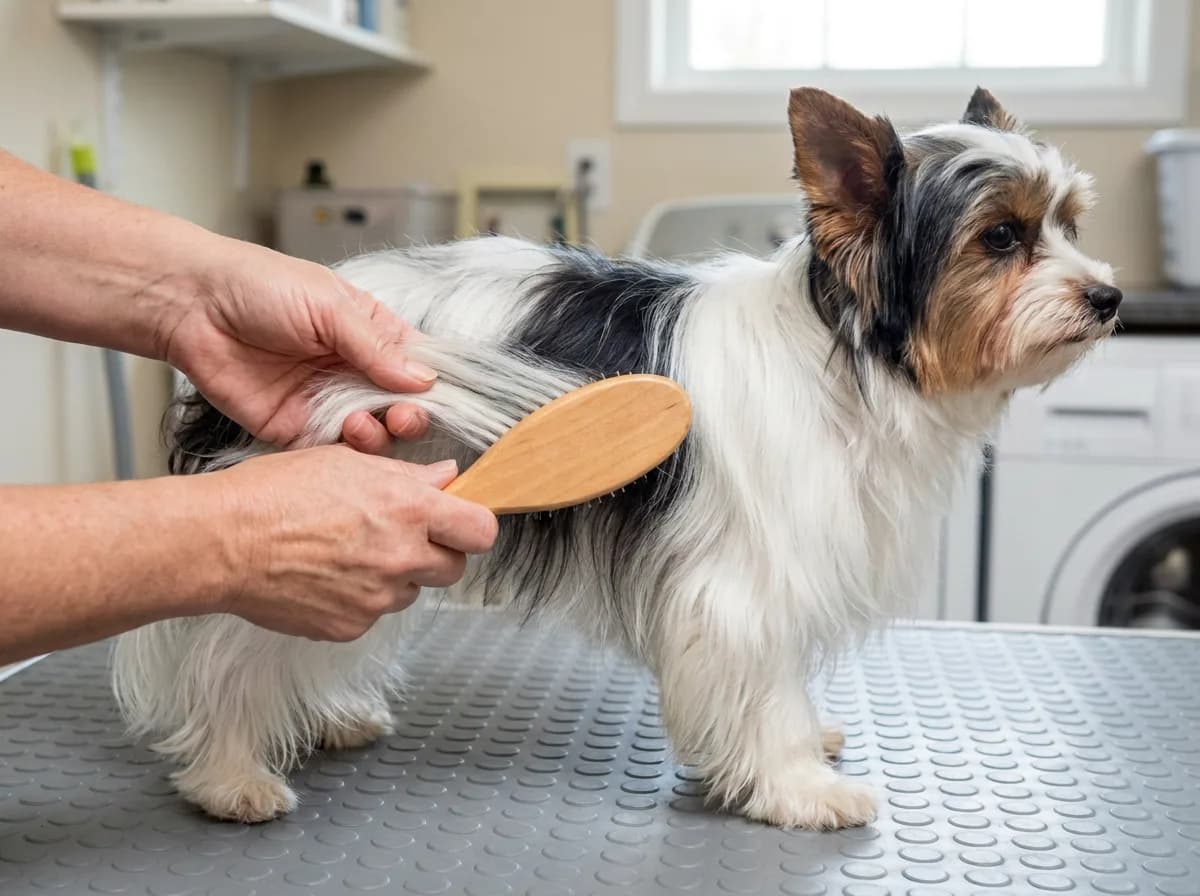
Grooming is part of that relationship. The Biewer Terrier Club of America grooming guidance recommends a pin brush without balls. Ask a groomer to demonstrate gentle brushing, then use a Safari Fine Comb to check small sections if its tooth spacing suits the coat. Stop at resistance or discomfort; a comb check does not replace brushing.

Teach useful household skills
Start training with actions that make daily life easier. A small dog needs clear cues and predictable consequences as much as a larger dog does. Small pieces of Pet Botanics chicken training rewards can reward a successful repetition if they suit the dog's diet. Count rewards in daily intake and practice in quiet settings before adding distractions.
- Reward coming toward you indoors before practicing at a greater distance in a secure place.
- Teach comfortable acceptance of a harness, brush, and brief handling in separate small steps.
- Build a mat or bed routine that gives the dog a familiar place to settle.
- Plan regular toileting opportunities and reward success rather than punishing accidents.
- Practice calm attention around distractions from a distance the dog can manage.
The American Veterinary Society of Animal Behavior recommends reward-based training. Being tiny does not make frightening handling harmless, and being a terrier does not justify harsher methods. If a dog is worried or overwhelmed, simplify the task and seek qualified help when needed.
Make companionship workable
Plan for walks, play, sniffing, and rest rather than assuming a lap dog needs only cuddles. Adjust activity to age, health, and comfort. A quiet walk with time to investigate can be more useful than taking an unprepared dog to a crowded event simply because it is easy to carry.
- Give the dog a resting place that children and other pets will not invade.
- Supervise interactions with larger dogs and avoid rough play that could overwhelm the smaller animal.
- Arrange a reliable caregiver when your schedule does not allow necessary breaks and companionship.
- Introduce absences gradually and observe the response rather than assuming a silent dog is comfortable.
When visitors arrive, ask them to let the dog approach rather than lifting it immediately. An affectionate dog can still dislike being reached for by an unfamiliar person. Describe its preferences clearly to anyone helping with care, especially people who may believe a small dog can simply be picked up to solve every problem.
Adult size and handling needs
The full-grown Biewer Terrier is a toy dog, but small size should not be confused with being a toy for people. Support the body when lifting, prevent falls from furniture, and watch feet and doors in busy areas. Teach children to interact calmly with the dog at a safe level, with an adult supervising.
Our Biewer Terrier full-grown size guide explains standard measurements and growth uncertainty. “Teacup” is not a reason to prioritize the smallest possible puppy over soundness, appropriate development, and a realistic care plan.
Daily care and health questions
Keep preventive care visible in the routine. Arrange veterinary guidance on vaccinations, parasite prevention, nutrition, and dental care for the individual dog. A breed profile can identify useful questions, but cannot tell you whether a particular Biewer Terrier has a health problem or predict its lifespan.

Use small rewards in the specific training decision and count treats in daily intake.
Petful may earn a commission when you click through to Chewy, at no extra cost to you.
Introduce toothbrushing gradually with equipment appropriate to a small mouth. A Virbac C.E.T. dual-ended toothbrush provides different brush-head sizes; use the head your veterinary team considers suitable and a toothpaste intended for dogs. Do not force brushing when the mouth appears painful.
Ask for specific health information
The Biewer Terrier Club of America's health statement identifies recommended screening, including an ophthalmologist's eye examination, patellar evaluation, and DNA tests for specified inherited eye conditions. Request actual parent results from a breeder. A statement that the parents were examined or are “healthy” does not identify which screening was performed.
- Match the report to the dog whose results are being discussed.
- Check the test name, date, and finding rather than relying on a badge or summary.
- Ask which results are missing and why, then discuss important gaps with your veterinarian.
- For an adopted adult with unknown parent history, begin with available records and an individual examination.
The parent club also notes dental concerns such as retained baby teeth and tartar, and reports gastrointestinal sensitivity in the breed. Persistent diarrhea, vomiting, or a change in appetite should not be dismissed as ordinary Biewer Terrier stomach problems. Seek veterinary advice about the actual symptoms instead of trying repeated diets or supplements without a plan.
Bring a concise history to that conversation. Record when the change began, what the dog has eaten, whether there were new treats or chews, and any other changes in routine. Photos or a written record can help you describe a concern, but they do not replace an examination. Ask the clinic what information or sample it wants before your appointment.
- Keep copies of examination and treatment records where another caregiver can find them.
- Ask the veterinary team to demonstrate any recommended home-care technique before trying it alone.
- Record a follow-up date or the changes that should prompt an earlier call.
- Tell each caregiver which foods or products the dog should avoid under its individual plan.
Keep feeding and rewards consistent

Support routine preventive dental care using an appropriate brush size.
Petful may earn a commission when you click through to Chewy, at no extra cost to you.
Choose food appropriate to the dog's life stage and medical needs, and record portions so all caregivers follow the same plan. Small treats are useful for training, but they still contribute to daily intake. Size each reward for the dog's mouth and include it in the feeding discussion if the dog has dietary restrictions.
- Ask what the dog currently eats before planning a change.
- Measure meals consistently and note extras supplied by family members.
- Follow growth and body condition with the veterinary team rather than feeding toward an appearance in a photograph.
- Keep fresh water available and arrange feeding support when your routine changes.
The AKC breed profile lists a life expectancy of 16 years. That breed-level estimate is not a forecast for an individual dog. Planning for a long commitment means budgeting for routine care and potential later-life needs, while responding to changes as they occur. It does not mean accepting a seller's promise that a particular puppy will remain healthy for a specified number of years.
Check ears and comfort during routine care
The standard describes upright ears. A Biewer Terrier with floppy ears may differ from the show ideal, but ear position alone is not a diagnosis or a measure of its value as a companion. Do not tape, trim, or otherwise manipulate ears to correct a concern without appropriate professional guidance.
Use ordinary grooming time to notice the dog rather than concentrating only on its colors or outline. If touching an ear or another area suddenly becomes uncomfortable, report that change. Avoid putting tools or cleaning products into an ear simply because the breed has long hair; ask your veterinary team what care is appropriate.
Choosing a practical grooming routine
A long show-style coat and a short pet trim create different maintenance demands. Both need regular checks for tangles, cleanliness, and comfort. The Biewer Terrier haircut and coat-care guide explains how to choose a manageable style and discuss it with a groomer.
For a short-hair Biewer Terrier, do not assume the next salon visit replaces home care. Ask the groomer to demonstrate the areas that need checking between appointments and how to reach them without pulling. Choose the style around the time and handling skills you can reliably provide.
Shedding and household allergies
Low visible shedding is not the same as being allergen-free. Before bringing a dog into a household with pet allergy, make a plan with the affected person's clinician and avoid treating a breed label as a guarantee. Reactions are a human-health question as well as a grooming question.
Our guide to whether Biewer Terriers are hypoallergenic separates shedding from allergens and explains why an individual household needs more information than a “does not shed” claim. Coat maintenance supports the dog's comfort, but cannot promise that a person will have no symptoms.
Choosing a Biewer Terrier for your home
Before committing, write down who will handle the responsibilities that are easy to underestimate. If one person loves the breed's appearance but someone else will do the grooming and daily care, discuss the routine together. A realistic plan is more useful than hoping the dog will be easier than the profile suggests.
- Who will brush and check the coat between professional appointments?
- Can children and visitors consistently follow gentle handling rules?
- Who provides toileting breaks, activity, and company during workdays?
- Is there room in the budget for preventive care, dental attention, and unexpected treatment?
- What support is available if training or handling becomes difficult?
Finding the right dog
Listings for Biewer Terrier dogs for sale should lead to a careful conversation, not an immediate payment. Ask about the dog's history, parent screening where relevant, social experiences, care records, and the written agreement. With a rescue or adult placement, ask which behaviors have actually been observed in a home.
As one dated example, Rocky Mountain Biewer Terriers' FAQ advertised standard-size males at $3,000 and females at $4,000 when checked October 5, 2026. These are one seller's asking prices, not a national average or a recommendation. Request a current written quote and budget separately for ongoing care. See Biewer Terrier puppies, breeders, and ownership costs for the buying and budgeting decisions. An advertised sale price or an attractive registry document cannot replace suitable care evidence and a source willing to answer questions.
Biewer Terrier vs. Yorkie
The Yorkshire connection explains part of the breed's origin, but does not make today's Biewer Terrier simply a Yorkie with white hair. The two breeds have separate standards. Appearance is only one part of comparing them; grooming effort, individual personality, and the source of the dog also matter.
Our Biewer Terrier vs. Yorkie comparison explores those distinctions. Use it to prepare better questions about actual dogs, rather than assuming one breed is always quieter, easier, healthier, or more affectionate than the other.
Questions from prospective owners
Barking varies between individuals and situations. The AKC describes the breed as alert to visitors without being a constant barker, but that does not guarantee a quiet home. Ask about the actual dog's responses to door sounds, passersby, and time alone. Identify what triggers barking, reward calmer alternatives, and seek help if distress or repeated difficulty settling is involved.
A Biewer can suit a first-time owner who can maintain the coat, teach everyday skills patiently, and handle a very small dog safely. Size does not remove the work. Before choosing one, plan regular grooming, daytime care, dental care, and a realistic budget, then assess the individual dog’s comfort with your household.
Possibly, when adults can supervise and children can follow gentle handling rules. At 4–8 pounds, a Biewer can be injured by a fall or rough play. Teach children to interact at floor level and let the dog retreat. Choose on the dog’s observed responses and the family’s handling habits rather than assuming every small dog suits every child.
BVMS, MRCVS
Dr. Pippa Elliott, BVMS, MRCVS, is a veterinarian with nearly 30 years of experience in companion animal practice. Dr. Elliott earned her Bachelor of Veterinary Medicine and Surgery from the University of Glasgow. She was also designated a Member of the Royal College of Veterinary Surgeons. Married with 2 grown-up kids, Dr. Elliott has a naughty Puggle named Poggle, 3 cats and a bearded dragon.
Sign up for expert-backed reviews and safety alerts all in one place.