Biewer Terrier Full Grown: Size, Weight, and Growth
Learn the published adult Biewer Terrier dimensions, measure height and weight consistently, and keep a practical growth record. Separate body condition and equipment fit from uncertain teacup claims.

BVMS, MRCVS
Petful is reader supported. As an affiliate of platforms like Amazon and Chewy, we may earn a commission when you buy through links on this page. There is no extra cost to you.
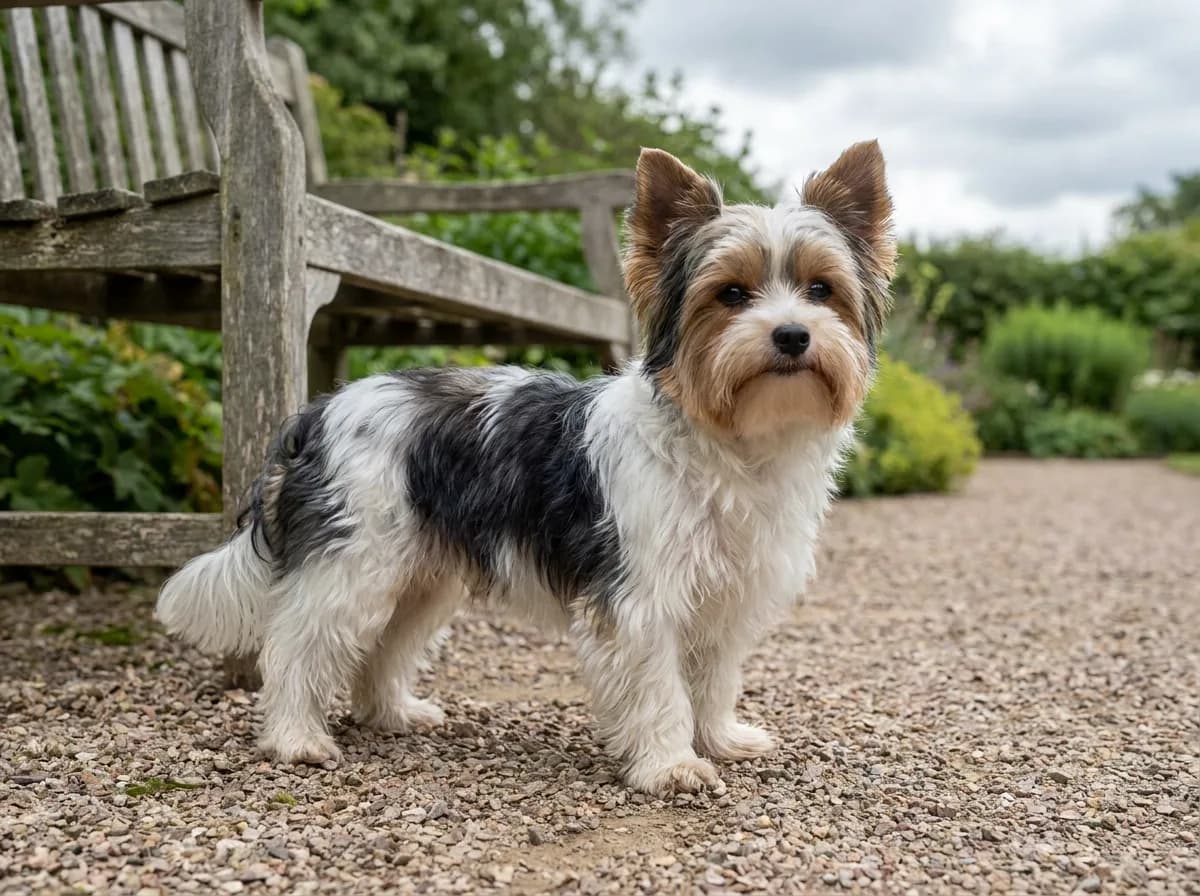
For a Biewer Terrier full grown, the AKC lists a height of 7–11 inches and a weight of 4–8 pounds. Those adult breed dimensions are useful background, but they are not a feeding target, a promise about a puppy, or a substitute for assessing the individual dog's health.
The most useful approach is to track three separate things: height, weight, and body condition. Measuring them consistently gives you better information than judging a long coat from photographs or multiplying a puppy's weight to predict its adult size.

Sign up for expert-backed reviews and safety alerts all in one place.
Biewer Terrier full-grown size and weight
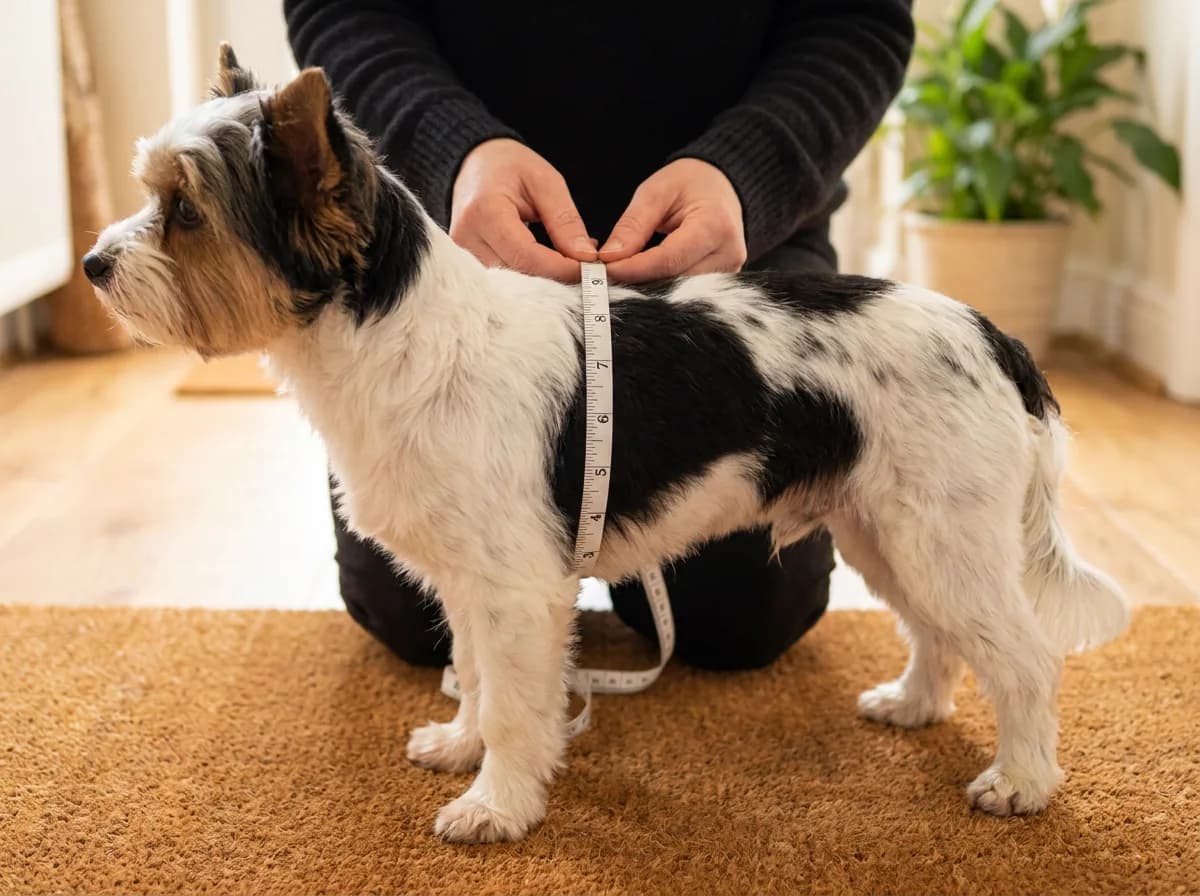
The AKC Biewer Terrier profile gives the adult range as 7–11 inches tall and 4–8 pounds, approximately 18–28 centimeters and 1.8–3.6 kilograms. Height is measured at the withers, near the top of the shoulders, rather than to the ears or the top of the head.
- 1Measure height at the withers with the dog standing naturally on a level surface.
- 2Record weight separately from body condition; the same weight does not suit every frame.
- 3Treat puppy weight calculators and teacup labels as uncertain descriptions, not adult-size guarantees.
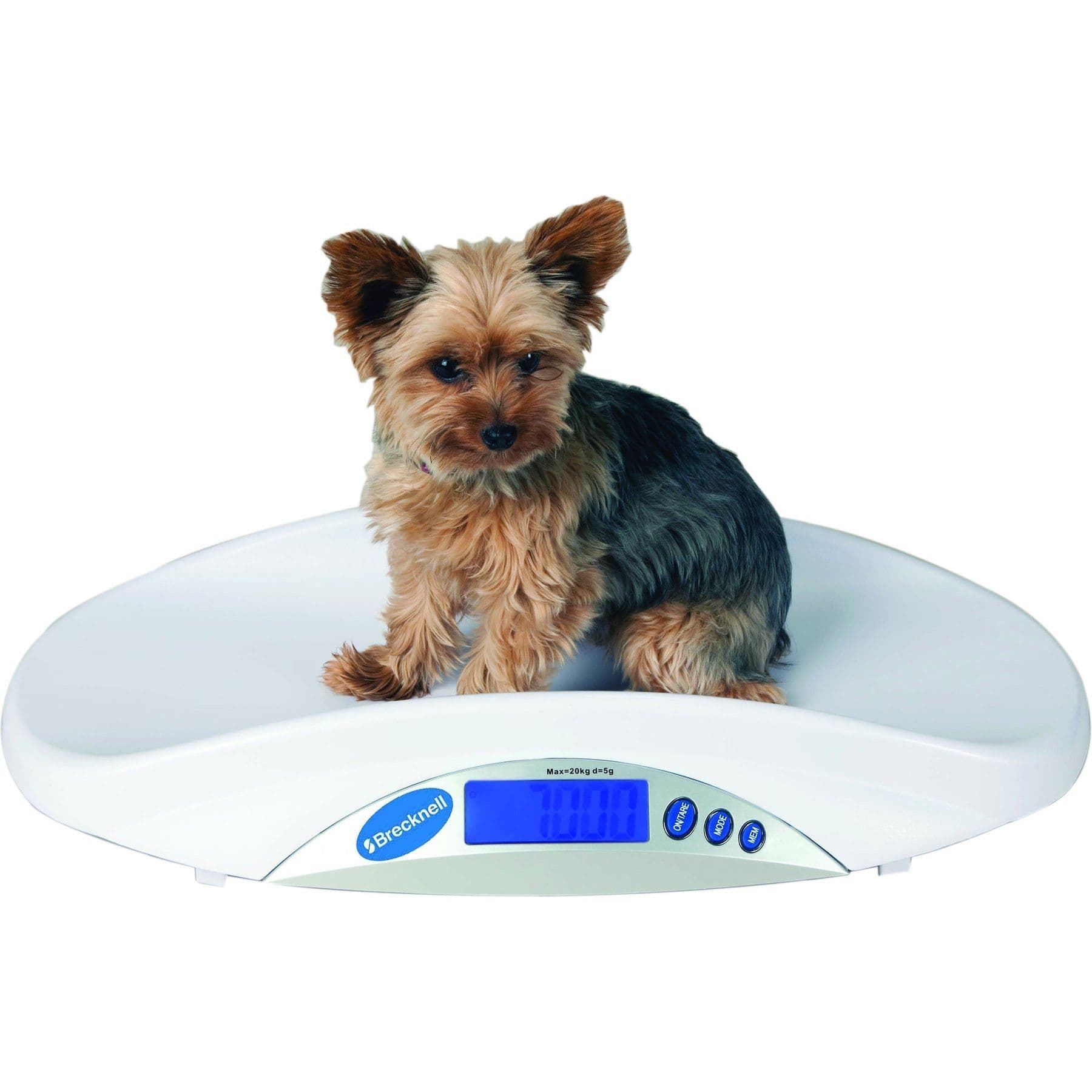
A small-animal scale for consistent home weight records when your dog can stand safely on the tray. Veterinary-practice weighing remains an alternative.
Petful may earn a commission when you click through to Chewy, at no extra cost to you.
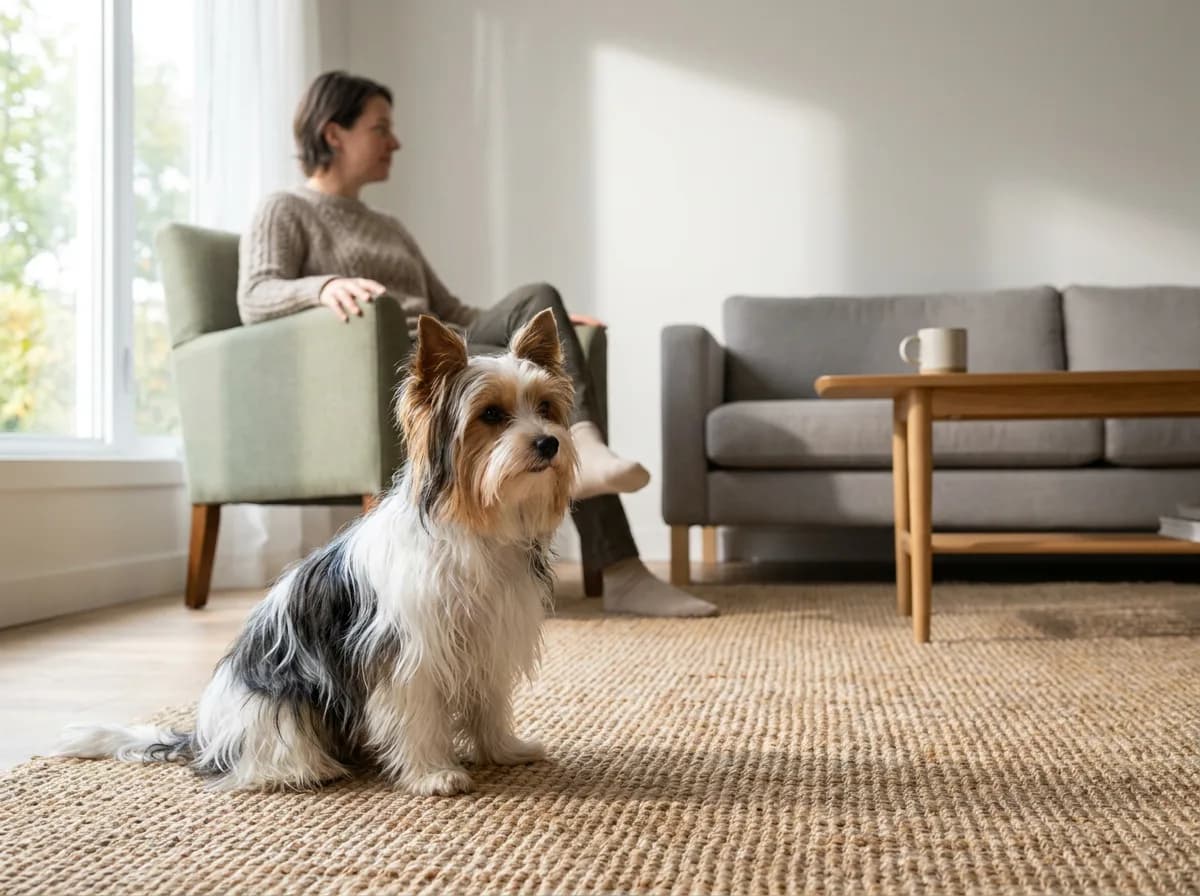
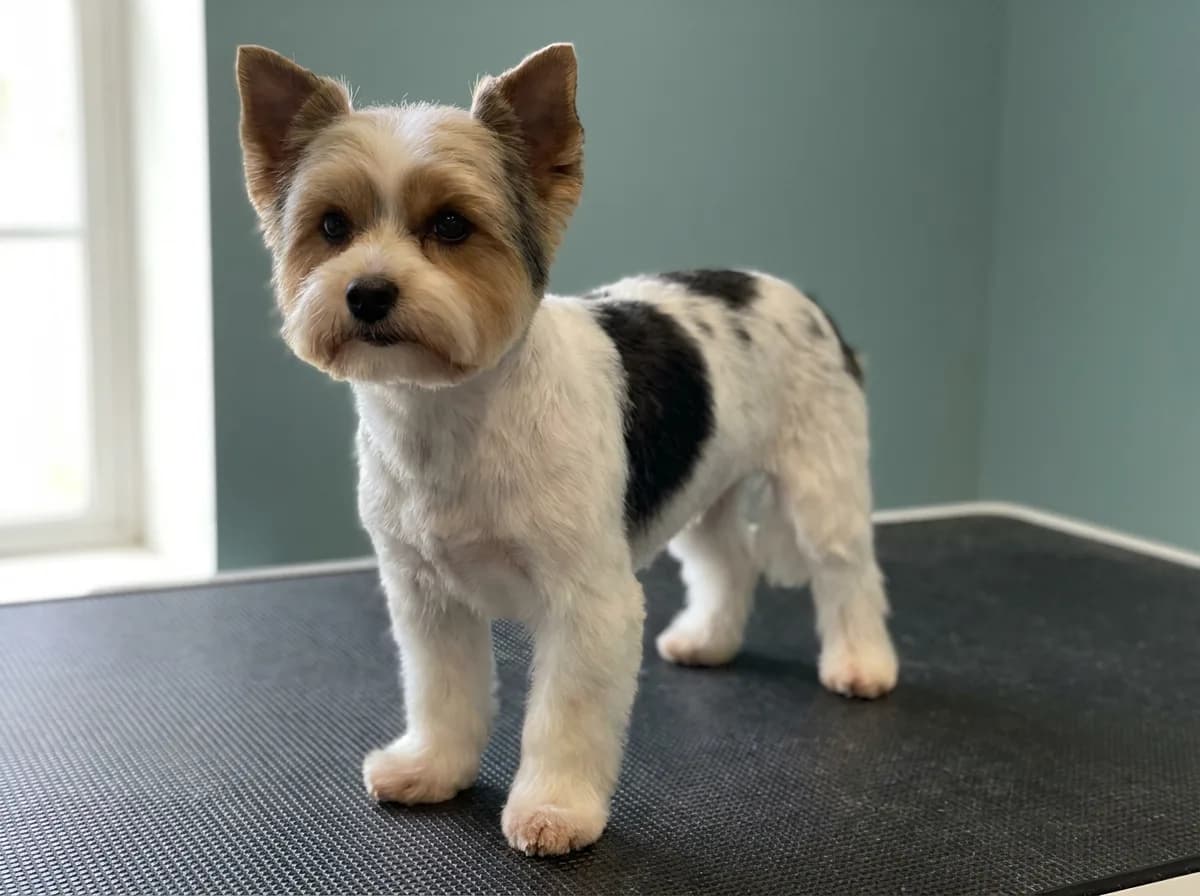
The long coat can make a Biewer look taller, broader, or more substantial than the body beneath it. A recently clipped dog may appear much smaller without having lost weight. That is why a photograph beside a shoe or household object cannot replace a direct measurement.
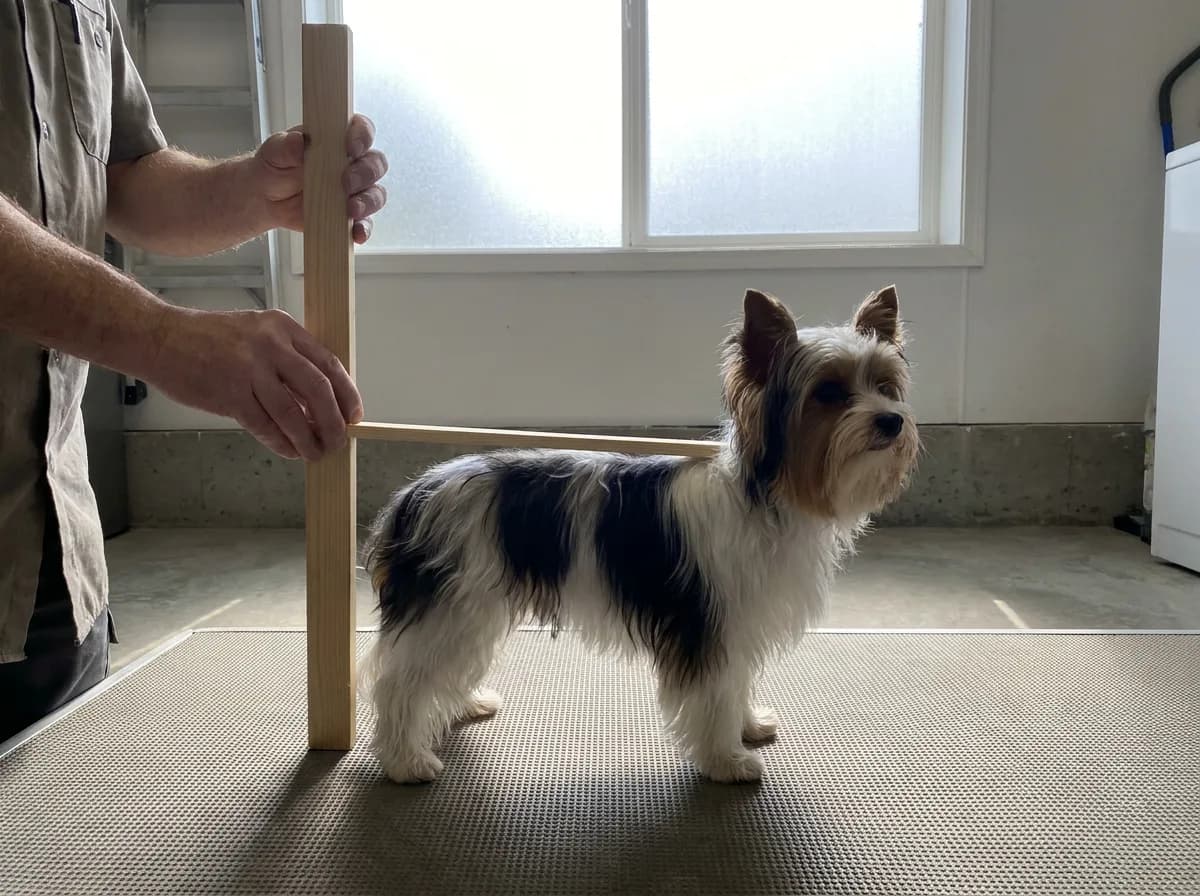
Keep the three measurements separate
- Height describes the distance from the ground to the withers when the dog is standing normally.
- Weight records total body mass at that moment and can change with growth, food intake, and health.
- Body condition helps assess fat covering and shape in relation to the dog's frame; it is not simply a number on the scale.
A Biewer Terrier weight calculator cannot tell you all three. An estimate based on a single puppy weight leaves out the dog's individual growth history and current condition. A Brecknell MS15 pet scale can help record actual weight if the dog stands safely on its tray; clinic weighing is an alternative. Interpret a measurement alongside growth and body condition instead of feeding toward a calculator result.
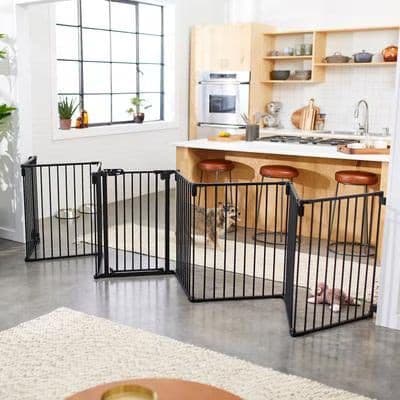
Support a supervised safe rest and introduction area; size and escape ability still govern suitability.
Petful may earn a commission when you click through to Chewy, at no extra cost to you.
Compare ranges without turning them into rankings
A dog outside the published adult range deserves an individual assessment, not an automatic conclusion that it is unhealthy or incorrectly identified. Conversely, being within the range does not establish that a dog has an appropriate body condition. Your veterinarian can assess the frame, condition, development, and records together.
The AKC Biewer profile lists 4–8 pounds, while the Yorkshire Terrier standard specifies no more than 7 pounds. These standards overlap and do not guarantee an individual pet’s weight. If you are deciding between two breeds, compare the actual dogs as well as their standards. Our Biewer Terrier vs. Yorkie guide explains their size context alongside identity and household fit. The breed label alone is not enough to decide whether a particular harness, carrier, or home arrangement will work.
Following growth without a false prediction
A useful Biewer Terrier growth chart starts with your dog's own measurements. A table of invented monthly target weights would create a false impression of precision, especially when the puppy's parentage, health, feeding, and previous measurements are unknown. Keep a record that your veterinarian can interpret instead.
Ask at routine visits how development is progressing and when to recheck. Growth is not the same as continuing to gain weight indefinitely: an adult can gain fat after its height has stabilized. A stable weight also does not, by itself, prove that a puppy has finished developing.
Understand what full grown means
The AKC's general puppy-growth guide reports that small breeds typically stop growing around 6–8 months, while emphasizing variation by dog and breed size. That is broad small-dog guidance, not a validated Biewer-specific deadline. Use your puppy's history and veterinary assessment to interpret its progress rather than declaring growth complete on a particular birthday.
- Reaching adult dimensions does not automatically settle decisions about food, exercise, or behavior. Ask your veterinarian when to review the feeding plan and what activity suits your developing dog. Continue patient training and safe supervision even when a puppy looks adult.
Measure height safely
Use a flat, nonslip floor and a quiet setting. A helper can reward a comfortable stand with a tiny piece of Pet Botanics training reward if it suits the dog's diet. Count it in daily intake. Do not force the dog into position or use a high surface solely to make measuring easier.
- Let the dog stand with all four feet supporting it naturally and its head in a comfortable position.
- Locate the withers gently beneath the coat, around the highest point of the shoulder area.
- Use a rigid measuring aid to take the vertical distance from the floor to that point, keeping it upright.
- Check that you have not measured to the head, ears, raised hair, or a curved point farther down the back.
- Record the date, unit, and method. If the dog shifts or crouches, stop and try again later rather than keeping a doubtful reading.
Small differences between home readings may come from posture or technique. If the result would affect an important decision, ask your veterinary team to check it. Measuring should remain a brief, comfortable activity, not a prolonged attempt to make the dog match a chart.
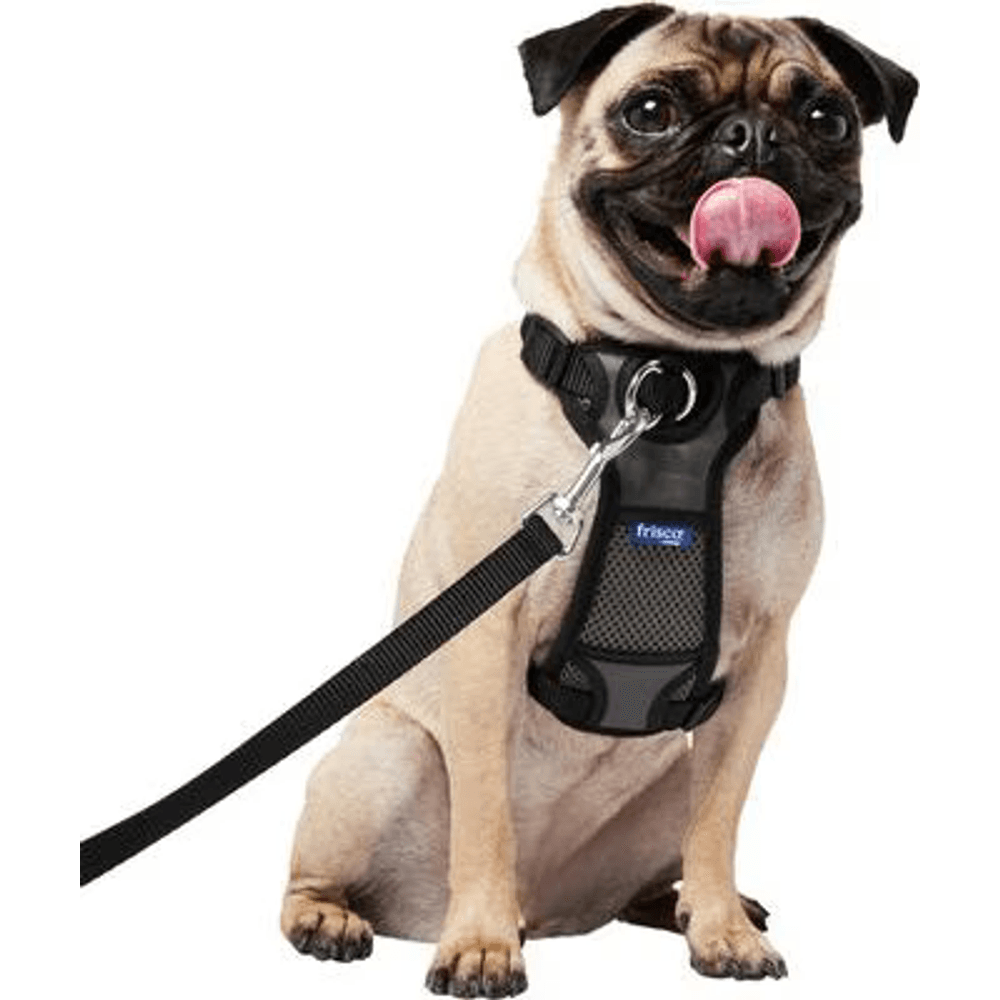
A padded walking-harness option only when the individual dog fits this exact Small model. Measure before buying and check for slipping and restricted movement.
Petful may earn a commission when you click through to Chewy, at no extra cost to you.
Weigh consistently and keep a usable record
Use a suitable pet scale with a stable surface and a range appropriate to a small dog, or arrange weighing at your veterinary practice. A bathroom scale may not resolve small changes reliably. Keep the dog supervised and stop if it is likely to jump or slip.
Where practical, use the same scale and similar circumstances each time. Record whether the dog was wearing a harness or other equipment, and use one unit consistently. Do not confuse pounds with kilograms when comparing a home record with a clinic printout.
| Date and age | Weight and unit | Height at the withers and unit | Body condition assessment | Notes for the veterinary team |
|---|---|---|---|---|
| Record visit or measurement date | Enter actual reading | Enter actual measurement | Record the clinician's assessment or a question | Note appetite, activity, diet changes, and measurement method |
| Next measurement | Enter actual reading | Measure when useful | Ask about any change | Record concerns rather than estimating a cause |
| Follow-up measurement | Enter actual reading | Keep the same method | Compare with prior assessment | Bring the full record to the next visit |
This blank owner tracking table is not a breed size chart with expected weights for each age. You can copy its headings into a notebook or spreadsheet and leave any unmeasured field blank. Missing information is more useful than a guessed number that later looks like a real observation.
Turn the record into a useful conversation
Bring the puppy's earlier records if you have them, along with details of the complete diet, treats, and any changes in eating or activity. Ask whether the trend is appropriate for this dog, whether the measurements are reliable, and when another assessment would help.

Use small rewards in the specific training decision and count treats in daily intake.
Petful may earn a commission when you click through to Chewy, at no extra cost to you.
If weight changes unexpectedly or you notice reduced appetite, unusual tiredness, vomiting, or diarrhea, contact your veterinarian rather than waiting for the next planned weigh-in. A home growth record can support a consultation, but it cannot identify the cause of a change or rule out illness.
Teacup claims, healthy condition and equipment fit
“Teacup” and “mini” are sales descriptions, not separate official Biewer Terrier varieties in the AKC standard. A seller's promise of a full-grown teacup Biewer Terrier does not establish a particular adult weight or remove the need for normal veterinary care, training, and safe handling.
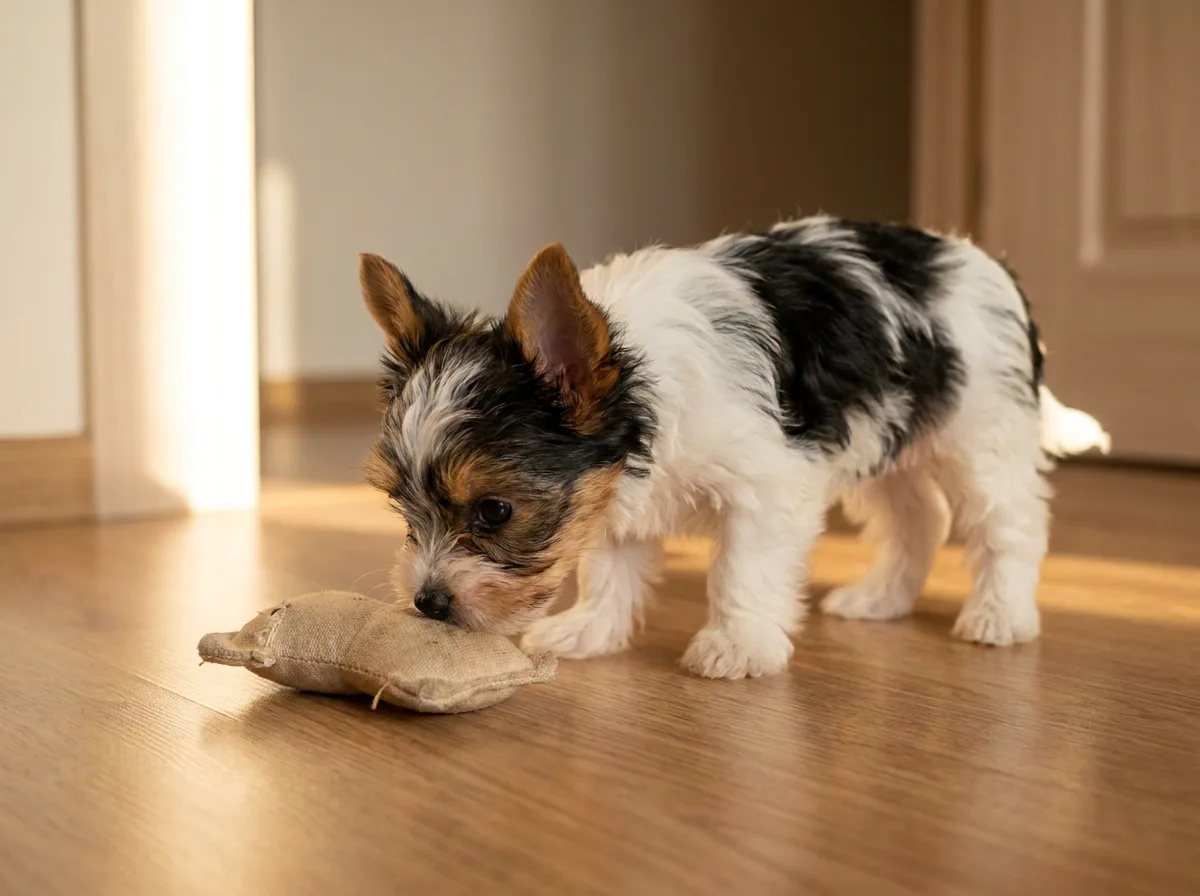
Never reduce a puppy's food to keep it beneath a promised weight. Discuss growth and an appropriate feeding plan with your veterinarian. If you are considering a very small puppy, ask for its actual growth records and veterinary findings before making a decision based on size.
Understand body condition beneath the coat
The WSAVA nutrition toolkit distinguishes body condition score, which assesses fat stores, from muscle condition. Ask your veterinary team to demonstrate how they assess your dog's ribs, waist, and abdominal outline beneath its hair, and to record the result alongside weight.
Use that demonstration to notice changes, rather than trying to diagnose a problem from appearance alone. A coat may hide a changing outline, and weighing cannot explain whether a change involves growth, fat, muscle, or something else. An individualized nutrition plan should reflect the whole assessment.
Measure for a harness instead of guessing by breed
Manufacturers use different size labels. Follow the exact product's instructions for chest and neck measurements, compare both with the stated adjustment range, and check how the harness sits on the dog. Do not assume that every Biewer fits a small or extra-small size.
A Frisco padded no-pull harness in Small is an option to consider only if this individual dog's measurements fit that model's range. It may be too large for some Biewers. Choose another size or design if you cannot achieve a secure, comfortable fit rather than tightening an unsuitable model as far as possible.
Check the fit while the dog stands and moves:
- Confirm that straps stay in place without rubbing the armpits or restricting movement.
- Follow the manufacturer's guidance for adjustment and fastening.
- Look for loose openings that could allow the dog to back out.
- Recheck after grooming and during growth, and inspect for wear.
- Practice indoors or in another secure space before relying on new equipment outside.
Apply the same care to the home setup
A carrier needs sufficient space for comfortable positioning as well as an appropriate weight rating. If considering a Frisco eight-panel gate and playpen, check the gaps, latches, and stability against the individual dog; small size does not mean a dog cannot climb, squeeze through, or become caught. Observe how the dog uses any new setup before leaving it unattended.
Record the dog's body length and height when a carrier manufacturer requests them, and check the usable internal dimensions rather than only the outside measurements. A thick pad reduces available space. Let the dog explore the carrier at home so you can observe whether it can turn and lie comfortably; do not discover a poor fit only when leaving for a journey.
As one dated example, Rocky Mountain Biewer Terriers' FAQ advertised standard-size males at $3,000 and females at $4,000 when checked October 5, 2026. These are one seller's asking prices, not a national average or a recommendation. Request a current written quote and budget separately for ongoing care. For a puppy purchase, a promise about adult size should sit behind more important questions about records, care, and the agreement. Our Biewer Terrier puppy guide covers advertised prices, breeder checks, and ownership costs. Paying more for a tiny label does not replace that investigation.
How this fits the Biewer Terrier breed
The AKC breed profile lists 16 years as a breed-level life-expectancy estimate and describes alertness to visitors without constant barking. Neither predicts an individual dog’s lifespan or noise; ask about its observed barking triggers and plan for long-term care. The Biewer Terrier breed guide covers the wider commitment. Use adult measurements for practical fit while assessing the individual dog’s behavior, comfort, and needs.
There is no validated Biewer-specific deadline. AKC’s general guide says small breeds typically stop growing around 6–8 months, with individual variation. Follow your dog’s measurements and veterinary assessment. Adult height, an appropriate feeding plan, and behavioral maturity are separate questions, so a birthday alone should not settle all three.
No. Eight pounds is the upper end of the AKC adult breed range, not a diagnosis for every dog. A larger frame and excess body fat are different things. Ask your veterinarian to assess body condition and muscle alongside weight rather than cutting food solely to bring the dog inside the published range.
No. Use the exact model’s chest and neck measurements as well as its fitting instructions. Dogs of the same weight can have different proportions, and “Small” is not standardized across products. Check movement, rubbing, and openings the dog could back out through, then recheck during growth and after grooming.
BVMS, MRCVS
Dr. Pippa Elliott, BVMS, MRCVS, is a veterinarian with nearly 30 years of experience in companion animal practice. Dr. Elliott earned her Bachelor of Veterinary Medicine and Surgery from the University of Glasgow. She was also designated a Member of the Royal College of Veterinary Surgeons. Married with 2 grown-up kids, Dr. Elliott has a naughty Puggle named Poggle, 3 cats and a bearded dragon.
Sign up for expert-backed reviews and safety alerts all in one place.