Biewer Terrier vs. Yorkie: Differences Beyond Coat Color
Compare Biewer Terriers, Yorkshire Terriers, and parti-colored Yorkies using breed identity, documented standards, individual temperament, grooming needs, and practical household decisions.

BVMS, MRCVS

Petful is reader supported. As an affiliate of platforms like Amazon and Chewy, we may earn a commission when you buy through links on this page. There is no extra cost to you.
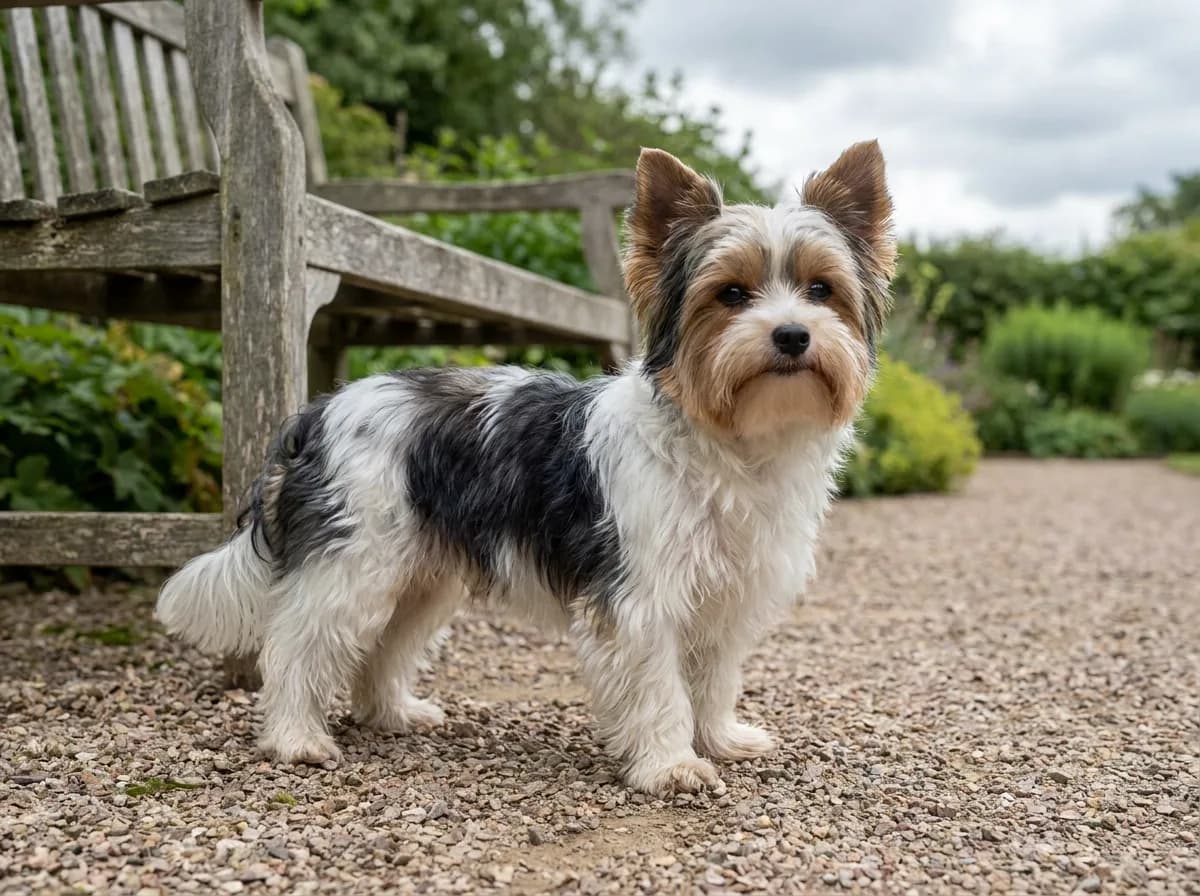
When comparing Biewer Terrier vs. Yorkie, the first difference is breed identity. The Biewer Terrier and Yorkshire Terrier are separately recognized breeds. A parti-colored Yorkie does not become a Biewer Terrier because it has white markings, and a photograph cannot establish either dog's pedigree.
Both can be appealing small companions, but choosing between them involves more than preferred colors. Consider the individual dog's size, temperament, grooming needs, health records, and fit with your household. Those practical details are more useful than a promise that one breed is always calmer or easier.

Sign up for expert-backed reviews and safety alerts all in one place.
Biewer Terrier vs. Yorkie: distinct breed identities
The Biewer Terrier developed from tricolor dogs born in the breeding program of Yorkshire Terrier breeders Werner and Gertrude Biewer. That origin does not make every modern Biewer a Yorkshire Terrier cross. The American Kennel Club's recognition announcement confirms its separate breed recognition in 2021.
- 1Check breed registration and parent records when identity matters; coat color alone cannot confirm pedigree.
- 2A parti-colored Yorkie is not automatically a Biewer Terrier.
- 3Compare the actual dogs' care needs and behavior, not an assumed personality advantage.
Ask the seller or rescue what “Biewer Yorkie” means in its description. It may be loose wording, an uncertain identification, or a claim about mixed ancestry. Clarify that before using the phrase to make assumptions about the dog. Our established Yorkshire Terrier profile covers the Yorkie as a breed in its own right.
For either dog, buy walking equipment by measurement. The Frisco Padded No Pull Harness in Small is suitable only if the dog's actual measurements match its chart. Neither breed name guarantees that “small” is the right fit.

A padded walking-harness option only when the individual dog fits this exact Small model. Measure before buying and check for slipping and restricted movement.
Petful may earn a commission when you click through to Chewy, at no extra cost to you.
Size, temperament and household fit
The AKC Biewer Terrier profile lists a height of 7–11 inches and a weight of 4–8 pounds. The Yorkshire Terrier standard specifies a weight no greater than 7 pounds. These are breed references, not promises that every pet or puppy will fall within a particular measurement.
There is substantial practical overlap: both require careful handling around furniture, doors, feet, and larger animals. A single pound's difference is not a sound basis for calling one dog sturdier, safer with young children, or better for travel. Use the dog's current measurements and observed needs when making those decisions.
Grooming effort is a daily-life decision
Both breeds can have long, silky coats. Maintaining a long coat asks more of the owner than admiring it in a show photograph. A shorter pet trim may be more practical, but still needs home checks and professional attention as appropriate. Ask about the actual dog's coat texture, tangling, and comfort with handling.
For the Biewer coat, the Biewer Terrier Club of America grooming guidance recommends a pin brush without balls. Ask a groomer to demonstrate gentle brushing and use a Safari Fine Comb afterward only if its tooth spacing suits the individual coat. Check small sections and stop at resistance or discomfort; the comb does not replace brushing.
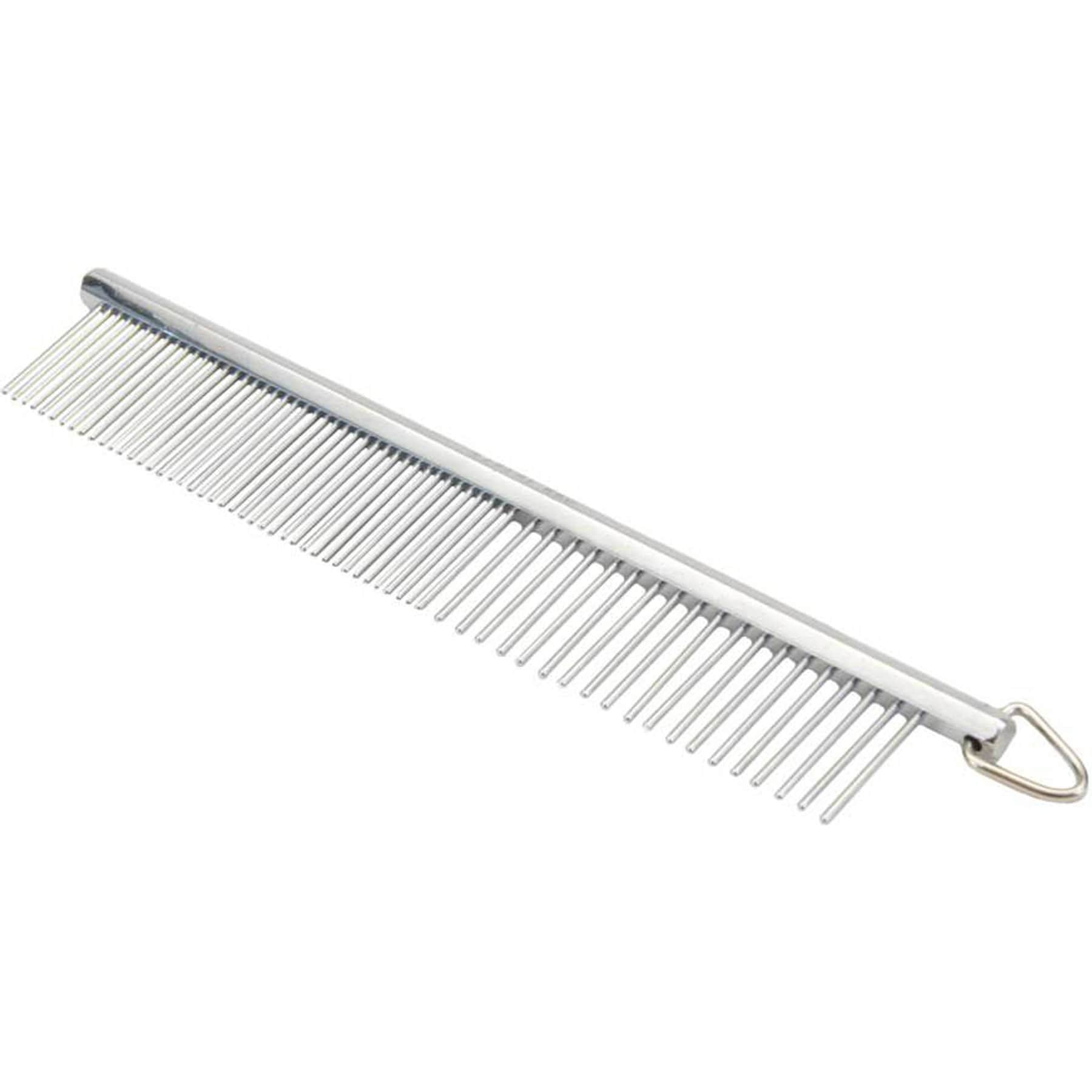
Check brushed hair gently with a comb suited to the individual coat. Ask a groomer about tooth spacing and stop if it catches or causes discomfort.
Petful may earn a commission when you click through to Chewy, at no extra cost to you.
- Decide who will check the coat between appointments, especially after wet or dirty outings.
- Ask whether the dog accepts brushing on the body and handling around the face and feet.
- Choose a manageable length rather than a style that depends on care you cannot provide.
- Budget for grooming alongside food, routine veterinary care, and training support.
The dog's ability to participate comfortably is part of the comparison. A mature dog with an established grooming routine may need a different transition plan from a puppy still learning to accept a brush. Neither situation can be predicted solely from whether the dog is a Biewer or a Yorkie.
Compare temperament through examples
The Biewer breed description emphasizes a playful companion; the AKC Yorkshire Terrier description highlights the Yorkie's terrier background. Those broad descriptions do not prove which individual will be quieter, more affectionate, or easier to train. Ask for examples of behavior in settings resembling your home.
- Visitors: Does the dog approach, keep its distance, become excited, or need help settling?
- Other pets: Has it lived with them, or only met them briefly under supervision?
- Time alone: What has the caregiver actually observed, and under what routine?
- Handling: Which activities are comfortable, and which still need practice?
- Walks: Can the usual caregiver manage the dog around common neighborhood distractions?
A useful answer includes the conditions. “Settles on a bed while one familiar visitor is seated” tells you more than “very calm.” Likewise, a dog that is affectionate with its current owner may need time to feel comfortable with someone new. Avoid arranging frightening tests or forcing greetings to try to settle the comparison in one meeting.
Use the comparison below to organize a conversation. Breed registration is a question of documented identity; the other rows concern care you will actually provide. A parti-colored Yorkie belongs in that same practical discussion, without being renamed a Biewer on the strength of its markings.
| Decision | Biewer Terrier | Yorkshire Terrier | Parti-colored Yorkie |
|---|---|---|---|
| Breed registration | Separate recognized breed; check the individual records | Check Yorkshire Terrier records | Check the claimed Yorkshire Terrier identity; color does not establish it |
| Standard color reference | Tricolor pattern with white and specified head markings | Adult blue and tan in the standard | Parti coloring differs from the standard show-color description |
| Size planning | AKC reference 4–8 pounds; measure the dog | Standard maximum 7 pounds; measure the dog | Use actual measurements rather than a color-based prediction |
| Grooming decision | Choose a length and routine the household can maintain | Choose a length and routine the household can maintain | Assess actual coat texture, length, and comfort |
| Temperament decision | Ask for observed behavior and relevant history | Ask for observed behavior and relevant history | Color cannot supply a temperament forecast |
Training needs overlap
Either breed benefits from clear, reward-based teaching. Small size does not make house training, loose-leash walking, or comfortable grooming automatic. Start with easy repetitions. Break Pet Botanics chicken training rewards into comfortable small pieces if they suit the dog's diet, and count them in daily intake. Increase difficulty as the dog succeeds. Ask for help if anxiety or conflict makes ordinary care difficult.
- Teach a consistent toileting routine with frequent appropriate opportunities.
- Reward attention in quiet surroundings before expecting it around distractions.
- Practice a calm resting place and comfortable short separations.
- Introduce equipment and handling gradually instead of restraining the dog until it stops protesting.
When evaluating a puppy, consider who will provide that teaching during the workday. When evaluating an adult, ask which skills it already practices in a home and which remain uncertain. A breed comparison cannot resolve a scheduling gap if neither dog will receive the breaks and support it needs.
Compare health evidence, not health slogans

Use small rewards in the specific training decision and count treats in daily intake.
Petful may earn a commission when you click through to Chewy, at no extra cost to you.
Neither a tricolor coat nor a traditional Yorkie color proves better health. Ask for the actual health records of the dog and appropriate parent-screening records when buying a puppy. Have your veterinary team explain the reports, including their limitations, rather than relying on a claim that one breed is “healthier.”
Keep the comparison fair by asking each source the same questions. One breeder may provide a detailed packet while another offers only reassurance; that is a difference in available evidence, not proof that one breed has fewer health needs. A rescue may have useful examination and treatment records despite knowing nothing about the parents.
- What has been checked in this individual dog, and what still needs follow-up?
- Which parent results are available, and can their identities be matched to the documents?
- Are any current medications, dietary restrictions, or handling limitations relevant to daily care?
- Who can explain a result that you do not understand before you commit?
Both dogs also need routine preventive care. Discuss dental care and handling with the veterinary team, including a brush that fits the mouth. The smaller head of a Virbac C.E.T. dual-ended toothbrush may be useful if the team considers it appropriate. Pain or resistance needs attention, not forceful brushing.
Tricolor Biewer, traditional Yorkie and parti Yorkie
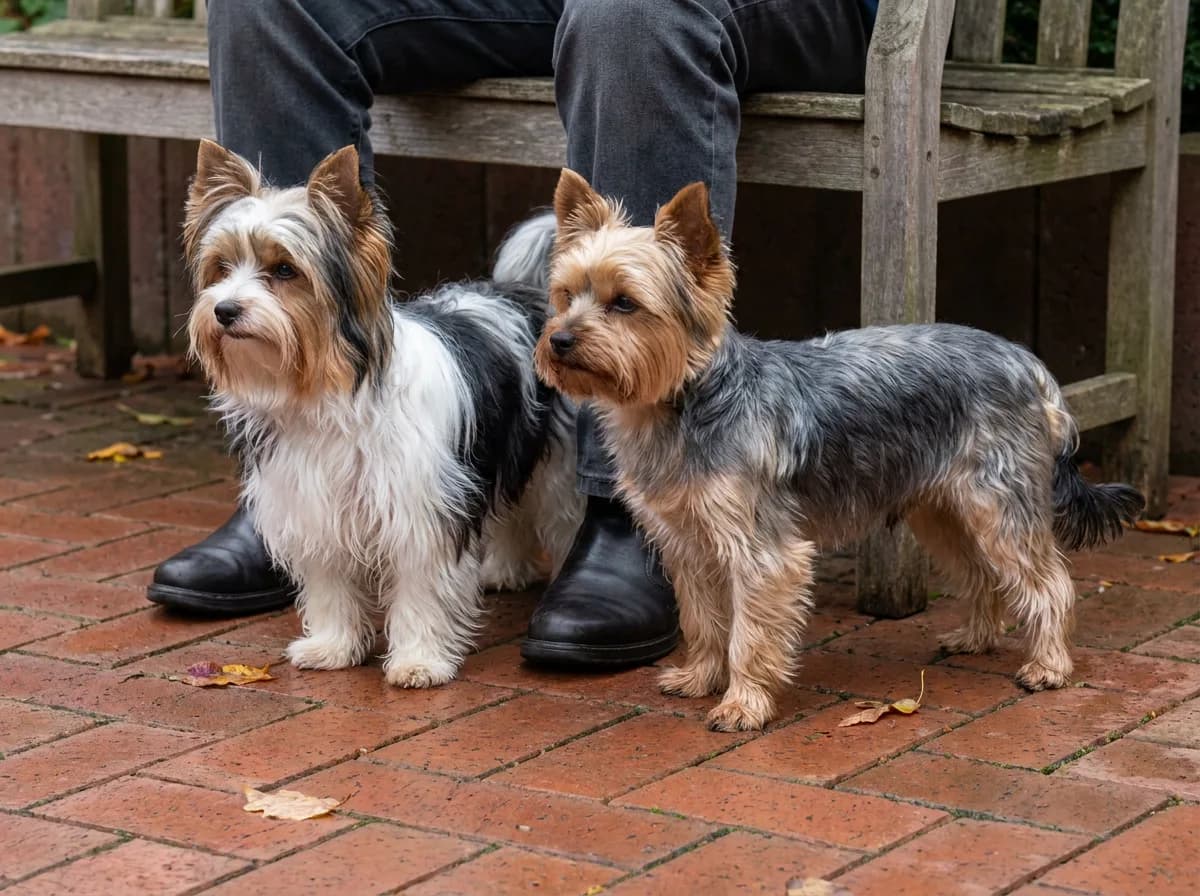
A tricolor Biewer Terrier and a parti Yorkie can be confused in casual photographs because both may show white alongside darker and tan areas. That resemblance is not proof that they are the same breed. “Parti” describes coloring; it does not replace information about ancestry or registration.
The Biewer Terrier breed standard describes its tricolor pattern. The Yorkshire Terrier standard describes the adult blue-and-tan coat, including a narrow allowance for a small white chest spot. A dog falling outside a show's color requirement is not automatically another breed. Keep a conformation judgment separate from identity and from its suitability as a pet.

Support routine preventive dental care using an appropriate brush size.
Petful may earn a commission when you click through to Chewy, at no extra cost to you.

Read photographs in context
A puppy's color and a mature dog's coat are not necessarily identical. Grooming, hair length, lighting, and camera angle can change how markings and body proportions appear. A short trim can make two dogs look more alike than their long-coated show photographs do. None of those visual changes establishes or erases a pedigree.
- Ask for current photographs that show the whole dog, while recognizing that pictures remain descriptive evidence.
- Read the registered breed name and the identity details rather than relying on a listing headline.
- Clarify whether a seller is discussing registration eligibility, show eligibility, or companion placement.
- Treat a mixed-breed dog as a mixed-breed dog when that is what its records support.
The available evidence here does not provide comparable population counts for a reliable rarity ranking between Biewer Terriers and Yorkies. If a seller advertises a “rare Biewer Yorkie,” ask exactly what identity and records support that description. Scarcity language alone does not justify a premium price or replace documented ancestry and a clear agreement.
Keep everyday care separate from coat color
Training rewards, grooming tools, and walking equipment should match the dog's size, needs, and comfort. A parti coat does not require a different training philosophy. A tricolor head does not tell you whether the dog will tolerate brushing. Observe the dog and make gradual, practical adjustments.
Low visible shedding also does not establish that either dog will be safe for a person with pet allergy. The guide to whether Biewer Terriers are hypoallergenic explains that distinction. Discuss significant allergy concerns with the affected person's clinician before treating any breed or coat type as the answer.
Turn the comparison into a household decision
Start with requirements that would affect either breed. Write down your work schedule, the animals already in the home, and the people who will handle the dog. Then compare each candidate against those conditions. This is particularly useful when you are choosing between an adult and a puppy, because the age and known history may matter more than the breed difference.
For example, an adult dog with a documented home routine may give you clearer information about toileting and time alone. A puppy requires you to plan for teaching those skills. That does not make either choice universally better; it changes which uncertainties and responsibilities you are accepting at the start.
Bring the same questions to both meetings
Ask the caregiver to describe an ordinary day and show routine handling that the dog already accepts. Do not request a stressful demonstration to find out which dog is “tougher.” Allow time for the dog to become comfortable, and acknowledge that one meeting cannot show every behavior you may later see at home.
- Morning routine: Who will provide the first toileting opportunity, meal, and activity before work or school?
- Grooming: Can the regular caregiver comfortably follow the current routine, or will professional help be needed to teach it?
- Home layout: Are there safe resting areas, manageable doorways, and a way to separate resident pets during introductions?
- Visitors: Can everyone respect a dog that chooses distance or needs help settling?
- Travel and backup care: Who can follow the dog's food, handling, and medication instructions when you are unavailable?
Record specific answers beside each dog rather than awarding points for broad breed descriptions. A dog that enjoys a familiar caregiver's lap has not necessarily demonstrated comfort being picked up by visitors. A dog described as energetic may settle well after suitable activity. Ask what those words mean in practice before using them to rule a candidate in or out.
- Record specific answers about each individual dog, including what the caregiver has not observed. A breed description can guide your questions, but it cannot fill gaps in the dog's history.
Compare the care budget on equal terms
The initial price is only one part of the decision. Obtain local estimates for the coat length and grooming schedule you expect, and discuss routine veterinary costs with the clinic you would use. Include equipment that actually fits, training support when needed, and a plan for unexpected expenses.
One dog's advertised price may include different services from another's. Read the agreement to determine which examinations, vaccinations, identification arrangements, or follow-up support are included. A higher price does not establish better screening, and a lower price does not explain what care the dog will need next.
- Keep purchase or adoption fees separate from the first month's setup costs.
- List recurring expenses alongside occasional grooming or clinical appointments.
- Ask about support and return arrangements in writing.
- Leave room for individual needs that neither breed profile can forecast.
How this fits the Biewer Terrier breed
The AKC breed profile lists 16 years as a breed-level life-expectancy estimate and describes alertness to visitors without constant barking. Neither predicts an individual dog’s lifespan or noise; ask about its observed barking triggers and plan for long-term care. The Biewer Terrier breed guide covers origin, companionship, barking, and health questions in more depth. Compare those descriptions with the behavior and history of the individual dogs available to you.
As one dated example, Rocky Mountain Biewer Terriers' FAQ advertised standard-size males at $3,000 and females at $4,000 when checked October 5, 2026. These are one seller's asking prices, not a national average or a recommendation. Request a current written quote and budget separately for ongoing care. For purchase and budgeting decisions, see Biewer Terrier puppies and ownership costs. Choose a source that explains its records and supports a suitable match.
No. A Biewer Terrier is recognized as a distinct breed; a parti-colored Yorkshire Terrier is not automatically a Biewer. Similar markings can confuse a photograph-based comparison. Check the dog’s registration and pedigree records when breed identity matters, and assess its actual care needs rather than relying on a seller’s color label.
Not simply because it is a Biewer. Both breeds can have long coats that need regular maintenance, and the length you keep affects the workload. Compare the actual dogs’ coats and your chosen haircut. Ask a groomer to demonstrate the brushing and combing needed between appointments before deciding which routine you can sustain.
Neither breed wins on size or coat color alone. Both are small dogs that need careful handling and supervised interactions. A dog with a known history of comfortable family life may be easier to assess than a puppy. Look for calm, respectful handling by children and a safe retreat the dog can use without being followed.
BVMS, MRCVS
Dr. Pippa Elliott, BVMS, MRCVS, is a veterinarian with nearly 30 years of experience in companion animal practice. Dr. Elliott earned her Bachelor of Veterinary Medicine and Surgery from the University of Glasgow. She was also designated a Member of the Royal College of Veterinary Surgeons. Married with 2 grown-up kids, Dr. Elliott has a naughty Puggle named Poggle, 3 cats and a bearded dragon.
Sign up for expert-backed reviews and safety alerts all in one place.