American Bulldog Colors: Coats, Markings, and Breed Standards
Identify American Bulldog coats and markings, distinguish solid colors from patterns, and understand why registry requirements, ancestry, health and rare-color prices are separate questions.

BVMS, MRCVS
Petful is reader supported. As an affiliate of platforms like Amazon and Chewy, we may earn a commission when you buy through links on this page. There is no extra cost to you.
American Bulldog colors include white coats and many combinations of colored patches or markings. The important distinction is between describing what you see and deciding whether a dog meets a particular registry's standard. A black patch is not the same as a solid black coat, and a marketing label is not proof of ancestry.
This guide uses the United Kennel Club's American Bulldog standard. It does not substitute an American Bully or English Bulldog color chart, and it does not rank pets by the price or supposed rarity of their coats.

Sign up for expert-backed reviews and safety alerts all in one place.
American Bulldog colors in the UKC standard
The UKC American Bulldog standard accepts many colors and combinations but excludes solid black or solid blue without white markings, merle, tricolor and a full black mask. It lists less than 10 percent white markings as a serious fault. These details matter because a broad claim that “black is forbidden” leaves out the distinction between patches and an entirely black dog.
A coat description does not prove ancestry. Piebald describes a pattern with areas of white and color; it does not identify a separate American Bulldog breed. Likewise, a dog can resemble a breed's preferred appearance without having a verified pedigree. Keep the visible markings and the documentation as separate pieces of information.
For ordinary short-coat care, the Four Paws Magic Coat glove and curry brush can gently remove loose hair before you look closely at markings. Use light pressure and avoid irritated skin; brushing does not change inherited color.
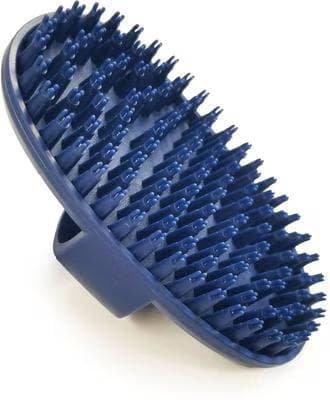
Gentle glove and curry brushing for an American Bulldog's short coat. Judge comfort and skin condition rather than choosing a tool by coat color.
Petful may earn a commission when you click through to Chewy, at no extra cost to you.
| Observation or claim | UKC American Bulldog standard context | What it cannot establish |
|---|---|---|
| White with colored patches | Consider the actual colors, pattern and extent of white | A coat description does not prove ancestry |
| Solid black or solid blue with no white | Listed as disqualifications | A diagnosis or the dog's suitability as a companion |
| Merle, tricolor or full black mask | Listed as disqualifications | Temperament or a fair asking price |
| Less than 10 percent white | Listed as a serious fault | A complete assessment of the dog |
Eye color is a separate part of the standard. UKC accepts eye colors generally while preferring dark brown, but lists eyes that do not match in color as a disqualification. Do not apply the American Bully's eye-color rules to an American Bulldog. For a show or registration decision, consult the relevant registry directly about its current requirements.
White, black, and brindle markings
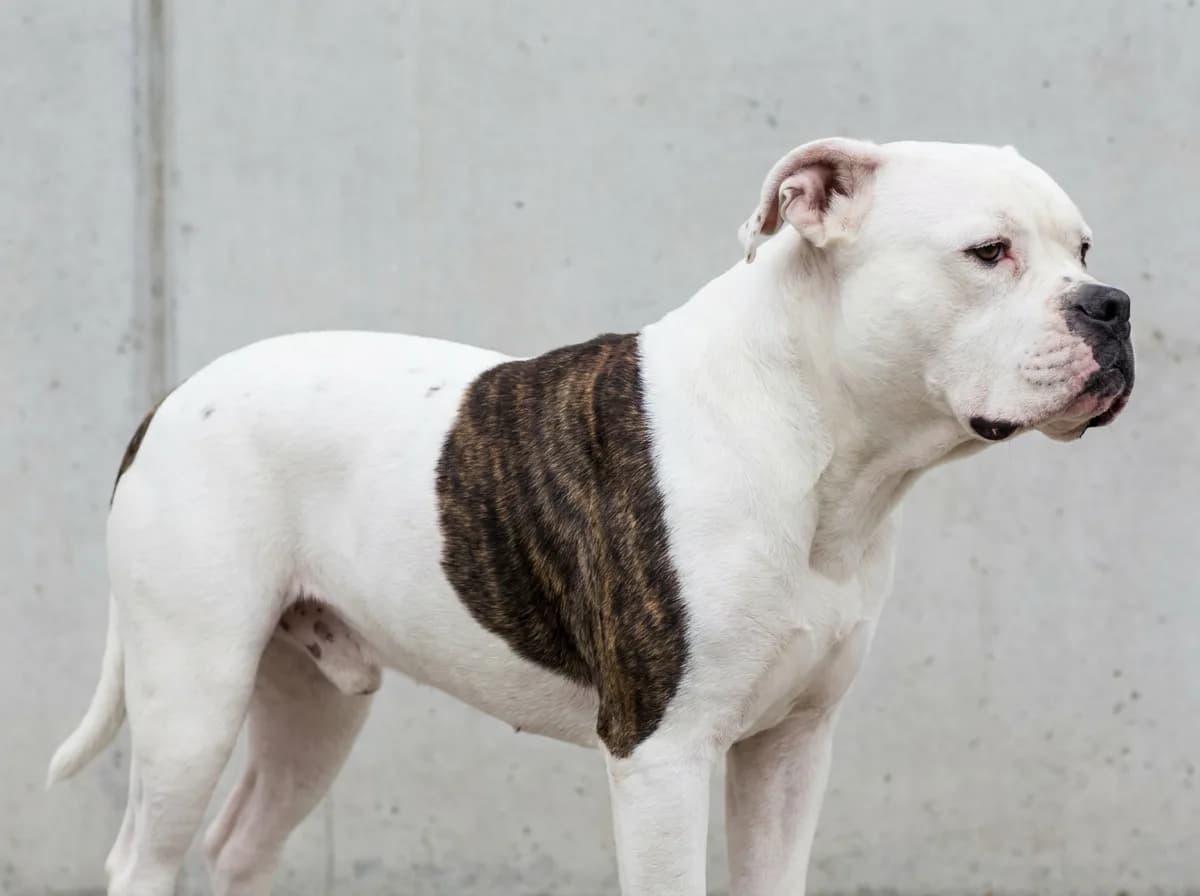
Describe the dog's coat in ordinary, precise terms first. “White with a brindle patch over one eye” communicates more than a fashionable color label. On a black-and-white American Bulldog, note where the dark areas occur and how much of the body is white, rather than calling it a solid black dog.
- 1The UKC American Bulldog standard distinguishes solid colors from patterns and white markings.
- 2Dark brindle can look black until examined in bright light.
- 3A coat description does not prove ancestry or predict personality.
Coat markings do not determine equipment fit. Measure the dog's chest before considering the PetSafe Easy Walk Medium/Large harness, then check strap placement and movement. White, brindle and fawn dogs can need different sizes.

Check measured fit before selecting this Medium/Large harness. Coat color and a rare-sounding label do not predict chest dimensions.
Petful may earn a commission when you click through to Chewy, at no extra cost to you.
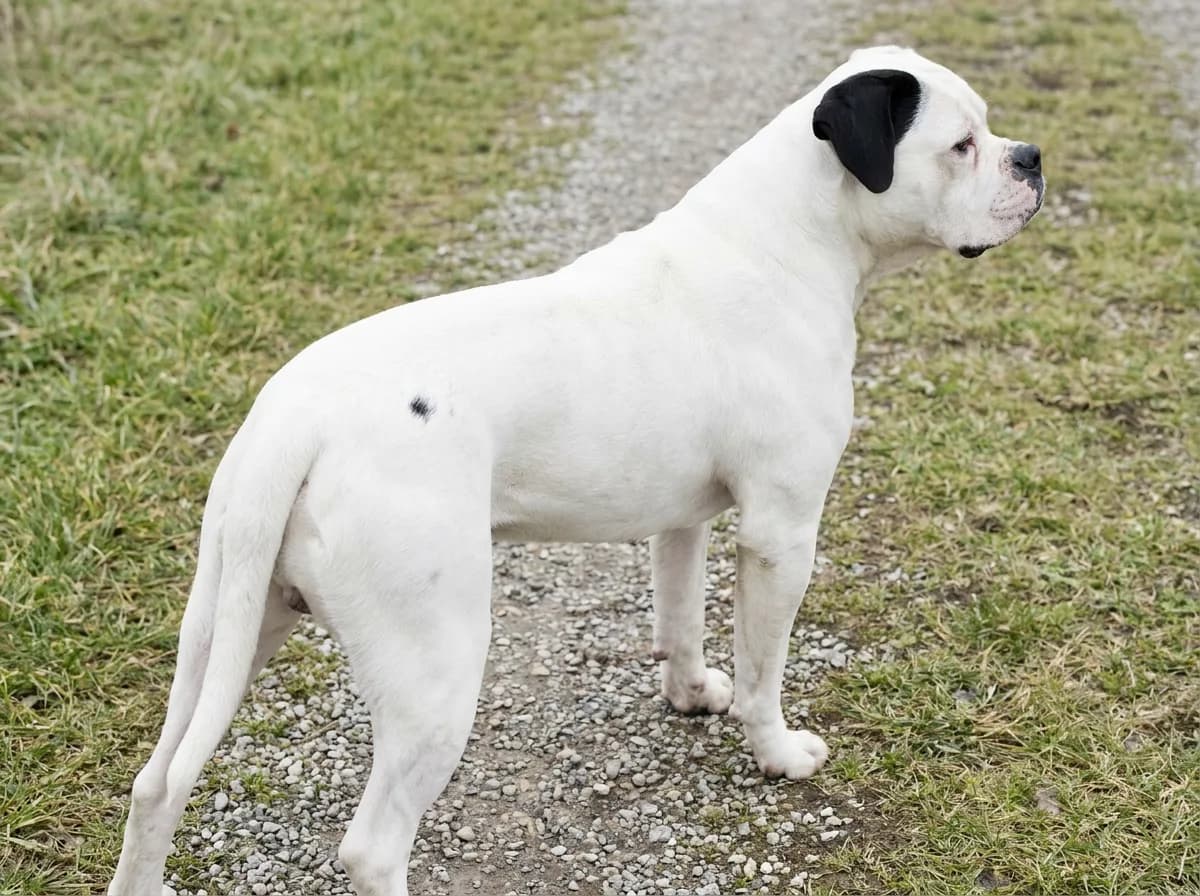
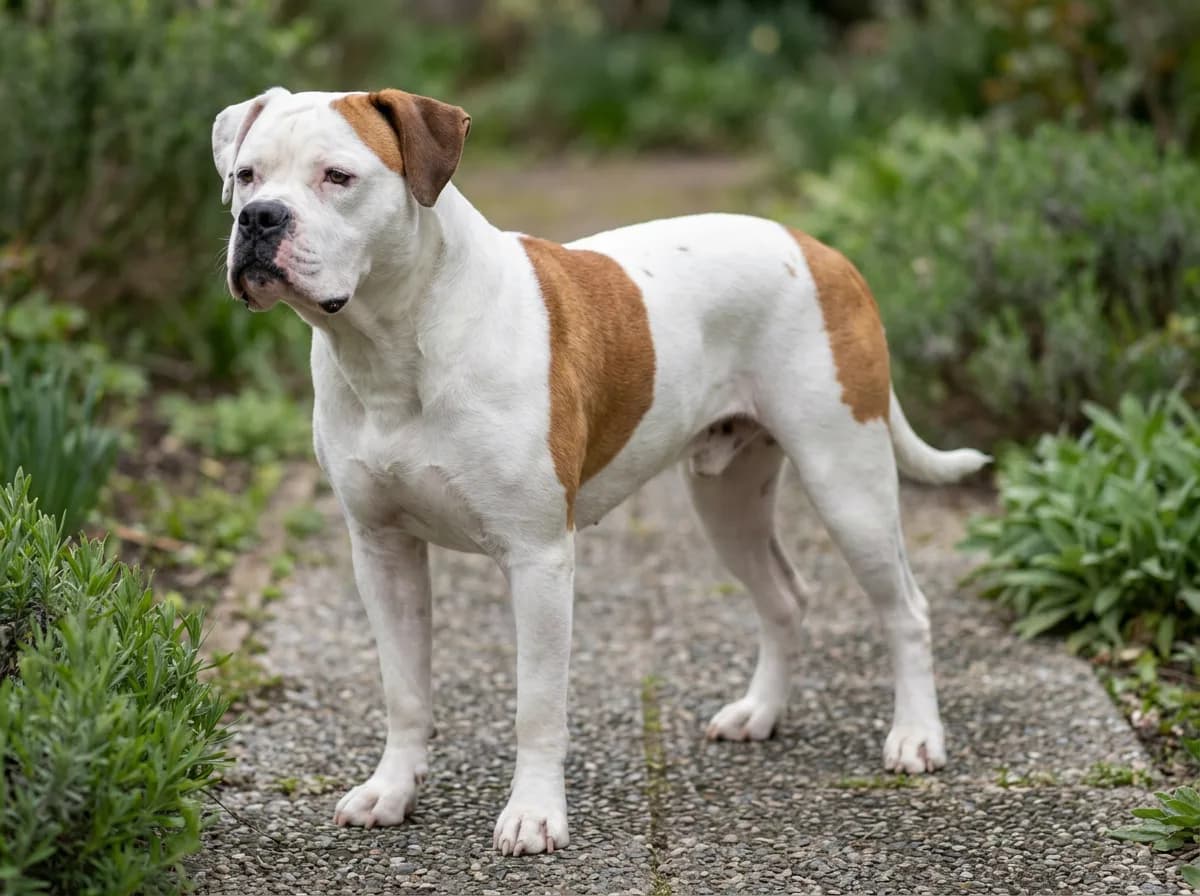
White coats and colored patches
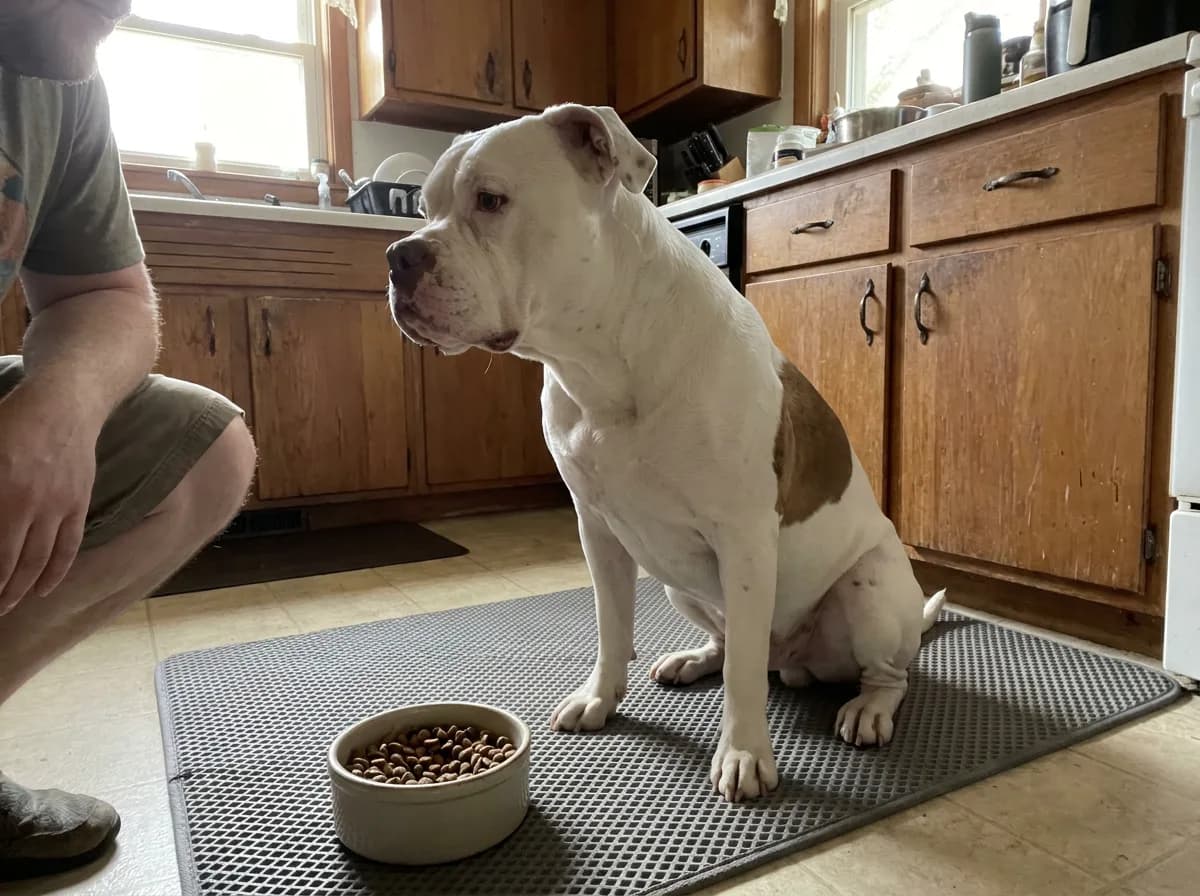
An all-white American Bulldog and a white dog with brown, tan, red or black patches have different visible descriptions. Small spots and larger patches can also look different depending on coat length, lighting and the camera angle. A photograph of only one side may hide markings on the other side or under the body.
For a white American Bulldog puppy, ask for clear current pictures and records rather than assuming the coat will establish a particular line. Female and male dogs can share the same visible pattern; color does not tell you which individual will better suit your home. A white coat also does not confirm that a dog advertised as an “English American Bulldog” has the ancestry the seller implies.
- Look at both sides of the body, the face, chest and legs.
- Use natural light when comparing photographs.
- Distinguish color in the hair from an area of visible skin.
- Ask the breeder or rescue to explain the exact description used in the records.
Black and dark brindle are not always the same
Brindle is a striped pattern. On a dark coat, the lighter background can be difficult to see in an indoor picture. UKC specifically notes that some dark brindle dogs appear black until examined in very bright light. It also distinguishes a buckskin pattern, with fawn hair bases and black tips, from a genuinely solid black coat.
Terms such as reverse brindle, red brindle or blue brindle add descriptions to the pattern, but they do not replace an examination of the actual coat. “All brindle” and “brindle and white” also describe different distributions of white. Do not decide show eligibility from a seller's label or a single edited photograph.
When a color label becomes a bloodline claim
Names such as Old Southern White or Southern White may appear in discussions of lines and breeders. A white coat alone cannot verify that claimed history. Request the pedigree or other records supporting the line name, just as you would for a Johnson or Scott claim. If you consider an Embark Breed Identification test, check its current breed coverage first; a consumer ancestry result is different from a registered pedigree.
If a listing offers black, white or brindle puppies at different prices, compare the evidence and support behind each puppy instead of treating the color premium as proof of quality. A breeder directory or current local availability requires separate verification; photographs and a color description do not establish that a kennel is reputable.
For a calm look at both sides of the coat, reward voluntary standing and turning rather than holding the dog in place. Small Pet Botanics chicken training rewards can support that practice if tolerated; count them in daily intake.

Small chicken-flavor rewards for cooperative standing and gentle handling while looking at the coat. Respect the dog's choice to move away.
Petful may earn a commission when you click through to Chewy, at no extra cost to you.
Fawn, red, brown, and nonstandard color claims
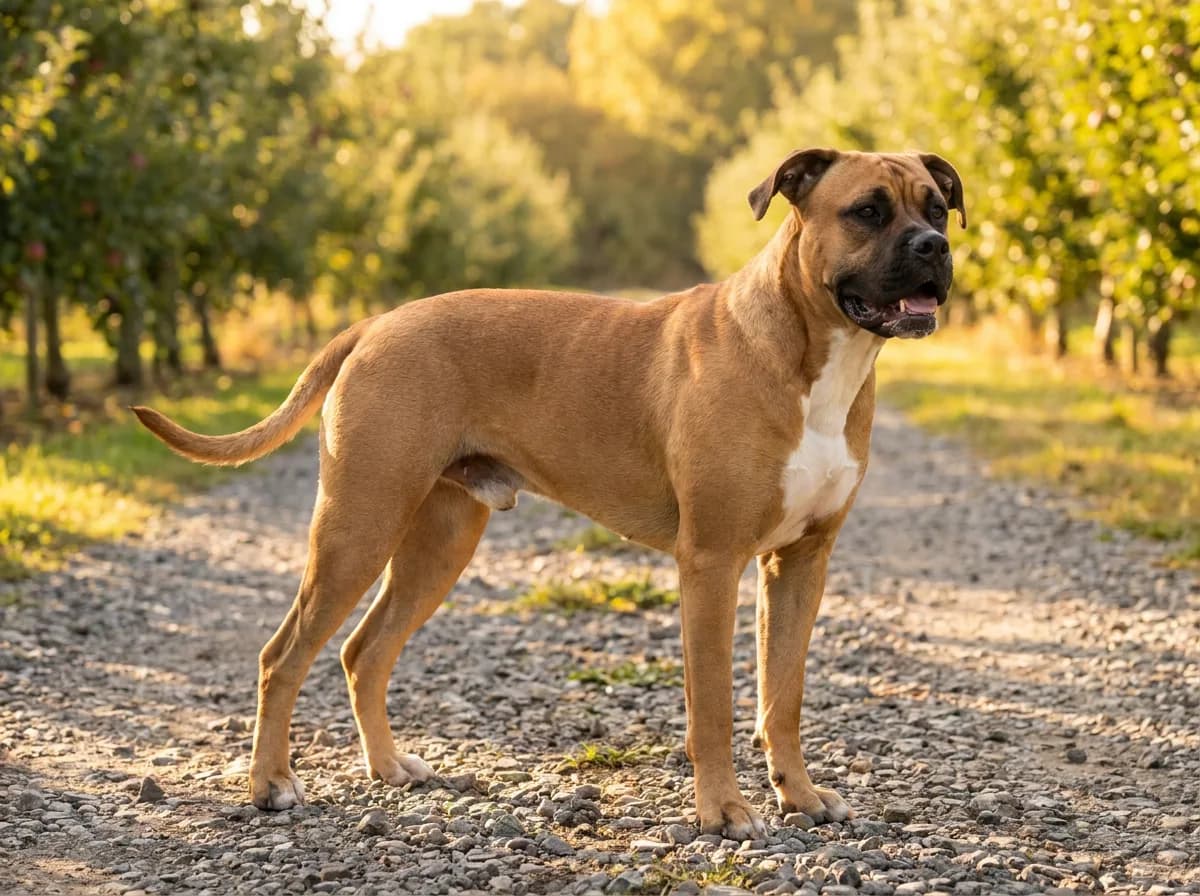
Fawn, red and brown are useful starting descriptions for the shade you see. They may appear as patches against white or in other patterns. Lighting can make a warm brown coat look redder, and different people may use tan, fawn and light brown differently. Ask what the records say if the precise designation matters to you.
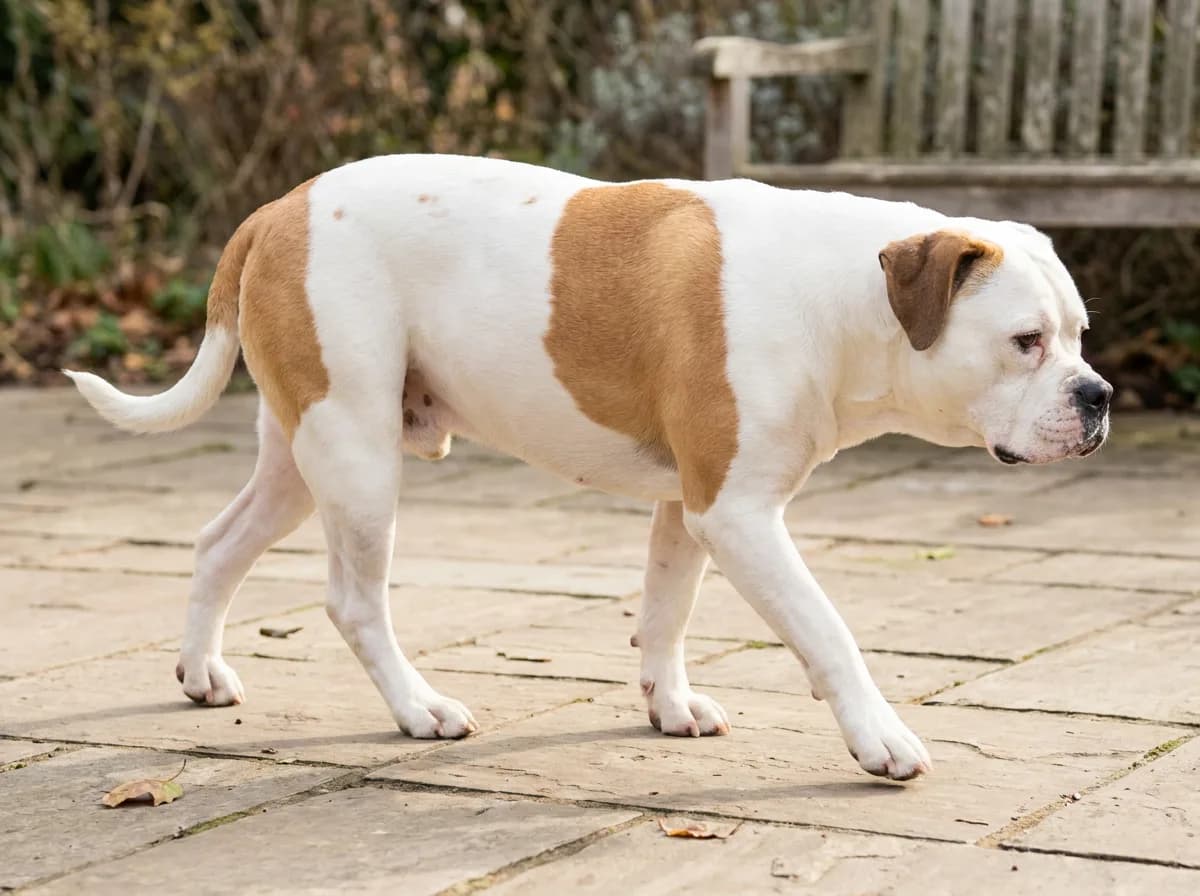
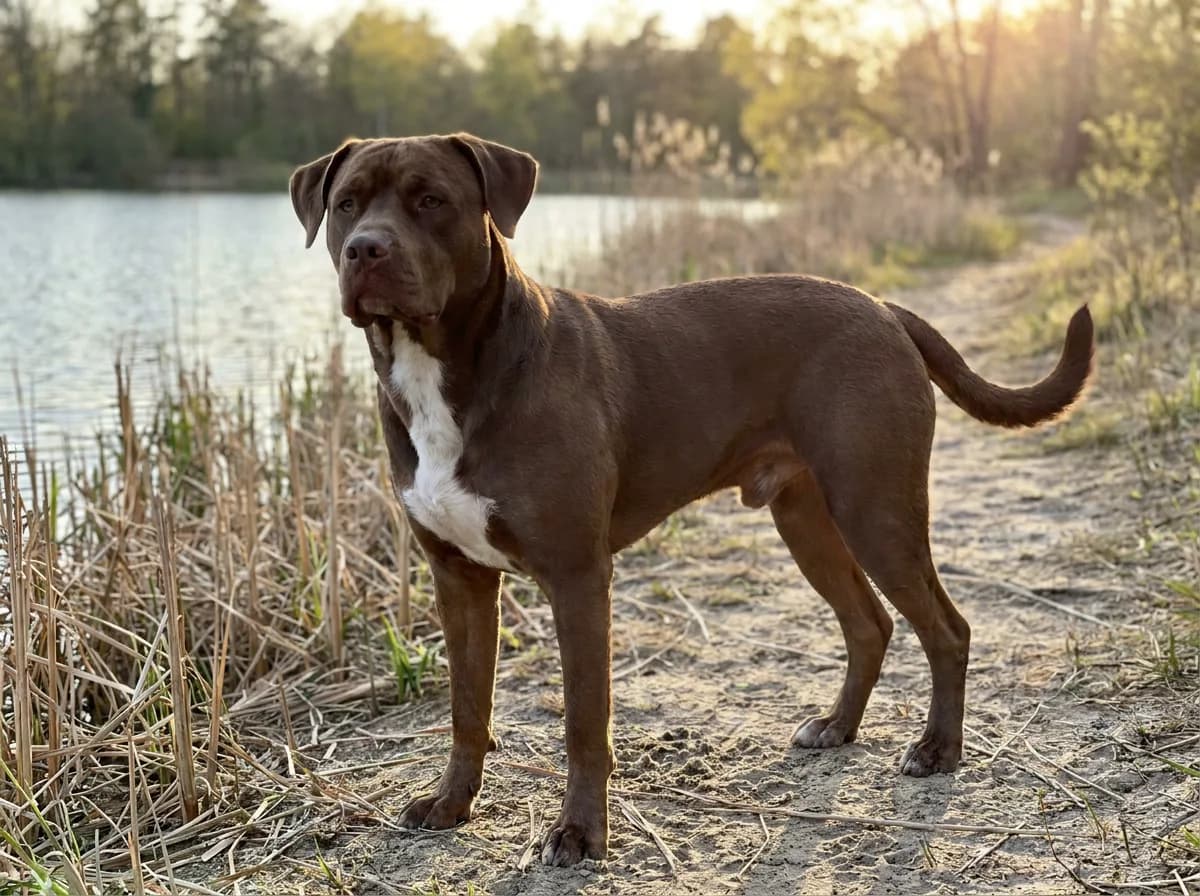
The terms chocolate, blue, gray and lilac can be used in genetic or marketing descriptions, but the label alone does not establish a dog's genotype or ancestry. A blue-and-white dog should not be described as solid blue with no white markings. Conversely, adding a fashionable name does not remove a pattern from the UKC exclusion list.
Merle, tricolor and sales descriptions
Merle and tricolor are excluded by the UKC American Bulldog standard. That is a registry criterion, not a finding that every dog sold under one of those names has a particular illness. An individual pet deserves its own veterinary assessment and honest records, whatever its coat looks like.
Treat phrases such as “XL merle,” “lilac tri” and “XXL blue line” as claims that need unpacking. Ask which part names the breed, which describes color and which is merely the seller's size or line terminology. A fully grown blue American Bulldog does not acquire a separate temperament or care plan from the word blue.
If ordinary dirt obscures a patch, Earth Rated unscented grooming wipes offer a surface-cleaning option according to the label. Keep them away from eyes and irritated skin. Wipes cannot clarify ancestry or treat a skin disorder.

Unscented wipes for ordinary surface dirt, used according to the label. They do not change coat pigment or treat redness, itching or skin disease.
Petful may earn a commission when you click through to Chewy, at no extra cost to you.
Nose and eye color need precise descriptions
“Red nose” and “blue nose” are not separate American Bulldog breeds. The UKC standard prefers a black nose and allows shades of red or brown. Ask what a seller means by a nose-color label and do not use it to infer value, purity or behavior. Names such as “Vader red” or “red-tiger” likewise need an explanation rather than an assumed separate breed category.
A blue-eyed American Bulldog, including a white puppy with blue eyes, should be assessed using the correct breed's eye criteria and its actual health records. A photograph is not a hearing test or an eye examination. Redness, discharge or discomfort around an eye is a health concern rather than a coat-color category.
- Ask whether a description refers to coat, nose pigment or eye color.
- Request the dog's actual records rather than a general claim about all dogs of that color.
- Clarify any uncertain breed identification instead of filling the gap with a color label.
- Have new or uncomfortable physical changes assessed by a veterinarian.
Separate similar breed names from colors
“Blue blood” and “Alapaha” should not be treated as simple American Bulldog coat shades. If those words appear in an advertisement, ask what breed or ancestry is being claimed before applying this standard. Similarly, a “blue pitbull American Bulldog” label is too ambiguous to establish whether the seller means a color, a breed or a cross.
This color guide cannot turn those mixed labels into verified identities. Describe the visible coat, retain uncertainty about parentage where necessary and ask for documentation. A pet does not need a dramatic rarity claim to be worth caring for well.
A Blue Heeler and American Bulldog label describes a claimed cross with an Australian Cattle Dog, not a blue shade of purebred American Bulldog. The American Bulldog mixes guide explains how to check parentage and assess the actual dog’s activity and household routine.
Choosing a dog beyond its coat
- 1Describe the actual markings in clear light before applying a sales label.
- 2Verify ancestry and health records separately from coat appearance.
- 3Compare the dog's needs and the seller's support instead of paying for an unsupported rarity claim.
Choosing a puppy beyond a rare-color price
The price of a purebred American Bulldog depends on the individual offer and what supports it; coat color alone does not establish a fair amount. Ask about parent health testing, veterinary records, how the puppies are raised and the support available after purchase. A seller should be able to explain those details without relying on rarity language.
Our American Bulldog puppy guide covers selection and preparation in more detail. Use it to compare the whole commitment, including ongoing food, training and veterinary care. A color premium does not pay those future bills or reduce uncertainty about the puppy's needs.
Coat markings do not identify Johnson or Scott lines
Johnson and Scott are influential types within the American Bulldog breed, and many dogs blend those lines. White, brindle or brown markings cannot determine which description applies. The more useful evidence is documented parentage combined with a careful assessment of proportions and the actual dog. For ordinary loose-hair care, a Four Paws glove and curry brush can be assessed against the actual coat, whatever the color.
See American Bulldog types for the differences between Classic and Standard descriptions. Do not assume that a particular coat identifies a heavier build, a more athletic adult or a predictable temperament. Those are separate questions that need their own evidence.
Color and health are separate questions
Show eligibility, inheritance and health are related topics in some circumstances, but they are not interchangeable. A standard-compliant coat does not certify good health, and a nonstandard description does not diagnose a disease. Ask your veterinarian about the individual dog's screening records and any concerns you have noticed.
Our guide to American Bulldog lifespan and health problems explains the broader care considerations. Skin bumps, itching or a new rash should not be dismissed as a normal feature of a white, brindle or blue coat. Describe the change and seek appropriate assessment rather than selecting treatment by color.
Questions about american bulldog colors
The sources used here do not establish a reliable ranking of the rarest American Bulldog colors. A seller’s “rare” label can describe an unusual-looking puppy without proving scarcity, ancestry or quality. Ask for the exact color and pattern, check the relevant registry standard, and compare health records and placement support before paying a premium.
The UKC American Bulldog standard accepts white and a range of colors with markings, but excludes solid black or blue without white, merle, tricolor and a full black mask. Less than 10 percent white is a serious fault. Show eligibility is separate from pet suitability. Use the correct registry and assess a companion’s health and behavior separately; color is not proof of ancestry.
A seller asking price cannot establish a universal most-expensive color, and color does not establish value. Confirm which breed is being advertised and compare documented health testing, care, contractual support and the individual dog's needs. Without comparable verified sales data, a color-price ranking would create false precision.
BVMS, MRCVS
Dr. Pippa Elliott, BVMS, MRCVS, is a veterinarian with nearly 30 years of experience in companion animal practice. Dr. Elliott earned her Bachelor of Veterinary Medicine and Surgery from the University of Glasgow. She was also designated a Member of the Royal College of Veterinary Surgeons. Married with 2 grown-up kids, Dr. Elliott has a naughty Puggle named Poggle, 3 cats and a bearded dragon.
Sign up for expert-backed reviews and safety alerts all in one place.