Orange Tabby Cat: Facts, Genetics and Personality
An orange tabby cat is a color and pattern, not a breed. Here is the genetics behind ginger fur, why about 80% are male, the 5 tabby patterns, personality, lifespan and health, plus what adoption really costs.
Petful is reader supported. As an affiliate of platforms like Amazon and Chewy, we may earn a commission when you buy through links on this page. There is no extra cost to you.
According to two genetics teams who published in Current Biology in May 2025, the orange tabby cat owes its ginger coat to a single 5.1-kilobase deletion in a gene called ARHGAP36, and that one quirk of DNA explains nearly everything people find odd about these cats, including why roughly 80% of them are male. If you have ever wondered whether "orange tabby" is a breed, why your ginger boy seems to have one brain cell he shares with every other orange cat online, or how long he is likely to live, this guide pulls together the genetics, the patterns, the personality, the health watch-outs, and the adoption costs in one place.
- 1An orange tabby cat is a coat color and pattern, not a breed, so dozens of recognized breeds plus ordinary mixed cats can be orange
- 2The orange color is sex-linked on the X chromosome, which is why about 80% of orange tabbies are male
- 3In 2025 scientists pinned the orange gene to a regulatory deletion affecting ARHGAP36, ending a century-long hunt
- 4Every orange cat shows tabby stripes because orange pigment cannot be turned solid, so there is no truly solid orange cat
- 5The famous friendly orange personality is anecdotal and partly explained by most orange cats being male; individual temperament varies far more than color

Sign up for expert-backed reviews and safety alerts all in one place.
What Is an Orange Tabby Cat? (A Color, Not a Breed)
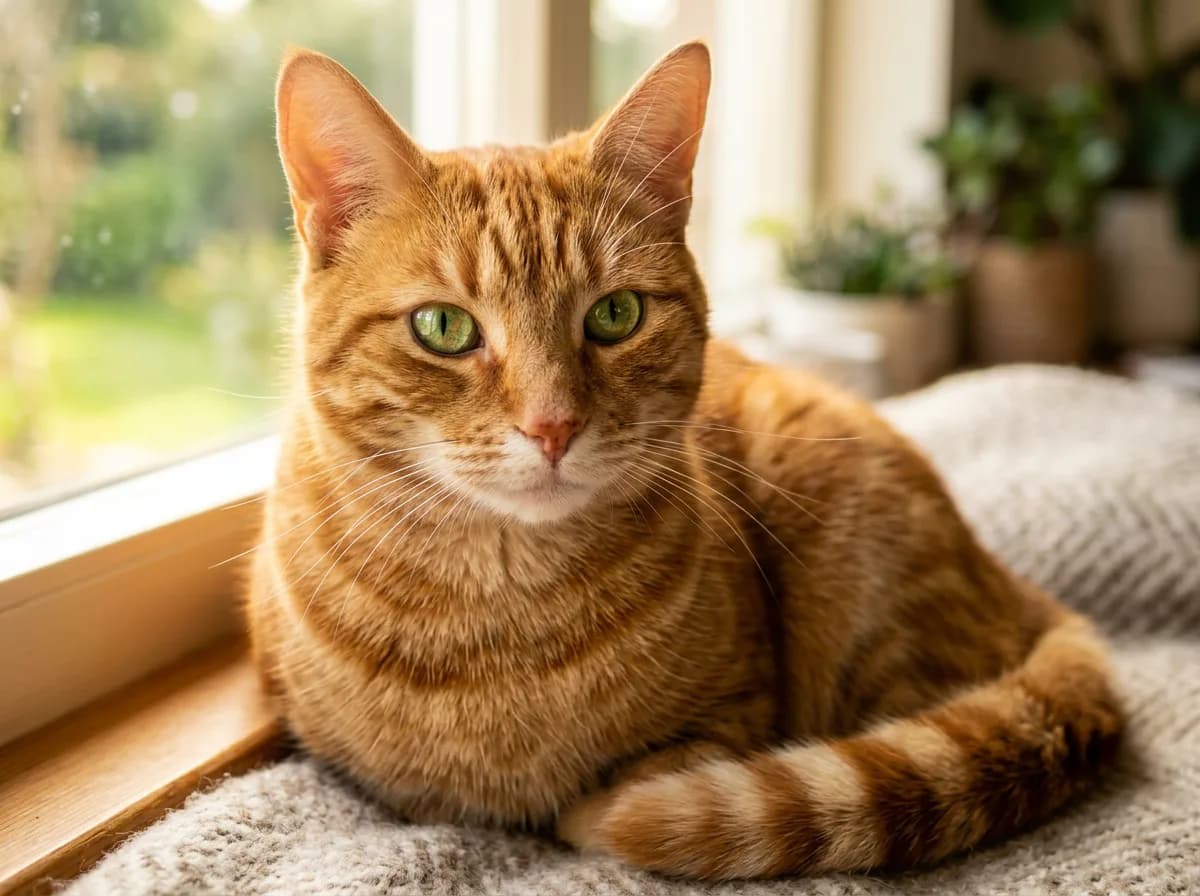
Here is the first thing to clear up, because it trips up almost everyone: an orange tabby cat is not a breed. There is no "orange tabby" listed by the Cat Fanciers' Association (CFA) or The International Cat Association (TICA) the way Maine Coon or Siamese is. "Orange tabby" describes two things at once, a color (orange, also called red, ginger, marmalade, or yellow) and a pattern (tabby, the striped or swirled markings nearly every domestic cat carries).
Because it is a color-and-pattern combination rather than a pedigree, an orange tabby can be a purebred Maine Coon, a purebred Persian, or the random shelter kitten with no documented ancestry at all. The orange you see is the same whether the cat cost $2,000 or came free from a barn. When people say "ginger cat," "ginger tabby cat," or "marmalade cat," they are all pointing at the same thing.
Two genes do the heavy lifting. One gene turns the coat orange. A second set of genes (the tabby pattern genes) decides whether those orange markings show up as narrow stripes, bold swirls, spots, or a faint salt-and-pepper ticking. We will take them one at a time.
- "Tabby" is the ancestral wild-type pattern of the cat, not a breed. The domestic cat's wild ancestor, the Near Eastern wildcat, was a striped (mackerel) tabby, so tabby markings are the default look that nearly every cat inherits.
Orange, Red, Ginger or Marmalade: All the Same Thing
Breeders and registries usually call this color red. Everyone else calls it orange, ginger, marmalade, or even yellow. The pigment responsible is phaeomelanin, the same reddish pigment behind red hair in humans. It ranges from a pale apricot cream to a deep marmalade, but it is always the same underlying color gene at work.
Orange Tabby Cat Genetics: The Gene That Makes Cats Ginger
For more than a century, geneticists knew the orange color in cats sat on the X chromosome and behaved like a simple sex-linked trait, but no one had identified the exact gene. That changed in May 2025, when two independent teams published the answer in the same journal on the same day.
The orange color is controlled by a gene long nicknamed O (for orange). The O gene tells pigment cells to switch from making black/brown pigment (eumelanin) to making the reddish phaeomelanin instead. When the orange variant is switched on, it overrides black, which is why an orange cat is orange and not black, even if it also carries black-pigment genes.

Never Scoop Again® with the Whisker Litter-Robot, the smart self-cleaning automatic litter box. Monitor visits and track weights for better overall care in the Whisker® app. Multi-cat friendly.
Petful may earn a commission when you click through to Whisker, at no extra cost to you.
The 2025 ARHGAP36 Discovery in Plain English
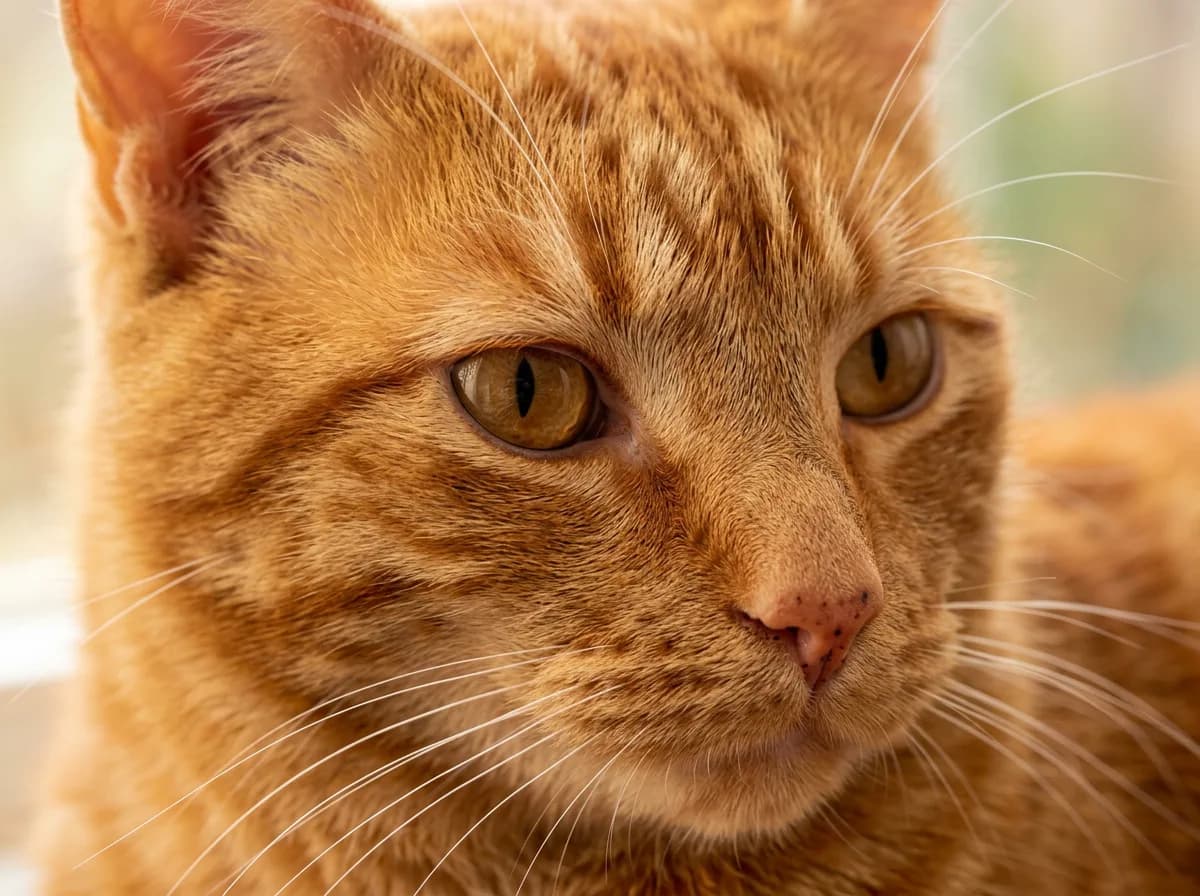
In May 2025, Hiroyuki Sasaki's team at Kyushu University in Japan and Greg Barsh's group at Stanford University (working through the HudsonAlpha Institute) each published in Current Biology that the orange color traces to a small deletion of about 5.1 kilobases of DNA near a gene called ARHGAP36. The deletion does not break the gene. Instead it acts like a stuck dimmer switch, raising ARHGAP36 activity in the pigment-producing cells, which nudges them toward making orange phaeomelanin instead of black eumelanin.
What makes this satisfying is how clean the result was. In the Kyushu study, every orange cat sampled carried the deletion and every non-orange cat lacked it, a near-perfect match. Because ARHGAP36 lives on the X chromosome, the discovery also confirmed at the molecular level why orange is sex-linked, settling a question that had been open since the early 1900s.
- The ARHGAP36 finding does not change how you care for a ginger cat, but it is a great example of how recent the science is. If you read older articles claiming "the orange gene has never been found," they predate May 2025. The gene is ARHGAP36, and the variant is a regulatory deletion, not a broken gene.
How Pattern Genetics Layer On Top of Color
The orange gene only sets the color. A separate gene, agouti (ASIP), decides whether stripes appear at all. Here is the twist that surprises most people: orange pigment cannot be made fully solid the way black can. The "non-agouti" version of the agouti gene can hide stripes on a black cat and turn it solid black, but it does not suppress orange. So an orange cat always shows its tabby pattern, even if it carries genes that would make a black cat solid. That is why there is no such thing as a truly solid orange cat. What looks "solid orange" up close is really a very low-contrast tabby.
| Term | What It Means | Plain-English Takeaway |
|---|---|---|
| O gene (orange) | X-linked variant near ARHGAP36 | Switches the coat from black pigment to orange |
| Phaeomelanin | Reddish/orange pigment | The pigment that makes ginger fur ginger |
| Eumelanin | Black/brown pigment | What orange masks and replaces |
| Agouti (ASIP) | Controls whether stripes show | Cannot hide orange, so orange cats always look tabby |
| Dilution (MLPH, d/d) | Softens color | Turns orange into cream |
Cream Cats Are Just Diluted Orange
If a cat inherits two copies of the dilution gene (MLPH, written d/d), the orange softens to a pale cream or buff. A cream tabby is genetically still an orange tabby, just turned down a few notches. So "cream" and "buff" cats belong to the same color family as the bright marmalade ones.
Why Are Most Orange Tabby Cats Male?
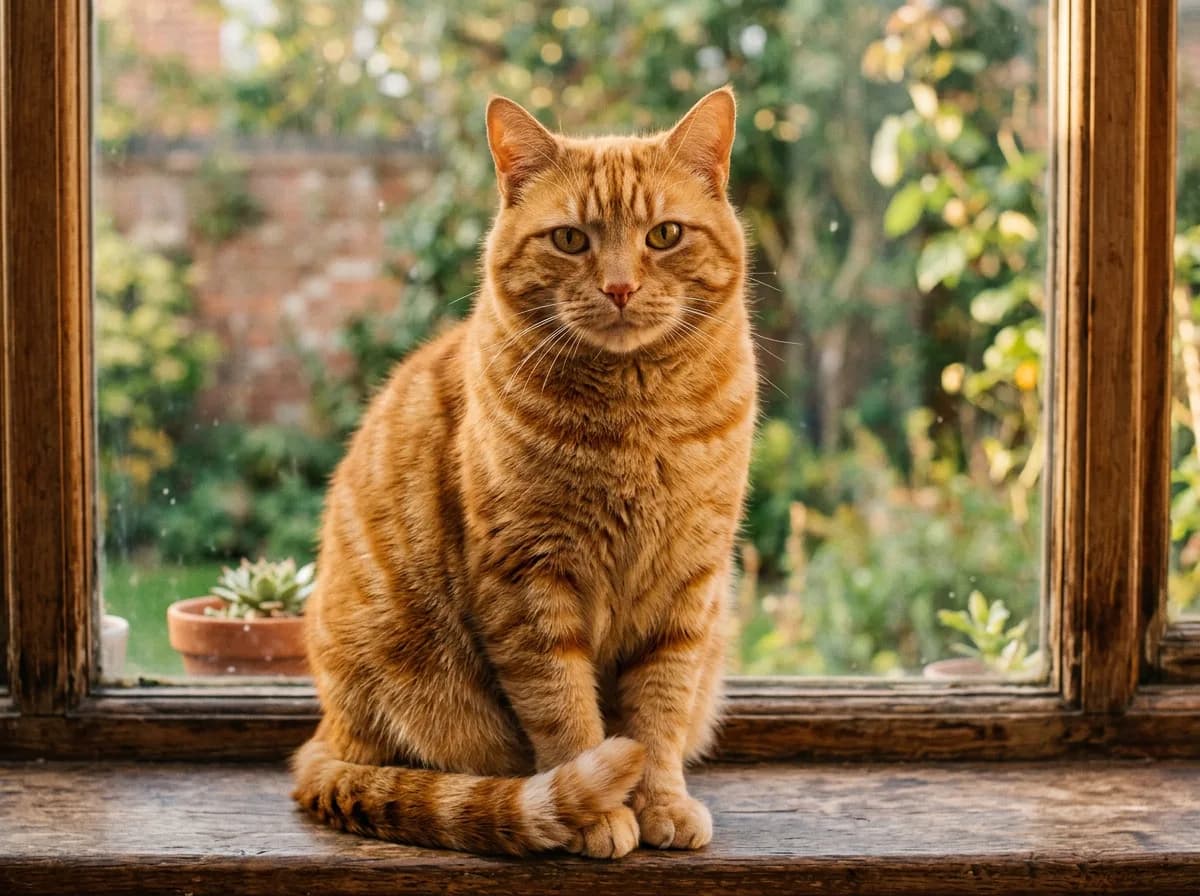
About 80% of orange tabby cats are male, and the reason is pure chromosome math. The orange gene sits on the X chromosome. Male cats are XY, so they have only one X. If that single X carries the orange variant, the cat is orange. Females are XX, so they need the orange variant on both X chromosomes to be fully orange. Needing two copies instead of one is statistically much rarer, which tilts the population heavily male.
- A male cat needs one copy of the orange gene to be orange. A female needs two. Because two copies are less likely than one, roughly 4 out of 5 orange cats are male. It is the same chromosome logic that makes nearly all calico and tortoiseshell cats female, just in reverse.
What About Female Orange Tabbies?
Female orange tabbies absolutely exist, they are just outnumbered. A female is fully orange when she inherits the orange variant from both parents (one orange X from each). If she inherits orange on only one X and a non-orange version on the other, she does not come out solid orange. Instead her two X chromosomes express in patches across her body (a process called X-inactivation, or lyonization, first described by geneticist Mary Lyon in 1961), and she shows up as a tortoiseshell or, with white added, a calico. So in a real sense, the orange in tortie and calico cats is the same orange, just split across the body in a female who carries only one copy.
- A female orange tabby is not "worth more" and is not a different breed. She is simply the less common outcome of the same genetics. Likewise, a rare male calico (about 1 in 3,000) is a genetic curiosity with no breeding value, not a jackpot.
The 5 Orange Tabby Coat Patterns
Every orange tabby wears one of a handful of tabby patterns. All of them share the signature "M" marking on the forehead, the dark eye liner, and the banded look on the legs and tail. What changes is how the dark markings are arranged on the body. Here are the five, with a labeled photo for each, because in person they are easy to tell apart once you know what to look for.
Mackerel (the Classic Striped Tabby)
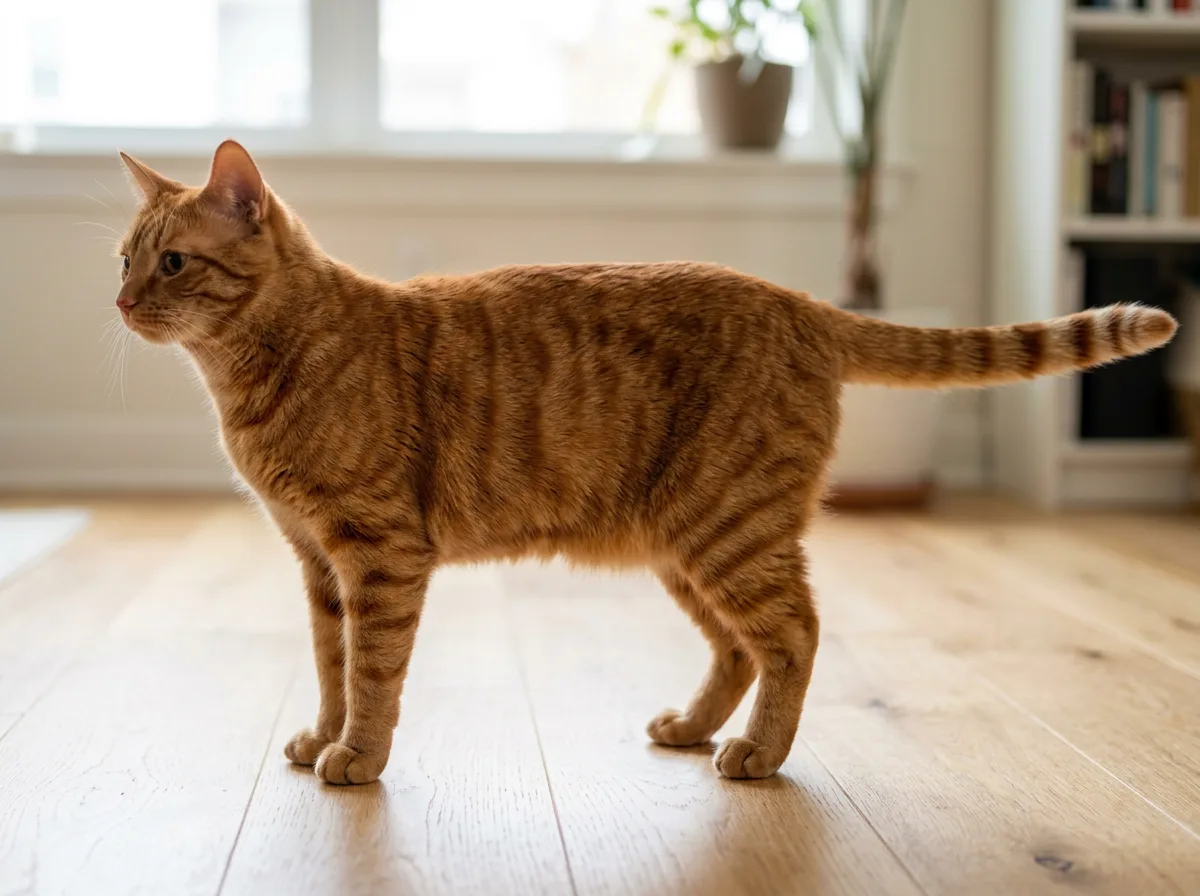
Mackerel is the most common pattern and the wild type, narrow vertical stripes running down the sides like fish bones (which is where the name comes from). If you picture a "standard" striped orange cat, you are picturing a mackerel tabby.
Classic (Blotched or Swirled)
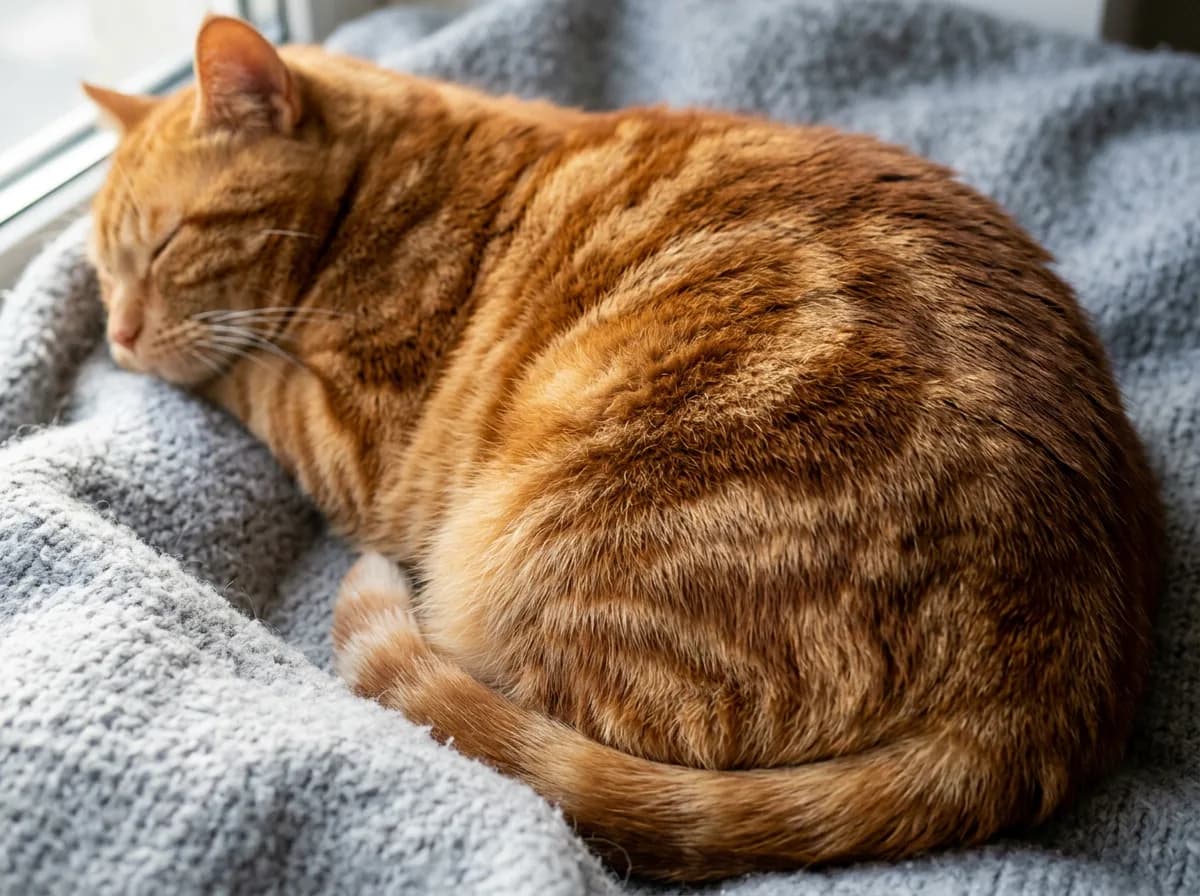
The classic, or blotched, tabby trades stripes for bold swirls and a marbled "bullseye" on the flank. It is recessive, so it shows up less often than mackerel. The pattern is caused by variants in the Taqpep gene, the same gene that produces the king cheetah's blotchy coat (identified by Kaelin and colleagues in Science in 2012).
Spotted
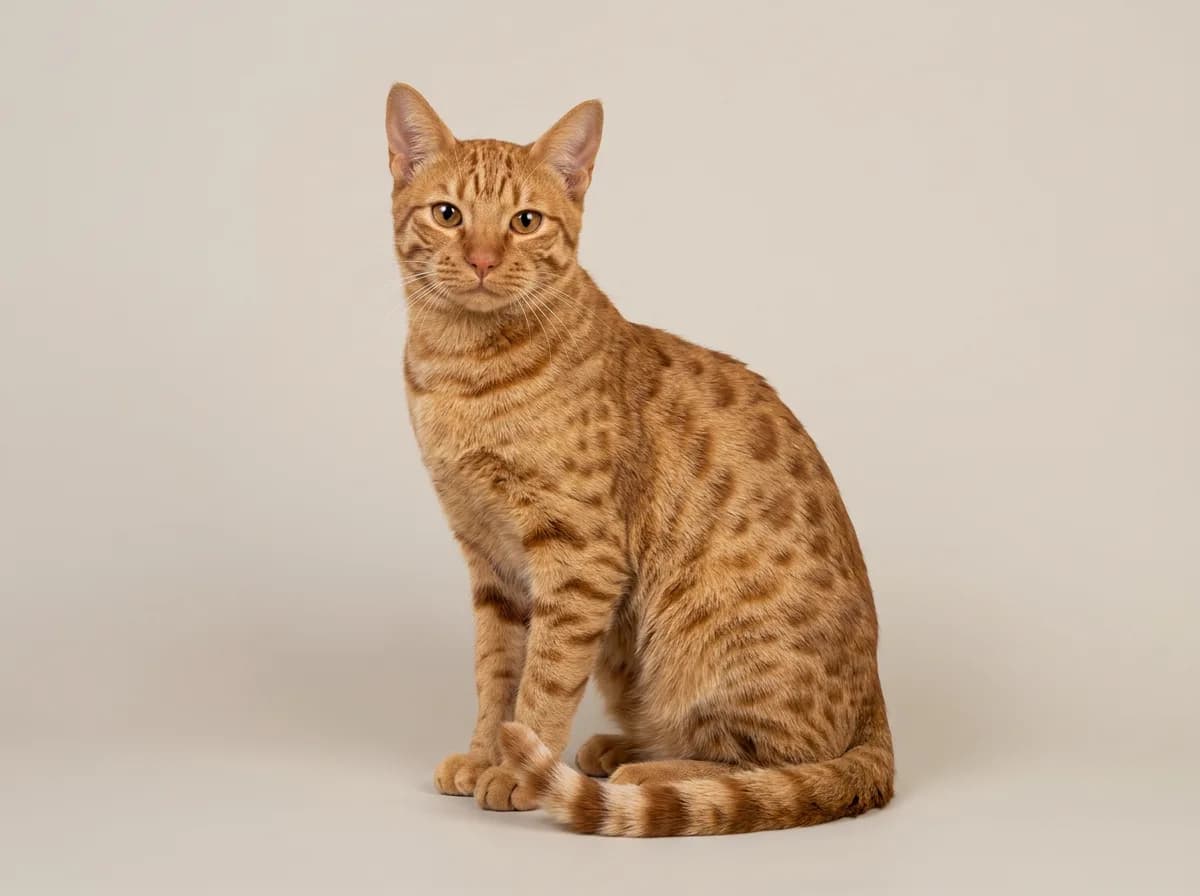
In a spotted tabby, the stripes are broken up into spots running along the body. Spotting is the hallmark of breeds like the Egyptian Mau, the Ocicat, and the Bengal, but it appears in mixed orange cats too. Petful’s guide to Bengal cat mix has the full breakdown.
Ticked (Agouti)
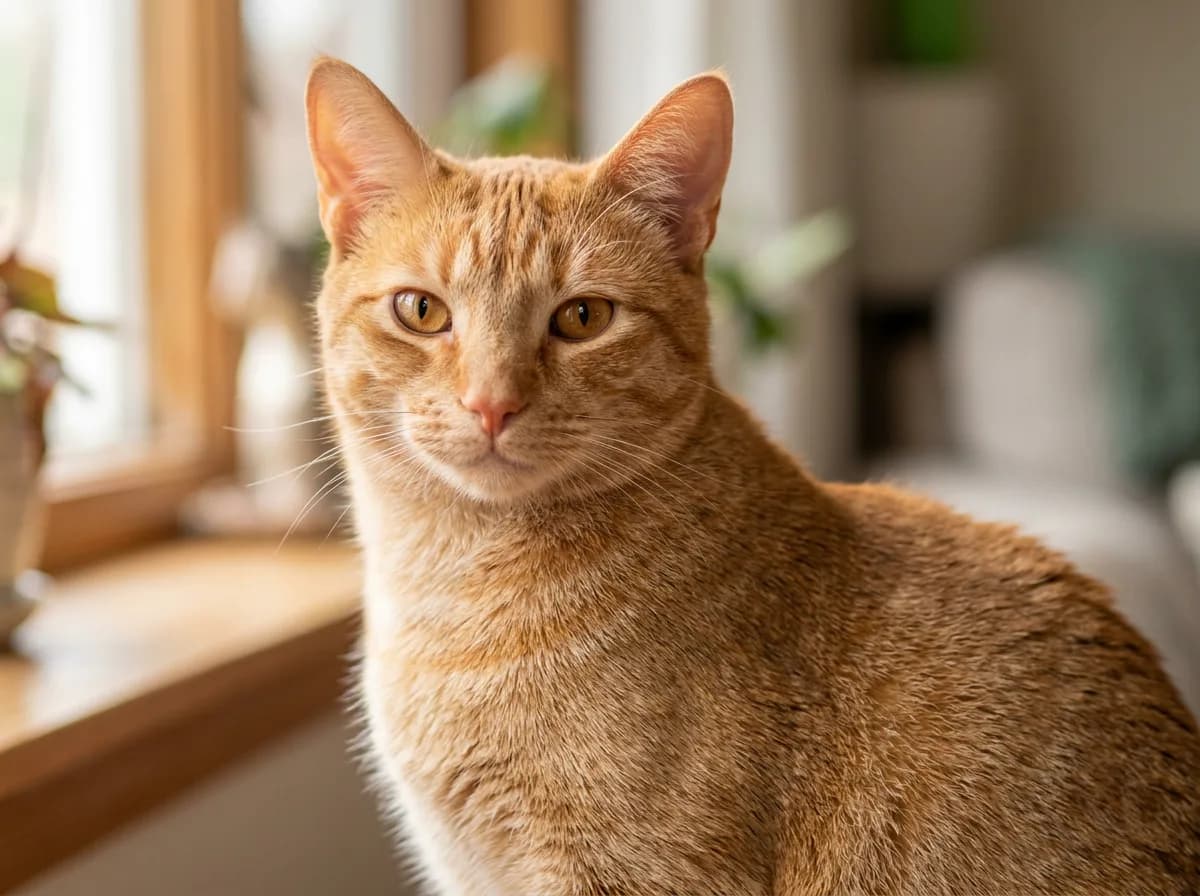
A ticked tabby has each hair banded with alternating light and dark color, giving an even salt-and-pepper or "sand" look with little or no body striping. The Abyssinian is the textbook ticked tabby. On an orange cat, ticking reads as a warm, almost uniform apricot up close, with the tabby M still on the face.
Patched (Torbie)
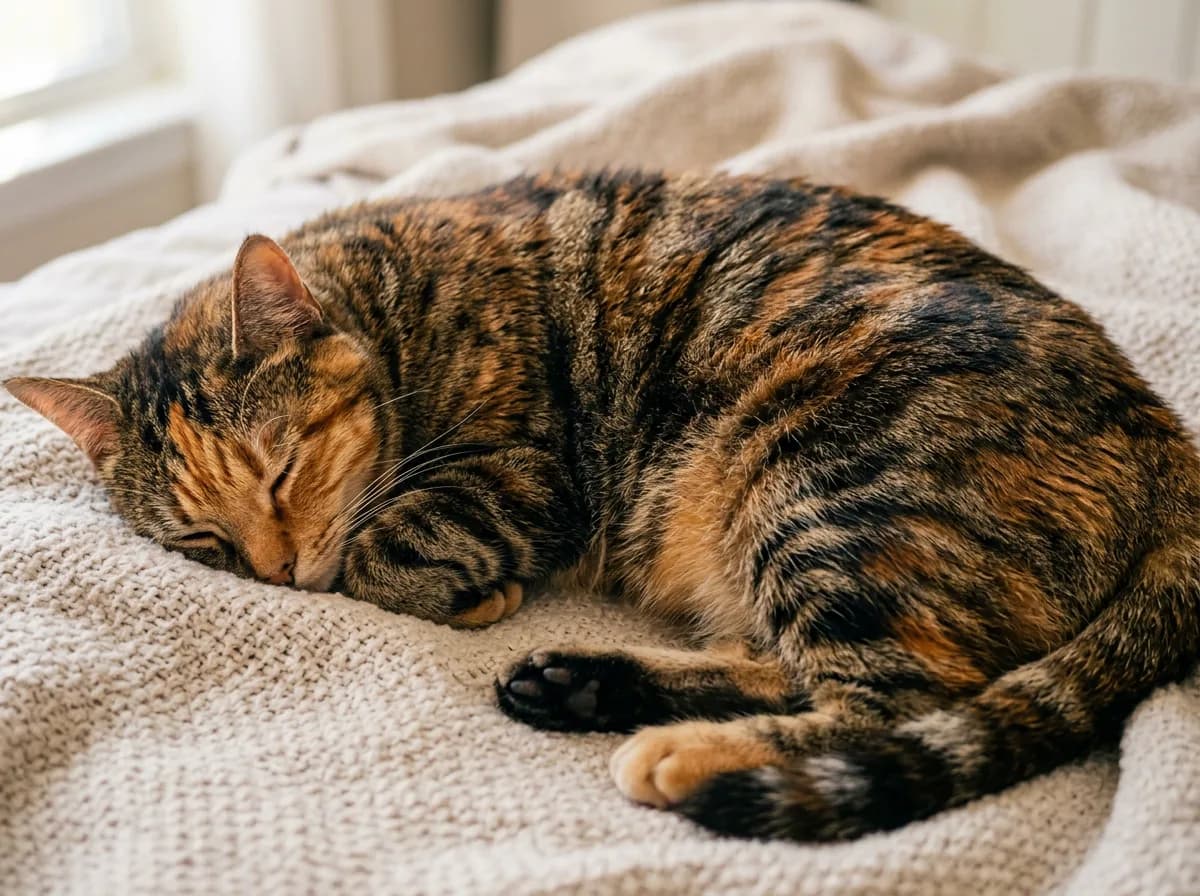
The patched tabby is what you get when tabby pattern overlaps with the tortoiseshell color split, producing patches of orange tabby mixed with patches of darker (brown or black) tabby. Because it requires the tortoiseshell color split, the patched tabby is almost always female.

63-inch multi-level cat tree with scratch posts, hammock, plush perches, and dangling toys. Vertical territory is non-negotiable for high-energy climbing breeds like the Bengal.
Petful may earn a commission when you click through to Chewy, at no extra cost to you.
Orange Tabby Cat Personality and Temperament
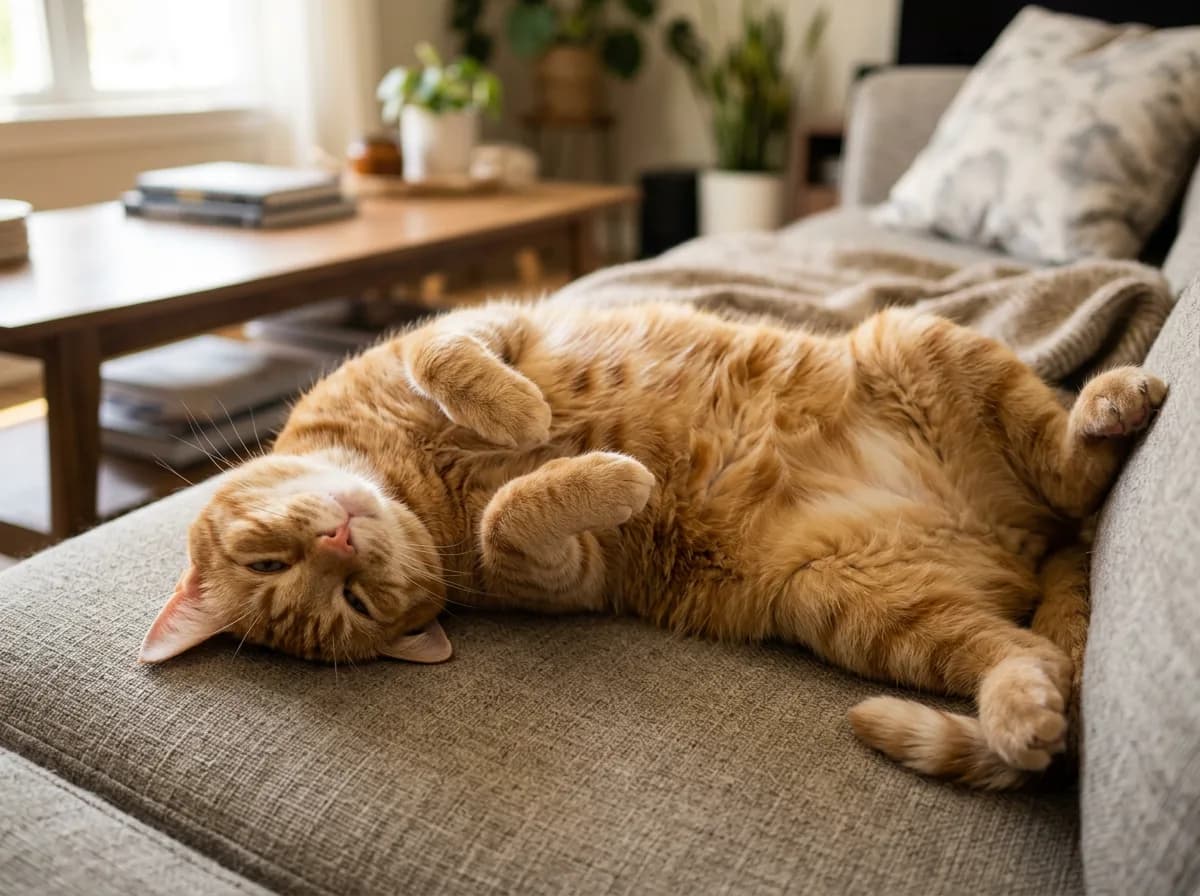
Ask the internet and you will hear that orange cats are uniquely friendly, goofy, bold, and a little dim, the lovable "orange cat behavior" meme. It is a charming reputation, and many owners swear by it. But it is worth being honest about how much of it is real.
There is no peer-reviewed evidence that coat color drives personality in cats. The "friendly ginger" stereotype is anecdotal, and part of it is explained by simple demographics: because about 80% of orange cats are male, the orange-cat personality people describe overlaps heavily with male-cat behavior. Some surveys of owner perceptions (including work out of UC Davis on owner-reported temperament by coat color) suggest people *believe* orange cats are friendlier, but believing it and measuring it are different things. Socialization, early handling, breed, and individual genetics shape temperament far more than the color gene does.
- If you adopt an orange tabby hoping for a built-in cuddle machine, judge the individual cat, not the color. Spend time with the specific cat, ask the shelter or foster about its behavior, and remember that early socialization predicts friendliness much better than coat color ever will.
That said, the reputation is not nothing. Plenty of orange tabbies really are sociable, food-motivated, and people-oriented, and a confident, well-socialized ginger can be a wonderful companion. Just go in knowing the personality comes from the cat, not the coat.
Cat Breeds That Come in Orange Tabby
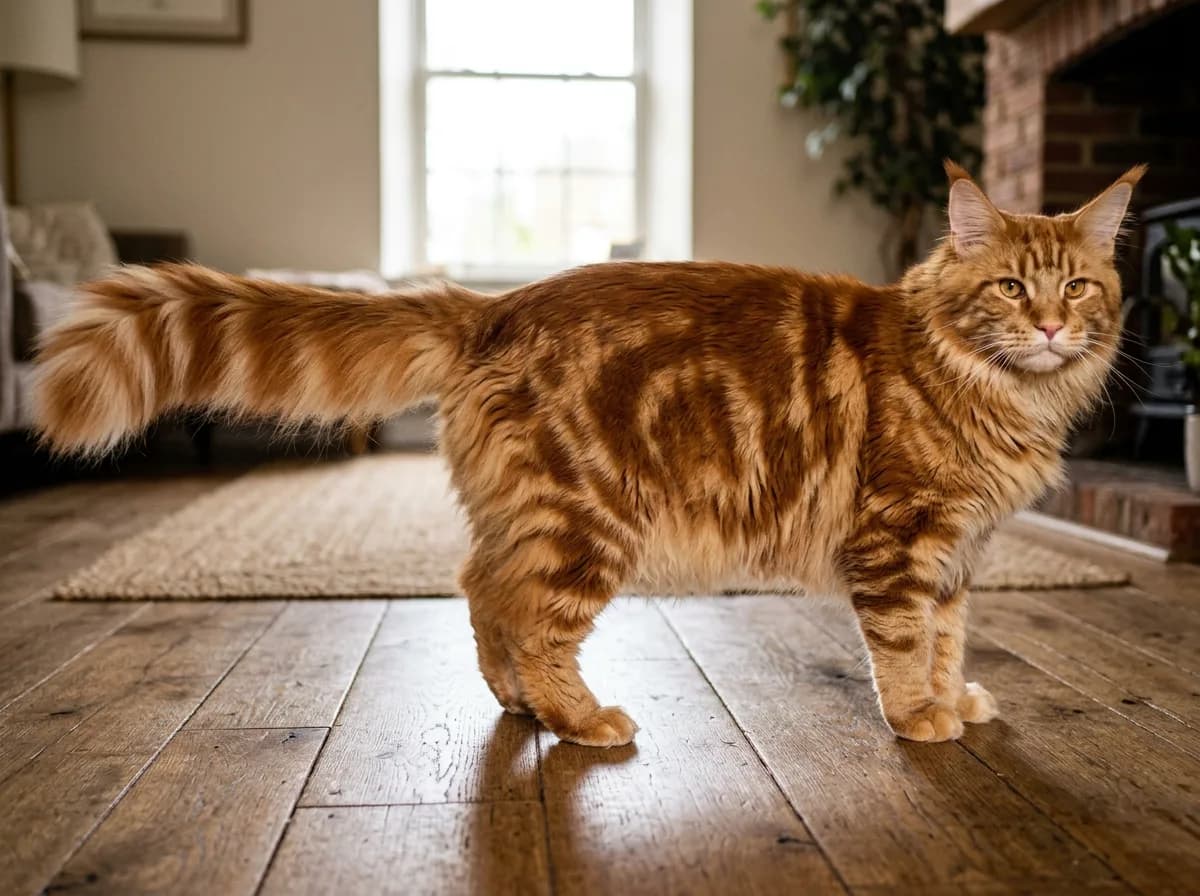
Because orange is a color rather than a breed, a huge range of recognized breeds can produce orange tabbies, alongside the millions of orange domestic shorthairs and longhairs with no pedigree. If you specifically want a purebred orange cat, these are some of the breeds where ginger shows up most often.
| Breed | Coat Length | Typical Personality | Notable Trait |
|---|---|---|---|
| Maine Coon | Long | Gentle, sociable | One of the largest breeds; brown and orange tabby are classic looks |
| American Shorthair | Short | Easygoing, adaptable | Common all-American mixed-and-pedigree color |
| British Shorthair | Short, plush | Calm, reserved | Dense coat; "red tabby" is a recognized color |
| Persian | Long | Quiet, affectionate | Red tabby is a longstanding show color |
| Maine Coon (longhair) | Long | Friendly, "dog-like" | Big personality to match the size |
| Munchkin | Short or long | Playful, outgoing | Short legs; orange occurs as in other breeds |
| Scottish Fold | Short or long | Sweet, placid | Folded ears; ginger is common |
| Bengal | Short | Active, athletic | Spotted/rosetted orange-toned coats |
If breed matters to you, start from the breed you want and then look for an orange individual, rather than shopping for "orange tabby" as if it were its own pedigree. For more on how color works within a single breed, our guides to Maine Coon colors and Persian cat colors walk through the full ranges, and the orange Maine Coon profile covers the ginger version of that breed specifically. If you love the spotted look, the Bengal cat is a striking example of a breed where the tabby spotting really stands out, while the calm British Shorthair recognizes a "red tabby" color of its own.
Orange Tabby Cat Lifespan and Health Issues
The orange color itself does not shorten or lengthen a cat's life. A healthy indoor orange tabby typically lives 12 to 16 years, with plenty reaching 18 to 20 when well cared for. What matters for lifespan is the same as for any cat: indoor versus outdoor living, diet and weight, dental care, vaccinations, and routine veterinary checkups.
There are, however, a couple of orange-specific things worth knowing, mostly because so many orange cats are male.
The Black Freckles (Lentigo)
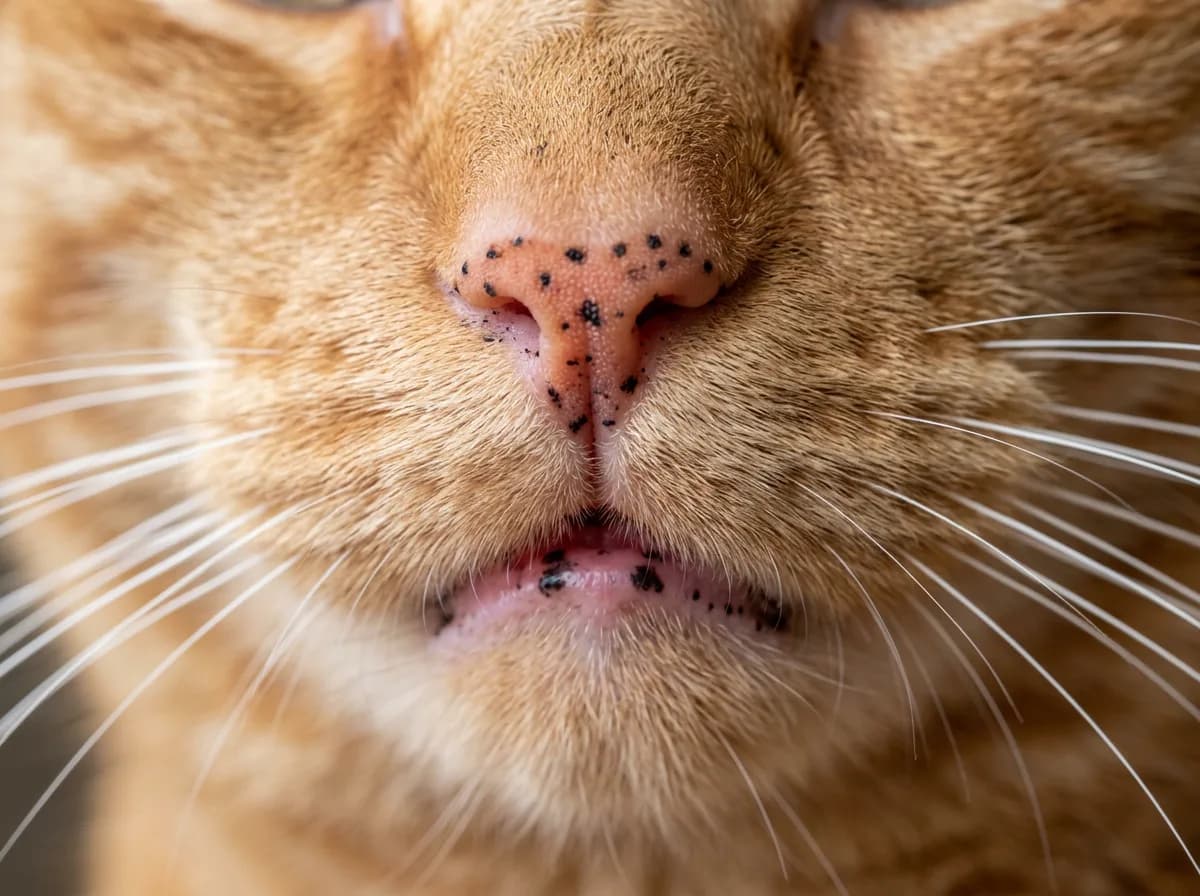
If your orange tabby develops small flat black freckles on the nose, lips, gums, or eye rims, usually starting around age 1 and increasing with age, that is almost always lentigo simplex, a harmless buildup of pigment cells that is especially common in orange, cream, and tortoiseshell cats. It is the feline version of freckles and needs no treatment. That said, you should still have any spot checked if it changes quickly, becomes raised, bleeds, or grows, since melanoma (though rare) can look superficially similar. When in doubt, a quick vet look settles it.

108-oz stainless steel pet fountain with quiet pump and water-level window. Bengals are notoriously water-obsessed; a flowing fountain encourages hydration and pulls them away from sinks and toilets.
Petful may earn a commission when you click through to Chewy, at no extra cost to you.
- Flat, stable black freckles on a ginger cat's nose and lips are typically lentigo and nothing to worry about. Ask your vet to check any spot that is raised, growing fast, irregular, or bleeding, just to rule out anything else.
Male-Skewed Health Risks
Because roughly 80% of orange tabbies are male, the conditions that hit male cats harder show up more often in the orange population as a group. The big one is feline lower urinary tract disease and urethral obstruction (a "blocked" cat). Male cats have a longer, narrower urethra, so crystals or plugs that a female might pass can lodge and cause a complete blockage. This is a genuine emergency: a cat straining in the litter box, crying, producing little or no urine, or vomiting needs same-day veterinary care.
Male cats, especially neutered ones, are also prone to obesity, which in turn raises the risk of diabetes and joint problems. None of this is caused by being orange, it tracks with being male, but since most orange tabbies are male it is worth planning for.
- If a male cat is straining to urinate, producing little or nothing, crying in the litter box, or vomiting, treat it as an emergency and get to a vet immediately. A complete urethral obstruction can become life-threatening within 24 to 48 hours.
To keep an orange boy healthy: feed measured portions to hold a lean body condition, encourage water intake (a fountain helps), provide enough clean litter boxes, and keep up with annual exams so problems are caught early.
Orange Tabby Cat Price and Adoption
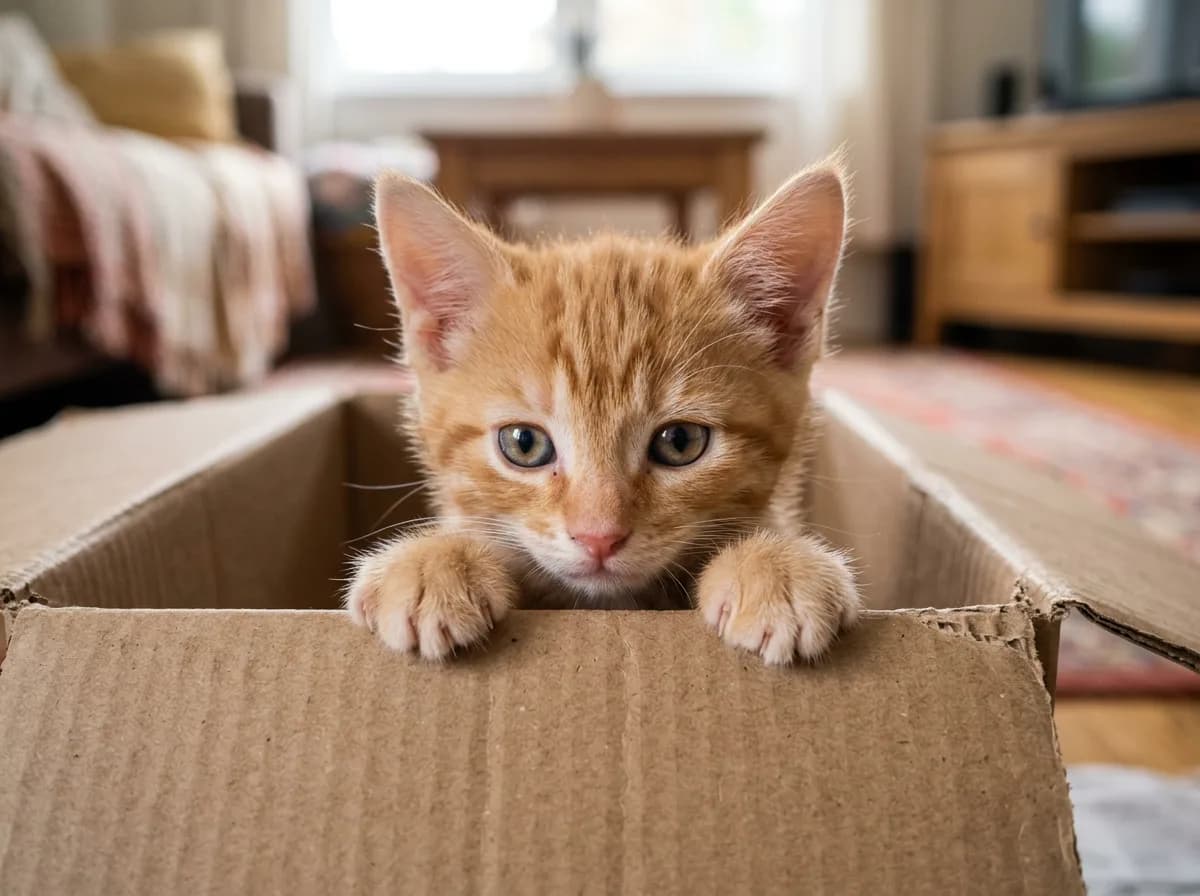
Because an orange tabby is a color and not a breed, there is no special "orange tabby price." What you pay depends entirely on where the cat comes from.
| Source | Typical Cost | What You Get |
|---|---|---|
| Shelter or rescue adoption | $50 to $200 | Usually spayed/neutered, vaccinated, microchipped; the most common way to get a ginger cat |
| Breeder (purebred that happens to be orange) | About $800 to $2,500 | Pedigree papers, health screening, set by the BREED, not the color |
| "Free to good home" / barn cat | $0 plus vet setup | Budget for the first vet visit, vaccines, and spay/neuter |
The honest takeaway: the vast majority of orange tabbies are everyday domestic shorthairs and longhairs, and shelters are full of them. Adopting from a shelter or breed-specific rescue is by far the most common and most affordable route, and the cat is usually already fixed and vaccinated. If you have your heart set on a purebred orange cat, expect to pay your chosen breed's normal kitten price (commonly $800 to $2,500 for a pedigreed kitten), with the orange color adding no premium of its own.
- Check local shelters and breed-specific rescues first, plus reputable adoption listings. Orange cats are common enough that you can usually find one nearby without paying a breeder. If you want a specific breed in orange, find an ethical breeder of that breed and ask about red/orange kittens in upcoming litters.
Famous Orange Tabby Cats in Pop Culture
Orange tabbies punch above their weight in fiction, which only feeds the "main character energy" reputation. The lasagna-loving Garfield is probably the most famous orange tabby in the world. Puss in Boots from the Shrek films is a swashbuckling ginger. Heathcliff, Orion from *Men in Black*, and Jonesy the ship's cat from *Alien* are all orange tabbies, as is the loyal Crookshanks-adjacent cast of ginger cats across film and TV. Even the famous "M"-marked tabby has its own legends, with folklore attributing the forehead M to Mohammed, the Virgin Mary, or the Egyptian word for cat, "Mau," though it is really just part of the tabby pattern.
Fun Facts About Orange Tabby Cats
- There is no solid orange cat. Every orange cat is a tabby, because orange pigment cannot be turned solid.
- The orange gene was finally pinned down in 2025, after more than a century of searching, to a deletion affecting ARHGAP36.
- "Red" (breeder term), orange, ginger, marmalade, and yellow all describe the same color.
- A cream cat is just a diluted orange tabby.
- The black freckles ginger cats develop are called lentigo and are harmless.
- The orange in a calico or tortoiseshell cat is the same orange gene, split across a female's body.
- National Tabby Day is celebrated on April 30.
Frequently Asked Questions About Orange Tabby Cats
The orange tabby is unusual because its color is sex-linked, so about 80% of them are male, and the orange gene was only pinned down in 2025 to a deletion affecting ARHGAP36. Add the famously sociable (if scientifically unproven) personality reputation and the fact that no orange cat is truly solid, and you get a cat with more genetic quirks than almost any other color.
Yes. Cats have excellent hearing and studies show they recognize their owner's voice and respond differently to it than to a stranger's. They may not understand your words, but an orange tabby absolutely registers your tone, your speech patterns, and its own name, which is why talking to your cat in a calm, friendly voice genuinely helps build a bond.
The classic cat "I love you" is the slow blink: meet your cat's gaze, then slowly close and open your eyes. Cats often slow-blink back. Other affection signals cats understand are a soft tone of voice, gentle head and cheek scratches, respecting their space, and reliable food and play routines, all of which read as safety and affection to a cat.
Cats are most bothered by sudden loud noises, being grabbed or restrained against their will, a dirty litter box, strong scents, and having their personal space ignored. Many cats also dislike belly rubs and over-handling. Watching for a flicking tail, flattened ears, or a tense body lets you back off before annoyance turns into a swat.
No. Orange tabby is a coat color and pattern, not a breed. Dozens of recognized breeds (Maine Coon, Persian, British Shorthair, and more) can be orange, and so can ordinary mixed-breed domestic shorthairs and longhairs. If you want a purebred orange cat, you choose the breed first and then find an orange individual within it.
No, but most are. About 80% of orange tabbies are male because the orange gene sits on the X chromosome and a male needs only one copy to be orange while a female needs two. Female orange tabbies are real, just less common; a female with only one orange copy usually comes out tortoiseshell or calico instead.
Female orange tabbies make up roughly 1 in 5 orange cats. A female must inherit the orange gene on both X chromosomes to be fully orange. If she inherits it on only one X, she shows up as a tortoiseshell or calico rather than a solid orange tabby, which is why fully orange females are the minority.
A healthy indoor orange tabby typically lives 12 to 16 years, and many reach 18 to 20 with good care. The orange color itself has no effect on lifespan. What matters is keeping the cat indoors or supervised, maintaining a healthy weight, providing dental care and vaccinations, and keeping up with annual veterinary checkups.
Adopting an orange tabby from a shelter or rescue usually costs $50 to $200, and the cat is typically already spayed or neutered, vaccinated, and microchipped. A purebred cat that happens to be orange follows its breed's pricing, commonly $800 to $2,500 for a pedigreed kitten. The orange color itself adds no premium.
Those flat black freckles on the nose, lips, gums, and eye rims are lentigo simplex, a harmless buildup of pigment-producing cells that is especially common in orange, cream, and tortoiseshell cats. They usually appear around age 1 and increase with age. Have your vet check any spot that becomes raised, grows quickly, or bleeds, just to rule out anything else.
Yes. Every orange cat shows tabby markings because orange pigment cannot be made solid the way black can. The gene that turns a black cat solid does not suppress orange, so even a cat that looks solid orange is really a very low-contrast tabby, with at least faint stripes, the forehead M, and ringed legs and tail visible up close.
Many breeds come in orange (red) tabby, including the Maine Coon, American Shorthair, British Shorthair, Persian, Scottish Fold, Munchkin, Bengal, and others, plus countless mixed-breed domestic shorthairs and longhairs. Because orange is a color rather than a breed, the right approach is to pick the breed you want and then look for an orange individual within it.

Coreen Saito is a pet writer and longtime shelter volunteer with more than a decade in animal rescue. She covers cat behavior, breed care, and the small, ordinary science of sharing a life with companion animals, with a particular focus on honest takes about the products and decisions that actually matter. At home in Arizona, she's outranked by Mac (a dog with the loudest opinion in the house), Rebel (a cat who governs by quiet authority), and Meri (an orange tabby who runs the late shift and the laundry basket). She writes about all three, plus the rescues that keep coming through her life, at LifeWithMinty.com.
Sign up for expert-backed reviews and safety alerts all in one place.