Japanese Bobtail vs Manx: Tail, Body & Health Differences
Japanese Bobtail and Manx cats can both have short tails, but their genetics, body shape, breed standards, and health context are not interchangeable.
Petful is reader supported. As an affiliate of platforms like Amazon and Chewy, we may earn a commission when you buy through links on this page. There is no extra cost to you.
The japanese bobtail vs manx question starts with a visible similarity: either cat may have much less tail than the average domestic cat. That resemblance is real, but the breeds are not interchangeable. Their tail traits follow different genetic pathways, their body standards emphasize different shapes, and their health context is not the same.
The safest way to compare them is to use four layers of evidence: documented ancestry, tail structure, whole-body conformation, and health history. A short tail by itself does not prove that a cat belongs to either breed. Pedigree and registration records carry more weight than a photograph, a shelter label, or a seller's claim.
This four-layer identification framework compares documentary ancestry, tail structure, body standard, and health context. Use the genetics-to-appearance comparison table below, then apply a separate health decision boundary instead of treating every short tail as the same condition. The sequence matters: records address ancestry, structure describes what can be observed, the breed standard provides context, and current function determines whether veterinary evaluation is needed.

Sign up for expert-backed reviews and safety alerts all in one place.
Japanese Bobtail vs Manx: quick comparison
- 1A Japanese Bobtail should have a kinked visible tail that creates a pom-pom effect, while an ideal show Manx has a round rump and may appear tailless.
- 2The Japanese Bobtail has long, clean body lines; the Manx has a round cobby body with heavier bone.
- 3Breed records, not tail length alone, are the strongest ancestry evidence.
- 4Manx syndrome belongs to the Manx health context and should not be transferred to Japanese Bobtails.
The CFA Japanese Bobtail standard describes a visible tail made from curves, angles, or kinks. The CFA Manx standard emphasizes roundness, a short arched back, substantial hindquarters, and a tailless presentation in the show variety. Those standards make the comparison much clearer than the loose label "bobtail cat."
Coat color is not a shortcut either. Petful's Japanese Bobtail colors guide explains why mi-ke, solid, tabby, pointed, or other accepted patterns cannot prove ancestry for an individual cat.
| Feature | Japanese Bobtail | Manx |
|---|---|---|
| Tail | Visible shortened tail with curves, angles, or kinks and a pom-pom effect | Tail length varies; the ideal show presentation has a rounded tailless rump |
| Genetic evidence | HES7 association has been reported in Asian short and kinked tails | Brachyury variants in the T gene are associated with Manx short tails |
| Body | Long clean lines, fine bone, muscular build, long legs | Round cobby body, heavy bone, short arched back, powerful hindquarters |
| Head | Triangular with high cheekbones and large upright ears | Round with prominent cheeks and widely set ears |
| Coat | Shorthair or longhair with little noticeable undercoat | Shorthair or longhair with a dense padded coat |
| Health context | Tail variation has a distinct research history; do not assume Manx syndrome | Breeders monitor for Manx syndrome and related function concerns |
| Identification | Pedigree and registry records confirm the breed | Pedigree and registry records confirm the breed |
A decision-ready comparison also looks beyond the tail. Japanese Bobtails often appear taller and more linear, while Manx cats look compact and rounded. Both can be playful, intelligent companions, and both deserve gentle handling around the tail or rump.
- Best first check: ask for pedigree, registration, and parent records.
- Best visual check: compare the entire body, not just the tail.
- Best health check: review the individual cat's veterinary and breeder records.
- Best uncertainty rule: call the cat a bobtailed or short-tailed domestic cat when ancestry is undocumented.
Petful may earn a commission when you click through to Chewy, at no extra cost to you.
Their activity also changes how a home should be arranged. A sturdy Yaheetech Multi-Level 63-in Plush Cat Tree provides a safer climbing target than a breakable shelf. Interactive sessions with a Frisco Bird with Feathers Teaser Wand Cat Toy can reveal what an individual cat enjoys without assuming that every member of a breed plays the same way.
Tail structure and genetics are different
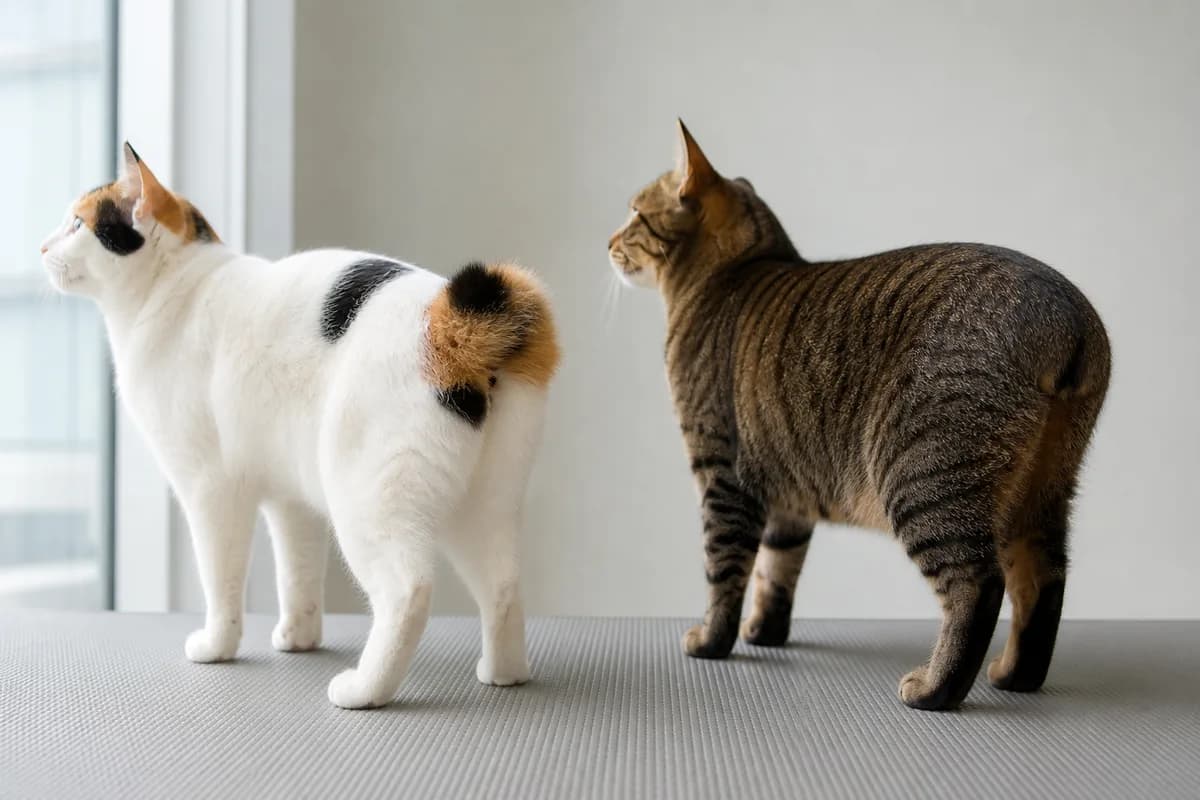
The tail difference is more than one breed having a little tail and the other having none. In a manx cat vs japanese bobtail comparison, researchers and registries describe separate inherited traits. The phrase japanese bobtail manx may be common in searches, but it should not become a blended breed label.
Peer-reviewed work on Japanese Bobtail morphology reported an inherited kinked-tail trait and found that the breed did not share the same causative T-box mutation identified in Manx cats. Later whole-genome research reported a strong HES7 association with shortened and kinked tails in Asian domestic cats and sampled Japanese Bobtails.
- These traits follow different genetic pathways, and appearance is not ancestry. HES7 association evidence is used when discussing the Japanese Bobtail's shortened, kinked tail. Brachyury variants in the T gene are associated with Manx short tails. Neither finding lets a reader diagnose ancestry or health from a photograph.
Research on Manx cats identified multiple Brachyury variants that can disrupt normal tail development. That is a different genetic route from the HES7 association discussed for Japanese Bobtails. Genetic findings describe populations and traits; they are not a substitute for an individual cat's veterinary assessment or pedigree.
What the tails can look like
A Japanese Bobtail tail contains vertebrae and may be flexible or rigid. Curves and kinks gather the hair into the famous pom-pom appearance. CFA's show standard says the tail must be clearly visible, even though the bone can be longer than it appears because it bends and curls.
A Manx litter can include different tail lengths. Registry language and everyday nicknames may distinguish tailless, short-tailed, and fully tailed cats, but a casual label does not replace the breeder's documented description. The full or partial tail varieties still belong to the Manx breed when their ancestry is documented.
- Never pull, straighten, or manipulate a kinked tail for comparison.
- Support a cat's hindquarters when lifting, especially if the rump or tail area is sensitive.
- Ask a veterinarian about pain, weakness, elimination changes, or altered movement.
- Do not order a consumer DNA test expecting it to prove every short-tail breed claim.

63-inch multi-level cat tree with scratch posts, hammock, plush perches, and dangling toys. Vertical territory is non-negotiable for high-energy climbing breeds like the Bengal.
Petful may earn a commission when you click through to Chewy, at no extra cost to you.
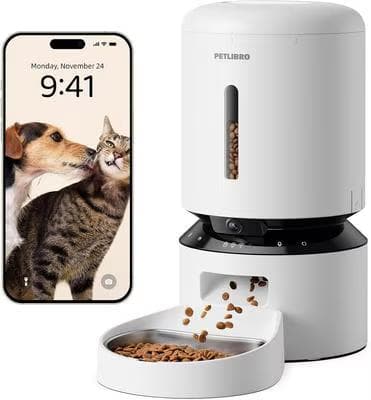
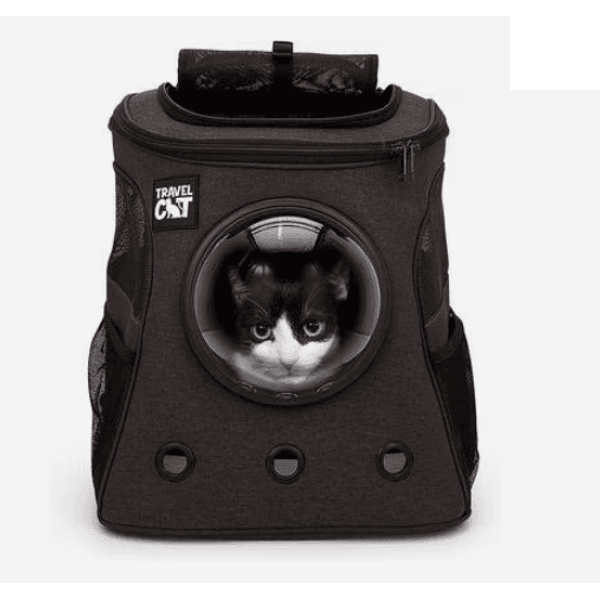
Routine feeding tools should support the cat rather than become breed evidence. The Petlibro Granary WIFI Automatic Cat & Dog Feeder with Camera may help a household keep a consistent meal routine, but it cannot replace body-condition checks or individual feeding advice. A secure Travel Cat Fat Cat Airline Approved Bubble Backpack Cat Carrier is useful when a veterinarian needs to examine gait, the spine, or a sensitive tail area.
Body, head, legs, and coat differences
The whole silhouette is the most useful visual clue after records. A japanese bobtail manx cat search often focuses on the missing tail, yet the breeds were developed to very different standards. The difference between japanese bobtail and manx is especially visible through the torso, head, and bone.
The Japanese Bobtail should look refined and athletic. Its body has long, clean lines, fine bone, and firm muscle. The hind legs are noticeably longer than the forelegs, but the legs remain long and slender. The head forms a near-equilateral triangle with high cheekbones, a long nose, and large upright ears.
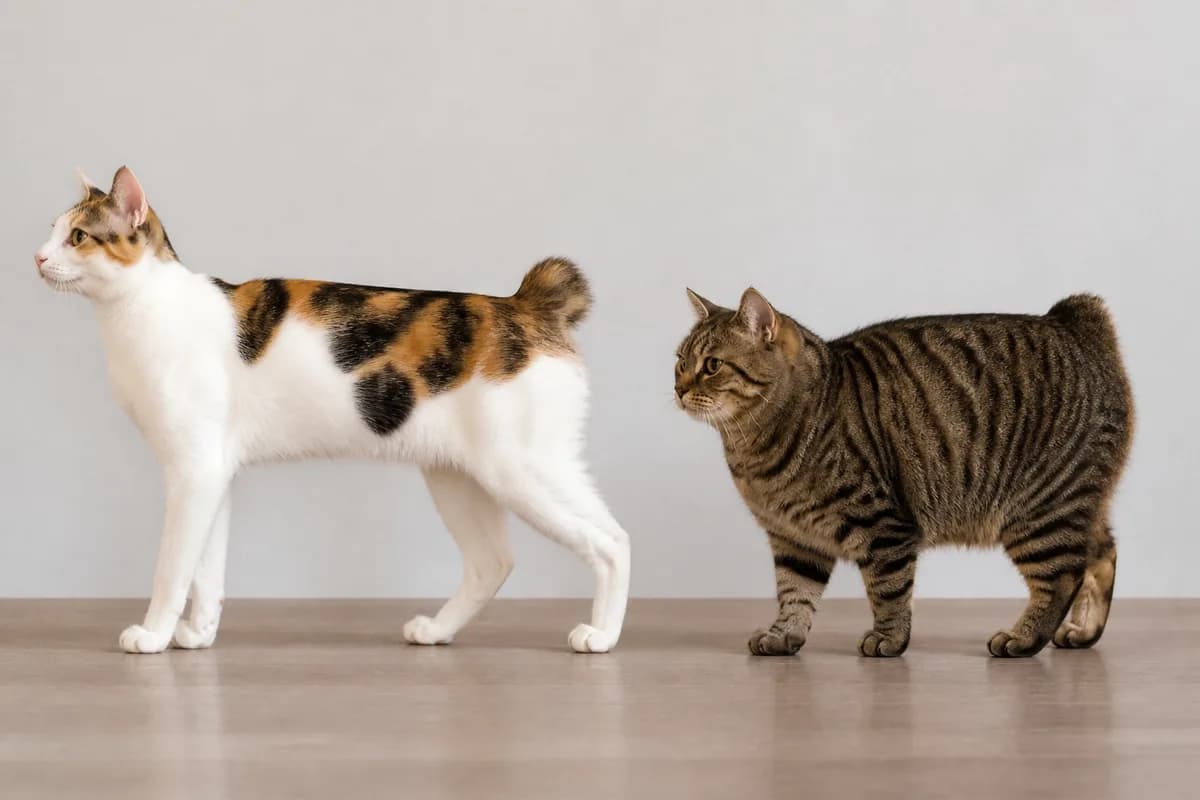
The Manx standard repeats roundness. The body is compact and substantial, the chest is broad, the back is short and arched, and the hindquarters are powerful. The head, muzzle, cheeks, eyes, and rump all reinforce the rounded impression. A Manx may be surprisingly heavy when lifted because of its bone and muscle.
Coat texture and length
Both breed groups include shorthaired and longhaired cats, so coat length alone will not settle the question. Japanese Bobtails have a soft, silky coat without a noticeable undercoat in the mature adult. Manx cats have a dense coat that creates a padded feel; the longhaired Manx is also called the Cymric in some registry systems.
An aumuca Self Cleaning Slicker Brush may suit gentle surface grooming for some cats, but the individual coat and handling tolerance should choose the tool. Do not use how much hair a brush collects as evidence that an undocumented cat belongs to either breed.
- Japanese Bobtail shorthair: soft, silky, and close enough to show the body's clean lines.
- Japanese Bobtail longhair: soft and flowing, often with britches and a plumed tail effect.
- Manx shorthair: dense double coat with a substantial feel.
- Manx longhair or Cymric: medium-length plush coat with breeches and a neck ruff.
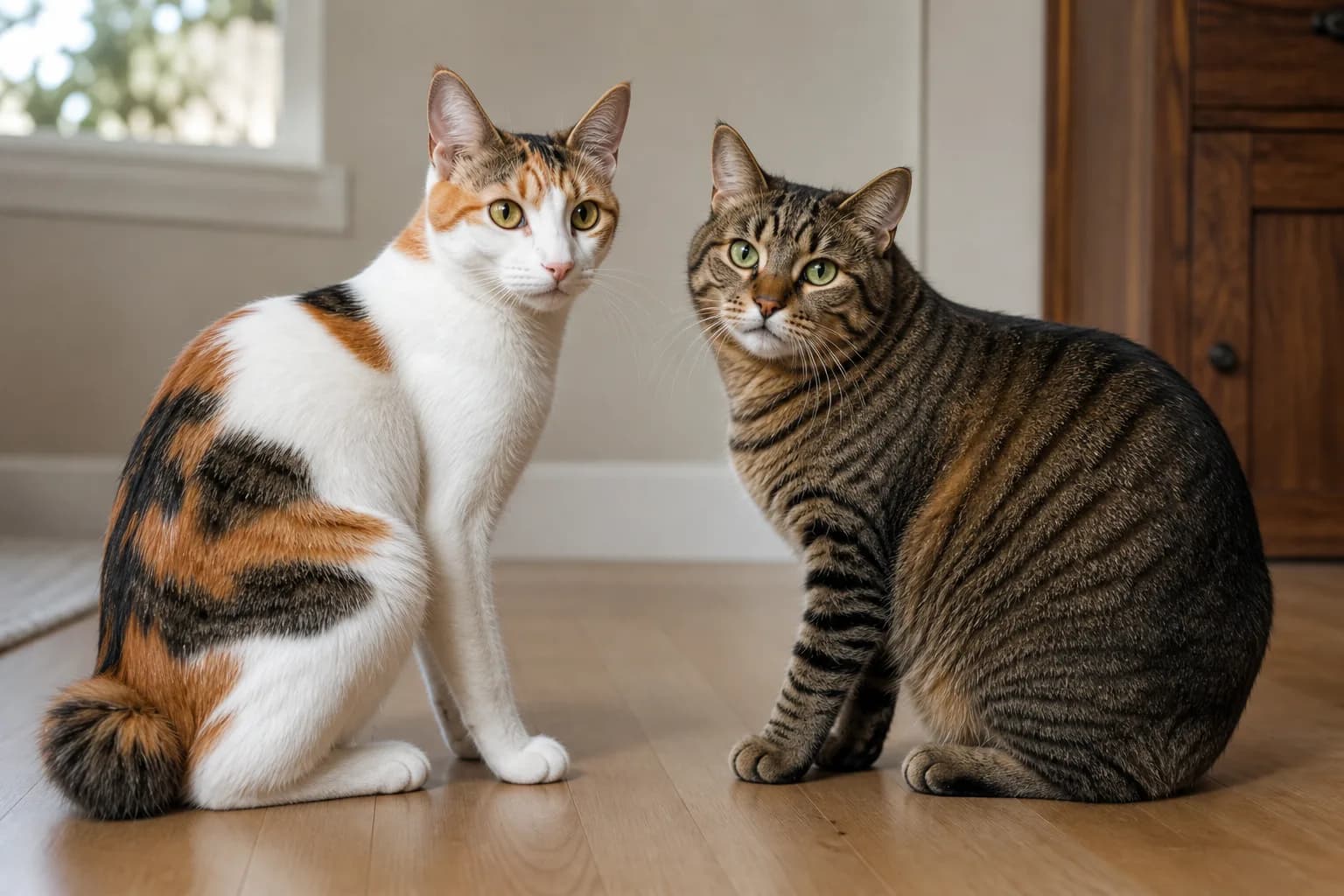
Color is not a dependable divider. Japanese Bobtails are famous for mi-ke, or tricolor, but registries accept many colors and patterns. Manx cats also occur in a wide range of traditional colors. A calico coat, odd eyes, or white spotting cannot prove either breed.
Is my cat a Manx or bobtail based on appearance?
If the cat has no records, the responsible answer is usually uncertain. Shelter intake notes can be useful history, but they are not pedigree documents. A naturally short tail occurs in mixed and random-bred cats, and an injury can also change tail length.
Use this order of evidence:
- Pedigree and registration documents that name the cat and parents.
- Breeder or rescue records tied to verifiable sources.
- Veterinary history, especially when the tail is missing or abnormal.
- Whole-body traits as clues, never as proof.
The existing Manx breed profile explains the round body standard in more depth. The Japanese Bobtail breed guide owns the complete Japanese Bobtail history, temperament, and care profile.

Feathered teaser wand with catnip-stuffed bird. Pairs perfectly with the no-bite training policy: redirect Bengal play drive into a 10-minute interactive session with the wand.
Petful may earn a commission when you click through to Chewy, at no extra cost to you.
For active indoor cats, a second Yaheetech Multi-Level 63-in Plush Cat Tree mention belongs at the home-layout decision: place tall furniture away from unstable objects and give the cat a clear route down. A supervised Frisco feather teaser wand can direct jumping and chasing away from hands, cords, and fragile displays.
Health and handling differences
The japanese bobtail vs manx health comparison needs careful boundaries. A shortened tail does not create one universal diagnosis. Manx syndrome vs Japanese Bobtail is not a choice between two names for the same problem. Manx syndrome refers to a set of developmental problems associated with the Manx health context, while Japanese Bobtail tail research describes a distinct inherited morphology.
CFA advises prospective Manx owners to ask breeders about Manx syndrome in their lines. The term can involve function of the hind legs, urinary bladder, and colon. Responsible breeders monitor kittens and may wait until a kitten is old enough for relevant concerns to become apparent. Petful's veterinarian-authored Manx syndrome guide explains that clinical topic in depth.
Japanese Bobtail tail health should be discussed without borrowing that diagnosis. The breed's tail can be rigid, flexible, angled, or curled, and the area may be sensitive. The morphology study found vertebral variation in sampled cats without linking the observed tail-kink placement to morbidity or mortality. That finding does not promise that every Japanese Bobtail is free from pain or disease.
Petful may earn a commission when you click through to Chewy, at no extra cost to you.
When a veterinarian should examine the cat
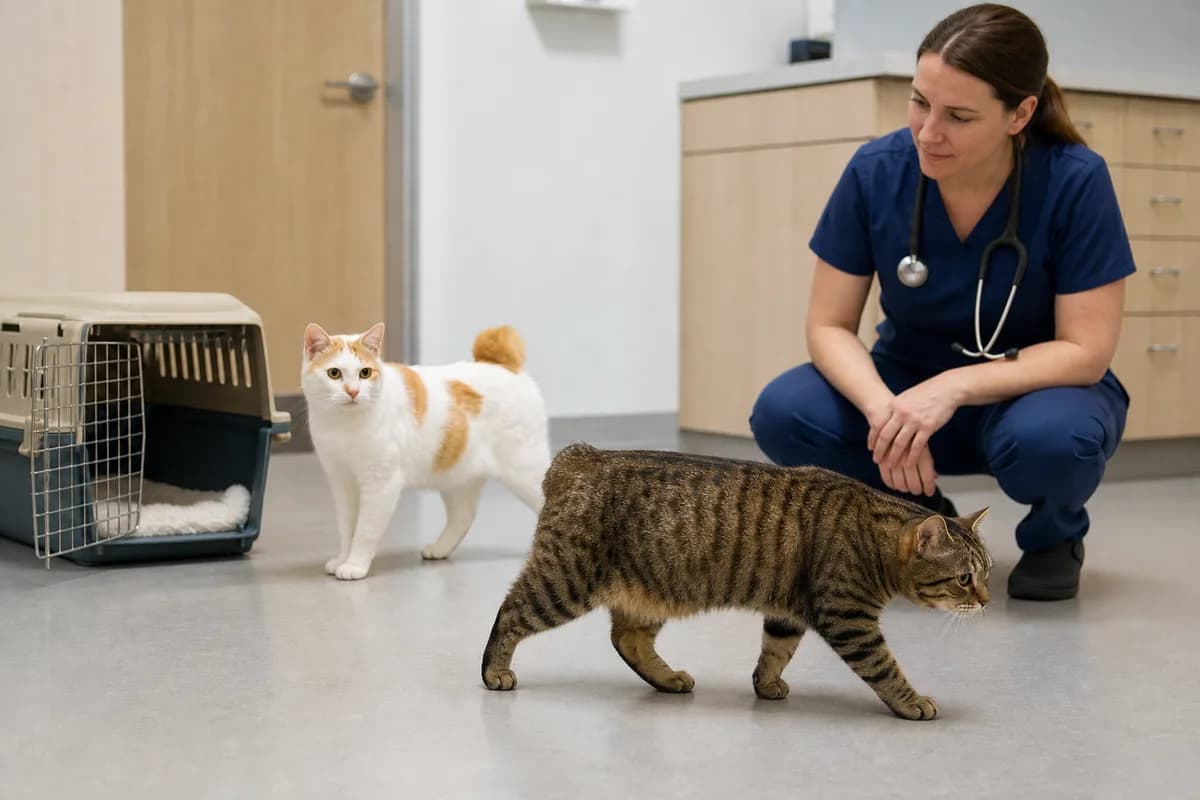
Tail areas should be handled gently in either breed. Do not pull, straighten, repeatedly flex, or press a tail or rump to test a breed theory. This handling rule protects comfort and avoids turning visual comparison into a physical test. New pain, weakness, movement changes, altered tail carriage, wounds, or elimination changes belong with a veterinarian, regardless of the breed label or pedigree history.
Seek veterinary guidance when a cat has a change rather than trying to assign a breed-based explanation. Useful observations include when the change began, whether the cat can jump normally, and whether urination or defecation has changed.
- Pain when the tail, rump, or back is touched
- Weakness, wobbling, or a changed gait
- New urinary accidents or difficulty urinating
- Constipation, fecal leakage, or straining
- A wound, swelling, or sudden change in tail position
These signs do not identify a breed. They are reasons for an individual medical evaluation. A Travel Cat carrier can make a planned exam safer, especially when the cat should not be handled repeatedly around a sore area.
Temperament and household fit
Registry descriptions portray Japanese Bobtails as active, interactive, intelligent cats that enjoy games and companionship. Manx cats are often described as gentle, devoted, and playful, with powerful jumping ability. Those are breed-level tendencies, not guarantees about an individual.
A good match depends on daily routine:
- Choose predictable interactive play for a busy Japanese Bobtail.
- Give either cat sturdy vertical space and non-slip landing areas.
- Introduce children to gentle tail and rump handling rules.
- Let the cat approach instead of forcing lap time or physical contact.
- Provide quiet resting places when a social cat wants a break.
Which breed fits your household?
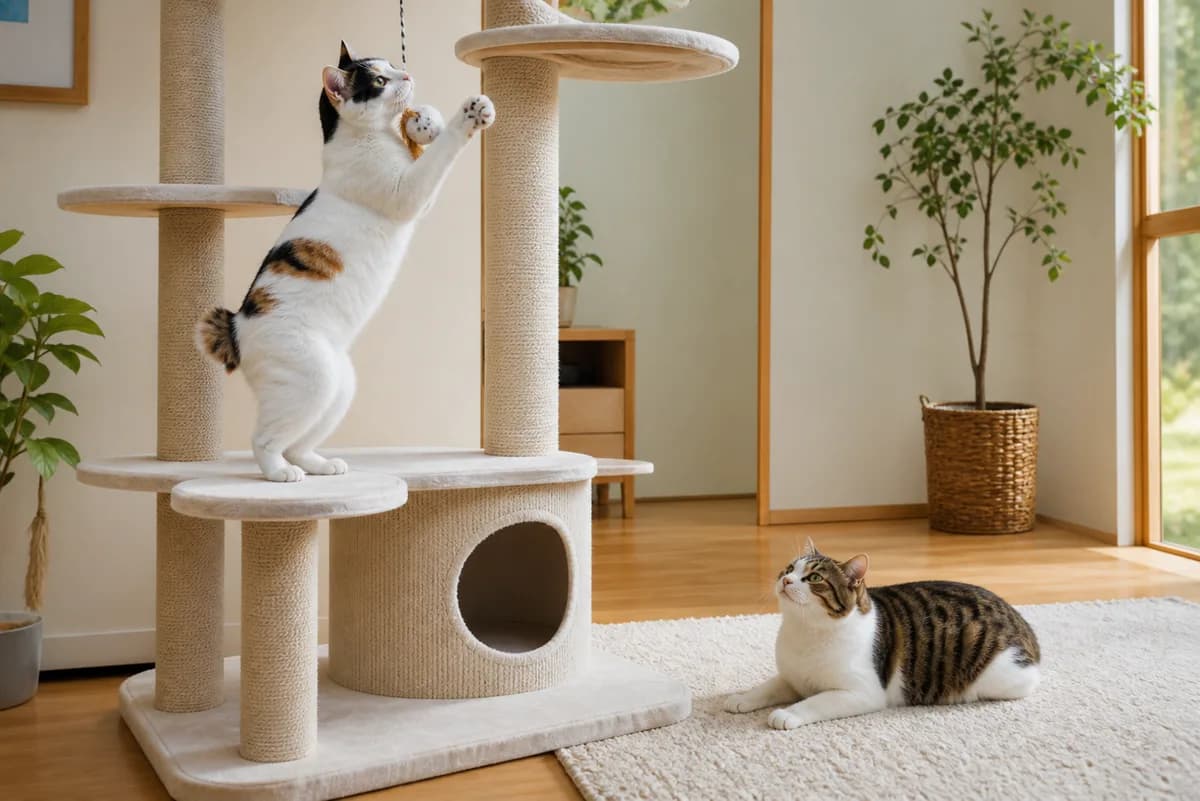
- Japanese Bobtail can be an active social companion for trick training and interactive play
- Fine coat is generally straightforward to maintain
- Social nature can suit a family that offers daily attention
- Manx can be a calm devoted companion with bursts of athletic play
- Japanese Bobtail activity may be demanding in an under-enriched home
- A short tail still requires documentary ancestry rather than visual assumptions
- Prospective Manx owners need a clear breeder discussion about health monitoring
- Either individual may dislike handling around the tail or rump
The better choice is not the breed with the more unusual tail. It is the individual cat whose documented history, health, energy, and social needs match the household. Adults from a responsible breeder or rescue can sometimes offer a clearer view of temperament than a very young kitten.
A consistent routine can help either cat settle. The Petlibro automatic feeder can support scheduled meals when used with an appropriate diet and portion plan. The Travel Cat backpack carrier provides a secure transport option for routine veterinary visits and gradual travel practice.
Price is not a breed-identification shortcut
A high manx cat price does not prove pedigree, health, or ethical breeding. The same is true for a costly Japanese Bobtail listing. A purebred Manx cat cost quote should be evaluated through records, included care, contract terms, and seller verification rather than rarity language.
Use Petful's current Manx cat price guide for the dedicated cost framework. For Japanese Bobtails, the Japanese Bobtail cat price guide separates acquisition estimates from first-year and recurring costs.
Before paying, verify:
- The registered names of the kitten, parents, and breeder
- Health and vaccination records tied to the individual cat
- A written contract, return policy, and realistic pickup plan
- Live contact with the seller and the cat, not only copied photos
- Payment terms that allow reasonable consumer protection
Japanese Bobtail vs Manx FAQs
A short or missing tail is not enough to decide. Compare breed records and tail structure first, then the full body standard and health history. A Manx usually has a round cobby body, while a Japanese Bobtail has longer clean lines and a visible kinked pom tail, but those features are only clues. Pedigree and registry records are the strongest ancestry evidence. A veterinarian should examine an unexplained, injured, newly changed, or painful tail rather than using appearance to assign a breed.
Whole-genome research reported a HES7 association with shortened and kinked tails in Asian domestic cats, including sampled Japanese Bobtails. That population-level finding does not prove an individual cat's ancestry from appearance or replace veterinary care.
No. Manx syndrome belongs to the Manx developmental health context and can affect hind-limb, bladder, or colon function. Japanese Bobtail tail morphology follows a distinct research and genetic context, so the diagnosis should not be transferred between breeds.
The bottom line
The most reliable Japanese Bobtail versus Manx decision uses records first and appearance second. Japanese Bobtails have a visible kinked pom tail and a linear, athletic standard. Manx cats emphasize roundness, a short arched back, powerful hindquarters, and variable tail length within the breed.
Their tail traits are genetically distinct, and their health discussions should remain distinct too. When ancestry is unknown, describe what is visible without assigning a pedigree. When function, comfort, elimination, or movement changes, ask a veterinarian to evaluate the individual cat.

Coreen Saito is a pet writer and longtime shelter volunteer with more than a decade in animal rescue. She covers cat behavior, breed care, and the small, ordinary science of sharing a life with companion animals, with a particular focus on honest takes about the products and decisions that actually matter. At home in Arizona, she's outranked by Mac (a dog with the loudest opinion in the house), Rebel (a cat who governs by quiet authority), and Meri (an orange tabby who runs the late shift and the laundry basket). She writes about all three, plus the rescues that keep coming through her life, at LifeWithMinty.com.
Sign up for expert-backed reviews and safety alerts all in one place.