Manx Syndrome in Cats: A Vet's Guide to Sacrocaudal Dysgenesis
Manx syndrome (sacrocaudal dysgenesis) is a spinal defect in tailless Manx cats. A veterinarian explains the causes, symptoms, diagnosis, treatment, prognosis, and how responsible breeding prevents it.

BVMS, MRCVS
Petful is reader supported. As an affiliate of platforms like Amazon and Chewy, we may earn a commission when you buy through links on this page. There is no extra cost to you.
Sacrocaudal dysgenesis, the condition most cat owners know as manx syndrome, is a spina-bifida-like malformation of the lower spine and spinal cord that affects a minority of Manx cats, with veterinary sources such as PetMD and VCA describing it in up to roughly 20 percent of the breed to some degree. It stems from the very same genetic mutation that gives the Manx its famous short or absent tail. When that gene shortens the spine too far, it can leave the last few vertebrae and the tail end of the spinal cord underdeveloped, disrupting the nerves that control the hind legs, the bladder, and the bowel. The good news is that mildly affected cats can live full, happy lives with attentive care. The hard truth is that severe cases carry a poor prognosis, which is why this is the breed's defining welfare issue and why responsible breeding matters so much.
- 1Manx syndrome (sacrocaudal dysgenesis) is a spinal birth defect caused by the same dominant gene that shortens the Manx tail
- 2Signs usually appear by 4 to 6 months of age and include hind-limb weakness, a hopping gait, and loss of bladder and bowel control
- 3It affects a minority of Manx, with risk highest in fully tailless (rumpy) cats and rumpy-to-rumpy breeding
- 4There is no cure, but mild cases can be managed well for years; severe cases carry a poor prognosis
- 5The single most effective prevention is responsible breeding that never pairs two tailless cats

Sign up for expert-backed reviews and safety alerts all in one place.
What Is Manx Syndrome?
Manx syndrome is the everyday name for sacrocaudal dysgenesis, a developmental defect of the sacral and caudal (tail-end) spine in cats that carry the Manx gene. In an affected kitten, the lowest vertebrae and the corresponding segments of the spinal cord fail to form normally. Because those nerves supply the back legs, the urinary bladder, and the colon, the result is a cluster of related problems rather than a single symptom: weakness or partial paralysis in the hind end, an inability to fully control urination and defecation, and a characteristic hopping gait.
It is best understood as a spectrum, not an on-off switch. Some cats carry the gene and show no signs at all. Others have mild, manageable issues. A smaller group is severely affected from the start. Veterinarians sometimes group it with neural tube defects, the same family of conditions that includes spina bifida in humans, because the underlying problem is incomplete closure and development of the spinal canal at the lower back.
- "Manx syndrome" is the common term. In a medical record your veterinarian may write sacrocaudal dysgenesis or sacrocaudal agenesis, and may note associated spina bifida. They all describe the same underlying malformation of the lower spine.
What Causes Manx Syndrome?
The cause is genetic, and it is inseparable from what makes a Manx a Manx. Taillessness in the breed comes from a single dominant mutation, usually written as the Manx gene (M). A Manx cat carries one copy of this mutation alongside one normal allele (Mm). That one copy is enough to shorten the tail, and in some cats it also shortens the spine far enough to cause sacrocaudal dysgenesis.
 Sponsored
Wondering why your cat seems stiff or sore?
Talk to a licensed vet at Dutch over video, often the same day. They can recommend treatment and prescribe it when it's appropriate.
Use code Pets30
Plans start at $11/month · covers up to 5 pets
- Licensed vets in most states
- Rx for 150+ conditions
- 4.7 on Trustpilot
The genetics, in plain terms
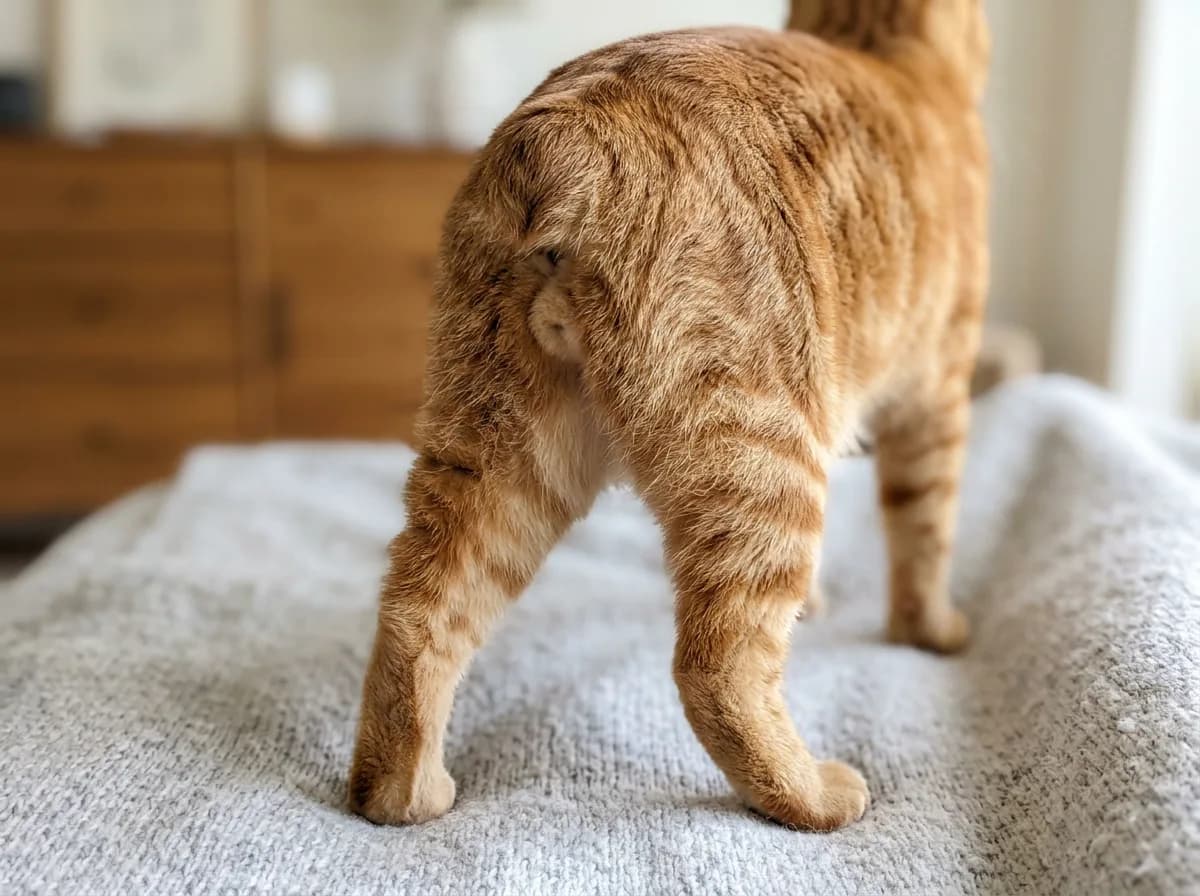
Because the gene is dominant, only one copy is needed to affect a cat. Two copies (MM) are lethal very early in embryonic development, so no living Manx is homozygous for the mutation. This single fact drives almost everything about the condition:
- Every Manx carries one Manx gene and one normal gene, so every Manx can produce tailed kittens.
- Pairing two tailless (rumpy) Manx together raises the chance of the embryo inheriting two copies, which does not survive, and raises the risk of severe spinal defects in the kittens that do.
- The further the gene shortens the spine, the more likely it is to disrupt the nerves at the tail end. That is why the risk tracks closely with tail type.
In short, the mutation that breeders select for is the same mutation that causes the disease. There is no separate "Manx syndrome gene" to screen out without losing the tailless trait itself.

Never Scoop Again® with the Whisker Litter-Robot, the smart self-cleaning automatic litter box. Monitor visits and track weights for better overall care in the Whisker® app. Multi-cat friendly.
Petful may earn a commission when you click through to Whisker, at no extra cost to you.
- Risk is highest in rumpy (completely tailless) cats and in litters from rumpy-to-rumpy pairings. Cats with a longer partial tail (stumpy) or a near-normal tail (longy) are generally at lower risk, though no Manx is guaranteed to be free of the condition.
What Are the Symptoms of Manx Syndrome?
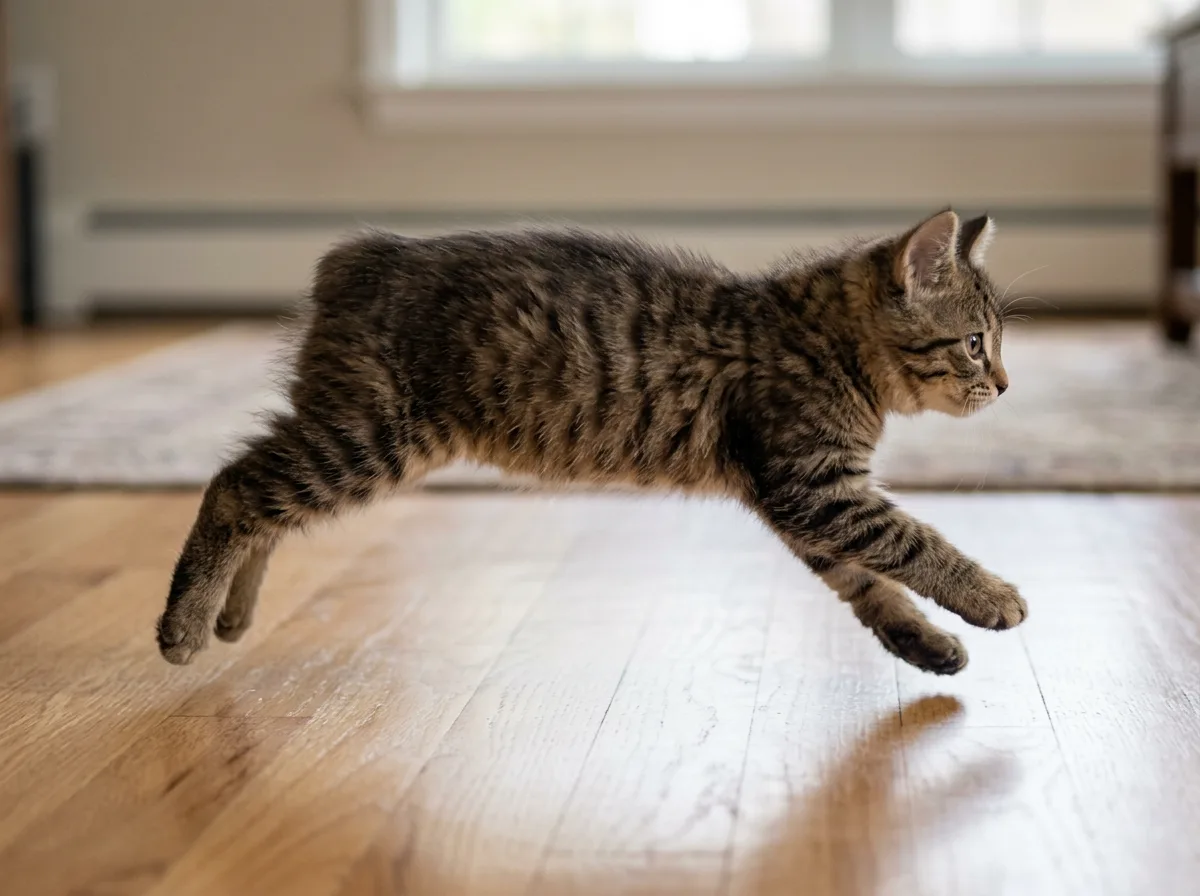
Because the affected nerves serve three systems (the hind legs, the bladder, and the bowel), the signs cluster into those three groups. A mildly affected cat may show only one or two; a severely affected cat shows many at once.
Hind-limb and movement signs:
- A "bunny hopping" gait, where the back legs move together instead of striding
- Weakness or wobbliness in the rear end
- A plantigrade stance, walking on more of the lower leg than normal
- Partial or complete paralysis of one or both back legs
- Difficulty or inability to jump onto higher surfaces
- Loss of sensation in the back legs and around the anus and genitals
Urinary signs:
- Urinary incontinence (dribbling or an inability to control urination)
- An inability to empty the bladder fully, leading to retention
- Recurrent urinary tract infections from incomplete emptying
Bowel signs:
- Fecal incontinence
- Chronic constipation from loss of nerve function
- Megacolon (an abnormally distended, poorly functioning colon)
- Rectal prolapse in some cases
The table below frames these by severity so you can gauge where a cat falls and what level of care it implies. It is a general guide, not a diagnosis: only a veterinary exam can grade an individual cat.
| Severity | Typical signs | What care usually looks like |
|---|---|---|
| Mild | Slight hopping gait, occasional soft stool, mild incontinence, normal energy | Routine monitoring, a high-fiber diet, good litter-box hygiene |
| Moderate | Clear hind-leg weakness, recurrent UTIs, constipation needing stool softeners, partial incontinence | Manual bladder expression as advised, stool softeners, mobility aids, regular vet checks |
| Severe | Hind-leg paralysis, megacolon, persistent incontinence, frequent infections, no sensation in the rear | Intensive daily nursing, possible surgery, and an honest quality-of-life conversation with your vet |
- A cat that cannot urinate, strains repeatedly with no result, has a hard distended belly, stops eating, or shows sudden hind-leg collapse needs same-day veterinary attention. A blocked or non-emptying bladder is a medical emergency and can become life-threatening within a day.
At What Age Does Manx Syndrome Appear?
Signs usually become apparent by 4 to 6 months of age, often as soon as a kitten becomes active and starts walking, climbing, and using the litter box in earnest. In more severe cases, problems can be obvious within the first few weeks of life. This timing is exactly why reputable breeders hold Manx kittens until they are at least 4 months old: by then they can observe the kitten moving and toileting normally and reduce the chance of placing an affected kitten unknowingly.
If you have a young Manx, the first few months are the window to watch closely. A kitten that hops rather than strides, leaks urine, struggles to pass stool, or seems numb at the back end should be examined without waiting for it to "grow out of it," because the condition does not resolve on its own.

63-inch multi-level cat tree with scratch posts, hammock, plush perches, and dangling toys. Vertical territory is non-negotiable for high-energy climbing breeds like the Bengal.
Petful may earn a commission when you click through to Chewy, at no extra cost to you.
- In the first 6 months, note how your kitten walks, whether it can jump, how it uses the litter box, and whether its rear stays clean and dry. Bring a short phone video of any abnormal movement to the appointment; it helps your veterinarian grade the gait far better than description alone.
How Do Vets Diagnose Manx Syndrome?
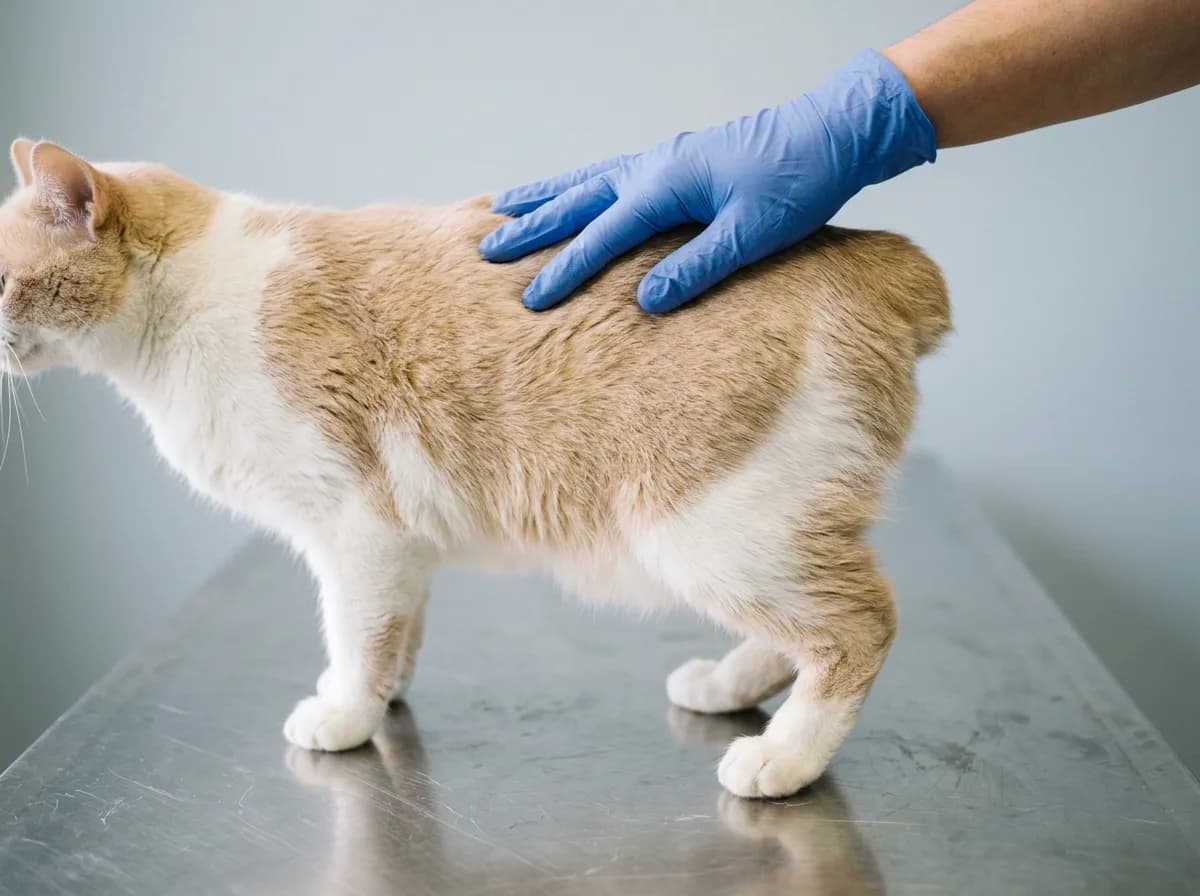
Diagnosis starts with signalment and history: a young tailless Manx with the classic combination of a hopping gait and incontinence is already a strong clinical picture. Your veterinarian will then confirm and grade the condition with a combination of:
- A full physical and neurological examination to assess hind-limb strength, reflexes, and sensation around the tail base and perineum.
- X-rays (radiographs) of the spine and pelvis to show the missing or malformed sacral and caudal vertebrae.
- Advanced imaging such as MRI or a myelogram in selected cases, to map the spinal cord and nerve roots before any surgery is considered.
- Urinalysis and a urine culture to check bladder function and identify the urinary tract infections that so often accompany the condition.
The aim is twofold: confirm sacrocaudal dysgenesis and, just as importantly, establish how severe it is, because that grade drives every decision that follows about treatment and quality of life.
SponsoredVet care that's always there
Unlimited video calls and messaging with licensed vets for less than a typical vet visit. One membership covers up to five pets.
Use code Pets30
Plans start at $11/month · covers up to 5 pets
- Licensed vets in most states
- Rx for 150+ conditions
- 4.7 on Trustpilot
How Is Manx Syndrome Treated and Managed?
There is no cure for manx syndrome, because the underlying spine and nerves cannot be made to develop normally after birth. Treatment is therefore about management: supporting the systems the nerves no longer fully control, preventing the secondary problems (infections, megacolon, skin scald), and keeping the cat comfortable and clean. With a committed owner, many mild and moderate cases do very well for years.
Bladder care
Cats that cannot empty the bladder on their own may need manual bladder expression, gently pressing to empty it several times a day, a technique your veterinarian or veterinary nurse can teach you hands-on. Keeping the bladder emptied is the single most important step in preventing the recurrent urinary tract infections that otherwise drive much of the suffering in this condition. Some cats need periodic courses of antibiotics for infections.
Bowel care
A high-fiber diet and veterinary-prescribed stool softeners help prevent the constipation and megacolon that come from poor nerve control of the colon. Some cats benefit from a scheduled toileting routine, and severely constipated cats may occasionally need a veterinarian to relieve an impaction.
Hygiene and skin
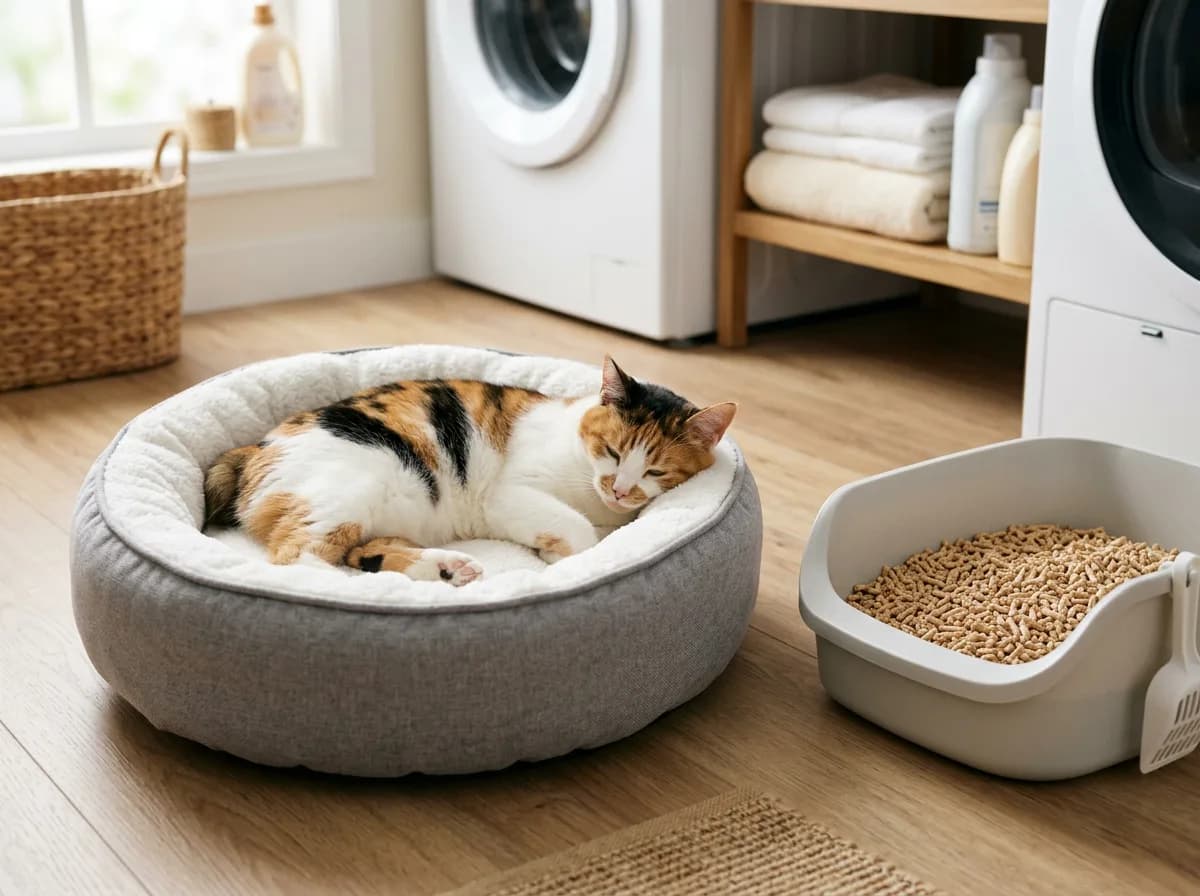
Incontinent cats need their rear kept clean and dry to prevent urine scald and skin infection. That can mean daily gentle cleaning, sanitary trims of the fur around the area, and in some cases pet diapers. Soft, easily washed bedding helps.

108-oz stainless steel pet fountain with quiet pump and water-level window. Bengals are notoriously water-obsessed; a flowing fountain encourages hydration and pulls them away from sinks and toilets.
Petful may earn a commission when you click through to Chewy, at no extra cost to you.
Mobility and home setup
Simple changes make a weak-legged cat's world easier: low-sided litter boxes that are easy to step into, ramps or steps to favorite resting spots, non-slip rugs over slick floors, and food and water at floor level. Indoor-only living is strongly advised, because a cat that cannot run or jump well is highly vulnerable outdoors.
Surgery
In selected cases, surgery can help, for example relieving a tethered or compressed spinal cord, or addressing severe megacolon. Surgery is not a cure and carries its own risks and welfare costs, so it is reserved for specific problems where a specialist judges the benefit to be worth it. A cat with moderate or severe signs does best with a consistent veterinary relationship and, where available, input from a veterinary neurologist or internal-medicine specialist who can help you stay ahead of infections and pain.
Prognosis and Quality of Life
Prognosis depends almost entirely on severity. Mildly affected cats often live close to a normal Manx lifespan of 9 to 14 years with good supportive care, and many are bright, affectionate, dog-like companions whose disability is barely noticeable day to day. Moderately affected cats can also do well, but they ask more of their owners in daily nursing and veterinary visits.
Severely affected cats carry a poor prognosis. Some references note that cats with the more serious form of the condition often do not live past three or four years, with recurrent infections, megacolon, and loss of function gradually undermining quality of life. This is the part owners most need to hear honestly: dedication and excellent care can do a great deal, but they cannot reverse the underlying defect.
- Quality of life with this condition is measured in the everyday: is the cat eating well, comfortable, free of pain and infection, able to move around its world, and engaged with its people? Many cats meet that bar with the right support. A frank, ongoing quality-of-life conversation with your veterinarian is the kindest tool you have.
When euthanasia is discussed
For a minority of cats, the condition is so severe, or the cat develops uncontrollable pain, repeated serious infections, or a complete loss of function, that no level of care can give them a life worth living. In those cases, a veterinarian may compassionately raise euthanasia. It is never an easy conversation, but for the most severely affected cats it can be the most humane choice. Owners facing it should know it reflects the severity of the disease, not any failure on their part.
Can Manx Syndrome Be Prevented?
Yes, at the breeding stage, and that is the only place it can truly be prevented. Because the condition is inseparable from the Manx gene, prevention rests on responsible breeding practices rather than on any treatment or supplement:
- Never pair two tailless (rumpy) Manx. Reputable breeders cross a tailless Manx with a tailed (stumpy or longy) cat to lower the risk of severe defects and avoid the lethal double dose of the gene.
- Place kittens at 4 months or older, once they can be observed moving and toileting normally.
- Screen and select lines with low rates of the condition, and retire breeding cats that consistently produce affected kittens.
For owners, "prevention" really means choosing a breeder who follows these practices, or adopting an affected cat with eyes open to the care it will need. Color, by the way, has nothing to do with it: a cat's coat shade does not change its risk, which is set entirely by genetics and tail type.
- A breeder who pairs two tailless cats, sells kittens younger than 4 months, or cannot discuss how they screen for manx syndrome is one to avoid. Reputable Manx and Cymric breeders are open about the condition and breed deliberately to minimize it.
How Manx Syndrome Fits the Broader Breed
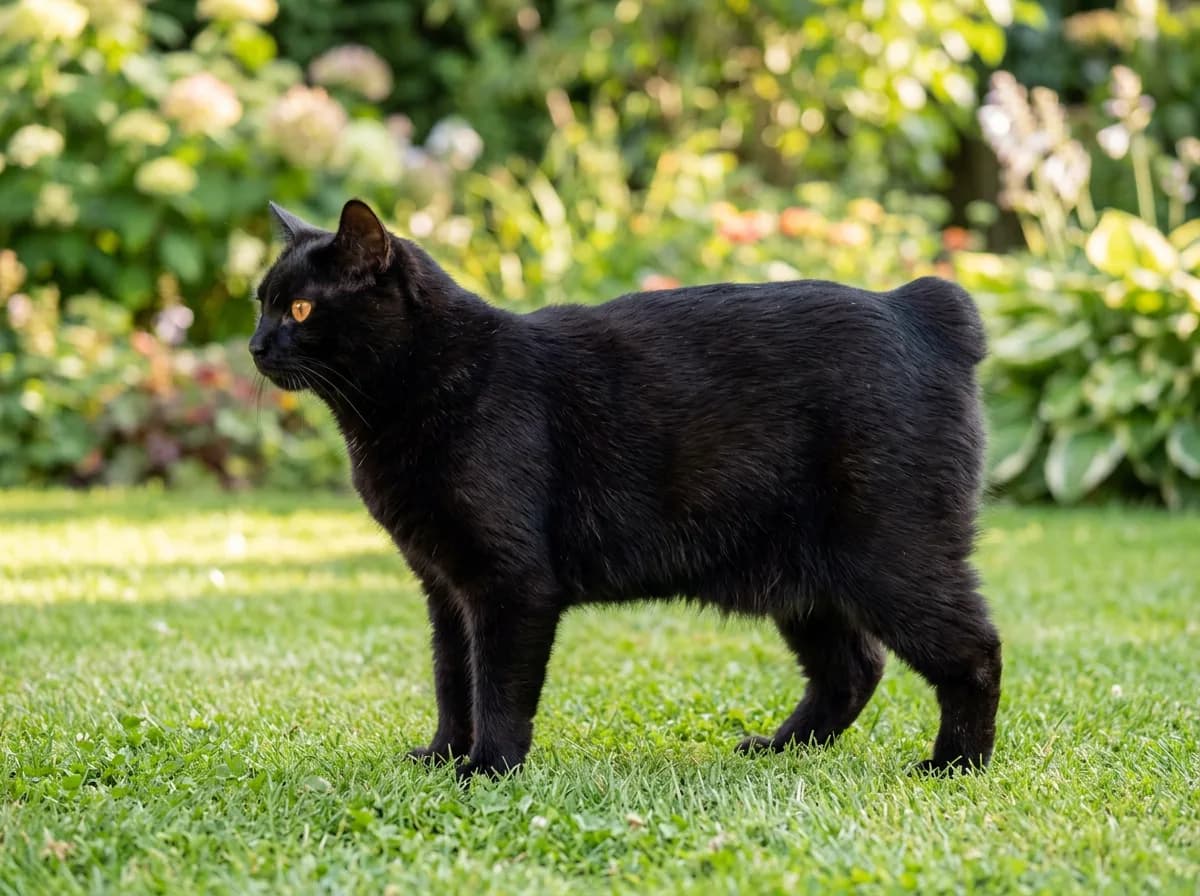
Manx syndrome is the most serious health concern in the breed, but it is not the whole health picture, and it is not a reason to dismiss these cats. Most Manx are hardy, and many never develop the condition at all. The same dominant mutation also produces the breed's beloved traits: the rounded body, the elongated hind legs, the rabbit-like hop, and the famously affectionate, dog-like personality.
If you are weighing whether a tailless cat is right for you, it helps to read widely across similar breeds. The American Bobtail is another naturally short-tailed cat whose genetics work differently and who does not carry the same syndrome risk. The Scottish Fold and the Sphynx are further examples of breeds defined by a single striking mutation, each with its own health considerations to understand before adopting. For a sense of a large, robust pedigreed cat by contrast, the Maine Coon and the calm, cobby British Shorthair are useful comparisons. Reading about a breed's defining mutation before you commit is one of the best things a prospective owner can do.
The Bottom Line
Manx syndrome is a genetic spinal defect, sacrocaudal dysgenesis, that affects a minority of Manx cats and ranges from barely noticeable to life-limiting. Signs usually show by 4 to 6 months: a hopping gait, hind-leg weakness, and loss of bladder and bowel control. There is no cure, but mild and moderate cases can be managed well for years with bladder care, bowel care, good hygiene, and a few home adjustments, while the most severe cases carry a poor prognosis and call for honest quality-of-life decisions. The most powerful prevention happens before a kitten is ever born, through responsible breeders who never pair two tailless cats. If you own or are considering a Manx, partner with a veterinarian early, watch those first six months closely, and you will give your cat the best possible chance at the full, devoted life the breed is loved for.
Manx syndrome, medically called sacrocaudal dysgenesis, is a spina-bifida-like birth defect of the lower spine and spinal cord in cats carrying the Manx gene. The underdeveloped nerves disrupt the hind legs, bladder, and bowel, causing weakness, a hopping gait, and incontinence in affected cats.
It is caused by the same dominant Manx gene (M) that shortens the tail. When that gene shortens the spine too far, the lowest vertebrae and spinal cord segments do not form normally. The risk is highest in fully tailless cats and in litters bred from two tailless parents.
Common signs include a bunny-hopping gait, hind-leg weakness or paralysis, urinary and fecal incontinence, an inability to fully empty the bladder, recurrent urinary tract infections, constipation, megacolon, and loss of sensation around the anus and genitals. Severity ranges from very mild to disabling.
Signs usually appear by 4 to 6 months of age, often as soon as a kitten becomes active, and in severe cases within the first few weeks of life. This is why responsible breeders hold Manx kittens until at least 4 months, when normal movement and toileting can be confirmed.
A veterinarian diagnoses it with a physical and neurological exam, X-rays of the spine and pelvis to show the malformed vertebrae, sometimes MRI or a myelogram, and urinalysis with a urine culture to assess bladder function and check for infection.
There is no cure, so care focuses on management: manual bladder expression to prevent retention and infection, stool softeners and a high-fiber diet for bowel control, careful hygiene to prevent skin scald, mobility aids like ramps and low litter boxes, and surgery in selected severe cases.
Mildly affected cats can live close to a normal 9 to 14 year Manx lifespan and often seem barely impaired. Moderate cases do well with daily care. Severely affected cats have a poor prognosis, and many with the most serious form do not live past three or four years.
It can be. Mild cases may cause little discomfort, but severe cases can involve chronic pain, urine scald, megacolon, and repeated infections. Pain and infection should be actively managed by a veterinarian, and unrelieved suffering is a key factor in quality-of-life decisions.
It affects a minority of Manx cats. Veterinary sources such as PetMD and VCA describe some degree of the condition in up to roughly 20 percent of the breed, with severe cases less frequent. The exact figure varies by source and by how the breed is bred, so treat any single number as an estimate.
It can only be prevented through responsible breeding, never by treatment. Reputable breeders never pair two tailless cats, cross tailless cats with tailed ones, screen their lines, and place kittens at 4 months or older once they can confirm no signs.
No. Most Manx, including many fully tailless ones, never develop the condition. Taillessness raises the risk, especially in rumpy cats from rumpy-to-rumpy breeding, but it is not a guarantee, and plenty of tailless Manx live healthy lives.
BVMS, MRCVS
Dr. Pippa Elliott, BVMS, MRCVS, is a veterinarian with nearly 30 years of experience in companion animal practice. Dr. Elliott earned her Bachelor of Veterinary Medicine and Surgery from the University of Glasgow. She was also designated a Member of the Royal College of Veterinary Surgeons. Married with 2 grown-up kids, Dr. Elliott has a naughty Puggle named Poggle, 3 cats and a bearded dragon.
Sign up for expert-backed reviews and safety alerts all in one place.