The Best Automatic Cat Feeders of 2026: Our Top Picks
Our 2026 guide to the best automatic cat feeders ranks top picks by job: microchip feeders for food theft, cooled feeders for wet food, and smart Wi-Fi models. Plus feeder types, budget-brand comparisons, and a full buying guide with vet-aware FAQs.
Petful is reader supported. As an affiliate of platforms like Amazon and Chewy, we may earn a commission when you buy through links on this page. There is no extra cost to you.
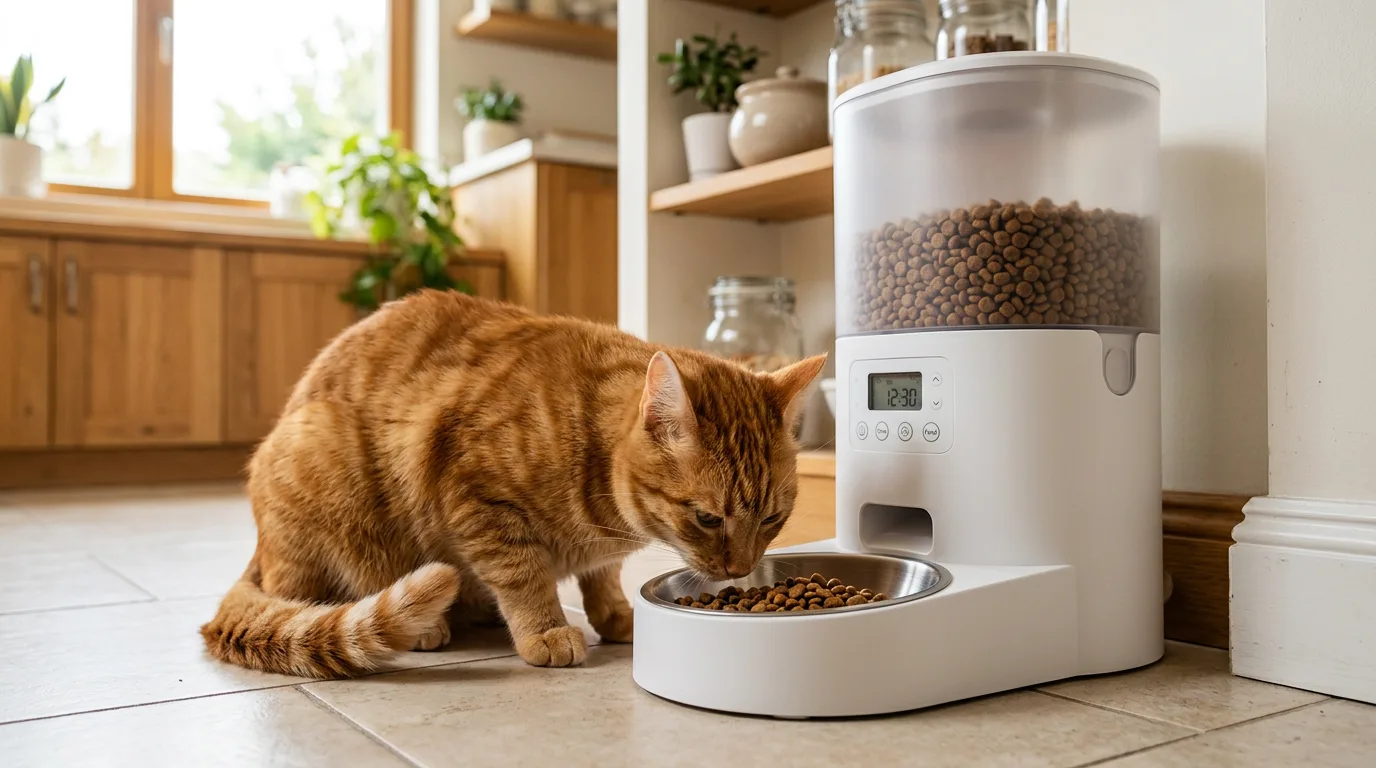
Finding the best automatic cat feeder comes down to matching the machine to your cat, your food, and your schedule, and that is exactly what this guide is built to do. Whether you have one grazer, a household of food-stealers, or a cat who only eats wet food, the right feeder keeps portions consistent and mealtimes calm while you are at work, asleep, or traveling.
We combed the current market, compared the specs that actually matter, and organized every recommendation by the job it does best. Below you will find our top picks, the feeder types explained in plain language, and answers to the buyer questions cat owners ask most before they spend the money.
- 1For most homes, a programmable dry-food dispenser like the Petlibro Granary Wi-Fi hits the sweet spot of portion control, price, and app control
- 2If a cat steals from housemates, a microchip feeder such as the SureFeed is the only design that truly solves the problem
- 3Wet food needs a feeder with ice-pack trays or thermoelectric cooling (Petlibro Polar, PetSafe Eatwell), not a standard hopper
- 4Always pick a feeder with battery backup so a power cut never means a missed meal

Sign up for expert-backed reviews and safety alerts all in one place.
At a Glance: Our Top Automatic Cat Feeders
Here is the short version. Each feeder below earned its spot for a specific type of household, so scan for the one that matches your situation, then jump to its full write-up for the detail.
- SureFeed Microchip Pet Feeder: Best Microchip
- Petlibro Polar Wet Food Feeder: Best for Wet Food
- Petlibro Granary Wi-Fi: Best Camera
- PetSafe Eatwell 5-Meal: Best Multi-Meal
- Oneisall PFD-002 Dual-Hopper: Best Dual-Hopper
- Petkit YumShare Solo: Best Budget Camera
- Cat Mate C500: Best 5-Meal
| Feeder | Best For | Type | Approx. Price |
|---|---|---|---|
| SureFeed Microchip Pet Feeder | Multi-cat homes and food-stealing | Microchip wet or dry | $170 |
| Petlibro Polar Wet Food Feeder | Wet food with cooling | Thermoelectric wet feeder | $130 |
| Petlibro Granary Wi-Fi | Smart control with app and optional camera | Wi-Fi dry dispenser | $120 |
| PetSafe Eatwell 5-Meal | Budget programmable and wet-capable | Timed rotating tray | $60 |
| Oneisall PFD-002 Dual-Hopper | Budget multi-cat and large capacity | Dual-hopper dry dispenser | $50 |
| Petkit YumShare Solo | Watching your cat eat on camera | Wi-Fi dry dispenser with HD camera | $90 |
| Cat Mate C500 | Simple app-free scheduled feeding | Timed rotating dish | $65 |
How We Chose the Best Automatic Cat Feeders
This is editorial buyer's guidance, not a hands-on lab test, and we think that distinction matters when you are spending real money. Rather than claim numbered scores from a testing rig we did not run, we compared the specifications that reliably predict whether a feeder will actually work in your home, then matched each model to the household it serves best.
The factors that shaped every pick are the same ones you should weigh yourself. Portion and schedule control decide whether the feeder manages your cat's weight or just refills a bowl. Food compatibility (wet versus dry, and kibble size) rules out whole categories of feeder before price ever enters the conversation. Battery backup separates a feeder that keeps working in a power cut from one that silently skips a meal. Capacity has to match how long your cat is left alone. Cleaning burden decides whether you will maintain the feeder properly over months of use. And selective access, the microchip question, is the one feature that either solves multi-cat food theft or does not, with no middle ground.
We also weighted reliability and brand track record, because an automatic feeder is only as good as its worst day. A cheap unit that jams or drops its Wi-Fi connection when you are away is worse than no feeder at all, since you planned around it. Where a category has a clear, proven leader (microchip feeders, active-cooling wet feeders), we named it rather than pad the list with weaker alternatives for the sake of a bigger number. The result is a shorter, more honest set of recommendations, each one the answer to a specific question about your cat and your routine.
The Best Automatic Cat Feeders of 2026
Each pick below includes what the feeder is, who it suits best, the key specs, an honest look at the trade-offs, and a plain-language verdict. Prices are approximate and move with sales, so treat them as a guide rather than a promise. We describe only standard, well-known features of each product; where a spec varies by model or firmware update, we flag it as something to confirm on the current listing.
SureFeed Microchip Pet Feeder: Best for Multi-Cat and Food-Stealing Homes
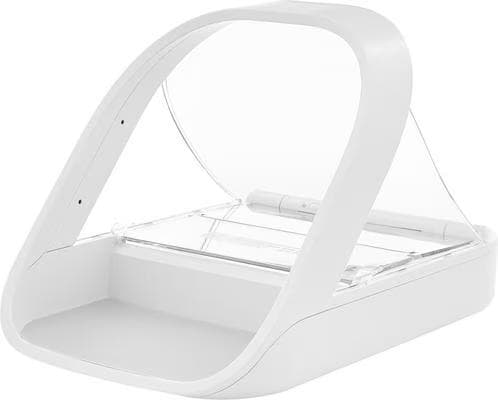
What it is. The SureFeed Microchip Pet Feeder is a selective feeder: a sealed lid that only opens when it reads a specific cat's microchip or an included RFID collar tag. That single design choice solves a problem no timed dispenser can touch, one cat eating another cat's food. It works with both wet and dry food, holds a single bowl (or a split bowl for two food types), and stores a roster of pets so several cats can each have their own feeder.
Petful may earn a commission when you click through to Chewy, at no extra cost to you.
Who it is best for. Households with more than one cat, especially where one animal steals food, bullies a housemate away from the bowl, or is on a prescription or weight-management diet that a sibling must not touch. It is also the go-to for homes with a dog that raids the cat's dish.
Key specs. Battery powered (typically four C-cell batteries, no cord to trip over); reads implanted microchips of the common standards plus the included collar tag; stores identities for multiple pets; sealed lid also keeps flies off wet food and keeps kibble from going stale. It is a portioning bowl, not a scheduled dispenser: it controls WHO eats, not WHEN or HOW MUCH is dispensed on a timer.
- Genuinely stops food theft, which nothing else on this list does
- Battery operation means no cord and easy placement
- Keeps wet food covered and fresher between visits
- Trains cats quickly thanks to a gradual training mode
- It is the priciest pick here and does not dispense food on a schedule, so you still portion the bowl yourself
- Nervous cats need a short training period to get comfortable with the moving lid
- You may want the separate SureFeed bowl mat for tidy wet-food cleanup
How it works day to day. You put the feeder into training mode when it arrives, which holds the lid open and then closes it in stages over a few days so a cautious cat learns the lid is nothing to fear. Once trained, the cat approaches, the sensor reads its chip or tag, and the lid glides open; step away and it closes again after a short delay, sealing the bowl. Because it is a bowl rather than a hopper, you fill it yourself at each feeding, so it does not run unattended for days the way a kibble dispenser does. That is the correct mental model: this is a locked bowl, not a scheduled dispenser, and it is unbeatable at the one job it exists to do.
Verdict. If food theft is your actual problem, this is the only true fix, and it is worth every dollar. If you have a single cat and just want timed meals, you are paying for a feature you will not use.
Petlibro Polar Wet Food Feeder: Best for Wet Food
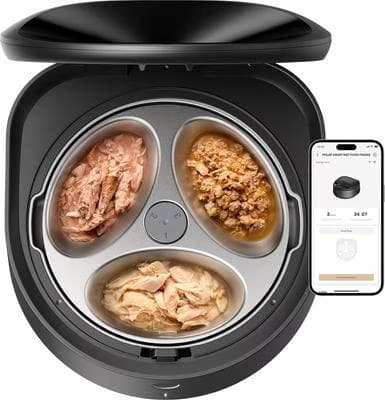
What it is. The Petlibro Polar is purpose-built for wet food. It uses thermoelectric cooling (a built-in chiller, not just ice packs) to keep pate and chunks fresh for hours, then rotates a covered tray to reveal the next meal at the scheduled time. For owners who want to feed wet food on a timer without it drying out or spoiling, this is the category leader.
Petful may earn a commission when you click through to Chewy, at no extra cost to you.
Who it is best for. Wet-food households where the cat eats several small meals a day, owners who work long shifts, and anyone whose cat needs the higher moisture of canned or pouch food (common guidance for cats with urinary or kidney concerns, though you should follow your vet's plan). If you have tried ice-pack feeders and found them lukewarm by lunchtime, this is the upgrade.
Key specs. Active thermoelectric cooling rather than passive ice packs; rotating multi-meal tray with individual covered compartments; programmable meal times; removable, washable tray and lid for easy cleaning. Needs mains power for the cooling element, so plan placement near an outlet.
- Real refrigeration-style cooling keeps wet food safe far longer than ice packs
- Covered compartments mean each meal stays sealed until its turn
- Straightforward to program and to clean
- Wet-food feeders hold fewer total meals than a dry hopper, so it covers a day rather than a week
- It needs to stay plugged in for the cooler to work
- Wet food always demands more frequent washing than kibble, whatever feeder you use
- Thermoelectric chilling keeps pate and chunks cool for hours, so your cat gets a still-fresh lunch while you are out, which ice packs cannot manage in a warm kitchen.
How it works day to day. You load the covered compartments with portions of wet food, set the meal times, and the chiller keeps everything cool until each compartment rotates into position. The practical win is that a cat can eat breakfast at 7 a.m. and a fresh, still-cool lunch at noon without you being home, something an open bowl of pate simply cannot deliver in a warm kitchen. Because wet food is unforgiving, plan to rinse and wash the tray and lid after each cycle, and do not leave uneaten wet food sitting for a second day. Treat it as a one-day machine, refilled daily, and it performs beautifully.
Verdict. The best answer to the hardest problem in this category, keeping wet food safe on a timer. If your cat is wet-fed and left alone during the day, this is the pick. For a deeper look at this niche, see our full guide to the best automatic wet food cat feeders.
Petlibro Granary Wi-Fi: Best Smart Feeder With App and Optional Camera
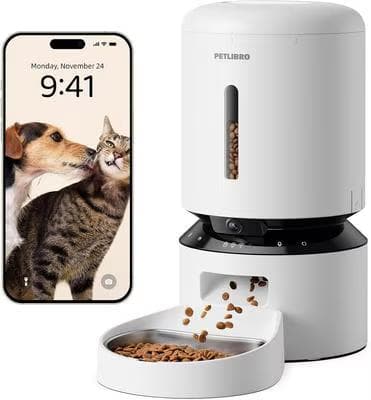
What it is. The Petlibro Granary Wi-Fi is the do-everything dry-food dispenser most single-cat and small-household owners should start with. It pairs a generous sealed kibble hopper with app control over your phone, so you set schedules, adjust portions, and drop a manual meal from anywhere. A camera version is available if you want to see your cat eat.
Petful may earn a commission when you click through to Chewy, at no extra cost to you.
Who it is best for. Owners who want to manage feeding from their phone, travelers who need to feed remotely or tweak a schedule on the fly, and anyone who wants the flexibility of a smart feeder without stepping up to a premium price. It is the sensible default recommendation for a first automatic feeder.
Key specs. Sealed dry-food hopper with a desiccant compartment to keep kibble fresh; Wi-Fi app for scheduling, portion sizing, and manual feeds; low-food and error alerts; battery backup so scheduled meals still fire during a power cut; portion control down to small increments for grazers. The optional camera model adds live video.
- App control is genuinely useful for travel and for dialing in portions
- Battery backup protects against missed meals
- Fresh-keeping hopper design
- Reliable, well-supported app compared with many budget rivals
- Dry food only, so wet-food homes need a different feeder
- Wi-Fi setup and the app account are extra steps some owners would rather skip (if you want app-free, see the Cat Mate below)
- Very large kibble or dental-diet shapes can occasionally bridge in any auger dispenser, so check your kibble size
How it works day to day. You fill the hopper with kibble, drop in the desiccant pack, and set as many meals as you like in the app with a portion size for each. The feeder dispenses on that schedule whether or not your phone is nearby, and you can open the app from anywhere to add an extra meal, skip one, or nudge a portion. Low-food and jam alerts land as phone notifications so you are not guessing whether the last meal actually dropped. The desiccant compartment is the underrated feature here: it keeps the bottom of the hopper from going stale on longer fills, which matters if you top it up only every week or two.
Verdict. The best all-rounder for most homes, and the one we would buy first if we did not have a specific reason to choose something else. Great control, fair price, dependable.
PetSafe Eatwell 5-Meal: Best Budget Programmable and Wet-Capable
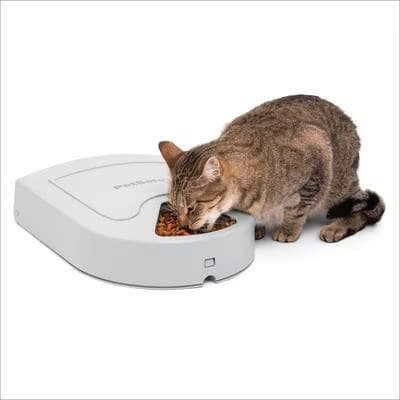
What it is. The PetSafe Eatwell is a classic timed tray feeder: five compartments rotate under an opening so each meal is revealed at its scheduled time. Because the compartments are open bowls rather than a kibble hopper, it handles wet food, dry food, or a mix, and it does so at a budget-friendly price. Add an ice pack under the tray and it will keep wet food cool for a shorter window.
Petful may earn a commission when you click through to Chewy, at no extra cost to you.
Who it is best for. Owners who want scheduled meals of wet or mixed food without paying for cooling or Wi-Fi, single-cat homes, and anyone who wants a simple, proven feeder they can set and forget. It is a strong first feeder for a tight budget.
Key specs. Five open compartments on a rotating tray; programmable meal times; battery powered; works with wet, dry, or semi-moist food; dishwasher-safe tray for easy cleaning; optional ice pack recess for short-term wet-food cooling.
- Genuinely wet-food capable at a low price
- Simple to program with no app required
- Easy to clean
- Trusted brand with a long track record
- Five meals is its ceiling, so it spans a day or two, not a week
- Ice-pack cooling is short-lived compared with the Polar's active chiller, so wet food should not sit for many hours in a warm room
- No app or remote control
- The Eatwell's ice-pack recess keeps wet food cool for a few hours, not a full workday, so time wet meals around that window.
How it works day to day. You spoon meals into the five compartments, set the times, and the tray rotates so one compartment sits under the opening at each scheduled meal. There is no hopper to jam and no app account to manage, which is exactly the appeal for owners who want a feeder that just works. If you are feeding wet food, drop the ice pack into its recess and understand its limit: it buys you a cool few hours, not a full summer workday. For a single indoor cat on two or three timed meals a day, that window is usually plenty.
Verdict. The best value pick for owners who want timed wet-or-mixed meals without spending big. It does the core job reliably and cheaply.
Oneisall PFD-002 Dual-Hopper: Best Budget Multi-Cat and Large Capacity
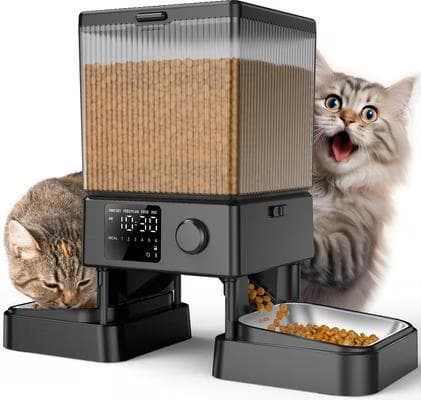
What it is. The Oneisall PFD-002 is a large-capacity dry-food dispenser with two separate hoppers feeding two bowls, so it can serve two feeding stations (or two cats) from one machine, or run two food types side by side. For homes that need volume and coverage on a budget, it is a lot of feeder for the money.
Petful may earn a commission when you click through to Chewy, at no extra cost to you.
Who it is best for. Two-cat households that do not have a food-theft problem (if they do, the SureFeed is the answer instead), owners who want long unattended stretches thanks to big hopper capacity, and anyone feeding two different kibbles. It is the budget large-capacity workhorse.
Key specs. Dual sealed hoppers with independent scheduling and portioning; large total kibble capacity for multi-day coverage; battery backup alongside mains power; voice-recording feature to call cats at mealtime; dry food only. Two bowls let you separate two cats' portions at set stations.
- Two hoppers and two bowls at a genuinely low price
- Big capacity for long trips
- Independent schedules per side
- Battery backup included
- It does not stop a determined cat from eating the other bowl, so it manages portions, not theft
- Dry food only
- Budget build and a simpler interface than premium smart feeders
- As with any auger feeder, check that your kibble is not oversized
How it works day to day. You fill both hoppers, set an independent schedule and portion for each side, and record a short voice clip that plays at mealtime to call your cats over. Each side dispenses on its own timer, so you can feed two cats at two stations, or run kibble on one side and a second formula on the other. The voice-call feature is more useful than it sounds: cats learn the sound and come running, which spreads them across the two bowls instead of crowding one. Just remember the honest limit, the machine controls portions and timing, not which cat eats from which bowl, so it is a coordination tool, not a theft-prevention tool.
Verdict. The best budget choice for two-cat homes that just need reliable, high-capacity dry feeding at two stations. For the theft problem specifically, step up to a microchip feeder.
Two More Specialized Picks Worth Considering
Two more feeders deserve a mention because they nail a specific job better than the all-rounders above.
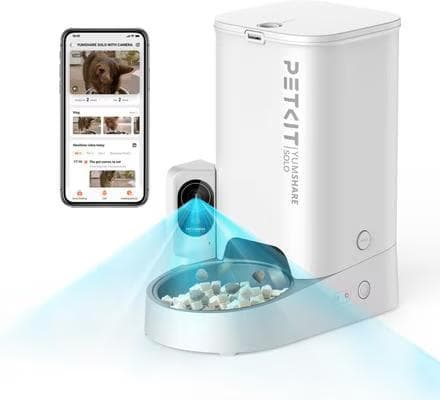
Petkit YumShare Solo (the camera pick). If your main reason for buying is to watch your cat eat, the Petkit YumShare Solo is a Wi-Fi dry-food dispenser with a built-in HD camera. You get app scheduling and portion control like other smart feeders, plus a live video feed (and often a treat-toss and video-clip feature) so you can check in from anywhere. It is dry food only, so wet-food homes should look elsewhere, but as a see-your-cat feeder at a fair price it is hard to beat.
Petful may earn a commission when you click through to Chewy, at no extra cost to you.
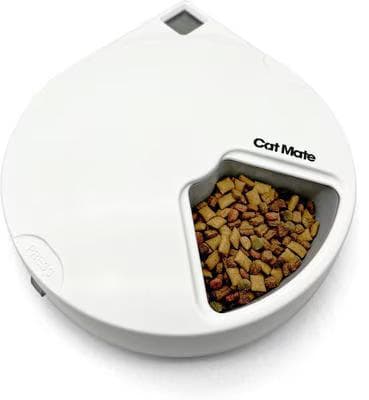
Cat Mate C500 (the app-free dish feeder). If you want scheduled meals with zero Wi-Fi, no account, and no app, the Cat Mate C500 is a five-dish timed feeder that runs on batteries and a simple digital timer. Its open dishes handle wet or dry food, and there is an ice-pack recess for short-term wet-food cooling. It is the pick for owners who distrust smart-home gadgets and just want a dependable, quiet, dish-style feeder that works.
Petful may earn a commission when you click through to Chewy, at no extra cost to you.
Types of Automatic Cat Feeders: Gravity, Timed, Smart and Dispenser
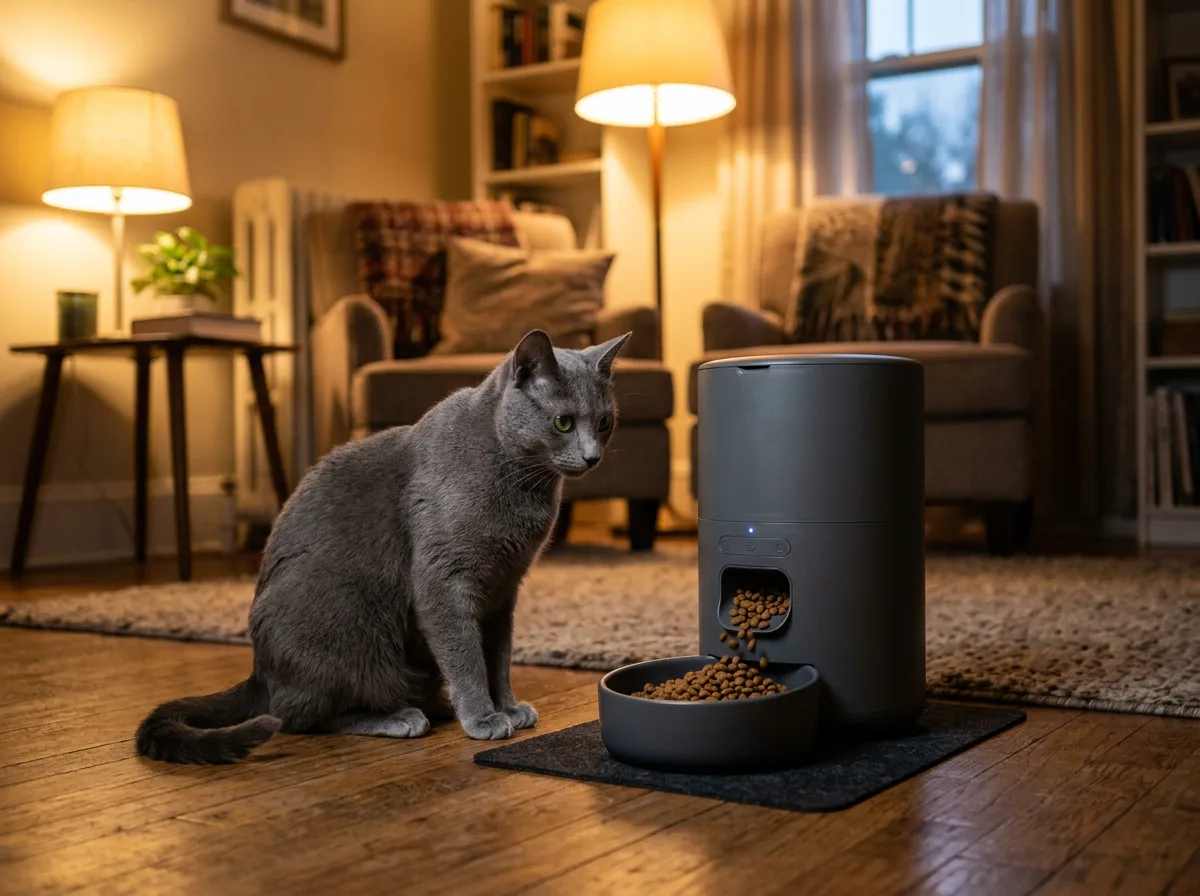
Before you buy, it helps to know which family a feeder belongs to, because the type decides what the machine can and cannot do. Here are the four you will meet.
- Gravity cat feeders. A gravity feeder is the simplest design: a hopper of kibble refills a bowl automatically as the cat eats, using nothing but gravity. There is no timer, no portion control, and no electronics. It keeps a bowl topped up, which is fine for a disciplined grazer but a problem for a cat who overeats, because it never limits how much is available. Gravity feeders are cheap and reliable, but they do not solve portion control or scheduling, and they only work with dry food. Think of them as an always-on bowl, not an automatic feeder in the true sense.
- Timed cat feeders. A timed feeder dispenses a set portion at set times using a built-in clock. This is the workhorse category. Timed feeders come as kibble-hopper dispensers (an auger or wheel drops a measured portion) or as rotating-tray feeders (a lid uncovers the next compartment on schedule). Timed feeders give you real portion control and a real schedule, which is what most owners actually want. The tray style also lets you feed wet food; the hopper style is dry only.
- Smart (Wi-Fi and app) cat feeders. A smart feeder is a timed feeder with connectivity added: Wi-Fi, a phone app, remote scheduling, manual feed-from-anywhere, low-food alerts, and often a camera. Everything a timed feeder does, plus you manage it from your phone and get notified if something goes wrong. The trade-off is setup complexity and reliance on your home network and the maker's app.
- Cat feeder dispensers. Dispenser is the umbrella term for any feeder that actively portions food out (as opposed to a gravity bowl that just refills). Both timed and smart hopper feeders are dispensers. The word matters when you shop because a listing that says dispenser almost always means an auger or wheel mechanism and dry food, whereas a rotating-tray feeder is the one to look for if you want wet-food capability.
- If you want portion control, buy a timed or smart feeder, not a gravity feeder. If you want wet food, buy a rotating-tray or cooled feeder, not a kibble-hopper dispenser. Match the mechanism to the food and the goal before you compare brands.
Automatic Cat Feeders With a Camera
A camera turns a feeder into a check-in device. For owners who travel, work long hours, or simply worry, seeing the cat actually walk up and eat is reassuring in a way a phone notification is not. Camera feeders like the Petlibro Granary camera model and the Petkit YumShare Solo add a live HD video feed to the usual app scheduling, and many include night vision, two-way audio so you can talk to your cat, and short recorded clips saved to the app when the feeder fires.
The trade-offs are real, though. Cameras add cost, they lean harder on your Wi-Fi, and video features sometimes sit behind a subscription for cloud storage (local or app-only clips are usually free, cloud history often is not). A camera also does not change how well the feeder feeds, so do not let the lens distract you from the fundamentals of capacity, portion accuracy, and battery backup. Buy the camera because you want to watch your cat eat, and confirm the underlying feeder is one you would have bought anyway.
If watching your cat is the whole point of the purchase, a dedicated camera feeder earns its keep. If it is a nice-to-have, a strong non-camera smart feeder plus a cheap standalone pet camera can cost less and give you more flexible camera placement.
Automatic Feeders for Wet Food
Wet food is the hardest thing to automate, and it is where cheap feeders fall down. Canned and pouch food spoils at room temperature, dries out under a fan or in warm air, and attracts flies, none of which is a concern with kibble. So a wet-food feeder has to solve preservation, not just portioning.
There are two workable approaches. The first is passive cooling: a rotating-tray feeder with an ice-pack recess, like the PetSafe Eatwell or Cat Mate C500. Ice packs keep wet food cool for a limited window (think a few hours in a cool room), which covers a single missed meal but not a full workday in summer. The second is active cooling: a thermoelectric feeder like the Petlibro Polar that chills the tray electrically and keeps wet food safe far longer. If your cat is wet-fed and alone all day, active cooling is worth the premium; ice-pack feeders are fine for shorter gaps.
Whatever you choose, wet-food feeders share two truths: they hold fewer meals than a dry hopper (so they cover a day, not a week), and they demand more frequent cleaning, because dried-on wet food is a bacteria risk and a smell problem. Plan on washing the tray after each cycle. For the full breakdown of models, cooling methods, and how long wet food safely lasts in each, read our dedicated guide to the best automatic wet food cat feeders.
Best for Multiple Cats and Microchip Feeders
Multiple cats change the math. The core issue is not dispensing food, it is controlling who eats what. In a multi-cat home you typically face one of three problems: one cat steals from another, one cat is on a special diet the others must not eat, or you simply want each cat fed on its own schedule and portion.
For pure food theft or diet separation, a microchip feeder is the only design that truly works. The SureFeed Microchip Pet Feeder reads each cat's implanted chip (or an included collar tag) and opens the lid only for the authorized animal, so the diet cat's prescription food stays untouched and the food thief is locked out. Nothing else on the market solves this cleanly; timers and apps control when food appears, not which cat eats it.
If your cats get along and you just need two stations or two schedules, a dual-hopper feeder like the Oneisall PFD-002 is a cheaper, capable answer, one machine feeding two bowls on independent schedules. And if theft is the problem but you want more than one protected station, you can run one microchip feeder per cat.
- If any cat is on a prescription or weight-management diet, do not rely on separate bowls or timers alone. A determined cat will find the other food. A microchip feeder is the only setup that reliably enforces separation.
For the complete comparison of selective feeders and multi-station setups, see our guides to the best microchip cat feeders and the best automatic cat feeders for multiple cats.
Automatic Feeder and Water Fountain Combos
Food and water go together, and a growing number of setups pair an automatic feeder with a circulating water fountain to cover both while you are away. A few feeders bundle a feeder and water dispenser in one unit, but the more flexible approach most owners land on is a separate feeder and a separate fountain, chosen on their own merits and placed a little apart (cats often prefer water away from their food).
There is a real health reason to think about water alongside food: many cats drink too little, and a fountain's moving water encourages more drinking, which supports urinary and kidney health, especially for cats on dry food. So if you are automating feeding for a cat left alone all day, automating fresh flowing water is a natural companion purchase. Look for a fountain with enough reservoir capacity for the time your cat is alone and a filter you can actually get refills for.
If you want to sort the water side of the equation properly, our guide to the best cat water fountains walks through capacity, filtration, noise, and cleaning, so you can pair the right fountain with whichever feeder you choose here.
PetSafe vs Oneisall: How the Budget Brands Compare
The two budget names shoppers weigh most often are PetSafe and Oneisall, and they win at different things, so the right answer depends on your food and your household.
PetSafe, through the Eatwell 5-Meal, is the wet-food-friendly budget pick. Its rotating tray of open compartments takes wet, dry, or mixed food, it accepts an ice pack for short-term cooling, and it comes from a long-established, well-supported brand. Its ceiling is five meals, so it is built for a day or two of coverage rather than a week, and it has no app.
Oneisall, through the PFD-002 dual-hopper, is the dry-food, high-capacity, multi-station budget pick. Two sealed hoppers feed two bowls on independent schedules, capacity is large enough for multi-day trips, and battery backup is included. The catch is that it is dry food only and does not stop one cat eating the other bowl.
- 1PetSafe Eatwell: wet or mixed food, five meals, no app
- 2Oneisall PFD-002: dry only, two hoppers, big capacity
- 3Neither stops food theft, that is a microchip-feeder job
So the decision is simple. Feed wet or mixed food, or want the simplest possible timed feeder for one cat? PetSafe Eatwell. Feed dry food to two cats (that get along) or need big capacity for longer absences? Oneisall PFD-002. Neither is a smart feeder; if you want app control, step up to the Petlibro Granary. And if the real issue is one cat stealing from another, neither budget brand solves it, that is a microchip-feeder job.
- Wet or mixed food: PetSafe Eatwell. Dry food, two cats, big capacity: Oneisall dual-hopper. App control: Petlibro Granary. Food theft: SureFeed microchip.
How to Choose an Automatic Cat Feeder
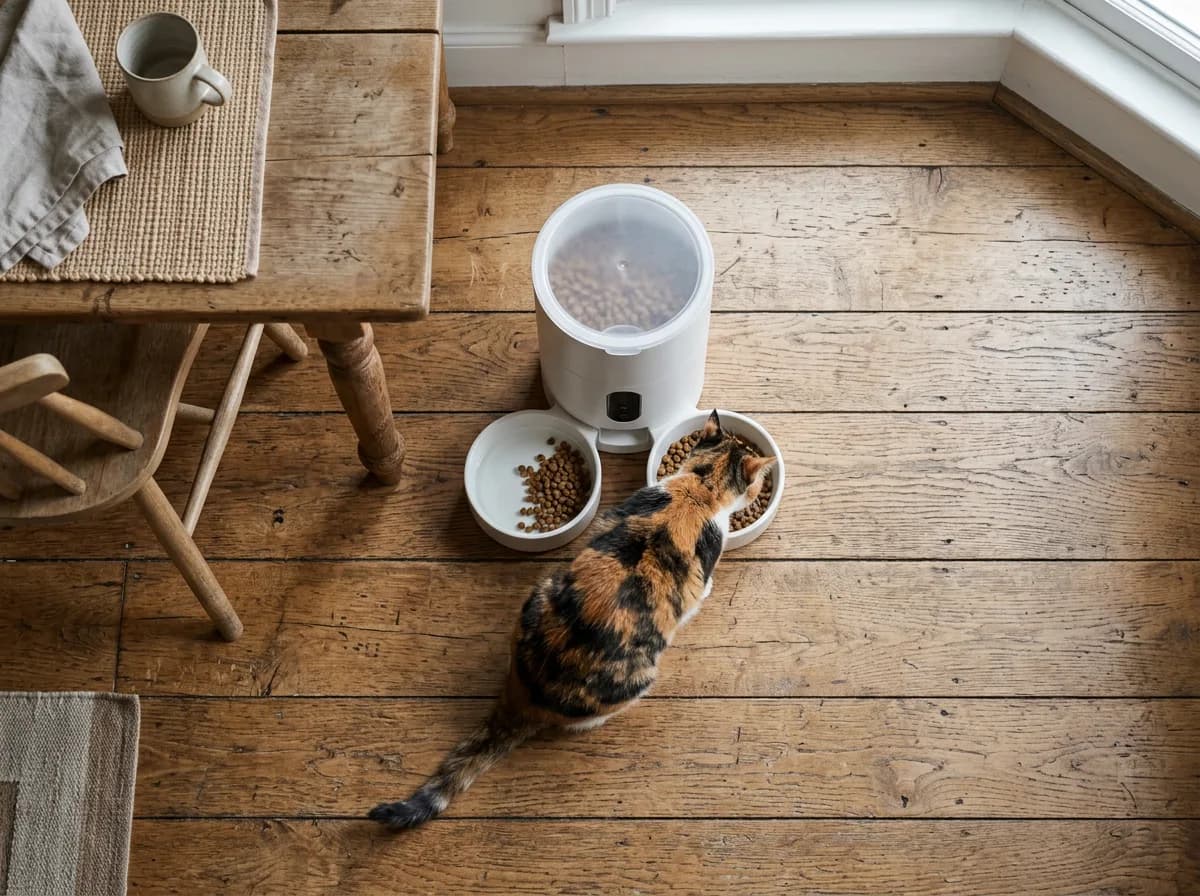
Once you know the type you want, these are the specifications that separate a feeder you will love from one you will return. Run through them before you buy.
- Capacity. Match the hopper or tray size to how long your cat is left alone. A big dry hopper covers a week and suits travelers; a five-meal tray covers a day or two and suits daily scheduling. Do not overbuy a giant hopper if you refill it constantly anyway, and do not underbuy if you take trips.
- Power and battery backup. This is the spec people forget and regret. Mains-powered feeders are convenient but useless in a power cut unless they have battery backup, so a scheduled meal is missed exactly when you are not home to notice. Insist on battery backup for any plugged-in feeder, and check whether cooling feeders keep chilling on battery or only keep the timer running.
- Food size and type. Auger and wheel dispensers are dry food only and can jam on very large kibble or oddly shaped dental diets, so confirm your kibble fits the mechanism. Wet food needs a rotating-tray or cooled feeder, never a hopper. If you feed a mix, a tray feeder is the flexible choice.
- App and connectivity. Decide honestly whether you want app control. A smart feeder adds remote scheduling, manual feeds, alerts, and often a camera, at the cost of setup and network reliance. If you distrust smart-home gear, an app-free timed feeder (Cat Mate, PetSafe) does the core job with a simple button interface.
- Cleaning. A feeder you dread cleaning is a feeder you will clean less than you should, which is a health issue for wet food especially. Look for dishwasher-safe or easily removable trays and bowls, and remember wet-food feeders always need washing more often than kibble dispensers.
- Portion accuracy. The whole point of a feeder is consistent portions. Cheaper auger feeders can vary a little meal to meal, particularly with irregular kibble. If your cat is on a strict weight-management plan, favor a feeder known for tight portion control and weigh a few test dispenses when it arrives.
- The single most common regret with automatic feeders is a mains-only unit that missed a meal during a power blip. If a feeder plugs into the wall, it must have battery backup, and you should keep fresh batteries in it. Treat this as non-negotiable, not optional.
How Automatic Feeders Fit Your Cat's Feeding Schedule
A feeder is a tool, not a feeding plan. The machine dispenses what you program, so the real work is deciding how much and how often your cat should eat, then setting the feeder to match. Most cats do well on two to several small measured meals a day rather than one big serving or an always-full bowl, and a timed feeder is genuinely good at delivering that consistency, better than a busy human who feeds at whatever hour they get home.
Automatic feeders shine for spreading a daily ration across several small meals (which suits a cat's natural grazing and helps with weight control), for keeping mealtimes consistent when your own schedule is not, and for preventing the 5 a.m. wake-up demands by letting the machine deliver an early breakfast instead of you. What they should not do is override portion discipline: program the feeder to your cat's daily calorie target, do not just top it up when it looks low.
If you are not sure how much or how often your cat should be eating in the first place, sort that out before you program anything. Our guide on how often to feed a cat covers meal frequency, portion sizing by life stage, and the free-feeding-versus-scheduled-meals question, so you can set the feeder to a plan that actually fits your cat. (And if you have a dog in the mix too, our roundup of the best automatic dog feeders applies the same thinking to the canine side of the household.)
Getting Your Cat Used to a New Automatic Feeder
Buying the right feeder is only half the job; a cat that is frightened of it, or that outsmarts it, undoes the purchase. Cats are creatures of routine, and a machine that whirs, clicks, and moves on its own can read as a threat at first. A short, deliberate transition makes the difference between a feeder your cat trusts and one it avoids or attacks.
Start by introducing the feeder switched off, placed near the existing bowl, so your cat can sniff and inspect it with no noise or movement. Once it is just another object in the room, run a first meal while you are present so your cat associates the sound of dispensing with food arriving, not with danger. Keep the old feeding routine overlapping for a few days rather than switching cold, and only then move the feeder to its permanent spot. For microchip and lidded feeders, use the built-in training mode, which eases the lid movement in over several days so a nervous cat is never startled by a sudden close.
Placement matters more than owners expect. Put the feeder on a hard, easy-to-clean floor away from the litter box (cats dislike eating near their toilet), out of high-traffic doorways, and, for plugged-in models, within reach of an outlet so the cord is not stretched across a walkway. If you have a determined food thief, position the protected feeder where the target cat can eat with its back to a wall and a clear escape route, which lowers the stress that makes cats bolt their food or guard the bowl.
- Do not switch your cat to a new feeder the night before a trip. Give it at least several days of supervised, overlapping use so you can confirm the portions dispense correctly and your cat is comfortable, then rely on it while you are away. A dry run at home is the cheapest insurance there is.
Common Automatic Feeder Problems and How to Avoid Them
Most complaints about automatic feeders trace back to a handful of avoidable issues. Knowing them before you buy lets you sidestep every one.
- Jamming with the wrong kibble. Auger and wheel dispensers move kibble by shape, and very large, very small, or oddly shaped pieces (some dental diets, certain grain-free formulas) can bridge or bind the mechanism. Avoid it by checking your kibble against the feeder's recommended size range, and by picking a rotating-tray feeder instead if your kibble is a difficult shape.
- Missed meals in a power cut. Mains-only feeders stop dead when the power blinks, and you find out only when you get home to a hungry cat. Avoid it by buying a model with battery backup and keeping fresh batteries installed, then testing that the schedule still fires on battery alone.
- Overeating despite the feeder. A feeder set to top up a bowl, or a gravity feeder left always-full, does nothing for a cat that overeats. Avoid it by programming the feeder to your cat's daily calorie target split into measured meals, and by choosing portion control over convenience for a weight-prone cat.
- Wet food spoiling or drying out. Wet food in an uncooled or slow-rotating feeder spoils and crusts, which your cat will reject and which risks stomach upset. Avoid it by using only a cooled or ice-pack tray feeder for wet food, keeping meal counts to a single day, and washing after every cycle.
- One cat eating another's food. Timers and apps cannot stop a cat from strolling to the other bowl. Avoid it with a microchip feeder if separation actually matters, especially for a prescription diet, rather than hoping a schedule will keep cats apart.
- Wi-Fi and app frustration. Smart feeders depend on your home network and the maker's app, and a dropped connection can mean a missed remote feed or lost camera access. Avoid it by placing the feeder in strong Wi-Fi range, keeping the app updated, and, crucially, choosing a feeder whose local schedule keeps running even when the internet is down, so connectivity is a bonus rather than a single point of failure.
Frequently Asked Questions
Here are straight answers to the questions cat owners ask most before buying an automatic feeder.
What an Automatic Cat Feeder Costs, and When to Spend More
Automatic cat feeders span a wide price range, and the right budget depends on what problem you are solving. Simple programmable dry-food feeders start around 30 to 50 dollars and handle the core job well: dispensing measured portions on a schedule. Mid-range Wi-Fi models with app control, portion logging, and a low-food alert typically run 70 to 130 dollars. Microchip and RFID feeders that open only for a specific cat sit at the top, usually 140 to 250 dollars, because the access-control hardware is more complex.
Paying more is worth it in three situations. The first is a multi-cat home where one cat steals another cat’s food or is on a prescription diet: a microchip feeder pays for itself by protecting an expensive therapeutic food and preventing weight problems. The second is wet food, where you need active cooling or ice-pack trays to keep meals safe, which adds cost over a basic dry dispenser. The third is travel: if you are away often, a model with battery backup, a jam-resistant dispensing wheel, and a camera for peace of mind is money well spent.
You can safely spend less when your needs are simple. A single cat on dry food who eats predictably does not need Wi-Fi, a camera, or microchip access. In that case a reliable programmable feeder with a stainless bowl and a secure lid will serve you for years. Whatever tier you choose, prioritize portion accuracy, an easy-to-clean bowl, and a power source that will not leave your cat unfed during an outage, because those three factors matter more day to day than any smart feature.
Yes, automatic cat feeders are safe when you buy a reputable model and use it correctly. The main safety points are choosing a feeder with battery backup so a power cut never causes a missed meal, cleaning it regularly (especially with wet food, to prevent bacteria), and keeping wet food cooled if the feeder will hold it for hours. Selective microchip feeders add safety in multi-cat homes by keeping a cat off food it should not eat. Avoid overfilling and check portion accuracy so your cat is fed the right amount.
For food alone, a large-capacity dry feeder can cover several days to a week, and a wet-food feeder covers about a day. But a feeder does not replace a check-in. Cats left alone still need fresh water, a clean litter box, and someone to notice if they are unwell or if the feeder jams. As a rule, one to two days is reasonable with an automatic feeder plus enough water, and anything longer needs a pet sitter or boarding to check on your cat in person.
The main disadvantages are mechanical failure or jamming (especially with large or irregular kibble), missed meals during power cuts if there is no battery backup, harder cleaning with wet-food models, and the risk of overfeeding if you program portions carelessly. Feeders also remove the mealtime bond and the chance to notice appetite changes that can signal illness, so use one as a convenience, not a full substitute for attention. Smart feeders add app and Wi-Fi dependence as a further point of failure.
Both work, but they need different feeders. Dry food suits sealed hopper dispensers, which hold days of kibble and keep it fresh. Wet food needs a rotating-tray feeder with ice-pack or thermoelectric cooling, because it spoils and dries out at room temperature, and it holds fewer meals and needs more cleaning. If your cat is wet-fed, buy a cooled or ice-pack feeder like the Petlibro Polar or PetSafe Eatwell; do not put wet food in a kibble hopper.
Many vets are comfortable with automatic feeders as a tool for consistent, portion-controlled meals, which supports healthy weight, and for splitting a daily ration into several small meals. The common veterinary caution is that a feeder should not replace human observation: watching your cat eat is how owners catch early illness through appetite changes. Vets also stress correct portioning to avoid overfeeding, cooling for wet food, and not using free-fill gravity feeders for cats prone to overeating. Follow your own vet's guidance for a cat with medical or diet needs.
A gravity feeder simply refills a bowl from a hopper as the cat eats, using gravity, with no timer and no portion control, so food is always available. It suits a disciplined grazer but can lead to overeating and only works with dry food. A programmable automatic feeder dispenses a measured portion at scheduled times, giving you real portion and schedule control, and tray models can handle wet food. For weight management or timed meals, choose a programmable feeder; a gravity feeder is only an always-full bowl.

Coreen Saito is a pet writer and longtime shelter volunteer with more than a decade in animal rescue. She covers cat behavior, breed care, and the small, ordinary science of sharing a life with companion animals, with a particular focus on honest takes about the products and decisions that actually matter. At home in Arizona, she's outranked by Mac (a dog with the loudest opinion in the house), Rebel (a cat who governs by quiet authority), and Meri (an orange tabby who runs the late shift and the laundry basket). She writes about all three, plus the rescues that keep coming through her life, at LifeWithMinty.com.
Sign up for expert-backed reviews and safety alerts all in one place.