Flea Treatment for Cats: A Vet's Complete Guide
A veterinarian's complete guide to flea treatment for cats: every treatment type compared, OTC vs prescription, vet-recommended cat-safe picks, and the permethrin danger that makes dog flea products deadly to cats.

BVMS, MRCVS
Petful is reader supported. As an affiliate of platforms like Amazon and Chewy, we may earn a commission when you buy through links on this page. There is no extra cost to you.
Flea treatment for cats works best when you match the product to your cat's age, weight, and lifestyle, because the fleas you can see are only the start of the problem: the Companion Animal Parasite Council (CAPC) estimates that adult fleas on your pet represent just 5% of an infestation, while the other 95% is developing in your home as eggs, larvae, and pupae. I am a veterinarian with more than 30 years in small-animal practice, and the single most common flea mistake I see is not choosing the wrong brand. It is treating a cat like a small dog.
This guide covers every type of flea medicine for cats, how to decide between over-the-counter and prescription options, my vet-recommended picks, and the one safety rule that is genuinely life-or-death: never use dog flea products on a cat.
- 1Vet-recommended flea treatment for cats means a cat-labeled topical or oral product used year-round, matched to your cat's age and weight
- 2Never use dog flea products on cats: permethrin, a common dog flea ingredient, is toxic and potentially fatal to cats
- 3Prescription products like Revolution Plus offer the broadest parasite coverage, while OTC options like Advantage II and Capstar handle flea-only needs

Sign up for expert-backed reviews and safety alerts all in one place.
Types of Flea Treatment for Cats
The vet-recommended approach is simple: choose a modern flea product labeled specifically for cats, either a topical or an oral. The one rule that never bends is this: never use dog flea products on a cat, because the permethrin in many canine treatments is toxic to cats and can be fatal.
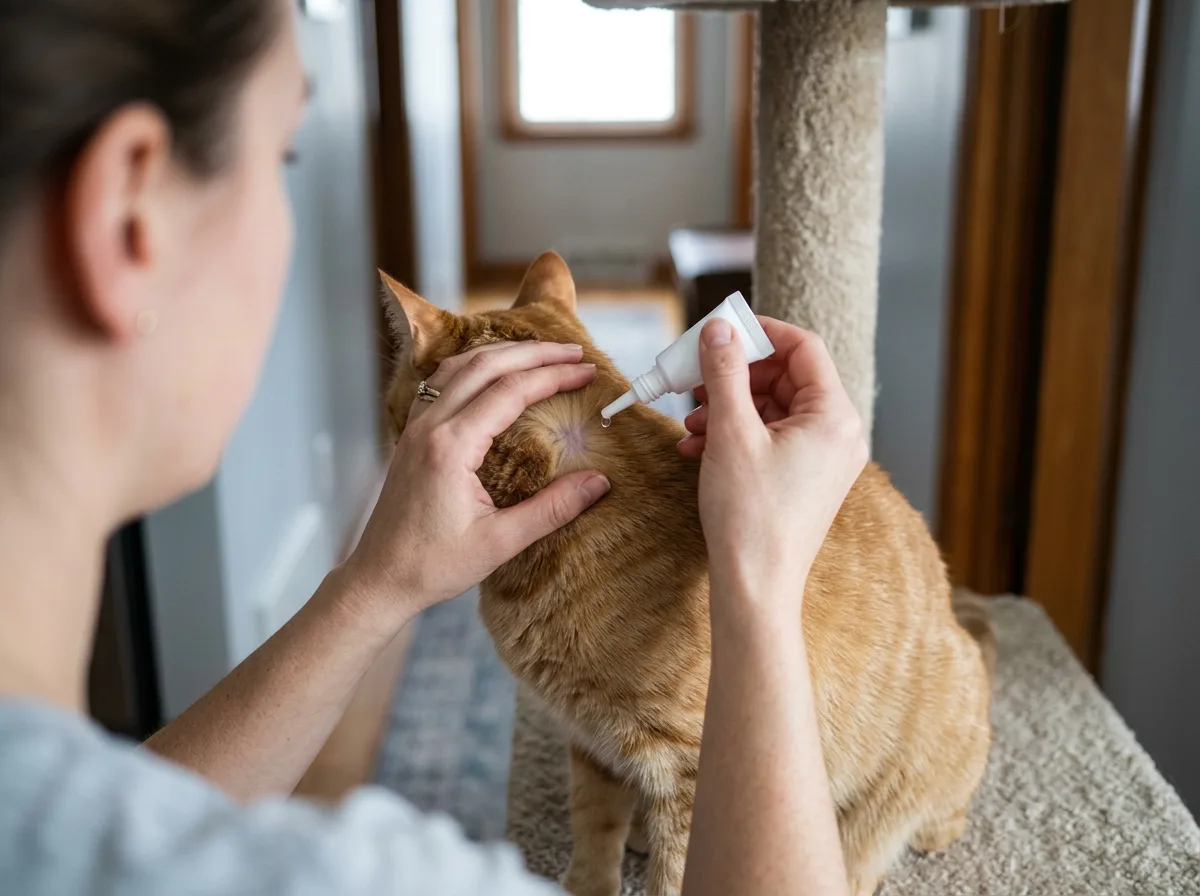
The most effective flea treatment for cats is a modern, cat-labeled topical or oral product from your veterinarian or a reputable retailer, applied or given on schedule, every month it is needed. Never use dog flea products on cats, and never guess at doses by splitting a larger pet's product.
There are five main types of flea treatment for cats, and they are not interchangeable. Each works differently, lasts a different length of time, and suits a different kind of cat.
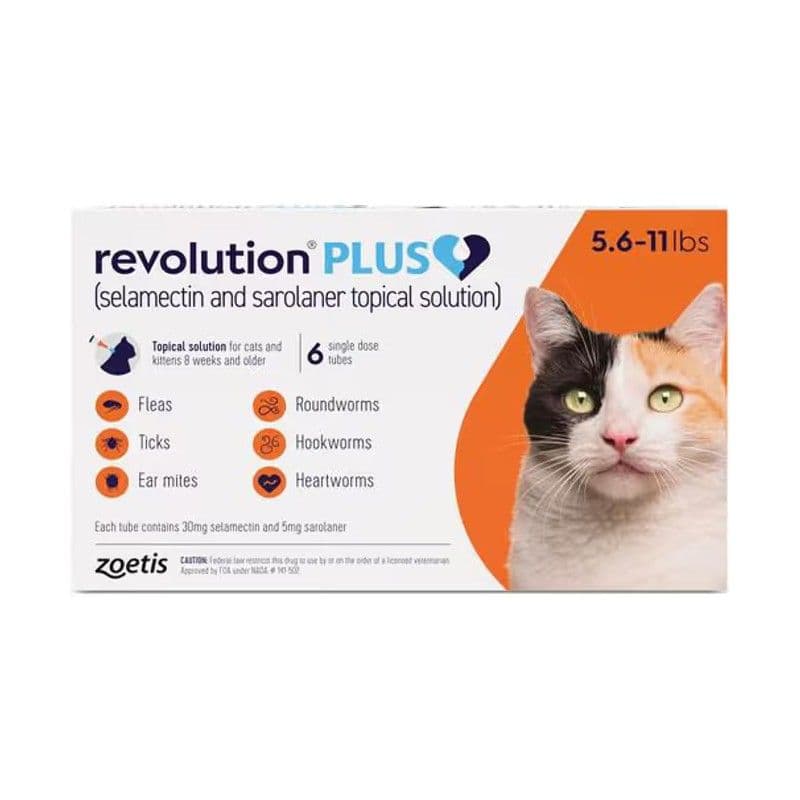
Monthly vet-prescription topical for cats 5.6 to 11 lbs that protects against fleas, ticks, ear mites, roundworms, hookworms, and heartworm in one application.
Petful may earn a commission when you click through to Chewy, at no extra cost to you.
- Topical spot-on treatments: Liquid applied to the skin at the base of the skull, where a cat cannot lick it. The active ingredient spreads through the skin oils or enters the bloodstream and typically protects for 1 month (2 months for Bravecto Plus). Examples: Revolution Plus, Advantage II, Frontline Plus, Bravecto Plus.
- Oral treatments (tablets and chews): Medication your cat swallows. Fast-acting tablets like Capstar (nitenpyram) start killing adult fleas within about 30 minutes but last only around 24 hours, while monthly chews like Credelio CAT (lotilaner) provide a full month of protection.
- Flea collars: Worn continuously, releasing active ingredient over months. Quality matters enormously here; a modern collar like Seresto (imidacloprid plus flumethrin) protects for up to 8 months, while cheap grocery-store collars do very little.
- Flea shampoos and sprays: Kill fleas present on the coat at the time of use, with little lasting protection. Useful as a knock-down step during an active infestation, especially products with an insect growth regulator such as Adams Plus.
- Injectable options: In some practices, a veterinarian can administer an injection of lufenuron (Program), an insect growth regulator that stops flea eggs from developing for up to 6 months. It sterilizes the flea life cycle rather than killing adult fleas, so it is usually paired with an adulticide.
| Treatment type | How it works | How long it lasts | OTC or Rx |
|---|---|---|---|
| Topical spot-on | Applied to skin at the base of the skull; spreads via skin oils or bloodstream | 1 month (Bravecto Plus: 2 months) | Both (Advantage II is OTC; Revolution Plus is Rx) |
| Oral tablet or chew | Swallowed; kills fleas that bite | Capstar: ~24 hours; Credelio CAT: 1 month | Both (Capstar is OTC; monthly chews are Rx) |
| Flea collar | Continuous low-dose release around neck | Seresto: up to 8 months | OTC |
| Shampoo or spray | Kills fleas on the coat at time of use | Days, not weeks | OTC |
| Injectable (lufenuron) | Growth regulator stops eggs developing | Up to 6 months | Rx, vet-administered |
A quick word on how these products are regulated, because it explains a lot about labels. Topical spot-ons, collars, sprays, and shampoos are pesticides regulated by the EPA, while oral and other systemic flea medications are drugs regulated by the FDA. Either way, the species and weight range on the label is a legal safety boundary, not a suggestion.
When people search for a fleas on cats treatment plan, they usually need two things at once: a product from the list above to clear the fleas on the cat, and a plan for the 95% of the infestation living in the carpet and bedding. This article covers the first job in depth; the sections below point you to our step-by-step guides for the second.

 Sponsored
Need flea, tick, or parasite care for your cat?
A licensed vet at Dutch can recommend the right preventive and prescribe it when it's appropriate. Annual members get 20% off their first flea and tick order.
Use code Pets60
Plans start at $12/month · covers up to 5 pets
- Licensed vets in most states
- Rx for 150+ conditions
- 4.7 on Trustpilot
How to Choose the Right Flea Treatment for Your Cat
The most effective flea treatment for a cat is the one that matches that specific cat: an isoxazoline-class or selamectin-based prescription product (such as Revolution Plus, Bravecto Plus, or Credelio CAT) gives the most reliable, fastest flea kill in head-to-head label claims, which is why vets reach for them first. But "most effective on paper" is not the same as "right for your cat," and this is where a lifestyle-based decision beats a flat product list.
Here is the framework I use in consults, built on three questions.
- How old and how heavy is your cat? Every product has an age and weight minimum. Most topicals start at 8 weeks; Capstar can be used from 4 weeks and 2 pounds. Underage or underweight kittens need the kitten-specific approach below.
- What is your cat actually exposed to? Indoor-only cats need flea protection (fleas hitchhike in on people, dogs, and used furniture), but they may not need tick coverage. Outdoor cats and hunters need broader parasite protection, including ticks and often heartworm prevention.
- Who else lives in the house? Multi-pet households change the math. Dogs bring fleas home to cats, so every pet needs treatment at the same time, and a dog's own product can be a hazard to the cat who grooms or cuddles that dog.
| Your cat | Best treatment approach | Why |
|---|---|---|
| Indoor-only adult | Monthly flea-only topical (Advantage II) or broad Rx topical (Revolution Plus) | Lower tick risk; flea and mite coverage still matters |
| Outdoor or hunter | Broad-spectrum Rx product with tick coverage (Revolution Plus, Bravecto Plus) | Ticks, heartworm vectors, and heavier flea exposure |
| Kitten 8 weeks to 6 months | Weight-checked kitten-safe product (Revolution Plus from 8 weeks and 2.8 lb) | Age and weight minimums are strict at this size |
| Senior or chronically ill | Vet-selected product after a health check | Organ function and medications can change what is safe |
| Multi-pet home with dogs | Rx or OTC cat product for the cat, cat-safe choice for the dog, treated the same day | Dogs reseed the home with fleas; some dog products endanger cats |
| Cat who fights topicals | Monthly oral chew (Credelio CAT) or fast tablet (Capstar) plus vet plan | Delivery method you can actually maintain beats a stronger product you skip |
For indoor cats specifically, the best flea treatment for indoor cats is usually a monthly topical, and the "how did my indoor cat even get fleas" question is so common that we wrote a full explainer on how indoor cats get fleas. Short version: you carry flea eggs in on your shoes and clothing, and one pregnant flea can lay up to 50 eggs a day.
Multi-pet households deserve special attention. Treat every dog and cat in the home on the same schedule, because untreated pets act as a reservoir that keeps reinfesting the treated ones. Choose the dog's product with the cat in mind: our guide to flea treatment for dogs covers the dog side in full, and our sister site WebVet breaks down the safest flea treatment for dogs when there are cats in the house, since some popular dog topicals contain permethrin and require keeping the pets separated until the application dries.
If you want the shortest possible answer to "what should I buy": for most cats, a vet-recommended flea treatment for cats is a monthly broad-spectrum prescription topical; for a tight budget or a flea-only problem, a cat-labeled OTC topical is a reasonable second choice.
Best Flea Treatment for Cats: Vet-Recommended Picks
The best treatment for fleas on cats is a modern prescription product with a fast, complete flea kill: Revolution Plus (selamectin plus sarolaner) for broad parasite coverage, Bravecto Plus (fluralaner plus moxidectin) for 2-month convenience, or Credelio CAT (lotilaner) if you prefer an oral chew. For an OTC route, Advantage II and Adams Plus cover the essentials at a lower price.
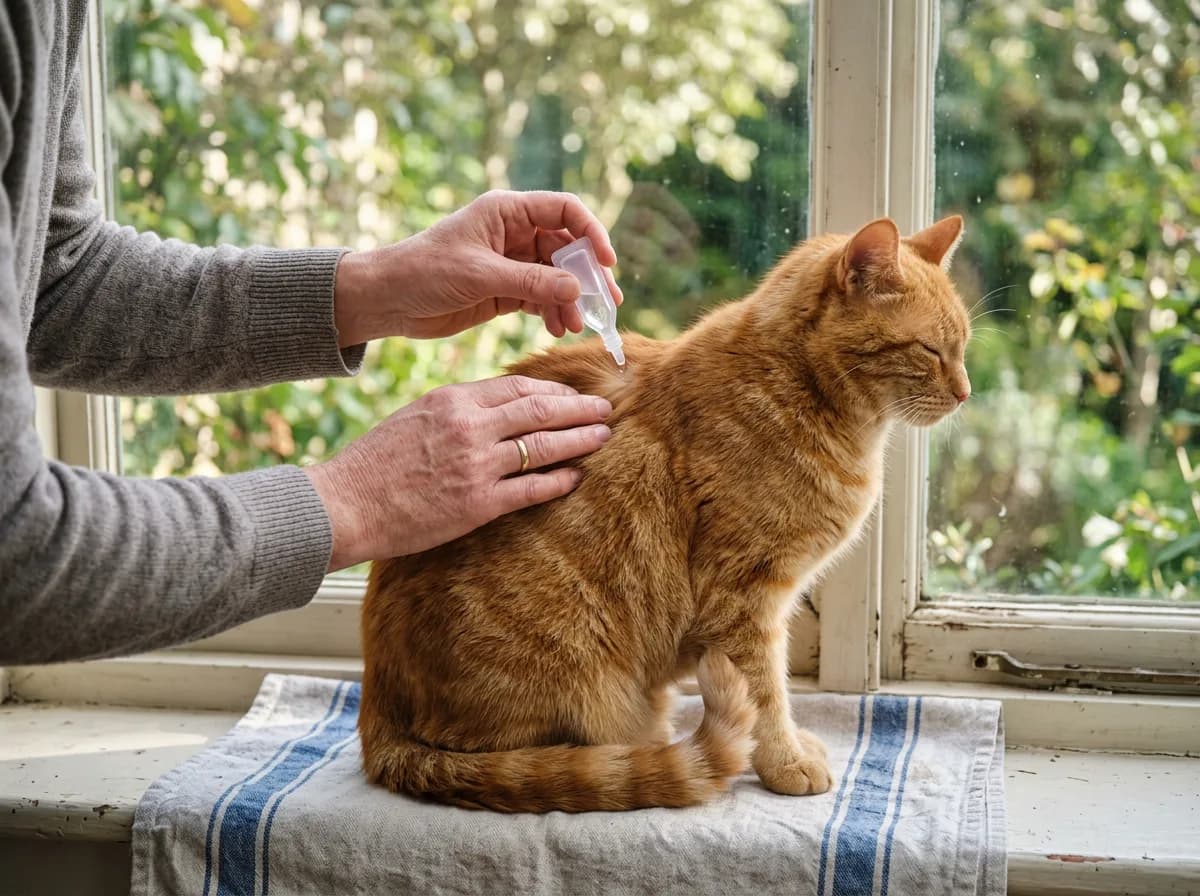
These are my picks for the best flea treatment for cats, and every one of them is cat-labeled. Three of the four are prescription required, which reflects how the strongest active ingredient classes are regulated, not a sales tactic.
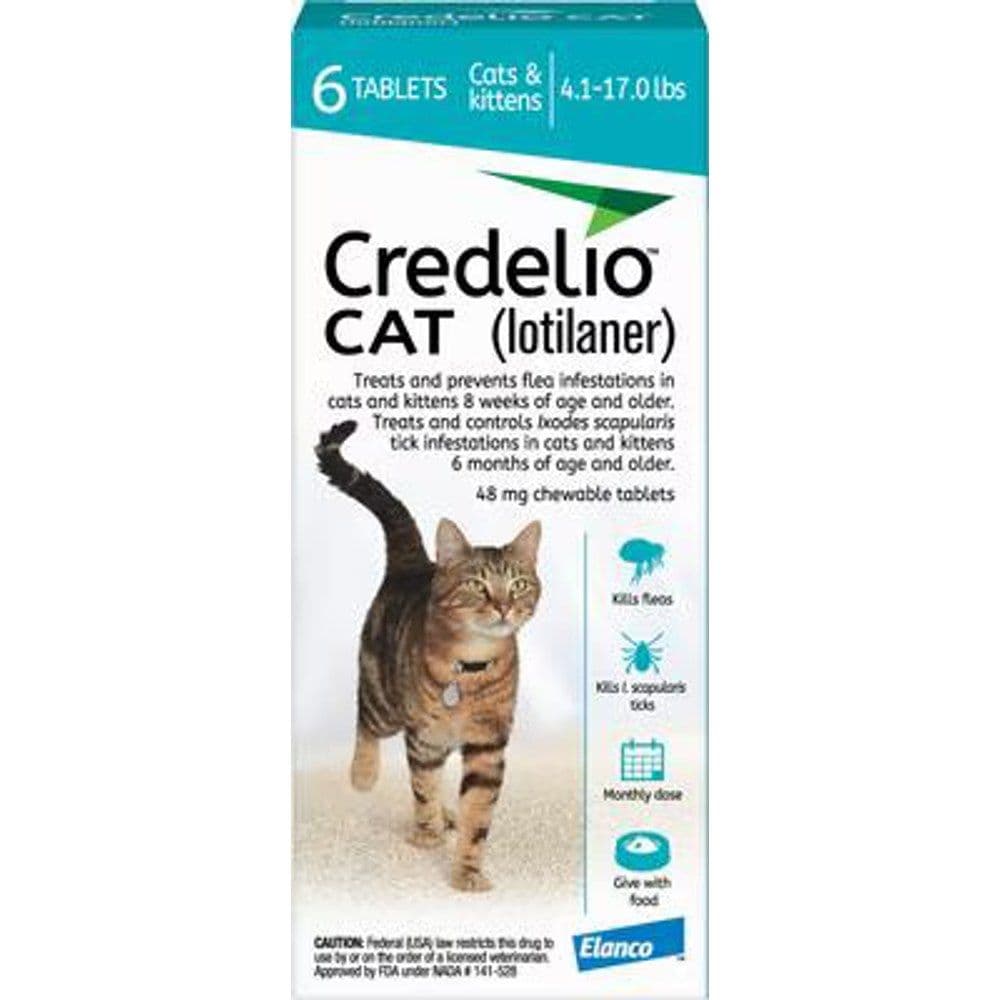
Monthly chewable tablet that kills fleas and treats and controls tick infestations in cats and kittens.
Petful may earn a commission when you click through to Chewy, at no extra cost to you.
- Revolution Plus (topical, Rx): My default recommendation. Selamectin plus sarolaner covers fleas, ticks, ear mites, roundworms, hookworms, and heartworm prevention in one monthly application, for kittens from 8 weeks of age and 2.8 pounds.
- Bravecto Plus (topical, Rx): Fluralaner plus moxidectin gives 2 months of flea and tick protection per application plus heartworm prevention, for cats 6 months and older. Ideal for owners who struggle with monthly schedules.
- Credelio CAT (oral chew, Rx): Lotilaner in a small monthly tablet for kittens from 8 weeks and 2 pounds. The best pick for cats whose skin reacts to topicals, or households where children handle the cat right after application.
- Adams Plus Flea & Tick Shampoo (OTC): Pyrethrins plus the insect growth regulator (S)-methoprene, labeled for cats and kittens 12 weeks and older. Not a monthly preventive; this is the knock-down tool for a flea-ridden rescue or a heavy infestation, used alongside a lasting preventive. Note that pyrethrins at cat-labeled concentrations are not the same thing as concentrated permethrin, which is never safe for cats.
| Product | Active ingredient | Coverage | Lasts | Rx status | Age minimum |
|---|---|---|---|---|---|
| Revolution Plus | Selamectin + sarolaner | Fleas, ticks, ear mites, roundworm, hookworm, heartworm prevention | 1 month | Prescription required | 8 weeks, 2.8 lb |
| Bravecto Plus | Fluralaner + moxidectin | Fleas, ticks, heartworm prevention | 2 months | Prescription required | 6 months |
| Credelio CAT | Lotilaner | Fleas, ticks | 1 month | Prescription required | 8 weeks, 2 lb |
| Adams Plus Shampoo | Pyrethrins + (S)-methoprene | Adult fleas, eggs, ticks on coat | At time of bath | OTC | 12 weeks |
| Advantage II (budget alternate) | Imidacloprid + pyriproxyfen | Fleas, flea eggs and larvae | 1 month | OTC | 8 weeks |
| Capstar (fast alternate) | Nitenpyram | Adult fleas only | ~24 hours | OTC | 4 weeks, 2 lb |
Every pick above also earns its place on safety record. The isoxazoline class (sarolaner, fluralaner, lotilaner) is highly effective, and the FDA issued a 2018 advisory noting that isoxazoline products have been associated with neurologic reactions such as tremors or seizures in a small number of animals. In practice these products are safe for the vast majority of cats, but tell your vet about any history of seizures before starting one.
If you are also comparing tick protection, the same shortlist holds: the best flea and tick prevention for cats is Revolution Plus or Bravecto Plus among topicals, and Credelio CAT among orals, because plain flea-only products like Advantage II do not cover ticks at all.
Prescription Topical Treatments: Revolution Plus and More
Prescription topicals are where flea control has advanced the most in the past decade, and they are the reason the best topical flea treatment for cats today does far more than kill fleas.
Revolution Plus is the clearest example. Owners have searched for Revolution flea medicine for cats since the original selamectin-only Revolution launched, and Revolution Plus for cats is its upgraded successor: the added sarolaner (an isoxazoline) extends coverage to ticks and speeds up the flea kill. One monthly application handles fleas, three tick species, ear mites, roundworms, hookworms, and heartworm prevention. For a cat that goes outdoors, that heartworm piece matters more than many owners realize, because feline heartworm disease has no approved treatment; prevention is the only play.
Why do these products need a prescription? Two reasons worth knowing:
- Systemic activity: Ingredients like selamectin and sarolaner enter the bloodstream, so a veterinarian needs to confirm the cat is healthy enough for them, and heartworm preventives warrant a quick health check first.
- Dosing precision: Rx topicals are dosed by exact weight band, and your vet weighs the cat rather than trusting an owner's estimate. An underdosed cat stays flea-ridden; there is no safe way to "eyeball" it.
Bravecto Plus sits alongside Revolution Plus as the long-duration option, and plain Bravecto for cats (fluralaner only) remains available where tick-and-flea coverage without heartworm prevention fits better. All of these require a vet prescription, and all are applied the same way: part the fur at the base of the skull and squeeze the pipette directly onto skin, not onto fur, in a spot the cat cannot reach with its tongue.
Applied correctly, a prescription topical is also the safest flea treatment for cats in my experience, because the dose is exact, the label is cat-specific, and nothing relies on the owner repeating a risky procedure like bathing a struggling cat.
Oral Flea Treatments for Cats: Capstar, Pills, and Chews
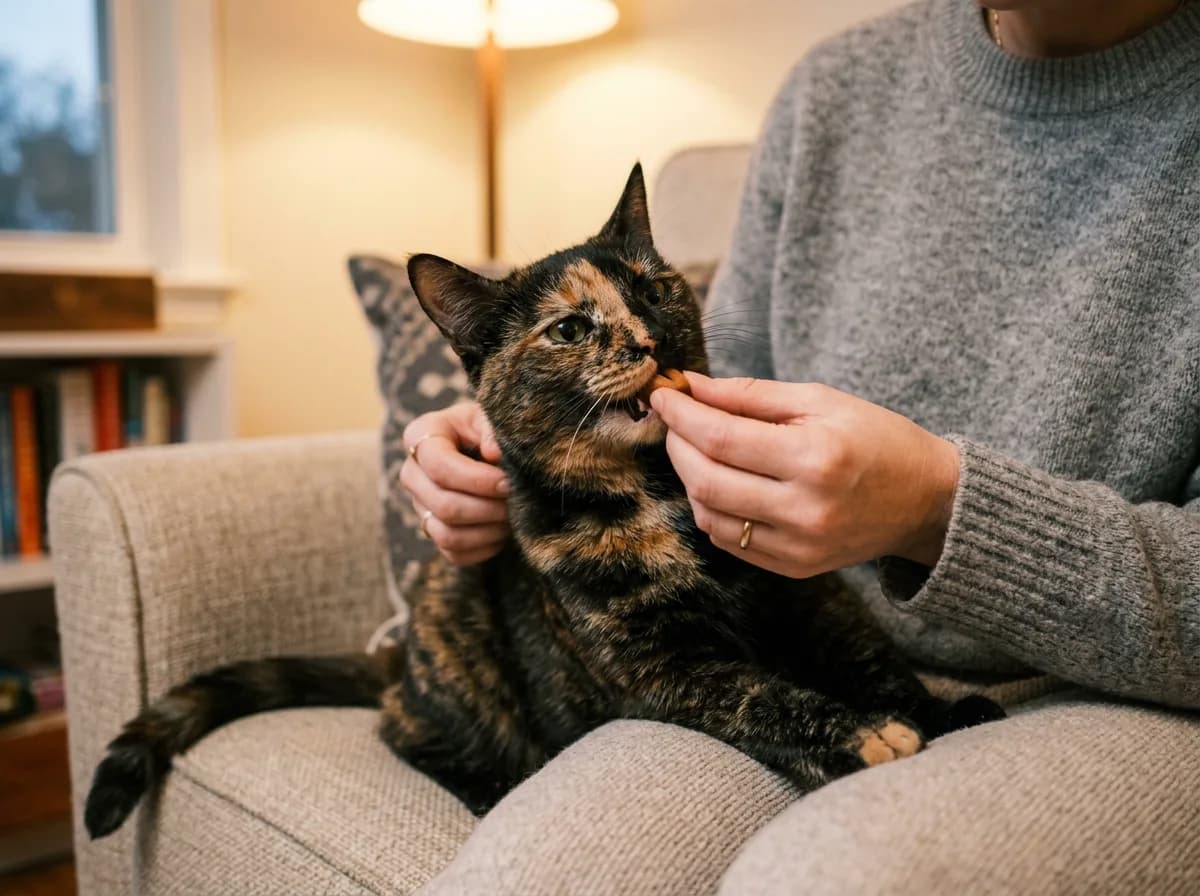
Owners searching for flea treatment for cats oral options usually mean one of two very different products, and the difference is speed versus staying power.
- Capstar (nitenpyram): An OTC tablet that starts killing adult fleas within about 30 minutes and clears the cat's current flea load within hours, then is gone from the body in roughly a day. Safe from 4 weeks of age and 2 pounds, and safe to repeat as often as daily during a heavy infestation per the label.
- Credelio CAT (lotilaner): A prescription monthly chew that provides a full month of flea and tick protection. This is the true monthly oral flea treatment for cats, and it requires a vet prescription.
Think of it this way: Capstar is the fire extinguisher, Credelio CAT is the smoke detector you keep running. Pills for fleas on cats work through the bloodstream, which means fleas must bite once to be killed. That sounds like a flaw, but modern orals kill fleas fast enough to break the egg-laying cycle, and for flea-allergic cats your vet may layer an oral with other measures to cut bites further.
Oral treatments shine in specific situations:
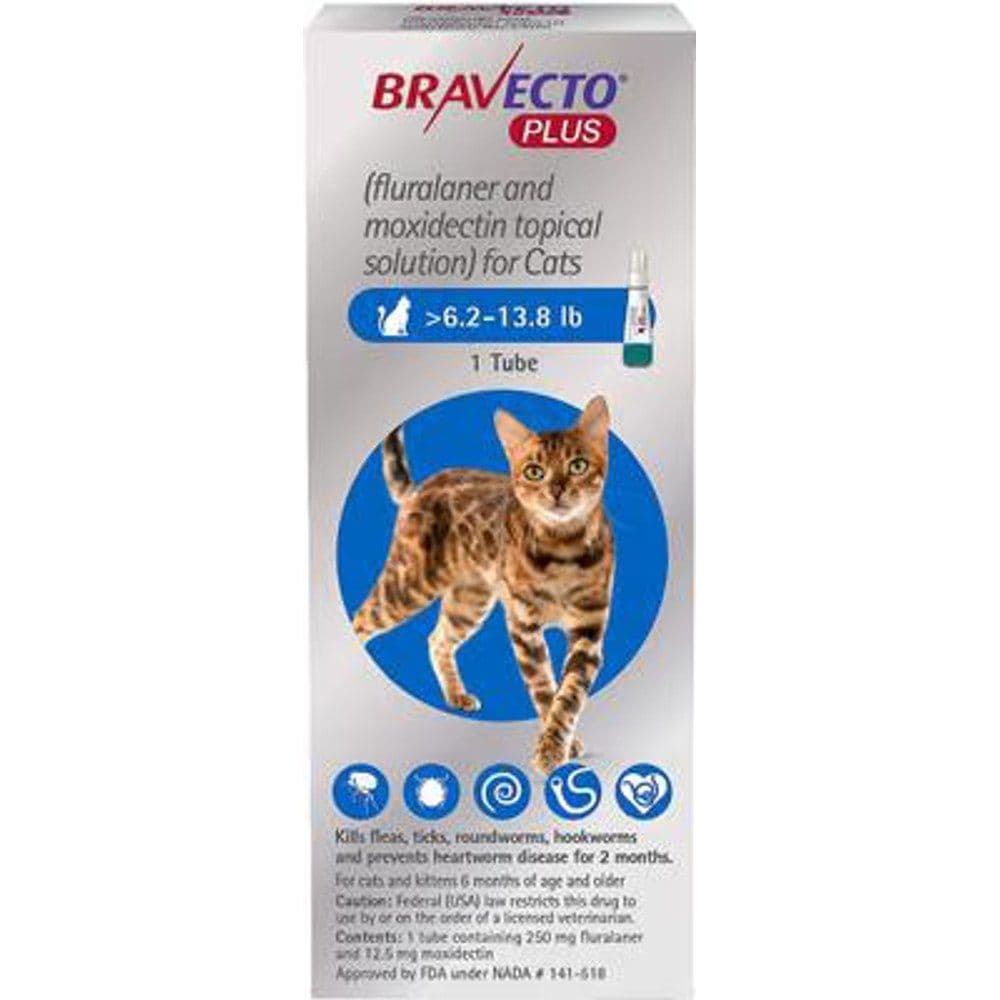
Long-lasting topical that protects cats from fleas, ticks, heartworm, roundworms, and hookworms for up to two months per dose.
Petful may earn a commission when you click through to Chewy, at no extra cost to you.
- Cats with skin conditions or topical-application reactions
- Homes with toddlers or other pets who touch the cat before a topical dries
- Cats who groom housemate cats (mutual grooming can remove topical product)
- Owners who want to see the dose actually swallowed rather than trust absorption
For a deeper dive into the prescription oral market, including product-by-product comparisons, see our roundup of the best oral flea and tick medicine for cats. This pillar keeps the overview; that page owns the product-level detail.
Flea Treatment Safety: Why Dog Products Can Kill Cats
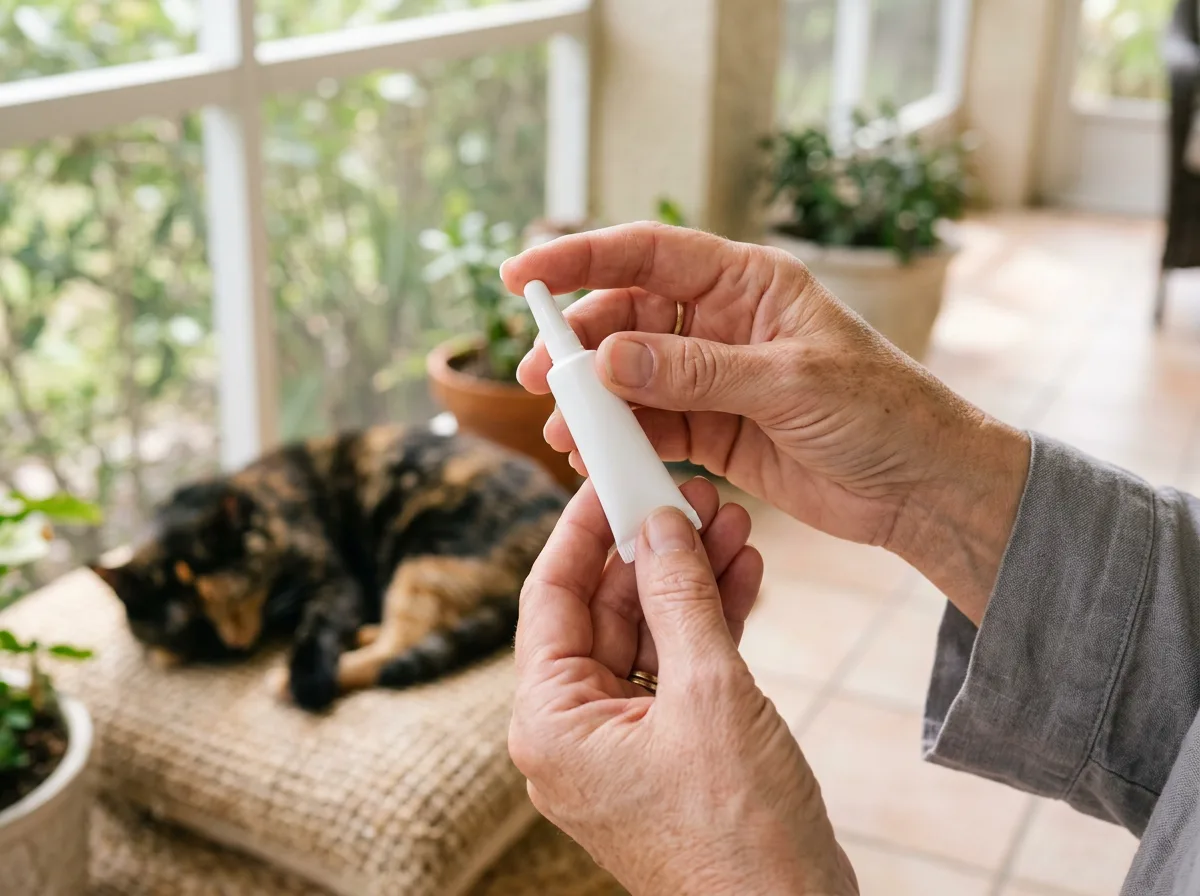
Is dog flea treatment safe for cats? No. This is the most important section of this guide, and I want to be blunt about it: applying a dog flea product to a cat is one of the most common preventable poisonings veterinarians see, and it kills cats every year.
The core problem is permethrin, a synthetic pyrethroid insecticide that is common in dog spot-on treatments (K9 Advantix II is a well-known example). Dogs tolerate it. Cats cannot, because feline livers lack the enzyme capacity to break it down efficiently. Permethrin toxicity in cats causes drooling, ear twitching, tremors, and full seizures, typically within hours of exposure, and severe cases are fatal without emergency treatment. Exposure does not even require applying the product to the cat: a cat that grooms or sleeps pressed against a freshly treated dog can absorb a dangerous dose. The Merck Veterinary Manual covers the toxicology in depth, and our guide to permethrin poisoning in cats walks through the warning signs and exactly what to do in those first critical hours.
- Dog flea treatments that contain permethrin are toxic and can be fatal to cats. Never apply any dog-labeled flea product to a cat, never split a dog dose for a cat, and keep cats away from a permethrin-treated dog until the application site is completely dry, which can take 24 to 48 hours. If your cat shows drooling, tremors, or twitching after any flea product exposure, this is an emergency: go to a veterinarian immediately.
Because the danger hides in the fine print, check the label before anything touches your cat. Here is the 30-second label check I teach clients:
- Species marking: The package must say "for cats" with a cat pictured or named on the front. "For dogs" or "for dogs and cats" with separate dosing means stop and re-read carefully.
- Ingredient scan: If the active ingredient panel contains permethrin at spot-on concentrations, or is listed for dogs only, it never goes on a cat. Low-concentration pyrethrins in cat-labeled shampoos are a different, cat-tested formulation.
- Weight band: Match your cat's actual, recently measured weight to the label's band. Never round up.
- Age minimum: Confirm your cat meets the minimum age on the label, especially for kittens.
- Registration: Look for an EPA registration number (topicals, collars, sprays) or FDA approval (orals) as evidence the product was tested for the species on the label.
That checklist is also the honest answer to anyone searching for the safest flea treatment for cats: safety is less about one magic brand and more about a cat-labeled product, at the right dose, on the right animal.
One more safety note that surprises owners: some "natural" essential-oil flea products are also hazardous to cats. Concentrated tea tree, pennyroyal, and citrus oils have all caused feline poisonings, so hold natural products to the same label scrutiny as synthetic ones.
SponsoredVet care that's always there
Unlimited video calls and messaging with licensed vets for less than a typical vet visit. One membership covers up to five pets.
Use code Pets60
Plans start at $12/month · covers up to 5 pets
- Licensed vets in most states
- Rx for 150+ conditions
- 4.7 on Trustpilot
OTC vs Prescription Flea Treatment: Which Do You Need?
The honest split is this: over the counter flea treatment for cats handles straightforward flea prevention on healthy adult cats, while prescription products buy you broader coverage, faster kill speeds, and a professional double-check on dose and health status.
Choose OTC when:
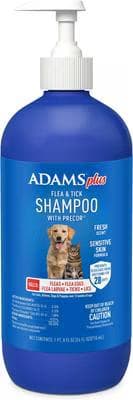
A gentle flea and tick shampoo for cats and dogs that kills ticks on contact and soothes sensitive skin. Handy for washing your dog down after a hike.
Petful may earn a commission when you click through to Chewy, at no extra cost to you.
- Your cat is a healthy adult with a routine flea problem or none at all
- You need flea-only coverage (indoor cat, low tick risk)
- Budget is the deciding factor and consistency matters more than breadth
Choose prescription when:
- You want tick, mite, worm, or heartworm coverage in the same product
- Your cat is very young, elderly, pregnant, or has any health condition
- OTC products have failed, or the infestation keeps rebounding
There is real depth on the OTC side, including several products I consider genuinely good, and we keep it in its own guide: our roundup of flea medicine for cats without a vet prescription ranks the OTC flea treatment for cats options and flags the ones to skip. If your question is specifically "which flea treatment is best without seeing a vet," that page is the answer; the framework here tells you when the vet visit is worth it anyway.
Getting Rid of an Active Flea Infestation
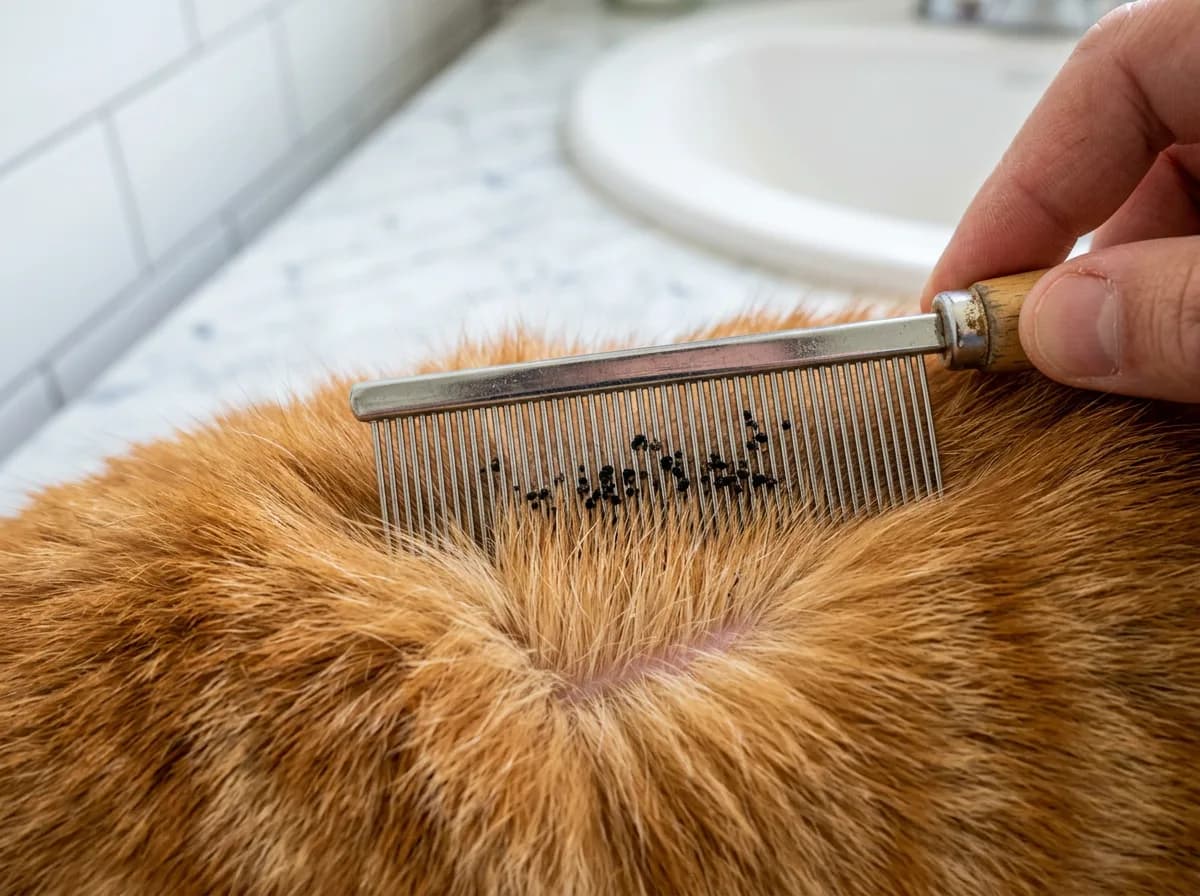
If your cat has fleas right now, treatment has two halves, and skipping the second half is why infestations "come back."
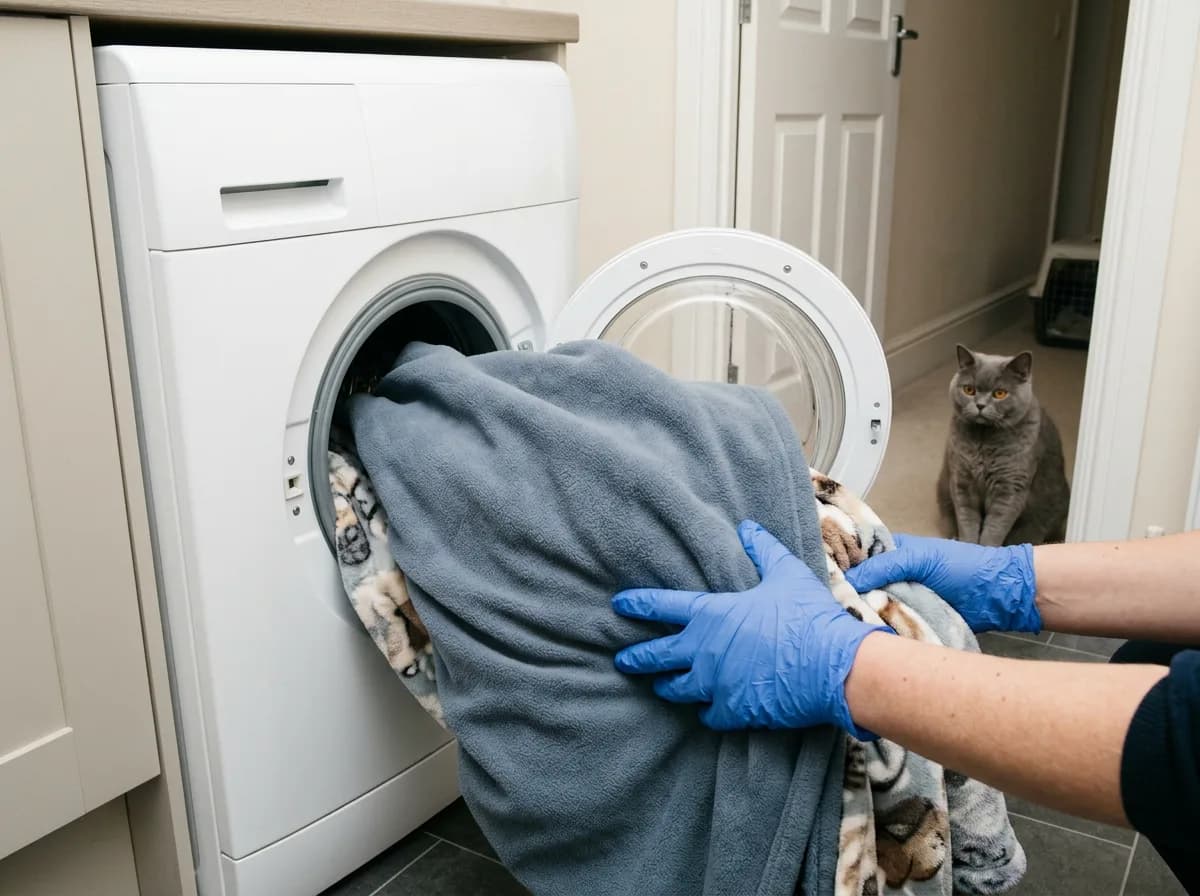
- Treat the cat: A fast-acting product (Capstar) plus a monthly preventive, per the sections above, with every pet in the home treated the same day.
- Treat the home: Remember the CAPC's 95% rule: for every adult flea on your cat, roughly 19 more fleas-in-waiting are in your carpets, bedding, and sofa cushions as eggs (about 50% of the population), larvae (about 35%), and pupae (about 10%). Daily vacuuming, hot-water washing of bedding, and often an environmental spray with an insect growth regulator are what actually end the cycle.
Expect the full process to take 6 to 8 weeks even when you do everything right, because pupae are resistant to insecticides and hatch in waves. Seeing a few new fleas in week 3 does not mean your product failed.
The step-by-step cat-side protocol, including combing technique, bathing decisions, and week-by-week expectations, lives in our guide to how to get rid of fleas on cats. And for the environmental half, do you need to treat the house? Almost always yes if you are seeing fleas on the cat; our room-by-room plan for getting rid of fleas in the house covers vacuuming strategy, washing, sprays, and when to call pest control.
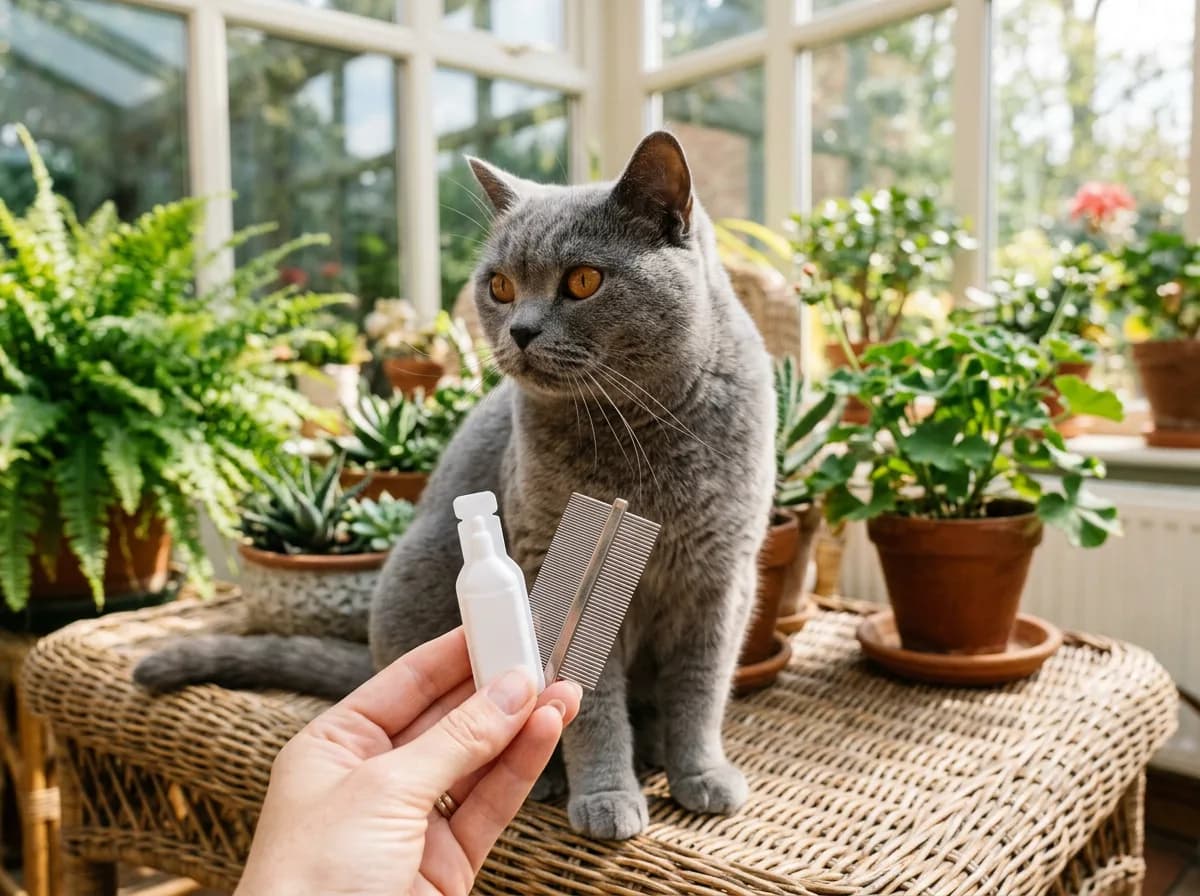
A flea comb is your progress tracker throughout: comb over a white paper towel, and the black specks that turn rust-red when wet are flea dirt (digested blood), confirming live fleas are still feeding.
What Kills Fleas on Cats Fast?
Nitenpyram (Capstar) is the fastest option available: it begins killing adult fleas within about 30 minutes of ingestion, which is why shelters and vets use it for flea-covered intakes. Modern prescription products are close behind, typically killing the fleas on a cat within hours of application.
Speed matters most for flea-allergic cats, heavily infested kittens (old enough to dose), and anxious owners who need to see progress today. But a fast kill without follow-through just restarts the cycle as new fleas hatch from the home environment.
For the full speed rundown, including what works in the first hour, the first day, and the first week, and which "instant" home tricks are myths, see our guide to what kills fleas on cats instantly.
Do Flea Collars Work for Cats?
Modern ones can. The flea collar for cats category splits sharply in two: older pesticide-strip collars from the grocery store do very little beyond the neck area, while modern sustained-release collars like Seresto (imidacloprid plus flumethrin) distribute active ingredient across the whole coat and protect for up to 8 months.
Any collar on a cat must have a breakaway or quick-release safety feature, full stop; cats climb and squeeze through spaces where a rigid collar can catch and strangle. Collars also suit some cats poorly, including cats with sensitive skin and cats in homes where children handle them constantly.
We compare the current options, safety features, and prices in our dedicated guide to the best flea collars for cats, which is the page to read before buying one.
Flea Treatment for Kittens
Kittens are the highest-stakes flea patients, for two reasons: severe infestations can cause life-threatening anemia in a small body, and most flea products are not safe below a minimum age and weight. Every kitten flea treatment decision starts with those two numbers.
The safe boundaries in brief:
- Under 4 weeks: No chemical products at all. Flea combing and warm-water spot bathing only, plus aggressive treatment of the mother and environment.
- 4 to 8 weeks: Capstar is labeled from 4 weeks and 2 pounds; almost everything else remains off-limits.
- 8 weeks and up: Kitten-safe monthly products open up, including Revolution Plus (from 2.8 pounds) and Credelio CAT (from 2 pounds), each dosed strictly by weight.
Weigh the kitten immediately before dosing, every time; kittens outgrow weight bands in weeks. The complete protocol by age, including how to safely bathe a young kitten and when anemia becomes an emergency, is in our guide to flea treatment for kittens.
Natural and Home Remedies: What Is Actually Safe?
I understand the appeal of skipping chemicals, so here is the straight answer: a flea comb used daily is the one natural method with real, evidence-backed value, and it doubles as your monitoring tool. Regular vacuuming and hot-water washing of bedding genuinely attack the 95% of the flea population living in your home.
The popular DIY treatments hold up much less well:
- Vinegar: The "get rid of fleas on cats naturally with vinegar" advice does not hold up; vinegar does not kill fleas at any safe concentration, and most cats hate being sprayed with it.
- Baking soda: Home remedies for fleas built on baking soda may modestly dry out carpets against larvae, but baking soda does nothing on the cat itself.
- Essential oils: Actively dangerous. Tea tree, pennyroyal, citrus, and cinnamon oils have documented feline toxicity, and "natural" on a label does not mean cat-safe.
- Diatomaceous earth: Food-grade DE has some environmental use in dry cracks and crevices, but applied to a cat's coat it dries the skin and creates respirable dust.
If you want to know how to get rid of fleas on cats without bathing them, the honest answer is that combination approach: daily flea combing, a cat-safe preventive, and environmental cleaning, no bath required. We sort the full list of remedies into safe, useless, and dangerous in our guide to home remedies for fleas, and I would ask every owner to run any natural product past the same label-check standard from the safety section above.
Keeping Your Cat Protected Year-Round
In most of the United States, fleas are a year-round parasite, not a summer one. Indoor heating keeps homes at flea-friendly temperatures all winter, and the CAPC recommends year-round parasite prevention for exactly that reason. The "one bad month" I see in practice is almost always the month after an owner decided it was too cold for fleas and skipped a dose.
Consistency beats intensity in flea control. A mid-tier product given every single month outperforms a premium product applied "when I remember." Three habits make consistency easy:
- Dose on the same calendar day each month, tied to something you already do (the first of the month, a pet-food delivery, a recurring phone reminder)
- Keep a simple treatment log per pet so multi-cat households do not lose track of who got what; a free MyPetID profile makes this painless by tracking which flea treatment you used, the dosing frequency, and sending reminders before the next dose is due
- Re-weigh cats a couple of times a year, since weight changes can move a cat into a different dose band
Do a monthly 1-minute flea-comb check even when everything seems fine. Catching flea dirt in week 1 of a problem, rather than month 2, is the difference between one extra dose and an 8-week home decontamination project.
Frequently Asked Questions
For most cats, a vet-recommended prescription product gives the most reliable protection: Revolution Plus (selamectin plus sarolaner) for broad monthly coverage, Bravecto Plus for 2-month protection, or Credelio CAT as an oral chew. For an OTC route, Advantage II is a solid flea-only monthly topical and Capstar clears an active flea load fast.
No, never. Many dog flea products contain permethrin, which cats cannot metabolize. It causes tremors, seizures, and death in cats, and even sleeping against a freshly treated dog can poison a cat. Only ever use products labeled specifically for cats.
Follow the product label exactly: most topicals and oral chews are monthly, Bravecto Plus lasts 2 months, and Seresto collars last up to 8 months. Veterinary parasitologists recommend year-round treatment rather than stopping in winter, because homes stay warm enough for fleas in every season.
Yes. Flea eggs and adults hitchhike indoors on shoes, clothing, other pets, and used furniture, and a single female flea can lay around 50 eggs per day once inside. Indoor-only cats can usually use a flea-focused product rather than the broadest-spectrum option.
With a modern product on the cat, adult fleas start dying within hours. Clearing the whole infestation takes 6 to 8 weeks, because flea pupae in your carpets are resistant to treatment and keep hatching in waves. Continuing monthly treatment through that window is essential.
Cat-labeled OTC options include Advantage II (monthly topical), Capstar (fast-acting tablet), Seresto (collar), and Adams Plus shampoo for knock-down. They handle flea-only needs on healthy adult cats; see a vet if you need tick or heartworm coverage, or the infestation keeps rebounding.
Fleas are beatable, and cats tolerate modern treatment remarkably well when the product is chosen for them, not adapted from a dog's shelf. Match the treatment to your cat's age, weight, and lifestyle, check the label every time, keep every pet in the house on schedule, and treat the home as seriously as the cat. Do that, and a flea problem becomes a 2-month project instead of a year-long war.
BVMS, MRCVS
Dr. Pippa Elliott, BVMS, MRCVS, is a veterinarian with nearly 30 years of experience in companion animal practice. Dr. Elliott earned her Bachelor of Veterinary Medicine and Surgery from the University of Glasgow. She was also designated a Member of the Royal College of Veterinary Surgeons. Married with 2 grown-up kids, Dr. Elliott has a naughty Puggle named Poggle, 3 cats and a bearded dragon.
Sign up for expert-backed reviews and safety alerts all in one place.