What Kills Fleas on Cats Instantly? Vet Answer
A veterinarian explains what kills fleas on cats instantly: nitenpyram (Capstar) tablets start killing fleas in about 30 minutes. Compare onset times by product class, see what Dawn baths really do, and learn which products are never safe for cats.

BVMS, MRCVS
Petful is reader supported. As an affiliate of platforms like Amazon and Chewy, we may earn a commission when you buy through links on this page. There is no extra cost to you.
If you are searching for what kills fleas on cats instantly, the honest veterinary answer is a nitenpyram oral tablet (sold as Capstar), which begins killing adult fleas within about 30 minutes, according to the Merck Veterinary Manual. As a veterinarian, I reach for it whenever a cat needs live fleas dead today: before surgery, in a flea-allergic cat, or in a heavy infestation. In this guide I will explain exactly how fast each product class works, why "instant" never means the problem is solved, what flea baths and Dawn dish soap really do, and the two safety rules that protect your cat's life.
- 1A nitenpyram oral tablet (Capstar) is the fastest flea killer for cats, with onset within 30 minutes
- 2No instant kill ends an infestation: about 95% of the flea population lives in your home, not on the cat
- 3Never use permethrin or any dog flea product on a cat, ever

Sign up for expert-backed reviews and safety alerts all in one place.
What kills fleas on cats instantly?
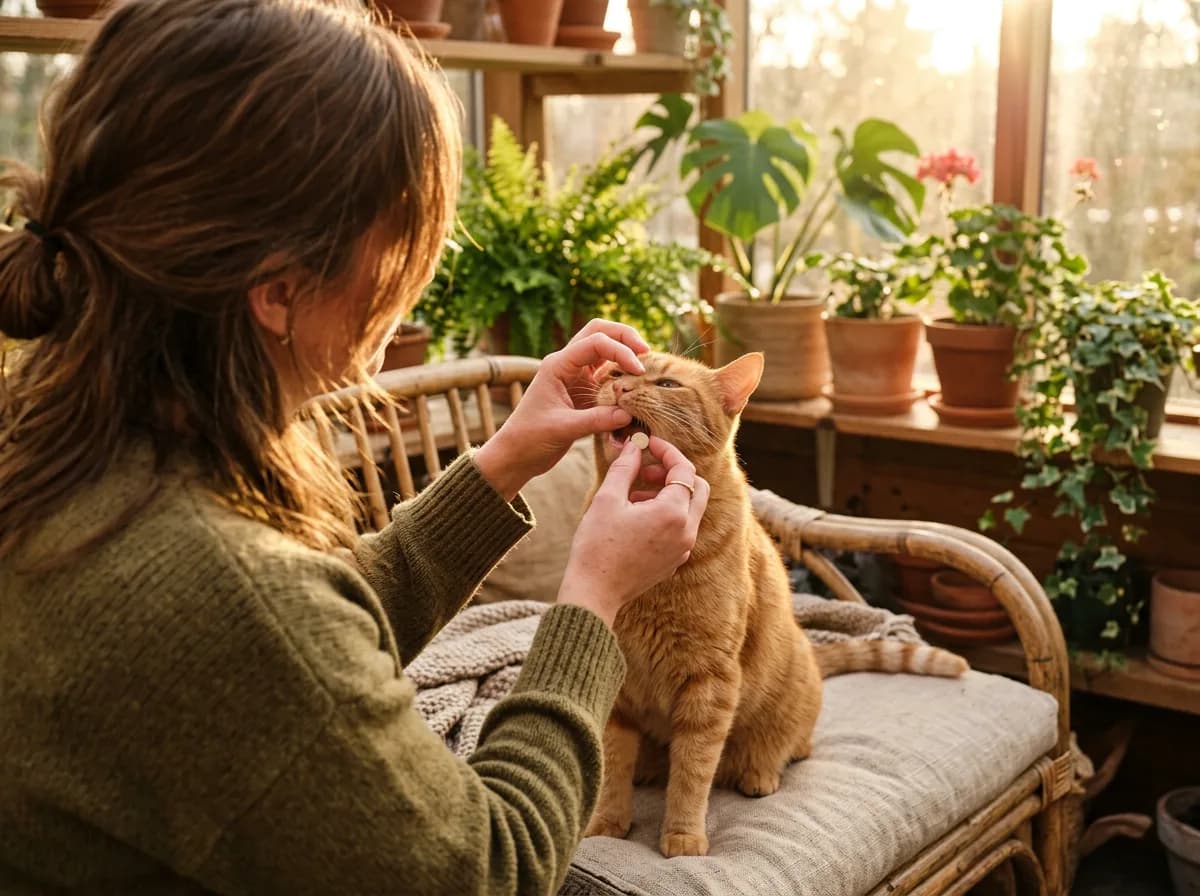
The fastest flea killer for cats is a nitenpyram oral tablet (Capstar), with onset within 30 minutes and most adult fleas dead within 6 hours. Fast topicals such as imidacloprid follow within 12 hours. Only ever use products labeled for cats: permethrin and all dog flea products are dangerously toxic.
Here is what instantly really means when we talk about fleas on cats: no product kills a flea the second it touches your cat. The fastest options work in 30 minutes to 24 hours, depending on the product class. Marketing that promises a truly instant kill is selling you the same chemistry with a bolder label.
Your realistic fast-kill options, ranked by speed:
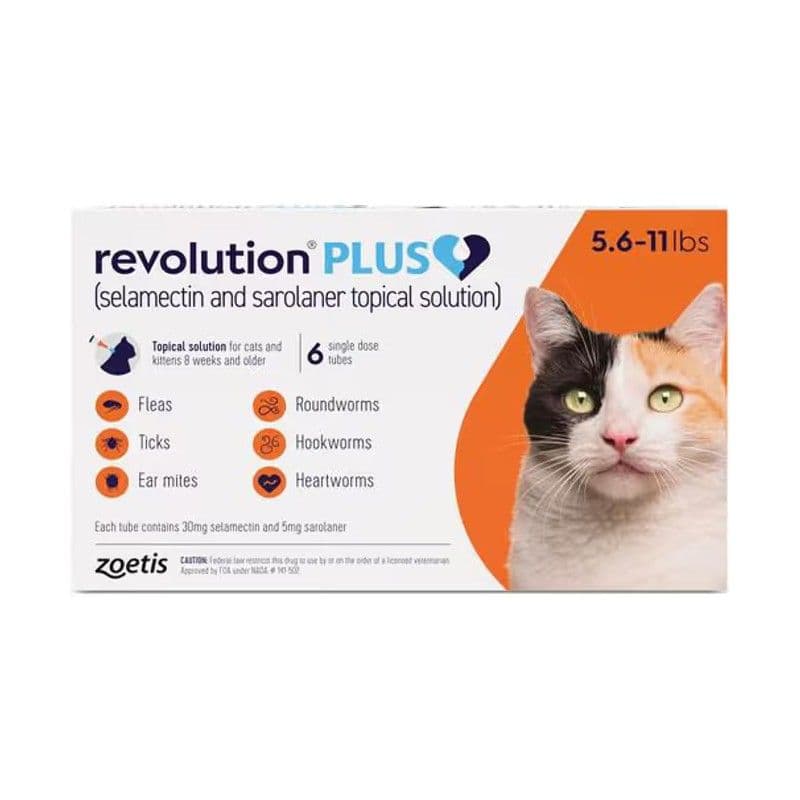
Monthly vet-prescription topical for cats 5.6 to 11 lbs that protects against fleas, ticks, ear mites, roundworms, hookworms, and heartworm in one application.
Petful may earn a commission when you click through to Chewy, at no extra cost to you.
- Nitenpyram oral tablet (Capstar): starts killing adult fleas in about 30 minutes, over 90% dead within 6 hours in cats. Over the counter, safe from 4 weeks of age and 2 pounds of body weight.
- Spinosad and other fast oral products: begin killing within hours, but most require a vet prescription.
- Fast topicals (imidacloprid, fipronil): kill existing fleas within 12 to 24 hours of application and keep protecting for a month.
- Mechanical removal (flea comb plus soapy water): kills the individual fleas you catch on contact, but only the ones you catch.
Wondering how to get rid of cat fleas in one day? You genuinely can clear the fleas that are on your cat today: give a nitenpyram oral tablet in the morning, comb out the dead and dying fleas, and apply a cat-labeled monthly preventive the same day. What you cannot do in one day is end the infestation, because the eggs, larvae and pupae in your carpet keep hatching for weeks. I cover that gap at the end of this article.

 Sponsored
Need flea, tick, or parasite care for your cat?
A licensed vet at Dutch can recommend the right preventive and prescribe it when it's appropriate. Annual members get 20% off their first flea and tick order.
Use code Pets60
Plans start at $12/month · covers up to 5 pets
- Licensed vets in most states
- Rx for 150+ conditions
- 4.7 on Trustpilot
Speed of kill by product class: oral vs topical
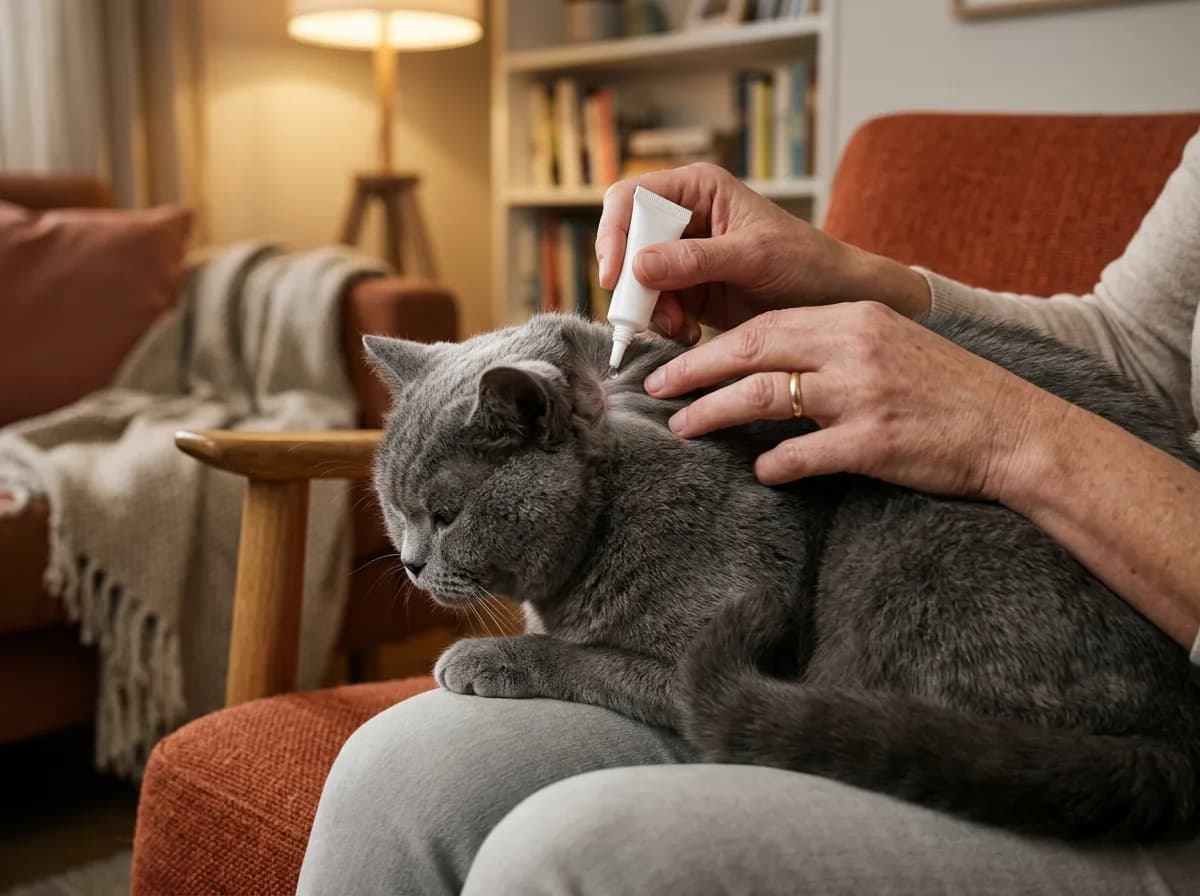
No ranking page on this topic gives you a straight speed-of-kill comparison for cats, so here is mine. The short verdict: oral products win on raw speed, topicals win on duration, and mechanical methods only kill the fleas you physically remove. Knowing the onset time per product class lets you pick by how fast you actually need results.
| Product class | Example (cat-labeled) | Onset of kill | Duration | Cat-safety notes |
|---|---|---|---|---|
| Fast-kill oral | Capstar (nitenpyram) | ~30 minutes | ~24 hours | OTC; kittens 4+ weeks and 2+ lbs; no residual protection |
| Monthly topical | Advantage II (imidacloprid + pyriproxyfen) | Within 12 hours | ~30 days | OTC; apply at base of skull where the cat cannot lick |
| Monthly topical | Frontline Plus for Cats (fipronil + (S)-methoprene) | Within 24 hours | ~30 days | OTC; kills ticks too |
| Rx oral/topical | Revolution Plus, Bravecto, Comfortis | Hours to 24 hours | 1-3 months | Requires a vet prescription; broader parasite coverage |
| Mechanical | Flea comb + soapy water | On contact | None | Labor only; safe at any age |
| Flea bath / Dawn | Dish soap bath | On contact | None | Stressful; strips coat oils; zero residual effect |
A few verdicts from that table worth stating in plain language:
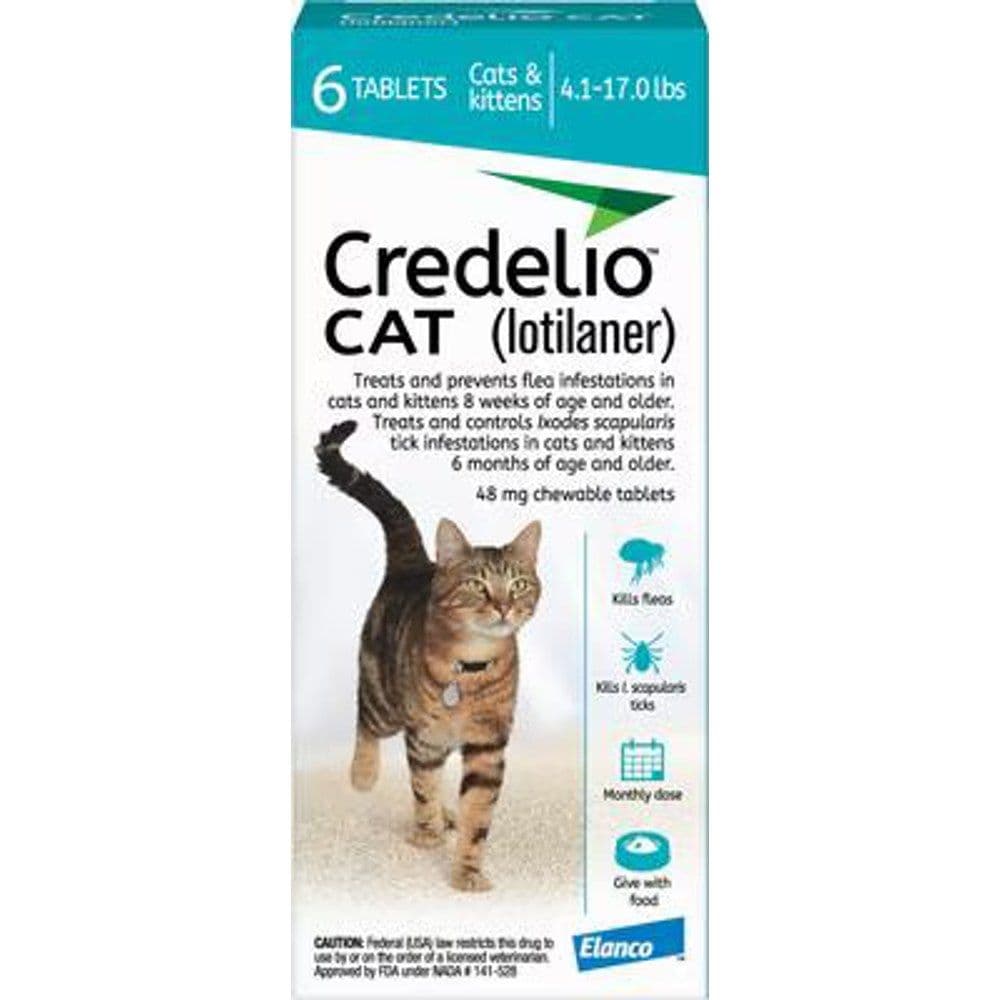
Monthly chewable tablet that kills fleas and treats and controls tick infestations in cats and kittens.
Petful may earn a commission when you click through to Chewy, at no extra cost to you.
- Capstar for cats is the speed king. Nothing labeled for cats starts killing faster than 30 minutes, and nothing over the counter matches it. Its weakness is that it stops working after about 24 hours, so it is a knockdown tool, not a preventive.
- Topicals are the better second-day decision. A cat-labeled imidacloprid or fipronil spot-on applied the same day means the fleas that hop back on tomorrow also die.
- Prescription products trade a little speed for a lot of coverage. Revolution Plus, Bravecto and Comfortis each require a vet prescription, and your veterinarian will match them to your cat's age, weight and health status.
People asking about capstar flea medicine for cats often want to know if they can repeat it. Yes: the label allows one tablet per day as needed during an active infestation, which is exactly how I use it in practice while a monthly product takes over.
Do flea baths and Dawn dish soap actually work?
This is where I have to be honest with you, because the internet is not. If you searched for what kills fleas on cats instantly naturally, or what kills fleas on cats instantly at home, you have seen the Dawn dish soap advice everywhere. Here is the vet reality check.
Yes, a bath with Dawn or any dish soap kills fleas on contact by breaking down the waxy coating that lets them float on water. That part is true. Everything else about the tactic is a problem for cats:
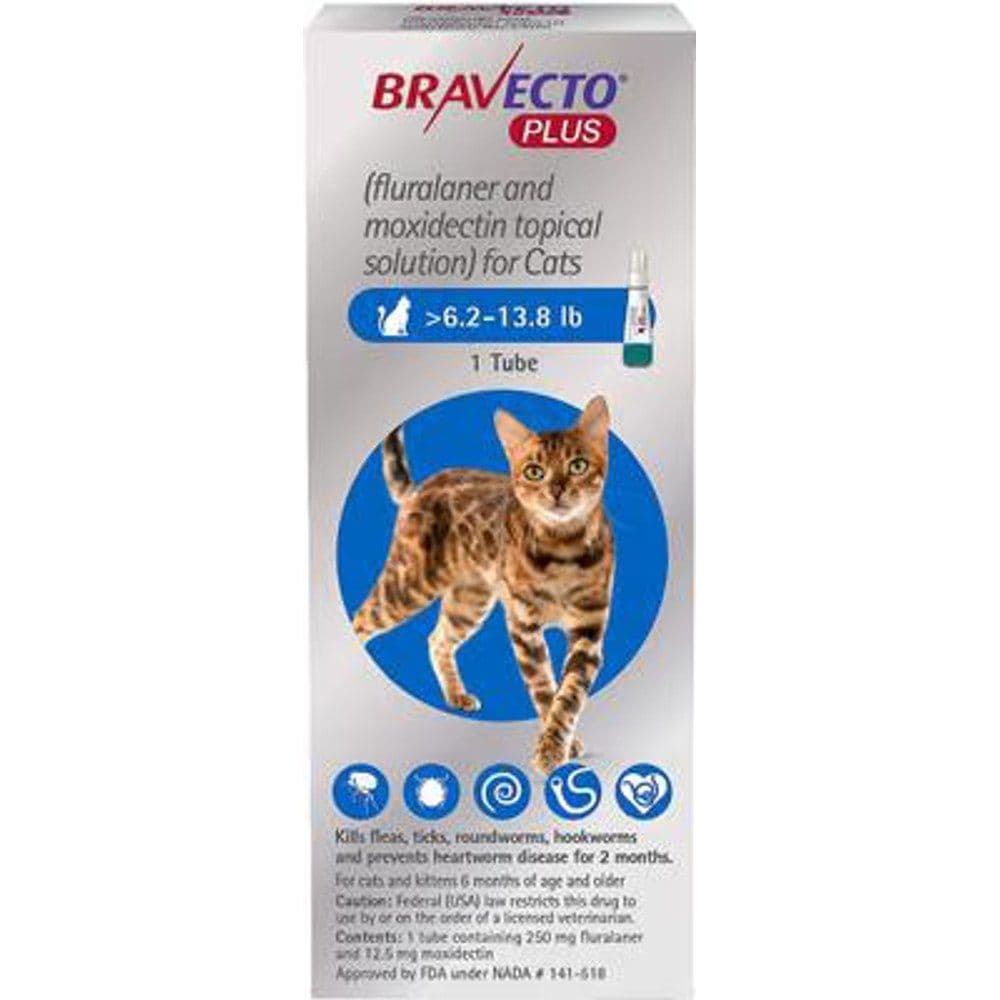
Long-lasting topical that protects cats from fleas, ticks, heartworm, roundworms, and hookworms for up to two months per dose.
Petful may earn a commission when you click through to Chewy, at no extra cost to you.
- Most cats find bathing intensely stressful, and a panicked, scratching cat can injure you both.
- Dish soap strips the natural oils from a cat's coat and can leave the skin dry and irritated.
- There is zero residual effect. New fleas from your carpet re-infest the cat within hours.
- It does nothing to the 95% of the flea population living in your home as eggs, larvae and pupae.
Searching for how to get rid of fleas on cats without bathing? Use the tools above: a nitenpyram oral tablet for the instant knockdown, then a cat-labeled monthly product. No bath required, and both are faster and longer-lasting than dish soap.
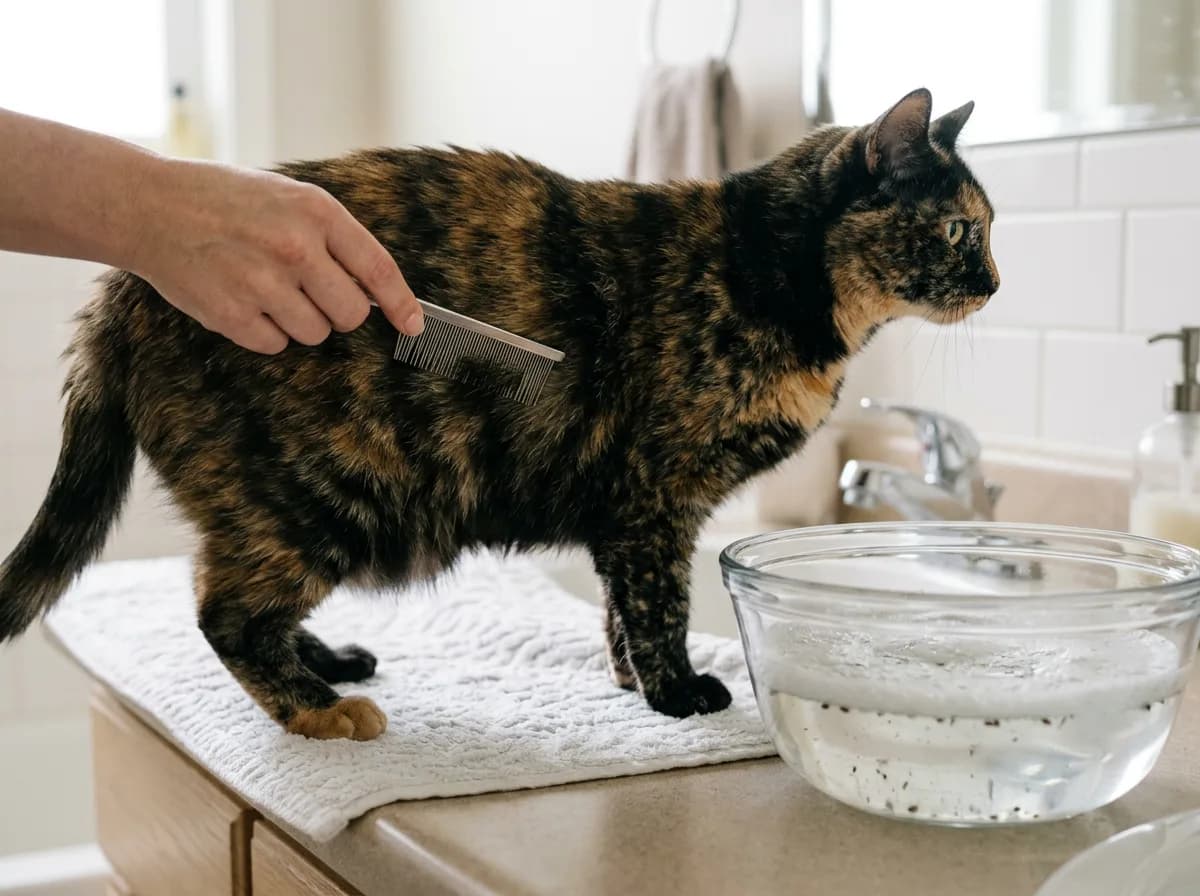
- If you want to draw fleas off your cat by hand, a fine-toothed metal flea comb is the safest tool at any age. Work slowly through the coat, especially around the neck and tail base, and dunk each pass into a bowl of hot soapy water to drown what you catch.
The comb-and-soapy-water routine answers another common question: how do I draw fleas off my cat? You do not need to lure fleas anywhere. Comb them out and drown them in the bowl. It is the same contact-kill chemistry as a Dawn bath, without soaking a miserable cat.
As for popular home remedies for fleas on cats, baking soda, vinegar, salt and essential oils either do not kill fleas at all or are actively unsafe for cats (many essential oils are toxic to them). If you want the full evidence-based rundown of what is worth trying and what is a myth, our guide to home remedies for fleas covers homemade flea-killer options in depth.
SponsoredVet care that's always there
Unlimited video calls and messaging with licensed vets for less than a typical vet visit. One membership covers up to five pets.
Use code Pets60
Plans start at $12/month · covers up to 5 pets
- Licensed vets in most states
- Rx for 150+ conditions
- 4.7 on Trustpilot
Never use dog flea products on your cat
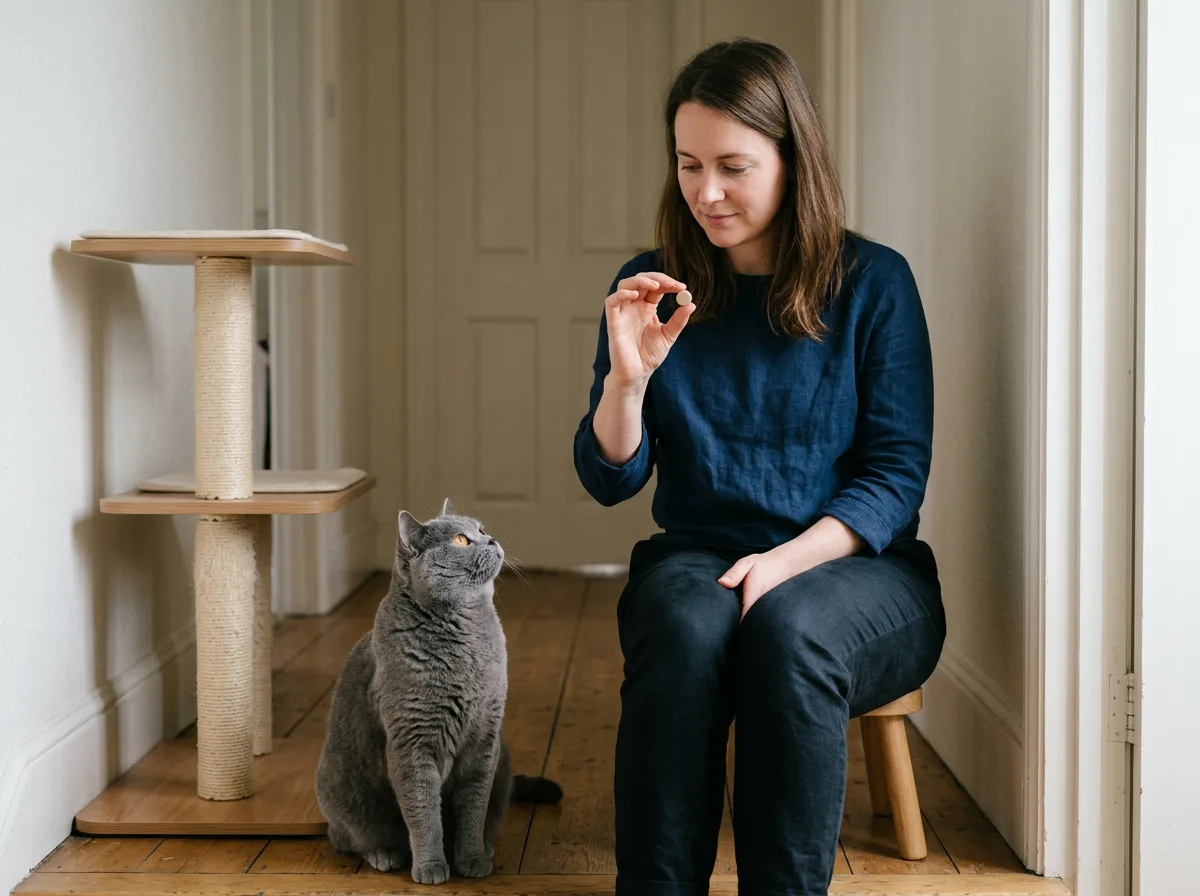
This is the safety boundary that the home-remedy listicles bury, so I am stating it as plainly as I can. Permethrin is toxic to cats. Veterinary toxicologists consider permethrin toxic to cats at any dose, because cats lack the liver enzyme pathway that lets dogs break it down. A single application of a permethrin dog spot-on, such as K9 Advantix II, can cause tremors, seizures and death in a cat.
The rule that follows: never use dog flea products on a cat. Not a half dose, not "just this once," not because the store was out of the cat version. Even close contact with a freshly treated dog can be enough to poison a cat in the same household.
- If your cat has been exposed to a permethrin product and shows drooling, twitching, tremors or seizures, this is a life-threatening emergency. Go to a veterinary hospital immediately. Rapid treatment dramatically improves survival.
If the worst has happened or you want to understand the risk fully, read our detailed guide to permethrin poisoning in cats. And if you run a multi-pet household, treat the species separately: our companion article on what kills fleas on dogs instantly covers the dog side, including which dog products create a cat-contact hazard.
A gentle flea and tick shampoo for cats and dogs that kills ticks on contact and soothes sensitive skin. Handy for washing your dog down after a hike.
Petful may earn a commission when you click through to Chewy, at no extra cost to you.
What about kittens?
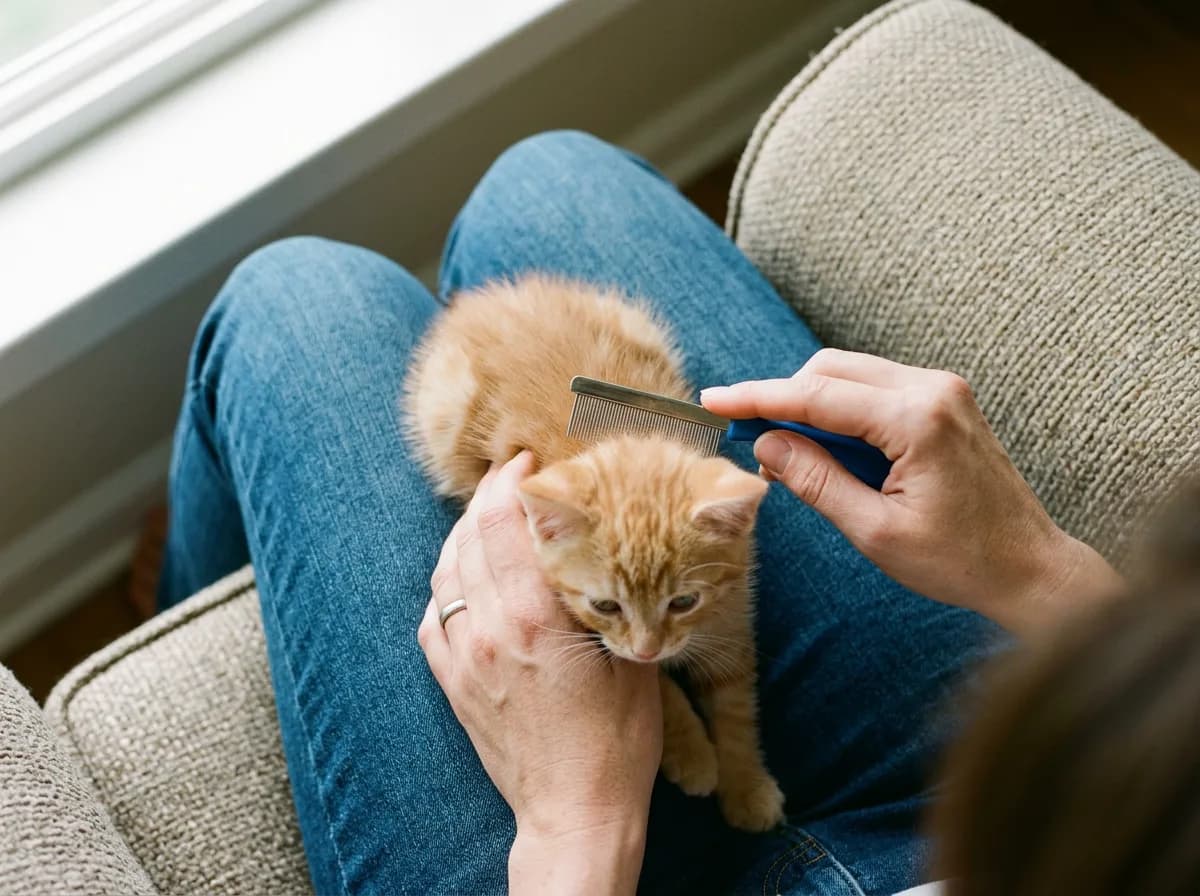
Kittens are the one group where "fastest" takes a back seat to "labeled for this age and weight." The rules tighten fast:
- Capstar is labeled for kittens from 4 weeks of age and 2 pounds of body weight.
- Most topical spot-ons start at 8 weeks or older, and some have their own weight minimums.
- Below 4 weeks, the only safe approach is a flea comb, warm soapy water for the combed-out fleas, and treating the mother and the environment.
Age and weight gating is a whole topic of its own, so if you are dealing with a flea-ridden litter, our dedicated guide to kitten flea treatment walks through the safe product ladder week by week.
Choosing an ongoing flea treatment
An instant kill answers today's emergency. The next decision is which monthly product prevents the sequel, and that choice depends on your cat's lifestyle, age, weight and whether you also need tick, mite or worm coverage. Indoor-only cats get fleas too; they just get them delivered by us, our dogs and our visitors.
I will not turn this article into a product roundup, because we maintain a full comparison. Our pillar guide to flea treatment for cats ranks the best flea treatment for cats by situation, covers OTC versus prescription options, and explains which active ingredients pair well with a Capstar knockdown.
After the instant kill: clearing fleas for good
Here is the trap that catches most owners: a knockdown treatment without follow-up fails, every time. According to the Companion Animal Parasite Council, roughly 95% of a flea infestation lives in the environment as eggs, larvae and pupae, with only about 5% riding on your pet as adult fleas. Kill every adult flea on your cat this afternoon and the carpet will restock them within days.
The fix is a sequence, not a single product:
- Kill the adults on the cat today (nitenpyram oral tablet).
- Start a cat-labeled monthly preventive the same day, and keep it going for at least 3 consecutive months to outlast the pupae in your home.
- Vacuum daily, wash bedding hot, and treat the environment.
- Treat every pet in the household on the same schedule, each with a product labeled for its own species.
Consistency is the entire game in step 2, and it is where most flea plans quietly die. A free MyPetID profile lets you track each pet's flea treatments and dosing frequency and sends automatic reminders, so the monthly dose actually happens monthly.
Steps 3 and 4 have their own playbook, from flea combs to insect growth regulator sprays for the house. Our step-by-step guide to how to get rid of fleas on cats covers the full cat-plus-home eradication protocol.
Frequently asked questions
Capstar (a nitenpyram oral tablet) starts killing adult fleas within about 30 minutes, and more than 90% of fleas on a cat are dead within 6 hours. Its effect lasts about 24 hours, so pair it with a monthly preventive the same day.
Dawn kills fleas on contact during a bath, but it has no lasting effect, strips coat oils and stresses most cats badly. A cat-labeled oral or topical flea product is faster overall, safer and actually protects your cat afterward.
No natural remedy kills fleas instantly. A flea comb with soapy water kills the fleas you catch on contact and is the safest chemical-free option. Baking soda, vinegar, salt and essential oils either do not work or are unsafe for cats.
No. One tablet kills the adult fleas on your cat for about 24 hours, but about 95% of the infestation lives in your home. Without a monthly preventive and environmental cleanup, fleas return within days.
Sources
- Merck Veterinary Manual (flea control in dogs and cats)
- Companion Animal Parasite Council (flea life cycle and control guidelines)
- U.S. Food and Drug Administration (animal drug safety)
BVMS, MRCVS
Dr. Pippa Elliott, BVMS, MRCVS, is a veterinarian with nearly 30 years of experience in companion animal practice. Dr. Elliott earned her Bachelor of Veterinary Medicine and Surgery from the University of Glasgow. She was also designated a Member of the Royal College of Veterinary Surgeons. Married with 2 grown-up kids, Dr. Elliott has a naughty Puggle named Poggle, 3 cats and a bearded dragon.
Sign up for expert-backed reviews and safety alerts all in one place.