How to Get Rid of Fleas on Cats: A Vet's Step-by-Step Plan
A veterinarian's step-by-step plan for getting rid of fleas on cats: confirm fleas with a flea comb, pick a cat-safe treatment, make an honest call on bathing, and keep new fleas from coming back over the 1-3 month eradication window.

BVMS, MRCVS
Petful is reader supported. As an affiliate of platforms like Amazon and Chewy, we may earn a commission when you buy through links on this page. There is no extra cost to you.
Knowing how to get rid of fleas on cats starts with one uncomfortable fact from the Companion Animal Parasite Council: the adult fleas you can see on your cat make up only about 5% of the infestation, because the cat flea (Ctenocephalides felis) lays eggs that roll off into your home within days. As a veterinarian, I treat the cat itself in a set order: confirm the fleas with a comb, kill the adults with a cat-safe product, and starve out the next generation with consistency. This guide walks through that exact on-the-cat plan, step by step, without the guesswork that gets cats hurt.
- 1Confirm fleas first with a flea comb and soapy water, then treat the same day
- 2Use only cat-safe flea treatments; dog products containing permethrin can be fatal to cats
- 3Expect full eradication to take 1-3 months of consistent monthly treatment, and most cats never need a flea bath

Sign up for expert-backed reviews and safety alerts all in one place.
How to Get Rid of Fleas on Cats: Step by Step
How do you get rid of fleas on cats? The full removal sequence looks like this:
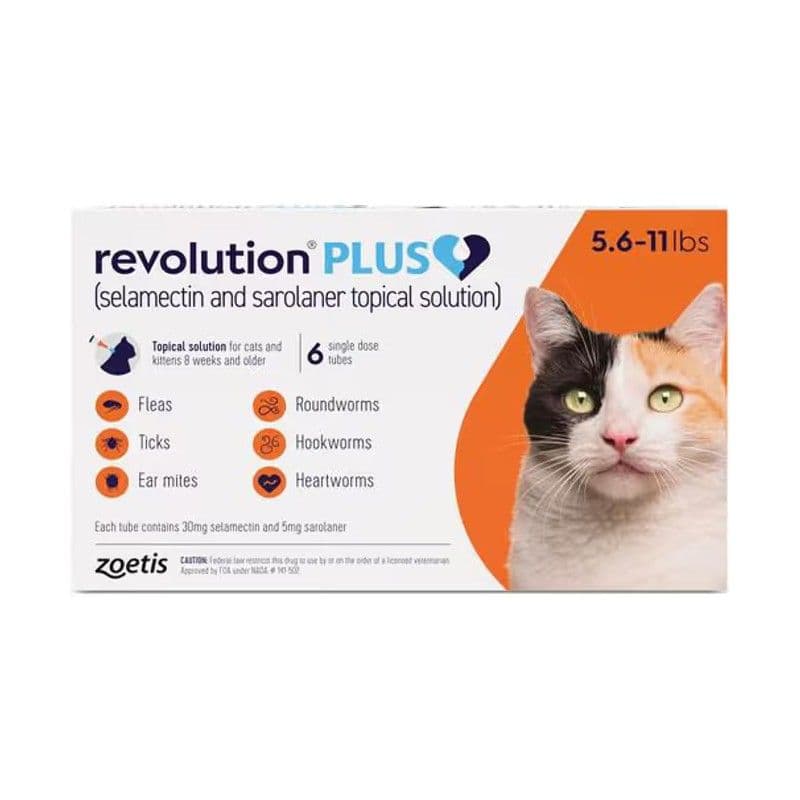
Monthly vet-prescription topical for cats 5.6 to 11 lbs that protects against fleas, ticks, ear mites, roundworms, hookworms, and heartworm in one application.
Petful may earn a commission when you click through to Chewy, at no extra cost to you.
- Confirm the infestation with a fine-toothed flea comb, focusing on the neck and the base of the tail.
- Drown captured fleas in a bowl of warm soapy water between comb passes so they cannot jump back on.
- Start a cat-safe flea treatment the same day (topical, oral, or collar labeled for cats), never a dog product.
- Address the home: wash bedding on hot and vacuum daily, since most of the flea life cycle lives off the cat.
- Repeat treatment monthly for at least 3 months so newly hatching fleas die before they can breed.
Every honest answer to how to get rid of fleas on cats comes down to those same two tools, a comb and a treatment, used in that order. The order matters: combing first tells you the problem is really fleas (itching without fleas has its own causes), and treating the same day stops the egg-laying that restocks your carpet.
The steps below expand each stage, including the technique details most guides skip: exactly where to comb, how to read what the comb pulls out, and how to make an honest call on bathing a cat that wants no part of a bath.

 Sponsored
Need flea, tick, or parasite care for your cat?
A licensed vet at Dutch can recommend the right preventive and prescribe it when it's appropriate. Annual members get 20% off their first flea and tick order.
Use code Pets60
Plans start at $12/month · covers up to 5 pets
- Licensed vets in most states
- Rx for 150+ conditions
- 4.7 on Trustpilot
Step 1: Confirm Fleas With a Flea Comb
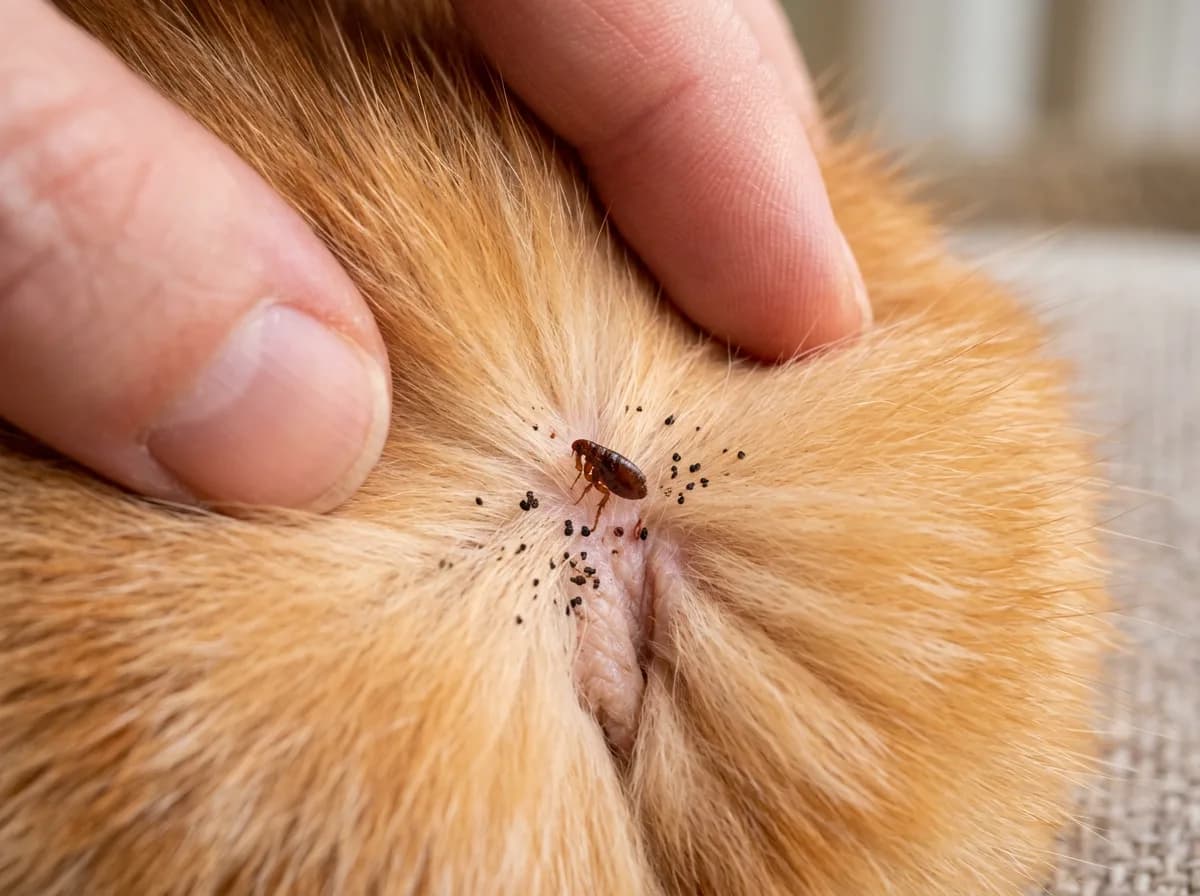
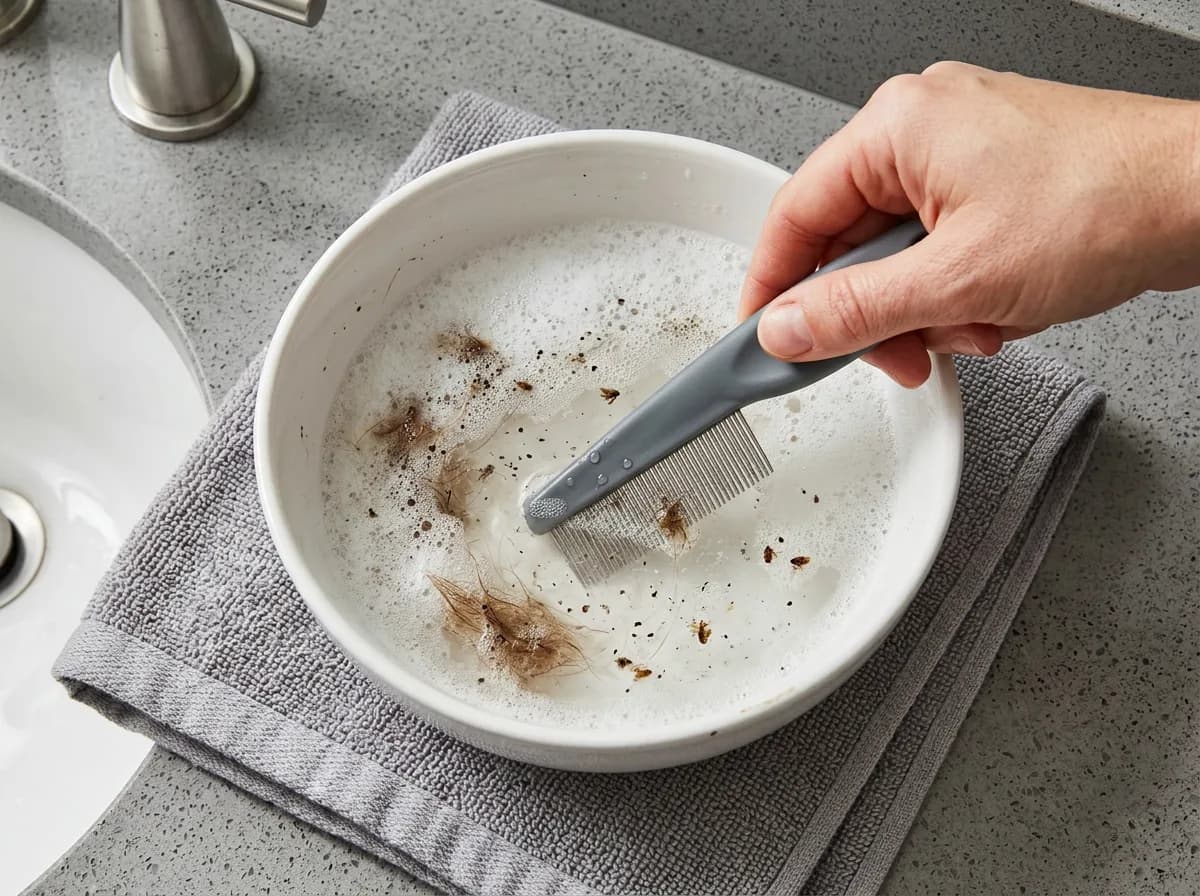
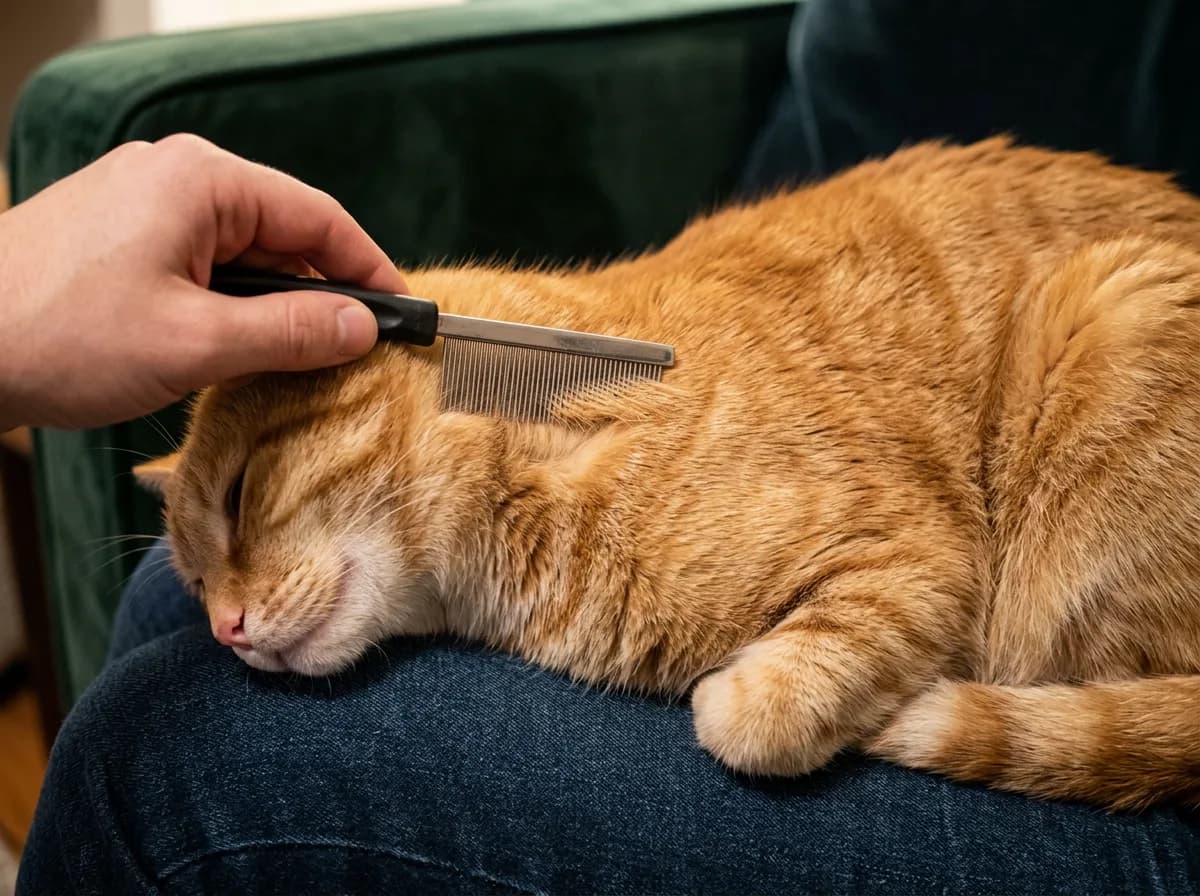
A flea comb for cats is a fine-toothed metal comb with teeth set close enough to trap adult fleas and flea dirt against the skin. It is the single most reliable diagnostic tool a cat owner can buy, and it costs a few dollars.
Here is the comb technique done correctly:
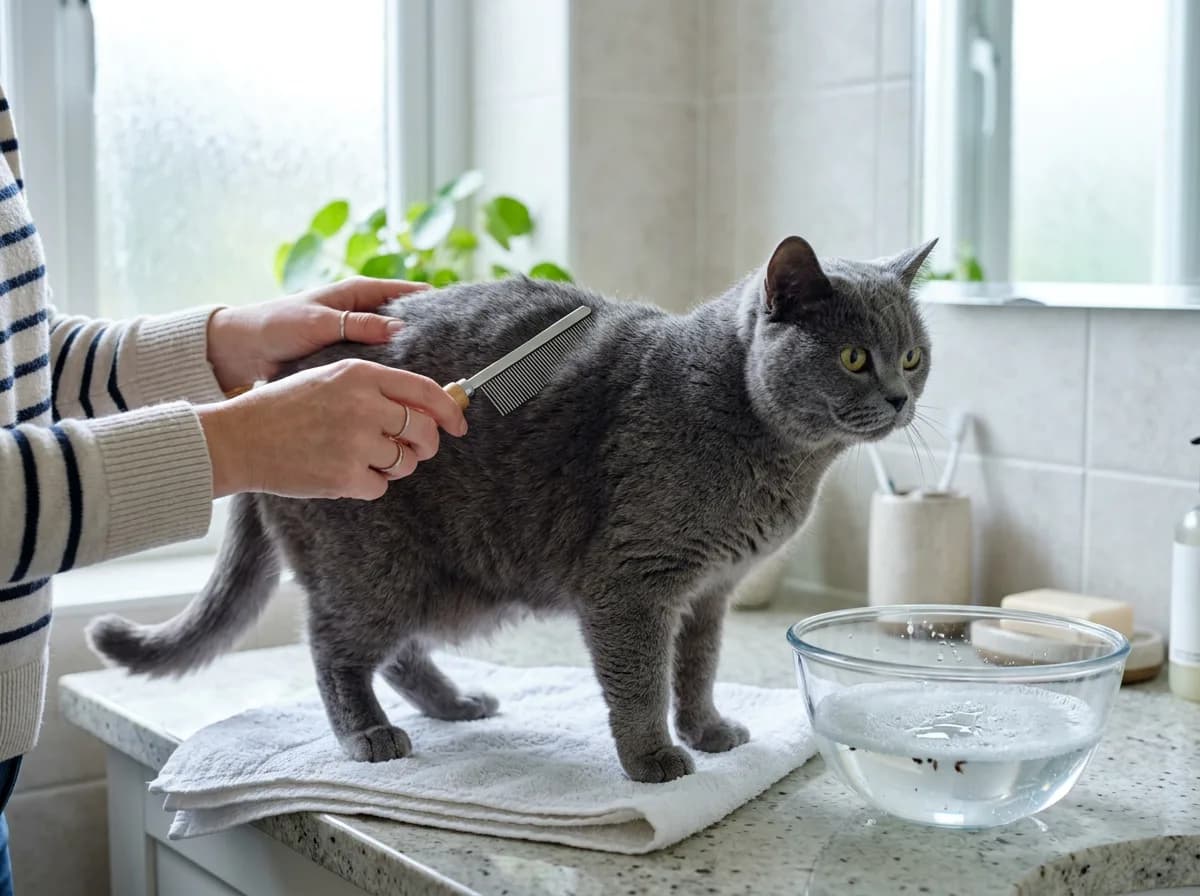
- Set up a bowl of warm soapy water next to you before you start. A squirt of dish soap breaks the water's surface tension so fleas sink and drown instead of springing out.
- Comb in the direction of hair growth, starting at the neck and the base of the tail. Fleas concentrate in these two zones because cats cannot easily groom them.
- Check the comb after every pass. Dunk and swirl the comb in the soapy water between passes to drown anything you caught before it jumps.
- Work over a white towel or paper so falling debris is visible against the background.
- Repeat daily during an active infestation. Daily combing removes adults and gives you a running score of whether your treatment is working.
What Do Fleas Look Like on Cats?
Adult fleas are reddish brown, about 1-3 mm long, flattened side to side, and fast. You will usually see them scatter when you part the fur at the tail base rather than sitting still. More often, what you find first are black specks in the coat: flea dirt.
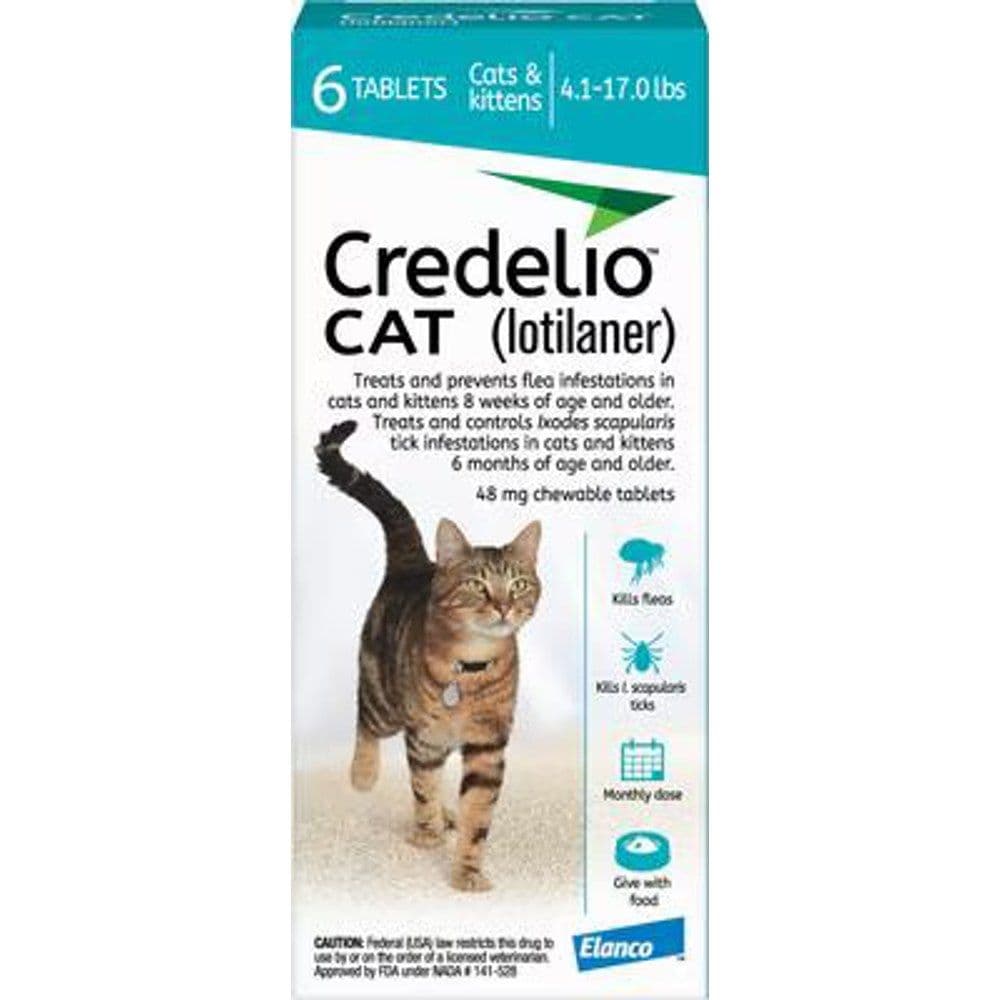
Monthly chewable tablet that kills fleas and treats and controls tick infestations in cats and kittens.
Petful may earn a commission when you click through to Chewy, at no extra cost to you.
Flea dirt on cats is flea feces, made of digested blood. To confirm it, comb some specks onto a damp white paper towel. Flea dirt smears reddish brown as the blood rehydrates; ordinary soil stays black or gray. A positive smear test means live fleas are feeding on your cat right now, even if you never see one.
What owners describe when searching for fleas eggs on cats are tiny white ovals, about 0.5 mm, that look like salt grains. Flea eggs do not stick to fur. They roll off wherever your cat sleeps, which is why the bed, the sofa, and the carpet matter so much later in this plan.
Choosing a Cat-Safe Flea Treatment
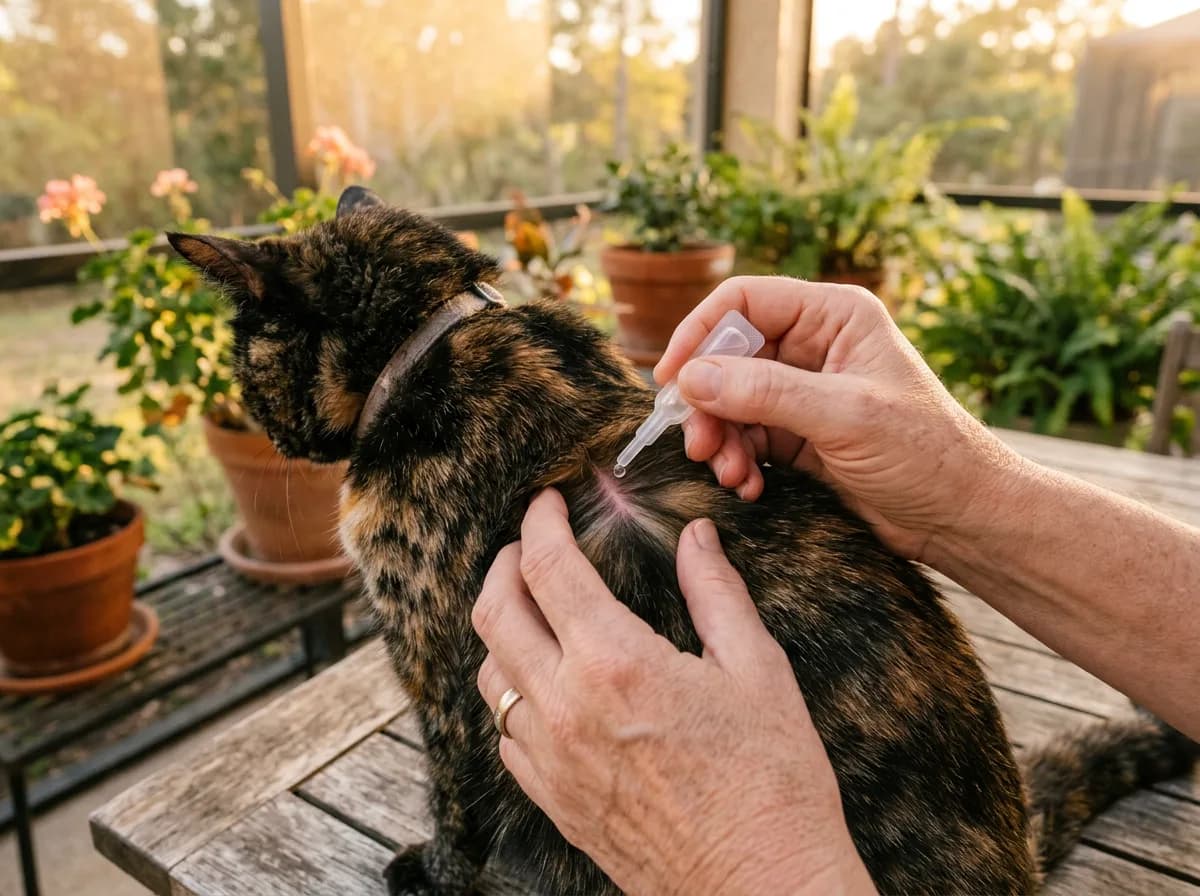
Combing removes the fleas you catch, but it cannot outpace egg production. A single female flea can lay around 40-50 eggs per day. Step 2 is starting an effective cat-safe flea treatment the same day you confirm fleas, and this is where product choice matters most.
The cat-safe categories are:
- Topical spot-ons labeled for cats, such as fipronil, imidacloprid, or selamectin products, applied to the back of the neck where the cat cannot lick.
- Oral treatments, from fast-acting nitenpyram tablets (over the counter) to monthly prescription options.
- Prescription isoxazolines and combination products (for example Revolution Plus), which require a vet prescription and suit cats with heavy infestations or outdoor exposure. The FDA has issued an advisory about rare neurologic reactions to the isoxazoline class, so discuss your cat's history with your veterinarian (FDA animal health).
- Vet-recommended flea collars labeled for cats, which can provide months of continuous protection.
Many effective products also pair an adulticide with an insect growth regulator (IGR) such as pyriproxyfen or (S)-methoprene, which sterilizes eggs and larvae so the infestation cannot rebuild. Whichever category fits your cat, buy by weight and species label, never by price.
- Dog flea treatments containing permethrin are toxic to cats and exposure can cause tremors, seizures and death. Even a small amount transferred from a recently treated dog can poison a cat. Always check the label says the product is for cats, and separate treated dogs from cats until the application site is fully dry.
Permethrin and other concentrated pyrethroid products made for dogs are one of the most common causes of severe poisoning in cats, and cases spike every flea season. If your cat has any contact with a dog product, treat it as an emergency and read our guide to permethrin poisoning in cats.
This article deliberately stops short of ranking specific products. Which spot-on, pill, or collar is right depends on your cat's age, weight, health, and lifestyle, and our complete guide to flea treatment for cats compares every cat-safe option in detail.
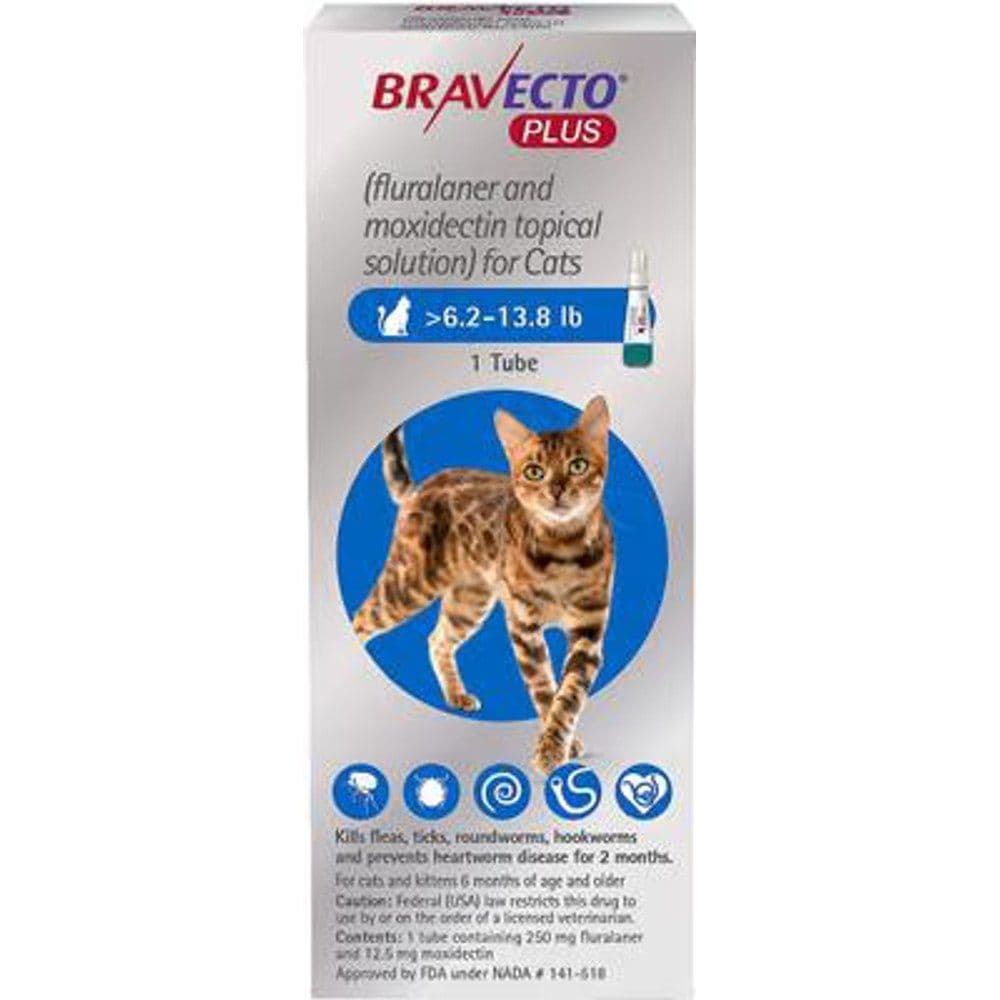
Long-lasting topical that protects cats from fleas, ticks, heartworm, roundworms, and hookworms for up to two months per dose.
Petful may earn a commission when you click through to Chewy, at no extra cost to you.
Should You Bathe a Cat for Fleas?
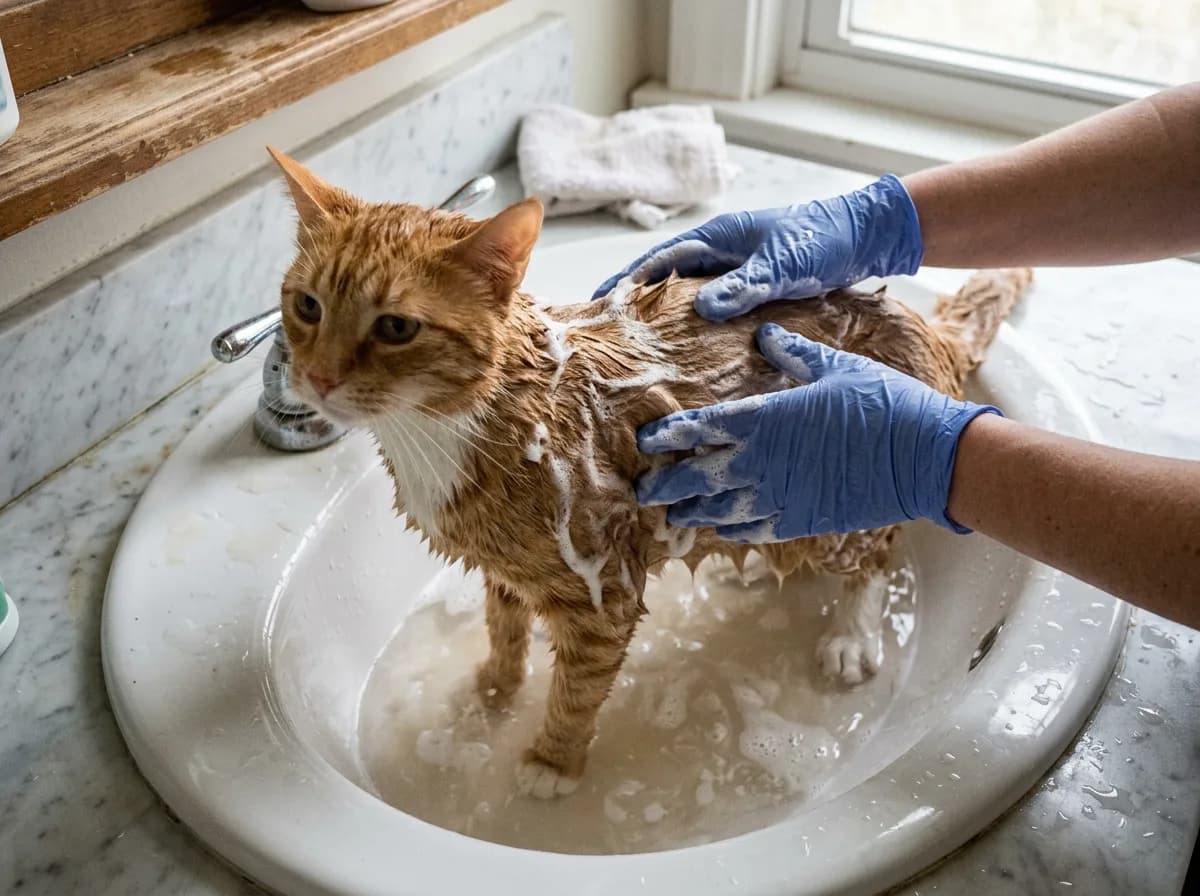
Here is the honest answer most articles will not give you: most cats never need a flea bath. A flea bath for cats kills only the adult fleas on the cat at that moment, offers zero residual protection, and costs you a large amount of feline goodwill. In my experience, the comb plus a cat-safe treatment does the same job with none of the stress.
Use this decision framework:
- Comb only: a healthy adult cat with a light flea burden and a same-day treatment started. Skip the bath entirely.
- Comb plus a cat-safe treatment: the standard path for nearly every cat. The treatment kills adults within hours to a day, faster than you could bathe them off.
- Bath, then treatment: reserved for cats caked in flea dirt, heavily infested kittens too young for most products, or cats with skin soiling that needs washing anyway.
- Vet visit first: any cat that is lethargic, has pale gums, or is losing weight alongside fleas needs an exam before home treatment.
If you do bathe, use lukewarm water and a shampoo for fleas on cats that is explicitly labeled feline-safe, or even a plain unmedicated cat shampoo, since the soap itself drowns fleas. Skip flea shampoos and any spray for fleas on cats that lists permethrin or high-concentration pyrethrin; many bottled flea sprays on the same shelf are dog-only products. Never dip a cat in an over-the-counter flea dip.
One more bathing reality: wait the interval stated on your topical treatment's label before or after bathing, since shampoo can strip the skin oils that spread spot-on products. When in doubt, comb, treat, and leave the bath out of it.
SponsoredVet care that's always there
Unlimited video calls and messaging with licensed vets for less than a typical vet visit. One membership covers up to five pets.
Use code Pets60
Plans start at $12/month · covers up to 5 pets
- Licensed vets in most states
- Rx for 150+ conditions
- 4.7 on Trustpilot
What Kills Fleas on Cats Fast?
The fastest option is an oral nitenpyram tablet, which starts killing adult fleas in about 30 minutes and clears most of them within hours, though it lasts only about 24 hours and must be followed by a monthly product. Modern topicals and prescription orals typically kill the existing adults within 8-24 hours.
Speed alone does not end an infestation, because eggs and pupae keep hatching for weeks. If tonight's priority is immediate relief, our guide to what kills fleas on cats instantly covers the fast-kill options and how to bridge from them to lasting control.
A gentle flea and tick shampoo for cats and dogs that kills ticks on contact and soothes sensitive skin. Handy for washing your dog down after a hike.
Petful may earn a commission when you click through to Chewy, at no extra cost to you.
Do You Need to Treat the House Too?
Yes. If your cat has fleas, your house has fleas, and treating the cat alone is the number one reason infestations "come back." Parasitologists estimate that adult fleas on the pet are only about 5% of the total population; the other 95% is eggs, larvae, and pupae in your carpets, bedding, and floor cracks (Companion Animal Parasite Council).
At minimum, do these alongside treating your cat:
- Wash all pet bedding, throws, and washable covers in hot water weekly.
- Vacuum carpets, rugs, upholstery, and along baseboards daily for the first 2 weeks, and empty the canister outside.
- Keep every pet in the household on flea treatment at the same time, dogs included (with cat-safe and dog-safe products respectively).
Whole-home eradication, including sprays, foggers, yard treatment, and what actually works on pupae, is its own project. Follow our full guide on how to get rid of fleas in the house for the room-by-room plan.
Fleas on Kittens: Why They Are Different
Kittens cannot simply follow the adult-cat plan. Most flea products carry minimum age and weight limits (commonly 8 weeks and up), and a heavy flea burden can drain enough blood to cause life-threatening anemia in a small kitten. Pale gums, weakness, or cold ears in a flea-ridden kitten are an emergency.
For very young kittens, the safe protocol is daily flea combing plus a warm-water bath with a drop of gentle dish soap, and rigorous environmental cleaning, until they are old enough for a labeled product. Age-by-age product guidance lives in our dedicated guide to kitten flea treatment.
Fleas on Indoor Cats: How They Got There and How to Get Rid of Them
How do I get rid of fleas on my indoor cat? Exactly the same way: comb to confirm, treat with a cat-safe product the same day, clean the environment, and stay on monthly treatment for at least 3 months. Indoor status changes none of the steps, because once fleas are breeding in your home, the "outdoors" is your living room.
The more useful indoor-specific move is closing the entry route. Fleas hitchhike in on dogs, on your clothing and shoes, through screens, and on rodents or other wildlife that reach basements and crawl spaces. We break down every route in our guide to how indoor cats get fleas, and keeping an indoor cat on year-round prevention closes all of them at once.
- A single flea carried in on a pant leg can start an indoor infestation, because your home is warm enough for the flea life cycle to run year-round. Year-round prevention is cheaper and easier than another round of eradication.
Natural Remedies: What Actually Works on Cats
The flea comb is the one genuinely effective natural tool: mechanical removal with a bowl of warm soapy water is chemical-free and safe for every cat. Beyond that, the natural options thin out fast, and some are dangerous.
Keep these limits in mind:
- Essential oils are not safe for cats. Tea tree, pennyroyal, cinnamon, citrus, and clove oils can cause tremors, drooling, and liver damage in cats, whether applied or licked off. Skip essential-oil sprays and "natural" flea collars built on them.
- Diatomaceous earth is an environmental option some owners use on carpets, but the dust irritates feline lungs, so it should never be applied to the cat itself.
- Vinegar, lemon, and salt sprays repel at best and kill nothing; they delay real treatment while eggs keep dropping.
For a full accounting of which home options help around the house and which to avoid, see our guide to home remedies for fleas. On the cat itself, natural means the comb; everything else worth using is a labeled cat-safe product.
How Long Until the Fleas Are Gone?
Plan on 1-3 months of consistent effort, even when the treatment itself works within a day. The lag is the pupal stage: flea pupae are resistant to almost everything and hatch in waves for weeks, so a few new fleas appearing in weeks 2-4 means the plan is working, not failing, as long as they keep dying on your treated cat.
Consistency is the entire game:
- Re-treat on schedule, every month (or per label), without skipping a dose.
- Keep combing twice a week to monitor progress after the daily phase.
- Keep vacuuming and washing bedding weekly for the full 3 months.
- Keep all pets in the home treated for the same window.
Missed doses are how a nearly beaten infestation restarts, and a free MyPetID profile makes the schedule easy to keep by tracking each pet's flea treatments, dosing frequency, and automatic re-treatment reminders in one place.
Call your veterinarian if you still comb out live fleas after 3-4 weeks of correct treatment, if your cat develops scabs or hair loss (possible flea allergy dermatitis), if you spot rice-like tapeworm segments near the tail (fleas transmit tapeworms when swallowed during grooming), or if any cat shows pale gums or lethargy that could signal anemia (Merck Veterinary Manual).
You can comb daily and use an over-the-counter cat-labeled topical or nitenpyram tablet, plus home cleaning. See a vet if fleas persist past 3-4 weeks, if your cat is a kitten, elderly or unwell, or if you want a prescription product, which requires a vet visit.
Daily during an active infestation, dunking the comb in warm soapy water between passes. Once fleas are gone, comb twice a week for the rest of the 3-month window to catch any rebound early.
Yes. Cat fleas readily bite people, usually around the ankles, though they cannot live on human skin. Persistent bites on your legs are a sign the home environment still holds a breeding population.
Pupae in carpets and bedding hatch in waves for several weeks and jump onto your cat, where the treatment kills them. Keep treating monthly, vacuuming and washing bedding; if live fleas persist beyond a month, ask your vet to review the product and dose.
BVMS, MRCVS
Dr. Pippa Elliott, BVMS, MRCVS, is a veterinarian with nearly 30 years of experience in companion animal practice. Dr. Elliott earned her Bachelor of Veterinary Medicine and Surgery from the University of Glasgow. She was also designated a Member of the Royal College of Veterinary Surgeons. Married with 2 grown-up kids, Dr. Elliott has a naughty Puggle named Poggle, 3 cats and a bearded dragon.
Sign up for expert-backed reviews and safety alerts all in one place.