Best Flea Collar for Cats: Vet-Approved Safe Picks
Veterinarian Dr. Pippa Elliott ranks the best flea collars for cats, scoring each pick on breakaway safety, active ingredients, and cost per month, from the 8-month Seresto standard to natural budget options.

BVMS, MRCVS

Petful is reader supported. As an affiliate of platforms like Amazon and Chewy, we may earn a commission when you buy through links on this page. There is no extra cost to you.
The best flea collar for cats pairs proven, cat-labeled active ingredients with a breakaway release that lets your cat pull free if the collar ever snags. As a veterinarian, I rank the Seresto Flea and Tick Collar for Cats first: its imidacloprid and flumethrin combination is EPA-registered, and it delivers 8 months of protection for roughly $7.50 in cost per month. Below it sit four more collars I would actually put on a cat, each scored on release mechanism, cat-specific labeling, and value.
One caveat before the picks. A vet-recommended flea collar is a prevention tool, not a rescue tool. If your cat is already crawling with fleas, a collar alone will not clear the infestation, and I explain when a topical or oral product is the smarter first move further down this page.
- 1Seresto for cats is the top pick: imidacloprid and flumethrin, 8 months of protection, and a two-stage release system
- 2Every collar on this list is cat-labeled; dog collars and anything containing permethrin are toxic to cats and never belong on one
- 3A collar prevents fleas well but does not clear an active infestation; pair it with the right treatment plan first

Sign up for expert-backed reviews and safety alerts all in one place.
The Best Flea Collars for Cats
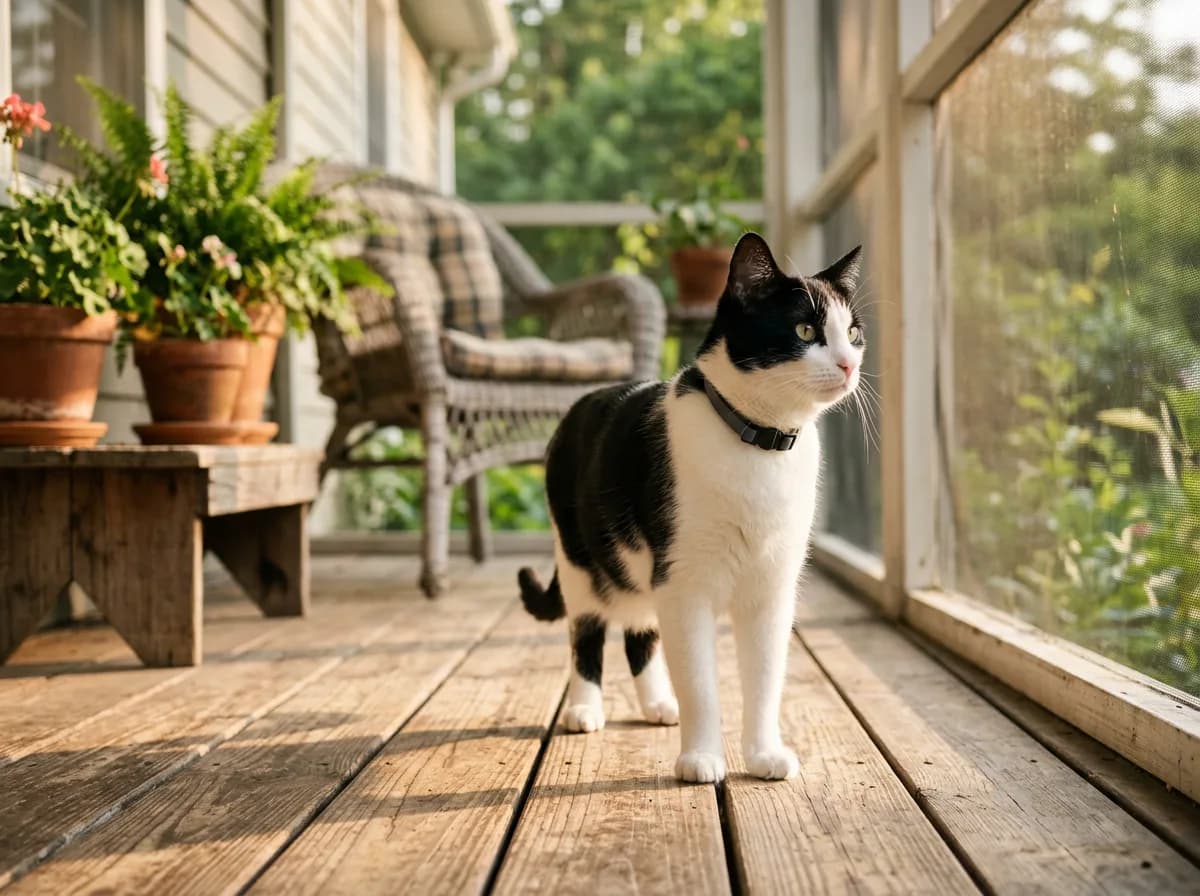
I evaluated the collars cat owners actually see in stores and shopping results, then cut everything that failed three tests: a cat-specific label, a credible release mechanism, and ingredients with a real track record. What survived is a short slate, and that is deliberate. The safest flea collar for cats is one that earns its spot, not one that pads a list.
Each pick below gets a breakaway safety rating alongside duration, active ingredients, and cost per month, because no other ranking scores collar safety product by product.
How I Scored Breakaway Safety
The breakaway safety rating in the table is built from three checks, weighted in this order:
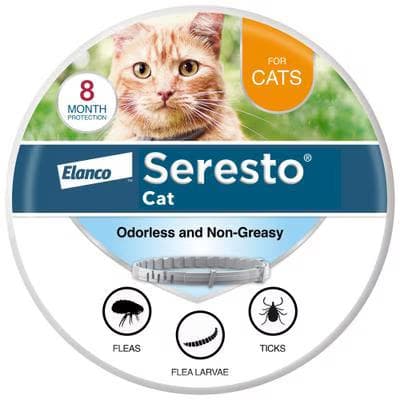
The vet-top-pick 8-month flea and tick collar for cats: odorless, non-greasy, with a breakaway safety release.
Petful may earn a commission when you click through to Chewy, at no extra cost to you.
- Release mechanism: does the collar have a documented quick-release, breakaway buckle, or two-stage release, and how firm a pull does it take to trigger? A collar earns Excellent only when the manufacturer documents the release design, not merely a stretch of elastic.
- Cat-specific labeling: the package must be labeled for cats (or cats and kittens) with a stated minimum age. Shared dog-and-cat SKUs and vague "small pets" labels were disqualified outright.
- EPA registration: insecticide-bearing collars must carry an EPA registration number on the label, which means the ingredient dossier and dose rate were reviewed for the species on the box.
Cost per month is simple division: street price spread across the label-rated duration. It is the fairest way to compare an 8-month collar against a 4-month one, and it exposes how a $60 collar can quietly be the cheaper product.
| Collar | Active ingredients | Duration | Breakaway safety rating | Price range | Cost per month |
|---|---|---|---|---|---|
| Seresto for Cats | Imidacloprid + flumethrin | 8 months | Excellent: two-stage release | $55-60 | ~$7.50 |
| PetArmor Extend for Cats | Imidacloprid + flumethrin | 8 months | Good: quick-release design | $45-50 | ~$6 |
| Hartz UltraGuard ProMax for Cats | Dual-action formula (see label) | Up to 8 months (label) | Good: check buckle before buying | ~$28 | ~$3.50 |
| Wondercide Flea and Tick Collar for Cats | Plant-based essential oils (repellent only) | Up to 4 months (label) | Fair: verify release strength | ~$20 | ~$5 |
| Vet's Best Repellent Collar for Cats | Plant-based repellent oils | Up to 4 months (label) | Fair: verify release strength | ~$12 | ~$3 |
Here is how each collar earned its place.

 Sponsored
Need flea, tick, or parasite care for your cat?
A licensed vet at Dutch can recommend the right preventive and prescribe it when it's appropriate. Annual members get 20% off their first flea and tick order.
Use code Pets60
Plans start at $12/month · covers up to 5 pets
- Licensed vets in most states
- Rx for 150+ conditions
- 4.7 on Trustpilot
1. Seresto Flea and Tick Collar for Cats: Best Overall
Seresto is the collar the rest of the category chases, and it remains my lead recommendation. The seresto cat collar releases low doses of imidacloprid and flumethrin continuously from the collar matrix, killing fleas on contact so they do not need to bite first. Elanco, the manufacturer, backs the 8 months of protection claim on the label, and the product is EPA-registered for cats and kittens 10 weeks and older.
Safety is where Seresto genuinely separates itself:
- A two-stage release system: a ratchet release your cat can trigger by pulling, plus a predetermined breaking point in the collar material itself
- Odorless, non-greasy wear, so there is no residue transferring to furniture or hands
- Water resistance that survives normal life, though the label notes repeated swimming or bathing shortens protection
The main complaint is sticker shock at $55 to 60. Spread over 8 months, that works out to roughly $7.50 per month, which undercuts most monthly treatments. If you want the collar most vets name first, this is it.
2. PetArmor Extend Flea and Tick Collar for Cats: Best Budget Alternative
PetArmor Extend is the value play, and it is a credible one because it uses the same imidacloprid and flumethrin pairing as Seresto rather than an older, weaker chemistry. You get the same 8-month label duration for $45 to 50, bringing cost per month down to about $6.
What you give up is mostly refinement rather than efficacy:
- The release mechanism is a quick-release design rather than Seresto's two-stage system, so test the release tension yourself before first wear
- The collar material is slightly stiffer, which some cats notice for the first day or two
- The brand has a shorter track record in this format, so long-term wear data is thinner
For multi-cat households where two or three Seresto collars would sting, this is the pick I suggest most often. It is also my usual answer when someone asks for the best flea collar for cats with sensitive skin on a budget, since the slow-release matrix avoids the wet, concentrated residue some cats react to with spot-ons; still, watch the neck for redness during the first week on any collar.
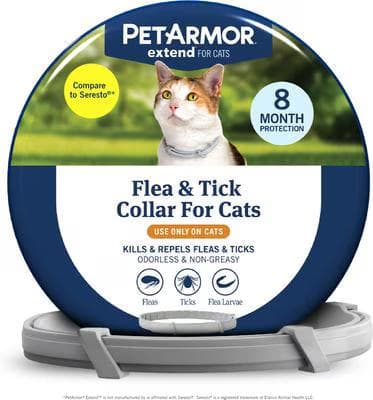
An 8-month flea and tick collar for cats, a value alternative to Seresto, odorless and non-greasy.
Petful may earn a commission when you click through to Chewy, at no extra cost to you.
3. Hartz UltraGuard ProMax Flea and Tick Collar for Cats and Kittens: Best Under $30
Hartz's ProMax line is the company's modern answer to the 8-month collar category, and at around $28 it is the cheapest way into long-duration protection. The label rates it for up to 8 months of flea and tick coverage, which puts its cost per month near $3.50, the lowest of any dual-action collar here.
My advice with ProMax is simple: read the package. Confirm the active ingredients and the EPA registration number on the label, check that you are buying the cat-and-kitten version rather than the dog version, and inspect the buckle in hand. If the release gives way under a firm two-handed pull, it passes. Hartz's older flea collars earned a mixed reputation, and ProMax is a clear step up, but I still hold budget collars to the same safety checks as premium ones.
4. Wondercide Flea and Tick Collar for Cats: Best Plant-Based Option
Wondercide's collar is the strongest pick for owners who want to avoid synthetic insecticides entirely. It relies on plant-based essential oils and works as a repellent only: it discourages fleas and ticks from climbing aboard rather than killing the ones already there. That distinction matters, and Wondercide is honest about it.
The right home for this collar looks like this:
- An indoor cat with low flea pressure whose owner wants a chemical-free layer of protection
- A household already managing the environment aggressively (vacuuming, washing bedding, treating carpets)
- A cat that tolerated plant-based sprays from the same brand without skin irritation
At about $20 for up to 4 months of label-rated wear, cost per month lands near $5. Do not reach for it in an active infestation, and pull it off at the first sign of skin redness, since essential oils irritate some cats.
5. Vet's Best Flea and Tick Repellent Collar for Cats: Best Bare-Bones Budget Buy
Vet's Best rounds out the slate at roughly $12, making it the cheapest legitimate entry in the category at about $3 in cost per month. Like Wondercide, it is a plant-based repellent collar, not a killer, so its job is deterrence on a cat that does not currently have fleas.
I rank it last for two reasons. The repellent-only chemistry means protection is softer than the imidacloprid and flumethrin collars above, and the hardware is basic, so you must verify the release strength yourself before trusting it on an unsupervised cat. As a low-cost layer on an indoor cat, or a first collar to test whether your cat tolerates neck wear at all, it earns its spot.
How to Choose a Flea Collar for Your Cat
Before you buy anything, match the collar to the cat in front of you. Four questions settle it quickly.
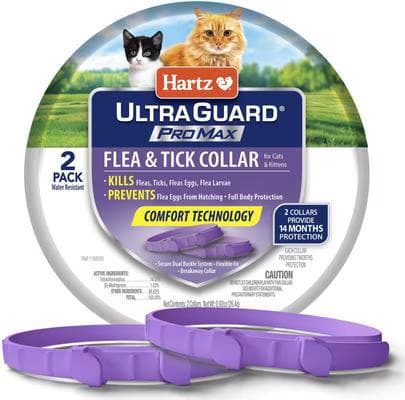
A water-resistant breakaway collar that kills and prevents fleas and ticks; two collars give 14 months of protection.
Petful may earn a commission when you click through to Chewy, at no extra cost to you.
- What is your cat's flea pressure? Indoor-only cats in a flea-free home can run a lighter option; indoor-outdoor cats need a dual-action killer, not a repellent.
- Does your cat tolerate a collar at all? If your cat has never worn one, buy a cheap breakaway first and trial it for a week before spending $60 on protection that ends up in a drawer.
- Any kittens, or a dog in the house? Check minimum-age labels for kittens, and if there is a dog, confirm the dog's own products are permethrin-free or kept strictly separated while wet.
- Is there an active infestation right now? If yes, a collar is step two. Clear the biting adults and treat the home first.
One more shopping rule: buy from the manufacturer, a vet clinic, or a major retailer's direct listing. Seresto's popularity has made it one of the most counterfeited pet products on third-party marketplaces, and a fake collar means a cat wearing zero protection while looking protected. Check the packaging for the EPA registration number and a lot number before first wear.
Seresto Cat Collar: The 8-Month Standard
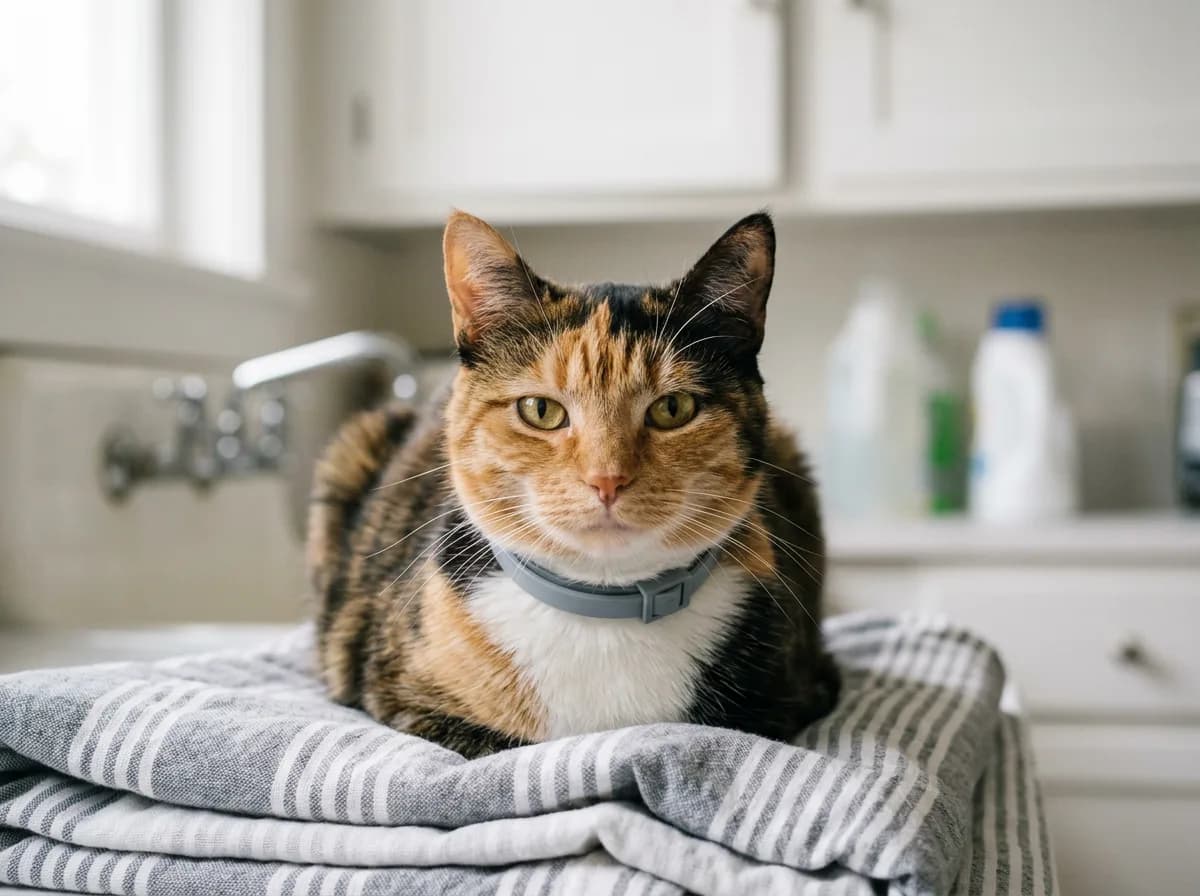
The seresto flea collar for cats deserves its own closer look, because it is the product every shopper ultimately compares against. Its polymer matrix stores both active ingredients and releases them in low, continuous doses across the coat's lipid layer. Fleas die on contact rather than after biting, which matters for cats with flea allergy dermatitis, where even a few bites trigger miserable, itchy reactions.
Water is the variable owners ask about most. The collar is water-resistant, so rain, wet grass, and the odd grooming session will not strip it, but Elanco's label is clear that monthly bathing or frequent swimming shortens the effective duration. For a typical cat, that is a non-issue; for the rare water-loving Bengal or Turkish Van, budget for earlier replacement.
The math is the quiet argument for it. Worked out over the same 8 months of protection:
- Seresto collar: about $60 once, or roughly $7.50 in cost per month
- Typical monthly spot-on: $15 to 20 per dose, or $120 to 160 across 8 months
- Net result: comparable prevention for roughly half the spend, with no monthly application to remember or forget
One practical tip from my consult room: the 8-month clock is easy to lose track of. Write the replacement date somewhere you will see it, or set up a free MyPetID profile to log your cat's flea treatments, dosing frequency, and automatic replacement reminders so protection never quietly lapses.
So which is better, Seresto or Frontline? They are different tools, and the honest answer depends on your cat. Seresto is a collar using imidacloprid and flumethrin with 8 months of continuous coverage; Frontline Plus for cats is a monthly topical using fipronil and (S)-methoprene. Seresto wins on convenience, cost per month, and consistency, because there is no monthly application to miss. Frontline wins for cats that will not tolerate a collar, for households that prefer a product they can stop instantly by simply not reapplying, and for owners who already have a reliable monthly routine. For most collar-tolerant cats, I lean Seresto; for collar-refusers, a topical like Frontline is the better fit.
SponsoredVet care that's always there
Unlimited video calls and messaging with licensed vets for less than a typical vet visit. One membership covers up to five pets.
Use code Pets60
Plans start at $12/month · covers up to 5 pets
- Licensed vets in most states
- Rx for 150+ conditions
- 4.7 on Trustpilot
Do Flea Collars Work on Cats?
Yes, modern flea collars work on cats, with an important asterisk on the word modern. The older generation of grocery-store collars protected little more than the few inches of neck they touched, and they built the category's bad reputation. Today's matrix collars spread their actives across the whole coat, and that design change is why the answer to "do flea collars work on cats" has genuinely flipped over the past decade.
Flea collars for cats that work share three traits you can check on the package:
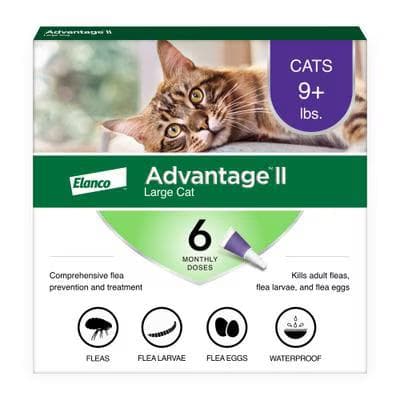
Monthly OTC spot-on that kills adult fleas, flea larvae, and flea eggs, and stays effective when wet.
Petful may earn a commission when you click through to Chewy, at no extra cost to you.
- A slow-release design that distributes active ingredients through the coat's natural oils, not just around the neck
- Actives that kill on contact (imidacloprid and flumethrin are the benchmark pairing) rather than only repelling
- An EPA registration number, since collars and topicals are regulated by the EPA (see the pesticide program section at epa.gov) while oral flea products are FDA-regulated
The contact-kill point deserves one more sentence of explanation, because it is the real upgrade. Older collars and cheap sprays required a flea to bite and ingest the insecticide before dying, which meant an allergic cat still got bitten. Imidacloprid disrupts a flea's nervous system on contact with the treated coat, and flumethrin adds the tick-killing and repellent layer, so most parasites die or leave before feeding at all.
Now the harder question: do cat flea collars work if they already have fleas? Partially, and too slowly to be your only move. A collar will start killing the adult fleas on your cat within the first day or two of wear. But according to the Companion Animal Parasite Council (capcvet.org), only about 5 percent of a flea infestation lives on the animal as adults; the other 95 percent exists in your home as eggs, larvae, and pupae. A collar does nothing for the carpet-dwelling stages, so an infested household needs environmental cleanup and often a fast-acting treatment alongside the collar, which then takes over as long-term prevention.
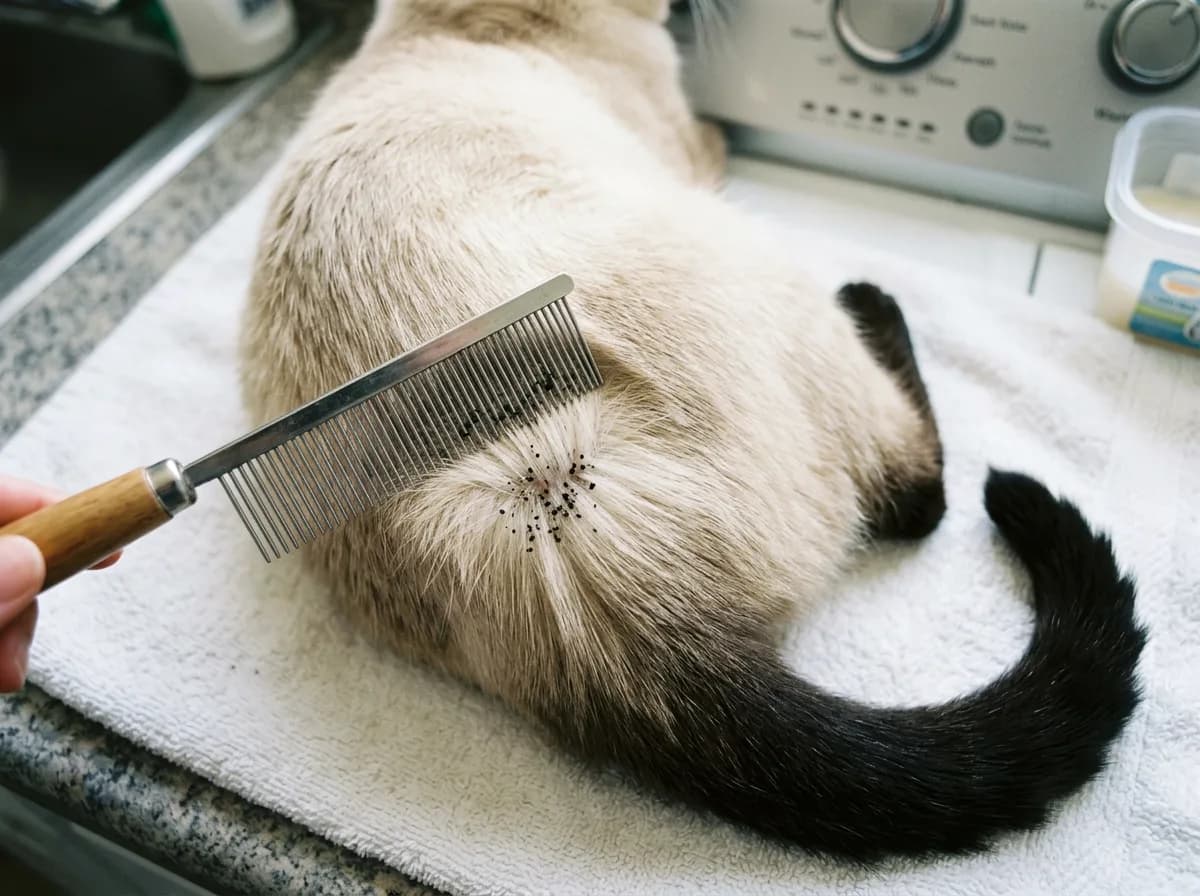
Want proof your collar is earning its keep? Run a fine-toothed flea comb through the fur at the base of the tail once a week. Live fleas or fresh flea dirt (black specks that smear rust-red on a damp paper towel) mean the protection is losing, and it is time to reassess.
Do Vets Recommend Cat Flea Collars?
Yes, many vets, myself included, recommend cat flea collars, but selectively: we recommend specific modern collars for specific cats, not the category as a whole. Seresto is the collar you will hear named in most exam rooms, and it is the only one both major independent veterinary reviews and I consistently endorse without hesitation. The cheap, old-style collars still sold alongside it are exactly why the question keeps getting asked.
When I am deciding whether a collar is right for a patient, the decision path runs like this:
- Indoor-only cat, low flea pressure: a collar is a reasonable, low-effort primary prevention, or even a plant-based repellent collar as a light layer.
- Indoor-outdoor cat: a dual-action collar like Seresto earns its cost, since tick exposure in grass and brush adds a second parasite to defend against.
- Cat with an active infestation, or in a multi-pet home mid-outbreak: treatment first, collar second. This is where a fast-acting product outperforms any collar.
- Cat that claws at any collar, or a kitten under 10 weeks: skip collars entirely and use an age-appropriate topical instead.
Outdoor access changes the calculus more than any other factor. A cat that patrols gardens, tall grass, or wood edges is picking up ticks as well as fleas, and ticks carry their own disease risks. This is where the dual-action collars justify themselves: continuous flumethrin exposure repels and kills ticks before they attach, something no repellent-only collar and no flea-only topical will do. If I know a patient roams, my recommendation firms up from "a collar is reasonable" to "an 8-month dual-action collar or a broad-spectrum prescription topical, pick one and stay consistent."
There is also a first-line honesty point worth stating plainly. Many vets reach for prescription topicals such as Revolution Plus before any collar, because those products bundle flea, tick, heartworm, and mite protection into one monthly dose; Revolution Plus requires a vet prescription. A collar cannot match that breadth. What a collar does better is set-and-forget flea and tick prevention at a fraction of the cost per month, which is why the answer is not collar versus topical in the abstract, but which tool fits this cat's lifestyle and this owner's consistency.
Flea Collar Safety: Risks and Reactions
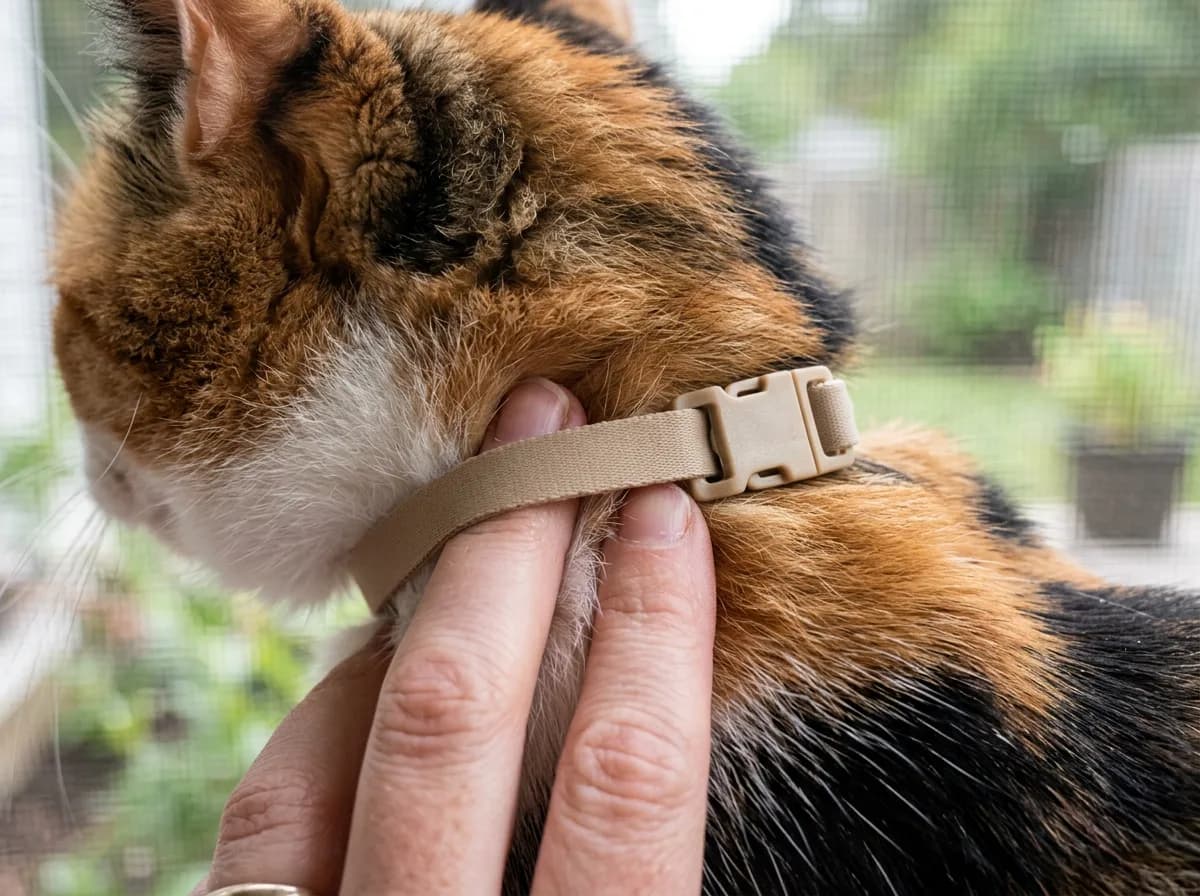
Every collar in my rankings had to clear the safety bar before efficacy even entered the conversation, and there are two rules that outrank everything else on this page.
- A cat collar must have a breakaway or quick-release mechanism that frees your cat if the collar catches on a branch, fence, or furniture. A collar that cannot release is a strangulation hazard no flea protection can justify. Test the release with a firm pull before the collar ever goes on your cat.
The second rule is chemical. Permethrin, an insecticide common in dog flea collars and dog spot-ons, is severely toxic to cats, causing tremors and seizures that can be fatal. That is why no dog product appears anywhere in this roundup and why a flea collar for dogs must never be trimmed down to fit a cat. If your cat has been exposed to a dog product, our guide to permethrin poisoning in cats covers the signs and what to do immediately.
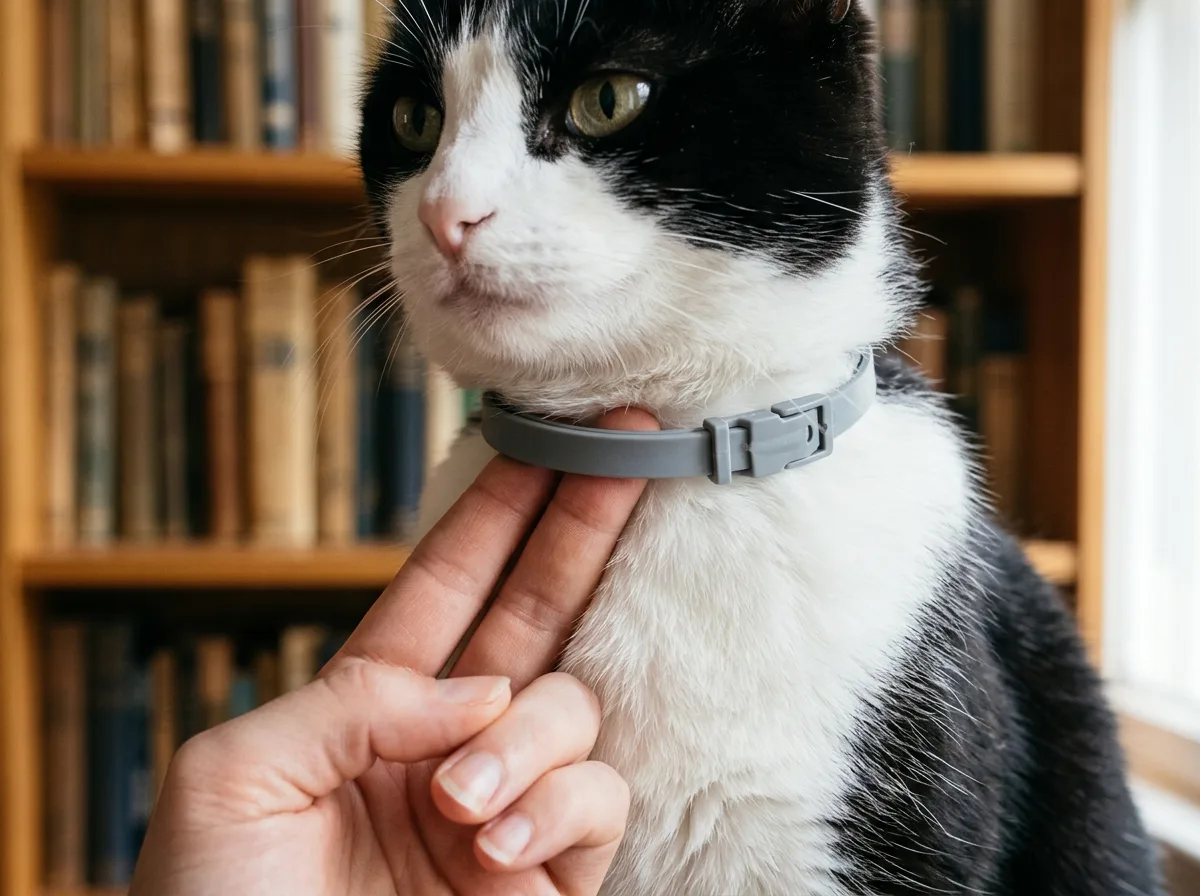
Fit is the safety skill most owners never get shown. Use the two-finger fit rule: with the collar fastened, you should be able to slide two fingers flat between the collar and your cat's neck.
- Looser than two fingers: the cat can get a jaw or leg through it, which is its own emergency
- Tighter than two fingers: skin irritation and rubbing are almost guaranteed
- Recheck fit monthly, and weekly on growing kittens
- Trim excess collar length so there is no dangling tail to chew
A calm first fitting also prevents most collar failures. Here is the routine I walk owners through:
- Let your cat sniff the collar for a minute before it goes on; a new smell clamped straight onto the neck invites panic.
- Fasten to the two-finger fit, trim the excess length, and note the date on the packaging or in your reminder app.
- Supervise the first few hours of wear. A little pawing is normal; frantic rolling, drooling, or freezing in place is not, and the collar comes off.
- Recheck the fit after 24 hours, because fur compresses and the collar often loosens slightly on day one.
Mild reactions do happen even with well-chosen collars. The most common is localized redness or hair thinning at the neck, which usually resolves after removing the collar for a few days. Watch more closely in the first 48 hours of wear, and take the collar off if you see persistent scratching at the neck, skin breakage, drooling, or any behavior change. Signs of true flea collar poisoning in cats, such as vomiting, tremors, uncoordinated walking, or lethargy, warrant same-day veterinary attention. The deeper toxicology, including amitraz exposure from older tick collars, is beyond this roundup's scope; our dedicated guide to tick collar poisoning in pets covers symptoms, mechanisms, and treatment in full.
Flea Collars vs. Other Flea Treatments
A collar is one of four ways to protect a cat from fleas, and the honest comparison is that it is the convenience-and-cost winner, not the potency winner. Here is the landscape a shopper should see before committing.
- Collars: months of continuous prevention, lowest cost per month, zero routine to maintain; slower against an existing infestation
- Topical spot-ons: strong monthly kill, some cover ticks, mites, or heartworm too; require remembering a monthly date and keeping the application site dry
- Oral flea products: fastest kill speed of any format and nothing on the coat to rub off; most of the strongest options are prescription-only
- Environmental control: vacuuming, hot-washing bedding, and treating the home; not optional during an infestation no matter which product you choose
The SERP-wide advice you may have seen, that topicals or orals are the better first-line choice for many cats, is fair in two situations. During an active infestation, a fast-acting product clears the biting adults far quicker than any collar. And for cats needing broad parasite coverage (heartworm, ear mites, intestinal worms), a combination prescription topical does jobs no collar can. Once the crisis is handled, a collar becomes an excellent maintenance layer, which is exactly how I use them in practice.
For the indoor versus outdoor split, my practical guidance runs like this. An indoor-only cat in an apartment with no other pets faces low flea pressure, so a collar (even a plant-based one) is often all the prevention it needs, and the set-and-forget format suits owners who would forget a monthly dose. An indoor-outdoor cat needs killing power and tick coverage, which means a dual-action collar or a prescription topical, chosen mainly on whether the cat tolerates neck wear. And a cat in a multi-pet household where a dog brings fleas home is best protected when every animal in the house is on prevention at the same time, because treating one animal in a shared flea pool protects nobody for long.
This page deliberately stays in its lane as a collar roundup. For the full comparison of every method, including how to sequence treatment and prevention, our complete guide to flea treatment for cats is the pillar resource; it also answers which approach is the most effective flea repellent for cats overall. If you want the best flea treatment for cats in a non-collar format, start there.
Other OTC Flea Options for Cats
Not every cat is a collar cat, and you do not need a prescription to protect the ones that refuse. Over the counter flea treatment for cats spans topical spot-ons like Frontline Plus and Advantage II, flea shampoos, sprays, and fast-acting oral tablets containing nitenpyram that start killing adult fleas in about 30 minutes. Each has a different job, and a couple of them outperform collars in an outbreak.
We keep our full rankings of the best flea medicine for cats without vet prescription in a dedicated guide: see OTC flea medicine for cats for product-by-product picks and when each format wins.
What About Flea Collars for Dogs?
Dog collars are a separate category with separate chemistry, and the crossover danger runs one direction: several top dog products contain permethrin, which is why they must never touch a cat. If you also have a dog, choose from cat-safe household combinations and keep the dog's collar out of the cat's reach until it has fully dried into the coat. Our companion roundup of the best flea collar for dogs ranks the dog-side options with the same safety-first scoring used here.
Frequently Asked Questions
The safest flea collar for cats is one with a true breakaway or two-stage release, a cat-specific EPA-registered label, and no permethrin. Seresto sets the standard with its ratchet release plus a predetermined breaking point, which is why it tops our safety scorecard.
Check the label for the minimum age. Seresto for cats is labeled for kittens 10 weeks and older; many other collars set similar or higher minimums. For kittens younger than the label allows, ask your vet about age-appropriate topical options instead.
Modern dual-action collars begin killing fleas within the first 24 to 48 hours of wear, per their labels, and reach full protective effect within a few days as the actives spread through the coat. Repellent-only plant-based collars start deterring new fleas right away but do not kill existing ones.
Yes. Keep both fitted to the two-finger rule and make sure each has its own release mechanism. Put the ID or regular collar above the flea collar so it does not block the flea collar's contact with the coat.
Choose a slow-release matrix collar, which avoids the concentrated wet residue of spot-ons, and check the neck daily for the first week. If you see redness or hair loss, remove the collar; mild irritation usually resolves within days, and your vet can suggest a topical or oral alternative.
BVMS, MRCVS
Dr. Pippa Elliott, BVMS, MRCVS, is a veterinarian with nearly 30 years of experience in companion animal practice. Dr. Elliott earned her Bachelor of Veterinary Medicine and Surgery from the University of Glasgow. She was also designated a Member of the Royal College of Veterinary Surgeons. Married with 2 grown-up kids, Dr. Elliott has a naughty Puggle named Poggle, 3 cats and a bearded dragon.
Sign up for expert-backed reviews and safety alerts all in one place.