How to Trim Dog Nails: A Vet's Safe, Step-by-Step Guide
A vet's complete guide to how to trim dog nails at home: find the quick on light and black nails, pick clippers or a grinder, cut at the right angle and depth, stop bleeding fast, calm a fearful or uncooperative dog, and handle puppies and.

BVMS, MRCVS
Petful is reader supported. As an affiliate of platforms like Amazon and Chewy, we may earn a commission when you buy through links on this page. There is no extra cost to you.
By Dr. Pippa Elliott, BVMS, MRCVS
Learning how to trim dog nails is one of the most useful home-care skills a pet parent can master, and it is far less scary than it looks. The whole job comes down to three things: knowing where the quick is, taking off small amounts, and keeping the experience calm. As a vet, I have seen overgrown nails cause real pain, splayed feet, and even torn nails that need veterinary care. This guide walks you through the exact technique I teach clients, including the black-nail trick, the right angle, how short to cut, what to do if you nick the quick, and how to handle a puppy, a fearful dog, or an uncooperative one.
- 1Hold the paw gently, identify the quick (the pink core that carries blood and nerves), and cut only the tip.
- 2Trim at a 45-degree angle from underneath, taking off 1 to 2 mm at a time. Stop the moment you see a gray-to-pink oval on the cut surface (WSU Veterinary Teaching Hospital).
- 3For black nails you cannot see the quick, so shave thin slivers until a small dark dot appears in the center, then stop.
- 4If you cut too short, pack the nail with styptic powder (or cornstarch) and apply firm pressure for a few minutes.
- 5Most dogs need a trim every 3 to 4 weeks. If you hear clicking on hard floors, the nails are already too long.

Sign up for expert-backed reviews and safety alerts all in one place.
How to trim dog nails at home: the step-by-step method
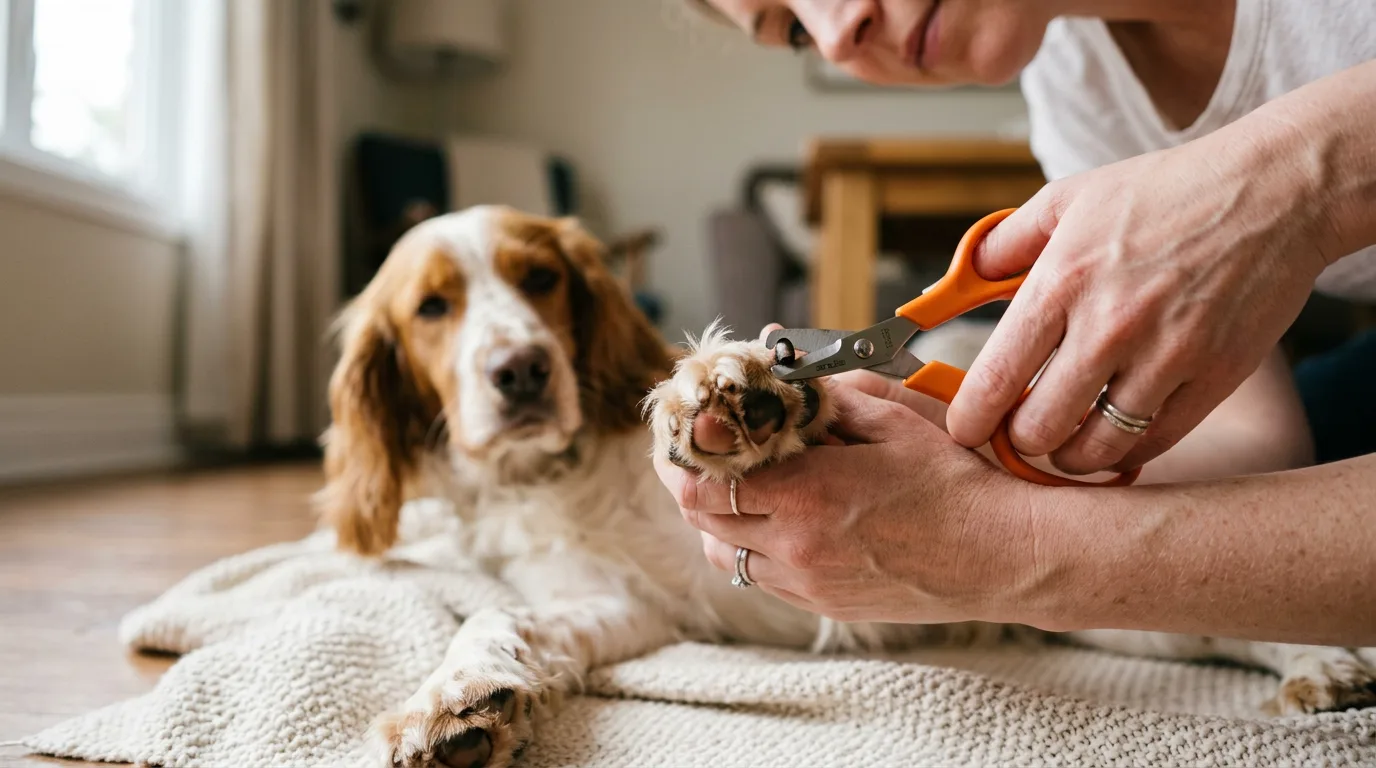
How to trim dog nails safely comes down to a repeatable, six-step routine that any owner can follow at home. Veterinary sources agree on the core technique: cut from underneath at a 45-degree angle, remove only 1 to 2 mm of nail per clip, and stay at least 2 mm away from the quick (WSU Veterinary Teaching Hospital; VCA Animal Hospitals). Work in good light, keep treats within reach, and stop before your dog gets overwhelmed.
Trimming your dog's nails step by step
- Gather your kit. You need pet nail clippers (scissor or guillotine style) or a grinder, plus styptic powder or cornstarch nearby in case of bleeding. Have high-value treats ready.
- Settle your dog. Many dogs are calmest facing away from you, or lying on their side. Drape a forearm gently over the shoulders so your dog cannot stand up mid-cut.
- Hold the paw and isolate one toe. Press gently to extend the nail. Look for the quick: the pink core in clear nails, or a chalky center in dark ones.
- Position the clippers. Place the cutting blade closest to you, not the dog, and aim from underneath at roughly a 45-degree angle, just beyond the tip.
- Snip a small amount. Take off only 1 to 2 mm. On the cut surface, watch for a gray-to-pink oval appearing in the center. That means you are getting close to the quick, so stop on that nail.
- Reward and move on. Give a treat after every nail (or every paw for nervous dogs). Do not forget the dewclaw, the thumb-like nail higher up the leg that never wears down on its own.
- Frequent, tiny trims do more than keep nails short. Taking off just a sliver every week or so encourages the quick to recede over time, which lets you get nails shorter safely on a dog whose quicks have grown out.
What is the quick, and how do you find it on light vs black nails?
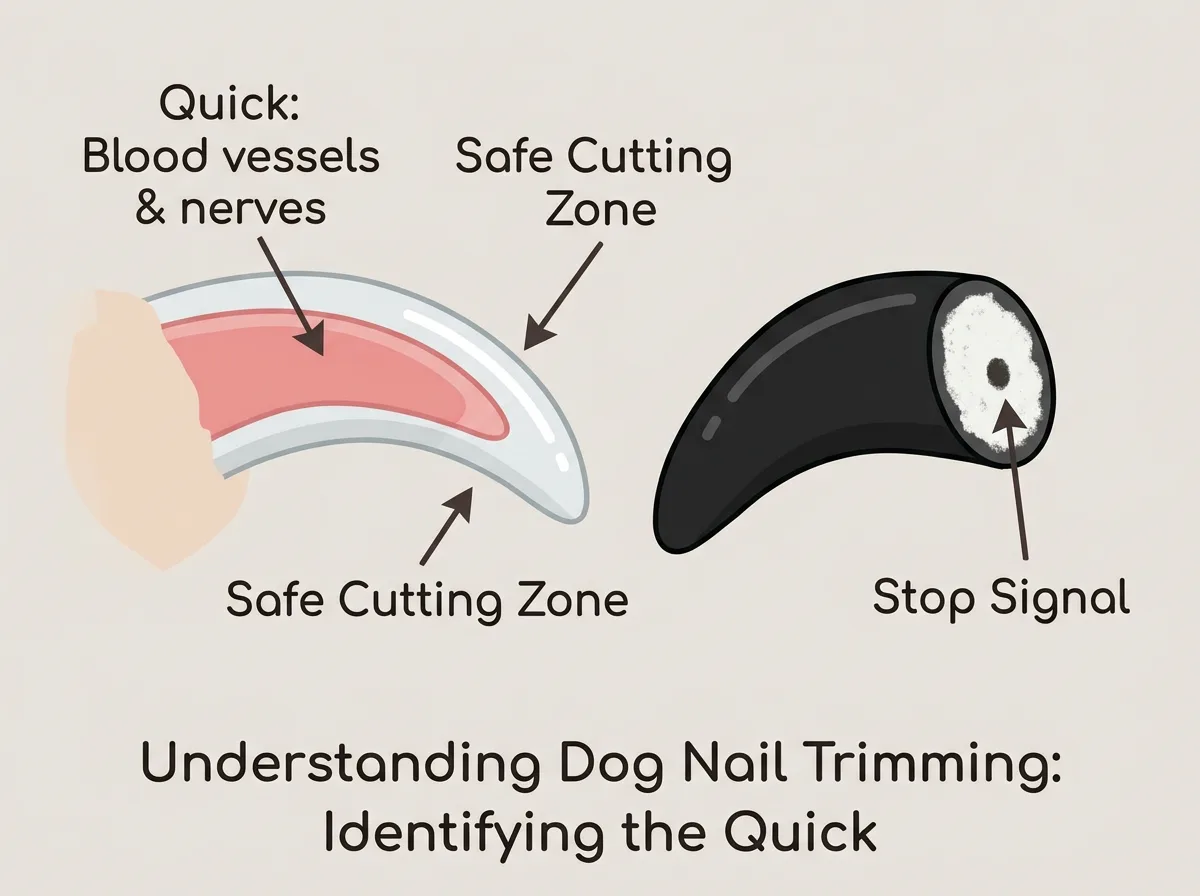
The quick is the living core of a dog's nail, made up of blood vessels and nerves that supply the claw. Cutting into it causes pain and bleeding, which is why every safe trim is really an exercise in avoiding the quick. On clear or light nails the quick is visible as a pink stripe, so you simply cut a few millimeters past where the pink ends. Black nails hide the quick completely, which is what makes them intimidating.
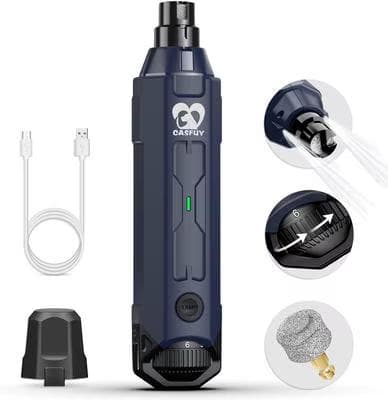
A quiet, 6-speed rechargeable grinder that files nails smooth, ideal for dogs who dislike clippers.
Petful may earn a commission when you click through to Chewy, at no extra cost to you.
How to cut dog nails that are black
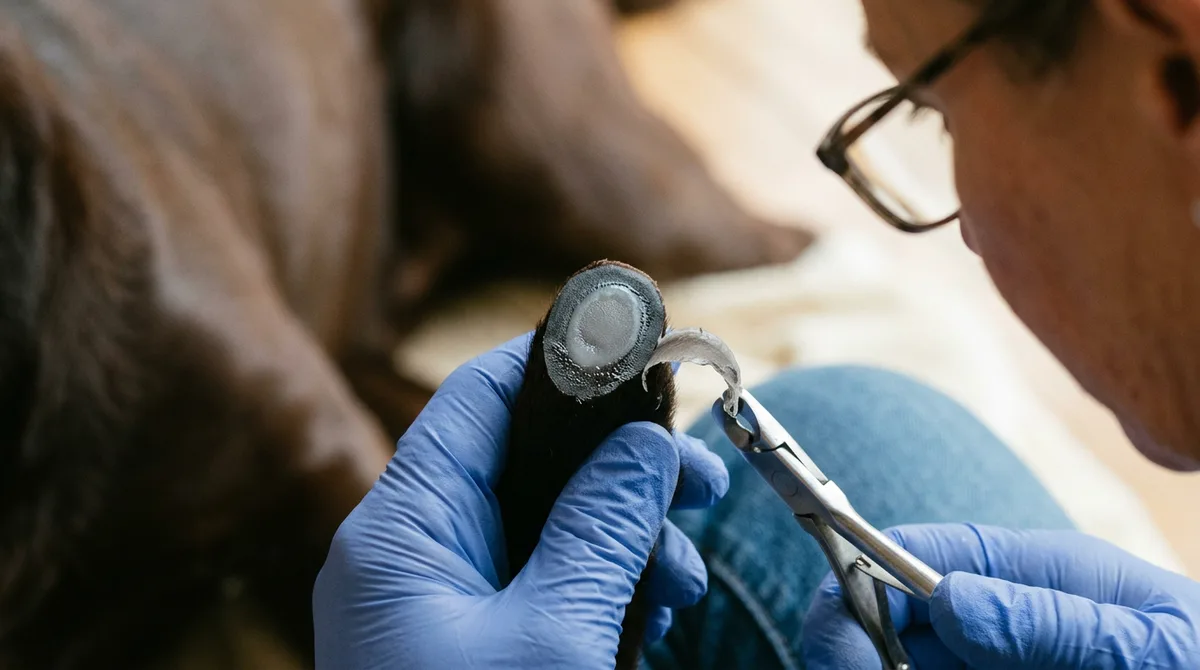
To cut dog nails that are black, shave off thin slivers rather than one big cut, and read the freshly cut surface after every pass. A chalky white or gray center means you still have room; the moment a small dark or pinkish dot appears in the middle of the cut surface, the quick is just underneath, so stop on that nail (WSU Veterinary Teaching Hospital). Black nails hide the quick entirely, so good lighting and patience do the work that visibility does on light nails.
If a black nail is also overgrown, the dot will show up sooner than you expect because the quick has grown out with the nail. In that case take even smaller slivers, and plan to shorten the nail over several weekly sessions rather than chasing the dot in one sitting. Trimming in good light makes that dot far easier to catch before you go too far.
- Groomers note the quick often sits closer to the edge on the back nails, so be a little more conservative there. If you would rather not hunt for the dot at all, just take off a tiny amount more often (every week or so) instead of one deep trim.
Dog nail grinder vs clippers: which is better for cutting dog nails?
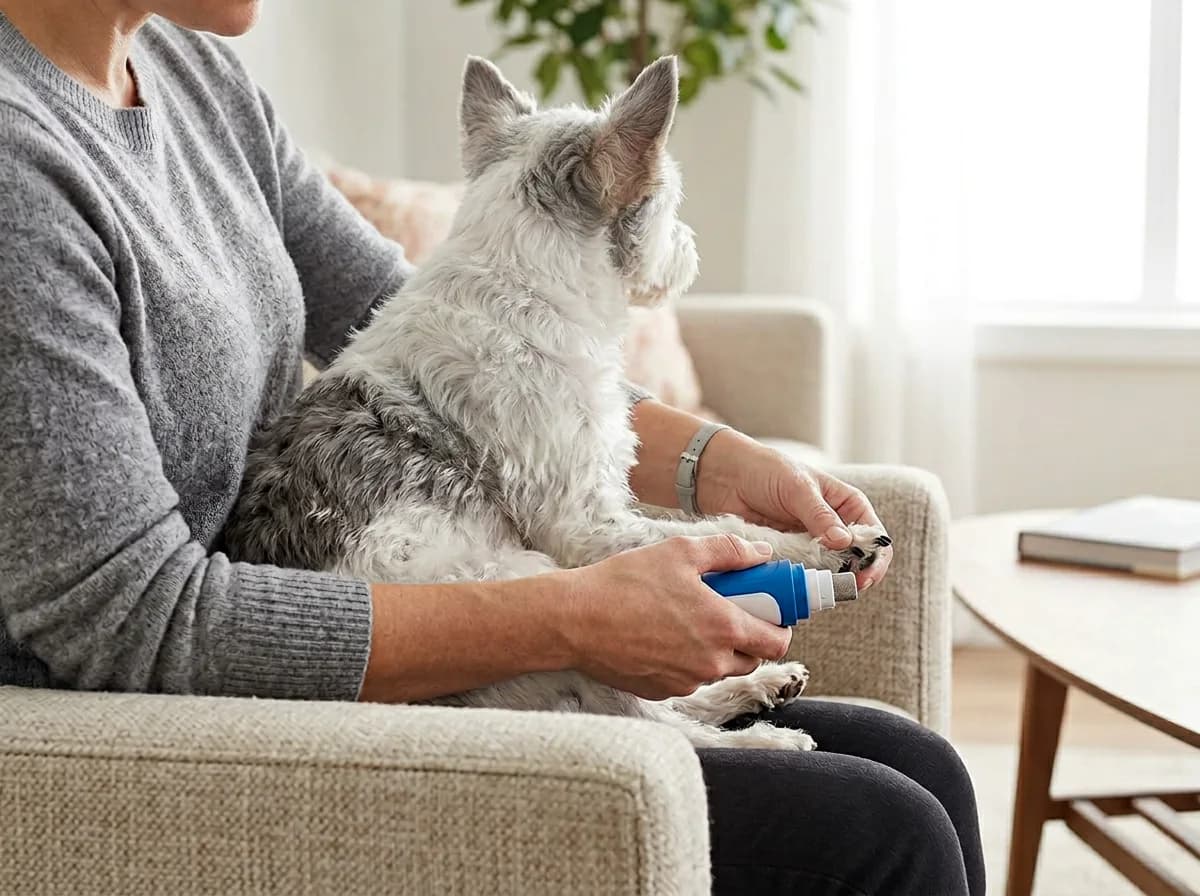
In the dog nail grinder vs clippers debate, both tools are safe and effective when used correctly, so the best choice depends on your dog and your comfort level (AKC). Clippers are fast, quiet, and inexpensive, which makes them ideal for dogs who tolerate handling well. A grinder (such as a Dremel-style rotary tool) files the nail down instead of cutting it, leaving a smooth edge and giving you more control to sneak up on the quick, though the noise and vibration take some dogs longer to accept. Many owners keep both: clippers for a quick tip-off, then a grinder to round the edge.
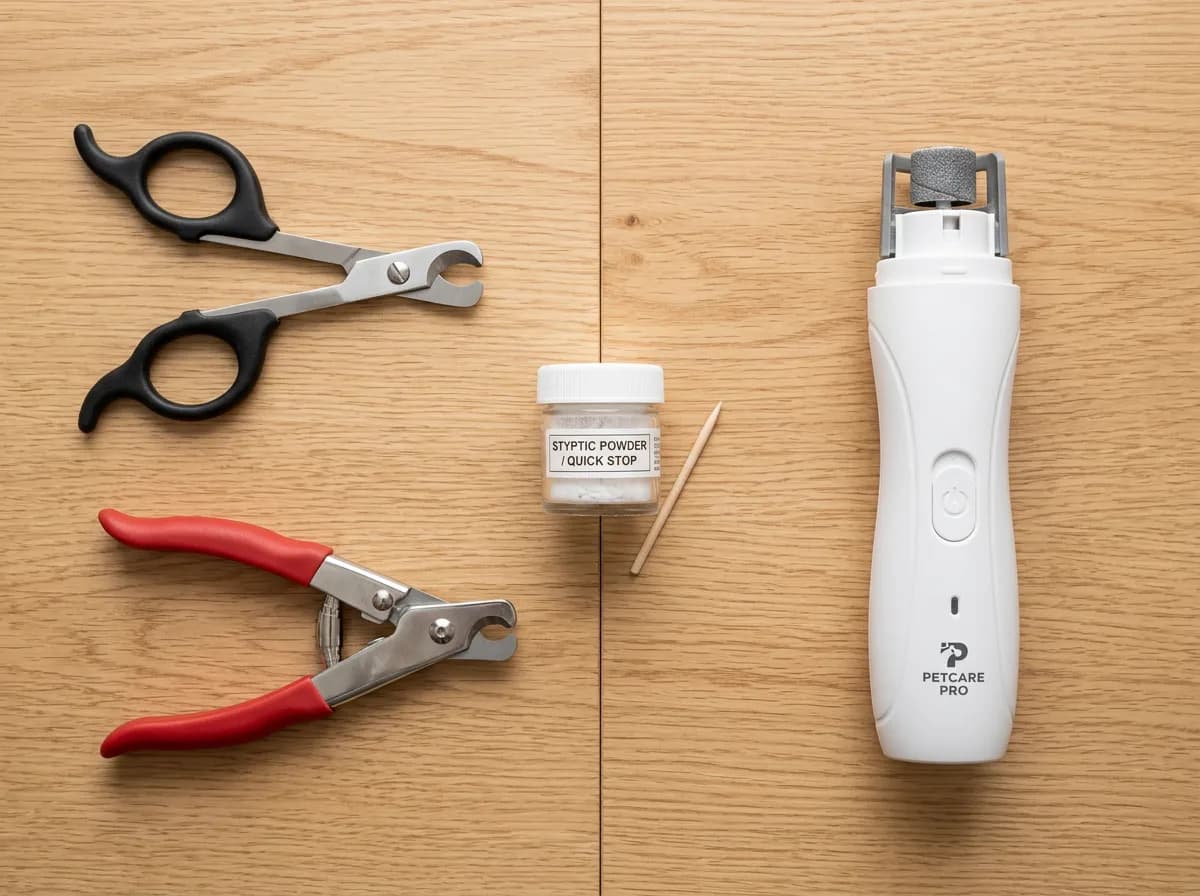
| Factor | Clippers | Grinder (Dremel-style) |
|---|---|---|
| Speed | Fast, one snip per nail | Slower, file each nail down |
| Noise and vibration | Quiet | Buzzing and vibration; needs desensitizing |
| Edge finish | Can leave a sharp edge | Smooth, rounded finish |
| Quick control | One cut commits you | Easier to shave gradually and stop early |
| Best for | Calm dogs, thin to medium nails | Thick or black nails, dogs prone to sharp edges |
| Watch-outs | Crushing with dull blades; cutting too deep | Heat from friction; loose fur catching |
- Grinders can heat up with friction, so move steadily and lift off every couple of seconds rather than pressing in one spot. Keep long ear and leg fur tied back or clear of the tool so it cannot get caught (VCA Animal Hospitals).
The best nail tools for your dog
Once you are comfortable with the technique, the right tool makes every trim faster and calmer. If you are shopping, we tested and ranked the options: see our guides to the best dog nail clippers and the best dog nail grinders. And if you are not sure how to hold or angle a pair, our step-by-step on how to use dog nail clippers walks through the grip and cut for each clipper style.
What is the correct angle, and how short to cut dog nails?
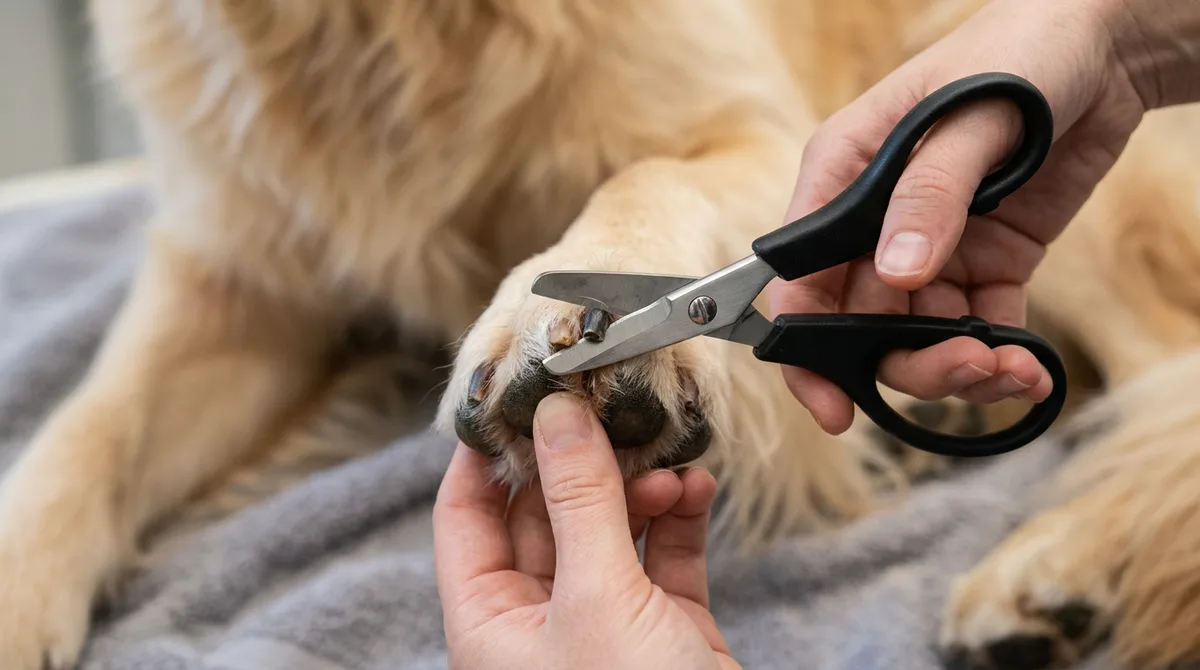
The correct angle to trim a dog's nail is roughly 45 degrees, cutting from underneath with the blade facing you, not the dog (WSU Veterinary Teaching Hospital). This angle follows the natural shape of the nail and keeps you below the quick. As for how short to cut dog nails, less is always more: take off only 1 to 2 mm at a time and stay at least 2 mm clear of the quick (VCA Animal Hospitals). You can always take a little more, but you cannot put it back.
A reliable stop signal is the cut surface itself. As you near the quick, a gray-to-pink oval shows up at the top of the cut surface, and that is your cue to stop cutting that nail (WSU Veterinary Teaching Hospital). The goal is to get the nail short enough that it does not touch the floor when your dog stands, without ever reaching the quick. With practice, frequent small trims let the quick recede so you can keep the nails shorter over time.
What to do if you cut the quick and the dog's nail bleeds
Petful may earn a commission when you click through to Chewy, at no extra cost to you.
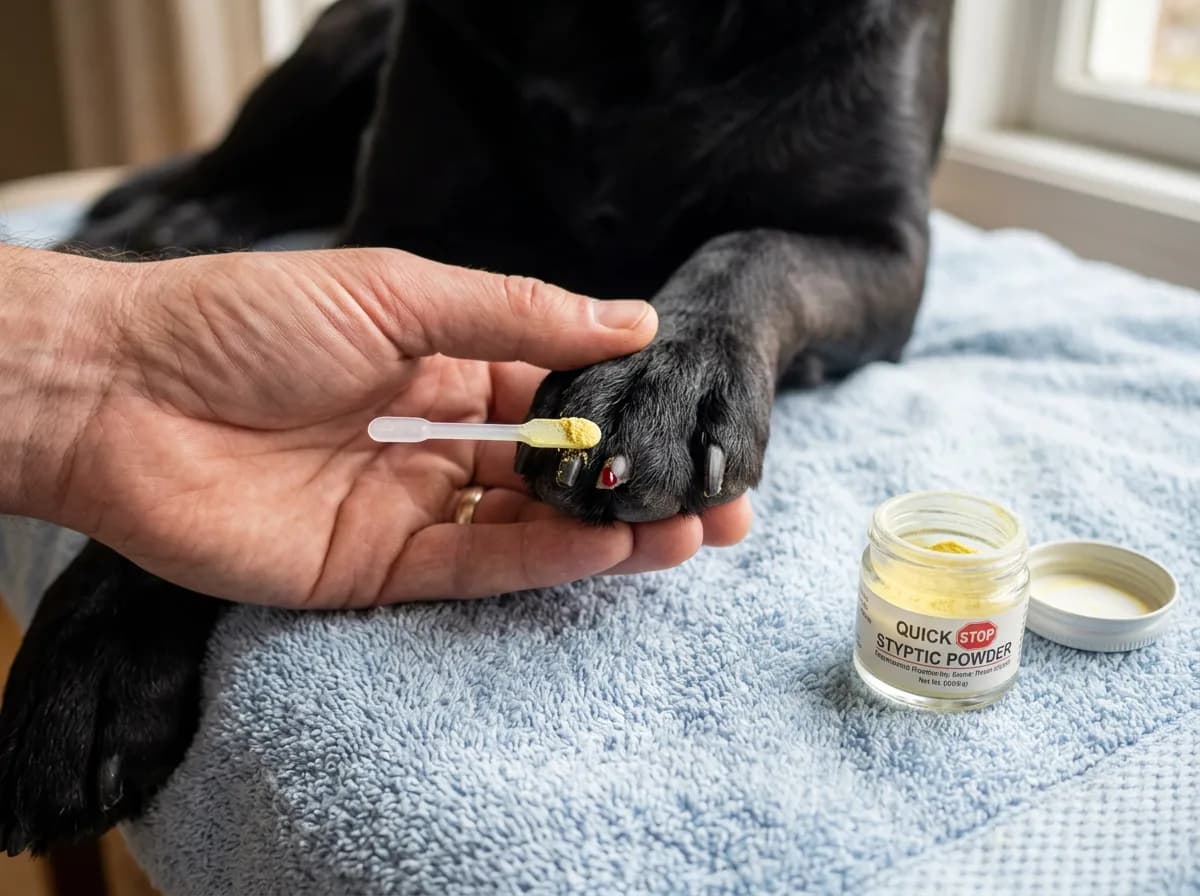
Cutting the quick is the most common nail-trimming mishap, and while it hurts and bleeds, it is rarely an emergency. If a dog's nail bleeds, stay calm so your dog does too, then stop the bleeding right away with the steps below.
Stopping a bleeding nail
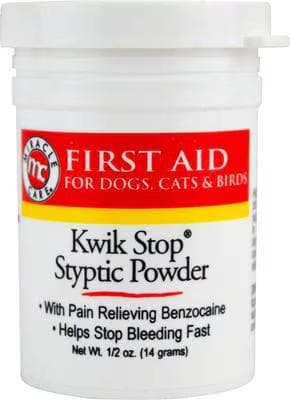
- Apply styptic powder. Press a pinch of styptic powder (such as Kwik Stop) onto the nail tip, or dip the nail into it. Styptic powder contains a clotting agent and works fastest.
- No styptic powder? Use cornstarch or plain flour. Pack it onto the bleeding tip the same way (VCA Animal Hospitals).
- Apply firm pressure. Hold a clean cloth or gauze against the nail for a few minutes. Without styptic powder, bleeding can take about 5 minutes to stop (WSU Veterinary Teaching Hospital).
- Keep your dog calm and still. Movement and a racing heart make a nicked nail bleed longer.
- Reward and pause the session. Offer a treat and end on a positive note rather than pushing on to more nails.
- Call your veterinarian if the bleeding does not stop after about 5 to 10 minutes of firm pressure, if the nail is cracked or torn below the quick, if there is swelling, pus, or a foul smell (signs of infection), or if your dog will not bear weight on the paw. Dogs on blood thinners or with known clotting disorders should be seen promptly.
How often to trim dog nails, and signs they are too long
Most dogs need their nails trimmed every 3 to 4 weeks, though active dogs who walk on pavement may wear theirs down and need trims less often (AKC; VCA Animal Hospitals). The clearest signal is sound: if you can hear nails clicking on a hard floor, or you can see them touching the ground when your dog stands, they are already overdue. Dewclaws need their own schedule because they do not touch the ground, are not worn down by walking, and can curl into the pad if ignored (WSU Veterinary Teaching Hospital).
- If your goal is to get long nails shorter, trim a small amount about once a week. After each tiny trim the quick recedes over the following week or so, letting you take a little more next time. This weekly cadence is the safest way to bring a long quick back without bleeding (AKC).
- Overgrown nails are not just cosmetic. Left too long, they can turn a sound paw into a splayed foot, reduce traction, and strain or injure the tendons over time, changing how your dog stands and walks (AKC). Left long enough, a nail can curl into the paw pad and cause a painful infection.
How to trim severely overgrown dog nails
When nails are severely overgrown, the quick has grown out along with them, so you cannot take them back to a normal length in one session without hitting it. The fix is patience: trim a small sliver off each nail, then repeat about once a week. Each trim prompts the quick to recede over the following days, so the next cut can go a little shorter, and within a few weeks the nails reach a healthy length safely (AKC). On very long or curled nails, or any nail pressing into the pad, ask your vet or a groomer to make the first cuts.
Black overgrown nails need the same slow approach with extra caution, because you cannot see the receded quick. Take thinner slivers than usual and check the cut surface after every pass for the dark dot that warns the quick is close. If your dog is in obvious discomfort or the nails have curled into the foot, treat it as a veterinary issue rather than a home trim.
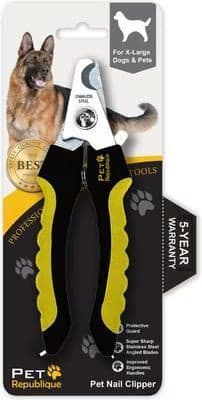
Sharp stainless-steel clippers with a built-in safety guard to help prevent over-cutting, sized for large breeds.
Petful may earn a commission when you click through to Chewy, at no extra cost to you.
How to trim the nails of a fearful or anxious dog
For a fearful or anxious dog, the fix is desensitizing, not force. The goal is to make the clippers boring and the whole routine predictable, building positive associations one tiny step at a time (AKC). Rushing a scared dog only teaches them that nail trims are something to fear, so go at their pace and keep early sessions short and rewarding.
Desensitizing a fearful dog
- Let your dog sniff and investigate the clippers or grinder with no trimming. Pair the tool with treats.
- Touch each paw and toe daily without cutting, rewarding calm behavior. These mock sessions take only about 30 seconds.
- Hold the clippers to a nail (or run the grinder near the paw without contact) and treat, so the sight and sound predict good things.
- Trim a single nail, then immediately reward and stop for the day. Do not try for the whole paw.
- Build up to more nails per session over days or weeks as your dog stays relaxed. Many dogs improve noticeably with about a week of short daily practice.
- A lick mat smeared with peanut butter or a helper feeding treats can keep a dog happily occupied during a trim. If your dog stays panicked despite slow training, ask your vet about anti-anxiety options, or have a professional groomer or vet tech do the trims, rather than wrestling your dog.
How to cut an uncooperative or aggressive dog's nails
An uncooperative or aggressive dog needs a different plan from a merely nervous one: never force or restrain a dog who is escalating to growling or snapping, because that teaches the dog that nail trims are a fight and raises the risk of a bite. The safest route for a dog who reacts strongly is to defer the trims to your veterinarian or a professional groomer, who can do them quickly and, if needed, with veterinary sedation. Meanwhile, keep building positive associations with paw handling at home so the next trim is easier.
Managing an uncooperative dog at home
- Trim one nail at a time across the day. You do not have to do all four paws in one sitting; a single nail followed by a jackpot treat counts as a win.
- Use a high-value distraction. A lick mat loaded with peanut butter, squeeze cheese, or a stuffed food toy keeps the mouth and mind busy while a helper trims.
- Get a second person to feed treats. One person feeds nonstop while the other lifts a paw and trims, so the dog associates the handling with food rather than restraint.
- Try a gentle, well-fitted support rather than wrestling. A homemade dog sling (a towel or fabric loop that gently supports the body) can steady a wiggly dog, but only if it does not panic them; stop if it adds stress.
- Know when to stop. If your dog is panting, lip-licking, whale-eyed, growling, or trying to bite, end the session and call your vet. Forcing it makes the next attempt harder and is not safe.
- Do not give human sedatives, melatonin, antihistamines, or any medication to sedate your dog for a nail trim without veterinary guidance. The wrong drug or dose can be dangerous. If your dog truly cannot tolerate trims, your veterinarian can prescribe safe anti-anxiety medication or perform the trim under supervision.
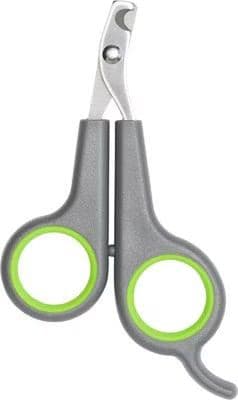
Compact spring-loaded scissor clippers sized for cats and small dogs, with rounded, easy-grip handles.
Petful may earn a commission when you click through to Chewy, at no extra cost to you.
How to trim a puppy's nails
Start trimming a puppy's nails early, because the real goal in puppyhood is comfort with handling rather than length. Puppies grow fast and their thin nails can get sharp quickly, so a gentle trim every week or two keeps them tidy and builds a lifelong habit (AKC). Use small dog-specific clippers or a grinder sized for puppies, never human nail clippers, and take off only the very tip.
Getting a puppy used to nail trims
- Handle the paws from day one. Gently and cheerfully touch and hold each paw and toe every day so your puppy never learns to guard their feet (AKC).
- Introduce the tool slowly. Let the puppy sniff the clipper or grinder and pair it with treats over a few days before any cutting.
- Trim one tiny tip, then stop. Snip the very end of a single nail, reward immediately, and end the session on a high note.
- Add a nail at a time. Build up to a full paw, then all four, over a week or more as your puppy stays relaxed.
- Keep it positive forever. Treats and praise at every trim now save you from a fearful adult dog later.
How to keep dog nails short without clipping (scratch boards and pavement)
You can slow how fast nails grow out and reduce how often you clip, though most dogs still need occasional trims. Regular walks on pavement or concrete naturally file the front nails down, which is why active street-walked dogs often need fewer trims than couch-bound or grass-only dogs. You can also teach your dog to file their own front nails on a scratch board: a flat board covered in coarse sandpaper that the dog learns to paw at for a treat, wearing the nail tips down without any cutting.
- A scratch board is great for the front nails and for dogs who hate clippers, but most dogs cannot reach their own back nails or dewclaws on it, so you will still need to trim those. Think of it as a supplement that stretches the time between trims, not a full replacement.
Signs your dog's nails are too long
You do not need a ruler to know when nails are overdue. A few clear signs tell you it is time to trim, and catching them early prevents the long-term joint and posture problems that come with chronically overgrown nails.
- Clicking or tapping sounds when your dog walks on hard floors.
- Nails that visibly touch or curve toward the ground when your dog is standing still.
- Splayed toes or a flattened, spread-out foot instead of a tight, arched paw.
- Snagging on carpet, bedding, or your skin.
- Changes in gait, reluctance to walk on slick floors, or shifting weight off the paws.
- Dewclaws that have grown long, curled, or started to press into the leg or pad.
If nails are severely overgrown, the quicks have likely grown out with them, so do not try to take them back to normal in one session. Trim a little every week so the quick recedes gradually, and ask your vet or a professional groomer for help with the first cuts if you are unsure. For nail injuries that go beyond an overgrown trim, see our guides on how to treat a broken dog nail and first aid for a cut on a dog's paw.
Start small: hold the paw gently, isolate one toe, and snip only the tip (1 to 2 mm) from underneath at a 45-degree angle. Keep styptic powder nearby, reward after every nail, and stop before your dog gets stressed. For your very first attempts, doing one or two nails a day is completely fine.
Cut at roughly a 45-degree angle, from underneath, with the cutting blade facing you rather than the dog (WSU Veterinary Teaching Hospital). This follows the nail's natural shape and helps you stay below the quick. Take off small amounts and stop when a gray-to-pink oval appears at the top of the cut surface.
Aim to get each nail short enough that it does not touch the floor when your dog stands, but never reach the quick. Take off only 1 to 2 mm per clip and stay at least 2 mm clear of the quick (VCA Animal Hospitals). Stop the moment a gray-to-pink oval shows on the cut surface; that is the quick warning you to stop.
Shave off thin slivers instead of one big cut, checking the surface after each pass. A chalky white or gray center means keep going; a small dark or pinkish dot in the middle means the quick is just underneath, so stop. Good lighting and frequent tiny trims are the safest way to handle black nails.
When nails are overgrown, the quick has usually grown out too, so you cannot fix it in one session. Trim a small sliver every week or so and the quick will gradually recede, letting you shorten the nails safely over a few weeks. Severely curled nails, or any pressing into the pad, are worth a vet or groomer visit.
Both are safe when used correctly, so it comes down to your dog (AKC). Clippers are fast and quiet; a grinder files the nail down for a smooth edge and lets you sneak up on the quick with more control, which suits thick or black nails. Many dogs need time to accept a grinder's noise and vibration, so introduce it gradually.
Start early and keep it gentle. Handle your puppy's paws daily from the first day, use small dog-specific clippers or a puppy grinder, and snip only the very tip of one nail at a time with a treat after each. Trim every week or two; at this age the goal is building comfort with handling as much as keeping nails short.
Never force a dog who is growling or snapping. Trim one nail at a time with a high-value lick mat and a helper feeding treats, and stop at the first sign of real stress. For a dog who reacts strongly, the safest option is to have your vet or a professional groomer do the trims, with veterinary sedation if needed.
Do not cut into the quick, do not take big chunks off at once, and do not rush a frightened dog. Skip dull or crushing clippers, do not forget the dewclaws, and never punish a dog for squirming. If you nick the quick, apply styptic powder and smooth any jagged edge rather than re-cutting.
Start with training and management: desensitize your dog over days, use a peanut-butter lick mat, and have a helper feed treats. Do not give human sedatives or any medication without veterinary guidance. If your dog stays severely anxious, ask your veterinarian about safe prescription anti-anxiety medication, or let a vet tech or groomer handle the trims.
Regular walks on pavement naturally file the front nails, and you can teach your dog to wear their own front nails down on a sandpaper scratch board for treats. These reduce how often you clip but rarely replace it entirely, because most dogs still need their back nails and dewclaws trimmed by hand.
A professional nail trim typically runs about 10 to 25 US dollars at a groomer or pet store (PetSmart starts around 12 US dollars), though a vet clinic may charge a bit more, often 15 to 40 US dollars, because it is a medical setting. Walk-in nail services are common, so it is an easy option for dogs who struggle at home.
Cut tiny 1 to 2 mm slivers at a time and stop the moment you see a gray-to-pink oval on the cut surface, which means the quick is close. Keep styptic powder or cornstarch within reach, and on black nails trim conservatively in good light so you do not hit the blood vessel.
For most dogs, no. Desensitizing with treats and short sessions works better over time. For a genuinely fearful or aggressive dog, a vet may prescribe a calming medication such as gabapentin or trazodone before the appointment. Never use human sedatives, and let your veterinarian make that call.
Related on Petful
BVMS, MRCVS
Dr. Pippa Elliott, BVMS, MRCVS, is a veterinarian with nearly 30 years of experience in companion animal practice. Dr. Elliott earned her Bachelor of Veterinary Medicine and Surgery from the University of Glasgow. She was also designated a Member of the Royal College of Veterinary Surgeons. Married with 2 grown-up kids, Dr. Elliott has a naughty Puggle named Poggle, 3 cats and a bearded dragon.
Sign up for expert-backed reviews and safety alerts all in one place.