Dog Shampoo vs Human Shampoo: Can You Use Yours on Your Dog?
Dog shampoo vs human shampoo comes down to skin pH: dogs are near neutral, humans are acidic. See when human shampoo is safe in a pinch, what household substitutes work, and which dog shampoo to buy instead.
Petful is reader supported. As an affiliate of platforms like Amazon and Chewy, we may earn a commission when you buy through links on this page. There is no extra cost to you.
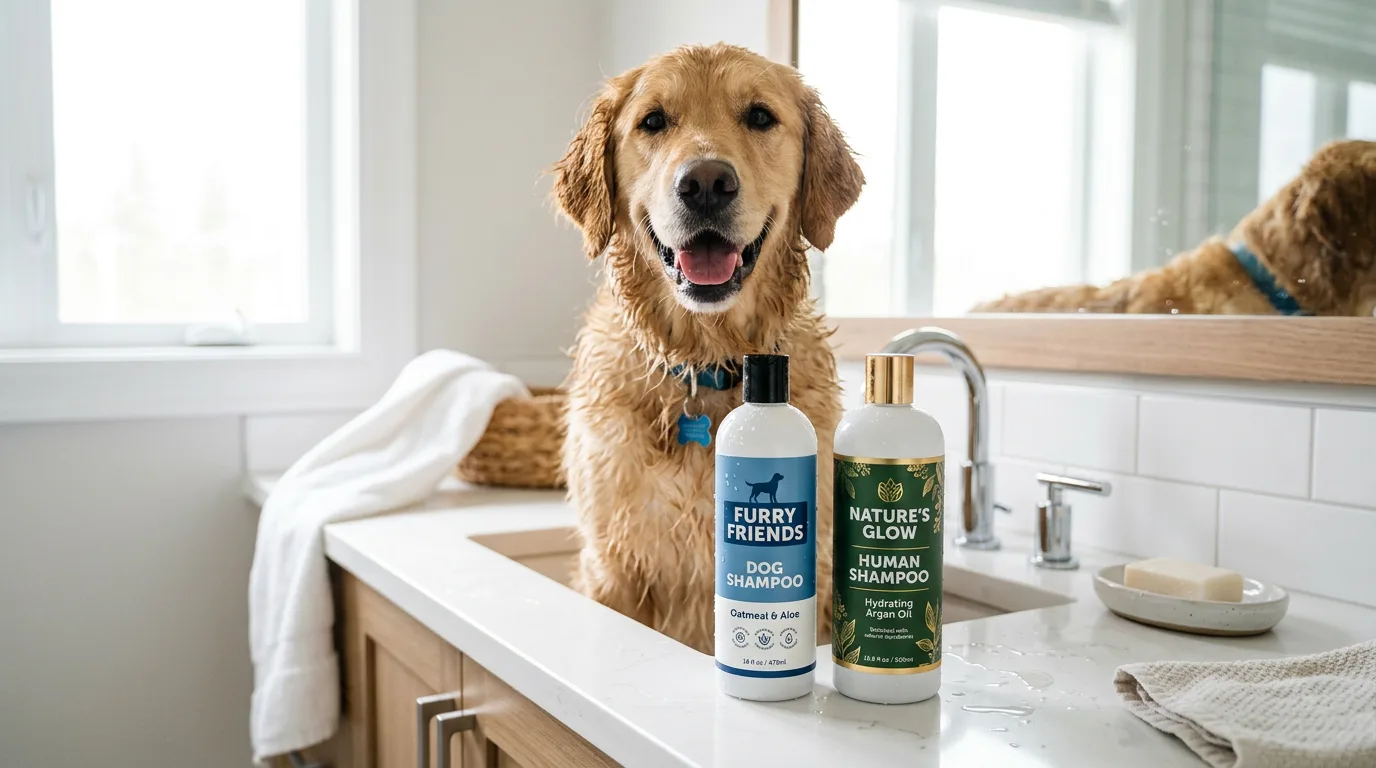
When your dog rolls in something foul and you reach for the nearest bottle in the shower, it is fair to ask how dog shampoo vs human shampoo actually stacks up. Here is the answer-first version: you should not use human shampoo on dogs as a regular routine, because a dog's skin sits at a different pH than yours and human formulas strip the protective barrier that keeps a coat healthy. A single in-a-pinch wash with a gentle, fragrance-free human shampoo (or a tearless baby shampoo) will not poison your dog, but it is a stopgap, not a plan.
That gap between "will not hurt him once" and "good for him long term" is where most owners get confused. Below is the full breakdown: why the two products are built differently, when a human bottle is genuinely safe in an emergency, which household substitutes are fine, and what kind of dog-specific shampoo is worth buying so you never have to improvise again.
- 1Dog skin is close to neutral (about pH 6.5 to 7.5) while human skin is acidic (about pH 4.5 to 5.5), so human shampoo throws off a dog's protective acid mantle
- 2Human shampoo used once in an emergency is low risk if it is fragrance-free or a tearless baby formula, but it is not safe for routine bathing
- 3A purpose-built dog shampoo (oatmeal and aloe for itch, chlorhexidine for skin infections, tearless for faces) is cheap insurance against dry, flaky, irritated skin

Sign up for expert-backed reviews and safety alerts all in one place.
Dog Shampoo vs Human Shampoo: The Core Difference Is Skin pH
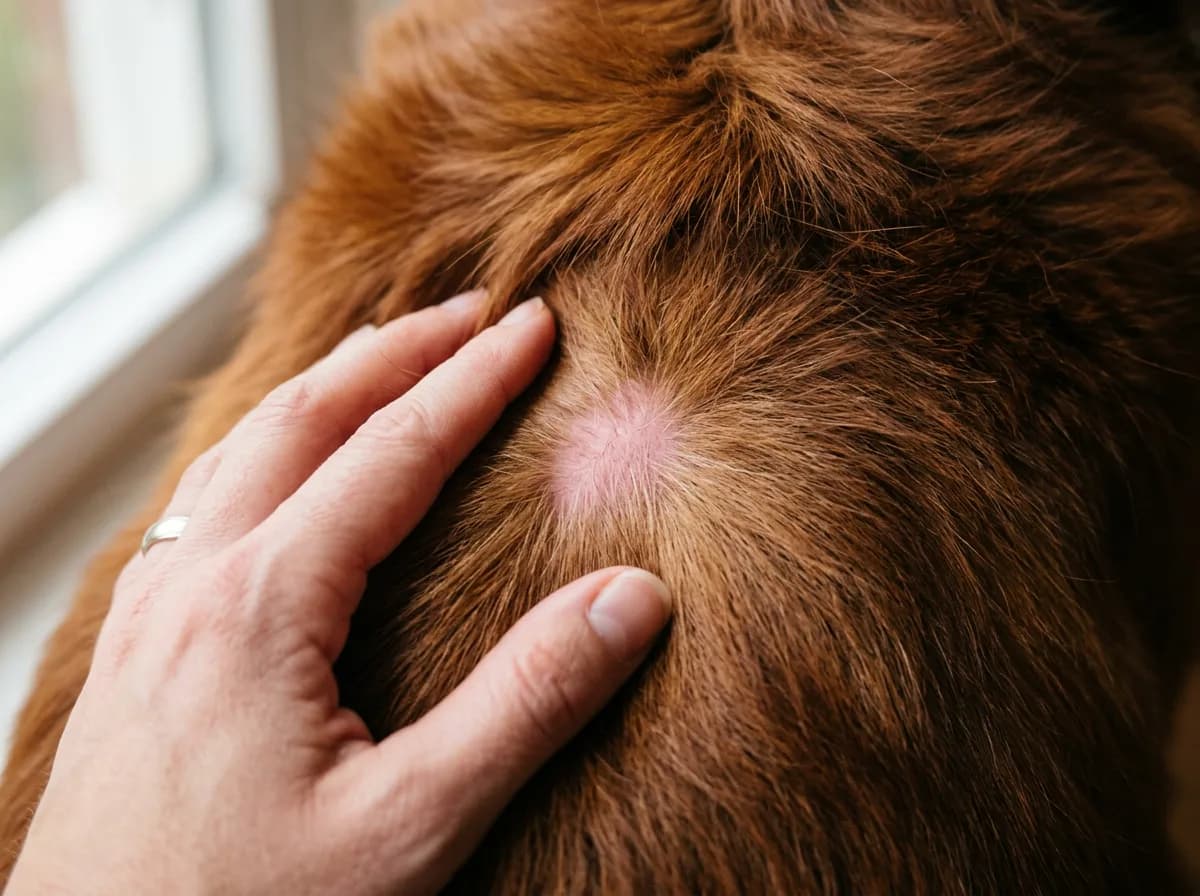
The single biggest reason dog shampoo and human shampoo are not interchangeable comes down to the acid mantle, the thin protective film of oils and slightly acidic sweat that coats mammal skin. Your skin is acidic, generally measured around pH 4.5 to 5.5. A dog's skin is far closer to neutral, commonly cited in veterinary dermatology at roughly pH 6.5 to 7.5 (it varies by breed, coat, and body region). Human shampoos are deliberately formulated on the acidic side to match human skin. Pour that acidity onto a dog and you disrupt a barrier that was built for a very different chemistry.
When the acid mantle is stripped, the skin loses moisture and its first line of defense against bacteria, yeast, and allergens. The visible result over repeated washes is dryness, flaking, dandruff, a dull coat, and scratching. The invisible result is a skin barrier that is easier for infection to breach. That is the real cost of reaching for your own bottle week after week, and it is why groomers and vets are firm on the point.
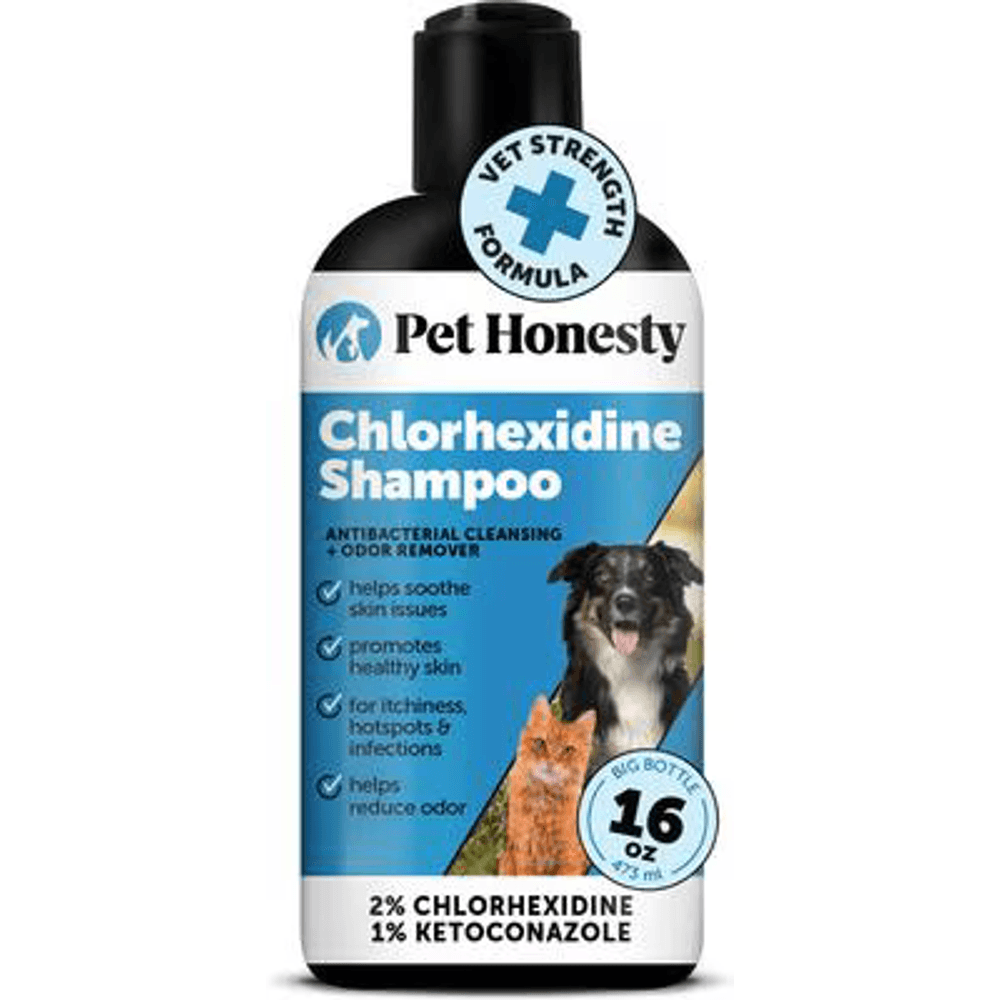
A vet-strength medicated shampoo with 2% chlorhexidine and 1% ketoconazole, the antifungal and antibacterial combination vets use to help clear ringworm and skin infections and to cut fungal spore shedding during treatment.
Petful may earn a commission when you click through to Chewy, at no extra cost to you.
Here is how the two products line up on the factors that matter.
| Feature | Dog Shampoo | Human Shampoo |
|---|---|---|
| Target skin pH | Near neutral, about 6.5 to 7.5 | Acidic, about 4.5 to 5.5 |
| Effect on the acid mantle | Matches and protects a dog's barrier | Strips a dog's protective oils |
| Fragrance load | Light or fragrance-free, dog-safe | Often heavy and can irritate |
| Detergents | Gentler surfactants sized for coats | Strong sulfates sized for human hair |
| Added actives | Oatmeal, aloe, or chlorhexidine for skin | Silicones and dandruff actives for people |
| Safe for routine baths | Yes, built for it | No, only as a rare backup |
Why Dog and Human Shampoo Are Formulated Differently
pH is the headline, but three other differences stack on top of it.
- Ingredients and detergents. Human shampoos lean on strong sulfates and cleansing agents tuned to cut through the oils in human hair, plus silicones and conditioning polymers meant for smooth strands. On a dog's coat those detergents are more aggressive than needed and strip natural oils faster.
- Fragrance and additives. People shampoos carry heavier fragrance loads and additives like menthol, salicylic acid, or zinc pyrithione for human dandruff. A dog's nose is thousands of times more sensitive than ours, and those same additives can irritate skin that is not built to process them.
- Safety around eyes and mouth. Dogs shake, lick, and press their faces into the water. Dog shampoos are formulated with that reality in mind, and many are explicitly tearless. Most human shampoos are not designed to be licked off a dog's muzzle.
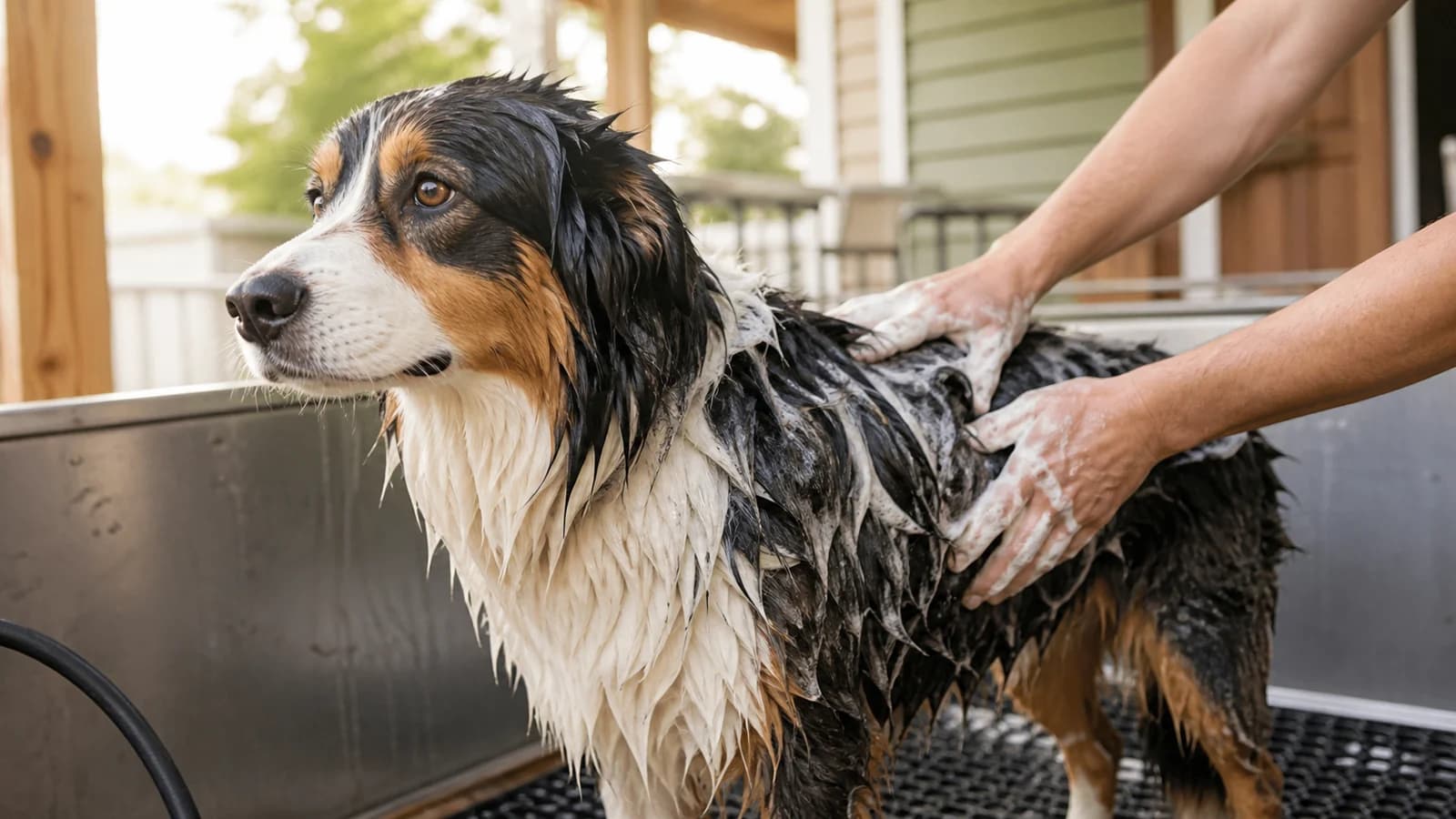
None of this means human shampoo is toxic. It means it is the wrong tool for a job that a two dollar difference in the right bottle solves cleanly. For the mechanics of a good bath once you have the right product, our guide on how to give your dog a bath walks through water temperature, lathering, and rinsing.
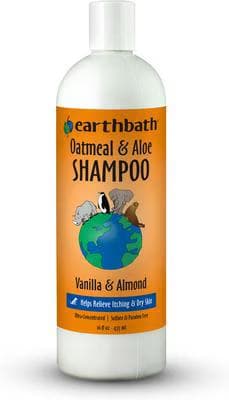
Petful may earn a commission when you click through to Chewy, at no extra cost to you.
Can You Use Human Shampoo on Dogs in a Pinch?
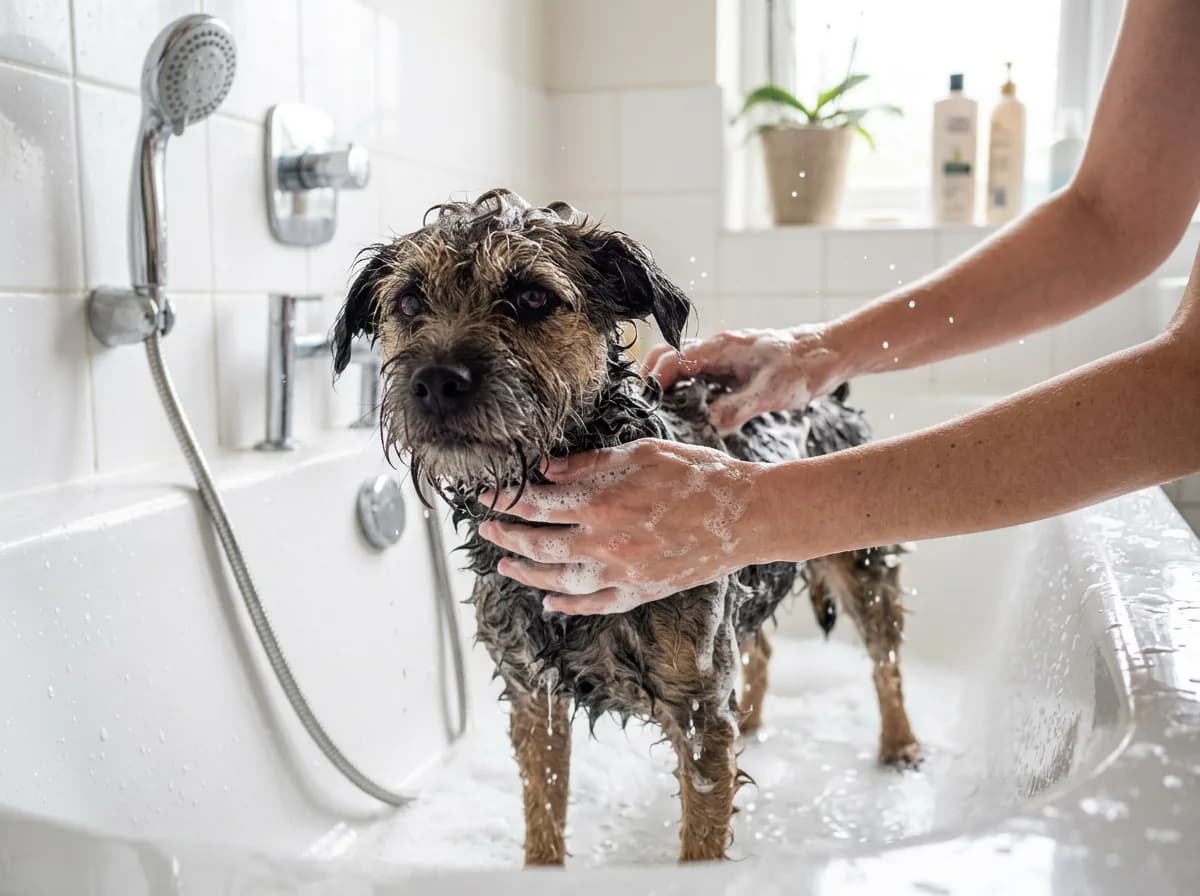
Yes, once, if you have no other option and you pick the mildest bottle in the cabinet. A single wash with a gentle, fragrance-free, or tearless baby shampoo is unlikely to cause harm to a healthy adult dog. The danger is repetition and the danger is harshness. A one-off rinse to get motor oil or skunk off your dog before you can buy the right product is a reasonable emergency call.
- Repeated human-shampoo baths are what dry a dog out, not a single emergency wash. Skip human shampoo entirely on puppies, on dogs with known skin conditions or allergies, and on any dog with broken or irritated skin. Rinse far longer than you think you need to, because leftover residue is a common cause of post-bath itching.
If your dog has itchy, flaky, or infection-prone skin, do not improvise at all. A medicated or soothing dog shampoo is doing real therapeutic work that a human product cannot replicate. Our piece on shampoo as therapy for a dog's bad skin explains when a medicated wash actually earns its place.
Which Human Shampoos Are Safe for Dogs?
If you truly must reach for a human product in an emergency, the safest choice is a fragrance-free, tearless baby shampoo, because it is the mildest and lowest-pH-risk option on the human shelf and it is designed not to sting eyes. After baby shampoo, an unscented, sulfate-free, "sensitive skin" human shampoo is the next best backup. Everything else on the human shelf carries more risk.
Avoid these on a dog even in a pinch:
Petful may earn a commission when you click through to Chewy, at no extra cost to you.
- Anti-dandruff or medicated human shampoos (zinc pyrithione, salicylic acid, selenium sulfide, coal tar), which are dosed for human skin and can be irritating or unsafe for dogs.
- Heavily fragranced, "clarifying," or color-treatment shampoos.
- Two-in-one shampoo-and-conditioner formulas loaded with silicones.
Even the safest human option is a bridge to the right product, not a substitute for it. Use it once, rinse thoroughly, and buy a real dog shampoo before the next bath.
Is Dawn Dish Soap OK for Dogs?
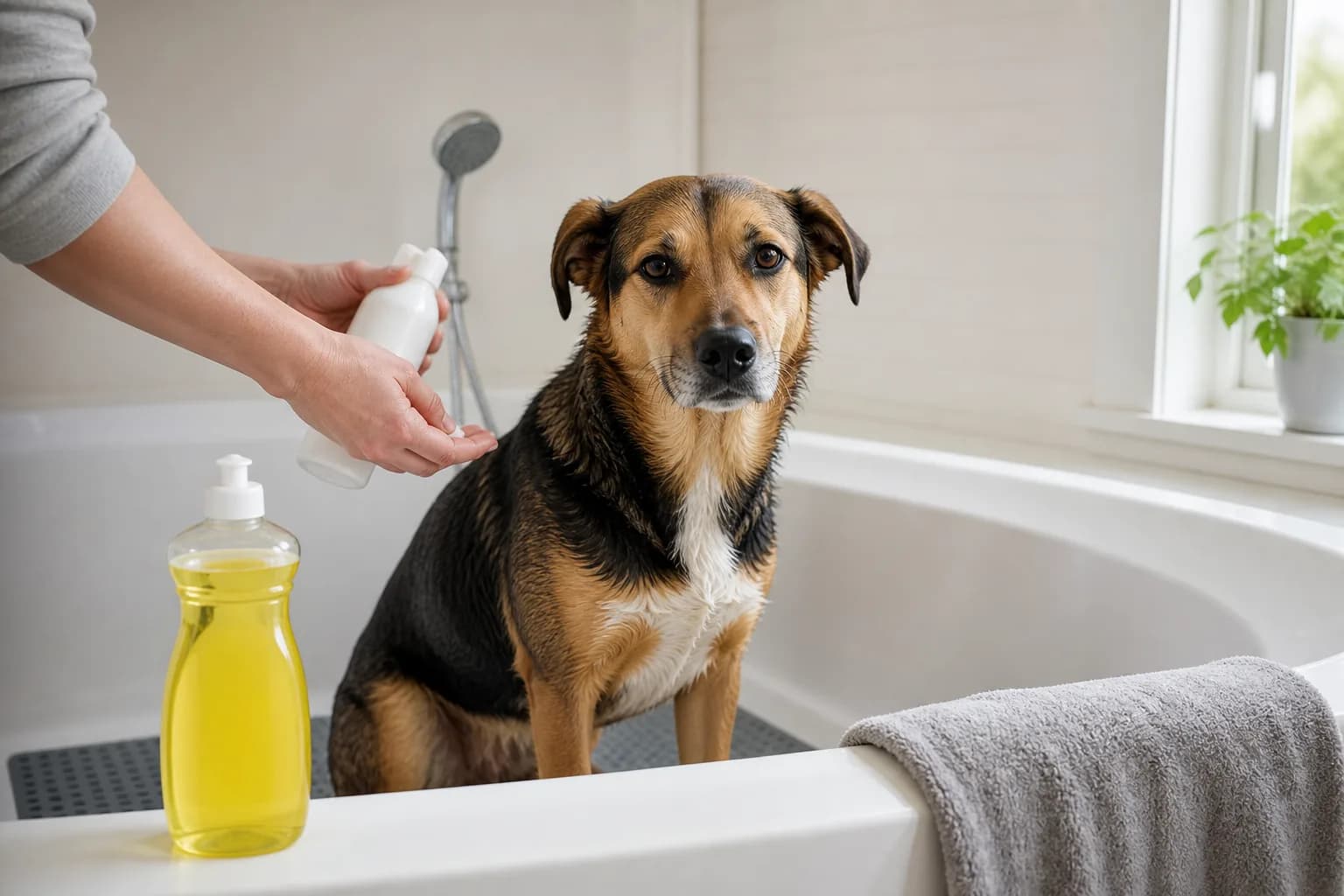
Occasionally and for a specific job, yes; as a regular shampoo, no. Dawn and similar dish soaps are powerful degreasers, which is exactly why wildlife rescuers use them to clean oil off animals and why it can help strip grease or smother fleas in a one-time bath. That same degreasing power is the problem for routine use: it strips a dog's natural skin oils aggressively and leaves skin dry and prone to irritation if you use it often.
- Reach for a dish soap only for a genuine degreasing emergency such as motor oil, cooking grease, or a heavy flea situation before you can get a proper flea treatment. Dilute it, keep it well away from the eyes, rinse completely, and follow up with a moisturizing dog shampoo at the next bath. It is a one-time tool, not a bathtime staple.
What Can I Use Instead of Shampoo for Dogs?
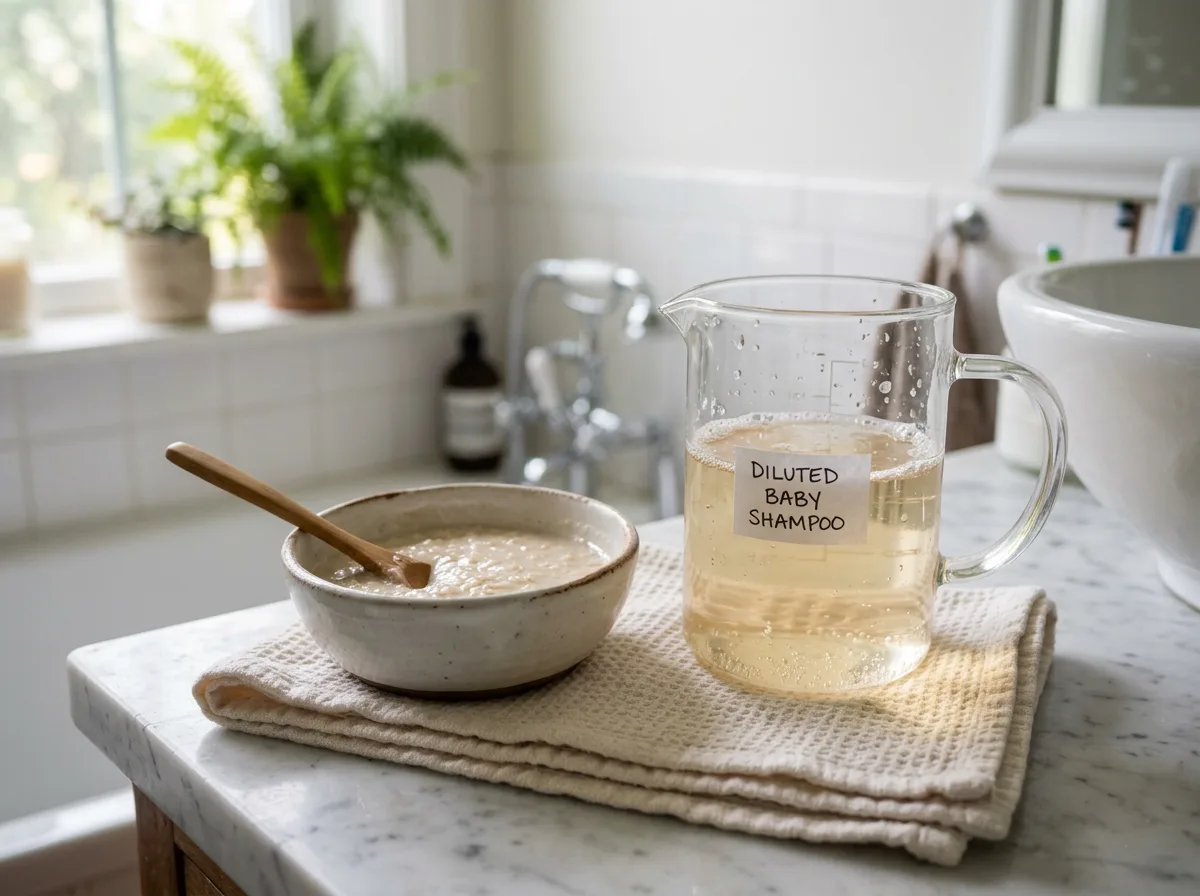
When you are out of dog shampoo, the best instead-of options are gentle, low-residue, and skin-neutral. In rough order of preference: a tearless baby shampoo, a colloidal (finely ground) oatmeal soak for itchy skin, or a small amount of unscented castile soap well diluted in water. For a dog that is only mildly dirty or smelly, you often do not need soap at all: a plain warm-water rinse plus a good brush-out removes most surface dirt and loose dander.
For dry, between-bath cleanups, a damp microfiber cloth or unscented pet wipes handle muddy paws and dirty bellies without a full bath. What you want to avoid is anything harsh or heavily perfumed: full-strength dish soap, human medicated shampoo, or undiluted vinegar can all leave a dog dry or irritated.
Petful may earn a commission when you click through to Chewy, at no extra cost to you.
What Household Products Can You Use to Bathe a Dog?
The household products that are genuinely safe for an occasional dog bath are mild and easy to rinse. Good options include:
- Tearless baby shampoo, diluted, as the closest safe stand-in for dog shampoo.
- Colloidal oatmeal (finely blended plain oats) stirred into warm bathwater to soothe itchy or dry skin.
- Diluted unscented castile soap for a light clean, used sparingly and rinsed well.
- Baking soda worked into a dry coat and brushed out as a no-rinse deodorizer between baths.
- Cornstarch as a dry-shampoo alternative to absorb oil and odor, then brushed out.
Use these sparingly rather than as a weekly routine. Skip the internet favorites that do more harm than good: undiluted vinegar (too acidic and stinging on broken skin), hand soap and body wash (fragranced and drying), and dish soap for anything but a grease or flea emergency. When in doubt, plain warm water and a brush is safer than an aggressive DIY mix.
What Dog-Specific Shampoo to Buy Instead

The good news is that a proper dog shampoo costs about the same as a bottle of your own, so there is little reason to keep borrowing. Match the shampoo to your dog's skin instead of grabbing the first bottle:
- Soothing oatmeal and aloe formulas are the everyday default for most dogs, and the right pick for dry, flaky, or mildly itchy skin.
- Medicated chlorhexidine shampoos are the choice when your dog is prone to bacterial or yeast skin infections, hot spots, or recurring "doggy" odor with a skin cause. These do real antimicrobial work a human product cannot.
- Tearless, gentle formulas matter for puppies and for washing faces and heads where stinging is a concern.
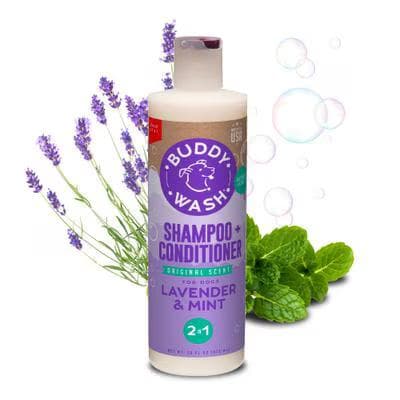
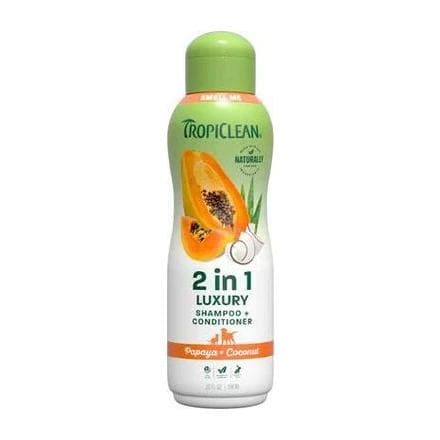
- Deodorizing shampoos (think papaya, coconut, or lavender and mint blends) are built to knock down odor between baths without the harshness of dish soap.
When you are reading a dog-shampoo label, a few words tell you it is the right tool. Look for pH-balanced or formulated for dogs, which signals the near-neutral chemistry a canine coat needs. Sulfate-free or soap-free points to gentler surfactants that clean without stripping oils. Tearless or no-rinse matters for faces, puppies, and quick touch-ups. And a short, recognizable ingredient list (oatmeal, aloe, coconut, or chlorhexidine for medicated needs) beats a long lineup of heavy fragrances and dyes that can irritate sensitive skin.
Whatever you choose, look for a fragrance-free or lightly scented formula if your dog has sensitive skin, and always dilute and rinse thoroughly. If your dog's itching, odor, or flaking does not improve with the right shampoo, that is a signal to see your vet, because chronic skin problems are often allergy or infection driven and need more than a better bath. The AVMA (avma.org) and Cornell's veterinary college (vet.cornell.edu) both publish owner-facing guidance on when skin symptoms warrant a clinical visit.
How Often Should You Actually Bathe Your Dog?
Even the best dog shampoo dries the skin if you overuse it, so frequency matters as much as product choice. Most healthy dogs do well with a bath roughly once every four to six weeks, though coat type, activity level, and skin conditions shift that window. Short-coated dogs with normal skin can often go longer between baths, while oily breeds, heavy shedders, and dogs that swim or dig may need more frequent washing. Dogs on a medicated-shampoo prescription follow the vet's schedule instead, because those products are dosed for a specific contact time and cadence.
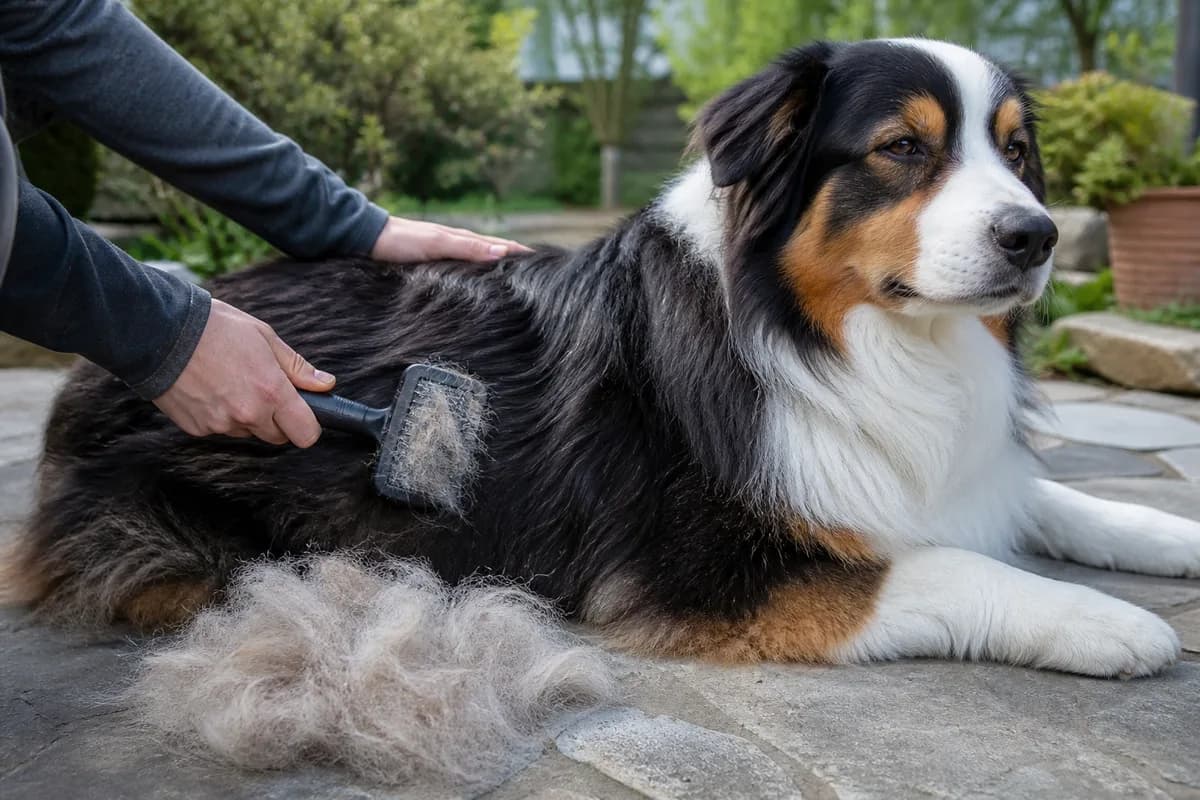
Coat length and lifestyle move that window in predictable ways. A short-coated indoor dog with healthy skin can often stretch to every six to eight weeks, while a double-coated breed that sheds heavily benefits from a bath during seasonal blowouts to lift dead undercoat. Dogs that swim, dig, hike, or roll in the grass need washing more often simply because they get dirtier, and dogs with diagnosed allergies or recurrent infections follow a medicated schedule their veterinarian sets rather than a general rule. When in doubt, let the coat and the skin, not the calendar, tell you it is time.
The takeaway that ties this whole comparison together is simple: over-bathing, even with a perfect dog shampoo, strips oils the same way a harsh human product does, so more is not better. Between baths, a quick brush-out and a wipe-down keep a dog clean without touching the skin barrier at all. Get the product right, get the frequency right, and the dog shampoo vs human shampoo question stops being a bathroom dilemma for good.
Is Human Shampoo Bad for Dogs?
Human shampoo is bad for dogs as a routine, though a single accidental wash rarely causes lasting harm. The problem is not toxicity, it is pH. Dog skin sits near neutral, roughly 6.5 to 7.5, while human skin is acidic at about 4.5 to 5.5. Human shampoo is formulated for that acidic range, so it strips the thin protective film called the acid mantle that keeps a dog's skin barrier sealed against bacteria, yeast, and allergens. Even gentler-sounding options like diluted castile soap still sit well off a dog's neutral range.
Wash a dog once with human shampoo and you may notice nothing worse than a slightly dry coat. Do it week after week and the repeated pH mismatch leaves skin flaky, itchy, and prone to hot spots and infection. Sulfates, the strong detergents in many human formulas, speed that drying by stripping natural oils faster than skin can replace them.
Dogs with allergies, sensitive skin, or an existing skin condition react fastest, sometimes after one bath. So the honest answer is that human shampoo is not an emergency and not a poison, but not something to build a bathing routine around. If you are wondering what human shampoo you can use in a true pinch, a tearless, fragrance-free baby shampoo is the least risky, as the next section explains.
Can You Use Baby Shampoo on Dogs?
Yes, baby shampoo is the safest human option for a dog, but it is still a backup rather than a routine. Baby formulas are built to be tearless and fragrance-free, with milder surfactants and no harsh sulfates, which makes them far gentler than adult shampoo. That is why groomers often reach for baby shampoo around the face and eyes, where a tearless formula matters most.
The catch is the same pH gap that applies to every human product. Even a mild baby shampoo is tuned closer to human skin than to a dog's more neutral 6.5 to 7.5 range, so regular use can still dry the coat over time. To limit that, dilute it: mix one part baby shampoo with two or three parts warm water so it spreads thinly and rinses out easily. Work it in, then rinse until the water runs completely clear, because leftover residue is a common cause of post-bath itching.
Pick an unscented, dye-free baby shampoo and skip anything medicated. For a dog with a diagnosed skin issue, ask your vet first, since a colloidal oatmeal or chlorhexidine dog shampoo treats the underlying problem that a baby formula only cleans around. As an occasional stand-in, though, baby shampoo is the human product least likely to cause trouble.
Can You Use Head and Shoulders on a Dog?
Head and Shoulders should only touch a dog in a genuine one-off emergency, and ideally after a quick call to your vet. Its active ingredient, pyrithione zinc, is an antifungal dosed for human skin and human dandruff, not calibrated for canine skin or for a dog that will lick whatever is on its coat. Owners usually ask about it for mange or heavy flaking, but treating those with a human antidandruff shampoo is guesswork.
If you have nothing else on hand and your dog genuinely needs washing now, a single heavily diluted application, kept well away from the eyes, mouth, and any open sores, is unlikely to cause lasting harm. Rinse thoroughly and watch for redness afterward. That is the ceiling of what Head and Shoulders is good for on a dog.
- Skip Head and Shoulders entirely on cuts, hot spots, raw patches, or any area your dog is already scratching. The pyrithione zinc is dosed for people, and the acidic base and detergents can sting and worsen irritation on damaged skin.
For recurring dandruff, itching, or a fungal problem, the right answer is a vet-recommended medicated dog shampoo, often chlorhexidine or a canine-strength pyrithione formula, not a repurposed shower-caddy bottle. Routine use is wrong on two counts: the wrong dose and the same acid-mantle stripping every human shampoo causes.
Can You Use Human Conditioner on a Dog?
Human conditioner is fine for an occasional detangle if it is fragrance-free and rinsed out thoroughly, but a dog-specific conditioner is the safer choice. The main risk here is not toxicity, it is residue. Human conditioners are built to cling to hair, and any film left behind invites licking. A dog that ingests conditioner can get an upset stomach, and heavy fragrances or added oils raise that risk further.
If you reach for human conditioner in a pinch, use a small amount of a plain, unscented product, keep it off the face, and rinse until the water runs clear. Do not leave a rinse-out human conditioner on the coat the way you would a product made for dogs.
A dog conditioner is better because it is formulated to be left in or lightly rinsed, balanced closer to a dog's neutral skin, and safe if a little is licked. Many also add coat-friendly ingredients like colloidal oatmeal for dry, itchy skin. Conditioner is generally more forgiving than shampoo on pH, since it is not the main cleanser stripping the acid mantle, which is why an occasional human product here is lower risk than an occasional human shampoo. Still, for anything regular, a leave-in or rinse-out conditioner made for dogs is the smarter buy.
Occasionally and in small amounts a fragrance-free conditioner is unlikely to harm a healthy dog, but it is not formulated for canine skin pH and can leave a residue that irritates. A dog-specific conditioner or leave-in detangler is the safer choice.
Yes, tearless fragrance-free baby shampoo is the safest human option for an occasional bath because it is mild and gentle around the eyes, but it still is not a substitute for a real dog shampoo used regularly.
Use a tearless puppy or gentle dog shampoo on young puppies and skip human shampoo entirely, since puppy skin is more delicate and reactive than an adult dog's.
Lingering odor after a bath usually points to a skin issue such as a yeast or bacterial overgrowth rather than a dirty coat, and a medicated dog shampoo plus a vet check addresses the cause rather than masking it.

Coreen Saito is a pet writer and longtime shelter volunteer with more than a decade in animal rescue. She covers cat behavior, breed care, and the small, ordinary science of sharing a life with companion animals, with a particular focus on honest takes about the products and decisions that actually matter. At home in Arizona, she's outranked by Mac (a dog with the loudest opinion in the house), Rebel (a cat who governs by quiet authority), and Meri (an orange tabby who runs the late shift and the laundry basket). She writes about all three, plus the rescues that keep coming through her life, at LifeWithMinty.com.
Sign up for expert-backed reviews and safety alerts all in one place.