Can You Wash a Dog With Dish Soap? Vet-Reviewed Safety Guide
Can you wash a dog with dish soap? Learn why it is not for routine baths, when a veterinarian may direct it for decontamination, what to do after exposure, and which dog-safe alternatives fit.

Veterinarian

Veterinarian · BVMS, MRCVS
Petful is reader supported. As an affiliate of platforms like Amazon and Chewy, we may earn a commission when you buy through links on this page. There is no extra cost to you.
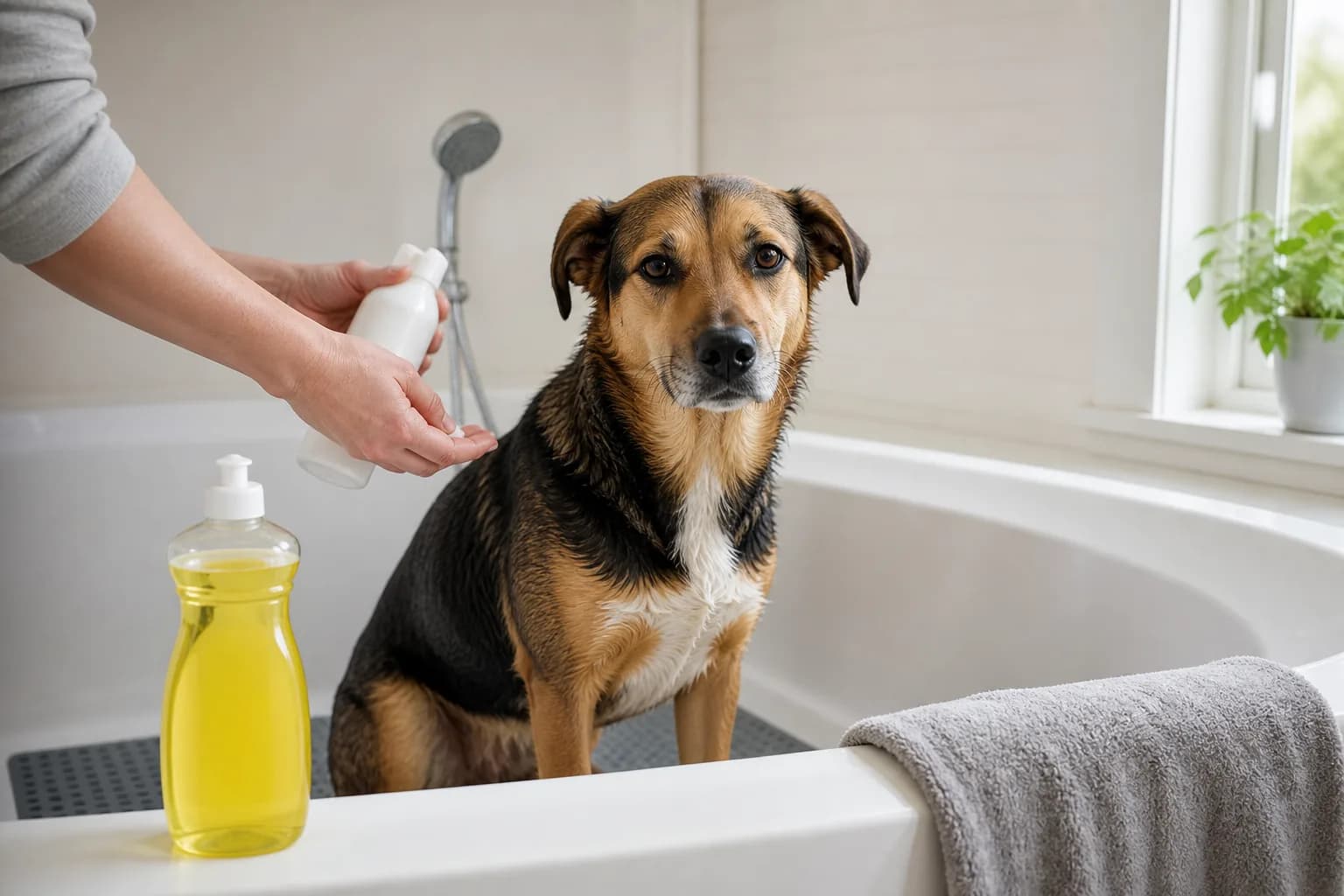
Can you wash a dog with dish soap? In most routine situations, no. Dish liquid is designed to cut grease from cookware, while dog shampoo is formulated for canine skin and coat. One accidental bath is unlikely to be a crisis for every dog, but dish soap can remove protective surface oils and leave some dogs dry, itchy, or irritated.
The important exception is a true decontamination need. A veterinarian or animal poison professional may direct you to use a small amount of mild liquid dish soap to remove an oily substance from the coat. That narrow use is different from choosing dish soap for an ordinary bath, flea control, or an ongoing skin problem.

Sign up for expert-backed reviews and safety alerts all in one place.
Can you wash a dog with dish soap? The short answer
Use dog shampoo for routine bathing. If your dog may have a toxic or oily substance on the coat, call a veterinarian or animal poison service first and follow the exact decontamination instructions you receive.
Dish soap is not the best default for washing a dog. It is a strong degreaser, and a dog's skin barrier depends in part on surface lipids that help hold moisture in and keep irritants out. Removing too much oil can make the coat feel clean while leaving the skin less comfortable.
The direct answer for routine bathing is no: use dog shampoo, not dish soap. Many guides blur a routine bath, accidental use, and true decontamination, but those decisions require different actions. The routine bath decision favors pet shampoo or water. Accidental use calls for thorough rinsing and observation. A potentially toxic oily exposure reaches the veterinary decontamination boundary and requires professional instructions.
If you used a little dish liquid once and rinsed it away completely, observe your dog instead of panicking. Contact a veterinarian promptly if discomfort continues, new symptoms develop, or you are unsure which cleaning product was used.
- Skin and comfort warning signs include redness, swelling, hives, or repeated scratching.
- Eye or breathing warning signs include eye pain, coughing, or difficulty breathing.
- Digestive or whole-body warning signs include vomiting, unusual drooling, weakness, or lethargy.
- Choose a shampoo labeled for dogs, follow its dilution and contact-time directions, keep it out of the eyes and ears, and rinse until the water runs clear.
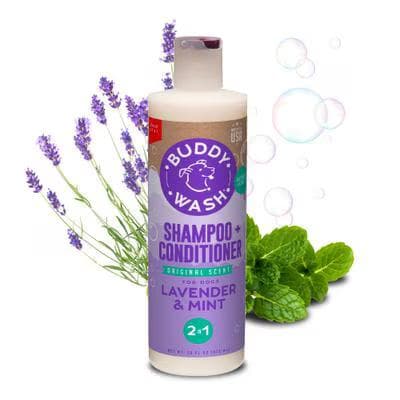
For a planned routine bath, a dog-specific wash is the more appropriate starting point. The Buddy Wash Original Dog Shampoo & Conditioner is one combined shampoo-and-conditioner option for healthy dogs whose owners prefer a single bath step. Read the label before use and stop if irritation develops.
Petful may earn a commission when you click through to Chewy, at no extra cost to you.
| Situation | Best next step | Why |
|---|---|---|
| A normal bath for dirt or odor | Use dog shampoo, or wait until you have it | Dog shampoo is made for routine canine grooming |
| A small muddy spot | Rinse with lukewarm water and towel dry | Many minor messes do not need a degreasing cleanser |
| An oily or potentially toxic substance on the coat | Call a veterinarian or animal poison service before bathing | The substance, exposure route, and needed cleanser can change the instructions |
| Fleas seen on the dog | Use a veterinarian-recommended flea-control plan | A bath does not address eggs, larvae, pupae, or reinfestation in the home |
| Dish soap was already used | Rinse thoroughly and monitor skin, eyes, breathing, and behavior | Residue and irritation matter more than the brand name alone |

Is Dawn dish soap safe for dogs?
Dawn is often discussed because it is a familiar liquid dish detergent and because wildlife responders have used dish liquid in specialized oil-removal work. That history does not make it a routine dog shampoo. Safety depends on the product, concentration, amount, exposure time, the dog's skin, and what you are trying to remove.
A veterinary decontamination study compared water, a dish detergent, chlorhexidine scrub, and povidone-iodine scrub after a simulated topical contaminant was applied to dogs. The cleansers had broadly comparable removal results in that limited setting, and all cleansing approaches altered skin measurements. The authors specifically called for more work on repeated use, so the study supports careful decontamination research, not everyday dish-soap baths. Read the peer-reviewed study.
Product formulas also change. Do not assume that every bottle with the same brand name contains the same ingredients or concentration as an older bottle, a wildlife product, or a veterinary protocol. Check the current label, and do not substitute an antibacterial, concentrated, industrial, or dishwasher formula for mild liquid dish soap.
Can you use Dawn one time?
For an ordinary bath, there is usually no reason to reach for Dawn even one time. Lukewarm water can remove loose dirt, and a dog can often wait until proper shampoo is available. If a veterinarian directs one-time dish-liquid use after an oily exposure, use only the amount and method given, rinse extremely well, and do not repeat the process unless told to do so.
Dogs with an existing rash, open sores, recurrent allergies, very dry skin, a recent topical medication, or a veterinary dermatology plan need individualized advice. A cleanser that seems harmless on one dog can aggravate another dog's compromised skin. Puppies, seniors, and dogs who cannot stay warm also need extra care during any bath.
What about Palmolive and other dish-soap brands?
The same distinction applies to Palmolive and other brands: a kitchen detergent is not a routine canine shampoo. Brand recognition is not a safety test. Fragrance, dyes, antibacterial ingredients, concentrated formulas, and added cleaning agents vary, while the product label is written for dishes rather than animal skin.
Is Palmolive dish soap safe for dogs? For routine baths, no. If you are asking, "Can I wash my dog with Palmolive dish soap?" choose dog shampoo instead. Palmolive on dogs and Palmolive dish soap on dogs raise the same degreasing concern. The phrase "Palmolive safe for dogs" is not a blanket claim. Do not wash a dog with Gain dish soap or Ajax. Dawn, Palmolive, and other formulas are not identical, so those brand-specific searches need qualified answers based on the current label.
Never use automatic dishwasher detergent, a dishwasher pod, powdered machine detergent, heavy-duty degreaser, disinfecting cleaner, or laundry product as a substitute. These are different exposure categories and can pose more serious mouth, eye, skin, or gastrointestinal hazards.
Why dish soap is not a routine dog shampoo
Dog skin is not just a covering. The outer layer forms a working barrier between the body and the environment. Its cells, proteins, and lipids help limit water loss and reduce penetration by irritants. Bathing removes dirt and allergens, but the cleanser has to do that without unnecessarily disrupting the barrier.
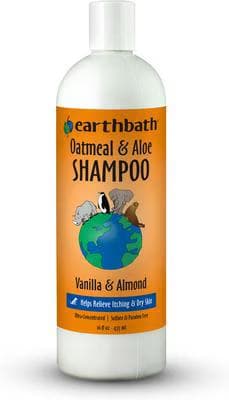
For routine bathing, Earthbath Oatmeal & Aloe Shampoo is a pet-labeled dog-and-cat option for owners who prefer an oatmeal-and-aloe formula. It should still be patch-aware, kept out of the eyes, and used according to its own label rather than treated as a medical therapy.
Petful may earn a commission when you click through to Chewy, at no extra cost to you.
Dish liquid relies on surfactants to lift fats and food residue from hard surfaces. Those surfactants can be useful in a sink and sometimes in directed decontamination, but routine dog bathing does not need the same grease-cutting goal. A squeaky coat is not proof of healthier skin, and the cleaner's purpose matters as much as the clean appearance.
The effect is not identical in every dog. Contact time, dilution, water temperature, rinse quality, bathing frequency, coat density, humidity, and underlying skin disease all matter. That is why absolute claims such as 'one drop always burns' or 'it is completely safe for every dog' are both unhelpful.
Skin-barrier and irritation risks
After an overly stripping bath, owners may notice a dull coat, flaking, tight-looking skin, redness, or increased scratching. Fragrance and other ingredients can add irritation for a sensitive dog. Residue left under a dense coat or between toes may extend contact after the bath appears finished.
Frequent bathing with a harsh cleanser can also complicate the picture for a dog already being evaluated for itch. Scratching may come from parasites, infection, allergy, pain, or another condition. Masking odor or repeatedly stripping the coat does not identify the cause and can make it harder to judge whether a veterinary treatment is helping.
If your dog is itchy after any new shampoo, stop using it and rinse away any remaining product. Mild dryness that resolves quickly may only need observation, but persistent discomfort, broken skin, odor, greasy scaling, hair loss, or repeated ear and paw problems deserves a veterinary exam.

Dishwasher detergents and concentrated cleaners are different
Liquid hand-washing dish soap, automatic dishwasher detergent, and concentrated commercial degreasers should not be grouped together. Machine products may be strongly alkaline or contain enzymes and other agents intended for a closed appliance. Pods can release a concentrated dose into the mouth or eye when bitten or punctured.
- If a dog swallowed cleaner, bit a pod, has product in the eyes, is coughing after inhaling spray, or has a large chemical spill on the coat, contact a veterinarian or animal poison service immediately. Do not induce vomiting or add another cleanser unless a professional directs you.
Bring the container or a clear photo of the full label when you call. The exact product name, ingredient list, concentration, amount, exposure time, and the dog's weight and symptoms help the professional choose the safest next step.
When a veterinarian may recommend dish soap
A veterinarian may recommend mild liquid dish soap when the main problem is an oily substance adhering to the coat and the benefits of removing it outweigh the drying risk. Examples can include certain petroleum-based residues, paint or grease, or a topical toxicant that must be removed before the dog grooms it off. The correct response depends on the specific substance.
The ASPCA's home decontamination guidance tells owners to contact a veterinary professional for possible toxin exposure and notes that mild liquid dish soap may be used for some oily or chemical residues. It also distinguishes liquid dish soap from dishwasher detergent, emphasizes avoiding the eyes and ears, and warns that repeated bathing may dry or irritate the skin. Review the ASPCA decontamination steps.
- Move the dog away from the spill so exposure does not continue.
- Prevent licking only if you can do so safely, and protect yourself from the substance.
- Call with the product label in hand before putting water or another chemical on the coat.
- Use lukewarm water, the directed cleanser, and the directed contact time.
- Rinse completely and keep the dog warm without using a hot blow dryer.
Water can spread some powders or react with some chemicals, and oil-based home remedies can increase absorption of some substances. That is why calling first is important. Advice meant for one contaminant should not be copied to another incident.
- For suspected poisoning or ingestion, call your veterinarian, an emergency veterinary hospital, or ASPCA Animal Poison Control at 888-426-4435. A consultation fee may apply. If the dog has trouble breathing, collapses, has seizures, or cannot stand, seek emergency care now.
What to do if you already used dish soap
If your dog is comfortable and the dish soap was used only on the coat, start by rinsing again with lukewarm water. Work through thick fur with your fingers so water reaches the skin, and continue until no slippery feel or suds remain. Towel dry gently and keep the dog in a warm room.
- Check the product. Confirm whether it was ordinary liquid dish soap or a concentrated, antibacterial, dishwasher, pod, industrial, or mixed cleaning product.
- Check every exposure route. Look for eye contact, licking, swallowing, coughing, and product trapped between toes, in skin folds, under a collar, or around the mouth.
- Watch the dog, not just the coat. Redness, swelling, hives, pain, repeated scratching, vomiting, diarrhea, drooling, coughing, weakness, or unusual behavior changes the urgency.
Do not apply vinegar, baking soda, essential oils, human lotion, or another shampoo to 'neutralize' the first product. Mixing products can increase irritation, and oily products can make decontamination harder. If signs are present, ask a veterinarian what, if anything, should be put on the skin.
Eye, mouth, and skin-exposure steps
For eye exposure, begin gentle flushing with room-temperature water or sterile saline if it can be done safely, then call a veterinarian. Squinting, pawing at the eye, marked redness, cloudiness, or inability to open the eye needs prompt examination because eye damage cannot be assessed from a home description alone.
For mouth exposure, offer no home antidote and do not induce vomiting unless a veterinarian or poison professional instructs you. Dish and cleaning products can foam, and vomiting may increase the chance of material entering the airway. Note how much may be missing and whether the dog is coughing, gagging, or drooling.
For skin exposure, rinse thoroughly and monitor. If redness or discomfort continues after rinsing, or if the skin was already inflamed, infected, or under medical treatment, contact the veterinarian who knows the dog's history. Bring the cleanser label and a photo of the affected area.
Does Dawn dish soap kill fleas?
A soapy bath can remove or kill some adult fleas that are on a dog at that moment, but it is not a complete flea-control program. Flea eggs, larvae, and pupae develop in the environment, and newly emerged adults can jump back onto the pet. The flea life cycle therefore continues after the visible adults are washed away, so any apparent relief can be brief.
The Companion Animal Parasite Council recommends year-round flea control tailored to the pet and notes that established infestations can take months to bring under control. Every dog and cat in the home generally needs an appropriate product, and environmental stages have to age out while reinfestation is prevented. See CAPC's flea-control guidance.
- Ask your veterinarian which flea preventive fits each pet's species, age, weight, health, and current medications.
- Never use a dog-only flea product on a cat. Some canine ingredients can be dangerous to cats.
- Wash pet bedding as directed and vacuum areas where pets rest, without applying unapproved pesticides to the animal.
- Seek veterinary care for pale gums, weakness, rapid breathing, heavy flea burdens, or a very young animal because blood loss can become serious.
A flea shampoo can be one part of a plan when chosen for the individual dog, but it does not replace residual prevention. Petful's guide to flea shampoos for dogs explains how bath products differ from longer-acting control.
What can you use if you do not have dog shampoo?
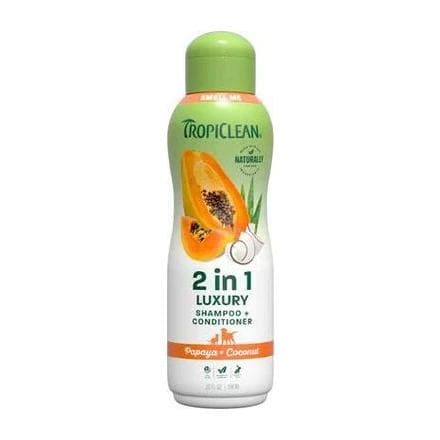
For routine grooming, TropiClean Luxury 2-in-1 Dog Shampoo & Conditioner is one dog-labeled shampoo-and-conditioner option; use it only as directed and stop if irritation develops.
Petful may earn a commission when you click through to Chewy, at no extra cost to you.
What should I wash my dog with if I don't have dog soap? For ordinary dust or mud, use lukewarm water and a clean cloth, then towel dry. The routine bath can wait until dog shampoo is available. Pet-formulated bathing and spot-cleaning alternatives fit ordinary cleanup when there is no toxin, wound, eye exposure, skin disease, or sticky chemical involved. For a ready-to-use bath product, Buddy Wash Original Dog Shampoo & Conditioner is one dog-labeled option to keep with the routine grooming supplies.
- Plain lukewarm water: useful for loose dirt, dust, and small muddy areas.
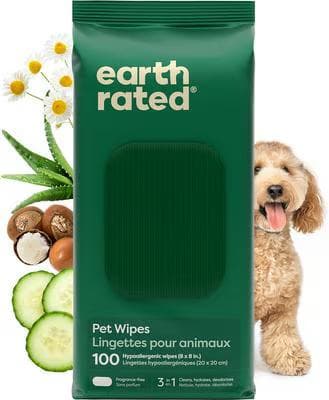
For light routine spot-cleaning, Earth Rated unscented grooming wipes are a pet-specific option for paws or small coat areas; follow the label and use a full bath when the coat needs broader cleaning.
Petful may earn a commission when you click through to Chewy, at no extra cost to you.
- A damp pet-safe cloth: useful for wiping the outer coat and paws when no medical concern is present. For similar light spot-cleaning, Earth Rated unscented grooming wipes are a pet-specific option when used as directed.
- Dog shampoo borrowed from a trusted neighbor or purchased before the bath: better than substituting a household cleaner. When buying a replacement, TropiClean Luxury 2-in-1 Dog Shampoo & Conditioner is one dog-labeled option to consider.
- Veterinarian-prescribed shampoo: use only for the dog and condition for which it was prescribed, with the stated contact time.
Avoid homemade mixtures that combine dish soap with vinegar, peroxide, baking soda, or essential oils. A mixture can irritate skin, may be unsafe if licked, and is not automatically effective for the problem. This routine cleanup advice stops at a potential toxic exposure. Veterinary decontamination is different because the chemical, exposure route, and timing determine whether water or a cleanser is appropriate. Call first rather than treating a household recipe as a universal answer.
If your dog regularly needs emergency cleanup, assemble a small grooming kit before the next mess: dog shampoo, towels, a non-slip mat, a cup or handheld sprayer, cotton balls for the outer ear opening only, and treats. Petful's step-by-step dog bathing guide covers preparation, water temperature, rinsing, and drying.
Dawn vs. dog shampoo: which is better?
| Feature | Liquid dish soap | Dog shampoo |
|---|---|---|
| Primary design | Cut grease from dishes and hard surfaces | Clean canine skin and coat |
| Routine bathing | Not the preferred choice | Preferred when the label fits the dog |
| Directed decontamination | May be used for certain oily residues when a professional directs it | May not remove a specific contaminant unless selected for that purpose |
| Skin conditions | Not a treatment | Medicated products may be prescribed for a diagnosed condition |
| Flea control | May remove some adult fleas during the bath but gives no residual control | A labeled flea shampoo may be one part of a broader veterinary plan |
| Rinse needs | Must be rinsed completely | Must be rinsed according to the label; medicated contact time may vary |
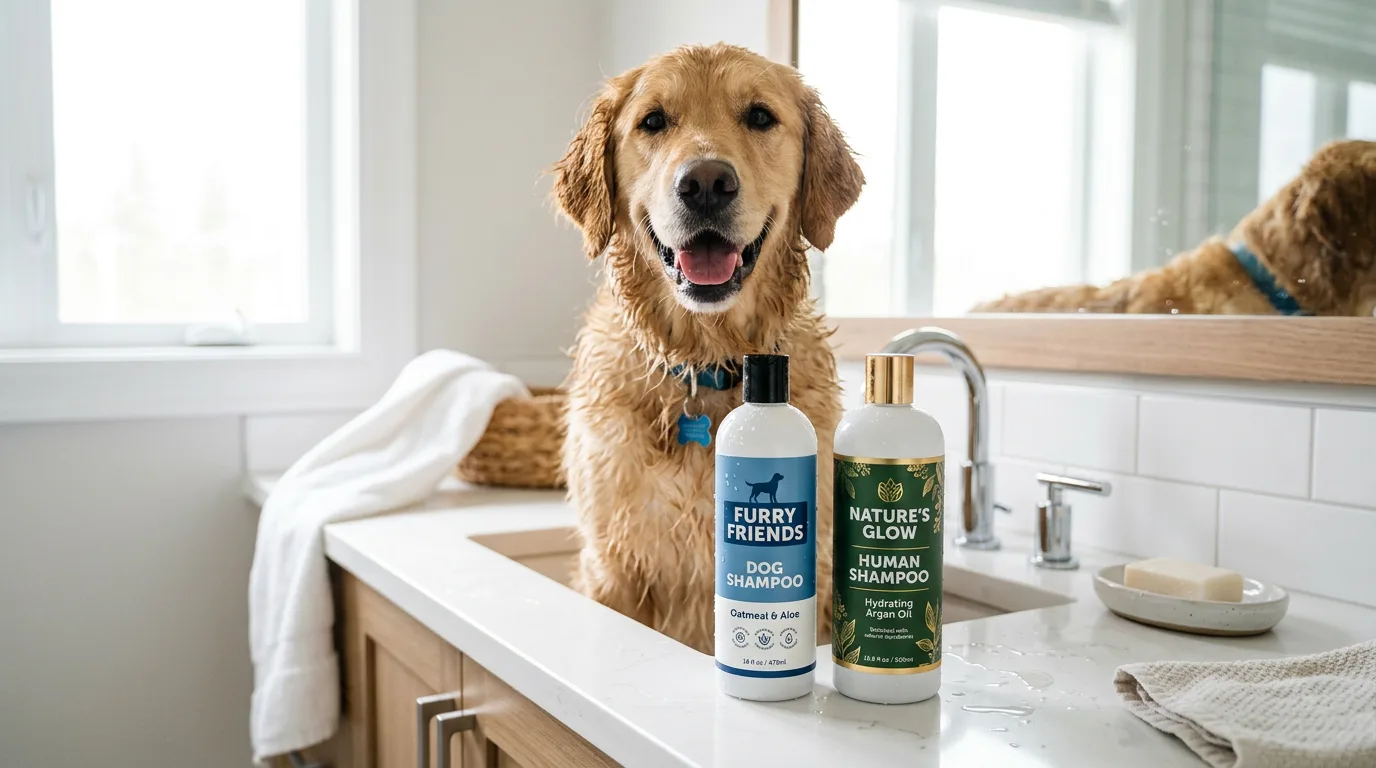
For routine use, dog shampoo wins because its intended user is a dog. That does not mean every dog shampoo fits every dog. A strongly fragranced cosmetic product may still bother a sensitive animal, and a medicated shampoo can be inappropriate when used without the diagnosis or schedule it was designed for. For a formulation comparison, Petful's dog shampoo versus human shampoo guide explains why species-specific labeling matters. An oatmeal-and-aloe option for that kit is Earthbath Oatmeal & Aloe Shampoo, used according to its label.
For decontamination, 'better' depends on the substance. Mild dish liquid can be useful for oil, but other contaminants call for different handling, and some should not be wetted before professional advice. The first tool is the product label and a veterinary or poison-control call.
For fleas, neither a kitchen bath nor a flea shampoo alone solves the life cycle in an established household infestation. The better strategy is an approved preventive for every pet, consistent dosing, and realistic follow-through while environmental stages disappear.
How to choose dog shampoo for routine baths
Start with the purpose. A healthy dog who rolled in dirt needs a basic cleansing shampoo. A dog with recurrent itch, odor, greasy scale, hair loss, sores, or ear and paw inflammation needs a veterinary assessment before owners cycle through products. The diagnosis determines whether an antimicrobial, antifungal, keratolytic, moisturizing, or other medicated formula is appropriate.
- Look for a clear dog-use label, complete directions, and an ingredient list.
- Choose fragrance-free or lightly fragranced options when scent has bothered the dog or owner before.
- Match the product to age and species restrictions. Do not assume a dog product is safe for cats in the home.
- Follow dilution, contact time, frequency, and rinse directions exactly.
- Introduce one new product at a time so a reaction is easier to identify.
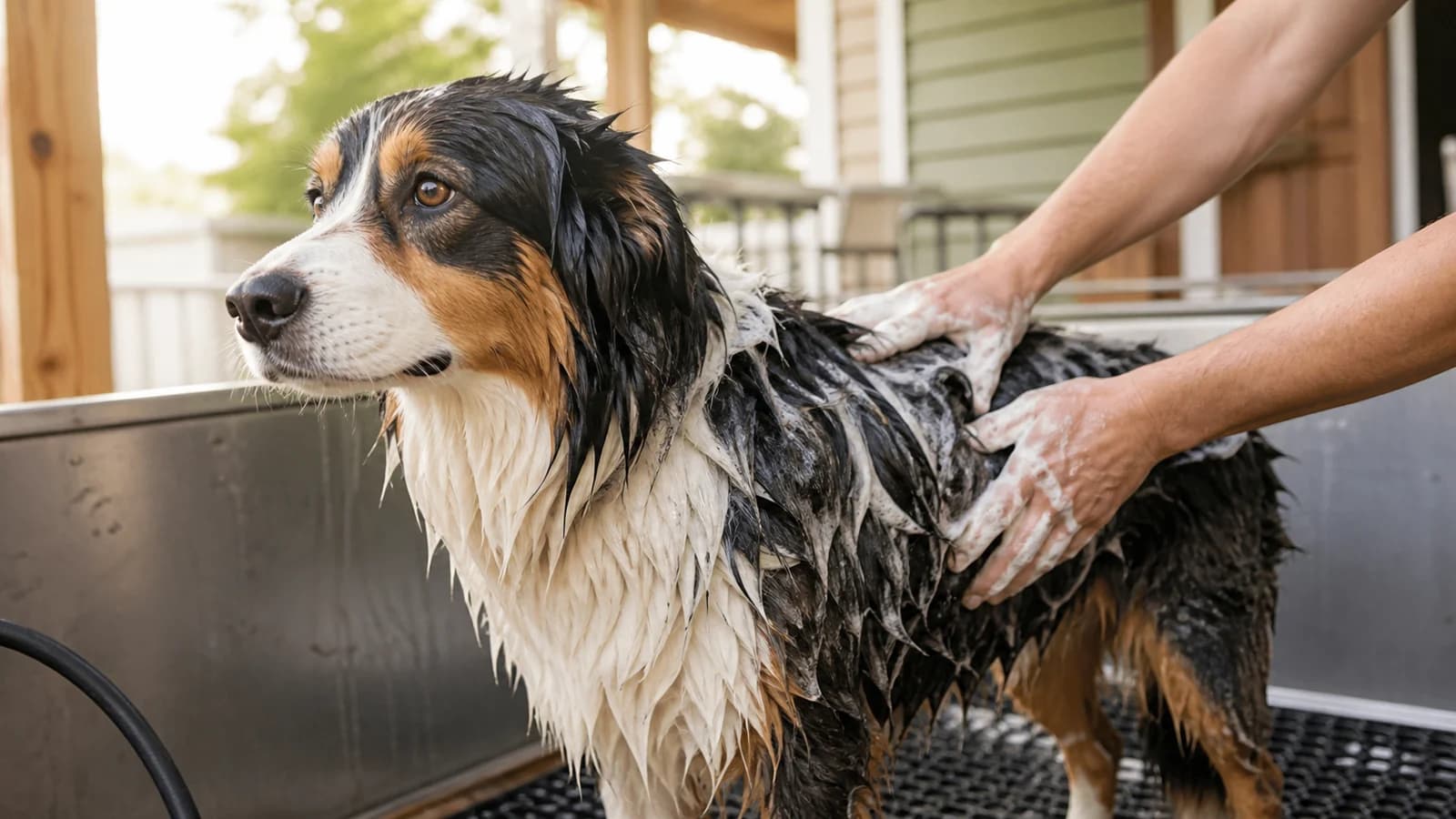
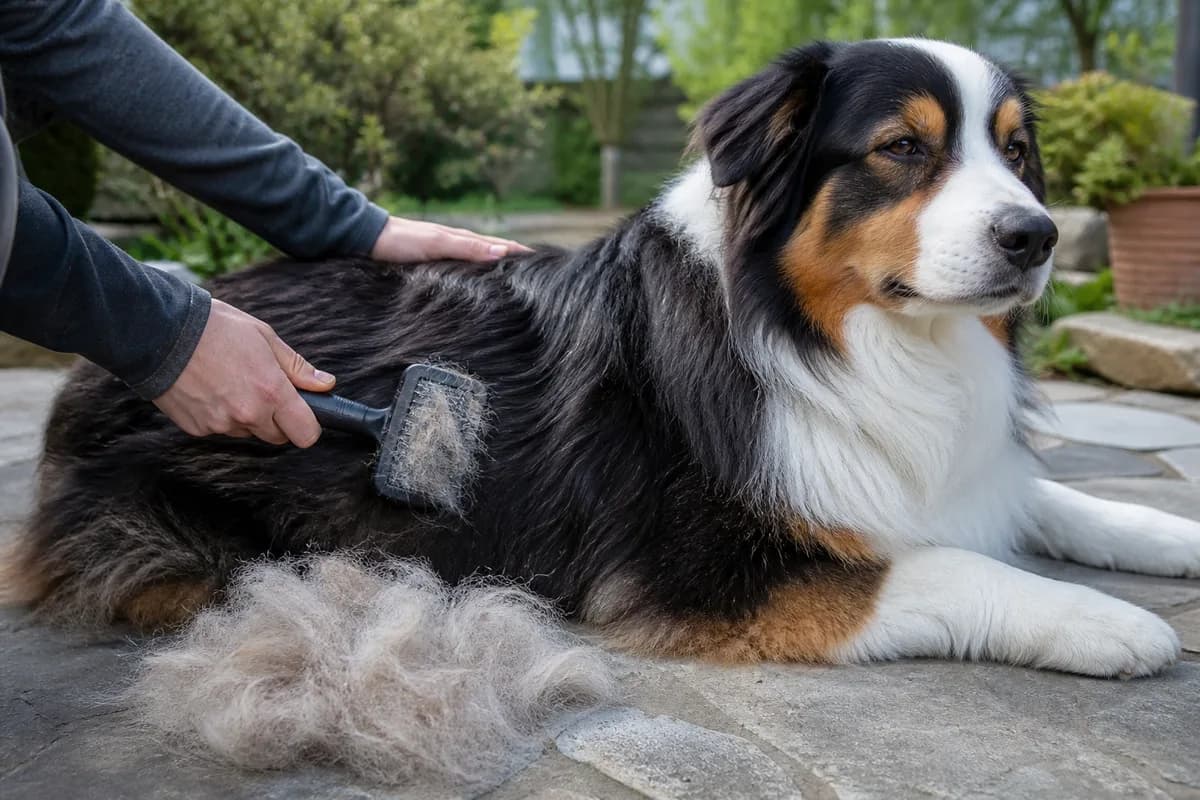
Bathing technique matters as much as the bottle. Brush out mats before wetting because water can tighten them. Use lukewarm water, protect the eyes and ear canals, massage without scraping the skin, and rinse the belly, armpits, groin, feet, and dense undercoat carefully.

Dry with towels and keep the dog warm. A high-velocity dryer can be useful in trained hands, but hot household air directed at one spot can burn skin or frighten a dog. Stop if the dog becomes distressed, and use professional grooming help when mobility, fear, matting, or coat density makes a safe bath difficult.
If the veterinarian prescribed shampoo, treat it like medication. Confirm whether it must be diluted, how long it should remain on the skin, how often to use it, and whether conditioner or topical flea medication timing matters. Petful's overview of shampoo therapy for dogs can help owners prepare questions, but the dog's treatment plan should come from the clinician.
The simplest rule remains reliable: dish soap belongs by the sink, dog shampoo belongs in the routine bath kit, and potential toxin exposures belong on the phone with a veterinarian or animal poison professional.
Frequently asked questions
Can I wash my dog with Dawn dish soap once? For a normal bath, choose dog shampoo or plain lukewarm water until you can get it. One past bath with ordinary liquid dish soap is not automatically an emergency if the dog is comfortable and was rinsed completely. If a veterinarian directs one-time dish-liquid use for an oily contaminant, follow the exact product, amount, contact time, and rinsing instructions.
Is dish soap toxic to dogs? Ordinary liquid dish soap can irritate a dog's skin, eyes, mouth, and gastrointestinal tract, especially when concentrated, left on the coat, or swallowed. Risk varies by formula and exposure. Dishwasher detergent, pods, disinfecting products, and industrial degreasers are different and may be more hazardous. Call a veterinarian or animal poison service with the current container or a clear label photo.
Can dish soap remove fleas from a dog? A soapy bath may remove or kill some adult fleas during the bath, but it provides no lasting protection. Eggs, larvae, and pupae remain in the environment, and new adults can return to the pet. Use a veterinarian-recommended preventive for every dog and cat in the home, dose consistently, and follow an appropriate household cleanup plan.
For ordinary dust or mud, rinse with lukewarm water or wipe a small area with a clean damp cloth, then towel dry and wait until you have dog shampoo. Do not substitute household cleaner or a homemade chemical mixture. If the coat has oil, paint, pesticide, fuel, or another potentially toxic substance on it, call a veterinarian or animal poison service before bathing.
What should I do if dish soap got in my dog's eyes? Begin gentle flushing with room-temperature water or sterile saline if you can do so safely, and contact a veterinarian. Do not add another cleaner or rub the eye. Squinting, pawing, marked redness, cloudiness, discharge, or inability to open the eye requires prompt examination because the eye's surface cannot be assessed reliably from a home description.
Dog shampoo is formulated, tested, directed, and labeled for canine skin and coat, while dish soap is designed to cut food grease on hard surfaces. That degreasing goal can remove more surface oil than a dog needs removed during an ordinary bath. Dog shampoos still differ, so owners should match the label to the dog's age, skin history, grooming need, and veterinary treatment plan.
Sources
Veterinarian
Over the past 10 years, the Petful® veterinary team of writers has included a number of experts, such as veterinarians Dr. Pippa Elliott, BVMS, MRCVS; Dr. Debora Lichtenberg, VMD; Dr. Phil Zeltzman, DVM, DACVS, CVJJ; and Dr. Judy Morgan, DVM, CVA, CVCP, CVFT; among others. Providing accurate, trustworthy information is our utmost concern, so all of our pet health content is regularly reviewed, updated and edited by veterinary professionals. Learn more about Petful.
Veterinarian · BVMS, MRCVS
Dr. Pippa Elliott, BVMS, MRCVS, is a veterinarian with nearly 30 years of experience in companion animal practice. Dr. Elliott earned her Bachelor of Veterinary Medicine and Surgery from the University of Glasgow. She was also designated a Member of the Royal College of Veterinary Surgeons. Married with 2 grown-up kids, Dr. Elliott has a naughty Puggle named Poggle, 3 cats and a bearded dragon.
Sign up for expert-backed reviews and safety alerts all in one place.