How to Get Rid of Skunk Smell on Dog: The Recipe That Works
Learn how to get rid of skunk smell on a dog with the vet-recommended peroxide, baking soda, and dish soap recipe, step-by-step bathing, what not to use, the best skunk products, and when to call the vet.
Petful is reader supported. As an affiliate of platforms like Amazon and Chewy, we may earn a commission when you buy through links on this page. There is no extra cost to you.
It usually happens after dark: the back door opens, your dog bolts into the yard, and a minute later the air turns to burnt rubber and rotten eggs. If you are searching for how to get rid of skunk smell on dog fur right now, the short answer is this: keep your dog outside, check the eyes, and wash the coat with a fresh mix of 1 quart of 3% hydrogen peroxide, 1/4 cup of baking soda, and 1 to 2 teaspoons of dish soap.
That homemade formula chemically breaks down the oily compounds in skunk spray instead of covering them up, which is why veterinarians at Cornell, VCA, and the AKC all recommend it. Below you will find the exact recipe and how to scale it, a step-by-step bath, what not to waste time on, the store-bought products that work when you have no peroxide, and the signs that mean your dog needs a vet instead of a bath.

Sign up for expert-backed reviews and safety alerts all in one place.
The Importance of Quick Action After a Dog Is Sprayed by a Skunk
If a skunk sprayed your dog, the biggest mistake is bringing the dog inside to rinse in the tub. Skunk spray is an oil. The longer it sits, the deeper it works into the coat and skin, and plain water spreads it and can make it smell stronger. Treat the next 15 minutes as the most important part of how to clean a dog sprayed by a skunk.
- 1Keep your dog outside or in a garage; do not walk a sprayed dog across carpet or furniture.
- 2Check the eyes and mouth before anything else; red, squinting eyes need a rinse first.
- 3Do not wet the coat with plain water before you apply a neutralizer.
- 4Mix fresh peroxide solution only when you are ready to use it, and never store it.
- 5Call your vet for eye injuries, bites, scratches, vomiting, or weakness.
What to use to clean dog after skunk spray depends on what you have on hand, so gather these before you start:
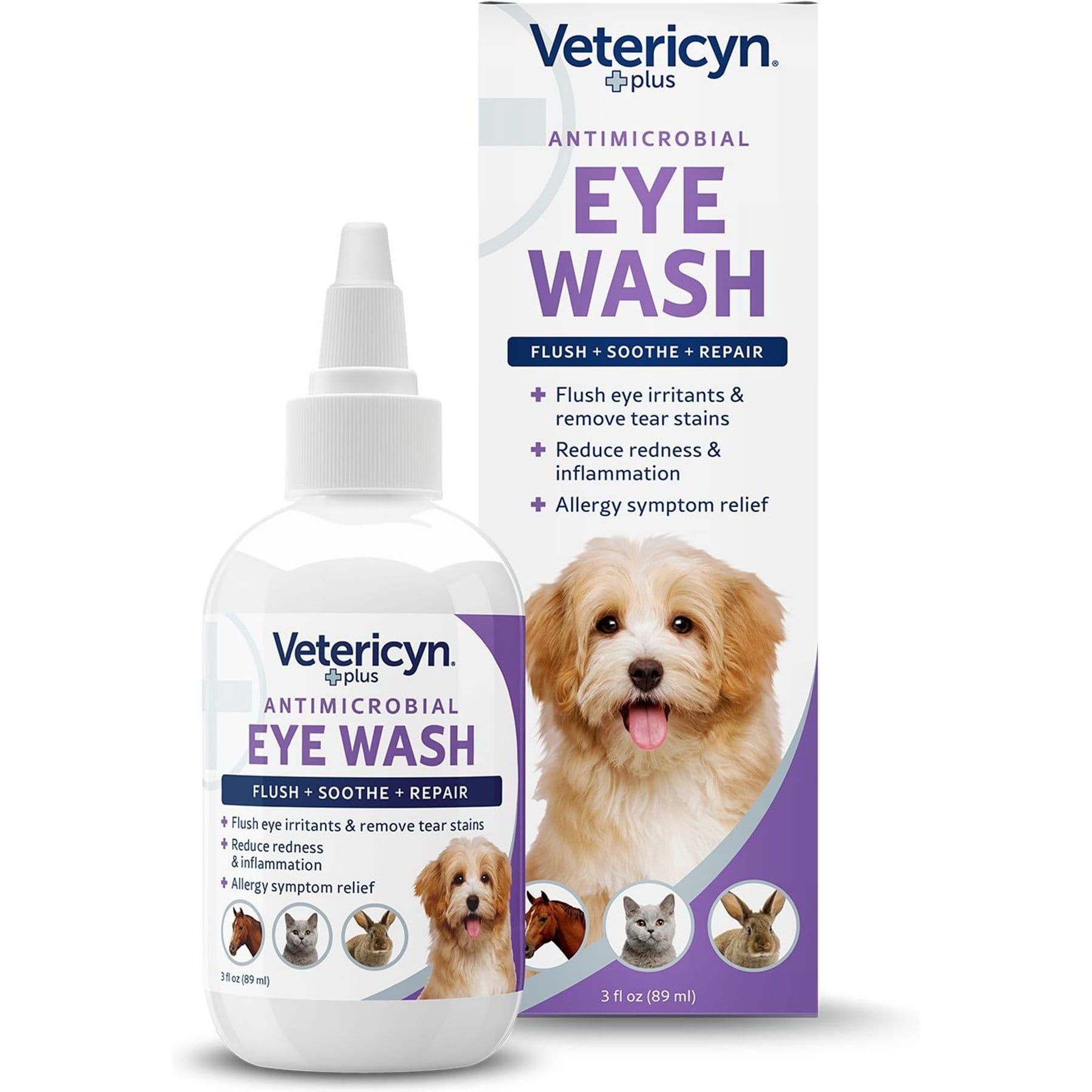
A sterile pet eye wash is the first thing you reach for after a face-on spray; Vetericyn Plus flushes the thiols out of the eyes before you start on the coat.
Petful may earn a commission when you click through to Chewy, at no extra cost to you.
- A fresh bottle of 3% hydrogen peroxide, baking soda, and liquid dish soap
- Rubber or latex gloves and old clothes you can throw away
- Paper towels to blot the heaviest spray
- Sterile saline eye rinse
- An open bowl or bucket for mixing, plus your dog's regular shampoo and old towels
Does milk help with skunk smell? No. Milk does not neutralize the sulfur compounds in skunk spray, and a milk bath leaves a sour smell of its own once it dries. Some owners dab milk on a sprayed face because it feels gentle, but for the eyes, sterile saline is the safer choice, and for the coat, only an oxidizing wash or a dedicated skunk product will actually clean skunk off dog fur. If you need to know how to treat skunk spray or how to wash dog after skunk spray in a hurry, the rest of this guide walks through it in order.
If Your Dog Was Sprayed in the Face, Eyes, or Mouth
Most dogs take the spray head-on, so check the face before you mix anything. A dog sprayed by skunk in eyes will squint, paw at its face, tear heavily, and may hold one eye shut. The spray works like tear gas and can cause conjunctivitis and, occasionally, a scratch on the surface of the eye called a corneal ulcer.
To remove skunk smell from dog face fur and protect the eyes:
- Flush each eye with sterile saline for several minutes, aiming from the inner corner outward. Our sister site WebVet explains how to clean dog eyes without causing more irritation. Miracle Care Sterile Eye Wash Pads are handy for wiping the lids afterward.
- Never put the peroxide mixture, soap, or shampoo near the eyes. To get rid of skunk smell on dog face fur, apply a small amount of the mixture with a damp washcloth only on the cheeks, chin, and top of the head, holding the muzzle up and away.
- If a skunk sprayed dog in mouth, let your dog drink fresh water and gently wipe the gums and lips with a wet cloth. Drooling, gagging, and vomiting are common for a short time. To get rid of skunk spray in dogs mouth, never pour water down the throat and never use the peroxide mix inside the mouth.
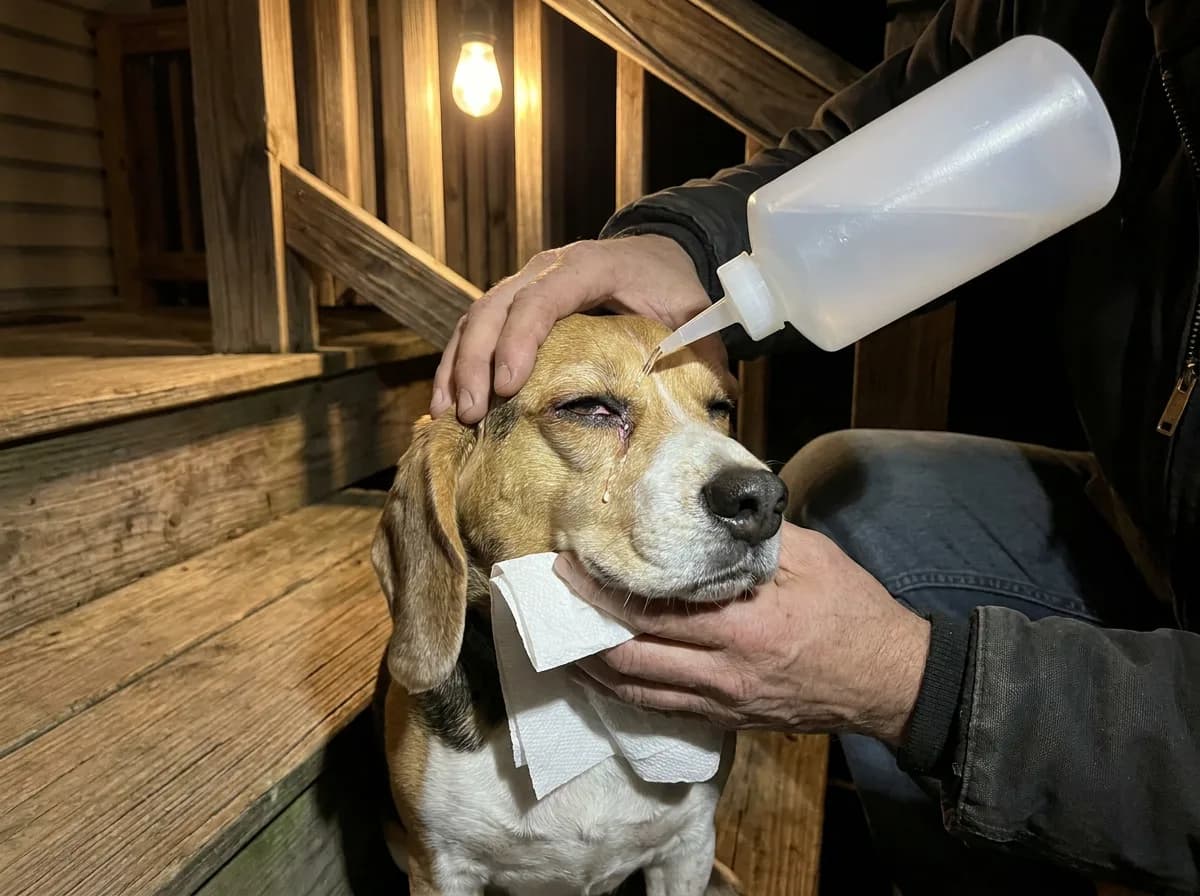
If squinting or redness lasts more than an hour after rinsing, or the eye looks cloudy, call your vet that day. This is the one part of how to get skunk smell out of dogs face skin and fur that should not wait until morning.
Why Skunk Smell Is So Hard to Wash Out
What is skunk spray made of? It is a yellowish oil from two glands under the tail, made mostly of sulfur compounds called thiols, the same chemical family that gives rotten eggs and natural gas their smell. One of the best known is 3-methyl-1-butanethiol, the scent compound behind the classic skunk smell. The spray also contains thioacetates, which smell mild at first but slowly break down into thiols when they get wet.
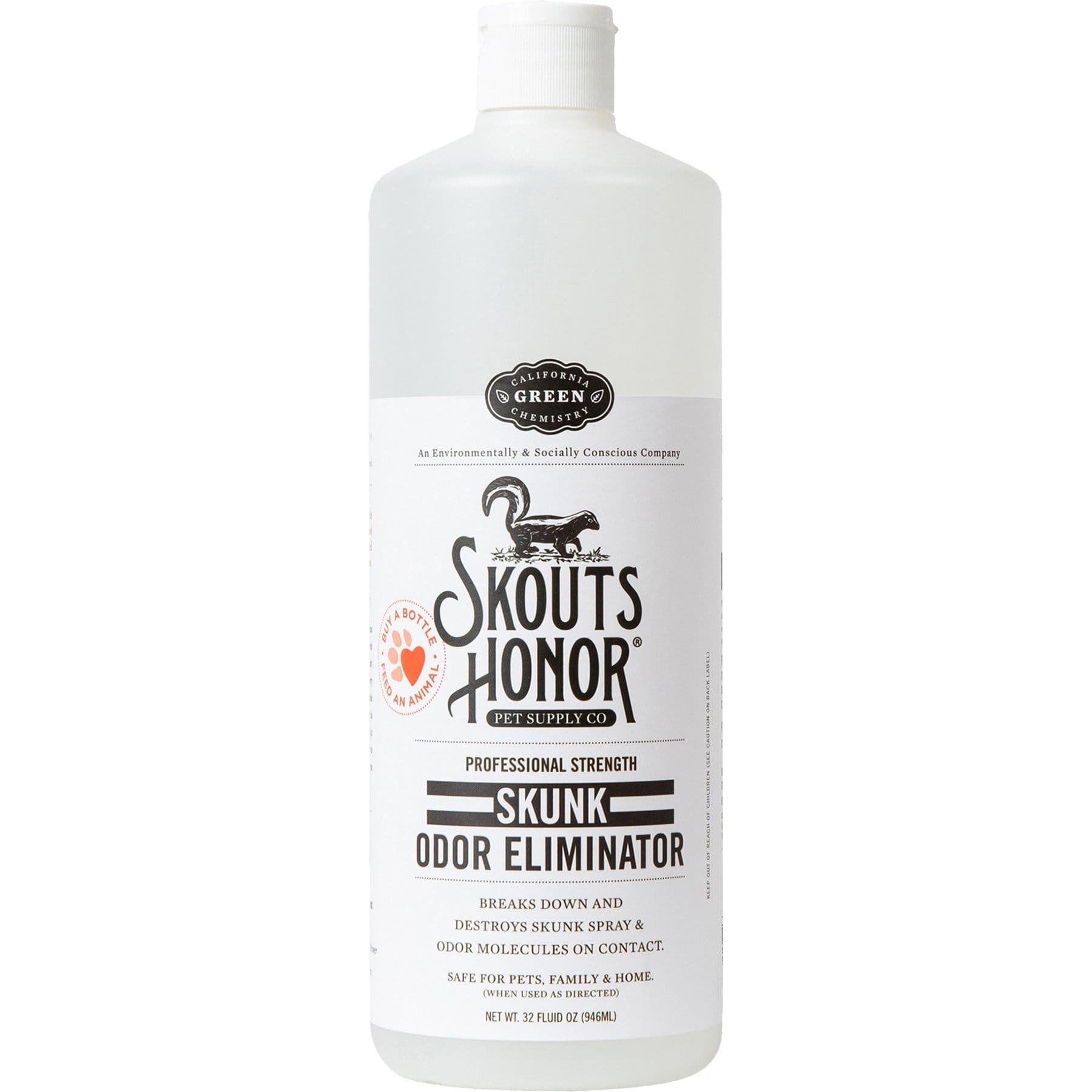
Skout's Honor Skunk Odor Eliminator is a ready-mixed enzymatic spray for the coat, collar, bedding and car seats when you do not want to mix peroxide yourself.
Petful may earn a commission when you click through to Chewy, at no extra cost to you.
That chemical composition explains how skunk spray works on your dog and on your nose. Oil does not rinse off with water, so the odor clings to the coat. Thiols are detectable in tiny amounts. And thioacetates act like a reservoir, which is why a dog that seemed clean can stink again the next time it rains.
What neutralizes the smell of skunk is oxidation. Hydrogen peroxide reacts with thiols and turns them into odorless compounds, baking soda boosts that reaction, and dish soap breaks up the oil so the mixture can reach it. That is what gets rid of skunk smell and what removes skunk smell for good: anything that only masks the scent leaves the chemical formula intact. Products that eliminate skunk smell and neutralize skunk odor on dog fur work the same way, either by oxidizing the thiols or by breaking them down with enzymes.
The Hydrogen Peroxide, Baking Soda, and Dish Soap Recipe
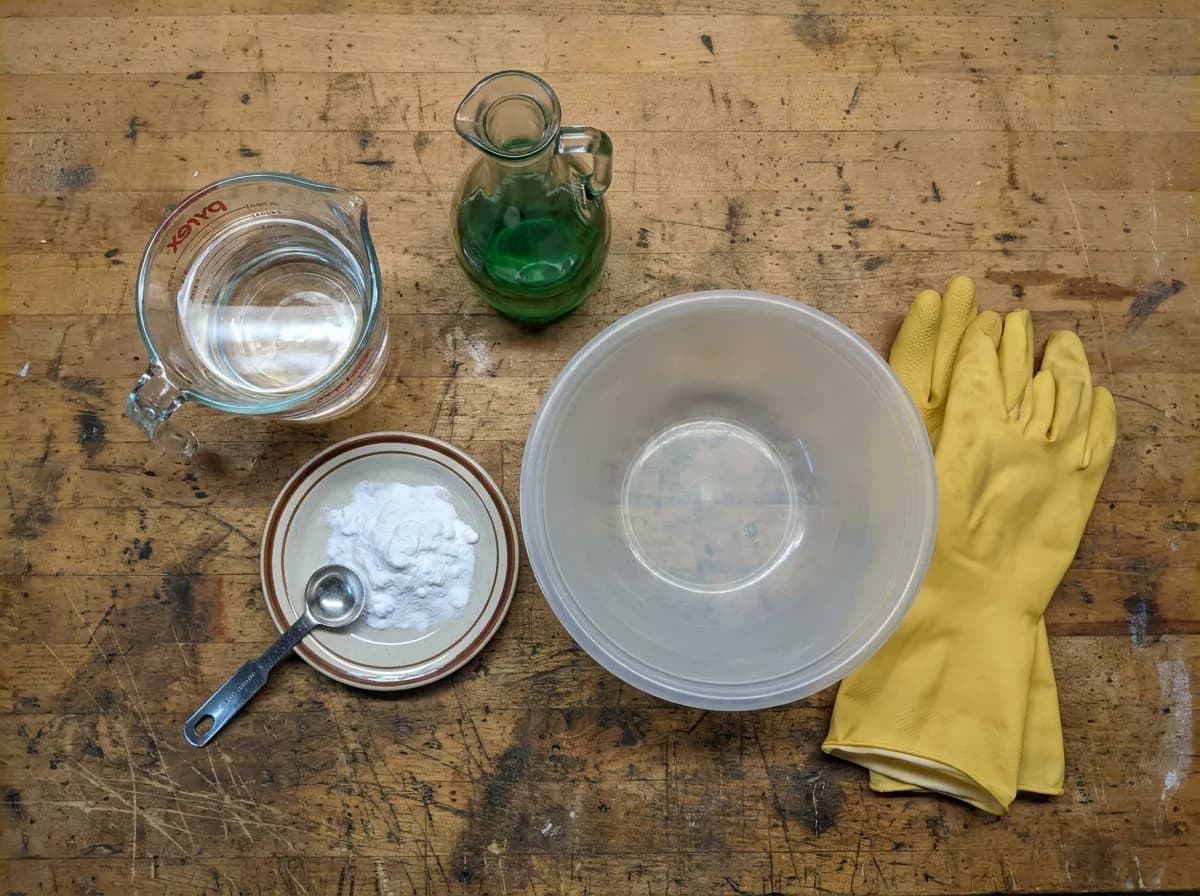
The best home remedy for skunk smell is the formula chemist Paul Krebaum published in 1993. It is the skunk spray recipe vets still recommend, and hydrogen peroxide for skunk odor on dog fur works better than any pantry remedy. Mix it in an open bowl:
- 1 quart (4 cups) of 3% hydrogen peroxide from a fresh bottle
- 1/4 cup of baking soda
- 1 to 2 teaspoons of liquid dish soap
Will Dawn dish soap get rid of skunk smell on dogs? Dawn alone will not neutralize the odor, but it is the right soap for the recipe because it cuts grease. Blue Dawn or any similar grease-cutting dish soap lifts the oily spray so the peroxide and baking soda can reach it. Does Dawn remove skunk smell from dogs without the peroxide? It helps a little, which makes a Dawn wash a reasonable stopgap if you have nothing else.
- Mix this homemade skunk odor remover fresh and use it right away. It releases oxygen as it works, so a capped bottle or closed container can build pressure and burst. Pour leftovers down the drain. Peroxide can also lighten dark coats, so do not leave it on longer than 10 minutes, and never use peroxide stronger than 3%.
Large dogs need more than one batch. Use this table to scale the dog skunk wash recipe:
| Dog size | Batches to mix | Extra lukewarm water | Contact time |
|---|---|---|---|
| Toy or small (under 20 lb) | 1 batch, often half is enough | None | 5 minutes |
| Medium (20 to 50 lb) | 1 batch | None | 5 to 10 minutes |
| Large (50 to 90 lb) | 2 batches, mixed one at a time | Up to 1 quart per batch for thick coats | 5 to 10 minutes |
| Giant or double-coated (over 90 lb) | 2 to 3 batches | Up to 1 quart per batch | 5 to 10 minutes |
If you need to know how to get rid of skunk smell without hydrogen peroxide, a Dawn wash followed by a commercial enzymatic remover is the next best option. Natural skunk smell removal ideas such as vinegar or essential oils do not neutralize thiols, so treat any other homemade skunk shampoo or homemade skunk deodorizer as a temporary fix. How to get rid of skunk smell on dog naturally comes down to the same chemistry: baking soda and hydrogen peroxide are the safe, natural ingredients that work.
How to Get Rid of Skunk Smell on a Dog, Step by Step
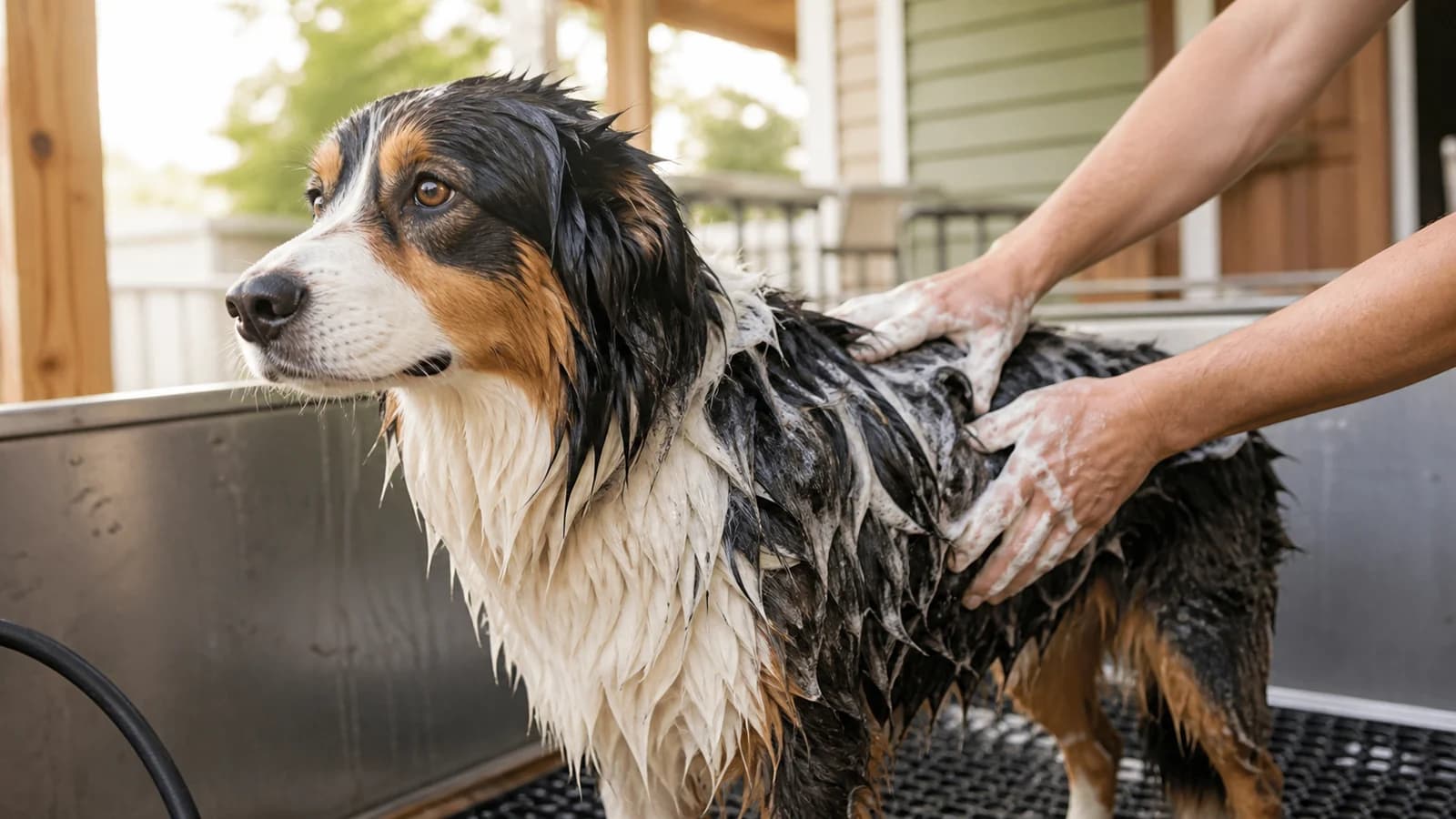
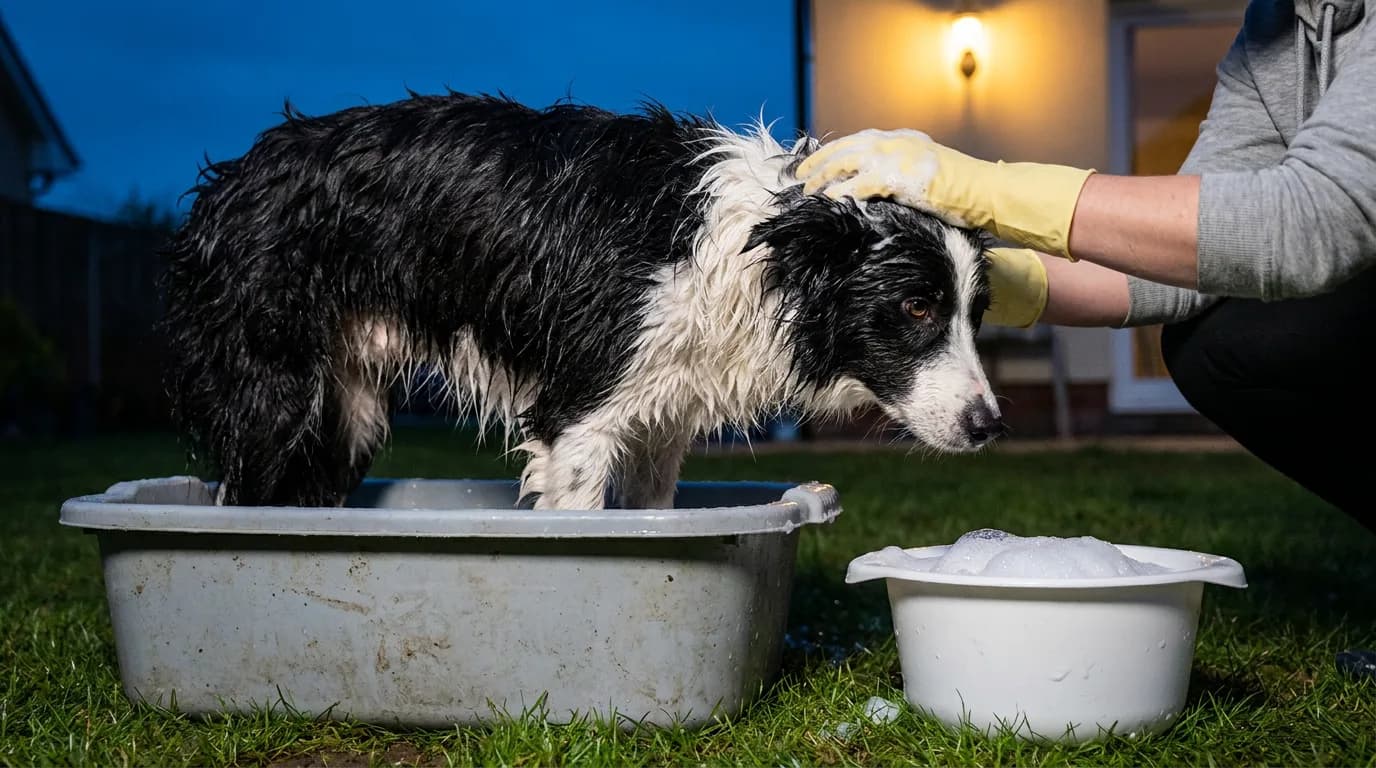
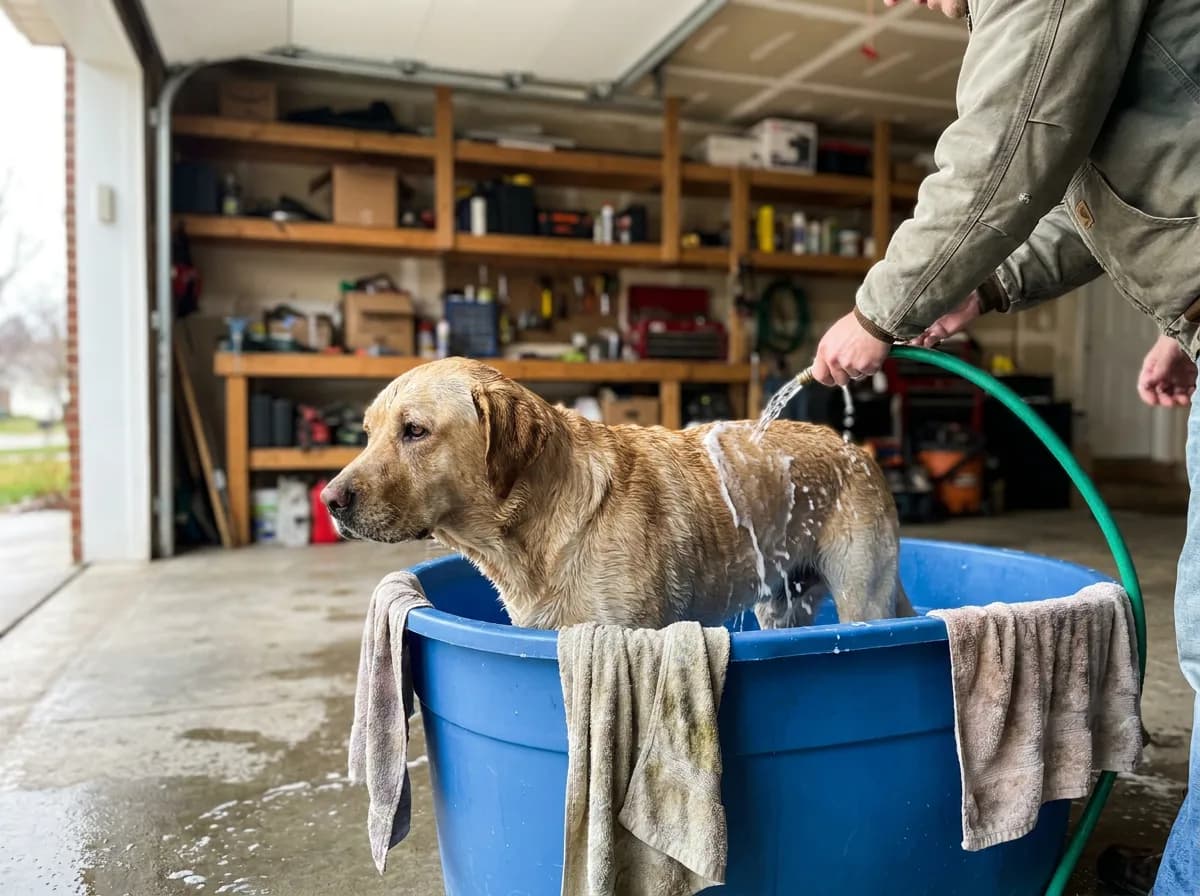
How to get skunk smell off a dog: blot the spray, wash with the fresh peroxide mixture while the coat is still dry, wait 5 to 10 minutes, rinse thoroughly, then shampoo. This is the best way to get rid of skunk smell on dog fur in one session, and the same steps answer how to remove skunk spray from a dog of any size.
- Put on gloves and old clothes and keep your dog outside or in a garage, on a leash if needed.
- Blot the heaviest areas with paper towels. Wipe only where the spray landed so you do not spread the oil.
- Leave a sprayed fabric collar on for the bath, then remove it to clean separately.
- Mix the solution in an open bowl.
- Work it deep into the dry coat with a sponge or gloved hands, avoiding the eyes, nose, and mouth.
- Wait 5 to 10 minutes, but no longer, to avoid lightening the fur.
- Rinse thoroughly with lukewarm water until the coat feels squeaky.
- Follow with a regular dog shampoo, rinse again, and towel dry. A gentle formula such as Burt's Bees Oatmeal Dog Shampoo is kind to skin after a peroxide wash, and our picks for the best dog shampoo cover other coats.
- Sniff the face, neck, and chest. Repeat the whole wash if the smell is still strong.
For the follow-up shampoo, the usual rules for how to give your dog a bath apply: lukewarm water, rinse longer than you think, and dry thoroughly. Owners trading tips on Reddit often say a second round was the step that finally worked, and that matches what vets see. Cleaning skunk smell off dog fur is rarely perfect after one pass on a thick or long coat.
What Not to Use: Tomato Juice, Vinegar, and Other Myths
Will vinegar get rid of skunk smell? Not on its own. Vinegar is acidic, and the reaction that breaks down thiols works best in the slightly alkaline mix that baking soda creates, so white vinegar or apple cider vinegar for skunk smell on dog fur mostly swaps one sharp smell for another. Baking soda and vinegar together cancel each other out, so a skunk remedy vinegar mix or a DIY skunk shampoo for dogs with vinegar is no better than water.
Tomato juice is the most famous myth. A tomato juice bath, a tomato soup bath, or tomato sauce for skunk spray seems to work only because your nose gets tired of the skunk odor after a while, an effect called olfactory fatigue. Someone who walks in fresh still smells skunk, and you now have a pink, sticky dog. If you want to know how to get rid of skunk smell without tomato juice, the peroxide recipe above is the answer.
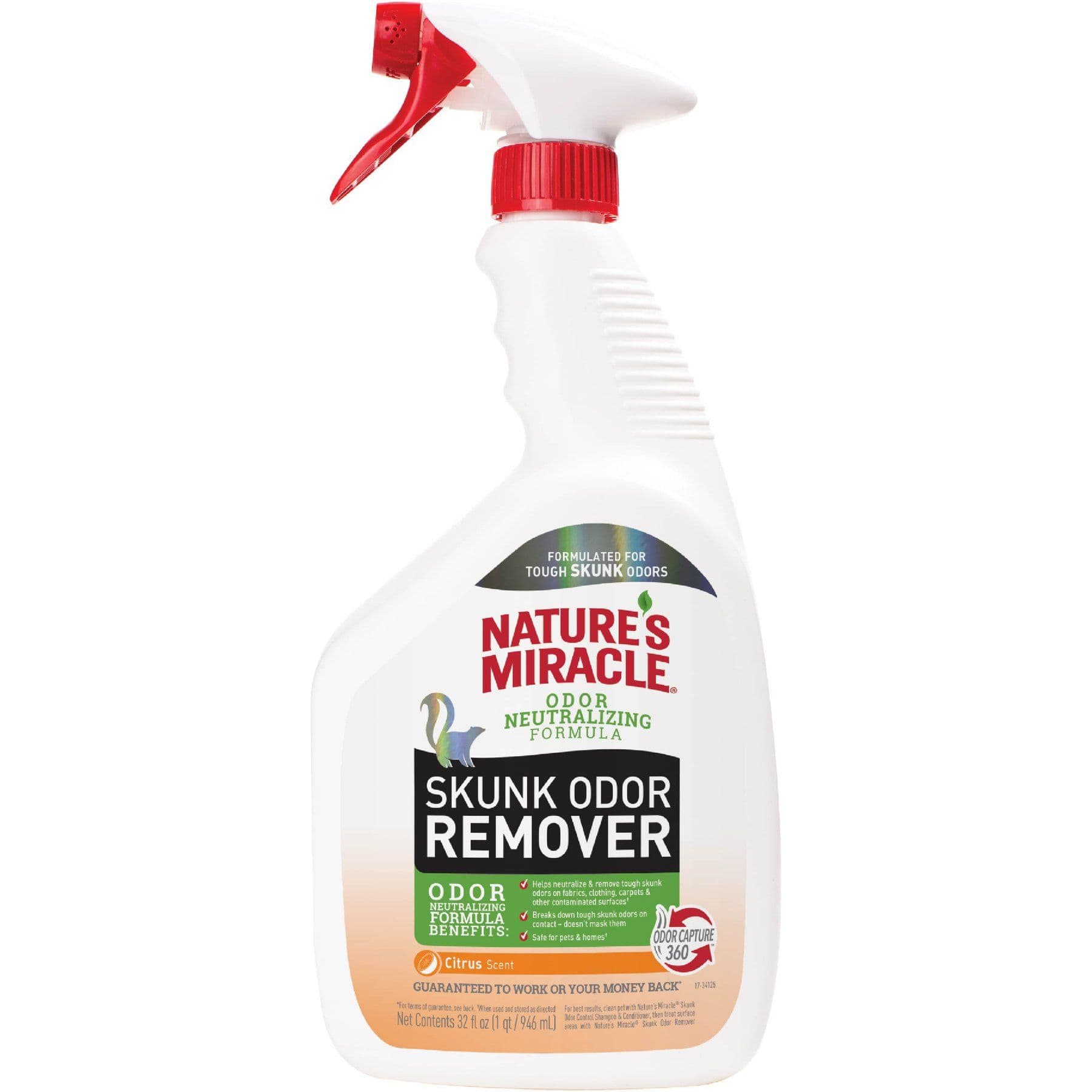
Nature's Miracle Skunk Odor Remover is the budget pick for the coat and for anything the dog rubbed against indoors; safe on carpet and upholstery.
Petful may earn a commission when you click through to Chewy, at no extra cost to you.
| Remedy | Does it neutralize the odor? | What it actually does |
|---|---|---|
| Tomato juice, soup, or sauce | No | Masks the smell through olfactory fatigue and stains light coats |
| White or apple cider vinegar | No | Masks briefly and adds a sour smell; can sting irritated skin |
| Milk | No | Leaves a sour smell; no effect on the oil |
| Essential oils, lavender, or a diffuser blend | No | Masks odor; several oils are toxic to dogs on skin or by licking |
| Massengill douche | No | Masks odor with fragrance; mild but not a fix |
| Bleach or Ozium spray | No | Unsafe on dogs; can burn skin, eyes, and airways |
| Peroxide, baking soda, and dish soap | Yes | Oxidizes thiols into odorless compounds |
Essential oils for dogs sprayed by skunk deserve a special warning. Tea tree, pine, and several other oils can poison dogs, whether applied to the coat or licked off later, and an essential oil diffuser for skunk smell only perfumes the room. Does bleach get rid of skunk smell? It can on hard outdoor surfaces, but never use bleach on a dog or near one. How to get rid of skunk smell on dog fur with vinegar, douche, or boiling vinegar on the stove all fall into the same category: they cover the odor for a few hours at best.
Skunk Shampoos and Odor Removers: When They Beat the Recipe
A commercial skunk odor remover is the better choice when you have no fresh peroxide in the house, when your dog has a black or dark coat you do not want lightened, or when you need to treat bedding and surfaces too. Many skunk sprays happen late at night, so a bottle on the shelf before skunk season is worth having. The best skunk odor remover products are an enzymatic odor eliminator or an odor-neutralizing formula, not a perfume.
How do groomers get rid of skunk smell? Most professional groomers use a degreasing pre-wash followed by an enzymatic skunk shampoo or odor neutralizer, let it sit for the full contact time on the label, then finish with a deodorizing shampoo such as Best Shot One Shot Deodorizing Shampoo. Professional skunk smell removal costs more, but groomers have tubs, dryers, and ventilation you may not.
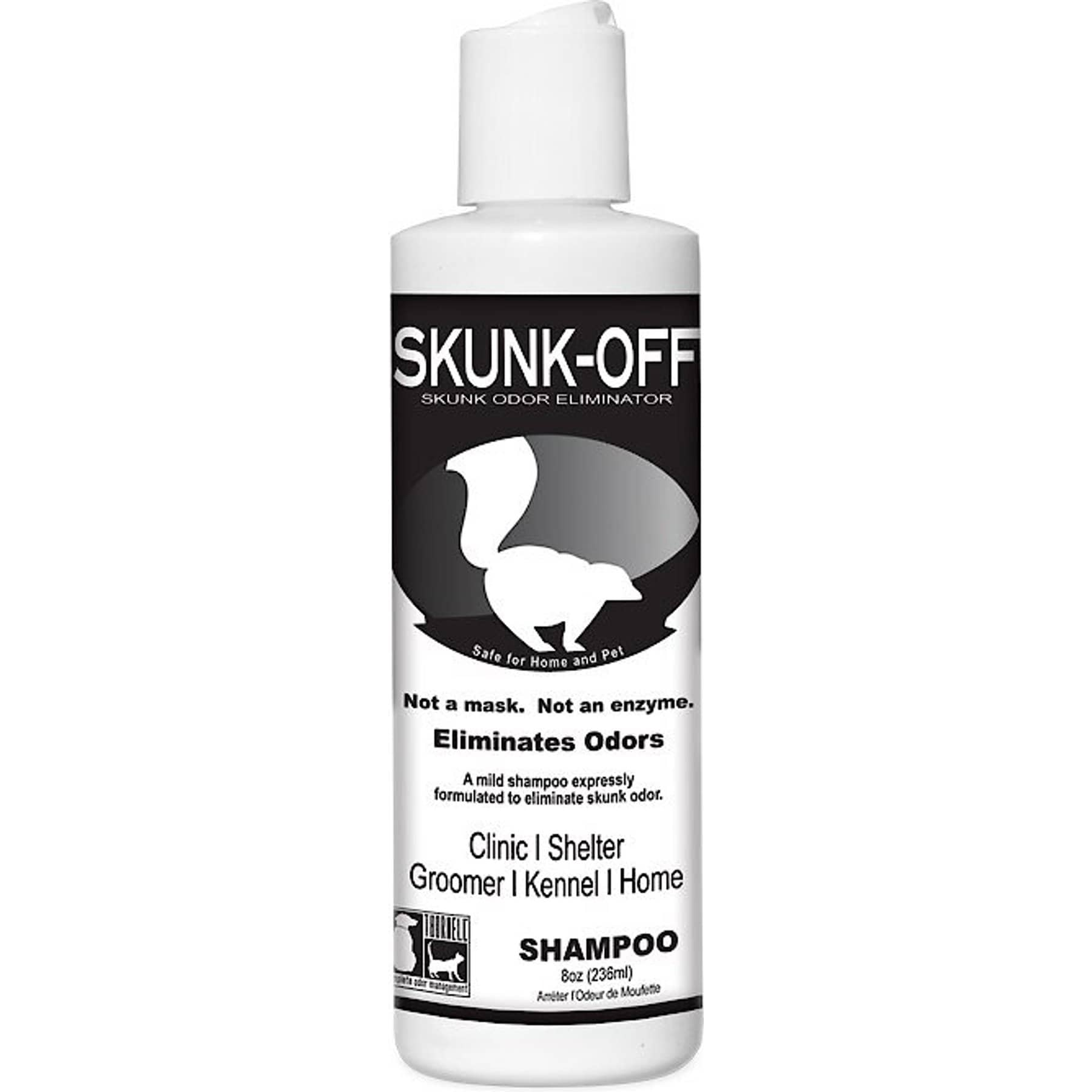
Skunk-Off by Odorcide (the Thornell formula) neutralizes the thiols rather than masking them, and the 8-ounce bottle is enough for one full medium-dog bath.
Petful may earn a commission when you click through to Chewy, at no extra cost to you.
| Option | Speed | Available at night? | Bleach risk to coat | Best use |
|---|---|---|---|---|
| Homemade peroxide recipe | One 15 to 20 minute wash | Yes, if you keep peroxide on hand | Some, on dark coats | Fresh, heavy spray on most dogs |
| Enzymatic odor remover spray | Soak, then wait 5 to 10 minutes | Only if bought ahead | None | Dark coats, faces near the eyes (not in them), bedding, and surfaces |
| Skunk shampoo | One or two lather and rinse cycles | Only if bought ahead | None | Follow-up washes and lingering odor |
Products shoppers compare most often:
- Nature's Miracle Skunk Odor Remover: an enzymatic skunk spray removal product you can use on the coat and on surfaces. Spray until the area is soaked and let it sit before rinsing.
- Skout's Honor Professional Strength Skunk Odor Eliminator: a ready-to-use skunk odor neutralizer for pets and surfaces, useful when the spray hit a dark coat.
- Skunk-Off Shampoo: the Thornell skunk off dog shampoo formula, now sold under the Odorcide brand, from the same line as the Skunk-Off Liquid Soaker and Thornell Skunk-Off spray for surfaces. Whichever brand you choose, check that the label names skunk odor specifically.
- Shampoos labeled de-skunk or odor destroying, and other pet skunk shampoo formulas: good for a second or third wash.
Walmart skunk shampoo and odor remover shelves, PetSmart skunk shampoo aisles, and online stores carry most of these, along with odor scrubbers and scent removers. Whatever skunk cleaner you pick, look for the words enzymatic or neutralizer and follow the label's contact time; a commercial skunk odor eliminator for dogs works only if it stays wet on the coat long enough.
How Long Does Skunk Smell Last on a Dog?
How long will it take for skunk smell to wear off a dog? After a good peroxide wash, most of the odor is gone the same night, and a faint smell usually fades within a few days. Without treatment, skunk smell on a dog can hang on for two to three weeks. Either way, expect a faint whiff to come back when your dog gets wet for a few weeks afterward, sometimes longer after a heavy spray.
That return is the thioacetate effect. Water slowly converts leftover thioacetates into smelly thiols, so a bath, a rainy walk, or a swim releases a little more odor. To get rid of lingering skunk smell on dog fur:
- Repeat the peroxide wash on the face, neck, and chest, where the spray is heaviest.
- Spot-treat with an enzymatic remover between baths instead of washing the whole dog again.
- Trim heavily matted or long fur on the neck and chin if odor stays trapped there.
- Wash the collar, harness, and bedding, which hold residual skunk smell and put it back on a clean dog.
How long to get rid of skunk smell on dog fur completely depends on the dose and the coat, but two thorough washes usually leave only a faint smell that shows up when the coat is wet.
Getting Skunk Smell Out of Your House, Clothes, and Car
If your dog ran inside before you caught it, open windows, run fans, and wash anything the dog touched as soon as you finish the bath. To get rid of skunk smell in house rooms, place bowls of white vinegar or baking soda around affected rooms to absorb odor while the air clears. Will vinegar remove skunk smell from house air? It helps absorb lingering odor, but it does not clean the oil off surfaces.
Does Febreze neutralize skunk smell? Fabric sprays like Febreze help on light odor in upholstery and air, but they will not remove the oily spray itself. For the source, use an enzymatic skunk odor remover for house surfaces. A general pet odor eliminator such as POOPH Odor and Stain Eliminator can follow on carpet and couch fabric once the oil is cleaned up.
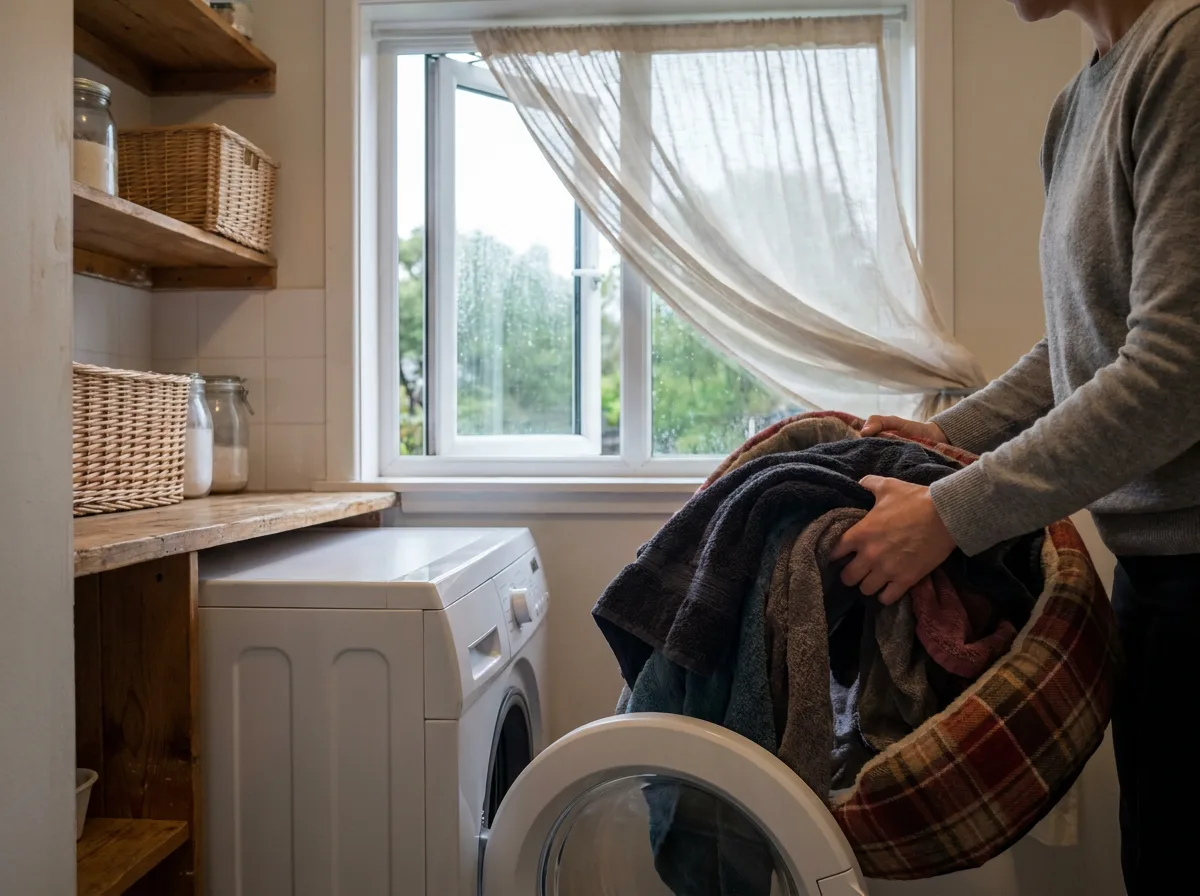
- Clothes and towels: Wash in hot water with 1/2 cup of baking soda added to your detergent; adding white vinegar to the rinse is how to get skunk smell out of clothes with vinegar safely. Air dry, because dryer heat can set the odor. Washing clothes after skunk spray may take two cycles.
- Carpet and couch: Blot, then use an enzymatic skunk odor removal carpet spray or a carpet extractor with a skunk-rated cleaner.
- Dog collar: Wash a nylon collar in the laundry with baking soda; for how to get skunk smell out of a leather dog collar, wipe with the enzyme product and let it air out, or replace it if the smell holds.
- Car: For how to get skunk smell off car paint or tires after you ran over a skunk, wash the undercarriage and wheels at a self-serve car wash, then leave the windows down. For getting rid of skunk smell in car interiors, use a skunk odor remover for car upholstery and a fresh cabin air filter.
- Under house or deck: If a skunk sprayed under your house, ventilate the crawl space, treat the area with an enzymatic remover, and call a wildlife professional if a skunk is denning there. Scented sprays and diffuser oils only mask the smell.
How do you get skunk smell out of your house when it lingers for days? Repeat the enzyme treatment on hard surfaces, clean the HVAC filter, and keep the air moving.
When to Call the Vet After a Skunk Spray
Most sprayed dogs need a bath, not a vet visit. Call ahead if you do go in, because many clinics want to know a skunked dog is coming. Get veterinary help when you see any of the following:
- Squinting, a cloudy eye, or eye redness that lasts more than an hour after rinsing; any bite or scratch from the skunk; vomiting that continues after the first hour; weakness, pale gums, or brown gums; dark red or brown urine in the days after the spray.
Skunks are one of the main wild carriers of rabies in the United States, according to the CDC. A bite or scratch is an emergency even if your dog is vaccinated, so bring your dog's rabies records and read our guide to rabies symptoms in dogs for what to watch. WebVet's guide to the rabies vaccine for dogs explains boosters after an exposure, and skunks can also spread leptospirosis in dogs.
Rarely, a heavy dose of spray damages red blood cells, causing Heinz body anemia or methemoglobinemia within hours to days. Our article on skunk spray toxicity in dogs covers those signs in detail. Drooling and foaming right after a spray is usually from the bad taste, and our guide to a dog foaming at the mouth after a skunk spray explains when that is normal.
Preventing Skunk Encounters During Skunk Season
What time of night do skunks come out? Skunks are most active from dusk until dawn, roughly an hour after sunset through the early morning, which is exactly when most dogs get sprayed. Skunk season peaks twice: in late winter and early spring (about February and March) when skunks mate, and from late summer into fall (about August through October) when young skunks leave the den and roam.
Skunk spray distance is about 10 feet with good aim, and the spray range can reach 15 feet in the wrong wind, so a radius of 15 feet around a skunk is the danger zone. Skunks usually warn first by stamping, hissing, and raising the tail, which gives a leashed dog a chance to back off.
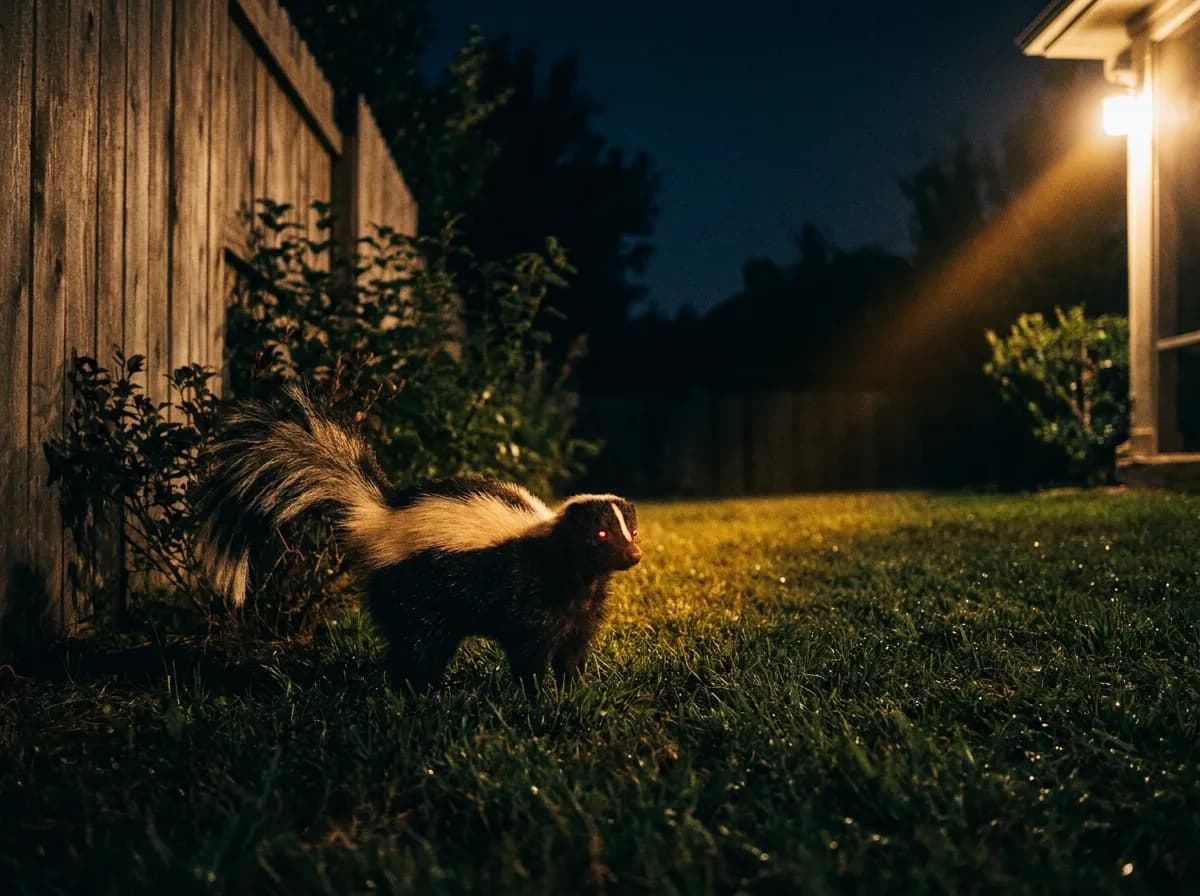
- Turn on yard lights and walk your dog on a leash in the yard after dark during skunk season.
- Bring pet food, bird seed, and trash inside or lock it up.
- Close gaps under decks, sheds, and porches where skunks den.
- Keep a fresh bottle of 3% peroxide, baking soda, dish soap, and saline together so you are ready.
Skunk Smell FAQ
Untreated skunk smell can last two to three weeks outdoors and longer in fabrics, carpet, and enclosed spaces like crawl spaces or cars. Neutralizing the oil with a peroxide wash or an enzymatic remover shortens that to days, though a faint smell can return when a treated dog or surface gets wet.
It is rare. The spray is mainly an irritant, but very heavy exposure can damage red blood cells in a few dogs. Watch for weakness, pale gums or brown gums, and dark urine in the days after, and see a vet right away if they appear. Bites are the bigger risk because skunks can carry rabies.
Wash a nylon collar in hot water with baking soda and detergent, or soak it in the peroxide mixture for a few minutes, rinse, and air dry. A leather collar does not tolerate peroxide well; wipe it with an enzymatic odor remover and let it air out, and replace it if the smell keeps returning.
Talk to your vet first. Cats lick their coats more than dogs and are more sensitive to many cleaning products, so they are more likely to swallow residue. Never use peroxide near a cat's eyes or mouth, and rinse extremely well if your vet approves it.
Shaving is rarely needed and can expose skin to sun and irritation. A spot trim of matted or heavily sprayed fur on the chin, neck, or chest can help when odor stays trapped there, but repeat washes work for most dogs. Do not shave a double-coated breed to remove skunk smell.

Kristine Lacoste has been researching dog and cat breeds for nearly a decade and has observed the animals up close at dog shows in both the United States and the United Kingdom. She is the author of the book One Unforgettable Journey, which was named as a finalist for a Maxwell Award from the Dog Writers Association of America, and was host of a weekly pet news segment on the National K-9 Academy Radio Show. In addition, she was the New Orleans coordinator for Dogs on Deployment, a nonprofit that helps military members and their pets, for 3 years. Kristine has researched and written about pet behaviors and care for many years. She holds a bachelor’s degree in psychology, another bachelor’s degree in English and a Master of Business Administration degree.
Sign up for expert-backed reviews and safety alerts all in one place.