The Best Dog Nail Clippers of 2026, Tested and Ranked for Every Dog Size
We ranked the best dog nail clippers for every dog, from tiny to giant and clear to black nails. The vet and groomer favorite costs less than you think, plus the popular pick worth skipping and the styptic powder to keep close.
Petful is reader supported. As an affiliate of platforms like Amazon and Chewy, we may earn a commission when you buy through links on this page. There is no extra cost to you.
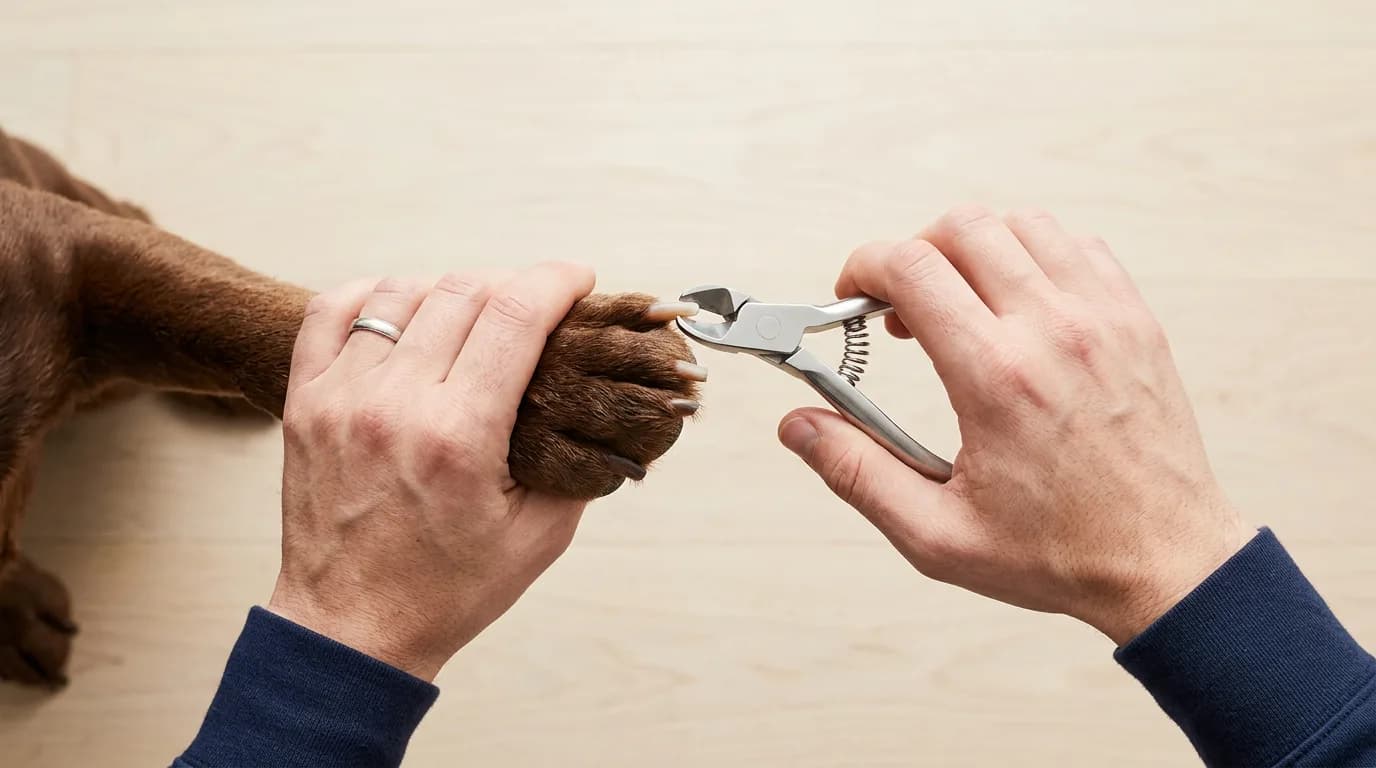
The best dog nail clippers are the ones you will actually reach for every week, and after cross-checking vet recommendations, professional groomer habits, and hands-on testing notes, the winner is refreshingly boring: a plain, sharp, well-built scissor-style clipper that costs less than a bag of treats. The pair that shows up again and again on grooming tables and in veterinary tech kits is the Millers Forge, and it beats clippers that cost three times as much.
This guide ranks the tools, not the technique. If your dog is small, giant, black-nailed, or convinced the clippers are a predator, there is a right pick below for your exact situation, plus the one popular clipper worth skipping and the styptic powder you should have in the drawer before you ever make the first cut.
- 1The Millers Forge Medium is the overwhelming vet and groomer pick, and it is inexpensive.
- 2Match the clipper to your dog's weight and nail thickness, not to the flashiest marketing.
- 3Scissor-style (guillotine-alternative) clippers give you the most control and stay sharp longest.
- 4Keep styptic powder within arm's reach every single time you trim, before you ever start.
- 5Grinders are gentler on anxious dogs and safer on thick black nails, but they are slower and noisier.

Sign up for expert-backed reviews and safety alerts all in one place.
The best dog nail clippers at a glance
Here is the short version if you just want to buy the right tool and get on with it. Every pick below is a scissor-style (plier-style) clipper unless noted, because that design gives you the leverage and visibility that guillotine and cheap novelty clippers cannot.
- Best overall: Millers Forge Medium, the unanimous professional pick for most dogs.
- Best for small dogs (under 20 lb): Millers Forge with Safety Stop, the same quality in a smaller, more forgiving jaw.
- Best professional all-rounder: Safari Professional Nail Trimmer, a groomer-shelf staple that handles medium and large dogs.
- Best with a quick sensor (for black nails and nervous owners): the Miracle Care Quickfinder, which lights up as you near the quick.
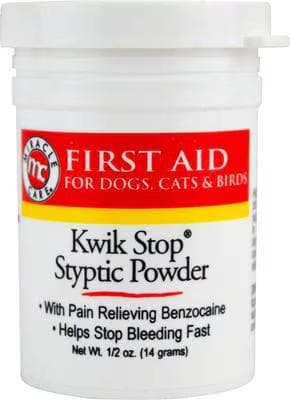
- Essential companion, not optional: Kwik Stop styptic powder to stop a bleed in seconds.
| Clipper | Best for | Style | Dog size |
|---|---|---|---|
| Millers Forge Medium | Best overall | Scissor / plier | Small to large |
| Millers Forge with Safety Stop | Nervous trimmers, thin nails | Scissor with guard | Under 20 lb |
| Safari Professional | Everyday all-rounder | Scissor / plier | Medium to large |
| Miracle Care Quickfinder | Black nails, first-timers | Sensor-assisted | Small to medium |
| Kwik Stop styptic powder | Stopping a quicked nail | Companion powder | All sizes |
- Scissor or plier-style clippers cut from both sides at once, so they slice cleanly instead of crushing the nail the way a dull guillotine ring can. They also let you see exactly where the blade will land, which is the single biggest factor in avoiding the quick.
Best overall: Millers Forge Medium
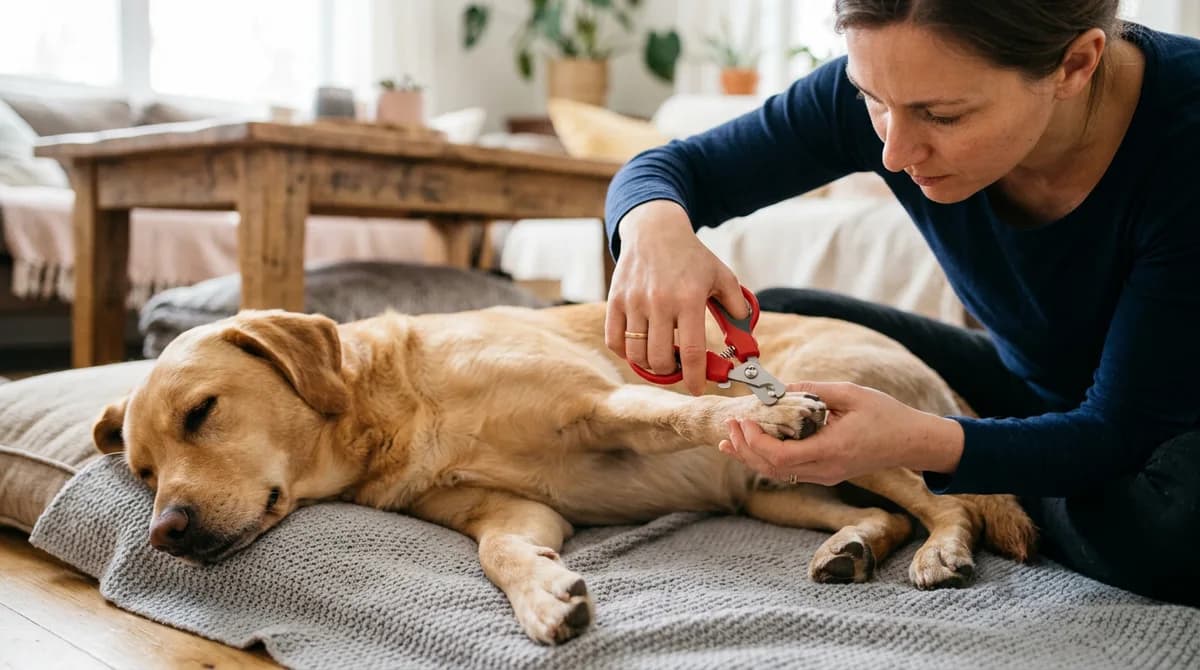
If you buy one pair of clippers and never think about it again, buy these. The Millers Forge Medium (the red-handled pair groomers call simply "the red ones") is the tool that surfaces on nearly every vet and professional recommendation list, and it earns the spot on merit rather than marketing. The blades are genuinely sharp stainless steel, the leverage is excellent, and the whole tool is simple enough that there is almost nothing to break.
What makes it the best dog nail clippers pick for most households is the clean cut. A sharp, well-aligned blade shears through the nail in one motion, which means less crushing, less splitting, and a dog that flinches less because the whole event is over faster. The medium size handles everything from a beagle to a Lab comfortably, which is why it is our default recommendation unless your dog is at the extreme small or large end.
The only thing missing is a safety guard, and honestly, once you learn to read your dog's nails you will not want one, because a guard limits how you angle the cut. For a first-time trimmer who wants a little training-wheels reassurance, the Safety Stop version below is the friendlier starting point.
- Sharpest blades in the category for the price
- The near-universal vet and groomer pick
- Clean single-motion cut reduces splitting
- Inexpensive and effectively indestructible
- No safety guard on the standard model
- Medium jaw is a stretch for the very largest nails
Best for small dogs under 20 lb: Millers Forge with Safety Stop
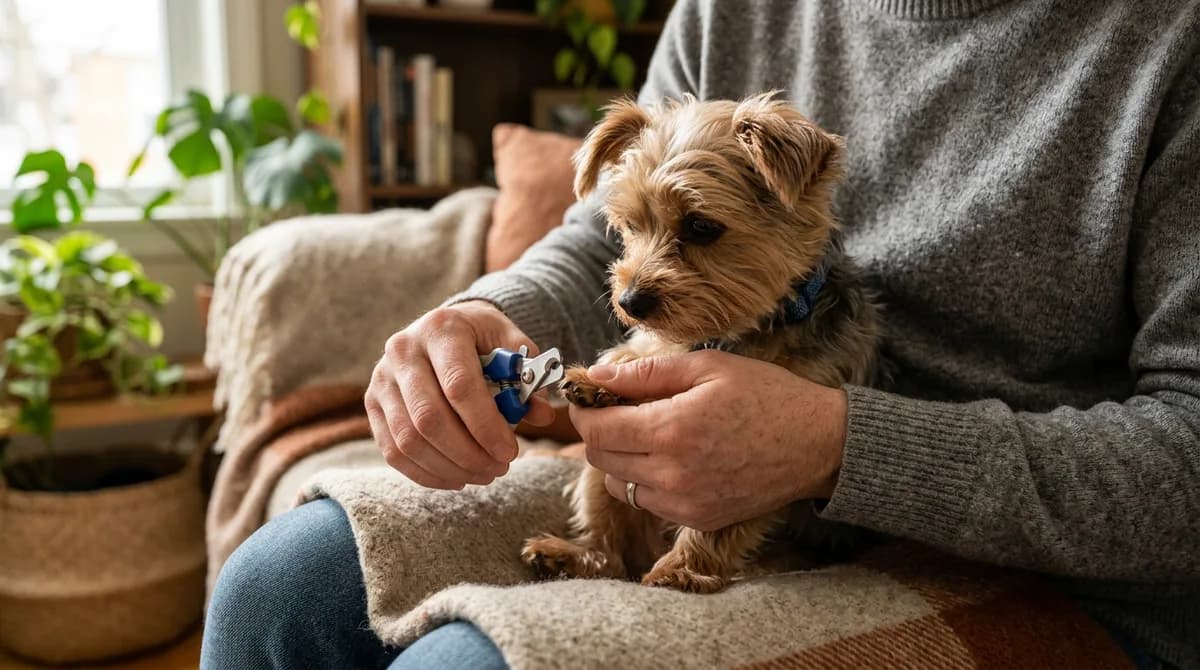
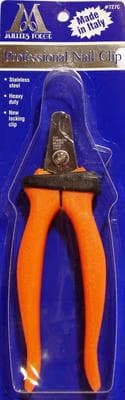
Small dogs have thin, close-set nails where the quick sits proportionally closer to the tip, so the margin for error is smaller. The Millers Forge with Safety Stop is the same trusted tool with an adjustable guard that limits how much nail passes through the blade, which is exactly the reassurance a nervous owner of a Chihuahua, Yorkie, or Dachshund wants.
The Safety Stop does not replace paying attention, and you should flip it out of the way once you are confident, but for the first dozen trims it stops you from taking off more than you meant to. Paired with the smaller jaw opening, it is the most forgiving way to keep tiny nails in check.
- For small dogs, a light weekly nip of just the tip keeps the quick receding over time, so the nails get easier to manage the more consistently you trim. Two or three cautious snips beat one aggressive session.
- Adjustable guard prevents over-cutting
- Smaller jaw suits thin, close-set nails
- Same Millers Forge blade quality
- Great confidence-builder for beginners
- Guard can feel restrictive once you are experienced
- Not enough jaw for a giant breed
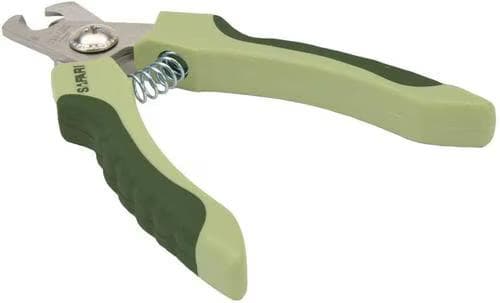
Best professional all-rounder: Safari Professional Nail Trimmer
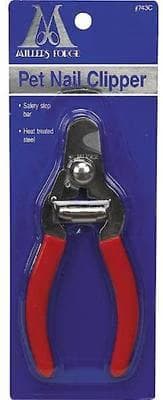
If you have ever watched a groomer work and wondered what was in their hand, there is a strong chance it was a Safari. The Safari Professional Nail Trimmer is a grooming-shelf staple: sturdy stainless blades, a comfortable non-slip grip, and a built-in safety guard, all at a price that makes it easy to keep a spare.
It sits a hair behind the Millers Forge on pure blade sharpness, but it makes up ground on ergonomics and the included guard, which is why so many pros keep one within reach for medium and large dogs. If you want a single tool that feels professional without a professional price tag, this is the one.
- Trusted groomer-shelf standard
- Comfortable non-slip handles
- Built-in safety guard included
- Excellent value for the build
- Blades slightly less keen than Millers Forge
- Guard geometry suits medium and large nails best
Best with a quick sensor for black nails and nervous owners: Miracle Care Quickfinder
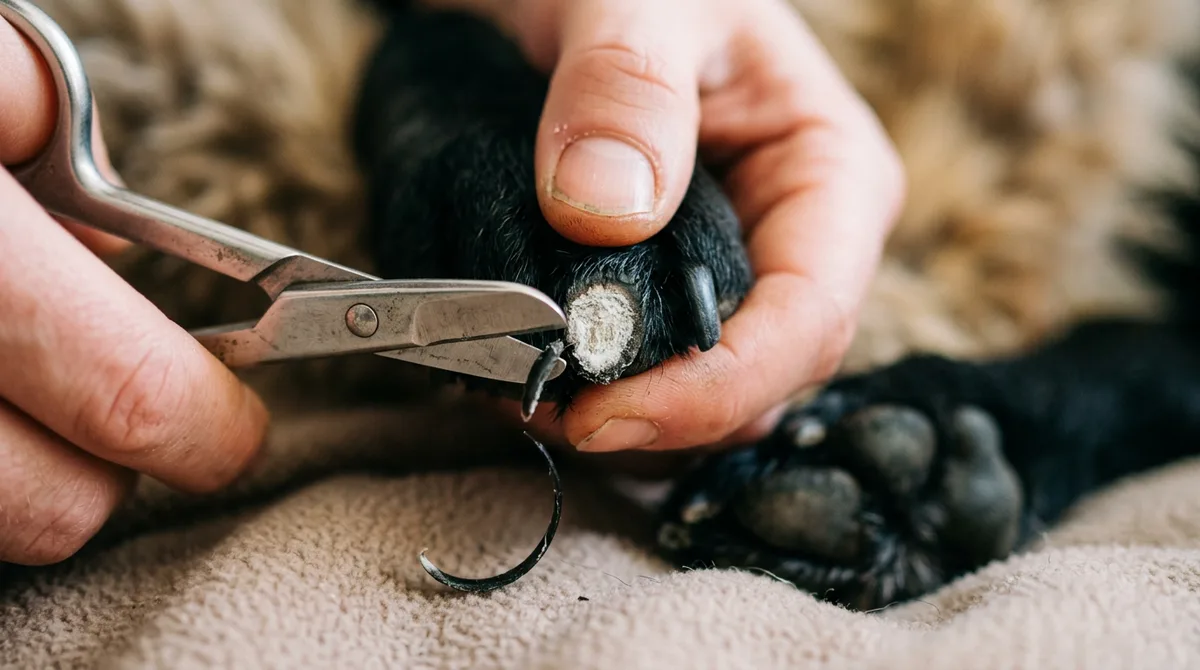
The scariest part of trimming is not knowing where the quick is, and on black nails you genuinely cannot see it. The Miracle Care Quickfinder uses a small sensor light that flags when you are approaching the living tissue, which turns the guessing game into something closer to a guided cut. For owners who tense up every time, or for dogs whose dark nails hide the quick completely, that feedback is worth a lot of peace of mind. It comes in small/medium and medium/large sizes, so match it to your dog.
Be realistic about what the sensor does and does not do. It is an aid, not autopilot: it narrows your risk on that hard-to-read black nail, but you still bring the same slow, thin-slice technique. Treat it as a confidence tool that gets you and an anxious dog through the transition, then keep trimming little and often so the quick recedes.
- With black nails you cannot see the pink quick, so shave off thin slivers and check the cut face after each. When you see a small dark dot or a slightly moist, glassy center appear, stop. That dot is the leading edge of the quick.
- Sensor flags the quick on unreadable black nails
- Great confidence-builder for anxious owners
- Reduces the odds of a deep first cut
- Still requires careful thin-slice technique
- Sensor is an aid, not a guarantee
- Usually pricier than a plain scissor clipper
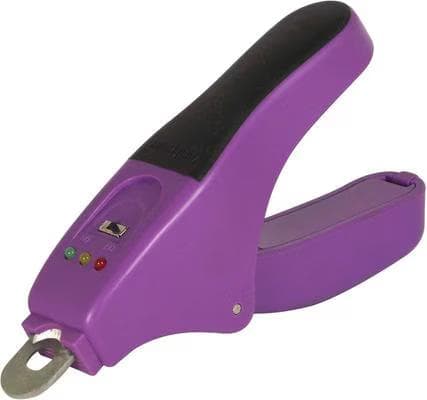
The essential companion: Kwik Stop styptic powder
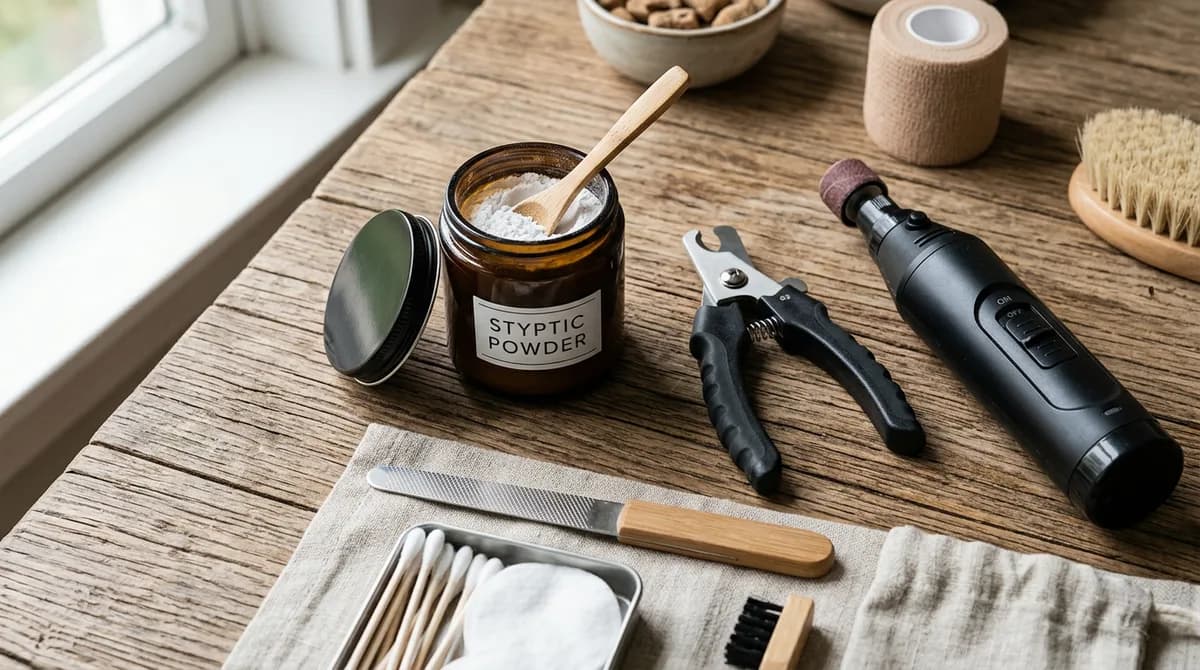
No clipper, however good, removes the risk entirely, so the smartest thing you can put in your grooming kit is not a better blade. It is a small jar of styptic powder. Kwik Stop is the standard: a pinch pressed onto a bleeding nail clots it within seconds and turns an alarming moment into a non-event.
Have it open and within arm's reach before you make the first cut, not in a drawer across the room. Knowing you can stop a bleed instantly changes how you trim, because you stop flinching away from the nail and start making cleaner, more decisive cuts. If you are ever out of styptic powder, a pinch of cornstarch or plain flour pressed firmly on the nail is a workable stopgap.
- Stops a quicked-nail bleed in seconds
- Turns a scary moment into a non-event
- Cheap, lasts for years, one jar per household
- Not a clipper, it is a safety net you still need
- Cornstarch works in a pinch but clots slower
Clippers vs. grinders: which should you use?
This is the fork in the road most owners hit, so let us settle it plainly. Clippers are faster, quieter, and cheaper, and they make one clean cut. Grinders (rotary tools like a Dremel-style pet grinder) sand the nail down gradually, which gives you more control on thick nails and leaves a smoother, snag-free edge, at the cost of noise, vibration, and time.
Neither is universally "better." The right answer depends on your dog's temperament and nails, which is exactly what the next section walks through. If you want to go deeper on the rotary side specifically, see our companion roundup of the best dog nail grinders, and if you are still building the basic skill, our guide to how to use dog nail clippers walks the whole motion step by step.
Is it better to grind or cut dog nails?
For most dogs, cutting with a sharp scissor-style clipper is faster and perfectly safe, and it is the method most vets and groomers reach for first. Grinding pulls ahead in three specific cases: very thick or brittle nails that a clipper tends to crush, dogs who tolerate the buzz better than the sudden clip, and owners who want a rounded, snag-free finish (useful if your dog scratches furniture or people). Many pros do both: clip the bulk of the nail, then grind the edge smooth.
Is it better to cut or grind a dog's nails?
Cutting wins on speed, cost, and simplicity, so it is the default recommendation for a cooperative dog with light or normal nails. Grinding wins on precision and finish, and it is the gentler on-ramp for a dog who panics at the "snap" of a clipper because the change happens gradually. If your dog is anxious, has thick black nails, or you keep quicking them, grinding (or a clip-then-grind combo) is the more forgiving route.
Is it better to clip your dog's nails or grind them?
Start with what your dog will tolerate. A dog who sits calmly for a clip has no reason to switch, and clipping keeps the whole event short, which most dogs prefer. A dog who flinches at the clip, or one whose dark thick nails make the quick impossible to read, is often calmer with a grinder because there is no sudden pressure and you remove tiny amounts at a time. There is no wrong answer if the nails end up short and the dog stays relaxed.
- The pros' quiet secret is to use both. Clip to take the length down quickly, then grind the last bit and the edges for a smooth, rounded finish that will not snag carpet or skin. You get the speed of clippers and the finish of a grinder.
How to choose by dog size and nail color
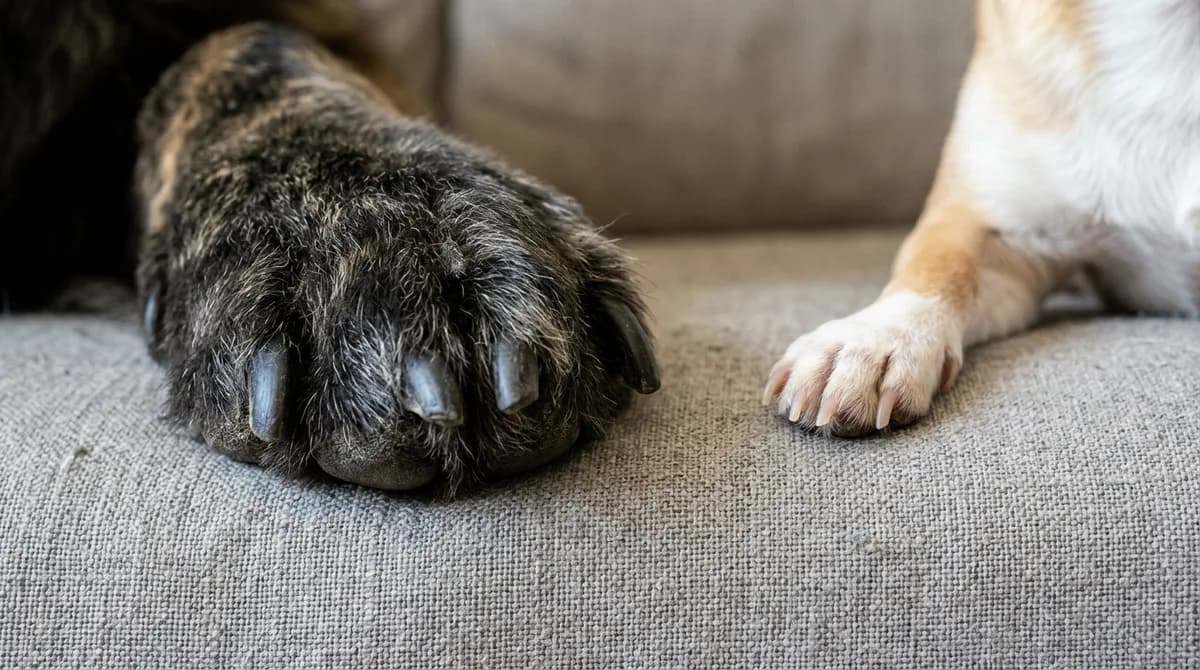
The two variables that actually decide your clipper are your dog's size (which sets the nail thickness) and nail color (which sets how well you can see the quick). Everything else is preference. Here is how to read your own dog.
By size and nail thickness. Small dogs under 20 lb have thin nails and a proportionally closer quick, so a smaller jaw with a safety guard (our Safety Stop pick) buys margin. Medium dogs are the easy middle: the standard Millers Forge Medium handles them without drama, and it has the reach to cover most large dogs too. Large and giant dogs past 60 lb grow dense, thick nails that can flex an undersized tool, so reach for the sturdiest jaw and the most leverage you have. The Safari Professional is built for medium and large dogs and powers through a thick nail comfortably, and the Millers Forge Medium still cuts a big dog's nails cleanly as long as the blade is sharp. For the very thickest, most curved nails on a giant breed, a clipper is not always the best tool at all: a rotary grinder shaves dense nails down without the crushing risk, which is exactly why our companion guide to the best dog nail grinders exists. Many owners of big dogs clip the bulk length with the Millers Forge, then grind the tips smooth.
By nail color. Light or clear nails are the easy case: hold the paw up to good light and you can see the pink quick glowing inside, so you simply cut a few millimeters in front of it. Black nails hide the quick entirely, and this is where most owners get nervous, understandably. The move is to shave thin slivers and inspect the cut face after each pass. A chalky white center means you have more room; a small dark dot or a moist, glassy look means the quick is close, so stop there.
- The quick grows out with the nail. Trim a little every week and the quick gradually retreats up the nail, letting you keep the nail shorter over time without cutting into living tissue. Long-neglected nails have long quicks, which is why the first few sessions on an overgrown nail need the most patience.
If you want the full mechanics of the cut itself, our step-by-step guide to trimming your dog's nails covers angle, how much to take, and how to keep the session calm. New to clippers entirely? The beginner's guide to dog clippers starts from zero.
What is the best position to clip a dog's nails?
Comfort and a clear view of the nail are everything. For small dogs, sit them in your lap or on a raised, non-slip surface at your eye level so you are not hunched over. For large dogs, have them lie on their side on the floor, which relaxes most dogs and gives you a stable paw to work with; a helper to offer treats and gentle restraint makes it far easier.
Whichever position you use, hold the paw gently but securely, press just behind the nail to extend it slightly, and cut from underneath at a slight angle following the natural curve of the nail rather than straight across. Never twist the toe or hold it in a way that torques the joint. A calm dog in a supported position is safer than a wrestled dog in a "perfect" position.
- 1Position for a clear view of the nail and a relaxed dog, not for your convenience.
- 2Small dogs: lap or raised surface at eye level.
- 3Large dogs: lying on their side on the floor, ideally with a treat helper.
- 4Cut from underneath at a slight angle, following the nail's natural curve, never straight across.
What to avoid: the over-padded, underpowered clipper
Not every popular clipper is a good clipper. Testing has repeatedly flagged a class of heavily marketed pet-store clippers, the Boshel being the most cited example, that pile on thick rubber padding and a bulky "ergonomic" handle but skimp on the one thing that matters: the blade. In hands-on reviews they cut poorly, crushing or bending thicker nails rather than slicing them, precisely because the plush handle is doing the selling while the underpowered blade is doing the disappointing.
The lesson generalizes past any single brand. Be skeptical of a clipper whose main selling points are cushioning, color, and a long list of "bonus" accessories, and suspicious of a blade that is not clearly sharp stainless steel with good leverage. A cheap, plain, sharp scissor-style clipper (like our Millers Forge picks) will out-cut a padded gadget every time, and your dog feels the difference in every clean, quick, painless cut.
- A thick cushioned handle does nothing for the cut. If a clipper's marketing leads with comfort grips and accessories instead of blade quality and leverage, treat that as a red flag, especially for medium and large dogs whose nails demand real cutting power.
Clippers at home or a trip to the groomer?
A good pair of clippers pays for itself in a couple of visits, but at-home trimming is not the right call for every dog or every owner. Doing it yourself wins on cost, convenience, and frequency, and frequency is what actually keeps nails short: short nails depend on a trim every few weeks, and almost no one books a groomer that often. The tradeoff is that you have to stay calm and decisive, because a dog reads your hesitation the instant you pick up the paw.
Lean on a professional when the situation outweighs the savings. A dog who panics, snaps, or has to be muzzled for a trim is genuinely safer with a groomer or vet tech who does dozens a day and can restrain the dog kindly. Very dark nails on a dog you cannot keep still, thick working-breed claws that resist your clippers, or your own uncertainty after a rough first attempt are all fair reasons to outsource, at least until you have watched it done in person once. Plenty of owners split the difference: a professional trim to reset badly overgrown nails, then a cheap pair of clippers at home to hold the line between visits. Every clipper on this list is built for exactly that maintenance role, and our step-by-step on how to use dog nail clippers covers the technique that makes the home half easy.
Frequently asked questions about dog nail clippers
Veterinarians overwhelmingly recommend a sharp, simple scissor-style (plier-style) clipper, and the Millers Forge Medium is the name that comes up most often. Vets favor it because the sharp stainless blades make a clean single cut that reduces splitting and crushing, it is durable, and it is inexpensive. For small dogs they often suggest the Safety Stop version for its adjustable guard, and they universally recommend keeping styptic powder on hand.
Professional groomers use sturdy scissor-style clippers, most commonly Millers Forge and Safari Professional trimmers, and many finish with a rotary grinder for a smooth, rounded edge. Groomers prioritize sharp blades and good leverage over padded handles or gadgets, because a clean cut is faster and less stressful for the dog. They also keep styptic powder within reach for every session.
For most dogs, cutting with a sharp scissor-style clipper is faster, quieter, and perfectly safe, so it is the default choice. Grinding is better for very thick or brittle nails, for dogs who tolerate the buzz better than a sudden clip, and when you want a smooth, snag-free finish. Many owners and pros do both: clip the length down, then grind the edge smooth.
Most dog groomers use scissor-style stainless steel clippers, with Millers Forge and Safari Professional being the two most common on grooming tables. These tools are chosen for sharp blades, strong leverage, and durability rather than novelty features. For thick or dark nails, groomers frequently pair the clipper with a rotary grinder to finish the edge.
Groomers recommend simple, sharp scissor-style clippers sized to the dog: Millers Forge Medium for most dogs, the Large for giant breeds, and the Safety Stop version or a smaller jaw for tiny dogs. The consistent advice is to spend on blade quality and correct sizing, not on cushioned handles or accessory bundles, and to keep styptic powder ready.
The best position is whatever gives you a clear view of the nail and keeps the dog relaxed. Small dogs do well in your lap or on a raised non-slip surface at eye level; large dogs are easiest lying on their side on the floor, ideally with a helper offering treats. Hold the paw gently, extend the nail, and cut from underneath at a slight angle following the nail's natural curve, never straight across, and never twist the toe.
Start with what your dog tolerates best. A dog who sits calmly for a clip benefits from the speed and simplicity of clipping. A dog who panics at the snap of a clipper, or one whose thick black nails hide the quick, is often calmer with a grinder because it removes tiny amounts gradually with no sudden pressure. Both are correct if the nails end up short and the dog stays relaxed.

Coreen Saito is a pet writer and longtime shelter volunteer with more than a decade in animal rescue. She covers cat behavior, breed care, and the small, ordinary science of sharing a life with companion animals, with a particular focus on honest takes about the products and decisions that actually matter. At home in Arizona, she's outranked by Mac (a dog with the loudest opinion in the house), Rebel (a cat who governs by quiet authority), and Meri (an orange tabby who runs the late shift and the laundry basket). She writes about all three, plus the rescues that keep coming through her life, at LifeWithMinty.com.
Sign up for expert-backed reviews and safety alerts all in one place.