The Best Dog Nail Grinder for Every Dog, From Anxious Pups to Big Breeds
The best dog nail grinder is the one your dog will actually tolerate. Our picks by category (best overall, budget, quietest, large dogs, and a clipper-free option), plus how to introduce a grinder and safely grind overgrown nails.
Petful is reader supported. As an affiliate of platforms like Amazon and Chewy, we may earn a commission when you buy through links on this page. There is no extra cost to you.
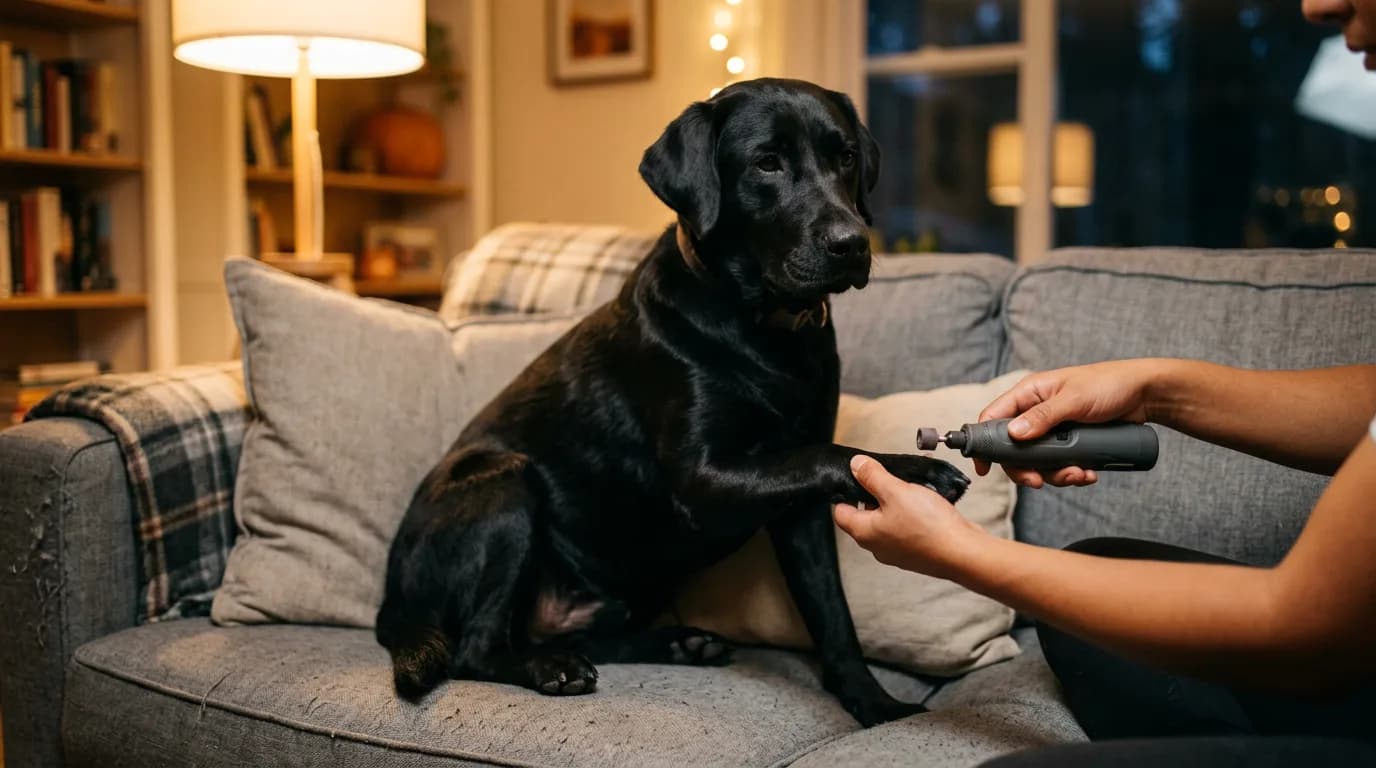
Choosing the best dog nail grinder comes down to one honest question: will the tool actually get used, or will it sit in a drawer while your dog's nails keep clicking on the hardwood? A grinder only works if it is quiet enough that your dog tolerates it and powerful enough to shave down the nail without stalling. Get those two things right and grinding becomes the calm, weekly two-minute habit that clippers never quite managed.
We tested the trade-offs that matter for a nervous rescue, a wriggly puppy, and an 80-pound dog with nails like dowel rods, then matched each grinder to the dog it actually fits. Below you will find our top picks by category, a clear breakdown of when grinding beats clipping, and step-by-step guidance for introducing the tool and tackling badly overgrown nails without hurting the quick.
- 1A grinder is the better choice for thick, dark, or brittle nails and for dogs spooked by the "crunch" of clippers
- 2Noise and vibration, not power, are what make dogs refuse a grinder, so match the tool to your dog's temperament first
- 3Our best overall is the Dremel 7350-PT for its quiet motor and cordless power
- 4Budget shoppers get real value from the Casfuy 6-Speed, and truly fearful dogs do best with the ultra-quiet Casfuy Quiet 2 LED
- 5Overgrown nails come back with light, frequent grinding over weeks, never one aggressive session

Sign up for expert-backed reviews and safety alerts all in one place.
Should you grind or clip? Is it better to cut or grind a dog's nails?
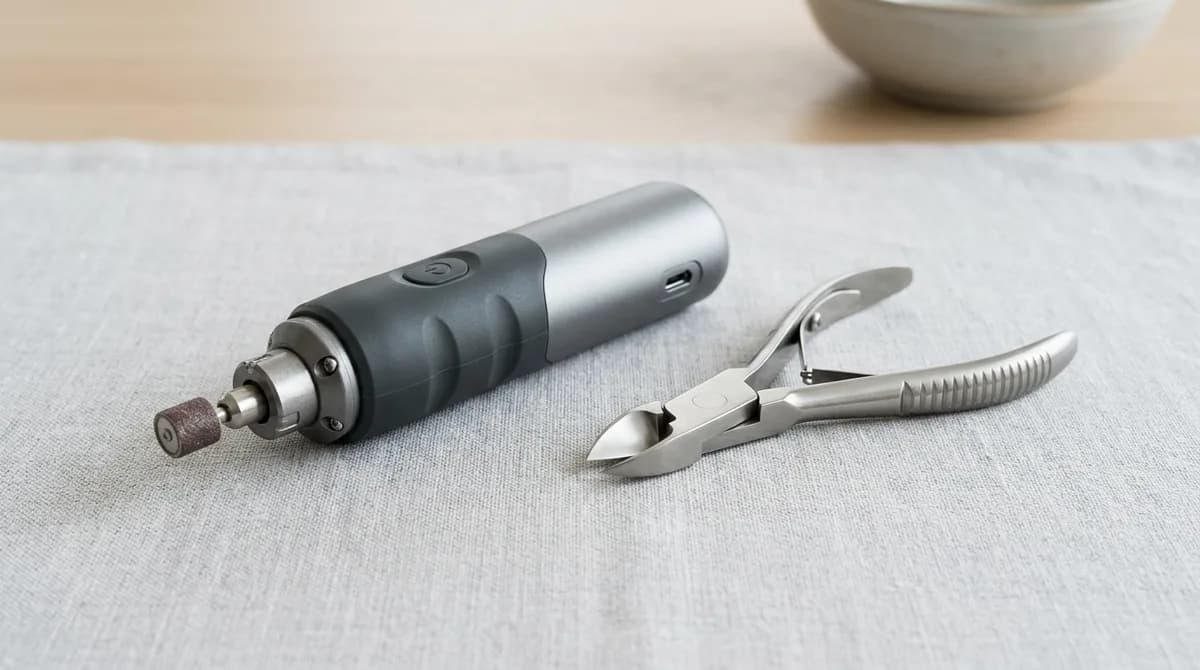
This is the first decision, and the honest answer is that it depends on your dog and their nails, not on which tool is "better" in the abstract.
Clippers are fast. A sharp guillotine or scissor-style clipper takes the whole nail off in one squeeze, which means less time your dog has to stand still. That speed is their biggest strength and, for anxious dogs, their biggest weakness: the sudden crunch and the pressure of the blade closing can startle a dog badly. Clippers also do one thing grinders cannot easily do, which is take down a lot of length quickly.
Grinders shave the nail down with a spinning abrasive band instead of cutting it. That gives you far more control, a smooth rounded finish with no sharp edges to scratch floors or skin, and much better odds of stopping before the quick on dark nails where you cannot see the blood vessel. The trade-offs are time (grinding one nail takes longer than clipping it), a whirring sound and vibration some dogs dislike, and the faint smell of warm keratin.
- Inside every nail is a bundle of blood vessels and nerves called the quick. Cutting or grinding into it hurts and bleeds. Grinders let you approach it slowly and watch for the small dark circle that appears at the center of the nail as you get close, which is your signal to stop.
Here is the practical rule we give owners. Choose a grinder if your dog has thick or dark nails where the quick is hard to see, if a previous clipper accident has made your dog fearful, if you want smooth edges (helpful for dogs who jump up or share a bed), or if you are nervous about cutting too far. Choose clippers if your dog is calm, has clear or light-colored nails, and dislikes vibration or sound. Many owners land on a hybrid: clippers to remove bulk length quickly, then a grinder to smooth and refine. If you want the full clipper picture, see our guide to the best dog nail clippers, and for hands-on technique either way, our walkthrough on how to trim your dog's nails covers the mechanics.
Is it better to cut or grind a dog's toenails specifically?
For the toenails themselves, the same logic applies with one extra wrinkle: dewclaws and the toenails on the front paws are often the thickest and most curved, and they are exactly where grinding shines. A curved, overgrown front toenail is genuinely hard to position inside a clipper without pinching, but a grinder lets you work the tip from any angle and round it smoothly. So while "cut versus grind" is a whole-dog decision, the toenails most likely to change your mind toward grinding are the thick front ones and any nail that has started to curl back toward the pad.
Are dog nail grinders any good? What the tool actually delivers
Yes, when they are the right fit, grinders are genuinely good, and the skepticism usually traces back to a mismatched tool rather than the concept. A cheap grinder with a weak motor bogs down on a big dog's nail and heats up, which is where the "they don't work" complaints come from. A quality grinder with enough torque and a fresh sanding band takes a nail down smoothly in seconds per nail.
What a good grinder delivers that clippers cannot:
- A smooth, rounded finish with no sharp edge, so nails do not snag carpet or scratch skin.
- Precision on dark nails, because you remove material gradually and can stop the instant you see the quick's telltale dark center.
- Less "all at once" trauma for fearful dogs, since there is no sudden crunch, just steady contact you can pause anytime.
- Better maintenance of the quick over time. Frequent light grinding encourages the quick to recede, which is the only real way to shorten a chronically long nail.
The honest limitations: grinding is slower per nail, the sound and vibration take some dogs time to accept, long-haired dogs need fur held back so it does not catch in the drum, and you should grind in short bursts to avoid heat buildup. None of these are dealbreakers. They are just the reasons temperament and motor quality matter more than price.
- A rechargeable grinder lets you follow a squirmy dog instead of being tethered near an outlet, and the good ones hold plenty of charge for a full grooming session. Corded units run a touch more powerful but the freedom of movement is usually worth more than the extra torque for at-home grooming.
Our top picks at a glance
We chose five tools to cover the situations owners actually face: a do-everything best overall, a budget pick that punches above its price, the quietest option for dogs who panic, a workhorse for large breeds, and a no-motor alternative for dogs who refuse every grinder and clipper on earth.
| Grinder | Best for | Noise level | Speeds |
|---|---|---|---|
| Dremel 7350-PT | Best overall, quiet and powerful | Low hum | 2 speeds (variable) |
| Casfuy 6-Speed | Best budget, LED-lit | Low to moderate | 6 speeds |
| Casfuy Quiet 2 LED | Quietest for anxious dogs | Very low | 2 speeds |
| PATPET 2 LED | Best for medium and large dogs | Low, 2 LED lights | 2 speeds |
| Safari Diamond File | Manual alternative, no motor | Silent | Hand-powered |
Best overall: Dremel 7350-PT
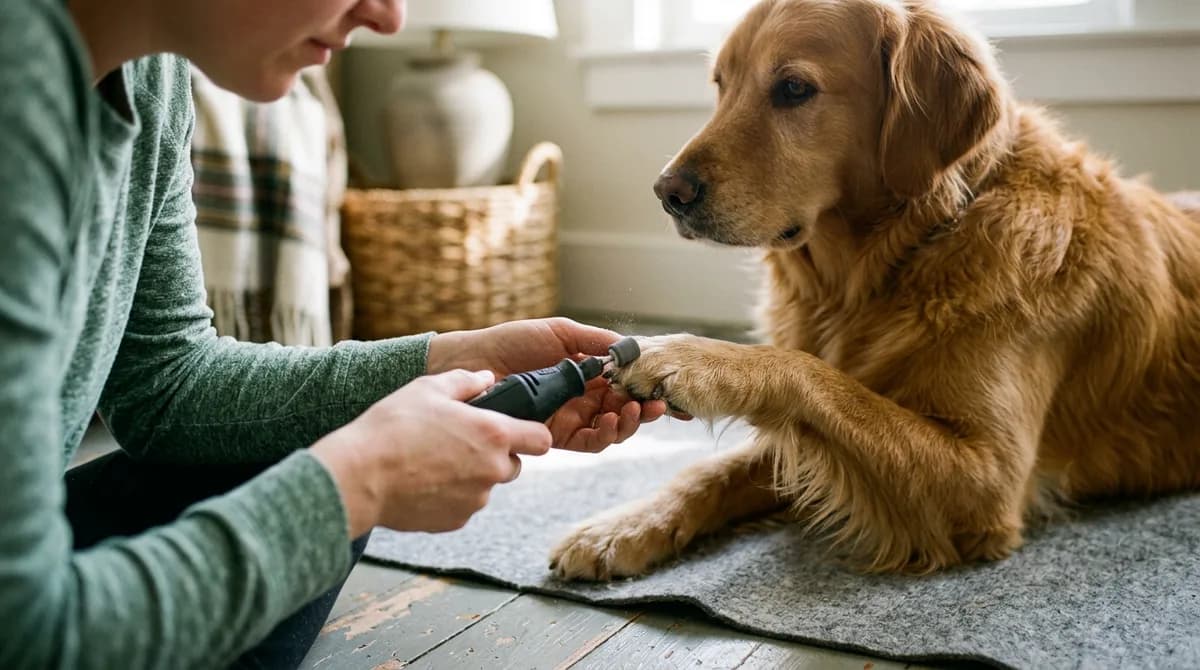
The Dremel 7350-PT is the grinder we hand to owners who want one tool that simply works on any dog. It pairs a genuinely quiet rotary motor with enough torque to shave down a large breed's nails without bogging, and the cordless 4-volt lithium-ion design means you are not chasing an extension cord around the room. The kit is purpose-built for pets: it ships with the correct sanding bands and a guard that limits how much nail is exposed, which takes a lot of the fear out of your first sessions.
What sets it apart is the balance. Plenty of grinders are quiet but weak, or powerful but loud enough to send a dog bolting. The 7350-PT lands in the middle, which is why it works for the widest range of dogs. The two-speed control lets you run slow and gentle on a nervous dog or step up for thick nails, and the whole unit is light enough to hold at a comfortable angle for the full paw.
- Quiet motor most dogs tolerate quickly
- Cordless with strong battery life for a full session
- Enough torque for large-breed nails
- Pet-specific guard and bands included
- Pricier than basic grinders
- Sanding bands are a consumable you will rebuy
- Guard opening can feel tight for very large nails
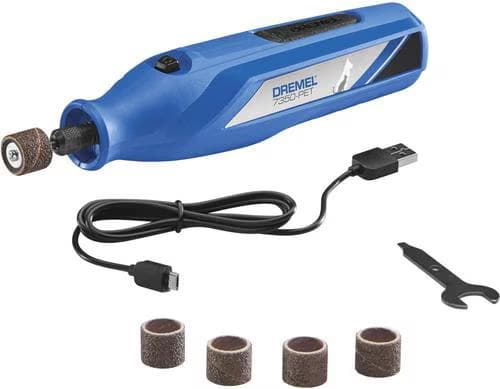
Best budget: Casfuy 6-Speed
The Casfuy 6-Speed is the grinder that shows up on nearly every list for a reason: it delivers most of what a mid-range tool does at a fraction of the cost. The six speed settings give you real range, from a gentle crawl for a first-timer up to a faster grind for a confident dog with thick nails, and the built-in LED lights ring the port so you can actually see the nail and the developing quick as you work. That visibility is a genuine safety feature, not a gimmick, especially on dark nails.
It is cordless and rechargeable, quiet enough for most dogs, and the three-port cap (small, medium, large openings) helps you position different nail sizes. It will not match the raw torque of the Dremel on a giant breed's thickest nails, but for small, medium, and most large dogs it is more than capable, and the price makes it an easy first grinder to try before committing more money.
- Excellent value for the features
- LED lights genuinely help you see the quick
- Six speeds cover timid to confident dogs
- Cordless and rechargeable
- Less torque for the thickest large-breed nails
- Battery life shorter than premium units
- Ports can feel small for very big paws
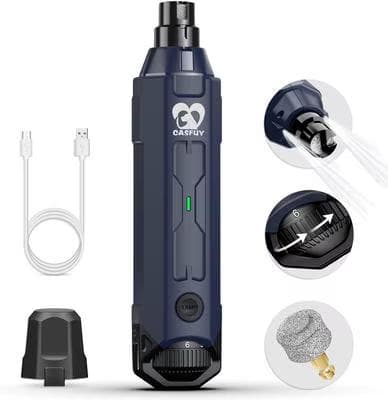
Quietest for anxious dogs: Casfuy Quiet 2 LED
If your dog flees the room at the first whir, noise is the whole ballgame, and the Casfuy Quiet 2 LED is built around being barely audible. It runs notably quieter and with less vibration than higher-speed grinders, which is exactly what a fearful or sound-sensitive dog needs, and its two LED lights ring the nail so you can still see the quick while you work slowly. You trade some versatility (only two speeds, less top-end power) for the single trait that makes grinding possible at all for these dogs: they will actually let you near them with it.
We steer owners of rescues, sound-phobic dogs, and puppies still learning that grooming is safe toward this one. Start it running across the room so the sound becomes background, pair it with high-value treats, and let the low hum do the slow work of desensitization. A quiet grinder your dog tolerates beats a powerful one they refuse every single time.
- Among the quietest grinders available
- Low vibration suits sensitive dogs
- Two LED lights help you see the quick
- Affordable
- Only two speeds
- Modest power, not ideal for the thickest nails
- Slower going on large dogs
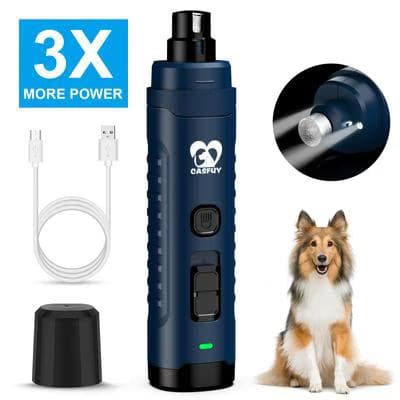
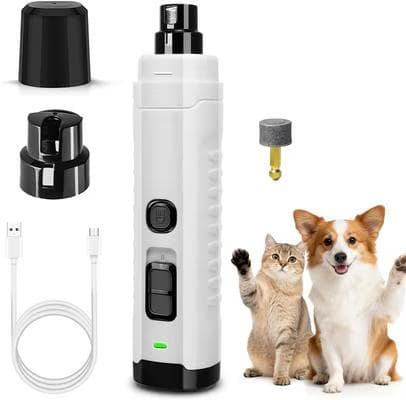
Best for medium and large dogs: PATPET 2 LED
Medium, large, and giant breeds bring two challenges: thick, dense nails that stall weak motors, and a lot of dog to keep calm. The PATPET 2 LED grinder is built for exactly that middle-to-large range. Its motor holds speed under load so it does not bog on a Lab or shepherd's nails, and it stays quiet enough that a big dog does not spook, while two bright LED lights illuminate the nail so you can read the quick even on dark, thick claws. That combination of usable power and low noise is what a substantial dog needs.
It is cordless with solid battery life, which is a practical must when you are working a full set of large nails and do not want to stop mid-paw to recharge, and it ships with multiple port sizes so you can seat a big nail squarely against the drum. For a medium or large dog specifically, this pick earns its slot over louder, higher-RPM tools that can send a nervous big breed bolting.
- Holds speed under the load of thick nails
- Quiet for its power class
- Two LED lights read the quick on dark nails
- Good battery life for full large-dog sessions
- Overkill for tiny dogs
- Larger body than compact grinders
- Sanding drums are a consumable
Best manual alternative: Safari Diamond Dog Nail File
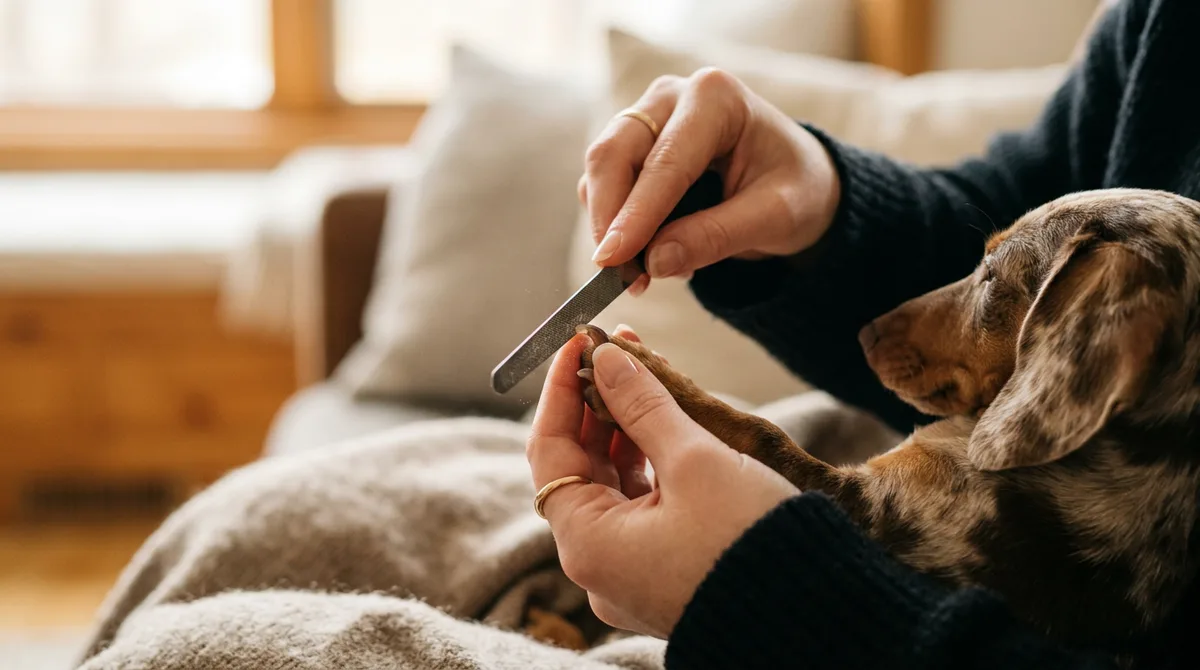
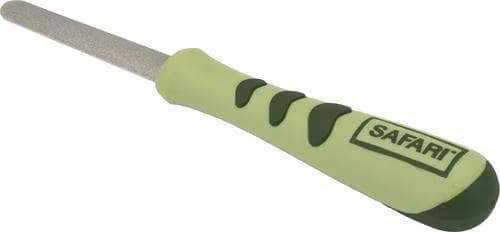
Some dogs will not accept any powered grinder no matter how patient you are, and some jobs are too small to bother charging one up. For both, a hand file is a legitimate answer rather than a consolation prize. The Safari Diamond Dog Nail File is a simple diamond-grit file on an ergonomic handle: you draw it across the nail yourself, with zero motor, zero whir, and zero vibration. For a sound-phobic dog, removing the noise entirely can be the difference between a nail routine that happens and one that never does.
Because you control the pressure and pace by hand, it is also the safest tool here for a nervous first-timer worried about taking off too much: you file a stroke, check, and file again, and there is no spinning drum to run away with. The honest limits are that it is slower than a powered grinder and better suited to smoothing and light touch-ups than to taking down a badly overgrown nail. But as the quiet finishing tool after clipping, or as the whole method for a small dog or a dog who has fired every powered option, it earns its place.
- Completely silent, no motor to fear
- Full hand control, no runaway drum
- Cheap and nothing to charge
- Great for smoothing and touch-ups
- Slow on thick or long nails
- Manual effort on a full set of nails
- Better for finishing than heavy correction
How to introduce a grinder to a nervous dog
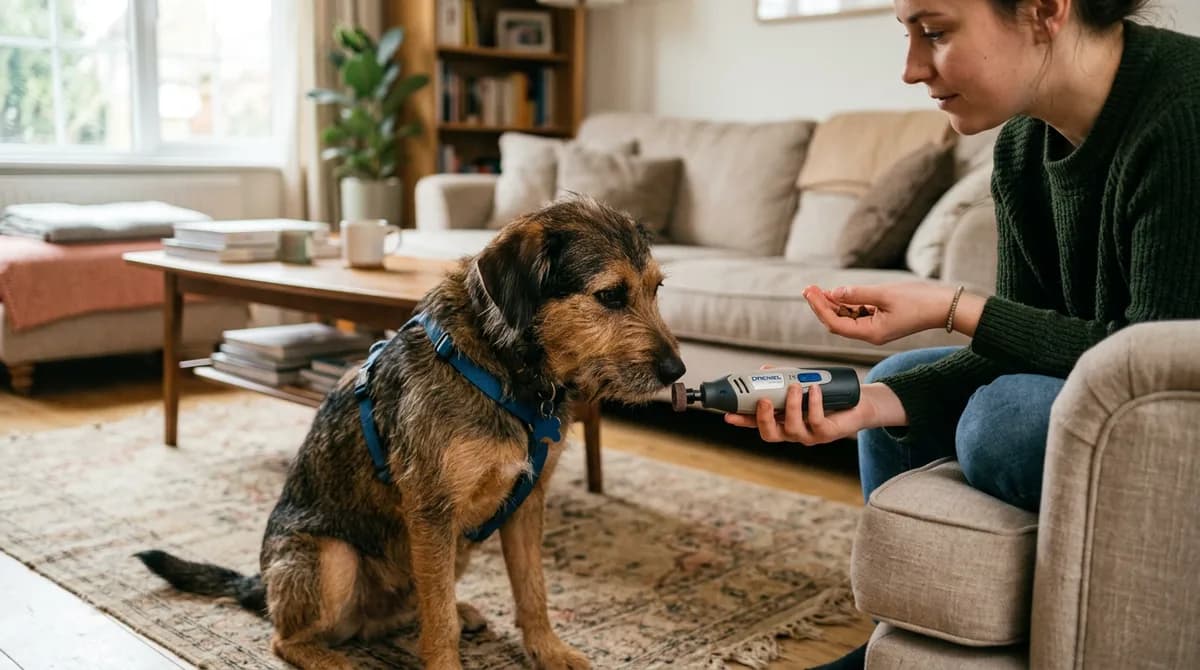
The single biggest reason grinders fail is that owners go too fast on day one. Your dog has no idea the whirring thing is harmless, so your entire job for the first week is to convince them it predicts good things and touches nothing scary. Rushing here is what creates a lifelong grinder-hating dog, so treat this as days, not minutes.
- Day one, sight and sound only. Set the grinder on the floor turned off, let your dog sniff it, and pay them for calm interest with a treat. Then turn it on across the room so the sound is faint, and feed treats the whole time it runs. You are teaching "that noise means chicken," nothing more.
- Day two to three, closer. Run the grinder near your dog (still not touching them) and reward. Touch the handle-end (not the spinning drum) to a paw so they feel gentle vibration through it, and treat.
- Day four to five, one nail. Briefly touch the spinning band to the very tip of a single front nail for one second, then treat and stop. One nail is a complete, successful session at this stage. End on a win.
- Build up gradually. Add a nail or two per session over the following days. If your dog tenses or pulls away, you moved too fast: back up a step and shorten the session.
- On fluffy dogs and feathered feet, loose hair can catch and wind into the grinding drum, which hurts and frightens the dog fast. Hold the fur back with your fingers or slip the paw through a hole in an old sock or nylon so only the nails poke out. Also grind in short bursts of a few seconds per nail so the nail does not heat up.
Two more things make the difference. Pick your dog's calmest time of day (post-walk, post-meal, sleepy is ideal), and use treats good enough that your dog would do almost anything for them. Cheap biscuits will not outweigh fear; small bits of real chicken, cheese, or liver usually will. The goal across that first week is not short nails, it is a dog who sees the grinder come out and gets excited.
Overgrown nails: grinding them back safely
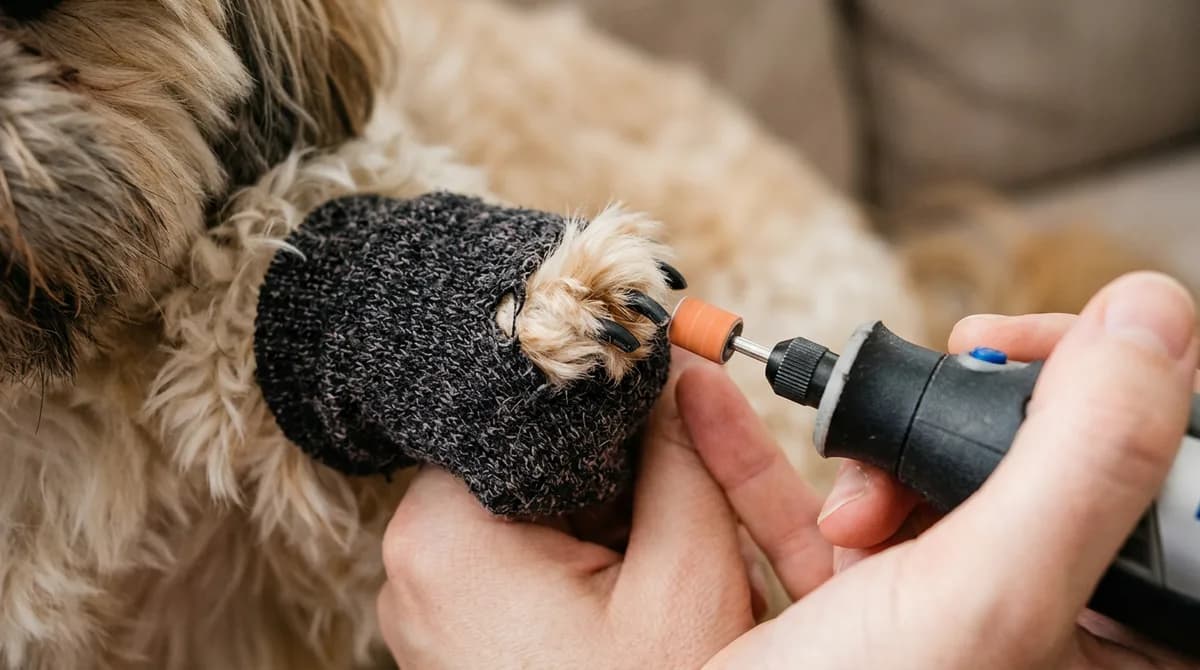
How to grind severely overgrown dog nails
When nails get very long, the quick grows out with them, so you cannot simply grind a long nail short in one sitting without hitting live tissue. The fix is patience: light, frequent grinding that signals the quick to recede over time. Here is the safe approach.
- Grind little and often. Take off just the tip of each nail, then repeat every three to five days rather than trying to remove a lot at once. Each small session prompts the quick to pull back a bit, and over a few weeks the nail can come down dramatically.
- Watch for the quick's signal. As you grind toward the quick on a light nail you will see pink; on a dark nail, watch for a small dark or gray oval to appear at the center of the freshly ground surface. That oval means you are close. Stop that nail there.
- Round, do not just shorten. After taking the tip down, lightly grind the underside and edges so the nail is rounded, which reduces snagging and encourages a cleaner recession.
- Keep styptic powder within reach. If you do nick the quick, a dab of styptic powder (or cornstarch in a pinch) stops the bleeding quickly. It happens to everyone eventually; it is not an emergency.
- If a nail has grown so long it is curling toward or into the paw pad, or if the paw looks swollen, red, or the dog is limping, that is beyond a home grinding project. Have a vet or professional groomer take it down safely and check for infection first, then use the grinder for ongoing maintenance.
The reason frequency beats force is worth repeating: the quick is living tissue that only recedes when the nail in front of it is consistently shortened. One aggressive session cannot make the quick retreat; it can only make your dog bleed and distrust the tool. Weekly maintenance, on the other hand, keeps the quick short permanently, which is the whole point of grinding in the first place.
What the pros do: groomers and vets
What do groomers use to grind dog's nails?
Professional groomers overwhelmingly reach for rotary tools in the same family as the ones above. The dominant name is Dremel, whose pet-specific grinders and higher-powered corded models are effectively the industry standard, prized for a motor that keeps its speed under load and holds up to all-day use. Groomers favor variable speed so they can dial gentleness up or down per dog, and they change sanding bands often, because a fresh, grippy band grinds fast and cool while a worn one drags and heats up. In other words, the tools pros use are not exotic; they are the powered, variable-speed grinders any owner can buy, run with better technique and sharper bands.
What dog nail grinder is recommended by vets?
Veterinary staff tend to recommend the same well-built rotary grinders they trust for control and safety, with the Dremel pet line the most commonly named, precisely because grinding lets you approach the quick gradually and stop before you cause pain or bleeding, which is exactly the caution vets care about. The specific brand matters less than the criteria vets emphasize: enough power that it will not stall (a bogged tool overheats and scares the dog), low enough noise that the dog stays calm, and variable speed for control. A grinder that meets those three, used in short bursts with frequent breaks, is what earns a vet's nod, which is why our best-overall pick leans on exactly those traits.
How do vets trim dog nails so fast?
It looks like magic, but it is mostly experience and reading the nail, not a secret tool. Vets and vet techs handle dozens of paws a week, so they instantly recognize how far they can go on a given nail: they read the shape and color to judge where the quick sits, position the paw confidently so the dog cannot wriggle mid-cut, and work in a smooth practiced rhythm without second-guessing each nail the way a nervous owner does. Calm, decisive handling keeps the dog calmer too, which speeds everything up. At home you will never match clinic speed, and you should not try. Your advantage is time: going slow, grinding a little, and keeping the whole thing low-stress matters far more than finishing fast.
- 1The right grinder is the one your dog tolerates, so weigh noise and vibration before power for most dogs
- 2Introduce the tool over a week of treats and sound before you ever touch a nail
- 3Overgrown nails come back with light grinding every few days, never one hard session
- 4Keep styptic powder nearby and stop at the first sign of the quick
Frequently asked questions
It depends on the dog. Grinding is better for thick or dark nails where the quick is hard to see, for dogs made fearful by clipper accidents, and for a smooth rounded finish, because you remove material gradually and can stop before the quick. Clipping is faster and suits calm dogs with clear, light nails who dislike vibration or sound. Many owners clip to remove bulk length, then grind to smooth and refine.
Groomers overwhelmingly use rotary grinders, most commonly Dremel's pet line and higher-powered corded models, which are effectively the industry standard. They favor variable speed to adjust gentleness per dog and change sanding bands frequently, since a fresh band grinds fast and cool while a worn one drags and overheats.
Yes, when matched to the dog. A quality grinder with enough torque and a fresh band takes a nail down smoothly and leaves a rounded, snag-free finish, and it excels on dark nails where you cannot see the quick. The "they don't work" complaints usually come from a weak motor bogging down on thick nails, which is why motor quality and the right sanding band matter more than price.
Grind a little and often rather than all at once. Take off just the tip of each nail, then repeat every three to five days so the quick gradually recedes. Watch for a small dark oval at the center of the ground surface, which means you are near the quick, and stop that nail there. Keep styptic powder handy, and see a vet or groomer first if a nail has curled into the pad.
Vets tend to recommend well-built rotary grinders they trust for control, most often the Dremel pet line, because grinding lets you approach the quick slowly and stop before causing pain. More than any single brand, vets emphasize three criteria: enough power that it will not stall, low noise so the dog stays calm, and variable speed for control.
Experience, not a secret tool. Vets and techs handle many paws a week, so they instantly read a nail's shape and color to judge where the quick sits, position the paw confidently, and work in a smooth practiced rhythm. Calm, decisive handling keeps the dog calmer too. At home, go slow instead; low stress matters far more than speed.
The same cut-versus-grind logic applies, but the toenails most likely to favor grinding are the thick, curved front nails and dewclaws. A curved overgrown front toenail is hard to position inside a clipper without pinching, while a grinder lets you work the tip from any angle and round it smoothly, so grinding often wins specifically on the toenails.

Coreen Saito is a pet writer and longtime shelter volunteer with more than a decade in animal rescue. She covers cat behavior, breed care, and the small, ordinary science of sharing a life with companion animals, with a particular focus on honest takes about the products and decisions that actually matter. At home in Arizona, she's outranked by Mac (a dog with the loudest opinion in the house), Rebel (a cat who governs by quiet authority), and Meri (an orange tabby who runs the late shift and the laundry basket). She writes about all three, plus the rescues that keep coming through her life, at LifeWithMinty.com.
Sign up for expert-backed reviews and safety alerts all in one place.