Best Dog Shampoo: Top Picks by Skin, Smell, and Age
Compare six dog shampoos by skin fit, ingredients, dilution ratio, and estimated cost per bath, with distinct picks for itchy skin, odor, puppies, and vet-directed medicated care.
Petful is reader supported. As an affiliate of platforms like Amazon and Chewy, we may earn a commission when you buy through links on this page. There is no extra cost to you.
The best dog shampoo depends on the dog in the tub. Earthbath Oatmeal & Aloe Itch Relief is our overall top pick and itchy skin pick because its fragrance-free formula combines colloidal oatmeal and aloe with an optional 10:1 dilution ratio. For persistent odor, Best Shot One Shot Deodorizing Shampoo is the concentrated groomer-style choice. Puppies need a clearly labeled gentle formula, while suspected yeast or bacterial skin disease calls for veterinary guidance and a medicated product selected for that diagnosis.
This is an expert-analysis roundup, not a hands-on product test. We compared current ingredient lists, label directions, age limits, concentration, price, and veterinary-use boundaries. The result is a skin-situation matcher, not a claim that one bottle works for every coat or every cause of itching.

Sign up for expert-backed reviews and safety alerts all in one place.
The Best Dog Shampoos: Our Picks
What is the best shampoo to use on dogs? Start with a dog-specific shampoo that matches the skin situation, then consider scent, coat length, age, label directions, and cost per bath. For a healthy adult dog with dry or itchy skin, Earthbath Oatmeal & Aloe is the strongest all-around choice in this group. It is not the right substitute for a medicated shampoo when a veterinarian has identified an infection.
| Pick | Best for | Key ingredients | Label dilution ratio | Approximate cost per 4 fl oz bath |
|---|---|---|---|---|
| Earthbath Oatmeal & Aloe Itch Relief | Routine dry, itchy, or sensitive skin | Colloidal oatmeal, aloe vera, panthenol | Up to 10:1 | $0.43 |
| Burt's Bees Oatmeal Dog Shampoo | Budget routine bathing | Colloidal oat flour, honey, beeswax | Ready to use | $1.86 |
| Best Shot One Shot Deodorizing Shampoo | Persistent coat odor | Cyclodextrin compound, cleanser blend, aloe, fragrance | Up to 10:1 | $0.14 |
| TropiClean Hypoallergenic Gentle Coconut Puppy & Kitten Shampoo | Puppies 12 weeks or older and mild routine cleansing | Mild coconut cleansers, colloidal oatmeal, aloe, vitamin E | Ready to use | $3.00 |
| Veterinary Formula Clinical Care Antiseptic & Antifungal | Lower-cost vet-directed antimicrobial bathing | 1% ketoconazole, 0.2% benzethonium chloride, aloe | Ready to use | $2.48 |
| MiconaHex+Triz | Vet-directed bacterial or Malassezia skin care | 2% miconazole, 2% chlorhexidine, TrizEDTA, ceramides | Ready to use | $12.23 |
The cost comparison uses a consistent four-fluid-ounce bath volume so concentration is visible. It is not a dosing instruction. A 10:1 dilution means 10 parts water to one part shampoo. A large, double-coated dog can require more mixture than a small, short-coated dog, and a ratio from one bottle must never be carried over to another product.
Earthbath is the overall top pick and itchy skin pick for routine dry or sensitive skin; Best Shot is the odor pick; TropiClean is the age-labeled puppy pick; and the two medicated shampoos are for vet-directed care. This skin-situation matcher compares key ingredients, dilution ratio, pricing, and cost per bath rather than ranking bottles by scent alone.
Breed name does not determine the bottle. A Pit Bull shampoo and conditioner search, for example, still needs the same skin and coat assessment used for small dogs, Golden Retrievers, Goldendoodles, Yorkies, Poodles, French or English Bulldogs, German Shepherds, Shih Tzus, Huskies, Labs or Labradors, Australian Shepherds, and Pomeranians. Best-quality, best-rated, and best dog shampoo brands still have to fit the skin. White-coat, whitening, skunk, waterless or dry, deshedding, antifungal, mange, natural, conditioning, Best Shot dog shampoo, and best dog shampoo at Walmart searches describe separate needs or shopping channels, not one universal winner.
Our Top Pick Overall
What is the #1 dog shampoo? Earthbath Oatmeal & Aloe Itch Relief Shampoo is our overall top pick because it offers a clear formula, a fragrance-free option, and unusually useful dilution directions. The current manufacturer label lists colloidal oatmeal, organic aloe vera, panthenol, and plant-derived or coconut-based cleansers. It is soap-free, pH-balanced, and labeled for pets older than six weeks.
Earthbath says the shampoo may be used as sold or diluted with 10 parts water to one part shampoo. At the current listed 16-ounce price used for our comparison, four ounces of final 10:1 mixture costs about $0.43. Mix only what will be used during that bath and discard the diluted shampoo after 24 hours, as the manufacturer directs.
This is a fit for routine bathing when dryness, mild itch, or fragrance sensitivity is the main concern. It is not a treatment for an undiagnosed infection, parasites, open sores, or rapidly worsening itch. Stop if irritation develops and contact the veterinarian when the skin problem persists.
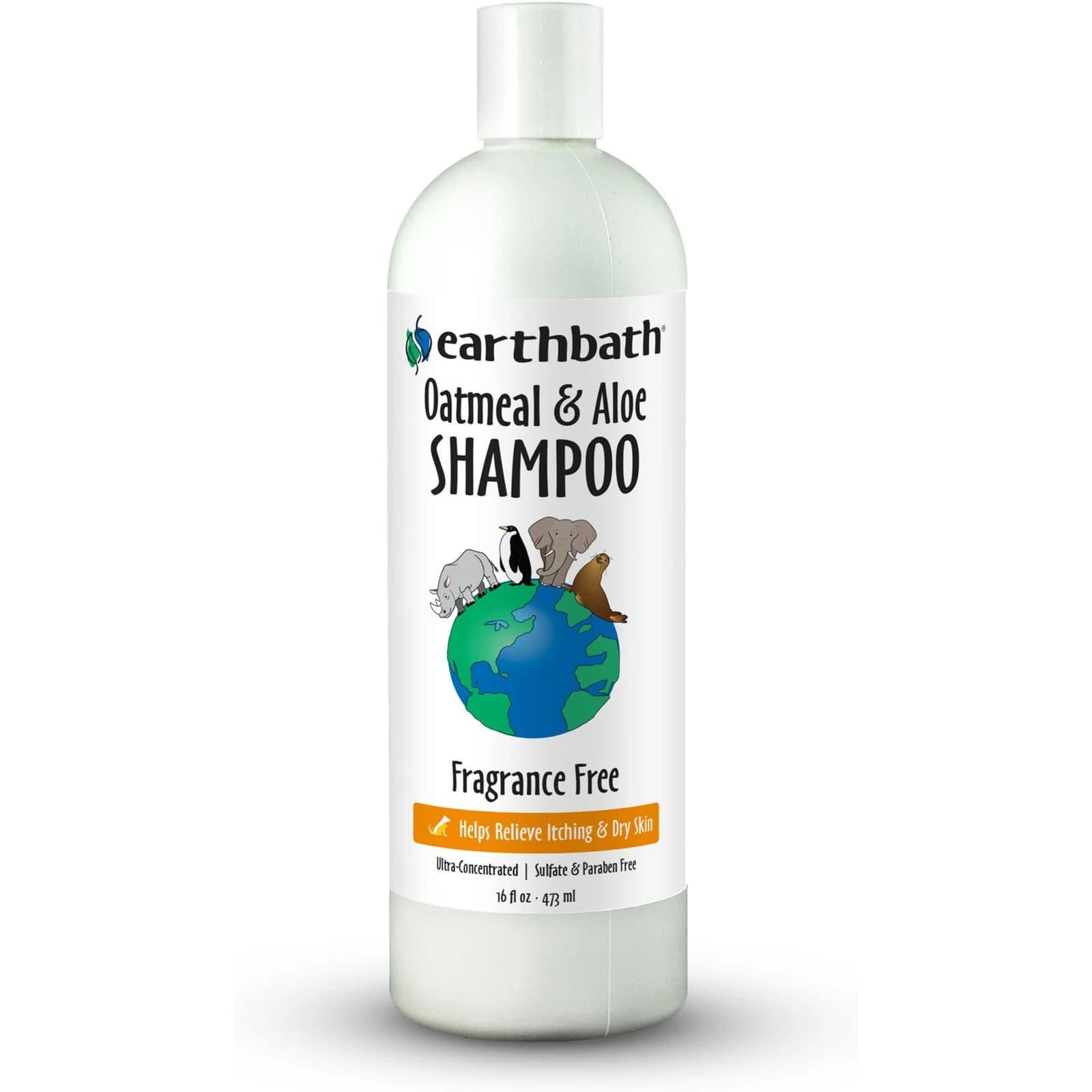
- Best for: Routine baths, dry or itchy skin, and fragrance-sensitive dogs.
- Key ingredients: Colloidal oatmeal, aloe vera, panthenol, and mild cleansers.
- Dilution ratio: Up to 10:1, or ready to use.
- Tradeoff: Oatmeal can soothe, but it does not diagnose or treat the cause of chronic itching.
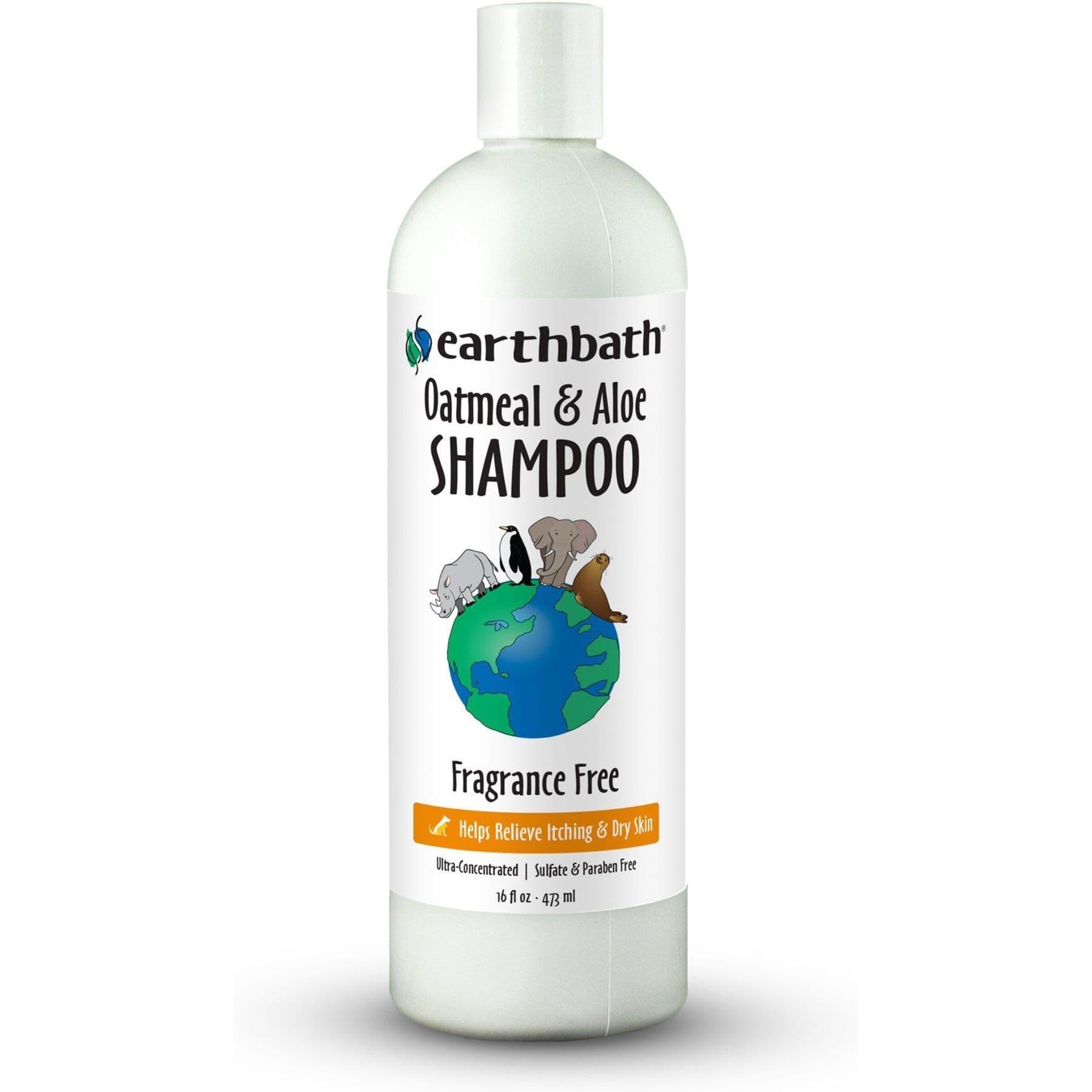
Petful may earn a commission when you click through to Chewy, at no extra cost to you.
Best Budget Pick: Burt's Bees Oatmeal Dog Shampoo
Burt's Bees Oatmeal Dog Shampoo is the budget pick for an ordinary bath, not a medicated treatment. Its current formula is built around gentle cleansing agents with colloidal oat flour, honey, and beeswax. It has no added artificial fragrance, so it can make more sense than a heavily scented shampoo when the goal is clean skin and coat rather than perfume.
The bottle does not provide a dilution ratio, so treat it as ready to use and follow the label. At the current 16-ounce price in our comparison, four ounces costs about $1.86. The light lather is not evidence that the product is failing. Foam volume does not tell you how thoroughly a cleanser has covered the coat.
- Best for: Value-conscious owners and routine bathing of healthy skin.
- Key ingredients: Colloidal oat flour, honey, beeswax, and mild surfactants.
- Dilution ratio: No dilution listed.
- Tradeoff: A low-cost grooming shampoo is not a substitute for an antimicrobial or other condition-specific product.
Petful may earn a commission when you click through to Chewy, at no extra cost to you.
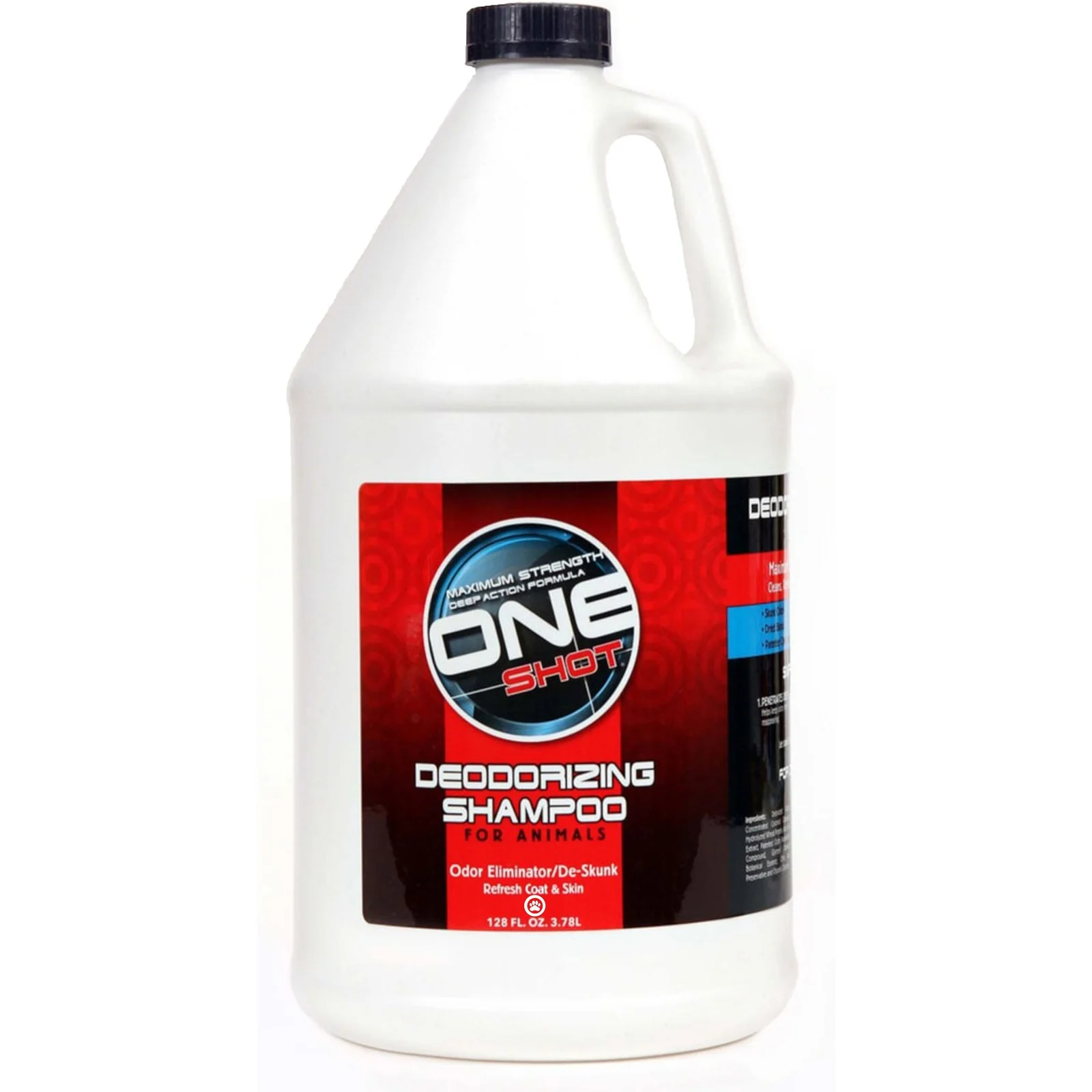
Best for Smelly Dogs: Best Shot One Shot Deodorizing Shampoo
Best Shot One Shot Deodorizing Shampoo is the concentrated odor pick. The manufacturer describes it as a deodorizing formula built around cyclodextrin technology, with a dilution ratio up to 10:1. That professional concentration is why its gallon price is misleading: at the current $48.49 price, four ounces of final 10:1 mixture costs about $0.14.
This is not our sensitive-skin pick. The current ingredient list includes ammonium laureth sulfate, sodium laureth sulfate, an ocean-breeze fragrance blend, and colorant. Those ingredients are not proof that a rinse-off product is unsafe, but a dog with a known fragrance reaction or easily irritated skin needs a simpler choice. Persistent odor that returns quickly can also signal yeast, bacteria, oily skin disease, anal gland trouble, ear disease, or another problem that shampoo alone will not solve.
Nature's Specialties Smelly Pet is another groomer-facing deodorizing concentrate owners may encounter. Follow that bottle's own directions rather than carrying Best Shot's 10:1 math over to it; professional concentrates are not interchangeable.
- Best for: Strong coat odor and owners who want a high-dilution groomer-style concentrate.
- Key ingredients: Cyclodextrin compound, cleansing blend, aloe, hydrolyzed wheat protein, and fragrance.
- Dilution ratio: Up to 10:1.
- Tradeoff: Fragrance and a more complex cleanser blend make it a poor first choice for very sensitive skin.
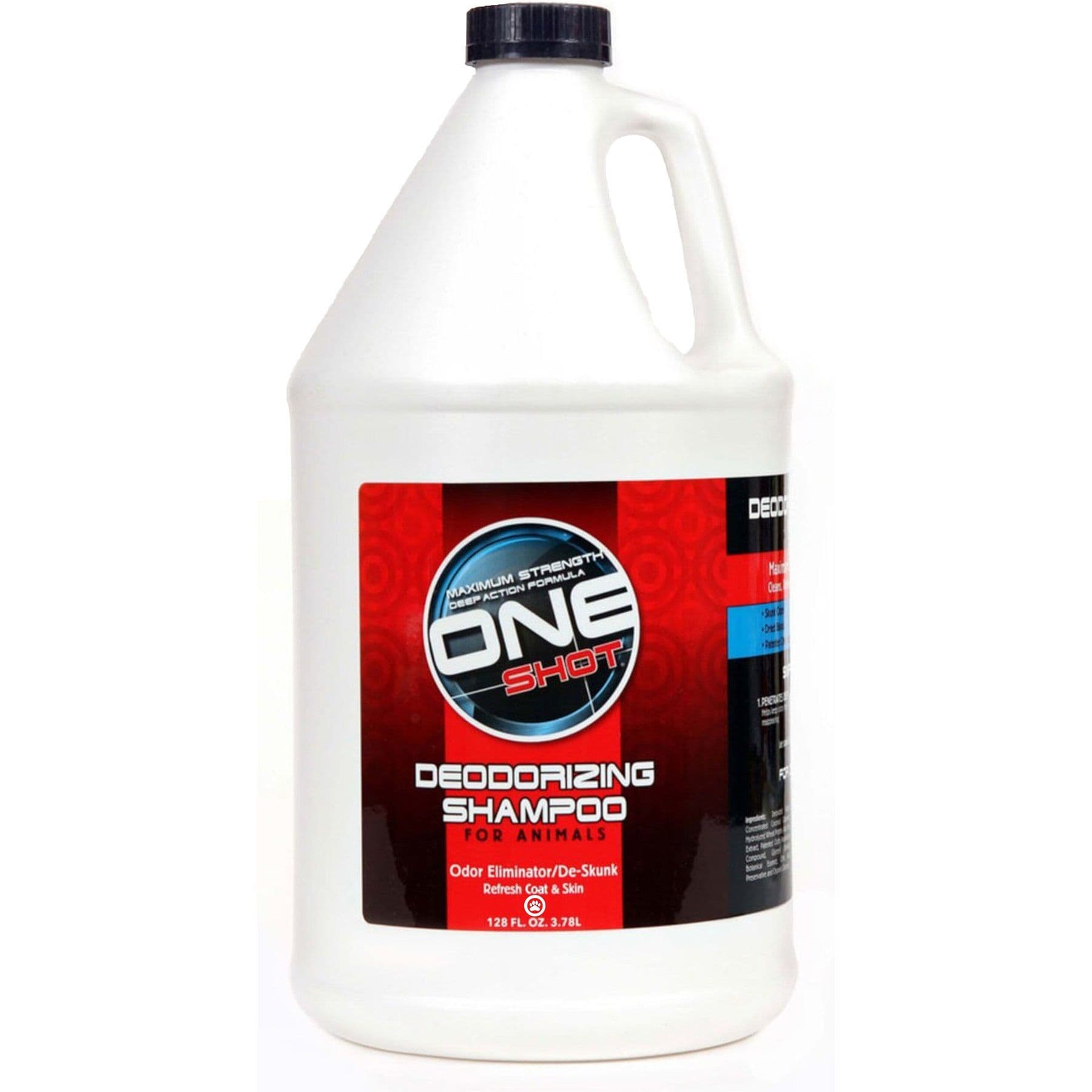
Professional-size deodorizing shampoo formulated to neutralize persistent coat odors.
Petful may earn a commission when you click through to Chewy, at no extra cost to you.
Best Puppy Shampoo: TropiClean Hypoallergenic Gentle Coconut Puppy & Kitten Shampoo
TropiClean Hypoallergenic Gentle Coconut Puppy & Kitten Shampoo is the age-specific pick. Its current product page identifies a tearless, pH-balanced formula with mild coconut cleansers, colloidal oatmeal, aloe, vitamin E, and a light coconut fragrance. The directions call for massaging it into the coat for three to five minutes before rinsing completely.
Check the age statement on the exact package before use. The manufacturer's current large-size listing says the formula is for puppies and kittens 12 weeks or older. An eight-weeks-and-older rule is not supported by that current manufacturer copy. A vet recommended puppy shampoo still has to match the individual puppy and its current label. For a younger puppy who genuinely needs a bath, ask the veterinarian what is appropriate and focus on warmth, secure footing, gentle handling, complete rinsing, and prompt towel drying.
- Best for: First baths in puppies old enough for the current label and dogs needing a mild routine cleanser.
- Key ingredients: Mild coconut cleansers, colloidal oatmeal, aloe, vitamin E, and light fragrance.
- Dilution ratio: No dilution listed for the 20-ounce bottle.
- Tradeoff: Hypoallergenic does not mean fragrance-free or incapable of causing an individual reaction.
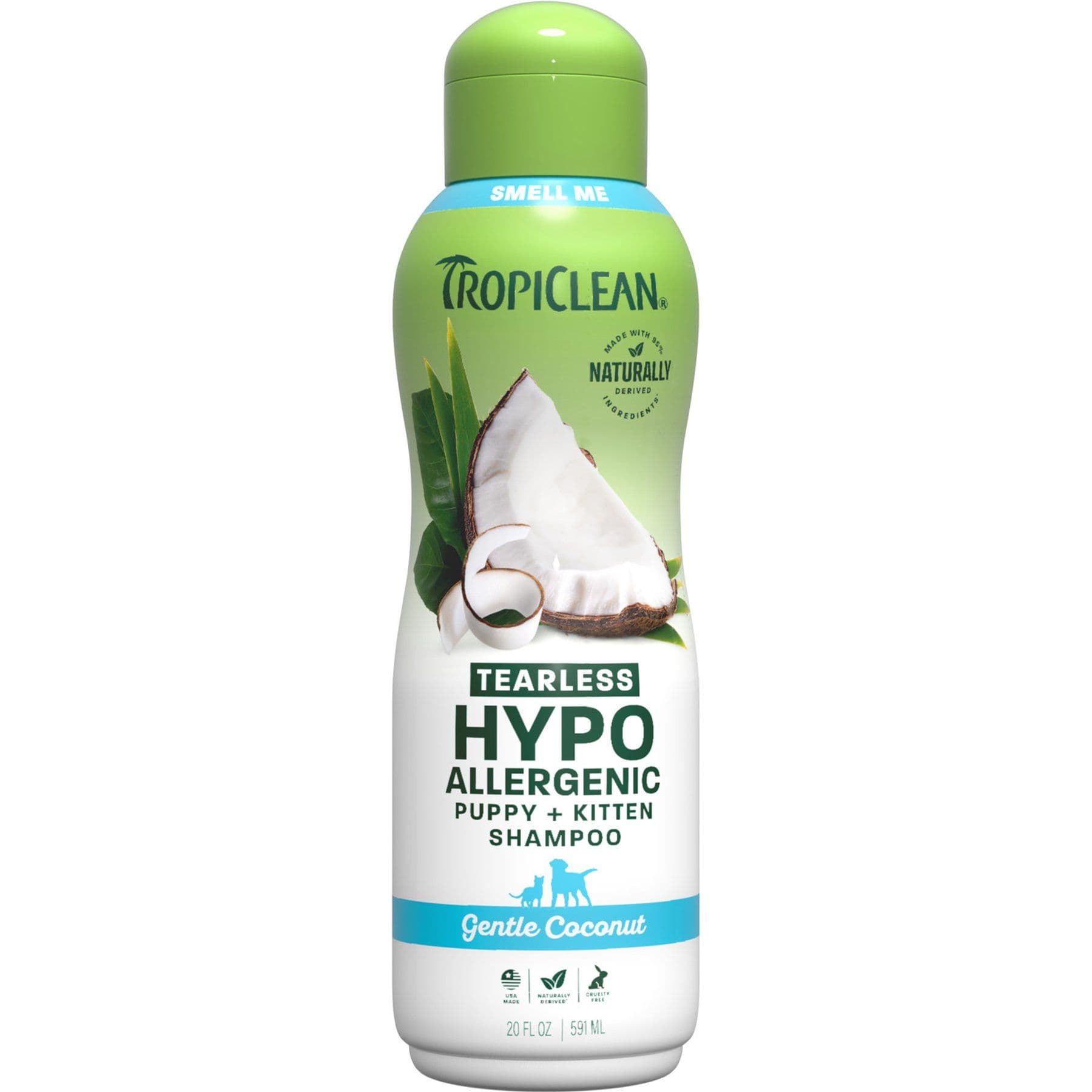
Tearless, pH-balanced shampoo for puppies 12 weeks and older.
Petful may earn a commission when you click through to Chewy, at no extra cost to you.
Best Lower-Cost Medicated Pick: Veterinary Formula Clinical Care Antiseptic & Antifungal Shampoo
Veterinary Formula Clinical Care Antiseptic & Antifungal Shampoo is the lower-cost medicated option, but only when its active ingredients match the problem. The manufacturer lists 1% ketoconazole and 0.2% benzethonium chloride. Directions say to use it twice weekly until irritation subsides, leave the lather on for five to 10 minutes, prevent licking, and rinse well.
Those directions are treatment directions, not a reason to self-diagnose. Red, greasy, scaly, smelly, or itchy skin can have allergic, parasitic, bacterial, fungal, hormonal, and other causes. A low bottle price does not make this the default shampoo for a healthy dog, and partial improvement does not prove which organism or condition was present.
- Best for: Vet-directed support when ketoconazole and benzethonium chloride fit the diagnosed condition.
- Key ingredients: Ketoconazole, benzethonium chloride, aloe, and a cleanser base.
- Dilution ratio: No dilution listed on the current product directions.
- Tradeoff: It requires prolonged skin contact and condition-specific use, not casual rotation with grooming shampoos.
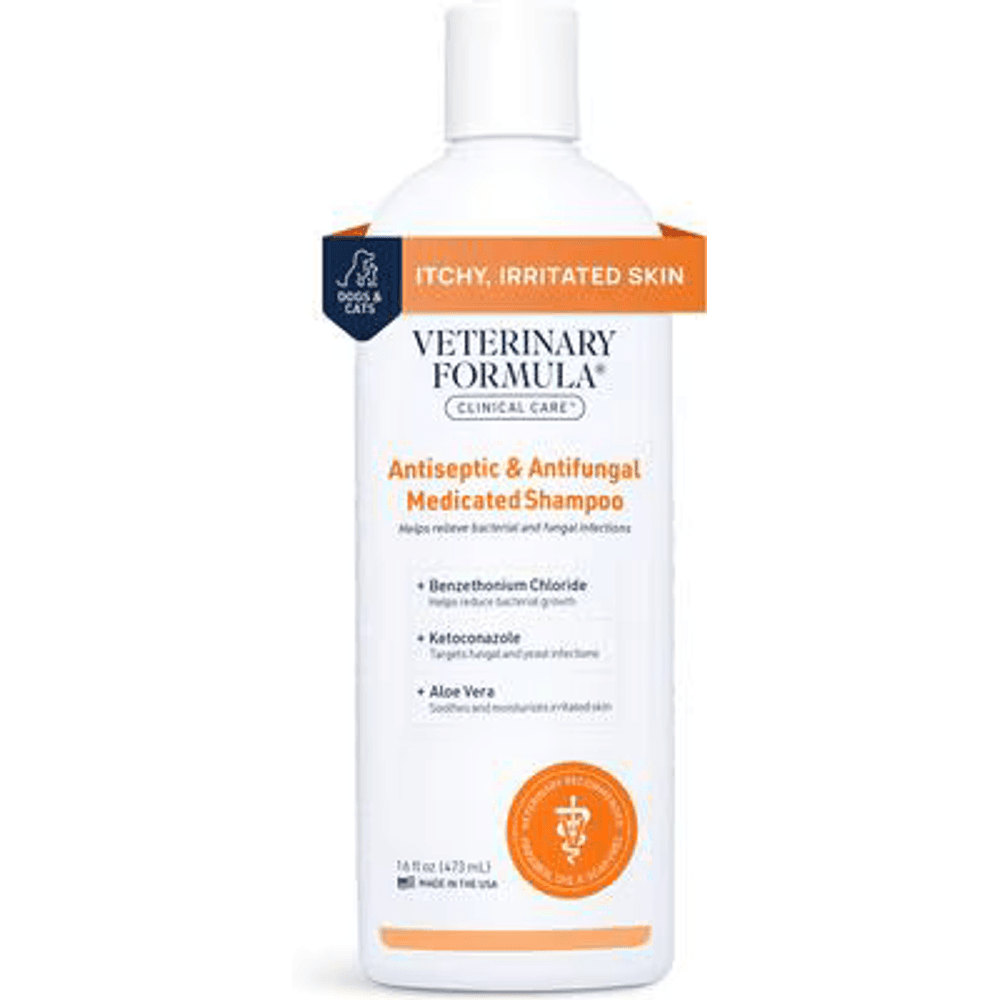
A budget-friendly medicated shampoo with ketoconazole and benzethonium chloride that helps control the fungal and bacterial skin infections behind ringworm, with aloe to soothe irritated skin. A common vet-recommended bath option.
Petful may earn a commission when you click through to Chewy, at no extra cost to you.
Best Premium Medicated Pick: MiconaHex+Triz Shampoo
MiconaHex+Triz is the premium medicated pick for a veterinary plan addressing skin conditions responsive to miconazole and chlorhexidine. Dechra's product information lists 2% miconazole nitrate, 2% chlorhexidine gluconate, TrizEDTA, and a ceramide complex. The active combination targets fungal and bacterial skin problems, while the ceramides support a damaged skin barrier.
Its higher price is not proof that it is stronger, safer, or more suitable for every itchy dog. It is a different formula for a different decision. Dechra's bathing guide tells owners to follow veterinary instructions and the current product label, apply medicated shampoo to the most affected areas first, observe the recommended contact time, and rinse thoroughly.
- Best for: Veterinary management of bacterial or Malassezia-related skin disease when this active combination is selected.
- Key ingredients: Miconazole, chlorhexidine, TrizEDTA, and ceramides.
- Dilution ratio: Follow the current package and veterinarian's directions.
- Tradeoff: It has the highest ready-to-use cost in this group and should not be bought simply because ordinary shampoo did not stop itching.
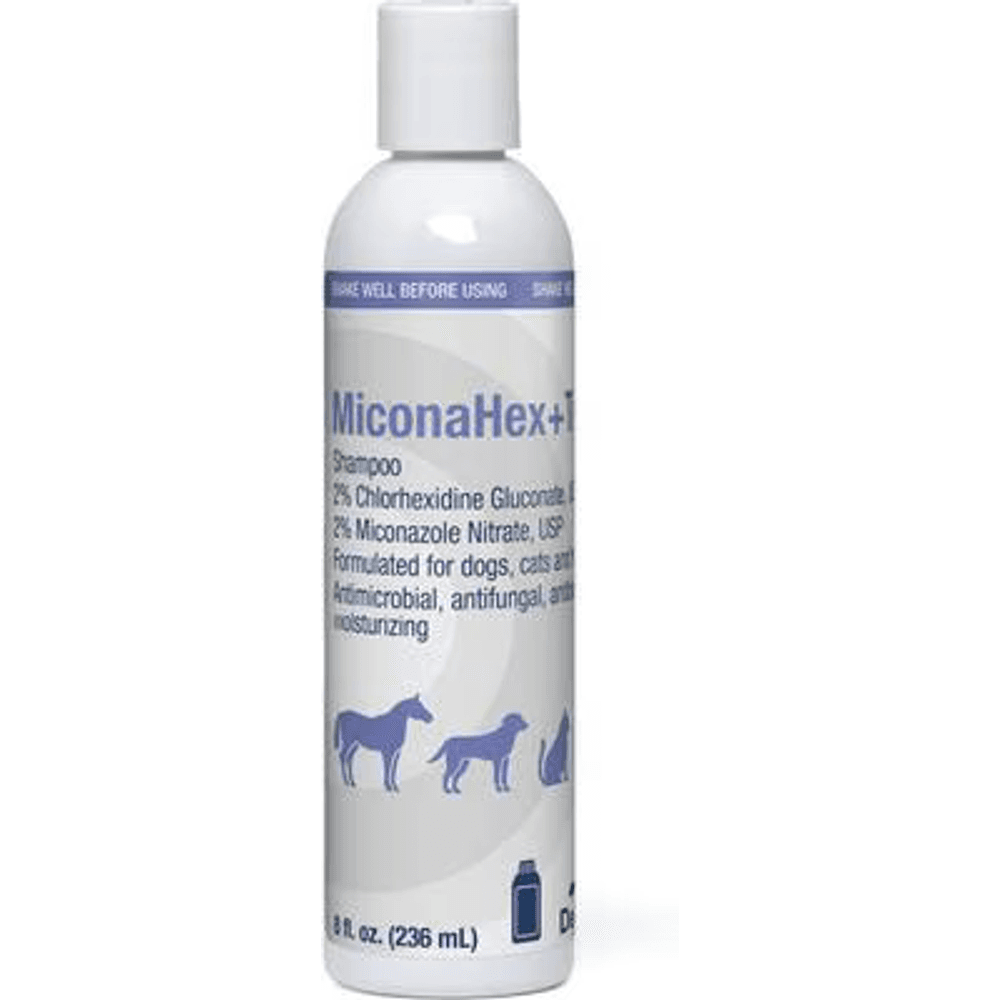
A vet-strength medicated shampoo pairing 2% chlorhexidine and 2% miconazole, a potent antifungal and antibacterial combination widely used to help clear ringworm and yeast or bacterial skin infections.
Petful may earn a commission when you click through to Chewy, at no extra cost to you.
Best for Itchy and Sensitive Skin
The best dog shampoo for itchy skin is a mild, dog-specific formula that fits the cause of the itch. For routine dryness or sensitivity without signs of infection, our itchy skin pick is fragrance-free Earthbath Oatmeal & Aloe. Colloidal oatmeal can support comfort, while aloe and panthenol add moisturizing ingredients. Burt's Bees is the lower-cost routine option, but its ingredient profile and lack of dilution are different.
The best dog shampoo for sensitive skin is usually the simplest product that cleans effectively without adding an unnecessary scent. Look for a transparent ingredient list, dog-specific directions, complete rinsing, and a formula the dog has tolerated before. "Hypoallergenic" is a useful label clue, not a guarantee that no dog can react.
Readers looking for a vet recommended dog shampoo for itchy skin should expect a cause-based answer, not one universal bottle. A veterinarian may suggest a gentle routine cleanser, more frequent therapeutic bathing, parasite control, an antimicrobial active, allergy management, or diagnostic testing depending on the examination and skin findings. Likewise, the phrase best medicated dog shampoo for skin allergies can be misleading because medicated shampoo targets a defined skin problem or secondary infection, not the allergy diagnosis by itself.
Use-case boundary: The same cause-based screen applies to dry or itchy skin, hot spots, dandruff, shedding or deshedding, sensitive skin and allergies, odor with itching, and suspected yeast infection. Oatmeal and hypoallergenic shampoos can be routine options, while chlorhexidine, ketoconazole, miconazole, and other medicated actives need a defined problem. Homemade anti-itch mixtures, whitening formulas, and products that merely smell good do not replace diagnosis for recurrent skin disease.
- 1Match shampoo to the skin situation before comparing scents.
- 2Choose oatmeal for itch linked to ordinary dryness, while remembering that oatmeal does not treat parasites, infection, or allergy.
- 3Prefer fragrance-free for sensitive skin or a known fragrance reaction.
- 4Use Veterinary Formula Clinical Care or MiconaHex+Triz only for vet-directed medicated use when the active ingredients fit the diagnosed problem.
Stop shopping and call the veterinarian when itch is intense, persistent, sudden, or paired with hair loss, raw skin, sores, pustules, greasy scale, odor, ear trouble, foot licking, or repeated infections. A shampoo can remove allergens and debris or deliver a topical active, but it cannot identify food allergy, environmental allergy, mites, endocrine disease, or another underlying cause.
Best for Smelly Dogs and Lasting Freshness
The best dog shampoo for smelly dogs should remove the material holding odor rather than merely covering it. Best Shot One Shot wins this segment because it is a high-dilution deodorizing concentrate designed for stubborn coat odor. Thoroughly wetting the coat, working the diluted mixture down to the skin, and rinsing until the water runs clean matter as much as the fragrance left behind.
A strong scent that lingers for days is not automatically a better result. Artificial fragrance can irritate some sensitive dogs, and perfume can obscure the clue that odor returned soon after bathing. If the smell is sour, yeasty, greasy, localized to the ears or paws, or quickly recurrent, veterinary assessment is more useful than changing to a stronger perfume.
The best smelling dog shampoo that groomers use is therefore not necessarily the most heavily fragranced. Professionals often favor a concentrated product that removes the odor source, rinses cleanly, and fits the dog's skin. A lasting clean smell should come with comfortable skin, not redness or scratching.
A search for a dog shampoo that smells good for a long time still leads to the same rule: durable freshness should come from removing the odor source, not masking a quickly recurring sour, yeasty, or greasy smell with stronger fragrance.
Mix Concentrates Exactly: Use a freshly mixed dilution bottle and follow the label ratio. More concentrate does not necessarily clean better. It can make rinsing harder, increase residue, and erase the cost advantage that makes a professional concentrate economical.
What Groomers and Vets Actually Use
What dog shampoo do most groomers use? Professional groomers do not all use one brand. They commonly choose concentrated, dog-specific shampoos by coat condition and service goal, then dilute them in a mixing bottle for even distribution. Earthbath, TropiClean, and Best Shot are examples of groomer-facing or widely groomer-used brands, but the useful professional habit is matching, measuring, and rinsing rather than copying one shelf.
What shampoo do vets recommend? A vet recommended dog shampoo is a category and active ingredient chosen for the dog, not one brand for every pet. For healthy or mildly dry skin, that may be a gentle fragrance-free grooming shampoo. For suspected bacterial or yeast disease, the recommendation may involve chlorhexidine with miconazole, ketoconazole, or another selected active, a defined contact time, and a recheck plan. The Merck Veterinary Manual distinguishes cleansing, antiparasitic, and medicated shampoos and stresses that medicated products are not ordinary grooming shampoos.
The strongest vet recommendation is often to diagnose first. Medicated shampoo can be a first-line topical tool for selected bacterial or yeast overgrowth, but the underlying allergy, parasite, hormonal disease, skin-fold problem, or barrier defect still needs management.
How We Chose These Shampoos
We evaluated the six picks through expert analysis of current labels and veterinary sources. We did not bathe dogs with the products, score lather, measure post-bath hydration, or claim first-hand results.
What shampoo do vets recommend? They recommend a dog-specific product chosen for the diagnosed or observed skin situation: a gentle routine cleanser for healthy or mildly dry skin, an age-labeled puppy formula, or a medicated active such as chlorhexidine, miconazole, or ketoconazole when the examination supports it. The recommendation also includes contact time, bathing frequency, rinsing, and follow-up rather than a brand name alone.
The decision factors were:
- Skin fit: Routine dryness, sensitive skin, odor, puppy age, and vet-directed antimicrobial care are separate decisions.
- Ingredient transparency: Active ingredients, fragrance, oatmeal, aloe, surfactants, and moisturizers must be identifiable.
- Dilution ratio: A concentrated bottle can cost less per bath than a cheaper ready-to-use bottle.
- Contact time: Routine cleansers and medicated shampoos have different on-skin timing.
- Age and species label: Puppy-safe language must come from the exact current product, not a general brand reputation.
- Evidence boundary: Manufacturer directions can establish formula and use, but they do not prove universal effectiveness.
- Tradeoffs: Fragrance, concentration, treatment burden, and price can make a good product a poor fit for a particular dog.
These choices cover distinct skin, smell, and age situations without presenting flea shampoo as another interchangeable pick. They also separate two antimicrobial formulas from routine grooming shampoos so readers do not mistake an active ingredient for a general quality upgrade.
No ranking editorial page in the measured SERP has a FAQ, a comparison table, or pricing, and the deepest is 1,613 words. Rank 2 is a groomer-school promo post with bare brand name-drops, while rank 10 is a 675-word brand post recommending only its own two SKUs. Only DoorDash at rank 5 has real testing, and it covers just six products with no skin-condition depth. This roundup therefore adds product-specific tradeoffs, skin matching, cost-per-bath math, and standalone answers.
Why Dog Skin pH Makes Human Shampoo the Wrong Tool
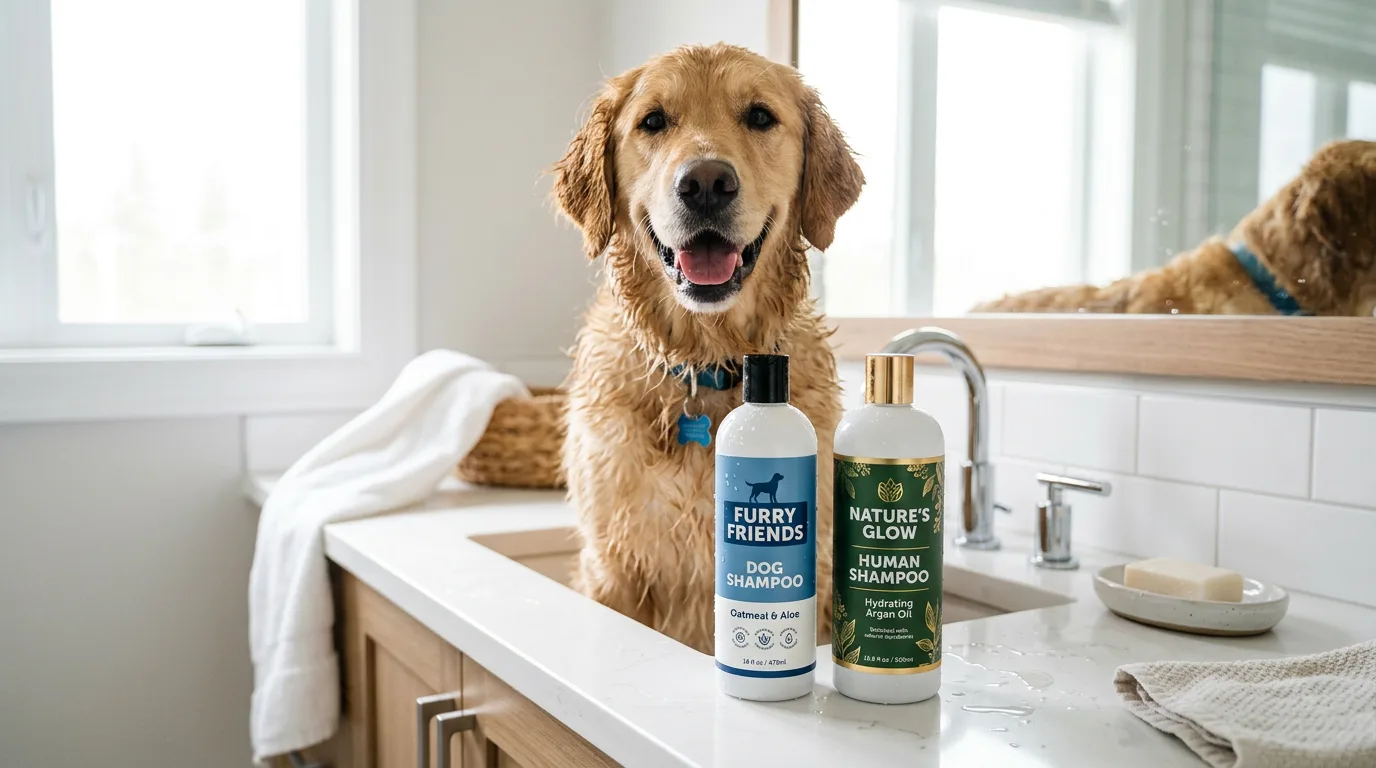
Dog skin does not have one fixed pH. A prospective study of 77 dogs found that healthy skin pH varied by age and body site: puppies younger than 12 weeks measured 3.97 to 5.70, while older dogs measured 4.40 to 8.18. More recent canine research likewise shows variation by age and breed. Human skin is generally more acidic, and human hair products are designed and tested for human hair, sebum, fragrance tolerance, and use patterns rather than a dog's coat and skin.
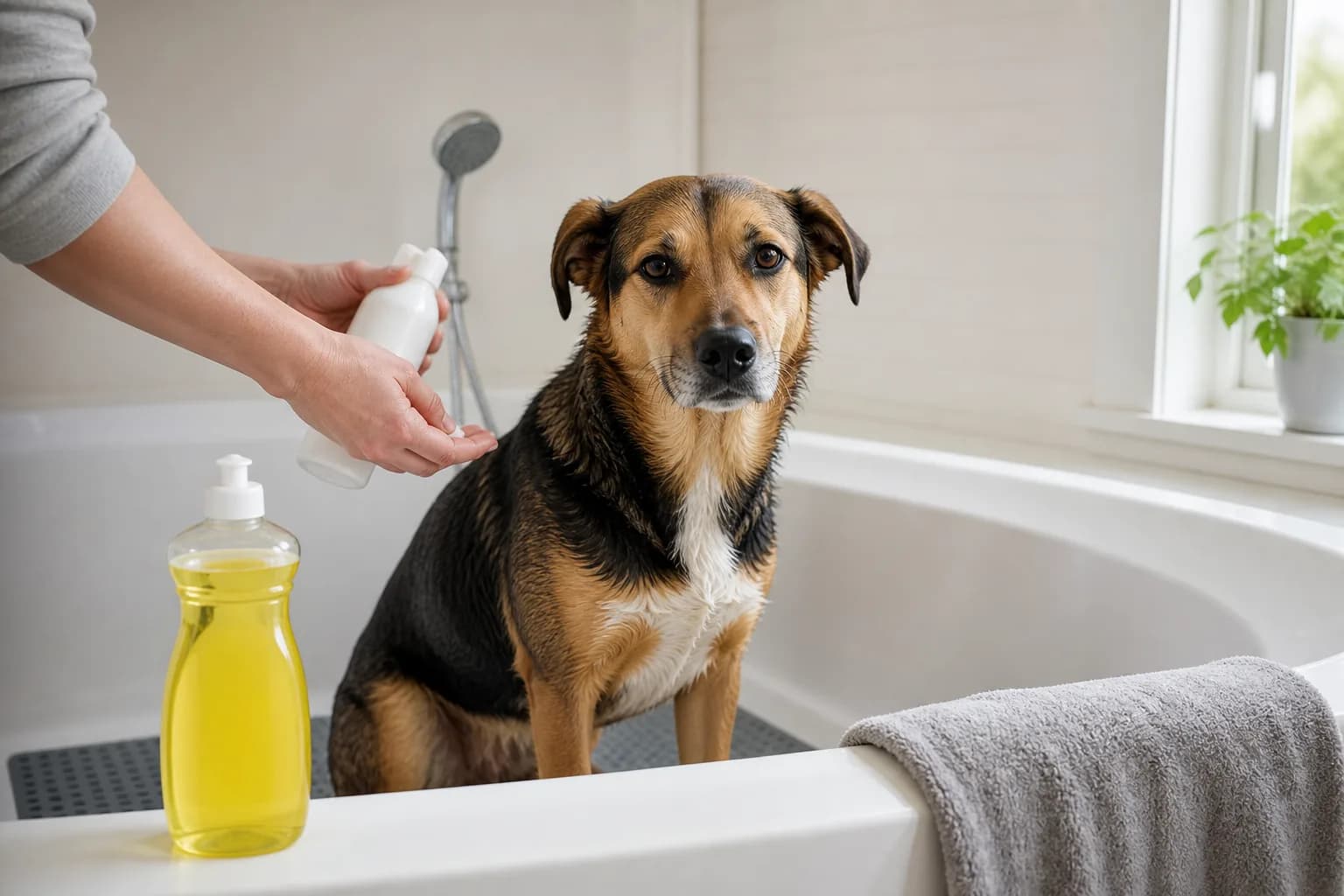
That means the skin pH mismatch is real, but "dogs are exactly pH 7.5" is too simplistic. The practical rule is to use a dog-specific product with a current label. Dechra's veterinary bathing guidance tells owners not to use human shampoo or dish soap because animal skin differs from human skin.
Baby shampoo is still human shampoo. Baby shampoo and household substitutes fail the dog skin pH and species-fit test even when marketed as mild or tear-free, because they are not formulated around the dog's coat, skin condition, or veterinary treatment plan. If an emergency cleanup cannot wait, use lukewarm water on the smallest affected area and ask the veterinarian what cleanser is appropriate. For the full comparison, see Petful's guide to dog shampoo vs. human shampoo.
Ingredients to Avoid
What dog shampoo to stay away from? Avoid products without a complete label, human shampoo used as a routine substitute, concentrated essential-oil mixtures, and medicated or insecticidal actives that do not match the dog's species, age, and condition. Also avoid any formula that has previously caused redness, hives, swelling, vomiting, or worsening itch in that dog.
The ingredients to avoid on the label depend on the dog. Sulfates can be too cleansing for some dry or reactive skin, parabens may conflict with a buyer preference without being a universal hazard, and artificial fragrance can trigger an individual reaction. The useful screen is the complete ingredient label, the dog's prior response, and the reason for bathing, not a blanket claim that every formula containing one of these ingredients is unsafe.
- Sulfates: A sulfate-containing rinse-off shampoo is not automatically unsafe. However, a dog with very dry or reactive skin may do better with a milder or sulfate-free formula. Best Shot One Shot contains ammonium laureth sulfate and sodium laureth sulfate, which is one reason it is the odor pick rather than the sensitive-skin pick.
- Parabens: Several products in this roundup are marketed as paraben-free. That can meet a buyer preference, but the absence of parabens does not prove that every other ingredient is gentle or that the shampoo treats a skin disorder.
- Artificial fragrance: Fragrance is a common reason to choose a simpler product for sensitive skin. "Natural fragrance" can also cause an individual reaction, so fragrance-free is the clearer filter when scent sensitivity is known.
- Medicated actives: Chlorhexidine, miconazole, ketoconazole, and benzethonium chloride have specific roles. They are not routine upgrades for a healthy coat.
- Rinse immediately and contact a veterinarian if a shampoo causes facial swelling, hives, breathing trouble, collapse, severe redness, repeated vomiting, or sudden distress. For milder irritation, rinse completely, stop the product, and ask the clinic what to do next.
How Groomers Bathe Dogs: Technique and Dilution
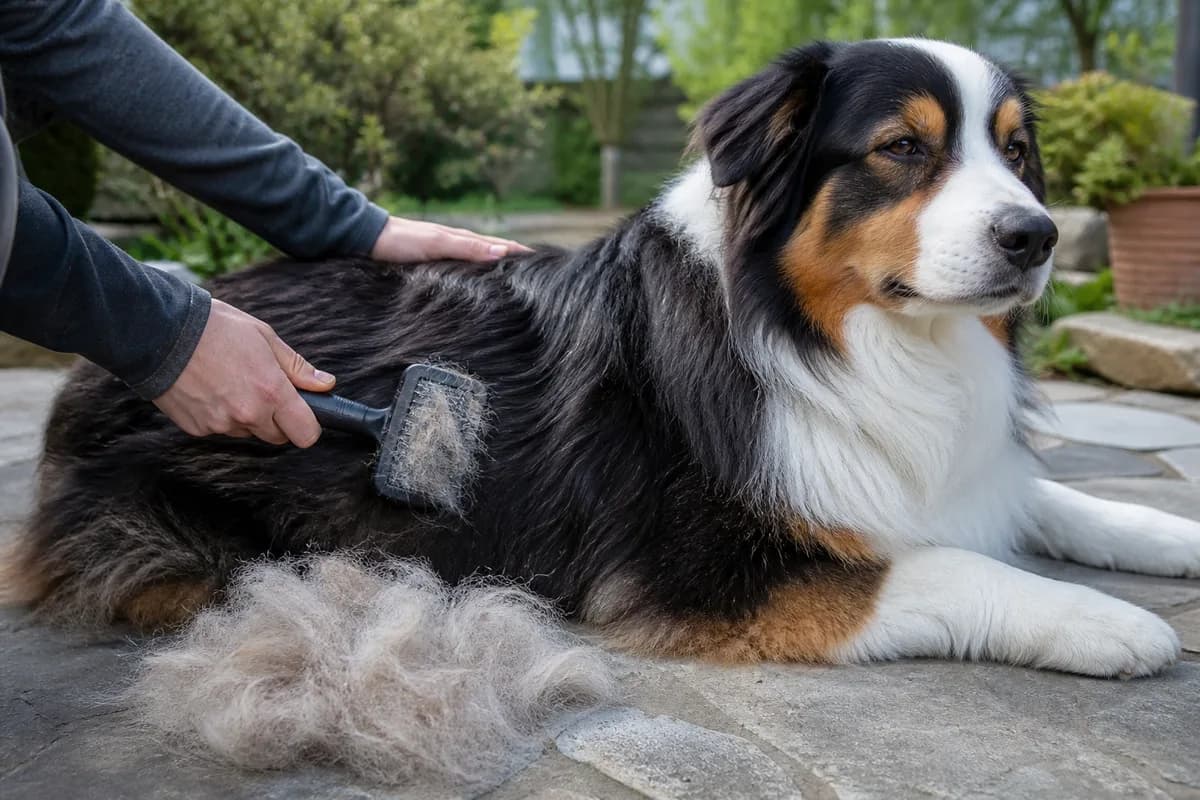
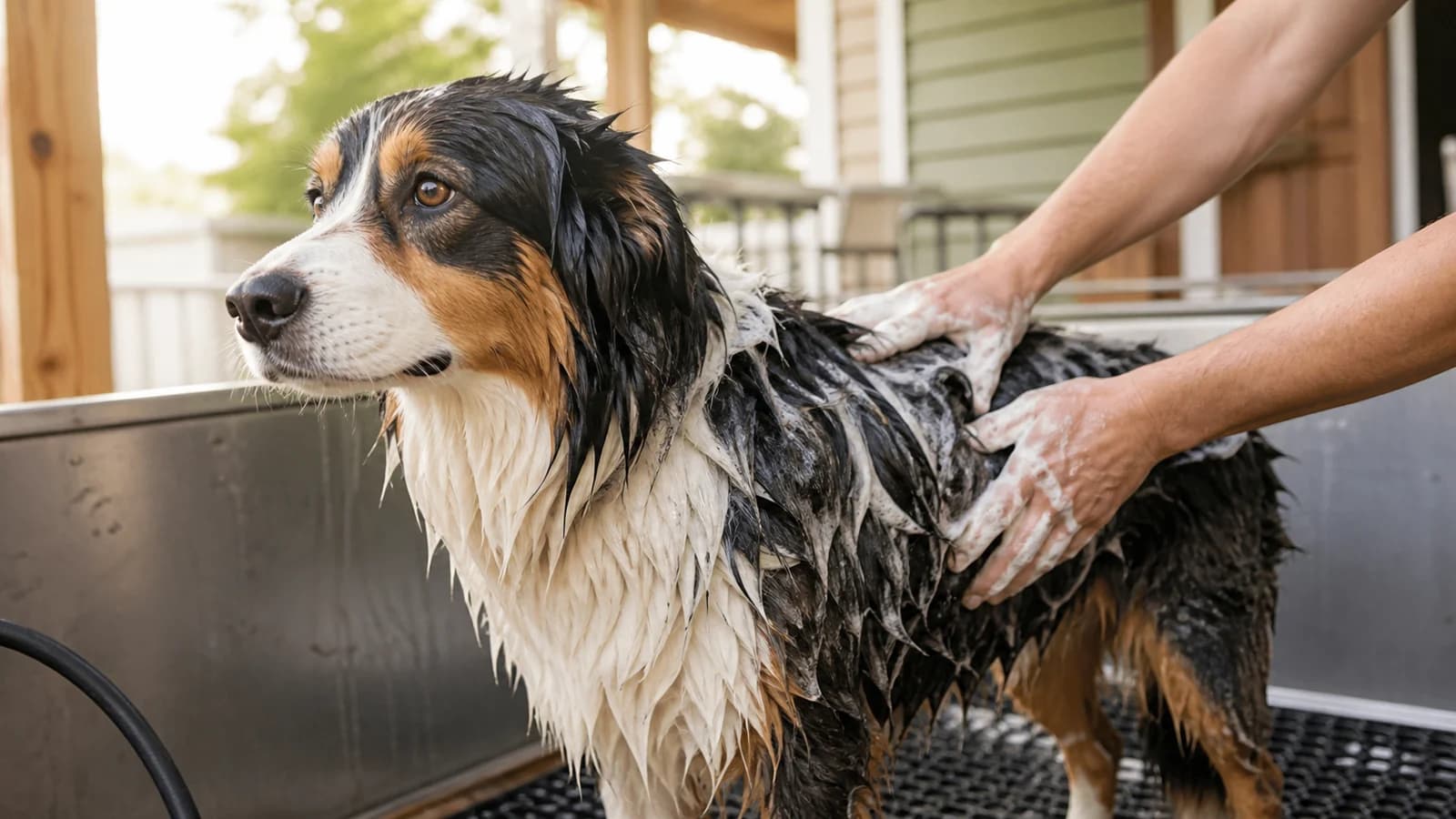
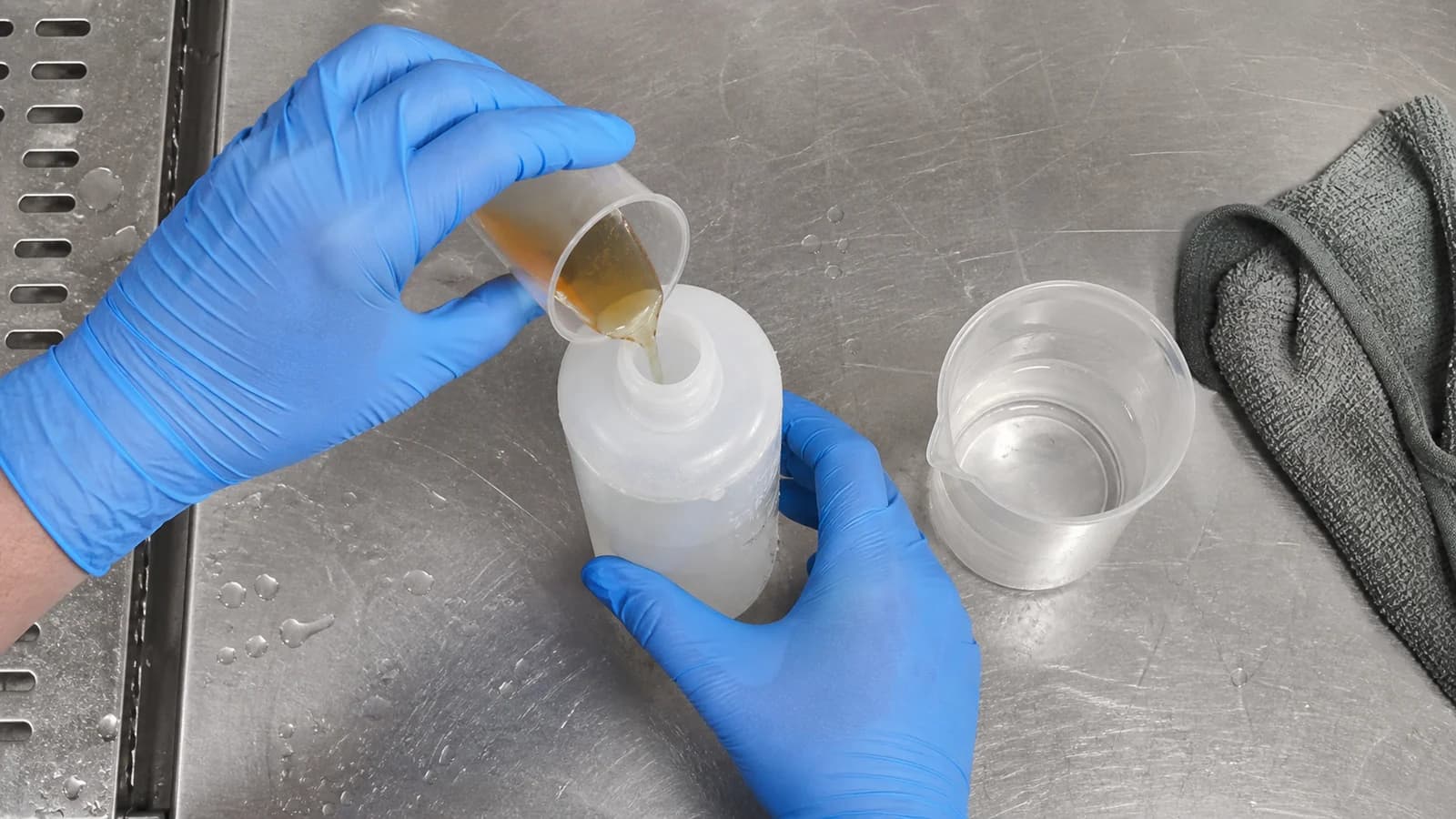
What do dog groomers use to shampoo dogs? They use dog-specific products, often professional concentrates measured into mixing bottles. They also rely on preparation and technique: brush out loose coat, wet all the way to the skin, distribute the shampoo evenly, massage rather than scrub, observe any label contact time, rinse completely, and dry in a way that suits the coat and the dog's comfort.
For cost per bath, use this formula:
- Divide bottle price by bottle fluid ounces to find cost per ounce of concentrate.
- Add the shampoo and water parts in the dilution ratio. A 10:1 mix has 11 total parts.
- Divide concentrate cost per ounce by total parts to find the cost per ready-to-use ounce.
- Multiply by the amount of mixed liquid your dog's bath actually uses.
For example, a 16-ounce bottle costing $18.99 has a concentrate cost of about $1.19 per ounce. At 10:1, each ready-to-use ounce costs about $0.11, so four ounces costs about $0.43. A $48.49 gallon costs about $0.38 per concentrate ounce. At 10:1, four ounces of mixed solution costs about $0.14. The cheaper bottle is not automatically the cheaper bath.
Mix concentrates in a clean bottle and make only the amount allowed by the label. Earthbath specifically says to discard diluted product after 24 hours. Never assume another brand uses the same dilution ratio, and never dilute a medicated shampoo unless the package or veterinarian directs it.
How Often to Bathe a Dog
How often to bathe a dog without stripping skin oils depends on the individual. For many healthy dogs, every four to six weeks is a practical starting range, but coat, lifestyle, shedding, allergies, and skin disease can move the schedule in either direction. Some medium or long coats may be bathed weekly to every four to six weeks when maintained correctly, while non-shedding breeds may land around six to eight weeks. Bathe sooner after mud, feces, skunk spray, or another contaminating mess.
Over-bathing strips oils when the schedule, cleanser, or technique is too harsh for that dog. It can leave the skin dry and the coat brittle. That does not mean frequent bathing is always harmful: a veterinarian may prescribe medicated bathing two or three times weekly for a specific condition. In that case, the treatment label and veterinary plan outrank a general grooming schedule.
Signs the routine needs reassessment include:
- Dry flakes, increased itch, redness, or a dull coat after baths.
- Odor returning within days despite thorough washing.
- A greasy coat, pustules, hair loss, or recurrent ear and paw symptoms.
- Needing fragrance to hide rather than remove the smell.
- A dog who cannot tolerate the handling or contact time safely.
Flea and Tick Shampoos
Flea shampoo is a separate antiparasitic decision, not a seventh general-purpose pick. A grooming shampoo may clean the coat, but it does not replace an effective flea-control plan, and a flea shampoo may not provide durable protection after the bath. For product choices and safety details, use Petful's dedicated guide to the best flea shampoo for dogs.
Do not improvise with household cleaners. Dawn and other dish liquids are designed for dishes and degreasing, not routine canine skin care. Petful's guide to washing a dog with dish soap owns that decision and explains the limited emergency context and safer routine alternatives.
Dog Shampoo FAQs
Which brand of shampoo is best for dogs depends on the brand by use case and coat type, not one universal winner. Earthbath is our overall choice for routine dry or itchy skin, Burt's Bees is the budget option, Best Shot fits persistent coat odor, and TropiClean supplies the age-labeled puppy choice. Veterinary Formula and MiconaHex+Triz belong in a veterinary plan when their active ingredients match the diagnosed condition.
How often you should bathe your dog depends on coat type, lifestyle, odor, allergies, and skin disease, but every four to six weeks is a practical starting range for many healthy dogs. Over-bathing strips oils when the product, frequency, or rinsing is too harsh. A veterinarian may prescribe more frequent bathing for a diagnosed condition, so the treatment label and veterinary plan outrank a general grooming calendar.
You should not use baby shampoo on your dog as a routine or emergency substitute. Baby shampoo is made for human skin and hair, not canine skin and coat. The skin pH mismatch and species-specific formulation create the boundary. For an urgent contaminant, rinse the smallest affected area with lukewarm water and ask a veterinarian or poison-control service which cleanser is safe.
The best shampoo for puppies is a tear-free formula with an explicit current age label and puppy directions. TropiClean is our age-specific pick, but the manufacturer's current copy says 12 weeks or older. An eight weeks and older minimum is not supported by that exact package. For a younger puppy, ask the veterinarian what is appropriate and prioritize warmth, secure footing, complete rinsing, and prompt drying.
Start with coat length and condition. Short, healthy coats often do not need a separate conditioner, while long, curly, dry, or tangle-prone coats may benefit after shampooing. A two-in-one tradeoff is speed versus control: it saves time but gives less ability to adjust cleansing and conditioning separately. Stop any product that leaves residue, worsens itch, or makes the coat harder to manage.
The best choice is the bottle that fits the dog's present skin situation and can be used exactly as directed. Start simple for routine bathing, calculate value from dilution rather than shelf price, and involve the veterinarian before using medicated shampoo for persistent itch, odor, scaling, or infection signs.

Coreen Saito is a pet writer and longtime shelter volunteer with more than a decade in animal rescue. She covers cat behavior, breed care, and the small, ordinary science of sharing a life with companion animals, with a particular focus on honest takes about the products and decisions that actually matter. At home in Arizona, she's outranked by Mac (a dog with the loudest opinion in the house), Rebel (a cat who governs by quiet authority), and Meri (an orange tabby who runs the late shift and the laundry basket). She writes about all three, plus the rescues that keep coming through her life, at LifeWithMinty.com.
Sign up for expert-backed reviews and safety alerts all in one place.