Fastest Dog Breeds: Speed Plus Top Agility Stars
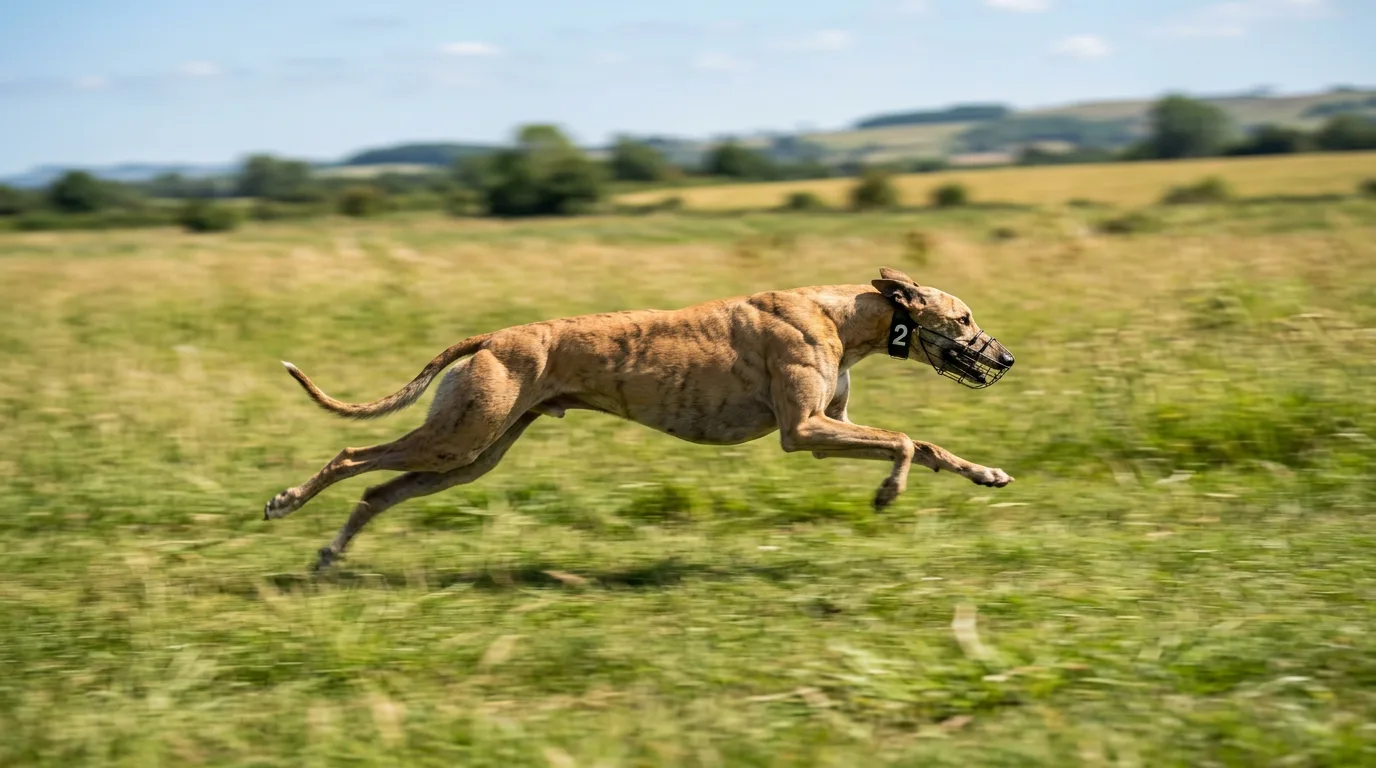
The fastest dog breeds can top 45 mph, with the Greyhound leading the pack. Here are the speed rankings by top mph, plus the 10 breeds that dominate agility competitions and what makes them so quick.
Petful is reader supported. As an affiliate of platforms like Amazon and Chewy, we may earn a commission when you buy through links on this page. There is no extra cost to you.
If you have ever watched a Greyhound stretch into a full sprint, you already know that the fastest dog breeds move in a different league from the average family pet. The quickest dogs on earth top 40 miles per hour, and the champions of the agility ring turn that raw speed into split-second control over jumps, tunnels, and weave poles. This guide covers both: the pure speed demons ranked by top mph, and the ten breeds that dominate agility courses because they pair velocity with brains and biddability.
Most dogs run somewhere between 15 and 20 mph for short bursts. The fastest dog breeds double that. What separates them is anatomy: long legs, a deep chest for lung capacity, a flexible spine that lets them fold and extend in a double-suspension gallop, and an oversized heart. Below you will find the speed rankings, then a deep dive into the agility breeds Petful readers ask about most.
- 1The Greyhound is the fastest dog breed in the world at up to 45 mph, faster than any other land dog.
- 2Most fast breeds are sighthounds built for explosive short sprints, not marathon endurance.
- 3The best agility dogs (Border Collies, Papillons, Shelties) combine speed with intelligence and trainability, not just top-end mph.

Sign up for expert-backed reviews and safety alerts all in one place.
The Fastest Dog Breeds Ranked by Top Speed
Speed in dogs comes down to build. Sighthounds like the Greyhound, Saluki, and Whippet were bred for centuries to spot prey and run it down by sight, so their bodies are pure sprinting machines. Here is how the fastest dog breeds stack up by recorded top speed.
Petful may earn a commission when you click through to Chewy, at no extra cost to you.
| Breed | Top Speed | Built For |
|---|---|---|
| Greyhound | Up to 45 mph | Short-distance sprinting; the fastest dog breed |
| Saluki | Up to 42 mph | Endurance sprints over desert terrain |
| Afghan Hound | Up to 40 mph | Explosive sprints despite a long coat |
| Vizsla | Up to 40 mph | All-day hunting at speed |
| Whippet | Up to 35 mph | Rapid acceleration off the line |
| Borzoi | Up to 36 mph | Tall Russian sighthound coursing |
| Dalmatian | Up to 37 mph | Distance running beside carriages |
| Doberman Pinscher | Up to 32 mph | Protective work with quick bursts |
| Jack Russell Terrier | Up to 30 mph | Small-dog speed and grit |
| German Shepherd | Up to 30 mph | Versatile working speed |
Why sighthounds dominate the speed list
Five of the six fastest dog breeds are sighthounds. The Greyhound is the clear speed king at up to 45 mph, quick enough to keep pace with a car on a residential street for a few hundred yards. What makes these dogs so fast is the double-suspension gallop: at full stride there are two moments in each cycle when all four feet are off the ground, once when the legs are gathered under the body and once when they are fully extended. Combined with a deep chest, large heart, and lean muscle, that stride turns a Greyhound into a canine cheetah.
The trade-off is stamina. A Greyhound is a sprinter, not a distance athlete. It will beat almost any dog over 400 yards and then want to sleep for the rest of the afternoon. Breeds like the Vizsla and Dalmatian sacrifice a little top-end speed for the ability to run fast for much longer, which is exactly why they cross over so well into agility and canine sports.
It is worth putting these numbers in perspective. A human sprinter tops out around 27 mph for a few seconds. A Greyhound clears 45 mph, and it does so accelerating from a standstill in about six strides. The Saluki, one of the oldest domesticated breeds, was prized by desert nomads precisely because it could run down gazelle over rough, hot terrain, so it pairs near-Greyhound speed with far better heat tolerance and endurance. The Afghan Hound looks like a show dog with its flowing coat, but underneath that glamour is a powerful sprinter that can reach 40 mph while navigating rocky mountain ground. Each of these breeds was shaped by a specific job, and their top speeds are a direct result of the terrain and prey they were built to chase.
- Many of the fastest dog breeds, including the Greyhound and the Whippet, are famous couch potatoes at home. They need one or two good sprints in a securely fenced area and are otherwise calm, quiet housemates.
What Is Dog Agility?
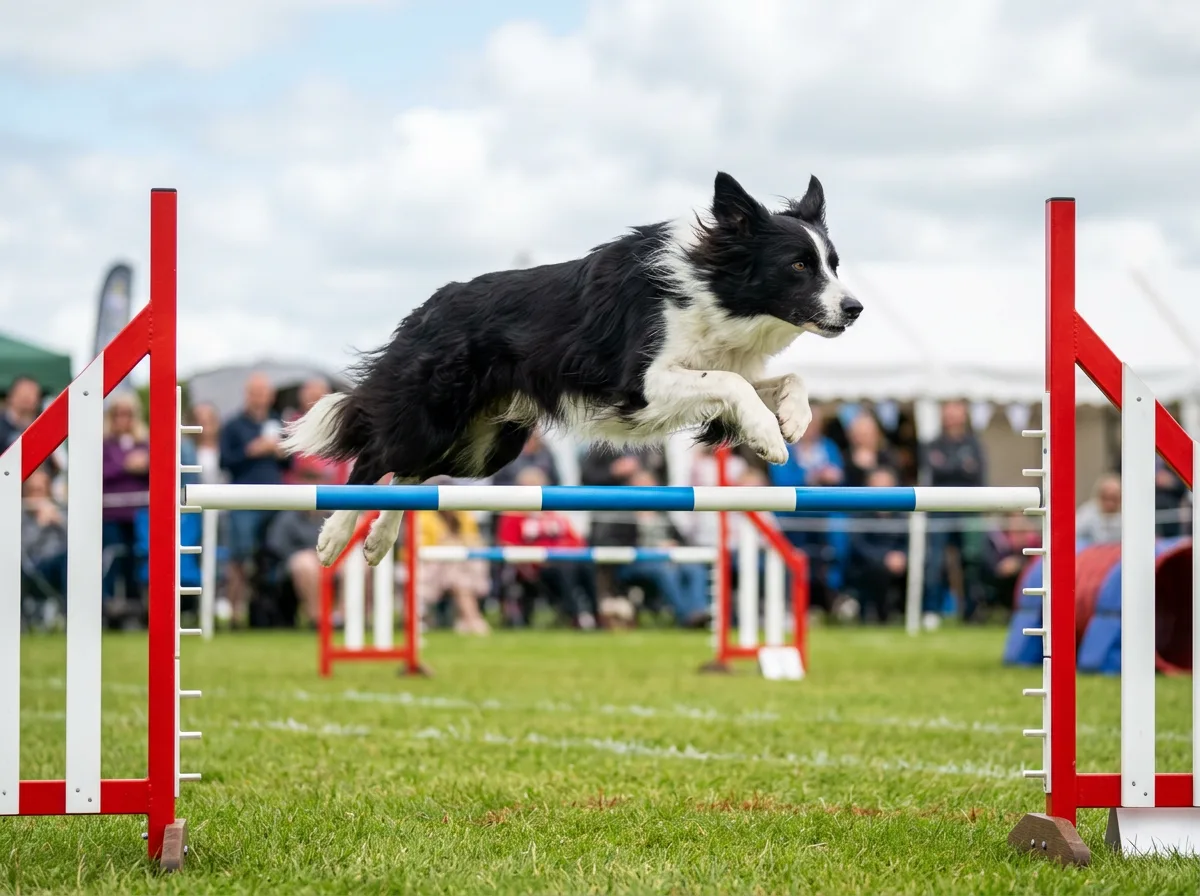
Dog agility is a timed sport in which a handler directs a dog through an obstacle course as fast and cleanly as possible. The course strings together jumps, weave poles, tunnels, A-frames, seesaws, and pause tables, and the dog runs it off-leash while taking cues from the handler's voice and body. The fastest clean run wins, so agility rewards a very specific blend: raw speed, sharp turns, and near-instant response to direction.
That is why the fastest dog breeds by top speed are not automatically the best agility dogs. A Greyhound is faster in a straight line than any breed on the agility podium, but agility is won on tight courses full of 90-degree turns and split-second decisions. The dogs that dominate the ring are the ones that are fast enough, agile enough, and smart enough to change direction on a single word.

Pumpkin-flavored probiotic soft chews that support healthy gut flora and digestion in dogs.
Petful may earn a commission when you click through to Chewy, at no extra cost to you.
- Top mph measures a flat-out sprint. Agility measures speed under control: acceleration, deceleration, turning radius, and how quickly a dog reads and executes a handler's cue. The best agility breeds optimize for the second.
Which Breeds Are Naturally Good at Dog Agility?
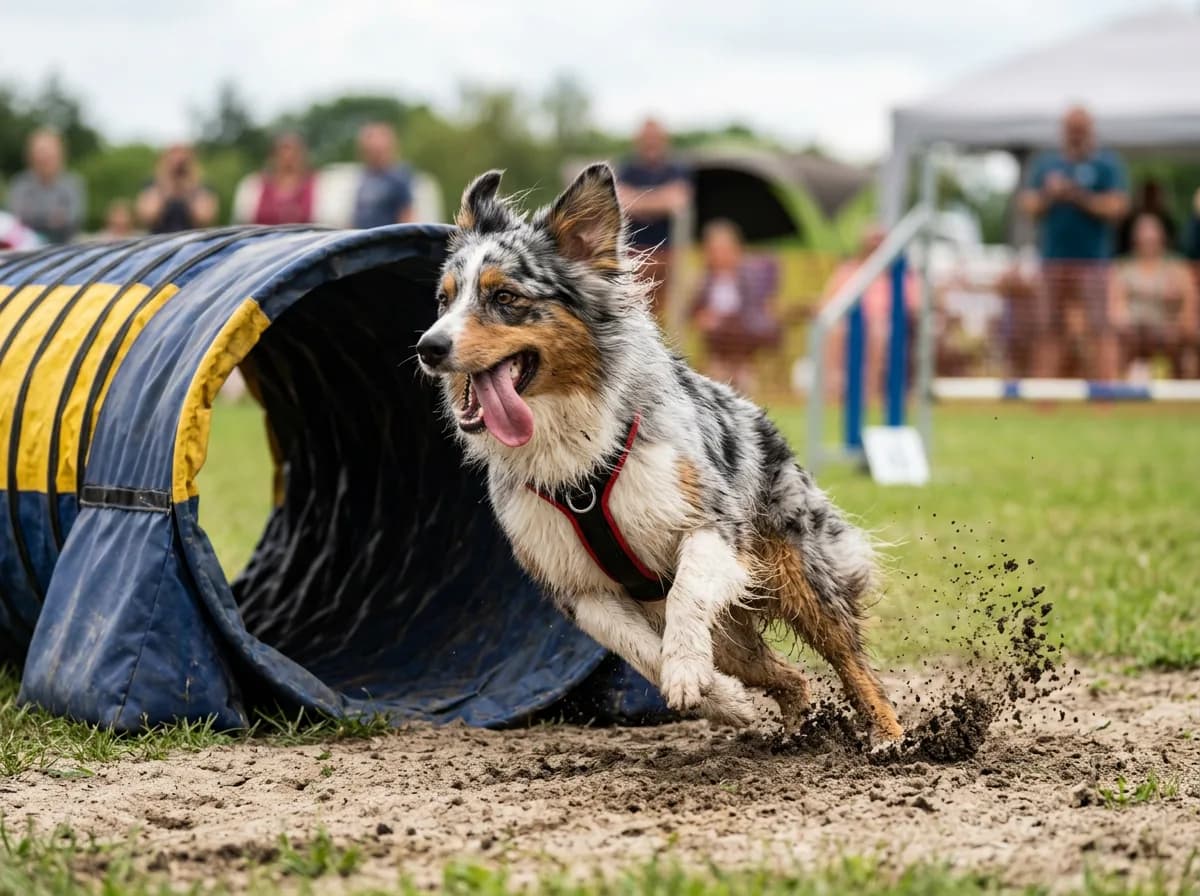
The breeds that consistently win agility titles share a recognizable profile. They tend to be herding or working dogs, or small terriers, bred to work closely with people and think on their feet.

Petful may earn a commission when you click through to Chewy, at no extra cost to you.
Key traits of successful agility dogs
- Speed with control: fast acceleration and the ability to brake and turn without losing footing.
- High intelligence: they learn sequences quickly and remember courses.
- Strong handler focus: they want to work with a person, not run off on their own agenda.
- Athletic build: lean, well-muscled, and structurally sound joints that hold up to jumping.
- Drive and stamina: the motivation to keep working through a full course and a full training session.
Which Dog Breeds Are Not the Best in Dog Agility?
Some of the fastest dog breeds are not built for agility at all. Giant breeds like the Great Dane are quick over open ground but too large and heavy to turn safely on a tight course, and the impact of repeated jumps is hard on their joints. Very short-legged or heavy-set breeds such as the Bulldog or Basset Hound lack the jumping reach and can overheat quickly. Brachycephalic (flat-faced) breeds like Pugs and French Bulldogs struggle with the sustained hard breathing that a fast course demands.
None of this means these dogs cannot enjoy a modified, low-impact version of the sport for fun. It simply means they will not be setting course records.
Other factors influencing agility success
Breed is only the starting point. A dog's individual temperament, structural soundness, age, conditioning, and above all its relationship with the handler matter enormously. A well-trained, well-conditioned mixed-breed dog will out-run a poorly conditioned purebred every time. Agility is a partnership sport, and the training and bond you build carry as much weight as the breed on the pedigree.
Top 10 Fastest Breeds in Dog Agility Competitions
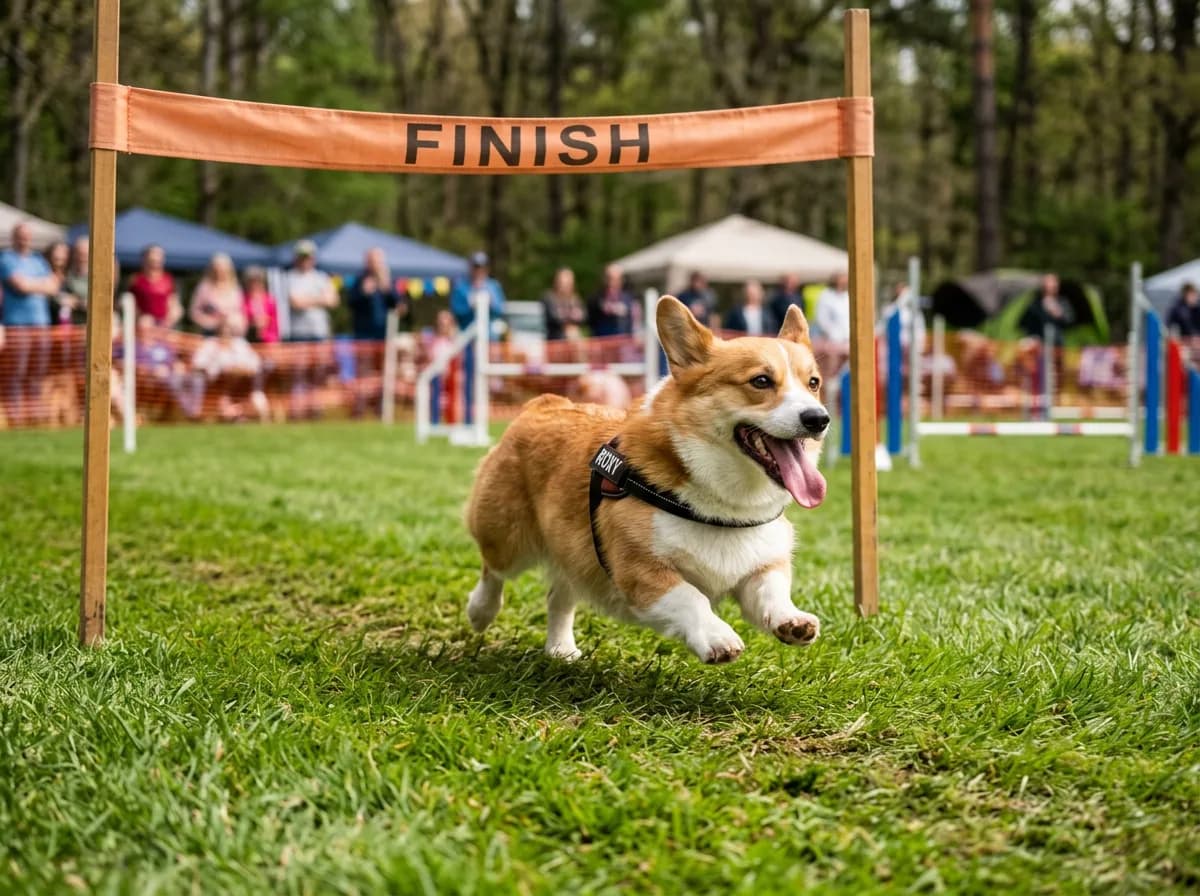
These are the breeds that turn speed into titles. They are ranked by their standing in competitive agility, where a blend of speed, intelligence, and handler focus matters more than raw top-end mph.
1. Border Collie
The Border Collie is the undisputed champion of dog agility. Bred to herd sheep across the hills of the Anglo-Scottish border, it pairs boundless energy with an intensely focused, problem-solving mind. Border Collies learn complex sequences faster than almost any other breed and run courses with a crouching, ground-hugging style that lets them turn on a dime. They can hit roughly 30 mph, but it is their acceleration and precision that win ribbons. Walk into almost any high-level agility final in North America and the majority of the dogs on the start line will be Border Collies, because no other breed combines this much drive, trainability, and body awareness. The flip side is that they need serious daily work; a bored Border Collie will invent its own job, and you may not like the one it picks.
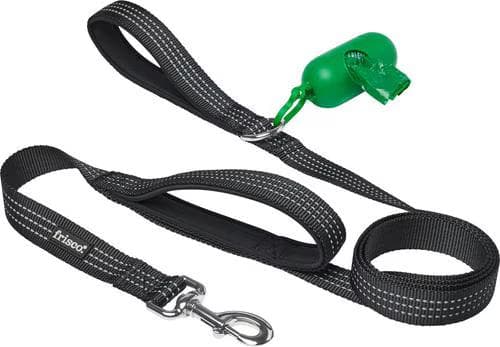
Petful may earn a commission when you click through to Chewy, at no extra cost to you.
2. Russell Terrier
Do not let the size fool you. The Russell Terrier packs a seemingly endless supply of energy into a compact frame, and its low center of gravity makes it lightning-quick through weave poles and tight turns. Originally bred to bolt foxes from their dens, these terriers are fearless, athletic, and highly intelligent, which makes them one of the most exciting small breeds to watch on a course. Their terrier independence can make training a little more of a negotiation than it is with a herding breed, but once a Russell Terrier decides the course is the game, it attacks every obstacle with total commitment.
3. Australian Shepherd
The Australian Shepherd brings remarkable speed and a strong herding drive to the ring. Aussies are versatile, eager to please, and tireless, and their combination of quickness and stamina lets them stay sharp through long training sessions. They thrive on having a job, and agility gives their busy minds and bodies exactly the outlet they need.
4. Australian Kelpie
The Australian Kelpie is a herding dynamo built for the Outback, with incredible athleticism and a quick, willing mind. Kelpies excel at explosive jumps and razor-sharp directional changes, and they learn new obstacles almost as fast as you can teach them. They are less common in North American rings than Border Collies, but the ones that compete are formidable.
5. Standard Poodle
Beneath the show clip, the Standard Poodle is a genuine athlete. Originally a water retriever, the Poodle has a naturally athletic build, real drive, and off-the-charts trainability. Poodles pick up agility sequences quickly and bring an elegant, springy stride to their jumps. They are living proof that the fastest, most capable agility dogs do not all look the part at first glance.
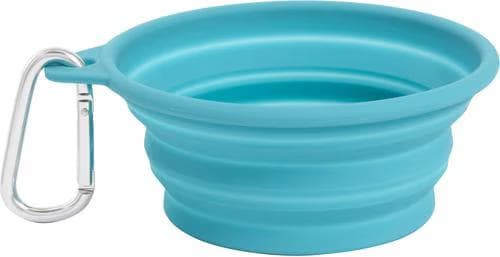
Collapsible silicone travel bowl with a carabiner that clips to a leash or bag, so your dog always has fresh water on walks, hikes, and car trips.
Petful may earn a commission when you click through to Chewy, at no extra cost to you.
6. Papillon
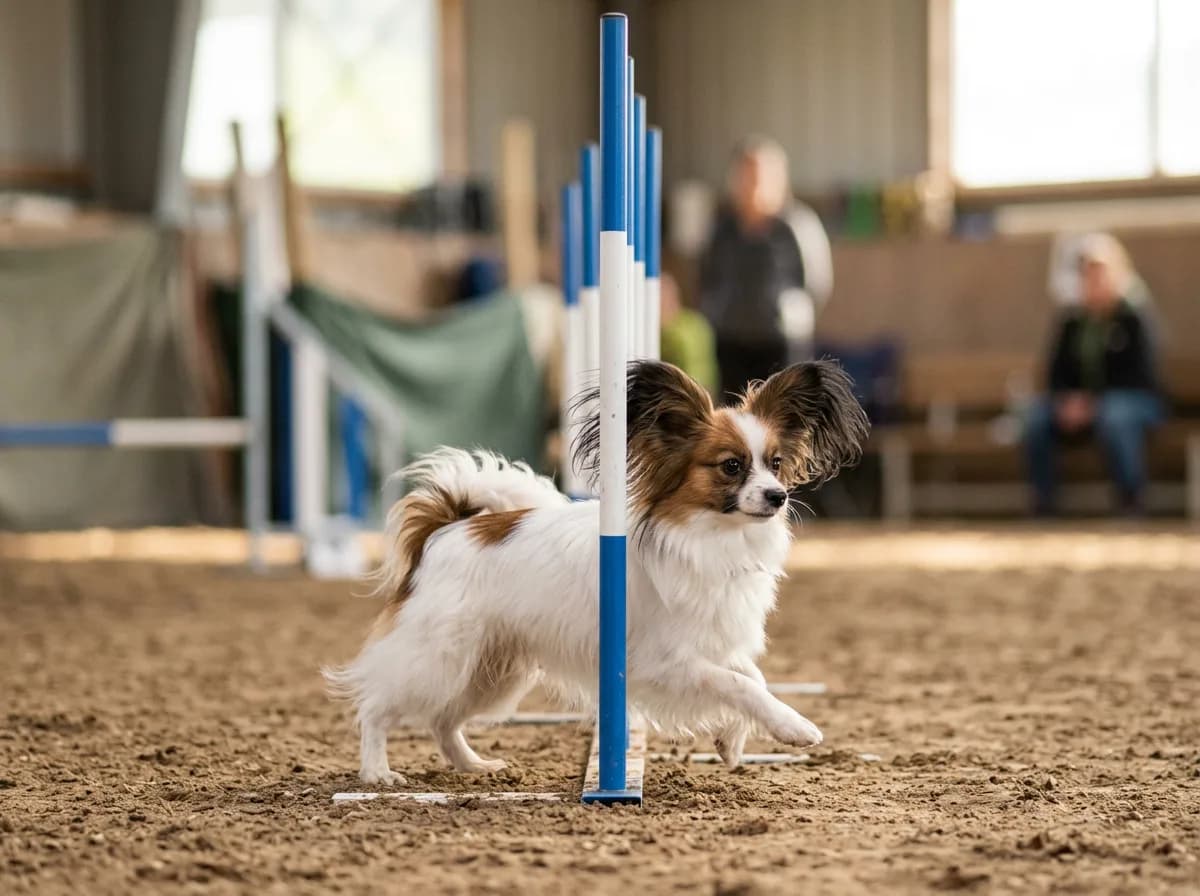
The Papillon is the pocket rocket of agility. Tiny, feather-light, and remarkably fast for its size, this butterfly-eared toy breed is also one of the smartest dogs in the world, which lets it memorize courses and respond to handler cues instantly. Papillons routinely beat much larger dogs on the clock because their small mass lets them accelerate and turn with almost no wind-up. They are also durable and healthy for a toy breed, which means they can train and compete for years, and they bond tightly to their handlers, making them a joy to work with despite their pint size.
7. Shetland Sheepdog
The Shetland Sheepdog, or Sheltie, is a small herding breed with big energy and a deep love of working alongside its person. Shelties are quick, agile, and eager to please, and their herding instinct translates directly into the focus and responsiveness agility demands. They are consistently among the top small-to-medium breeds in competitive agility.
8. Pembroke Welsh Corgi
Short legs, huge heart. The Pembroke Welsh Corgi is spirited, intelligent, and far more athletic than its stubby silhouette suggests. Corgis were bred to herd cattle by nipping at heels and dodging kicks, so they are naturally quick and nimble. On a course they are crowd favorites, hustling through obstacles with an infectious enthusiasm that belies their build.
9. Rat Terrier
The Rat Terrier is nimble, energetic, and sharp, a classic American farm dog bred to chase down vermin at speed. That heritage makes it a natural on an agility course: quick to accelerate, easy to turn, and smart enough to learn sequences readily. Rat Terriers are also highly trainable and food-motivated, which makes teaching new obstacles a pleasure.
10. German Shepherd
The German Shepherd rounds out the list on the strength of its athleticism, versatility, and famous work ethic. Shepherds are larger than most agility standouts, but their power, drive, and trainability keep them competitive, and they can hit around 30 mph in a straight line. They excel when a dedicated handler channels their determination into clean, controlled runs.
Keeping a Fast Dog Safe and Sound
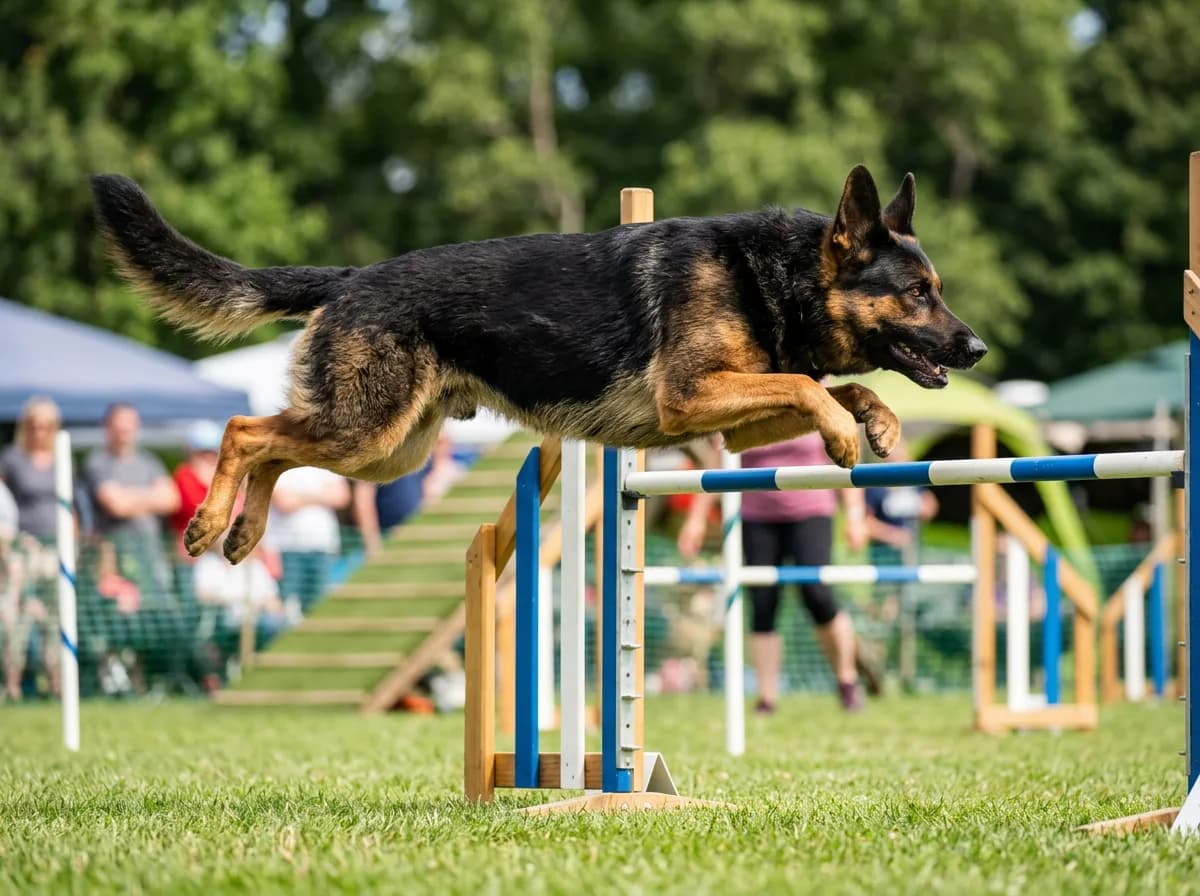
Speed is a gift, but it comes with responsibilities. Sighthounds and other fast breeds have a powerful prey drive and can be over a fence line or across a road before you finish calling their name, so a securely fenced yard or a long-line in open areas is not optional. Many rescue Greyhounds are never let off-leash in unfenced spaces for exactly this reason.
Conditioning matters just as much for the athletic breeds. A weekend-warrior sprint on an untrained, out-of-shape dog is a soft-tissue injury waiting to happen. Build fitness gradually, warm up with a brisk walk before any hard running, and cool down afterward. Watch the surface too: hard pavement is rough on joints, and slick indoor floors cause the sudden slips that tear cruciate ligaments. Keep nails trimmed for traction, keep your dog at a lean, healthy weight, and give growing puppies time for their growth plates to close before you ask for repeated high-impact jumping. When in doubt, your veterinarian can assess structural soundness and clear your dog for sport.
- Repeated jumping and hard sprinting stress joints, tendons, and the cardiovascular system. Puppies with open growth plates, senior dogs, and any dog with a history of lameness should be cleared by a veterinarian before starting agility or a serious running program.
Is Your Pup the Next Star?
You do not need a purebred Border Collie to enjoy agility. Mixed-breed dogs compete and win at every level, and the sport is as much about the bond between dog and handler as it is about breed. If your dog is healthy, structurally sound, and loves to move, start with basic foundation training, keep sessions short and rewarding, and always warm up before running to protect growing or aging joints. Talk to your veterinarian before starting any high-impact sport, especially with a puppy whose growth plates have not closed or a senior dog with joint concerns.
Whether you are drawn to the raw 45 mph blur of a Greyhound or the pinpoint precision of a Papillon, the fastest dog breeds share one thing: they are happiest when they get to run. Give them a safe outlet for that speed and you will have a healthier, calmer, and far more satisfied companion.
For a deeper look at how coat and color vary across athletic breeds, see our guide to Rhodesian Ridgeback colors, another lean, fast hunting breed built for the chase.
Frequently Asked Questions
Sports Beyond Agility for Fast Dogs
Agility is not the only outlet for a fast dog, and it is not even the best fit for the pure sighthounds. If your dog is built to sprint in a straight line rather than carve tight turns, three other sports let it do exactly what it does best.
- Fast CAT: The AKC's Fast CAT is a 100-yard timed dash in which a dog chases a lure down a straight lane while its speed is recorded in miles per hour. It is the simplest way to see precisely how fast your own dog is, and it awards titles based on cumulative points. Whippets and Greyhounds dominate the leaderboards, with the quickest dogs clocking north of 35 mph.
- Lure coursing: Here dogs chase a mechanical lure that zig-zags across an open field, mimicking the erratic path of live prey. Traditional AKC lure coursing is limited to sighthound breeds, but the Coursing Ability Test is open to dogs of any breed that simply love to run.
- Flyball: A team relay over a line of low hurdles that ends at a spring-loaded box shooting out a tennis ball. It rewards acceleration, drive, and a fast turn, and Border Collies, Whippets, and athletic mixed breeds all excel at it.
These sports share agility's biggest benefits (structured exercise and a strong dog-and-handler bond) without the tight turns and repeated high jumps that strain a large or heavy dog's joints.
Matching a Fast Breed to Your Life
Raw speed says nothing about what a breed is like to live with, and the two fastest groups on this list could not be more different at home. Knowing which profile suits you matters far more than any top-speed number.
Sighthounds like the Greyhound, Whippet, and Saluki are surprisingly low-key indoors. They want one or two hard sprints and then happily doze the rest of the day away, which makes them a natural fit for calmer households and even apartments. The catch is prey drive: a squirrel or a loose cat can trigger an instant chase, so reliable off-leash recall is rare and secure fencing is essential.
Herding and working breeds like the Border Collie, Australian Shepherd, and Kelpie are the opposite. They carry their speed alongside a tireless, problem-solving mind that needs a daily job. Give them puzzle toys, training games, or a real sport and they thrive. Leave them under-stimulated and they will herd the kids, dig up the yard, or bark for hours.
Before you choose, be honest about your household and your schedule. Homes with cats, rabbits, or other small pets should introduce any high-prey-drive breed slowly and supervise closely, because tolerance varies a great deal from one dog to the next.
- Match a breed's daily energy needs to your real routine, not to a headline mph figure. A bored fast dog is much harder to live with than a slow one.
If you are considering a Mudi, read our Mudi temperament and care guide alongside the Mudi price and ownership budget.
Related on Petful
- Best Running Dogs: 20 Breeds Built for Joggers
- The 20 Smartest Dog Breeds, Ranked by Intelligence
- The 7 Types of Dogs: Breed Groups Explained
- The Best Medium Sized Dog Breeds by Weight
Ranked by top recorded speed, the ten fastest dog breeds are the Greyhound (up to 45 mph), Saluki (42 mph), Afghan Hound (40 mph), Vizsla (40 mph), Dalmatian (37 mph), Borzoi (36 mph), Whippet (35 mph), Doberman Pinscher (32 mph), Jack Russell Terrier (30 mph), and German Shepherd (30 mph). The Greyhound is the single fastest dog breed on earth.
The Greyhound is the quickest dog breed, reaching top speeds of up to 45 mph. Its long legs, deep chest, flexible spine, and double-suspension gallop make it faster than any other land dog over short distances.
Beyond the top ten, the next fastest dog breeds include the Sloughi, Ibizan Hound, Pharaoh Hound, Weimaraner, Border Collie, Great Dane, Poodle, Siberian Husky, Rhodesian Ridgeback, and Australian Shepherd, most of which run in the 30 to 40 mph range. Sighthounds and lean working breeds fill nearly every spot on a top-20 speed list.
The Tibetan Mastiff holds the record for the most expensive dog ever sold, with one red-coated puppy reportedly purchased in China for around 1.9 million dollars. It is a giant guardian breed, not a speed breed, and is prized for its rarity and status rather than its athleticism.
The five fastest dog breeds are the Greyhound (up to 45 mph), Saluki (42 mph), Afghan Hound (40 mph), Vizsla (40 mph), and Whippet (35 mph). Four of the five are sighthounds bred specifically to run down prey by sight.
The Border Collie is widely considered the number one smartest dog breed, which is a big reason it also dominates dog agility. Its combination of intelligence, speed, and handler focus lets it learn and execute complex courses faster than any other breed.

Gayle Hickman has been researching and writing about pet behaviors since 2011. In addition to Petful, her articles have appeared on Reader's Digest, YAHOO Shine and WebVet, to name a few.
Sign up for expert-backed reviews and safety alerts all in one place.