Shorkie Haircuts: Styles, Coat Care, and Groomer Notes
Choose a Shorkie haircut that suits the coat and your routine. Compare practical styles, learn what to tell a groomer, and understand brushing, bathing, matting, and maintenance.
Appearance alone does not establish ancestry or predict adult size.
Petful is reader supported. As an affiliate of platforms like Amazon and Chewy, we may earn a commission when you buy through links on this page. There is no extra cost to you.
The best Shorkie haircuts suit the dog's actual coat, skin, comfort, and the brushing you can maintain. A short puppy cut is often practical, while a teddy bear face or longer silky style needs more upkeep. Names are not precise salon instructions. Bring a reference image, discuss the coat in person, and agree on body length, face shape, ears, feet, and handling limits.
A Shih Tzu–Yorkshire Terrier mix does not have one standardized coat. Two Shorkies can need different tools and appointments even when their owners request the same haircut. This guide helps you choose a manageable style and give a groomer useful instructions without attempting risky trimming around eyes, ears, or mats at home.

Sign up for expert-backed reviews and safety alerts all in one place.
Choosing Shorkie haircuts for your actual coat
- 1Choose a haircut for the individual coat and your maintenance routine.
- 2Describe body length, face, ears, feet, and tail separately instead of relying only on a style name.
- 3Tight mats and sensitive areas need professional assessment, not scissors slipped underneath at home.
Shorkie haircuts work best when the groomer first assesses coat texture, tangling, skin, and handling tolerance. A silky coat that lies close to the body behaves differently from a fuller, wavier coat. The desired silhouette matters, but comfort and a routine you can maintain should decide the practical length. A photograph can start the conversation; it cannot determine what is safe or achievable on a different dog.
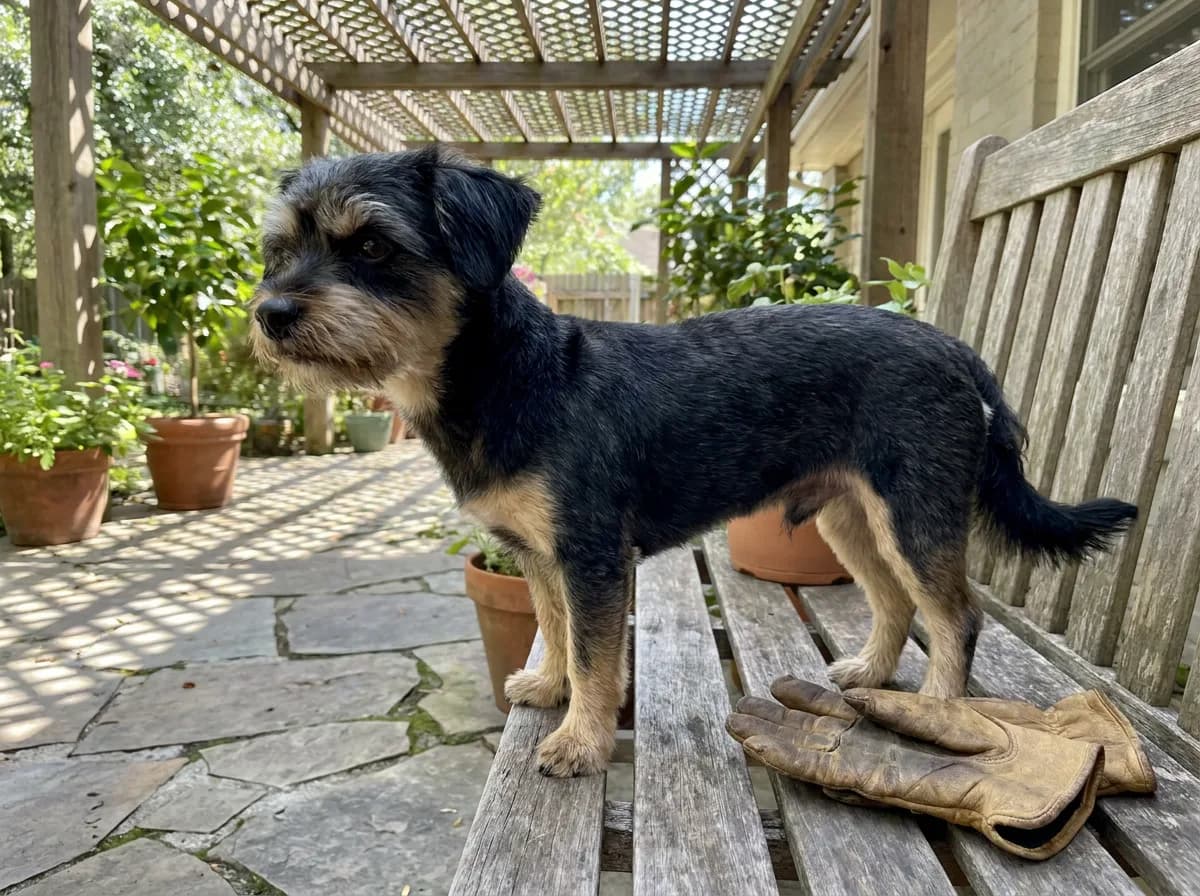
The AKC Shih Tzu profile and Yorkshire Terrier profile provide context for the parent breeds. Their show coats are not requirements for a family Shorkie. Your dog does not need floor-length hair, a topknot, or a particular face shape to be well cared for. A comfortable practical trim is a valid choice.
| Style direction | Useful for | Maintenance tradeoff |
|---|---|---|
| Short puppy cut | Owners wanting a manageable body coat | Still needs brushing, skin checks, and regular upkeep |
| Teddy bear face with medium coat | A rounded face and soft outline | Facial hair and longer legs can tangle or collect moisture |
| Longer silky coat | Owners committed to careful maintenance | More brushing, drying, and attention to friction areas |
| Short body with longer ears | A mixed-length look | Ear fringes still need separate care |
Start the groomer instruction checklist with the current coat, not a final photograph. Tell the groomer when the dog was last brushed thoroughly, whether a comb catches anywhere, and how the dog responds to feet, face, and ear handling. A comb check can reveal tangles under a surface that looks smooth. Be candid if home maintenance has become difficult; that information helps the groomer choose a humane plan.
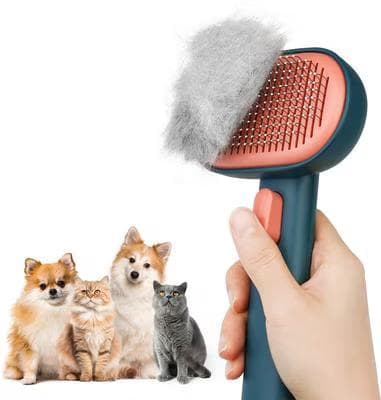
Petful may earn a commission when you click through to Chewy, at no extra cost to you.
A small slicker brush may help with some coats when used gently, but brush style alone does not establish suitability. Ask a professional to demonstrate pressure and direction on your dog. If the skin reddens, the dog becomes uncomfortable, or the tool catches repeatedly, stop and reassess instead of pressing harder to finish the session.
Describe the haircut in parts
Instead of saying only “teddy bear,” discuss the body, legs, face, ears, feet, and tail separately. Decide how much hair you want to maintain between appointments and whether food, water, or outdoor debris regularly collects in particular areas. Ask the groomer which parts of the reference image depend on a different coat texture or head shape, so the result is not judged against an impossible match.
- Body: agree on a practical finished length and how the coat will feel.
- Legs and feet: choose between a fuller outline and easier cleaning.
- Face: discuss eye clearance, muzzle shape, and moisture around the mouth.
- Ears and tail: decide whether longer feathering is manageable.
- Handling: identify areas where the dog needs slower, gentler work.
Avoid prescribing a clipper blade from an online chart without discussing it with the groomer. Blade systems, coat condition, technique, and the area being worked on all affect the result. A precise description of the desired outcome is more useful than insisting on a tool number that may be inappropriate for your dog.
Short puppy cut: the practical starting point
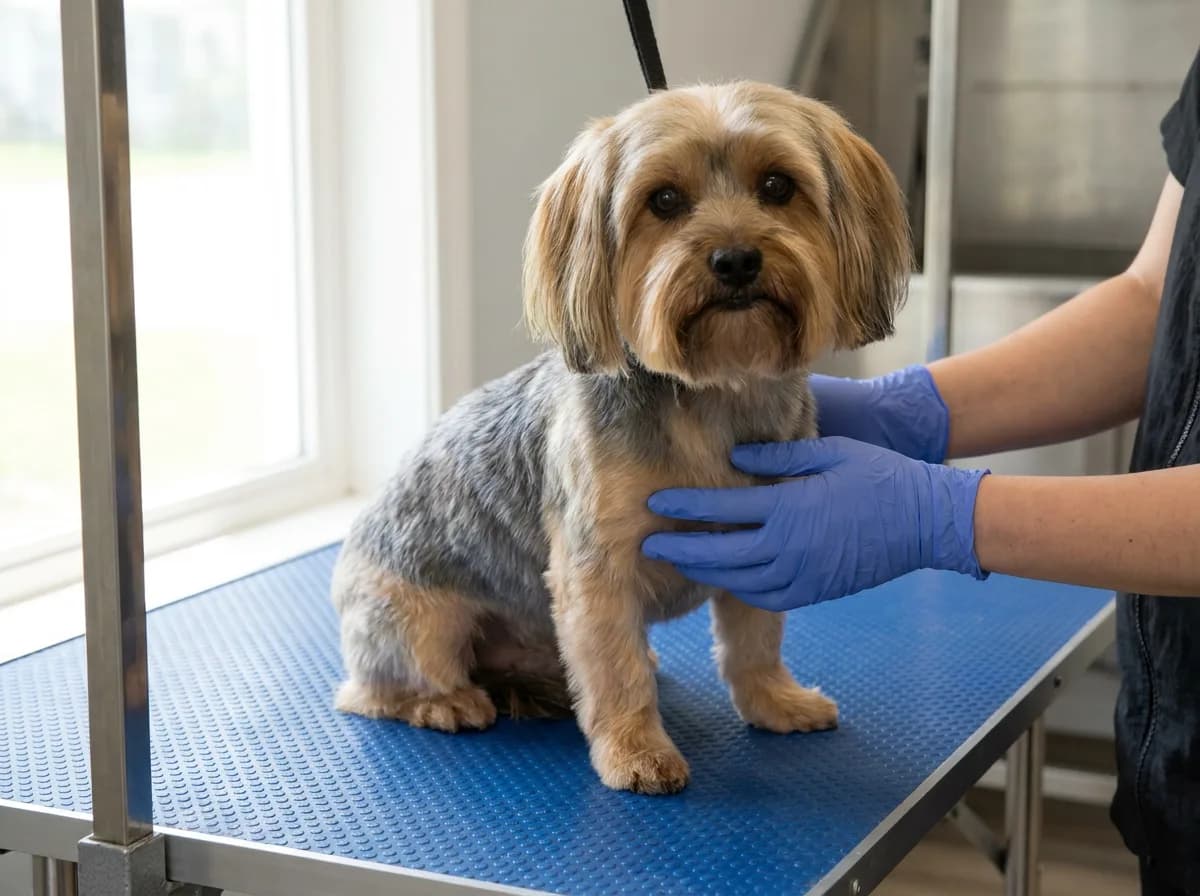
A puppy cut usually means a relatively short, tidy coat, but the term has no universal finished length. Adult Shorkies can wear it too. Agree with the groomer on how short the body should be, whether the legs stay fuller, and how the face will be shaped. The practical benefit is easier maintenance, not freedom from brushing, bathing, or follow-up grooming.
This can be a good starting point when the coat tangles quickly or your household cannot maintain long hair. Ask the groomer to show you the length you are choosing, particularly if your reference image uses a very fluffy dog. The same length can look quite different on a fine straight coat and a denser coat that stands away from the body.
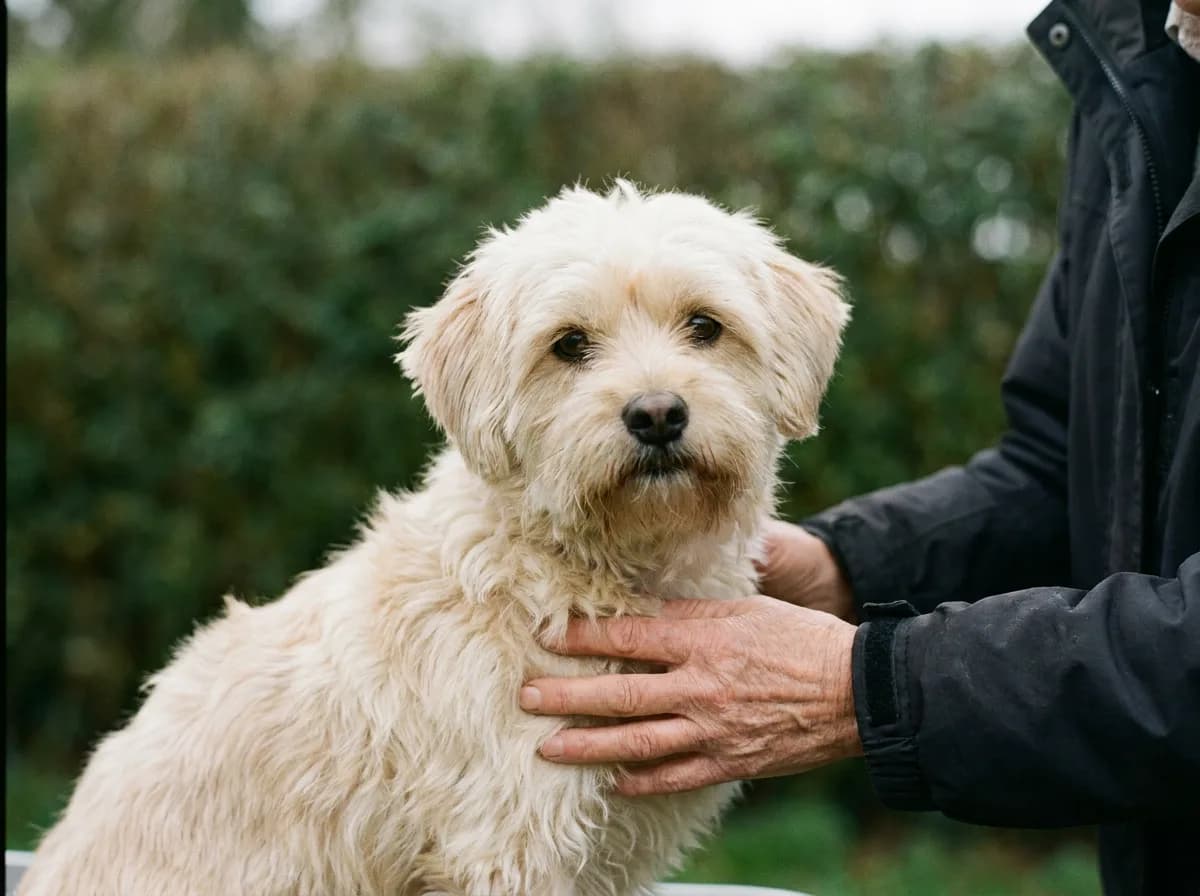
A short body with tidy legs
A balanced short clip can reduce the amount of coat that catches on a harness or collects debris. It can also make it easier to see the dog's outline and notice skin changes. The trim should follow the dog's comfort and coat condition rather than trying to make the animal look unusually tiny. Body size does not change when the hair is shortened.
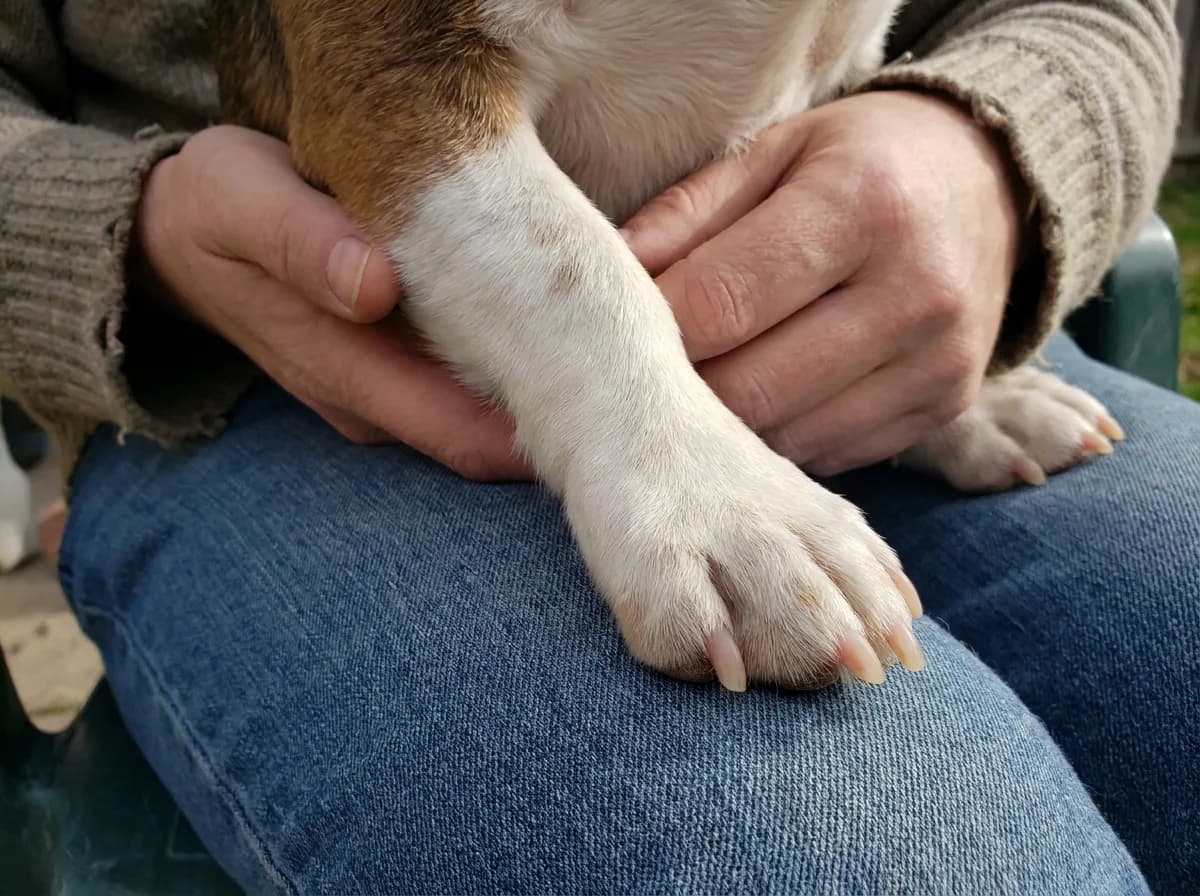
If you want slightly fuller legs, ask what brushing those sections will require. Hair at the armpits, behind the ears, and around friction points can still mat even when the body is short. Check these areas gently instead of assuming a short haircut has solved every tangle. Avoid repeatedly dragging a brush across skin where there is little coat to protect it.
Petful may earn a commission when you click through to Chewy, at no extra cost to you.
A first puppy appointment
For a young puppy, the first grooming experience may focus on calm handling, gentle brushing, a bath if appropriate, and small tidy-up tasks. Discuss vaccination requirements and timing with the groomer and veterinarian. A complete dramatic haircut is not the only measure of a successful first visit. A puppy that leaves comfortable with handling has learned something valuable.
At home, reward brief touches to paws, shoulders, and the outside of the ears before expecting a full grooming session. Introduce the sound and sight of equipment at a comfortable distance. Do not turn a moving puppy into a scissor-trimming practice session. If the dog is worried, work on the handling skill separately and ask for professional help with the actual trim.
The Frisco nail clippers for cats and small dogs may suit a cooperative Shorkie when used by someone who has learned the technique. The size of a clipper does not prevent injury by itself. Ask your groomer or veterinary team to identify the safe approach for your dog's nails, and leave the task to them if you cannot see or control the cut comfortably.
Teddy bear face and medium-length coat
Style names borrowed from Yorkie and Shih Tzu grooming often overlap. A puppy cut usually describes a shorter, manageable body coat; a teddy bear cut often describes a rounded face and softer outline. Neither has one universal length. For a Shorkie, you can combine a short puppy-cut body with a teddy bear face. Agree on the individual parts and maintenance rather than treating the names as mutually exclusive choices.
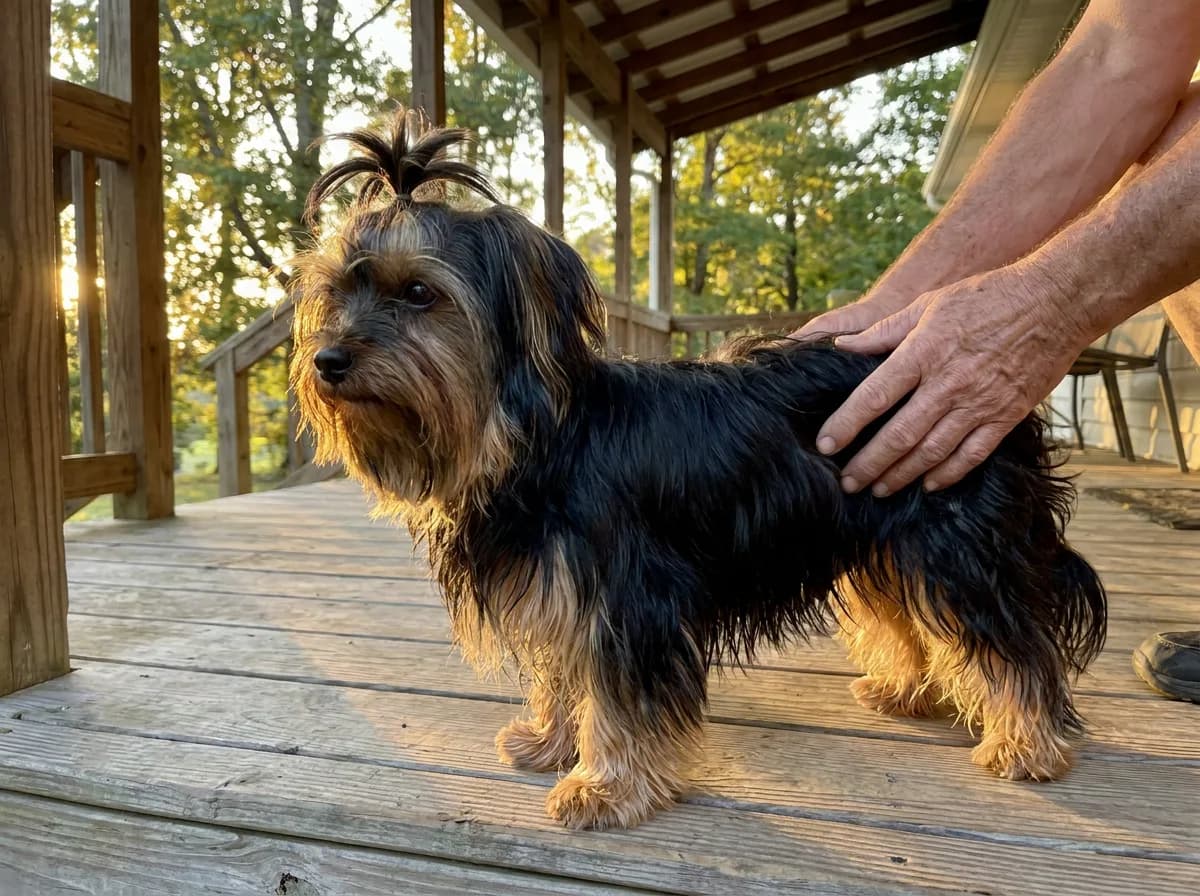
Ask for clear eyes and a manageable muzzle rather than pursuing a perfectly round silhouette at the expense of comfort.
Rounded face styling should not mean hair obscuring the eyes or staying constantly wet around the mouth. Discuss tear staining, discharge, or skin irritation with the appropriate professional. A groomer can manage hair, while a veterinarian assesses unexplained eye or skin problems. Do not use cosmetic products to conceal a problem that has not been evaluated.
Medium length needs a maintenance agreement
Before choosing a fuller coat, decide how brushing will fit your week. A medium-length look can be a compromise between a long coat and a short practical clip, but only if the coat is maintained all the way through. Brushing the tips while leaving knots near the skin creates a deceptively smooth surface. Ask for a demonstration of how to check the layers without pulling.
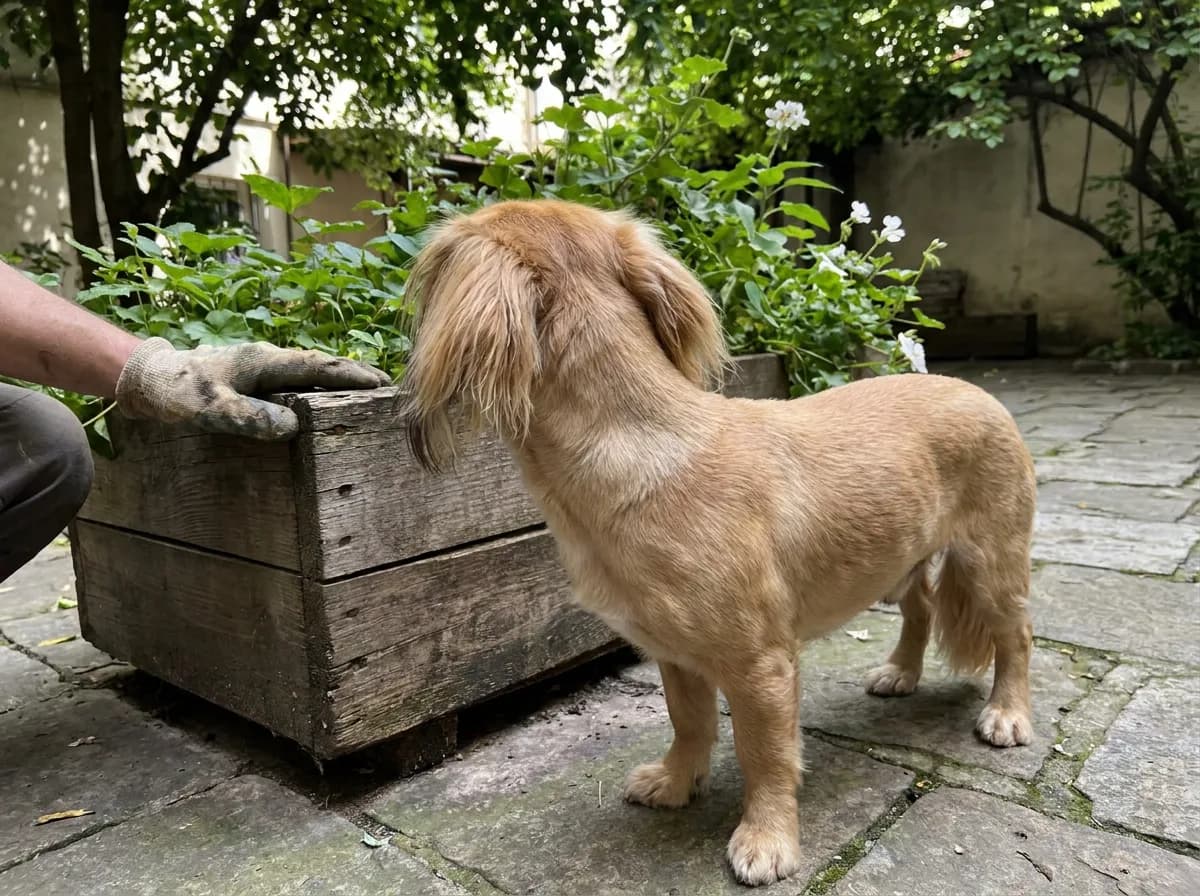
Work on small areas and keep the dog comfortable. Support the hair where appropriate, use the tool as demonstrated, and stop when you meet a knot you cannot separate gently. A metal finishing comb can help check whether the coat is free of tangles, but it should not be used to force its way through a mat. The comb check is feedback about the coat, not a test of how much discomfort the dog can tolerate.
A face reference that is actually useful
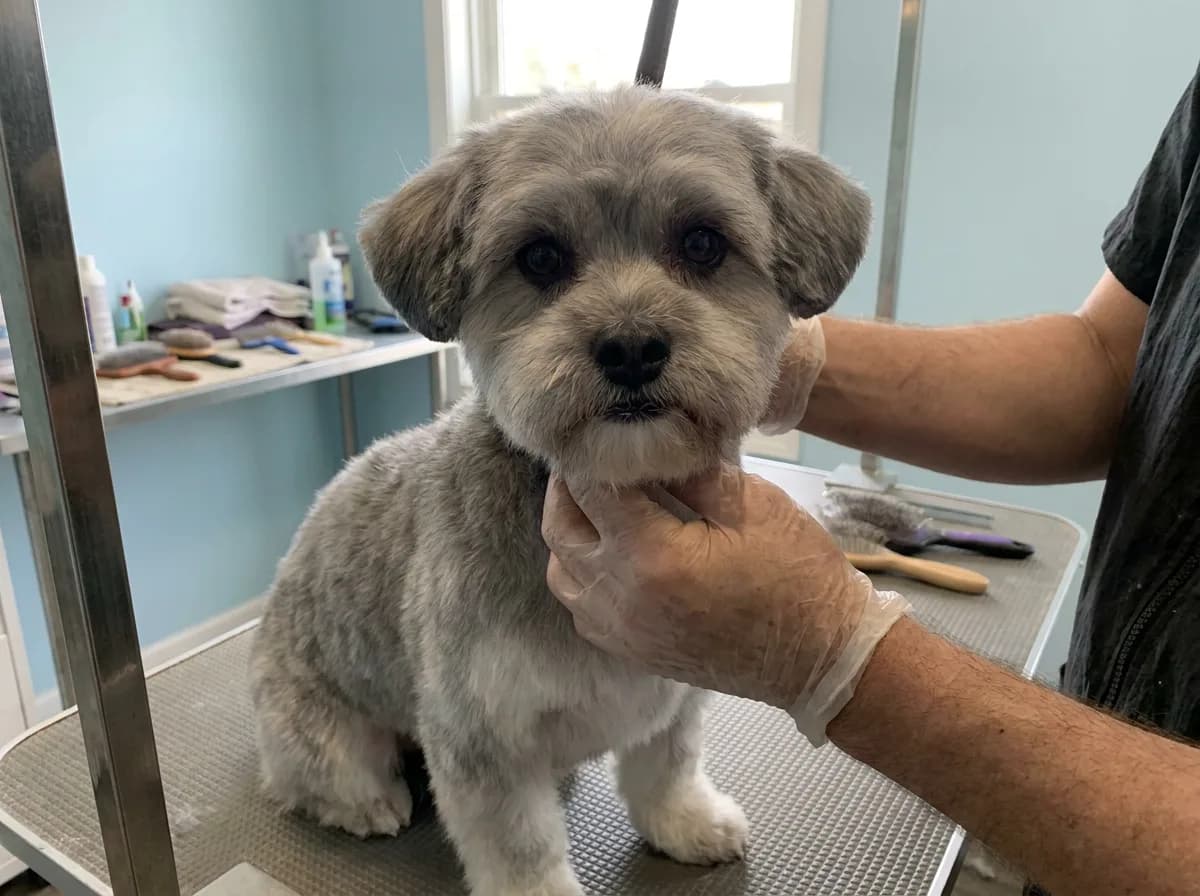
Choose a reference showing a dog with a similar hair texture and a clearly visible face. Tell the groomer which features appeal to you: tidy muzzle, rounded cheeks, shorter ear edges, or eyes kept clear. Avoid demanding an exact copy of a photograph with a different breed, heavy image editing, or a pose that hides the details. The result should suit your own dog when it moves, eats, and plays.
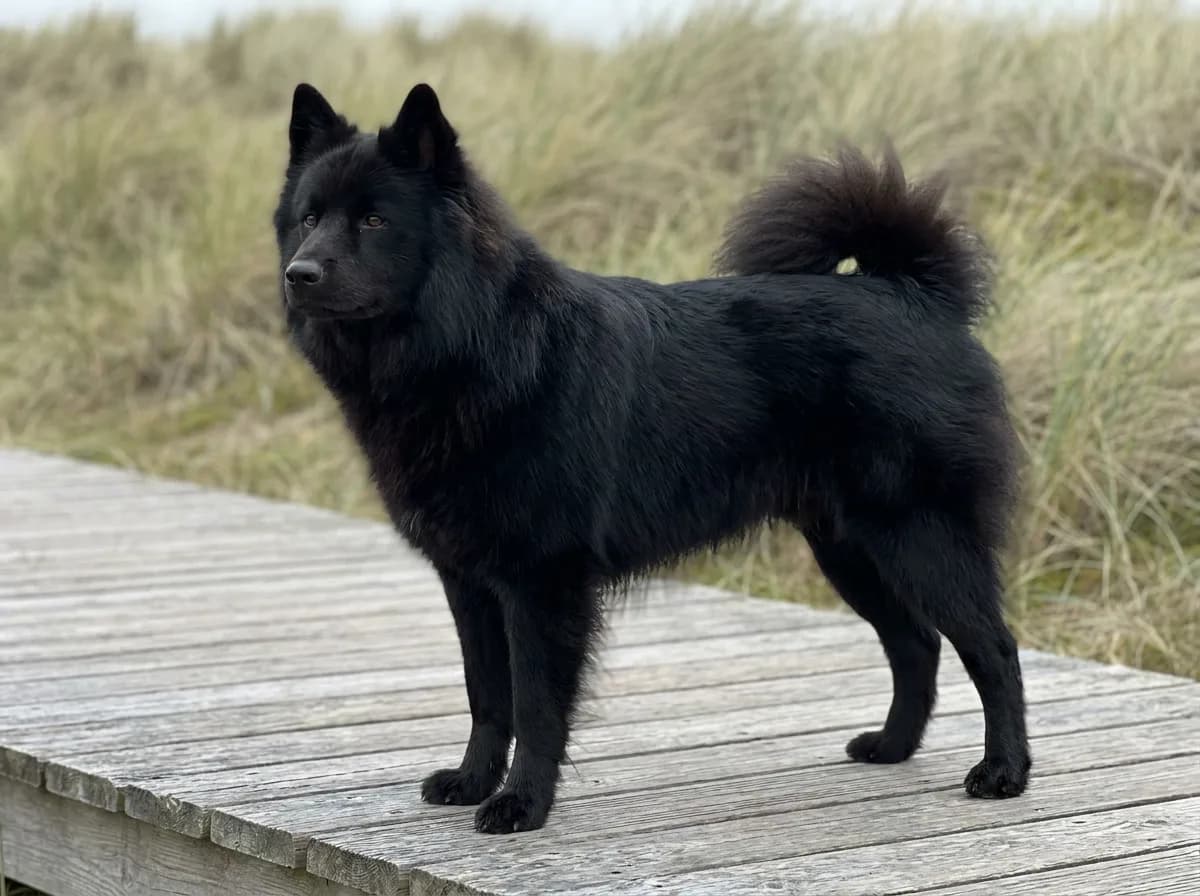
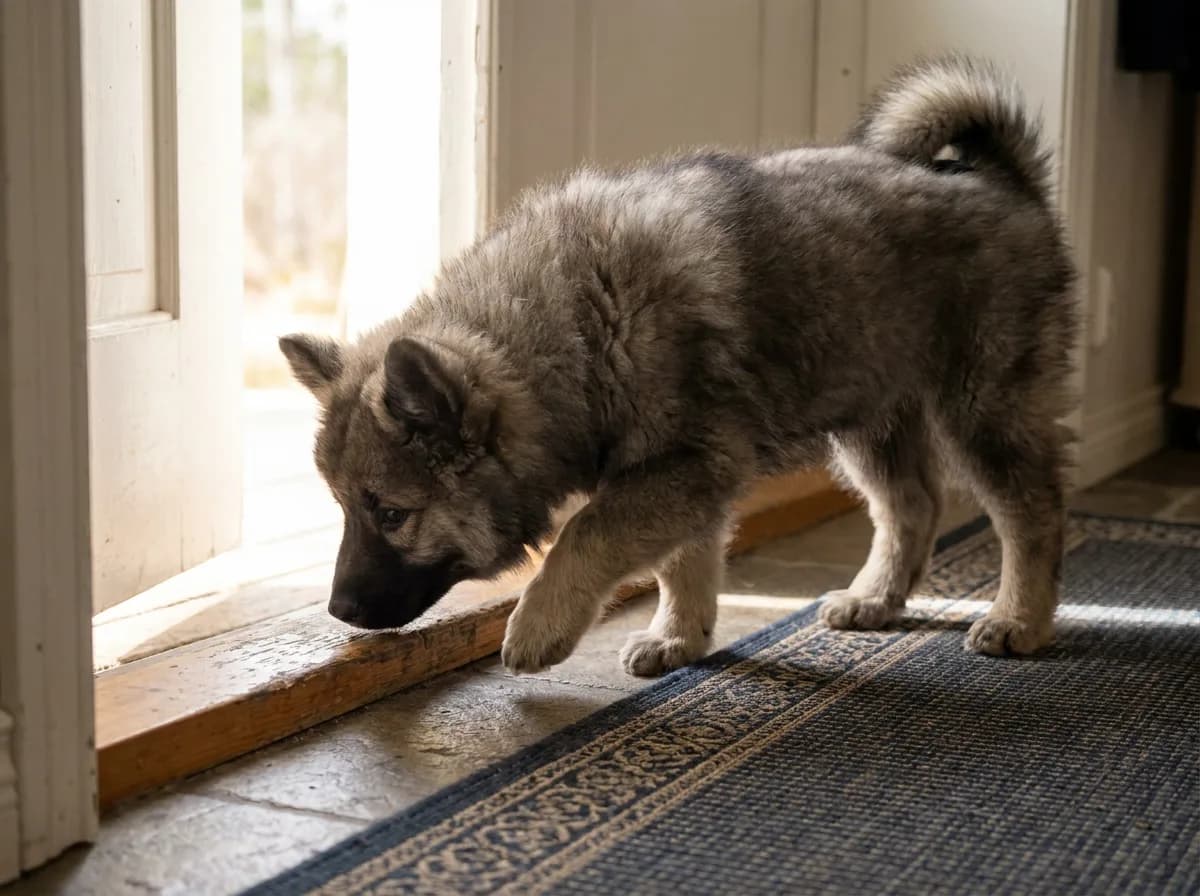
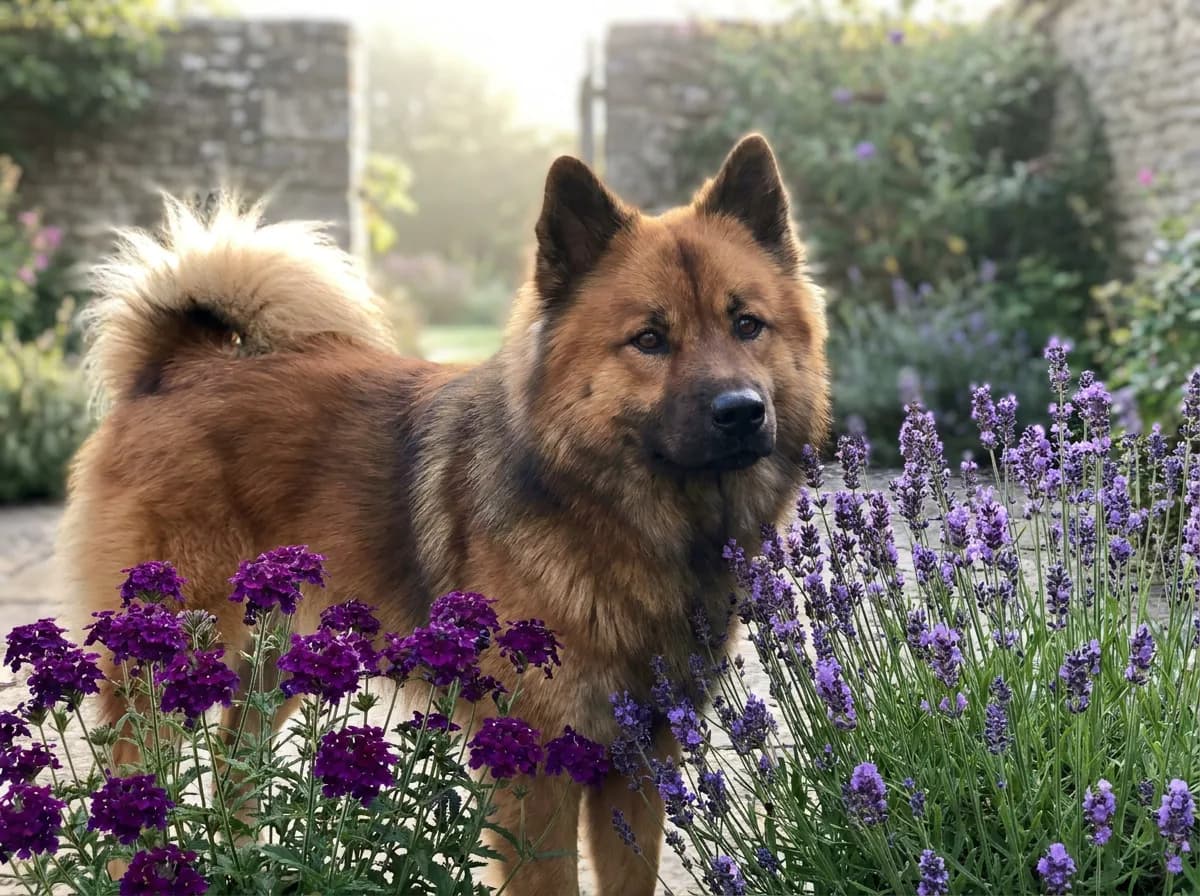
The illustrations here are generated style references, not before-and-after photographs from a grooming trial. They show the intended direction of a look rather than evidence that every Shorkie can reproduce it. Use them to name the elements you like, then allow the groomer to adapt the plan to the coat and the dog's tolerance.
Long hair, topknots, and coat maintenance
A long-haired Shorkie can have a striking silky outline, but longer hair increases the maintenance commitment. Friction, dampness, movement, and debris can create tangles in places that are easy to miss. Choose this style only if you can provide the regular care your groomer recommends and adjust the plan if the dog finds that routine uncomfortable.
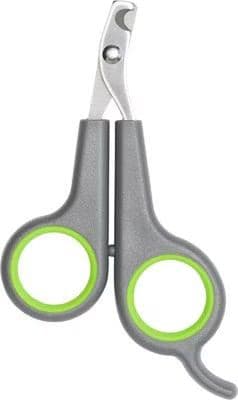
Compact spring-loaded scissor clippers sized for cats and small dogs, with rounded, easy-grip handles.
Petful may earn a commission when you click through to Chewy, at no extra cost to you.
- Use the groomer instruction checklist to match the haircut to real maintenance time. If a comb check repeatedly finds tight tangles, discuss a shorter plan rather than asking the dog to tolerate lengthy dematting.
Long coat without a topknot
Some dogs can wear longer body hair with a tidier face. Discuss which areas need shortening for visibility, eating, and cleanliness while preserving the overall style. The body and face do not need identical lengths. A practical hybrid style may give you the appearance you enjoy while reducing the work in the areas your dog finds hardest to tolerate.
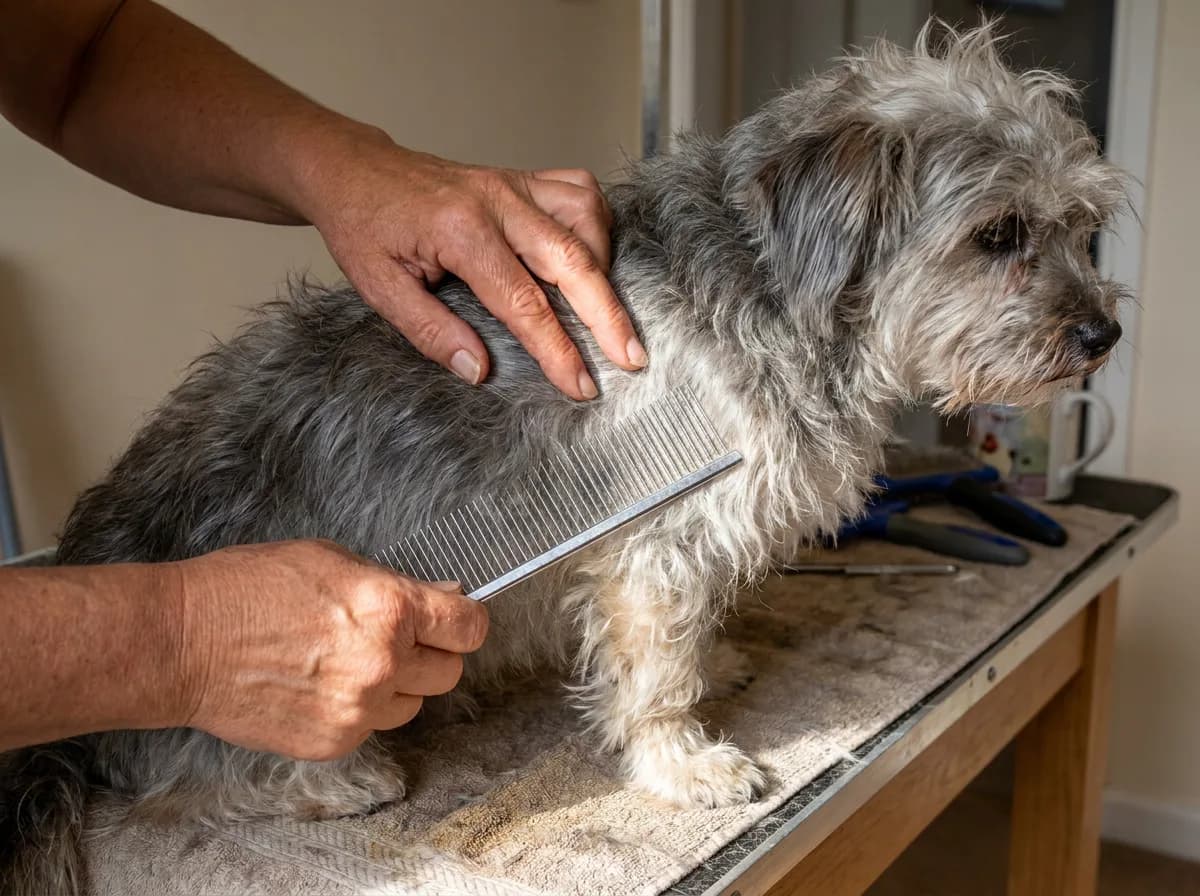
Long ear feathering and tail hair deserve their own care plan. Check for plant material after walks and for tangles where hair rubs against equipment or bedding. Never assume a dog that looks clean is tangle-free. Use the groomer's recommended routine and ask how to dry the coat thoroughly after a bath or wet outing without overheating the dog.
Topknots and accessories
A topknot may keep appropriate long hair out of the face, but it must not pull tightly on skin or leave the dog distressed. Ask the groomer whether the coat is suitable and how to place and remove an accessory safely. Remove items if the dog scratches at them, chews them, or becomes uncomfortable. Decorative choices are optional; clear vision and comfort are not.
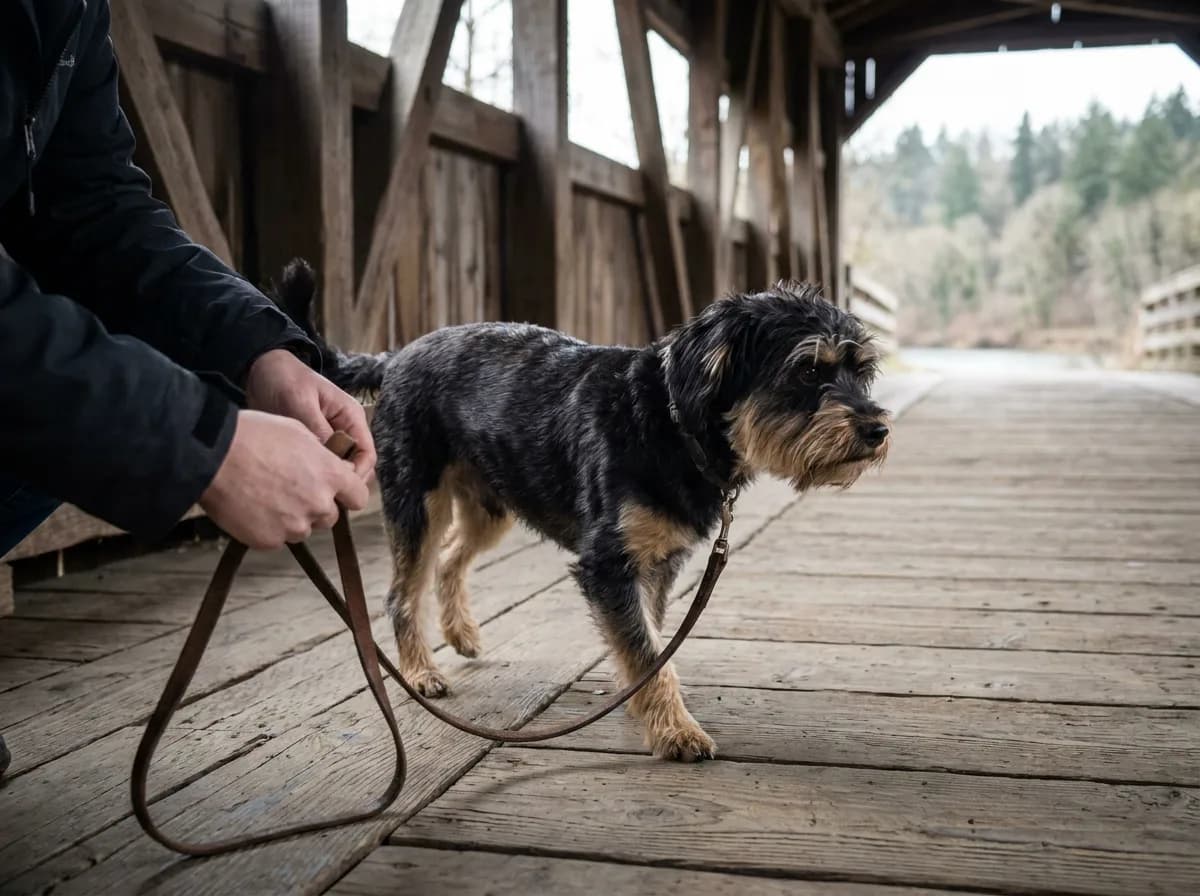
Do not leave small clips, bows, or elastic pieces available for chewing. Supervise use and check the skin beneath. If your dog repeatedly resists a topknot, a shorter facial style may be more practical. The aim is a workable grooming routine, not maintaining a fashion detail the dog cannot comfortably wear.
Longer ears with a shorter body
A short body with longer ears can provide a softer silhouette without a full long coat. It also creates an easy-to-miss maintenance difference: the body may feel tidy while the ear fringes still knot or collect food and water. Discuss the length and edge shape clearly. Hair on and around the ears should not be confused with a reason to clean deeply inside the ear canal or remove hair without advice.
Brushing, bathing, and shedding between visits
Between salon visits, keep the Shorkie's coat comfortable with the routine recommended for its actual texture and length. Regular checks matter even when shedding seems low. Hair can tangle, hold moisture, or conceal skin changes without leaving much loose fur on furniture. A short haircut may make maintenance easier, but it does not make the dog allergy-free or remove the need for grooming.
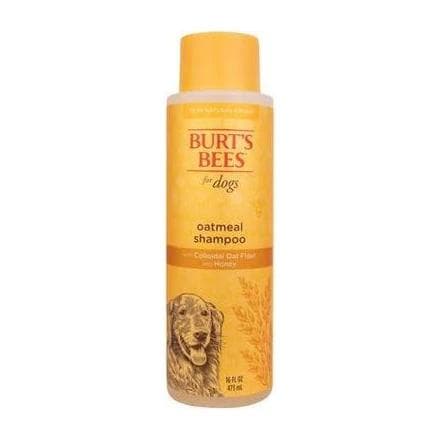
For bathing, use a product formulated for dogs and appropriate to the dog's skin. Burt's Bees oatmeal dog shampoo is a grooming product, not a prescription for unexplained itchy skin. Follow the label, rinse thoroughly, and ask your veterinarian before choosing a medicated product for a suspected condition.
Petful may earn a commission when you click through to Chewy, at no extra cost to you.
A practical between-visit sequence
- Look over the coat and skin before starting, including common friction areas.
- Work gently through manageable sections using the technique demonstrated for your dog.
- Use a comb check where appropriate to find hidden tangles rather than judging only the surface.
- Stop for pain, irritated skin, or knots that cannot be managed without pulling.
- Note what you find and tell the groomer at the next visit.
Brush choice depends on the coat. A self-cleaning slicker brush may be convenient, but the release button does not change how gently it should be used. A tool marketed for many animals still needs an individual fit assessment. Avoid stacking several aggressive tools because one pass did not remove a knot.
Mats are different from loose tangles
A tight mat can pull on skin and may hide irritation. Do not slide scissors underneath it: skin can be caught inside the fold or lifted into the mat. Contact a groomer for an assessment, and involve a veterinarian when the skin appears injured or the dog is painful. A professional may need to shave beneath a tight mat; the safe length depends on its closeness to the skin and the dog's condition. A shorter coat can be more humane than prolonged pulling to preserve length.
Bathing a badly tangled coat is not a substitute for a grooming assessment. Ask the groomer what preparation is appropriate rather than trying to solve everything immediately before the appointment. Honest information about coat condition lets the salon allow enough time and choose a safe approach. It also helps avoid a surprise when the desired long style is no longer practical.
Shedding and allergy expectations
Shorkies are often described as low-shedding, but individual coats vary and loose hair is only one part of an allergy question. A haircut does not remove the proteins that can trigger reactions. If allergies are a deciding factor, discuss them with your healthcare professional and spend time around the specific dog where appropriate. Do not rely on a seller's hypoallergenic guarantee or a grooming style to settle the issue.
Nails, feet, and dental care
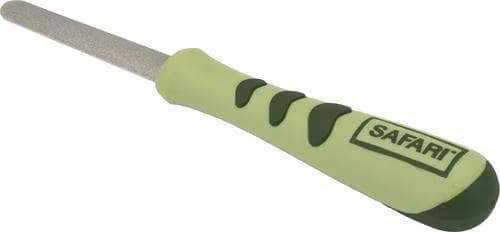
Coat appointments are a useful time to discuss nails and paw hair, but not every task should be attempted at home. A Safari diamond nail file can smooth an edge on a cooperative dog when used correctly. It is not a solution for a painful nail or a dog that cannot tolerate handling. Ask for a demonstration and stop if the dog becomes uncomfortable.
Dental care remains separate from hair styling. WebVet's dog toothpaste guide explains product considerations, and a Virbac C.E.T. toothbrush may fit a gentle home routine when the mouth is healthy and the head size is appropriate. A groomer tidying facial hair does not replace a veterinary dental examination.
Handling and everyday care
Grooming tolerance develops within the dog's wider routine. Shorkie temperament, training, barking, and comfort around people vary, and gentle handling should begin before a difficult haircut is needed. The main Shorkie guide explains the Shih Tzu Yorkie mix, family fit, and reward-based daily routines that support a cooperative companion.
Adult size and appearance
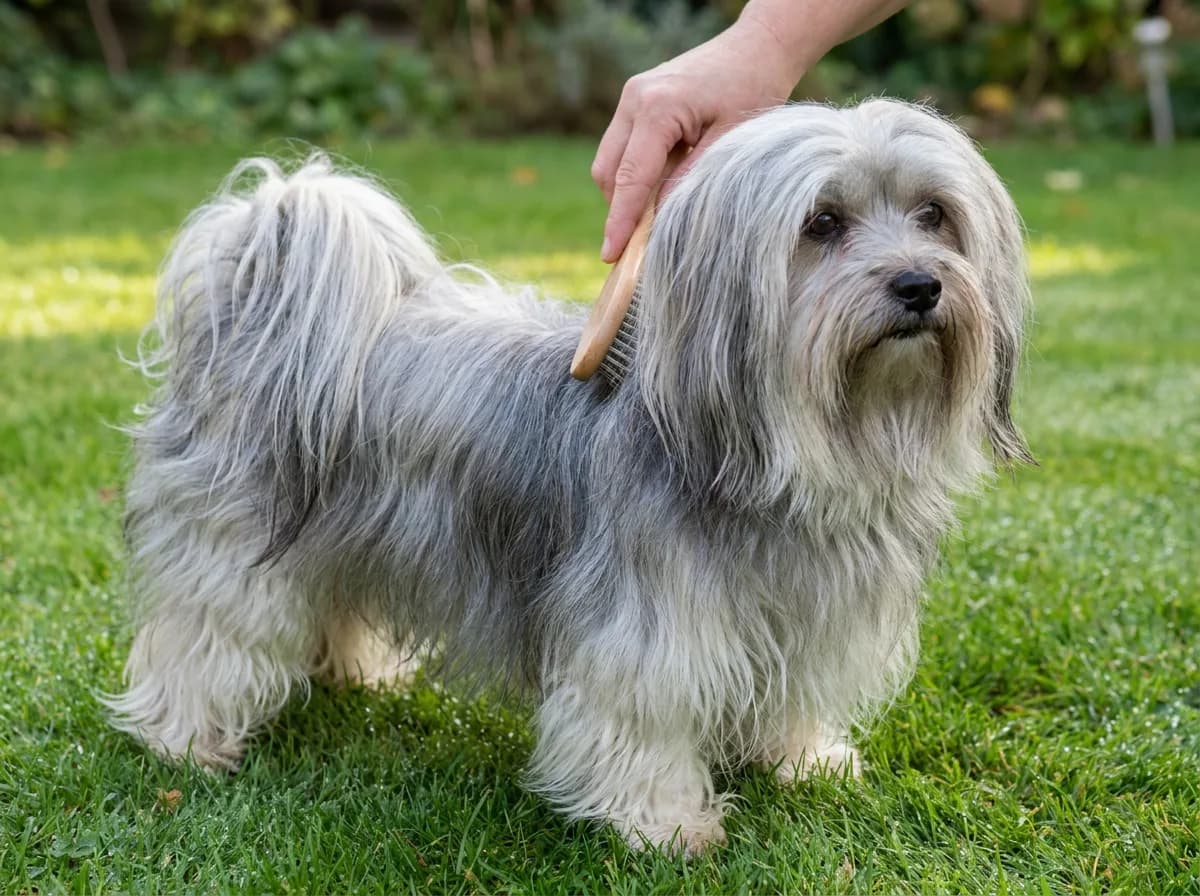
- A haircut can reveal proportions hidden by long hair without changing the dog's frame. Compare a standing side view before and after grooming if you want to understand that effect. Keep actual weight and measurements separate from the change in silhouette.
A full-grown Shorkie's size, proportions, and color affect the way a style looks, but a haircut does not change adult weight or height. Mini, toy, and teacup labels do not define a standard body shape. The Shorkie adult-size guide explains growth, parent measurements, and why photographs of black, tan, white, or brown dogs cannot predict your puppy's final dimensions.
When grooming reveals a health concern
Skin discomfort, eye problems, dental pain, or a new dislike of handling deserve veterinary attention rather than a different haircut alone. Our Shorkie lifespan and health guide covers inherited risks, life expectancy estimates, senior care, and a useful visit checklist. Grooming can help reveal changes, but it should not become a substitute for medical assessment.
Budgeting for grooming
Grooming is a recurring ownership cost, not simply part of the puppy purchase. Ask a local salon for a quote based on coat condition, size, style, and handling needs. The Shorkie price guide helps combine those costs with breeder or rescue fees, food, supplies, and veterinary care before you decide to buy or adopt.
Your groomer instruction checklist
Bring a groomer instruction checklist that describes the desired body length, face shape, ears, feet, tail, and the maintenance you can realistically provide. Add the dog's handling sensitivities and any skin or medical concerns. Finish with a comb check discussion: where does the coat tangle between appointments, and what change would make the routine more comfortable?
Use plain outcome-based instructions. For example: “I want a short body coat, eyes kept clear, a softly rounded face, and feet that are easy to wipe. I can brush regularly but cannot maintain long ear fringes.” That tells the groomer more than a style name alone. Ask what parts of the request suit the dog's current coat and what should change.
| Item to agree on | Your note for the groomer |
|---|---|
| Body and legs | Desired practical length and how much fullness to keep |
| Face and eyes | Visibility, muzzle shape, and any wet or irritated areas |
| Ears and tail | Length you can maintain without pulling or tangling |
| Feet and nails | Tasks the dog tolerates and help you need |
| Home routine | Tools, technique, and when to book the next assessment |
Before leaving, ask the groomer to show you any problem areas and explain how to check them. Photograph the finished style if you like it, with permission and enough detail to show the body and face separately. At the next visit, explain what worked at home and what did not. A good haircut plan improves through that feedback rather than staying fixed because of one attractive photograph.
Frequently asked questions
The recommended haircut for a Shorkie puppy is a comfortable trim adapted to its coat and tolerance; there is no fixed style every puppy needs. A gentle introduction and limited tidy-up may be more appropriate than a full transformation. Discuss timing with the groomer and veterinarian, and agree on a manageable length. A positive experience with grooming equipment is an important part of the outcome.
PetMD’s Shorkie guide recommends daily brushing and monthly bathing for a long coat. Use that as a starting routine, then adjust for your dog’s coat, skin, tangling, and comfort with professional advice. Haircut timing is a separate decision: ask your groomer to assess the individual coat and suggest an interval. Do not wait for severe matting simply because an appointment date has not arrived.
To cut hair safely on Shorkies, match the task to your training and the dog’s comfort. For a full haircut or work around eyes, ears, feet, and mats, use an experienced groomer who can assess the dog and handle the equipment safely. Learn any limited home tidy-up directly from a professional before attempting it. Do not place scissors beneath mats or trim a struggling dog. Stop for discomfort and seek help rather than trying to finish at any cost.
Yes. Coat texture, skin, comfort, activity, and maintenance needs matter more than sex when choosing a style. A teddy bear face, puppy cut, or longer coat can suit either when adapted to the individual. Discuss practical differences in hygiene areas with the groomer rather than assuming a female needs long hair or a male needs a short clip.
Shorkies do not become hypoallergenic after a short haircut, and no trim can guarantee that a dog will not trigger allergies. Shorter hair may be easier to manage, but allergens are not limited to visible loose fur. If allergies are a deciding factor, seek appropriate healthcare advice and assess exposure to the individual dog. Do not treat low shedding or a seller's hypoallergenic description as a medical assurance.
A groomer should assess whether a tangle can be managed comfortably or whether clipping is the more humane option. Preserving length should not take priority over pain, skin condition, or the dog's tolerance. Be open to a shorter result when needed and ask how to prevent recurrence. A veterinarian should assess injured skin or significant discomfort.
A good teddy bear haircut for a Shorkie combines a softly rounded face, clear eyes, and a body length you can maintain. The exact shape depends on hair texture and the dog's head, so bring a reference and discuss adaptations. Agree on ears, muzzle, legs, and upkeep separately. The name alone does not tell a groomer the finished length or guarantee an identical look.
A teddy bear cut can provide a softly rounded face while keeping the body at a manageable length. The pros depend on whether that outline suits the coat and can be maintained comfortably. The cons include extra face or leg upkeep when fullness traps moisture or tangles. Ask the groomer to adapt the length to your home routine rather than preserve a round shape at the expense of comfort.

Coreen Saito is a pet writer and longtime shelter volunteer with more than a decade in animal rescue. She covers cat behavior, breed care, and the small, ordinary science of sharing a life with companion animals, with a particular focus on honest takes about the products and decisions that actually matter. At home in Arizona, she's outranked by Mac (a dog with the loudest opinion in the house), Rebel (a cat who governs by quiet authority), and Meri (an orange tabby who runs the late shift and the laundry basket). She writes about all three, plus the rescues that keep coming through her life, at LifeWithMinty.com.
Sign up for expert-backed reviews and safety alerts all in one place.