Shiloh Shepherd: Temperament, Care, and Breed Guide
A Shiloh Shepherd brings large-dog needs and a registry-specific history. Learn how to compare records, assess household fit, and plan practical care without relying on appearance or broad promises.

BVMS, MRCVS
Petful is reader supported. As an affiliate of platforms like Amazon and Chewy, we may earn a commission when you buy through links on this page. There is no extra cost to you.
A Shiloh Shepherd is a large companion-oriented shepherd dog developed through an organized breeding program, with its identity tied to pedigree and registry records. It is not simply a name for any unusually large German Shepherd or a predictable first-generation cross. Before choosing one, establish which organization registers the dog and what that organization actually requires.
That distinction matters because a breed description can tell you about an ideal without telling you whether an individual dog meets it. Temperament observations, family history, verifiable health records, and the breeder's ongoing support are more useful than a promise of a gentle giant with automatically better health.

Sign up for expert-backed reviews and safety alerts all in one place.
What Is a Shiloh Shepherd?
The Shiloh Shepherd has American origins in Tina Barber's work with shepherd dogs. The International Shiloh Shepherd Alliance, or ISSA, dates the program's beginnings to the 1970s and describes recognition by the American Rare Breed Association in 1991. Its breed overview states that the breed is not currently recognized by the American Kennel Club, United Kennel Club, or FCI. Recognition by one organization does not mean recognition by all others.
Use a named registry as the starting point for checking claims. The International Shiloh Shepherd Dog Club, often shortened to ISSDC, is a club; the International Shiloh Shepherd Registry, or ISSR, and the International Shiloh Shepherd Alliance have their own identities and records. A familiar acronym on a website is not a substitute for finding out who issued the actual pedigree.
| Buyer question | Evidence to request | What to avoid assuming |
|---|---|---|
| Which program recognizes this dog? | Full name of the named registry and registration documents | That every Shiloh organization follows identical rules |
| What is the breeding goal? | Current written standard and an explanation of this pairing | That a goal guarantees a puppy's adult traits |
| What screening was completed? | Verifiable health records linked to each parent's registered identity | That registration means every result was normal |
| What is known about behavior? | Specific observations of adults, relatives, and the litter | That a teddy bear appearance predicts easy handling |
| Who supports the buyer later? | Written contract, return terms, and a reachable contact | That a club listing is an endorsement |
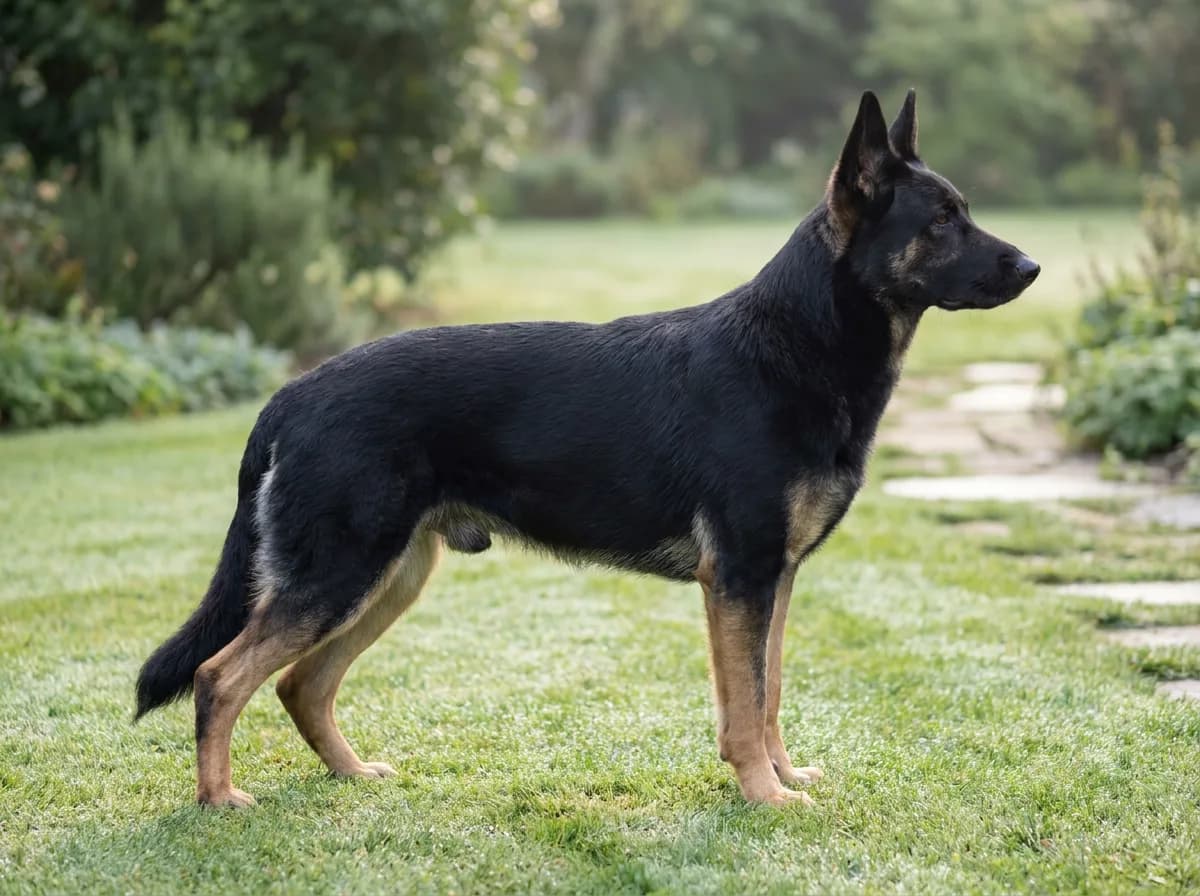
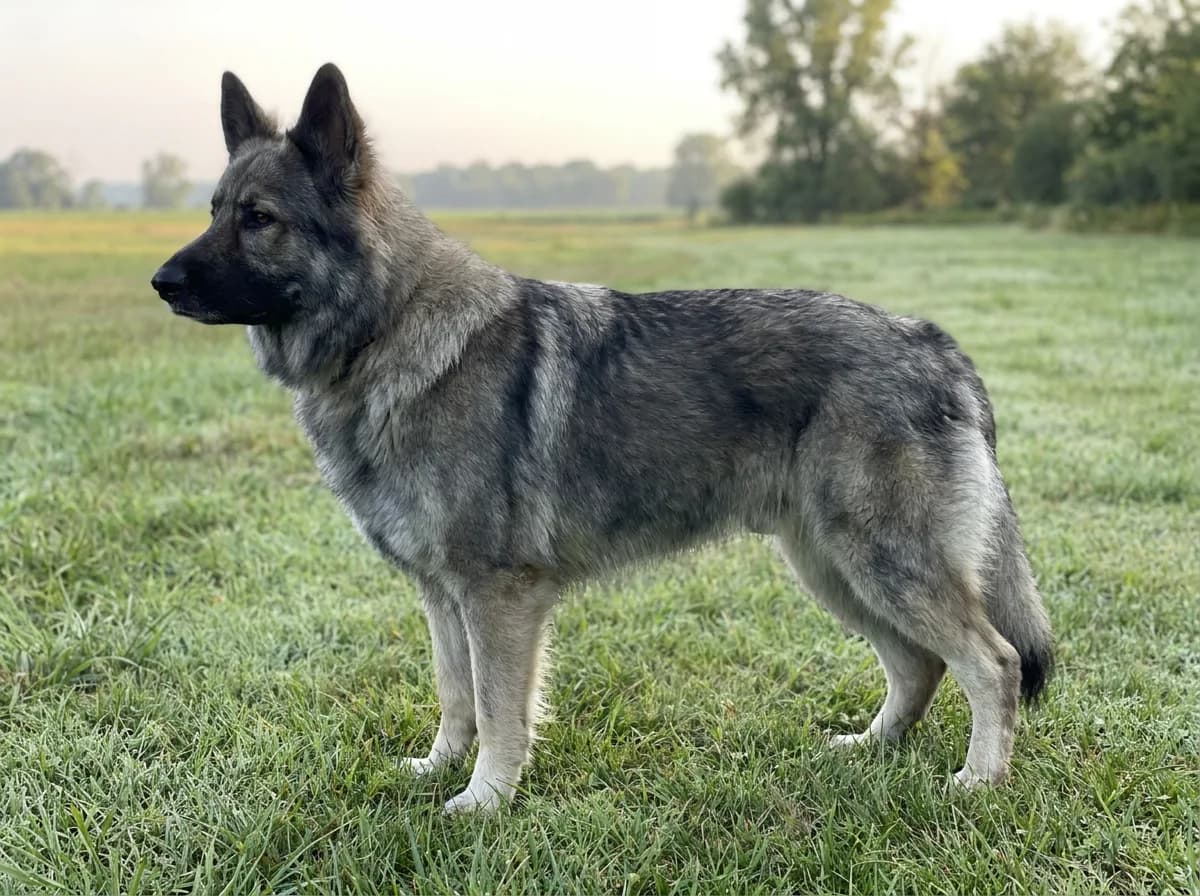
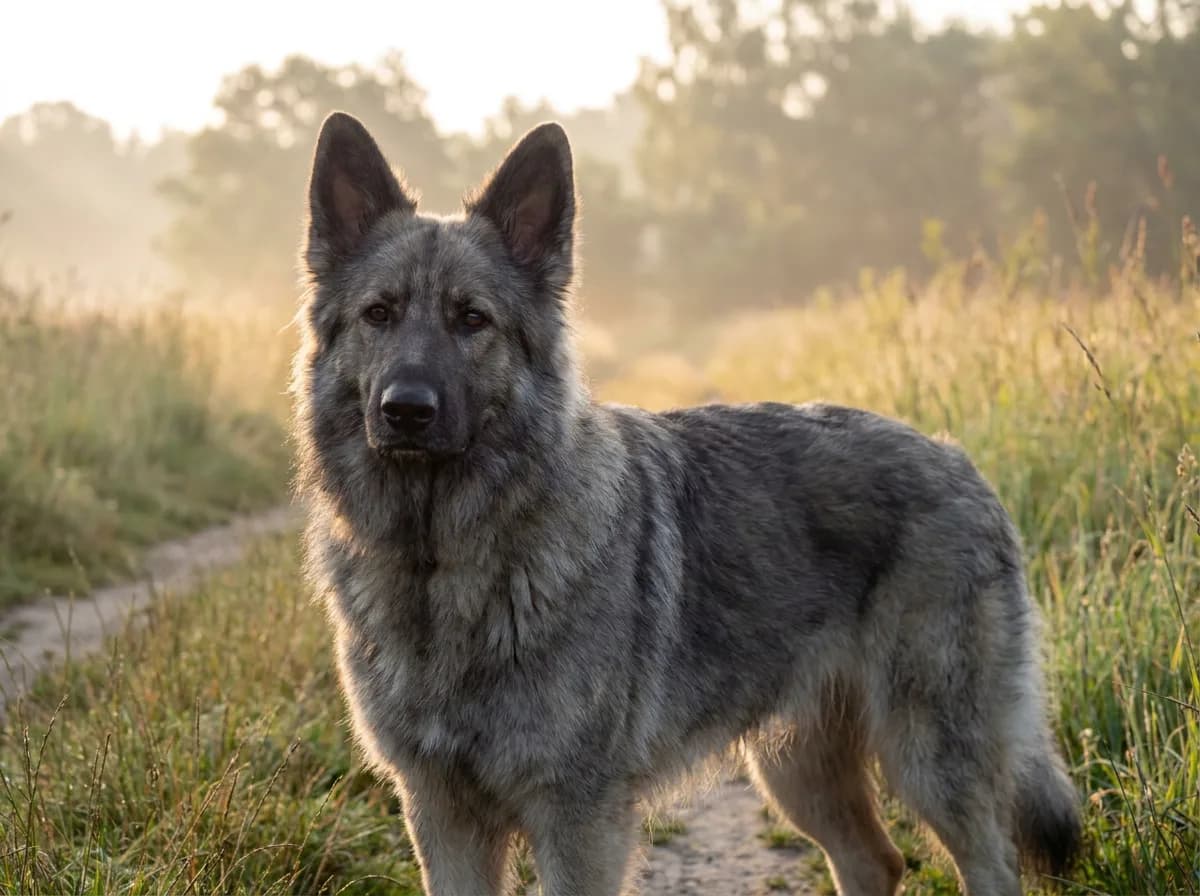
Photographs of Shiloh Shepherds commonly show substantial shepherd dogs with erect ears, a long muzzle, and either a smooth or plush coat. The softer outline of a plush coat explains the informal teddy bear description, but pictures cannot authenticate the breed. A female may be smaller than a male from the same program, yet sex and appearance alone do not establish ancestry or adult measurements.
Planning for a substantial adult includes checking equipment dimensions early. The Frisco X-Large wire crate is a candidate only if its interior provides natural standing, turning and resting space. Some Shilohs need a larger setup. Introduce any crate gradually; a size label does not establish safe or comfortable confinement.
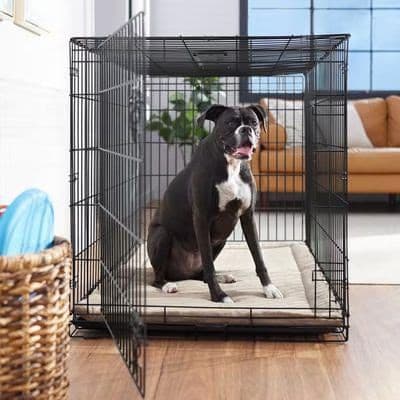
X-Large wire crate only if your dog can stand, turn and rest naturally inside. Introduce gradually; no escape-proof or transport-safety claim.
Petful may earn a commission when you click through to Chewy, at no extra cost to you.
The ancestry is also more complicated than a two-breed formula. A 2019 UC Davis Veterinary Genetics Laboratory report describes German Shepherd foundations, documented Malamute ancestry in one influential dog, and later outcrosses. It also records a limited Czechoslovakian Vlcak line. Those details do not establish that every Shiloh has the same ancestry, and a wolf-like face cannot answer a pedigree question. Ask about the specific dog's documented family rather than accepting either a sensational wolf claim or a blanket denial of every historical outcross.
Read the paperwork in the right order
Start with identity, then ask what the documents mean. A health report for a similarly named dog, an old registry logo, or an impressive family photograph can look reassuring while leaving the important question unanswered.
- Match the parents' registered names and identifying details across the pedigree and screening reports.
- Find the organization's current breeding requirements, including any age or generation exceptions.
- Separate a test result from a breeder's interpretation of that result.
- Ask how the pairing addresses the strengths and limitations of both parents.
- Keep copies you can discuss with your veterinarian before committing.
This approach is especially helpful when two breeders describe different programs. Different paperwork does not automatically establish that one is dishonest; it means the claims need to be compared on their actual requirements. Conversely, politeness, attractive puppies, or long membership in a club does not remove the need for records.
The ISSDC's club website makes clear that buyers retain responsibility for investigating breeders. Treat directories as a way to find people to question, not as a shortcut around due diligence. If a seller cannot identify the issuing organization or explain an apparent inconsistency, resolve that before paying a deposit.
A resting space also needs usable dimensions. Compare the FurHaven sofa-style bed in Large with the dog’s stretched-out posture and ability to enter. A Shiloh may need a larger surface, and the bed’s orthopedic name is not a promise to prevent or treat joint disease.
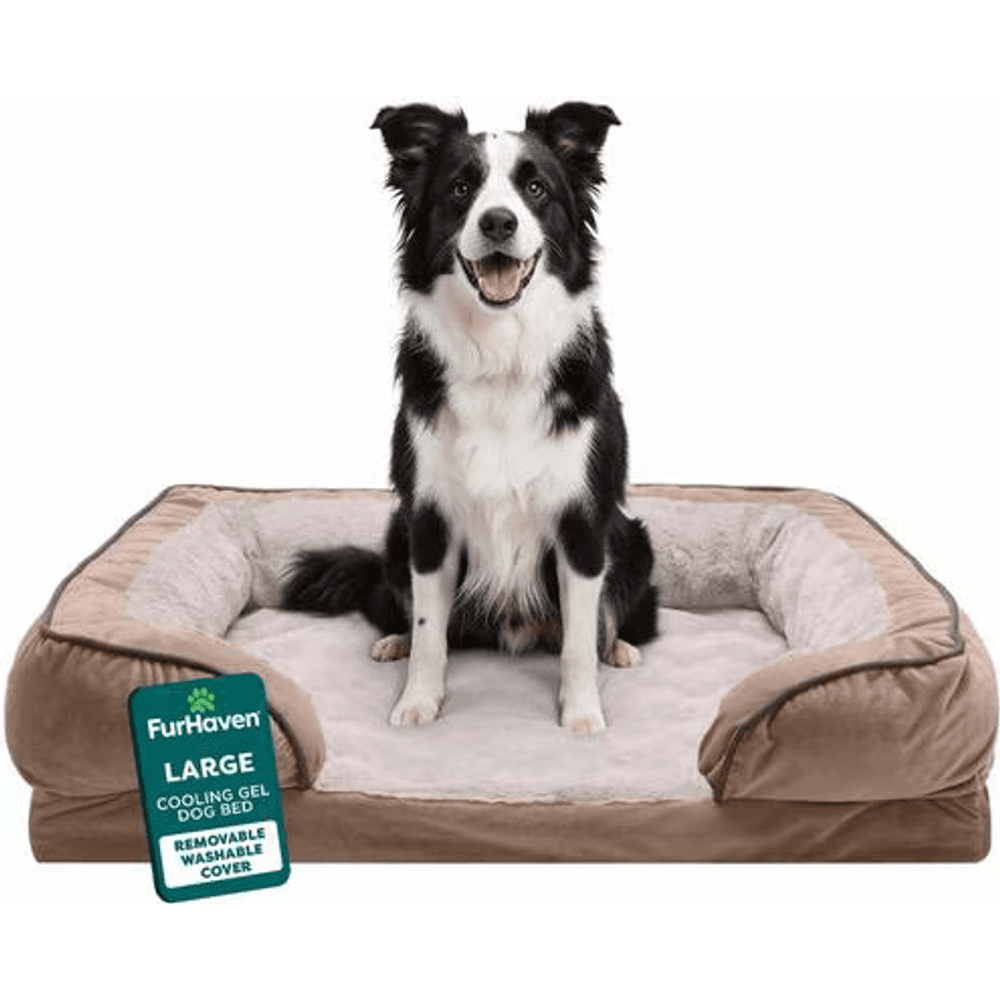
Removable-cover sofa bed. Check usable sleeping space and entry height against your dog’s posture and mobility; no medical or calming outcome promised.
Petful may earn a commission when you click through to Chewy, at no extra cost to you.
Shiloh Shepherd Temperament and Household Fit
Companion temperament is an aim of Shiloh breeding programs, not a guarantee attached to the name. The ISSA describes an emphasis on family companionship rather than protection or bite work. Within that aim, dogs still differ in confidence, sensitivity, sociability, play, and ability to settle. Meet adult relatives when practical and ask for observations from ordinary life, not only a brief greeting arranged for visitors.
- 1Start with a named registry and verifiable health records.
- 2Companion breeding aims do not guarantee a particular temperament.
- 3Plan for a large dog whose training and social needs continue beyond puppyhood.
A useful temperament conversation describes behavior in situations your household will actually encounter. Does the adult dog recover after a surprise? Can it relax while people move around? How does it respond when a visitor remains at a distance? A breeder who describes a dog's limitations as well as strengths gives you more to work with than one who calls every puppy perfect for everyone.
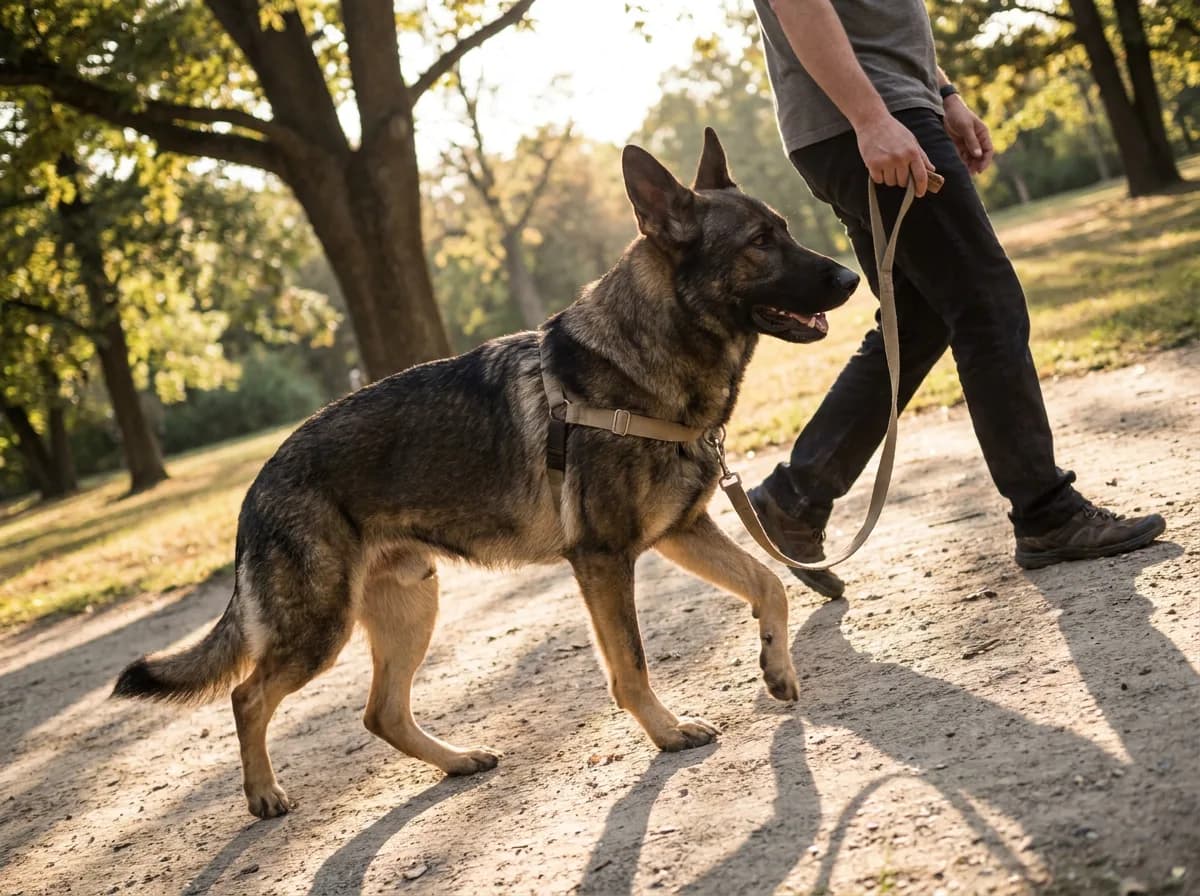
Match the dog to the household
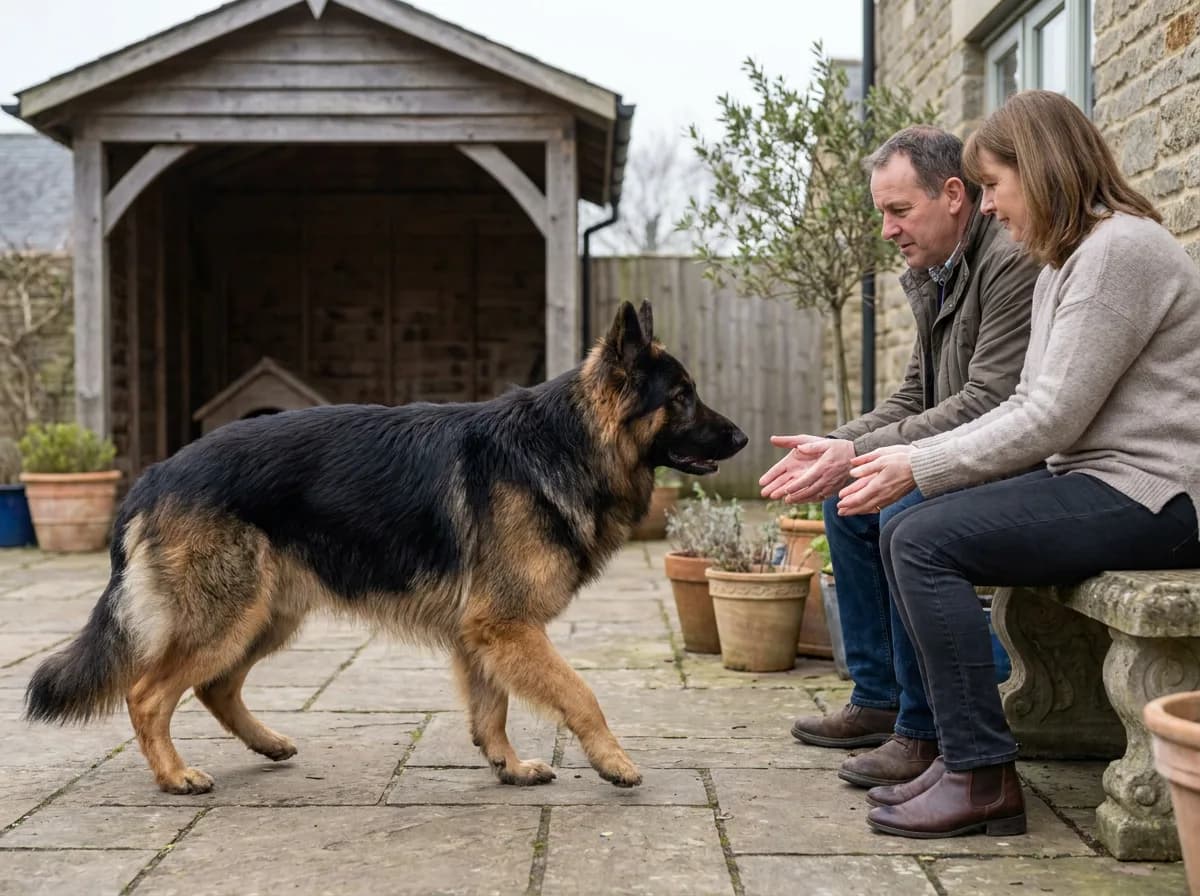
For a home with children, physical management matters even when the dog is affectionate. A large adolescent can knock someone over while playing or rush through a doorway without intending harm. Provide protected resting areas, supervise interactions, and teach children to leave a resting or eating dog alone. Make the arrangement workable for the least physically confident adult who will handle the dog.
Cats and other pets need a separate assessment. Being raised around one familiar cat does not predict a response to every running animal. Ask what introductions occurred, what the dog actually did, and whether barriers were used. Plan gradual introductions with escape options for smaller animals rather than treating a breed description as permission for immediate free access.
- Consider who can manage the leash if the dog becomes excited.
- Check whether every household member can follow the same doorway and greeting routine.
- Arrange a quiet resting place away from children and visiting dogs.
- Ask about observed responses to other animals rather than accepting a universal compatibility claim.
- Build a realistic plan for workdays, travel, and unexpected changes in routine.
The potential advantages are companionship, engagement in training, and a dog whose program emphasizes living with people. The tradeoffs include space, handling, socialization commitment, and the expense of large equipment and services. These are practical pros and cons, not a score that determines whether every Shiloh is easier than another breed.
Training and activity
Train loose-leash walking, comfortable handling, recall foundations, and settling while the puppy is still easy to manage. Use rewards and gradual practice in achievable situations. The American Veterinary Society of Animal Behavior supports reward-based methods; intimidation is not necessary to teach a large dog to cooperate.
For close everyday walks, the Frisco six-foot traffic leash is an option when its fittings and weight suit the dog and handler. Check the connection to fitted equipment before use. A traffic handle does not replace leash skills or provide the freedom of a long line.
Energy level should be assessed from the actual dog and family, then adjusted for age and health. A calmer adult still needs activity and opportunities to explore. A young dog may alternate enthusiastic play with substantial rest. Replace an arbitrary daily mileage target with a routine that includes comfortable walks, sniffing, short training sessions, and downtime, adjusting when the dog struggles or does not recover well.
- Practice one manageable skill at a time before adding distractions.
- Reward calm pauses as well as active responses.
- End a session while the dog remains comfortable and engaged.
An appropriately sized food toy can give a dog a quiet activity after training. The KONG Classic in Large is one available option, but Large is a product size, not a promise of suitability for a Shiloh. Compare the toy with the dog's mouth and chewing behavior, follow the maker's guidance, and choose a larger size or a different design when needed.
Being alert to a visitor does not make a Shiloh a reliable guard dog. Encouraging suspicion can undermine safe household behavior, and a companion label does not qualify a dog for protection work. Similarly, some individuals may be suited to service or therapy roles, but those roles require appropriate temperament, health, task-specific training, and evaluation. Do not buy a puppy on a guaranteed service-dog promise. The ISSA describes a noticeable alert bark, but the cited sources do not establish how often Shilohs bark across households. Ask about the individual dog during arrivals, outdoor activity, and time alone, and address persistent vocalizing according to its trigger rather than assuming a companion dog will be quiet.

Six-foot leash for supervised everyday walks when the clip and weight suit your dog. Not a long line for distance recall.
Petful may earn a commission when you click through to Chewy, at no extra cost to you.
Daily Care and Health Questions for a Shiloh Shepherd
Large-dog care begins with a routine you can sustain: suitable food, body-condition monitoring, preventive veterinary care, comfortable movement, grooming, and training for cooperative handling. A breeder's goal of improving hips is not evidence that every Shiloh has better hips or fewer health problems than another breed. Ask which conditions were assessed, what results were obtained, and what remains unknown.
The ISSA health-testing requirements provide one program-specific example. They describe hip and elbow evaluation, cardiac screening, degenerative myelopathy testing or qualifying parentage, and additional requirements for covered breeding dogs. Requirements depend on the program and the dog's circumstances; do not transfer that list automatically to every registry or treat it as a veterinary care schedule for your puppy.
- A screening list is useful only when the result, dog identity, age, and testing method can be checked. Ask your veterinarian what the actual reports establish and what they cannot rule out. A registration certificate and a normal result on one test are not a lifetime health guarantee.
Cardiac tests answer different questions. A Holter recording evaluates heart rhythm over time; a listening examination or echocardiogram is not simply the same test under a different name. Likewise, a DNA result relates to the variant tested rather than certifying the whole dog healthy. When a report is described as clear, ask clear of what, by which method, and with what limitations.
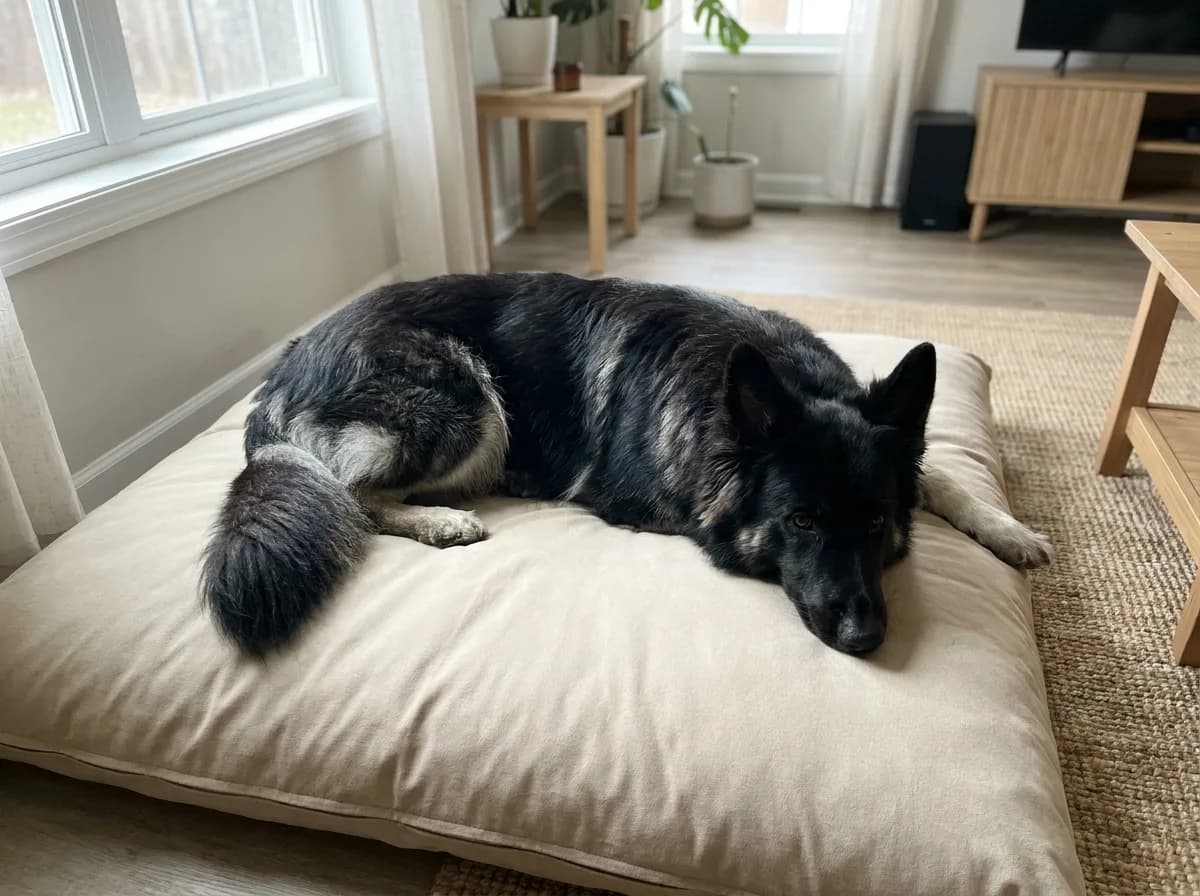
Build a care record that follows the dog
Arrange an initial veterinary visit and bring the breeder's records, feeding information, and any screening documents supplied. Your veterinarian can establish the dog's current condition and advise on preventive care without assuming that the breeder's preferred routine fits every household. Keep a simple record that remains useful when you change clinics or need a sitter.
- Record the food, amount offered, treats, and any recent changes.
- Track weight alongside body condition rather than celebrating the highest possible number.
- Keep vaccination, parasite-prevention, and examination records together.
- Note changes in movement, appetite, stool, comfort, or behavior.
- Save the breeder's contact details and relevant family-health updates.
A growing Shiloh should not be fed to reach an advertised giant size. Discuss a diet appropriate for growth and the individual dog's needs, and have portions adjusted as condition changes. Extra food does not improve the quality of the skeleton, and the heaviest littermate is not necessarily the healthiest. The WSAVA nutrition resources explain why nutritional assessment includes more than body weight alone.
Daily observation is valuable because you know the dog's normal routine. A reluctance to get up, new difficulty with stairs, or a change in exercise tolerance deserves attention rather than being dismissed as a large-breed trait. Sudden collapse, severe breathing difficulty, or repeated unproductive retching warrants urgent veterinary help. A general breed guide cannot identify the cause from those signs.

Large rubber toy for supervised enrichment if sizing and chewing style suit. Follow the current size guide, inspect regularly and retire when damaged.
Petful may earn a commission when you click through to Chewy, at no extra cost to you.
Make routine handling possible
Cooperative care is especially valuable when lifting or physically restraining the adult dog would be difficult. Introduce ordinary tasks in small parts: standing on a nonslip surface, allowing a brief touch to a paw, or remaining relaxed while a brush approaches. Reward comfortable participation and pause before the dog becomes distressed. Trying to complete every task in one session can make the next attempt harder.
You can also rehearse the practical movements that veterinary visits and travel require. Teach the dog to approach the car, wait while a door opens, and move onto a comfortable mat. Keep sessions separate from rushed departures so there is time to make the process predictable. If the dog becomes fearful or painful during handling, get professional help rather than increasing force.
- Let the dog investigate unfamiliar equipment before expecting cooperation.
- Use stable footing for brushing, weighing, and entering the vehicle.
- Keep early sessions brief enough that the dog can remain relaxed.
- Arrange professional grooming help when the coat exceeds what you can comfortably manage.
- Tell veterinary staff in advance about handling difficulties so they can plan appropriately.
The household should share the same approach. One person carefully teaching a pause at the door will make less progress if another regularly allows a frantic rush. Agree on a few important routines and use them consistently. Consistency means understandable expectations, not insisting that a worried dog tolerate a situation it cannot yet handle.
Longevity and family history
Treat a Shiloh Shepherd lifespan figure as a claim that needs a source and population, not as a personal forecast. This guide does not establish a representative breed-wide average. Ask how long close relatives lived, their causes of death when known, and whether the breeder records information from pet homes as well as breeding dogs. A few exceptional long-lived relatives cannot describe the whole population.
Family information is most useful when it is specific and candid. An account of a relative's illness is not automatically a reason to reject a litter; secrecy or an inability to explain what was learned leaves you less able to assess it. Discuss material findings with your veterinarian rather than trying to calculate a puppy's future from a pedigree yourself.
What Size and Coat Mean for Your Home
Plan around the adult dog's body, reach, and movement rather than a fluffy puppy photograph. A Shiloh needs room to stretch out without blocking a narrow passage, turn comfortably in a vehicle, and move through doorways without crowding people. Height at the shoulder, body length, and resting position are different measurements; one weight number does not answer every equipment question.
Measure before buying a crate, bed, harness, or vehicle restraint. An item sold as large or extra large may use dimensions very different from another maker's product. Consider whether you can manage the equipment yourself and whether your car, rented accommodation, boarding provider, or sitter has size restrictions. These are decisions to make before bringing home the puppy, not after it outgrows the first setup.
The Shiloh Shepherd size guide separates standard measurements, adult variation, and growth questions. Use it to understand the terms, then ask for the parents' actual measurements and your puppy's growth records. Neither a giant label nor a comparison photograph replaces those records.
- Check the floor area available for the dog to lie fully extended.
- Measure vehicle access as well as the space available once inside.
- Plan safe footing where an excited dog may turn quickly.
- Consider how you would transport the dog if it could not walk unaided.
- Keep frequently used routes clear enough for people and dog to pass comfortably.
Shilohs have smooth and plush coat varieties, and both shed. Plush coats can make a dog look larger without changing its skeletal height. Grooming needs depend on the actual coat, seasonal shedding, outdoor activity, and how thoroughly you can reach beneath the outer hair. Regular handling should include checking the skin and working through areas prone to tangling, rather than brushing only the visible surface.
The Shiloh Shepherd colors and coats guide explains coat terminology and the difference between color and length. Choose a coat you can maintain rather than assuming that a short-looking coat means no loose hair. Allow time to dry the dog after wet outings and check bedding and car surfaces as part of an ordinary cleaning routine.
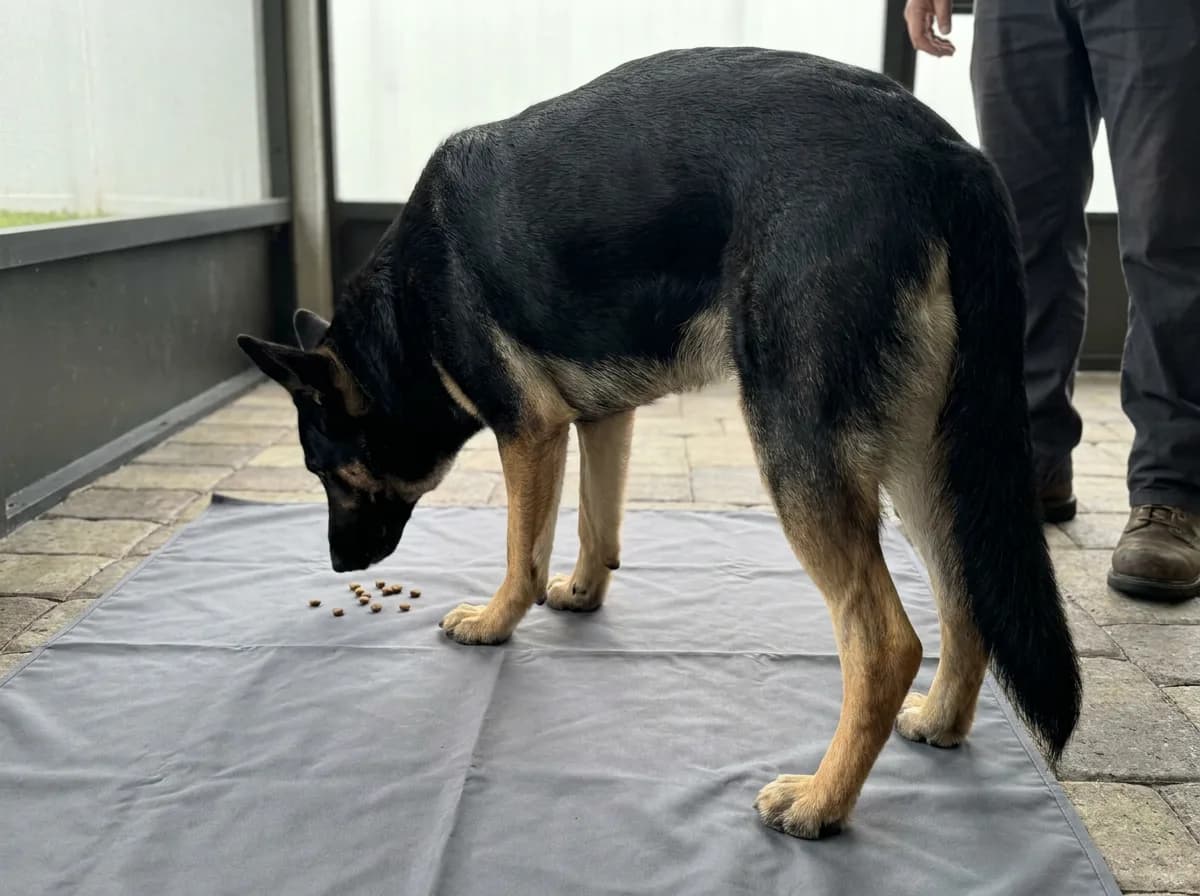
A scent game can fit into a manageable home routine without needing a large yard or strenuous exercise. For example, let the dog search for a few pieces of its usual food in a safe, easy area while supervised. Keep the task simple at first and avoid inaccessible hiding places. The point is comfortable engagement, not turning every moment into a performance test.
Choosing a Registry and a Breeder
A good starting question is: what does this registry require of this particular breeding pair, and can I see evidence that those requirements were met? Ask for the current policy, not a screenshot of an old checklist. If there is an exception, request the explanation in writing. Different programs can make different decisions, but the buyer should be able to understand which decision applies.
Next, ask how the breeder evaluates household fit. A waiting list ordered only by color preference or deposit date tells you less about matching than a discussion of daily routine, handling experience, other pets, and the puppy's observations. Be willing to hear that a particular litter or individual is not the best fit. A thoughtful refusal can be more informative than an immediate promise.
- Request the parents' registered identities and actual reports before sending a nonrefundable payment.
- Read what the contract says about deposits, health provisions, returns, and ongoing contact.
- Confirm who owns the dogs and who is responsible for the sale.
- Ask what social experiences the puppies have had and what still needs gradual introduction.
- Verify pickup arrangements and identity rather than relying on copied photographs or urgent messages.
For availability, breeder questions, adoption considerations, and the limits of a quoted price, use the Shiloh Shepherd puppies guide. A puppy's purchase price is only one part of the decision. Ask what is included and budget separately for ongoing care, training, transport, and equipment that fits the adult dog.
If you are also considering a German Shepherd or King Shepherd, compare the relevant programs rather than treating the three names as size grades of the same dog. Our Shiloh Shepherd, German Shepherd, and King Shepherd comparison explains which differences can be tied to a standard and which require individual evidence.
Before committing, write down the unresolved questions in plain language. Perhaps the family needs a dog comfortable with visitors, a particular screening report is missing, or the adult transport plan is uncertain. Resolve the important ones before paying, and keep the documents you used. Choosing a Shiloh should leave you with a clear record and a workable household plan, not only an appealing description.
Shiloh Shepherd Questions
Shiloh breed development began with German Shepherd foundations and involved documented outcrosses over time. The pedigree history is more complex than a fixed German Shepherd and Malamute formula. Ask the named registry and breeder for the specific dog's records; neither appearance nor a generic ancestry percentage establishes its family history.
The practical tradeoffs include large-dog costs, space and transport needs, shedding, and a substantial socialization commitment. A companion-oriented breeding goal does not eliminate individual sensitivity or training needs. Consider whether your household can manage the adult dog through busy days, adolescence, illness, and changes in routine before choosing a puppy.
An alert bark is not the same as reliable protection work. The ISSA describes companion-oriented aims rather than protection or bite work, and individual dogs vary in confidence and reactions to strangers. Choose a Shiloh for the household relationship you can support, not a promise that it will defend you. Teach manageable greetings and seek help with fear or unsafe behavior rather than encouraging suspicion.
Some individuals may be suitable, but the breed name or a puppy temperament description cannot guarantee success. Suitability depends on the dog’s health, temperament, ability to work in the required settings and task-specific training. Discuss your needs with a qualified program or trainer before choosing a prospect. A companion-oriented pedigree is useful background, not proof that a particular dog can perform the work.
BVMS, MRCVS
Dr. Pippa Elliott, BVMS, MRCVS, is a veterinarian with nearly 30 years of experience in companion animal practice. Dr. Elliott earned her Bachelor of Veterinary Medicine and Surgery from the University of Glasgow. She was also designated a Member of the Royal College of Veterinary Surgeons. Married with 2 grown-up kids, Dr. Elliott has a naughty Puggle named Poggle, 3 cats and a bearded dragon.
Sign up for expert-backed reviews and safety alerts all in one place.