Poochon Full Grown: Adult Size, Weight, and Growth
A full-grown Poochon’s size depends on ancestry and individual growth. Use parent information, consistent measurements and body-condition guidance to make practical decisions.

BVMS, MRCVS
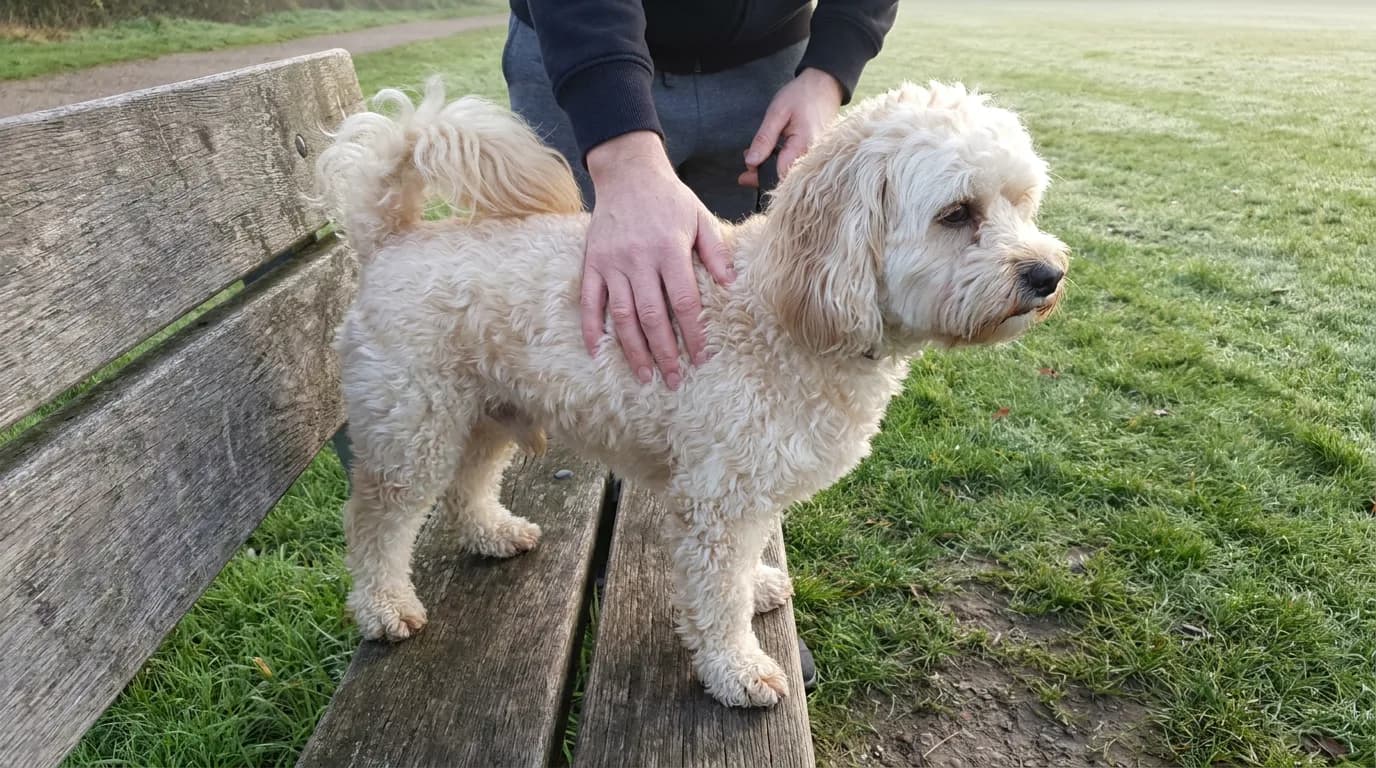
Adult cream Poochon standing on a low wooden bench.
Petful is reader supported. As an affiliate of platforms like Amazon and Chewy, we may earn a commission when you buy through links on this page. There is no extra cost to you.
What does a Poochon full grown look like? Expect variation: this Bichon Frise–Poodle mix does not come in one guaranteed adult size. The parents’ dimensions and the puppy’s own growth provide more useful clues than a “toy,” “mini” or “teacup” label alone.
A broad size range helps you picture the general scale of the dog. For practical decisions, measure the individual and separate height, chest girth and weight. Those measurements answer different questions about equipment, growth and body condition.

Sign up for expert-backed reviews and safety alerts all in one place.
How big can a Poochon get?
- 1Poochon adult size varies with parent size and ancestry.
- 2Published ranges are references, not guarantees for a puppy.
- 3Use current measurements for equipment and assess body condition separately from growth.
Pooch & Mutt’s Poochon profile puts adult Poochon weight in kg at a broad 3–7 and height at 22–35 centimeters, roughly 7–15 pounds and 9–14 inches. No universal size chart can predict every puppy. Individual dogs can fall outside a profile range. For a toy Poochon, ask which Poodle size is in the ancestry and request the parents’ actual measurements rather than treating a label as a limit.
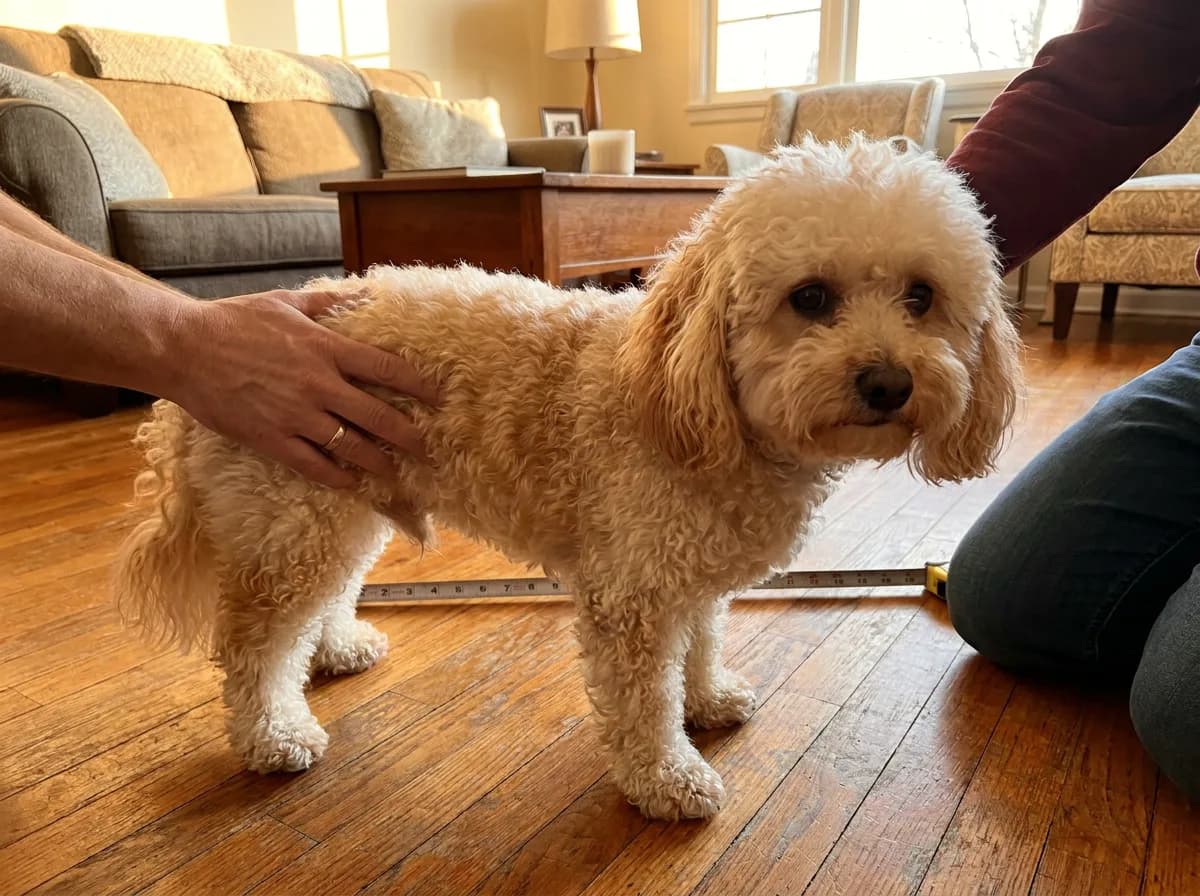
A black-and-white Poochon full grown needs the same individual assessment: coat color does not predict adult weight. A small-looking puppy does not guarantee a tiny adult, and a thick coat can make a mature dog look larger than its frame. Compare measurements taken in a natural standing posture. A photograph beside a person or object is context, but camera angle and distance can distort apparent scale.
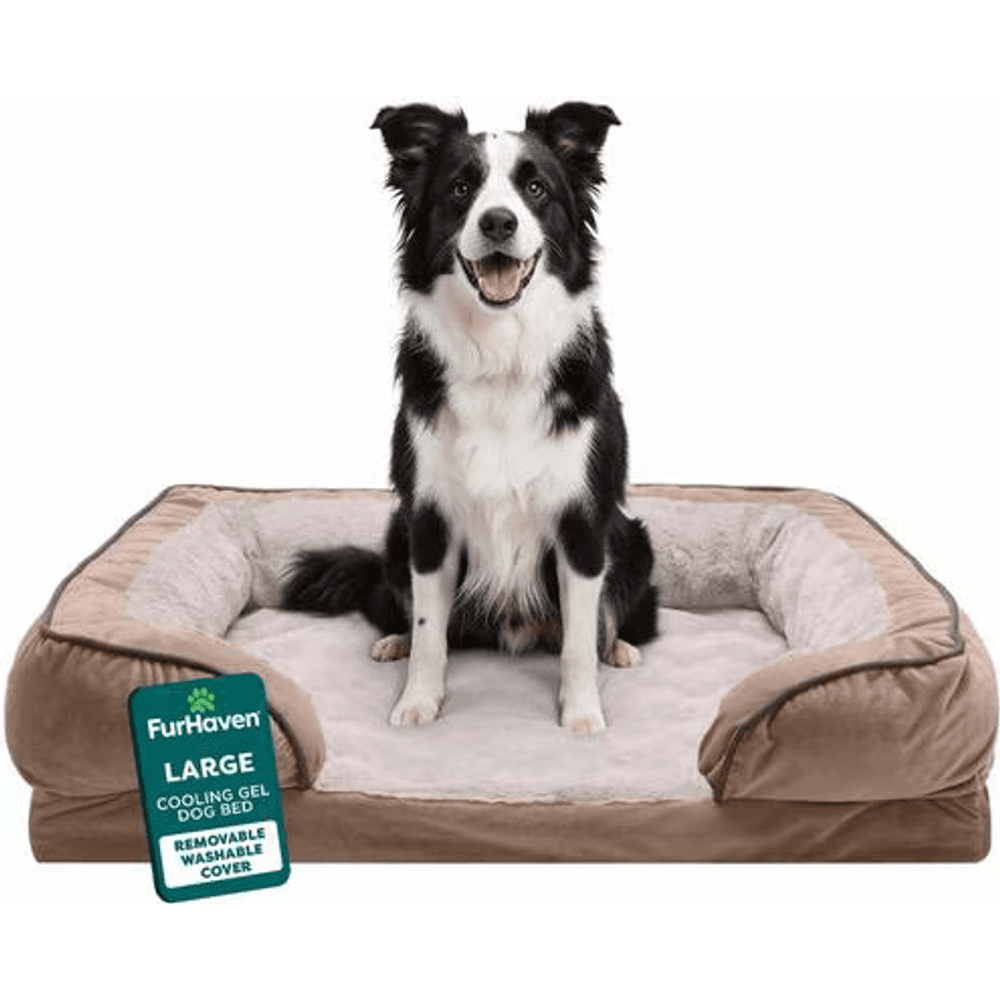
An orthopedic sofa bed with three bolstered sides for dogs who like to rest their head and joints against a cushion. The supportive foam base cradles hips and elbows, a comforting spot for an older or shaky dog to settle.
Petful may earn a commission when you click through to Chewy, at no extra cost to you.
Choose a resting place with room for the dog’s preferred position. The FurHaven Velvet Waves orthopedic sofa bed is one option to compare against current body length and the usable space inside its bolsters. If buying for a puppy, expect to reassess the setup rather than assuming one early choice must fit forever.
At what age is a Poochon fully grown?
Many small dogs reach adult size around their first birthday, according to the AKC’s puppyhood guidance. That is general context, not a validated Poochon-specific timetable. Growth can slow before the coat, muscle and overall appearance look fully mature.
Ask the veterinary team to interpret the individual’s trend. A dog can keep gaining weight after reaching most of its height, but that does not mean every gain is healthy growth. Feeding decisions should account for life stage, body condition and the actual diet rather than the assumption that a young-looking dog always needs more food.
Track a trend rather than chasing a predicted number
Use consistent methods and sensible intervals so your record is comparable. Note which scale was used and whether the dog was standing naturally for height and chest measurements. A sudden discrepancy may reflect technique, but an unexpected change should not be dismissed without checking.
Bring the record to routine appointments. It is more useful than trying to force the dog to match a month-by-month weight chart without a documented basis. Puppy calculators can provide estimates, but they cannot guarantee the outcome of mixed ancestry.
Growth milestones without an invented monthly weight chart
A useful growth record follows your puppy through its own development. At collection, obtain its birth date where known, earlier weights and feeding history. During the first months at home, use routine veterinary visits to check the trend and raise questions about appetite, stools, activity and condition. As growth slows toward adulthood, discuss when to change the feeding plan instead of switching solely because a bag says 'small breed.'
Height, weight and maturity do not finish on the same day. A puppy may approach adult shoulder height while still developing muscle, learning how to settle and changing coat texture. Continued excitement does not prove continued skeletal growth, and a more adult-looking haircut does not mean the puppy's nutrition needs have changed overnight.
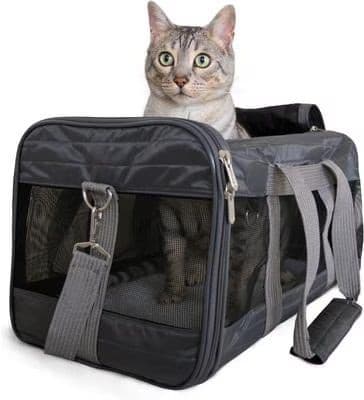
An airline-approved soft-sided carrier with mesh ventilation windows, a top-rated travel pick for cats and small dogs.
Petful may earn a commission when you click through to Chewy, at no extra cost to you.
A growth-log entry that is actually useful
Record the date, the dog's age if known, weight, scale used and a short note about food and activity. For example: 'Routine clinic weigh-in; same food; treats now included in the measured allowance; no change in appetite.' That note helps explain the number. Do not convert the example into a target weight or multiply one puppy measurement to produce a promised final size.
If one reading looks surprising, check the measurement before changing food. A different scale, a wriggling puppy or an inconsistent measuring point can create an apparent change. Persistent unexpected gain, loss or stalled development needs individual assessment. Keeping the original entries is more useful than editing the log to fit a prediction.
Parent size and puppy predictions
“Toy Poochon” describes a seller’s size or ancestry claim, not a separate standardized breed. Ask whether the Poodle parent is a Toy or Miniature and compare both parents’ adult measurements.
Ask about both parents, not only the smaller one. Toy and Miniature Poodles differ in expected scale, and earlier generations can also influence a cross. A description such as “tiny dad” is less informative than a verified adult height and weight alongside information about the mother.
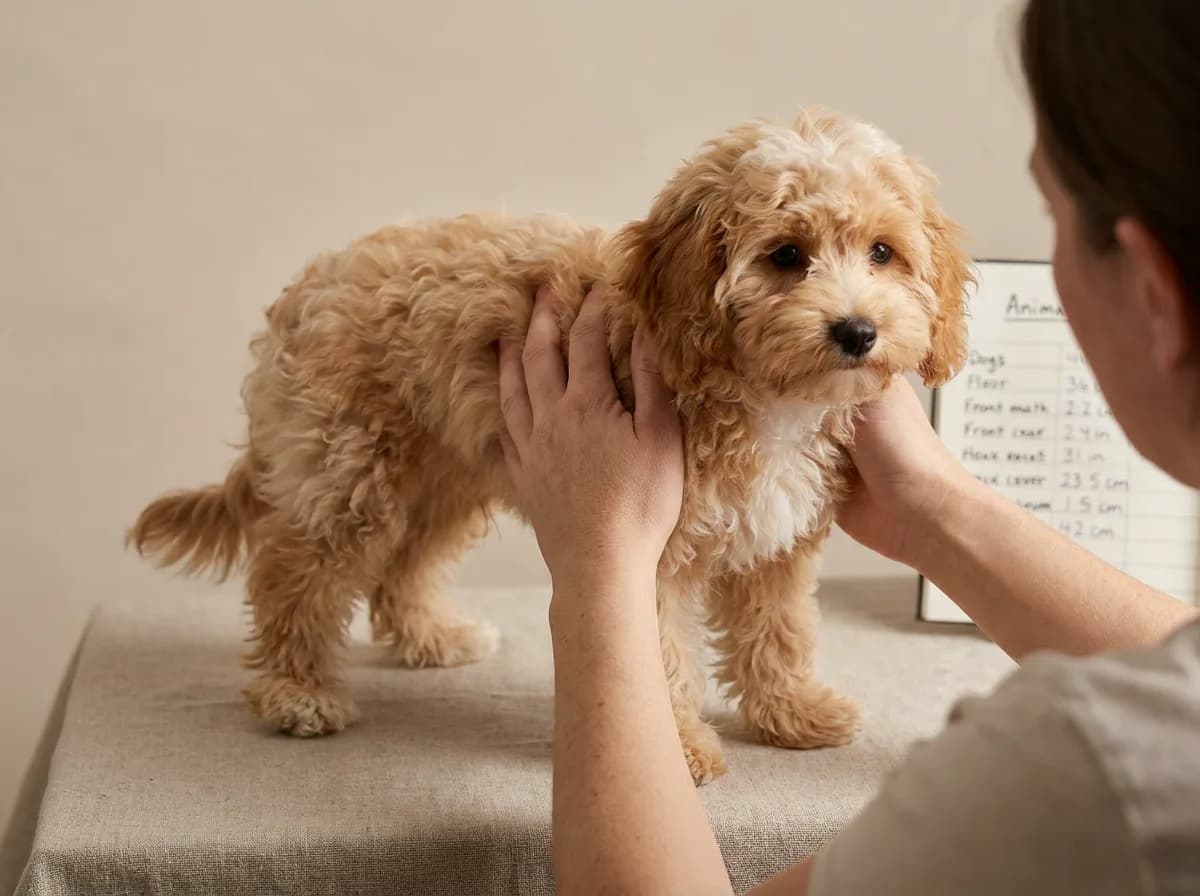
Useful questions include:
- What are the parents’ adult measurements and known ancestry?
- Is the estimate based on previous comparable litters or only on the current puppy?
- How much variation occurred within those litters?
- Which records will transfer with the puppy?
An estimate can be honest without being exact. The problem is treating a prediction as a promise, particularly when a specific tiny adult size is central to a sale. If your housing or travel arrangement has a strict size limit, acknowledge the uncertainty before choosing a growing puppy.
For an adult dog, current measurements and known behavior reduce some of that uncertainty. Adoption of an adult may be worth considering when predictable equipment fit or household routine matters more to you than raising a puppy.
Toy versus Miniature Poodle ancestry
The Poodle parent's variety is a useful starting point because it describes a real difference in adult height. Under the AKC Poodle standard, a Toy is 10 inches or less at the shoulder, while a Miniature is over 10 and up to 15 inches. These are Poodle categories, not official categories for Poochons. Crossing a Bichon Frise with a Toy Poodle does not make every puppy a Toy-sized adult.
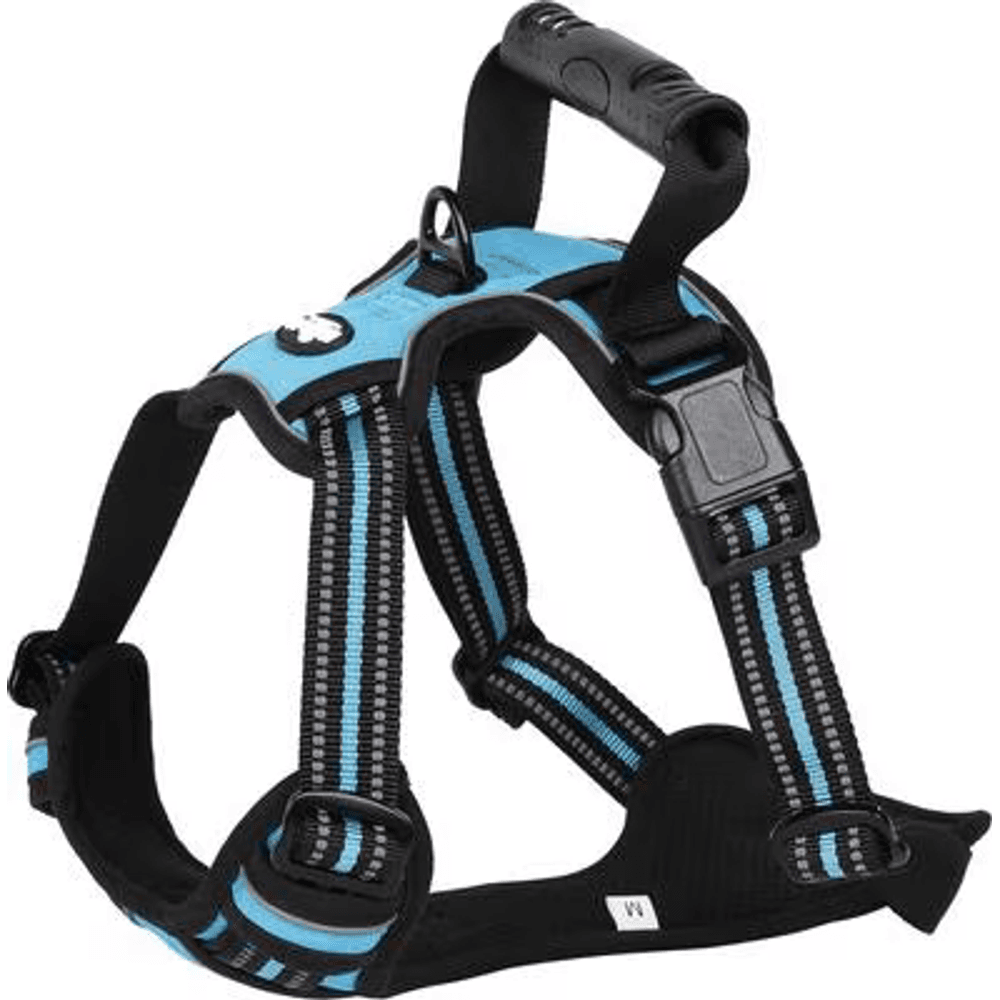
A padded, reflective no-pull harness that spreads leash pressure across the chest instead of the throat, the switch most vets recommend for a dog with a cough, a collapsing trachea, or any airway irritation so the leash never presses on
Petful may earn a commission when you click through to Chewy, at no extra cost to you.
Ask whether the stated measurements belong to mature dogs and how they were taken. A weight recalled from puppyhood is not an adult measurement. If one parent is already a Poochon or another mix, ask for that ancestry too; 'Poodle cross' alone leaves out information needed to interpret the estimate.
What F1 and F1b can tell you
In crossbreed listings, F1 commonly describes a first-generation cross between the two parent breeds. F1b commonly describes a backcross, often to a Poodle. Ask the seller to name the actual parents because marketing usage is not a complete pedigree. Neither label specifies a puppy's eventual height, weight, curl or shedding.
For your decision, a documented family history is more useful than choosing a generation label in isolation. Compare actual adults related to the puppy when that information is available. If previous litters are cited, ask for a range of outcomes rather than a photograph of only the smallest adult.
- Record both parents' adult height and weight.
- Ask which Poodle variety appears in the pairing.
- Separate an estimate based on relatives from a guaranteed sales claim.
- If you have a strict housing size limit, discuss the uncertainty before reserving a puppy.
How to measure your Poochon
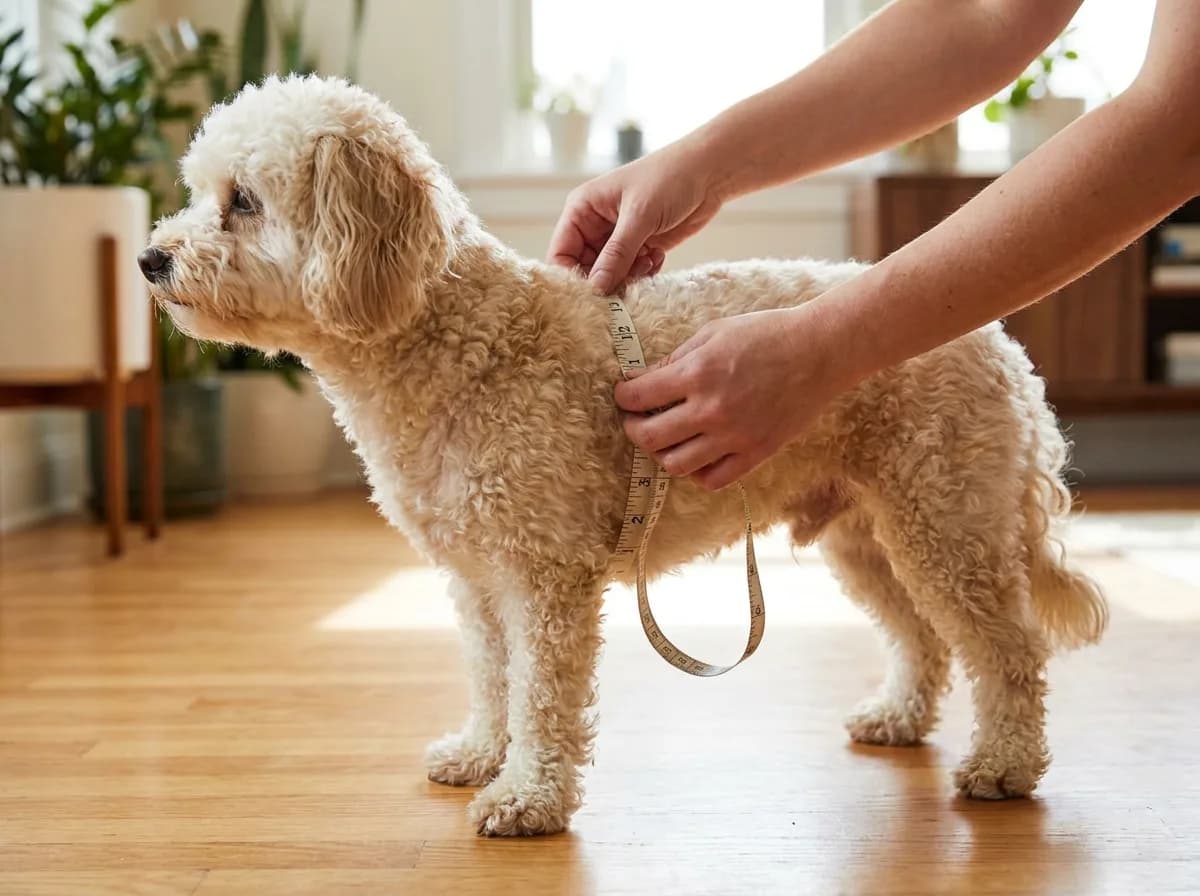
For chest girth, most harness guides use the widest part of the chest just behind the front legs. Follow the particular maker’s landmarks and allowance rather than adding your own margin. Keep the tape flat against the coat without squeezing, record the measurement and compare it with that exact product’s chart. Skeletal growth, a fluffy appearance and excess body weight are separate observations; record height and girth alongside weight rather than guessing from the coat.
Measure when the dog is calm, with four paws on a level surface and the body in a natural position. Use a flexible tape for girth without tightening it into the coat. Repeat a measurement if the dog twists or sits rather than trying to read it while restraining an awkward pose.
Petful may earn a commission when you click through to Chewy, at no extra cost to you.
| Measurement | Method | Useful for |
|---|---|---|
| Standing height | Measure to the shoulder area with the dog standing naturally | Following height changes and checking usable space |
| Chest girth | Follow the product maker’s specified measuring point | Harness sizing and adjustment |
| Body length | Use the landmarks specified by the equipment maker | Bed or carrier comparisons |
| Weight | Use a consistent suitable scale where possible | Growth records and product weight limits |
| Body condition | Ask the veterinary team to demonstrate assessment | Interpreting weight rather than treating it as size alone |
A Sherpa Original Deluxe carrier may suit some Poochons in the appropriate size, but compare the actual interior dimensions before buying. The dog needs room to stand, turn and lie naturally as appropriate for the product and journey. A stated weight limit does not establish comfortable fit.
For travel, verify the provider’s requirements for your exact route. A carrier described as suitable for airline use is not accepted automatically for every dog and journey. Keep the dog’s comfort, product dimensions and transport rules as three separate checks.
Measure the frame, then assess body condition
For standing height, measure from a level floor to the top of the shoulders, not to the ears or the highest point of a fluffy head. Have the dog stand naturally rather than stretching upward for a treat. For equipment, use the manufacturer's specified landmarks: a bed's usable sleeping space and a harness's chest measurement answer different questions.
The WSAVA nutrition resources separate body condition from body weight. In a fluffy dog, looking down at the coat is not enough; ask the veterinary team to show how ribs, waist and abdominal shape are assessed without pressing uncomfortably. A haircut can reveal a narrower outline without the dog having lost any weight.
Why two equally heavy Poochons may need different sizes
One dog may have a longer body and narrow chest while another is shorter and broader. They can share a scale reading and still need different harness adjustments or sleeping space. Compare each product against the relevant measurement, then observe the dog using it. Do not transfer the size label from a previous pet or a different brand.
Write the measurements on your phone before shopping and record whether the chart asks for an actual body measurement or includes an allowance. Adding extra room twice can produce an insecure harness. For a bed, usable area inside the bolsters matters more than the largest outside dimension. For a carrier, confirm interior height and length as well as the load limit.
Choosing equipment for the adult dog
Buy a harness for current measurements rather than a hoped-for final weight. A puppy should not have to wear an insecure oversized harness while growing into it. Recheck adjustment during growth and after a major change in coat length or body condition.
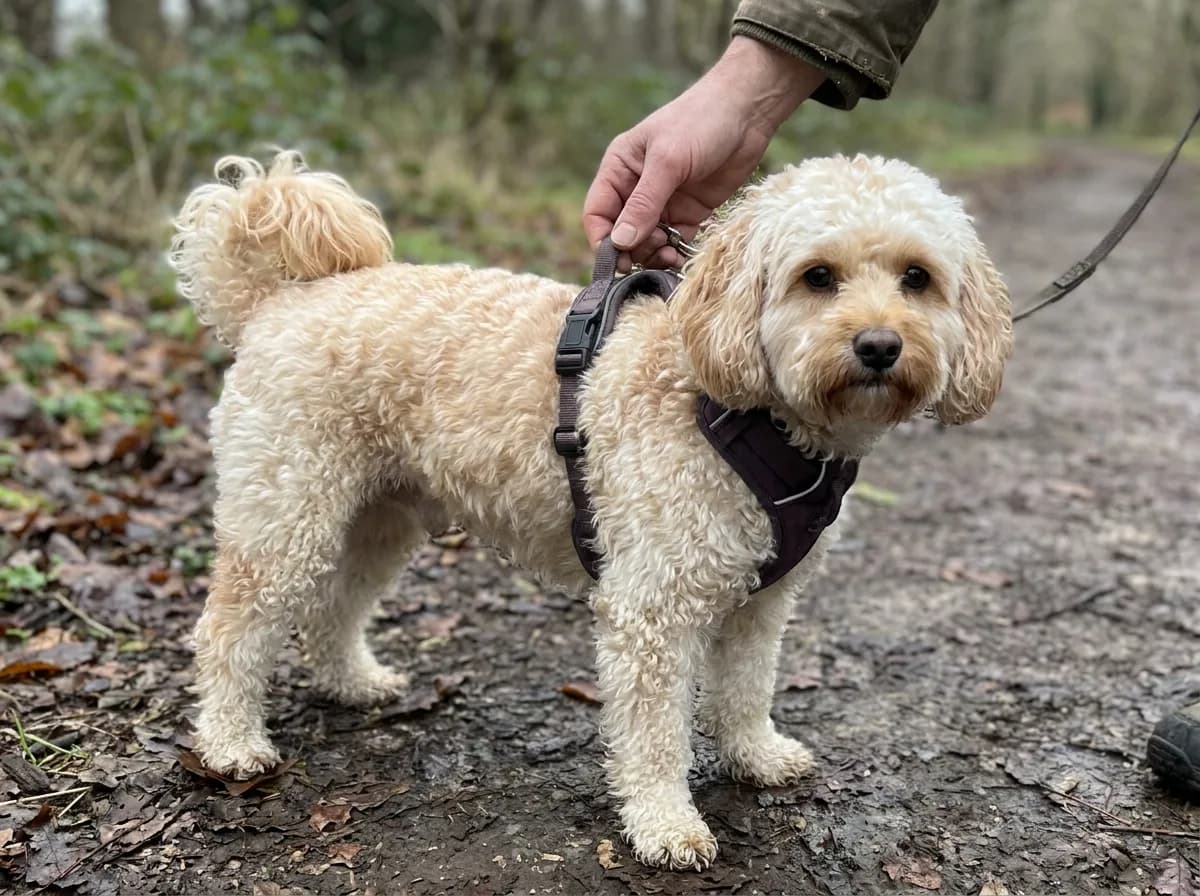
The EliteField padded reflective small-dog harness is one option to compare with chest and neck measurements. Follow its size guide, secure all fasteners and watch the dog move and turn in a safe space. “Small” is a product label, not a universal Poochon size.
WebVet’s harness-versus-collar guide explains the different purposes and fit considerations. Equipment should support comfortable walks, while training helps the dog learn how to move with you. Do not rely on a tighter adjustment as a substitute for addressing pulling or distress.
Reassess rather than replacing everything automatically
Check whether the bed still provides comfortable sleeping space and whether the carrier remains suitable. If an item fits and is in good condition, reaching a birthday does not automatically require a new one. Replace or adjust according to the dog’s actual needs.
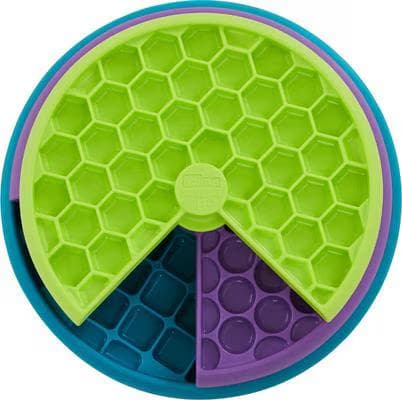
Keep toys appropriate to the individual’s size and play style. A Nina Ottosson Lickin’ Layers puzzle is a supervised activity option to introduce at an easy level. Make sure food remains accessible, watch for chewing on the toy and account for food used in the day’s appropriate intake.
Is a Poochon a teddy bear dog?
“Teddy bear dog” is an informal appearance description often applied to small fluffy mixes, including Poochons. It is not a separate standardized breed or a guarantee of adult size. A rounded face and particular haircut can strengthen that impression without changing the dog’s ancestry or dimensions.
Our Poochon haircut guide shows how face shape and body length affect the finished look. Choose a maintainable style with the groomer rather than assuming that every adult will naturally resemble the same puppy photograph. Coat texture and comfort remain the practical priorities.
Living with your adult Poochon
Adult size answers only part of the ownership question. Our Poochon breed guide covers training, company, barking and routine coat care. A small adult still needs suitable activity and attention, and a manageable frame does not guarantee easy time alone.
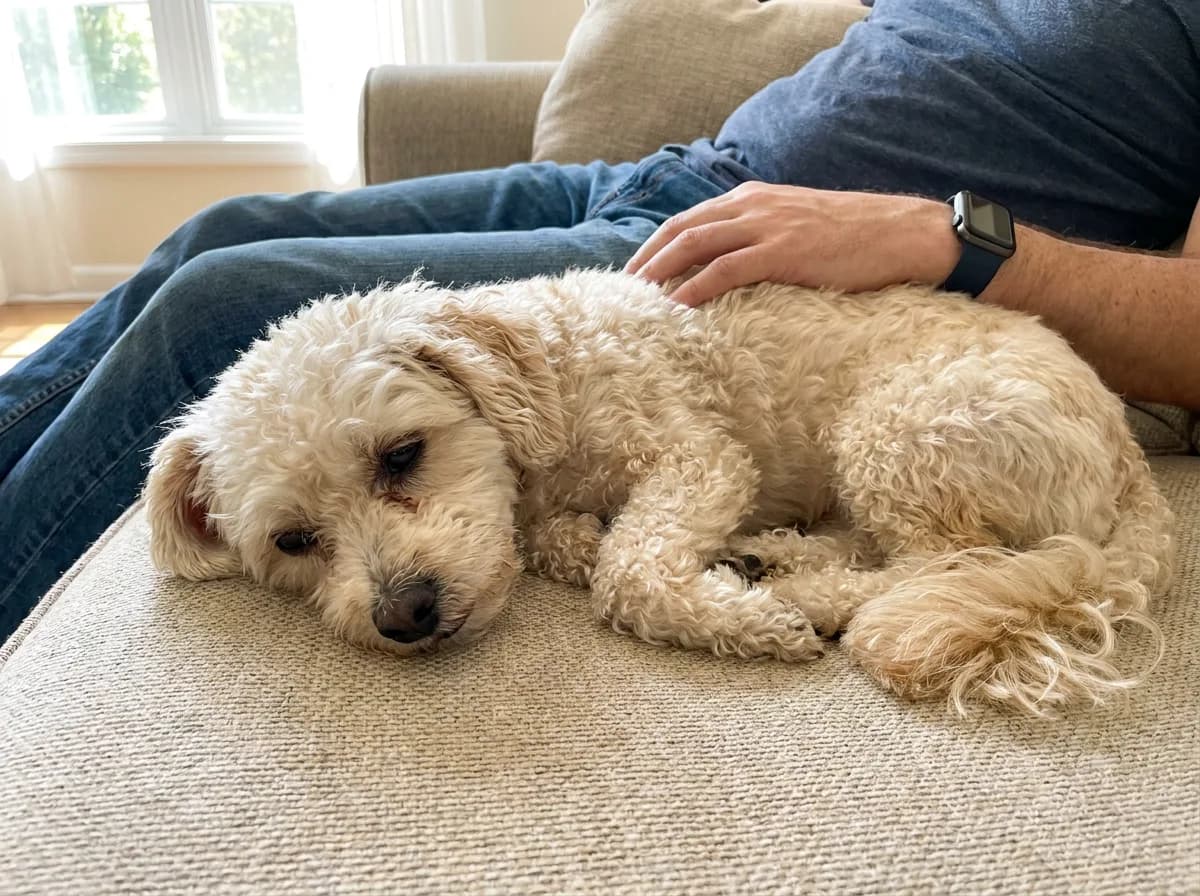
As the dog matures, review the routine as well as equipment. A comfortable walk, familiar resting place and predictable handling can matter more than adding accessories. If appetite, movement or behavior changes, seek individual advice instead of assuming the change follows from reaching adulthood.
Keep records simple enough to use. Date measurements, note important diet or activity changes and bring questions to the veterinary practice. The purpose is to understand the dog’s development and needs, not to turn every small fluctuation into a problem.
A larger-looking outline can come from coat volume as well as frame. The Bichon grooming guide explains how to check beneath a fluffy coat without confusing fullness with body size. Record measurements before comparing photographs of dogs in different clips.
Poochon growth questions
No. A single puppy weight does not guarantee final size. Parent measurements, known ancestry and the individual growth trend provide more useful context, but estimates still have limits. Ask how a prediction was made rather than relying on one early weigh-in.
Buy for current measurements and secure fit, with suitable adjustment room. An oversized adult harness may allow a puppy to slip out or move uncomfortably. Recheck fit as the puppy grows and replace it when the product can no longer fit correctly.
No. Toy may refer to Toy Poodle ancestry or a seller’s description of expected size. Ask for both parents’ adult measurements and the actual pairing. The AKC’s Toy Poodle height definition applies to Poodles; it does not create a guaranteed height or weight limit for their mixed-breed offspring.
Not necessarily. Texture, fullness and the effect of a haircut can change as the dog matures. Use the parents and related adults as context while accepting variation. Ask the groomer to assess the current coat rather than choosing an adult style entirely from a very young puppy photograph.
No reliable rule lets you predict an individual Poochon’s adult size from sex alone. Parent size, ancestry and individual development also matter. Compare actual family measurements and the puppy’s trend; do not treat the smallest female or largest male in one litter as a universal pattern.
An adult’s current weight can be checked against the written rule, but a puppy’s final weight remains an estimate. Confirm whether the restriction concerns weight, dimensions or another condition before committing. If the limit is strict, choosing an adult with known measurements reduces one important uncertainty.
Not on that observation alone. Discuss life stage, body condition, growth and the current diet with your veterinary team. Height can stabilize while other development continues, and later weight gain is not automatically healthy growth. Bring feeding amounts and your measurement record to the discussion.
BVMS, MRCVS
Dr. Pippa Elliott, BVMS, MRCVS, is a veterinarian with nearly 30 years of experience in companion animal practice. Dr. Elliott earned her Bachelor of Veterinary Medicine and Surgery from the University of Glasgow. She was also designated a Member of the Royal College of Veterinary Surgeons. Married with 2 grown-up kids, Dr. Elliott has a naughty Puggle named Poggle, 3 cats and a bearded dragon.
Sign up for expert-backed reviews and safety alerts all in one place.