Patterdale Terrier: Size, Temperament, and Breed Guide
Explore the Patterdale Terrier's working background, adult size, care needs, and household commitments, with practical guidance on records, equipment fit, exercise, and choosing an individual dog.

BVMS, MRCVS

Petful is reader supported. As an affiliate of platforms like Amazon and Chewy, we may earn a commission when you buy through links on this page. There is no extra cost to you.
The Patterdale Terrier is a compact British working terrier developed from Fell Terrier stock in northern England. Its small frame can be misleading: the breed was selected for demanding work, and an owner needs to plan for activity, training, and secure everyday management. This is a dog to choose for the life you can offer it, not simply because it will fit into a small home.
The United Kennel Club, or UKC, describes a sturdy, flexible dog standing 10 to 15 inches at the shoulder. Within that range, the individual dog's build, experience, and behavior matter more than a label promising an easy miniature companion.

Sign up for expert-backed reviews and safety alerts all in one place.
What is a Patterdale Terrier?
A Patterdale Terrier is a small, active working terrier with roots in the Fell Terriers of northern England. The UKC breed standard emphasizes practical working ability, a compact build, and strong prey drive. Those working terrier instincts make secure everyday management a central ownership consideration, even for a dog that will live entirely as a companion.
| Breed characteristic | What it tells you | What you still need to assess |
|---|---|---|
| Compact working build | A small dog developed for demanding physical tasks | The individual's strength, fitness, and handling needs |
| Working terrier instincts | Chasing, investigating, and persistence deserve planning | Responses to wildlife, other pets, and household distractions |
| UKC height guidance | Adults are described as 10 to 15 inches at the shoulder | Actual measurements and body condition, not a universal weight |
| Secure everyday management | Gates, equipment, and supervision matter | Whether your ordinary routine can maintain those safeguards |
Working background and recognition
The UKC history traces the breed mainly to black, smooth-coated Fell Terriers used in the harsh terrain of northern England. This background explains the emphasis on a strong but flexible body. It does not mean a pet should be encouraged to confront wildlife or sent into burrows. An owner can provide appropriate searching and training activities without recreating dangerous working situations. A Patterdale Terrier is not a Pit Bull; the UKC maintains separate breed identities. If an advertisement combines those names, ask whether it describes known mixed parentage or an informal label, then check the dog’s records rather than assuming the appearance settles its ancestry.
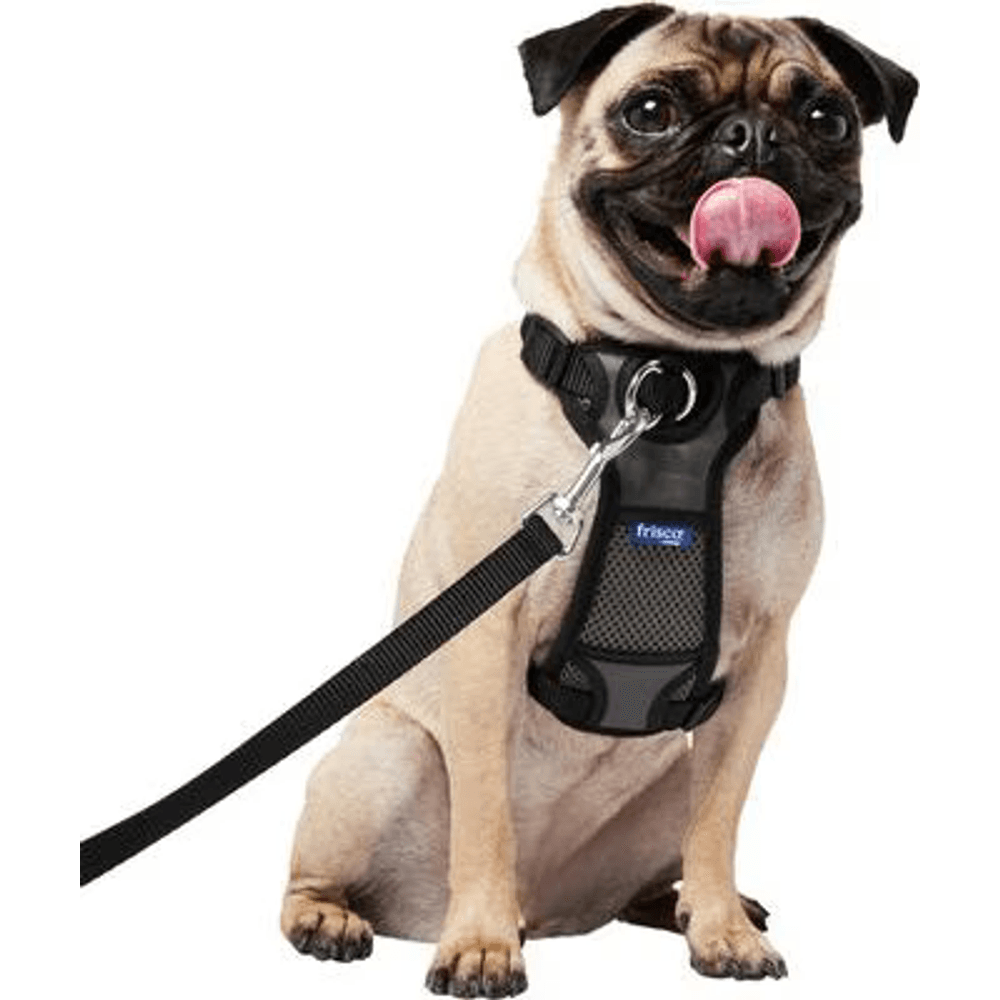
Check this Small harness against actual measurements and the current size chart. Adjust and test indoors; no-pull wording is not an escape-prevention guarantee.
Petful may earn a commission when you click through to Chewy, at no extra cost to you.
UKC recognized the Patterdale Terrier on January 1, 1995. It is not listed among the American Kennel Club's recognized breeds. A registration claim therefore needs the registry's name, not just the word “registered.” Ask which organization issued the paperwork and verify the individual dog's identity against it.
A Frisco padded harness is one option to compare with the dog's measurements, but the product's “small” size is not a breed recommendation. Check the size chart, adjustment range, and fit during movement before use. A no-pull label also does not guarantee that a dog cannot escape or that pulling will disappear without training.
- A breed standard describes the type and intended characteristics.
- A pedigree records documented ancestry; it does not predict every behavior.
- Registration identifies a registry relationship, not a complete health assessment.
- A bloodline name does not replace records for the actual dog and its parents.
What an active household needs to provide
An active household is one that can consistently meet the dog's needs, not necessarily one with the largest garden or most ambitious weekend walks. Consider who will provide weekday outings, teach useful skills, and supervise access to doors and other animals. A small dog can still make those arrangements demanding when it is persistent or strongly interested in movement outside.
The practical question is whether the people walking the dog can manage its response to the environment. Use a six-foot traffic leash for controlled walking if its weight and fittings suit the dog. It is not a long training line, and an extra handle does not make a dog safe to release near wildlife or roads.
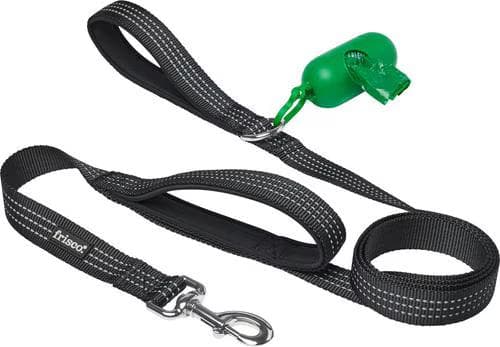
Six-foot leash for supervised everyday walks when the clip and weight suit your dog. Not a long line for distance recall.
Petful may earn a commission when you click through to Chewy, at no extra cost to you.
Start with the practical equipment and routines:
- Check doors, gates, and gaps that the particular dog could squeeze through.
- Fit a collar and harness to actual neck and chest measurements.
- Arrange a resting place where the dog can withdraw from activity.
- Agree on who handles the dog when visitors arrive or gates are opened.
Patterdale Terrier size and working build
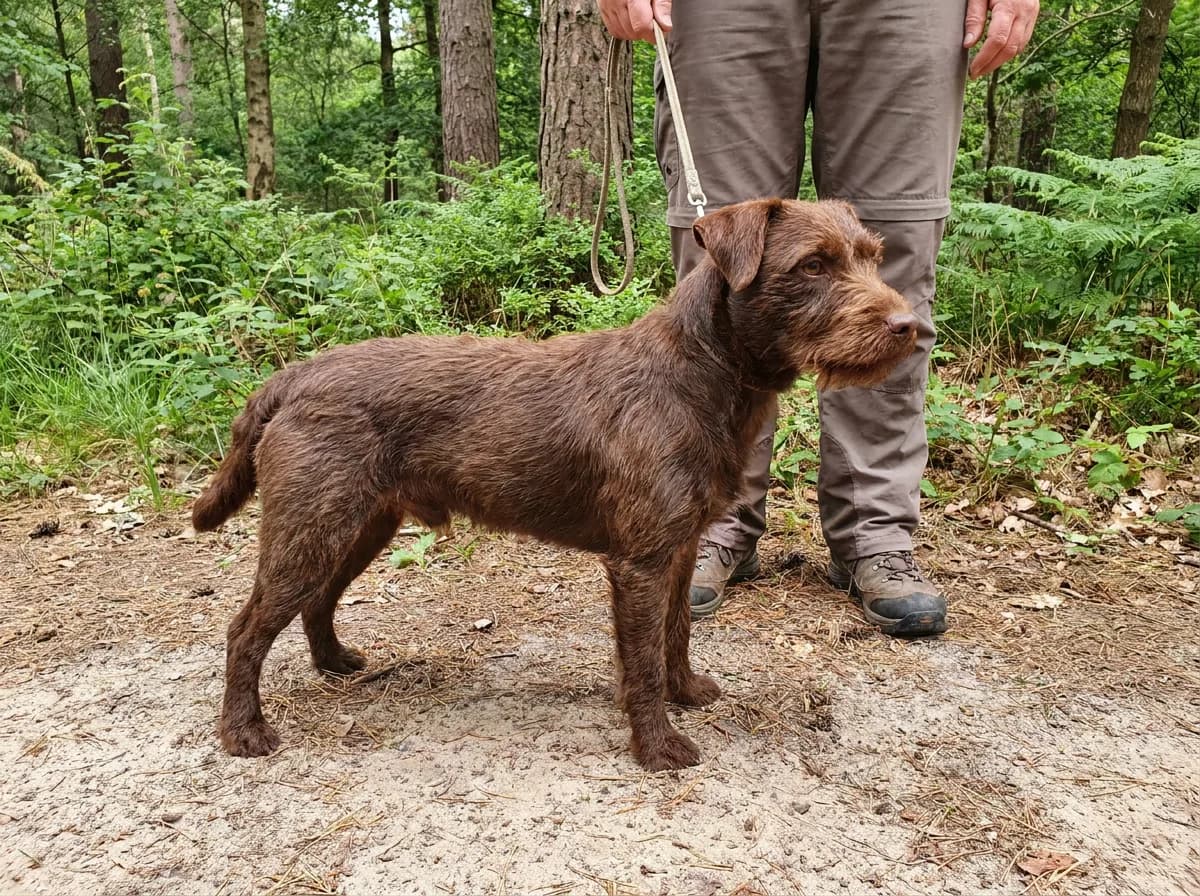
The UKC height range of 10 to 15 inches at the withers is about 25 to 38 centimeters. The withers are the top of the shoulders, not the top of the head. A full-grown Patterdale at either end of the range can look quite different in a photograph, especially when the camera angle or coat texture changes the impression.
Recognizing the dog beyond a photograph
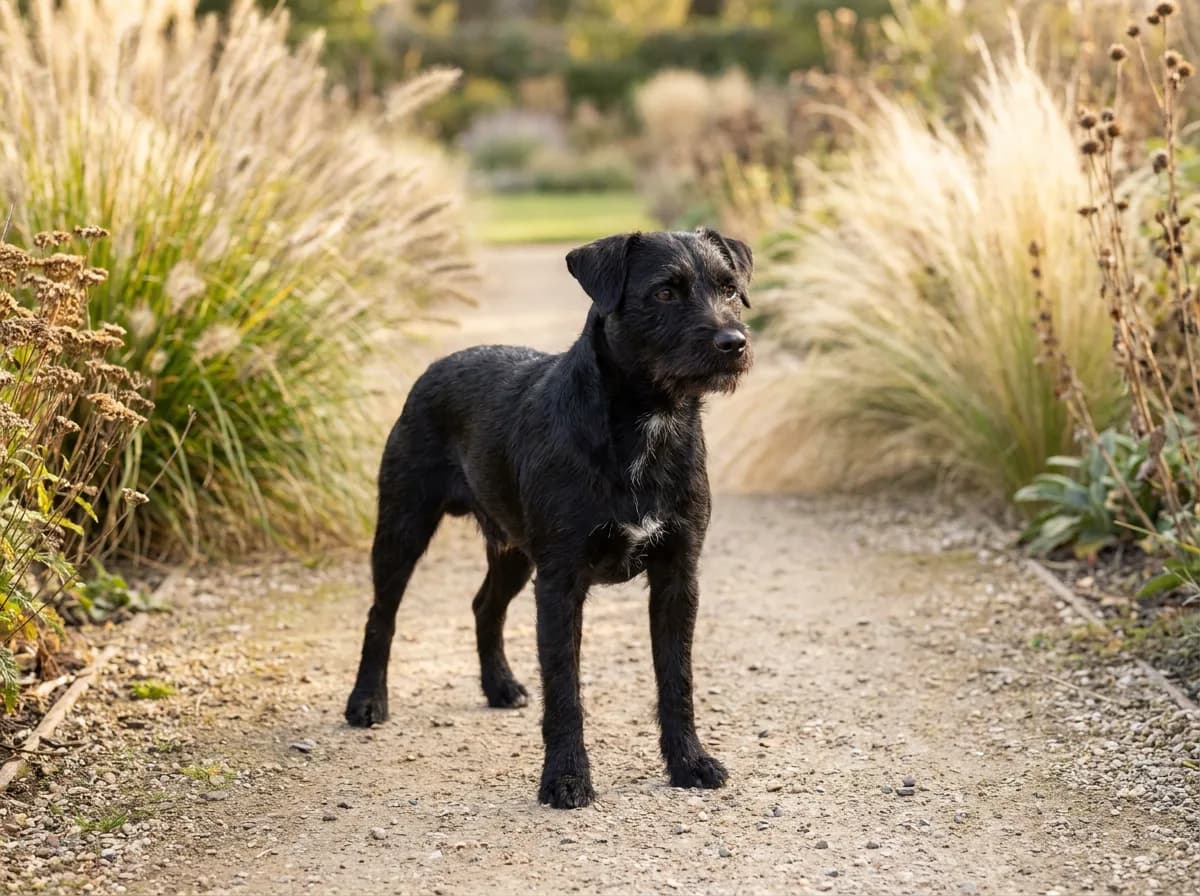
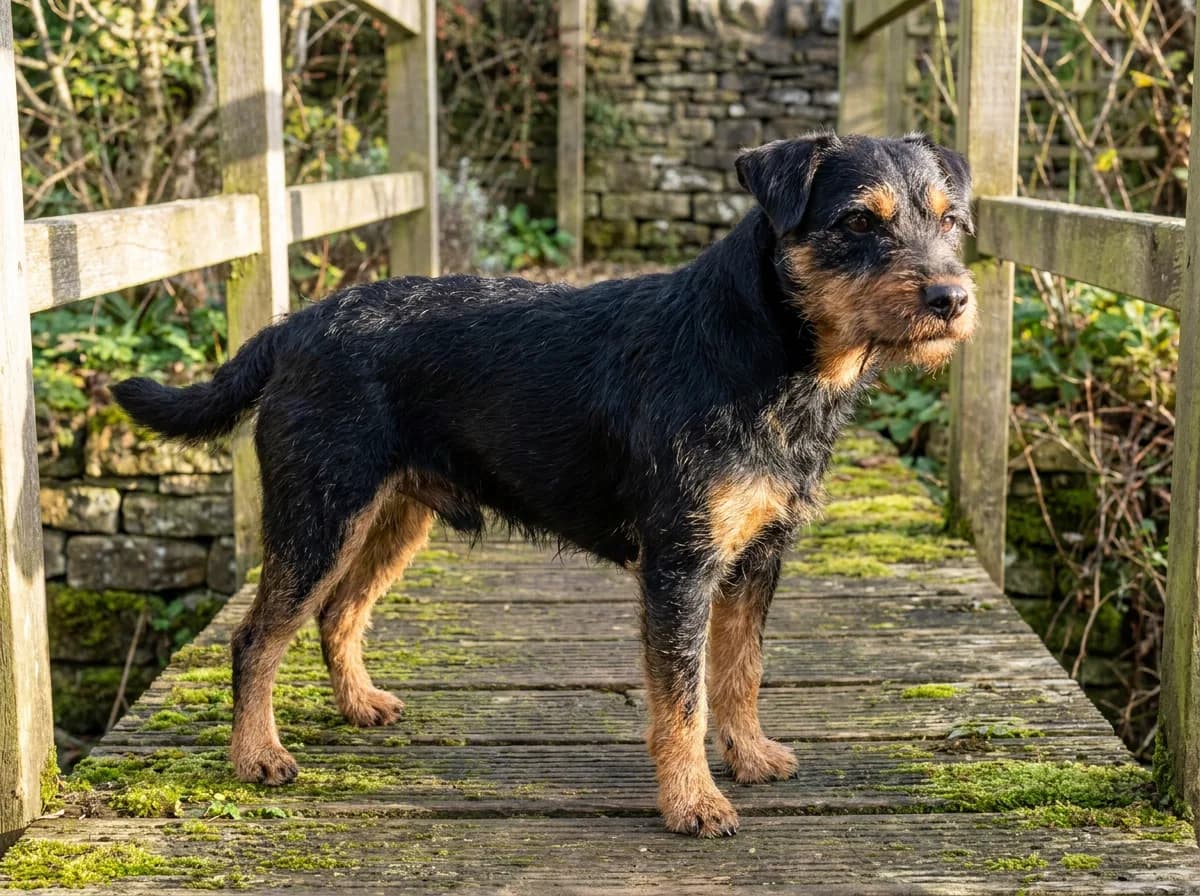
The Patterdale's appearance is compact and balanced, with a strong head, folded triangular ears, and a sturdy body that should remain flexible. Its coat can be smooth, broken, or rough. A photograph may show some of those features, but it cannot authenticate ancestry or demonstrate how the dog moves, handles contact, or responds to everyday situations.
When someone asks what a Patterdale Terrier looks like, show more than a headshot. A clear full-body view helps explain the breed's proportions; a moving dog gives additional information about comfort and coordination. Neither a black coat nor a scruffy face is exclusive to this breed. For a rescue dog of uncertain history, preserve that uncertainty instead of converting a visual resemblance into a confirmed pedigree.
The standard does not prescribe a single weight in pounds or kilograms. It asks for weight proportionate to height and a fit working condition without excess fat. That is why a Patterdale Terrier weight chart that assigns every adult the same target is less useful than an assessment of the individual dog's frame and body condition.
- 1Small size does not remove working terrier instincts.
- 2Use measured fit and body condition rather than a universal ideal weight.
- 3Secure everyday management matters at every point in the breed's height range.
Measuring for real decisions
Measure the dog when choosing equipment rather than using a breed average. For a harness, follow the manufacturer's instructions for chest girth and any additional measurements. For a crate or travel carrier, consider whether the dog can stand normally, turn around, and lie comfortably, as well as the product's weight limit and intended use. The sources used here do not establish how fast every Patterdale Terrier can run or how high it can jump; there is no verified breed-wide speed or jump-height figure to use as a containment guarantee. Neither a small frame nor a nominal fence height proves containment. Check the individual dog’s climbing, jumping and gap-finding behavior and use secure supervised exercise arrangements.
A practical measurement record can include:
- Shoulder height, taken while the dog stands naturally on level ground.
- Current weight, with the date and scale used.
- Chest and neck measurements for the specific equipment being considered.
- A note about fit, movement, and any rubbing after use.
Repeat measurements as a puppy grows or an adult's condition changes. Do not buy a crate merely because its packaging lists terriers, and do not tighten a harness to compensate for the wrong shape or size. If a dog can back out of its equipment, stop using that arrangement until the fit and design have been addressed.
Weight, growth and miniature labels
An average weight, even when drawn from a reliable sample, would not identify every Patterdale's ideal weight. Your veterinarian can assess fat and muscle together with the dog's medical history. Keep a dated weight record so a change is visible; an isolated number cannot show whether a dog has always had that build or recently lost condition.
The UKC standard does not divide Patterdales into miniature, toy, and standard varieties. A “mini Patterdale” listing should therefore prompt questions about the individual dog's age, parentage, and expected development. Do not assume that a small puppy will remain unusually small or that a miniature label predicts lower exercise needs.
For puppy growth, ask for actual age and weight records rather than a smooth-looking projected growth chart. A breeder can discuss the parents and earlier related litters, but that context is not an exact adult-size guarantee. Avoid restricting a puppy's food to keep it small; growth and feeding concerns belong in a veterinary discussion.

Small training rewards when ingredients suit your dog. Divide into appropriate pieces and count them in daily food intake.
Petful may earn a commission when you click through to Chewy, at no extra cost to you.
Handling a compact, determined dog
Before choosing a Patterdale, rehearse the ordinary journey from the front door to a walk. Consider stairs, shared corridors, passing dogs, and the return home with wet equipment. The breed's compact size may make transport easier, while its interest in the surroundings can still require attention. Do not confuse ease of lifting with ease of everyday handling.
Health, lifespan, and everyday care
A Patterdale needs the same preventive care, appropriate nutrition, and attention to change as other dogs. A reputation for toughness is not evidence that pain or illness will be obvious, and a working background does not establish freedom from inherited problems. Ask about the individual dog's veterinary history and the health information available for close relatives.
Dogs Trust's Patterdale guide gives a broad lifespan description of typically ten or more years. That is planning guidance, not a precise average or a guarantee. It does not establish separate life expectancies for male and female Patterdales. An unusually old dog is also not a reliable forecast for a puppy.
Health records worth discussing
When assessing a puppy or adult, ask for records you can review with your own veterinarian. The useful information is specific to the dog and its family, not a list of diseases copied from an unsourced breed profile. If a breeder reports testing, ask what was tested, which dog was tested, when, and what the result means.
Bring these questions to the conversation:
- Has the dog had injuries, ongoing medication, surgery, or recurring symptoms?
- Are vaccination and parasite-control records available?
- Have close relatives had diagnosed inherited conditions or early deaths?
- Which examinations or tests were performed, and can the original results be checked?
Common concerns such as dental disease, skin irritation, or a change in movement need individual assessment; they should not be dismissed as normal terrier behavior. This guide does not establish a ranked list of the most common Patterdale health problems. A new symptom matters because of what is happening to that dog, even if it is absent from a breed list.
Exercise with a purpose
Patterdale Terrier exercise needs should include opportunities to investigate and learn, with an intensity suited to age, fitness, and health. A routine built only around exhausting the dog misses the value of calm exploration and rest. Discuss an appropriate starting routine with the current carer, and make gradual changes rather than imposing a demanding schedule immediately.

Gentle loose-hair care for a compatible smooth coat. Stop if it pulls or causes discomfort; rough coats may need different tools.
Petful may earn a commission when you click through to Chewy, at no extra cost to you.
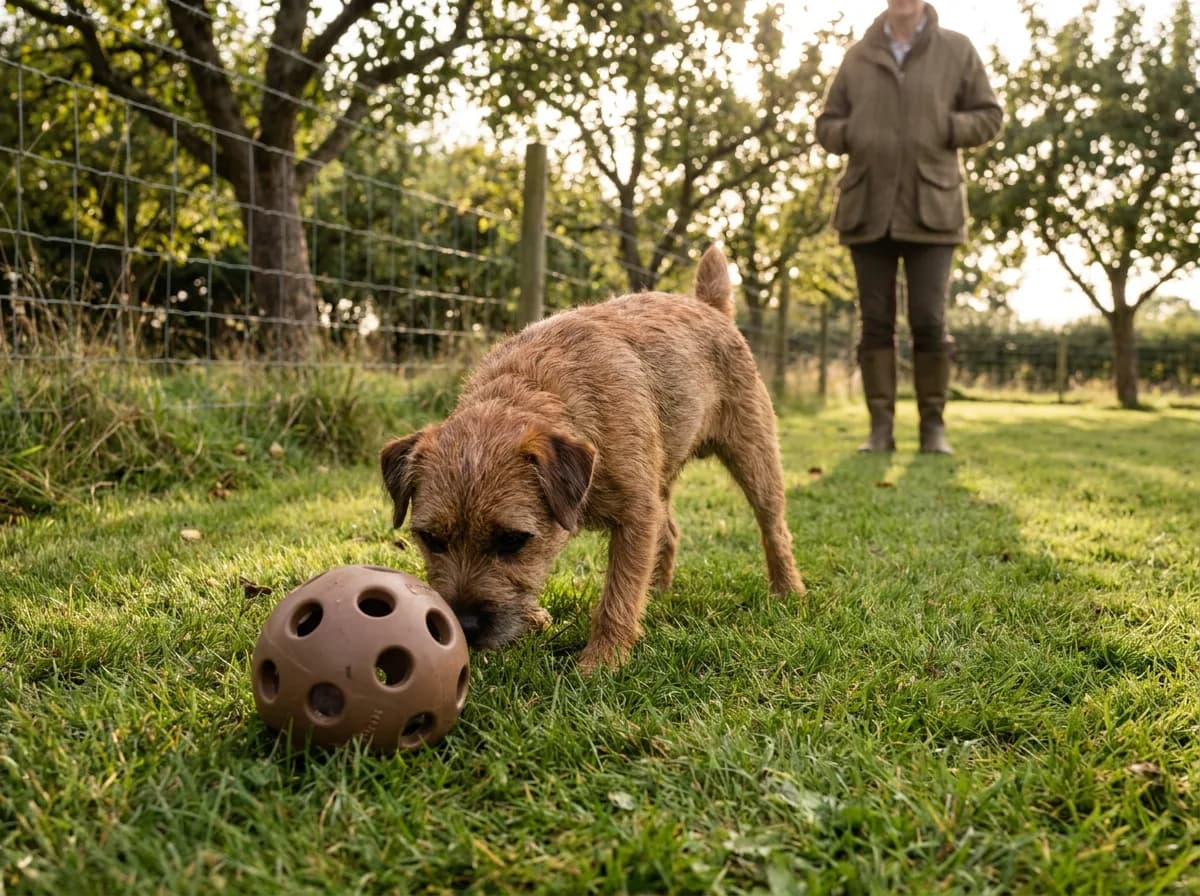
An easy supervised search game can begin with a few pieces of the dog's usual food or small Pet Botanics training rewards placed where they are simple to find. Include rewards in the daily food allowance. Use a safe area, keep other pets separate, and stop before the activity becomes frustrating. Searching for food provides an outlet without using live animals or encouraging the dog to enter holes where you cannot reach it.
Rotate activities according to the dog's response:
- Walks that allow sniffing as well as moving from place to place.
- Brief reward-based sessions for useful household skills.
- Supervised exploration or play in a genuinely secure area.
- Quiet time after activity, with an undisturbed place to sleep.
If the dog has trouble settling, review the whole day rather than assuming it needs endless additional running. Pain, distress, overstimulation, and unmet needs can look similar from a distance. A sudden change warrants veterinary advice; ongoing training difficulties can also benefit from a qualified reward-based professional.
Food and body condition
There is no single best dog food for every Patterdale Terrier. Choose a complete diet appropriate to the dog's life stage and medical needs, then adjust the amount according to body condition and your veterinarian's advice. The WSAVA nutrition resources help owners discuss nutritional assessment and evaluate feeding information.
Record the actual food, portions, and extras rather than relying on a vague description such as “one bowl.” Include training rewards in the daily intake. If two family members feed the dog, use one shared record or measured daily allowance so the same meal is not given twice. A smaller dog can still receive a substantial amount of extra food through frequent rewards.
Grooming and routine handling
A smooth coat can benefit from gentle loose-hair removal with a grooming glove or curry brush. A rough or broken coat may need a different approach; choose tools for the coat actually present and ask a groomer to demonstrate if you are unsure. More force is not a solution when a dog dislikes a tool or the skin looks irritated.
Use short, positive handling sessions to become familiar with the dog's normal appearance. Check paws after outings, notice changes around the ears or skin, and ask your veterinarian about tooth care. Those regular observations help you describe a problem accurately. Grooming is also a chance to practice comfortable handling, rather than a task that must be completed in one long session. For comfortable routine toothbrushing, a Virbac dual-ended dog toothbrush and Virbac C.E.T. poultry dog toothpaste are options to assess with your veterinary team.
Finding a puppy or adult Patterdale
A puppy offers the opportunity to build routines from the beginning, while an adult may come with useful observations about its established needs. Neither option removes the need to check the source, records, and placement terms. A rescue's description should distinguish known history from an appearance-based breed estimate, and a breeder should explain how the particular litter is being raised.
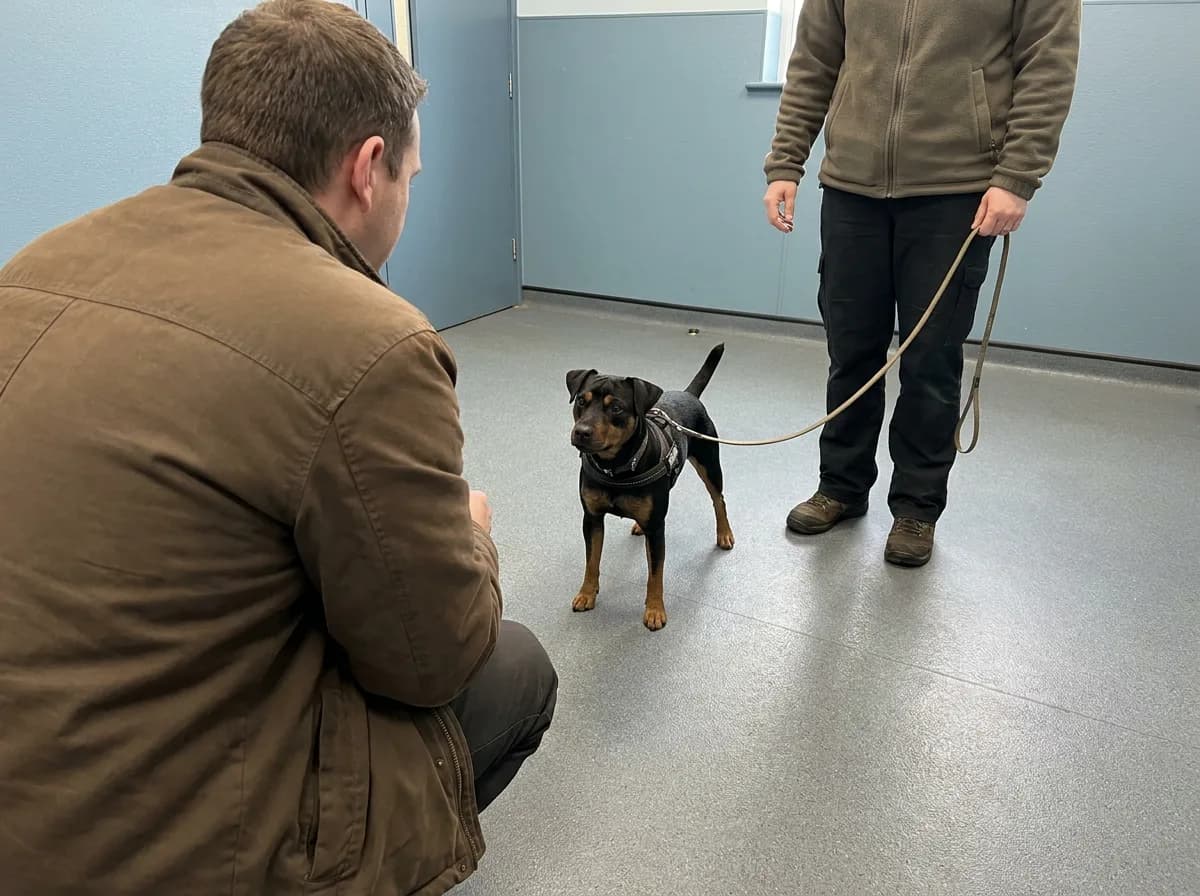
Our Patterdale Terrier puppies guide covers breeder questions, adoption sources, price comparisons, and first-year preparation. For adoption searches, the Petful adoption center is a starting point; availability and breed labels need confirmation with the organization responsible for each dog. Meet the individual and ask about support if the placement does not work out.
Patterdale mixes and ancestry uncertainty
A dog described as a Patterdale mix may have documented parents, a reported history, or only a visual breed guess. Those are different levels of information. Cross names such as Patterjack do not establish a uniform adult size or temperament, and a mix should not be expected to inherit only the traits an owner prefers.
The Patterdale Terrier mixes guide explains common labels and the questions they leave unanswered. Use actual size, behavior, health records, and the known family history to make a placement decision. Do not treat a cross label as proof that a dog will be quieter, easier with pets, or safer off leash.
Recognizing Patterdale coats
Smooth, broken, and rough describe coat texture and length rather than different guaranteed personalities. Black is a familiar appearance, but the UKC standard allows other colors as well, with specific limits on white markings. A long-haired sales description may be an imprecise way of referring to a rough coat, so ask for clear pictures and a description of its actual texture.
Our Patterdale Terrier coats and colors guide separates those terms and explains their care implications. Use it to understand the coat you are seeing, while keeping ancestry verification and household suitability as separate decisions.
Training and household fit in detail
Living comfortably with a Patterdale requires more than admiring its energy. Discuss time alone, responses to other dogs and cats, barking, and how the household will maintain supervision. Children need adult guidance, and the dog needs opportunities to rest away from activity. A breed description cannot promise compatibility with every person or pet.
The Patterdale Terrier temperament guide addresses those choices in detail, including prey drive and reward-based training. Use observations from the current carer to decide which skills already exist and which will need teaching. Plan support before arrival rather than expecting a particular birthday to turn an active terrier into an effortless companion.
Questions about patterdale terrier
Shaking has more than one possible cause, so context and symptoms matter. Fear can cause trembling, but do not assume a new episode is simply a breed trait. Seek veterinary help for new or persistent trembling, and urgent advice if it accompanies collapse, breathing difficulty, suspected poisoning, or loss of awareness. Note when it started and record a video if doing so is safe. PDSA's guidance explains that seizures can also involve shaking and require veterinary assessment.
The UKC account describes working Fell Terrier development, mainly from black, smooth-coated Fell Terrier stock in northern England. This is not a fixed modern two-breed cross with a universal percentage formula. A named bloodline or family pedigree can add information about a particular dog, but it should not be replaced by an invented recipe involving two modern breeds.
The UKC standard gives a shoulder-height range of 10–15 inches, about 25–38 centimeters. It does not set one ideal weight for every Patterdale; proportions and condition matter. Measure the adult dog for a harness, crate or carrier rather than buying from the breed name. The standard also does not recognize separate toy or miniature Patterdale varieties.
For the symptom distinctions behind the shaking answer, see PDSA's guidance on fear-related signs and seizures in dogs.
BVMS, MRCVS
Dr. Pippa Elliott, BVMS, MRCVS, is a veterinarian with nearly 30 years of experience in companion animal practice. Dr. Elliott earned her Bachelor of Veterinary Medicine and Surgery from the University of Glasgow. She was also designated a Member of the Royal College of Veterinary Surgeons. Married with 2 grown-up kids, Dr. Elliott has a naughty Puggle named Poggle, 3 cats and a bearded dragon.
Sign up for expert-backed reviews and safety alerts all in one place.