Patterdale Terrier Coats and Colors: Smooth, Broken, and Rough
Learn to separate Patterdale coat texture from color, compare smooth, broken, and rough hair, interpret markings accurately, and choose practical care without relying on rare-color claims.

BVMS, MRCVS
Petful is reader supported. As an affiliate of platforms like Amazon and Chewy, we may earn a commission when you buy through links on this page. There is no extra cost to you.
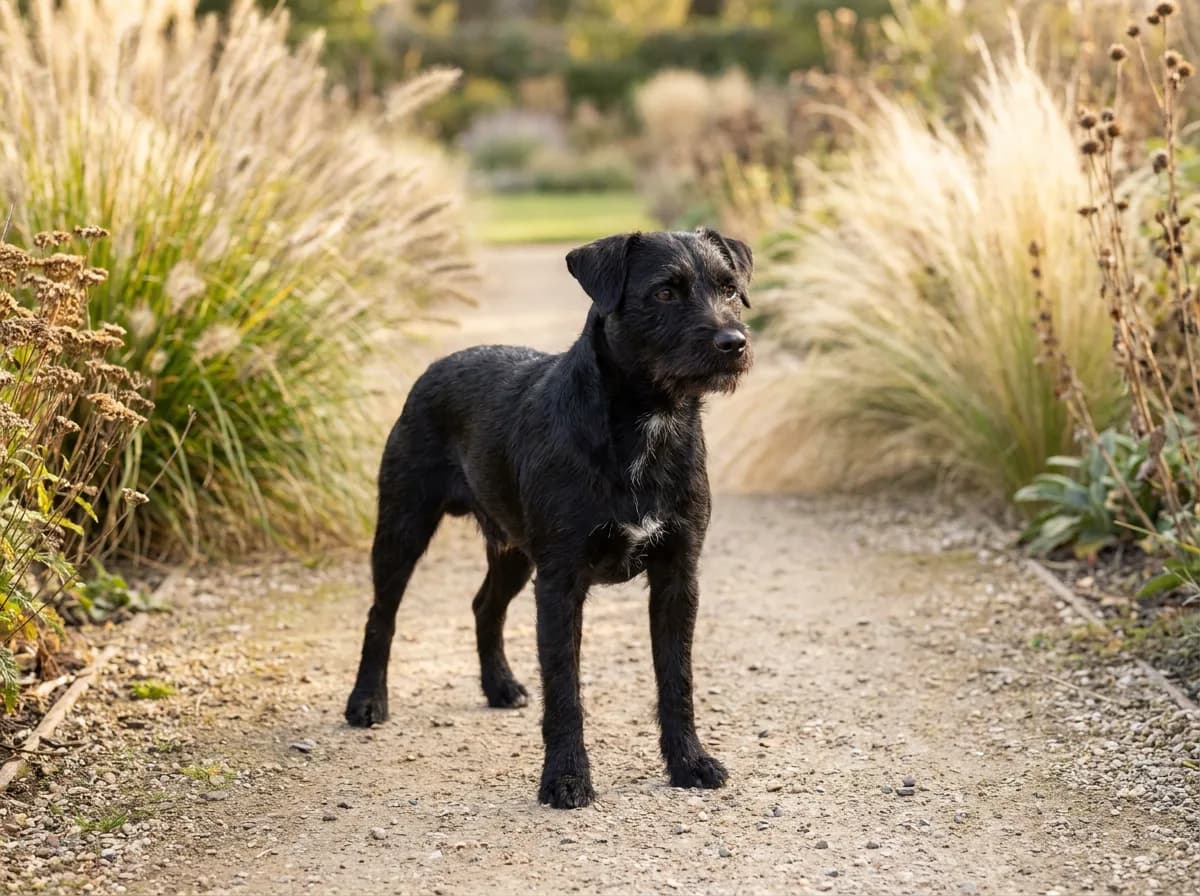
Patterdale Terrier coat types and colors describe two different things. Black, red, and liver describe color; smooth, broken, and rough describe the hair's texture and distribution. Identify those features separately and a dog becomes easier to describe without mistaking a grooming style, a photograph's lighting, or a seller's label for a breed variety.
The United Kennel Club standard provides the breed-specific reference. It is more useful here than applying Jack Russell descriptions to a Patterdale or assuming every small, wiry terrier has the same coat.

Sign up for expert-backed reviews and safety alerts all in one place.
The smooth Patterdale coat
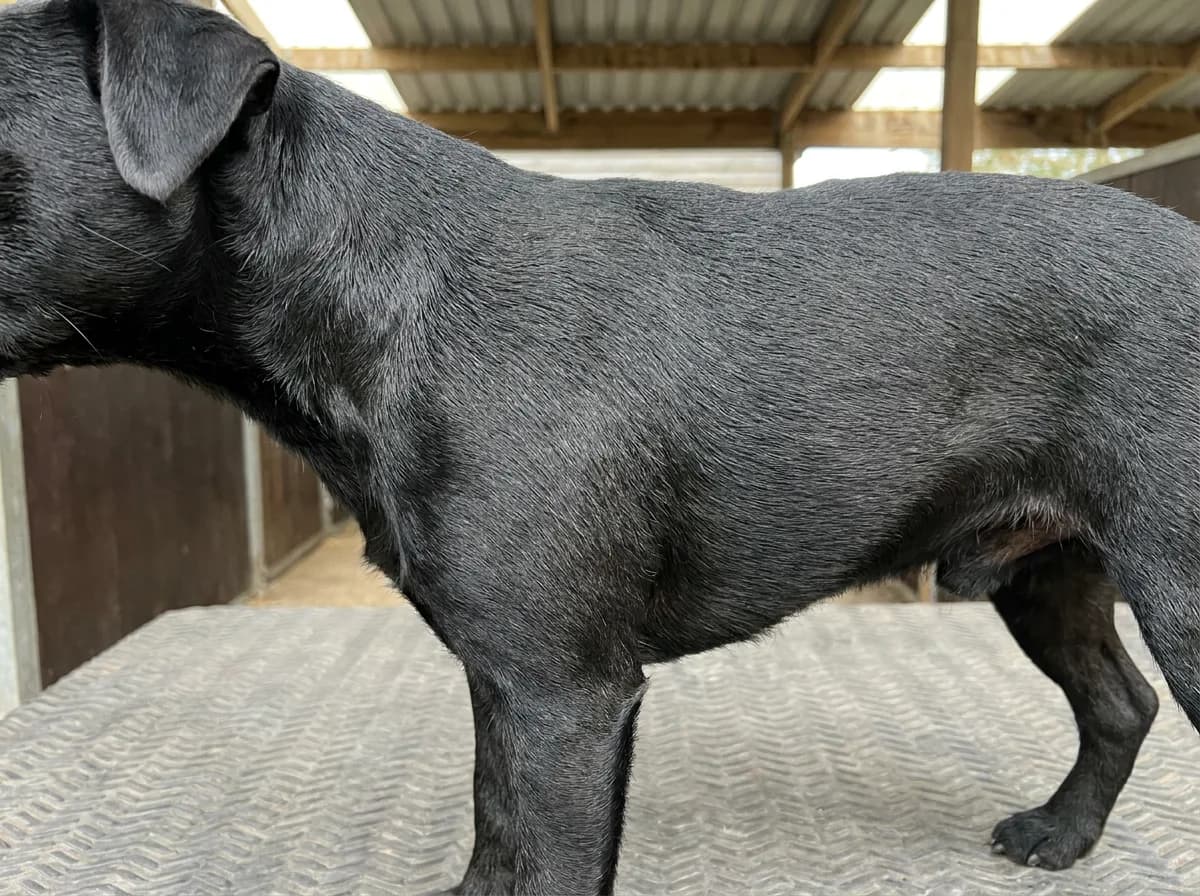
A smooth Patterdale has short, close hair with a firm texture. In the United Kennel Club standard, it is dense and stiff, without a wave. “Smooth” does not mean silky or soft, and a photograph of a shiny coat does not reveal how it feels. The standard also describes a short, dense undercoat.
| Coat description | Texture reference | What to look for |
|---|---|---|
| Smooth | Smooth dense stiff hair | A close coat without a wave; short hair does not mean soft hair |
| Broken | Broken longer guard hairs | An intermediate appearance with coarser, wiry guard hairs and variable facial furnishings |
| Rough | Rough longer coat including face | Longer coarse hair across the body, face and ears |
Use the whole dog when comparing these descriptions. A close view of the shoulder can show hair length, while a view of the face helps show furnishings. Neither a beard alone nor a particularly tidy grooming finish is enough to classify every coat confidently. Ask about recent trimming when the visible appearance does not match the description provided.
Between grooming sessions, give the dog a comfortable place to rest. The FurHaven Velvet Waves sofa bed in Large is one general home option if its usable sleeping area suits the dog's normal posture. Choose for dimensions and cover care, not a promise that a particular coat type needs a therapeutic bed.
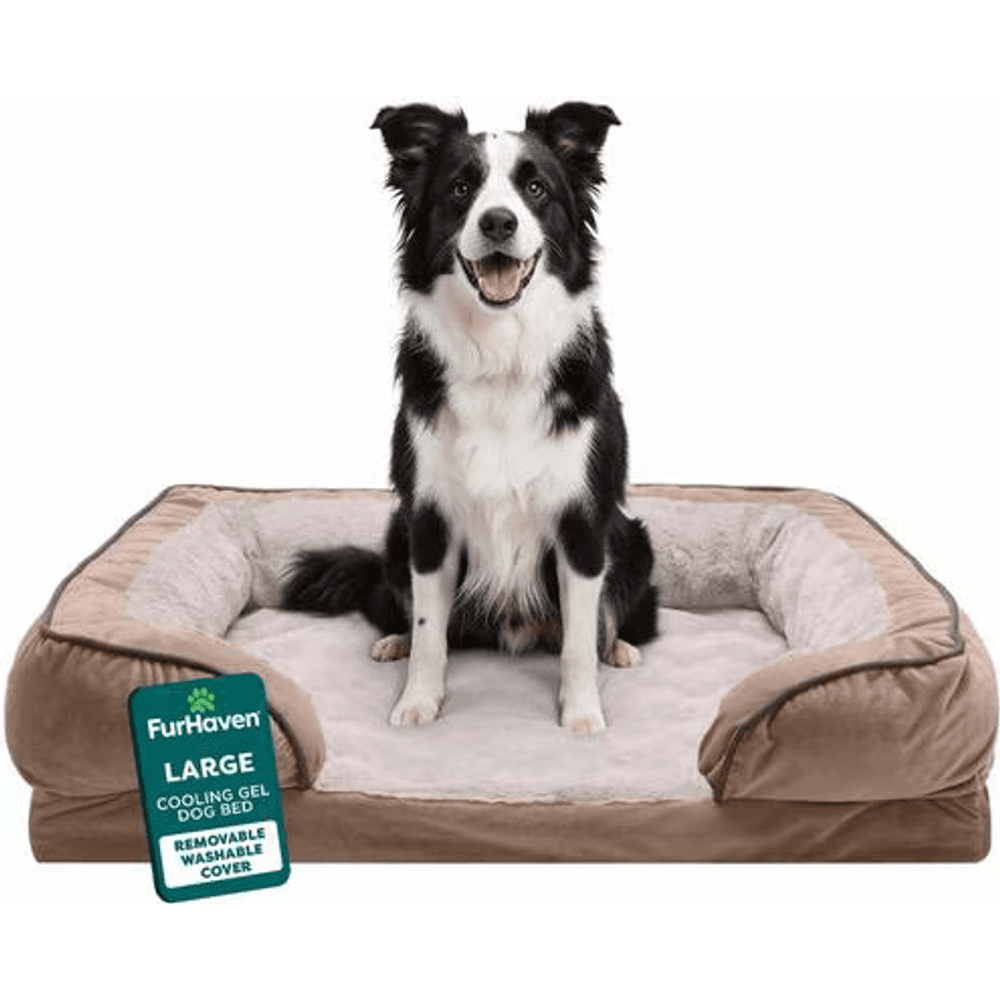
Removable-cover sofa bed. Check usable sleeping space and entry height against your dog’s posture and mobility; no medical or calming outcome promised.
Petful may earn a commission when you click through to Chewy, at no extra cost to you.
Short hair still needs routine care
Grooming a smooth Patterdale is about removing loose hair and surface dirt while keeping the dog comfortable. Use gentle pressure, check how the skin responds, and stop if the dog shows discomfort. A grooming glove and curry brush can be an option for a coat that tolerates that tool. It is not a reason to keep rubbing an area until every loose hair has disappeared.
Build the routine around what you actually find:
- Check the coat and paws after outdoor activity.
- Remove accessible loose debris gently rather than pulling through resistance.
- Keep sessions short enough that the dog remains comfortable.
- Review the tool or technique if the dog repeatedly avoids being touched.
Patterdales shed, including those with short hair. The amount you notice on a sofa or clothing does not by itself tell you which coat type the dog has. Do not interpret a low-shedding advertisement as a promise of no hair in the home. Changes in the dog's coat or skin should be assessed in their own context rather than explained away as a breed trait.
Make a simple grooming record
When comparing tools, try one suitable approach gently rather than changing several things in the same session. Note whether the dog stayed comfortable, whether loose hair came away easily, and whether a particular area needed professional attention. The goal is a routine that you can repeat without distress, not collecting the largest possible handful of hair.

Check this Small harness against actual measurements and the current size chart. Adjust and test indoors; no-pull wording is not an escape-prevention guarantee.
Petful may earn a commission when you click through to Chewy, at no extra cost to you.
Check equipment that contacts the coat as well. The Frisco padded harness in Small should be selected from actual measurements and its size chart. Watch for rubbing where the straps sit; changing coat length or color does not determine harness fit.
Tell a groomer what the coat looks like before and after ordinary outdoor activity. A dog that returns with surface dust needs a different conversation from one whose longer hair repeatedly traps debris. Mention the equipment that rubs against the coat, especially where a harness sits, and describe a new change separately from its usual texture. Photographs taken under similar lighting can help show a change without asking the groomer to rely on memory. Keep this record practical: a few dated observations are more useful than assigning an unsupported shedding score to the breed.
A smooth coat is not an allergy guarantee
No Patterdale coat should be sold as reliably hypoallergenic. The American College of Allergy, Asthma and Immunology explains that dogs produce allergens in hair, dander, saliva, and urine; an allergy-free breed has not been established. Coat length alone therefore does not answer whether a particular person will react.
If someone in the household has a dog allergy, discuss the decision with their clinician before acquiring a dog. A grooming tool cannot make a puppy allergy-proof, and choosing a different color does not solve the uncertainty. Keep human allergy concerns separate from a dog's own skin problems; they are different questions requiring different assessment.
Broken and rough coats: what differs
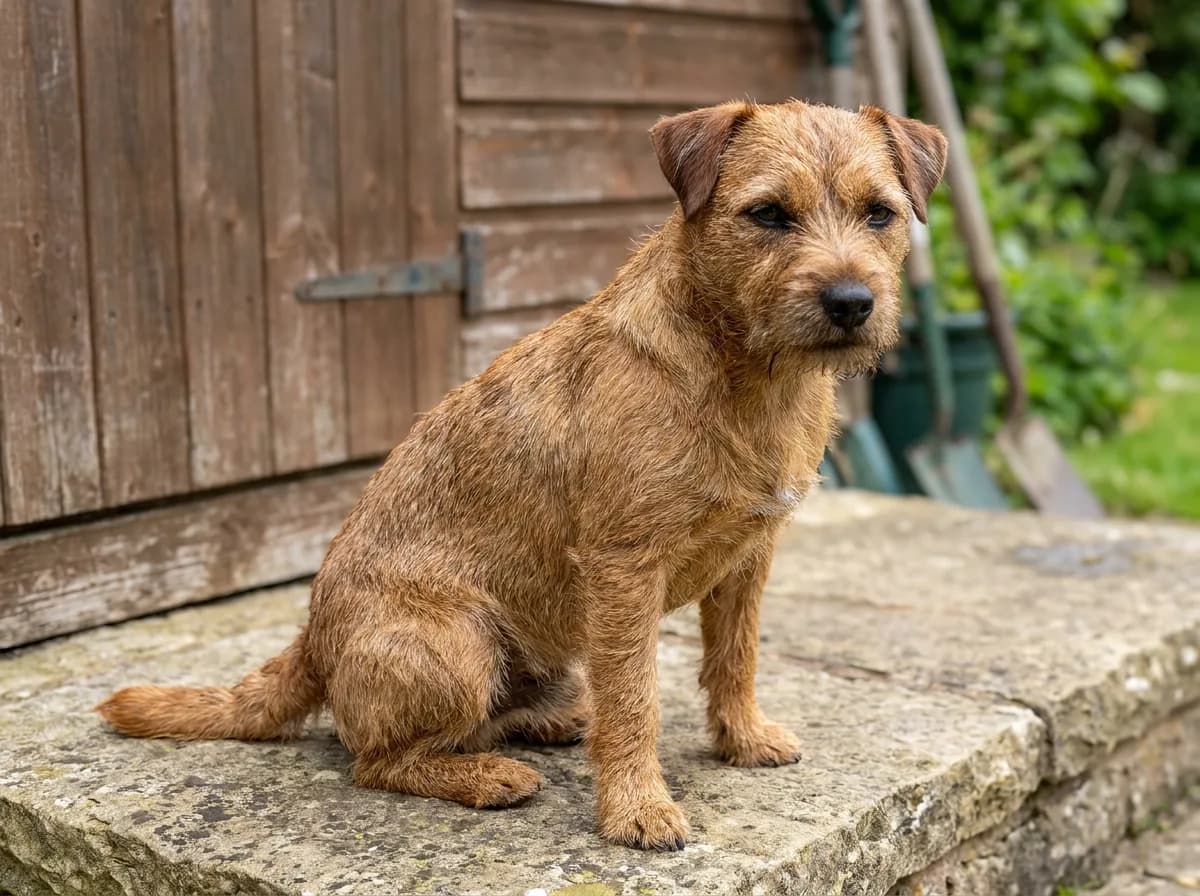
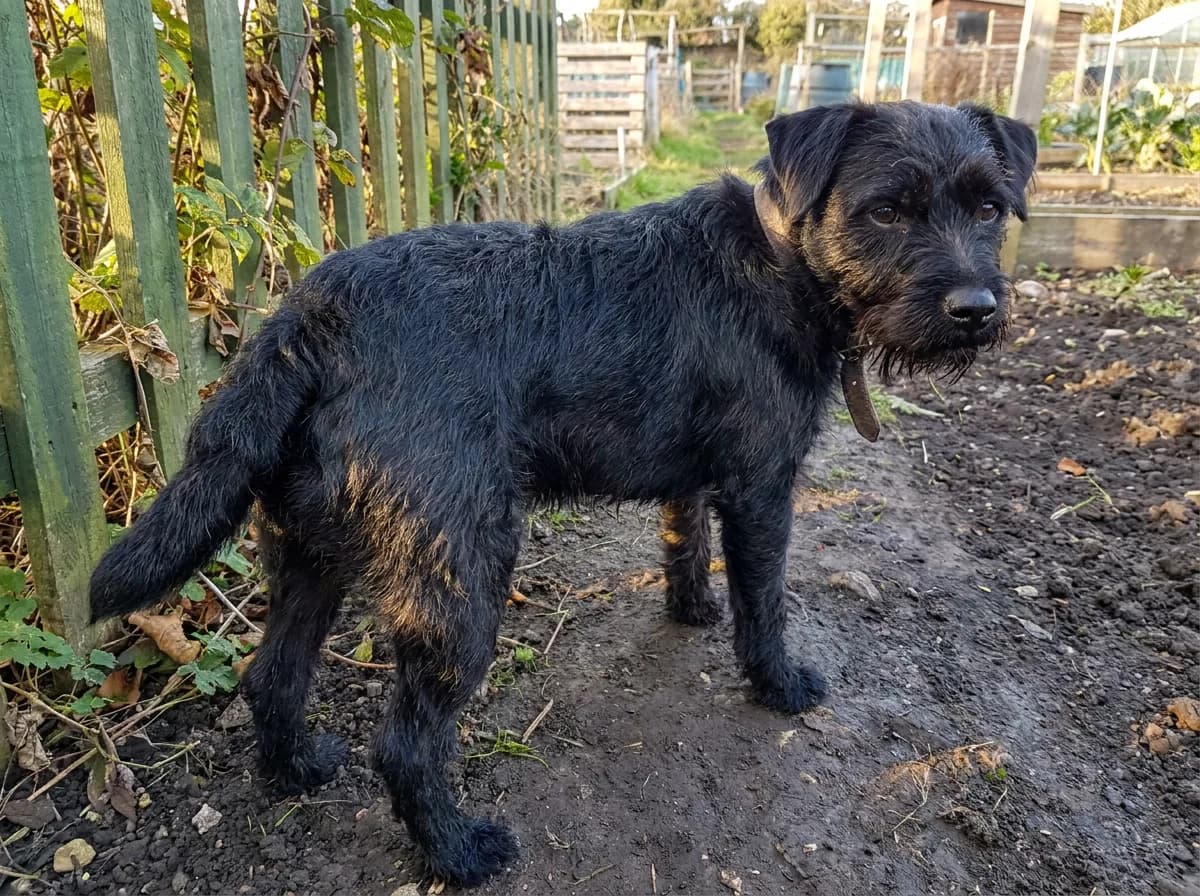
A broken-coated Patterdale has longer guard hairs than a smooth-coated dog. Those hairs are coarse and wiry and may show some wave. Facial furnishings can be present or absent, so a broken coat does not require one particular beard length. A rough-coated Patterdale has longer coarse hair more generally, including the face and ears.
- 1Smooth dense stiff hair describes texture as well as short length.
- 2Broken longer guard hairs can occur with or without obvious facial furnishings.
- 3Rough longer coat including face means length is distributed more widely, not simply that the dog has a beard.
Look at the distribution of longer hair
Compare the shoulder, body, face, and ears instead of judging from one close-up. On a broken coat, longer guard hairs interrupt the smoother outline. On a rough coat, the longer hair is a broader feature of the dog. Both should be assessed as natural coats rather than as a haircut borrowed from another terrier breed.
“Wire-haired” is often used informally for the coarse texture. “Long-haired Patterdale” is less precise because it says nothing about texture or distribution. Ask whether the source means broken or rough and request clear views of the body and face. A brown long-haired dog and a black wire-haired dog still need the same texture assessment; color does not settle the classification.
The UKC reference does not describe a separate curly-haired variety. Some wave in broken guard hairs is different from a soft, curled coat throughout. If a photograph shows an unfamiliar texture, describe what is visible and ask about the dog's history. Do not use that one feature to prove or disprove ancestry.
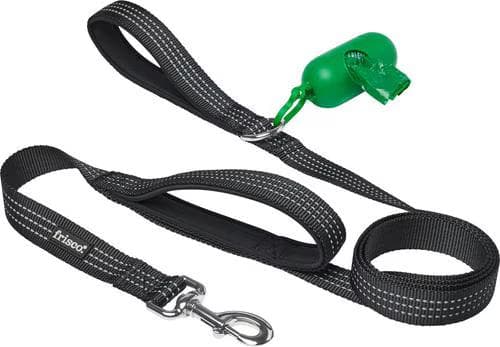
Six-foot leash for supervised everyday walks when the clip and weight suit your dog. Not a long line for distance recall.
Petful may earn a commission when you click through to Chewy, at no extra cost to you.
Ask for a coat-specific grooming plan
Explain the outcome you want to a groomer: a comfortable, manageable natural coat rather than an assumed show finish. Ask them to examine the actual texture before selecting tools or proposing trimming, clipping, or hand stripping. A method suitable for another wire-coated breed is not automatically the right choice for this dog's coat and circumstances.
The RSPCA's grooming guidance emphasizes choosing a suitable groomer and discussing the dog's needs. Tell the groomer about sensitivity, previous difficult sessions, and changes you have noticed. Ask for a demonstration of routine care you can perform comfortably at home instead of trying an unfamiliar technique from a photograph.
Distinguish loose hair from a grooming problem
A Four Paws glove and curry brush that lifts loose surface hair on a smooth coat may not deal with tangles or a coarse coat's maintenance needs. Do not buy several similar tools expecting each to solve a different issue. First identify whether you are removing loose hair, working through debris, maintaining longer furnishings, or asking a professional to assess the coat. For accessible longer furnishings, a Safari fine comb is one option to discuss with the groomer; stop if it catches rather than pulling.
If brushing catches repeatedly, do not pull harder. Pause and inspect the area or ask a groomer for help. Persistent itching, sore skin, or an abrupt change in coat condition belongs with your veterinarian, not a more aggressive grooming routine. A rough texture that is normal for the breed is different from a new problem affecting the dog's comfort.
Patterdale colors and accepted markings
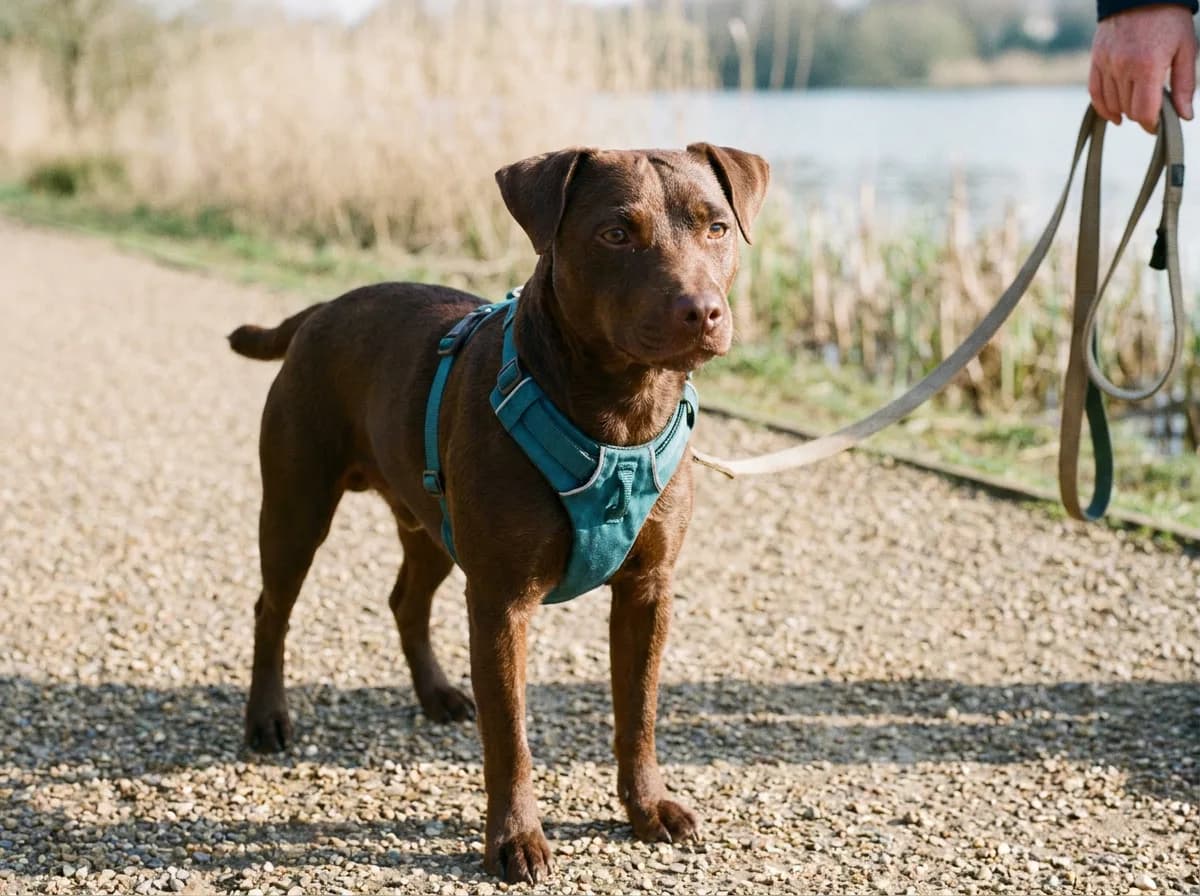
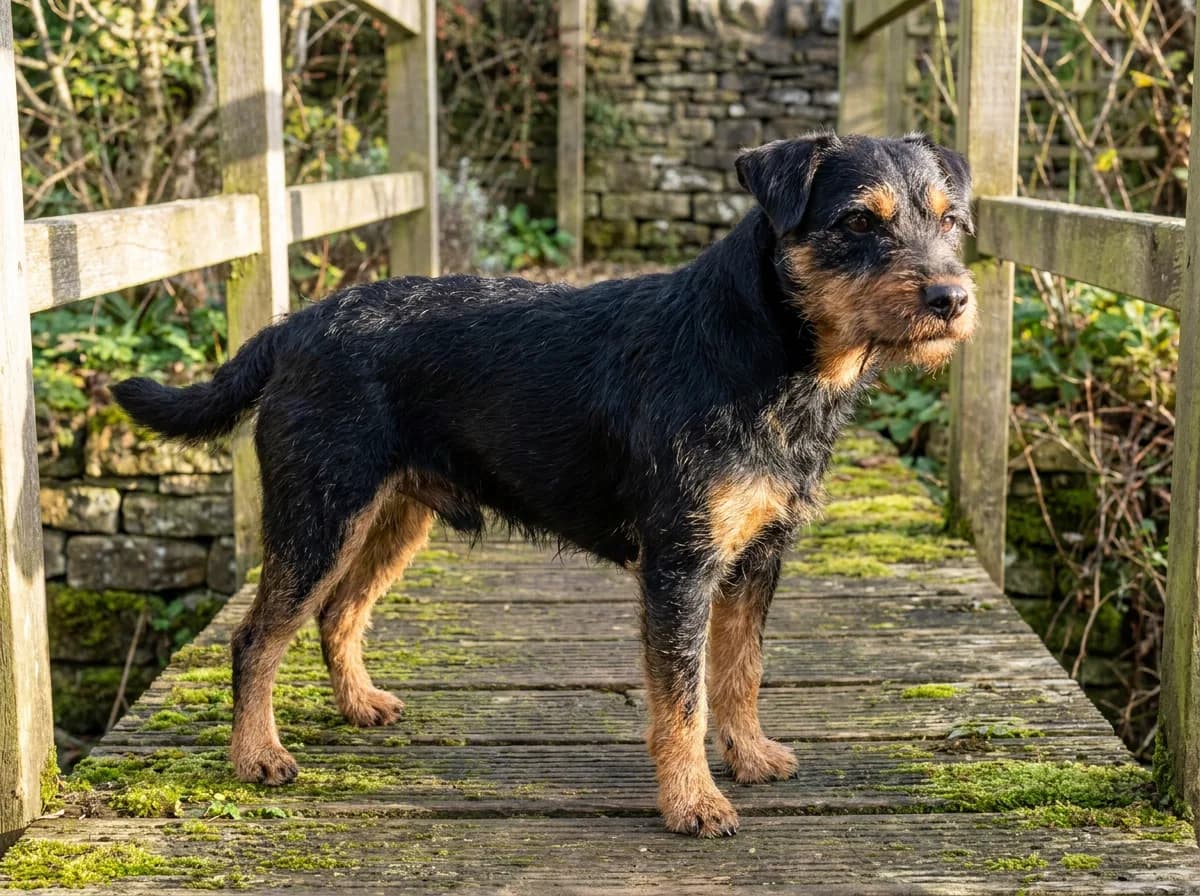
The UKC standard accepts black, red, liver or chocolate, grizzle, black and tan, and bronze. These are color descriptions within one breed standard, not separate personality types. A smooth brown Patterdale can be described by both its texture and its color; neither word needs to replace the other.
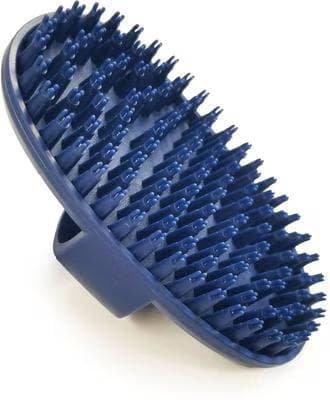
Gentle loose-hair care for a compatible smooth coat. Stop if it pulls or causes discomfort; rough coats may need different tools.
Petful may earn a commission when you click through to Chewy, at no extra cost to you.
For a daylight coat check outdoors, retain ordinary walking control. A Frisco six-foot traffic leash can support a supervised photo session when its hardware suits the individual. Keep the leash attached and ask another adult to take the picture instead of releasing the dog to show its markings.
For practical color naming, keep the following distinctions clear:
- Black may include some lighter hairs without becoming a different coat type.
- Red covers a range from tan to a deeper rust shade.
- Liver and chocolate refer to brown coloration, with a brown nose in the standard.
- Black and tan describes the combination of those colors, with variation in their proportions.
- Grizzle and bronze appear on the accepted list; the standard does not supply a popularity ranking for them.

Brown, chocolate and red are not interchangeable labels
Begin with neutral daylight and look at the nose as well as the coat. A warm indoor photograph can make a black dog appear brown or exaggerate the red in its hair. Ask for another view before drawing conclusions from a single image. The standard's brown-nose distinction is particularly useful when discussing a dog described as liver or chocolate.
Avoid treating every brown-and-black appearance as a newly named variety. Different hair colors, light, grooming, and camera exposure can all affect a photograph. Describe the visible distribution first, then compare it with the registry language. If the person identifying the dog has only a picture, ask them to distinguish an observation from a confirmed registration description.
Read unusual color claims carefully
Blue and brindle are not on the UKC accepted color list cited here. That is a statement about this standard, not a visual test that establishes a dog's family tree. If a seller uses one of those descriptions, ask which registry, records, and definition support the claim. Do not substitute a different terrier's standard to make the label fit.
Black-and-white and white Patterdale searches also need careful interpretation. A small marking is not the same description as extensive white across the body or head. The exact permitted locations are addressed in the marking question below. More broadly, a conformation rule is not a measure of a companion dog's value and does not replace ancestry documentation.
Photograph the coat for a useful comparison
If you are asking a breeder or groomer to help identify a coat, provide views that answer different questions. One dramatic portrait may be attractive but hide the body texture. Keep the hair dry and show its ordinary appearance rather than applying a filter or brushing everything into an unusual shape for the photograph. If surface dirt hides a marking, Earth Rated unscented grooming wipes can be used according to the label, away from eyes and irritated skin; let the coat dry before photographing.
Useful views include:
- A side view showing the length and outline of the body coat.
- A closer shoulder view showing guard hairs.
- A clear face and ear view showing furnishings.
- A daylight view of the nose and visible markings.
Those images can support a conversation about grooming or naming. They cannot certify parentage or produce a reliable estimate of how rare the dog is. If registration matters to you, ask for the actual registry details rather than interpreting the phrase “KC registered” as a complete answer. Confirm which organization issued the document and what it records.
Decisions beyond coat appearance
Patterdale identity beyond coat appearance
The breed's working background, compact build, and care needs provide context that color alone cannot. A coat photograph does not establish a lifespan, health status, population rarity, or suitability as a house dog. The Patterdale Terrier breed guide explains identity, size, and general care while distinguishing documented information from uncertainty. Use veterinary assessment for the individual dog's health and reliable records for its history instead of expecting a color description to answer those questions.
Choosing a puppy without rare-color premiums
A claim that a puppy's color is rare needs evidence about a defined population, and it still does not establish quality. Ask what the actual fee includes, what health and upbringing records are available, and what support follows the placement. The Patterdale puppy guide develops those checks without inventing a universal price. A black, brown, or red puppy deserves the same careful source evaluation and realistic first-year planning.
Working behavior is not determined by coat
Neither a rough coat nor a smooth coat predicts whether a dog will cuddle, settle easily, or react to another animal. There is no reliable birthday when every Patterdale becomes calm, and aggression needs individual assessment rather than a color stereotype. The Patterdale temperament guide covers training, prey drive, and household arrangements. Choose your daily routine according to observed behavior and support needs, not the appearance you find most appealing.
Questions about patterdale terrier colors
The UKC accepted color list names black, red, liver/chocolate, grizzle, black and tan, and bronze. It provides no measured frequency ranking showing which is most common in a defined population. An accepted color and a common color are therefore different claims. Photos and listings may show examples, but they are not a representative count of the breed.
The UKC permits some white chest and feet markings, while white patches on the body or head are disqualifications under that conformation standard. It distinguishes those markings from white hairs caused by scarring. Appearance is not ancestry proof: a marking does not independently establish that a dog is purebred or mixed, and it does not determine its worth as a companion.
A broken coat has longer, coarse guard hairs than a smooth coat and may have facial furnishings, but does not require a particular beard length. A rough coat has longer coarse hair more generally, including the face and ears. Look at texture and hair distribution together; color or a single long-haired photograph cannot settle the coat type.
Do not choose hand stripping solely because the dog is described as rough-coated. Ask a qualified groomer to assess the actual texture, condition and the result you want, then explain whether stripping, trimming or another approach is appropriate. Request a demonstration of comfortable home maintenance. Pulling harder through resistant hair or sore skin is not a suitable grooming method.
BVMS, MRCVS
Dr. Pippa Elliott, BVMS, MRCVS, is a veterinarian with nearly 30 years of experience in companion animal practice. Dr. Elliott earned her Bachelor of Veterinary Medicine and Surgery from the University of Glasgow. She was also designated a Member of the Royal College of Veterinary Surgeons. Married with 2 grown-up kids, Dr. Elliott has a naughty Puggle named Poggle, 3 cats and a bearded dragon.
Sign up for expert-backed reviews and safety alerts all in one place.