Morkie vs Yorkie: Which Small Dog Fits Your Home?
Compare a Maltese-Yorkie mix with a Yorkshire Terrier using practical questions about grooming, barking, safe handling, time alone, health records, and the routine your household can provide.

Appearance alone does not establish ancestry or predict adult size.
Petful is reader supported. As an affiliate of platforms like Amazon and Chewy, we may earn a commission when you buy through links on this page. There is no extra cost to you.
The Morkie vs Yorkie comparison starts with ancestry. A Morkie is a Maltese-Yorkshire Terrier mix; a Yorkie is a Yorkshire Terrier. That is the most reliable difference between them. Both can be small, affectionate companions with substantial grooming and training needs, but neither label can tell you which individual will bark less, settle sooner, or fit your family better.
Use the comparison to decide which questions to ask, then meet the actual dog. A purebred Yorkshire Terrier has an established breed standard, while a Morkie can vary more in appearance and inherited traits. A rescue adult may give you a clearer picture of size and behavior than a prediction about either kind of puppy.
- 1Morkie means Maltese-Yorkshire Terrier mix; Yorkie means Yorkshire Terrier.
- 2Compare the actual dog's behavior, handling tolerance, coat, and history rather than expecting a guaranteed personality.
- 3Both choices require regular grooming, dental care, training, and a safe small-dog environment.

Sign up for expert-backed reviews and safety alerts all in one place.
Morkie vs Yorkie at a glance
The main difference is predictability: a Yorkie follows an established Yorkshire Terrier breed standard, while a Morkie combines Maltese and Yorkshire Terrier ancestry. If you prefer the mix, assess the parents and the individual puppy without assuming it will inherit only your favorite characteristics from each side.

A budget-friendly padded no-pull harness that keeps leash pressure off a coughing dog's neck and windpipe by distributing it across the chest. A simple, affordable way to protect an irritated airway or a collapsing trachea on every walk.
Petful may earn a commission when you click through to Chewy, at no extra cost to you.
The question “Are Yorkies or Morkies better?” has no universal winner. A vocal, sociable dog may fit one household and overwhelm another. A long silky coat may be enjoyable to maintain for one owner and impractical for someone who wants minimal grooming. Choose based on the work you are prepared to do consistently.
| Decision | Morkie | Yorkie |
|---|---|---|
| Ancestry | Maltese and Yorkshire Terrier mix | Yorkshire Terrier |
| Predictability | Mixed-breed variation, assess parents and individual | Breed standard provides context, individuals still vary |
| Coat care | Depends on inherited texture and chosen trim | Silky coat needs ongoing maintenance |
| Household fit | Evaluate barking, companionship needs, and safe handling | Evaluate the same practical issues |
| Best evidence | Records, adult observations, honest caregiver history | Records, adult observations, honest caregiver history |
For a broader introduction before comparing, read the Morkie breed guide. It explains the daily routine behind the appealing puppy photos, including potty training and gradual alone-time practice.
Ancestry, size, and appearance
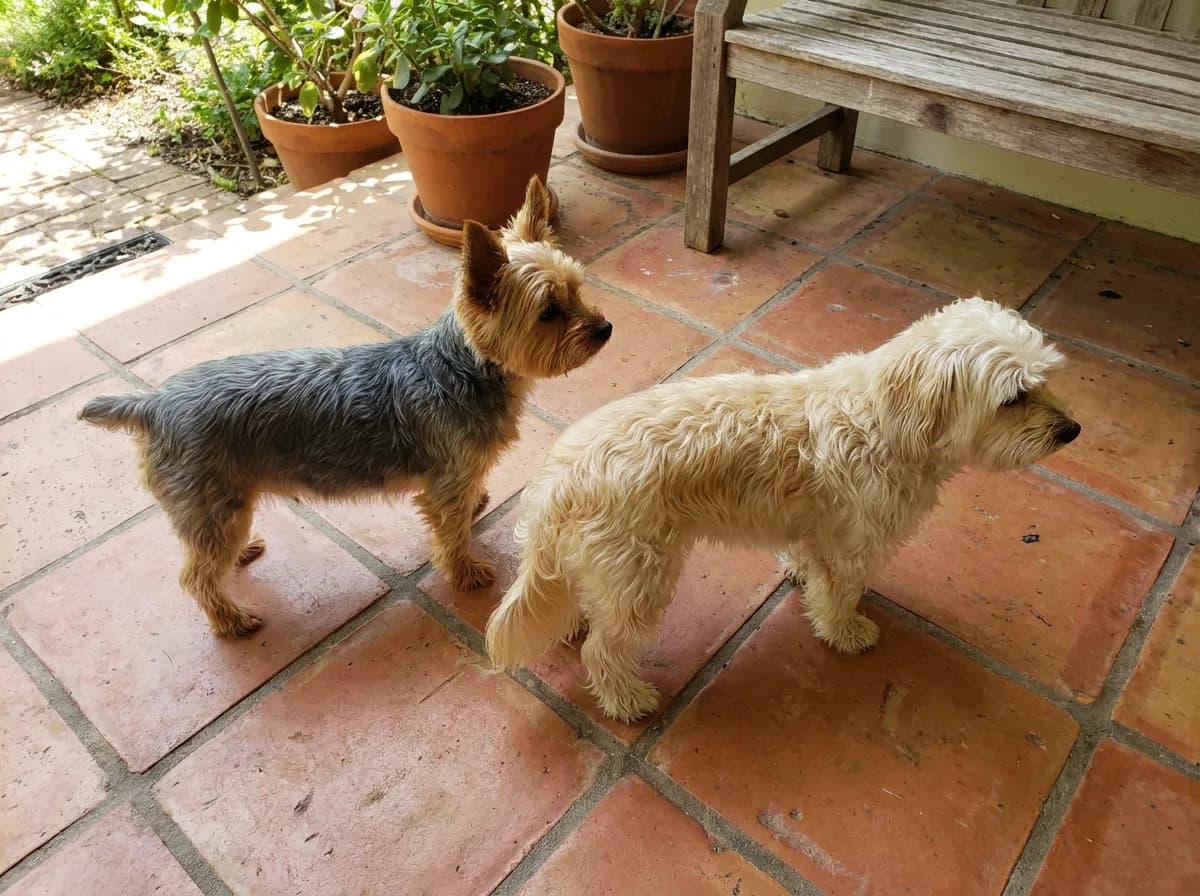
The American Kennel Club's Yorkshire Terrier description emphasizes the breed's terrier history beneath its long glossy coat. Maltese ancestry changes what a Morkie may inherit, but it does not erase the Yorkie contribution. A mix may resemble one parent more strongly than the other.
Morkie and Yorkie size can overlap, so a close-up photo is not a useful size guarantee. Ask about measured adult parents, the puppy's age, and its growth history. If size is critical because of travel, housing, or handling needs, an adult dog whose dimensions can be measured offers more certainty than a small puppy marketed as “teacup.”
Morkies may have cream, white, tan, darker, or mixed-color hair, while the familiar adult Yorkie appearance includes blue-and-tan coloring and a silky texture. A parti-colored Yorkie is still a different ancestry question from a Maltese-Yorkie mix. Color alone, ear position, or a teddy bear face cannot tell you conclusively whether a dog is a Morkie.

Petful may earn a commission when you click through to Chewy, at no extra cost to you.
Measure before buying equipment
Use the Morkie adult-size guide for growth and measurement questions. When fitting equipment, a Frisco Padded No Pull Dog Harness, Black, Small is one option only if its measurement range fits the individual. Some Morkies and Yorkies need a different size or design, regardless of the product's “Small” label.
Temperament, barking, and family fit
Both dogs can form close bonds with their people, notice activity around the home, and learn to announce it. Do not choose a Morkie on the assumption that Maltese ancestry guarantees a quieter dog, or a Yorkie on the assumption that every individual has the same terrier intensity. Ask what the actual dog does when someone passes the window, rings the doorbell, or leaves the room.
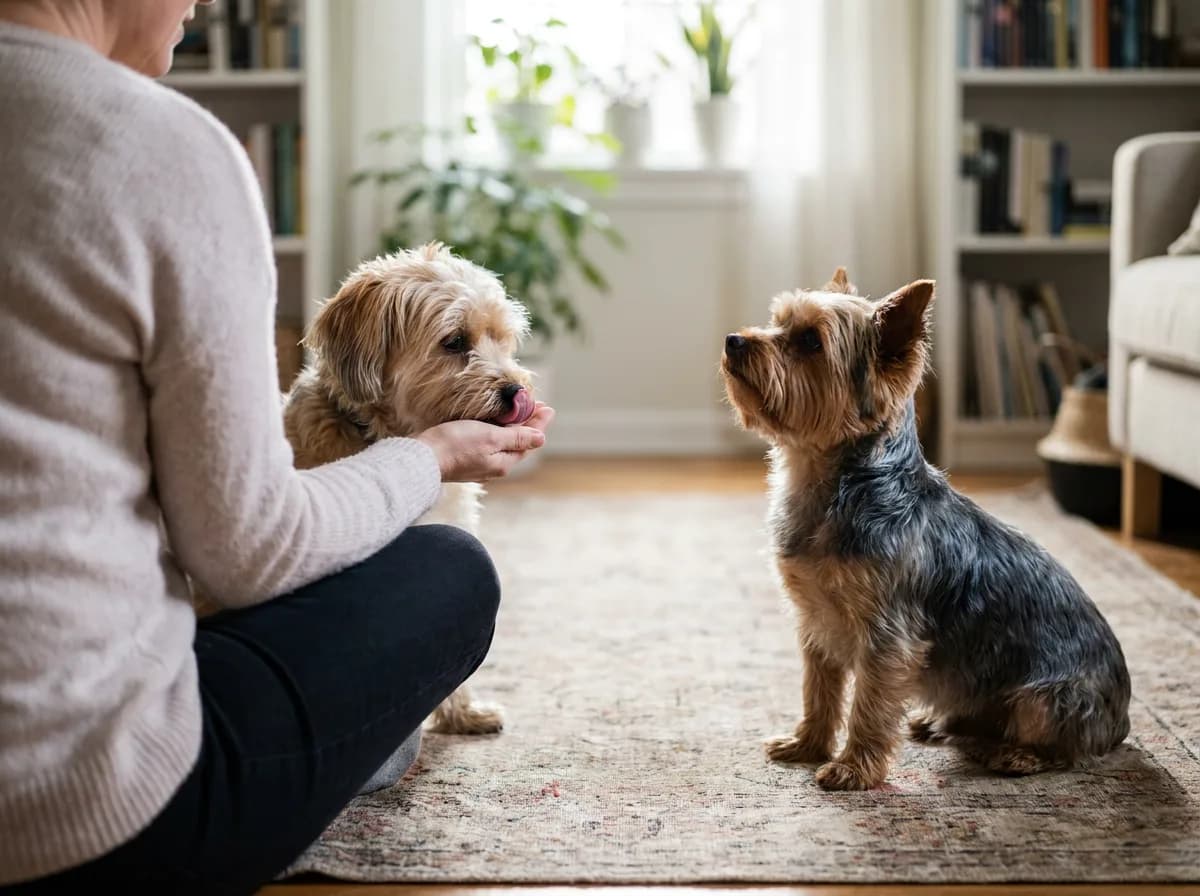
For children, handling habits matter as much as friendliness. A small dog can be injured by accidental falls, rough play, or interactions with much larger animals. Arrange calm introductions, provide a retreat, and supervise. A dog that enjoys adults may still need careful support around excited children.
- Ask how the dog reacts to visitors and ordinary household noises.
- Observe whether it can settle after an interesting event.
- Ask about being picked up, brushed, and having paws handled.
- Find out what happens when the current caregiver leaves.
Do not use a second dog as the proposed solution for separation distress or barking. Another dog creates its own compatibility and care questions. If a prospective dog panics when alone, discuss a realistic support plan before bringing it home. WebVet's separation-anxiety guide helps distinguish the issue from a simple need for more toys.
Shedding, allergies, and grooming work

Both can be low-shedding compared with many heavily shedding dogs, but low shedding does not mean no grooming. Hair can tangle and collect debris even when relatively little lands on the sofa. A short pet trim may simplify daily care; a longer coat increases the importance of careful combing and drying.
Neither choice is reliably allergy-safe. The American College of Allergy, Asthma and Immunology explains that dogs produce allergens and that a hypoallergenic breed cannot be guaranteed. If someone in the household has a known dog allergy, seek individualized advice before committing rather than relying on a coat label.
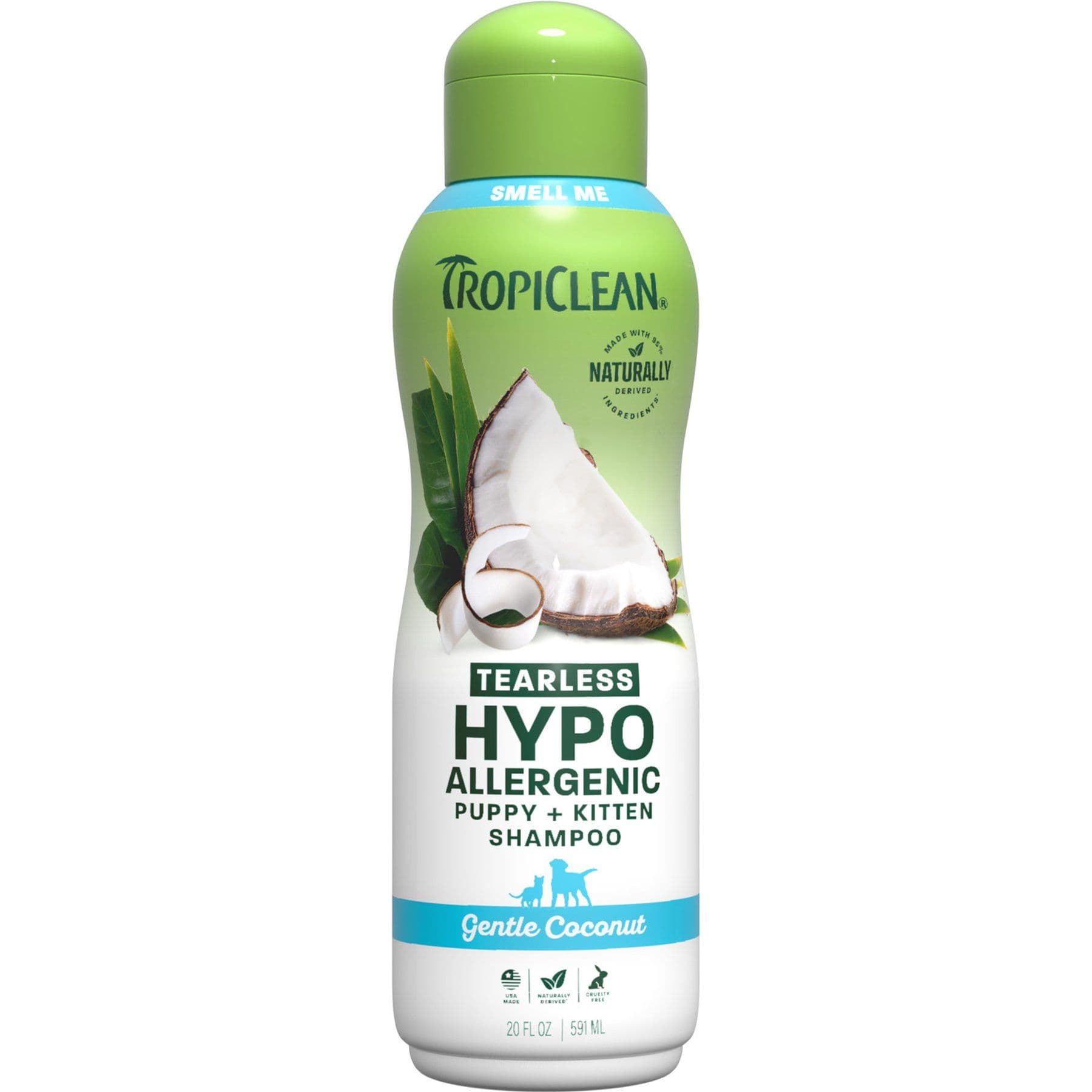
Tearless, pH-balanced shampoo for puppies 12 weeks and older.
Petful may earn a commission when you click through to Chewy, at no extra cost to you.
An aumuca Self Cleaning Slicker Brush is one possible tool for a suitable coat, with gentle pressure and a groomer's demonstration. A metal comb helps check whether the brush has reached through the hair. Tool size and technique matter around tiny faces and legs; do not assume a convenient release button makes a brush appropriate for every dog.
Choose a suitable bathing routine
For bathing, TropiClean Hypo-Allergenic Gentle Coconut Puppy & Kitten Shampoo, 20 oz is an option when its label directions suit the individual dog. Ask a groomer about rinsing and drying the actual coat. A cosmetic shampoo is not a treatment for an undiagnosed skin problem; seek veterinary advice when the skin is irritated.
Earth Rated Unscented Dog Grooming Wipes may help with external cleanup between baths. Keep them away from eyes and use them according to the label. Our Morkie haircut guide explains how to choose a manageable style and discuss actual lengths with a groomer.
Training, exercise, and time alone
Training should teach useful behavior rather than test which label is “smarter.” Reward-based methods, clear cues, and short manageable sessions help both dogs understand what works. The American Veterinary Society of Animal Behavior's position statements support humane training approaches; punishment is not necessary to prove leadership over a small dog.
Plan toilet opportunities around waking, meals, play, and the dog's current ability rather than expecting a tiny puppy to match an adult schedule. Reward the desired location immediately, supervise between opportunities, and clean accidents appropriately. If an established adult suddenly starts having accidents, consider a veterinary check rather than assuming disobedience.
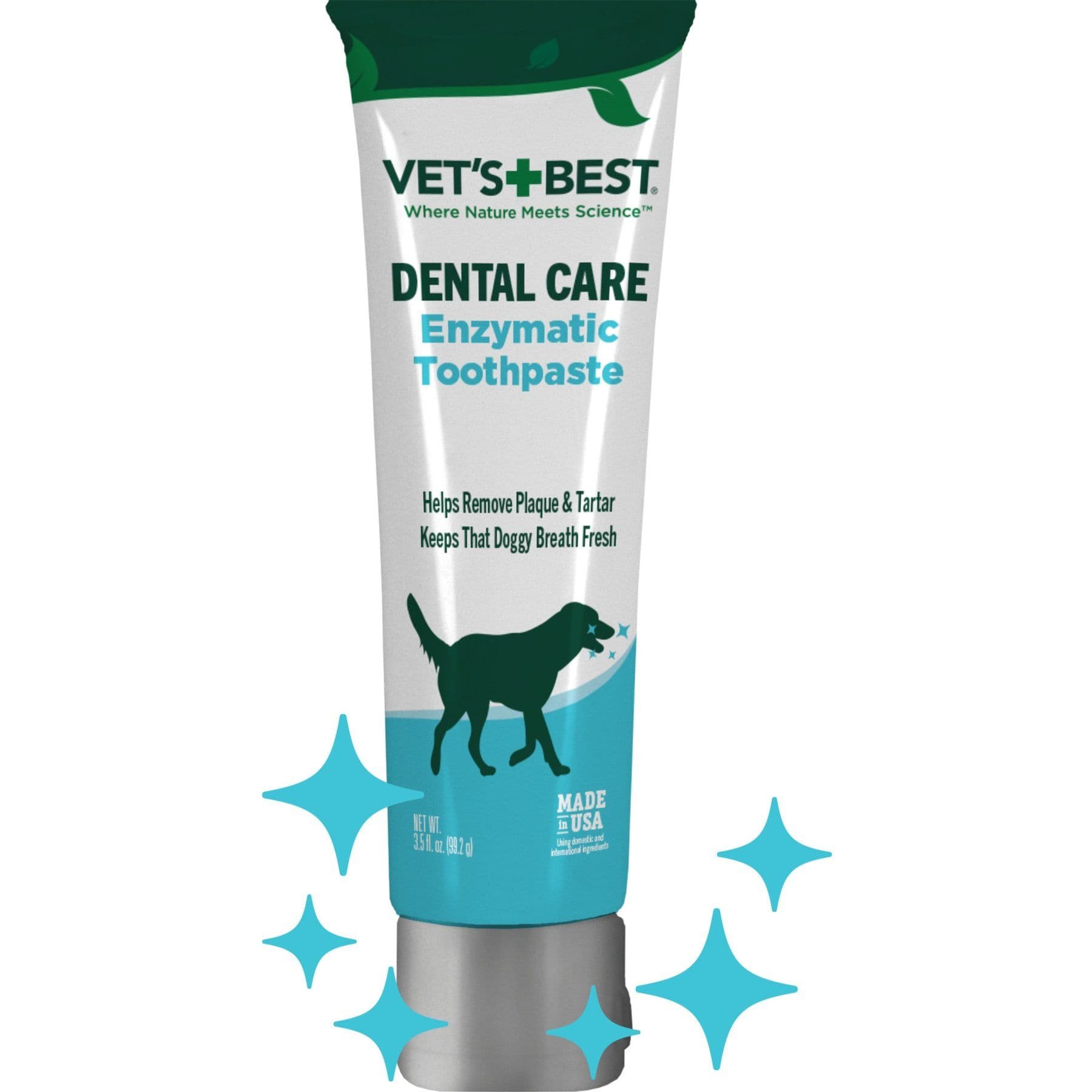
Enzymatic dog toothpaste made with aloe, neem oil, and baking soda.
Petful may earn a commission when you click through to Chewy, at no extra cost to you.
- A caregiver's account of feeding, toilet breaks, walks, rest, grooming, and alone time is more useful than “easy dog.” Compare that schedule with the day you can actually provide.
Both dogs need appropriate movement and mental activity, even if they fit comfortably in a lap. Let the dog sniff on suitable walks, practice simple skills, and rest undisturbed. Avoid assuming that carrying a small dog everywhere meets its exercise or exploration needs. Adjust activity for age, health, weather, and the individual rather than setting a breed-based endurance challenge.
Health, lifespan, and ownership costs
Health screening and an individual veterinary history matter more than a claim that one label is automatically healthier. A Morkie can inherit risks from both parent breeds, while a Yorkie has its own breed-related considerations. Ask for the actual records and distinguish a puppy examination from parent screening or ancestry testing.
Dental care is a practical commitment with either dog. Vet's Best Enzymatic Dog Toothpaste is a dog-specific option, and the Jasper 360 Dog Finger Toothbrush may be useful if it fits comfortably. A smaller toothbrush may suit a very small mouth better. Introduce the routine gently and have pain or bleeding assessed, rather than pushing through resistance.
The Morkie lifespan and health guide explains why published lifespan ranges are planning estimates, not predictions for two individual dogs. Do not choose on the assumption that a cross guarantees extra years or that an expensive puppy cannot develop a medical condition.
Compare the ongoing budget
Compare the full cost of ownership as well as acquisition. Grooming, routine veterinary care, dental treatment, training, travel care, and emergency funding can outweigh an initial price difference. Use the Morkie budget guide to build a local quote-based plan instead of treating the cheaper listing as the cheaper lifetime choice.
Which dog fits your household?
Use this household comparison worksheet with one column for each actual dog. Record the answers, who supplied the information, and what remains uncertain. Ask how the dog recovers after excitement, what handling it avoids, which routines are established, and what its caregiver wants a new owner to know. Compare the examples with what your household can provide; arrange another visit when a missing answer could change the decision.
| Household question | What to record for each dog |
|---|---|
| Can we manage its coat? | Current trim, maintenance tolerance, grooming estimate |
| Can we meet its social needs? | Alone-time history and a realistic daytime plan |
| Can we handle it safely? | Adult size, household hazards, child and pet interactions |
| Can we support its health? | Veterinary records, screening information, budget |
If you also like Poodle mixes, the Morkie vs Maltipoo guide adds that separate comparison. Keep the decision grounded in an individual dog's evidence and your household's capacity, not a tournament in which one mix must win every category.
Morkie vs Yorkie questions
The potential downsides of having a Morkie are practical care demands. Potential challenges include regular coat maintenance, alert barking, sensitivity to rough handling, and difficulty coping with long periods alone. Those issues are not universal or unique to Morkies, but they matter when comparing small dogs. Ask about the individual dog's normal routine and behavior, obtain care estimates, and make sure the household can provide safe handling, training, and companionship.
Neither Yorkies nor Morkies are better for every household. A Yorkshire Terrier offers an established breed background, while a Morkie is a variable Maltese-Yorkie cross. Both still need individual assessment. Compare the actual dog's coat care, reaction to visitors, alone-time history, handling tolerance, and medical records with what your household can provide. A suitable adult dog can offer clearer evidence than a puppy's predicted traits.
You cannot reliably tell if your dog is a Morkie from appearance alone. Coat color, ear position, size, and haircut overlap with other small dogs. Breeder or rescue records may provide ancestry information, and a DNA ancestry test may add context, but neither appearance nor an ancestry estimate replaces veterinary care decisions based on the individual dog's actual needs.
Some Morkies are big barkers, but this is not universal. Ask what triggers the individual dog's barking and how it settles afterward. Window activity, visitors, unmet needs, learned habits, or distress can all require different responses. Compare observed behavior rather than assuming the mix will be quieter than a Yorkie, and use reward-based training and environmental changes appropriate to the cause.
A Morkie does not automatically need a second dog. Some enjoy compatible canine company, but another dog is not a guaranteed treatment for loneliness, barking, or separation distress. Consider the existing dog's behavior, safe size and play compatibility, and your ability to meet two dogs' needs. Arrange careful introductions and seek qualified help if the current dog struggles when left alone.

Coreen Saito is a pet writer and longtime shelter volunteer with more than a decade in animal rescue. She covers cat behavior, breed care, and the small, ordinary science of sharing a life with companion animals, with a particular focus on honest takes about the products and decisions that actually matter. At home in Arizona, she's outranked by Mac (a dog with the loudest opinion in the house), Rebel (a cat who governs by quiet authority), and Meri (an orange tabby who runs the late shift and the laundry basket). She writes about all three, plus the rescues that keep coming through her life, at LifeWithMinty.com.
Sign up for expert-backed reviews and safety alerts all in one place.