Morkie Full Grown: Size, Weight, and Growth
Learn what published Morkie size ranges can tell you, how teacup and miniature labels differ from actual measurements, and how to follow growth and choose equipment for your individual dog.
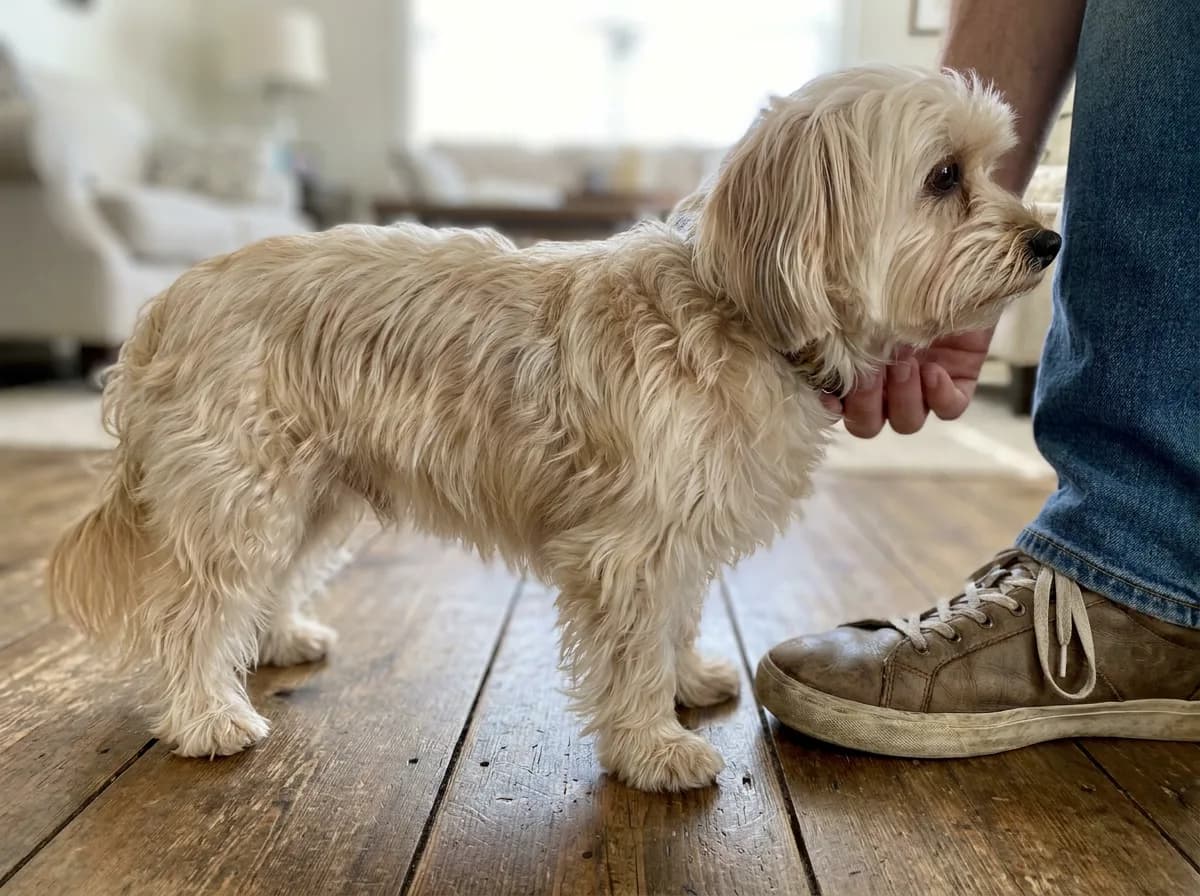
Appearance alone does not establish ancestry or predict adult size.
Petful is reader supported. As an affiliate of platforms like Amazon and Chewy, we may earn a commission when you buy through links on this page. There is no extra cost to you.
Chewy's Morkie breed profile lists a typical weight of 4 to 8 pounds and a height of 6 to 11 inches. Treat those figures as a general reference for a small crossbreed, not a strict minimum and maximum. Individual Morkies can fall outside published ranges, and being larger does not by itself mean a dog is unhealthy or incorrectly identified.
A Morkie full grown is usually a small companion dog. This Maltese-Yorkshire Terrier mix can take after either parent, so family measurements and the puppy's growth history are more useful than a seller's size label.
For a prospective owner, the useful question is not whether a puppy will fit an advertised category perfectly. It is whether you can accommodate a range of possible adult sizes and choose equipment that fits the dog in front of you. For an existing owner, healthy growth and body condition matter more than matching an online chart.
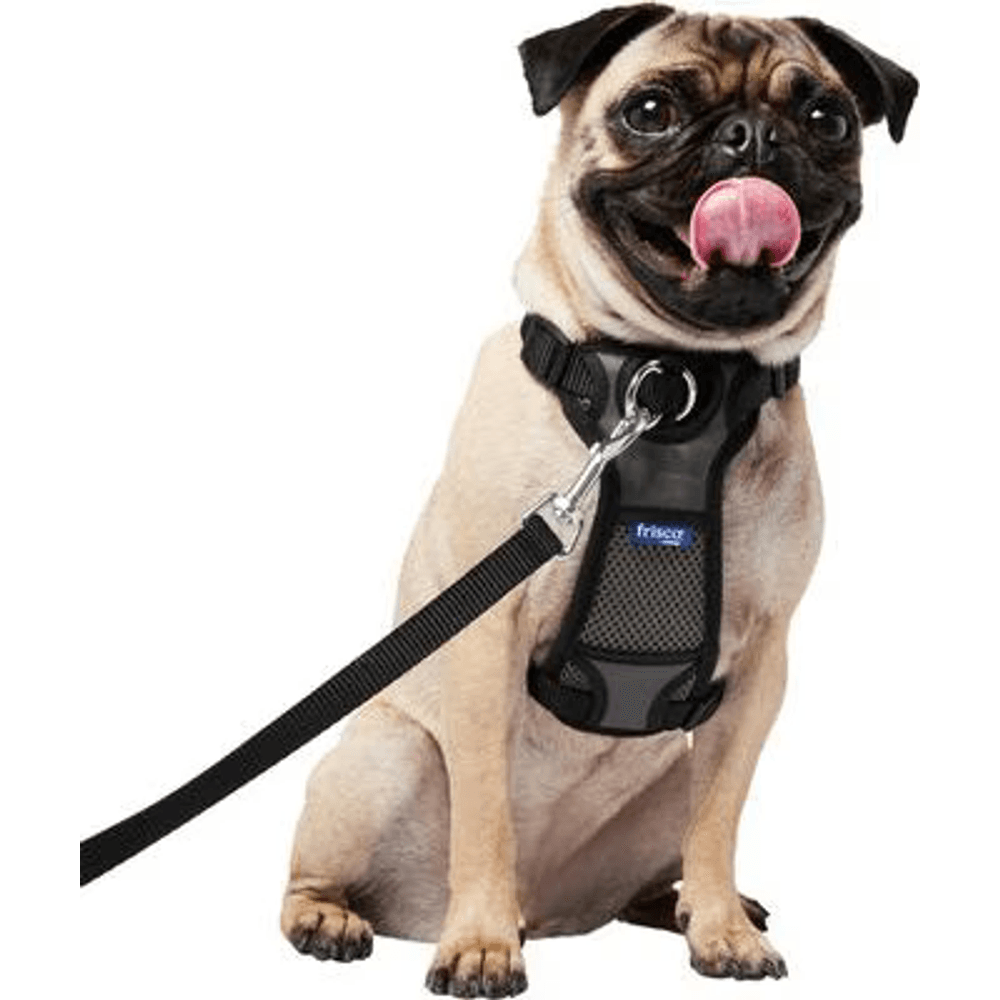
A budget-friendly padded no-pull harness that keeps leash pressure off a coughing dog's neck and windpipe by distributing it across the chest. A simple, affordable way to protect an irritated airway or a collapsing trachea on every walk.
Petful may earn a commission when you click through to Chewy, at no extra cost to you.
- 1Published Morkie size ranges are useful reference points, not breed-standard limits.
- 2Teacup, toy, and miniature labels do not guarantee adult size.
- 3Use parent measurements and repeated growth records, then fit equipment to the individual dog.

Sign up for expert-backed reviews and safety alerts all in one place.
How big is a Morkie full grown?
Body mass, or weight, and adult height answer different questions. A taller dog may weigh more while staying lean; a shorter dog at the same weight may carry more body fat. Coat volume can also make a freshly groomed dog look much smaller without changing its skeletal size. Ask a veterinarian to assess body condition rather than using appearance or a breed-chart number alone.
| Morkie size question | Useful evidence | What it cannot guarantee |
|---|---|---|
| How heavy might this puppy become? | Both parents' adult weights and the puppy's growth trend | An exact final weight |
| How tall is this adult? | Floor-to-shoulder measurement on level ground | The correct harness size |
| Is this weight healthy? | Veterinary body-condition and muscle assessment | Health based on a breed label alone |
| Will this carrier fit? | Dog's standing height, body length, turning space, carrier limits | Fit from the word “toy” or “small” |
If a seller gives an exact adult-weight promise, ask how it was calculated and what information supports it. Photos taken from above or beside unusually large objects can distort scale. A dated measurement and clear full-body view are more useful than a close-up that makes a puppy look miniature.
For walking equipment, the Frisco Padded No Pull Dog Harness, Black, Small is one option to assess against actual dimensions. Check the exact manufacturer's chest and neck ranges. A Morkie puppy or especially small adult may require a different size or design; do not tighten an oversized harness beyond its intended adjustment range.
Morkie growth stages and when growth slows

Growth is a process, not one birthday. A puppy gains height, develops muscle, changes proportions, and matures behaviorally on overlapping schedules. A dog that appears close to adult height may still be filling out, while a lively adolescent may already have reached much of its physical size.

Petful may earn a commission when you click through to Chewy, at no extra cost to you.
Small dogs generally reach physical maturity earlier than giant breeds. In the AKC’s puppy-growth guidance, veterinarian Jerry Klein gives about 6–8 months as a typical growth endpoint for small breeds. That is general context, not a guaranteed Morkie deadline; muscle and body composition can continue changing. Ask your veterinarian to interpret your dog’s dated growth record alongside parent measurements, body condition, and health rather than relying on a single birthday. There is no validated Morkie-specific month-by-month weight chart. An isolated weigh-in or an online growth calculator cannot reliably predict the finished dog. Very young puppies need age-appropriate veterinary and caregiver guidance; a growth record is not advice to separate a puppy early from its mother and litter.
- Weigh on the same suitable scale when practical.
- Record the date, age in weeks or months, weight, and any change in food or appetite.
- Note whether the veterinarian considered body condition appropriate.
- Bring the record to puppy appointments rather than comparing it only with social-media dogs.
A healthy puppy should be fed for appropriate growth, not to stay below a marketing label's weight limit. Do not restrict meals to produce a “teacup” adult. Equally, extra food does not make a puppy achieve a desirable larger frame. If growth appears unusually slow, stops unexpectedly, or accompanies poor appetite or illness, ask the veterinary team for advice.
Physical growth and behavioral maturity follow different schedules. Training, play, rest, and gradual experience continue after growth slows. The Morkie temperament and daily-care guide covers barking, potty training, exercise, and settling skills without promising that a particular birthday will solve behavior problems.
Teacup, toy, and miniature Morkie size labels
Both the Maltese and Yorkshire Terrier are small parent breeds. Sellers may use toy, miniature, micro, or teacup to describe a Morkie, but these are not standardized varieties. One seller's “mini” can describe a dog another seller simply calls a Morkie.
Ask the seller to translate every label into actual information: the parents' measured adult weights, the puppy's current weight and age, and its veterinary history. If the answer is only a prediction or a sales description, recognize the uncertainty. A full-grown teacup Morkie is still an individual mixed-breed dog, not a guarantee of a particular number on a scale.

Tearless, pH-balanced shampoo for puppies 12 weeks and older.
Petful may earn a commission when you click through to Chewy, at no extra cost to you.
- Very small puppies need careful feeding, handling, and veterinary oversight. Ask about the individual puppy's health and care needs before treating tiny size as an advantage. A label does not establish health, maturity, or safe handling.
A tiny dog also changes everyday logistics. Gaps in gates, the space beneath furniture, a child's lifting technique, and the size difference with resident dogs all matter. Practice safe supported lifting with adults and give the dog a protected rest area. Avoid placing a small dog on a high surface for photographs or measurements.
Cost is another separate question. A premium teacup price is not evidence of a superior dog or more reliable adult-size prediction. Our Morkie price and budget guide explains how to compare included care, records, deposits, and recurring expenses. Decide whether a broader range of adult sizes would still work for your household before paying.
What parents and growth records can tell you
The best parent-size evidence checklist begins with both parents, not just the smaller one in a photo. Ask for adult measurements, age at measurement, and whether each parent was at a healthy body condition. A small mother does not cancel out the genetic contribution of a larger father, and parents cannot eliminate all individual variation.
Also ask what is known about previous offspring from the same parents, if any. Those records can provide context, but the seller should distinguish measured adult outcomes from estimates or anecdotes. A handful of examples is not a scientific prediction model. If the breeder has no adult follow-up, a candid “we cannot be certain” is more useful than a precise unsupported claim.

Enzymatic dog toothpaste made with aloe, neem oil, and baking soda.
Petful may earn a commission when you click through to Chewy, at no extra cost to you.
A growth record template
| Date and age | Weight and scale | Food or health changes | Veterinary interpretation |
|---|---|---|---|
| First recorded visit | Enter actual measured weight | Current diet and appetite | Record the clinician's assessment |
| Next planned check | Use a comparable measurement | Note changes without guessing causes | Ask whether the trend is appropriate |
| Later follow-up | Continue the same units | Record relevant treatment or illness | Update the plan if advised |
Do not multiply one puppy weight by a fixed number and present the result as a guarantee. Online calculators can hide assumptions about ancestry, growth rate, and age accuracy. If you use one for curiosity, keep its result separate from veterinary advice and practical equipment decisions.
Keep growth records alongside preventive-care records. Size uncertainty does not mean that health monitoring must be vague. The Morkie lifespan and health guide explains inherited-condition discussions and the changes that warrant a veterinary assessment.
Full-grown Morkie appearance and coat changes
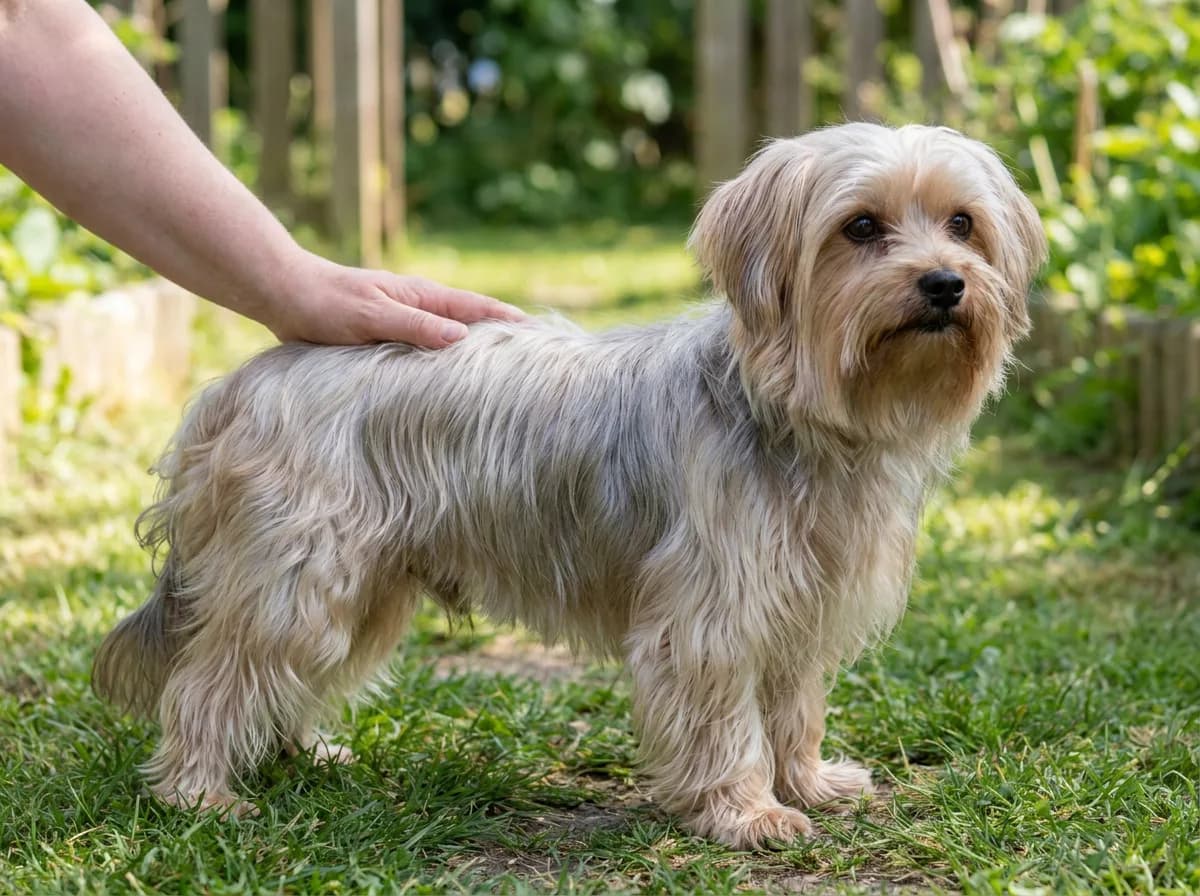
Adult Morkies can look quite different from one another. Some have more Yorkshire Terrier-like coloring or ear carriage; others resemble the Maltese more closely. Black and tan, cream, white, brown, and mixed-color coats may appear in pictures, but a photograph is not a reliable ancestry test. A rounded teddy bear haircut can change the outline of the face and body dramatically.
Puppy hair and adult coat can differ in shade, length, and texture. Do not assume a dark puppy will keep exactly the same color distribution or that every adult will have the same silky finish. When considering a particular puppy, ask to see recent images of its parents and older related dogs, while accepting that the individual may develop differently.
Long hair can conceal the waist and make legs seem shorter. A short pet trim reveals more body outline, but it still does not replace a hands-on body-condition assessment. Our Morkie haircut guide shows how coat length changes appearance and what each style requires at home.
Tools that fit the coat and the dog
For coat maintenance, the aumuca Self Cleaning Slicker Brush, Green is one possible tool when used gently on an appropriate coat. Ask a groomer to demonstrate how to reach through the hair without scraping skin. A brush that looks manageable beside an adult dog may feel bulky around a tiny puppy's face, feet, or armpits; adjust the tool and handling accordingly.
TropiClean Hypo-Allergenic Gentle Coconut Puppy & Kitten Shampoo, 20 oz is a bathing option when its label directions suit the dog. Earth Rated Unscented Dog Grooming Wipes can help with external coat cleanup between baths. Neither product changes adult size, coat ancestry, or a person's allergy risk.
Measure a Morkie for a harness, carrier, and bed
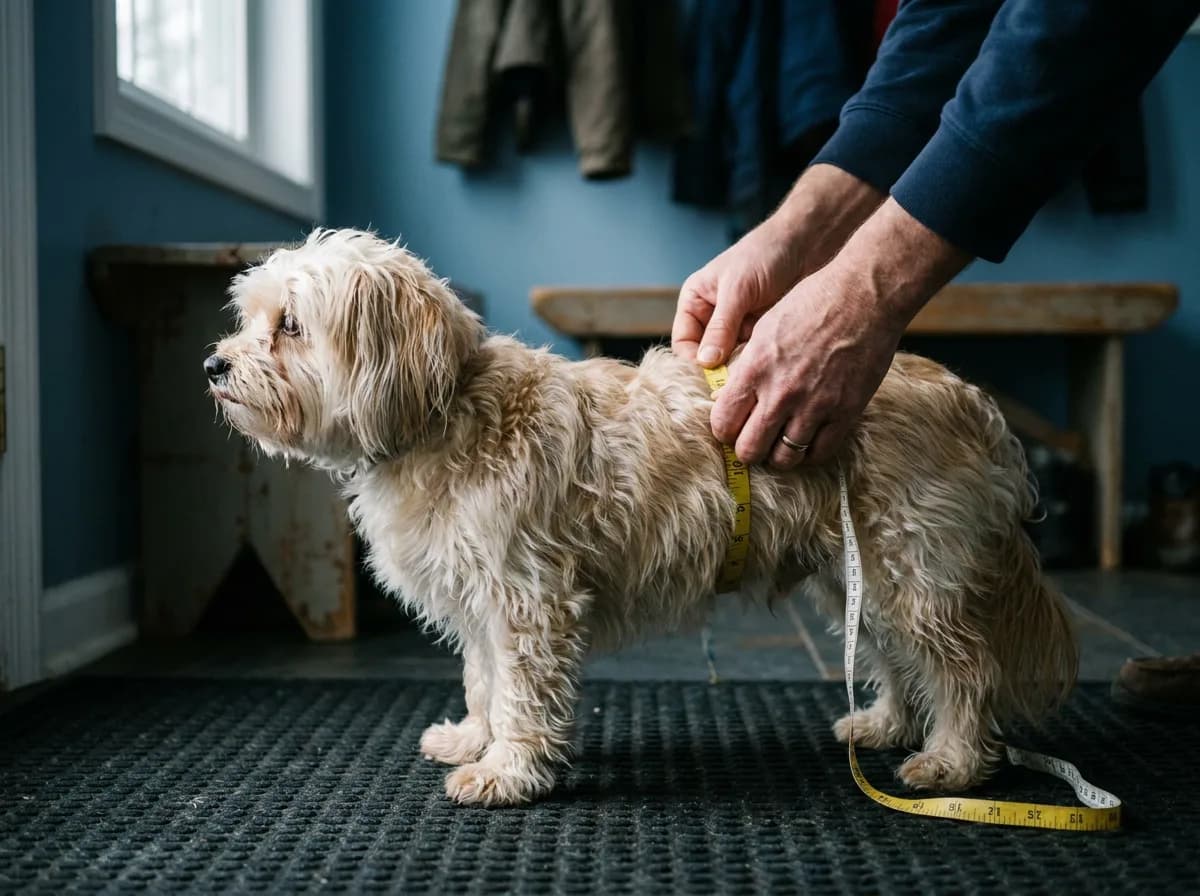
Measure on a level nonslip floor with the dog standing comfortably. Use a flexible tape without pulling hair tight or compressing the body. For height, measure from the floor to the top of the shoulders, not the ears. For a collar or harness, follow the manufacturer's neck and chest measurement instructions; locations and allowances differ.
Harness fitting usually involves chest girth and sometimes neck size. Check the dog walking, turning, sitting, and backing up safely indoors before relying on a new harness outside. Look for rubbing, restricted shoulder movement, straps near the throat, or a design the dog can slip out of. WebVet's harness-versus-collar guide explains the different roles of each.
- For a carrier, check body length, standing height, room to turn, ventilation, and its weight limit.
- For a bed, measure the dog in its usual sleeping position rather than standing alone.
- For a gate or pen, consider the gap between bars as well as overall height.
- Recheck puppy equipment as growth changes its fit.
Mouth size matters for dental equipment too. Vet's Best Enzymatic Dog Toothpaste can be paired with an appropriately small pet brush. The Jasper 360 Dog Finger Toothbrush & Storage Case is an option only if it fits comfortably; a finger brush can be too large for some tiny mouths. Ask your veterinary team to demonstrate a manageable technique.
If size is part of a choice between breeds, compare the actual dogs and their parentage. The Morkie vs Yorkie guide distinguishes a variable cross from the Yorkshire Terrier. The Morkie vs Maltipoo guide explains why the Poodle parent's size makes a Maltipoo label especially important to unpack.
Full-grown Morkie questions
How big Morkies usually get depends on their parents and individual growth. Morkies are generally small dogs. Chewy's breed profile lists a typical 4-to-8-pound weight range and 6-to-11-inch shoulder height, but those figures are reference ranges rather than guaranteed limits for every Maltese-Yorkshire Terrier mix. Ask about both parents, follow your puppy's growth with a veterinarian, and measure your own adult dog before buying equipment. An individual outside a published range needs assessment on its own merits.

Coreen Saito is a pet writer and longtime shelter volunteer with more than a decade in animal rescue. She covers cat behavior, breed care, and the small, ordinary science of sharing a life with companion animals, with a particular focus on honest takes about the products and decisions that actually matter. At home in Arizona, she's outranked by Mac (a dog with the loudest opinion in the house), Rebel (a cat who governs by quiet authority), and Meri (an orange tabby who runs the late shift and the laundry basket). She writes about all three, plus the rescues that keep coming through her life, at LifeWithMinty.com.
Sign up for expert-backed reviews and safety alerts all in one place.