Mini Bernedoodle: Size, Temperament, and Care Guide
A mini Bernedoodle is a Bernese Mountain Dog crossed with a Miniature Poodle, usually 25 to 49 pounds full grown. Here is the complete guide to size, temperament, apartment suitability, grooming, health, and price.
Petful is reader supported. As an affiliate of platforms like Amazon and Chewy, we may earn a commission when you buy through links on this page. There is no extra cost to you.
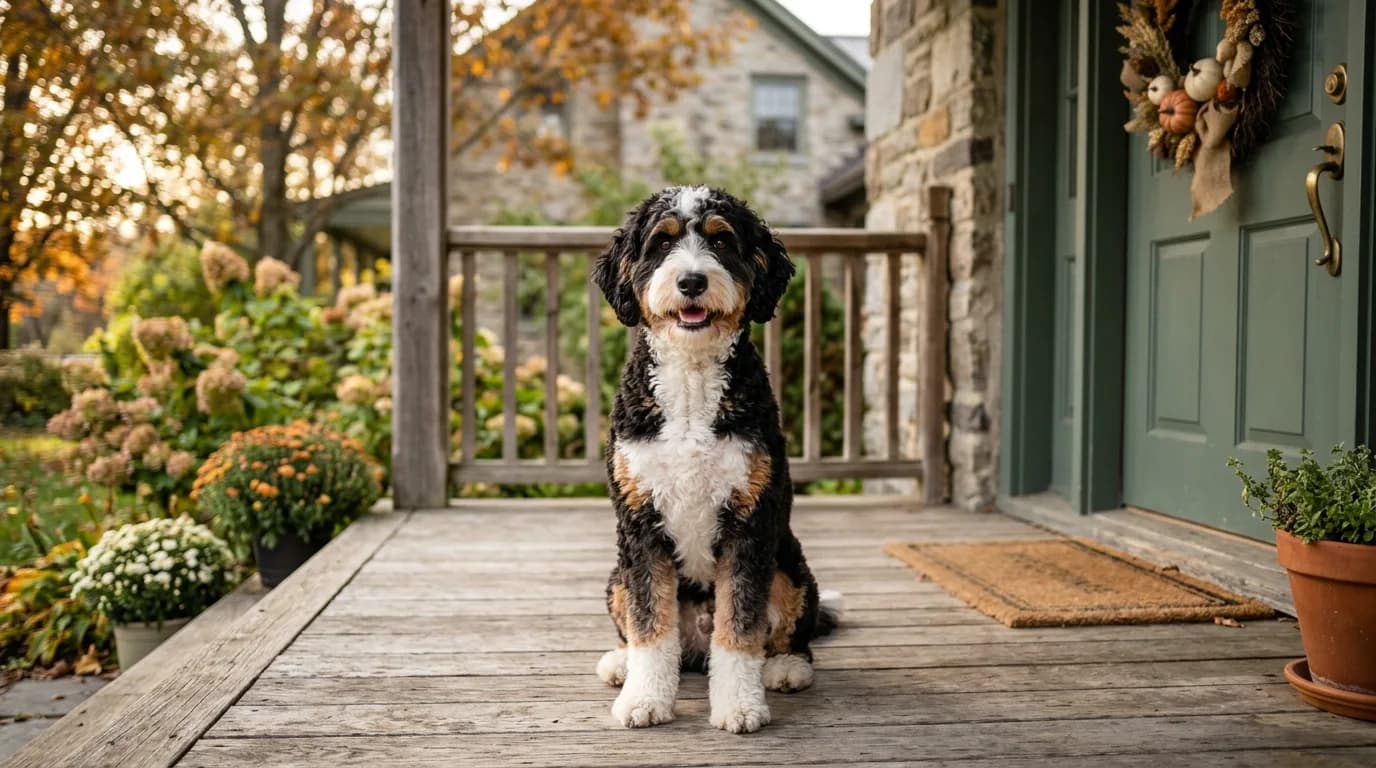
The mini Bernedoodle is what happens when the gentle, teddy-bear looks of a Bernese Mountain Dog get shrunk down to a size that fits in a city apartment. This designer crossbreed pairs a Bernese Mountain Dog with a Miniature Poodle, and the result is a smart, affectionate companion that usually lands somewhere between 25 and 49 pounds full grown. If you love the tuxedo coloring and mellow charm of a full-size Bernedoodle but do not have the space (or the vacuum-cleaner budget) for a 90-pound dog, a mini Bernedoodle is the version most families end up choosing.
This guide walks through everything a first-time owner needs to know: adult size and weight, how the mini differs from the standard and the tiny, temperament, apartment life, exercise, grooming, health, lifespan, and what one actually costs. It sits inside our larger Bernedoodle breed guide, so once you have the mini sorted you can zoom back out to the whole family.
- 1A mini Bernedoodle is a Bernese Mountain Dog crossed with a Miniature Poodle and typically weighs 25 to 49 pounds at maturity
- 2Expect a friendly, people-focused dog that is calmer than most doodles but still needs 45 to 60 minutes of daily exercise and regular professional grooming
- 3Budget roughly $2,500 to $5,000 for a well-bred puppy plus $1,500 to $2,500 a year in ongoing care

Sign up for expert-backed reviews and safety alerts all in one place.
What Is a Mini Bernedoodle?
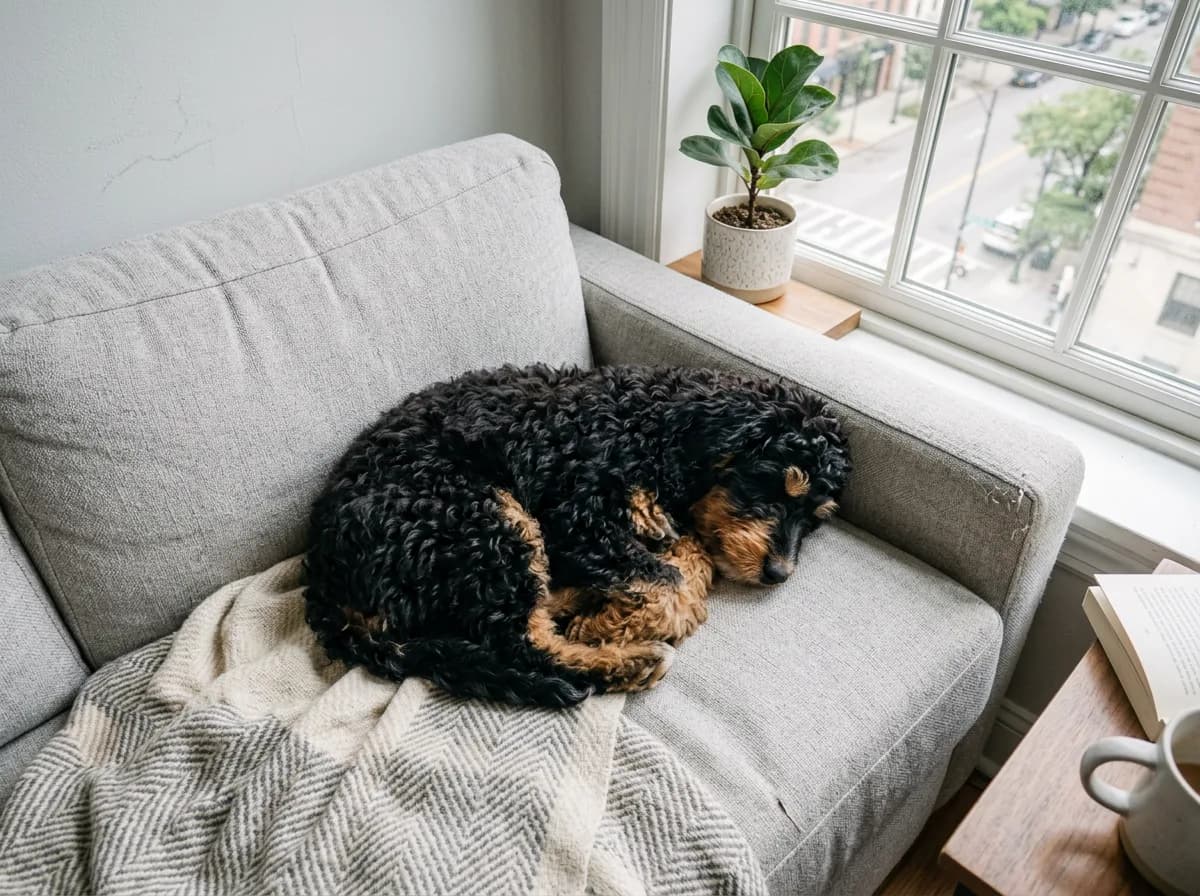
A Bernedoodle is a cross between a Bernese Mountain Dog and a Poodle. The "mini" simply tells you which size of Poodle was used as a parent. A mini Bernedoodle comes from a Bernese Mountain Dog bred to a Miniature Poodle, almost always by way of artificial insemination and careful generational planning, because the size gap between the two purebreds is too large to breed directly.
Bernedoodles are a modern crossbreed. The first intentional litters trace back to 2003, when a Canadian breeder set out to combine the loyal, easygoing nature of the Bernese with the low-shedding, intelligent coat of the Poodle. Because they are a hybrid, mini Bernedoodles are not recognized by the American Kennel Club as a standardized breed, so there is no official "breed standard" locking in size, coat, or color. That variability is the single most important thing to understand before you buy: two mini Bernedoodle puppies from different litters can grow into noticeably different dogs.
Most minis are bred as F1 (first generation, 50% Bernese and 50% Poodle) or F1b (a first-generation Bernedoodle bred back to a Poodle, roughly 75% Poodle). The F1b is the version marketed most heavily to allergy-sensitive homes because the extra Poodle influence tends to produce a curlier, lower-shedding coat.
The generation label matters more than most first-time buyers realize, because it predicts coat and shedding better than the size name does. An F1 mini tends to have a wavy coat and the most classic Bernese tri-color looks, but shedding is a little less predictable. An F1b is curlier, sheds the least, and is the usual pick for allergy-sensitive homes. Multigenerational minis (F2b and beyond) aim to lock in that low-shedding, curly coat across litters. None of these are guarantees, because coat genes still shuffle from puppy to puppy, but the generation tells you which way the odds lean before you ever meet the litter.
Because the breed is unregulated, DNA and health testing on the parent dogs is your best protection against surprises. A reputable breeder should be able to show you the parents' hip, elbow, eye, and genetic-disease clearances (more on that in the health section), and many owners run a breed-and-health DNA panel on their own puppy to confirm the mix and screen for inherited conditions.
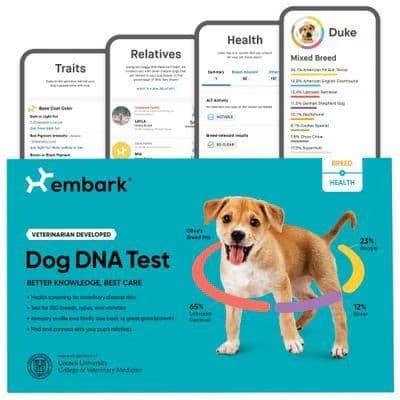
Petful may earn a commission when you click through to Chewy, at no extra cost to you.
How Big Does a Mini Bernedoodle Get?
A mini Bernedoodle usually stands 18 to 22 inches tall at the shoulder and weighs between 25 and 49 pounds once fully grown. That is the honest answer, and the range is wide on purpose: because there is no breed standard, adult size depends on the specific Miniature Poodle used, the size of the Bernese parent, and simple genetic luck within the litter.
Here is how the mini fits between its smaller and larger siblings. This is the comparison chart most buyers actually need, because the same breeder often produces all three sizes and the labels are not standardized between kennels.
| Bernedoodle Type | Poodle Parent | Adult Height | Adult Weight |
|---|---|---|---|
| Tiny (Toy) | Toy Poodle | 12-17 inches | 10-24 pounds |
| Mini | Miniature Poodle | 18-22 inches | 25-49 pounds |
| Standard | Standard Poodle | 23-29 inches | 50-90 pounds |
As the table shows, the mini is the true middle child. It is substantial enough to feel like a "real" dog on a hike and to keep up with active kids, but small enough to scoop up, travel with, and house comfortably without a yard. The tiny (sometimes sold as "toy" or "micro") is a lap-sized version that leans much harder on the Poodle side, while the standard keeps most of the Bernese Mountain Dog's original bulk.
A quick word on the labels: because breeders name their own sizes, one kennel's "mini" can be another kennel's "medium." Always ask for the adult weight of both parents and, ideally, the recorded sizes of previous litters rather than trusting the marketing name alone. For a deeper look at every size tier and a full growth chart, see our dedicated Bernedoodle sizes guide.
Mini vs Standard vs Tiny: How They Differ
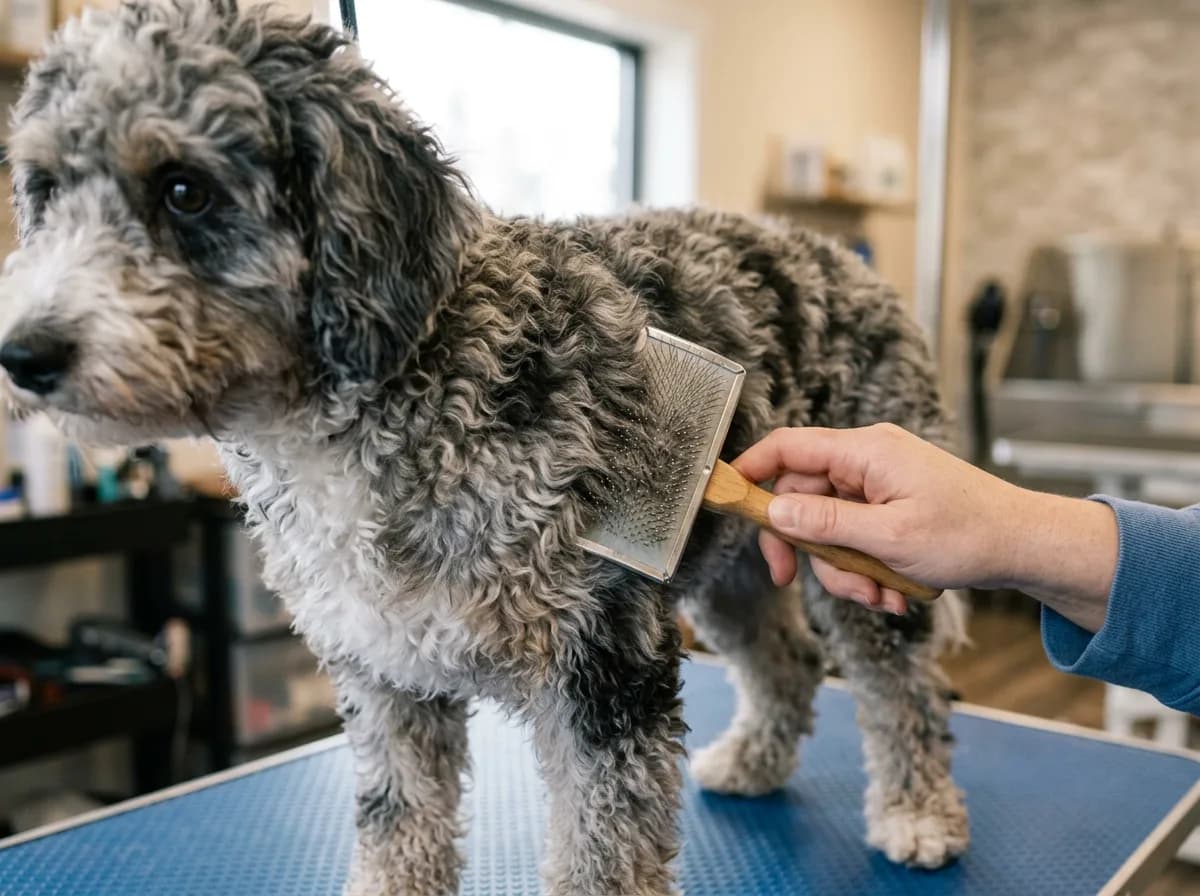
Beyond the numbers, the three sizes suit different lives. A tiny Bernedoodle is a true lapdog for small apartments and lighter-activity owners, but it leans hard on the Poodle side and looks less like a classic Bernese. The standard keeps the Bernese Mountain Dog's imposing build and is the best fit for homes with space, a yard, and owners who want a hiking partner, though the larger size usually means a shorter lifespan and much bigger food and grooming bills. The mini splits the difference: enough dog to be sturdy and playful with kids, small enough to travel and to live comfortably without a yard, and generally longer-lived than the standard. For most families choosing on lifestyle rather than looks alone, the mini is the practical sweet spot, which is exactly why it has become the most popular of the three.
When Does a Mini Bernedoodle Stop Growing?
Mini Bernedoodles reach most of their adult height by around 9 to 11 months and fill out to their final weight between 12 and 14 months. They grow fastest in the first six months, so the puppy you bring home at eight weeks will roughly quadruple in weight over its first half-year. The rough weight milestones below help you sanity-check that a puppy is tracking toward the mini range and not creeping toward standard size.
| Age | Approx. Weight | What to Expect |
|---|---|---|
| 8 weeks | 6-10 pounds | Rapid growth, frequent naps, house-training begins |
| 6 months | 20-30 pounds | Adolescence, peak energy, most adult height reached |
| 12 months | 25-45 pounds | Near-final weight, coat starts changing to adult texture |
| 18 months | 25-49 pounds | Fully mature in body and, usually, temperament |
- A puppy with large paws relative to its body tends to have more growing to do. The most reliable predictor, though, is the adult weight of both parents. Ask the breeder for it in writing before you commit.
Mini Bernedoodle Temperament and Personality
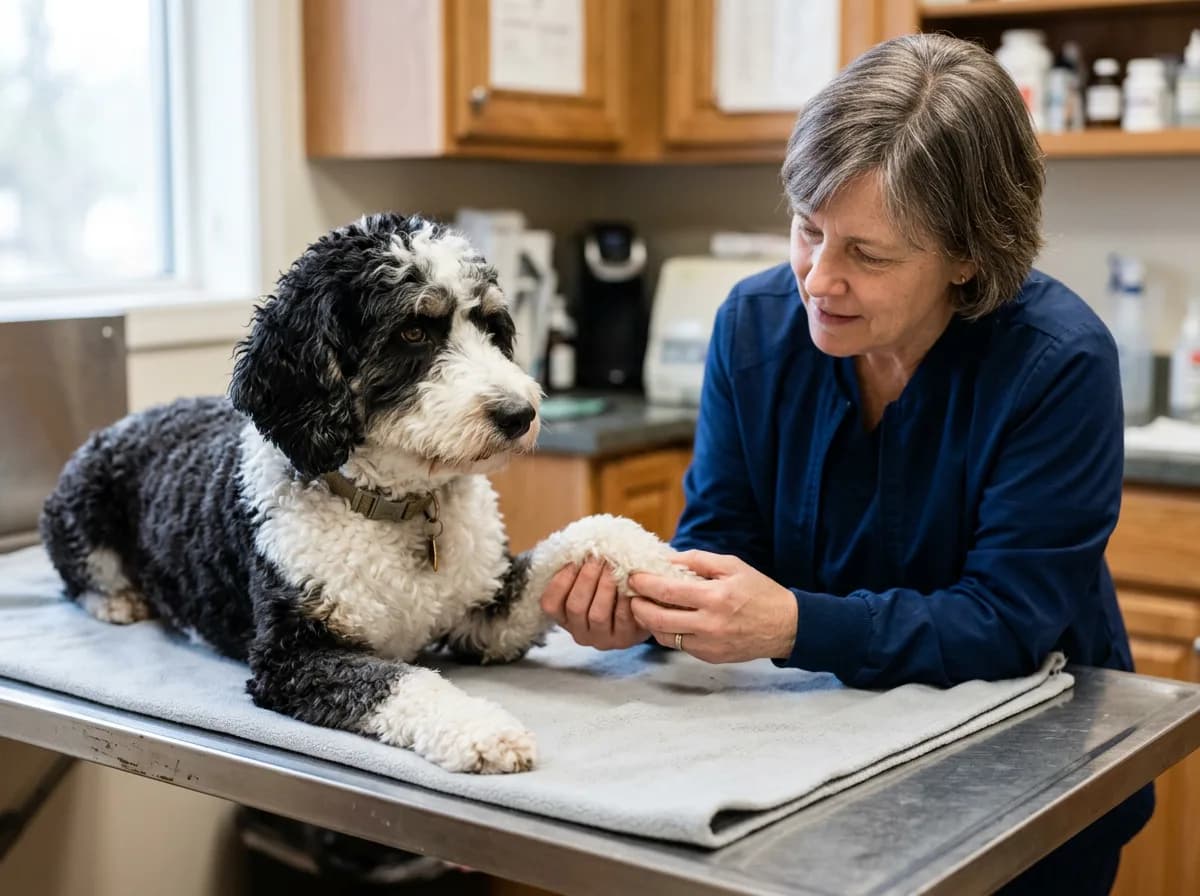
Mini Bernedoodles are known for being affectionate, people-oriented, and eager to please. They inherit the Bernese Mountain Dog's calm, loyal devotion and the Poodle's sharp intelligence, and at their best they blend into a velcro dog that wants to be wherever you are without being frantic about it. They tend to be gentle with children, sociable with other pets, and quick to bond with the whole household rather than fixating on one person.
Intelligence is a double-edged trait. A mini Bernedoodle learns commands fast and thrives on training, which makes early obedience and trick work genuinely fun. That same brain gets bored easily, though. A mini that is left alone too long with nothing to do will invent its own entertainment, and you may not love the results (shredded cushions, dug-up flower beds, or a barking habit). Mental enrichment matters as much as physical exercise for this cross.
Socialization in the first few months shapes the adult dog more than almost anything else. Minis can carry a sensitive, slightly velcro streak from the Bernese side, so puppies that are gently exposed to new people, dogs, surfaces, and sounds grow into confident adults, while under-socialized ones can turn shy or anxious. The good news is that their eagerness to please makes them very responsive to positive-reinforcement training.
Are Mini Bernedoodles Calm?
Yes, mini Bernedoodles are generally calm compared to most doodle crosses, but "calm" here means even-tempered and settled indoors, not low-energy. An adult mini that has had its daily walk and some mental stimulation is typically happy to nap at your feet for the rest of the evening. The Bernese heritage gives them an off switch that high-drive working breeds simply do not have.
Petful may earn a commission when you click through to Chewy, at no extra cost to you.
Two big caveats. First, puppies and adolescents (roughly 4 to 14 months) are not calm. Like any young dog, they go through a zoomie-filled, boundary-testing phase, and the calm adult temperament arrives with maturity and consistent training. Second, calm depends on needs being met. A mini that is under-exercised or left alone all day is not calm; it is under-stimulated, and it will show you. Meet the exercise and enrichment bar and the mellow reputation holds up well.
- Because Bernedoodles are a crossbreed with no fixed standard, temperament varies from dog to dog even within a single litter. Meeting the parents and, if possible, the puppy's older siblings gives you a far better read on adult personality than the breed label alone.
Are Mini Bernedoodles Good Apartment Dogs?
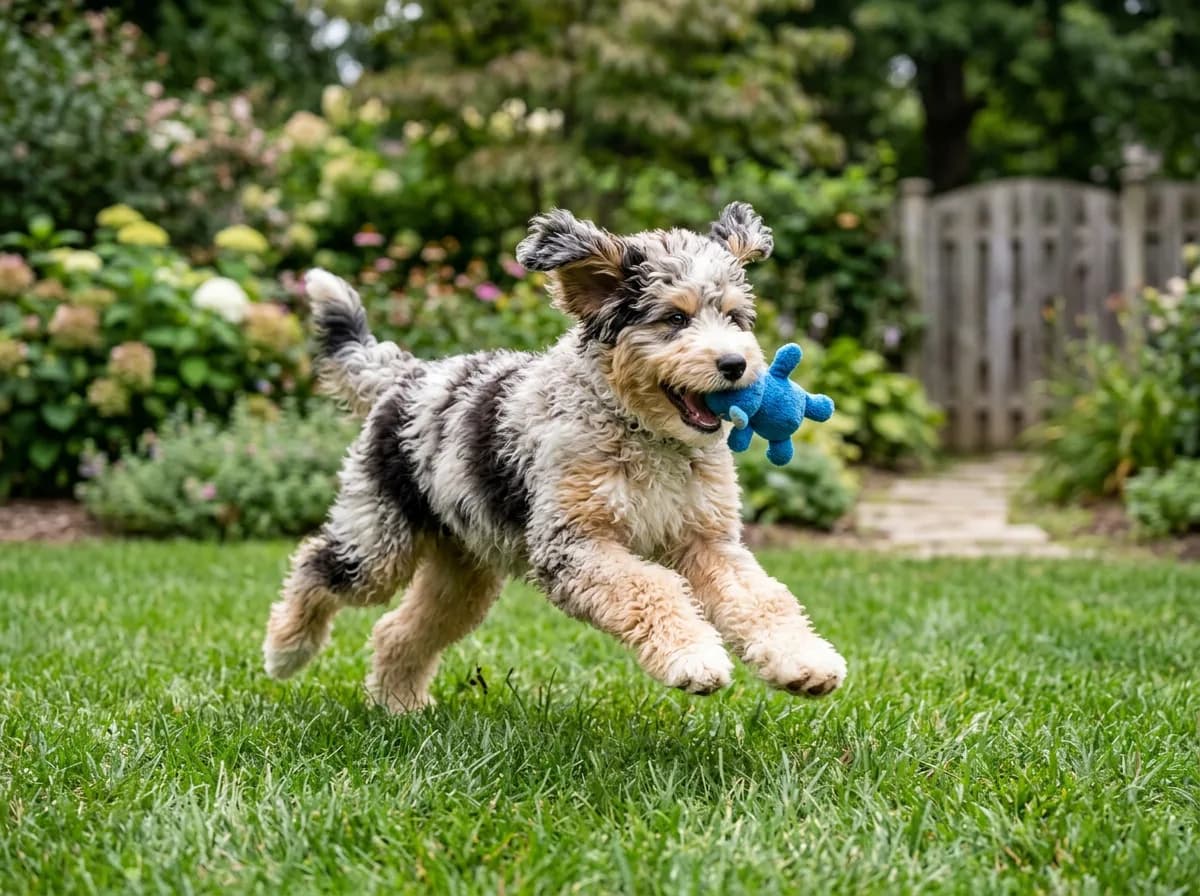
Mini Bernedoodles adapt well to apartment living, which is a big part of why the size exists. At 25 to 49 pounds they are compact enough for smaller spaces, and their calm-indoors temperament means they are not pacing or vocalizing all day the way some terriers or working breeds do. Their typically low-shedding coat is a bonus in a space where dog hair has nowhere to hide.
Three conditions make apartment life work. The first is exercise: a mini without a yard needs its walks to be non-negotiable, because the apartment cannot substitute for daily movement. The second is company. This is a social breed that struggles with long stretches of isolation, so a home where someone is around for much of the day, or a plan for midday walks and dog daycare, suits them far better than eight-plus hours of daily solitude. The third is barking management. Minis are not especially yappy, but a bored or anxious one can develop nuisance barking that neighbors notice, so early training around alone-time and doorbells pays off.
If you are weighing a mini against other apartment-friendly designer breeds, it lands close to a Cavapoo in adaptability but tends to be a touch larger and a bit more exercise-hungry. For most renters, the deciding factor is honestly the walking commitment rather than the square footage.
Exercise Needs
Plan on 45 to 60 minutes of exercise a day for an adult mini Bernedoodle, split across a couple of walks plus some active play. They are a moderately energetic cross: more athletic than a lapdog, less relentless than a herding breed. A brisk morning walk, a shorter evening walk, and 10 to 15 minutes of fetch or tug in between is a realistic daily rhythm that keeps most minis physically satisfied.
Mental exercise is not optional for this smart cross. Puzzle feeders, scent games, short training sessions, and rotating toys all tire a mini out in a way that a treadmill never could. Many owners find that 15 minutes of nose work or trick training buys them a calmer dog for the rest of the day than an extra half-hour of walking would. Because they excel at learning, mini Bernedoodles also do well in dog sports like rally, agility, and obedience trials, which double as bonding time.
Be careful with joints while the dog is still growing. Bernese ancestry brings some hip and elbow risk, so keep high-impact activity (long runs on hard pavement, repetitive jumping) light until the growth plates close around 12 to 18 months. Swimming, gentle walks, and puppy-appropriate play are safer ways to burn energy in the first year. A supportive orthopedic bed also helps protect those joints during the long hours a growing dog spends sleeping.
Grooming a Mini Bernedoodle
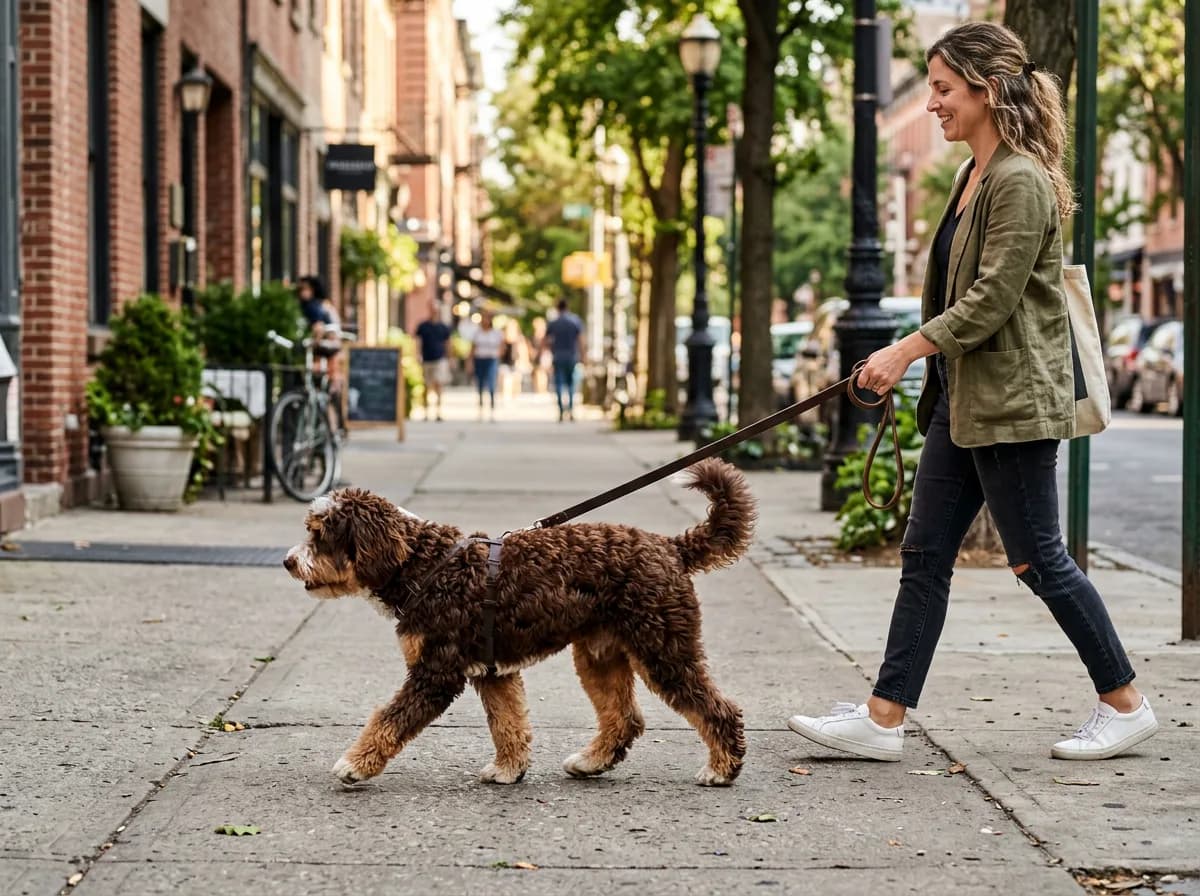
Grooming is the single biggest ongoing commitment with this breed, and it is the part new owners most often underestimate. Mini Bernedoodles have a dense, usually wavy-to-curly coat that is low-shedding but high-maintenance. Low shedding does not mean low effort: the hair that would otherwise fall out instead mats against the body, so a coat that is not brushed regularly turns into a felted mess fast.
At home, brush the coat three to four times a week, and daily during seasonal coat changes or once the adult coat comes in around 8 to 12 months (a stage many owners call "coat blowout," when soft puppy hair sheds out and tangles cling to the new texture). A slicker brush plus a metal comb to check for mats at the skin is the standard kit. Professional grooming every 6 to 8 weeks for a bath, trim, sanitary clip, nail trim, and ear cleaning keeps the coat manageable and the dog comfortable. For more, see Petful’s guide to dingleberries and pseudocoprostasis.
Coat type drives how much work you are signing up for. Curlier, more Poodle-like coats (common in F1b minis) shed the least and are the best bet for allergy-sensitive homes, but they mat the fastest and need the most brushing. Wavier F1 coats are a little more forgiving to brush but may shed slightly more. Straighter coats, which show up occasionally, shed the most and often disappoint buyers who came specifically for a hypoallergenic dog.
Do not skip the details. Bathe every 4 to 6 weeks with a gentle dog shampoo (over-bathing strips the coat and dries the skin). Because doodles have hair inside the ear canal and floppy ears that trap moisture, check and clean the ears weekly to head off infections, and trim or pluck the hair around the eyes so it does not irritate them or cause tear staining. Brushing the teeth several times a week rounds out the routine. Our full Bernedoodle grooming guide covers coat-specific tools and clip styles in more depth.
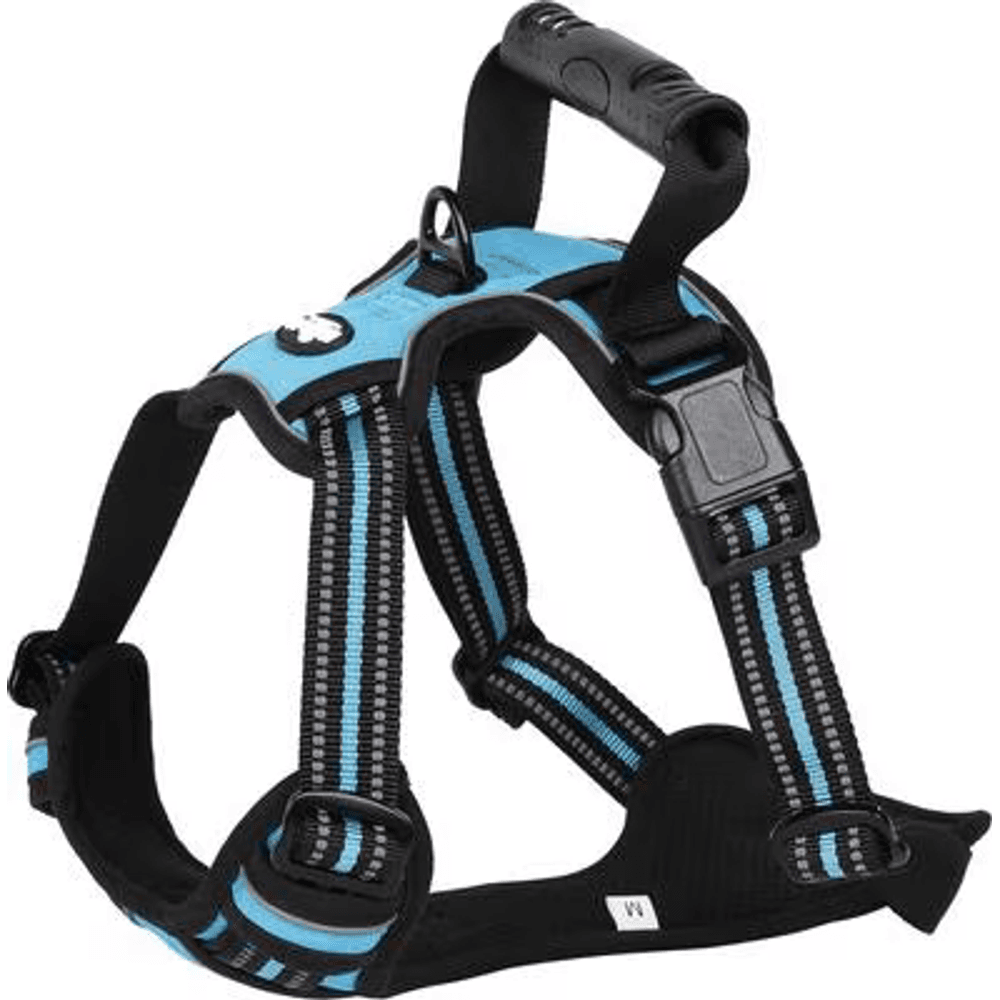
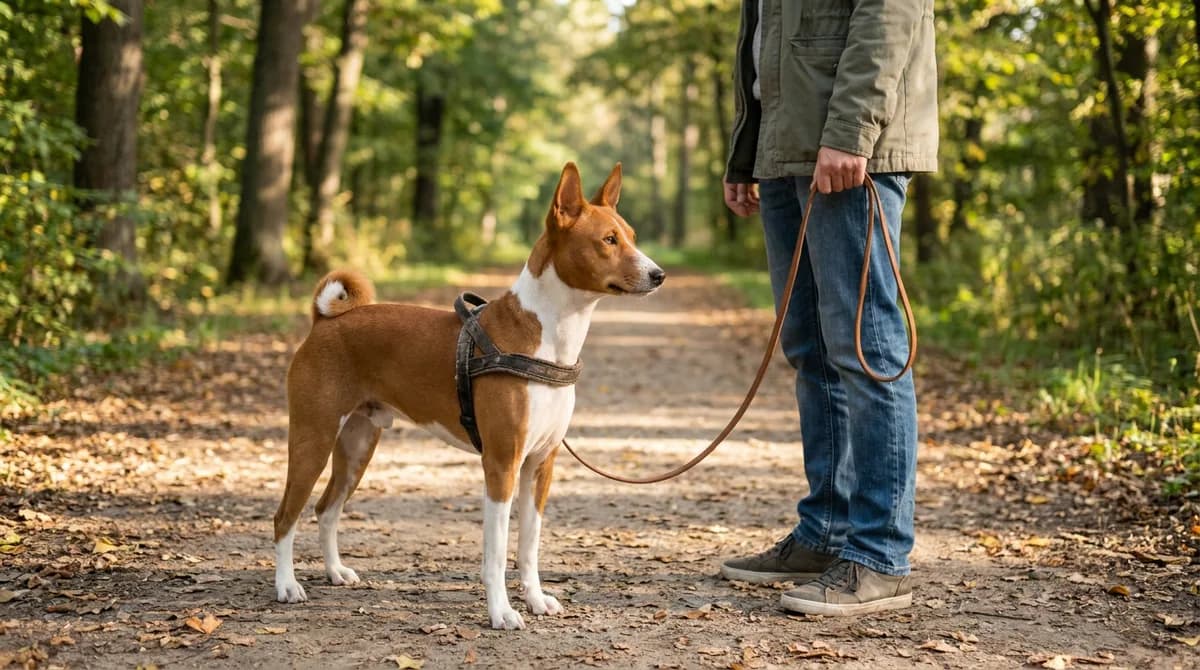
A padded, reflective no-pull harness that spreads leash pressure across the chest instead of the throat, the switch most vets recommend for a dog with a cough, a collapsing trachea, or any airway irritation so the leash never presses on
Petful may earn a commission when you click through to Chewy, at no extra cost to you.
- A neglected doodle coat mats down to the skin, traps moisture, hides parasites, and becomes painful. Severely matted dogs often have to be shaved to the skin at the groomer. Commit to the brushing schedule before you commit to the breed.
Mini Bernedoodle Health and Lifespan
Mini Bernedoodles typically live 12 to 16 years, which is longer than the Bernese Mountain Dog parent (often just 7 to 10 years) thanks to hybrid vigor and the smaller adult size. Crossbreeding widens the gene pool and can reduce the odds of some inherited disorders, but it does not erase them, and minis can still inherit conditions from either side. For more, see Petful’s guide to Bernedoodle health problems.
The conditions worth knowing about include hip and elbow dysplasia (from the Bernese side), progressive retinal atrophy and other eye disorders (from both parents), and a few Poodle-linked issues such as von Willebrand disease (a blood-clotting disorder) and sebaceous adenitis (a skin condition). The Bernese line also carries a genetic predisposition to certain cancers, which is one reason DNA and health screening of the parents matters so much. This is a good example of why some owners choose the standard Bernedoodle for size but the mini for a longer expected lifespan.
The best defense is buying from a breeder who health-tests the parents. Look for hip and elbow evaluations, an eye exam, and genetic-disease panels documented through the Orthopedic Foundation for Animals or equivalent. Veterinary resources such as the Cornell University College of Veterinary Medicine are good references for understanding the specific conditions before you talk to a breeder. Once your puppy is home, keep it lean (excess weight punishes those inherited joints), stay current on preventive care, and consider pet insurance early, before any condition can be labeled pre-existing.
- A responsible breeder volunteers health clearances for both parents without being pushed. If a seller cannot produce hip, elbow, eye, and genetic-test results, treat that as a reason to walk away, no matter how cute the puppies are.
How Much Does a Mini Bernedoodle Cost?
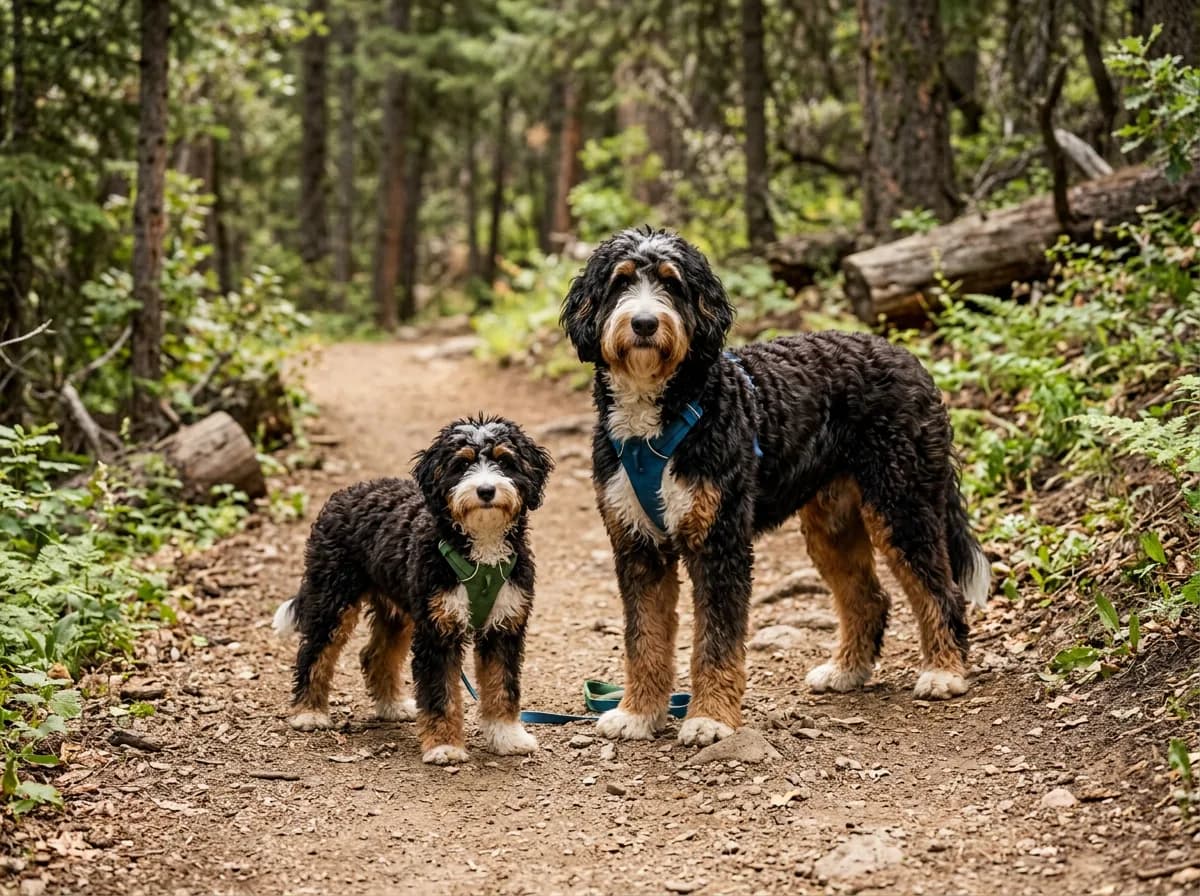
The average cost of a mini Bernedoodle puppy from a reputable breeder is roughly $2,500 to $5,000, with many falling around the $3,000 to $4,000 mark. Minis often sit at the higher end of the Bernedoodle price range because the smaller size is in high demand and the breeding itself is more complex (that size gap between a Bernese and a Miniature Poodle usually requires artificial insemination). Rare colors like merle or a strong tri-color pattern can push the price higher still.
The sticker price is only the beginning. Below is a realistic breakdown of what the first year and the ongoing years actually cost, so the puppy price does not blindside you.
| Expense | One-Time / First Year | Recurring (Annual) |
|---|---|---|
| Puppy from a reputable breeder | $2,500-$5,000 | n/a |
| Initial supplies (crate, bed, bowls, leash) | $200-$500 | n/a |
| First-year vet care (vaccines, spay/neuter, exams) | $500-$1,000 | n/a |
| Professional grooming | $400-$700 | $500-$900 |
| Food and treats | $400-$700 | $400-$700 |
| Pet insurance or health fund | $400-$700 | $400-$700 |
Add it up and the first year commonly runs $4,500 to $8,000 all in, with ongoing years landing around $1,500 to $2,500 depending on grooming frequency and insurance. Grooming is the recurring line most owners forget, and for a mini Bernedoodle it is not optional, so build it into the budget from day one. For a full regional and generation-by-generation pricing picture, see our Bernedoodle price guide.
- A mini Bernedoodle advertised well below the typical range often means skipped health testing, which can cost far more in vet bills later. Adoption through a doodle-specific rescue is the genuinely lower-cost route, usually $500 to $1,000, and a good one for families open to an older dog.
The Downsides of a Mini Bernedoodle
For all their charm, mini Bernedoodles are not the right fit for every home, and the honest downsides are worth naming before you buy. The most common regrets fall into a handful of buckets.

Petful may earn a commission when you click through to Chewy, at no extra cost to you.
- High grooming demands: the low-shedding coat needs brushing several times a week plus professional grooming every 6 to 8 weeks, which is real time and money that never stops.
- Separation anxiety: this is a deeply people-focused breed that does not do well left alone for long workdays, and a lonely mini can develop destructive or barking habits.
- Unpredictable size and coat: with no breed standard, the puppy you pick may mature larger, smaller, curlier, or shed more than advertised.
- Price and demand: they are expensive up front, waitlists can be long, and the popularity has drawn in careless or unethical breeders you have to screen out.
- Exercise and enrichment needs: they are calmer than most doodles but still need daily physical and mental exercise, and they get bored (and mischievous) without it.
- Health screening is on you: because the cross is unregulated, avoiding inherited problems depends entirely on choosing a breeder who tests, or accepting some genetic uncertainty.
None of these are dealbreakers for a prepared owner. They are simply the trade-offs that come with a high-demand designer crossbreed, and knowing them in advance is the difference between a happy match and a returned puppy.
Is a Mini Bernedoodle Right for You?
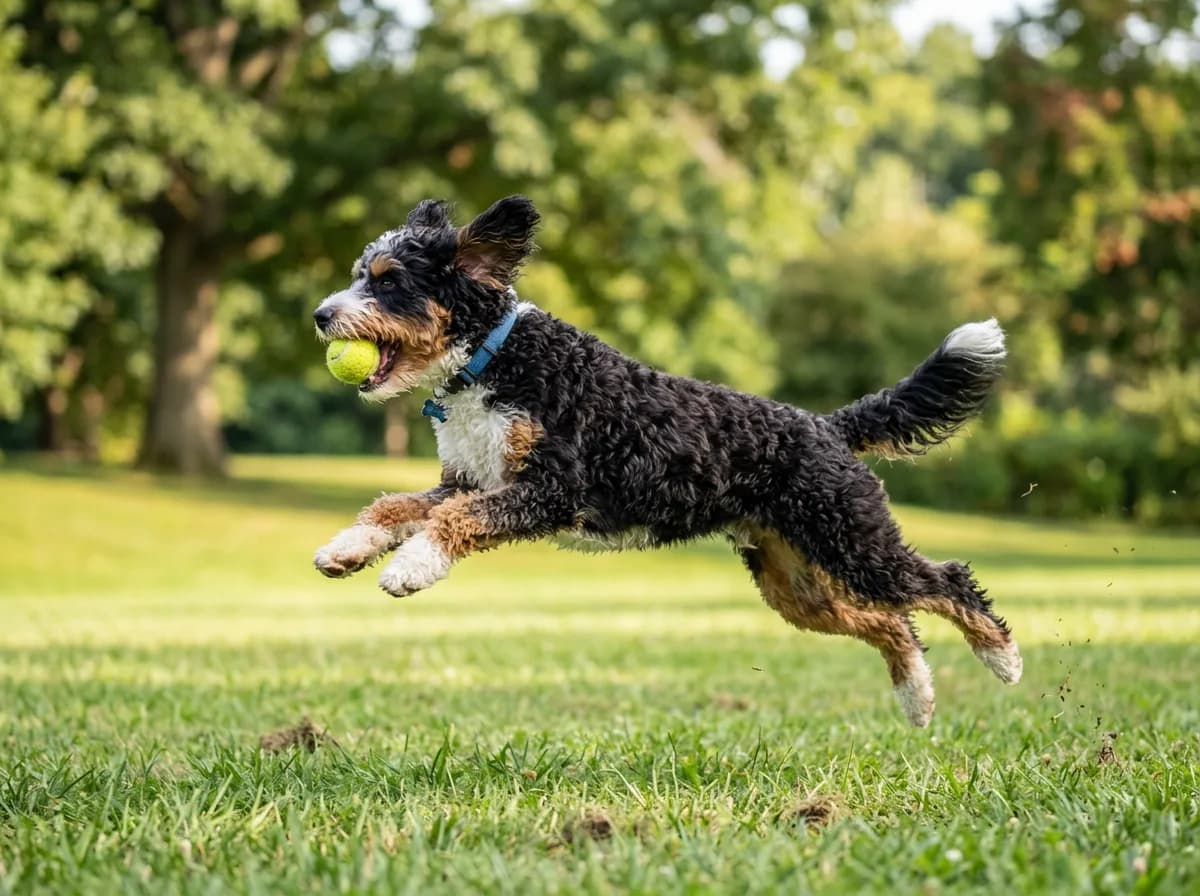
A mini Bernedoodle is an excellent choice for an owner who wants a medium-sized, affectionate, trainable companion, can commit to the grooming, and will not leave the dog alone for long stretches. It suits families with children, active singles or couples, apartment dwellers with a solid walking routine, and allergy-sensitive homes that choose a curlier-coated line. It is a poor choice for someone who is gone all day, wants a wash-and-wear coat, or is shopping purely on price.
If that sounds like your household, start by finding a breeder who health-tests, meet the parents, and ask about the specific generation (F1 versus F1b) so you know what to expect from the coat. Then read up on the wider family in our complete Bernedoodle guide and compare the sizes head to head in the Bernedoodle sizes breakdown so the mini you bring home is the one you actually pictured.
Frequently Asked Questions
Are Mini Bernedoodles Hypoallergenic?
No dog is truly 100 percent hypoallergenic, but a well-bred mini Bernedoodle is one of the more allergy-friendly companions you can choose, which is a big reason the Poodle cross exists in the first place. The thing most buyers get wrong is assuming the hair itself is the problem. The actual triggers are dander (dead skin flakes) and proteins in a dog's saliva and urine. A low-shedding coat helps because it releases far less of that dander into the air and onto your furniture, not because the coat is somehow allergen-free.
Coat type is what decides how allergy-friendly a given mini turns out to be, and it does not always match the marketing. Curlier, more Poodle-like coats (most common in F1b minis) trap loose hair and dander against the body instead of dropping it around the house, so they are the safest bet for a sensitive home. Wavier F1 coats are a little less predictable, and the occasional straight-coated mini sheds the most and is the poorest choice for an allergy sufferer, even when it is sold under the same "hypoallergenic" banner. Because coat genes still shuffle from puppy to puppy, no breeder can promise a specific reaction, so the only honest test is to spend real time around the actual puppy and its parents before you commit.
If someone in your home has allergies, a few habits keep reactions low without giving up the dog:
- Meet the specific puppy and both parents in person first, and stay long enough to see whether symptoms flare.
- Keep up the brushing and professional grooming schedule, since regular coat care removes loose dander before it spreads.
- Run a HEPA air purifier in the main living areas and vacuum with a HEPA filter.
- Wash the dog's bedding weekly and bathe the dog every 4 to 6 weeks to keep dander down.
- Make the bedroom a dog-free zone so at least one room stays low-allergen.
- Wipe the coat down with a damp cloth after walks to lift pollen and dander off the fur.
- No breeder can promise an allergy-free dog, and a straight-coated mini can trigger symptoms as much as any shedding breed. If allergies are serious, arrange a trial visit with the litter and, ideally, an adult dog from the same lines before you pay a deposit.
How to Find a Reputable Mini Bernedoodle Breeder
Because the Bernedoodle is an unregulated crossbreed in very high demand, the breeder you choose matters more than it would with a registered purebred. The same popularity that makes minis so appealing has pulled in puppy mills, backyard breeders, and online scammers, and a poorly bred puppy is where most heartbreak (and most surprise vet bills) begins. Screening the breeder carefully is the single most protective thing you can do before any money changes hands.
Green Flags and Red Flags
A responsible breeder makes the following easy to verify:
- Health-tests both parents and shows documented hip, elbow, eye, and genetic-disease clearances (through the OFA or an equivalent) without being pushed.
- Lets you visit the home or video-call live, and always lets you meet the mother and see where the puppies are raised.
- Raises the litter underfoot in the house with early socialization, so puppies meet everyday sights, sounds, and handling before they leave.
- Runs a small number of litters, usually with a waitlist, rather than always having puppies ready to go.
- Provides a written contract, a health guarantee, and a standing commitment to take the dog back at any point in its life.
Walk away when you see the opposite:
- Puppies are always in stock, or the same seller offers many different doodle mixes at once.
- The breeder will not let you see the parents, the home, or the litter on a live video call.
- You are pushed to wire a deposit before any real conversation, or pressured to ship a puppy sight unseen.
- The price sits far below the typical $2,500 to $5,000 range, which usually signals skipped health testing.
- No health paperwork can be produced for either parent.
Questions to Ask Before You Pay
- Can I see both parents' health clearances, and what generation (F1 or F1b) is this litter?
- What were the adult weights of previous litters, so I can gauge the size my puppy will likely reach?
- How are the puppies socialized during their first eight weeks?
- What does the health guarantee cover, and for how long?
- What happens if the placement does not work out down the road?
Expect a good breeder to interview you just as hard, and to work from a waitlist and a modest deposit rather than a puppy you can take home the same day. If you would rather adopt, doodle-specific and Poodle rescues regularly place mini Bernedoodles and Bernedoodle mixes for roughly $500 to $1,000, which is both a lower-cost route and a good option for families open to an adult dog with a settled, known temperament. Skip pet stores and puppy-broker websites entirely: those puppies almost always trace back to the exact mills a careful buyer is trying to avoid. There is more on this in Petful’s guide to Bernedoodle temperament.
What Is a Micro Mini, Teacup, or Petite Bernedoodle?
"Micro mini," "teacup," and "petite" are breeder marketing labels, not recognized size categories. The Bernedoodle is a designer cross with no kennel-club standard, so any breeder can attach these names to their smallest puppies. In practice they describe a dog bred below the standard Mini Bernedoodle range, usually by crossing a Bernese Mountain Dog (or an existing Mini Bernedoodle) with a Toy Poodle instead of a Miniature Poodle.
A standard Mini Bernedoodle generally matures around 18 to 49 pounds. Dogs sold under these smaller labels typically land lower, often in the 10 to 25 pound range, though the final weight depends on the parents and generation.
- Micro mini and micro-mini: usually the smallest offered, bred down through Toy Poodle lines.
- Teacup: an informal term with no fixed definition, so its meaning varies from breeder to breeder.
- Petite: often used for dogs slightly above teacup but still under the standard mini.
Smaller size can mean a higher price, a shallower gene pool, and in some lines more inherited health risk. Ask for the parents' adult weights and health testing rather than trusting the label alone. There is no guaranteed adult weight for a "teacup" puppy.
F1, F1b, and F2 Mini Bernedoodles: What the Generations Mean
The generation label tells you how much Poodle is in the mix, which in turn shapes coat type and how much the dog sheds. Here is what each one means:
- F1: a first-generation cross, 50% Bernese Mountain Dog and 50% Miniature Poodle. Coats range from wavy to curly, and shedding is light to moderate.
- F1b: an F1 Mini Bernedoodle bred back to a Poodle, making the puppy about 75% Poodle. These usually have the curliest, most reliably low-shedding coats, so this is the generation most often recommended for people with allergies.
- F2: two F1 Mini Bernedoodles bred together. Coat and shedding are the least predictable across a litter, since traits can favor either parent breed.
If low shedding is your priority, an F1b is generally the safest bet, though no Bernedoodle is truly 100% non-shedding. Ask the breeder which generation a litter is and request to see the parents' coats in person. Multigenerational dogs (F2b and beyond) also exist and are bred to lock in a consistent, curly, low-shed coat.
Mini Bernedoodle Colors: Tri-Color, Merle, and More
Mini Bernedoodles come in far more coat colors than the classic Bernese look. The most common include:
- Tri-color: the traditional Bernese pattern of black, white, and rust (tan), prized because it mirrors the purebred parent.
- Bi-color and parti: black and white, or large patches of white paired with another color.
- Sable and phantom: sable coats carry darker-tipped hairs that often lighten as the dog matures, while phantom shows tan points on a solid base, similar to a Doberman's markings.
- Merle and blue merle: a mottled, marbled pattern, with blue merle being that marbling over a black base for a gray-blue effect.
One important caution on merle: breeding two merle dogs together can produce "double merle" puppies with a high risk of deafness and blindness. A responsible breeder never pairs two merles, so if you want a merle Mini Bernedoodle, confirm that only one parent carries the pattern.
Coat color does not affect temperament or health on its own, but rarer patterns like merle often carry a higher price.
The main downsides are demanding grooming (brushing several times a week plus a professional groom every 6 to 8 weeks), a tendency toward separation anxiety when left alone too long, unpredictable adult size and coat because there is no breed standard, a high purchase price with long waitlists, and daily exercise and enrichment needs that, if unmet, lead to boredom and mischief.
A mini Bernedoodle typically stands 18 to 22 inches tall at the shoulder and weighs 25 to 49 pounds fully grown. It reaches most of its adult height by 9 to 11 months and fills out to final weight by 12 to 14 months. Exact size varies because the cross has no fixed breed standard, so ask for the adult weight of both parents.
A mini Bernedoodle puppy from a reputable, health-testing breeder usually costs $2,500 to $5,000, with most around $3,000 to $4,000. Rare colors cost more. Factor in $200 to $500 in supplies, $500 to $1,000 in first-year vet care, and ongoing costs of roughly $1,500 to $2,500 a year, with grooming as the biggest recurring expense.
Yes, Bernedoodles (including minis) are generally calm and even-tempered indoors once they mature and their exercise needs are met, thanks to the mellow Bernese Mountain Dog side. Puppies and adolescents up to about 14 months are energetic and still developing that calm adult temperament, and any Bernedoodle that is under-exercised or left alone too much will not be calm.

Coreen Saito is a pet writer and longtime shelter volunteer with more than a decade in animal rescue. She covers cat behavior, breed care, and the small, ordinary science of sharing a life with companion animals, with a particular focus on honest takes about the products and decisions that actually matter. At home in Arizona, she's outranked by Mac (a dog with the loudest opinion in the house), Rebel (a cat who governs by quiet authority), and Meri (an orange tabby who runs the late shift and the laundry basket). She writes about all three, plus the rescues that keep coming through her life, at LifeWithMinty.com.
Sign up for expert-backed reviews and safety alerts all in one place.