Husky Colors: Photos, Patterns and Markings
Compare seven Husky coat appearances, separate color from markings, and understand the current breed standard. Learn what photographs, registration labels and rare-color claims can actually tell you.
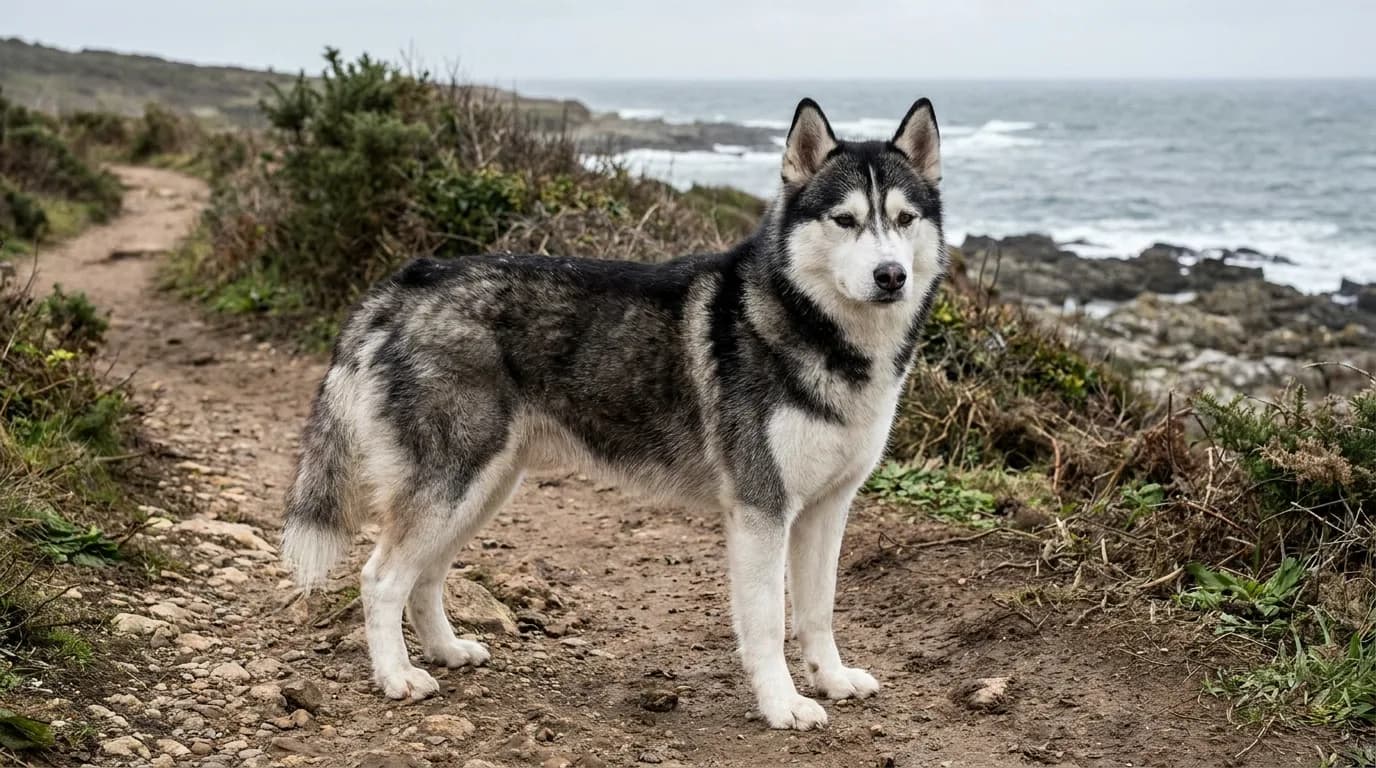
Coat color is one visible feature of a Siberian Husky.
Petful is reader supported. As an affiliate of platforms like Amazon and Chewy, we may earn a commission when you buy through links on this page. There is no extra cost to you.
Husky colors include black, gray, agouti, sable, red and white, with several ways those colors and white markings can appear together. A dark facial mask, a pale body or a patchwork coat can change the overall impression without describing a separate breed.
This guide separates the color you see from its distribution across the dog. Use the coat references to describe an appearance, then check the distinctions between the written breed standard, registration labels and claims that need more evidence than a photograph.

Sign up for expert-backed reviews and safety alerts all in one place.
Husky colors at a glance
The current standard for the Siberian Husky permits six named color families: black, gray, agouti, sable, red and white. These can appear as solid colors, multiple shades or combinations with white markings. The AKC breed standard gives no preference to an allowed color, pattern or marking.
The seven references below include piebald because it is useful to recognize, but piebald describes white distribution rather than a seventh pigment family. Looking at guard hairs and the placement of white areas gives you a more useful starting point than counting every marketing name as another color.
Keep three observations separate:
- The color or mixture of colors in the coat.
- The amount and position of white across the body.
- The shape of facial markings, including a mask or blaze.
- 1Start with a clear coat description before choosing a label.
- 2Record white distribution separately from the color of the surrounding coat.
- 3Remember the identification limits of photographs when discussing ancestry, genetics or unusual-color claims.
How to read a Husky's coat
Start with the whole dog in ordinary daylight. Then look more closely at the shoulder or flank, where the outer coat is easier to compare with the softer undercoat. A face-only photograph can emphasize a striking mask while hiding the body pattern.
The standard describes a double coat with guard hairs lying smoothly over an undercoat. Those layers need not give exactly the same color impression. Parting a small area gently can reveal information that disappears when you look only at the surface.

A stainless steel dog and cat grooming comb for gentle coat checks. Work in small sections and stop at tight tangles or discomfort.
Petful may earn a commission when you click through to Chewy, at no extra cost to you.
Use a consistent order:
- Describe the overall shade before considering a particular name.
- Note where the white begins and ends.
- Look for dark tips or bands along visible hairs.
- Compare the face with the body rather than letting the mask decide the label.
An aumuca stainless steel grooming comb is an optional tool for ordinary coat checks. Use it gently and stop at resistance. Combing should help you inspect the coat, not turn identifying a shade into an uncomfortable grooming session.
Black and white Huskies
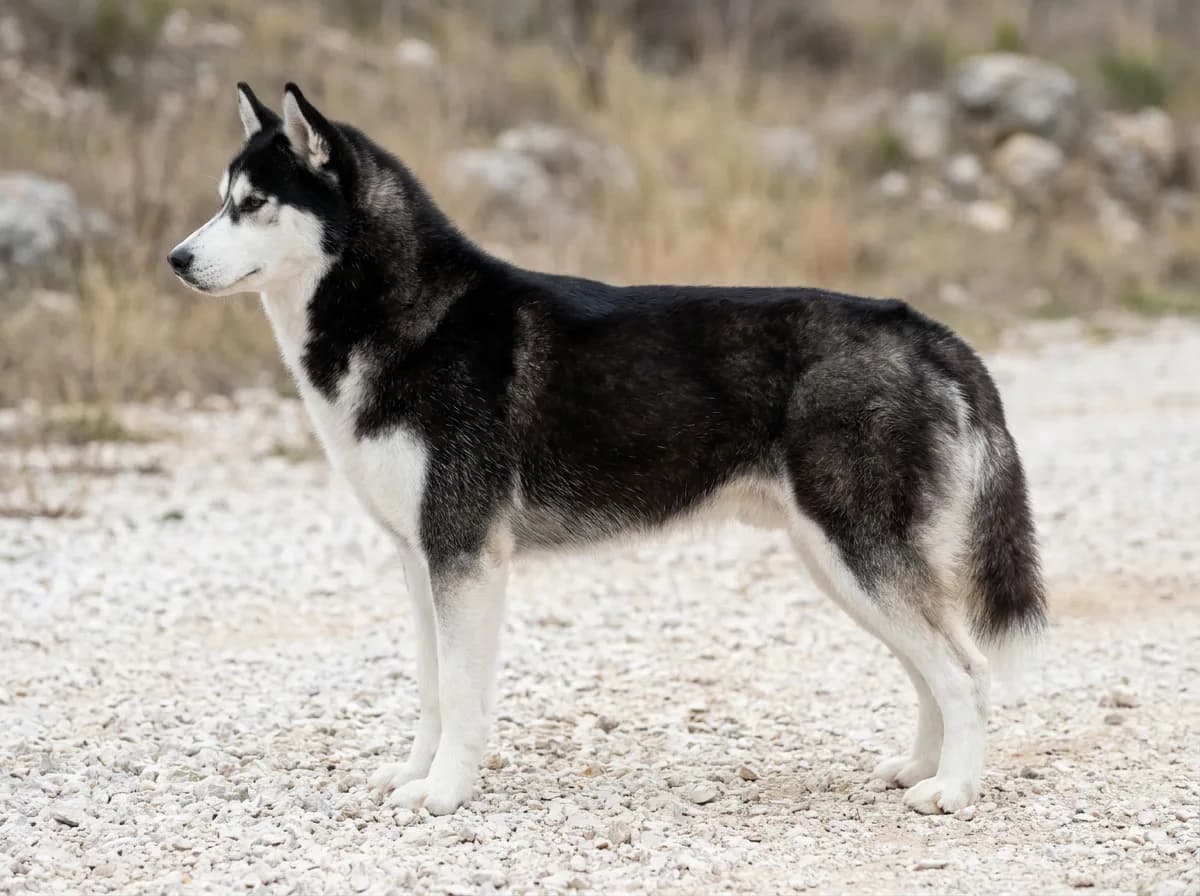
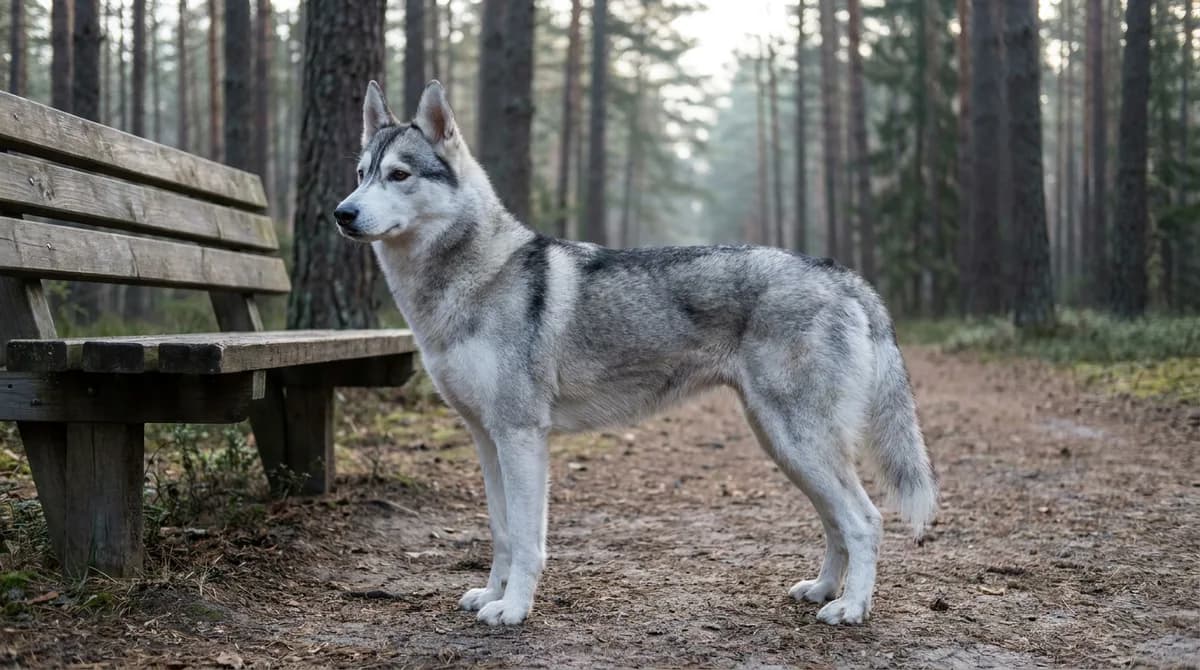
A black and white Husky has a dark overall coat appearance interrupted by white areas. The white may frame the muzzle, extend across the chest or appear on the legs and underside. Its arrangement matters as much as the darkness of the back when you are describing an individual dog.
A black Siberian Husky does not need a perfectly symmetrical face. The standard permits both symmetrical and asymmetrical markings. Two dogs can therefore share the same broad color description while having noticeably different masks.
Look beyond the darkest patch:
- Compare the back with the sides and shoulder.
- Record the white areas without assuming they must follow a particular template.
- Check whether the coat remains dark in neutral daylight.
An all black Husky is not a separate breed category: solid colors are permitted by the standard, and Black also appears among the AKC's registration descriptions.
For routine maintenance, a CHI pin and bristle dog brush is one brush option to discuss with your groomer. Choose tools for the coat's condition and your dog's comfort; black hair does not require a special color-specific brush.
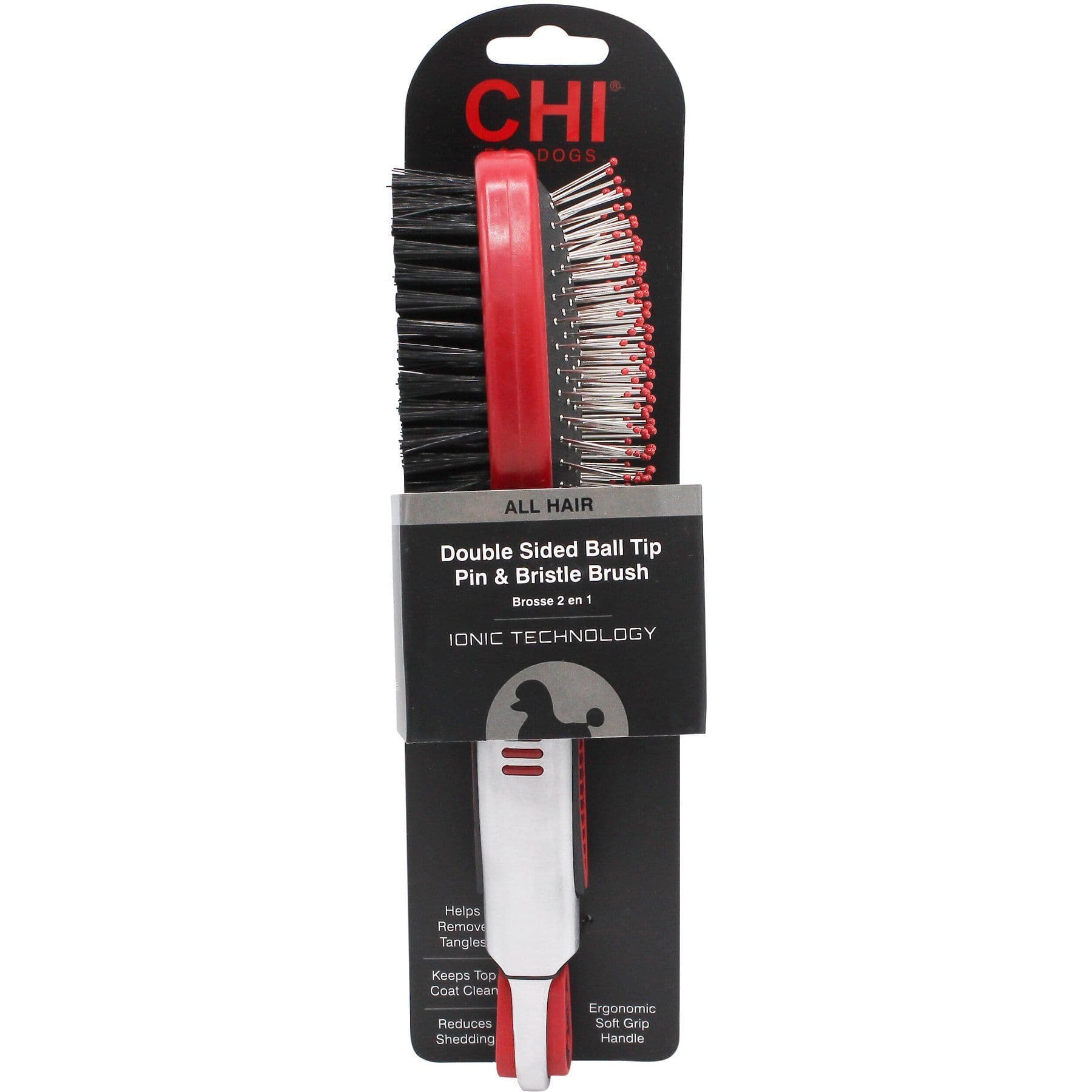
Ball-tip nylon pins work through tangles on one side while bristles smooth the coat and lift loose hair on the other. Ergonomic grip, with CHI ionic technology to reduce static.
Petful may earn a commission when you click through to Chewy, at no extra cost to you.
Gray and white Huskies
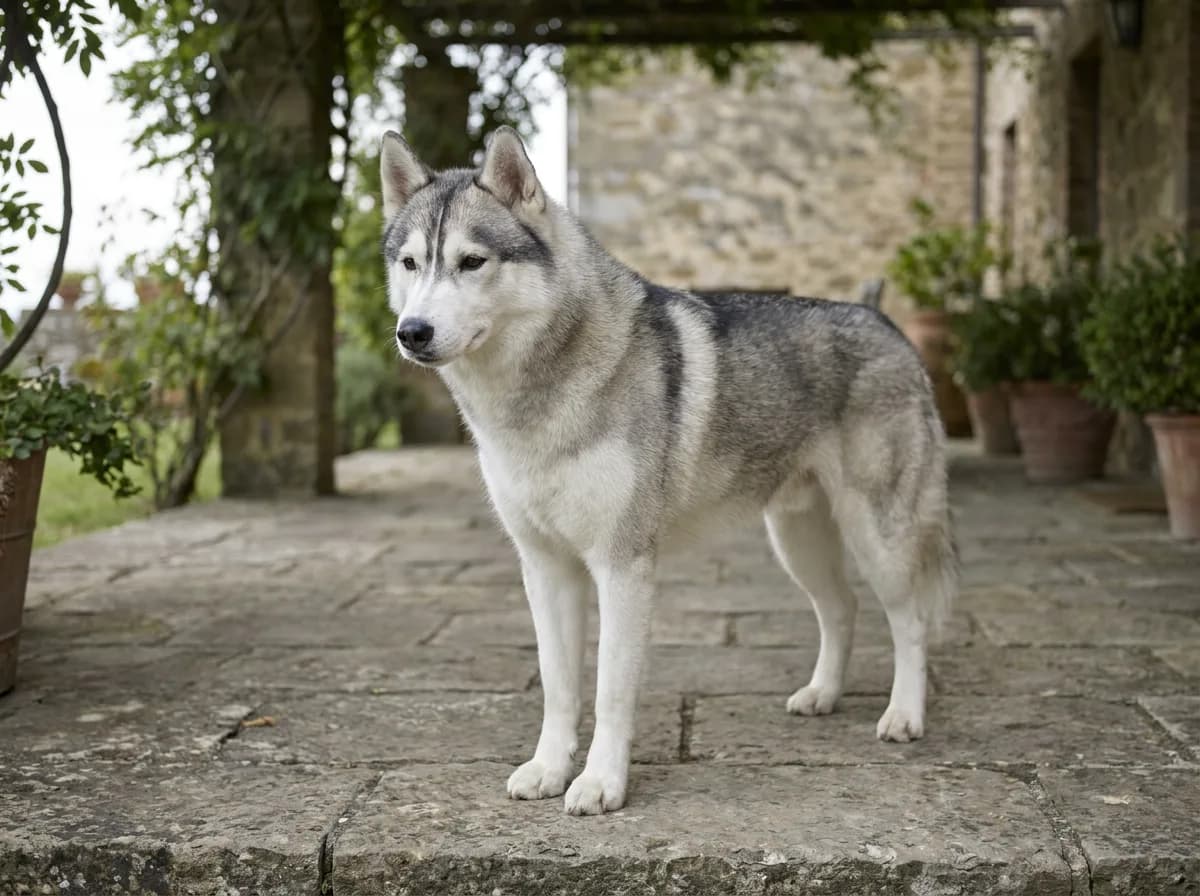
A gray and white Husky shows a gray overall impression across the colored coat, alongside distinct white areas. Gray can look considerably lighter or darker between photographs, so compare the shoulder and flank instead of choosing a label from one bright highlight.
“Gray Husky” and “grey Husky” are spelling differences, not separate coat types. Likewise, describing a Siberian Husky as gray and white identifies the broad appearance without specifying every shade visible within the coat.
For a useful comparison:
- Look at a shaded part of the coat as well as the sunlit surface.
- Check whether indoor lighting is adding a warm or yellow cast.
- Compare the colored body coat with the white chest or legs.
The Siberian Husky Club of America's color references provide a breed-specific starting point. Use them to compare visible features, not to force every dog into the exact shade shown by one reference animal.
Agouti Huskies
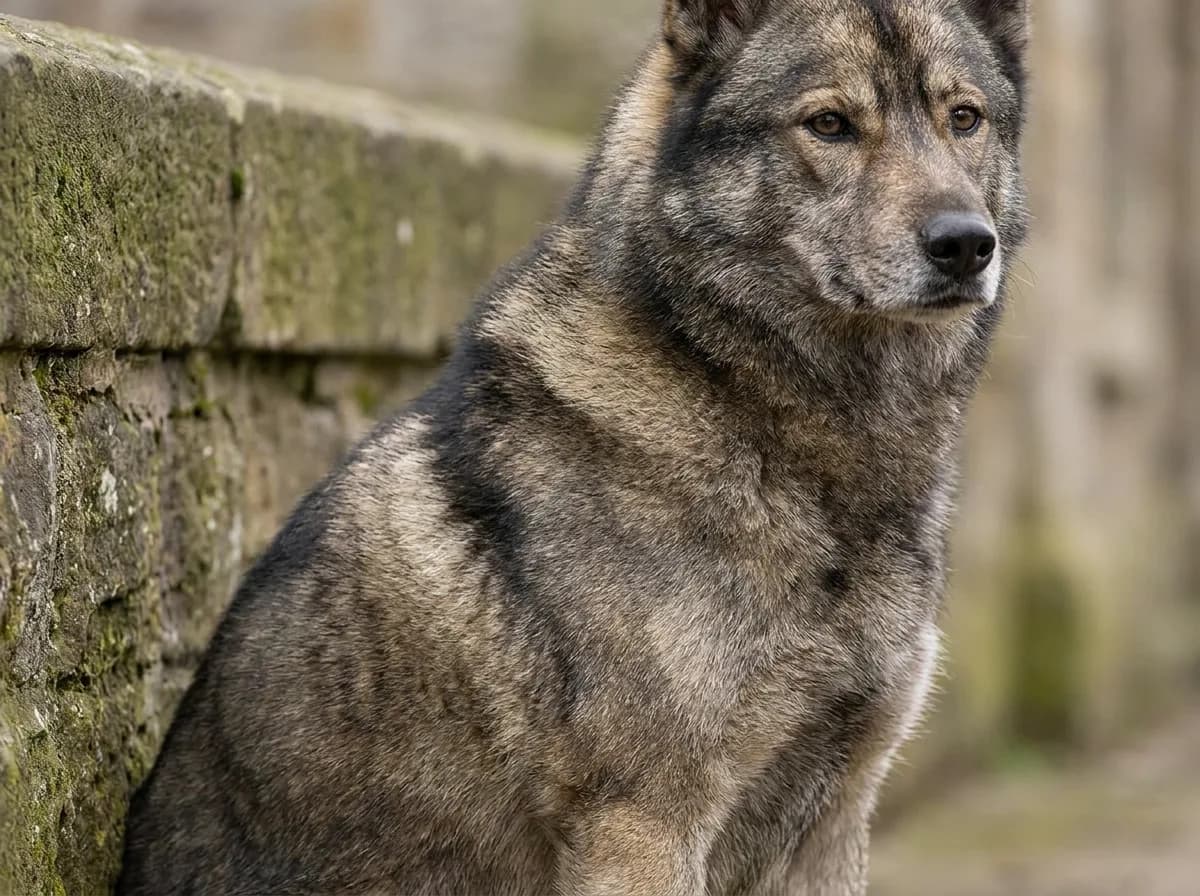
An agouti Husky has a grizzled appearance produced by differently colored portions of the hair. The result can look darker and less sharply divided into a single body color and bright white than the familiar black-and-white example.
The Delaware Valley Siberian Husky Rescue's coat descriptions describe agouti hairs with dark roots and tips and a lighter yellow or beige middle band. That description makes the individual hair a more useful observation than the broad impression that a dog looks “wolf-like.”
When comparing an agouti appearance:
- Look for banding along visible hairs, rather than judging only the tips.
- Compare the shoulder coat with the face and legs.
- Note the overall grizzled effect without treating it as evidence of wolf ancestry.
Agouti and sable identification limits matter most when the photograph is distant, heavily edited or missing coat detail. A dark mask alone does not settle the distinction. If the available image cannot show the relevant hair features, describe what is visible and leave the narrower label unresolved.
Agouti is one of the color families named in the standard. Its inclusion does not make appearance a substitute for documented breeding history or tell you how an individual dog will behave.
Sable Huskies
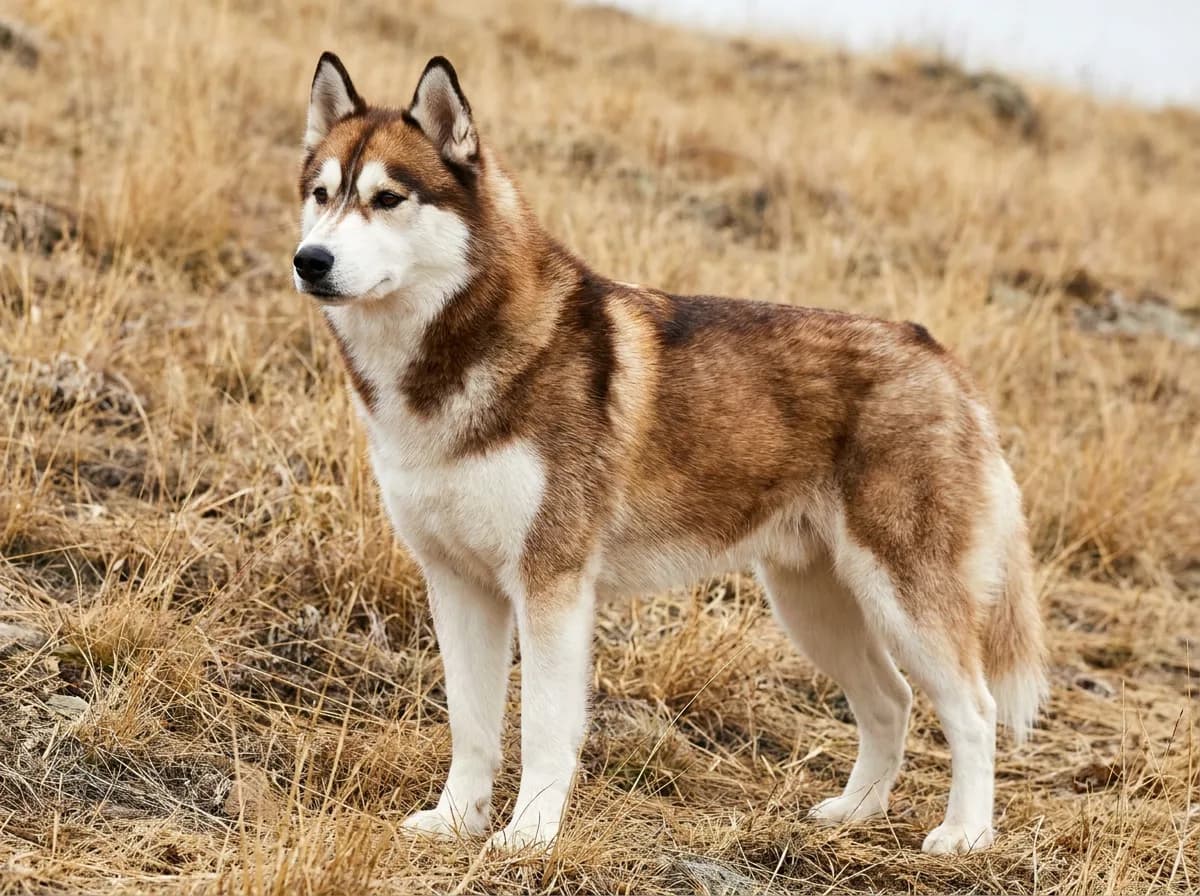
A sable Husky combines a warm coat impression with dark-tipped outer hairs. The Delaware Valley rescue describes red or brown near the roots and black at the tips. Those dark tips help distinguish the appearance from a coat that looks uniformly red.
The useful comparison with agouti is the arrangement of color along the hair, not simply which dog appears darker. Warmth beneath dark tips is a sable observation; contrasting bands along the hair support an agouti description. Neither becomes a complete genetic identification from a casual photograph.
Check these details together:
- Warm color beneath the darker outer surface.
- Dark tips visible on the guard hairs.
- The relationship between the colored coat and white areas.
- Whether the same impression remains under neutral lighting.
Do not pull out attached hairs to inspect them. A comfortable coat check or a naturally shed hair can provide detail without making the label more important than the dog.
For loose undercoat, a JW Pet Gripsoft double-row undercoat rake is one grooming option. Ask a groomer to demonstrate gentle use on your dog's coat. Removing loose undercoat is maintenance; it does not change the dog's underlying color or eliminate shedding.
Red and copper Huskies
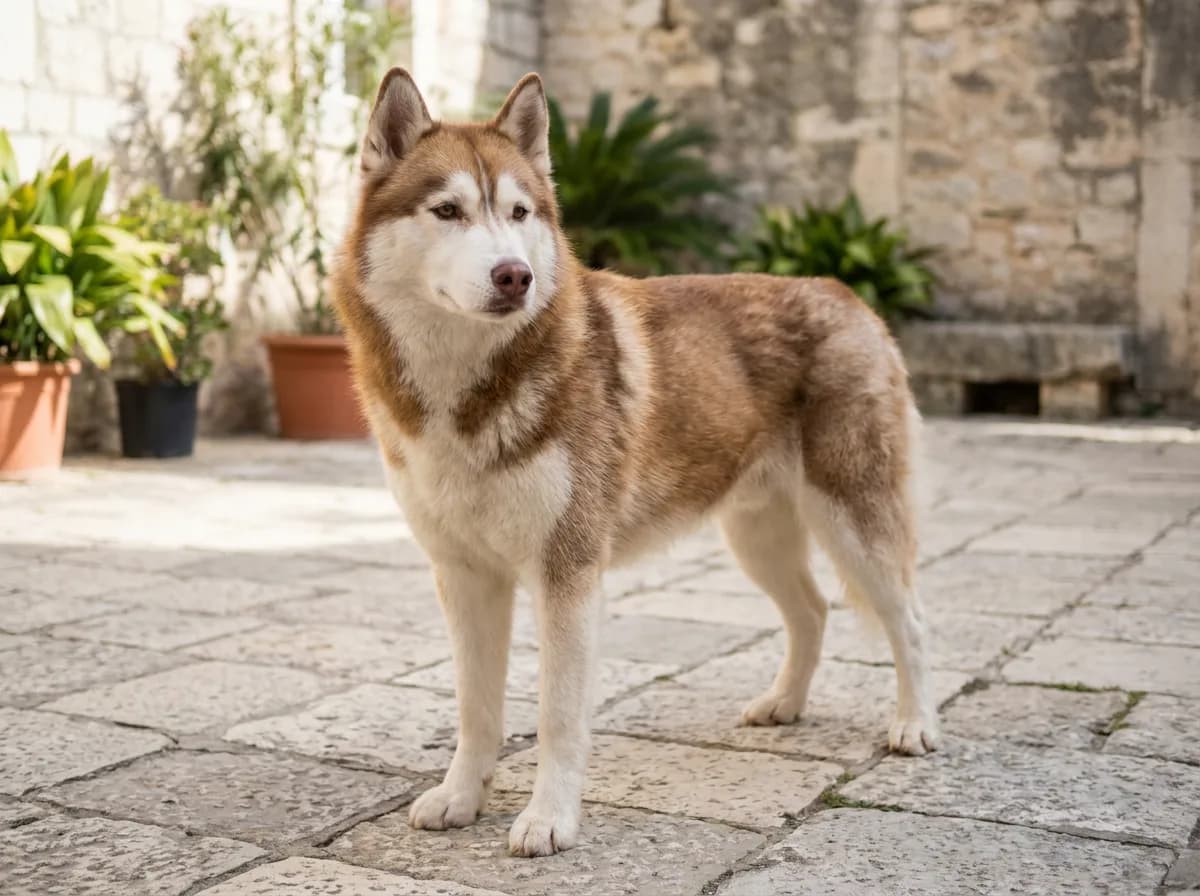
A red Husky has a warm coat with no black hairs and liver-colored points. The AKC breed standard names red as one of six allowable color families and calls for a liver nose in red dogs, while black, gray, sable and agouti dogs have black noses.
Copper is a shade within red, not a separate family. The Delaware Valley Siberian Husky Rescue describes copper dogs as having guard hairs banded dark red to brown with no black hairs, light red dogs as pale yellow to light orange, and red-and-white dogs as having liver, pinkish-brown eye rims, ears, nose and lips.
Red, sable or brown?
The points and the hair tips settle most of the confusion between these warm coats:
| Description | Coat | Points (nose, eye rims, lips) | Where the term comes from |
|---|---|---|---|
| Red or copper | Dark red to brown banding; no black hairs | Liver | AKC standard color family; Delaware Valley rescue description |
| Light red | Pale yellow to light orange; no black hairs | Liver | Delaware Valley rescue description |
| Sable | Red or brown near the roots, black at the tips | Black | AKC standard color family; Delaware Valley rescue description |
| Brown & White | Not a separate family in the written standard | Not specified | AKC registration description (code 063) |
On AKC paperwork, a red dog can be registered as Red & White (code 146), and the AKC Siberian Husky page lists Brown & White (063) and Sable & White (165) as separate standard registration descriptions. For a red Husky puppy, check the nose and eye rims as well as the coat: liver points fit red, black points fit sable. Brown shades have their own detailed treatment in our red and brown Husky guide.
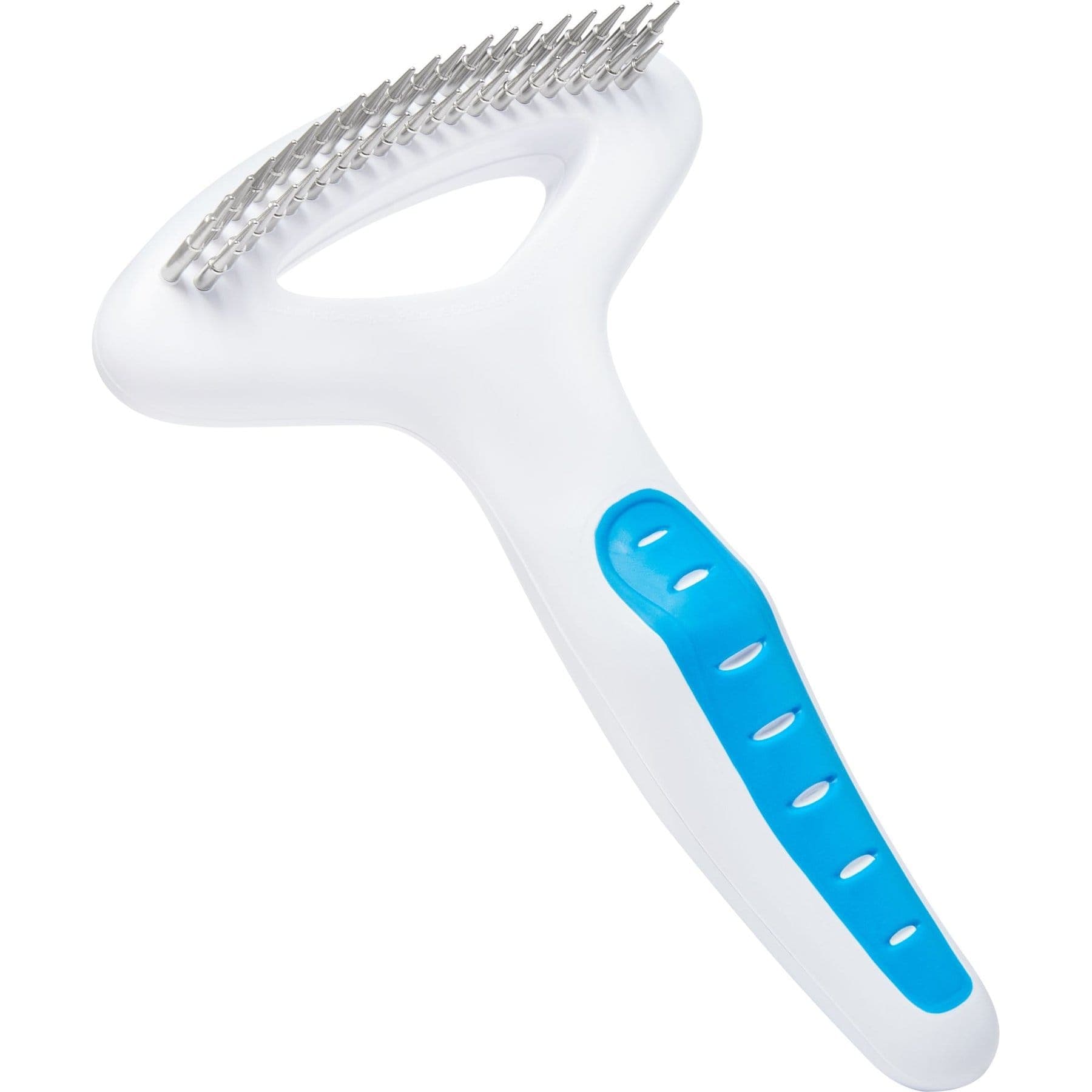
Metal teeth in two lengths lift shedding hair from the undercoat and loosen lightly matted fur; teeth sit parallel to the skin so the rake does not scrape it. Rubber-sheathed non-slip handle.
Petful may earn a commission when you click through to Chewy, at no extra cost to you.
Reading the hair tips is easier on a brushed coat: a JW Pet Gripsoft undercoat rake lifts out loose undercoat so the guard hairs and their tips show clearly, though it changes neither the shade nor the amount of shedding.
White Huskies
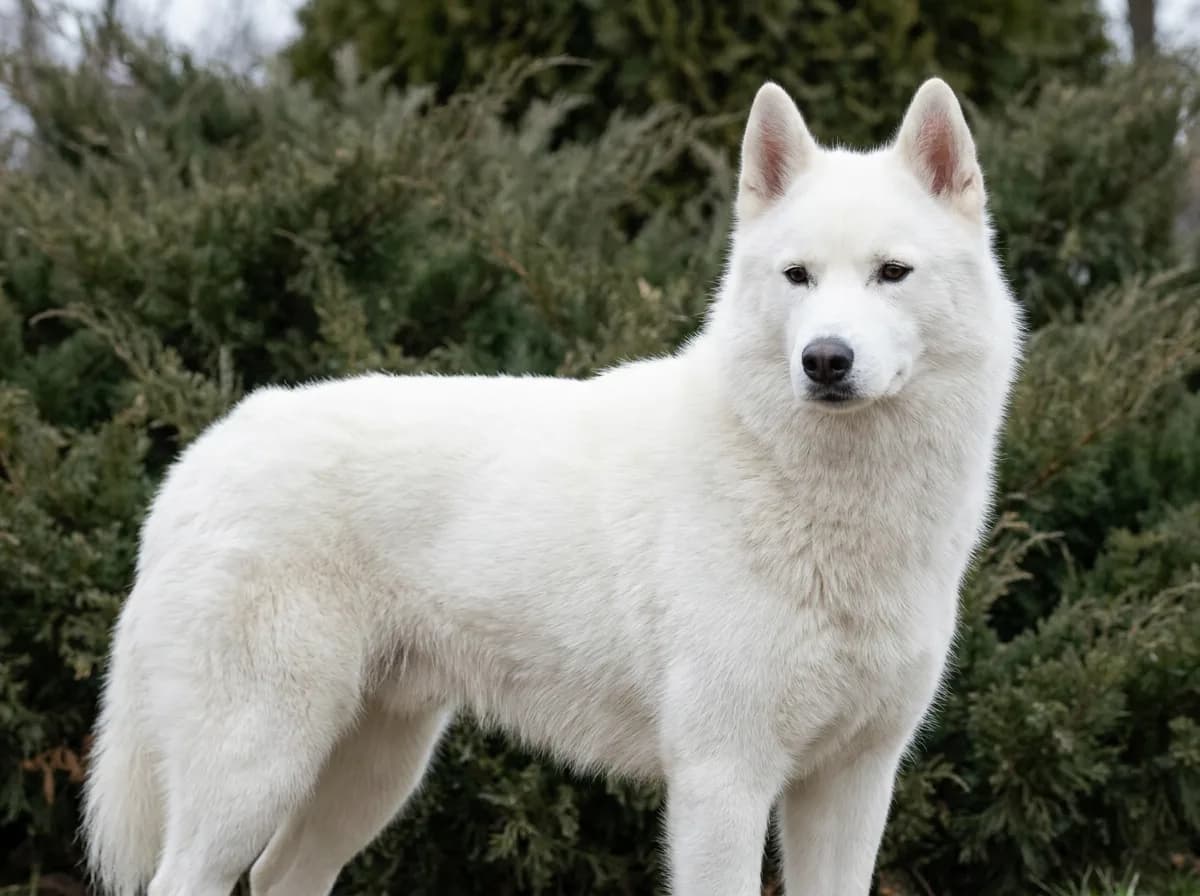
Is there a white Husky dog?
Yes. White is one of the six color families in the AKC breed standard, and the standard allows a black, liver or flesh-colored nose in white dogs. An all white Husky is an allowed coat appearance, not a separate variety or a sign that the dog must be another breed.
A white Siberian Husky still has a coat with texture and layers. In photographs, bright exposure can erase those details and make a pale coat look like a flat white shape. Look for visible fur along the shoulder, neck and flank before comparing subtle differences in shade.
White coat color alone does not establish that a dog is an albino Husky. “White” is an observation about appearance; “albino” makes a more specific claim that cannot be confirmed from the coat label. If pigmentation raises a health question, ask a veterinarian about the individual dog rather than diagnosing from a listing.
Describing a white puppy
Record what is visible now:
- Whether the whole body appears white or some areas are shaded.
- The lighting and exposure used in the photograph.
- Any visible markings that disappear in a brighter image.
Ordinary cleaning should remain separate from changing pigment. Burt's Bees oatmeal dog shampoo is a dog-shampoo option, not a bleaching treatment or a way to create a whiter coat. Follow the product directions and seek individual advice for irritated or uncomfortable skin.
Piebald markings
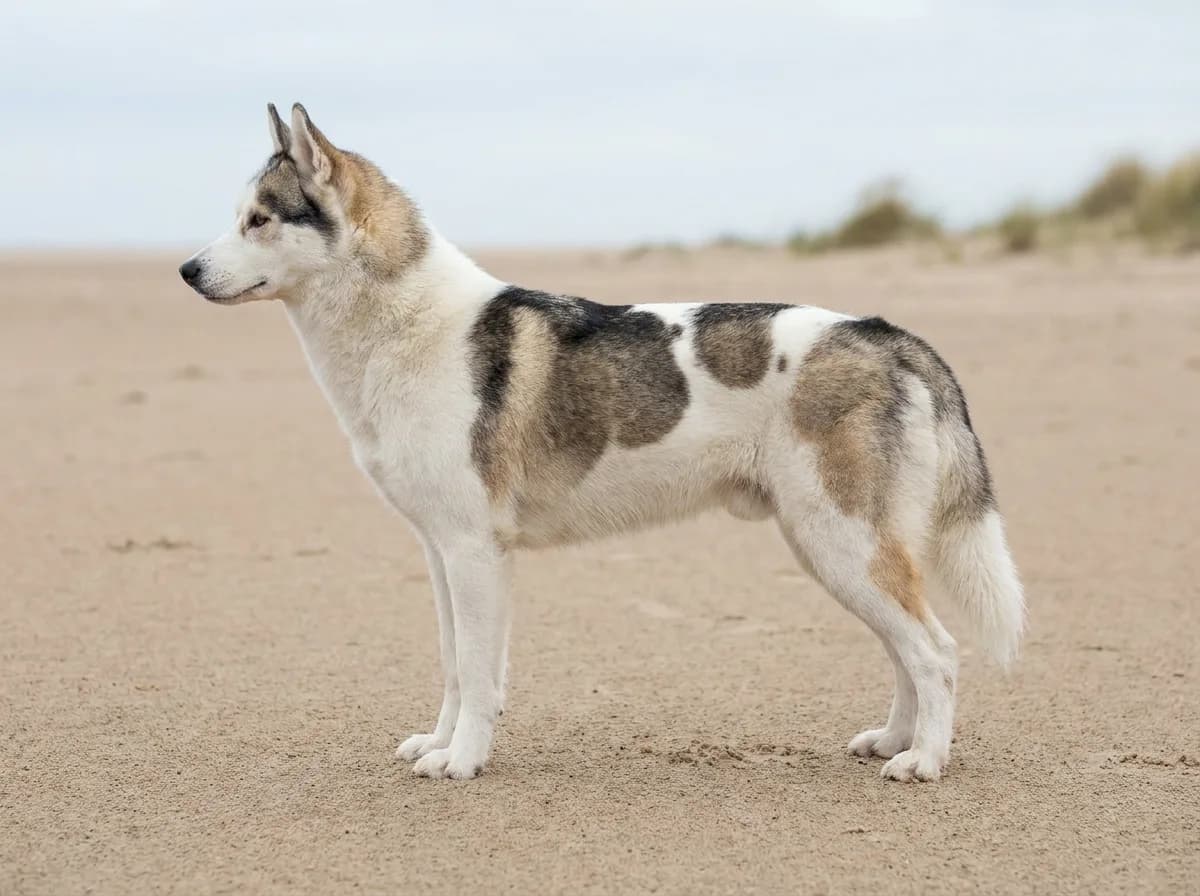
A piebald Husky has colored patches separated by substantial white areas. Piebald describes the distribution of those areas, so it answers a different question from whether the colored coat is black, gray or another permitted color.
Look at the body, not only the face. A head marking can be striking while revealing very little about the arrangement of patches across the back and sides. Both sides of the dog are useful because the markings do not need to match.
Piebald and merle are not interchangeable:
- Piebald involves distinct colored patches alongside white.
- Merle involves marbling of darker patches against a lighter background of the same color.
- An irregular patch shape alone does not establish merle.
The current AKC standard explicitly distinguishes piebald markings from merle and disqualifies merle. It permits piebald and gives no preference to an allowed marking pattern. A patchy appearance therefore needs a careful description, rather than an automatic “rare merle” label.
What the current breed standard permits
The written standard and registration descriptions serve different purposes. The standard defines the breed's accepted appearance for conformation. The AKC's administrative color choices give registrants a set of descriptions and codes. Counting those choices does not produce a new list of genetically separate colors.

Petful may earn a commission when you click through to Chewy, at no extra cost to you.
The AKC Siberian Husky breed page lists nine color descriptions and two marking descriptions. For example, Brown & White appears as a registration description, while the written standard groups the permitted palette into six named color families.
| Reference | What it includes | How to use it |
|---|---|---|
| Written standard | Black, gray, agouti, sable, red and white; solid colors, multiple shades and white markings | Identify the permitted broad palette without ranking allowed colors |
| Registration descriptions | Agouti & White, Black & White, Gray & White, Red & White, Sable & White, White, Brown & White, Black Tan & White and Black | Understand the administrative description and registration code |
| Marking descriptions | Piebald and Saddle Back | Describe markings separately from the broad color family |
| Disallowed patterns | Merle and brindle under the current written standard | Distinguish these patterns from permitted piebald patches or apparent banding |
A registration code identifies a category on the form. It does not explain every visible shade, certify a marketing claim or make one permitted color preferable to another.
The standard's brindle rule also needs care. Brindle refers to vertical tiger-like stripes; the standard distinguishes those from apparent horizontal banding associated with banded hairs. If a photograph does not show enough detail to make that distinction, uncertainty is the accurate answer.
A registration color describes the natural coat, so bathing should only clean it: an ordinary dog shampoo such as Burt's Bees oatmeal dog shampoo removes dirt but does not whiten the coat or change its color.
Black, tan and white Huskies
Black Tan & White is one of the nine AKC registration descriptions for the breed (code 030). The written standard does not name tan as a separate color family; a black coat with tan areas falls within its allowance for multiple shades and white markings. Describe the black, the tan areas and the white separately, as you would for any black-and-white Husky.
Saddleback Huskies
Saddle-Back is one of the two AKC marking descriptions for the Siberian Husky (code 083), alongside Piebald. It describes where darker color sits across the back, not a separate color, and the standard gives no preference to any marking. Record it separately from the color family, the same way you would record piebald.
Eye color is a separate description
A white Husky with blue eyes combines two visible features, but blue eyes are not required for a Siberian Husky. The standard permits brown or blue eyes, one of each and parti-colored eyes.
Describe the eyes separately from the coat:
- Brown or blue describes the visible eye color.
- One of each describes different colors between the eyes.
- Parti-colored describes more than one color within an eye.
A listing that emphasizes a Husky's white coat and blue eyes is describing an appearance, not a separate standard or proof of ancestry. Equally, brown eyes do not disqualify an otherwise eligible Husky on eye color alone.
For a photograph-based description, avoid guessing the eye color from glare or a distant image. A clear facial photograph can document what you see without turning the combination into a health, pedigree or value claim.
Rare-color claims and what they do not prove
What color is rare for a husky?
No permitted color is officially rare. The AKC standard and the SHCA illustrated standard both say no preference should be given to any allowable color, marking or pattern, and neither publishes breed-wide color counts, so there is no prevalence data behind rarity claims and any color ranking a seller offers is unsupported. Colors sellers often promote as rare include agouti, all white and piebald. The only published note on frequency we found is the Delaware Valley rescue's remark that agouti is seen more often in racing lines than in other Siberians.
Ask what the claim actually means:
- Is it based on documented numbers or the seller's own experience?
- Does “rare” describe a permitted color, a marking or a disputed label?
- Is the description being used to justify a higher asking price?
The standard gives no preference to an allowed color or pattern. A sales premium therefore should not be presented as a breed-standard endorsement.
If you are comparing a white Husky's price with other puppies, separate appearance from the documented terms of the offer. Our Husky prices and color-premium guide explains how to compare named price examples, included care and ongoing expenses without treating color as proof of value.
What a photograph cannot tell you
Photographs can document a coat's visible appearance. They cannot, by themselves, establish the dog's ancestry, complete genotype or the colors a future litter will produce. UC Davis Veterinary Genetics Laboratory's coat-color overview explains that multiple genetic factors contribute to canine coat color.
Keep the observation and the conclusion separate. “Dark-tipped hairs over a warm coat” describes something visible. A claim about the precise inherited combination requires evidence beyond that description.
- Photographic evidence can support a description of visible coat features. It does not replace documented ancestry or establish a complete genetic explanation.
A Husky mix is identified by ancestry, not by a mask, eye color or coat pattern; our Husky mixes guide covers those combinations, and the Siberian Husky profile covers similar-looking breeds.
Coat care beyond the color label
A Siberian Husky's color does not remove the commitment to coat care. The Siberian Husky Club of America's ownership guidance describes the breed's coat and maintenance needs. Husky shedding still matters whether the hair on your clothes is dark, red or white.
Choose a care routine around the individual coat and your dog's response:
- Check through the coat gently instead of judging cleanliness from surface shine.
- Use grooming tools with a technique suited to the coat's condition.
- Ask for help when resistance or discomfort makes ordinary maintenance difficult.
Color does not predict temperament or care needs; our Siberian Husky temperament and care guide covers both.
Husky color questions
Yes. The AKC standard lists white among its six allowable color families, so an all-white Siberian Husky can be registered and shown. Its nose may be black, liver or flesh-colored. A white coat alone does not make a dog albino or a different breed.
Yes. The Delaware Valley Siberian Husky Rescue describes pure white Huskies as having guard hairs that are either pure white or banded with very pale cream at the roots, with black or liver points. Pale cream shading near the skin does not stop a dog from being described as white.
None officially: the breed standard gives no preference to any allowable color, and neither the AKC nor the SHCA publishes color counts. Agouti, all white and piebald are often marketed as rare. Treat “rare” in a listing as a sales claim and ask what evidence supports it.
A registration label for color is a description within a record, not standalone proof of ancestry. Check the actual ancestry records and who issued them rather than relying on a cropped color field, registration code or seller's caption. If a listing uses a color label as its main evidence, ask for the underlying documentation and an explanation of what it establishes.
A puppy photograph cannot reliably establish an exact adult shade. It records one appearance under particular lighting, at one point in the dog's life. Keep current observations separate from predictions, and ask a breeder to distinguish what is documented from what they expect. Dated photographs taken under similar conditions are useful for recording your own dog's appearance over time.

Coreen Saito is a pet writer and longtime shelter volunteer with more than a decade in animal rescue. She covers cat behavior, breed care, and the small, ordinary science of sharing a life with companion animals, with a particular focus on honest takes about the products and decisions that actually matter. At home in Arizona, she's outranked by Mac (a dog with the loudest opinion in the house), Rebel (a cat who governs by quiet authority), and Meri (an orange tabby who runs the late shift and the laundry basket). She writes about all three, plus the rescues that keep coming through her life, at LifeWithMinty.com.
Sign up for expert-backed reviews and safety alerts all in one place.