Great Dane Temperament: Personality of the Gentle Giant
Is the Great Dane temperament as gentle as its reputation? Here is the honest, experience-forward guide to the breed's affection, trainability, energy, family fit, guarding instinct, and the space and socialization it needs to thrive.
Petful is reader supported. As an affiliate of platforms like Amazon and Chewy, we may earn a commission when you buy through links on this page. There is no extra cost to you.
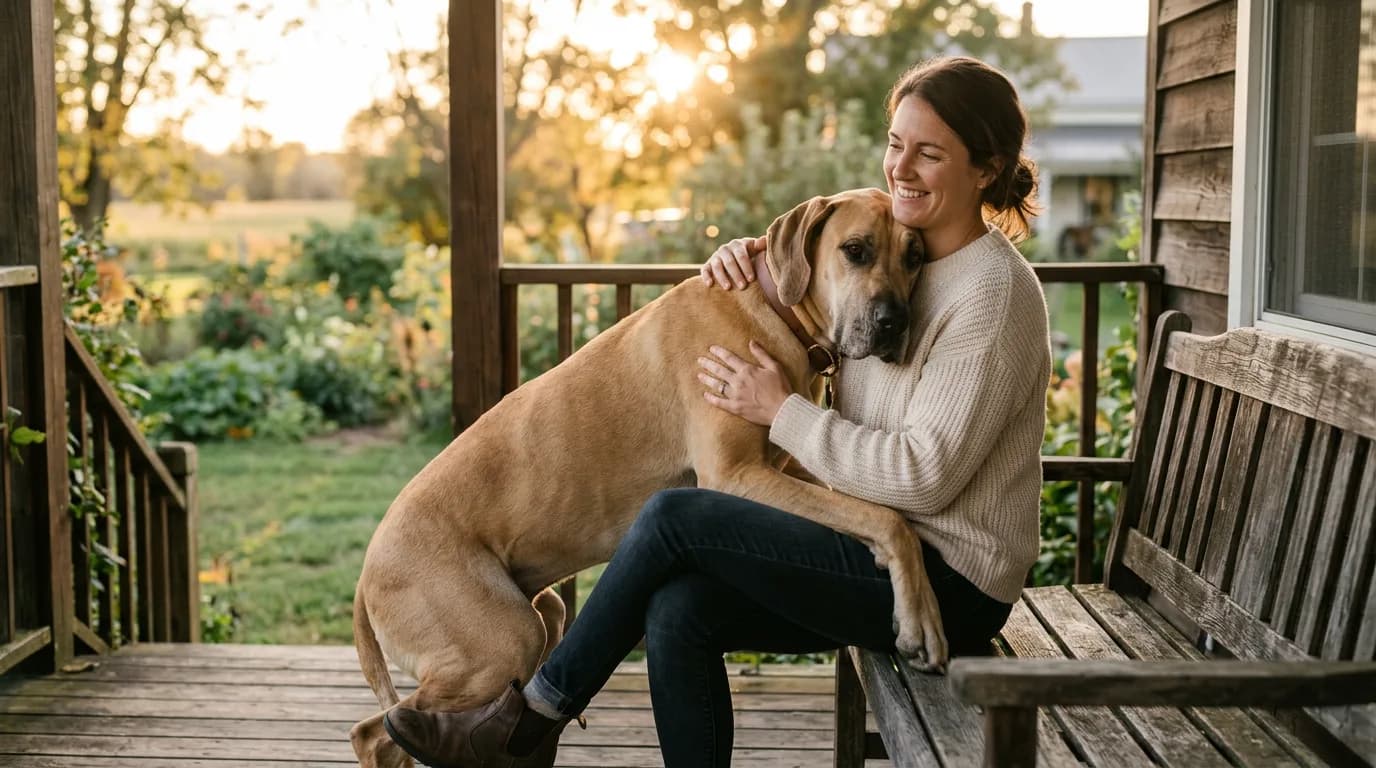
The Great Dane temperament is the reason this towering breed earned its most famous nickname: the gentle giant. Behind a dog that can stand taller than a person on its hind legs is one of the most affectionate, people-oriented, and emotionally sensitive personalities in the dog world. A well-bred, well-socialized Great Dane is calm indoors, patient with children, friendly with other pets, and far more likely to lean lovingly into your legs than to guard the front door with any real menace. The character is famously sweet, but it is not effortless. This is a giant, sensitive, deeply bonded dog whose size turns every temperament quirk (the leaning, the separation stress, the puppy exuberance) into something you actually have to manage. Here is the honest, experience-forward picture of how a Great Dane behaves, what shaped that personality, and what the breed needs from you to be its best self.
- 1Great Danes are classic gentle giants: affectionate, calm indoors, and strongly bonded to their people, with a moderate rather than fierce guarding drive
- 2They are sensitive dogs that respond to calm, consistent, positive training and shut down under harsh correction, so patience beats force every time
- 3Most Danes are excellent with children and other pets when raised with early socialization, though their sheer size means small kids and small animals need supervision
- 4The breed leans, follows you room to room, and dislikes being alone, so separation anxiety is a real consideration for busy households
- 5The temperament is easy to love but demanding in space, socialization, and companionship, not in aggression

Sign up for expert-backed reviews and safety alerts all in one place.
The Gentle Giant Personality: What a Great Dane Is Really Like
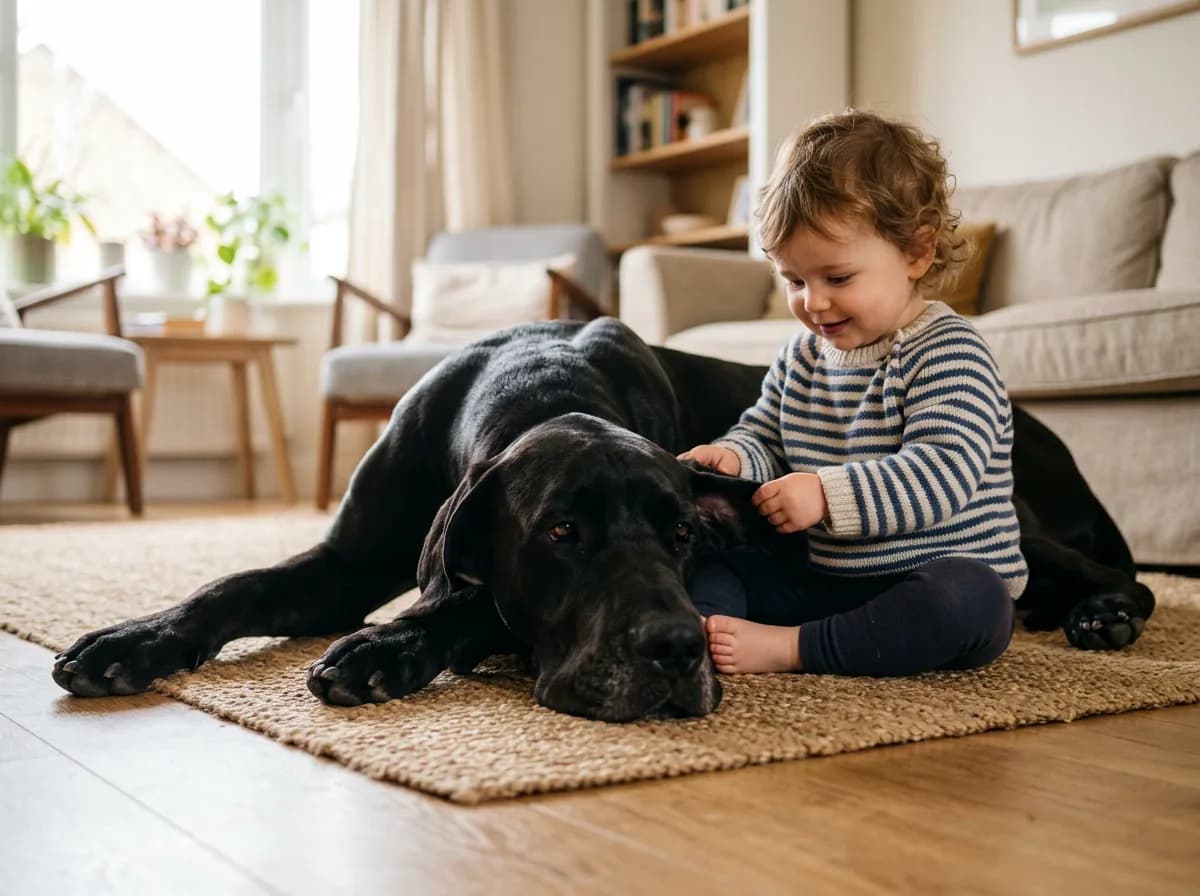
Ask anyone who has lived with one and the same words come up: sweet, goofy, sensitive, and enormous. The Great Dane was bred over centuries from an imposing, boar-hunting, estate-guarding dog into the affectionate family companion recognized today, and the American Kennel Club (akc.org) breed standard describes the ideal Dane as spirited, courageous, dependable, and never timid or aggressive. In plain terms, the breed standard asks for exactly the temperament that owners fall in love with: a confident, friendly dog that carries its size with dignity instead of drama.
Day to day, that translates to a dog that is remarkably mellow inside the house. Adult Great Danes are often described as couch potatoes, content to sprawl across the sofa (or across you) for hours. They are emotional sponges that read the mood of the room, celebrate your good days, and press close on your bad ones. They are also unmistakably silly: the head tilts, the full-body wiggles, the surprising delicacy with which a 140-pound dog will try to become a lap dog. That combination of gravitas and goofiness is the heart of the Great Dane temperament.

Petful may earn a commission when you click through to Chewy, at no extra cost to you.
The catch is that everything a Dane feels, it feels at scale. A nervous Dane is a very large nervous dog. An under-exercised adolescent is a very large bundle of energy. And a bored, lonely Dane is a very large problem for your furniture. None of it comes from a bad temperament. It comes from a big, sensitive dog whose needs were not met.
| Trait | Typical Level | What It Means for You |
|---|---|---|
| Affection toward family | Very high | Expect a velcro dog that leans, follows, and wants contact |
| Guarding and territorial drive | Moderate | A watchful deterrent by size, not a sharp or aggressive guardian |
| Energy indoors | Low to moderate | Calm and sleepy once past puppyhood, a genuine house dog |
| Trainability | Moderate to high | Smart and eager, but sensitive; responds to patience, not force |
| Tolerance of kids and pets | High when socialized | Gentle and patient, though size demands supervision |
| Tolerance of being alone | Low | Prone to separation stress, dislikes long solo hours |
Just How Affectionate Are Great Danes?
Extremely, and often to a degree that surprises new owners. Great Danes are the definition of a velcro dog. They will follow you from room to room, station themselves in the bathroom doorway, and rest a heavy head on your knee the moment you sit down. The famous Great Dane lean, where the dog backs into your legs and settles its weight against you, is a genuine affection signal, the breed's way of asking to be close and to be touched. For a dog descended from working guardians that stayed at their handler's side, that need for physical closeness runs deep.
This affection is the single best thing about the breed and, handled poorly, the source of its most common behavior problem. A Dane that has learned it can never be apart from you becomes a Dane that panics when you leave. Separation anxiety, expressed as pacing, drooling, destructive chewing, or heartbreaking vocalizing, is one of the most reported issues in the breed precisely because the temperament is so people-focused. The fix is not less love. It is teaching independence early: crate comfort, short absences that build to longer ones, and a dog that learns being alone is boring rather than terrifying.
- Because Great Danes bond so hard, start practicing calm departures the week your puppy comes home. Leave for five minutes, then twenty, then an hour, always low-key coming and going, and give a long-lasting chew that only appears when you leave. A Dane that learns independence as a puppy is far less likely to develop full separation anxiety as an adult, when the same distress comes packaged in a hundred-plus-pound body.
Do Great Danes Pick One Person?
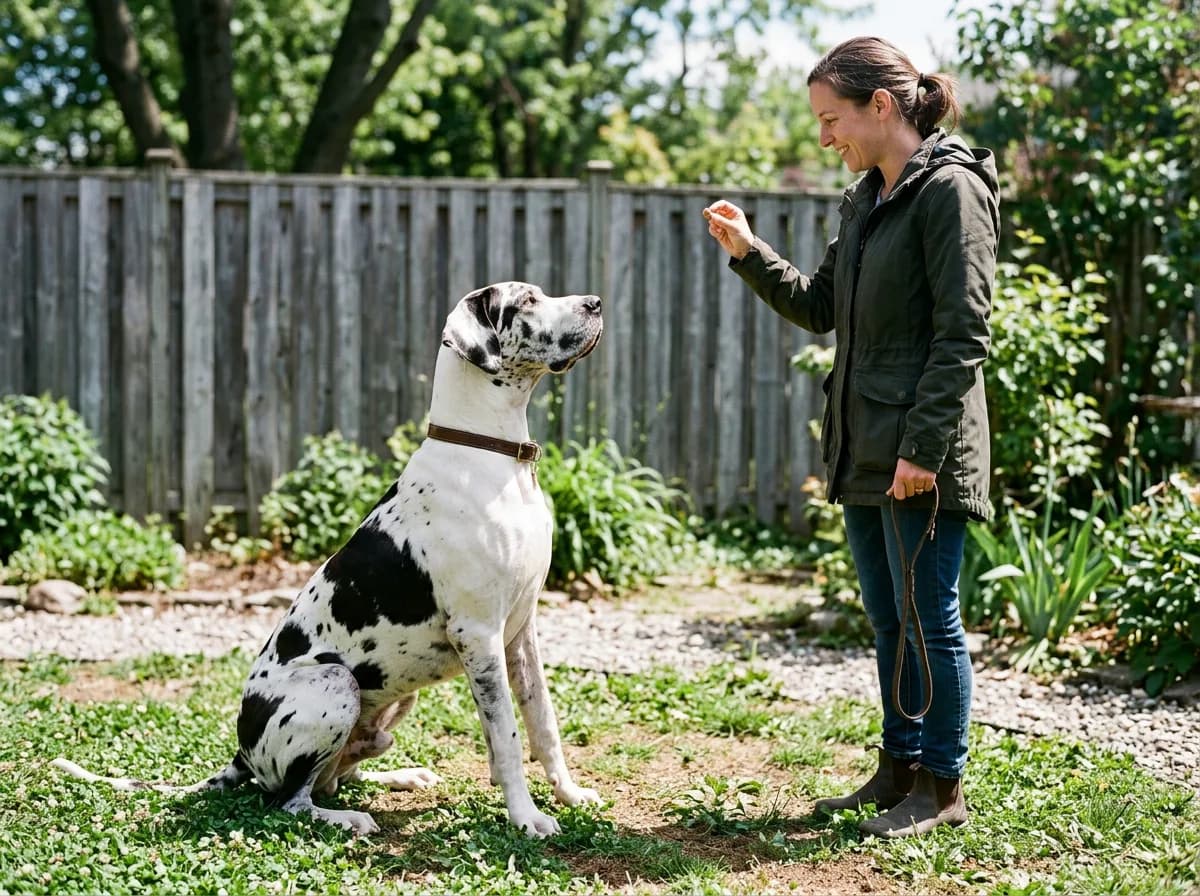
Often, yes. Great Danes are known for bonding with their entire household while still forming an especially tight attachment to one favorite person, usually whoever handles their daily care, training, and downtime. It is common for a Dane to love the whole family, greet everyone warmly, and yet reserve the leaning, the shadowing, and the deepest devotion for a single human. This is a normal expression of the breed's intense, loyal temperament rather than a sign of a problem.
That said, a Dane that fixates on one person to the exclusion of everyone else is usually a Dane that was under-socialized, not one that is naturally one-person by design. Well-rounded Great Danes are friendly and affectionate with all their people and typically polite with strangers. If you want a dog that is bonded to the household rather than glued to a single member, spread the good stuff around: have every family member feed, walk, train, and play with the dog, especially during puppyhood. A broadly socialized Dane still tends to have a favorite, but it will be a happy, flexible dog rather than a distressed one when its person is out of sight.
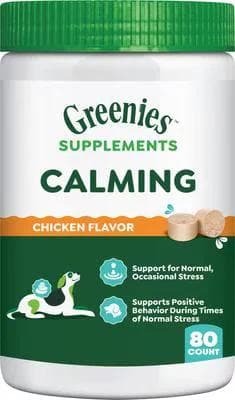
Chicken flavored soft chews that support calm, positive behavior during times of occasional stress like fireworks and storms.
Petful may earn a commission when you click through to Chewy, at no extra cost to you.
Are Great Danes Easy to Train?
Great Danes are intelligent and genuinely eager to please, which makes them very trainable, but their sensitivity changes how you have to train them. This is not a hard-headed, bounce-back-from-anything breed. Danes read your tone, take correction personally, and can shut down, sulk, or stop offering behavior entirely if training turns harsh. The breeds that thrive on drill-sergeant methods are the opposite of this one. What works with a Dane is calm, consistent, reward-based training that keeps the dog confident and engaged.
Training a Great Dane is also non-negotiable in a way it simply is not for a small breed, and the reason is size, not stubbornness. A poorly mannered Chihuahua that pulls on leash or jumps on guests is an annoyance. A poorly mannered Great Dane that does the same things is a safety issue, because the dog outweighs many of the people it lives with. Basic obedience, polite leash manners, a reliable settle, and a solid recall are essential life skills for a dog this large. The good news is that Danes learn quickly when the training is fair, and their desire to be near you and to please you gives you a powerful, built-in motivator.
- Harsh corrections, prong or shock tools, and intimidation backfire badly on this sensitive breed. A frightened Great Dane does not become obedient, it becomes anxious, avoidant, or in rare cases defensive, and a defensive giant is the last thing anyone wants. Board-certified veterinary behaviorists at university veterinary colleges consistently recommend positive, reward-based methods for large and giant breeds. Keep sessions short, upbeat, and generous with praise and food.
How Much Energy Does a Great Dane Have?
Less than you would guess from the size, and it changes dramatically with age. Adult Great Danes are moderate-energy dogs that are famously lazy indoors, happy with a couple of daily walks and some yard time and then perfectly content to nap the rest of the day. They are not endurance athletes, and they are not built for running miles at your side or for high-impact sports. A tired Dane is a calm, easy housemate, and it does not take a marathon to get one there.
Puppies and adolescents are a different animal entirely. Young Great Danes go through a long, gangly, high-energy phase full of zoomies, mouthing, and clumsy enthusiasm, and they need an outlet for it. The critical rule is that this exercise must be controlled and low-impact while the dog is growing. Great Danes grow at an astonishing rate, and their joints and long bones stay vulnerable for well over a year, so forced running, repetitive fetch on hard ground, jumping, and stairs should be limited until the growth plates close. Free play on soft ground, sniffy walks, and gentle mental work give a growing Dane what it needs without overloading developing joints. For more, see Petful’s guide to Great Dane growth chart.
Are Great Danes Good With Kids and Other Pets?
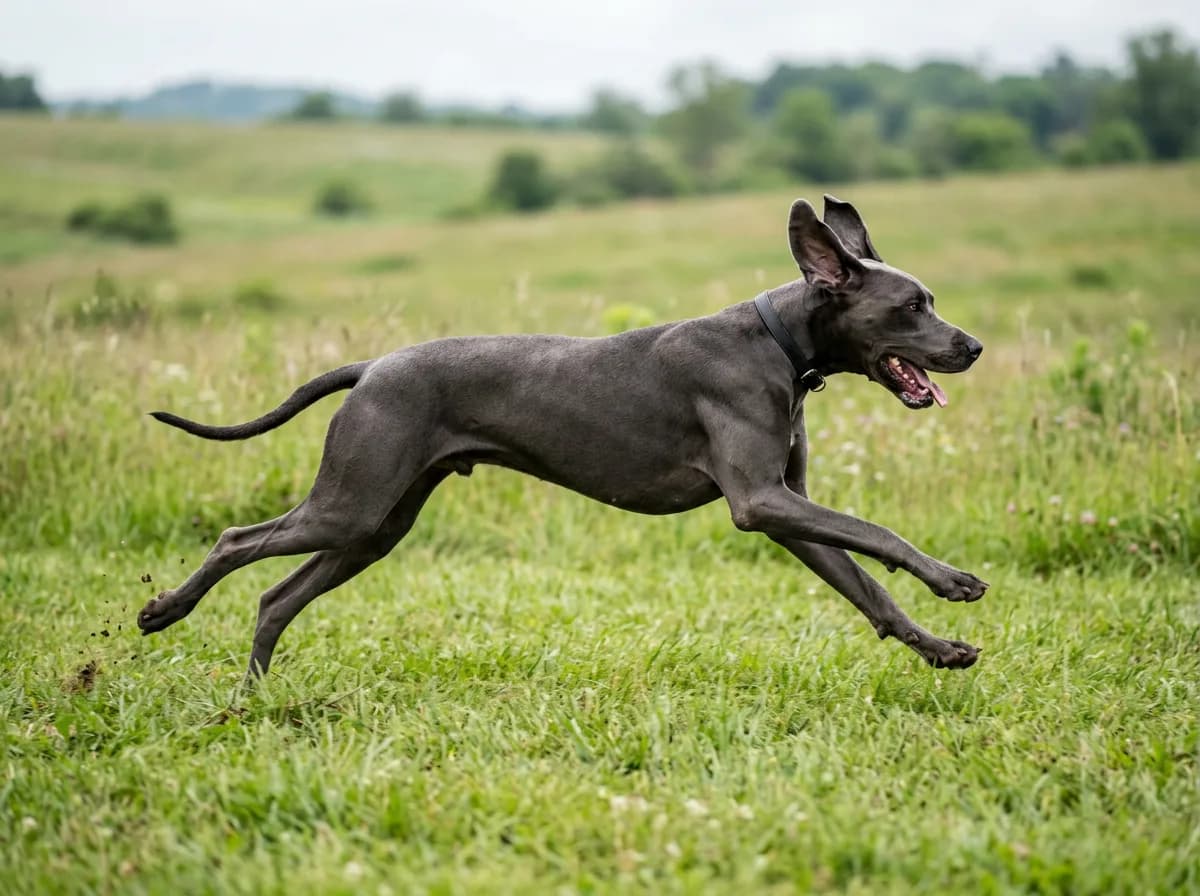
Yes, and it is one of the breed's greatest strengths. Great Danes are widely regarded as excellent family dogs, patient and gentle with children they are raised alongside, and tolerant of the noise and chaos of family life. Their calm, easygoing temperament and low reactivity make them a genuinely good fit for households with kids. Many Danes are strikingly careful around small children, seeming to understand their own size and moving with surprising softness around the youngest members of the family.
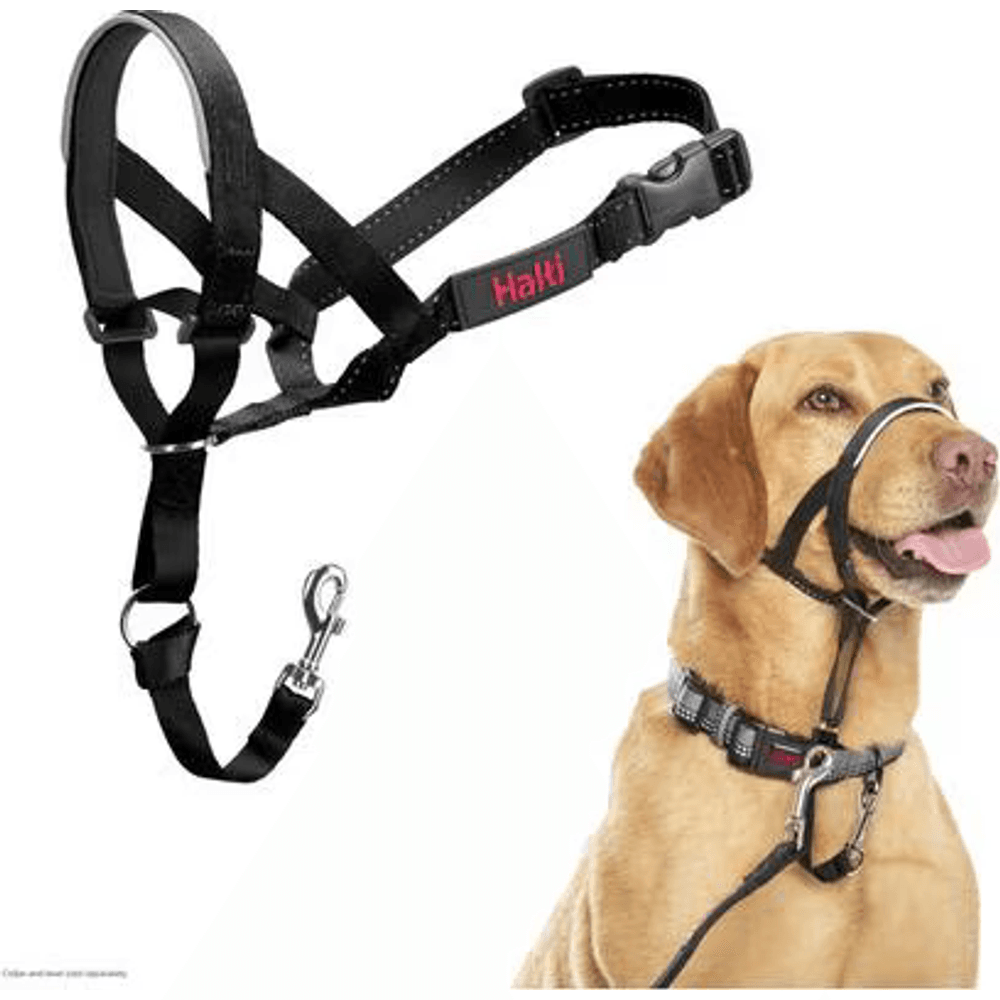
A padded head halter that gently steers a dog from the head, keeping all leash pressure off the neck and windpipe, a useful option for a dog whose cough or collapsing trachea flares when a collar tightens.
Petful may earn a commission when you click through to Chewy, at no extra cost to you.
The caveat is physics, not character. A Great Dane can knock over a toddler with a happy tail wag or an off-balance turn without a shred of ill intent, so supervision and basic boundaries are essential in homes with small children. Teach kids not to climb, ride, or pull on the dog, give the Dane a safe retreat space of its own, and never leave any giant breed unsupervised with very young children, simply because the size mismatch is so large.
With other animals, most well-socialized Great Danes are friendly and adaptable, living happily with other dogs and with cats they were introduced to properly. Two things temper this. First, the breed carries some old sighthound heritage, so a strong prey drive toward small fleeing animals shows up in certain individuals, which means early introductions and supervision matter with cats and small pets. Second, an adult Dane playing with a small dog is a size gap that always deserves a watchful eye. Raised right and socialized early, though, a Great Dane is one of the most companionable giant breeds you can bring into a multi-pet home.
The Great Dane Guarding Instinct: Watchful, Not Fierce
Great Danes were originally bred as boar hunters and estate guardians, and a trace of that protective heritage survives in the modern temperament, but it looks very different from a sharp working guard dog. The typical Dane is watchful and alert rather than aggressive. Its guarding value is mostly deterrence: a dog this enormous, delivering a deep bark from behind your front door, discourages almost anyone, and it rarely has to do more than exist to make an intruder think twice. Beneath that imposing presence, most Danes are lovers, not fighters.
A properly bred and socialized Great Dane is not suspicious, sharp, or quick to bite. The breed standard explicitly calls for a courageous but friendly dog, and true aggression is a temperament fault, not a breed feature. What you get instead is a devoted family protector that is naturally attentive to its people and its territory, will place itself between its family and something it finds alarming, and then, nine times out of ten, wags and relaxes the moment it decides the visitor is welcome. If you want a hard-edged personal protection dog, this is not that breed. If you want a gentle companion whose sheer size doubles as a deterrent, the Great Dane is close to ideal.
Space and Socialization: What the Temperament Needs From You
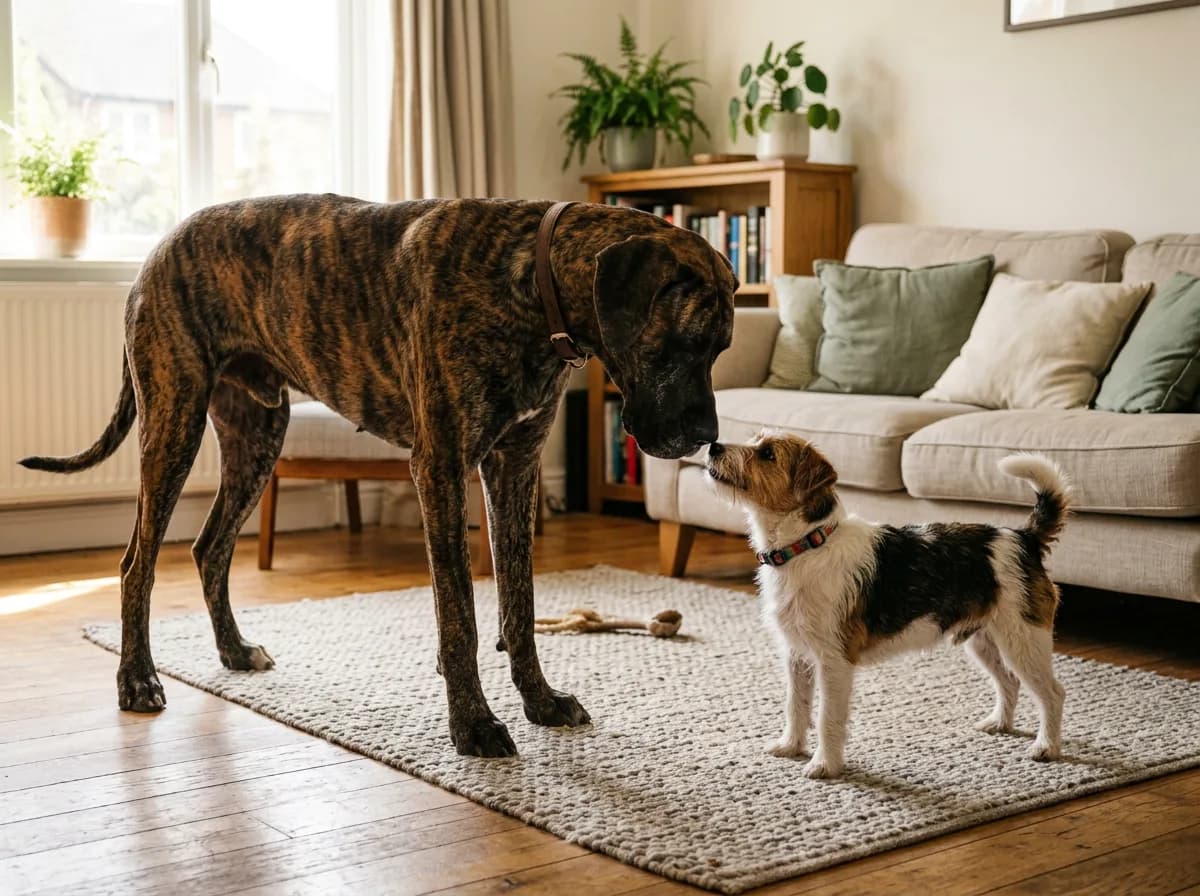
The Great Dane temperament is easy to live with, but the breed is not low-maintenance, and the demands are space, companionship, and socialization rather than intensity. Space comes first. A Dane does not need a mansion, and many live happily in apartments because they are so calm indoors, but the dog needs physical room to exist: a bed it actually fits on, a clear path through the house that a giant tail and giant body can navigate, and a household that accepts a dog whose head reaches the kitchen counter. Owners who go in expecting a large dog and get a genuinely huge one are the ones who struggle.
Socialization is the other pillar, and it is what turns a well-bred puppy into a stable adult. Because a fearful or poorly socialized Great Dane is so physically powerful, early, positive exposure to people, other dogs, noises, surfaces, and situations is not optional. A Dane that met the world confidently as a puppy grows into the calm, friendly giant the breed is famous for. A Dane that was isolated can become anxious or spooky, and anxiety in a dog this size is genuinely hard to manage. The temperament you end up with is a partnership: the genetics give you a sweet, sensitive foundation, and your socialization, training, and companionship build the confident adult on top of it.
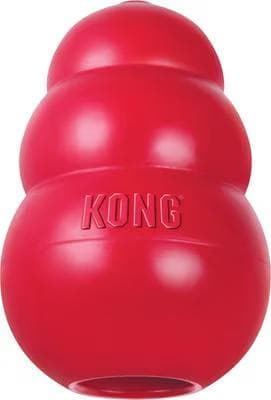
A durable rubber dog toy that can be stuffed with treats and selected by the manufacturer's size guide; supervise use and retire it when damaged.
Petful may earn a commission when you click through to Chewy, at no extra cost to you.
What Two Breeds Make Up a Great Dane?
The Great Dane is an ancient, purpose-built breed rather than a modern two-breed cross, but its foundation is usually credited to two ancestral types. Breed historians point to the English Mastiff for the Dane's bulk, bone, and broad head, and to the Irish Wolfhound (a tall sighthound) for its height and leaner, more athletic outline, with some accounts adding the Greyhound to explain the breed's surprising speed and elegance. Despite the name, the Great Dane was developed largely in Germany, where it was refined from these mastiff and sighthound roots into a boar-hunting and estate-guarding dog.
That ancestry still echoes in the temperament. The mastiff heritage shows up as the calm, dependable, family-guardian side of the personality, while the sighthound influence explains the athleticism and the flicker of prey drive some Danes show toward small, fleeing animals. You cannot cross a Mastiff with a Wolfhound today and produce Great Danes, but those are the influences that shaped the breed over centuries. If a genuinely modern two-breed cross is what you had in mind, our guide to the Cavapoo shows what a contemporary designer mix looks like by comparison.
What Is the Downside to Owning a Great Dane?
The biggest downsides to owning a Great Dane have nothing to do with a bad temperament and everything to do with the realities of a giant, short-lived, needy breed. The sweet personality is the easy part. The hard parts are the size, the cost, the health risks, and the heartbreak of a brief lifespan.
- Everything costs more. A Dane eats giant amounts of food, needs oversized gear, and is dosed by weight for medication and anesthesia, so ownership runs into the thousands every year.
- Serious health risks. Great Danes carry the highest bloat risk of any breed and are prone to heart disease and orthopedic problems, which makes emergency and specialty care a real financial and emotional threat.
- Short lifespan. Most Danes live only about 7 to 10 years, brief for such a beloved companion.
- Space and mess. A giant dog means giant shedding, giant drool in many lines, and a body that takes up real room in your home and your vehicle.
- They cannot be left alone for long. The people-focused temperament means a Dane left solo for long workdays is prone to loneliness and separation stress.
None of this makes the Great Dane a bad choice. It makes it a serious one. Owners who go in clear-eyed about the budget, the space, and the shortened timeline tend to be the ones who thrive with the breed.
Why Is the Great Dane Called the Heartbreak Breed?
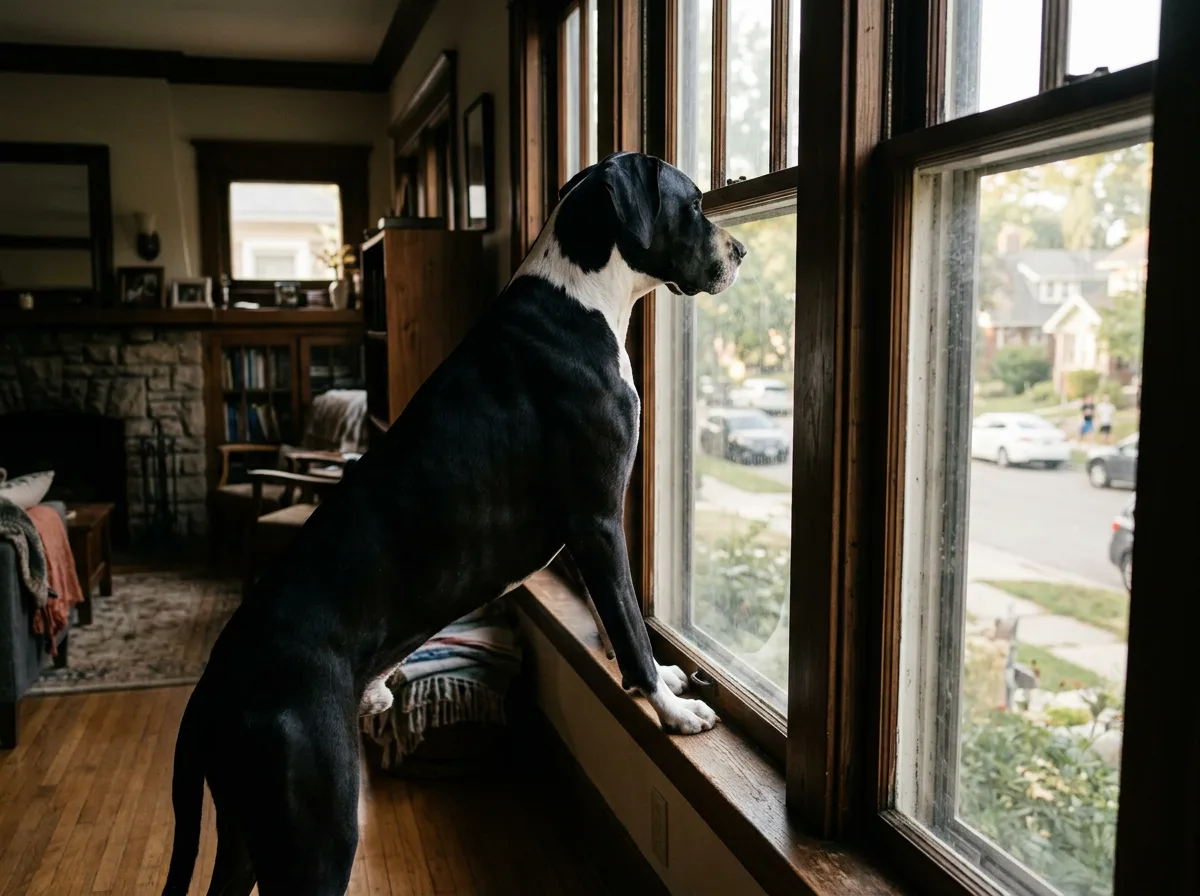
The Great Dane is called the heartbreak breed because of the painful gap between its loving temperament and its short lifespan. Like most giant breeds, Great Danes typically live only about 7 to 10 years, far shorter than small dogs that reach 15 or more, and the crueler truth is that a dog with this much affection to give simply does not get to give it for very long. Owners bond intensely with a Dane, and giant breeds age faster, so the years feel especially brief. The breed is also affectionately nicknamed the Apollo of dogs for its noble, statuesque build.
The short lifespan is worth understanding before you commit, because it shapes everything from health screening to how much time you truly get. Choosing a puppy from a breeder who screens for heart and orthopedic disease, keeping your Dane lean, and learning the warning signs of bloat all help you make the most of the time the breed can offer. For a deeper look at longevity and how to extend those years, see our full guide to Great Dane lifespan.
What Is Rage Syndrome in Great Danes?
Rage syndrome is a rare neurological condition that causes sudden, unprovoked aggression, and it is important to be clear that it is not a characteristic Great Dane problem. The best-documented cases of true rage syndrome (also called sudden onset aggression or idiopathic aggression) appear in a small number of other breeds, most often English Springer Spaniels and Cocker Spaniels, not Great Danes. A dog with genuine rage syndrome may snap explosively with no warning and then return to normal, apparently unaware of the episode, which is what distinguishes it from ordinary fear or resource-guarding aggression.
In a well-bred, well-socialized Great Dane, this kind of behavior is not expected at all. The breed standard calls for a friendly, dependable temperament, and reputable breeders select hard against instability. Any sudden aggression in a Dane is far more likely to trace to pain, fear, poor socialization, or a medical problem than to true rage syndrome, and it warrants a prompt workup with your veterinarian and, if needed, a board-certified veterinary behaviorist rather than a self-diagnosis. The practical takeaway is reassuring: choose a puppy from a breeder who prioritizes temperament, socialize early, and you are choosing a stable, gentle dog.
Is a Great Dane a Good House Dog?
Yes, a Great Dane is a genuinely good house dog, and its temperament is arguably better suited to indoor family life than that of many far smaller breeds. Danes are calm, quiet, and low-energy inside, happy to be a mellow presence underfoot rather than a bouncing, barking whirlwind. They want to be wherever their people are, which makes them wonderful companions in a home where someone is around, and their gentle patience makes them a natural fit with children and other pets.
The requirements are space and companionship, not any flaw in personality. This is a dog that needs room to stretch out, a household that will not leave it alone for ten-hour stretches, and an owner prepared for the cost and the shortened timeline of a giant breed. Meet those needs, and the Great Dane is one of the most affectionate, well-mannered house dogs you can own. For the full picture of living with the breed (size, health, cost, and care), start with our complete Great Dane breed guide.
Do Male and Female Great Danes Have Different Temperaments?
There are mild, generalizable differences between the sexes, but with Great Danes the individual dog and how it was socialized matter far more than whether it is male or female. Both sexes share the same gentle, people-oriented core, and neither is aggressive by nature.
The tendencies owners describe most often:
- Males tend to be bigger, goofier, and more openly velcro. They frequently stay puppyish longer, mature more slowly, and lean, shadow, and demand physical contact a little harder.
- Females often mature faster and read as slightly more independent, self-possessed, or (in the affectionate sense) moody. Many bond intensely to one favorite person and can be a touch more selective with unfamiliar dogs.
Two practical notes matter more than any personality generalization. First, spaying or neutering and consistent training shape behavior far more than sex does. Second, if you are adding a second dog, a male and a female usually coexist more peacefully than two adult males or two adult females, where same-sex tension is more likely in a breed this size. Pick the dog whose energy and personality fit your home, not the sex.
American vs. European Great Dane: Do They Act Differently?
The gentle-giant temperament is the same in both, but the two types differ in build and in the intensity of a few traits. It is worth knowing that "American" and "European" are informal style distinctions, not separate breeds. The American Kennel Club recognizes one Great Dane.
- European (German-style) Danes carry heavier bone, a more massive blocky head, and looser skin. They are frequently described as the more laid-back, slow-moving couch potatoes of the two, calm to the point of aloof, and slower to rev up.
- American Danes tend to be leaner, taller-looking, and more athletic in outline, and many owners find them a shade more energetic, animated, and outgoing.
Treat these as tendencies, not rules. Both types are affectionate, sensitive, moderately watchful, and equally unsuited to hard guard work, and the specific breeder's lines and the socialization you provide influence the adult temperament far more than the American or European label does. A well-raised Dane of either type is the same sweet, mellow companion.
Do Great Danes Bark a Lot?
No, Great Danes are generally not heavy barkers. They are typically quiet, low-reactivity dogs that bark with purpose rather than sounding off at every passing noise, which is part of what makes them such easy housemates. The catch is volume: when a Dane does bark, it is deep, loud, and carries, so even occasional barking is impossible to ignore and doubles as a natural deterrent.
When a Great Dane barks excessively, it is almost always a signal rather than a personality trait. The usual causes are boredom, under-exercise, or the separation stress this people-focused breed is prone to, and the fix is meeting those needs rather than suppressing the noise.
Many Danes are also "talkers" in a way that is not really barking at all. The breed is famous for groans, grumbles, sighs, and Scooby-Doo style vocalizations that owners find endearing.
- If your Great Dane starts barking more, look at the day before you look at the dog. Daily exercise, mental enrichment, and company during the hours you are home resolve most nuisance barking, because a content, tired Dane has little reason to make noise. Avoid rushing over every time it barks for attention, which quietly teaches a giant dog that barking works.
The downsides are practical, not temperamental. Great Danes are expensive to feed and medicate, carry serious health risks like bloat and heart disease, live only about 7 to 10 years, shed and drool at giant scale, and dislike being left alone for long. The personality is sweet and easy; the size, cost, and short lifespan are the real challenges.
Because of the gap between its loving nature and its short life. Like most giant breeds, Great Danes typically live only about 7 to 10 years, far less than small dogs, so owners lose these deeply bonded companions early. The breed is also nicknamed the Apollo of dogs for its noble build.
Yes. Great Danes are calm, quiet, and low-energy indoors, strongly bonded to their people, and gentle with kids and pets, which makes them excellent house dogs. The requirements are space to stretch out and companionship, since the breed does not do well left alone for long hours.
The Great Dane is an ancient breed rather than a modern cross, but its foundation is usually credited to the English Mastiff (for bulk and bone) and the Irish Wolfhound (for height and athleticism), with some accounts adding the Greyhound. Despite the name, the breed was developed largely in Germany.
Often, yes. Great Danes commonly love their whole family while forming an especially tight bond with one favorite person, usually their main caregiver. A Dane that fixates on a single person to the exclusion of everyone else is usually under-socialized, so involving the whole household in care and training keeps the dog well-rounded.
Great Danes are not the most surrendered breed. Shelters and rescue data consistently show pit bull-type dogs as the most commonly surrendered and euthanized dogs in the United States, driven by overbreeding, housing restrictions, and breed stigma rather than temperament. Well-bred Great Danes are relatively uncommon in shelters.
Rage syndrome is a rare neurological condition causing sudden, unprovoked aggression, and it is not a characteristic Great Dane problem. It is best documented in a few other breeds, mainly English Springer and Cocker Spaniels. Sudden aggression in a Dane far more often traces to pain, fear, or poor socialization and warrants a veterinary workup, not a self-diagnosis.
No, aggression is a temperament fault in the breed, not a trait. The breed standard calls for a courageous but friendly, dependable dog. Great Danes are watchful and their size is a natural deterrent, but a properly bred and socialized Dane is gentle, stable, and far more likely to lean on a stranger than threaten one.

Coreen Saito is a pet writer and longtime shelter volunteer with more than a decade in animal rescue. She covers cat behavior, breed care, and the small, ordinary science of sharing a life with companion animals, with a particular focus on honest takes about the products and decisions that actually matter. At home in Arizona, she's outranked by Mac (a dog with the loudest opinion in the house), Rebel (a cat who governs by quiet authority), and Meri (an orange tabby who runs the late shift and the laundry basket). She writes about all three, plus the rescues that keep coming through her life, at LifeWithMinty.com.
Sign up for expert-backed reviews and safety alerts all in one place.