Great Dane Price: What a Great Dane Really Costs
What does a Great Dane really cost? Pet-quality puppies run $1,500 to $3,000 from a reputable breeder, rare colors cost more, and giant-breed food, medication, and vet bills push ownership to thousands a year. Here is the full 2026 price breakdown.
Petful is reader supported. As an affiliate of platforms like Amazon and Chewy, we may earn a commission when you buy through links on this page. There is no extra cost to you.
The Great Dane price for a healthy, well-bred puppy typically runs $1,500 to $3,000 from a reputable breeder in 2026, with rare colors and imported European lines reaching $3,000 to $5,000 or more, according to breeder listings and cost guides consistent with American Kennel Club (akc.org) breed data. Adoption through a rescue costs far less, usually $300 to $600. But the sticker price on a Great Dane puppy is the smallest part of the story. This is a giant breed, and giant breeds cost giant money to feed, medicate, and treat. Between an oversized first-year setup, food measured in cups by the pound, weight-based medication, and the very real risk of a four-figure bloat surgery, the true cost of a Great Dane runs into the thousands every single year. Here is the honest breakdown.
- 1A pet-quality Great Dane puppy from a reputable breeder costs about $1,500 to $3,000 in 2026, with rare colors and European lines running $3,000 to $5,000 or more
- 2Adoption is the cheapest legitimate route at roughly $300 to $600
- 3Harlequin, blue, and merle are typically the most expensive Great Dane colors because they are the hardest to breed to standard
- 4First-year cost of ownership often hits $4,000 to $6,000 once you add giant supplies, food, vet care, and a preventive gastropexy
- 5Plan for $2,000 to $4,000 a year ongoing, driven by the enormous food bill, weight-priced medications, and giant-breed health risks like bloat and heart disease

Sign up for expert-backed reviews and safety alerts all in one place.
How Much Does a Great Dane Cost to Buy?
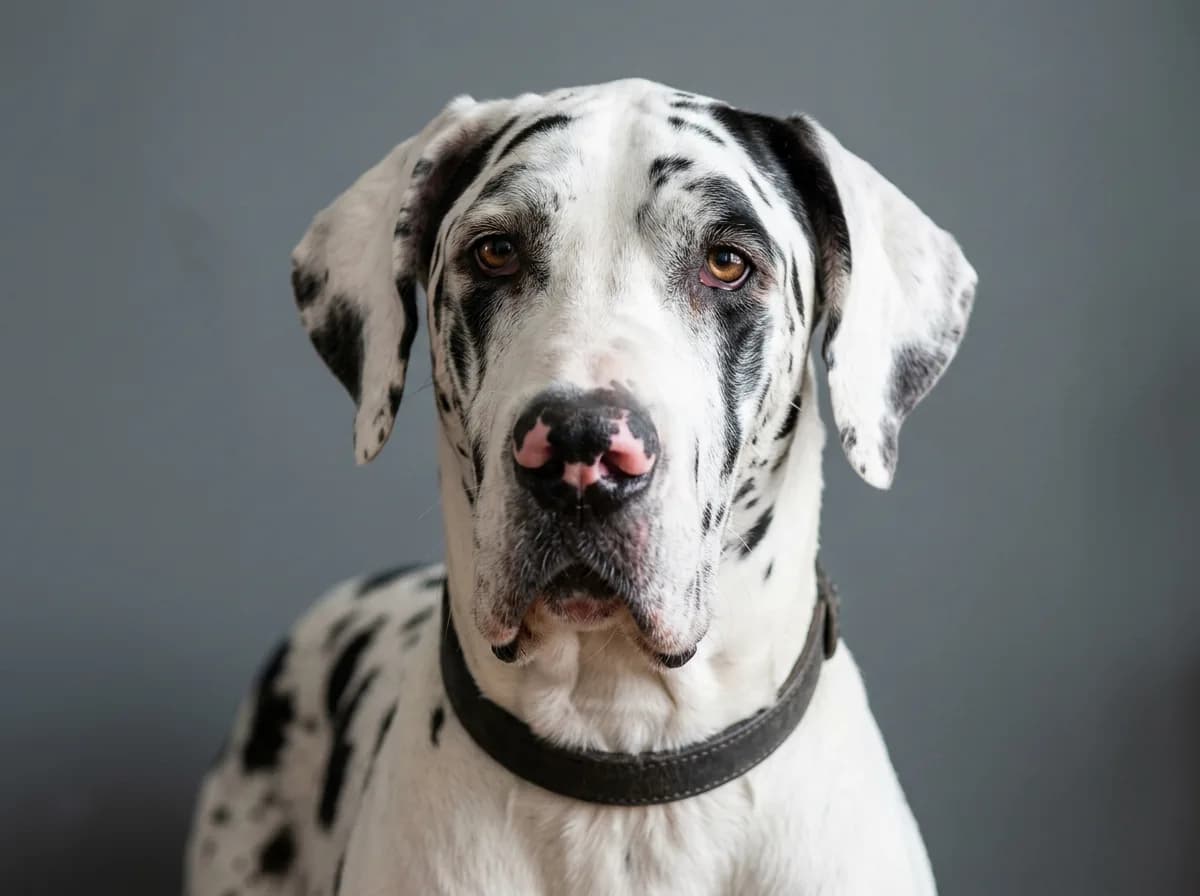
A Great Dane costs between $300 and $5,000 or more to acquire, depending almost entirely on where the dog comes from and its breeding quality. The source sets the range, and everything else (color, pedigree, region) moves the number inside it. Here are the real numbers in plain dollars.

A grain-free kibble built around named whole-protein sources. Best for active adult dogs; the high fat content is more than many sedentary pets need.
Petful may earn a commission when you click through to Chewy, at no extra cost to you.
| Source or Quality | Typical Price | What You Get |
|---|---|---|
| Rescue or breed adoption | $300 to $600 | Often an adult, vaccinated and altered, no pedigree |
| Backyard or unregistered litter | $600 to $1,200 | No health testing, high long-term risk (avoid) |
| Pet-quality puppy (reputable breeder) | $1,500 to $3,000 | Registered, vaccinated, health-tested parents |
| Show or breeding-quality puppy | $3,000 to $5,000+ | Conformation to standard, top pedigree, contract |
| Imported European lines | $3,500 to $6,000+ | Heavier European type, import and pedigree costs |
Pet quality does not mean lower quality of health or temperament. It simply means the puppy has a minor cosmetic trait that keeps it out of the show ring, and a pet-quality Great Dane is every bit as loving and sound as a show dog. The gap between a $700 backyard puppy and a $2,500 breeder puppy is not markup. It is the genetic health testing, the veterinary care, and the years of pedigree work that separate a healthy companion from a heartbreaking gamble. For the full temperament and care picture before you commit, read the complete Great Dane breed profile.
What Drives a Great Dane's Price?
Two puppies from the same litter can be priced hundreds of dollars apart, and two breeders can be thousands apart for what looks like the same dog. Here is where the money actually goes and why a rock-bottom price is usually a warning, not a bargain.
Genetic health testing. Great Danes are predisposed to several serious inherited conditions, including dilated cardiomyopathy (a heart-muscle disease), hip dysplasia, and hypothyroidism. Responsible breeders screen breeding dogs through the Orthopedic Foundation for Animals (ofa.org) for hips, heart, and thyroid before pairing them. Those clearances cost hundreds of dollars per dog and are the single clearest line between a reputable breeder and a backyard one.
Pedigree, registration, and titles. AKC registration, documented multi-generation pedigrees, and showing dogs to prove breeding stock all cost time and money that get built into the puppy price.
Veterinary care before pickup. A well-bred puppy leaves with its first vaccinations, deworming, a veterinary health check, and often a microchip already done. Those bills are baked in.
Bloodline and type. European Great Danes carry a heavier, more massive build that many buyers pay a premium for, and puppies from proven show or working lines cost more than pet-bred litters.

Petful may earn a commission when you click through to Chewy, at no extra cost to you.
Region and demand. Metro areas and regions with few local breeders run higher, while areas with more Great Dane breeders can be more affordable.
What Color Great Dane Is Most Expensive?
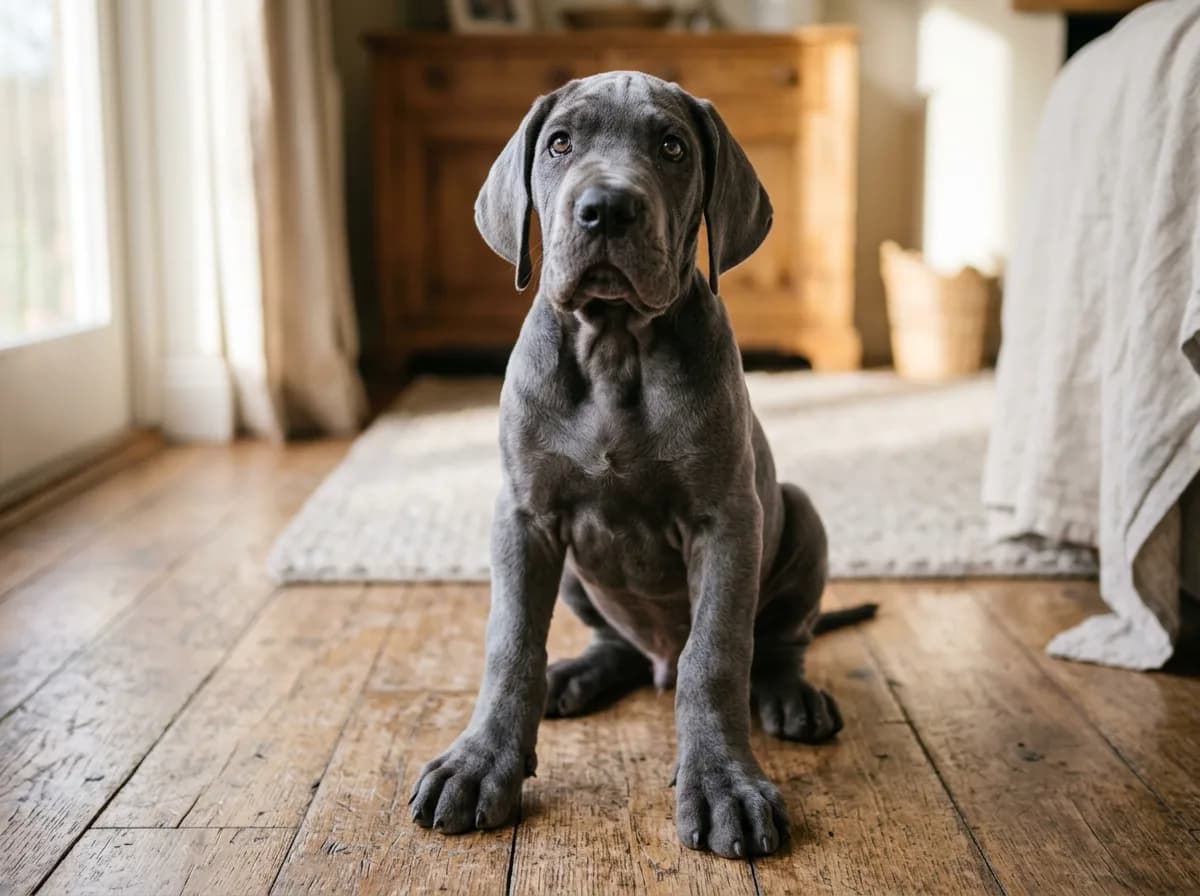
The most expensive Great Dane colors are harlequin, blue, and merle, which typically command the highest prices because they are the hardest colors to breed reliably to the AKC standard. The American Kennel Club recognizes seven standard colors: fawn, brindle, blue, black, harlequin, mantle, and merle. Harlequin (a white base coat with torn black patches) is especially difficult because harlequin-to-harlequin breedings do not produce uniform litters, so a correctly marked harlequin puppy is genuinely uncommon and priced accordingly.
| Color | Rarity | Typical Effect on Price |
|---|---|---|
| Fawn (tan with black mask) | Most common | Baseline breeder price |
| Brindle (fawn with black striping) | Common | Baseline price |
| Black | Common | Baseline to slight premium |
| Mantle (black and white, tuxedo pattern) | Moderately common | Modest premium |
| Blue (steel gray) | Uncommon | Notable premium |
| Merle (mottled gray and black) | Uncommon | Notable premium |
| Harlequin (white with black patches) | Rare, hard to breed | Highest, often the top of a breeder's range |
- The rarest colors carry the biggest price tags, but color has nothing to do with health, temperament, or how long your Great Dane will live. A well-bred fawn or brindle from health-tested parents is a far better buy than a bargain harlequin from a breeder who skipped the OFA screening. Pick the healthiest puppy from the most reputable breeder, and treat color as a tiebreaker.
Is Owning a Great Dane Expensive? First-Year Costs
Yes, owning a Great Dane is expensive, and the first year is the heaviest. On top of the purchase price, plan for roughly $2,500 to $3,500 in first-year setup, food, and veterinary care, which pushes the true first-year total to around $4,000 to $6,000. Everything for a Great Dane is bigger and therefore pricier: the crate, the bed, the bowls, the food bag, and the anesthesia dose for every procedure.
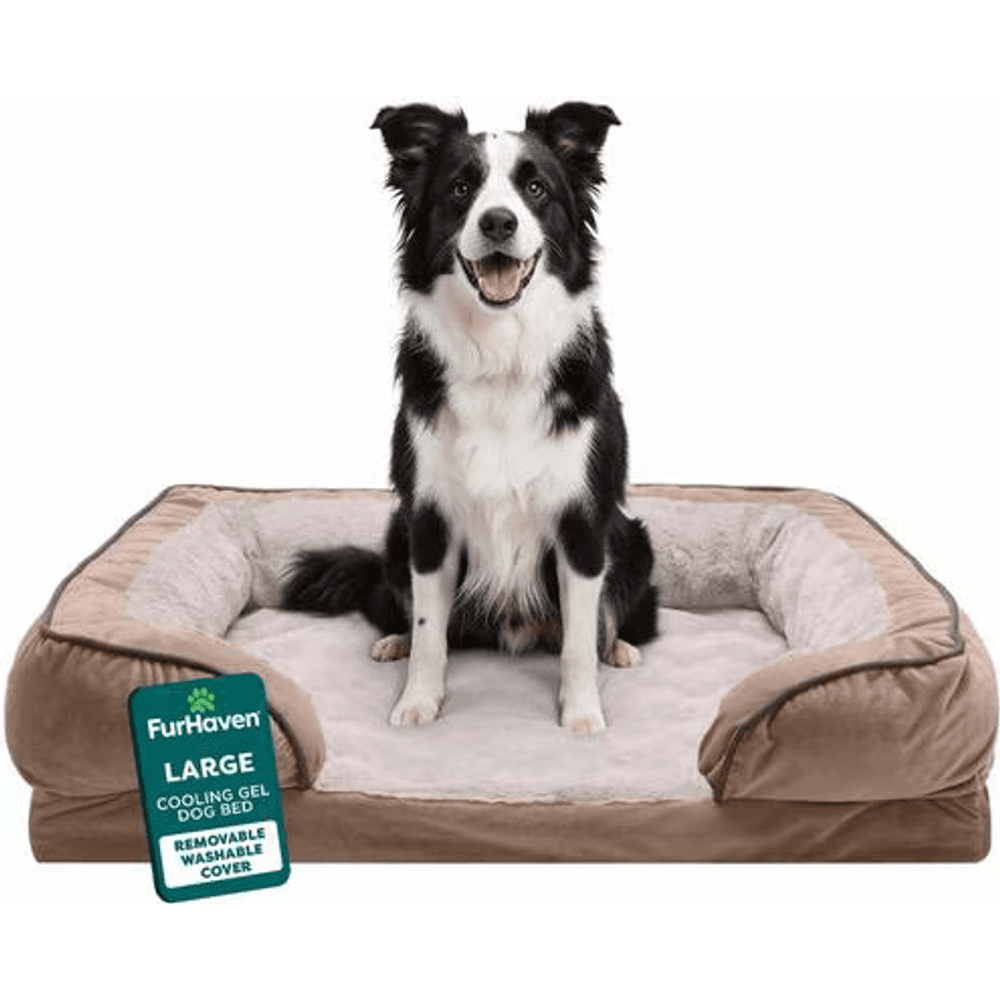
An orthopedic sofa bed with three bolstered sides for dogs who like to rest their head and joints against a cushion. The supportive foam base cradles hips and elbows, a comforting spot for an older or shaky dog to settle.
Petful may earn a commission when you click through to Chewy, at no extra cost to you.
| Item | Typical Cost | Notes |
|---|---|---|
| Extra-large crate | $120 to $250 | Must fit a 100-plus-pound adult |
| Orthopedic dog bed (giant size) | $80 to $200 | Joint support matters for a heavy breed |
| Elevated feeding stand and bowls | $30 to $80 | Raised bowls suit the breed's height |
| First-year food (large-breed formula) | $700 to $1,200 | Controlled-growth puppy food is critical |
| Vaccinations, deworming, exams | $250 to $500 | Puppy series plus wellness visits |
| Spay or neuter | $250 to $600 | Higher than average due to size and anesthesia |
| Preventive gastropexy | $200 to $500 add-on | Often done with spay or neuter to prevent bloat |
| Leash, harness, collar, toys | $80 to $200 | Giant-breed-rated gear, replaced as they grow |
- Great Dane puppies must eat a large-breed or giant-breed formula, not a standard high-calorie puppy food. Growing too fast overloads developing joints and is linked to orthopedic disease in giant breeds. This is a case where the "right" food is not optional, and your veterinarian should guide the feeding plan through the first eighteen months.
Annual and Monthly Cost of a Great Dane
After year one, expect to spend about $2,000 to $4,000 a year, or roughly $170 to $330 a month, to keep a Great Dane healthy. The food bill alone dwarfs what a medium dog costs, because an adult Dane can eat 6 to 10 cups a day. Just as important, most preventive medications are priced by body weight, and a 140-pound dog sits in the top bracket for nearly everything.
| Expense | Annual Cost | Monthly Cost |
|---|---|---|
| Large-breed food | $700 to $1,500 | $60 to $125 |
| Heartworm, flea, and tick prevention | $250 to $500 | $20 to $42 |
| Routine vet care and vaccines | $300 to $600 | $25 to $50 |
| Pet insurance (giant breed) | $600 to $1,200 | $50 to $100 |
| Grooming supplies and nail care | $80 to $200 | $7 to $17 |
| Toys, treats, and replacements | $150 to $350 | $12 to $30 |
| Estimated total | $2,080 to $4,350 | $174 to $364 |
Weight is the hidden cost multiplier. Monthly heartworm and flea-and-tick preventives are dosed and priced by weight, so a Great Dane needs the largest (most expensive) size, and some products require two units for a dog over 100 pounds. Anesthesia for a dental cleaning or any surgery is dosed by weight too, so routine procedures that cost a beagle owner $300 can cost a Dane owner $600 or more. Even the short, smooth coat is not free: this breed sheds surprisingly heavily, so a good deshedding tool and a large bottle of dog shampoo are recurring buys.
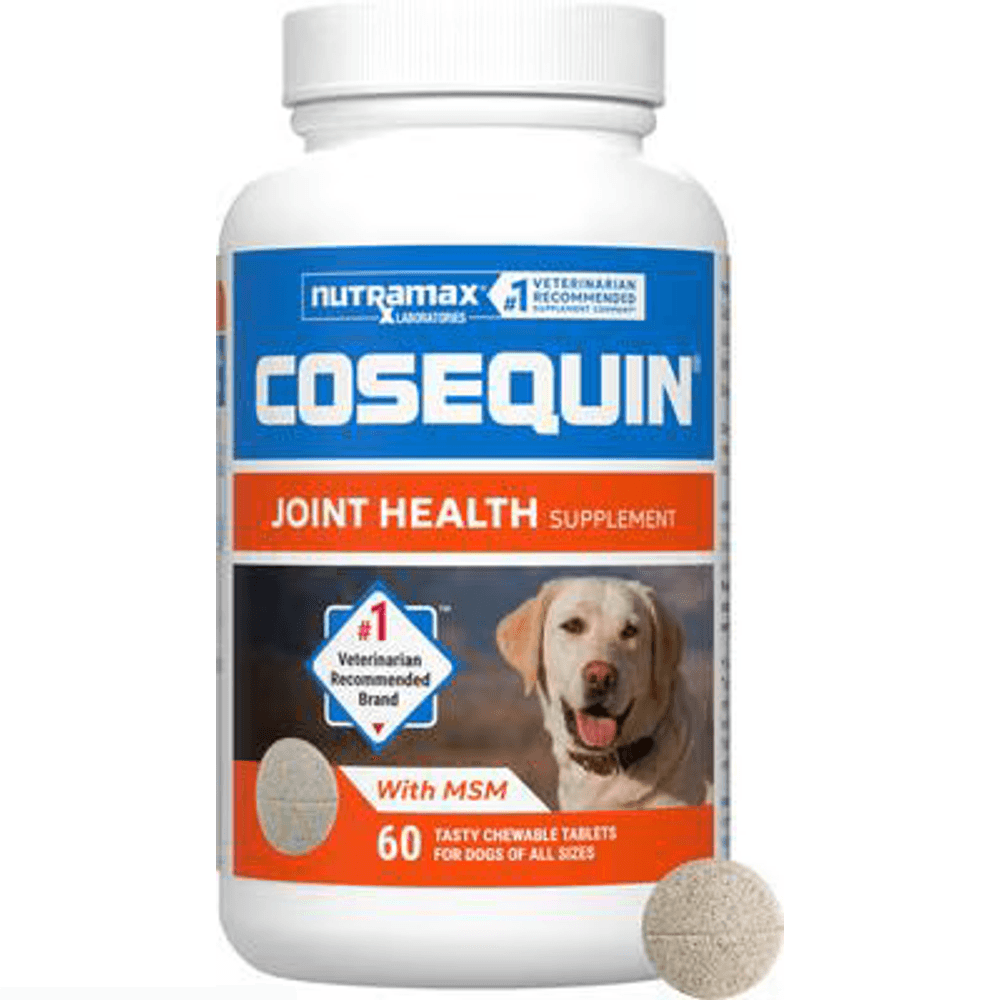
The number-one veterinarian-recommended joint supplement brand. Glucosamine, chondroitin, and MSM support cartilage and cushion the joints, easing the stiffness and hind-end weakness that can leave an older or arthritic dog trembling.
Petful may earn a commission when you click through to Chewy, at no extra cost to you.
The Giant-Breed Vet Bills: Bloat, Gastropexy, and Heart Disease
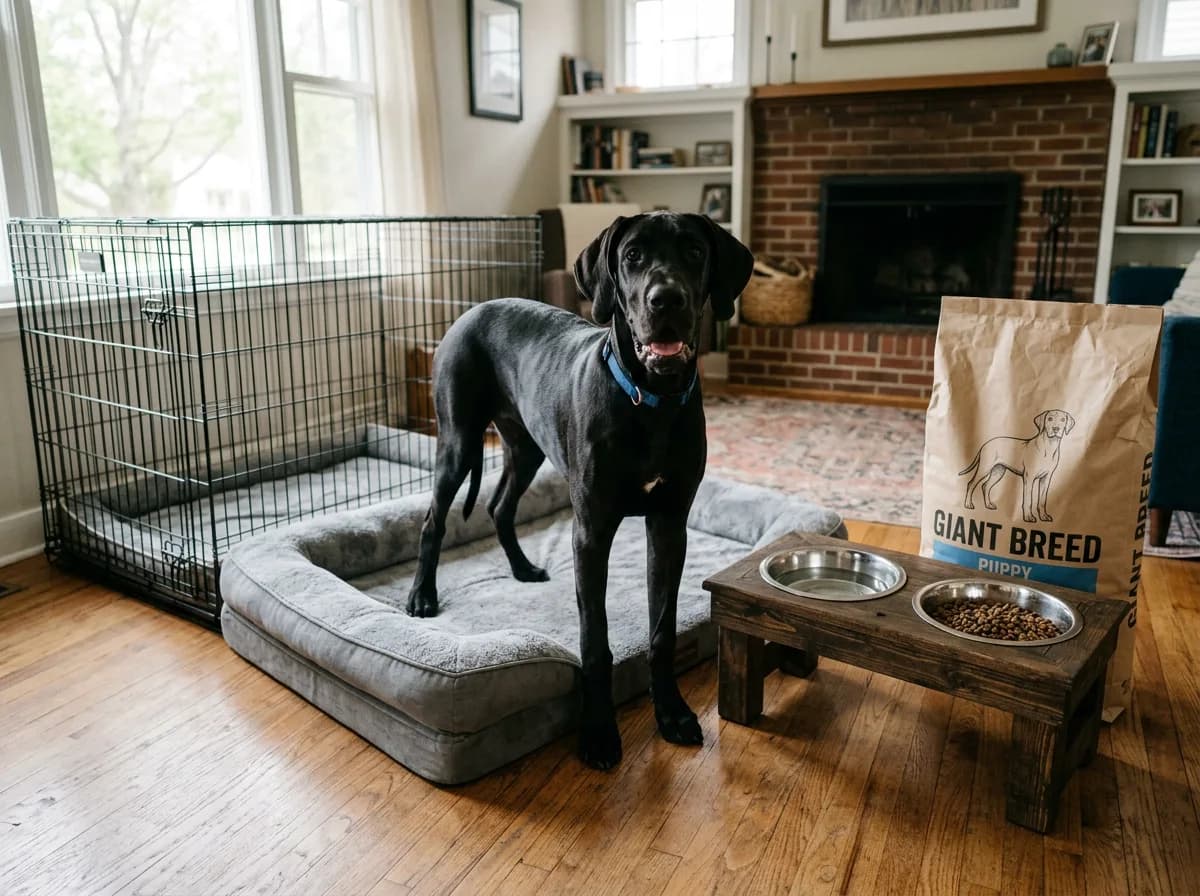
The line item that can dwarf everything else is emergency and specialty veterinary care, because Great Danes carry some of the highest health risks of any breed. Understanding these before you buy is the difference between a planned expense and a financial emergency.
Bloat (gastric dilatation-volvulus). Great Danes have the highest bloat risk of any breed. In GDV, the stomach fills with gas and twists, cutting off blood supply, and it is rapidly fatal without emergency surgery. That surgery commonly runs $1,500 to $7,500 depending on timing and complications. This single risk is why the breed is so tightly tied to cost.
Gastropexy. A preventive gastropexy tacks the stomach to the body wall so it cannot twist. Done at the same time as a spay or neuter it often adds only $200 to $500, versus $500 to $1,500 as a standalone procedure. Veterinary teaching hospitals and university veterinary colleges routinely recommend it for giant breeds, and for a Great Dane it is one of the smartest dollars you can spend.
Dilated cardiomyopathy and orthopedic disease. Danes are prone to dilated cardiomyopathy, hip and elbow dysplasia, and cervical spondylomyelopathy (wobbler syndrome). Cardiac workups, orthopedic imaging, and specialist visits add up fast, which is exactly why giant-breed pet insurance premiums run higher than average.
- A single bloat surgery can cost more than a decade of insurance premiums. Because Great Danes are predisposed to bloat, heart disease, and joint problems, most owners who insure early (while the dog is a young puppy and premiums are lowest) come out ahead the first time an emergency hits. Enroll before any condition appears, since pre-existing issues are not covered.
Is a Great Dane a Good House Dog?
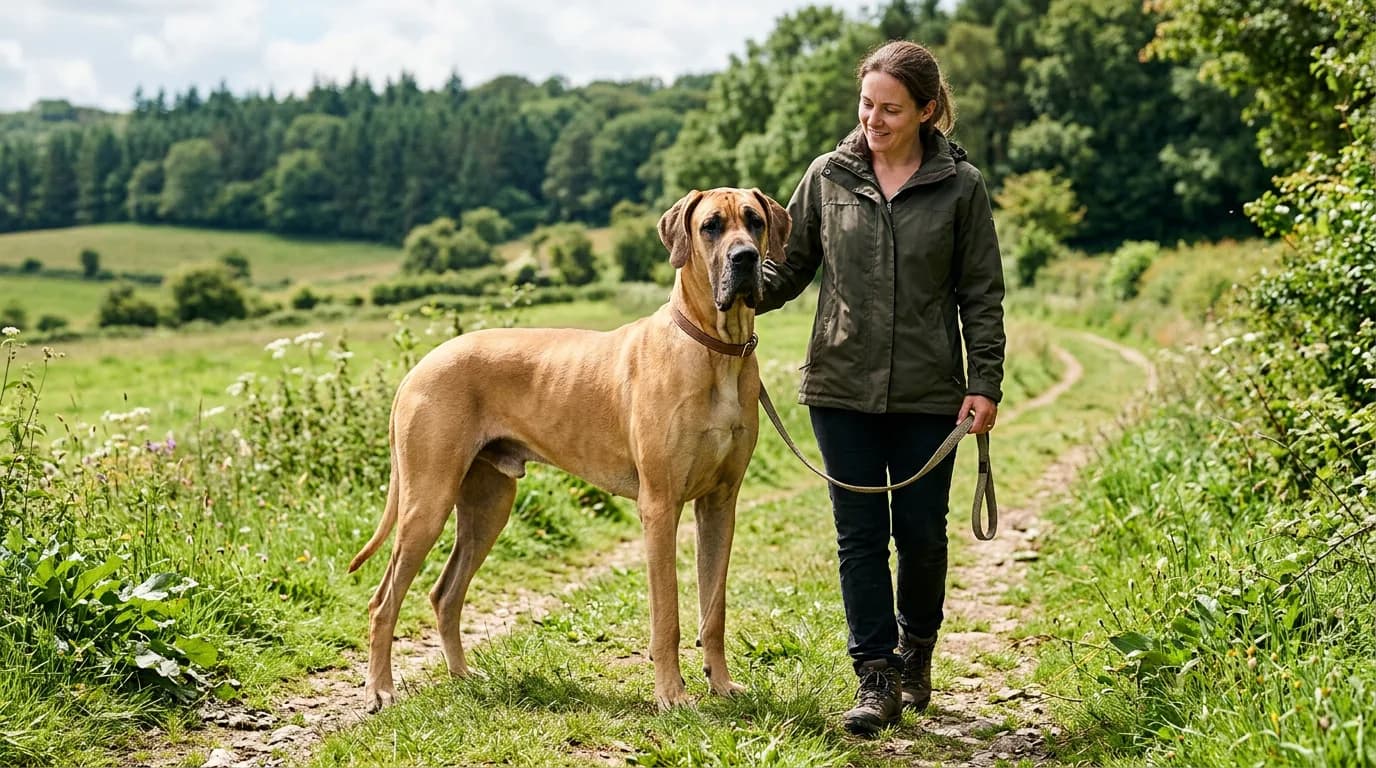
Yes, a Great Dane is a genuinely good house dog for the right home, despite its enormous size. Known as gentle giants, Great Danes are affectionate, people-oriented, and famously calm indoors, often described as low-energy couch companions once they are past the puppy stage. They typically do well with children and other pets when properly socialized. The catch is space and cost, not temperament: this is a dog that leans its full weight against you, needs room to stretch out, and costs far more to feed and medicate than a small breed.
If a giant-breed budget feels steep, that is worth taking seriously before you fall in love with a puppy. A smaller companion breed like a Cavapoo costs a fraction as much to feed, medicate, and insure over its lifetime, and it fits a smaller home. But if you have the space, the budget, and a love of leaning giants, few breeds are as devoted indoors as a Dane. For a full sense of just how much dog you are bringing home, see our Great Dane size guide.
What Dog Is Known as the Heartbreak Breed?
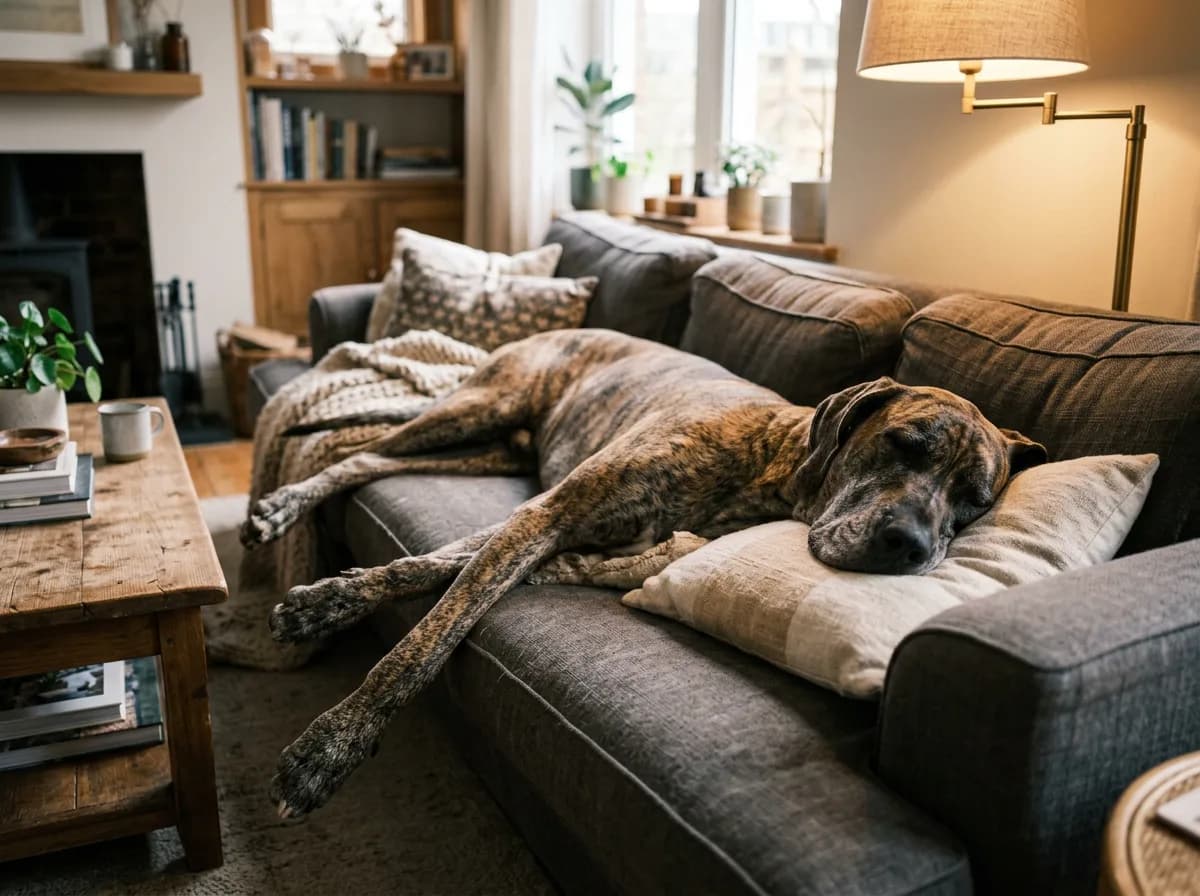
The Great Dane is the dog most often called the "heartbreak breed," a nickname that comes from its short lifespan. Like most giant breeds, Great Danes live only about 7 to 10 years on average, far shorter than small dogs that reach 15 or more. The combination of a loving, deeply bonded temperament with a life measured in single-digit years is why owners and veterinarians use the bittersweet phrase. Great Danes are also nicknamed the "Apollo of dogs" for their noble, statuesque build. Petful’s guide to Great Dane lifespan has the full breakdown.
Their short lifespan is a cost consideration as well as an emotional one. Giant breeds age faster, so senior care, mobility support, and end-of-life expenses tend to arrive earlier than they would for a smaller dog. It is a hard truth of the breed, and it is part of what you are signing up for. The upside is that owners who go in clear-eyed, budget for the health risks, and choose a health-tested puppy give these dogs the best possible shot at the fullest life the breed can offer.
How to Avoid Great Dane Scams and Backyard Breeders
Because Great Danes are expensive and in demand, they attract scams and backyard breeders. Protecting your wallet and your future dog comes down to knowing what a legitimate breeder looks like. A too-good-to-be-true price is the first red flag: a genuine, health-tested puppy from a reputable breeder cannot be produced for $500, so a "purebred Great Dane" listed far below the market range is usually a backyard litter with no health screening, a sick or underage puppy, or an outright scam collecting a deposit for a dog that does not exist.
- Be extremely cautious of a seller who refuses a video call or in-person visit, cannot show OFA health clearances for the parents, has puppies ready before eight weeks, asks for payment only by gift card, wire, or app, advertises a price far below the going range, or always seems to have multiple litters available. Reputable breeders welcome questions, show health documentation, screen you as a buyer, and take the puppy back if it ever cannot stay with you. A rescue charging a modest adoption fee is not the same thing, because it is rehoming dogs rather than selling pedigreed puppies.
The safest low-cost route is a Great Dane rescue, where an adoption fee of roughly $300 to $600 usually covers vaccinations, spay or neuter, and a microchip. You often get an adult with a known temperament, and you skip the priciest, most fragile puppy stage entirely.
Is a Great Dane Worth the Price?
For the right owner, absolutely. You are paying for one of the most affectionate, striking, and gentle companions in the dog world, and when you buy from a health-tested breeder or adopt from a rescue, you stack the odds toward a healthier, fuller life. The smart approach mirrors every other big commitment: spend on the front end (a reputable, OFA-screened breeder or a rescue, plus a preventive gastropexy and early insurance), then budget honestly for the $2,000 to $4,000 a year it takes to keep a giant breed well. That path costs more than a bargain puppy, but far less than the bloat surgery, chronic vet bills, and heartbreak that come with chasing the cheapest Great Dane you can find.
How Much Do Great Dane Mixes Cost?
A Great Dane mix usually costs less than a purebred, typically $500 to $1,500 from a designer breeder and often under $500 through a shelter or rescue. Mixes are not held to a breed standard, come without AKC papers, and vary widely in size and looks, so their prices are far less consistent than a purebred Dane's. Here is what the most-searched crosses tend to run:
- Cane Corso Great Dane mix (the "Daniff"): often $500 to $1,500, a truly massive dog with the same giant-breed food bill and bloat risk as a purebred.
- Doberman Great Dane mix: commonly $400 to $1,200, leaner and more energetic than a standard Dane.
- Great Dane Pit Bull mix: frequently $200 to $800, often available through shelters and rescues.
- Great Dane Husky mix: typically $500 to $1,000, with a heavier coat and more shedding than a short-coated Dane.
- Great Dane Dalmatian mix: usually $300 to $800, more often rehomed than bred to order.
A lower purchase price does not mean lower ownership cost. Any mix that inherits Great Dane size still eats like a giant breed, needs weight-priced medication, and can develop bloat, so budget the same $2,000 to $4,000 a year no matter which cross you choose.
How Much Does Great Dane Ear Cropping Cost?
Great Dane ear cropping typically costs $200 to $600 for the surgery, with some specialists charging up to $800, and the surgery is only the start of the expense. Cropping is a purely cosmetic procedure done on puppies (usually between 7 and 12 weeks old) under general anesthesia, which for a giant-breed puppy is a meaningful cost on its own. Afterward the ears must be "posted" (taped upright and re-taped) for weeks to months with follow-up visits, so the all-in cost with aftercare often lands closer to $600 to $1,000.
Before you budget for it, know that ear cropping is falling out of favor:
- The American Veterinary Medical Association opposes cosmetic ear cropping, and many veterinarians no longer perform it.
- It is banned across most of Europe, the UK, Australia, and parts of Canada, and restricted in some US states.
- It carries anesthesia, infection, and healing risks with no medical benefit to the dog.
Natural, uncropped ears are fully acceptable under the AKC Great Dane standard and cost nothing. For most owners, skipping the crop is both the cheaper and the kinder choice.
What Is the Price of a White Great Dane?
A solid white Great Dane is not a recognized color, and a reputable breeder will not sell one at a premium. Truly white Danes are almost always "double merle," the product of breeding two merle dogs together, and that pairing carries a high risk of congenital deafness and blindness. Responsible breeders avoid merle-to-merle litters precisely because of those defects, so a healthy, ethically bred all-white Dane is not something you shop for by price in the first place.
That makes a "rare white Great Dane" listing a warning sign, not a bargain:
- A seller advertising a premium-priced "rare white" puppy is often a backyard breeder producing double merles for their looks.
- White is not one of the seven AKC standard colors (fawn, brindle, black, blue, mantle, merle, and harlequin), so the dog cannot be shown.
- The real cost of a double merle arrives later, in deafness, vision problems, and the extra care those dogs need.
If a coat is mostly white with torn black patches, that is harlequin, a recognized color priced with the standard colors covered above, not a white Dane.
Yes. Beyond a $1,500 to $3,000 purchase price from a reputable breeder, the first year often runs $4,000 to $6,000 once you add giant-size supplies, large-breed food, vet care, and a preventive gastropexy. Ongoing costs are about $2,000 to $4,000 a year, driven by an enormous food bill, weight-priced medications, and higher giant-breed insurance and health-care costs.
Harlequin, blue, and merle Great Danes are typically the most expensive because they are the hardest colors to breed reliably to the AKC standard. Harlequin (white with torn black patches) is especially uncommon because harlequin breedings do not produce uniform litters. Common colors like fawn and brindle sit at the baseline price, but color has no effect on a dog's health or temperament.
Yes. Great Danes are gentle giants, affectionate, calm, and low-energy indoors once past puppyhood, and they generally do well with children and other pets when socialized. The real requirements are space for a very large dog and a budget for giant-breed food, medication, and vet care, not any problem with temperament.
The Great Dane is often called the heartbreak breed because of its short lifespan of roughly 7 to 10 years, brief for such a loving, deeply bonded dog. Like most giant breeds, Danes age faster than small dogs, which is both an emotional and a financial consideration since senior and end-of-life care tend to arrive earlier. The breed is also nicknamed the Apollo of dogs.
Ongoing care for a Great Dane runs about $170 to $330 per month, covering large-breed food, heartworm and flea-and-tick prevention (priced by the dog's large body weight), routine vet care, pet insurance, grooming supplies, and enrichment. The first year is higher because you are buying all the oversized gear from scratch and often adding a preventive gastropexy.
Great Danes are expensive because everything scales with their size. They eat 6 to 10 cups of food a day, their monthly preventives are dosed and priced by weight, anesthesia for any procedure costs more, and the breed carries high risks of bloat, heart disease, and joint problems. A single bloat surgery can cost $1,500 to $7,500, which is why insurance and a preventive gastropexy are strongly recommended.
A pet-quality Great Dane puppy from a reputable, health-testing breeder costs about $1,500 to $3,000 in 2026, with show quality, breeding rights, rare colors, and imported European lines running $3,000 to $6,000 or more. A puppy advertised far below that range from a "breeder" is a red flag for a backyard litter or scam, though a rescue charging $300 to $600 is a legitimate low-cost option.

Coreen Saito is a pet writer and longtime shelter volunteer with more than a decade in animal rescue. She covers cat behavior, breed care, and the small, ordinary science of sharing a life with companion animals, with a particular focus on honest takes about the products and decisions that actually matter. At home in Arizona, she's outranked by Mac (a dog with the loudest opinion in the house), Rebel (a cat who governs by quiet authority), and Meri (an orange tabby who runs the late shift and the laundry basket). She writes about all three, plus the rescues that keep coming through her life, at LifeWithMinty.com.
Sign up for expert-backed reviews and safety alerts all in one place.