Great Dane Colors: The 7 Standard Colors and More
A complete visual guide to Great Dane colors, covering the seven standard AKC coats, rare non-standard shades, color genetics, pricing, and the critical double-merle health warning every owner should know.
Petful is reader supported. As an affiliate of platforms like Amazon and Chewy, we may earn a commission when you buy through links on this page. There is no extra cost to you.
Great Dane colors fall into seven officially recognized coat varieties in the American Kennel Club (akc.org) breed standard: fawn, brindle, blue, black, harlequin, mantle, and merle. Every other shade you might see, from pure white to chocolate to the eye-catching fawnequin, is considered non-standard, which means it is a real color the dog can be born with but not one that can be shown in the AKC conformation ring. Coat color in this giant breed is driven by a handful of pigment genes that combine in predictable ways, and a few of those combinations carry real health consequences worth understanding before you fall in love with a rare-looking puppy. This guide walks through each standard color with a visual gallery, then covers the non-standard shades, the genetics behind them, pricing, and the double-merle health warning every prospective owner should read.
- 1The AKC recognizes 7 standard Great Dane colors: fawn, brindle, blue, black, harlequin, mantle, and merle
- 2Non-standard colors like white, chocolate, and fawnequin exist but cannot be shown
- 3Two merle parents can produce double-merle puppies with a high risk of deafness and blindness
- 4Coat color does not change a Great Dane's temperament or trainability
- 5Rarer colors and patterns usually command higher prices

Sign up for expert-backed reviews and safety alerts all in one place.
The 7 Standard Great Dane Colors
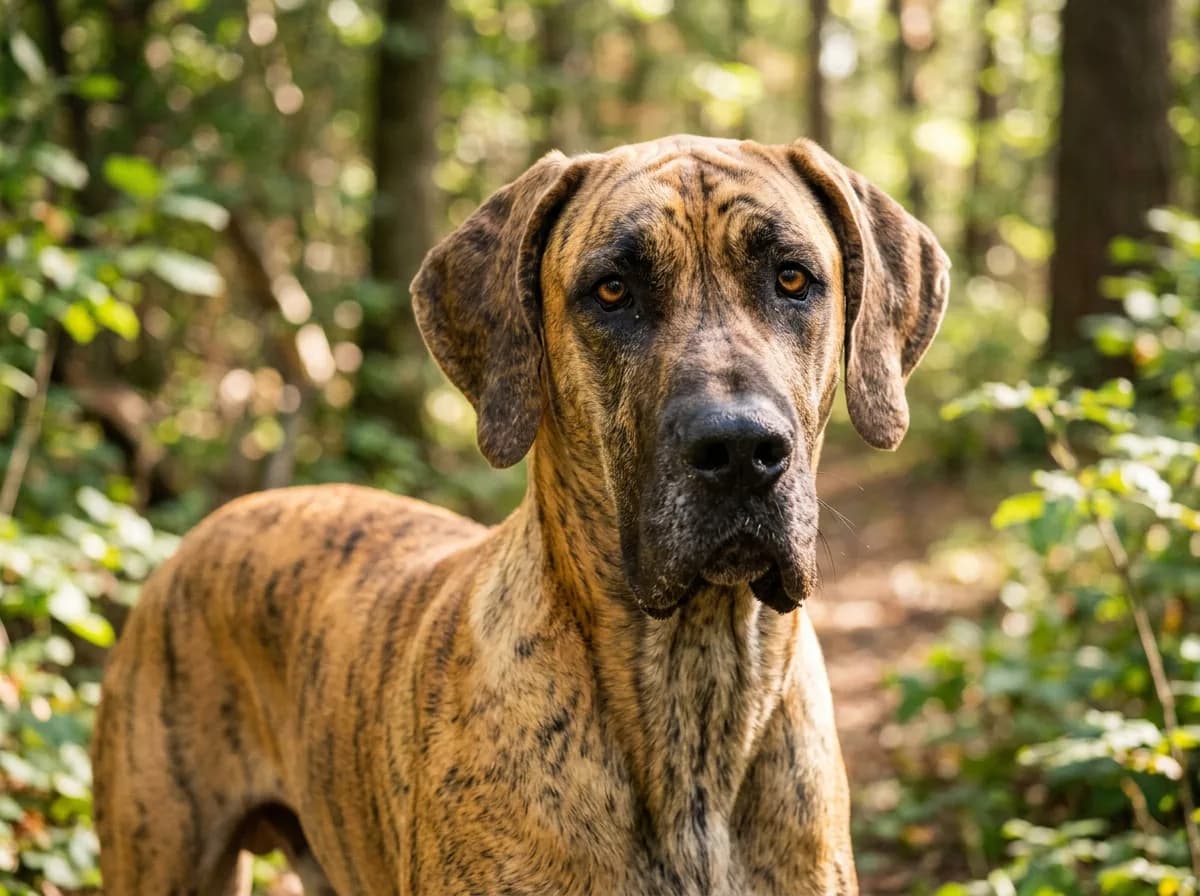
The seven standard colors are the only coats a Great Dane can wear into an AKC show ring. Merle was the most recent addition, formally accepted into the breed standard in 2019 after decades of being produced as a byproduct of harlequin breeding. Each standard color has a precise written description, and judges penalize dogs whose markings stray too far from it. Here is the quick reference before we look at each one in detail.
Petful may earn a commission when you click through to Chewy, at no extra cost to you.
| Color | Coat Appearance | Mask or Markings | Show Standard |
|---|---|---|---|
| Fawn | Golden yellow body | Black mask | Standard |
| Brindle | Fawn base with black tiger stripes | Black mask | Standard |
| Blue | Solid steel blue-gray | Even color throughout | Standard |
| Black | Glossy solid black | Even color throughout | Standard |
| Harlequin | White base with torn black patches | White neck preferred | Standard |
| Mantle | Black and white in a blanket pattern | White collar and chest | Standard |
| Merle | Gray base with dark marbled patches | Varies by dog | Standard |
Fawn
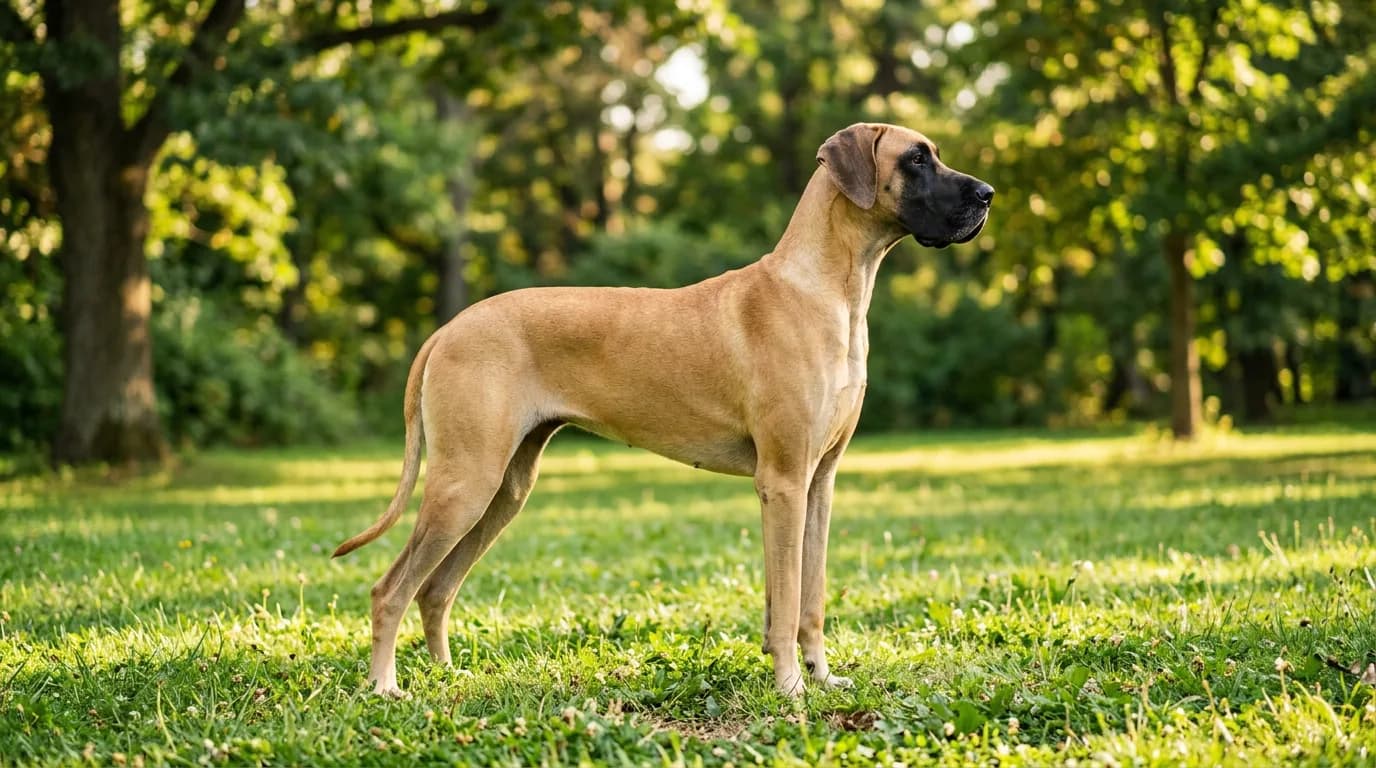
Fawn is the color most people picture when they imagine a Great Dane, thanks in large part to the cartoon dog Scooby-Doo. A correct fawn is a clean golden yellow with a defined black mask across the muzzle and eyes. The AKC standard prefers deep, rich fawn over a pale, washed-out tone, and it faults black or white markings on the body. The black mask is not optional in the show ring: a fawn Dane without one is penalized. Fawn puppies are born with their mask already visible, which makes them easy to identify from the first week.
Brindle
Brindle takes the fawn base coat and overlays it with vertical black striping, giving a tiger-striped effect that ranges from light and sparse to dense and dark. The standard calls for a strong, even chevron pattern and, like fawn, a black mask. Well-defined brindles with clean, distinct stripes are prized, while smudged or muddy patterning is a fault. Brindle and fawn are the two most common Great Dane colors, so they are also usually the most affordable.
Blue
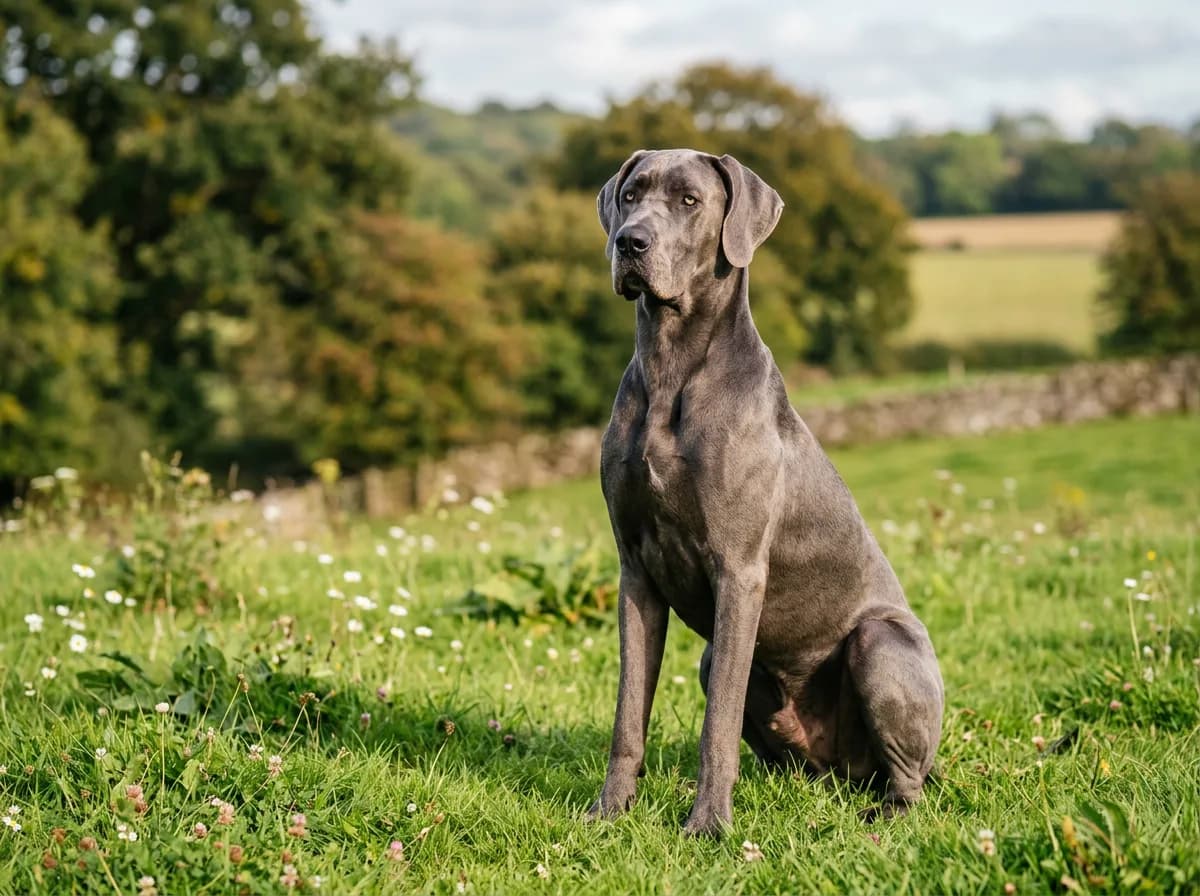
Blue is a solid steel gray that can range from a pale silvery slate to a deep charcoal. Genetically it is a diluted black, produced when a dog inherits two copies of the recessive dilution gene. The standard asks for a pure, even blue with no fawn or white intruding, and eye color in blues is often a striking pale amber. Blue Great Danes have a devoted following and tend to be priced above fawns and brindles because the recessive gene makes them less common in a typical litter.
Black
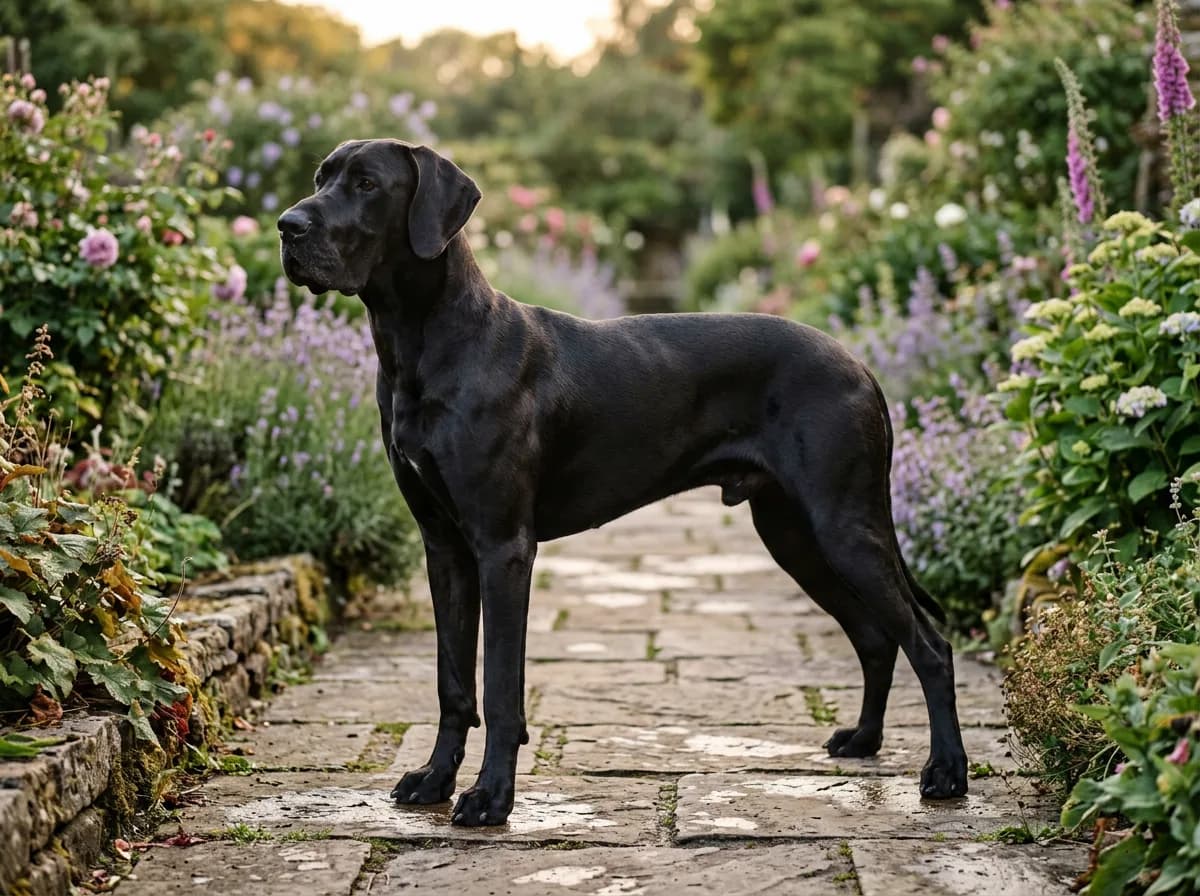
A standard black Great Dane is glossy, solid, and ink-dark from nose to tail, ideally with no white on the body other than perhaps a small spot on the chest or toes. Black is genetically dominant, so it appears reliably in many litters. Because black hides so cleanly, these dogs photograph with a sleek, statuesque look that many owners love. Black Danes also come out of harlequin and mantle breeding programs, where they are a normal and healthy result.
Petful may earn a commission when you click through to Chewy, at no extra cost to you.
Harlequin
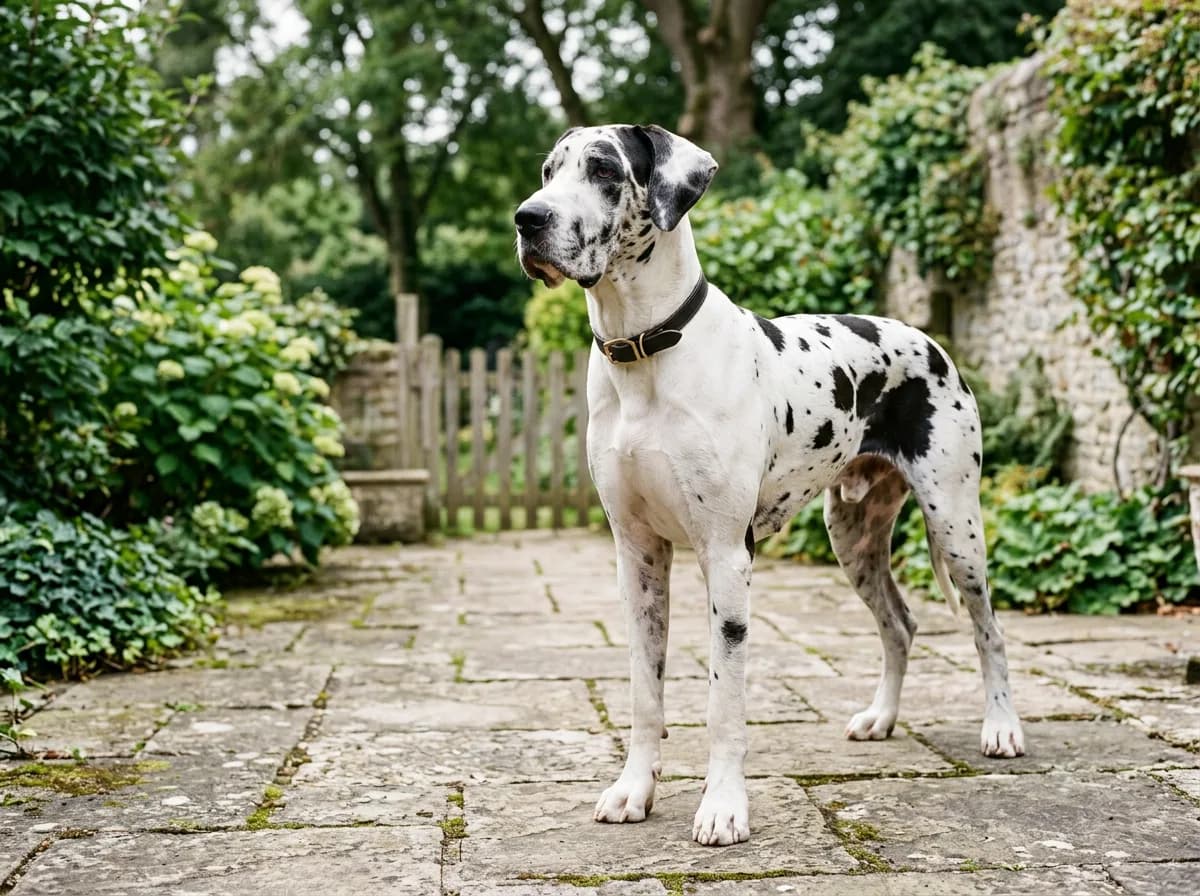
Harlequin is the showstopper: a pure white base coat torn up by irregular, ragged black patches distributed across the body, with a preferably white neck. The pattern is the reason many people seek the breed out in the first place. Harlequin is genetically complex and cannot be bred true, meaning two harlequins do not reliably produce harlequin puppies. Instead, a harlequin litter typically contains a mix of harlequins, mantles, blacks, and merles. That complexity, plus the striking look, keeps harlequins near the top of the price range.
Mantle
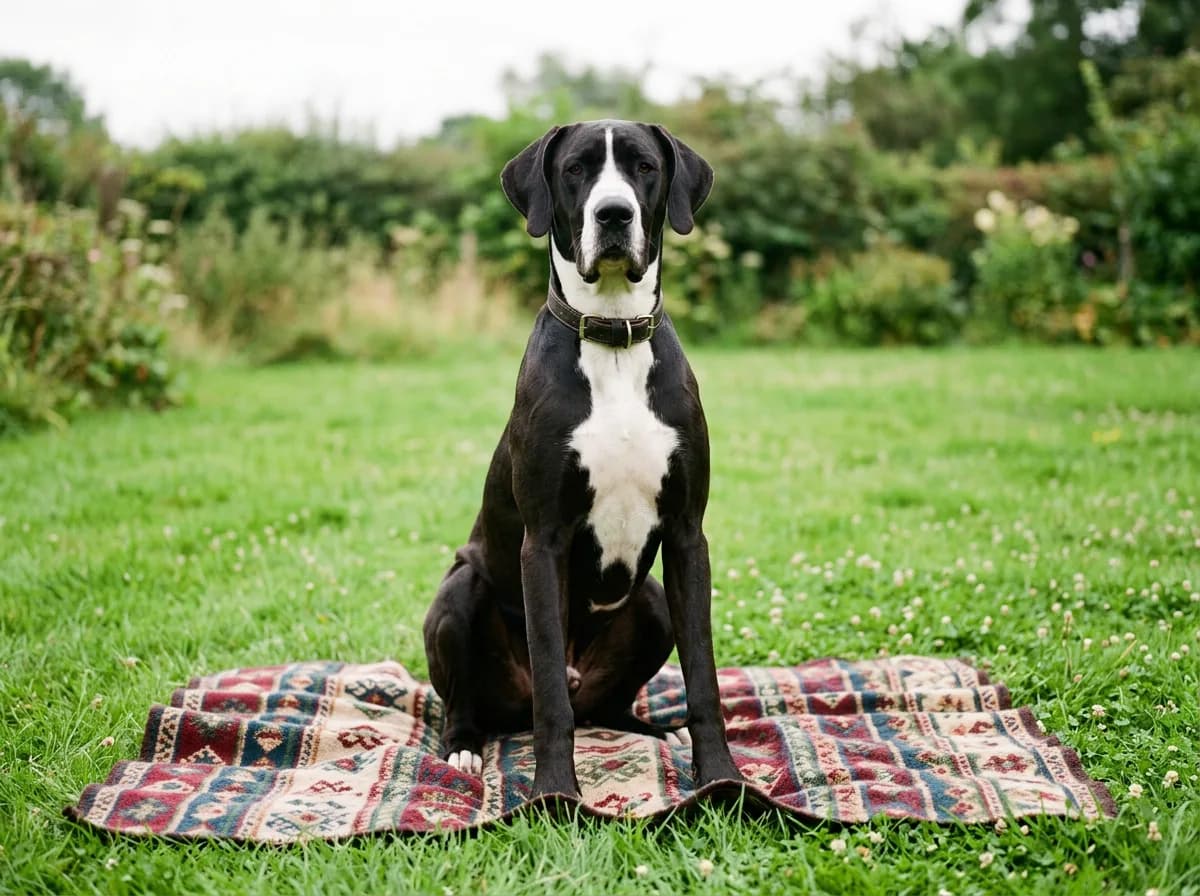
Mantle Great Danes wear a tidy black-and-white pattern that looks like a black blanket draped over a white base. The classic mantle has a black body, a white muzzle, a white collar around the neck, a white chest, and white on the legs and tail tip, similar to a Boston Terrier's tuxedo markings. Mantle was once lumped in with the term "Boston" in older breed language. It is a clean, formal-looking coat and a common healthy product of harlequin breeding.
Merle
Merle was the newest color added to the standard, accepted in 2019. A merle coat has a gray base marbled with darker gray and black patches, sometimes with white markings. Merle is caused by a single dominant gene, and a dog needs only one copy to show the pattern. This is the crucial part: breeding two merles together is dangerous, a point we return to in the health section below. A single-merle Great Dane with one copy of the gene is generally healthy and now fully showable.

Petful may earn a commission when you click through to Chewy, at no extra cost to you.
Rare and Non-Standard Great Dane Colors
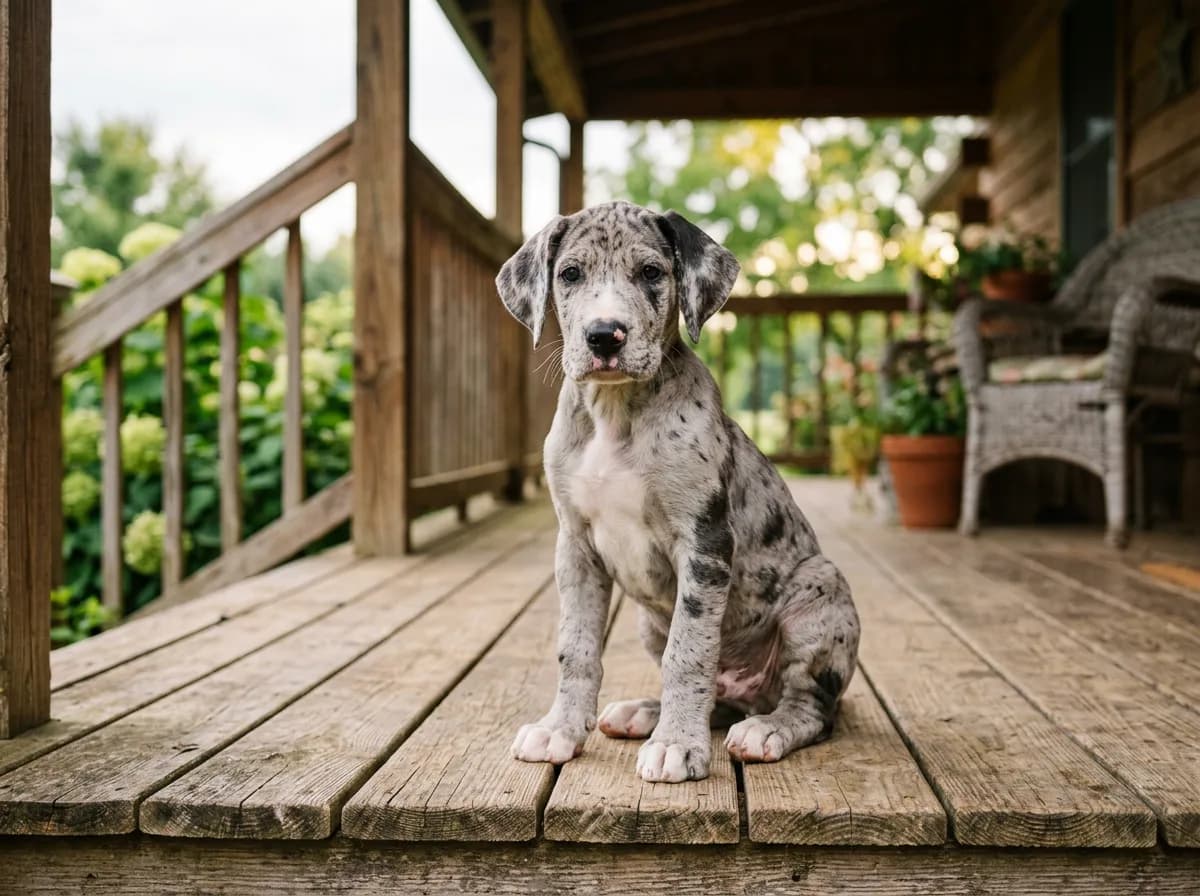
Non-standard colors are shades a Great Dane can genuinely be born with but that the AKC does not accept for the show ring. They are not fake or unhealthy by definition, but some are linked to the same risky breeding practices that produce double-merles, so it pays to know what you are looking at. Common non-standard colors include:
- White: A predominantly or fully white Dane, usually the result of double-merle breeding and frequently associated with deafness or blindness.
- Fawnequin: A harlequin pattern where the patches are fawn instead of black, essentially a fawn version of the harlequin coat.
- Merlequin: A harlequin-patterned dog whose patches are merle rather than solid black.
- Chocolate and chocolate merle: A brown-based coat produced by a recessive gene, uncommon in the breed.
- Fawn merle and blue merle: Merle patterning laid over a fawn or diluted-blue base.
- Piebald and mismarked: Danes with white spotting or markings outside the standard placement.
Reputable breeders produce non-standard colors as an honest byproduct of harlequin and merle litters and place them as pets, often at a lower price than show-quality dogs. Be cautious of any breeder marketing "rare" white or heavily merled Danes at a premium, because that framing often signals deliberate double-merle breeding.
Great Dane coat color also does not follow the unpredictable pattern you see in intentional crossbreeds. In a designer dog such as the Cavapoo, coat color and texture can vary widely even within a single litter because two very different breeds are mixed. A purebred Great Dane, by contrast, has a formal written color standard and a well-mapped set of pigment genes, so breeders can predict outcomes with real accuracy.

Petful may earn a commission when you click through to Chewy, at no extra cost to you.
The Double-Merle Health Warning
This is the most important health point in any discussion of Great Dane colors. The merle gene is dominant, so a single copy produces the marbled merle pattern with no inherent harm. Problems arise when a breeder mates two merle dogs together. Roughly a quarter of that litter will inherit two copies of the merle gene, producing what is called a double-merle or "double-dapple" dog. These puppies are typically mostly white and carry a high risk of serious congenital defects.
- Double-merle Great Danes, produced when both parents are merle, frequently suffer from partial or total deafness, blindness, and eye deformities such as microphthalmia. Responsible breeders always pair a merle parent with a non-merle partner so that no puppy can inherit two copies of the gene. If a breeder is selling white or heavily white merle Danes, ask directly about the parents' colors before you buy.
The deafness and vision problems trace back to the merle gene's effect on pigment cells, which also play a role in the development of the inner ear and the eye. The Orthopedic Foundation for Animals (ofa.org) and veterinary geneticists, including the teams at university veterinary programs such as UC Davis, recommend that at-risk litters receive BAER hearing testing before placement. A single-merle Great Dane from a responsible pairing is not at elevated risk and lives a normal, healthy life. The danger is specific to the double-merle combination, which is entirely preventable with sound breeding choices.
Which Great Dane Color Is Most Expensive?
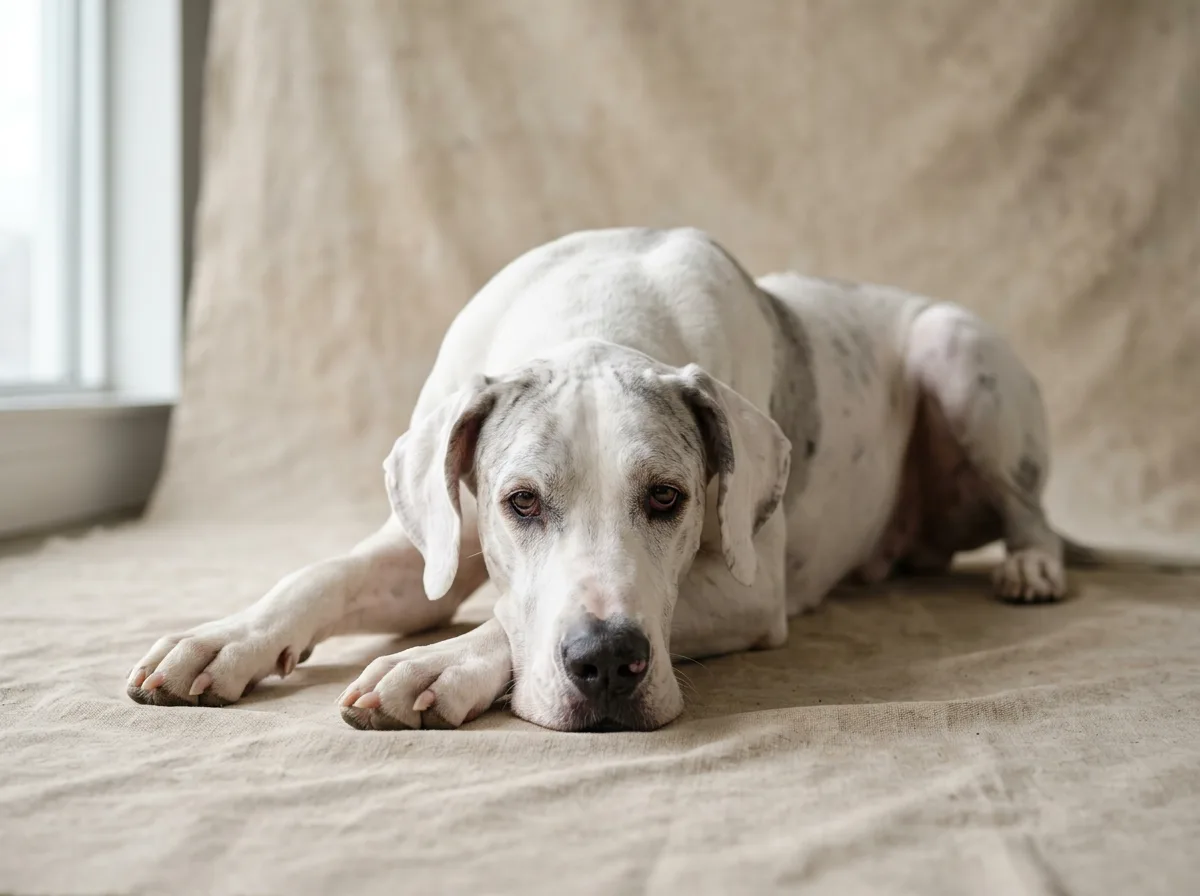
The most expensive Great Dane colors are generally harlequin and merle, followed by blue, because these coats are harder to produce reliably and are in high demand. Standard fawn and brindle puppies from the same breeder usually cost the least, simply because they appear more often in a typical litter. Price is driven by rarity, the difficulty of the breeding program, and buyer demand rather than by any difference in the dog's quality or health.
| Color | Relative Rarity | Typical Puppy Price Range |
|---|---|---|
| Fawn and Brindle | Common | $1,000-$2,000 |
| Black and Mantle | Common | $1,200-$2,500 |
| Blue | Uncommon | $1,500-$3,000 |
| Harlequin | Uncommon | $2,000-$3,500 |
| Merle | Uncommon | $1,800-$3,000 |
| Non-standard or White | Varies | $600-$1,500 |
Prices vary widely by region, breeder reputation, health testing, and whether the puppy is sold on a pet or show contract. Treat any figure well above these ranges, especially one attached to a "rare white" Dane, as a reason to ask more questions rather than to reach for your wallet.
Does Coat Color Affect a Great Dane's Temperament?
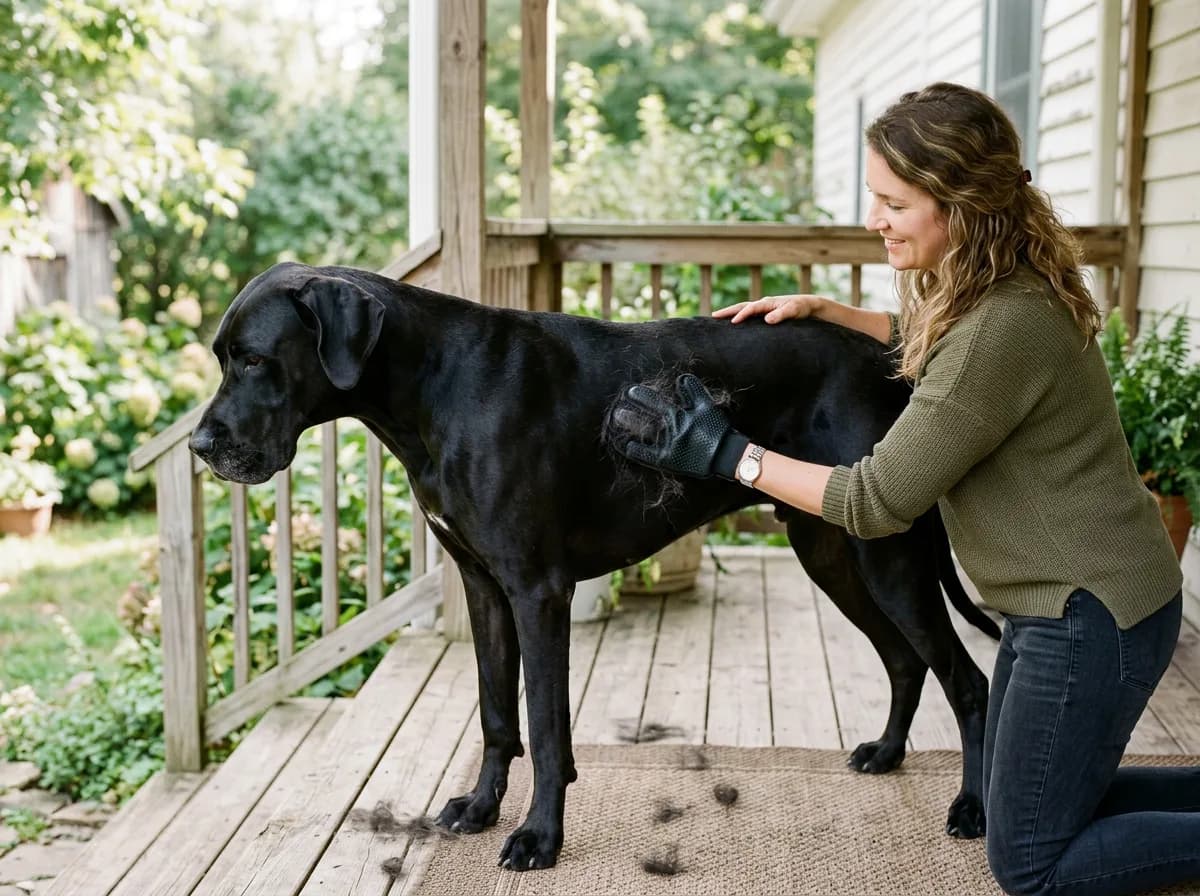
No. Coat color in Great Danes is purely cosmetic and has no bearing on personality, trainability, or intelligence. A blue Dane is not calmer than a fawn one, and a harlequin is not more excitable than a black. Every color shares the same gentle-giant temperament the breed is famous for: affectionate, people-oriented, and surprisingly mellow indoors for their size. Great Danes are considered a moderately intelligent working breed that learns well with consistent, positive training, and their eager-to-please nature makes them more responsive than their imposing size suggests. To go deeper on the breed's disposition, see our guide to Great Dane temperament, and for a full breed overview, visit the main Great Dane breed profile.
Great Danes are sometimes called the "heartbreak breed," and it is worth understanding why. The name refers to their tragically short lifespan of roughly 7 to 10 years, one of the shortest of any dog breed, largely due to their giant size and their vulnerability to bloat (gastric dilatation-volvulus) and heart conditions such as dilated cardiomyopathy. Owners fall completely in love with these affectionate giants and then lose them far too soon, which is where the "heartbreak" nickname comes from. It has nothing to do with coat color, and choosing a particular color will not extend or shorten a Dane's life.
Caring for a Great Dane's Coat
Whatever color your Great Dane wears, the coat itself is short, smooth, and low-maintenance. A weekly once-over with a rubber curry or a soft bristle brush lifts loose hair and spreads the skin's natural oils, keeping that single-layer coat glossy. Danes are moderate shedders year-round with a heavier seasonal blowout, so a deshedding tool during those weeks keeps stray hair off your furniture. Bathe only every couple of months or when genuinely dirty, using a gentle dog shampoo that will not strip the coat, and dry thoroughly in the skin folds around the neck and jowls. Because the coat is so thin, lighter-colored and white Danes can be prone to sunburn on exposed skin, so limit midday sun for those dogs.
Color-specific coat notes are minor but real. Blue and black Danes show white loose hairs more obviously, so regular brushing keeps them looking sharp. Harlequin, mantle, and white dogs show dirt faster on their light areas and may need spot-cleaning between baths. None of these colors requires special products beyond a standard short-coat grooming kit, which makes the Great Dane one of the easier giant breeds to keep looking good.
Great Dane Color Genetics in Brief
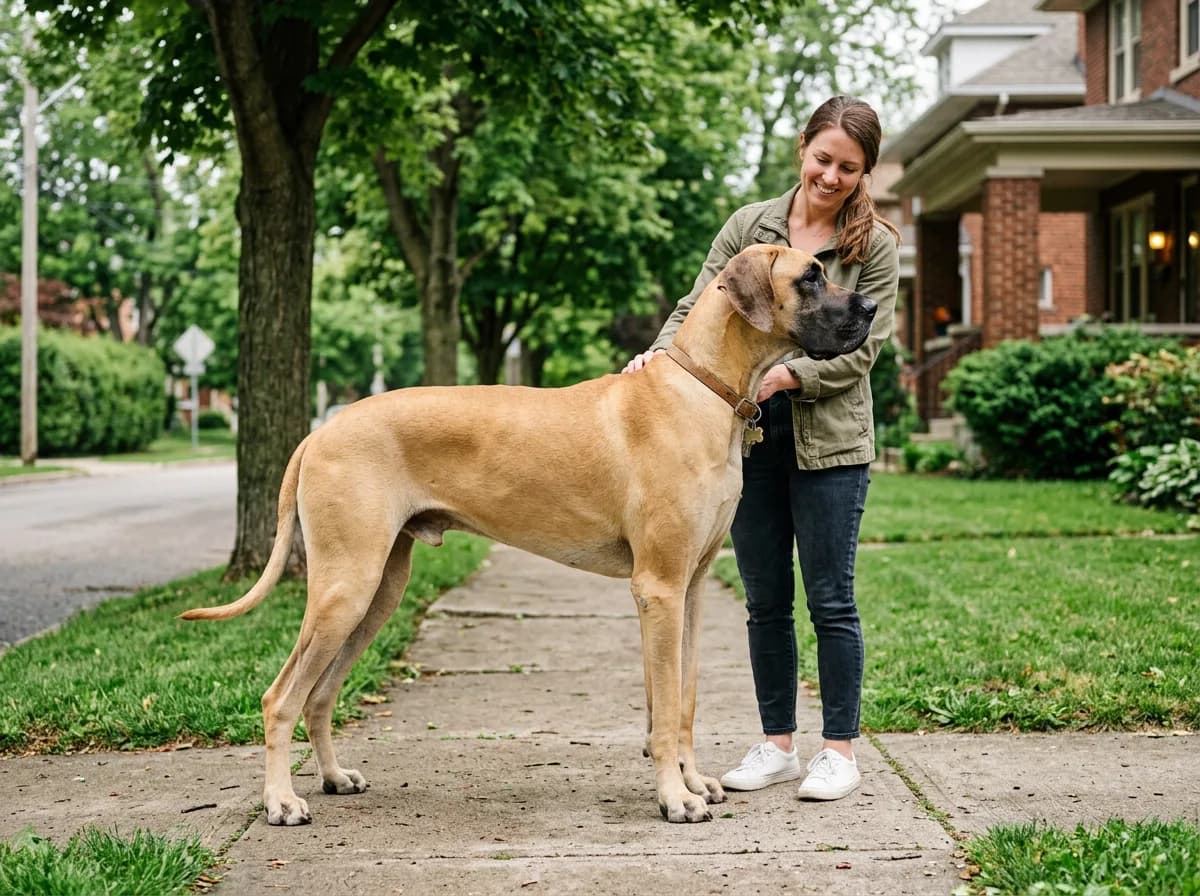
Great Dane colors come down to a few interacting genes. The base coat is set by genes controlling black versus fawn pigment and the brindle overlay. The dilution gene turns black into blue when a dog inherits two recessive copies. The merle gene marbles the coat and is dominant. The harlequin gene is a separate dominant modifier that only shows its effect in the presence of merle, which is why harlequin litters also throw merles and mantles. Because harlequin cannot be bred true and merle must never be doubled, ethical Great Dane breeding is a careful balancing act. A well-run program pairs colors deliberately to produce healthy, correctly marked puppies while avoiding the double-merle trap. When you understand the genetics, the price differences and the health warnings both make sense: the rarer, more striking coats are simply harder and riskier to produce responsibly.
Frequently Asked Questions
How Great Dane Colors Are Bred: The Color Families
Reputable Great Dane breeders do not pair colors at random. They follow a color code from the Great Dane Club of America that sorts the recognized colors into families and keeps most matings inside a single family. This protects both coat quality and health.
The main color families are:
- Fawn and brindle family: the two colors share the same genetic base and are bred together.
- Blue family: blue to blue, kept separate to hold the clean steel tone.
- Black family: black bred to black, or crossed into the blue and harlequin lines under specific rules.
- Harlequin family: harlequin, mantle, and merle, the only family that carries the merle gene.
Breeding across families, such as blue into harlequin, tends to produce off-standard colors that cannot be shown and can stack genetic risk. The merle gene lives only in the harlequin family, which is why disciplined harlequin breeding matters so much (see the double-merle warning above).
- A responsible breeder can tell you exactly which color family a litter comes from and why the pairing was chosen. A vague answer about color is a reason to keep looking.
What Eye Colors Do Great Danes Have?
Most Great Danes have dark brown eyes, and the breed standard favors the darkest shade. You will also see lighter amber and, less often, blue.
Blue eyes and heterochromia (one blue eye and one brown eye) turn up mainly in merle and harlequin Danes. The same merle gene that lightens patches of coat can also lighten the iris, so a blue eye tends to track with a merle or harlequin coat rather than appearing at random.
A blue eye by itself is cosmetic and does not hurt a dog's sight. It matters more as a signal: because blue eyes cluster in merle and harlequin lines, a blue-eyed merle puppy is a good reason to ask the breeder about both parents' colors and hearing.
Young puppies often start with a cloudy blue-gray eye that settles to its adult color over the first few months, so early eye color is not a reliable guide to the adult shade.
Do Great Dane Puppies Change Color as They Grow?
Mostly no. A Great Dane's base color is set at birth, so a fawn puppy stays fawn and a blue puppy stays blue. Great Danes do not go through the dramatic color shifts some breeds do.
What changes is definition, not the color itself:
- Harlequin and merle patching gets crisper and more clearly outlined over the first several weeks.
- Brindle striping darkens and sharpens against the fawn background.
- Some coats deepen by a shade as the adult coat comes in.
The practical takeaway for buyers: choose from what you can actually see in the litter. A mantle puppy will not "turn" harlequin, and a fawn will not become blue. If a breeder promises a rare color a young puppy does not yet show, be skeptical. The one genuine variable is with harlequin litters, where the exact patch placement keeps developing, but the color category a puppy falls into is already fixed at birth.
The rare, non-standard Great Dane colors include pure white, chocolate, chocolate merle, fawnequin (a fawn-patched harlequin), merlequin, fawn merle, and blue merle. These shades occur naturally but are not accepted in the AKC show ring, and white in particular is usually the result of double-merle breeding and often linked to deafness or blindness.
Harlequin and merle are generally the most expensive Great Dane colors, often followed by blue, because these coats are harder to breed reliably and are in high demand. Common fawn and brindle puppies from the same breeder typically cost the least, with prices driven by rarity rather than by the dog's health or quality.
The Great Dane is called the heartbreak breed because of its very short lifespan of about 7 to 10 years, one of the shortest of any dog. Their giant size makes them prone to bloat and heart disease, so devoted owners often lose these affectionate dogs far sooner than they expect. The nickname has nothing to do with coat color.
Yes. Great Danes are a moderately intelligent working breed that learns well with consistent, positive training. Their people-pleasing nature makes them responsive and trainable, though their giant size means early obedience and leash work are essential while they are still small enough to manage.
Do not feed a Great Dane toxic human foods including chocolate, grapes, raisins, onions, garlic, xylitol-sweetened products, alcohol, and cooked bones. Because Danes are prone to bloat, avoid one large daily meal and heavy exercise right after eating; feed measured portions across two or three meals instead. Always confirm any diet questions with your veterinarian.
Yes, Great Danes can eat plain scrambled eggs in moderation as an occasional treat or protein topper. Cook them without butter, oil, salt, onion, or seasoning, and keep the portion small relative to the dog's overall diet so treats stay under about 10 percent of daily calories.
Dogs should never eat grapes or raisins, which can cause acute kidney failure. Also avoid cherries (the pits and stems), and never let a dog swallow apple seeds, peach pits, or plum pits, which contain cyanide compounds. Safe fruits in moderation include apple slices without seeds, blueberries, and watermelon without seeds or rind.
Yes. Merle was officially added to the AKC Great Dane breed standard in 2019. Before that it was produced as a byproduct of harlequin breeding but could not be shown. A single-merle Dane is now fully showable and healthy, but two merles must never be bred together because of the double-merle risk.
Understanding Great Dane colors helps you appreciate the breed's variety and, more importantly, spot the breeding practices that put puppies at risk. Choose your favorite look, but choose a responsible breeder first: a healthy single-merle, a classic fawn, or a striking harlequin from a careful program will give you the same devoted gentle giant, just in the coat you love best.

Coreen Saito is a pet writer and longtime shelter volunteer with more than a decade in animal rescue. She covers cat behavior, breed care, and the small, ordinary science of sharing a life with companion animals, with a particular focus on honest takes about the products and decisions that actually matter. At home in Arizona, she's outranked by Mac (a dog with the loudest opinion in the house), Rebel (a cat who governs by quiet authority), and Meri (an orange tabby who runs the late shift and the laundry basket). She writes about all three, plus the rescues that keep coming through her life, at LifeWithMinty.com.
Sign up for expert-backed reviews and safety alerts all in one place.