Chihuahua Colors, Patterns and Coat Types
Compare Chihuahua colors, patterns and smooth or long coats with realistic visual references, grooming guidance and clear limits on appearance claims.
Petful is reader supported. As an affiliate of platforms like Amazon and Chewy, we may earn a commission when you buy through links on this page. There is no extra cost to you.
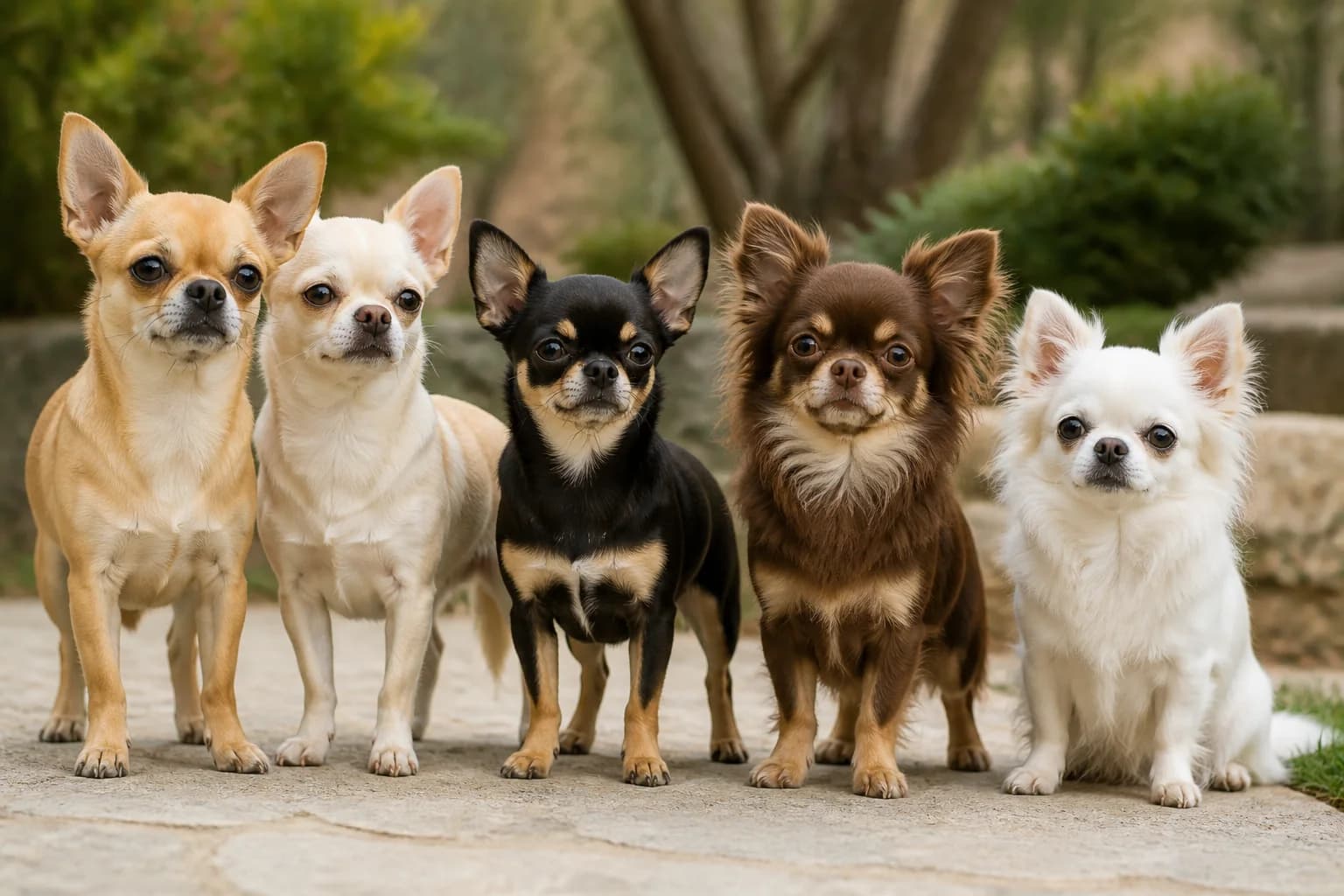
Chihuahua colors range from light cream and fawn to black, chocolate, white and combinations with markings. The breed also has two recognized coat varieties, smooth and long, which describe hair rather than head shape, size or temperament.
Use photographs to learn visual terminology, not to certify ancestry. Lighting, camera processing, age and coat condition change appearance, while registration and pedigree records answer documentary identity questions.

Sign up for expert-backed reviews and safety alerts all in one place.
Chihuahua Colors, Patterns and Coat Types at a glance
- 1Chihuahuas have two recognized coat varieties, smooth and long
- 2Individual dogs vary, so records and direct observation matter more than seller labels
- 3Many solid colors, markings and patterns appear in the breed
- 4Color labels can vary with lighting and registry terminology
- 5Coat color does not prove ancestry, health, rarity, temperament or value
Chihuahua colors and coats at a glance
Chihuahua colors span broad visible variety across the two recognized smooth and long coat types. The Chihuahua Club of America breed standard describes both coats and broad color variety, while the AKC Chihuahua profile supplies official breed context. Check current standard and registration instructions when exact terminology matters.
| Term | Practical comparison | What it does not prove | Evidence for the individual dog |
|---|---|---|---|
| Smooth coat | Short hair texture and distribution | Adult size, behavior or ancestry | Direct coat observation and standard language |
| Long coat | Longer soft hair with furnishings | A separate Chihuahua breed | Direct coat observation and standard language |
| Color | Base pigment seen in the coat | Rarity, value or health by itself | Neutral-light photographs plus records |
| Pattern | Distribution of colors or markings | Parentage or purebred status | Multiple views and pedigree when relevant |
| Apple or deer head | Skull and muzzle appearance labels | Coat variety or separate breed | Side profile, standard context and records |
Read the dog in neutral conditions
Compare coat color in indirect daylight without filters. Look at the full body, face, chest, feet and undercoat. A puppy's shade can change as the coat develops, and sun exposure or graying can alter an adult's appearance.
Describe only what you can observe. A color description is useful for identification, grooming and records. It is not a health assessment or genetic test.

Petful may earn a commission when you click through to Chewy, at no extra cost to you.
Appearance, seller wording and documented records answer different questions. Compare the individual dog, available records and household routine before deciding whether a color or coat claim should affect identification, grooming or a purchase.
What to verify before you decide
- Coat and pattern can be observed. Registered identity, pedigree and parentage require documented evidence. Health risk requires appropriate screening and professional guidance from a veterinarian. A seller's color label cannot substitute for either layer.
If a breeder advertises a rare color, ask which registry term is being used and how the puppy is identified in the contract. Verify the sire, dam and health screening independently. The AKC parent-club health testing requirements are a stronger health starting point than a color-based promise.
Petful's Chihuahua puppies and buying-safely guide covers records, contracts, deposits and seller verification. Do not pay a premium because one photograph looks unusual.
Smooth-coat and long-coat Chihuahuas
Chihuahua coat types are commonly called smooth coat and long coat. Both belong to the same breed. Coat length does not create a different size category or reliably predict personality.
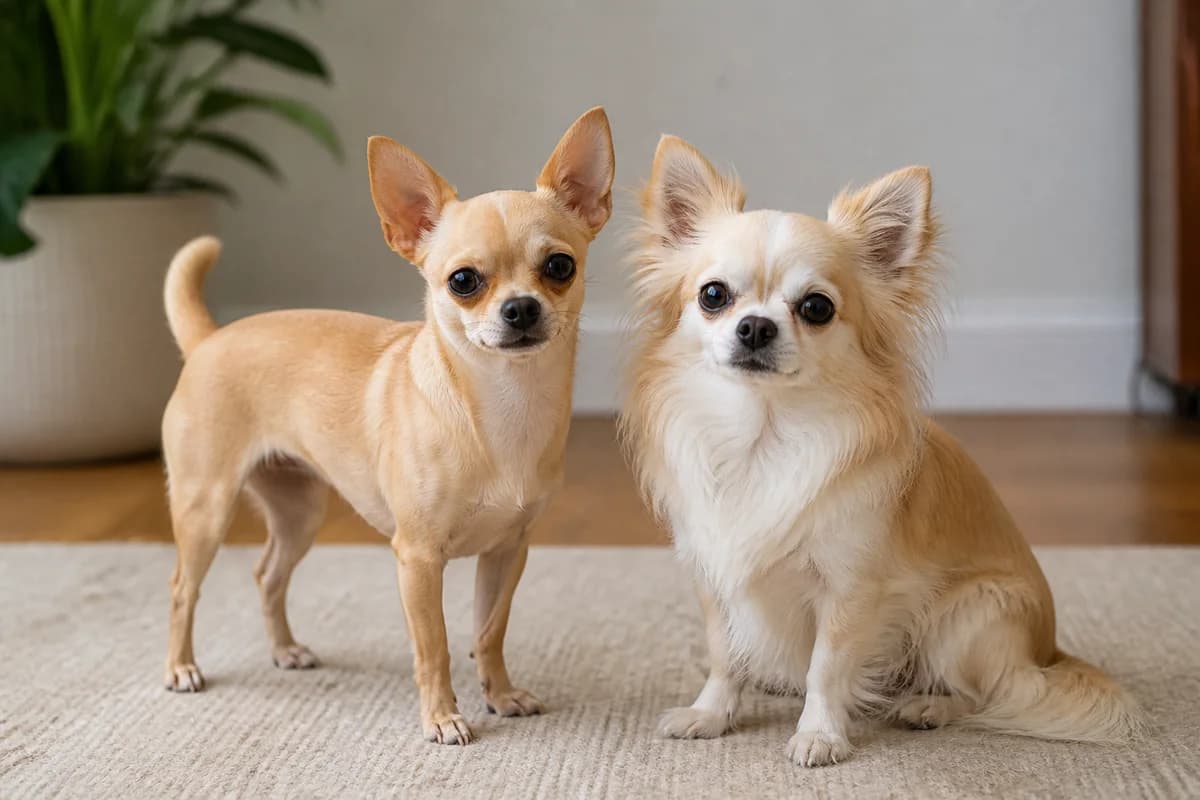
Smooth-coat Chihuahua
The standard describes the smooth coat as soft, close and glossy, with a ruff on the neck preferred and hair scantier on the head and ears. Texture and density can vary among pets. A smooth coat Chihuahua still sheds and needs skin, nail, ear and dental care.
Because the coat lies close, body condition and skin changes may be easier to notice. Report new hair loss, redness, odor, sores, itching or pigment change to a veterinarian rather than assuming it is a normal color feature.
Long-haired Chihuahua
A long-haired Chihuahua has a soft coat that may be flat or slightly wavy, with furnishings around areas such as ears, neck, feet, legs and tail described in the standard. People searching long haired Chihuahua examples should understand that full coat can develop over time, so a young puppy may not resemble a mature adult.
Long coat does not automatically mean extreme grooming. It does mean owners should check friction points and feathering for tangles, debris and moisture. Never shave a coat solely to reduce normal shedding without professional guidance.
Climate care is separate from coat color
Both varieties are small dogs that may need weather-aware routines. A black coat may absorb sunlight, while light dogs can still overheat. Coat length does not make a Chihuahua safe in severe cold.
The PetRageous Designs Kodiak Insulated Dog Coat in Small is one tracked layer to compare by chest, neck, back length, movement and current weather. The word Small is not a fit guarantee.
When considering the PetRageous Kodiak Insulated Small Dog Coat, check for rubbing, overheating, wet fabric and restriction. Clothing cannot correct shivering caused by illness or replace indoor shelter.
Fawn, cream, black, chocolate and white
Common Chihuahua color terms describe visible pigment, but exact registry names and genetic mechanisms are separate matters. The safest image comparison uses neutral light and multiple views.
Fawn, cream, black, chocolate and white describe broad visible color categories, not guarantees about genetics, health, ancestry or value.
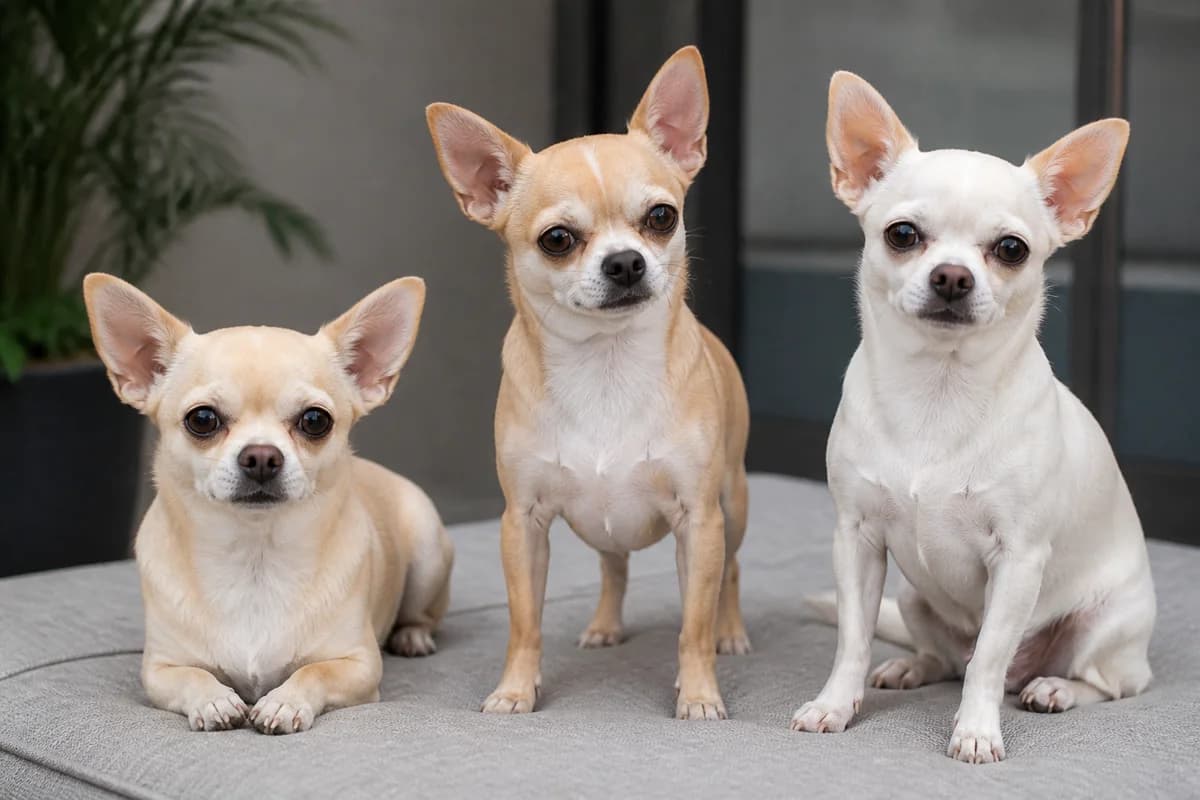
Fawn and cream
Fawn spans warm tan-like shades that may appear lighter or deeper across dogs. A fawn Chihuahua can also have shading, a mask, sable tipping or white markings. Cream is paler and can be difficult to distinguish from very light fawn in photographs.
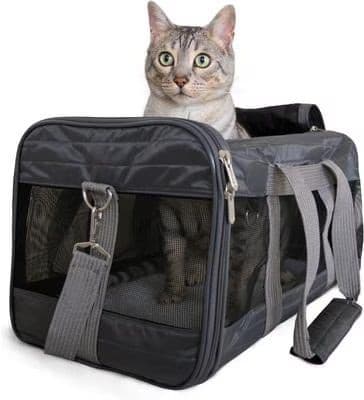
An airline-approved soft-sided carrier with mesh ventilation windows, a top-rated travel pick for cats and small dogs.
Petful may earn a commission when you click through to Chewy, at no extra cost to you.
Do not claim that a pale puppy will stay exactly the same color. Ask for current unedited images and understand that coat development, shedding and light can change how pigment appears.
Black
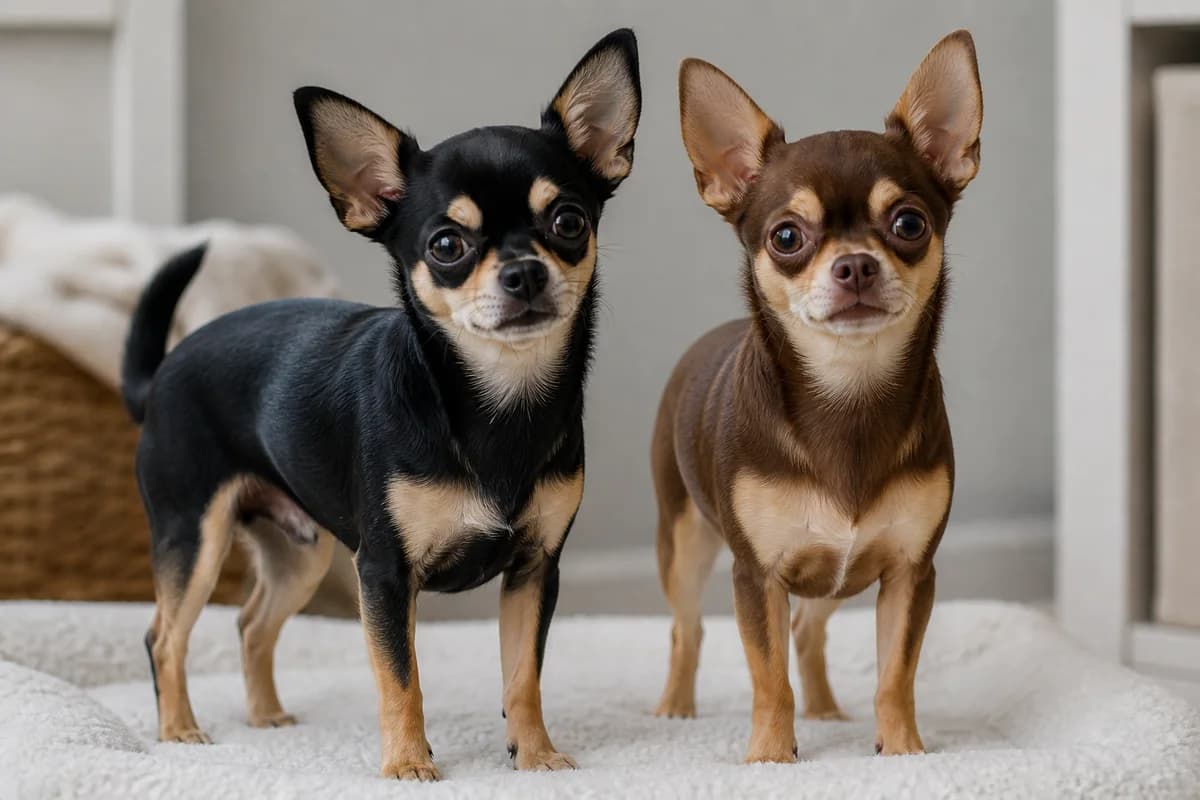
A black Chihuahua may be solid-looking or have tan, white or other markings. Strong lighting can reveal undertones that a dark indoor photograph hides. Hair loss or skin change is a medical observation, not another color category.
Chocolate
Chocolate refers to brown pigment and may appear in solid coats or combinations with markings. Seller language such as lilac, lavender or rare chocolate should be treated as a descriptive or marketing claim until supported by the registry terminology and records relevant to the transaction.
White and white markings
A predominantly white dog and a colored dog with white spotting may both be casually called a white Chihuahua. Record the actual distribution on the ears, face, body and tail for identification. Color alone does not diagnose hearing, eye or skin status.
Sable, brindle, spotted and other patterns
Chihuahua patterns describe how pigment is distributed. The same base color can look different when combined with sable shading, brindle striping, tan points or white spotting.
Sable, brindle, spotted and other patterns should be photographed from more than one angle because coat length, lighting and body position can change their visibility.
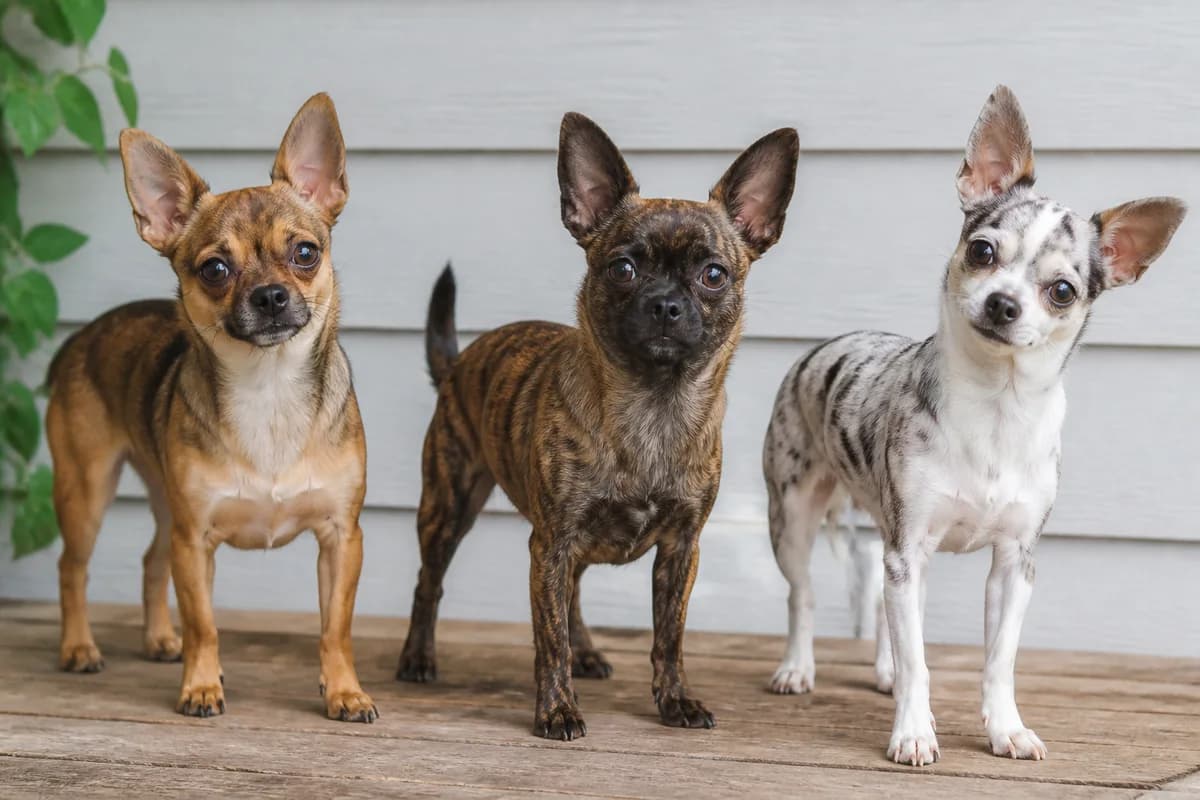
Sable
Sable commonly describes darker-tipped hairs over a lighter base. The extent of tipping can vary by body area and may change as a puppy matures. It is best documented with close and full-body images rather than one headshot.
Brindle
Brindle creates darker striping over another color. Stripe width and contrast vary, and long hair can make the pattern less obvious. Do not infer breed purity from the presence or absence of brindle.
Spotted, splashed and marked
White spotting can range from small markings to large areas, while tan points or masks add other recognizable placements. Casual words such as spotted, pied and splashed may be used inconsistently. When a contract or registration matters, copy the exact recorded term and attach clear images.
Photograph a coat consistently
For useful records:
- Use indirect daylight and avoid colored indoor bulbs.
- Turn off beauty filters and automatic color effects when possible.
- Photograph both sides, face, chest and back.
- Include the date and dog identity.
- Repeat images after meaningful coat development or change.
These photographs can support identification and veterinary history. They still do not prove parentage.
Create an identification description
A useful coat description is specific enough to distinguish the dog without adding claims that a photograph cannot support. Start with coat variety, then base color, marking color and location. Note whether the tail, feet, chest, muzzle and ears have distinctive areas.
For example, "long-coat fawn dog with a white chest patch and white toes on both front feet" is more useful than "rare cream beauty." The first statement records observable features. The second mixes an uncertain color label with marketing language.
Keep the description with:
- Microchip number and current registry contact details.
- Clear face and full-body photographs from both sides.
- A close image of distinctive markings.
- Current weight and veterinarian contact information.
- Date of each image set.
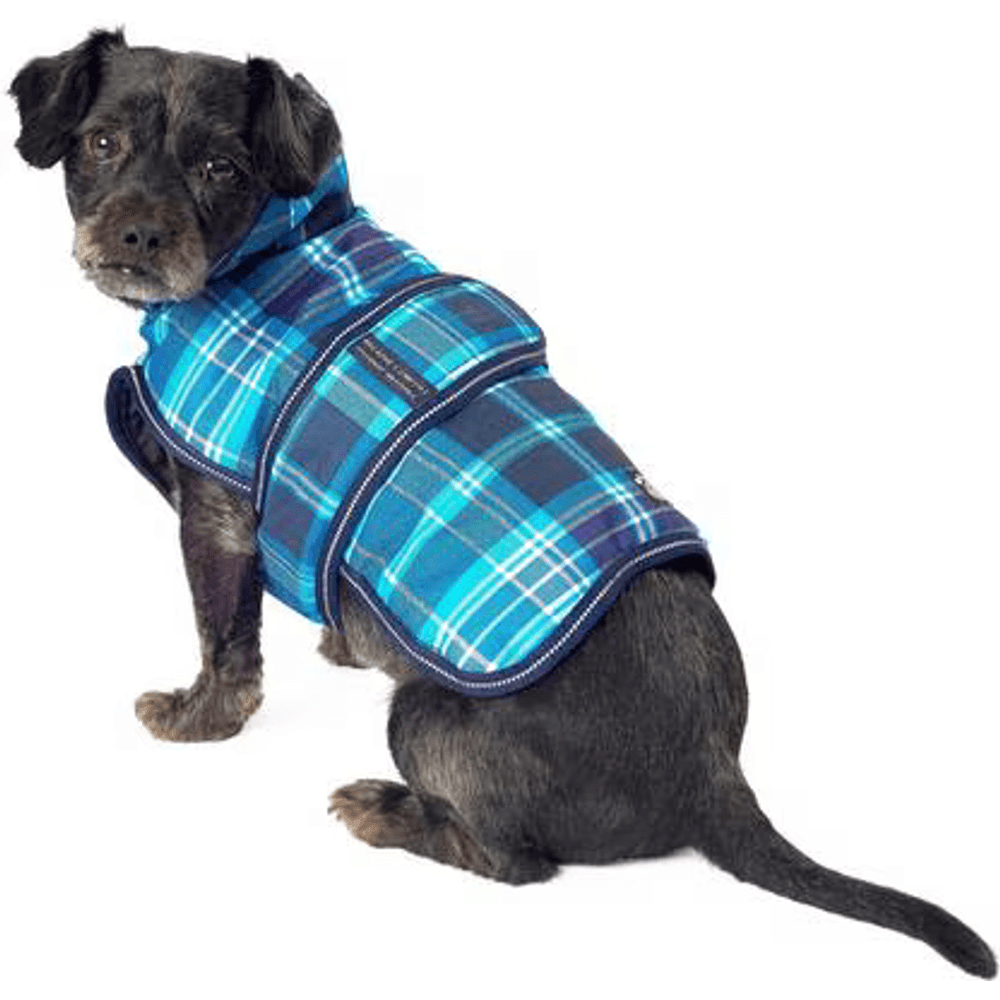
An insulated, quilted dog coat that traps body heat so a cold-sensitive dog stops shivering on winter walks. The high collar and full-back coverage keep small, thin, and senior dogs warm, with an easy step-in design and adjustable fit.
Petful may earn a commission when you click through to Chewy, at no extra cost to you.
Update the record when a puppy coat develops, an adult grays or grooming changes the visible outline. If a dog is lost, current images and precise markings can help identification, although the microchip remains a separate documentary tool.
Expect puppy coats to develop
A puppy's texture, furnishings, shading and markings may look different at maturity. Long-coat furnishings can become more apparent over time, and sable tipping can recede or redistribute. Do not demand an exact adult look from a young photograph.
Ask a breeder for dated images of the puppy, sire and dam, but keep expectations bounded. Parent appearance supplies context, not a guarantee. A contract should identify the dog and terms without promising a shade that no one can reliably lock in.
Do not confuse staining with pigment
Tear, saliva or urine staining can alter light hair around the eyes, mouth, paws or rear. New staining may reflect grooming, anatomy, irritation or a health problem. Avoid bleaching products or harsh home remedies. Ask a veterinarian about sudden or persistent changes, especially with redness, odor, discharge, pain or licking.
Merle Chihuahua claims and evidence
Merle Chihuahua listings require particular care because merle is both a visible pattern term and a genetic discussion. Check the current Chihuahua breed standard and registry rules rather than treating a seller's claim as official recognition.
Merle Chihuahua claims and evidence must remain separate: a photograph shows an appearance, records document identity, and a laboratory result has only the scope stated by its provider.
Ask four separate questions
- What is visible? Request unedited photographs in neutral light.
- What is recorded? Review registration and pedigree documents linked to the dog.
- What was tested? Obtain the laboratory report, dog identity and test scope.
- What health evidence exists? Review breed-relevant screening and veterinary findings.
A pattern cannot prove purebred status, and a DNA color result is not a comprehensive health clearance. Do not breed based on a consumer report without veterinary and qualified genetics guidance.
Petful's DVM-authored Chihuahua health issues and lifespan guide explains the difference between screening, records and current clinical assessment.
Grooming each coat variety
Chihuahua grooming should maintain comfort and reveal changes early, not manufacture a particular look. Build brief cooperative sessions on a stable non-slip surface, and adjust the routine for the individual coat.
Coat length and color do not make a dog allergy-proof; WebVet's hypoallergenic dog breeds guide explains what that label can and cannot mean.
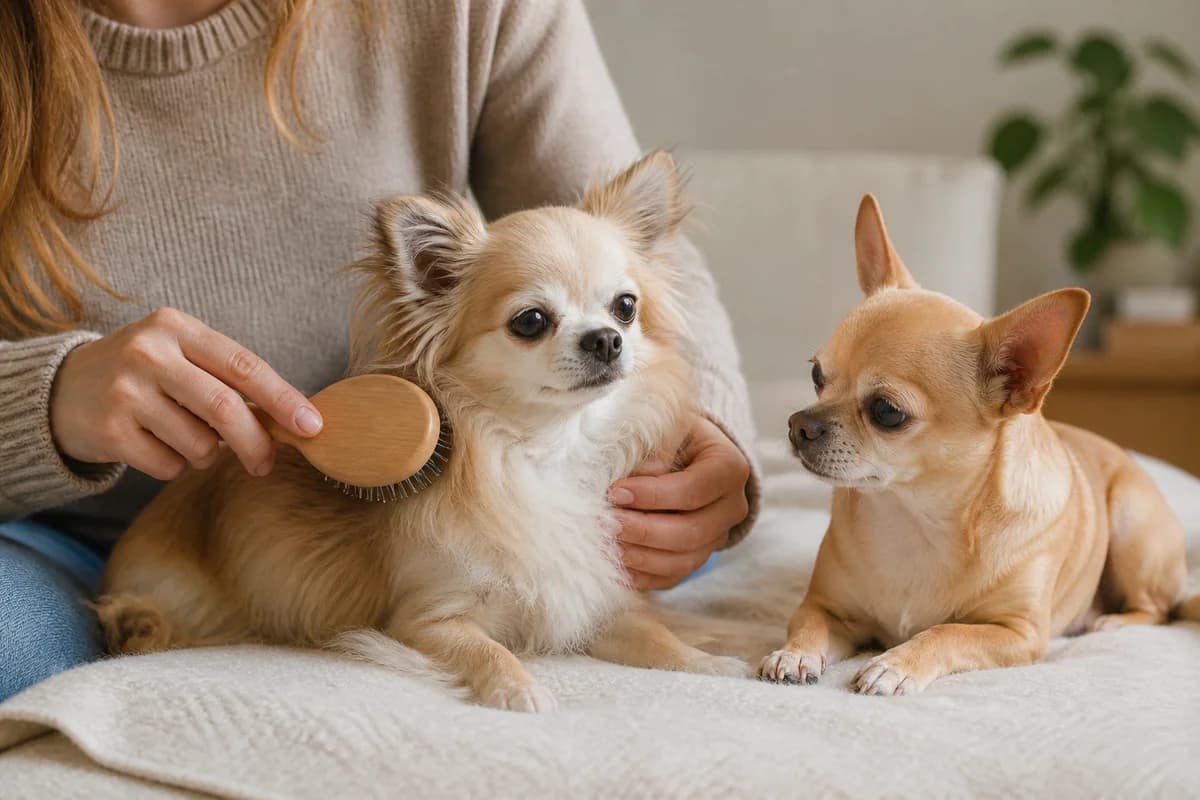
Smooth-coat routine
Use gentle brushing to remove loose hair and inspect the skin. Check nails, ears, mouth and paws. Bathe when needed with a dog-appropriate product and dry the dog thoroughly without overheating.
Long-coat routine
Separate the coat gently and check behind the ears, neck, chest, legs, tail and harness contact points. Work from the end of a tangle instead of pulling at the skin. Severe matting or a painful coat needs professional help.
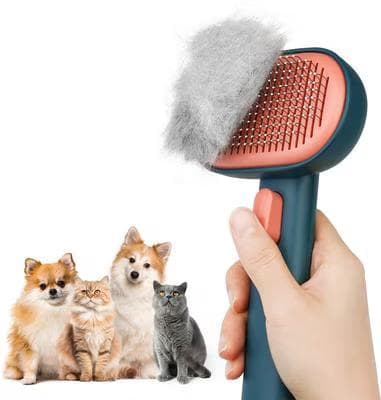
The aumuca Self Cleaning Slicker Brush is one tracked tool to compare for pin length, edge feel, head size and the individual coat. A brush marketed for dogs may still be too firm or large for a particular Chihuahua.
Before using the aumuca Self Cleaning Slicker Brush, test light pressure on your own skin, avoid eyes and sensitive areas, and keep sessions short. Brushing should not cause redness, pain or scratching.
Petful may earn a commission when you click through to Chewy, at no extra cost to you.
Build a coat-care calendar
Frequency should respond to the dog rather than a rigid breed schedule. Check friction areas after harness wear, outdoor activity and travel. Long-coated dogs may need more frequent feathering checks during seasonal shedding or wet weather, while a smooth coat may need only brief brushing to remove loose hair.
A simple care log can include:
- Brushing date, tool and any tangles found.
- Bath date and the dog-safe product used.
- Nail trim, ear check and dental-care completion.
- Skin redness, flakes, odor, bumps or soreness.
- Changes in shedding, texture or color.
- Comfort with handling and rewards that helped.
This record can show whether a problem is recurring at the same equipment contact point or after a particular product. Stop using any item associated with pain, rash or sudden irritation and seek veterinary guidance when signs persist or are severe.
Keep grooming cooperative
Place the Chihuahua on a stable non-slip surface or work at floor level. Touch one area, reward and stop before the dog struggles. Gradually add the brush, comb, towel or dryer sound. Restraint should be gentle and proportionate, never a battle to finish the whole coat.
If a mat is tight to the skin, do not cut under it with scissors. Thin skin can be pulled into the mat and injured. A professional groomer or veterinary team can choose a safer approach when coat condition or behavior makes home removal difficult.
Photograph a concerning area before treatment so its size and progression can be compared accurately.
Feeding and travel still depend on the individual
- Coat color should not alter food portions. If timed feeding supports an established plan, the Petlibro Granary WIFI Automatic Feeder with Camera is one tracked option to compare for small portions, kibble compatibility, cleaning and power backup.
- Test several servings from the Petlibro Granary WIFI Automatic Feeder with a kitchen scale. Monitor body condition and appetite instead of changing food because a coat looks dull.
- For transport, the Sherpa Original Deluxe Airline-Approved Dog and Cat Carrier is one tracked option to compare by measured body size, ventilation and provider rules. Coat length can affect comfort but does not replace measurement.
- When using the Sherpa Original Deluxe Carrier, check that furnishings do not catch in zippers and that the dog can reposition. Keep the coat clean and dry after travel.
Distinguish seasonal change from a health change
Normal shedding can vary with coat type, season, indoor climate, reproductive status and the individual dog. A change becomes more useful to document when you record timing, distribution and accompanying signs rather than simply saying the coat looks different.
Create a monthly skin and coat check in consistent light. Part the hair gently at the neck, back, abdomen and common friction points. Examine the paws, ears and tail base. Compare both sides of the body and note whether a change is symmetrical.
Record:
- Shedding amount relative to the dog's usual pattern.
- New thinning, bald areas or broken hairs.
- Redness, flakes, odor, bumps or sores.
- Scratching, licking, rubbing or touch sensitivity.
- Changes in food, medication, grooming products or equipment.
- Recent travel, parasites or contact with other animals.
Photographs should include a close view and a wider image that shows location. Add a ruler only when it can be placed without stressing or touching a painful area. Keep the original date and avoid filters.
Do not assign a cause from coat color. A black Chihuahua can show dandruff more visibly, while redness may be harder to see through a dark or dense coat. Visibility changes observation, not underlying diagnosis.
Call the veterinarian about sudden hair loss, marked itching, pain, swelling, discharge, odor, wounds or a rapidly expanding change. Do not apply human creams, essential oils, bleach or color-correcting products. Grooming can maintain a healthy coat, but it cannot treat an unidentified medical condition.
Check equipment and exposure history
Review harnesses and clothing for friction when a problem follows their outline. Stop using the item until fit and skin comfort are assessed. If the coat returns to normal, retain the record so a repeated seasonal or product-linked pattern can be recognized.
Bring the grooming log to appointments involving skin or hair. List every shampoo, spray, wipe, parasite product and supplement with the date used. A complete exposure history can be more useful than guessing that the visible change comes from the dog's base color.
After a veterinary plan begins, photograph at the interval the clinic recommends. Do not add new products between comparisons unless directed, because multiple simultaneous changes make the result harder to interpret.
Coat type versus head-shape labels
Smooth and long coat are recognized coat varieties. Apple head and deer head are head-shape terms, not coat types. A Chihuahua can have either coat length and a range of skull and muzzle proportions.
Petful's apple head vs. deer head Chihuahua comparison owns the deeper discussion of skull, muzzle, stop and standard language. It also addresses why appearance cannot prove ancestry or temperament.
For the broader daily-care context, use Petful's main Chihuahua breed guide. A coat photograph cannot tell you whether an individual dog fits the household.
Is this the right dog for your household?
- Two recognized coat varieties make the basic choice understandable for household fit
- Many colors and patterns provide visual variety
- Regular grooming can support early skin and coat observation
- Neutral-light records help identification
- Long coats need more tangle and debris checks
- Tiny dogs need careful weather and grooming handling
- Rare-color marketing can obscure weak records
- Appearance cannot predict health, ancestry or individual behavior
Choose a Chihuahua for the individual dog's health, behavior and fit, not for a premium color. Confirm the household can provide routine grooming, dental care, safe climate management and veterinary attention for skin or coat change.
Chihuahua Colors, Patterns and Coat Types FAQs
There is no dependable universal rarest Chihuahua color because seller listings are not audited population data and terminology varies. Do not use rare as proof of pedigree, quality, health or value. Review verified records tied to the specific dog. The clear next step is comparing the same identity, health and contract evidence required for any other color.
You cannot prove that a Chihuahua is purebred from appearance alone. A documented pedigree and registration records linked to the specific dog provide stronger ancestry evidence, while DNA ancestry testing answers a separate question within its limits. Check verified records rather than color or head shape. The clear next step is confirming identifiers with the issuing organization when purity matters.
There is no reliable universal rate showing how rare blue Chihuahuas are, because online listings do not establish population frequency. Blue may describe diluted pigment, but photographs and seller wording cannot quantify rarity or guarantee genetics. Review verified records for identity and ancestry. The clear next step is evaluating the dog on health, care and household fit without paying for an unsupported claim.
The most important thing about Chihuahua colors is that color is a visual description, not proof of health, ancestry, temperament or future appearance. Make a practical comparison using neutral-light photographs and standard terminology while keeping records separate. Judge the individual dog by documented identity, health evidence, grooming needs and behavior rather than a premium label.
The evidence you should verify for Chihuahua colors includes documented evidence through neutral-light photographs, the current breed standard, registered identity and pedigree records when ancestry matters. Observe coat texture and length directly. Seek professional guidance from a veterinarian for hair loss, itching, sores, pigment change or any other skin concern because appearance cannot establish a medical cause.
After learning about Chihuahua colors, an owner should next photograph the dog in neutral light, record distinctive markings and establish a coat-specific grooming routine. Confirm that coat care supports household fit. Verify records before a purchase, observe individual behavior during handling and seek veterinary advice for new hair loss, itching, sores or pigment change.
Sources

Coreen Saito is a pet writer and longtime shelter volunteer with more than a decade in animal rescue. She covers cat behavior, breed care, and the small, ordinary science of sharing a life with companion animals, with a particular focus on honest takes about the products and decisions that actually matter. At home in Arizona, she's outranked by Mac (a dog with the loudest opinion in the house), Rebel (a cat who governs by quiet authority), and Meri (an orange tabby who runs the late shift and the laundry basket). She writes about all three, plus the rescues that keep coming through her life, at LifeWithMinty.com.
Sign up for expert-backed reviews and safety alerts all in one place.