Carolina Dog Mixes: Identification, Traits, and Common Crosses
Learn how to separate documented Carolina Dog parentage from appearance-based guesses, compare commonly searched crosses, and make practical choices for the individual dog or mixed puppy you bring home.
Petful is reader supported. As an affiliate of platforms like Amazon and Chewy, we may earn a commission when you buy through links on this page. There is no extra cost to you.
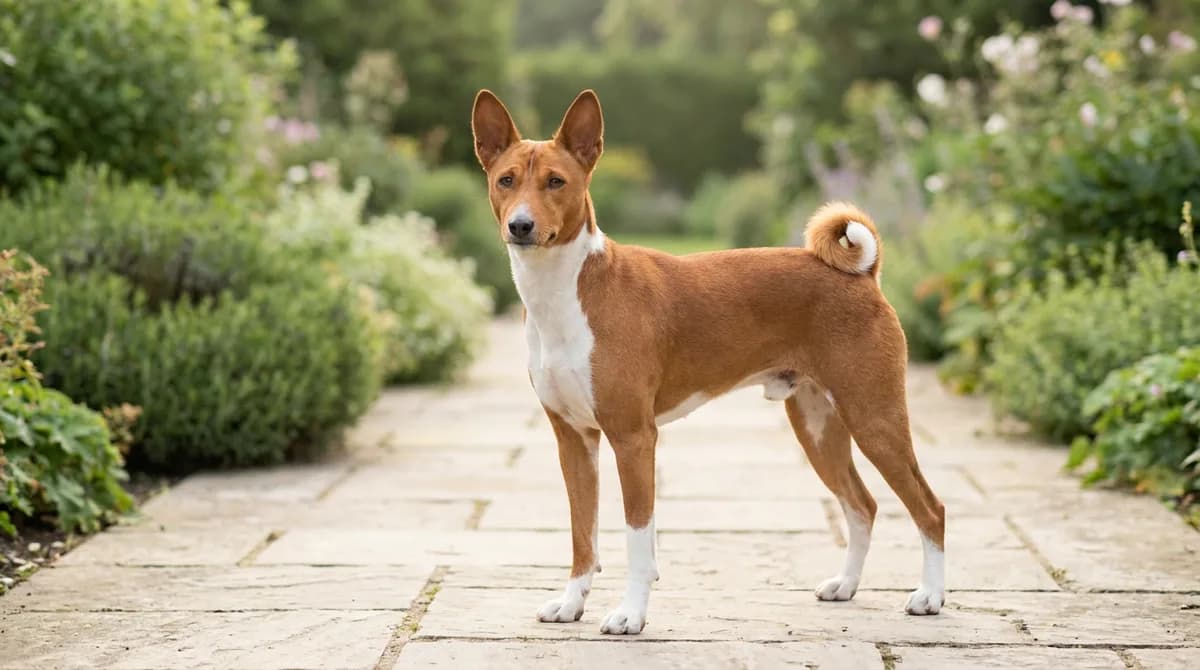
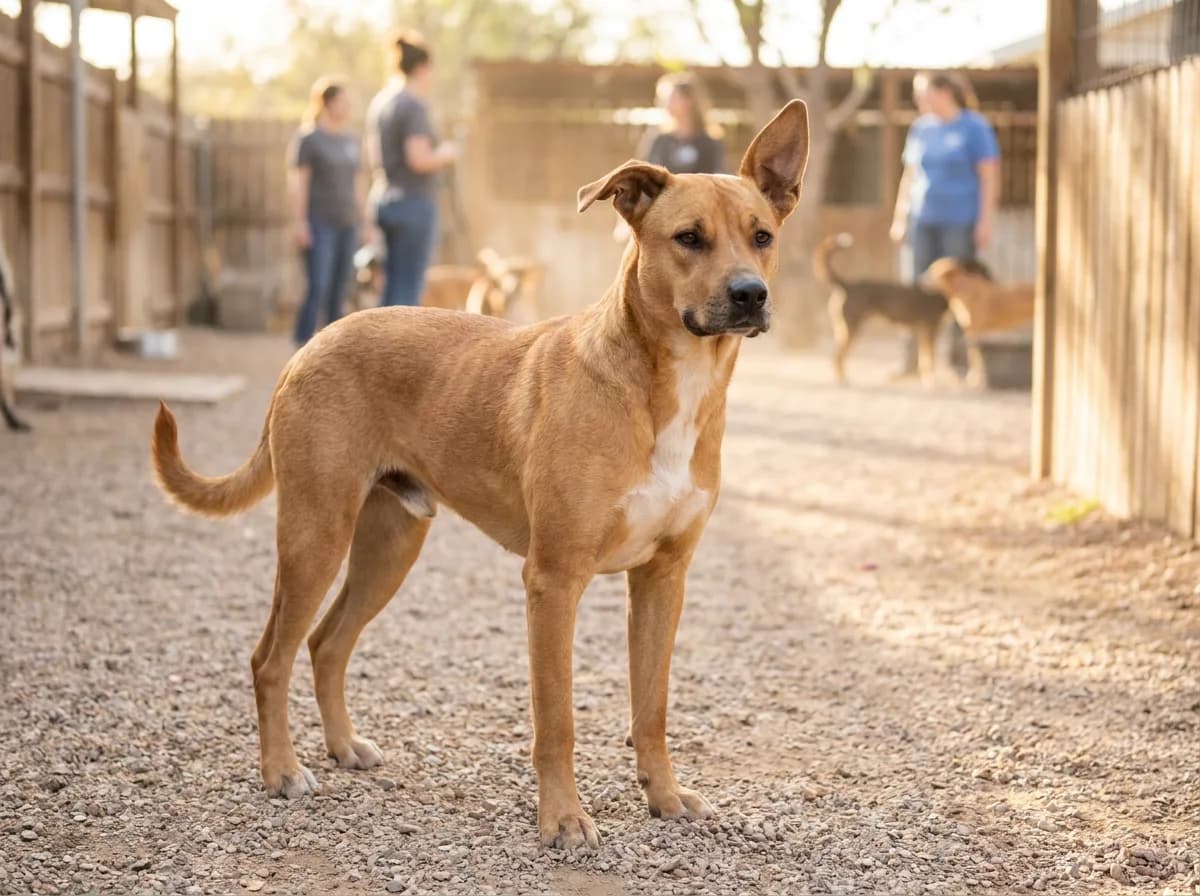
Carolina Dog mixes cannot be reliably identified from a photograph. A tan coat, upright ears or a curved tail may suggest a resemblance, but none establishes the dog's parents. When a listing uses a crossbreed name, first ask whether it reflects documented parentage, a DNA result or someone's visual guess.
The cross-reference below separates known parentage from common internet labels and points to the two detailed cross guides for Labrador and German Shepherd pairings. You can investigate ancestry without promising a particular adult size or personality, then assess the dog's actual care needs. The most useful question is what you know about this individual and what you still need to learn.

Sign up for expert-backed reviews and safety alerts all in one place.
Can you identify a Carolina Dog mix by looks?
No single visible feature can confirm a Carolina Dog mix. Even several familiar features together are insufficient. The United Kennel Club's Carolina Dog standard describes characteristics of the breed, including its outline, ears and tail. It is a standard for evaluating that breed, not a method for assigning ancestry to an undocumented mixed dog.
Use three separate descriptions when discussing a dog. Known parentage means you have reliable information linking the dog to identified parents. A DNA ancestry estimate comes from a laboratory's comparison with its reference populations. Suspected ancestry is an interpretation that has not been established by those records. Keeping the descriptions separate avoids turning a tentative shelter label into a claimed pedigree.
- 1Keep known parentage separate from suspected ancestry.
- 2A DNA ancestry estimate depends on the test's reference panel and interpretation.
- 3Choose care and equipment for the dog's observed behavior and actual measurements.
Petful may earn a commission when you click through to Chewy, at no extra cost to you.
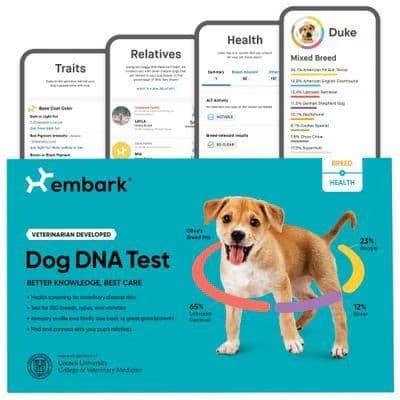
Embark includes Carolina Dog in its breed-testing information. Its separate explanation of Carolina Dog lookalikes notes that familiar coat and ear traits can come from other breeds. If you choose an Embark Breed & Health DNA Test Kit, approach it as a source of additional ancestry information, not a promise that it will confirm the label you already favor.
Different test companies use different reference databases and methods, as Embark explains in its test overview. Read the laboratory's account of uncertain or unresolved results and ask its support team about a surprising finding. Do not turn a small reported percentage into a prediction of temperament, or invent an untested ancestor because the result does not match a photograph.
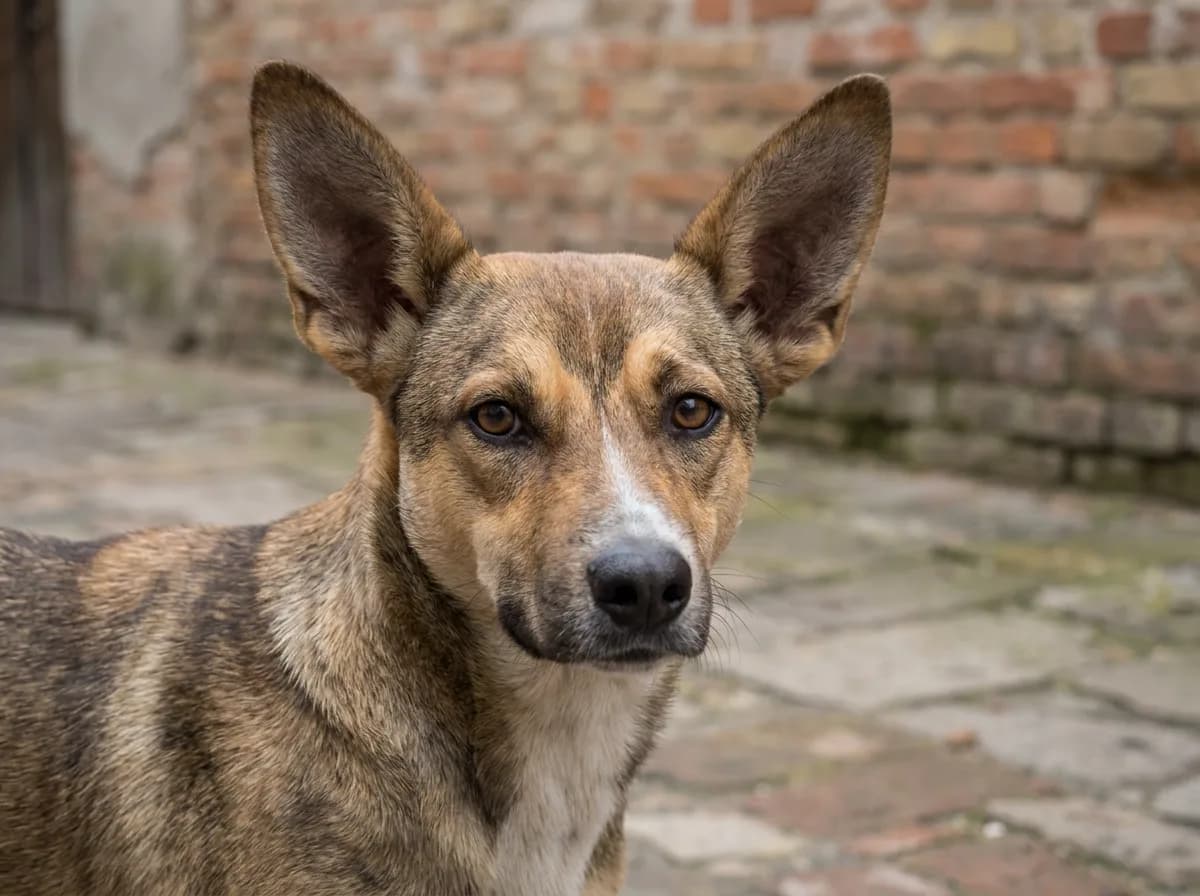
- For known parents: Ask who identified each parent, whether supporting records exist and how those records connect to this dog.
- For a DNA result: Review the complete report, its date and the laboratory's explanation, rather than a cropped breed-percentage screenshot.
- For a shelter label: Ask whether it came from a surrendering owner, an observed litter, a test or a visual estimate.
- For an online opinion: Treat a resemblance comment as a suggestion to investigate, not as evidence that the suggested cross occurred.
Several proposed crosses arise when people try to explain particular features. The following examples show how to keep an identification discussion useful. They do not establish that the featured combination is the dog's ancestry or that every dog with the label shares the same traits.
- Corgi, Whippet and Greyhound labels: A short-legged dog might be described as a Carolina Dog Corgi mix, while a lean dog might attract a Whippet or Greyhound guess. Record the actual proportions and measurements instead. The outline can guide the fit of a harness or resting space without telling you which breeds produced it.

Petful may earn a commission when you click through to Chewy, at no extra cost to you.
- Belgian Malinois and Black Mouth Cur labels: An upright-eared dog with a dark muzzle may prompt either suggestion. A dark face does not verify a Carolina Dog Belgian Malinois mix or Black Mouth Cur ancestry. Ask for the history behind the label before making assumptions about working ability, guarding or suitability for an inexperienced owner.
- Shiba Inu, Jindo and Chow Chow labels: Ears, a curled tail or coat texture may lead observers toward these names. A Carolina Dog Shiba Inu mix, Jindo mix or Chow Chow mix still needs evidence beyond resemblance. Describe what the dog allows during brushing and handling; the presumed cross cannot tell you how that interaction will go.
- Heeler and cattle-dog labels: Red Heeler and Blue Heeler refer to color descriptions associated with Australian Cattle Dogs. A Carolina Dog heeler mix label should not become a guarantee of herding behavior. Ask whether the individual has actually chased movement or mouthed during play and what the caregiver does in those situations.
- Rhodesian Ridgeback and hound labels: A ridge-like appearance, athletic outline or interest in smells can prompt a Carolina Dog Ridgeback mix or hound-mix guess. Identify which feature led to the suggestion. For a Rhodesian Ridgeback claim, seek the same parentage evidence you would for any other proposed ancestor rather than letting one feature settle the question.
- Catahoula and Border Collie labels: Coat pattern or an intense expression does not establish either cross. For a possible Carolina Dog Catahoula mix or Border Collie mix, ask about ordinary activity, rest and response to household movement. Those observations help you plan a home even when the ancestry remains uncertain.
- Jack Russell and Feist labels: Small size, lively play or a terrier-like outline may inspire these descriptions. Neither proves a Carolina Dog Jack Russell mix or Feist mix. Ask what “terrier mix” means in that particular record and whether anyone knows the parents; do not fill missing history with a more detailed name.
Good descriptions can be both honest and appealing. “Mixed dog with upright ears, comfortable walking on a leash and still learning to settle indoors” gives an adopter something to discuss. “Rare Carolina Dog cross with the perfect family temperament” replaces useful observations with promises that a picture cannot substantiate.
The same principle applies when sharing your own dog's story. You can say that a dog resembles a Carolina Dog while keeping its breed ancestry unresolved. There is no need to choose a more certain label merely because a form or conversation invites one. Preserve the source of the description wherever you record it, so a guess does not acquire authority through repetition.
Commonly searched Carolina Dog crosses
Crossbreed names can help you find a relevant conversation, but the names below are not standardized breeds with reliable size, coat or personality specifications. Nor does inclusion here establish how common a particular mating is. Use a proposed cross to decide what to ask, then use records and direct observations to decide what to believe.
| Evidence behind the label | What it can reasonably support | Practical care decision |
|---|---|---|
| Known parentage connected to this dog | An account of the identified parents | Ask about both parents while assessing the offspring individually |
| Laboratory ancestry report | Panel-dependent ancestry estimates | Read the complete result and its limitations |
| Suspected ancestry from appearance | A resemblance worth discussing | Measure the dog and ask about observed daily behavior |
| Crossbreed name repeated online | A search label without independent proof | Trace the claim to its original source before relying on it |
A harness should fit the dog in front of you regardless of its label. Measure according to the maker's instructions and check the fit in a secure area before using it outside. The medium/large PetSafe Easy Walk harness is an option only when the dog's measurements match that particular size; it is not a universal choice for Carolina Dog mixes or an escape-proof guarantee.
- Carolina Dog Husky mix: Ask whether Siberian Husky ancestry is documented or inferred from eyes, coat or vocal behavior. Find out how the individual behaves around gates and doors, what its current activity routine involves and whether it can settle afterward. Do not buy equipment for an assumed adult weight or expect a particular voice because the listing says “Husky.”
- Carolina Dog Pitbull mix: Ask which breed or background the caregiver means by “Pitbull” or “pit mix,” since the shorthand may be imprecise. Discuss actual handling, play and interactions with other animals. A broad head cannot establish a particular parent, and a breed label should not substitute for a careful introduction or a clear account of the dog's history.
- Carolina Dog Chihuahua mix: A small puppy does not prove Chihuahua ancestry or establish its eventual size. Ask for reliable ages, growth records and information about known parents. Choose equipment by present fit, while budgeting for replacement as the puppy grows. For an adult, current measurements are more helpful than an estimated size attached to an online crossbreed profile.
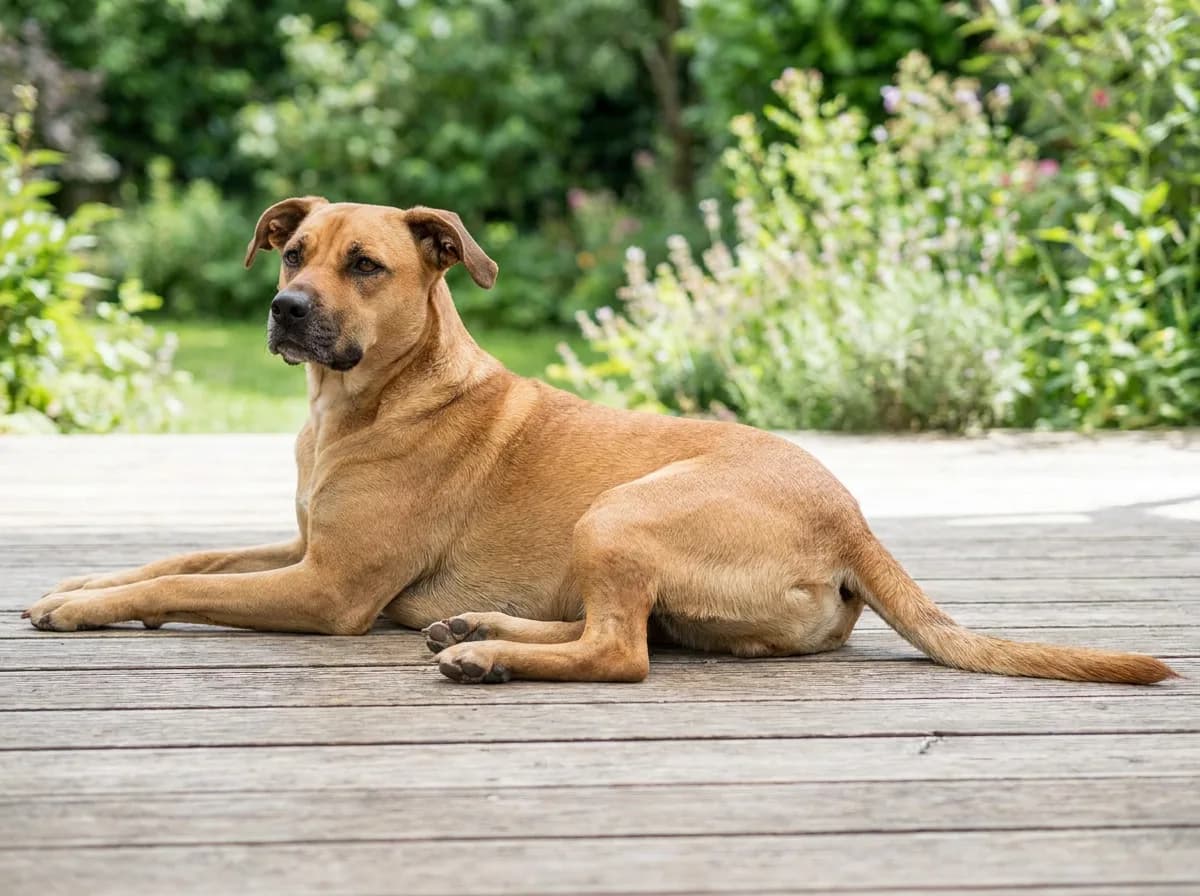
- Carolina Dog Basenji mix: Do not infer Basenji parentage from a curled tail, alert ears or an unusual sound. Ask how the label was obtained and how the dog responds to everyday events at home. A promise that a proposed cross will be quiet is not enough when you need to assess compatibility with close neighbors or a shared building.
- Carolina Dog Dachshund mix: If a listing describes a long-bodied or short-legged dog this way, separate that visible build from the ancestry claim. Evaluate the routes the dog will use through your home, the fit of its sleeping area and how you will assist with transport when needed. Avoid assigning a fixed adult height to a puppy based on the name alone.
- Carolina Dog terrier mix: “Terrier” may describe a broad impression rather than an identified parent breed. Ask the caregiver to be specific about the evidence and the dog's behavior. Interest in toys, quick movement or digging should be described with examples and context, not converted into a promise about every dog carrying the same label.
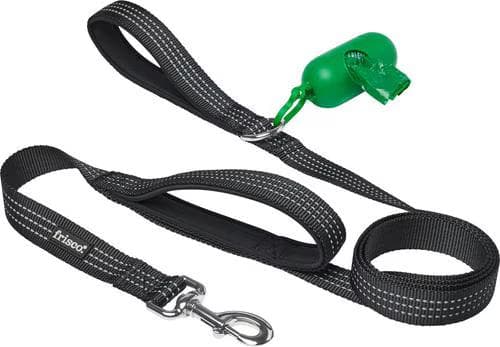
For supervised walking, the Frisco six-foot traffic leash offers a standard-length option if its weight and fittings suit the dog. It is not a long recall-training line. Practise attaching equipment in a secure space first, and keep a hand on the leash during an introduction rather than leaving the puppy tethered unattended.
Petful may earn a commission when you click through to Chewy, at no extra cost to you.
- Carolina Dog Golden Retriever mix: A golden coat does not verify Golden Retriever ancestry. Ask whether the dog's background is known and what brushing its actual coat requires. Do not assume that a proposed retriever cross will enjoy every visitor, accept all handling or retrieve toys; see which activities this individual already enjoys.
- Carolina Dog Boxer mix: A particular head shape or bouncy greeting may lead to this guess, but neither confirms the parents. During a meeting, ask the caregiver to show ordinary greetings and how they encourage calm behavior. Decide whether the adults in your household can manage the dog's present strength and excitement without relying on an optimistic personality description.
- Carolina Dog Beagle mix: Ask whether the Beagle label comes from records or from appearance and scent-focused behavior. For a dog that becomes absorbed in sniffing, discuss the walking routine and practise attention in a secure setting. That is useful management of an observed behavior, whether or not the suspected cross is eventually confirmed.
Some listings use only “Carolina Dog retriever mix.” Ask which retriever is meant and why. Labrador Retriever and Golden Retriever are different breed names, and a vague label should not acquire a more specific meaning when passed from one listing to another. If the person does not know, keep the description open rather than picking whichever parent seems to fit a photograph.
- Australian Shepherd, Australian Kelpie and Australian Cattle Dog crosses: Ask for actual background evidence before treating any of these labels as confirmed. Then discuss movement around children or other animals, daily opportunities to learn and the dog's ability to rest. A presumed working-breed parent is not an instruction to provide relentless exercise or to accept difficult behavior without support.
- Carolina Dog Rottweiler mix: Evaluate present size, handling and household compatibility directly. Ask who established the parentage and what is known about the dog's experience with unfamiliar people. Avoid both reassuring and alarming predictions based only on a dark coat or broad build; the useful information is the individual's history and behavior in context.
Keep a short note for each dog you consider: the label, the evidence behind it, observed behavior and remaining questions. This makes comparisons fairer than ranking mixes by supposed intelligence or loyalty. It also prevents a compelling photograph from overshadowing a practical concern such as the amount of supervision the dog currently needs.
Reward the behavior you want to see in short, ordinary moments: looking toward you, approaching voluntarily or standing calmly while equipment is introduced. A small reward the puppy enjoys can help make those moments clear. Keep treats appropriate to the dog's size and include them in its daily food allowance instead of continually adding extras.
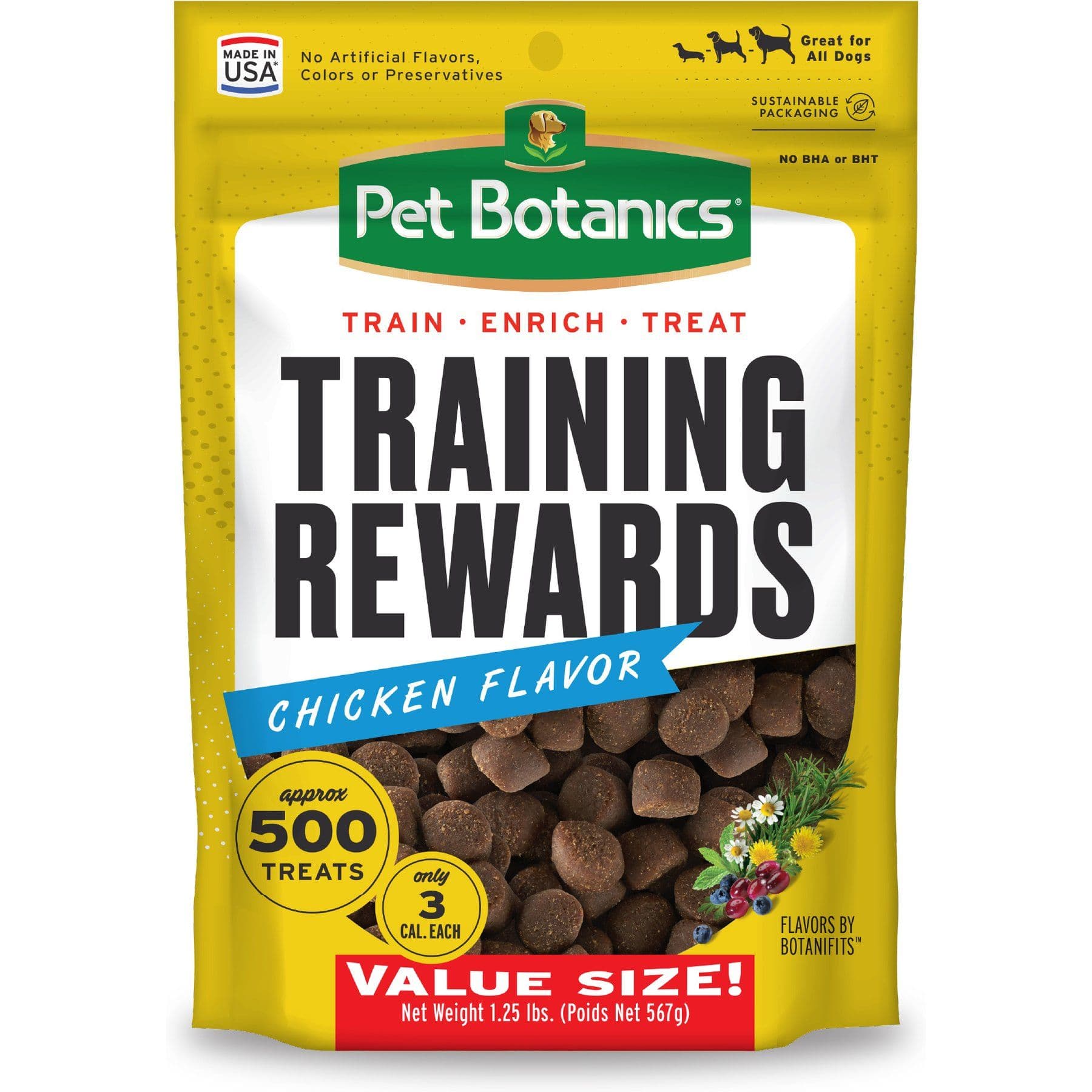
Soft chicken-flavor training rewards in a larger bag for frequent practice. Break rewards into appropriate pieces for your dog.
Petful may earn a commission when you click through to Chewy, at no extra cost to you.
German Shepherd crosses
A German Shepherd Carolina Dog mix warrants the same distinction between recorded parentage and resemblance. If those parents are known, information about their size and behavior gives context, but it does not guarantee an exact blend in their offspring. Ask how the dog handles ordinary walks, visitors and rest, then compare those observations with your household's time and experience.
Our Carolina Dog German Shepherd mix guide explores that particular cross in more detail. Use it when the background supports the label or when you want help evaluating a listing, while keeping uncertainty about an individual dog's ancestry explicit.
Labrador crosses
A Carolina Dog Lab mix description may refer to a Labrador Retriever parent, a DNA estimate or simply a familiar shelter label. Ask which applies. Friendliness at a single meeting does not establish the cross or guarantee how the dog will respond in every setting; observations from a foster home can provide additional context about daily routines.
See our Carolina Dog Lab mix guide for the focused discussion. If a Labrador cross is only suspected, keep choosing equipment and activities for the dog's actual build and preferences rather than treating an assumed parent as a complete care plan.
Choosing and caring for a mixed puppy
A Carolina Dog mix puppy needs a workable home plan even if its parentage remains uncertain. Ask for its age, current routine and known background, then decide whether you can meet the demands of a growing dog. A Carolina Dog Husky mix puppy advertisement, for example, should not prompt a purchase based on a promised final size or a photograph of an unrelated adult.
Begin with the person who spends the most time with the puppy. Ask for a description of a normal day and examples of what happens when the routine changes. “Active” can mean many things; a specific account of play, rest and attention is more useful. If the caregiver has not observed a situation, record it as unknown rather than assuming the puppy will cope easily.
- Ask about handling: Can the puppy approach voluntarily, and how does the caregiver introduce a collar or harness?
- Ask about separation: Has it spent any brief time away from littermates or familiar people, and what happened?
- Ask about other animals: Which animals has it actually met, under what supervision and with what response?
- Ask about the home: Which everyday sounds, visitors and surfaces are familiar, and which remain new?
- Ask about support: Who can discuss settling-in difficulties and what placement support does the organization provide?
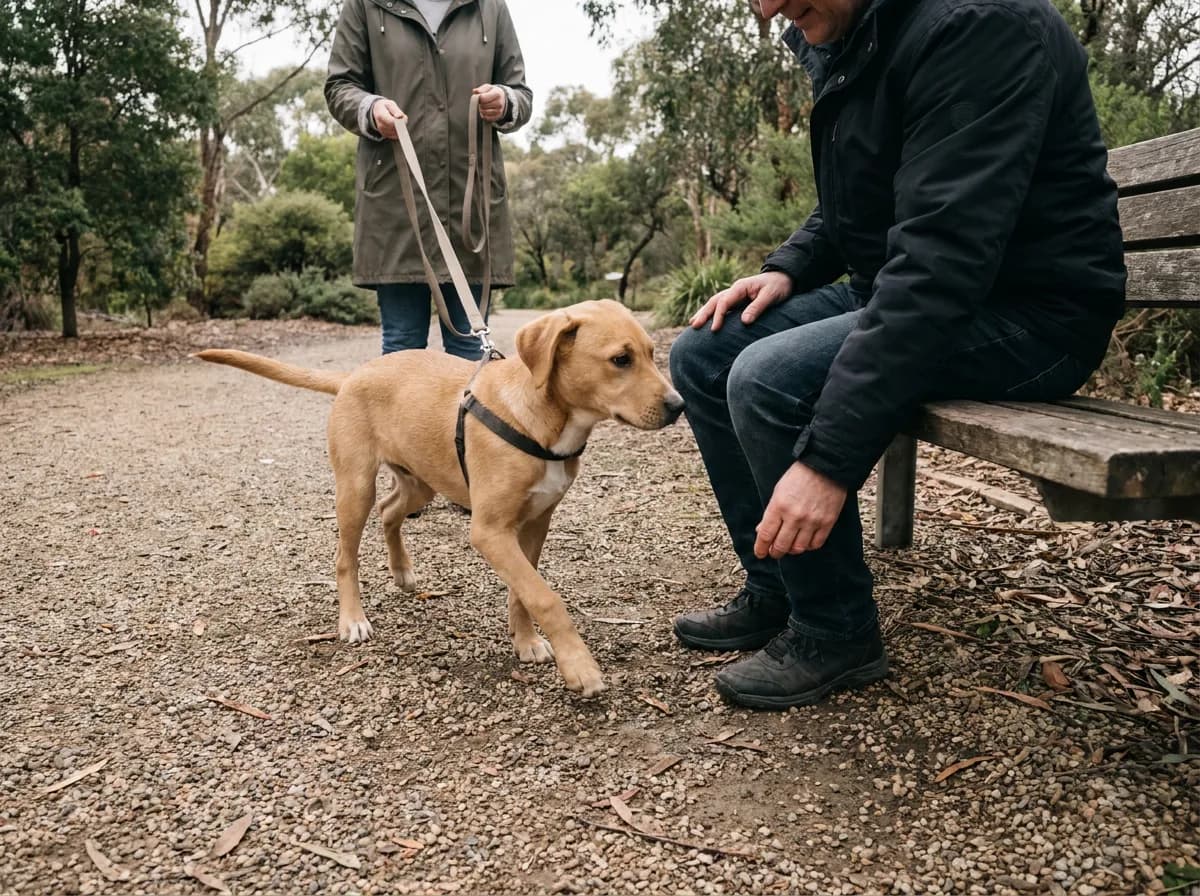
Plan the first meeting around observation rather than performance. Let the puppy explore a suitable secure space and choose whether to approach. Ask the caregiver to demonstrate familiar routines. You do not need to provoke a reaction, take away food or force an interaction to find out whether a puppy is a good fit.
A supervised introduction also gives you information about your own household. Can children follow instructions and leave the resting dog alone? Can the adults manage doors, walking equipment and separate spaces? A resident animal's comfort matters too. The aim is to see whether you can create a workable environment, not to make the animals become instant friends.
- Choose a quiet resting space where the puppy can withdraw from household activity.
- Check gates, doors and fences before allowing access; do not assume a breed label predicts escape behavior.
- Arrange who will provide supervision, toilet opportunities and company during the day.
- Use walking equipment fitted to the puppy's actual measurements and check it regularly as growth changes the fit.
- Keep initial outings and learning sessions manageable, with opportunities to rest afterward.
- Write what happened and where it happened. “Settled beside the caregiver after a short walk” is more useful than “always calm.” “Has not met cats in this placement” preserves an important unknown.
When choosing activities, begin with what the puppy enjoys and can manage comfortably. You might alternate gentle exploration with a simple food-search game and quiet companionship. Increase difficulty gradually as the dog learns the routine. There is no need to recreate the presumed work of every breed in an ancestry report or make the puppy prove that it is exceptionally intelligent.
The same restraint helps when interpreting setbacks. A puppy that hesitates at a doorway is showing you something about that moment, not confirming a theory about its ancestry. Reduce the difficulty and observe what changes. If you need training support, choose someone who explains how they will help your dog learn rather than promising to fix an entire crossbreed's personality.
For acquisition questions, written agreements and first-year costs, use our Carolina Dog puppies guide. The name attached to a puppy does not establish its monetary value or the quality of the placement. Ask for a clear explanation of the fee, the records supplied and the support available after handover.
Compare what each placement can actually tell you
Consider a hypothetical choice between two dogs. One listing names two parent breeds but provides no explanation of how they were identified. Another uses only “mixed breed,” yet a foster caregiver can describe the dog's sleeping routine, walking habits and interactions with household members. The second description contains more practical evidence about daily life, even though it contains less ancestry detail.
That does not automatically make the second dog a better choice. It tells you which questions remain unanswered. You might need more information about the first dog's routine or about the second dog's response to your particular household. Separate missing information from a known mismatch so that you do not reject a suitable dog, or overlook a difficulty, simply because one listing sounds more confident.
- Write down the household requirement, such as a manageable walking routine or a plan for time alone.
- Record the evidence available for that requirement, including who observed it and in which setting.
- Mark what has not been observed rather than filling the gap with a breed stereotype.
- Ask what support or additional meeting could help you understand the uncertainty.
- Decide whether you can meet the needs described now, without relying on an ideal future version of the dog.
An adult mixed dog can be worth considering if uncertainty about a puppy's eventual size is a major concern. You can measure an adult directly and discuss its established routines. A change of home can still change behavior, so neither age nor a detailed foster account removes the need for a thoughtful transition. It simply changes the information available for your decision.
Revisit the plan as the puppy settles
Keep the initial routine simple enough that the whole household can follow it. Agree on where the puppy rests, how doors are managed and which words you use during everyday interactions. A consistent arrangement lets you notice what helps the puppy settle instead of changing several things at once and guessing which made a difference.
Record a few useful observations each day. Note where the puppy rested comfortably, which new experience went well and what felt too difficult. Include context such as a busy room or an unfamiliar handler. These notes are more useful for a later training conversation than describing the dog as stubborn, dominant or “just acting like its mix.”
- Recheck equipment fit as the puppy grows.
- Keep familiar successful activities while introducing new experiences gradually.
- Adjust the household schedule if the actual supervision required differs from the original plan.
- Share observations with the caregiver or trainer when asking for support.
How this fits the Carolina Dog breed
The Carolina Dog, also called the American Dingo, has a breed identity separate from the many mixed dogs that resemble it. The AKC's Carolina Dog profile describes a dog that can be reserved with unfamiliar people. That general description is useful background, but it cannot tell you the ancestry or future behavior of an undocumented mixed puppy.
- Breed makeup: the Carolina Dog is a recognized breed, not a fixed recipe made by crossing two modern breeds. That does not verify the ancestry of a dog given the label.
- Barking and learning: vocalization varies with the dog and situation. Ask about triggers and settling; intelligence does not guarantee easy recall or immediate obedience.
- Shedding: a short coat still sheds, with seasonal changes in density. Observe the actual coat before choosing grooming tools.
- Rarity: the breed is uncommon, but registry counts, free-ranging dogs and rescue labels are different populations. They do not establish a reliable total or justify a premium for an undocumented mix.
The Carolina Dog breed guide gives the full breed context. For a mixed dog, use its documented history and observed behavior to decide whether you can meet its needs.
Keep the shelter description and laboratory result as separate pieces of information. Ask the laboratory how it reports Carolina Dog ancestry and what uncertainty applies to the result. A visual label is not a pedigree, but a test also has limits. You can still make care decisions from the dog’s measurements, medical records, and observed behavior.
No. You can begin rewarding useful everyday behaviors while ancestry remains uncertain. Practice the dog’s name, comfortable equipment handling, and calm door routines in easy settings. Adjust the task to the response you actually see; a future breed result does not need to determine which humane training method you use.
An adult gives you a current size to measure rather than a puppy-growth estimate. Confirm the home’s actual rules before committing, and measure the dog instead of relying on “medium” in a listing. Adult size reduces one uncertainty; it does not establish how the dog will cope with shared hallways, neighbors, or time alone.

Coreen Saito is a pet writer and longtime shelter volunteer with more than a decade in animal rescue. She covers cat behavior, breed care, and the small, ordinary science of sharing a life with companion animals, with a particular focus on honest takes about the products and decisions that actually matter. At home in Arizona, she's outranked by Mac (a dog with the loudest opinion in the house), Rebel (a cat who governs by quiet authority), and Meri (an orange tabby who runs the late shift and the laundry basket). She writes about all three, plus the rescues that keep coming through her life, at LifeWithMinty.com.
Sign up for expert-backed reviews and safety alerts all in one place.