Best Food for Border Collies: How to Choose
Choose food for a Border Collie by life stage, adequacy statement, manufacturer capability, calories, real workload, body and muscle condition, daily cost, tolerance, and veterinary needs.

BVMS, MRCVS
Petful is reader supported. As an affiliate of platforms like Amazon and Chewy, we may earn a commission when you buy through links on this page. There is no extra cost to you.
The best food for Border Collies is not a single brand, ingredient, or protein percentage. It is a complete diet appropriate for the individual dog's life stage and health, made by a company that can answer useful formulation and quality questions, fed in an amount that supports healthy body and muscle condition. Workload, treats, tolerance, household budget, and veterinary needs all belong in the comparison.
Food choice becomes more reliable when the label, manufacturer, measured ration, daily cost, training calories, body condition, health, and the dog's response are reviewed as one decision. Health, nutrition, genetics, training, and breed claims are grounded in the named primary or authoritative sources below. The individual dog's records, behavior, and veterinary needs remain more important than a breed-wide expectation.
- 1No universal best brand.
- 2Life-stage adequacy.
- 3Manufacturer quality questions.
- 4Calorie and portion adjustment.
- 5Working versus companion dog needs.
- 6When a therapeutic diet needs veterinary oversight.
The four-part scorecard below keeps label proof, manufacturer capability, the dog's measured response, and daily cost separate. That prevents a persuasive ingredient story or breed label from outweighing the life-stage statement, calorie information, quality-control answers, or what happens when the food is actually fed.

Sign up for expert-backed reviews and safety alerts all in one place.
Choosing food by life stage and evidence
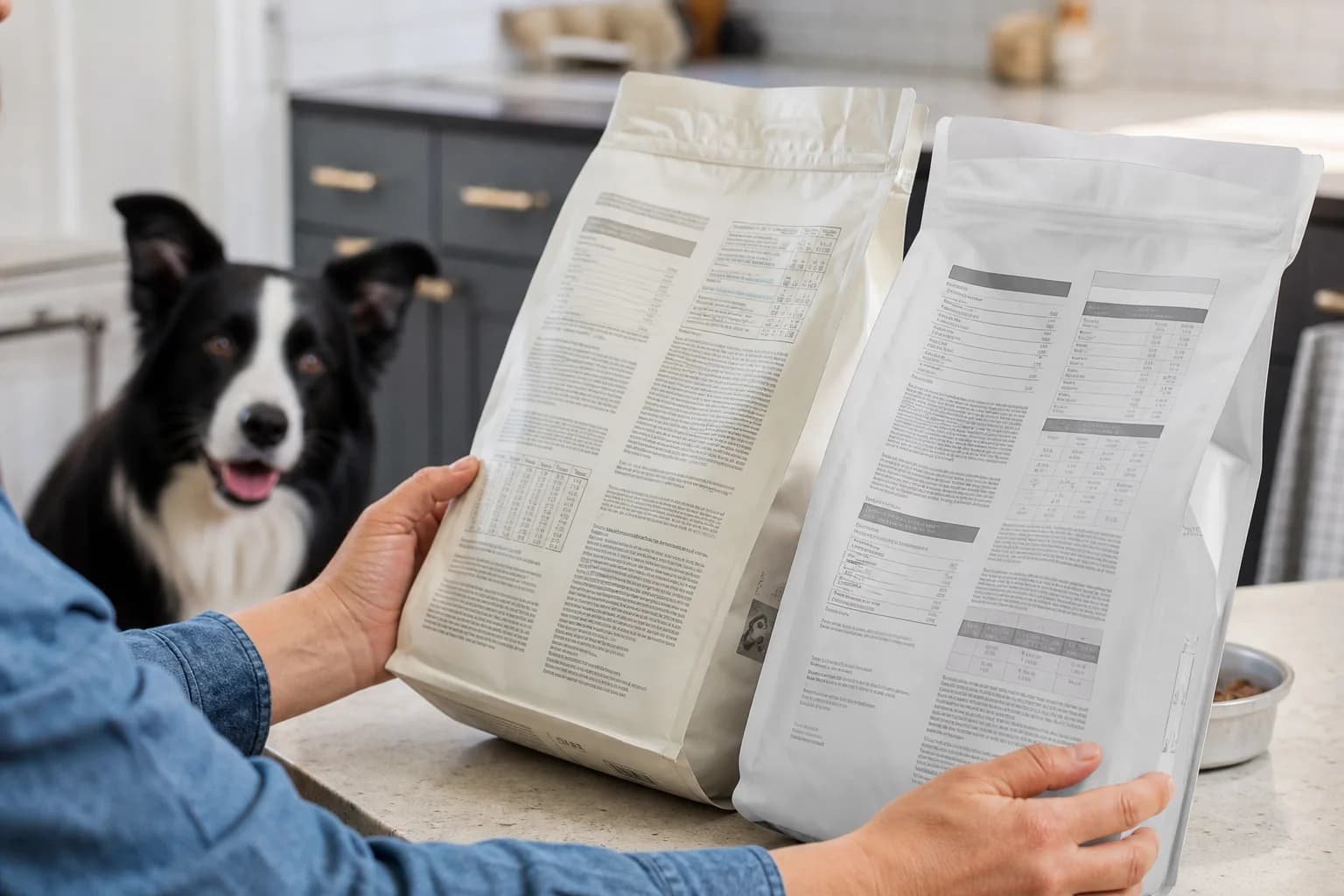
Start with the nutritional adequacy statement. AAFCO explains that this statement identifies the species and life stage for which a food is complete and balanced and indicates how adequacy was established. A front-label phrase such as active, premium, natural, or Border Collie formula does not replace that statement.
Use the WSAVA pet-food selection questions to examine the company behind the bag. Ask who formulates the diet, what qualifications that person has, how quality control and finished-product testing work, whether the company can provide typical nutrient information, and whether it conducts or supports useful nutrition research. A long ingredient story cannot answer those operational questions.
Read the calorie statement, net weight, feeding directions, lot information, manufacturer contact, and any handling instructions. Keep the original package or record the exact product and lot. Formulas and labels can change, so recheck the current package before buying or changing the ration. The best food for Border Collies is not one brand or format. The best dog food for Border Collies is the complete option whose life-stage adequacy, manufacturer capability, calories, handling, cost, and measured effect fit the individual dog and can be reviewed with the veterinary team.
| Scorecard lane | What to verify | Recheck or stop rule |
|---|---|---|
| Label proof | Complete-and-balanced statement for the correct species and life stage, calorie content, feeding directions, lot information, and handling instructions | Do not use a full-meal formula whose adequacy statement does not fit the dog |
| Manufacturer capability | Qualified formulation responsibility, supplier and quality controls, finished-product testing, nutrient information, research, and traceability | Pause when the company cannot answer basic accountability or quality questions |
| Individual response | Measured ration, treats, weight trend, body and muscle condition, appetite, stool, skin and coat, energy, and recovery | Review at the planned date; seek veterinary guidance sooner for illness signs or concerning change |
| Daily cost | Current package price, calories per package, measured daily amount, shipping, storage, waste, toppers, and training food | Affordability matters, but it cannot make the wrong life stage or an unsuitable therapeutic plan appropriate |
- The Purina Pro Plan Adult Chicken and Rice Formula is one adult formula that can be compared against the scorecard's life-stage, calorie, and manufacturer-evidence criteria. It is an example, not a universal winner. Verify the current adequacy statement, calories, label, tolerance, and veterinary fit before purchase.
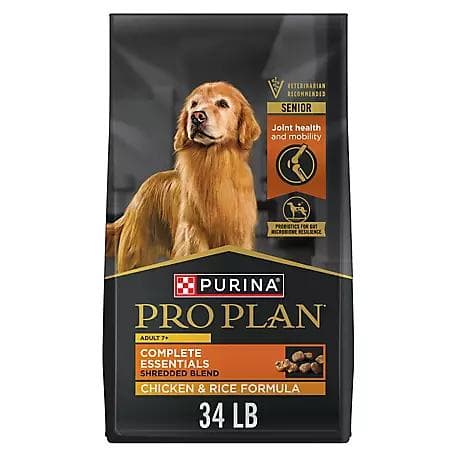
A vet-backed adult kibble with full WSAVA alignment and AAFCO feeding trials. Budget-friendly, though corn gluten and soybean meal sit in the top ingredients.
Petful may earn a commission when you click through to Chewy, at no extra cost to you.
Portions, activity, body condition, and feeding format
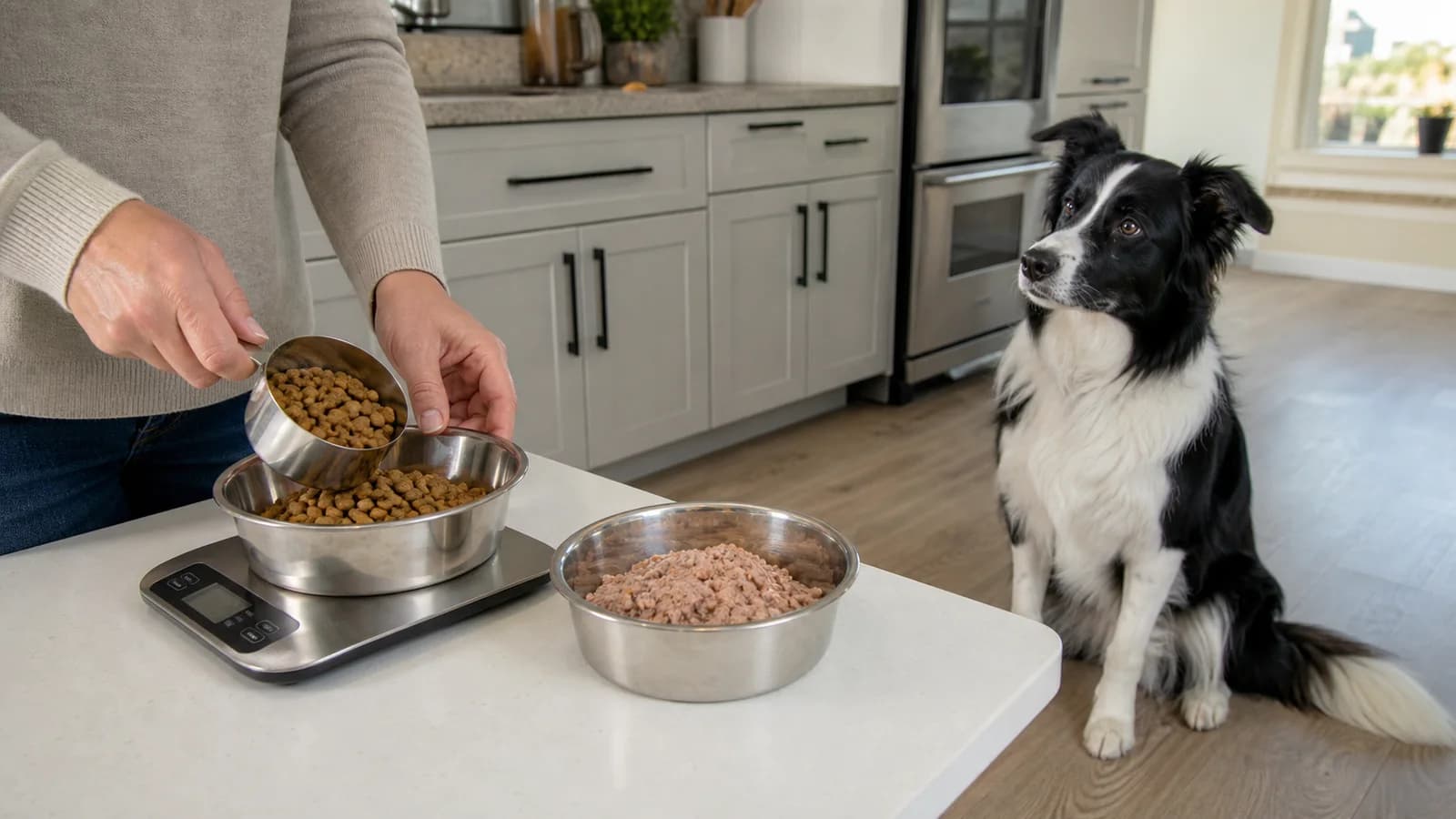
A feeding chart is a starting estimate, not a prescription. Start from the food's calorie density and the veterinary plan, measure consistently, count training food and chews, and adjust from weight trend, body condition, muscle condition, appetite, stool, activity, and health. A dense coat can hide changes, so learn a hands-on rib, waist, and muscle check.
A working sheepdog, weekend agility dog, growing puppy, neutered companion, and senior with disease may need different calories or nutrient management. That does not mean every active Border Collie needs a high-protein sport formula. Work intensity, duration, climate, recovery, current ration, and the dog's clinical status matter more than the breed label. WebVet's guide to high-protein decisions for active and senior dogs provides additional context for that narrower question.
- Use breed-level evidence to prepare observations and questions. Use the individual dog, actual records, and qualified veterinary or behavior guidance for decisions that affect health or safety. A therapeutic diet needs veterinary oversight because a diagnosis and treatment goal, not the breed label, determine whether it is appropriate.
Adjust calories from the individual trend
Calorie and portion adjustment begins with the food's calorie content and the amount actually measured into the full daily ration. Compare that starting amount with weight, body condition score, muscle condition, workload, treats, and recovery over time. A veterinary nutritionist can formulate or review a diet when disease, growth, or a home-prepared plan requires expertise beyond ordinary label comparison; the title alone is not a substitute for the dog's veterinarian and complete clinical history.
Dry, canned, fresh, home-prepared, and other formats can fit different households, but each choice still needs nutritional adequacy, safe handling, total-calorie accounting, and individual tolerance. A home-prepared therapeutic or long-term diet should be formulated for the patient by an appropriately qualified veterinary nutrition professional rather than assembled from online recipes.
- For dry food, compare the amount the dog actually eats, storage conditions, treat use, and whether the household can measure the ration consistently. Kibble can be convenient for training and travel, but convenience does not establish formulation quality or veterinary fit. Record the current product name and lot rather than assuming every flavor or package size has the same nutrient profile.
- Wet and fresh formats may support different texture, water-intake, or palatability needs, but they also change refrigeration, cleanup, package waste, calorie comparisons, and cost per day. Compare the full nutritional adequacy statement and calories, not the percentage numbers on the front of two foods with very different moisture levels. A mixed-format ration still needs a known total.
- Home-prepared feeding adds another requirement: the household must follow the exact formulated recipe, including specified supplements and preparation methods. Ingredient substitutions, skipped supplements, or gradually larger extras can change the nutrient balance even when each ingredient sounds wholesome. If the household cannot follow and recheck the recipe accurately, a complete commercial option may be the safer practical choice.
The four-part food scorecard
This food-selection scorecard separates label proof, manufacturer capability, response, and daily cost instead of ranking formulas by ingredient-list aesthetics. Label proof asks whether the adequacy and calorie statements fit. Capability asks who formulates and how quality is controlled. Response tracks the individual dog over time. Daily cost uses the amount actually fed, not bag price alone.
Do not average a weak safety lane into a strong marketing lane. If the life-stage statement is wrong, the company cannot answer basic questions, or the dog develops concerning signs, pause the comparison. The scorecard is a way to organize evidence, not a diagnostic tool or a declaration that one formula wins for every Border Collie.
Reassess after a stable observation window, commonly two to four weeks for ordinary non-therapeutic comparisons when the veterinarian has not directed another schedule. Record measured amount, treats, stool, appetite, body condition, weight, skin and coat, energy, and any medication or routine change that could confuse the result.
Calculate the cost from the ration
Calculate cost from use rather than shelf price. One practical formula is package price divided by the package's total calories, multiplied by the food calories planned for one day. Then add shipping, required toppers, storage loss, and any food reserved for training. Recalculate whenever the formula, package size, price, ration, or treat plan changes.
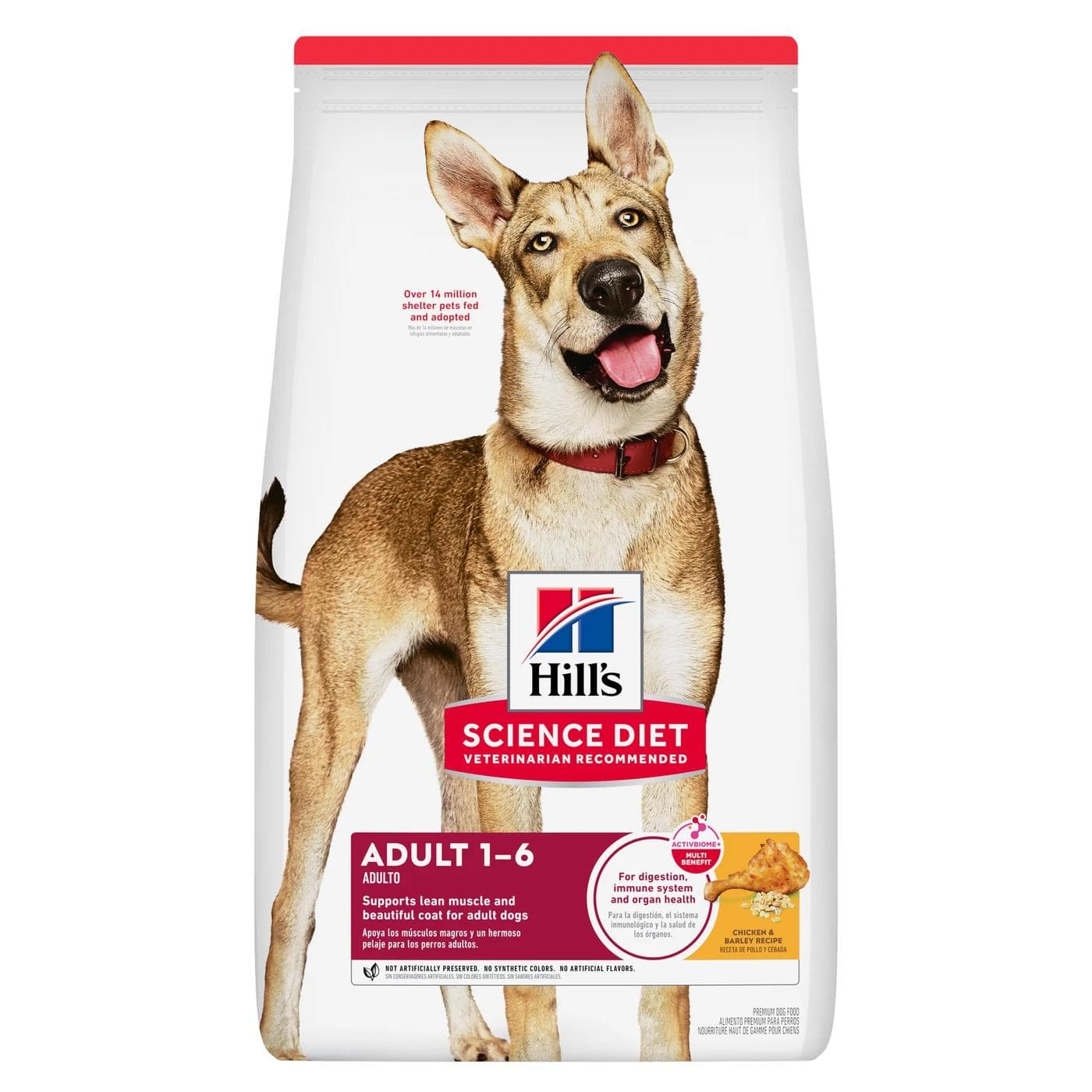
A vet-channel adult-maintenance kibble backed by AAFCO feeding trials. Leaner protein and fat than many competitors at a comparable price.
Petful may earn a commission when you click through to Chewy, at no extra cost to you.
Cost belongs in its own lane because a food can look inexpensive by the bag but require a larger daily amount, or look costly while lasting longer at the measured ration. It also prevents price from hiding a more important failure. The cheapest option is not a bargain if the life-stage statement is wrong, the household cannot store it safely, or the individual dog does not maintain appropriate condition on the plan.
Food transitions, supplements, and medical boundaries
Unless a veterinarian directs an immediate change, a gradual transition can make digestive response easier to interpret. Keep the total amount controlled while the old and new foods overlap, and slow the transition if the veterinary team advises it. Puppies, dogs with serious disease, and dogs with significant gastrointestinal signs need individualized instructions.
Supplements and toppers add calories and may unbalance a complete diet. Calcium, vitamins, oils, joint products, and performance powders are not automatically harmless. Bring the exact product, dose, and full ration to the veterinarian before adding them, especially for a growing puppy or a dog receiving medication.
Repeated vomiting or diarrhea, blood in stool, a swollen painful abdomen, unproductive retching, collapse, marked lethargy, difficulty breathing, or refusal of food with illness signs needs prompt veterinary guidance. A diet article cannot safely troubleshoot an emergency.
A worked food-label comparison
Imagine two adult foods with similar front-label claims. Food A provides 390 calories per cup and Food B provides 455. The bag sizes, feeding-chart cup amounts, and purchase prices cannot be compared fairly until the household calculates the measured amount that supplies the dog's current calorie target. Add the calories used for training, chews, table food, and toppers before deciding that either bag lasts longer or costs less per day.
Next compare each nutritional adequacy statement, the life stage covered, the manufacturer's contact information, and the current lot details. A Border Collie puppy, pregnant dog, healthy adult, serious sport dog, and patient on a therapeutic plan are different decisions. Ingredient order alone cannot resolve those differences, and a higher calorie or protein number is not automatically better.
Use body and muscle condition as the feedback loop

A scale records total mass but cannot show where change occurred. Ask the veterinary team to demonstrate how to feel the ribs, view the waist and abdominal tuck, and assess muscle over the spine, shoulders, skull, and hindquarters. Photograph the dog in a consistent standing position and record weight under comparable conditions when a trend needs monitoring. A dense rough coat can hide gradual gain or muscle loss from casual observation. WebVet's guide to unexplained dog weight loss or gain explains why a change should be interpreted with the full health picture.
Interpret the trend with appetite, stool, activity, recovery, medication, age, and health. A dog can maintain the same weight while losing muscle and gaining fat, and a growing puppy should not be forced toward an adult silhouette. Unplanned weight loss, weakness, persistent digestive signs, or a marked appetite change requires clinical assessment rather than another internet calorie estimate.
Questions a manufacturer should be able to answer
Contacting a company is most useful when the questions are specific. Ask who formulates the diet and what relevant education and experience that person has. Ask where the food is made, how ingredients and suppliers are approved, what finished-product testing occurs, how nutrient analyses are verified, and how the company tracks a lot when a complaint arises. Record the date, product name, formula, and the exact response so a later reformulation is not confused with the original answer.
A polished mission statement does not substitute for operational detail. Neither does a vague assurance that ingredients are human grade, holistic, premium, or locally sourced. A company may decline proprietary information, but it should still be able to explain who is accountable for nutrition and how it verifies that the finished food matches its specifications.
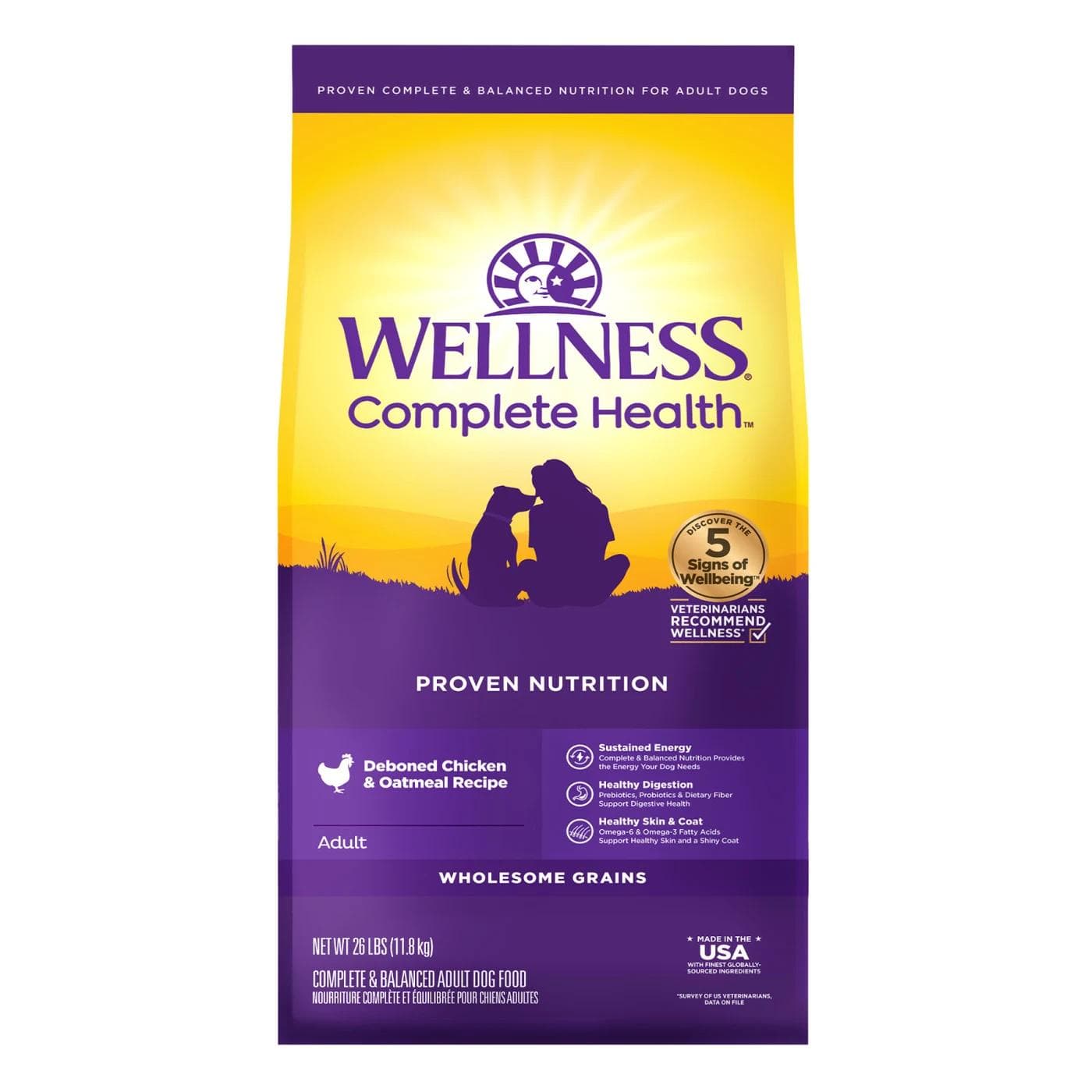
Deboned chicken and whole grains with guaranteed probiotics, taurine, and omegas. The sensible middle of the premium aisle for everyday adult dogs.
Petful may earn a commission when you click through to Chewy, at no extra cost to you.
Turn training rewards into a measured ration
Border Collies often receive food during recall, mat work, handling, sport foundations, and enrichment. At breakfast, set aside a known portion of the daily ration for those sessions rather than filling a treat pouch repeatedly. If higher-value treats are needed around difficult distractions, record them and reduce other discretionary calories with veterinary guidance instead of cutting a complete meal at random.
Reward size can be tiny when the dog is swallowing safely and remains motivated. The number of successful repetitions, not the visual size of each treat, matters to training. Chews and stuffed toys also count; weigh or calculate what enters them. This accounting protects body condition without turning food restriction into a reason to use force or under-reward challenging behavior.
Run a controlled food transition
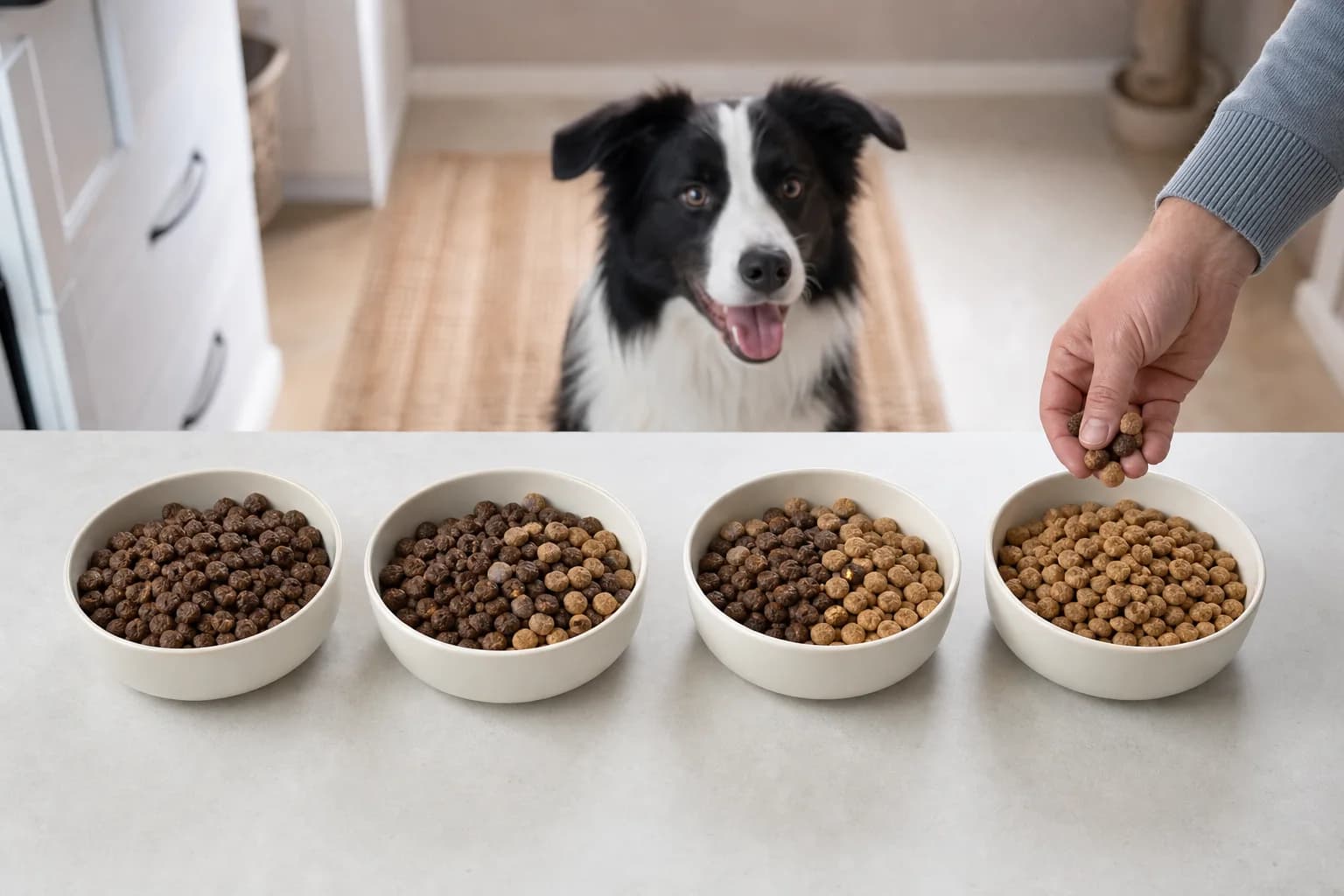
When an ordinary diet change is appropriate and the veterinarian has not directed otherwise, write down the old formula, new formula, measured proportions, start date, lot numbers, and every other food offered. Keep exercise, supplements, and treat choices as stable as practical. That makes appetite, stool, vomiting, skin, and energy observations easier to interpret than a week in which five variables change together. WebVet's guide to transitioning dog food offers a focused schedule and warning-sign reference. One product-specific label to compare is Purina Pro Plan Adult Chicken & Rice; verify the current adequacy statement, calories, and fit for the individual dog.
A transition schedule is not a test of endurance. Significant vomiting or diarrhea, blood, abdominal pain, unproductive retching, collapse, breathing difficulty, severe lethargy, or refusal of food with illness signs needs prompt veterinary guidance. Puppies and dogs with medical conditions may need a different pace or an immediate prescribed change.
Recheck the feeding decision at a named date
For a stable non-therapeutic change, choose a review date with enough time to collect meaningful observations, often two to four weeks when the veterinary team considers that appropriate. Bring the measured ration, food and treat names, body and muscle condition notes, weight trend, stool record, appetite, workload, and any concerning sign to that review. The question is not whether the dog seems to like the bag; it is whether the complete plan is supporting the individual.
Therapeutic diets, growth, pregnancy, serious sport, chronic disease, and unexplained weight change need their own monitoring schedules. Do not substitute a retail product with similar marketing words for a prescribed diet. If cost or availability threatens adherence, contact the veterinary team early so alternatives can be considered with the actual medical goal still visible.
Preserve storage and recall information
Keep dry food in its original bag inside a clean container when practical so the lot, best-by date, feeding information, and manufacturer contact remain available. Protect every format from heat, moisture, pests, and cross-contamination, and follow the current refrigeration or discard instructions. Wash bowls and measuring tools on a schedule appropriate to the food and household.
If food smells abnormal, contains insects or moisture, arrives with damaged packaging, or appears linked to illness, stop using it as veterinary and manufacturer guidance directs. Save photographs, the package code, purchase record, amount fed, symptom timeline, and remaining product safely. Traceability is more useful than trying to identify a problem from the front of the bag.
Turn the food choice into a measured routine
Read the adequacy statement first
The adequacy statement is the fastest way to determine the species and life stage a complete food is designed to support.
Photograph or record the exact statement and confirm it matches the dog before comparing flavors, ingredients, or packaging claims.
Adult maintenance food is not automatically appropriate for growth, gestation, lactation, or a therapeutic need.
- The Hill's Science Diet Adult Chicken and Barley Recipe is another adult formula that can be compared by its current adequacy statement, calories, manufacturer information, daily cost, and the dog's response. It is not individualized nutrition advice or a substitute for a prescribed diet.
Identify the accountable formulator
Useful confidence comes from qualified people and a repeatable formulation process, not an anonymous recipe story.
Ask the manufacturer who formulates the food, what relevant credentials apply, and how that team reviews changes.
A celebrity endorsement, breeder preference, or store ranking is not equivalent evidence.
Ask about quality control
Ingredient approval, supplier verification, manufacturing controls, finished-product testing, traceability, and recall response cover different failure points.
Request specific answers and save the date, contact route, and product identity with the response.
A vague statement about high standards does not describe a control system.
Compare calories per measured unit
Two foods with similar bag sizes or cup directions can provide different calories per cup or gram.
Calculate from the current label and the amount actually fed, then include treats, chews, toppers, and training rewards.
Do not copy the old cup amount to a new formula without recalculating. One product-specific label to compare is Hill's Science Diet Chicken & Barley; verify the current adequacy statement, calories, and fit for the individual dog.
Learn body and muscle condition
Scale weight alone cannot show whether change reflects fat, muscle, hydration, growth, or another process.
Ask the veterinary team to demonstrate rib feel, waist, abdominal tuck, and muscle assessment, then record a trend under similar conditions.
Unexplained loss, gain, weakness, or appetite change needs clinical assessment.
Match the ration to the real work
An active label may overstate what a companion dog needs and underdescribe a genuine endurance workload.
Petful may earn a commission when you click through to Chewy, at no extra cost to you.
Record duration, intensity, climate, terrain, weekly frequency, recovery, and body condition before changing energy density.
Do not use a harder workout to justify excess food or use food restriction to force an athletic shape.
Protect growing puppies
Growth needs differ from adult maintenance, and rapid weight gain is not a marker of better development.
Use an appropriate growth diet, measure meals, track the puppy with the veterinary team, and use ration food for training where practical.
Do not add calcium or growth supplements without qualified veterinary direction.
Treat protein as one variable
Protein percentage cannot be interpreted apart from calorie density, digestibility, amino-acid supply, life stage, total ration, and the individual dog.
Ask what decision a higher or lower number is meant to solve and whether evidence supports that decision.
A high number is not proof of quality or athletic suitability.
- The Wellness Complete Health Adult Chicken and Oatmeal can be compared with other adult foods by reviewing its current label, manufacturer answers, calories, daily cost, and the individual dog's response. Suitability depends on the full ration and the dog, not the product name.
Evaluate grain-free claims carefully
The FDA continues to investigate potential causes of non-hereditary dilated cardiomyopathy and has not reduced the issue to one ingredient slogan.
Discuss diet history and cardiac concerns with the veterinarian instead of making abrupt changes from social-media claims.
Breathing difficulty, collapse, weakness, or a newly reduced ability to exercise requires veterinary assessment.
Keep a transition log
Changing food, treats, supplements, schedule, and exercise at once makes a response difficult to interpret.
Change only what is necessary, record daily proportions and observations, and retain the old and new product identities and lots.
Stop home experimentation when signs are significant or the veterinarian advises a different plan.
Count every training calorie

Border Collies may earn many rewards during short sessions, sports, handling, and recall practice.
Pre-portion the day's training allowance from the measured ration or include small treats in the calorie plan.
Nutrition should not undermine humane training, but rewards still count toward the full ration.
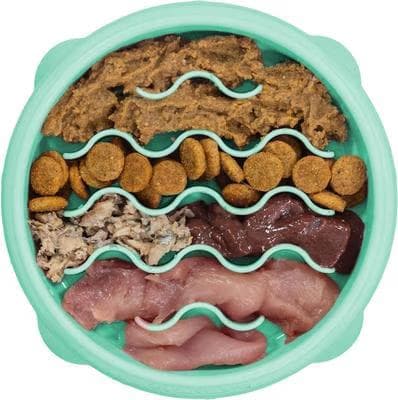
- For dogs that eat too quickly, the Outward Hound non-skid slow feeder bowl can be compared with other feeding formats using the dog's muzzle shape and measured meal size. Stop if the ridge design causes abrasion or frustration. The bowl changes eating format; it does not diagnose or treat a medical problem.
Use safe storage and traceability
Heat, moisture, pests, damaged packaging, and lost lot information can complicate an otherwise suitable food.
Follow label storage directions, keep the original bag inside a clean container when practical, and record lot and best-by information.
Discard food with abnormal odor, moisture, insects, or suspected contamination and contact appropriate professionals.
Separate allergy diagnosis from guessing
Itching, ear disease, vomiting, and diarrhea have many possible causes, and ingredient lists alone cannot diagnose food allergy.
Bring a complete intake history to the veterinarian and follow a controlled diagnostic plan if an elimination trial is recommended.
Random ingredient rotation can make the history harder to interpret and create nutritional gaps.
Review feeding frequency individually
Age, medication, training schedule, gastrointestinal tolerance, household logistics, and medical conditions can affect meal timing.
Divide the measured daily ration according to the veterinary plan and keep the schedule consistent enough to observe response.
Meal timing is not a substitute for urgent care when a dog has abdominal pain, retching, or collapse.
Compare daily cost, not bag price
A larger or cheaper bag can have a different calorie density, feeding amount, waste risk, and shipping pattern.
Calculate cost from the current price and measured daily amount, then include required toppers only if they are part of the advised ration.
Affordability matters, but it cannot rescue the wrong life stage or an unsuitable clinical diet.
Know when the diet is therapeutic
Kidney, liver, urinary, gastrointestinal, allergy, seizure, weight, and other medical plans can require a specific nutrient strategy.
Use the exact diet and monitoring schedule prescribed, and ask before substituting a retail formula with similar front-label words.
Therapeutic feeding belongs with the veterinary team and is not a breed-wide recommendation.
Review the scorecard at a fixed date
A decision framework works only when the household returns to the evidence instead of drifting by habit.
Set a two-to-four-week review date when clinically appropriate and bring the log to the veterinary team if concerns appear.
Do not wait for the calendar when the dog is deteriorating.
Border Collie temperament and household fit
A Border Collie dog breed label and the working history behind a Border Collie sheepdog help describe possible workload, but they do not calculate one dog's ration. Appetite, training-food use, body and muscle condition, recovery, and the household's activity pattern are more useful feeding evidence. Use the Border Collie breed guide for temperament and ordinary-weekday fit, then bring the measured workload back to this food framework.
Health screening, lifespan, and warning signs
A Border Collie lifespan estimate or published Border Collie average lifespan figure does not identify the right food for an individual dog. Disease, medication, dental comfort, appetite, weight change, and laboratory findings can all alter the nutrition plan. The Border Collie health and lifespan guide covers screening, baseline trends, and warning signs; this page limits itself to label evidence, portions, transitions, and when therapeutic feeding needs veterinary oversight.
Border Collie puppy price and responsible sourcing
Families comparing Border Collie puppies for sale or speaking with Border Collie breeders should ask what the puppy currently eats, obtain the exact label and schedule, and avoid abrupt changes during the move. Food cost belongs in the first-year budget, but price does not verify parent records or source quality. Use the Border Collie puppy guide for acquisition, contracts, parent evidence, and first-month planning while the puppy's veterinarian directs growth feeding.
Border Collie FAQs

How often to feed a Border Collie depends on age, the current diet, medical needs, training schedule, and the veterinarian's plan. Puppies commonly need their measured daily ration divided into more meals than healthy adults. Keep timing consistent enough to observe appetite and stool, count all training food, and adjust the total from body and muscle condition. A schedule is not emergency advice for vomiting, abdominal pain, unproductive retching, collapse, or a dog that appears ill.
For Border Collies, complete dog food and plain meat are not interchangeable. Meat alone is not a complete long-term diet because a dog needs appropriate amounts and relationships among amino acids, fatty acids, vitamins, minerals, and energy. A food with an appropriate nutritional adequacy statement is a safer starting point for most owners. A home-prepared plan can be appropriate when it is formulated for the individual by a qualified veterinary nutrition professional and followed accurately. Do not substitute an internet meat recipe for a complete growth or medical diet.
Border Collies do not all need high-protein food simply because the breed is active. Consider life stage, real workload, calorie density, total nutrient profile, digestibility, body and muscle condition, health, and veterinary advice. Protein percentage on the label is one number and cannot prove food quality or sport suitability. A serious working dog may need a different energy strategy from a weekend companion, but the decision remains individual.
The best dry dog food for a Border Collie is not one universal brand. A useful dry food starts with an adequacy statement that fits the dog's life stage, a calorie density that supports a measurable ration, and a manufacturer that can answer formulation and quality-control questions. Compare the current label, package size, storage needs, daily cost, and the dog's body and muscle condition over time. Kibble format alone does not make a formula appropriate.
The best food to feed a Border Collie is a complete diet that fits the dog's life stage and health, can be obtained and fed consistently, and maintains appropriate body and muscle condition. Evaluate the adequacy statement, calories, company capability, measured response, household handling needs, daily cost, and veterinary fit. Wet, dry, fresh, or a properly formulated home-prepared plan can each be reasonable in the right circumstances; the breed name does not choose the format.
Sources
- AAFCO selecting the right pet food: Species, life-stage, condition, adequacy statement, and feeding-direction basics.
- WSAVA selecting a pet food toolkit: Manufacturer expertise, quality control, research, and label questions.
- FDA non-hereditary DCM questions and answers: Current uncertainty around diet-associated DCM and the need to avoid simplistic grain-free claims.
- Merck Veterinary Manual nutritional requirements: Energy estimates are starting points and should be adjusted to body and muscle condition.
Prices, product labels, policy terms, test recommendations, availability, and medical guidance can change. Verify time-sensitive details with the current source, product label, breeder or rescue records, and the dog's veterinary team before making a decision.
BVMS, MRCVS
Dr. Pippa Elliott, BVMS, MRCVS, is a veterinarian with nearly 30 years of experience in companion animal practice. Dr. Elliott earned her Bachelor of Veterinary Medicine and Surgery from the University of Glasgow. She was also designated a Member of the Royal College of Veterinary Surgeons. Married with 2 grown-up kids, Dr. Elliott has a naughty Puggle named Poggle, 3 cats and a bearded dragon.
Sign up for expert-backed reviews and safety alerts all in one place.