Belgian Malinois Size: Height, Weight, and Growth Chart
Learn Belgian Malinois adult height and weight, see a cautious puppy growth chart, and measure your dog accurately at the withers before buying gear or food.
Petful is reader supported. As an affiliate of platforms like Amazon and Chewy, we may earn a commission when you buy through links on this page. There is no extra cost to you.
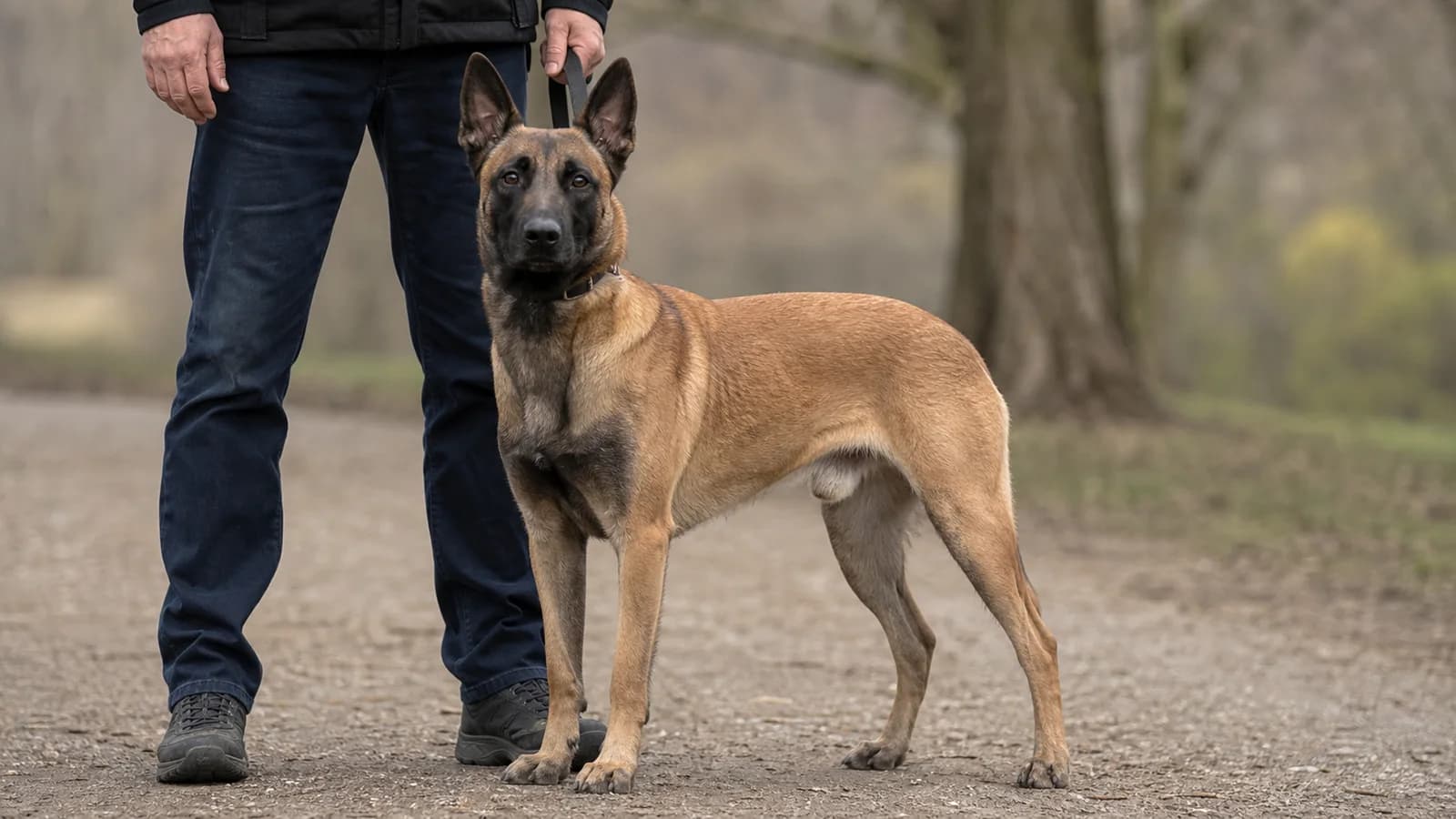
Belgian Malinois size is best described as medium, athletic, and square rather than bulky. Adult males are usually 24 to 26 inches tall at the withers and 60 to 80 pounds. Adult females are usually 22 to 24 inches and 40 to 60 pounds. Those ranges are a breed reference, not a target that every healthy dog must hit on the same schedule. For more, see Petful’s guide to Belgian Malinois mix.
That distinction matters most during puppy growth. Month-by-month charts found online are estimates, while adult height in the breed standard is the firmer benchmark. Genetics, sex, frame, diet, health, and body condition all affect the number on the scale. A useful growth guide therefore does three things: gives you cautious ranges, teaches you to measure consistently, and explains when a change is worth discussing with your veterinarian.

Sign up for expert-backed reviews and safety alerts all in one place.
Belgian Malinois adult size and weight
The concise summary from the American Belgian Malinois Club standard is straightforward: the male range is 24 to 26 inches at the withers, and the female range is 22 to 24 inches. The AKC's breed page pairs those heights with an adult weight range of 60 to 80 pounds for males and 40 to 60 pounds for females. One inch equals 2.54 centimeters, and one pound equals about 0.45 kilograms. This source boundary matters because an unofficial puppy estimate should not overwrite the official adult range.
The FCI Belgian Shepherd Dog standard treats the Malinois as a Belgian Shepherd variety and gives ideal average heights of about 62 centimeters for males and 58 centimeters for females. It lists approximate weights of 25 to 30 kilograms for males and 20 to 25 kilograms for females. Because registries use different frameworks and wording, identify the source before treating any single number as universal. Petful’s guide to Dutch Shepherd vs Belgian Malinois has the full breakdown.
- 1Adult male Belgian Malinois are commonly 24 to 26 inches and 60 to 80 pounds
- 2Adult female Belgian Malinois are commonly 22 to 24 inches and 40 to 60 pounds
- 3Height is measured at the withers, not the top of the head
- 4A steady individual growth curve and appropriate body condition matter more than matching one monthly estimate
Petful may earn a commission when you click through to Chewy, at no extra cost to you.
The American Belgian Malinois Club standard also describes a square dog. In an ideal outline, body length from the breastbone to the rump is approximately equal to height at the withers. That proportion explains why a Malinois can look tall and powerful without the mass of a heavier large breed.
A dog at either end of the adult weight range can be appropriately built. Weight alone does not tell you whether the dog is underweight or overweight. Muscle, frame, sex, and body condition change how the number should be interpreted. When you monitor your own dog, record height, weight, and a veterinarian-guided body condition assessment rather than comparing pounds in isolation.
Male vs female Belgian Malinois size
Male and female ranges overlap in everyday life, but adult males are generally taller and heavier. A 24-inch female and a 24-inch male can stand at the same height while differing in frame or weight. Likewise, a lean, athletic 60-pound male may be within the usual male range, while 60 pounds is the upper end of the common female range.
The standard asks for sex distinction without exaggeration. It does not describe males as bulky or females as delicate. Both should look balanced, agile, and capable of work. Conditioning can make one dog look more substantial than another without changing skeletal height.
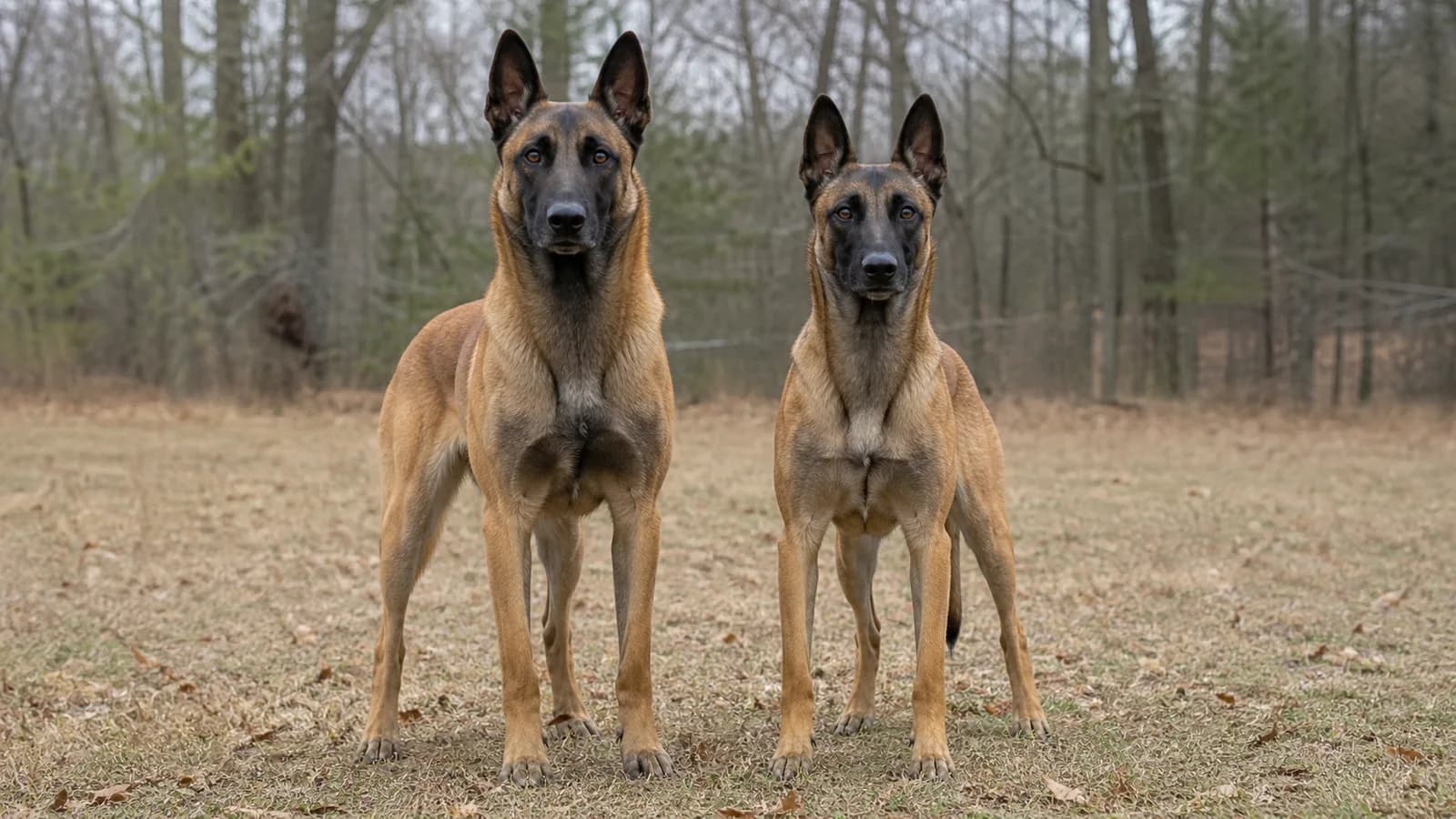
Use sex-specific ranges as orientation, then look at the individual:
- Measure height on level ground at the highest point of the shoulder blades.
- Weigh the dog under similar conditions each time.
- Note whether the dog has a light, moderate, or more substantial frame.
- Ask your veterinarian to show you how to assess ribs, waist, and abdominal tuck.
- Follow change over time instead of reacting to one isolated number.
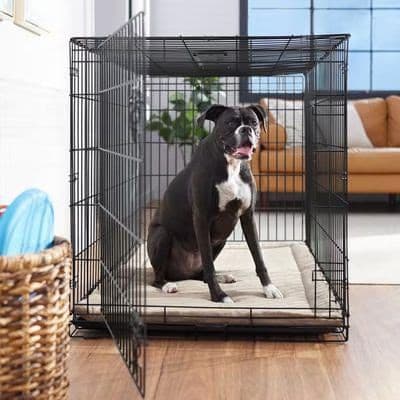
For home management, choose equipment from your dog's measurements rather than a breed label. The Frisco X-Large Heavy Duty Wire Dog Crate is one existing option for a large adult who needs that interior space, but many Malinois will fit a different size. Measure standing height and nose-to-rump length, then follow the manufacturer's sizing guidance.
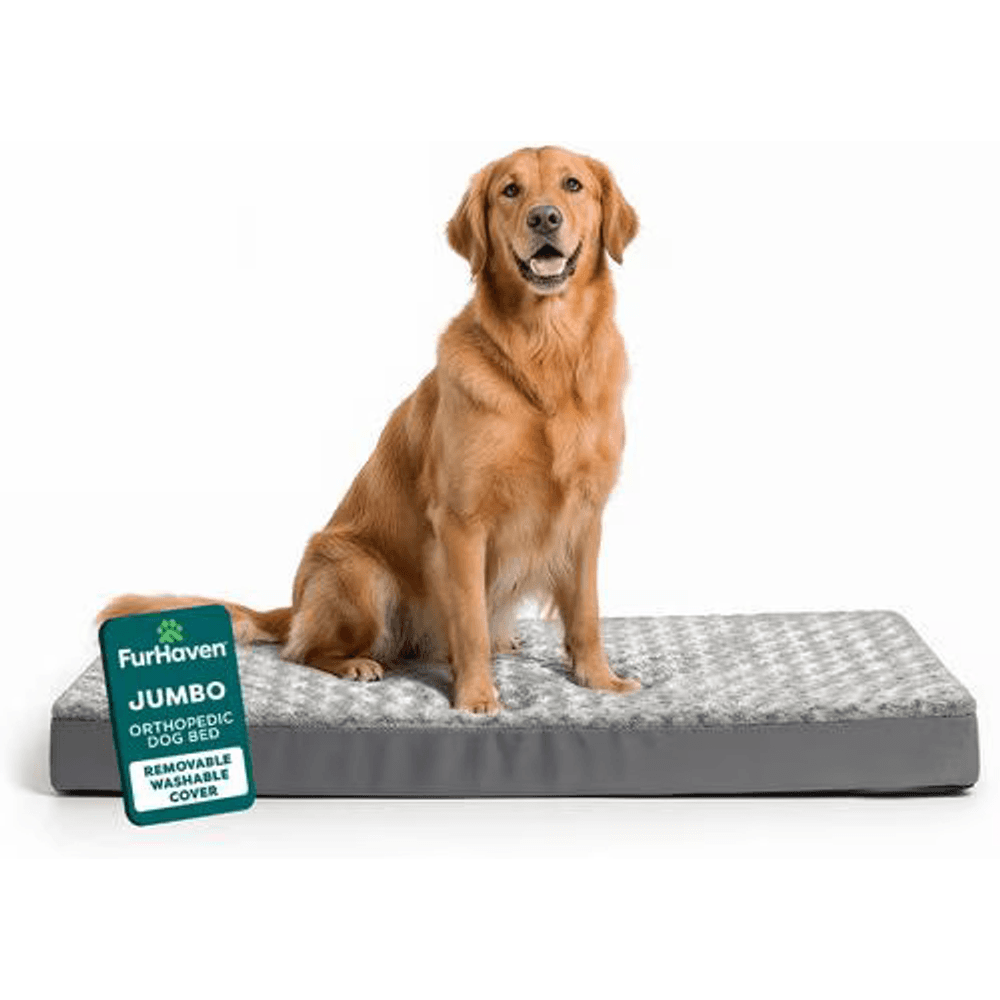
A plush orthopedic foam mattress that cushions aging joints and pressure points, giving a stiff or trembling senior dog warm, supportive rest.
Petful may earn a commission when you click through to Chewy, at no extra cost to you.
Is a Belgian Malinois a medium or large dog?
A Belgian Malinois is generally classified as a medium-sized dog, although a tall male near 26 inches and 80 pounds can feel large in a home or vehicle. The breed standard emphasizes balance and moderate bone rather than bulk. In practical context, plan for the reach, strength, speed, and space needs of an athletic working dog even if a chart labels the breed "medium."
Why gear labels are not measurements
That direct answer also explains why retail size labels are unreliable. One brand's medium harness can equal another brand's large. Measure chest girth, neck, back length, and standing height before buying gear. For crates and beds, use the individual dog's resting posture and full body length. For vehicles, leave room for the dog to stand, turn, and lie naturally.
For the reader decision, the practical method is to use "medium" as the broad breed category and the dog's actual measurements for space and equipment. That preserves useful context without letting a retail label substitute for fit.
Petful's main Belgian Malinois breed guide covers the breed beyond measurements, including the intensity and training commitment that matter far more than whether a chart calls the dog medium or large.
Belgian Malinois growth chart
A Belgian Malinois growth chart should be read as a broad estimate, not a diagnosis or a set of deadlines. Puppy weights vary within a litter, and males and females may separate more clearly as they mature. The most useful comparison is your puppy's current weight against its own previous weights, body condition, appetite, and veterinary examinations.
| Age range | Broad estimated weight | What owners commonly observe | Best measurement decision |
|---|---|---|---|
| 8 to 12 weeks | About 12 to 28 pounds | Rapid early growth with major litter-to-litter variation | Establish a veterinary baseline and weigh regularly |
| 3 to 5 months | About 22 to 45 pounds | Legs lengthen and puppy proportions change quickly | Track the individual trend, not a single internet target |
| 6 to 8 months | About 35 to 62 pounds | Height may increase faster than muscle and chest development | Recheck body condition as feeding and activity change |
| 9 to 12 months | About 42 to 75 pounds | Many dogs approach adult height while remaining adolescent in build | Compare with parent size and sex-specific adult ranges |
| 12 to 18 months | About 45 to 80 pounds | Height growth slows while weight and muscle may continue changing | Watch for a stable curve rather than pushing weight gain |
| 18 to 24 months | Usually within the adult sex range | Mature outline and conditioning become easier to assess | Use adult height, body condition, and veterinary guidance |
These bands are intentionally wide. A female from a lighter line can fall below a same-age male without either puppy being abnormal. A puppy can also move from one part of the band to another during a growth spurt. Treat the estimated weight as a prompt to observe and record, never as permission to increase food aggressively.
A practical method is to build a four-column log:
- Record the date and age in weeks.
- Record weight using the same scale when possible.
- Add height at the withers no more than monthly.
- Note appetite, stool quality, activity, and body condition.
That measured guidance gives your veterinarian owner context that a screenshot of a generic chart cannot. A clear trend can show whether growth is steady, flattening, or jumping. It can also reveal measurement error, such as weighing once after a meal and once after exercise.
Petful may earn a commission when you click through to Chewy, at no extra cost to you.
When Belgian Malinois stop growing
Many Belgian Malinois approach adult height around their first birthday, but their chest, muscle, and overall adult outline can continue developing into the second year. "Full grown" therefore depends on what you mean. Height may stabilize before adult weight and mature conditioning.
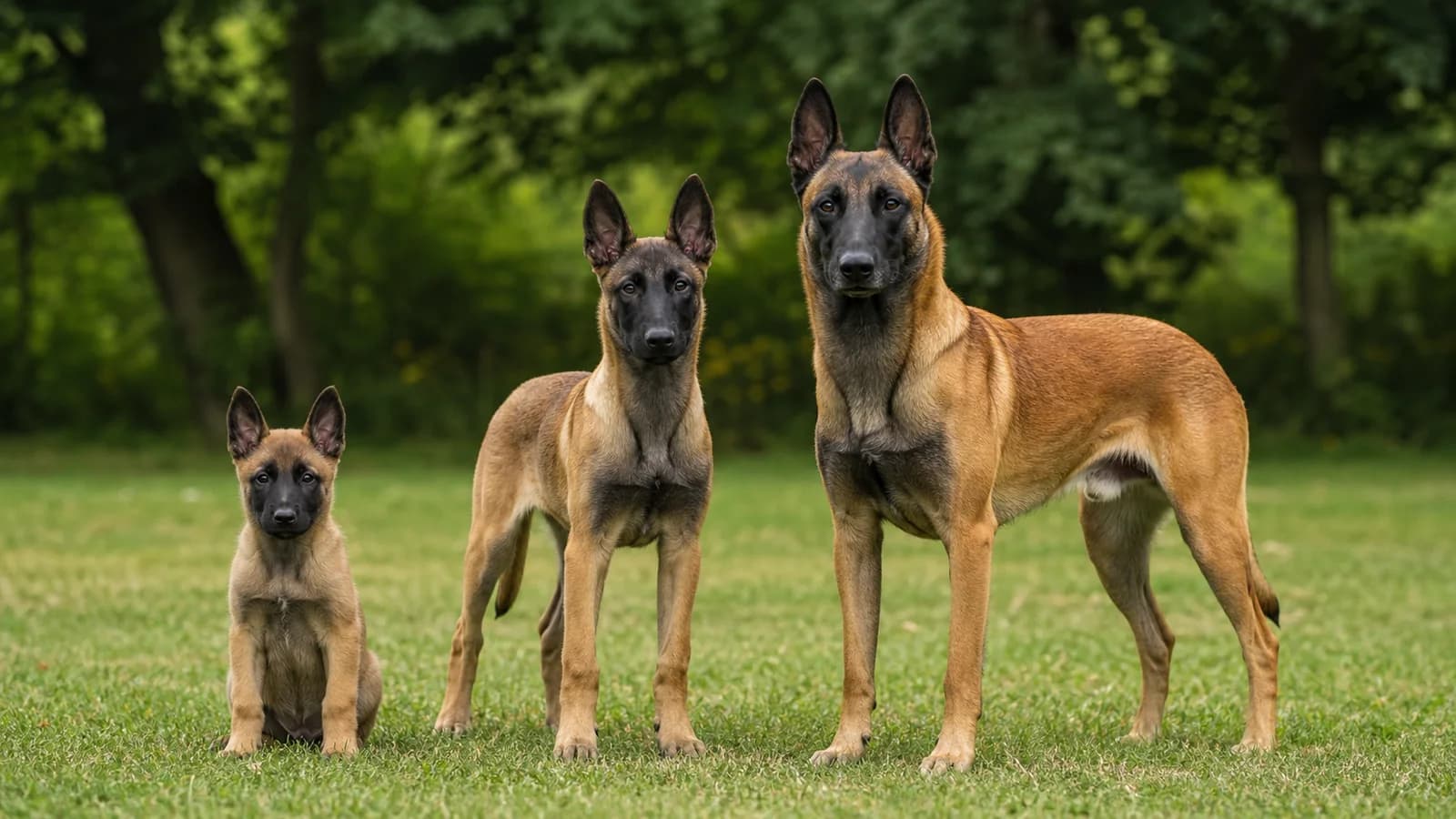
Do not try to accelerate growth so a young dog reaches an adult number sooner. Fast scale gain is not the same as sound development. Follow a complete food appropriate for the dog's life stage, use the feeding directions as a starting point, and adjust with veterinary guidance based on body condition and activity.
A FurHaven jumbo orthopedic dog bed offers a roomy resting surface for an adult who fits its dimensions, but "jumbo" is a product label, not a Belgian Malinois requirement. Measure your dog stretched out and curled up before choosing a bed.
Use a calm decision tree if growth seems unusual:
- First, repeat the measurement under the same conditions.
- Next, compare the trend with the dog's prior record, sex, and known parent size.
- Check whether appetite, energy, stool, coat, or body condition has changed.
- If the curve changes abruptly or other signs appear, contact your veterinarian.
- If the dog is simply smaller or larger but stable and well, ask at the next examination rather than diagnosing a disorder from a chart.
This clear boundary supports a responsible choice: take a real change seriously without treating normal individual variation as disease.
How to measure your Belgian Malinois
Height means the vertical distance from the floor to the withers, the highest point of the shoulder blades. It does not include the head or upright ears. Measuring to the ears can add several inches and produce a number that does not match a breed standard.
Repeat the measurement two or three times while the dog is relaxed, because a crouch, forward step, raised head, or sloping surface can shift the result. Record the date, age, height, and weight together instead of relying on memory. The value of that record is the trend: it lets you compare the same dog under the same method and notice when apparent growth is only a change in posture or equipment. For a puppy, monthly measurements are usually more informative than daily checks, which magnify normal variation and handling error.
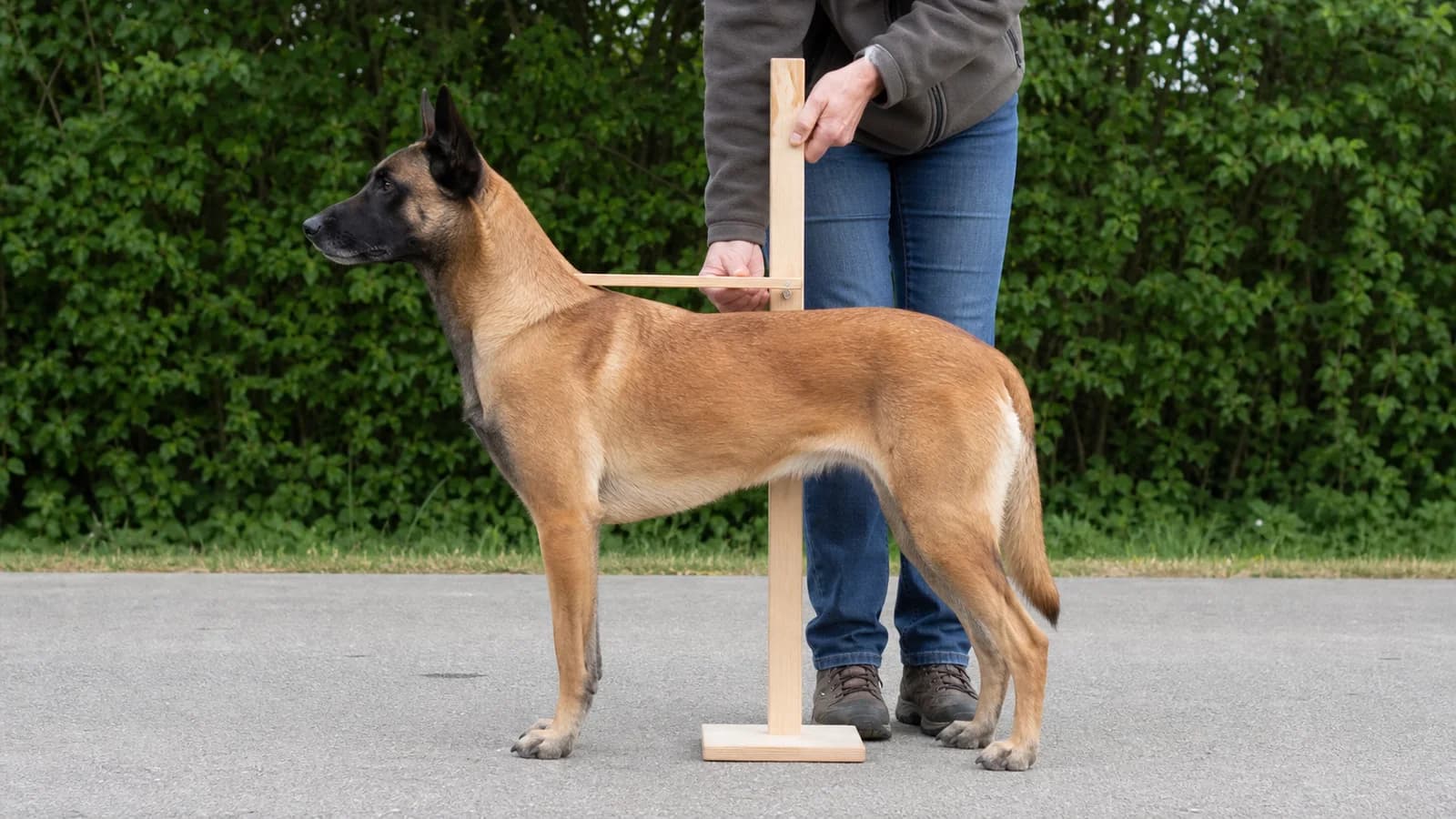
- Stand your Malinois squarely on level ground. Feel for the tops of the shoulder blades at the base of the neck, keep the measuring tool vertical, and read the height where a level line from the withers meets it. Bathroom-scale and wall-mark estimates are useful for trends, but repeat the method before treating a small difference as real.
Measuring height step by step
- Choose a hard, level surface beside a wall.
- Ask the dog to stand naturally with weight on all four feet.
- Keep the head in a neutral position.
- Locate the upper edge of the shoulder blades with your fingers.
- Place a level book or measuring arm across the withers.
- Mark where it meets the wall and measure vertically to the floor.
- Repeat once, then record the average if the readings differ slightly.

Multiple ridges and valleys slow eating, reduce gas and bloating, and turn mealtime into a fun puzzle. Non-skid base, dishwasher safe, 4-cup capacity.
Petful may earn a commission when you click through to Chewy, at no extra cost to you.
Weighing at home
If the dog is small enough and you can lift safely, weigh yourself, then weigh yourself holding the dog and subtract. For a larger Malinois, a veterinary or pet-store platform scale is easier and safer. Keep the same scale in your trend whenever possible because household scales can differ.
Weigh under comparable conditions, such as before breakfast on the same day of the week. Hydration, a recent meal, elimination, and equipment can shift the result. A one-pound change may be noise; a repeated directional change matters more.
Assessing shape as well as pounds
Look and feel. From above, an appropriately conditioned dog often has a visible waist behind the ribs. From the side, the abdomen usually tucks upward. You should be able to feel the ribs without pressing hard, but body condition cannot be assigned responsibly from one sentence or photograph.
Conditioning also changes silhouette. The Belgian Malinois exercise guide owns the detailed activity and containment discussion, including questions about jumping. Exercise can build muscle and improve fitness, but it does not increase adult skeletal height.
A Frisco dual-handle traffic leash can provide a closer handhold during controlled outings, but a leash is not a substitute for training or a secure containment plan.
Can a Belgian Malinois weigh 100 pounds?
A 100-pound Belgian Malinois is well above the common AKC adult weight ranges of 60 to 80 pounds for males and 40 to 60 pounds for females. That number does not prove the dog is not a Malinois, and it does not diagnose obesity. It does mean the weight deserves context: frame, measured height, body condition, ancestry, and an accurate scale reading.
What to do with an outlier measurement
Use a calm decision order. First, repeat the weight on a reliable scale and measure height at the withers. Second, compare the result with the dog's previous trend, sex, age, known parent size, and visible frame. Third, assess body condition by looking at the waist and feeling the ribs rather than comparing one photograph with an idealized dog. Finally, bring a sustained change or a number far outside the family pattern to the veterinarian with the record you collected. That sequence identifies measurement error and ordinary variation without dismissing a change that deserves individual assessment.
The same process applies at the smaller end. A healthy, fine-framed female may sit below an internet average while following a steady personal curve. Concern rises when size is paired with weight loss, poor appetite, persistent digestive signs, low energy, pain, or an abrupt flattening of a growing puppy's trend. The chart organizes questions; it cannot determine the cause.
When the number needs professional context
Begin by confirming the measurement. Then ask whether the dog is registered, has known mixed ancestry, or comes from unusually large parents. Look at the dog's waist, rib cover, and overall mobility with veterinary guidance. A very muscular working dog can weigh differently from a lightly conditioned companion, but muscle should not be used as a blanket explanation for every high number.
Contact your veterinarian if weight rose quickly, the dog has trouble moving or breathing, appetite or thirst changed, or you are unsure about body condition. The goal is not to force every dog into a chart. It is to notice when an outlying number and the rest of the dog's condition warrant a professional assessment.
Belgian Malinois puppy size, price, and adoption questions
Size searches often lead into puppy buying questions, but this article does not duplicate that topic. Petful's Belgian Malinois puppy guide covers finding and raising a puppy, while Petful's dedicated breed material addresses the much broader ownership decision.
When evaluating a puppy, parent size is more informative than a seller's promise that the dog will be "oversized." Ask for measured adult heights and weights for both parents, documented health testing, and a growth record for the litter. Avoid paying a premium for an extreme projected size. The breed is valued for balance and agility, not maximum mass.
Family suitability is a separate decision from dimensions. A dog that physically fits in a home may still be a poor match for the household's experience, time, and training plan. Petful's guide to whether Belgian Malinois are good family dogs owns that question in depth.
Feeding, gear, and body condition as size changes
Growth affects fit, but it should not turn every month into a shopping cycle. Adjustable equipment can span several stages if it remains secure and does not rub. Check collars and harnesses weekly during rapid growth. A dog whose measurements fall within the listed range may use a PetSafe Easy Walk medium/large harness, while the GoTags medium personalized collar fits a different measurement set. Neither product label overrides a real girth or neck measurement. Toy sizing follows the same rule: the large KONG Classic fits many adults, but the individual dog's mouth size and chewing style determine the safe choice. Replace a crate when the dog can no longer stand naturally, turn around, and lie down comfortably.
Food quantity should follow the individual dog, not a fixed breed-size assumption. The same-release Petful guide to the best dog food for Belgian Malinois explains life-stage and activity considerations without treating one formula as correct for every dog.
An Outward Hound four-cup slow feeder may help a dog who rushes meals eat at a slower pace, provided the bowl's capacity and shape fit the portion and muzzle. It does not determine the correct portion and should not be used to self-treat digestive signs.
Keep fit decisions tied to measurements
- Crate: standing height and nose-to-rump length, plus room to turn and lie down.
- Bed: the dog's longest comfortable sleeping position.
- Collar: neck circumference with a safe, secure fit.
- Harness: chest girth and the manufacturer's measurement points.
- Food bowl: meal volume, muzzle access, and stable footing.
- Vehicle space: room to stand, turn, and settle in the secured travel setup.
Frequently asked questions about Belgian Malinois size
Crate size should come from the individual dog's standing height and nose-to-rump length, not the breed name alone. The dog should be able to stand without crouching, turn around, and lie in a natural position. Many adult Malinois need a large or extra-large model depending on the manufacturer's dimensions. For a puppy, use a correctly placed divider rather than giving an unsafe amount of unused space.
A small adult can reflect genetic variation, sex, parent size, frame, and body condition rather than a problem. First confirm your measurement and review the dog's growth trend rather than one number. If the dog is losing weight, has poor appetite, digestive changes, low energy, or an abrupt curve change, ask your veterinarian to assess the individual instead of diagnosing from a chart.
A puppy chart is a broad estimate, not a guaranteed target. Individual growth can happen in spurts, and published month-by-month numbers vary because the source population and methods differ. Use a chart to organize observations, then prioritize your puppy's repeated weights, body condition, parent size, veterinary examinations, and eventual comparison with the official adult height range.
The common American adult ranges are 24 to 26 inches and 60 to 80 pounds for males, and 22 to 24 inches and 40 to 60 pounds for females. Those figures provide orientation, not a target every dog must hit. Frame, sex, ancestry, body condition, and measurement method explain some individual variation.
Many approach adult height around the first birthday, while the chest, muscle, and mature outline may continue developing into the second year. Growth rate varies by individual. Follow repeated measurements and body condition instead of trying to accelerate a puppy toward an adult number, and ask a veterinarian about an abrupt change in the trend.
The breed is generally classified as medium-sized, although a tall male near the upper height and weight range can feel large in a home or vehicle. Practical planning should account for reach, speed, strength, crate dimensions, and secured travel space. A category label is less useful than the measured dog when buying equipment.
The official ranges are sex-specific, with males typically taller and heavier than females, but they overlap in real life. A substantial female may outweigh a light-framed male, and conditioning changes silhouette. Use the correct sex range for orientation, then assess the individual dog's height, weight, frame, and body condition.
It is possible for an individual to reach that number, but 100 pounds is well above the common American adult ranges. Confirm the scale reading, measure height, review ancestry and parent size, and assess body condition with a veterinarian. The number alone neither proves mixed ancestry nor diagnoses obesity, but it deserves context.
Measure height on level ground at the highest point of the shoulder blades. For weight, use a consistent platform scale or subtract your own weight from a safe hold when the dog is small enough to lift. Repeat under similar conditions and record the trend. A veterinary scale is safer and more practical for many adults.
The most accurate Belgian Malinois size answer combines a standard with a trend. Adult male and female ranges give you orientation. Consistent measurement shows what your dog is actually doing. Body condition and veterinary context show whether that growth is appropriate for the individual.
That approach is less dramatic than predicting an exact adult weight from one puppy photo, but it is far more useful. Measure at the withers, record weight under repeatable conditions, and let steady evidence guide decisions about food, gear, and veterinary care.

Coreen Saito is a pet writer and longtime shelter volunteer with more than a decade in animal rescue. She covers cat behavior, breed care, and the small, ordinary science of sharing a life with companion animals, with a particular focus on honest takes about the products and decisions that actually matter. At home in Arizona, she's outranked by Mac (a dog with the loudest opinion in the house), Rebel (a cat who governs by quiet authority), and Meri (an orange tabby who runs the late shift and the laundry basket). She writes about all three, plus the rescues that keep coming through her life, at LifeWithMinty.com.
Sign up for expert-backed reviews and safety alerts all in one place.