Alaskan Klee Kai Price: Puppy and Lifetime Ownership Costs
Compare dated Alaskan Klee Kai puppy price examples with adoption, setup, transport and continuing care costs, then build a first-year and lifetime budget using your own quotes and assumptions.

BVMS, MRCVS

Petful is reader supported. As an affiliate of platforms like Amazon and Chewy, we may earn a commission when you buy through links on this page. There is no extra cost to you.
An Alaskan Klee Kai price is only useful when you know what it includes. A puppy quote, travel arrangements, equipment and the first year of care are separate expenses. The cheapest advertised dog may not be the least expensive choice for your household, and a high price does not establish good breeding practices.
Start with a written acquisition quote, then build a budget around your location, schedule and the particular dog. That approach also works for adoption, an adult placement or a retired breeding dog, where the initial fee and existing training may differ substantially from a puppy purchase.

Sign up for expert-backed reviews and safety alerts all in one place.
What an Alaskan Klee Kai puppy costs
For a dated example, Kika’s Klee Kai’s pricing page, captured October 5, 2026, listed $2,500–$3,500 for pet puppies and $3,500–$5,500 or more for selections it described as premium. These are one breeder’s advertised ranges, not a measured average for the USA. Ask for the actual puppy’s price and contract before treating either range as your budget.
The same breeder’s general cost article gave a broader $2,000–$5,000 estimate. The difference illustrates why a general article cannot replace a current individual quote. Neither page establishes what another breeder, rescue or country will charge.
| Budget component | First-year entry | Later-year entry | Evidence to collect |
|---|---|---|---|
| Purchase or adoption | Actual agreed fee | Usually none | Written contract and receipt |
| Collection and transport | Travel, carrier and any documented transport fee | Travel as needed | Route-specific quotes |
| One-time setup | Equipment you genuinely need | Replacements and size changes | Measured fit and current item prices |
| Recurring annual costs | Food, routine care and regular supplies | Update each year | Local quotes and actual usage |
| Optional services | Classes, walking, boarding or grooming | Depends on your schedule | Frequency multiplied by quoted rate |
| Emergency provision | Savings contribution or quoted coverage | Maintain and review | Accessible funds and policy terms |
A toy or miniature Alaskan Klee Kai price needs the same scrutiny as a standard puppy’s price. A smaller predicted adult size does not tell you what screening, socialization or support was provided. It also cannot guarantee the puppy’s final height. Ask whether a size estimate affects the agreement and what happens if the adult dog grows differently.
For initial setup, a FurHaven Velvet Waves sofa bed in Large is an option only if its usable sleeping area fits the dog. Price the size you actually need and check cover-care instructions. An orthopedic product name is not a reason to add a medical benefit to your budget calculation.

Removable-cover sofa bed. Check usable sleeping space and entry height against your dog’s posture and mobility; no medical or calming outcome promised.
Petful may earn a commission when you click through to Chewy, at no extra cost to you.
- Record the currency and the date the quote expires.
- Separate a reservation deposit from the total purchase price.
- Ask whether taxes, registration, identification and transport are included.
- Identify refundable and nonrefundable amounts before paying.
- Keep optional equipment out of the essential first-day total.
For a Philippines price or another international purchase, converting a US figure is only a starting calculation. The seller’s fee, collection arrangements and destination requirements can change the total. Obtain written costs for the actual route before committing; this guide does not provide a verified Philippine market average or assume a particular dog can travel on a particular date.
Comparing breeders, adoption, and what fees include

Compare two sellers using the same questions, rather than comparing only the numbers at the top of their listings. An Alaskan Klee Kai puppy for sale should have an identifiable source, an understandable agreement and a clear explanation of what has already been done. A search result or attractive photograph does not verify those things. Confirm availability and the individual dog directly with the identified seller. If an advertisement says “mini Husky,” clarify whether it means an Alaskan Klee Kai, another breed or a cross before comparing quotes.
Ask to see records linked to the parent dogs and the puppy. The Alaskan Klee Kai Club of America’s breed information identifies screening that includes thyroid, patella, eye and cardiac evaluation, plus Factor VII testing. A statement that the puppy has been checked by a veterinarian is different from documented screening of the breeding dogs.
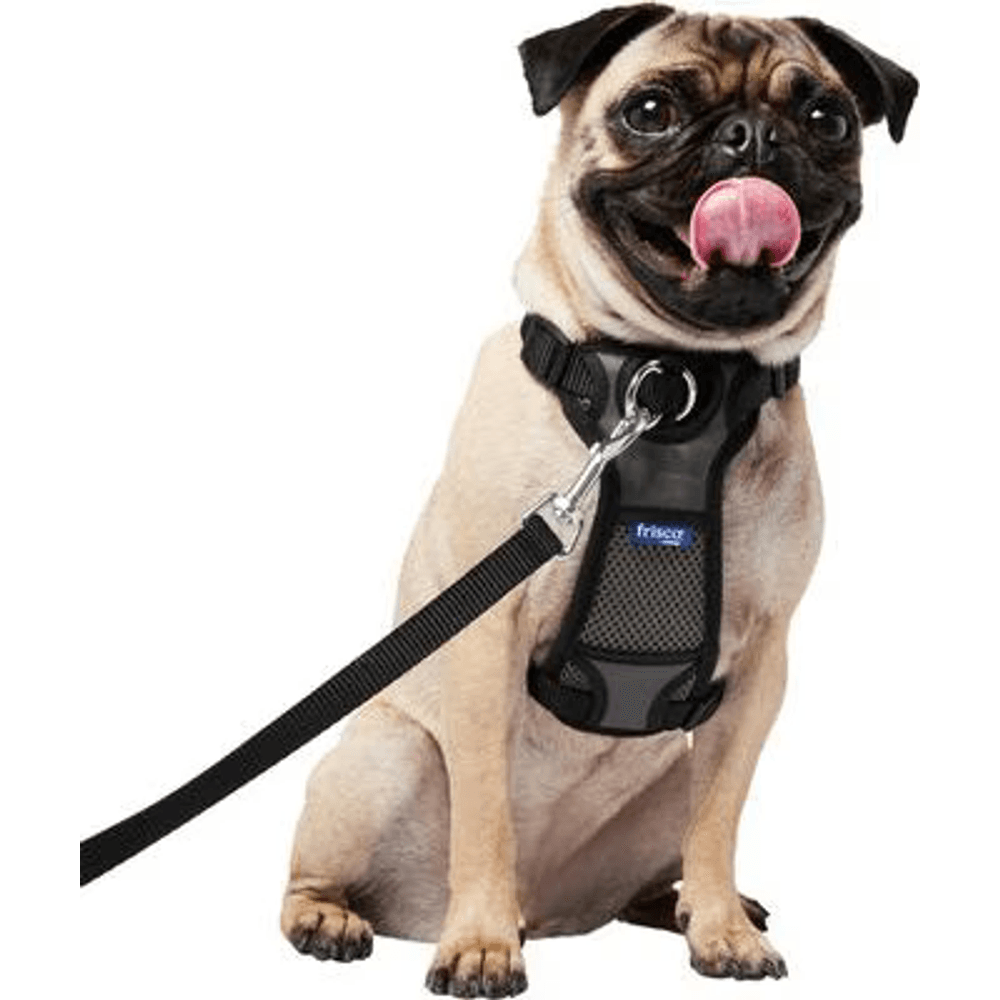
Check this Small harness against actual measurements and the current size chart. Adjust and test indoors; no-pull wording is not an escape-prevention guarantee.
Petful may earn a commission when you click through to Chewy, at no extra cost to you.
- Request the parents’ registered identities and relevant screening results.
- Ask who raised the litter and where the puppies live each day.
- Discuss handling, household sounds and introductions already experienced.
- Read the return or rehoming provision before sending a deposit.
- Ask how the breeder helps after pickup and who answers questions.
- Confirm which puppy records, food instructions and identification details accompany the dog.
Petful’s guide to recognizing puppy mills and questionable sellers provides additional source-checking context. A seller’s willingness to answer detailed questions matters more than polished marketing. Keep copies of the original listing and agreement so later changes are visible.
A Frisco padded harness is one setup option if its listed measurements fit the individual dog. Check adjustment, comfort and security indoors before the first walk. Do not assume the Small label is correct for every Klee Kai. The dedicated Alaskan Klee Kai size guide explains the categories and growth uncertainty.
Compare the total collection cost
Kika’s pricing page states that buyers collect their puppies rather than having them shipped. For that example, the travel budget belongs to the buyer. Calculate fuel or airfare, accommodation if needed, time away from work and the carrier or restraint required for the journey. Obtain confirmation before assuming any transport method is available.
For a seller offering delivery, ask who physically transports the puppy and which charges are included. A low advertised puppy price can lose its apparent advantage after a long journey. Conversely, a nearby dog with a higher initial fee may have a lower collection cost. Neither situation proves that one source is responsible.
Read the reservation terms
Before reserving a puppy, read what happens if the planned litter does not produce a suitable match. A deposit might apply to a particular dog, a place on a waiting list or a future litter. Those are different commitments. Ask whether you can decline a proposed puppy, whether the deposit transfers and what deadline applies to collecting any refund the agreement permits.
Keep the payment schedule beside the travel plan. Booking a nonrefundable flight before a collection date is confirmed can create an avoidable expense. If the puppy's readiness or the breeder's schedule changes, establish who contacts whom and which arrangements can be changed. An answer in writing is easier to compare with the final agreement than a reassuring verbal promise.
- 1Compare the purchase agreement and collection cost before paying a deposit.
- 2Separate one-time setup from recurring annual costs.
- 3Documents and continuing support matter; price alone does not establish quality.
Search by source, then by location or appearance
People searching for breeders in Minnesota, Washington, Massachusetts or elsewhere need current source verification, not an old directory copied into a price guide. Check the breed club’s current resources, contact the actual breeder and establish whether a litter or adult placement exists. A nearby listing is not proof that the dog is nearby, and a named kennel appearing in search results is not an endorsement.
The same method applies to breeders in Canada, Europe, New Zealand or South Africa. Confirm the organization and individual handling the transaction, the dog’s location and the full collection arrangement. A state, province or country in a listing cannot answer whether the dog is a suitable match or whether the seller’s records are complete.
Understand size and appearance pricing
Avoid paying an unexplained premium for blue eyes, a red-and-white coat or a label such as “teacup.” Ask what the quoted price reflects in that specific agreement. The United Kennel Club standard recognizes toy, miniature and standard height categories; “teacup” is not an additional official category in that standard.
An advertisement for an Alaskan Klee Kai mix, including a Pomeranian cross, is a different proposition from a documented purebred puppy. Establish what ancestry is actually known. A small Husky-like face, coat color or seller’s description cannot verify pedigree, and the price of a purebred puppy does not provide a reliable benchmark for an unspecified cross.

Slicker for gentle coat care if its pins and size suit your dog. Use light pressure; stop if it pulls or causes discomfort.
Petful may earn a commission when you click through to Chewy, at no extra cost to you.
Adoption fees and continuing care costs
Adoption changes the acquisition line in your budget, but it does not remove the continuing costs of ownership. An adult dog may arrive with known measurements, established preferences and some equipment. Another may need substantial transition support. Request the individual dog’s records and care history instead of assuming that every rescue placement includes the same services. A search for a free or cheap Klee Kai does not establish that a suitable dog is available. Contact the named shelter or rescue about its current process, records and fees. Even a no-fee transfer leaves routine care, equipment and possible urgent costs to budget for; ask about known needs before accepting the placement.
Use a breed club’s current rescue contacts and established adoption organizations to investigate availability. Petful’s pet adoption search offers another starting point. Contact the organization directly to confirm that an Alaskan Klee Kai listing is active and to understand how the identification was established.
- Ask for the adoption fee and a list of included services.
- Discuss known behavior around people, dogs and other animals.
- Find out what ongoing care or follow-up has already been recommended.
- Clarify transport, trial placement and return arrangements.
- Ask which familiar supplies or feeding instructions go home with the dog.
A search for a toy Alaskan Klee Kai for adoption or a rescue puppy may require patience. Do not assume a national rescue has a suitable dog available locally. Searches for Los Angeles, New Jersey, Washington or Massachusetts can lead to out-of-area dogs, old listings or general breed descriptions; verify the location and status before planning a visit.
Retired breeding dogs and other adult placements also deserve individual questions. Ask why the dog is being placed, what home experience it has and what support is offered. A lower acquisition fee can leave more room for care, but it is not a reason to accept a dog whose needs your household cannot meet.
The first year and lifetime ownership budget
An aumuca slicker brush is an option to assess for gentle coat maintenance, alongside an appropriate comb and the dog’s tolerance for handling. Buying several near-identical tools does not make the coat easier to manage. Start with a useful routine, then add equipment only when it solves a specific problem.
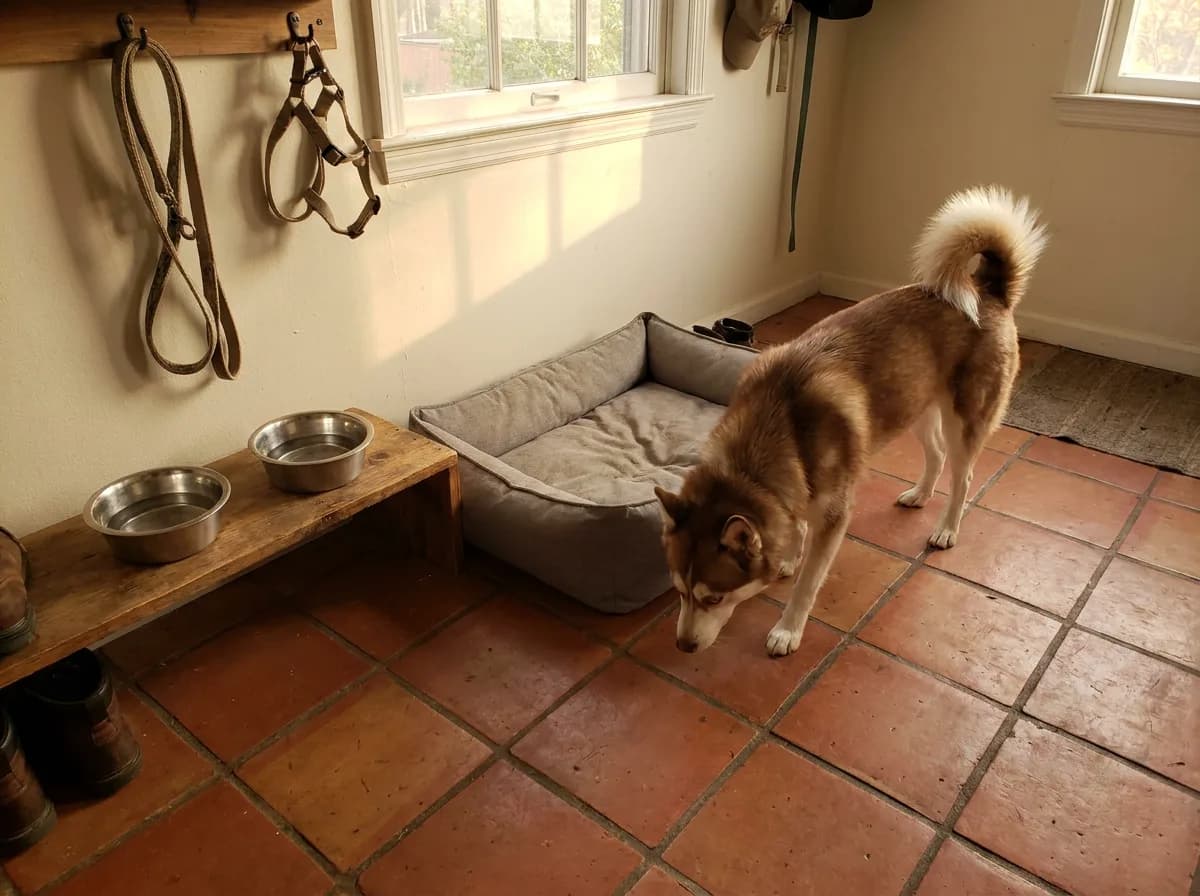
Build the first year from real line items. Add the purchase or adoption fee, transport and initial equipment, then add twelve months of regular costs. Include a separate line for anything due only once during that year. If a service is already included in the placement fee, do not count it a second time without checking whether further appointments are needed.

Small training rewards when ingredients suit your dog. Divide into appropriate pieces and count them in daily food intake.
Petful may earn a commission when you click through to Chewy, at no extra cost to you.
For everyday supplies, use actual consumption and replacement intervals. A large bag of treats is a purchase today, but not necessarily a monthly expense. Pet Botanics Training Reward treats are one option to price for training; choose rewards that suit the dog and account for the dog’s daily treat allowance.
Calculate paid services separately because they can dominate a budget even for a small dog. Multiply a walker’s quoted visit rate by your anticipated visits, and boarding charges by your planned nights away. Add class fees according to the actual course. A household with someone home most days will have different expenses from one relying on regular paid support.
- Mark the date each payment falls due, including the remaining purchase balance.
- Separate money already spent on deposits from money still available for setup.
- Put annual bills into the calendar even if you save toward them monthly.
- Leave room for an early equipment change if the first purchase does not fit.
An annual total can look comfortable while the first month is difficult. Several expenses may arrive together before you have established a routine: collection, remaining purchase balance, equipment and the first scheduled appointments. Check that timing before agreeing to a pickup date. Spreading an annual figure over twelve months is useful for saving, but it does not mean providers will bill you in twelve equal installments.
Use a planning horizon without predicting a lifespan
A lifetime total is a scenario, not a bill you can forecast precisely. For example, assume a household has a $3,000 acquisition fee, $500 transport, $500 initial setup and $2,000 in recurring annual costs. Over an illustrative 15-year planning horizon, the arithmetic is $34,000 before inflation, major unexpected care and additional one-off purchases. Those round figures are calculation inputs, not observed breed averages or recommended spending levels.
The equation is acquisition plus transport plus setup plus the number of years multiplied by annual recurring costs. Replace every input with your own quotes. If a service occurs only during puppyhood, keep it outside the annual figure; multiplying a one-time class by 15 would distort the result. If you adopt an older dog, use a remaining-care scenario suited to that decision rather than treating its full age as years you will pay for.
- Run a base case using current routine expenses.
- Add a second case with more paid walking or boarding.
- Check how a higher annual care figure changes the result.
- Keep unexpected expenses separate instead of hiding them inside an unexplained average.
- Review the budget after several months of actual ownership.
Discuss routine veterinary costs with the practice you would use. For insurance, compare a quoted policy’s coverage, exclusions, deductible, reimbursement terms and renewal costs. Request an individual quote, but remember that a premium alone does not describe the protection purchased or guarantee savings. Check the actual policy before relying on it in the budget.
Temperament and ownership commitments
Time is part of affordability. A companion that needs gradual training, secure exercise and thoughtful introductions may require changes to your working day. The breed club describes Alaskan Klee Kai as closely attached to family and often reserved with unfamiliar people. Quiet alone-time practice and a realistic care arrangement matter more than assuming a small dog can fit any schedule.
Barking, escape attempts or difficulty being left alone can create practical costs, including training support or changed walking arrangements. Reserved behavior is not automatically aggression, and sociability varies between individuals. Ask the source about the particular dog’s responses and seek qualified help for concerning behavior rather than budgeting around a breed stereotype.
The Alaskan Klee Kai breed guide covers temperament, family fit, training, exercise and lifespan in greater depth. Use it before committing to the purchase. A manageable puppy fee does not compensate for a household routine that cannot provide daily activity, company and secure care over the years ahead.
Size categories and equipment fit
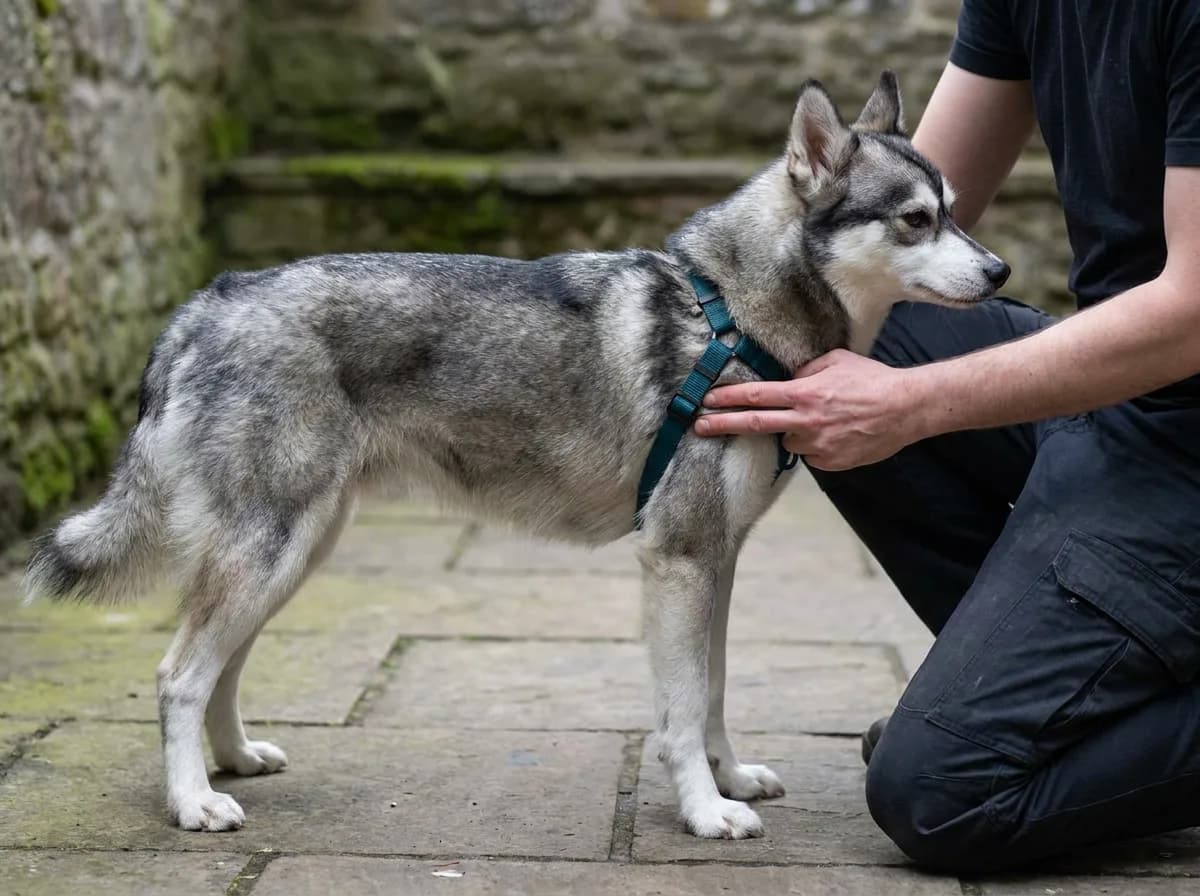
Choose equipment from current measurements rather than the word “toy,” “miniature” or “standard.” The UKC categories use adult height at the withers, while a harness depends on the measurements in its own sizing guide. A puppy can outgrow equipment before reaching its final height, so leave room in the budget for replacement rather than buying everything for an assumed adult size. The Alaskan Klee Kai size guide gives the height-category boundaries and measurement guidance. For a crate, compare the dog’s measurements with usable interior space before paying for a predicted adult size.
Coat care and grooming expenses
The double coat creates a recurring time commitment even if you do most grooming at home. The breed club recommends regular brushing and combing and describes heavier seasonal undercoat shedding. Budget for suitable tools, replacements and any professional service you expect to use; ask the groomer what a quoted appointment includes.
Shedding also affects cleanup time and household preferences. Do not buy on the assumption that a small northern breed will be a low-shedding or allergy-safe dog. Our guide to Alaskan Klee Kai shedding and coat care covers the grooming decision separately, helping you plan the effort as well as the expense.
Questions about alaskan klee kai price
Specific breeder costs and demand can influence an asking price, but the seller should explain what the fee includes. Screening, puppy raising, transport arrangements and continuing support are separate things to verify. Price does not prove ethical care, and a higher quote should not replace careful review of records and the agreement.
As one dated example, Kika’s Klee Kai’s pricing page captured October 5, 2026 listed $2,500–$3,500 for pet puppies and $3,500–$5,500 or more for selections described as premium. Those are one breeder’s advertised ranges, not a US average. Its general article gave a broader estimate, so obtain an individual written quote and add collection travel and setup before deciding your budget.
They are a relatively uncommon breed, but an accurate current population count is needed to quantify rarity. Small population context does not establish the fair price of an individual puppy. Ask why a seller charges a premium and judge the dog, records and placement agreement on their own merits rather than treating a rarity claim as evidence of quality.
BVMS, MRCVS
Dr. Pippa Elliott, BVMS, MRCVS, is a veterinarian with nearly 30 years of experience in companion animal practice. Dr. Elliott earned her Bachelor of Veterinary Medicine and Surgery from the University of Glasgow. She was also designated a Member of the Royal College of Veterinary Surgeons. Married with 2 grown-up kids, Dr. Elliott has a naughty Puggle named Poggle, 3 cats and a bearded dragon.
Sign up for expert-backed reviews and safety alerts all in one place.