The Pixie-Bob Cat: A Wild Bobcat Look in a Fully Domestic Pet
The pixie-bob cat looks like a small bobcat but is a fully domestic breed with no wild DNA. Here is the truth behind the legend, plus the breed's size, dog-like temperament, grooming needs, health, cost, and how to find a reputable kitten.
Petful is reader supported. As an affiliate of platforms like Amazon and Chewy, we may earn a commission when you buy through links on this page. There is no extra cost to you.
The International Cat Association (TICA) recognizes the pixie-bob cat as the only breed whose standard accepts polydactyl paws, allowing up to 7 toes on a single foot. That one fact captures why this cat turns heads: it looks like a small bobcat that wandered out of the Pacific Northwest woods, yet it is a 100 percent domestic house cat that will follow you room to room like a dog. The "pixie bob cat" spelling shows up everywhere online, but whichever way you write it, this is one of the most misunderstood pedigreed cats in America. Below, we separate the wild-looking truth from the wild-blooded legend.
- 1The pixie-bob is a fully domestic breed, not a bobcat hybrid, and DNA testing found no wild bobcat genes.
- 2It was created by Carol Ann Brewer in Washington state in the mid-1980s from spotted, short-tailed barn cats.
- 3Expect a heavy-boned cat of roughly 8 to 17 pounds with a bobbed tail, lynx-tipped ears, a hooded brow, and often extra toes.
- 4Temperament is famously dog-like: loyal, leash-trainable, fetch-playing, and bonded to its people for a 13 to 16 year lifespan.

Sign up for expert-backed reviews and safety alerts all in one place.
Is the Pixie-Bob Cat Real? Debunking the Bobcat Hybrid Legend
Yes, the pixie-bob cat is very real, and it has one of the more remarkable origin stories in the cat fancy. The confusion is understandable. The breed was deliberately developed to resemble the North American bobcat, and its founder originally believed that wild bobcat blood was part of the mix. For years the breed carried the romance of a backyard cat crossed with a wild predator.
The genetics tell a different story. DNA testing, reportedly conducted in the mid-1990s, failed to detect any bobcat marker genes in the breed. Every registry that recognizes the pixie-bob, including TICA, classifies it as a fully domestic cat. The wild look is the product of careful selective breeding from ordinary domestic cats that happened to carry spotted coats, short tails, and heavy boning, not a literal cross with a wild animal.
This matters for more than trivia. A genuine bobcat hybrid would be a wild animal subject to exotic-pet laws in many states, would not be a safe or legal house pet in most jurisdictions, and would behave nothing like the affectionate breed you can actually bring home. The pixie-bob gives you the bobcat aesthetic with none of the wildcat reality.
- Despite the breed name and its wild appearance, no reputable pixie-bob carries wild bobcat DNA, and any breeder claiming otherwise is selling a legend, not a fact.
Origin: Carol Ann Brewer and the Cats of Washington State
The pixie-bob traces to breeder Carol Ann Brewer, who lived near Mount Baker in Washington state. In the spring of 1985 she acquired a distinctive male cat with a spotted tabby coat, a naturally short tail, and polydactyl paws. In January 1986 she took in a second large male, a 17-pound cat named Keba that was rumored locally to have been sired by a bobcat.
In April 1986, Keba bred with a neighbor's black spotted tabby female, and the resulting litter included a uniquely wild-looking female kitten that Brewer named Pixie. Pixie became the foundation cat of an entire breeding program, and the breed took her name plus "bob" for the bobbed tail. From a handful of rugged barn cats in the Cascades, a recognized pedigree was born.
Brewer worked to standardize the look and behavior over the following years, gathering similar spotted, short-tailed cats from the region to build genetic diversity. The goal was always the same: capture the appearance of the wild Coastal Red Bobcat in a stable, gentle, fully domestic companion.
- The breed is named for Pixie, the single foundation female kitten born in 1986, combined with the short bobbed tail that defines the look.
Breed Recognition Timeline
The pixie-bob climbed the registry ladder steadily through the 1990s. TICA accepted it into the Exhibition category in 1993, promoted it to New Breed and Color status in 1996, and granted it full Championship status in 1998. The American Cat Fanciers Association (ACFA) and the Canadian Cat Association also recognize the breed.
It is worth noting that the Cat Fanciers Association (CFA), the largest registry in the United States, does not currently grant the pixie-bob championship status. That is common for newer, regionally developed breeds and says nothing about the cat's quality as a pet. For buyers, the practical takeaway is to work with a breeder registered through TICA or ACFA so the pedigree and breed standard are verifiable.
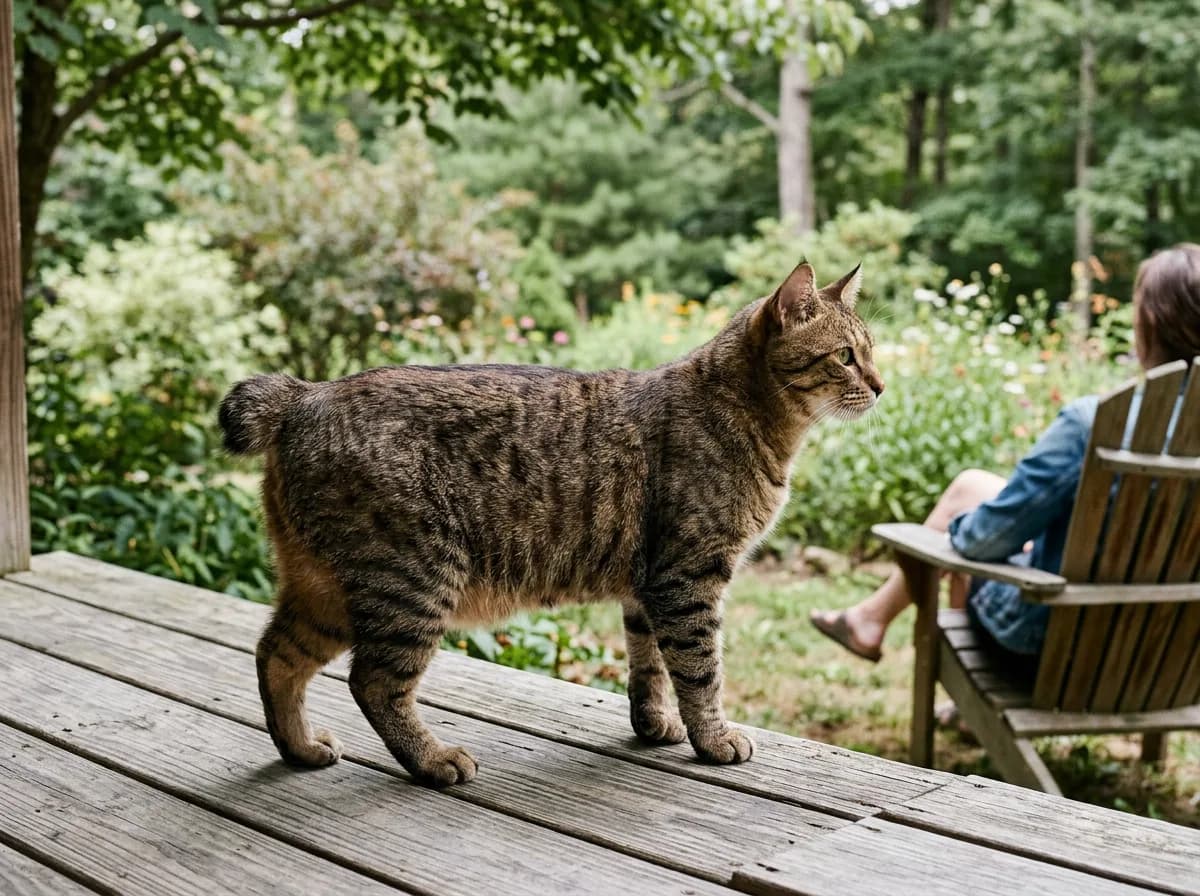
Appearance: What a Pixie-Bob Cat Actually Looks Like
The pixie-bob is built to look like a small wildcat, and the breed standard is specific about the features that create that impression. This is not a delicate, slim cat. Everything about it reads "rugged."

63-inch multi-level cat tree with scratch posts, hammock, plush perches, and dangling toys. Vertical territory is non-negotiable for high-energy climbing breeds like the Bengal.
Petful may earn a commission when you click through to Chewy, at no extra cost to you.
The Bobbed Tail
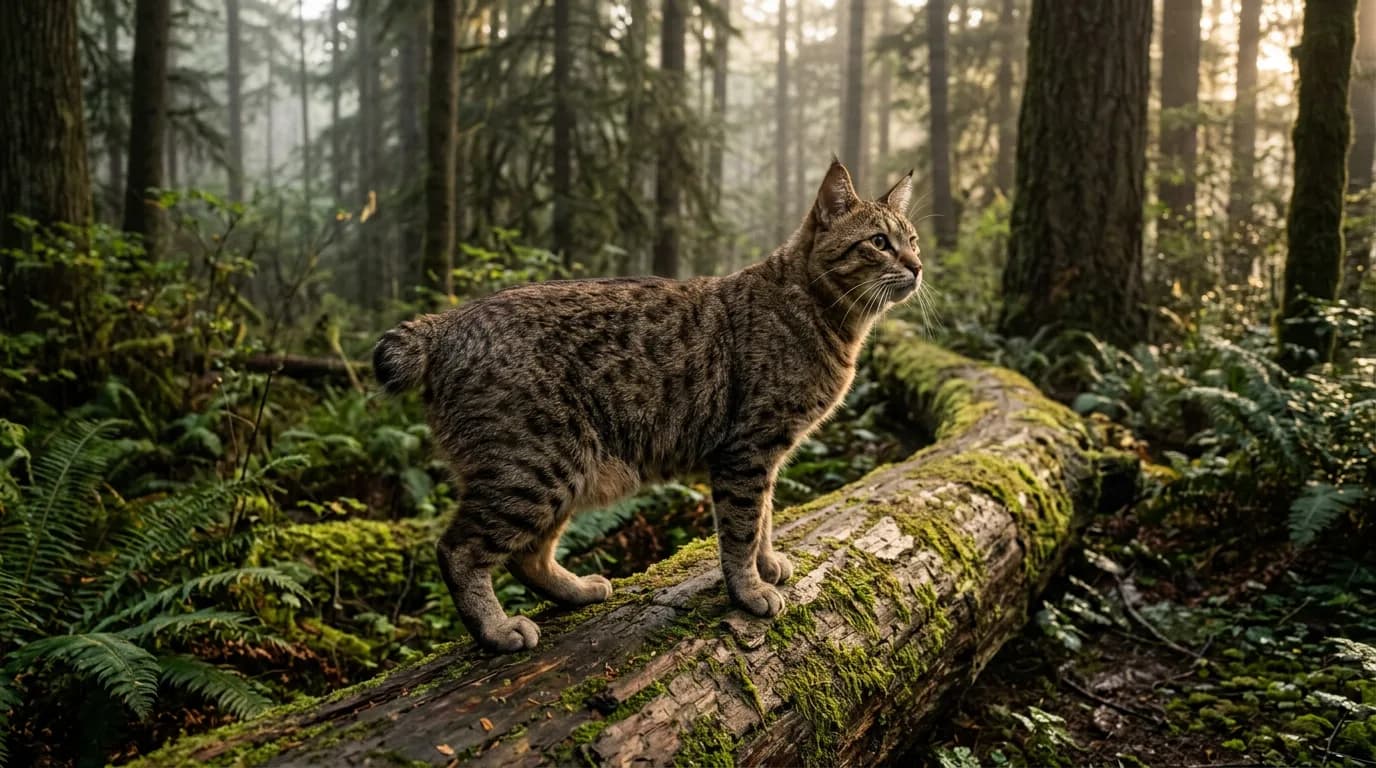
The signature feature is the short tail. The TICA standard sets a minimum tail length of about 2 inches and allows it to run as long as the hock. Most pixie-bobs fall somewhere in that 2 to 4 inch range. A rare long-tailed variant exists and occasionally appears in litters, but the bobbed tail is the breed hallmark and the source of the "bob" in the name.
Polydactyl Toes
The pixie-bob is the only breed whose standard formally permits polydactyly, the trait of having extra toes. The standard allows up to 7 toes on a paw. Not every pixie-bob is polydactyl, but the trait is common and fully accepted, whereas in most other pedigreed breeds extra toes would be a disqualification.
Coat and Color
The coat is a brown spotted or ticked tabby, ranging in shade from tawny gold to a deep reddish-brown, with the spotting often muted and blended to enhance the wild agouti effect. The texture is a thick, woolly double coat that comes in both short-haired and long-haired varieties. The belly is typically lighter, and many cats show the classic "mascara" facial markings and spotted legs of a wild tabby.
Build, Ears, and Face
Pixie-bobs are heavy-boned and muscular, with a hooded brow that shades the eyes and gives a serious, almost frowning bobcat expression. The ears are medium, set wide, and ideally carry lynx tips, the little tufts of fur at the ear tips, with "thumbprint" markings on the back of each ear. The overall package is a compact, powerful cat that genuinely resembles a miniature bobcat.
- Look for the combination of a bobbed tail, hooded brow, lynx-tipped ears, heavy boning, and a muted brown spotted coat together, since any one trait alone can appear in ordinary domestic cats.
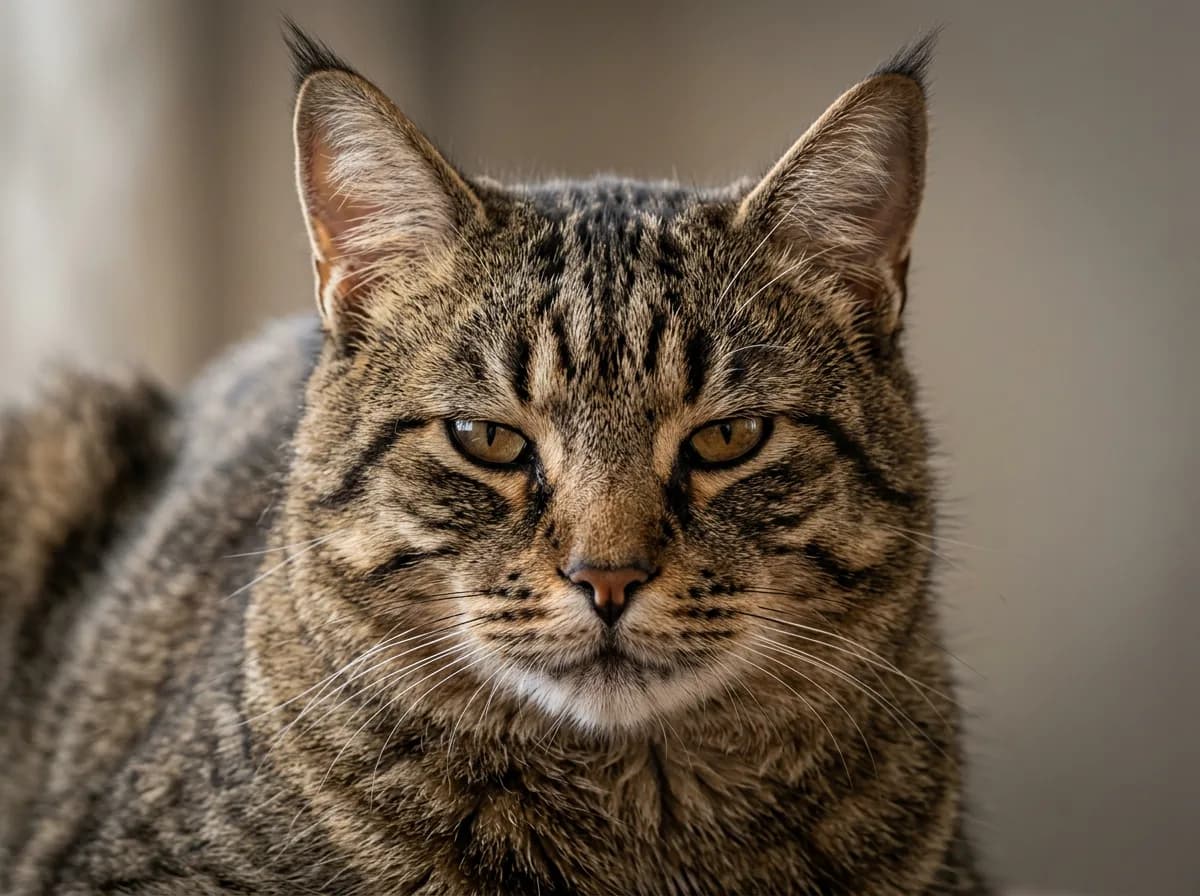
Size: How Big Does a Pixie-Bob Cat Get?
The pixie-bob is a medium-to-large breed, and the size difference between the sexes is noticeable. Under the TICA standard, males typically weigh between 12 and 17 pounds, while the slightly smaller females range from about 8 to 12 pounds. Some individuals stay closer to 8 or 9 pounds, and exceptionally large males have been reported heavier still.
What makes a pixie-bob feel even bigger than the scale suggests is the dense boning and muscle. A 14-pound pixie-bob is solid, not soft, and it carries that weight in a low, athletic frame. They also mature slowly: rather than reaching full adult size in a year like most cats, a pixie-bob can keep filling out for up to four years.
Pixie-Bob Size at a Glance
| Trait | Typical Range | Notes |
|---|---|---|
| Male weight | 12 to 17 lb | Heavy-boned and muscular |
| Female weight | 8 to 12 lb | Slightly smaller than males |
| Height at shoulder | 9 to 13 in | Compact, athletic frame |
| Tail length | 2 to 4 in | Bobbed; rare long-tail variant exists |
| Time to mature | Up to 4 years | Slow-maturing breed |
| Lifespan | 13 to 16 years | Generally robust and healthy |
For more detail on how heavy and tall these cats get and how to tell a kitten's adult size, see our full breakdown of pixie-bob cat size.
Temperament: The Cat That Thinks It Is a Dog
If the appearance sells the pixie-bob, the personality is what makes owners fall in love. This breed has earned the nickname "the cat that thinks it is a dog," and for good reason. Pixie-bobs are loyal, social, and deeply bonded to their families.
Many learn to play fetch, walk on a harness and leash, and even ride along in the car without the meltdown most cats would stage. They tend to attach to the whole household rather than a single person, follow their people from room to room, and "chirp" or chatter rather than meow constantly. They are intelligent and curious, which means puzzle feeders and interactive toys go a long way.
That dog-like devotion makes them excellent for active families. They are generally patient with children, tolerant of dogs, and social with other pets when introduced properly. They are not, however, cats that thrive on being ignored all day. A pixie-bob wants to be where you are and involved in what you are doing.
- Leash walking, fetch, car rides, and door-greeting are all commonly reported in pixie-bobs, which is why they suit households that want a more interactive, companion-style cat.
Do Pixie-Bob Cats Make Good Pets?
For the right home, the pixie-bob is an outstanding pet. Its outgoing, dog-like nature makes it great with kids and other animals, and its intelligence keeps it engaging and trainable. Active owners and families who want a cat that participates in daily life rather than hiding under the bed will find a lot to love.
The honest caveats: pixie-bobs need attention and stimulation, so they are a poor fit for someone who is rarely home or wants a low-interaction lap ornament. Their thick double coat needs regular brushing, and their loyalty means they can be genuinely unhappy when left alone too long. Match the cat to a household that wants engagement, and the pixie-bob delivers.
If you are weighing other wild-looking or active breeds, it helps to compare. The bengal cat offers a similar exotic look with a higher energy ceiling, the savannah cat is a true tall, leggy hybrid breed, and the abyssinian cat gives you a ticked wild coat in a smaller, lighter frame.
Grooming and Care
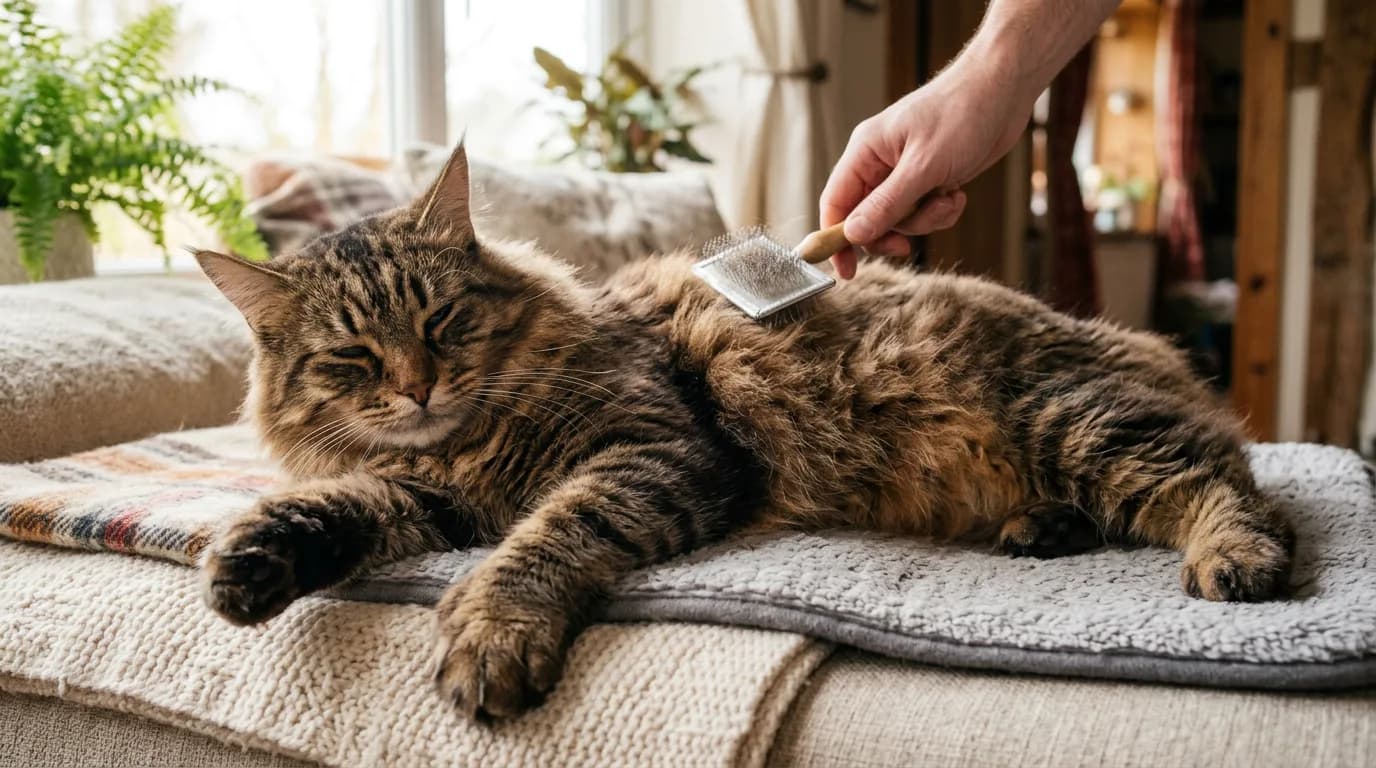
Despite the rugged look, grooming a pixie-bob is straightforward. The thick double coat benefits from brushing once or twice a week to remove loose hair and prevent mats, with the long-haired variety needing slightly more frequent attention. Expect moderate seasonal shedding rather than constant fur everywhere.
The rest of the care routine is standard good cat husbandry: trim the nails every couple of weeks (and check carefully if your cat is polydactyl, since extra toes can mean extra claws to maintain), brush the teeth regularly to head off dental disease, and keep the ears clean. Because pixie-bobs are smart and active, environmental enrichment is part of care, not a luxury. Cat trees, window perches, food puzzles, and daily interactive play keep both body and mind healthy.
- If your pixie-bob is polydactyl, inspect every toe at nail-trimming time, because extra dewclaw-like nails can curl into the pad if they are missed.
Health and Lifespan
The pixie-bob is generally a healthy, robust breed with a typical lifespan of 13 to 16 years. Because it was built from sturdy regional domestic cats and maintained with reasonable genetic diversity, it does not carry the long list of inherited problems seen in some highly inbred pedigrees.
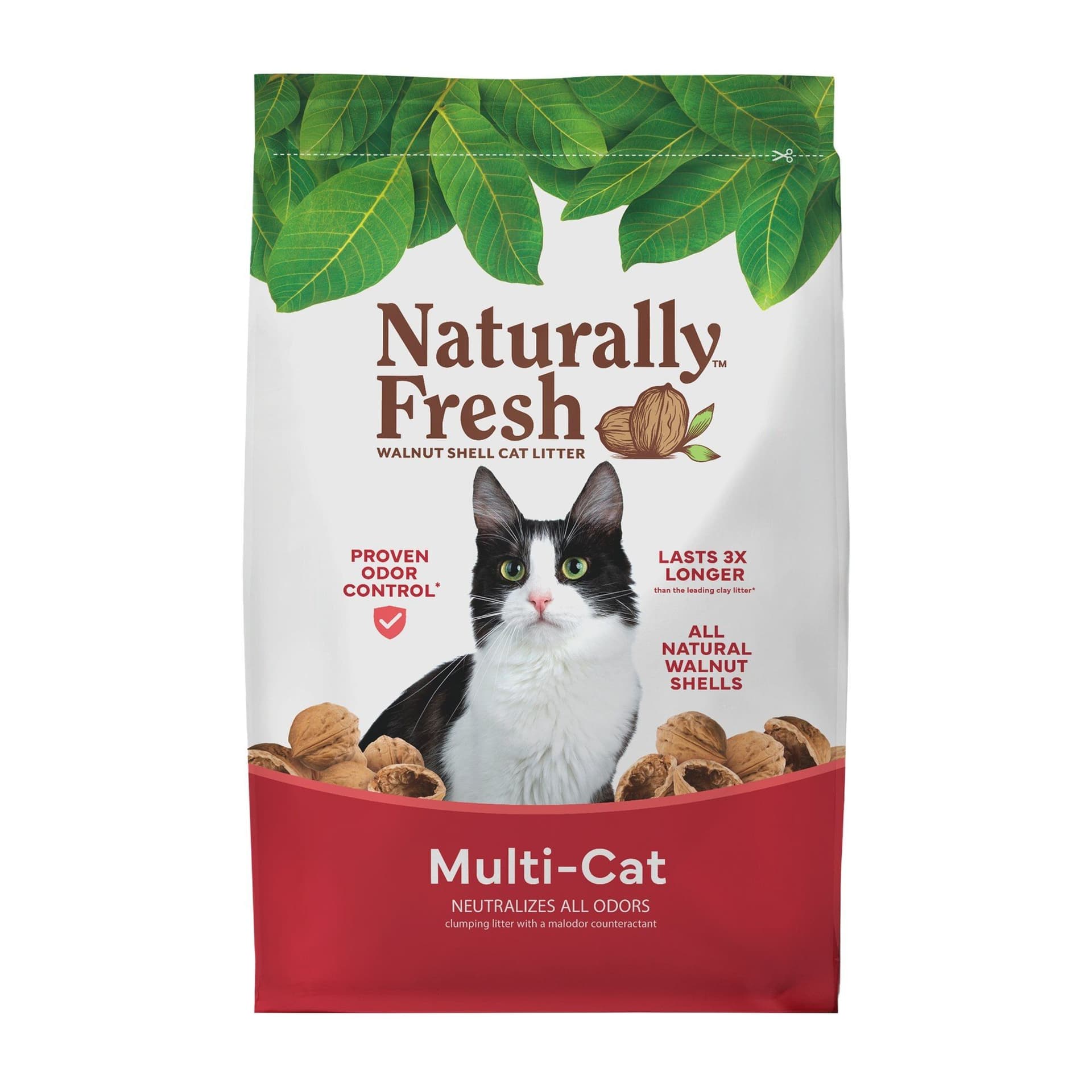
Walnut shell clumping cat litter that excels at odor control, lasts up to 3x longer than clay, and is a top pick for multi-cat households.
Petful may earn a commission when you click through to Chewy, at no extra cost to you.
A few issues do appear occasionally. Cryptorchidism, where one or both testicles fail to descend in males, has been recorded in a small number of cats. Dystocia, or difficulty giving birth, affects a very small percentage of queens. As with any cat, watch for common feline concerns such as obesity, dental disease, and heart conditions like hypertrophic cardiomyopathy. A reputable breeder screens breeding cats and is transparent about health history.
Routine preventive care does the heavy lifting here: keep the cat at a lean weight, stay current on vaccines and parasite prevention, schedule annual veterinary exams (twice yearly for seniors), and feed a complete, balanced diet appropriate to life stage. Done consistently, that is what carries a pixie-bob to the upper end of its lifespan.
- Because a small percentage of pixie-bobs experience dystocia, any owner breeding a queen should have a veterinarian on call for the delivery rather than going it alone.
How Rare Is a Pixie-Bob Cat?
Pixie-bobs are genuinely uncommon. They are a relatively young breed developed in one corner of the United States, the number of active registered breeders is small compared to mainstream breeds, and the slow-maturing nature of the cats keeps litters and availability limited. They are not as scarce as some experimental hybrids, but you will not stumble across one at a typical shelter, and reputable breeders often keep waitlists.
That rarity, combined with the striking appearance, is exactly why prices run higher than for a common domestic cat, which brings us to cost.
How Much Does a Pixie-Bob Cat Cost?
A pixie-bob cat typically costs between about $800 and $4,000 from a reputable breeder, with the price driven by pedigree, coat quality, conformation to the breed standard, and whether the kitten is pet quality or show quality. Pet-quality kittens usually land in the lower portion of that range, while show-quality cats with excellent type, strong spotting, and ideal bobbed tails command the top end.
That purchase price is only the beginning. Plan for the full cost of ownership before you commit.
Estimated Pixie-Bob Cost Breakdown
| Expense | Estimated Cost | Notes |
|---|---|---|
| Kitten from breeder | $800 to $4,000 | Pet vs show quality drives the spread |
| Initial vet and vaccines | $150 to $400 | First-year exams, vaccines, deworming |
| Spay or neuter | $150 to $500 | Varies by region and clinic |
| Annual food | $300 to $600 | Quality complete-and-balanced diet |
| Annual routine vet care | $200 to $500 | Exam, vaccines, parasite prevention |
| Supplies and enrichment | $200 to $400 | Cat tree, litter, toys, scratchers |
For a deeper look at breeder pricing, waitlists, and the difference between pet and show pricing, see our guide to pixie-bob cat price.
Finding and Buying a Pixie-Bob Kitten
Because the breed is uncommon and the wild look is in demand, finding a pixie-bob takes patience and care. Start with TICA's or ACFA's breeder referral listings to find registered catteries, and be prepared for a waitlist. A responsible breeder will health-screen their cats, raise kittens underfoot in the home for proper socialization, provide registration paperwork, and never send a kitten home before it is fully weaned and vaccinated.
Be skeptical of anyone advertising "part bobcat" or "wild blood" pixie-bobs at a premium. As covered above, the modern breed carries no wild DNA, and that pitch is a red flag for an unethical seller. Likewise, a price far below the typical range can signal poor breeding, missing health screening, or a cat that is simply a bobtailed domestic cat with no pedigree.
Adoption is occasionally possible. Breed-specific rescues and general shelters do sometimes take in pixie-bobs or close look-alikes, so it is worth checking rescue networks if you are open to an adult cat. For everything from evaluating breeders to bringing a kitten home, see our dedicated pixie-bob kitten guide.
- Any seller marketing pixie-bobs as part-bobcat or carrying wild genes is either misinformed or dishonest, since the recognized breed is fully domestic.
Living With a Pixie-Bob: Daily Life and Enrichment
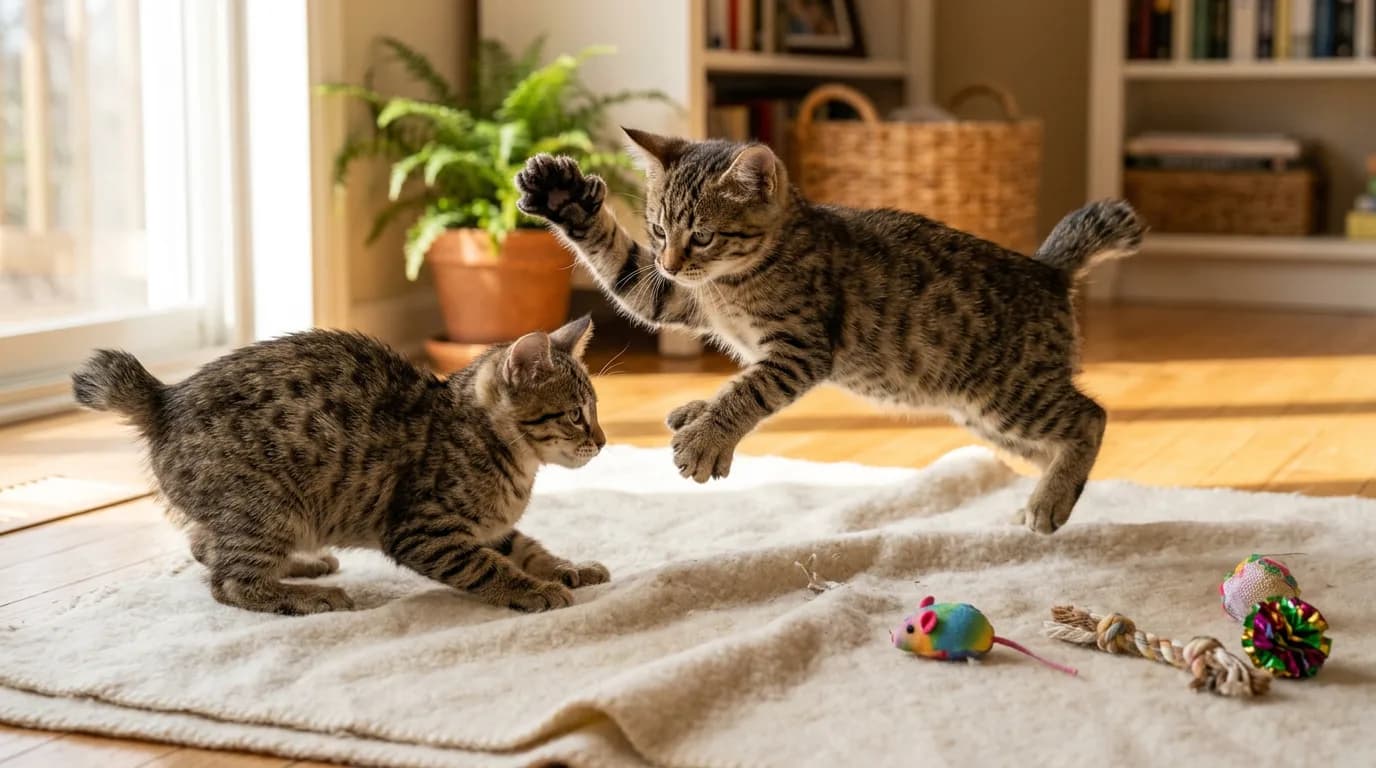
Bringing a pixie-bob into your home is closer to adding a small dog than a typical cat, and planning for that pays off. These are athletic, intelligent animals that want a job, even if that job is just supervising the household. Give them vertical space to climb, a sturdy cat tree near a window, and a rotation of toys so novelty never runs out.
Because pixie-bobs are so people-focused, they do best in homes where someone is around for a good part of the day, or where they have a feline or canine companion to keep them company. A bored, under-stimulated pixie-bob can become vocal, destructive, or anxious, which is the same pattern you would see in an under-exercised working dog. Daily interactive play, ideally two sessions of ten to fifteen minutes, takes the edge off that energy and strengthens the bond.

108-oz stainless steel pet fountain with quiet pump and water-level window. Bengals are notoriously water-obsessed; a flowing fountain encourages hydration and pulls them away from sinks and toilets.
Petful may earn a commission when you click through to Chewy, at no extra cost to you.
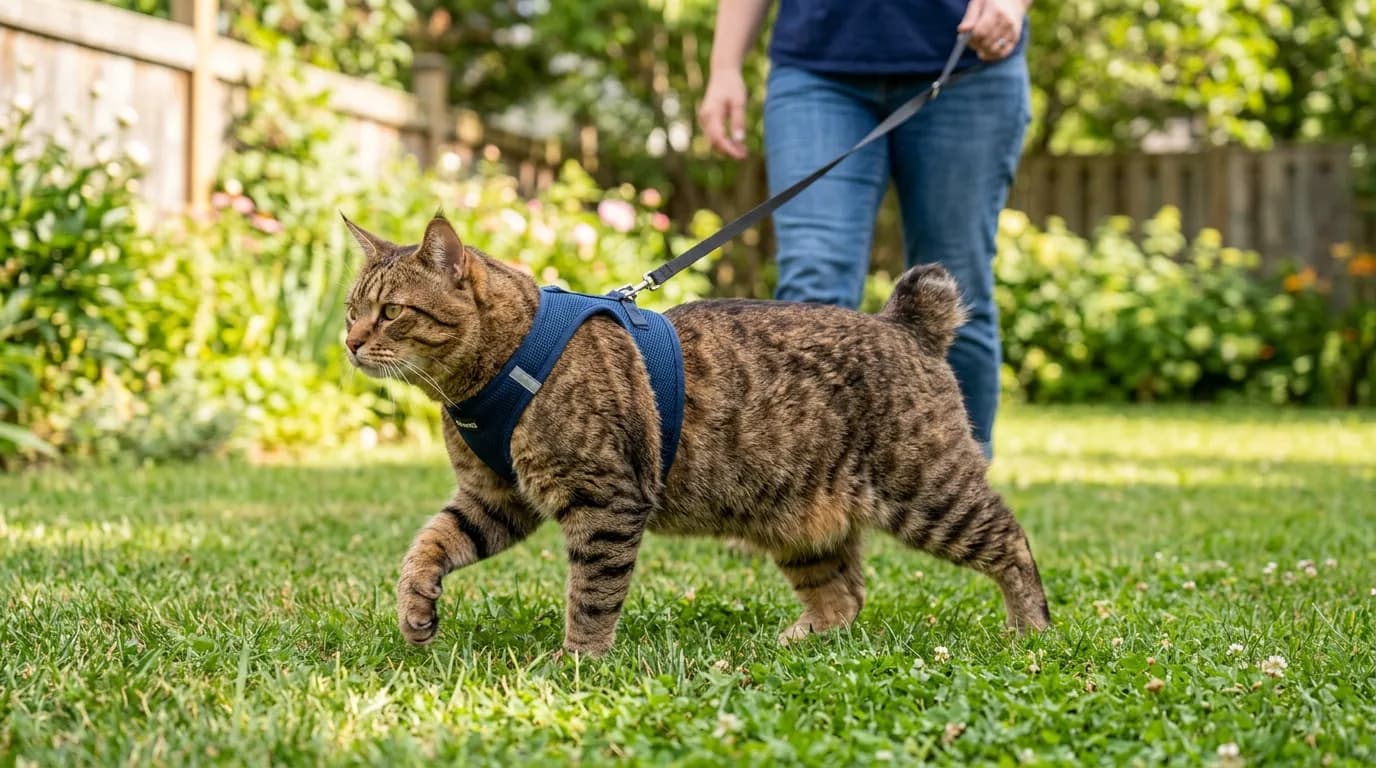
Harness training is well worth the effort with this breed. Many pixie-bobs take to a leash readily and enjoy supervised outdoor time, which satisfies their curiosity safely. Indoors, food puzzles and clicker training give their problem-solving brains an outlet. Owners often report that a pixie-bob will learn its name, come when called, and master simple tricks faster than they expected from a cat.
Multi-pet households generally suit pixie-bobs well. Their confident, non-fussy temperament means they tend to hold their own with dogs and integrate smoothly with other cats when introductions are gradual and positive. As with any breed, slow, scent-first introductions and separate resources during the transition prevent most conflicts.
- A pair of short, ten to fifteen minute interactive play sessions keeps a pixie-bob mentally satisfied and prevents the boredom behaviors that come with this high-engagement breed.
How the Pixie-Bob Compares to Other Big, Wild-Looking Cats
The pixie-bob is not the only large or exotic-looking cat people consider, and understanding the differences helps you pick the right fit. The pixie-bob's calling card is its bobcat resemblance paired with a calm, dog-like temperament and a moderate energy level. It is a companion first and an athlete second.
By contrast, a bengal is a higher-octane breed bred from the Asian leopard cat lineage, prized for glittered, leopard-spotted coats and a need for serious daily exercise. A savannah is a tall, leggy hybrid breed with serval ancestry and the most exotic profile of the group. If your heart is set on sheer size and a gentle-giant reputation, the Maine Coon is the other big domestic option, though it trades the wild spotted look for a sweet, shaggy, family-friendly build.
The honest summary: the pixie-bob is the pick for someone who wants the wildcat look without wildcat energy or hybrid logistics, in a sturdy, loyal, leash-friendly package.
A Closer Look at the Polydactyl Trait
The extra-toed pixie-bob deserves more than a passing mention, because polydactyly is woven into the breed's identity in a way it is not for any other recognized cat. In a normal cat, the front paws carry five toes each and the back paws four, for a total of eighteen. A polydactyl pixie-bob can carry several more, and the TICA standard tolerates up to seven toes on a single paw without penalty. The result is a broad, mitten-like foot that adds to the rugged, wild impression the breed is going for.
It is worth being precise about what polydactyly is and is not. It is a dominant genetic trait, which means a single copy of the gene can produce extra toes, and a polydactyl parent will often pass the trait to a portion of its kittens. In the pixie-bob the trait is almost always the harmless "preaxial" type that adds toes on the thumb side of the foot. It does not cause pain, it does not impair movement, and a polydactyl pixie-bob runs, climbs, and pounces exactly like a standard-toed one. Many owners find the oversized paws charming and say their cat seems unusually dexterous with toys and door handles.
The practical wrinkle is maintenance. Extra toes mean extra claws, and those additional claws do not always wear down naturally the way a cat's main claws do against scratching posts. A claw on a poorly positioned extra toe can grow in a tight curl and, if it is missed, press into the pad and cause a painful sore. That is why the grooming routine for a polydactyl cat has to account for every nail, not just the obvious ones. None of this is a reason to avoid an extra-toed pixie-bob. It simply means the wild-looking paws come with a small, manageable bit of homework.
- A standard cat has eighteen toes total; a polydactyl pixie-bob can carry several extra, and the breed standard accepts up to seven on a single paw, the only such allowance in the cat fancy.
Bobbed, Long, and In Between: The Tail Variations
The tail is the other half of the breed's name, and it varies more than a quick description suggests. The desirable show tail is the classic bob: roughly two to four inches, expressive, and carried with the same flick-and-twitch communication any cat uses, just on a shorter canvas. Unlike the rigid, kinked tail seen in some bobtailed breeds, the ideal pixie-bob tail is articulate and supple, and judges want to see that it moves naturally rather than sitting stiff.
Litters do not produce a single uniform tail length, and that is by design rather than a flaw. Some kittens arrive with a tail barely longer than a stub, others with a tail that reaches close to the hock, and a recessive long-tailed variant appears often enough that responsible breeders plan around it. A full-tailed pixie-bob is still a pixie-bob in every other respect, with the same boning, brow, coat, and temperament, but it cannot compete in the show ring under the current standard. Reputable breeders are upfront about this and price and place long-tailed kittens accordingly, often as pets in loving homes rather than as breeding or show prospects.
For buyers the takeaway is simple. Tail length alone does not determine whether a cat is a true pixie-bob, and a breeder who guarantees a perfect two-inch bob on every kitten is overselling what genetics can promise. Judge the whole cat, and treat a longer tail as a cosmetic show consideration, not a defect that affects health or personality.
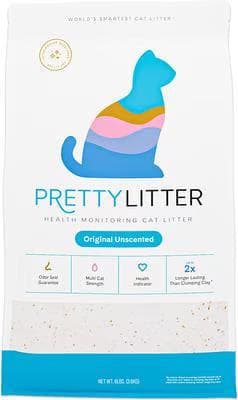
Color-changing crystal litter that flags pH shifts in your cat's urine, an early warning sign of UTIs, kidney issues, and more.
Petful may earn a commission when you click through to Chewy, at no extra cost to you.
Training a Pixie-Bob: Channeling the Dog-Like Brain
The dog-like reputation is not marketing, but it does ask something of the owner, and the cats that end up best behaved are the ones whose people lean into training early. Pixie-bobs are food-motivated and pattern-loving, which makes them strong candidates for clicker training. The method is the same one used on working dogs: mark the desired behavior with a click the instant it happens, then reward, and the cat quickly connects the dots. Owners routinely teach sit, high-five, spin, and reliable recall, and many report their cat learns a new cue in a handful of short sessions.
Leash work pays off more with this breed than with almost any other cat. The trick is to introduce the harness indoors first, letting the cat wear it for a few relaxed minutes at a time with treats, before ever attaching a leash or stepping outside. Because pixie-bobs are confident rather than skittish, most accept the harness within a week or two and then genuinely look forward to supervised outdoor time. Fetch tends to develop on its own: toss a small toy, and a pixie-bob will often trot it back and drop it for another throw, a behavior that delights first-time owners.
Water is the surprise. A significant share of pixie-bobs are fascinated by it rather than repelled, batting at faucets, wading in shallow tubs, and investigating the shower. This is not universal, and no one should expect a swimming cat, but it fits the breed's bold, investigate-everything character. The thread running through all of it is engagement: a pixie-bob given structured mental work is a calm, satisfied housemate, while one left to invent its own entertainment will find mischief. Training is less a luxury than a pressure valve.
- Let a pixie-bob wear its harness around the house with treats for several short sessions before clipping on a leash or going outside, and most will accept leash walks within a week or two.
Slow to Grow Up: The Three to Four Year Timeline
Most cats are physically adult by their first birthday and fully filled out by two. The pixie-bob is the unusual exception, continuing to develop bone, muscle, and mass for three to four years. A pixie-bob you meet at one year old is still very much a teenager in a large frame, and the cat will keep broadening through the chest, deepening through the body, and adding the heavy boning that defines the breed well into its third or fourth year.
This slow maturation has real consequences for owners. It means a young pixie-bob keeps the gangly, leggy, slightly out-of-proportion look of an adolescent longer than other breeds, so a kitten that seems all legs and paws is usually right on track. It also means feeding and weight management deserve attention across a longer growth window. A growing pixie-bob needs adequate protein and calories to build that frame, but because the breed is prone to looking and feeling solid, owners should learn to assess body condition by feel rather than by the scale alone, keeping a defined waist and easily felt ribs as the target.
There is a behavioral side too. Mental maturity tends to lag alongside the physical, so the playful, into-everything kitten energy can persist longer than a new owner expects. That is a feature for an active household and a reason for patience: the goofy adolescent phase simply runs longer in this breed than in most. Owners who understand the timeline are far less likely to overfeed a "small" cat or to worry that a leggy youngster is somehow underdeveloped.
Feeding the Heavy-Boned Pixie-Bob
Diet is where the breed's slow growth and dense build intersect, and getting it right supports both the long maturation window and the long lifespan. Like all cats, the pixie-bob is an obligate carnivore that thrives on a complete and balanced diet built around animal protein. There is no breed-specific food requirement, but there are sensible priorities: a named meat as the leading ingredient, enough protein to support muscle on a large frame, and portions matched to the cat's actual body condition rather than to the bigger-than-average impression the breed gives.
Because pixie-bobs can be food-motivated, free-feeding a bowl that is always full is an easy road to obesity, and obesity is the single most common avoidable health problem in the breed. Measured meals, puzzle feeders that slow down eating and add enrichment, and treats counted into the daily total rather than handed out freely all help keep a heavy-boned cat lean rather than overweight. Fresh water should always be available, and the breed's frequent fondness for water makes a pet fountain a worthwhile addition for cats that prefer moving water.
- Because a healthy pixie-bob is naturally solid and heavy-boned, assess weight by feeling for an easy-to-find ribcage and a visible waist rather than fixating on the number, which runs higher than for a typical cat.
The Bobcat Legend, Told in Full
The pixie-bob's romance is inseparable from the bobcat story, and it is worth telling completely because the legend is exactly why so many people seek the breed out. In the Pacific Northwest of the 1980s, free-roaming farm and barn cats sometimes produced unusually large, spotted, short-tailed kittens, and local lore held that wild Coastal Red Bobcats were slipping in to breed with domestic females at the edges of forest and field. The cats themselves lent the story credibility: the heavy boning, the muted spotting, the hooded brow, and the bobbed tail genuinely resemble a small bobcat, and the founding male Keba was widely believed in his neighborhood to be a bobcat's son.
For years that belief shaped the breed's marketing and its mystique, and even the founder initially accepted that wild blood was part of the foundation. The appeal is obvious. A house cat carrying a whisper of wild predator is a powerful story, and it set the pixie-bob apart from every other cat on the shelf.
Then the science arrived. DNA testing reported in the mid-1990s looked for the genetic markers a true bobcat cross would leave behind and found none. The wild-looking traits that built the breed turned out to be the product of ordinary domestic cats that happened to carry spotting, short tails, and heavy boning, refined by deliberate selective breeding rather than introduced by a wild sire. The bobcat in the pixie-bob lives in its silhouette, not in its chromosomes.
That truth is not a disappointment, it is a relief. A genuine wild hybrid would carry unpredictable temperament, legal restrictions, and welfare concerns. The pixie-bob delivers the look the legend promised while remaining a stable, affectionate, fully domestic cat anyone can live with. The legend is what draws people in; the domestic reality is what makes the breed worth keeping. Anyone weighing a pixie-bob against a true hybrid like the savannah cat is really choosing between a wild look and actual wild ancestry, and for most households the look is the safer and saner choice.
- The bobcat resemblance is the entire point of the breed, but it is achieved through selective breeding of domestic cats, so a pixie-bob carries the wild aesthetic with none of the legal or temperament risks of an actual wildcat.
Frequently Asked Questions
Yes. The pixie-bob is a real, recognized pedigreed cat developed by Carol Ann Brewer in Washington state in the mid-1980s. It was bred to look like a wild bobcat but is fully domestic.
Pixie-bobs are uncommon. They are a young, regionally developed breed with a small number of registered breeders, so availability is limited and reputable catteries often keep waitlists.
A pixie-bob is generally worth about $800 to $4,000 depending on pedigree, coat quality, and whether the kitten is pet or show quality. Show-quality cats command the top of that range.
Yes. Their friendly, outgoing, dog-like nature makes them great with kids and other pets, and their intelligence keeps them engaging, as long as the home can give them attention and enrichment.
Expect roughly $800 to $4,000 for the kitten itself, plus first-year costs of several hundred dollars for vaccines, spay or neuter, food, and supplies.
That figure refers to the Ashera, a marketed designer hybrid advertised for up to about $100,000 (and later mired in controversy). It is not a pixie-bob; pixie-bobs cost a small fraction of that.
Prices near $20,000 are associated with top Savannah and Ashera-type hybrid cats, not pixie-bobs. A pixie-bob's typical $800 to $4,000 range is far below those exotic-hybrid figures.

Coreen Saito is a pet writer and longtime shelter volunteer with more than a decade in animal rescue. She covers cat behavior, breed care, and the small, ordinary science of sharing a life with companion animals, with a particular focus on honest takes about the products and decisions that actually matter. At home in Arizona, she's outranked by Mac (a dog with the loudest opinion in the house), Rebel (a cat who governs by quiet authority), and Meri (an orange tabby who runs the late shift and the laundry basket). She writes about all three, plus the rescues that keep coming through her life, at LifeWithMinty.com.
Sign up for expert-backed reviews and safety alerts all in one place.