Pixie-Bob Cat Size: How Big They Really Get
Pixie-bob cat size explained: full-grown weights of 8 to 17 pounds with males larger, the slow 3 to 4 year growth timeline, height and length, plus how the breed compares to a normal house cat and a real wild bobcat.
Petful is reader supported. As an affiliate of platforms like Amazon and Chewy, we may earn a commission when you buy through links on this page. There is no extra cost to you.
According to TICA, the registry that first recognized the breed in 1994, pixie-bob cat size lands in the medium to large range, with males commonly reaching 12 to 17 pounds and females settling at 8 to 12 pounds. That makes a full-grown male pixie-bob noticeably heavier than the roughly 8 to 10 pound average house cat, and a handful of exceptional males have been documented past 20 pounds. The wild, bobcat-like look adds to the impression of size, but the numbers tell a clear story: this is a substantial, heavy-boned domestic cat that simply takes its time getting there.
- 1Adult pixie-bobs weigh about 8 to 17 pounds, with males larger than females
- 2They are slow to mature and may not reach full size until 3 to 4 years of age
- 3They look like a small bobcat but DNA testing confirms they carry zero wild bobcat genes
- 4Heavy boning, long body, and a short bobbed tail make them feel bigger than the scale alone suggests

Sign up for expert-backed reviews and safety alerts all in one place.
How Big Is a Full-Grown Pixie-Bob Cat?
A full-grown pixie-bob is a medium to large domestic cat. The widely cited range across breed authorities is 8 to 17 pounds, but that single span hides an important detail: it is split sharply by sex. Males are the heavyweights of the breed, while females sit a full tier below them.
Veterinary references line up closely on the headline numbers. PetMD lists pixie-bobs at 9 to 17 pounds and 9 to 13 inches tall at the shoulder. WebMD and TICA both break it down by sex, putting males at 12 to 17 pounds and females at 8 to 12 pounds. ASPCA Pet Insurance notes that while some stay near 8 pounds, reaching 17 pounds is common, and a few cats push well beyond that.
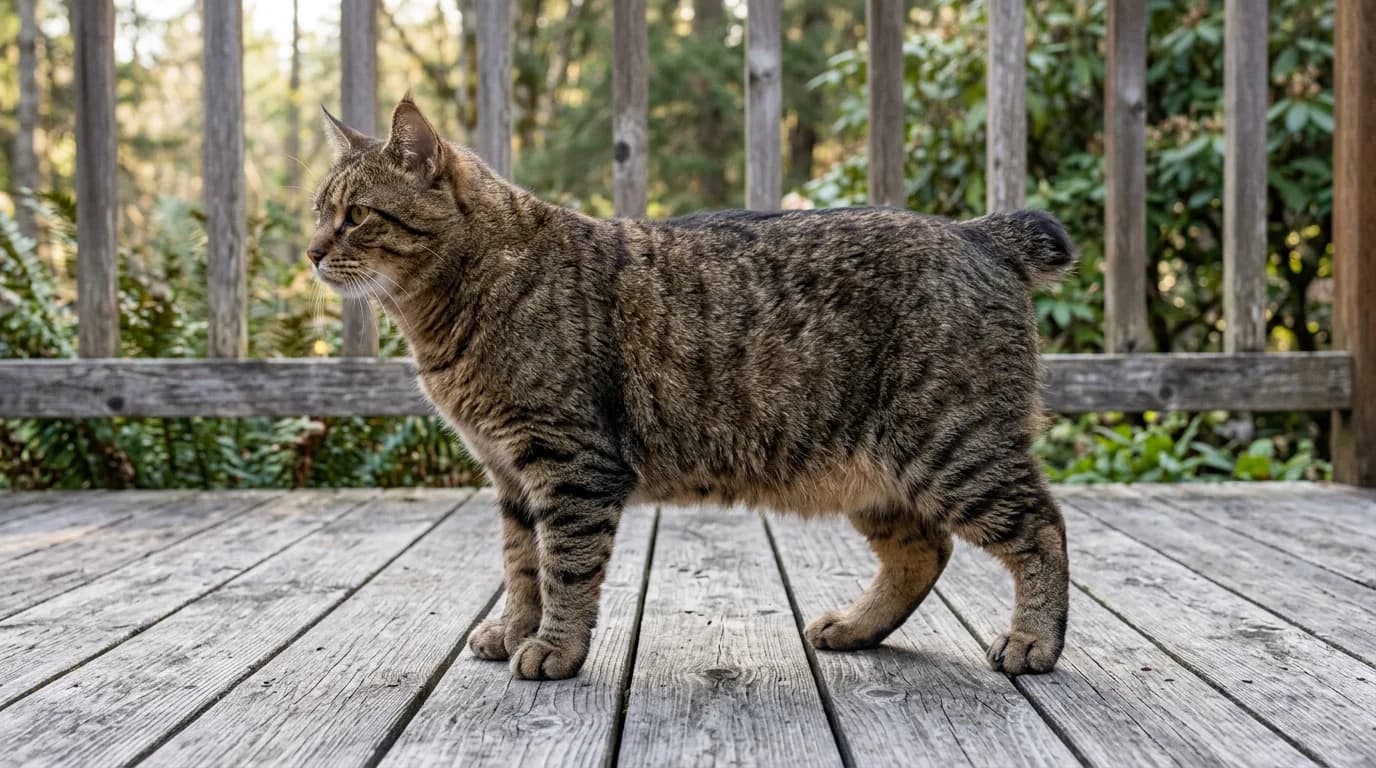
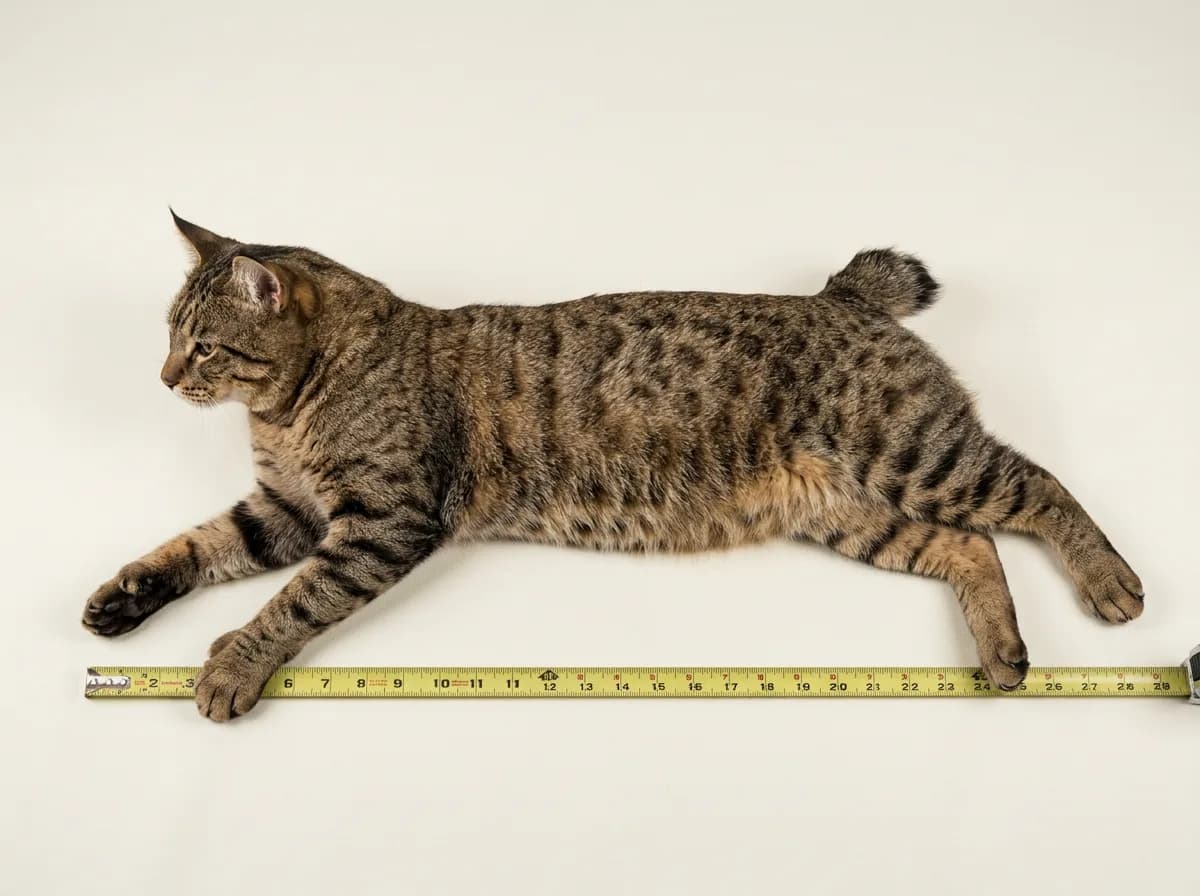
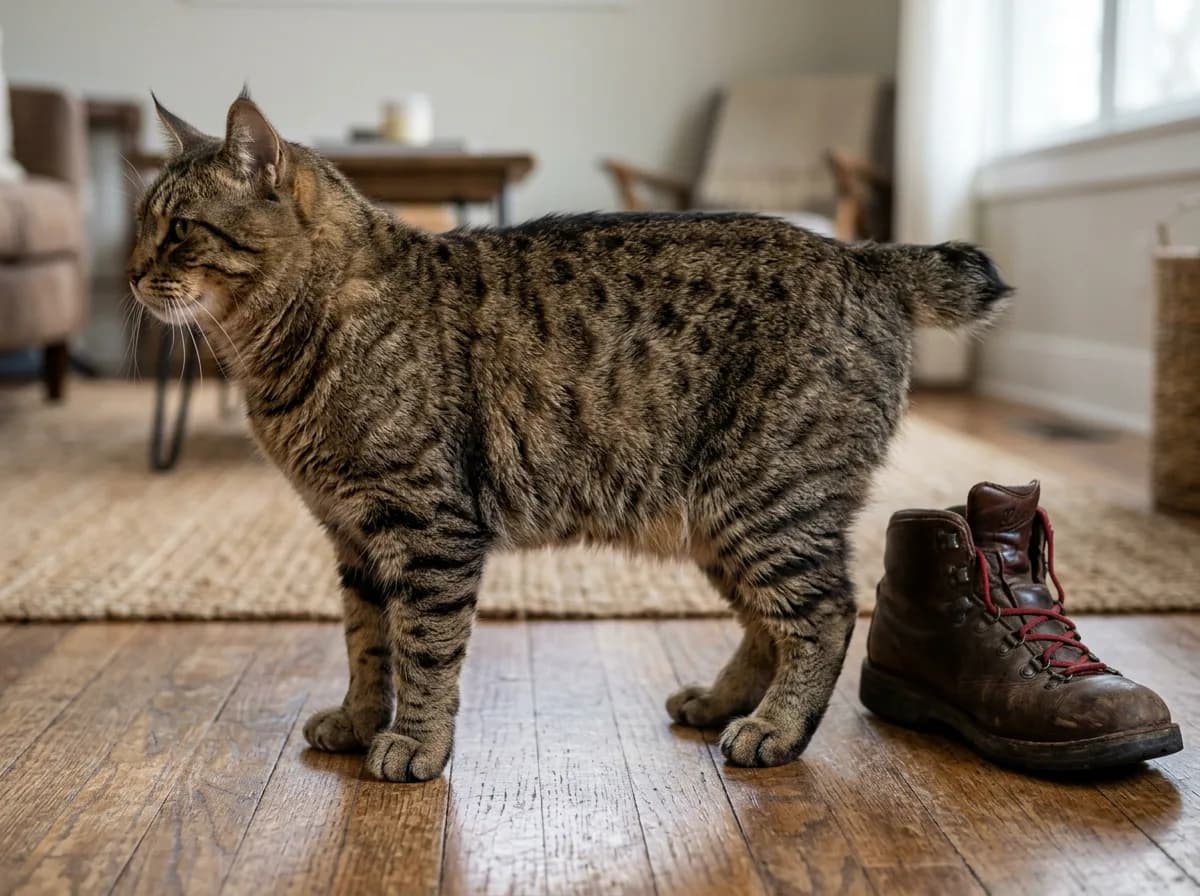
Where the breed earns its reputation is in build rather than raw weight. Pixie-bobs carry heavy boning, long legs with the hind legs slightly longer than the front, a deep broad chest, and big feet. A 14 pound pixie-bob feels denser and more solid in your arms than a 14 pound cat of a leaner breed. The long body adds to it too: these cats can stretch up to about 24 inches from chest to rump, not counting the tail.
It also helps to know what counts as average so you have a baseline. The typical domestic cat weighs around 8 to 10 pounds, which is why a low-end female pixie-bob can pass unnoticed in a crowd of housecats while a top-end male reads as clearly oversized. The breed does not have an official disqualifying weight, since the standard judges balance, boning, and type rather than mass. That means a correctly built pixie-bob is one whose weight matches its frame, not simply the heaviest cat in the litter.
- Treat 8 to 17 pounds as the breed-wide span, then expect a female near the bottom of it and a male near the top.
Pixie-Bob Height and Length
Height and length matter as much as weight when you are picturing how big these cats actually are. A pixie-bob typically stands 9 to 13 inches tall at the shoulder and can measure up to 24 inches in body length. Combined with the heavy boning, that gives the breed a long, rangy, athletic silhouette closer to a small wildcat than to a compact housecat.
The famously short tail does not add much to overall length. The breed standard calls for a bobbed tail with a minimum of about 2 inches, ranging up to roughly 4 inches, or in standard terms up to the length of the hock. A rare long-tail variant exists, which we cover further down.
Pixie-Bob Cat Size Chart: Males vs Females
Because the breed splits so cleanly by sex, a single average is misleading. The table below combines the published ranges from TICA, WebMD, PetMD, and ASPCA Pet Insurance into a practical size chart you can measure your own cat against.
| Measurement | Female | Male |
|---|---|---|
| Typical adult weight | 8 to 12 lb | 12 to 17 lb |
| Heavy outlier ceiling | up to about 14 lb | 20 lb and occasionally more |
| Height at shoulder | 9 to 11 in | 11 to 13 in |
| Body length | up to about 22 in | up to about 24 in |
| Tail length | 2 to 4 in | 2 to 4 in |
A few things stand out in that chart. First, the male and female weight bands barely overlap, which is unusual and a sign of a genuinely sexually dimorphic breed. Second, the height and length gap is real but modest: most of the size difference owners notice is weight and density, not stature. Third, the tail is short regardless of sex, so it never contributes meaningfully to the cat's measured size.
- A heavy coat and broad chest make pixie-bobs look bigger than they are. Use a scale and a body condition check rather than guessing from the mirror.
Pixie-Bob Growth Timeline: Why It Takes 3 to 4 Years
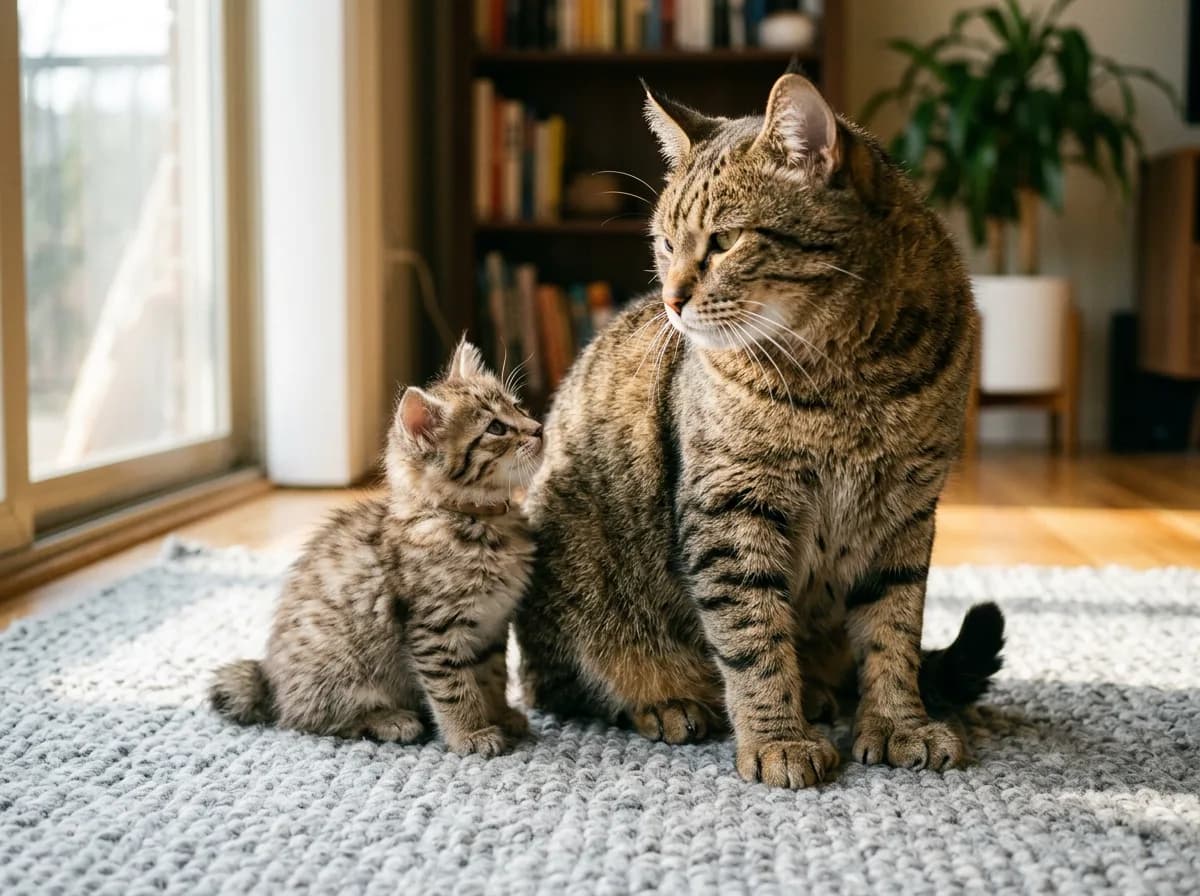
The single most distinctive thing about pixie-bob cat size is not the final number, it is how slowly the cat gets there. Most domestic cats reach close to their adult size by 12 months. Pixie-bobs are famously slow to mature and may not fill out completely until 3 to 4 years of age. ASPCA Pet Insurance and multiple breed sources flag this four-year window explicitly.

63-inch multi-level cat tree with scratch posts, hammock, plush perches, and dangling toys. Vertical territory is non-negotiable for high-energy climbing breeds like the Bengal.
Petful may earn a commission when you click through to Chewy, at no extra cost to you.
Here is a realistic stage-by-stage picture of how a pixie-bob grows.
Kitten Stage (0 to 4 Months)
Newborn and young pixie-bob kittens look much like any other large-breed kitten, though the heavy boning is often visible early in the chunky legs and big paws. Most rapid weight gain happens in these first months as the kitten triples or quadruples its birth weight.
Juvenile Stage (4 to 12 Months)
This is the fastest visible growth phase. By their first birthday, many pixie-bobs are already in the 7 to 11 pound range, which would be near full size for a typical cat. For a pixie-bob, the cat has only reached roughly two thirds of its eventual adult mass and the frame is still narrow.
Young Adult (1 to 2 Years)
Through the second year, the cat keeps adding muscle and bone density rather than just length. The chest broadens, the legs thicken, and males in particular start to pull clearly ahead of their female littermates.
Full Maturity (3 to 4 Years)
By age three, and often not fully until four, the pixie-bob reaches its mature weight and that signature substantial, muscular, wild look. The head broadens, the jowls develop in males, and the body reaches its final density.
What this slow timeline means in practice is that you should not panic if a one-year-old pixie-bob looks lean or leggy compared to the wild adult photos online. That cat is on schedule. It also means feeding should follow body condition rather than a calendar: a juvenile that is still growing needs steady, quality nutrition, while an adult that has hit its frame needs portions trimmed to avoid putting weight on as fat. Because the breed keeps adding muscle into its third and fourth years, owners sometimes mistake normal late-stage filling out for overfeeding, or the reverse. A vet body-condition score at the annual checkup settles the question better than the scale alone.
- A pixie-bob filling out over years is expected. A cat that suddenly loses weight or stops eating needs a vet, regardless of breed timeline.
If you are bringing one home, the slow timeline is worth planning around. Our guide to the pixie-bob kitten stage walks through what to expect in those first formative months, and the breed's gradual maturation is one reason the pixie-bob cat price reflects a long-term commitment from breeders.
Pixie-Bob Weight by Age: A Month-by-Month Guide
Putting real numbers on each stage makes the slow timeline easier to track at home. The figures below are typical mid-range targets, not hard rules, and they assume a healthy, well-fed cat. Males trend toward the top of each band and females toward the bottom, and any individual cat can sit a little above or below and still be perfectly normal. Use the numbers to spot the trend, not to chase an exact target.
| Age | Female Weight | Male Weight | What Is Happening |
|---|---|---|---|
| 8 weeks | 1.5 to 2 lb | 2 to 2.5 lb | Rapid early gain, heavy boning already visible in the paws |
| 4 months | 3.5 to 5 lb | 4.5 to 6 lb | Fast frame growth, kitten still looks leggy |
| 6 months | 5 to 7 lb | 6 to 8 lb | Approaching a normal cat's adult weight but only part grown |
| 12 months | 7 to 9 lb | 9 to 11 lb | Roughly two thirds of final mass, frame still narrowing |
| 2 years | 8 to 11 lb | 11 to 14 lb | Muscle and bone density building, males pulling ahead |
| 3 to 4 years | 8 to 12 lb | 12 to 17 lb | Full mature weight and the signature substantial build |
Read the table as a curve rather than a checklist. The steepest gains happen in the first six months, then the rate slows sharply even though the cat keeps adding mass for years. A useful sanity check is the one-year mark: a pixie-bob that weighs what a typical adult house cat weighs at 12 months is on track, because it still has a third of its growth ahead of it. If a male is already past 11 pounds at a year old, you likely have a large individual headed for the top of the range. If a female is sitting near 7 pounds at her first birthday, she is simply going to be a petite example of the breed, not an underfed one.
One practical note on these numbers: weigh at the same time of day on the same scale, ideally before a meal, so you are comparing like with like. Month-to-month swings of a few ounces mean nothing in a growing cat. What matters is the direction of the line over a season.
Why the Pixie-Bob Matures So Slowly
The three to four year timeline is not a quirk of one cattery, it is built into how large-framed cats develop. Three things combine to stretch it out. First, the breed is heavy-boned, and dense bone takes longer to lay down and remodel than the lighter skeleton of an average cat. Second, much of the pixie-bob's adult size is muscle packed onto a broad chest and thick legs, and that muscle accumulates gradually with maturity and activity rather than appearing in a single growth spurt. Third, the secondary sex characteristics that finish the look, the broad male head, the developed jowls, the full depth of chest, arrive late, often well into the third year, the same way a young animal of many larger species fills out after it has stopped getting taller.
The result is a cat that reaches its skeletal length relatively early but keeps thickening and densifying long after. This is why a leggy, lean-looking yearling is not a cause for concern and why the wild adult photos you see online are almost always cats aged three or older. It is also why breeders are cautious about promising a kitten's eventual size: the frame is set by genetics and sex, but the final filled-out look genuinely takes years to reveal.
- A pixie-bob reaches close to its full body length before its first or second birthday, then spends the next two to three years adding the bone density and muscle that complete the heavy, wild look.
Pixie-Bob vs a Normal House Cat vs a Real Bobcat
Numbers in isolation are hard to feel. The most useful way to understand pixie-bob cat size is to set it beside the cat most people already know and beside the wild animal it imitates. The comparison below uses typical figures for an average domestic shorthair, a full-grown pixie-bob, and a North American bobcat.
| Animal | Typical Weight | Body Length | Tail |
|---|---|---|---|
| Average house cat | 8 to 10 lb | 18 in | 10 to 12 in long |
| Pixie-Bob | 8 to 17 lb | up to 24 in | 2 to 4 in bobbed |
| Wild bobcat | 15 to 35 lb | 30 to 50 in | 4 to 7 in bobbed |
The takeaway is clear. A pixie-bob overlaps the upper end of normal house cat weight and clearly exceeds it in males, but it is not in the same league as an actual bobcat. A wild bobcat is roughly twice the body length and can outweigh even a giant pixie-bob by 15 pounds or more. The pixie-bob borrows the bobcat's look, the spotted coat, the lynx-tipped ears, the short tail, and the muscular frame, while staying firmly within domestic-cat dimensions.
Walnut shell clumping cat litter that excels at odor control, lasts up to 3x longer than clay, and is a top pick for multi-cat households.
Petful may earn a commission when you click through to Chewy, at no extra cost to you.
For another large domestic breed that gets compared to wildcats, see how the Maine Coon profile stacks up, since Maine Coons routinely out-mass pixie-bobs despite both being marketed as big cats. A large male Maine Coon can reach 18 to 25 pounds, putting it above even a heavy pixie-bob, though the Maine Coon carries its size in length and coat while the pixie-bob carries it in dense boning and muscle. The practical difference owners notice is that a pixie-bob feels heavier than it looks, whereas a Maine Coon often looks heavier than it weighs because of all that fur.
It is also worth being honest about the wild-cat marketing that surrounds spotted breeds. None of the recognized domestic spotted breeds, pixie-bob included, approach true wildcat dimensions. The point of the comparison table above is not to suggest your cat is half wild, it is to set realistic expectations: you are getting a large, sturdy housecat with a wild costume, not a scaled-down predator.
Why a Pixie-Bob Looks So Wild (and Is Still 100 Percent Domestic)
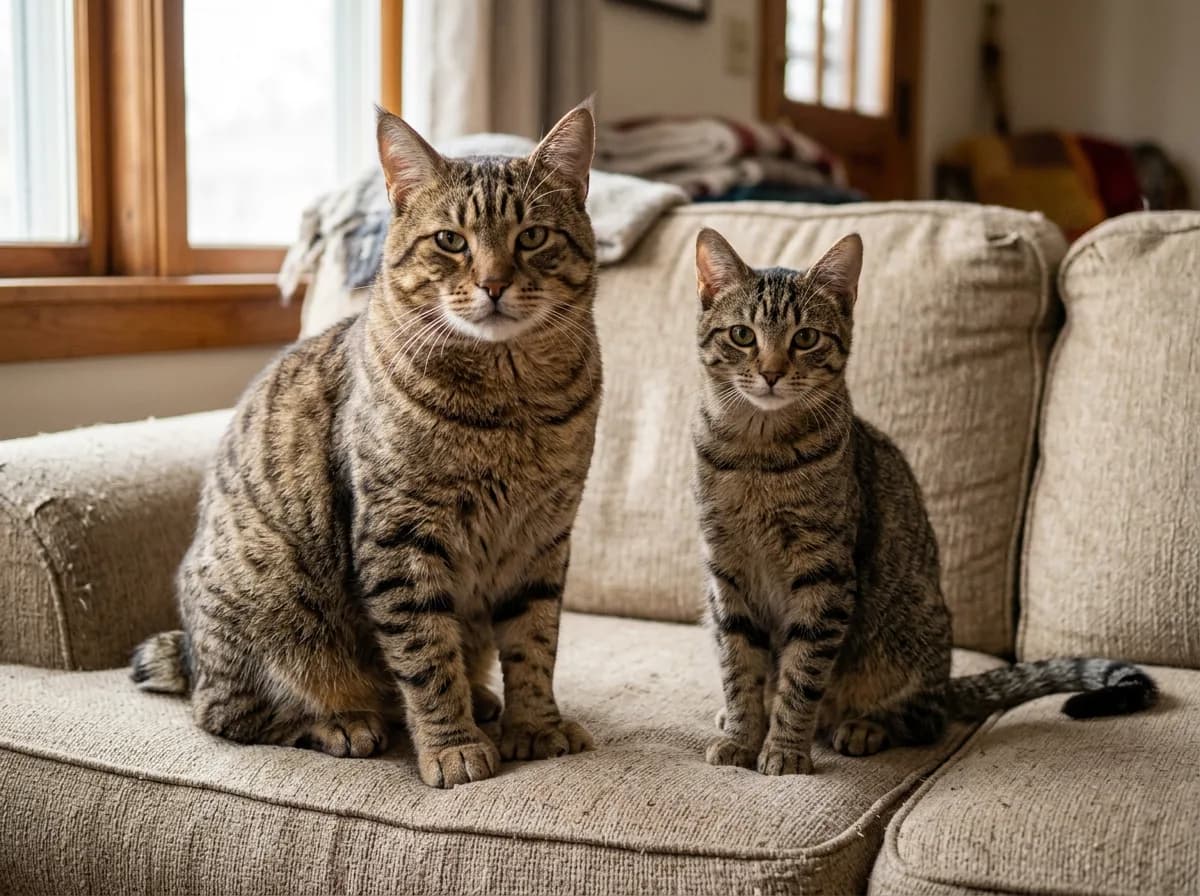
The pixie-bob exists because a Washington state breeder named Carol Ann Brewer set out around 1985 to create a domestic cat that looked like the coastal red bobcat of the Pacific Northwest. The founding cats came with stories of bobcat parentage, and that legend stuck to the breed for decades.
The legend is false. DNA testing has found no wild bobcat genetic markers in the pixie-bob. The breed is fully domestic, a product of selective breeding from spotted domestic cats chosen for a wild appearance. What you are seeing is not bobcat blood, it is deliberate design.
That design is also what makes the cat read as large. Several specific features stack up to create the illusion of a bigger animal:
- A brown spotted or ticked tabby coat that mimics wild camouflage
- Lynx-tipped, tufted ears that draw the eye upward
- A heavy, hooded brow that gives a fierce, wild expression
- Substantial boning and a broad chest that add real mass
- The short bobbed tail that is the breed's signature
Polydactyly, or extra toes, is another size-related quirk. The pixie-bob is one of very few breeds whose standard permits polydactyl feet, allowing up to seven toes on a paw. Larger feet reinforce the impression of a big, sturdy cat.
- If a seller claims their pixie-bobs are part wild bobcat, that is a myth. Verified DNA work shows the breed is entirely domestic.
The Long-Tail Variant and Other Size Variables
Most pixie-bobs have the short bobbed tail, but a recessive long-tail variant does occur. These cats have a full-length tail and are sometimes sold at a different price point, though many registries do not show them. The long tail does not change the cat's weight class, only its overall measured length.
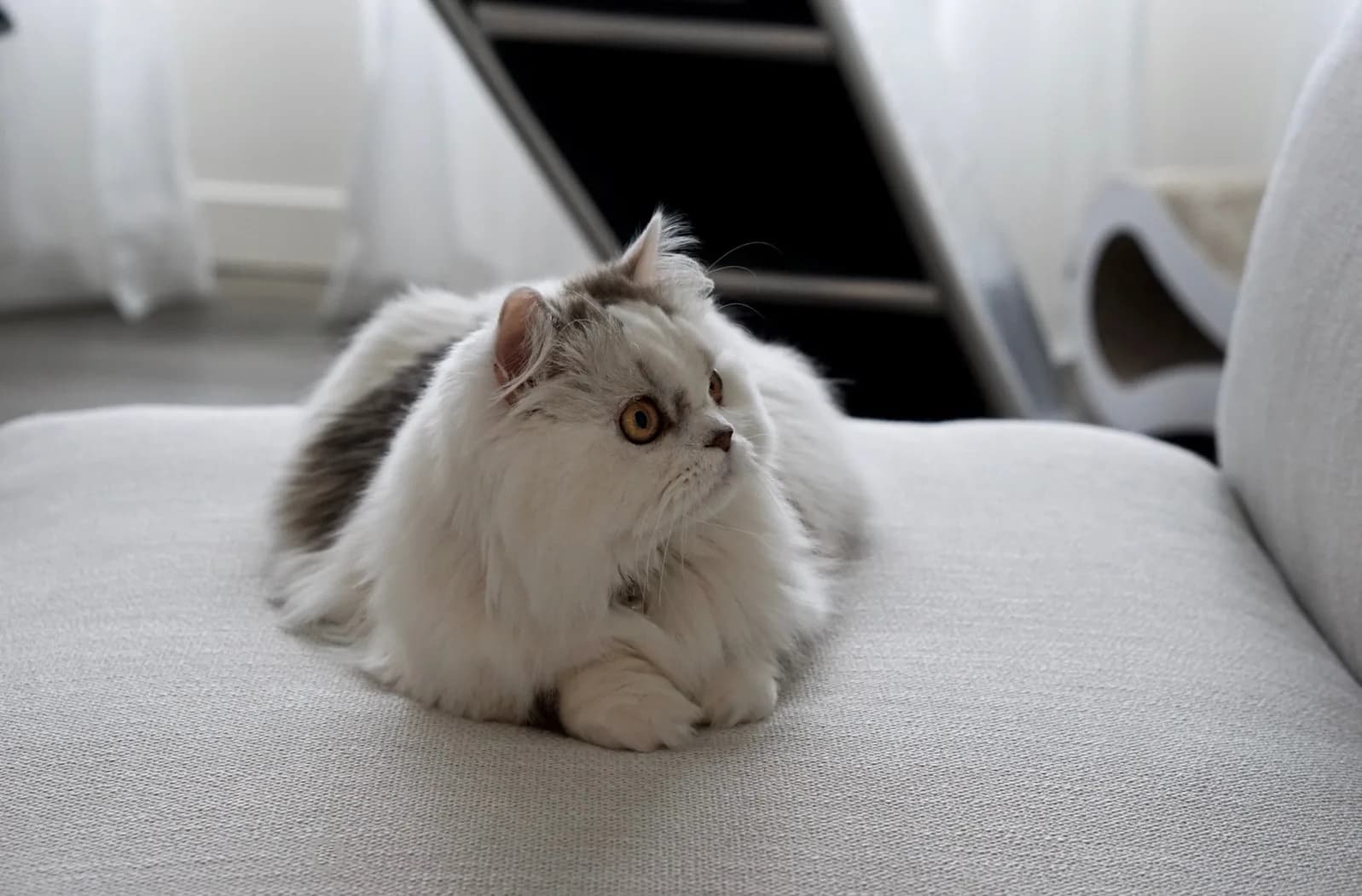
Coat length also affects perceived size. The breed comes in both a shorthair and a longhair version, and the thicker, woolly longhair coat can make a cat look a pound or two heavier than it really is. Underneath the fluff, the actual body is the same. This is the same optical trick that makes long-haired breeds in general seem larger than the scale confirms, so if you are choosing between a shorthair and a longhair pixie-bob, do not assume the fluffier kitten will grow into the bigger cat. Frame is set by genetics and sex, not coat.

108-oz stainless steel pet fountain with quiet pump and water-level window. Bengals are notoriously water-obsessed; a flowing fountain encourages hydration and pulls them away from sinks and toilets.
Petful may earn a commission when you click through to Chewy, at no extra cost to you.
What Affects How Big Your Pixie-Bob Gets
Genetics set the ceiling, but several everyday factors decide where in the range your cat lands:
- Sex, which is the single biggest driver, with males averaging several pounds heavier
- Neuter status and timing, which can influence frame and fat distribution
- Diet and portion control, since overfeeding adds fat, not healthy size
- Activity level, which builds the lean muscle the breed is known for
- Individual genetic luck within the litter
A pixie-bob that is overweight is not a bigger pixie-bob, it is an unhealthy one. Aim for a cat you can feel ribs on with a light layer of cover, and a visible waist from above. Healthy pixie-bob cat size is about frame and muscle, not the highest possible number on the scale.
Are Big Pixie-Bobs Healthy? Lifespan and Body Condition
Size and health are linked but not the same. The good news is that the diverse gene pool behind the pixie-bob makes it a generally robust breed. PetMD and ASPCA Pet Insurance both cite an average lifespan of 13 to 15 years, and some sources extend the range to 16 with good care.
Their large frame does mean owners should watch joint health and weight as the cat ages. Keeping a pixie-bob lean protects the joints that carry all that muscle and bone. Routine vet checks, a measured diet, and plenty of climbing and play are the practical levers.
There is no breed-specific disease tightly linked to pixie-bob size, which is part of why the breed enjoys a reputation for hardiness. The bigger long-term risk for any large, food-motivated cat is simply obesity, which compounds over a 15 year life and quietly shortens it. A useful habit is to weigh your pixie-bob at home every few months once it is mature and to log the number. Because adults should be stable within a narrow band, a steady creep upward is your earliest signal to cut portions, and an unexplained drop is your earliest signal to call the vet. Treat the scale as a health tool, not a bragging point, and a large pixie-bob can stay a healthy pixie-bob for its whole life.

Color-changing crystal litter that flags pH shifts in your cat's urine, an early warning sign of UTIs, kidney issues, and more.
Petful may earn a commission when you click through to Chewy, at no extra cost to you.
For comparison shopping among other spotted, wild-looking breeds, the athletic Bengal cat and the tall, leggy Savannah cat are the two breeds buyers most often weigh against a pixie-bob, and the ticked Abyssinian cat offers the wild look in a much smaller, lighter package.
How to Tell If Your Cat Is a Pixie-Bob by Size and Build
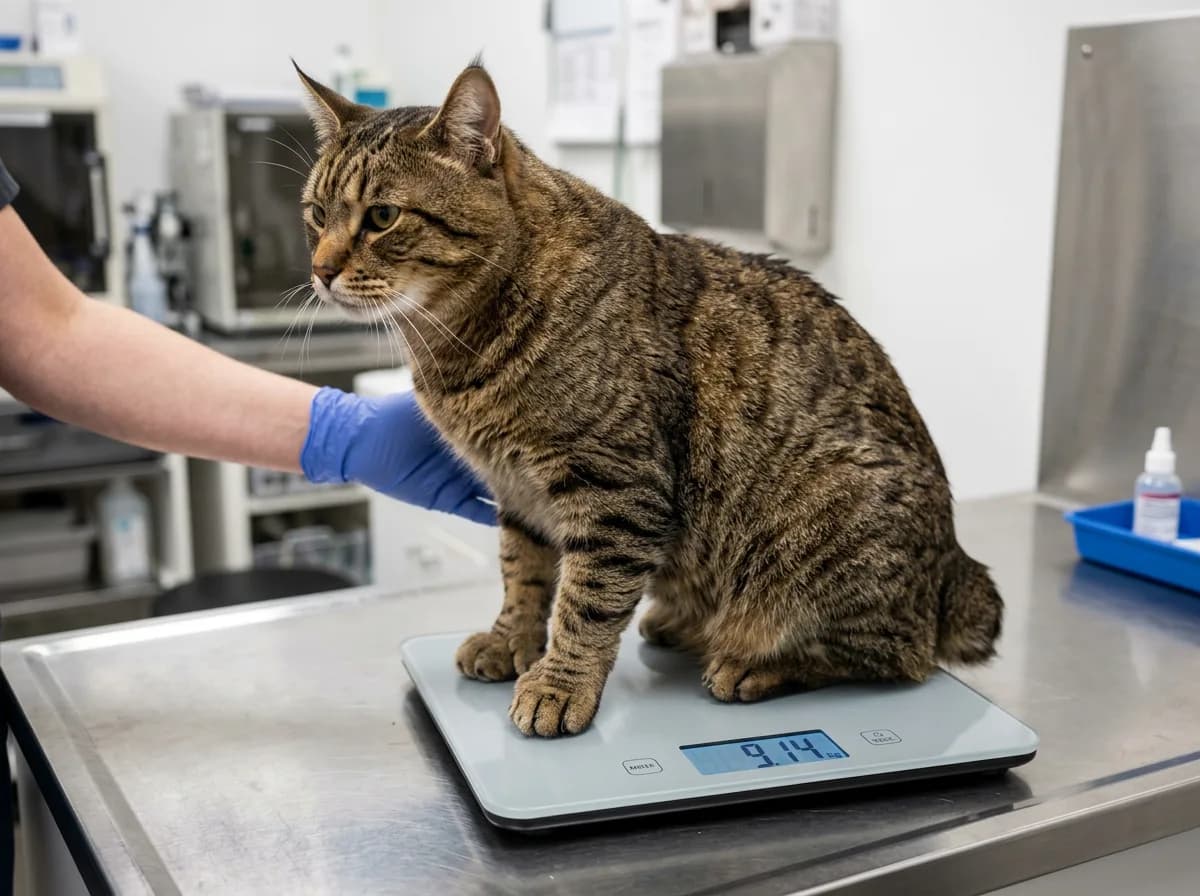
You cannot confirm a pixie-bob by size alone, but build is a strong first clue. Beyond the 8 to 17 pound range, look for the cluster of breed traits together: a brown spotted tabby coat, lynx-tipped ears, a short 2 to 4 inch tail, deep-set hooded eyes, a rounded chin with mutton-chop facial hair, heavy boning, and possibly extra toes. A genuine pixie-bob also moves with a distinctive rolling, almost wild gait.
A single trait is not enough. A big tabby with a naturally short tail is far more likely to be a mixed-breed cat than a pedigreed pixie-bob. Plenty of large rescue cats happen to be muscular, spotted, or short-tailed by chance, and a naturally bobbed tail in particular shows up in many random-bred cats. Registration papers from a TICA breeder are the only way to be certain. If your cat hits most of the size and build markers but came without papers, the honest answer is that you likely have a wonderful pixie-bob look-alike, which is no worse a cat for it.
Living With a Large, Heavy Pixie-Bob: Practical Tips
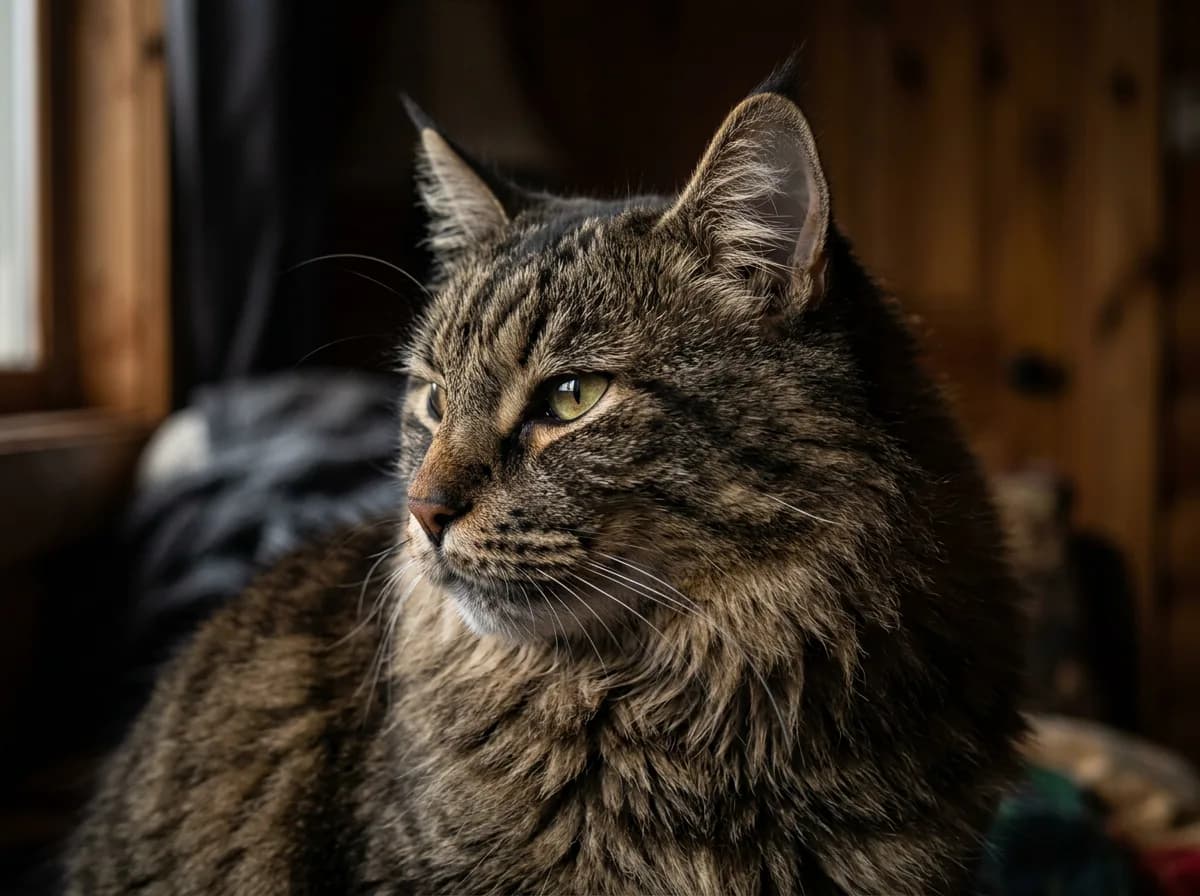
A pixie-bob's size is part of its appeal, but it does change a few daily realities compared to keeping an average eight pound cat. Most owners adjust without much trouble once they know what to plan for. The goal is to support a heavy, muscular, active body without letting that body tip into overweight.
Gear and Furniture Sized for a Big Cat
Standard cat furniture is built for an eight to ten pound cat, and a top-end male pixie-bob can simply outgrow it. A flimsy cat tree will wobble or tip under a 16 pound cat launching onto it, so look for a sturdy, wide-based tower with thick posts and platforms rated for a larger animal. Litter boxes are the other common pinch point: a long-bodied cat that can stretch to 24 inches needs a box it can fully turn around and dig in, which usually means an extra-large or storage-tote style box rather than a standard tray. Beds, carriers, and even some cat doors sized for a normal cat can be a tight squeeze, so check dimensions before buying rather than assuming a one-size product fits.
Feeding a Big Frame Without Adding Fat
A larger cat does need more total calories than a small one, but the difference is smaller than owners expect, and the heavy boning is not a license to free-feed. The safest approach is to feed a measured amount of a quality, protein-forward diet split across the day, then let body condition rather than the bowl decide portions. Because the breed keeps adding muscle into its third and fourth years, a growing young pixie-bob genuinely needs more food than it will as a settled adult, so plan to dial portions back once the cat hits its mature frame. A food-motivated big cat that is fed by appetite rather than by plan is the single most common way a healthy large pixie-bob becomes an unhealthy overweight one.
- Set portions by body condition and a vet's guidance, then adjust down once the cat stops growing. A bigger cat needs more food than a small one, but far less than its enthusiasm suggests.
Lifting, Handling, and Joint-Friendly Habits
A 14 to 17 pound cat is a real armful, and the dense build means a pixie-bob feels heavier than its length suggests. Support the chest and hindquarters together when you lift, the same way you would a small dog, rather than scooping under the front legs. For the cat's own joints, give it safe ways to get up and down from height: stable ramps or stepped platforms to favorite perches spare the elbows and hips that carry all that mass, which matters more as the cat ages. Keeping the cat lean is itself the best joint protection, since every extra pound is load the frame was not built to carry indefinitely.
Exercise to Keep the Muscle, Not the Fat
The pixie-bob is an athletic, dog-like breed that thrives on activity, and that activity is what builds the lean muscle the breed is known for instead of fat. Daily interactive play, climbing structures, and even leash walks suit the breed's energy and curiosity. An under-exercised big cat does not stay smaller, it just carries its size as fat, which is the opposite of the healthy, hard-muscled look the breed is bred for. Channeling that energy is also good for temperament: a bored pixie-bob is far more trouble than a tired one.
Pixie-Bob Size FAQ
A pixie-bob kitten from a registered breeder typically costs between 1,000 and 2,000 dollars, with rare long-tail and show-quality cats reaching higher. The breed's slow growth and limited number of catteries keep prices firm.
Yes. Despite the wild look and large size, pixie-bobs are known for being extremely affectionate, laid-back, and dog-like, often following their owners from room to room and enjoying lap time.
Look for the full set of breed traits together: a brown spotted coat, lynx-tipped ears, deep-set hooded eyes, a rounded chin with mutton-chop hair, heavy boning, a short 2 to 4 inch tail, and sometimes extra toes. Only TICA registration papers confirm it for certain.
Pixie-bobs are considered uncommon. They are bred by a relatively small number of dedicated catteries, which is part of why kittens are not cheap and waiting lists are common.
Pixie-bobs generally live 13 to 15 years, and some reach 16 with attentive care, thanks to the diverse gene pool behind the breed.
Not really. Pixie-bobs are fairly quiet and tend to communicate with chirps, chitters, and twitters rather than constant meowing, though they will meow occasionally.
Several breeds compete for that title, including the Ragdoll, Siamese, and Sphynx, but the pixie-bob ranks among the clingiest thanks to its loyal, people-focused, dog-like temperament.
The Bottom Line on Pixie-Bob Cat Size
A pixie-bob is a genuinely large domestic cat: 8 to 17 pounds depending on sex, up to 24 inches long, heavy-boned, and slow to reach its full size over 3 to 4 years. It looks like a small bobcat by design, not by blood, and it stays well within domestic-cat dimensions despite the wild first impression. If you want the look of a wildcat with the temperament of a devoted housemate, the pixie-bob delivers it in a sturdy, substantial package, just be ready to wait a few years for the cat to finish growing into it.

Coreen Saito is a pet writer and longtime shelter volunteer with more than a decade in animal rescue. She covers cat behavior, breed care, and the small, ordinary science of sharing a life with companion animals, with a particular focus on honest takes about the products and decisions that actually matter. At home in Arizona, she's outranked by Mac (a dog with the loudest opinion in the house), Rebel (a cat who governs by quiet authority), and Meri (an orange tabby who runs the late shift and the laundry basket). She writes about all three, plus the rescues that keep coming through her life, at LifeWithMinty.com.
Sign up for expert-backed reviews and safety alerts all in one place.