Oriental Shorthair Personality: The Vocal, Velcro Cat
The Oriental Shorthair personality is vocal, velcro, and dog-like: a brilliant, athletic, people-obsessed cat that honks, fetches, and hates being alone. Here is what to expect before you bring one home.
Petful is reader supported. As an affiliate of platforms like Amazon and Chewy, we may earn a commission when you buy through links on this page. There is no extra cost to you.
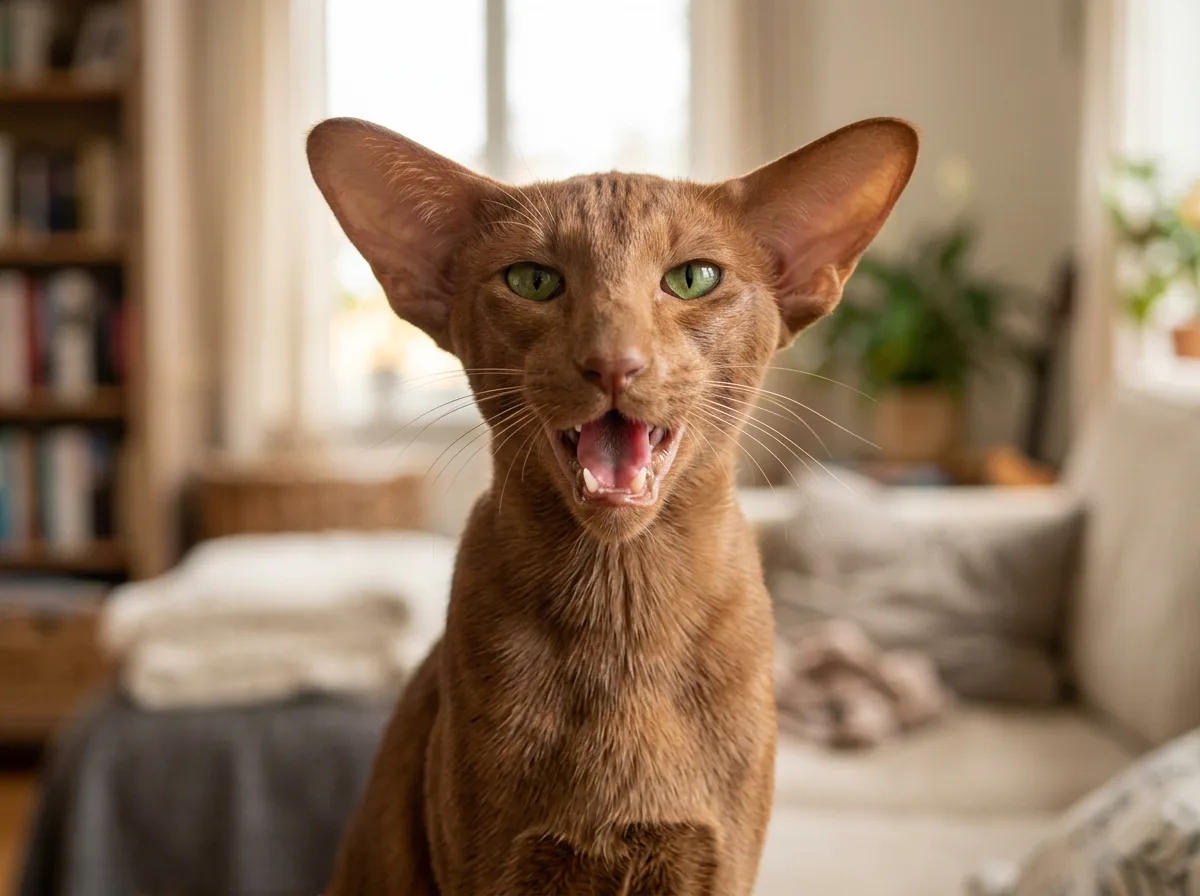
The Cat Fanciers' Association sums up the Oriental Shorthair personality in two blunt words, "vocal and needy," and that is exactly why this breed inspires such devotion: it is one of the most social, talkative, people-obsessed cats you can own, with a raspy honk of a voice and a habit of following you from room to room like a small, four-legged shadow. Developed from the Siamese, the Oriental Shorthair inherited every ounce of its ancestor's chattiness, intelligence, and need to be in the middle of everything. If you want a quiet, aloof cat that ignores you for most of the day, this is not your breed. If you want a constant companion that talks back, rides on your shoulder, and learns to fetch, read on. Petful’s guide to Oriental Shorthair prices breaks down breeder, adoption, and lifetime costs.
- 1The Oriental Shorthair is intensely social, deeply attached, and famously vocal, with a distinctive raspy "honk" of a voice.
- 2They are dog-like and "velcro," following you everywhere and bonding hard with their people.
- 3They are highly intelligent, athletic, and playful well into old age, and they need daily interaction and enrichment.
- 4They do not cope well alone all day and are happiest in a busy home or kept in pairs.

Sign up for expert-backed reviews and safety alerts all in one place.
The Famous Voice: Why Oriental Shorthairs "Honk" and Talk So Much
The single trait that defines the Oriental Shorthair personality is the voice. These cats are not quietly chatty. They are loud, persistent, and opinionated, and their meow has a raspy, nasal quality that owners and breeders affectionately call a "honk." It does not sound like a typical cat. It is lower, hoarser, and more insistent, and an Oriental will deploy it for everything: greeting you at the door, narrating your trip to the kitchen, demanding the window blinds go up, or simply telling you about its day.
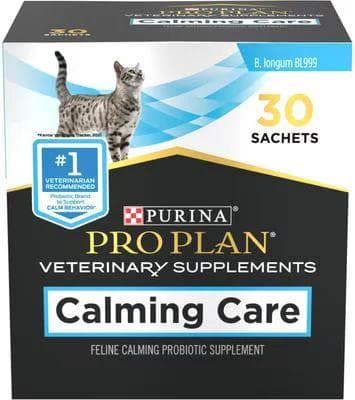
A vet-recommended probiotic supplement (B. longum BL999) that helps cats manage anxious behaviors and stay calm during stressful events and routine changes.
Petful may earn a commission when you click through to Chewy, at no extra cost to you.
This chattiness is a direct inheritance from the Siamese, the breed the Oriental was developed from. The Cat Fanciers' Association puts it plainly: expect "a fair amount of conversation" because they "will want to share their thoughts on pretty much everything." TICA describes the whole Siamese breed group as lively, sociable cats who love to interact. The vocalizing is not anxiety or distress in a well-cared-for cat. It is conversation. Orientals genuinely seem to expect a reply, and many owners find themselves talking back all day without noticing.
- The Oriental Shorthair's raspy voice comes straight from its Siamese ancestry, the talkiest of all cat lineages. It is a social tool, not a sign of a problem. These cats vocalize to bond and to get your attention, and they expect a response, so a household that talks back keeps them happiest.
If you live in an apartment with thin walls or you crave silence, factor the noise in honestly before you commit. There is no training the chattiness out of an Oriental. It is who they are. For the right person, though, that running commentary is the best part of the day.
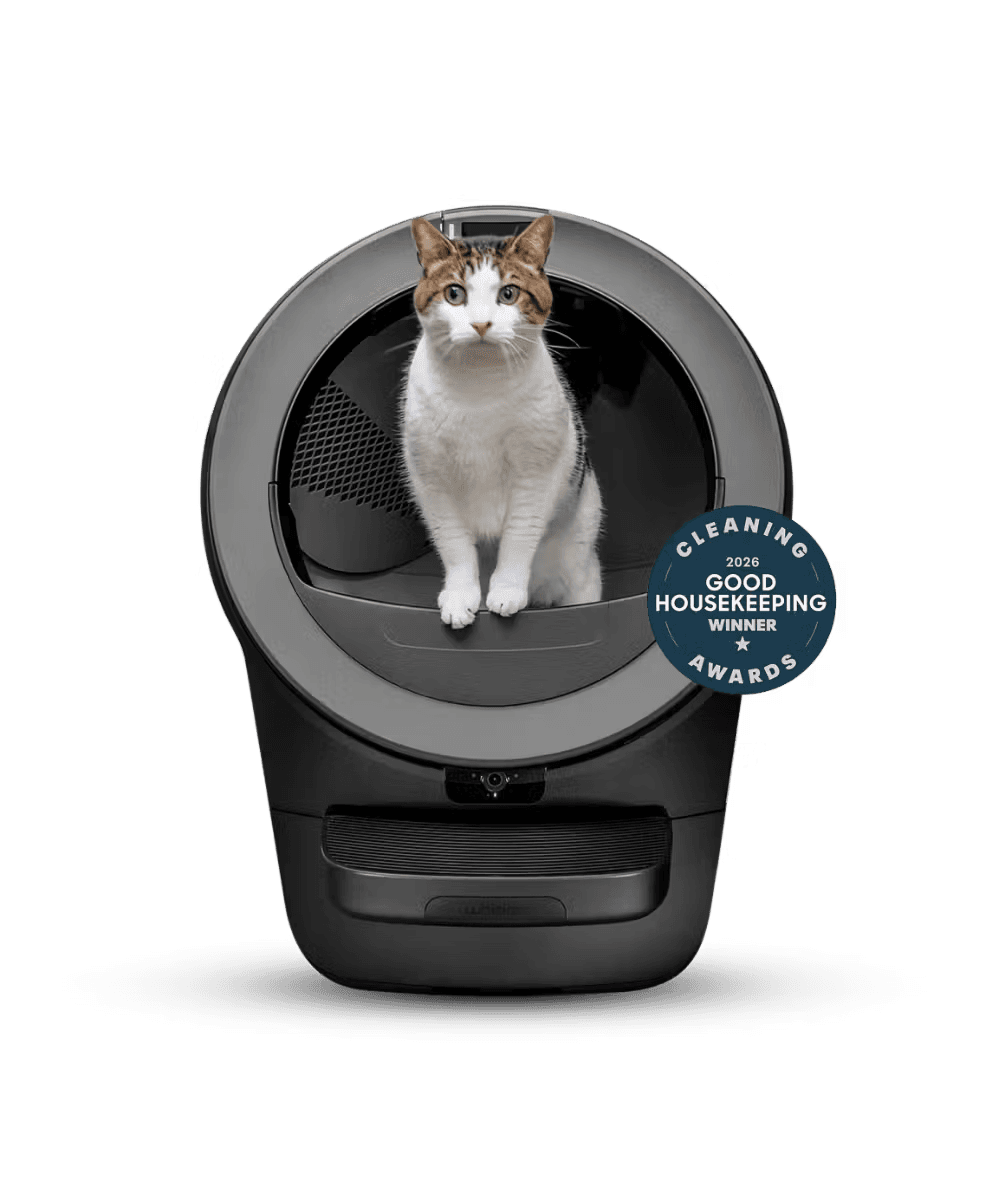
Never Scoop Again® with the Whisker Litter-Robot, the smart self-cleaning automatic litter box. Monitor visits and track weights for better overall care in the Whisker® app. Multi-cat friendly.
Petful may earn a commission when you click through to Whisker, at no extra cost to you.
For a deeper look at where this voice comes from, our guide to the Siamese cat personality covers the same vocal, social temperament in the breed that gave the Oriental its DNA.
The Velcro, Dog-Like Attachment
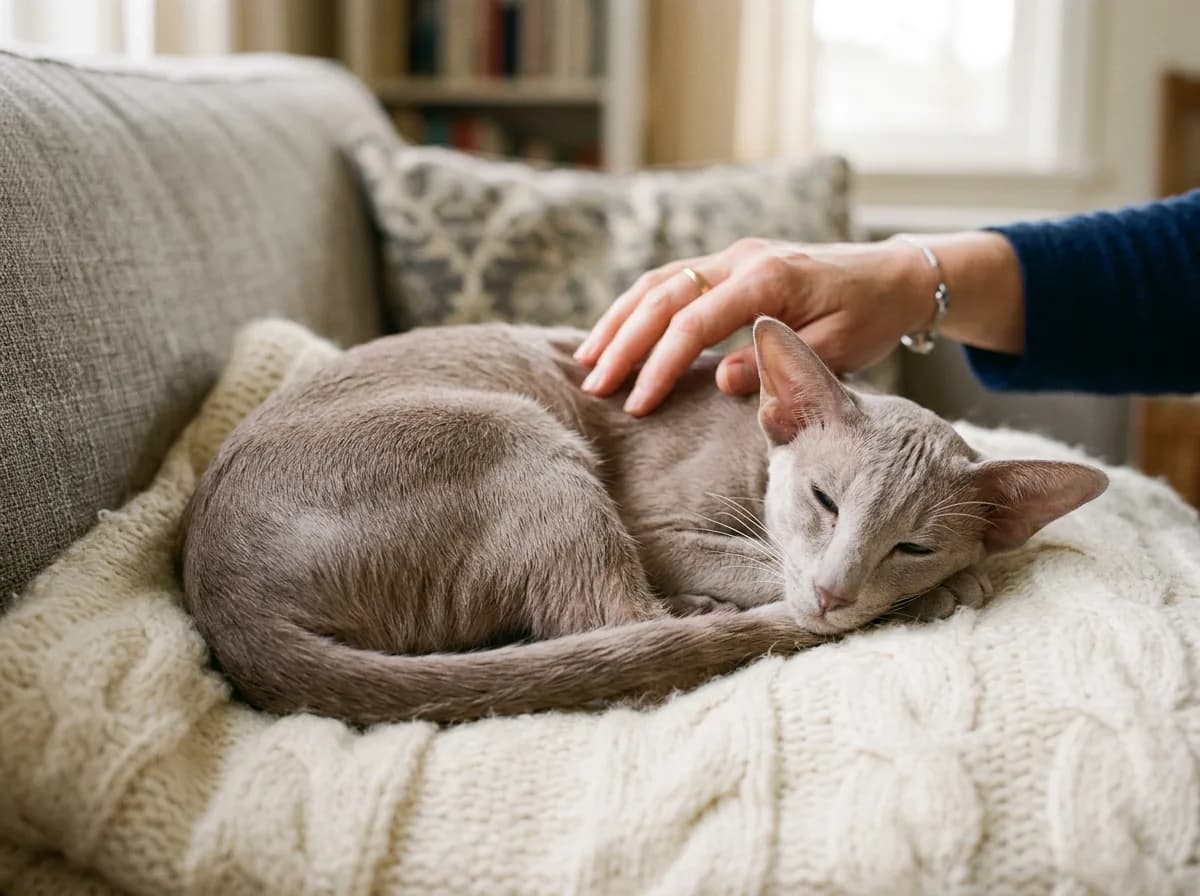
Ask any Oriental Shorthair owner to describe their cat and the word "dog" comes up within a sentence or two. This is a velcro breed in the truest sense. An Oriental does not want to be in the same house as you. It wants to be on you, beside you, or directly underfoot. They follow their people from room to room, supervise every chore, ride on shoulders, burrow under the covers at night, and settle into a lap the moment you sit still.
The CFA describes this beautifully: "Every move you make will fascinate your Oriental." They will "assist" you in tying your shoes, "help" you choose your breakfast from the fridge, and "do anything to please you." This is a breed that bonds hard, usually to the whole family but often with one favorite person, and it wants that bond reciprocated. As the breed community puts it, the Oriental wants you to commit to it the way it commits to you.
That intensity is the breed's greatest charm and also its biggest demand. An Oriental that feels ignored may "pine," in the CFA's words, growing withdrawn or even depressed. This is not a cat you can keep at arm's length. It is a full-time companion that gives enormous affection and expects plenty back.
- Orientals love to feel useful and involved. Let your cat supervise you while you cook, fold laundry, or work, and narrate back to it. That sense of participation satisfies the breed's need to be part of everything and strengthens the bond.
Intelligence and Trainability
Orientals are seriously smart. The CFA calls them "as intelligent as their Siamese ancestors, which makes them extremely bright," and that intelligence shows up in how trainable they are. Unlike most cats, an Oriental will happily learn to fetch, to sit and spin on cue, to walk on a harness and leash, and to solve puzzle feeders. They thrive on the mental challenge, and a bored Oriental is a mischievous one.
That cleverness has a flip side. Like many highly intelligent animals, Orientals have their own opinions and a stubborn streak. They will learn what you teach, then decide for themselves when to cooperate. They are also expert problem-solvers, which means cupboards, drawers, and "cat-proofed" rooms are merely puzzles to be cracked. Channel that brain with training sessions, food puzzles, and rotating toys, or the cat will invent its own entertainment, usually at your expense.
- Teach tricks, offer puzzle feeders, and rotate toys to keep an Oriental's sharp mind busy. Ten minutes of clicker training or fetch a day burns mental energy and prevents the boredom-driven mischief this breed is prone to.
The same fine-boned, big-eared, highly active build and clever temperament show up in another Siamese-adjacent breed. If you like this profile, our Cornish Rex breed profile covers a cat with a similar playful, people-focused energy.
Energy and Play: Athletic, and Kitten-Like for Life
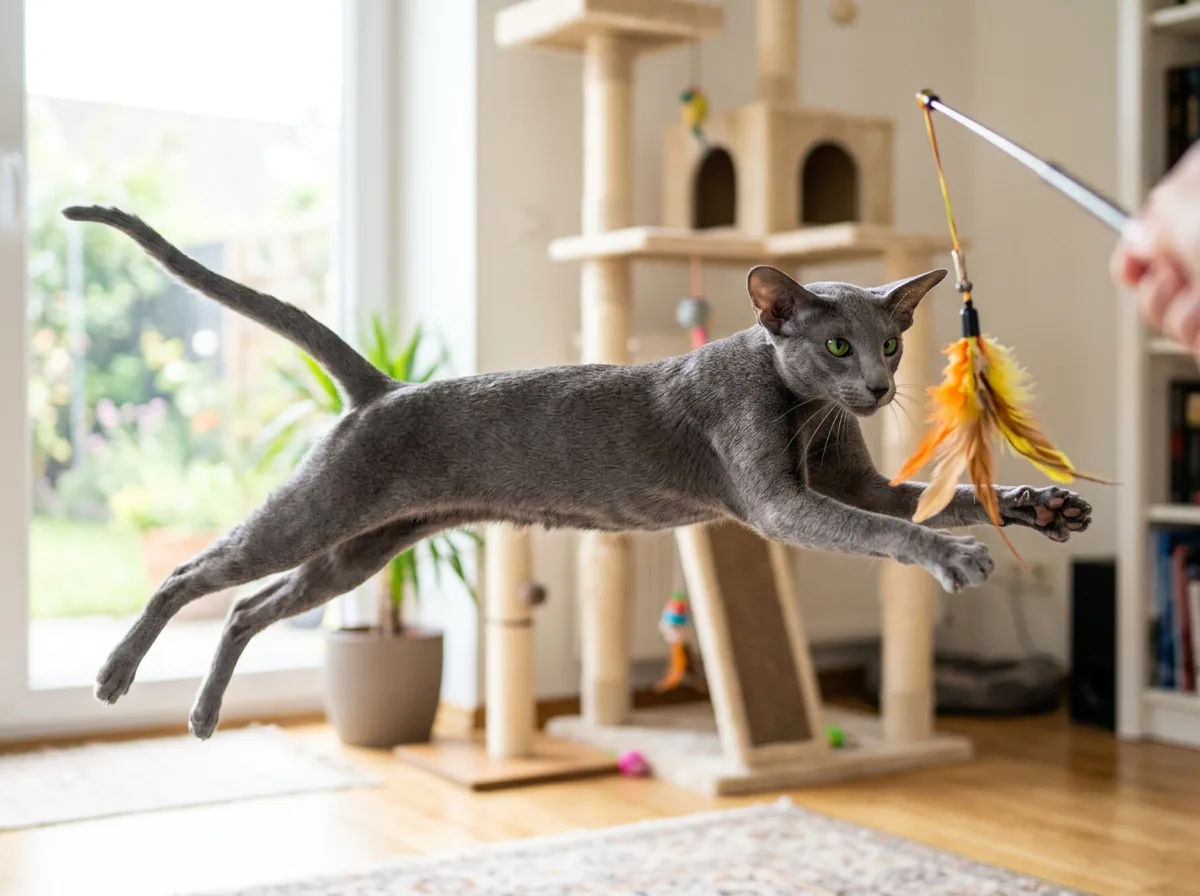
Do not let the elegant, slender frame fool you. The Oriental Shorthair is an athlete. These cats are graceful, powerful jumpers and climbers who treat the top of the bookshelf, the fridge, and the door frame as their rightful territory. Their energy is rated high by virtually every breed source, and crucially, they keep that kitten-like playfulness deep into adulthood and old age. A senior Oriental will still chase a wand toy with the enthusiasm of a six-month-old.
That athleticism needs an outlet. A tall cat tree, plenty of vertical space, sturdy perches near windows, and daily interactive play are not luxuries for this breed, they are requirements. Orientals need the exercise to stay lean and healthy, and they need the stimulation to stay out of trouble. A home with nothing to climb and no one to play with is a recipe for a frustrated, destructive cat.

63-inch multi-level cat tree with scratch posts, hammock, plush perches, and dangling toys. Vertical territory is non-negotiable for high-energy climbing breeds like the Bengal.
Petful may earn a commission when you click through to Chewy, at no extra cost to you.
- An under-stimulated Oriental will entertain itself by opening cabinets, knocking things off shelves, and shredding what it can reach. Vertical space, puzzle toys, and at least two solid play sessions a day are essential, not optional, for this high-energy breed.
They Need Company: Do Not Leave Them Alone All Day
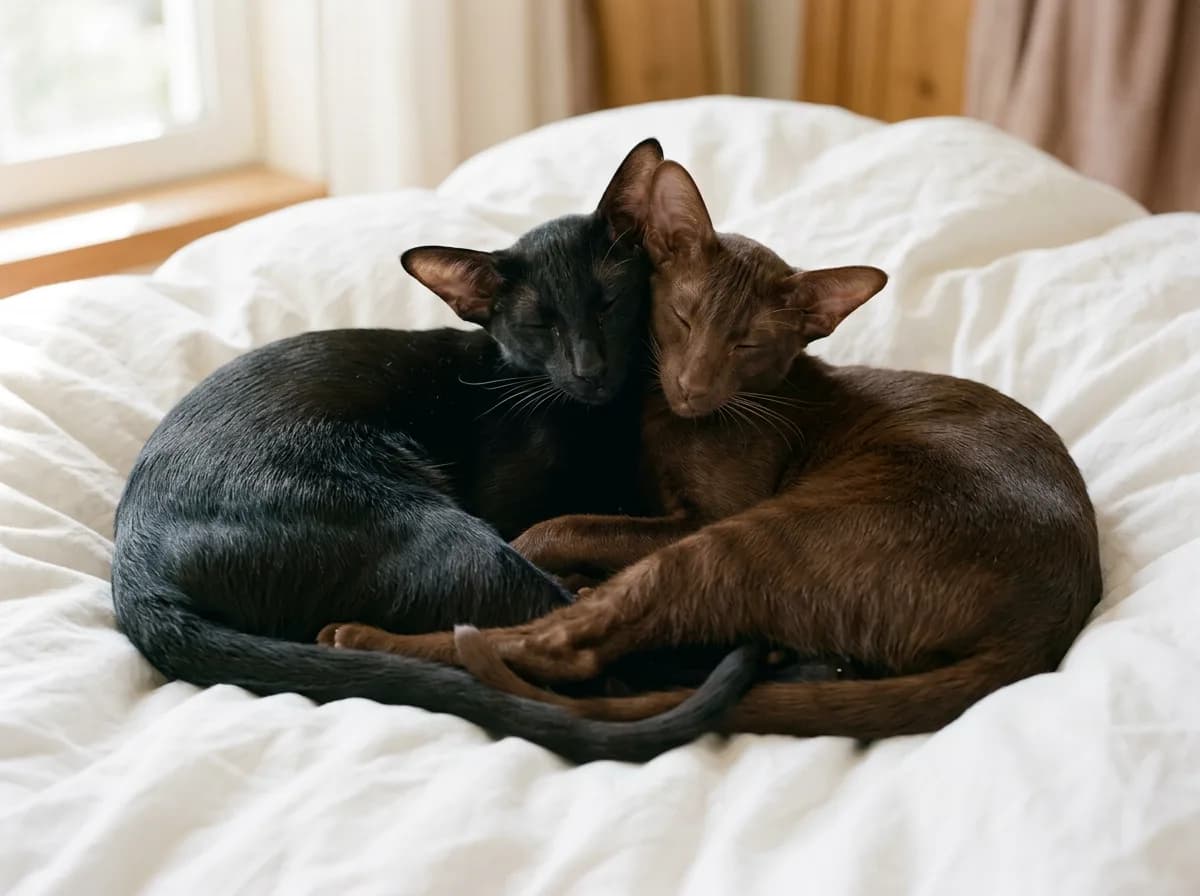
This is the most important thing to understand before you bring one home. The Oriental Shorthair does not do well alone. Its entire personality is built around social connection, so long stretches of solitude are genuinely hard on it. Sources across the board agree: these cats can become lonely, withdrawn, and even depressed when left by themselves for too long. The Spruce Pets, Purina, Petplan, and the breed community all land on the same conclusion, company is essential.
For households where everyone is out at work or school all day, the standard recommendation is to get two. A second cat, ideally another Oriental or a Siamese-group cat with similar energy, gives your Oriental a playmate and a companion so it is never truly alone. Many owners say a single Oriental in an empty house is a recipe for heartache, while a pair entertains each other beautifully.
- If you work long hours and cannot offer a companion, the Oriental Shorthair is the wrong breed. Left alone day after day, these intensely social cats grow stressed and unhappy. Plan to be home often, or commit to a second cat, before you bring one home.
Below is an honest snapshot of where this personality shines and where it struggles, so you can match the breed to your real life.

108-oz stainless steel pet fountain with quiet pump and water-level window. Bengals are notoriously water-obsessed; a flowing fountain encourages hydration and pulls them away from sinks and toilets.
Petful may earn a commission when you click through to Chewy, at no extra cost to you.
| Trait | Rating | What It Means for You |
|---|---|---|
| Vocalness | Very high | Constant raspy "honk" chatter; expects conversation back |
| Affection / attachment | Very high | Velcro and dog-like; bonds hard, follows you everywhere |
| Intelligence | Very high | Learns tricks, fetch, and leash walking; needs mental work |
| Energy / playfulness | High | Athletic jumper, kitten-like for life; needs daily play |
| Tolerance for being alone | Low | Gets lonely and stressed; best in a busy home or in pairs |
| Good with other pets | High | Sociable with cats and dogs when introduced well |
Good With Kids, Dogs, and Other Cats?
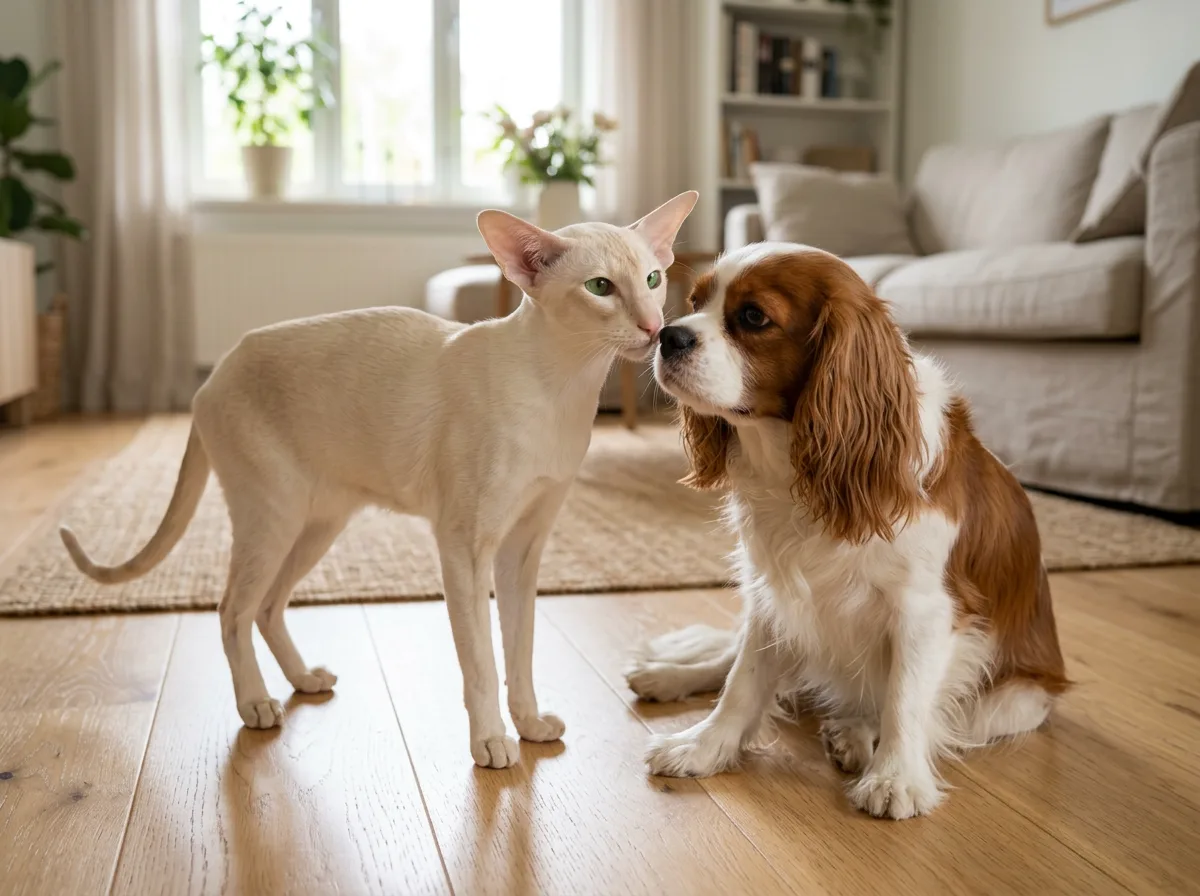
The Oriental's sociability extends well beyond its favorite humans. Properly introduced, these cats generally get along wonderfully with other pets. Both Purina and Petplan rate them highly for compatibility with other animals, and the CFA notes they will happily "persuade other pets to join them in a game." A confident, playful dog or another active cat often makes an ideal companion, and a second pet helps solve the loneliness problem.
With other cats, a Siamese-group match (another Oriental, a Siamese, or a Balinese) tends to work best because the energy and play styles line up. The closely related, semi-longhaired Balinese cat shares the Oriental's chatty, affectionate nature and pairs naturally with it.
With children, the picture is more nuanced. Orientals are friendly, playful, and tolerant with respectful older kids and teens who can engage them properly. Younger children are a different story. Sources note Orientals can be skittish or overwhelmed around very young, unpredictable children, and Petplan flags them as better suited to homes with older kids. The breed wants interactive, gentle attention, not grabbing or chasing, so households with toddlers should set firm boundaries and supervise closely.
- Orientals thrive with adults and older children who want an interactive cat, in homes where someone is around much of the day, or where a second compatible cat keeps them company. They are less suited to very quiet homes, families with toddlers, or owners who are out for long hours.
The Emotional, Sensitive Side
For all their boldness, Orientals are emotional, sensitive cats. The knowledge-graph descriptors for the breed, "inquisitive, sociable, devoted, intelligent, friendly, and emotional," capture it well. They feel the mood of the house, they are attuned to their favorite person, and they take changes hard. A new schedule, a move, a death in the family, or a long absence can genuinely upset an Oriental, and stress sometimes shows up as extra vocalizing, clinginess, or a dip in mood.
This sensitivity is the natural cost of how deeply they bond. The same trait that makes an Oriental such a loving, attentive companion also makes it vulnerable when that connection is disrupted. Keep routines reasonably stable, prepare them for big changes where you can, and give them the steady attention they crave, and you will have a remarkably devoted cat.
Is the Oriental Shorthair Personality Right for You?
The Oriental Shorthair is a spectacular pet for the right person and a frustrating one for the wrong person. It is right for you if you want a cat that is genuinely involved in your life, that talks to you, plays into old age, learns tricks, and curls up with you every night. It is right if you are home often, or willing to keep two so the cat is never lonely, and if you find a chatty, demanding, affectionate cat charming rather than exhausting.
It is the wrong choice if you want a low-maintenance, independent, quiet cat. It is wrong if you are out of the house ten hours a day with no second pet, if you need silence, or if you have very young children and limited time to supervise. This breed gives an enormous amount of love and asks for just as much engagement in return. Go in clear-eyed about the noise, the neediness, and the energy, and an Oriental will be one of the most rewarding companions you ever share a home with.
For more on the closely related parent breed that shares almost every one of these traits, see our Siamese cat breed profile, and for the pointed-versus-solid coat differences between the two, our guide to Siamese cat colors explains why an Oriental is essentially a Siamese in a different coat.
Intensely social, deeply attached, highly intelligent, athletic, and famously vocal. Orientals are dog-like and "velcro," following their people everywhere, talking constantly in a raspy "honk," learning tricks and fetch, and staying playful into old age. They bond hard and need lots of daily interaction.
They inherited their chattiness from the Siamese, the talkiest cat lineage. Their meow has a distinctive raspy, nasal quality owners call a "honk," and they use it to greet you, demand attention, and narrate their day. It is conversation, not distress, and they expect you to answer.
Very. They are one of the most affectionate cat breeds, settling in laps, riding on shoulders, sleeping under the covers, and following their favorite person from room to room. They bond hard and crave physical closeness and constant involvement in your day.
Yes, for the right home. They are devoted, interactive, playful, and entertaining, ideal for people who want a constant companion and are home often or keep two cats. They are a poor fit for anyone wanting a quiet, independent, or low-maintenance cat.
Not for long. They are intensely social and can become lonely, withdrawn, and even depressed when left by themselves all day. If you work long hours, keep two cats so your Oriental always has company, or choose a different breed.
Generally yes, with the right introductions. They get along well with cat-friendly dogs and other active cats, and a second pet helps with loneliness. They do best with respectful older children and can be skittish around very young kids, so supervise closely.
Yes. They are athletic jumpers and climbers who stay kitten-like and playful well into old age. They need a tall cat tree, vertical space, and at least two daily play sessions, or they get bored and turn to mischief.
They are loud, needy, and high-energy. They cannot be left alone all day, they demand constant attention and play, the chattiness cannot be trained away, and boredom can make them destructive. They also need a companion or a present household to stay happy.
The Oriental Shorthair and its parent breed the Siamese are among the clingiest, most people-dependent cats there are. Both are velcro, dog-like companions that follow their owners everywhere and dislike being left alone, making them ideal for people who want maximum togetherness.

Coreen Saito is a pet writer and longtime shelter volunteer with more than a decade in animal rescue. She covers cat behavior, breed care, and the small, ordinary science of sharing a life with companion animals, with a particular focus on honest takes about the products and decisions that actually matter. At home in Arizona, she's outranked by Mac (a dog with the loudest opinion in the house), Rebel (a cat who governs by quiet authority), and Meri (an orange tabby who runs the late shift and the laundry basket). She writes about all three, plus the rescues that keep coming through her life, at LifeWithMinty.com.
Sign up for expert-backed reviews and safety alerts all in one place.