Ocicat Personality: Inside the Mind of "a Dog in a Cat's Body"
A deep guide to the Ocicat personality: the social, dog-like, highly trainable temperament behind the spots, plus the real cons (separation anxiety, vocal demanding), cuddle habits, multi-pet fit, and an honest right-for-you check.
Petful is reader supported. As an affiliate of platforms like Amazon and Chewy, we may earn a commission when you buy through links on this page. There is no extra cost to you.
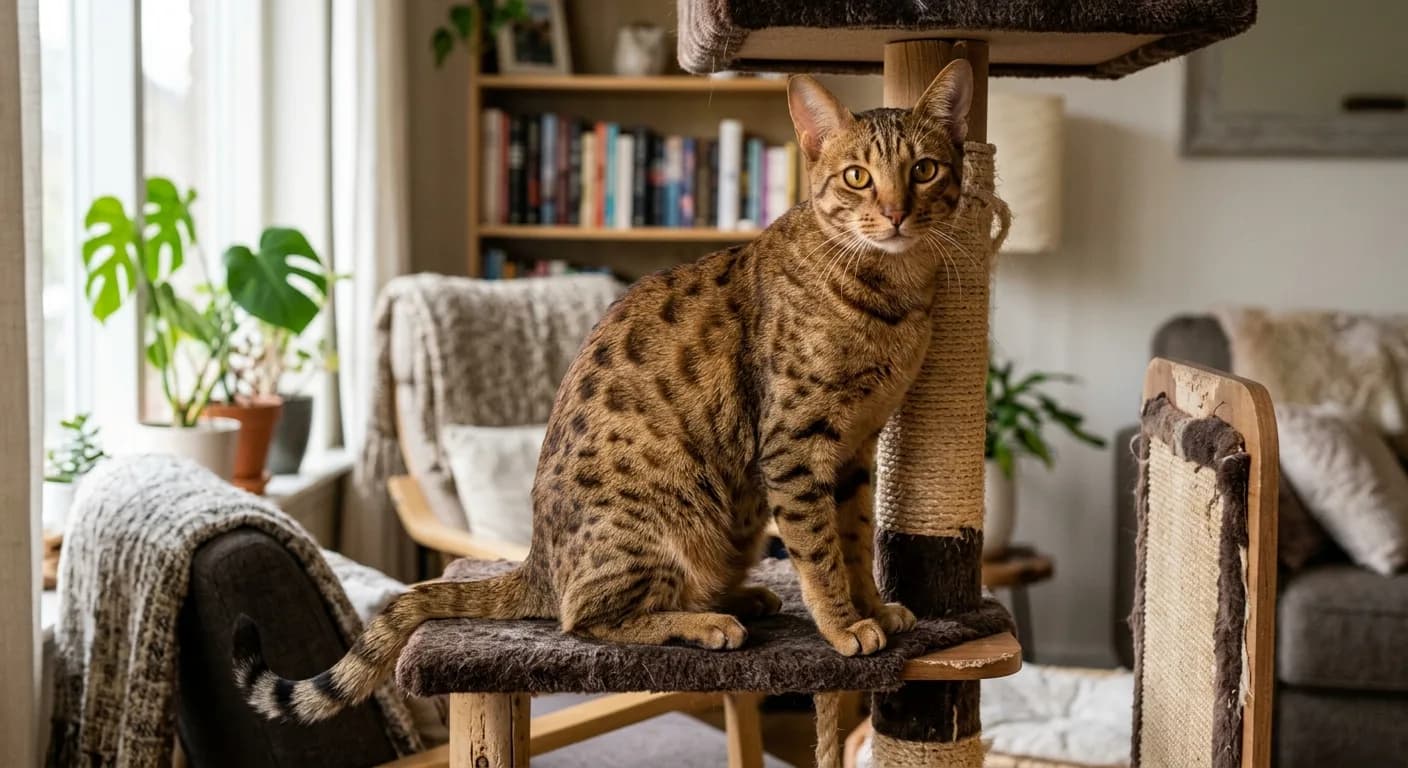
The Ocicat personality is the reason breeders and the Cat Fanciers' Association (CFA) describe this spotted cat as "a dog in a cat's body," and it is no exaggeration: a well-socialized Ocicat will greet visitors at the door, fetch a thrown toy, come when called, walk on a leash, and hold a back-and-forth "conversation" with you across the room. Underneath that wild ocelot-like coat is one of the most outgoing, trainable, and people-obsessed cats in the fancy, a 100% domestic breed with zero wild blood. That same intensity is a double-edged sword. The traits that make an Ocicat magic in an active home (relentless curiosity, deep social need, high energy) are the very ones that turn into separation anxiety, yowling, and destruction when the cat is left alone too long. This guide breaks down exactly how an Ocicat thinks, plays, talks, and bonds, what it needs from you every single day, and the honest cons no breeder brochure leads with.
- 1The Ocicat is widely described as "a dog in a cat's body": social, loyal, and highly trainable
- 2It learns fetch, leash-walking, recall, and clicker tricks faster than almost any other cat breed
- 3It is vocal in an expressive, conversational way thanks to Siamese heritage, not loud like a Siamese
- 4The biggest con is its need for company: a neglected Ocicat can become depressed, anxious, and destructive
- 5It is genuinely cuddly and a devoted lap cat once the day's energy is spent, making it a strong multi-pet companion

Sign up for expert-backed reviews and safety alerts all in one place.
What "a dog in a cat's body" really means
The phrase gets repeated everywhere, so it helps to define it concretely. According to Wikipedia's summary of the breed and the CFA, the Ocicat's temperament is "often described as that of a dog in a cat's body," and the comparison is behavioral, not just marketing. Ocicats follow their humans from room to room, supervise whatever you are doing, learn their own names, and respond to commands the way a clever dog does. CFA breeders quoted in the association's own profile go further, calling the Ocicat "essentially a Labrador Retriever in a catsuit" and joking that you will "never go to the loo alone."
What separates this breed from an ordinary friendly cat is the combination of three things at once: intelligence, sociability, and drive. Plenty of cats have one. The Ocicat stacks all three, which is why it behaves less like a typical aloof feline and more like a velcro companion animal that happens to purr. Wisdom Panel sums the core up as "confident and people-oriented," a cat that "makes devoted family pets" and adapts readily to new environments and people.
- The Ocicat was created in the 1960s by crossing Siamese, Abyssinian, and American Shorthair lines. Per CFA, it carries no wild cat DNA at all. The spotted coat is pure cosmetics. Behaviorally this is one of the gentlest, most outgoing pedigreed cats you can own, not a wild hybrid.
If you are drawn to the exotic spotted look but want to understand the temperament trade-offs across the "wild-looking" breeds, our Ocicat breed profile lays out the full picture, and it is worth contrasting the Ocicat's easy domesticity against the higher-octane Bengal cat, which carries actual wild ancestry and a more demanding edge.
Never Scoop Again® with the Whisker Litter-Robot, the smart self-cleaning automatic litter box. Monitor visits and track weights for better overall care in the Whisker® app. Multi-cat friendly.
Petful may earn a commission when you click through to Whisker, at no extra cost to you.
Highly social and people-oriented: the velcro side
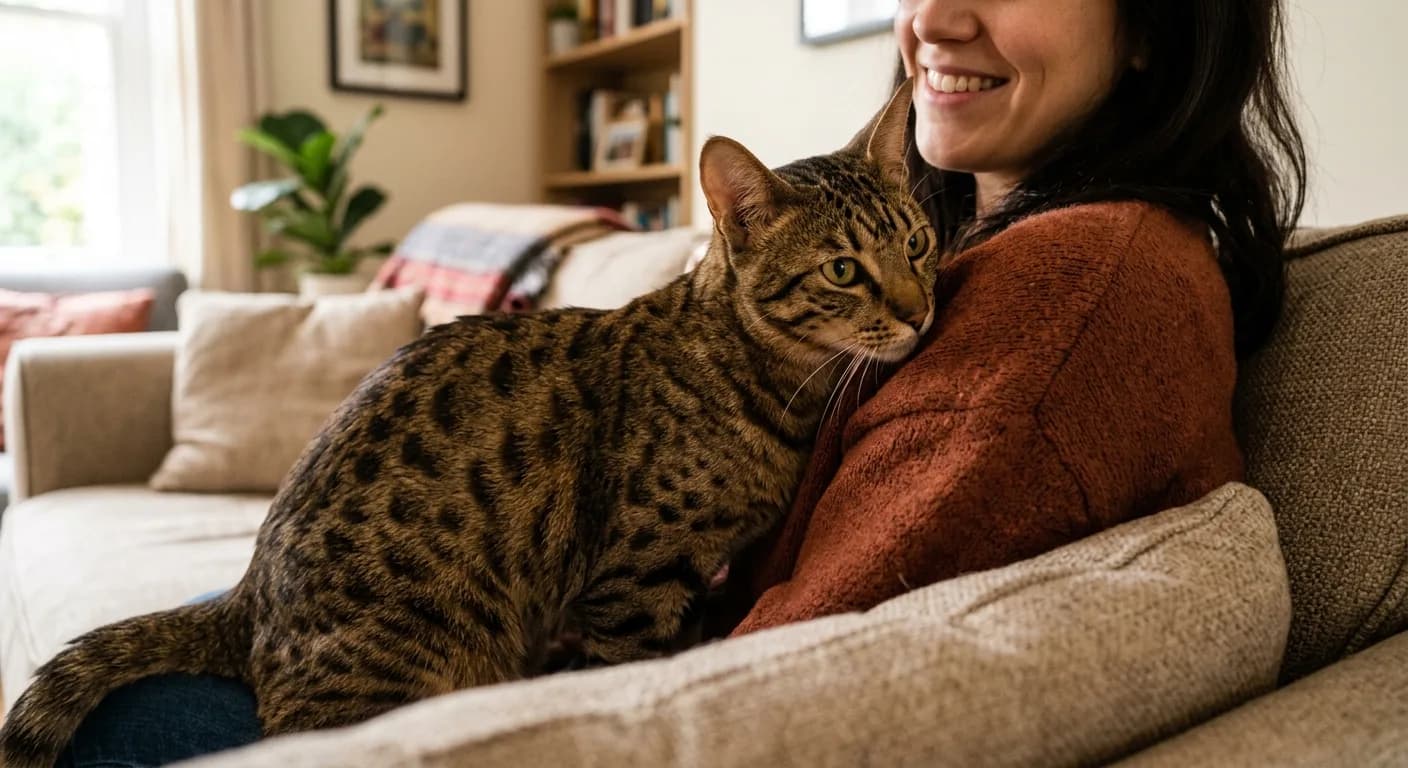
Sociability is the load-bearing trait of the Ocicat personality, and it shapes everything else. These cats are described by TICA as "outgoing and friendly to everyone, including strangers," a "medium sized cat with a larger-than-life personality." WebMD echoes that they are "not afraid to curl up on a stranger's lap." Where a shy breed hides under the bed when the doorbell rings, a typical Ocicat trots over to inspect the new arrival.
That friendliness extends to the whole household. Ocicats bond hard to their people and want to be involved in family life: cooking, working at a desk, watching television, going to bed. They are attentive, affectionate companions that thrive on interaction rather than tolerating it. Importantly, WebMD notes they manage to be devoted "without being overly clingy" in the needy, anxious sense, as long as their social tank is kept full. The affection is confident, not insecure.
- An Ocicat suits a busy, social household where someone is usually home, or a home with another compatible pet. If your house is empty 10-plus hours a day with no animal company, a more independent breed is the kinder choice. Sociability this high needs an outlet.
Trainable to a fault: fetch, leash, recall, and clicker tricks
If you have ever wanted a cat you can actually train, this is the breed. Vetwest, a veterinary group, states plainly that the Ocicat "can be trained to fetch toys, walk on a lead, taught to speak, come when called, and follow other commands." That list reads like a dog's resume, and Ocicat owners routinely deliver on all of it.
The engine behind the trainability is raw intelligence. Litter-Robot's breed profile notes Ocicats "are very bright and appreciate enrichment games and learning new tricks" and "will quickly catch on to their names and come when you call them." They are natural problem-solvers: CFA owners describe cats that open doors, cabinets, and drawers, and that figure out puzzle feeders with patience and persistence. One CFA contributor compares living with an Ocicat to "living with a gifted, hyperactive three-year-old," which captures both the upside and the workload.
Clicker training works beautifully here because the breed is so food-motivated and attention-motivated. A few short sessions a day channel that intelligence into sit, high-five, target-touch, and fetch, and just as importantly, they tire the cat out mentally. A bored genius cat invents its own entertainment, and you will not like the curriculum.
- Five to ten minutes of clicker work or a fetch session does more to settle an Ocicat than an hour of solo toys. Mental work burns energy faster than physical play alone and strengthens the bond this breed craves. Treat training as enrichment, not a luxury.
Vocal and expressive: the Siamese in the bloodline
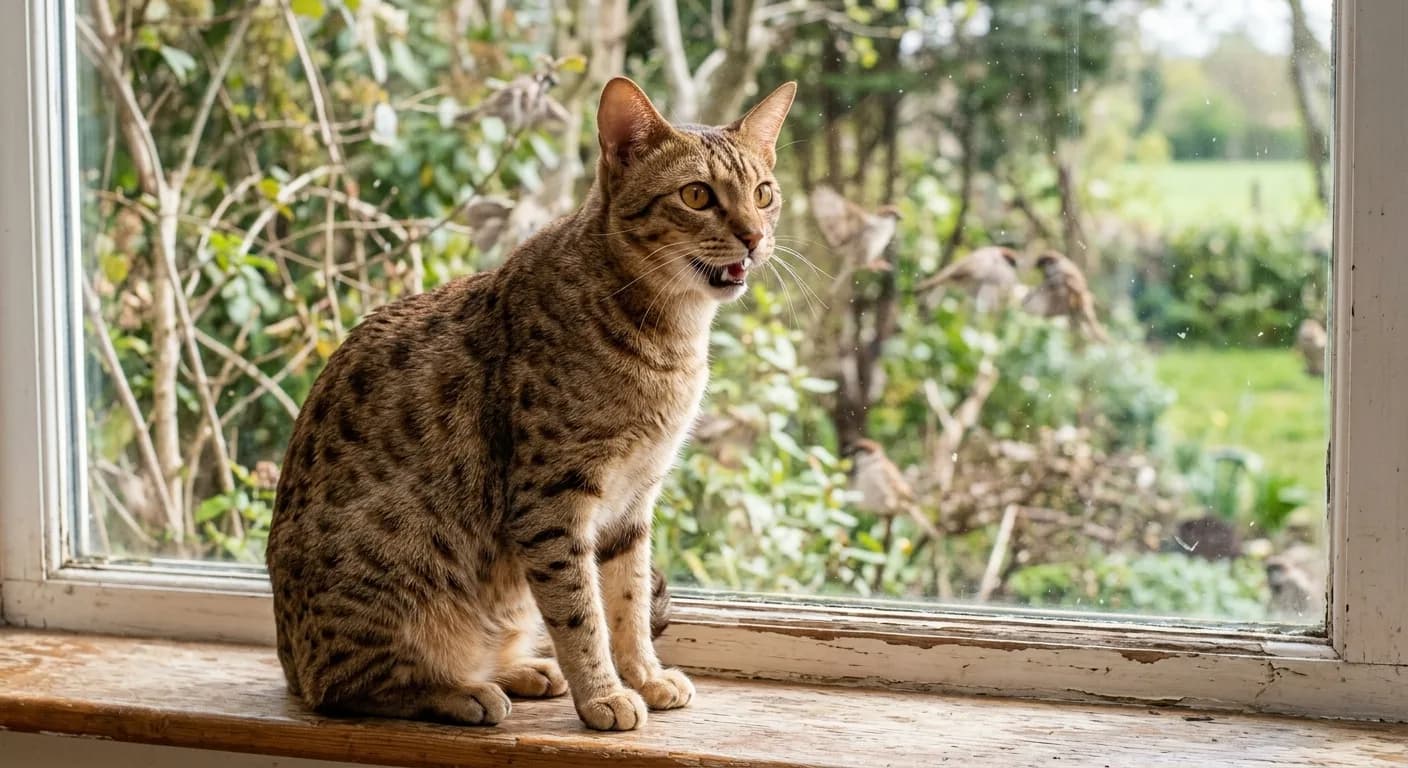
The Ocicat talks, and you should expect it. The breed descends in part from Siamese cats, and it inherited a chattier-than-average voice along with the slinky build. The nuance, and it is an important one, is that Ocicats are vocal without being loud. Litter-Robot describes the breed as "vocal, but not as much as their Siamese ancestors," cats that "love to have a lengthy conversation with you, but they want it to be equal."
The expressiveness is conversational rather than demanding under normal conditions. An Ocicat will trill a greeting, chirp at a bird through the window, and answer when you speak to it. Litter-Robot makes a striking observation that owners confirm: these cats are "aware of tone and its implication" and respond poorly to harsh tones, which is one more way they behave more like a dog reading your mood than a cat ignoring it.
There is a flip side. When an Ocicat's needs are not being met, that pleasant chatter escalates into loud, insistent demanding. Purina's UK breed profile warns the Ocicat "can become very demanding in a loud way if not given sufficient mental and physical exercise." Volume, in this breed, is a symptom. A suddenly noisy Ocicat is usually an under-stimulated one.
Athletic, energetic, and endlessly curious
Ocicats are built like little athletes and behave like them. They run, leap, climb, and pounce, and they want vertical territory to do it on. Wisdom Panel calls them "athletic" and "active," a breed that loves "to play, chase, pounce, and show off their high-jumping abilities." Litter-Robot recommends "plenty of toys and cat trees to jump and climb on" to satisfy that drive, plus leash walks to "burn energy and keep them very content."
Curiosity rides shotgun with the energy. These cats investigate everything: open bags, running water, high shelves, closed doors. Litter-Robot notes Ocicats "like to impress" and "will attempt (and usually complete) risky jumps and sporadic actions just to keep their people paying attention." That showmanship is endearing, but it also means an Ocicat home needs to be set up for a clever, agile, jump-everything cat. Tall cat trees, window perches, puzzle feeders, and rotating toys are not optional extras here. They are the difference between a satisfied cat and a frustrated one.
It is worth calibrating the energy level against relatives. The Ocicat is highly active, but several breeders note it is generally a touch less frenetic than the Abyssinian cat, one of its founding breeds, and less intensely wired than a true working-line Bengal. Among the spotted breeds, the equally striking Egyptian Mau shares the athleticism but tends to be more reserved with strangers, where the Ocicat is famously the opposite.

63-inch multi-level cat tree with scratch posts, hammock, plush perches, and dangling toys. Vertical territory is non-negotiable for high-energy climbing breeds like the Bengal.
Petful may earn a commission when you click through to Chewy, at no extra cost to you.
Do Ocicats like to cuddle?
Yes, and this surprises people who assume a high-energy cat will not sit still. The Ocicat is a genuine lap cat once it has burned its energy. Wisdom Panel puts it well: "when it's time to settle down, they're more than happy to curl up in the lap of their favorite person." CFA owners describe lap-sitting, snuggling on couches, and even nurturing behavior toward sick family members.
The pattern to understand is sequencing. An Ocicat is not a cat you can cuddle on demand at 8 a.m. when it is wired for action. It is a cat that plays hard, trains, patrols the house, and then, with that drive satisfied, becomes deeply affectionate and physically close. Meet the energy first and the affection follows. Skip the energy outlet and the cat is too restless to settle, which is why some owners mistakenly believe their Ocicat "won't cuddle" when the real issue is unspent fuel.
- Plan an active session in the evening, then expect a cuddly, lap-seeking cat afterward. Ocicats reward you with closeness once their body and brain are tired. Forcing affection on a high-energy Ocicat that has not played yet usually backfires.
A strong multi-pet companion
Because the Ocicat's defining need is company, it is one of the better pedigreed breeds for a multi-animal home, and pairing it with a compatible pet is often the single smartest thing an owner can do. Vetwest recommends that "a feline companion (preferably another Ocicat) should be considered," noting the breed "will get along with other cats and dogs, as well as children." Wisdom Panel gives the same advice: if your schedule means long hours away, "consider getting other sibling pets to keep them company."
Ocicats are confident and social enough to integrate well with cat-friendly dogs, other active cats, and respectful children, provided introductions are done gradually. A second pet is not a guarantee against loneliness (the Ocicat still wants you), but it dramatically reduces the risk of the depression and destructive behavior that come from a social cat left entirely alone. One caution from Wisdom Panel: some Ocicats "can get possessive of their toys," so during tug-of-war and group play, give multiple toys and watch for resource guarding.
- This breed should rarely be the only living thing at home for long stretches. If you work long hours and cannot add a companion pet, reconsider whether an Ocicat is the right fit. Their sociability is a need, not a preference.
What are the cons of the Ocicat?
Every honest breed guide has to answer this, because the Ocicat's strengths and weaknesses are the same coin. The cons are almost entirely about unmet needs rather than a bad temperament.
The headline con is separation anxiety and the behavior that follows it. WebMD notes Ocicats are susceptible to depression if "left alone for long periods." Purina is blunter, warning that failing to meet their needs "can result in some very unpleasant behaviour problems including inappropriate toileting, scent marking, self-harm and aggression towards humans." Those are worst-case outcomes of chronic neglect, not the everyday norm, but they are real and they are specific to high-need breeds like this one.

108-oz stainless steel pet fountain with quiet pump and water-level window. Bengals are notoriously water-obsessed; a flowing fountain encourages hydration and pulls them away from sinks and toilets.
Petful may earn a commission when you click through to Chewy, at no extra cost to you.
The second con is the sheer workload. Purina describes the Ocicat as "probably as demanding as a dog" in terms of attention, enrichment, training, and play. This is not a cat you can leave to its own devices for days. It needs daily interaction, daily mental stimulation, and an environment built for climbing and problem-solving. The third, minor con is the toy possessiveness Wisdom Panel flags, manageable with multiple toys and supervision.
| Trait | The Upside | The Catch |
|---|---|---|
| Highly social | Devoted, affectionate, greets everyone | Cannot be left alone for long hours |
| Very trainable | Learns fetch, leash, recall, tricks | A bored genius invents bad habits |
| High energy | Playful, athletic, fun to engage | Needs daily active outlets and vertical space |
| Vocal and expressive | Conversational, reads your tone | Gets loud and insistent when needs go unmet |
| Curious problem-solver | Opens doors, masters puzzles | Will get into everything if under-stimulated |
| Cuddly lap cat | Snuggles once energy is spent | Won't settle if it hasn't played first |
Are Ocicats high maintenance? It depends what you mean
This is one of the most common questions, and the answer splits cleanly in two. On grooming, the Ocicat is decidedly low maintenance. It has a short, sleek single coat that, per Mandarin Veterinary Clinic guidance, needs only weekly brushing for shine, with routine teeth, ear, and nail care like any cat. There is no high-effort coat to manage.
On behavior and attention, however, the Ocicat is high maintenance, and that is the maintenance that actually matters with this breed. It is not the brush that demands your time, it is the brain. A cat that needs daily training, daily interactive play, companionship, and an enriched environment is a meaningful commitment of attention. So the accurate summary is: physically easy to keep, behaviorally demanding. If you have the time and energy to engage, the upkeep is a joy. If you do not, the unmet needs surface as the cons above.
For a full breakdown of the financial side of ownership (purchase price, enrichment, and care costs), see our Ocicat price guide, which pairs naturally with the time-and-attention investment covered here.
How the Ocicat personality develops from kitten to adult
Ocicat kittens arrive turbocharged. Expect a bold, into-everything, fearless youngster that climbs the curtains, ambushes ankles, and tests every boundary, the "gifted, hyperactive three-year-old" energy CFA owners describe. This is the ideal window to establish routines: start clicker training early, teach leash work while the cat is young and adaptable, and socialize the kitten to handling, visitors, and any other pets.
As Ocicats mature, the intensity mellows somewhat but the core personality holds. Adults keep the social drive, the trainability, and the curiosity, while becoming a little more measured about which curtains are worth climbing. Crucially, the lifelong need for company never fades. An adult Ocicat is just as prone to loneliness as a kitten, so the enrichment and companionship you set up early are commitments for the cat's whole life, not a kitten phase you wait out.
- Leash training, recall, and a clicker routine all take faster in a young Ocicat. Build the enrichment lifestyle from day one and the adult cat is settled and confident. Trying to introduce structure to a bored, under-stimulated adult is much harder.
Is an Ocicat right for you?
Use this honest fit check before falling for the spots. An Ocicat is an excellent match if you want an interactive, trainable, dog-like cat, if someone is usually home or you can provide a companion pet, if you enjoy daily play and training, and if you have vertical space (cat trees, perches) for an athletic climber. It thrives in busy, social, active households where it can be part of the action.
An Ocicat is a poor match if your home sits empty for long workdays with no animal company, if you want a low-engagement cat that entertains itself, if loud, insistent vocalization would stress you, or if you cannot commit to daily mental stimulation. There is no shame in that. Matching the breed to your real life prevents the exact neglect-driven problems that give the Ocicat its few genuine cons. If the spotted look is the draw but the social workload gives you pause, compare the temperament notes in our Bengal colors and patterns guide before deciding which wild-looking cat fits your household.
Frequently asked questions about the Ocicat personality
The main cons all stem from the breed's intense social and activity needs rather than any bad temperament. An Ocicat left alone for long periods can become depressed, anxious, and destructive. Purina warns that unmet needs can lead to demanding loud behavior plus problems like inappropriate toileting, scent marking, self-harm, and aggression. The breed is also as demanding as a dog for daily attention and enrichment, and some individuals get possessive of their toys. Give it company, training, and an enriched home and the cons largely disappear.
The Ocicat is intelligent, confident, outgoing, and famously dog-like. Vetwest notes it can be trained to fetch, walk on a lead, speak, come when called, and follow commands. It is highly social with family and strangers alike, vocal in an expressive way thanks to Siamese heritage, athletic and curious, and deeply bonded to its people. Once its energy is spent it becomes an affectionate lap cat. The trade-off is a strong need for company and stimulation.
It depends on the type of maintenance. Grooming is low maintenance: the short single coat needs only weekly brushing, per veterinary guidance, plus routine teeth, ear, and nail care. Attention and behavior, however, are high maintenance. The Ocicat needs daily play, training, companionship, and an enriched environment, and Purina calls it about as demanding as a dog. In short, it is physically easy to keep but behaviorally demanding.
Yes. Despite the high energy, the Ocicat is a genuine lap cat. Wisdom Panel notes that when it is time to settle down, Ocicats are happy to curl up in their favorite person's lap, and CFA owners describe snuggling and even nurturing behavior. The key is sequence: meet the cat's play and exercise needs first, and the affection follows. A wired, unexercised Ocicat is simply too restless to cuddle yet.
Among popular breeds, Siamese, Ragdoll, Sphynx, Burmese, and the Ocicat itself rank as the most attached and people-oriented. The Ocicat's neediness shows as following you around, demanding interaction, and disliking being left alone, behaviors that trace to its Siamese ancestry and exceptionally social nature. Providing a companion pet and daily engagement keeps that attachment healthy rather than anxious.
Breeds often described as more aloof or reserved include the Russian Blue, Norwegian Forest Cat, and some Persians, which tend to be loyal to one or two people and wary of strangers. The Ocicat sits at the opposite end of that spectrum: it is one of the friendliest pedigreed cats, typically greeting visitors at the door rather than hiding from them. Personality varies by individual and socialization, so early handling matters.
Common stressors for cats include loud or chaotic environments, dirty litter boxes, sudden changes in routine, being grabbed or restrained, and lack of stimulation. For a high-need breed like the Ocicat, boredom and isolation are especially aggravating and can trigger loud demanding, scent marking, or destructive behavior. Reading body language, keeping routines steady, and providing enrichment prevent most feline frustration.
Cats do not feel guilt the way people do, but they do work to restore a bond after conflict. Reconciliation behaviors include head-butting, slow blinking, rubbing against you, grooming you, and seeking closeness. A social, people-attuned breed like the Ocicat, which Litter-Robot notes is aware of your tone, will often reconnect quickly with affection and proximity after a tense moment.
The friendliest feline greeting is a slow blink, often called a cat kiss, paired with a soft voice and a relaxed posture. You can also offer a finger at nose height and let the cat approach to sniff. With an outgoing breed like the Ocicat, expect an enthusiastic reply: a trill, a chirp, and a beeline to your lap, since these cats are famous for greeting both family and strangers warmly.

Coreen Saito is a pet writer and longtime shelter volunteer with more than a decade in animal rescue. She covers cat behavior, breed care, and the small, ordinary science of sharing a life with companion animals, with a particular focus on honest takes about the products and decisions that actually matter. At home in Arizona, she's outranked by Mac (a dog with the loudest opinion in the house), Rebel (a cat who governs by quiet authority), and Meri (an orange tabby who runs the late shift and the laundry basket). She writes about all three, plus the rescues that keep coming through her life, at LifeWithMinty.com.
Sign up for expert-backed reviews and safety alerts all in one place.