Nebelung vs Russian Blue: How to Tell the Two Apart
The Nebelung is essentially the longhaired Russian Blue. This head to head guide compares coat length, shared origin, temperament, size, grooming, and price, and shows you the fastest ways to tell these two shimmering blue cats apart.
Petful is reader supported. As an affiliate of platforms like Amazon and Chewy, we may earn a commission when you buy through links on this page. There is no extra cost to you.
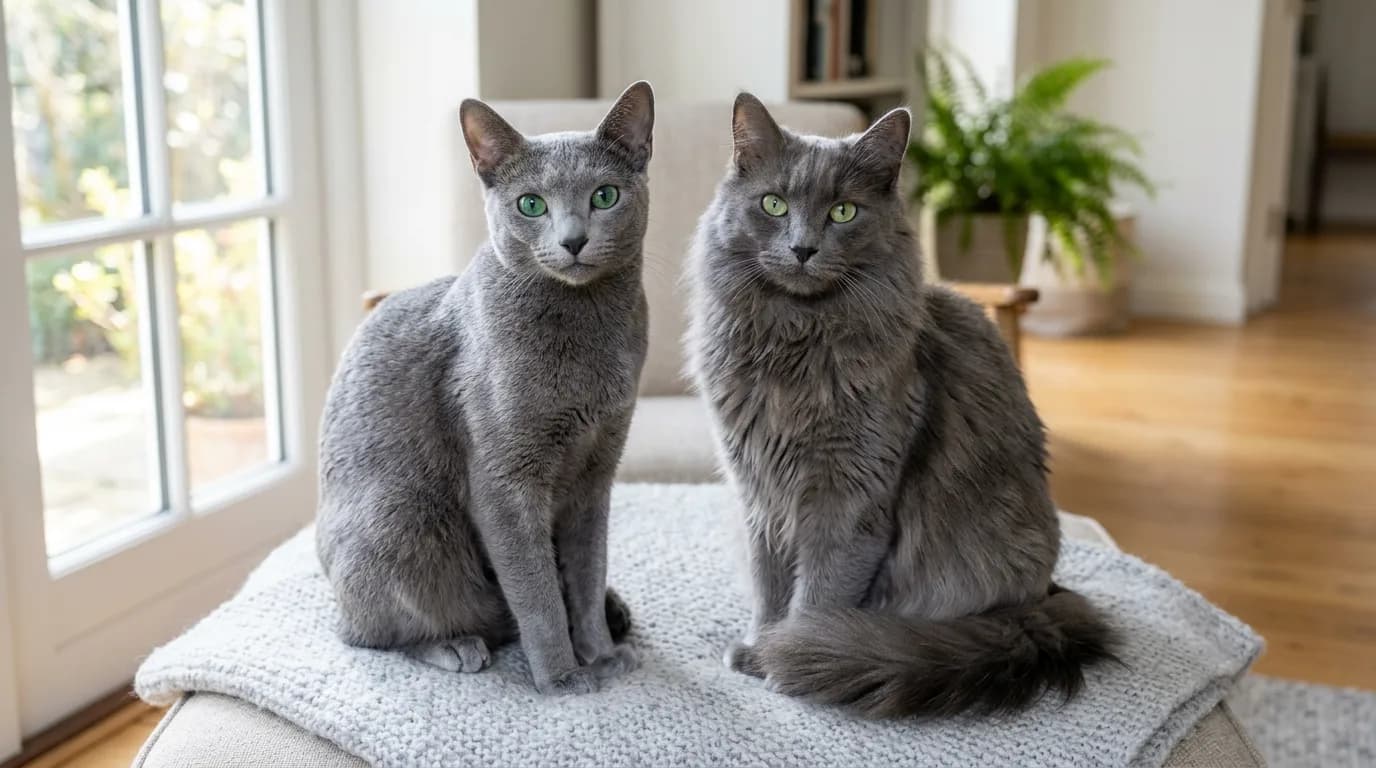
The nebelung vs russian blue question comes down to one thing above all else, and TICA, the registry that granted the Nebelung championship status in 1997, settles it in a single word: coat. The Russian Blue wears a short, dense, plush double coat, while the Nebelung carries a semi-long, silky version of that very same shimmering blue. Put a longhaired Russian Blue in front of you and you are, for all practical purposes, looking at a Nebelung. They share the same blue color, the same silver-tipped sheen, the same vivid green eyes, and very nearly the same reserved, one-person personality. The single most reliable way to separate them is hair length, with the plumed tail running a close second.
- 1Coat length is the defining difference: the Russian Blue is short-haired, the Nebelung is semi-long-haired
- 2The Nebelung is essentially the longhaired Russian Blue, developed in the US in the mid-1980s by Cora Cobb
- 3Both breeds share the same blue-grey silver-tipped coat, green eyes, and gentle, reserved temperament
- 4Look at the tail and ear tufts: a plumed tail and tufted ears mean Nebelung, a sleek tail and bare ears mean Russian Blue

Sign up for expert-backed reviews and safety alerts all in one place.
The one-line answer
A Russian Blue is the short-haired blue cat with the dense, seal-plush coat that stands out from the body. A Nebelung is the semi-longhaired blue cat with a flowing coat, a feathered ruff at the neck, and a plumed tail. Cora Cobb, who created the Nebelung in Denver in the 1980s, used Russian Blue lines in the breeding program precisely to match that famous blue color and quiet temperament. The breeds are genetic cousins, and many cat associations still describe the Nebelung as the longhaired counterpart to the Russian Blue. If you remember only one thing from this guide, remember that the coat tells the story: everything else is a tiebreaker.
- Run a hand down the cat's spine. A short, springy coat that bounces back is Russian Blue. A longer coat that lies and flows, with feathering on the tail, is Nebelung.
Nebelung vs Russian Blue at a glance
The two breeds overlap so heavily on color and character that a side-by-side comparison is the cleanest way to see where they actually diverge. Coat, grooming, and tail are the real separators. Origin, size, and price are smaller differences worth knowing before you commit to either cat.
| Feature | Nebelung | Russian Blue |
|---|---|---|
| Coat length | Semi-long, silky, flowing | Short, dense, plush |
| Tail | Plumed and feathered | Sleek and even |
| Grooming | 2 to 3 brushings per week | Weekly brushing |
| Origin | United States, mid-1980s | Natural breed, northern Russia |
| Body size | 7 to 15 lb, long and athletic | 7 to 12 lb, fine-boned and elegant |
| Eye color | Vivid green | Vivid green |
| Lifespan | 13 to 18 years | 15 to 20 years |
| Typical price | 600 to 1,200 USD | 400 to 1,000 USD |
| Temperament | Gentle, reserved, bonds to 1 to 2 people | Gentle, reserved, bonds to 1 to 2 people |
The table makes the pattern obvious. Where the column values match, you are looking at shared inheritance. Where they differ, you are almost always looking at the consequences of coat length: longer hair means more grooming, a feathered tail, and a slightly larger visual silhouette even when the actual body weight is similar.
Coat: the difference that defines everything
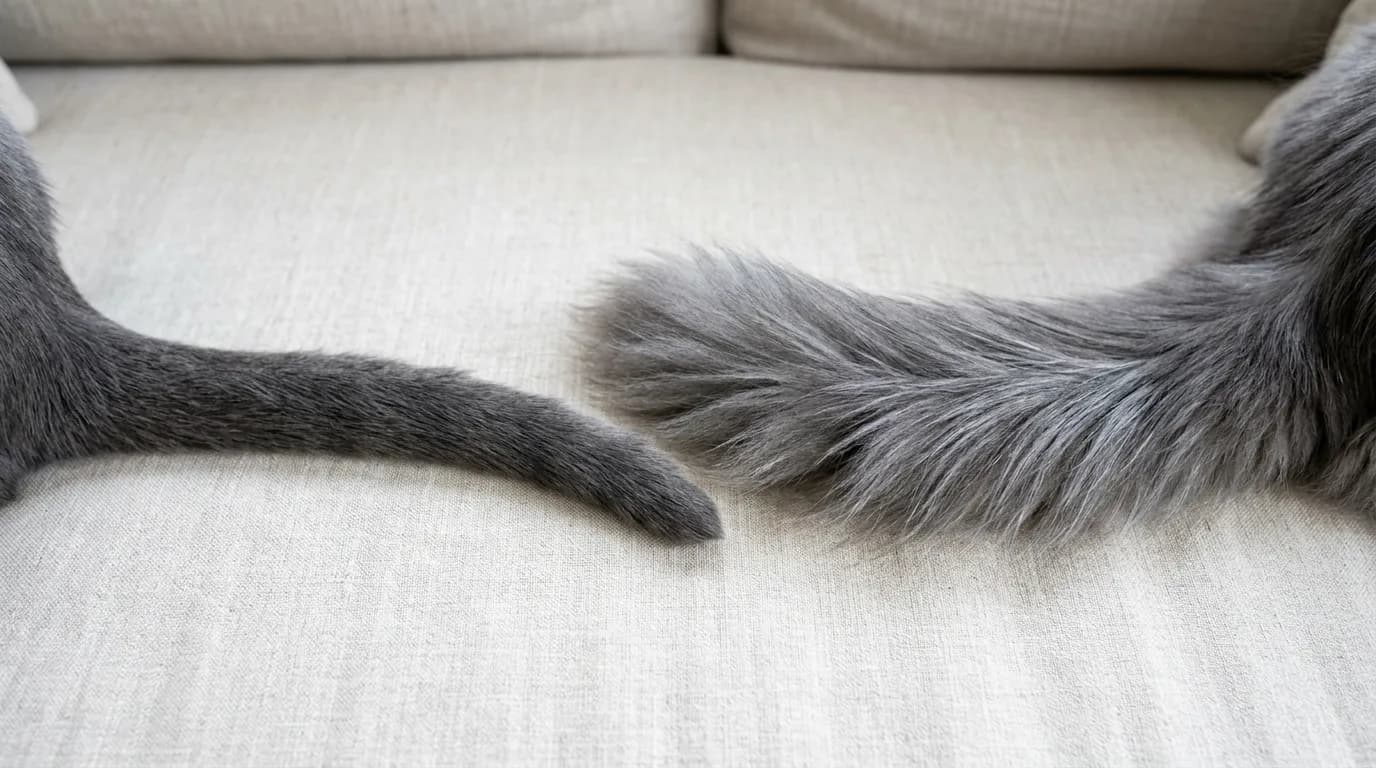
Coat length is the heart of the nebelung vs russian blue comparison, so it deserves the most detail. The Russian Blue has a short, dense, double coat that is often described as the plushest in the cat world. The guard hairs and undercoat are nearly the same length, which makes the coat stand out from the body and gives that famous seal-like, run-your-hand-against-the-grain feel. The tips of the guard hairs are silver, and that silver tipping catches the light to create the shimmer the breed is known for.

63-inch multi-level cat tree with scratch posts, hammock, plush perches, and dangling toys. Vertical territory is non-negotiable for high-energy climbing breeds like the Bengal.
Petful may earn a commission when you click through to Chewy, at no extra cost to you.
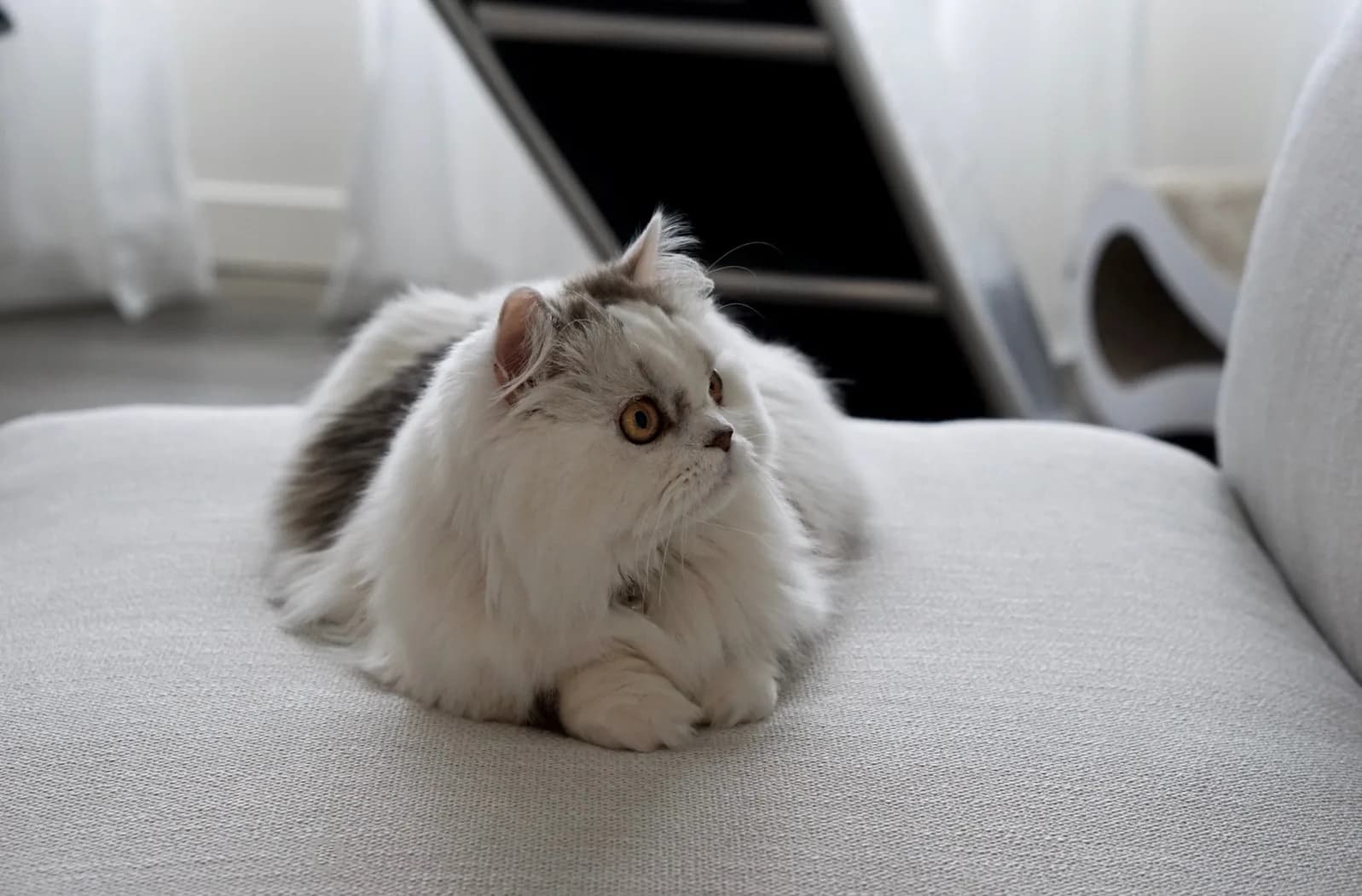
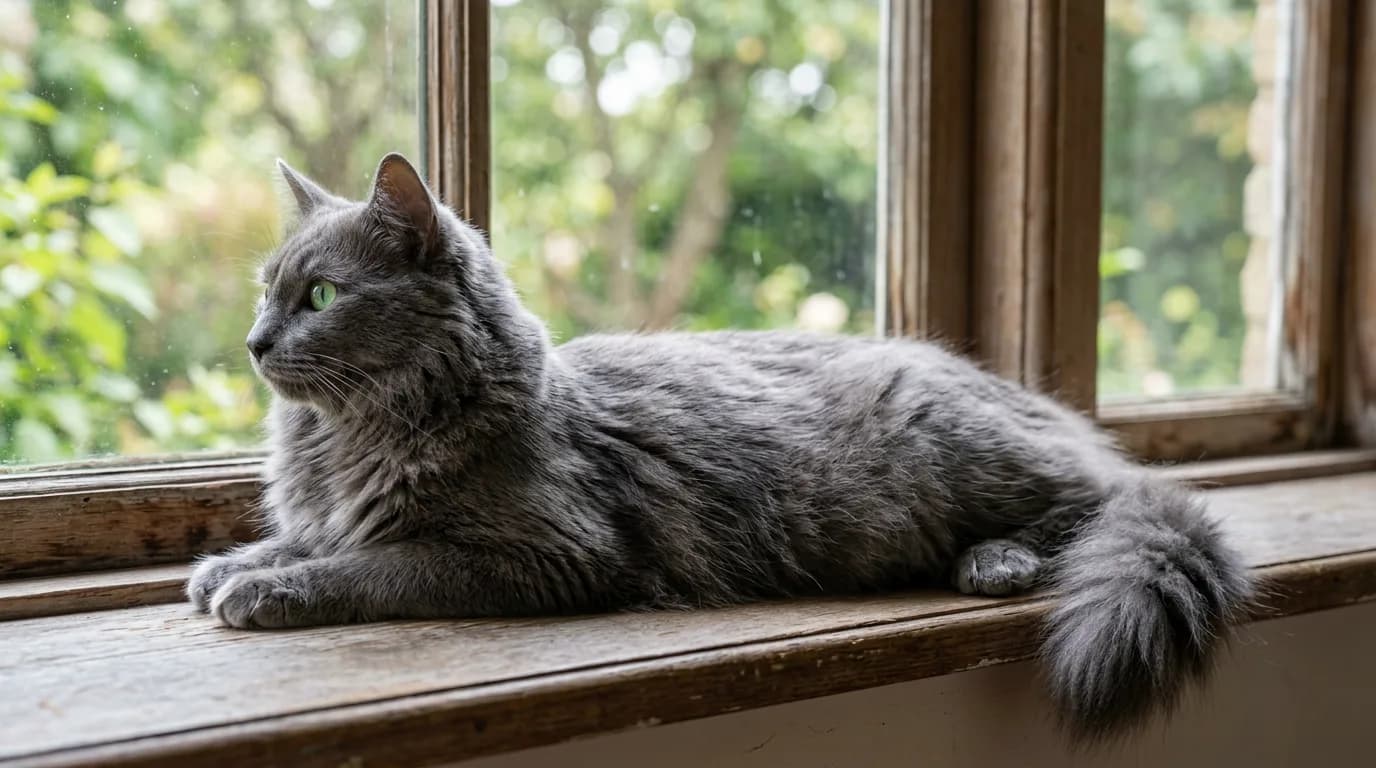
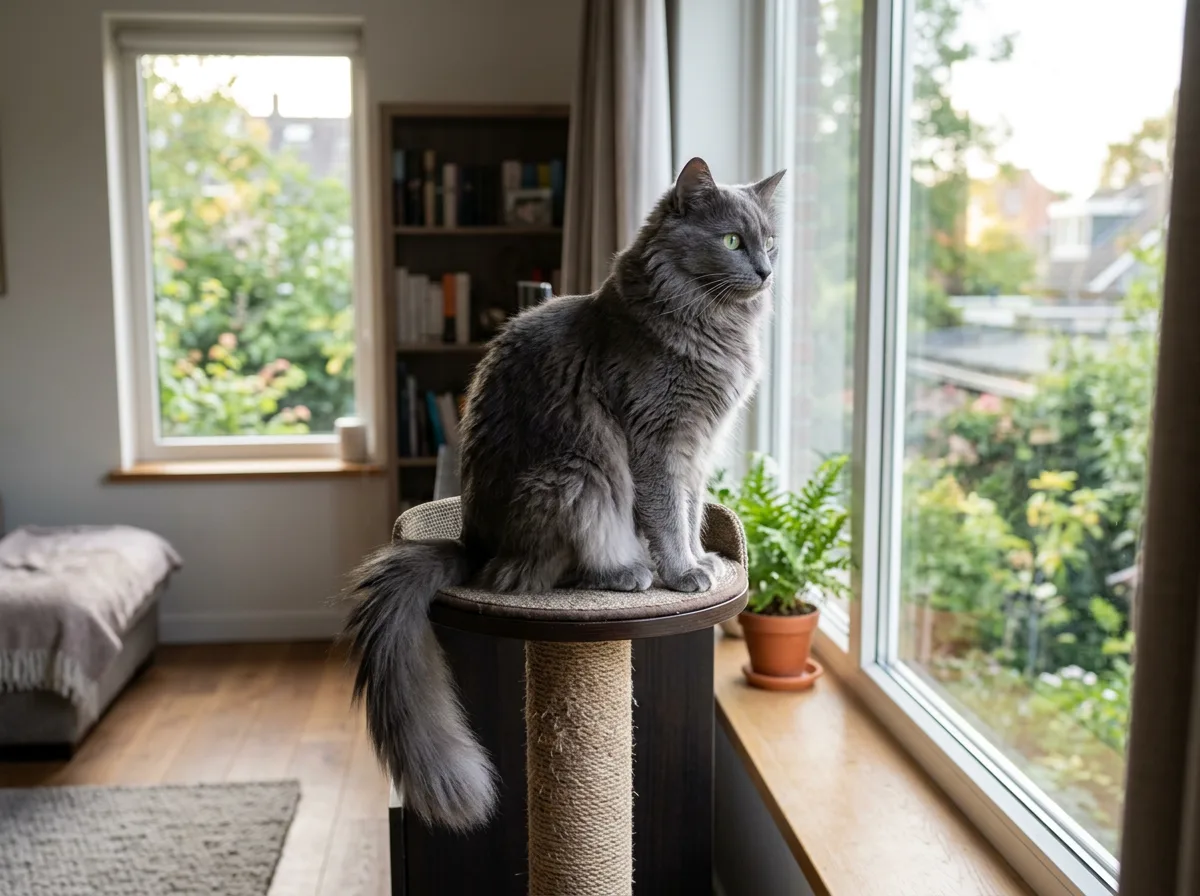
The Nebelung takes that exact same blue, that exact same silver tipping, and adds length. The coat is semi-long rather than fully long, so it is closer to a Maine Coon's medium coat than a Persian's heavy one. It lies flatter against the body than the Russian Blue's stand-out plush, and it lengthens noticeably in three places: a ruff or collar of longer hair around the neck, feathering behind the ears and on the hindquarters, and a full, plumed tail. That tail is the single most useful at-a-glance tell, because even a fluffy domestic longhair rarely matches the even, feathered plume of a true Nebelung.
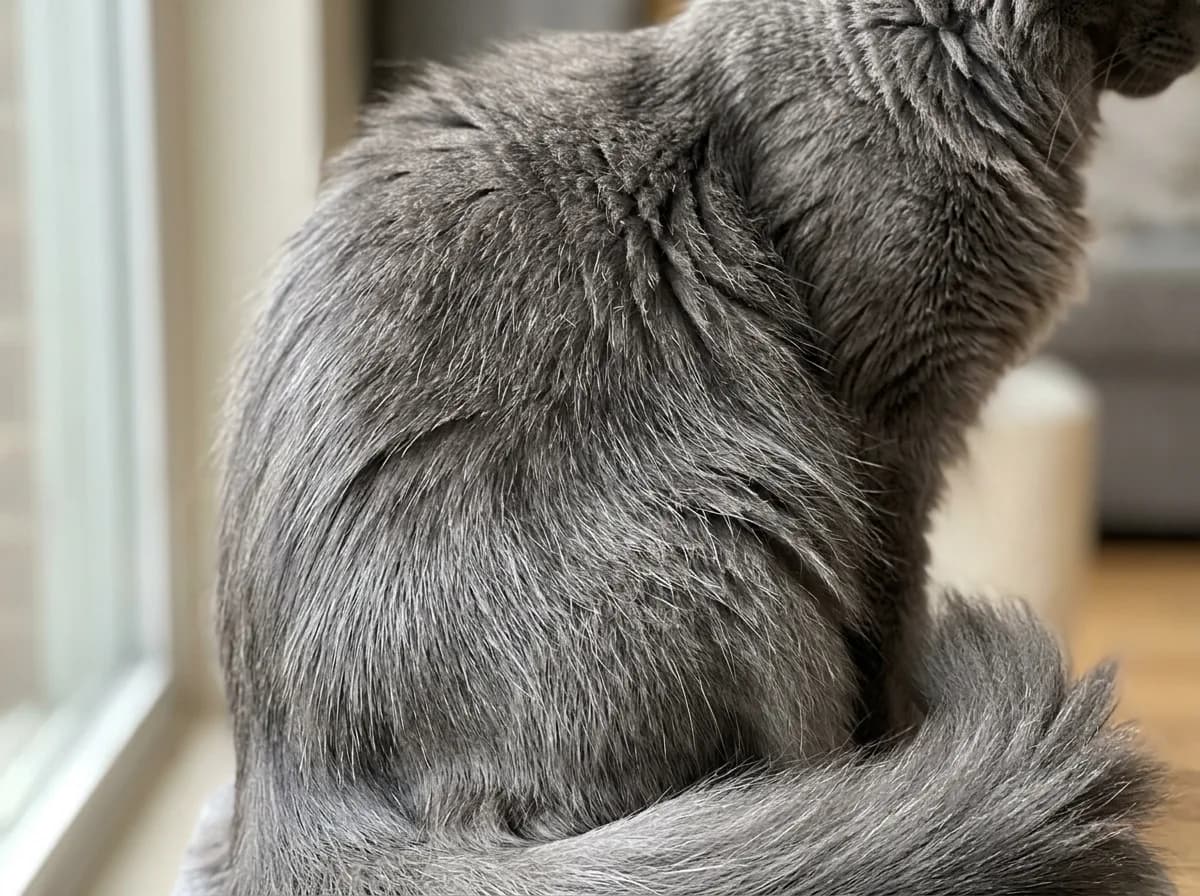
Both coats carry the same dilute black pigment, which is what produces blue (a soft slate-grey) rather than true grey or black. Kittens of both breeds are often born with faint tabby ghost markings that fade as the adult coat comes in. A solid, even blue with no leftover stripes is the breed-standard goal for each.
- Do not try to tell these breeds apart by color. Both are the same dilute-black blue with silver tipping. Only length, tail plume, and ear tufts reliably separate them.
Shared origin: the Nebelung really is the longhaired Russian Blue
The breeds are not just look-alikes, they are relatives. The Russian Blue is the older breed, a natural type that traces to the port of Arkhangelsk in northern Russia, which is why it was once called the Archangel Blue. It arrived in Britain in the 1860s and was developed into the refined show cat we know today.
The Nebelung is much younger. In the early 1980s, a Denver woman named Cora Cobb owned a black domestic shorthair whose litter, sired by a blue domestic longhair, produced a longhaired blue male kitten she named Siegfried, born in 1984. A second litter produced a longhaired blue female, Brunhilde, born in 1985. Cobb bred the pair, loved the longhaired blue kittens that resulted, and set out to establish them as a breed. She named them Nebelung, from the German word Nebel, meaning mist or fog, a nod to the soft, misty quality of the silver-tipped blue coat (and to the Norse Nibelung saga, the source of Siegfried's and Brunhilde's names).
To anchor the type to an existing standard, Cobb worked with TICA geneticist Dr. Solveig Pflueger, and the breed standard was written to match the Russian Blue in everything except coat length. Russian Blue lines were used in the early breeding program to lock in the correct color, build, and temperament. TICA accepted the Nebelung for new breed status in 1987 and granted full championship status in 1997. That documented history is why it is fair, not just folklore, to call the Nebelung the longhaired Russian Blue.
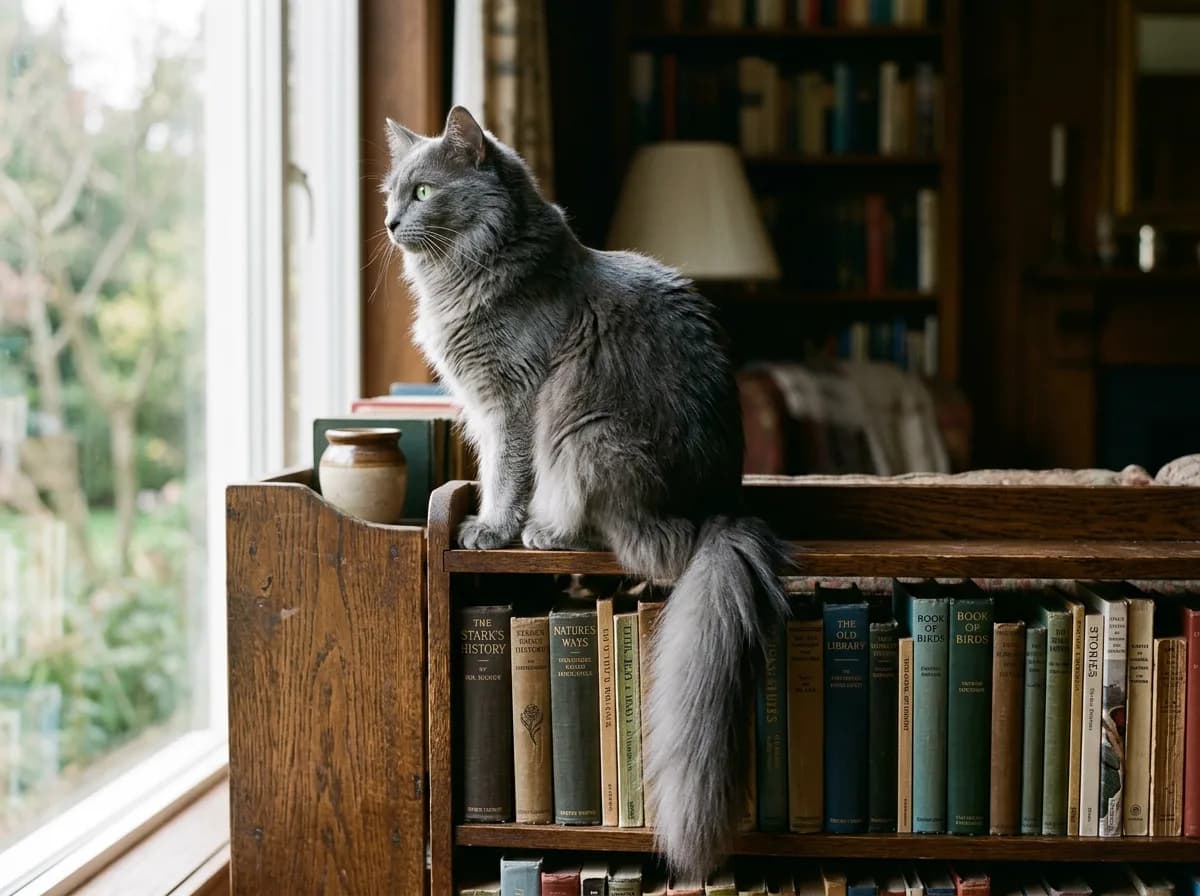
- Nebelung comes from the German Nebel, mist. The two foundation cats, Siegfried and Brunhilde, were named for figures in the Norse Nibelung legend, tying the breed's name to both its misty coat and its lineage.
Temperament: nearly identical, and that is the point
Here the two breeds are almost interchangeable. Both are gentle, quiet, and deeply reserved with strangers. Both bond intensely with one or two chosen people and tend to follow those people from room to room while staying aloof with everyone else. Both dislike noise, chaos, and change, and both will retreat to a high perch or a quiet corner when the house fills with guests.
This shared personality is no accident, since the Nebelung standard was deliberately modeled on the Russian Blue. Owners of both breeds describe the same arc: a slow warm-up that can take weeks, followed by a devoted, almost dog-like attachment. Neither cat is a lap-on-demand extrovert, and neither does well left alone for long stretches without a companion or routine. If you want a calm, loyal, low-drama cat and you are choosing between the two, temperament will not break the tie. Coat care will.
- Both the Nebelung and Russian Blue are sensitive to noise, frequent visitors, and disrupted routines. A loud, high-traffic household will stress either cat. Choose a different breed if your home is rarely calm.
Grooming: the practical reason the choice matters
This is where the coat difference stops being cosmetic and starts affecting your daily life. The short-haired Russian Blue is close to wash-and-wear. A weekly brushing keeps the dense double coat healthy and cuts down on shed hair, and that is essentially the whole routine.
The semi-longhaired Nebelung needs more. Two to three brushings a week prevent mats and tangles, which form most readily in the longer hair behind the ears, in the neck ruff, in the armpits, and at the base of the plumed tail. Seasonal shedding, usually heaviest in spring, calls for extra sessions. The good news is that the Nebelung's coat is silky rather than cottony, so it resists matting better than many longhairs, and the breed is fastidious about self-grooming. Still, if a hands-off, brush-once-a-week cat is what you want, the Russian Blue is the easier pick of the two.
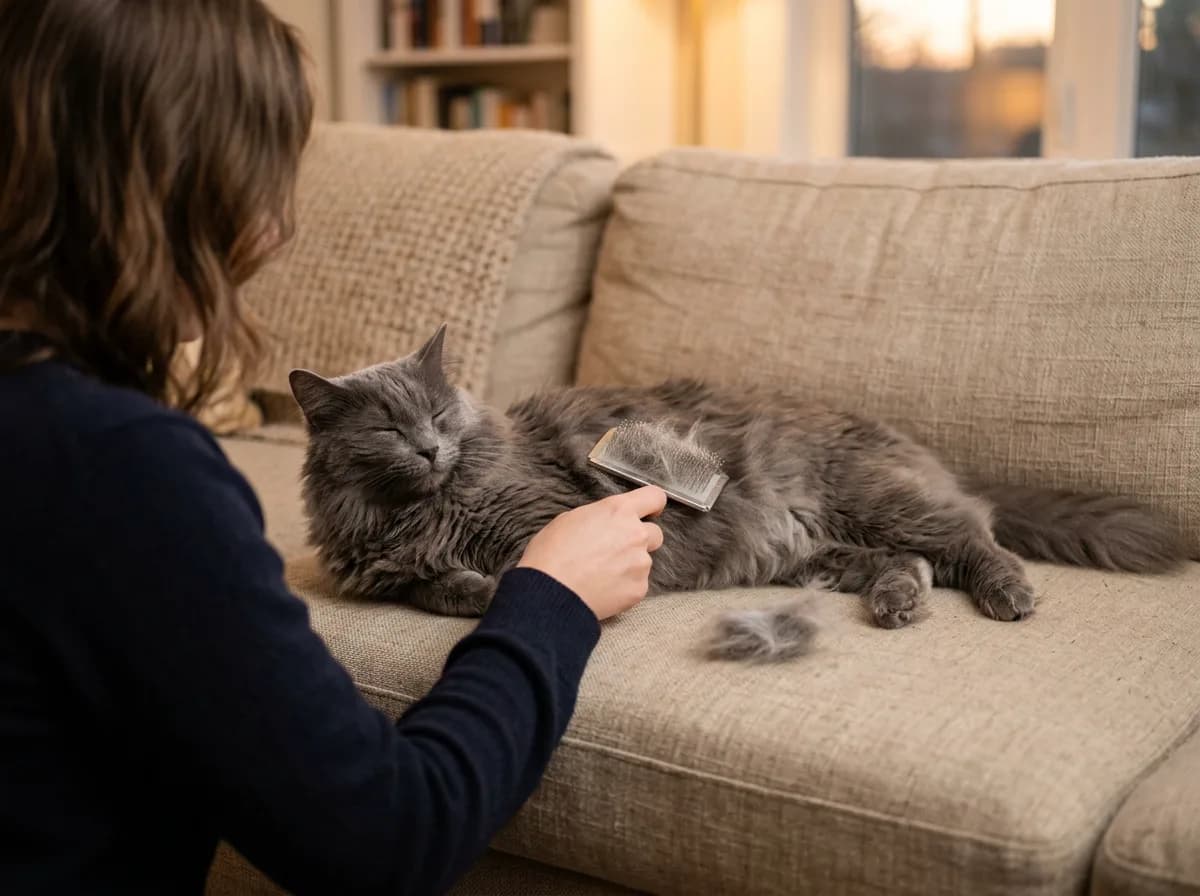
- Because both breeds attach to one or two people, a short, gentle brushing session is a natural way to deepen the bond. Start kittens early so the Nebelung's heavier coat care feels routine, not stressful.
Are these cats hypoallergenic?
This is a common hope and a common myth, so it is worth being direct. Neither the Russian Blue nor the Nebelung is hypoallergenic. No cat truly is. Allergic reactions are driven mainly by the Fel d 1 protein in saliva and skin oils, not by hair length. The Russian Blue is sometimes claimed to produce somewhat less Fel d 1 than average, and some people with mild allergies report tolerating it better, but that is an individual response, not a guarantee, and it has nothing to do with the Nebelung's longer coat. Anyone with a serious cat allergy should spend time with the specific cat before bringing it home, regardless of which of these two breeds it is. There is more on this in Petful’s guide to Russian Blue hypoallergenic.
Size, build, and lifespan
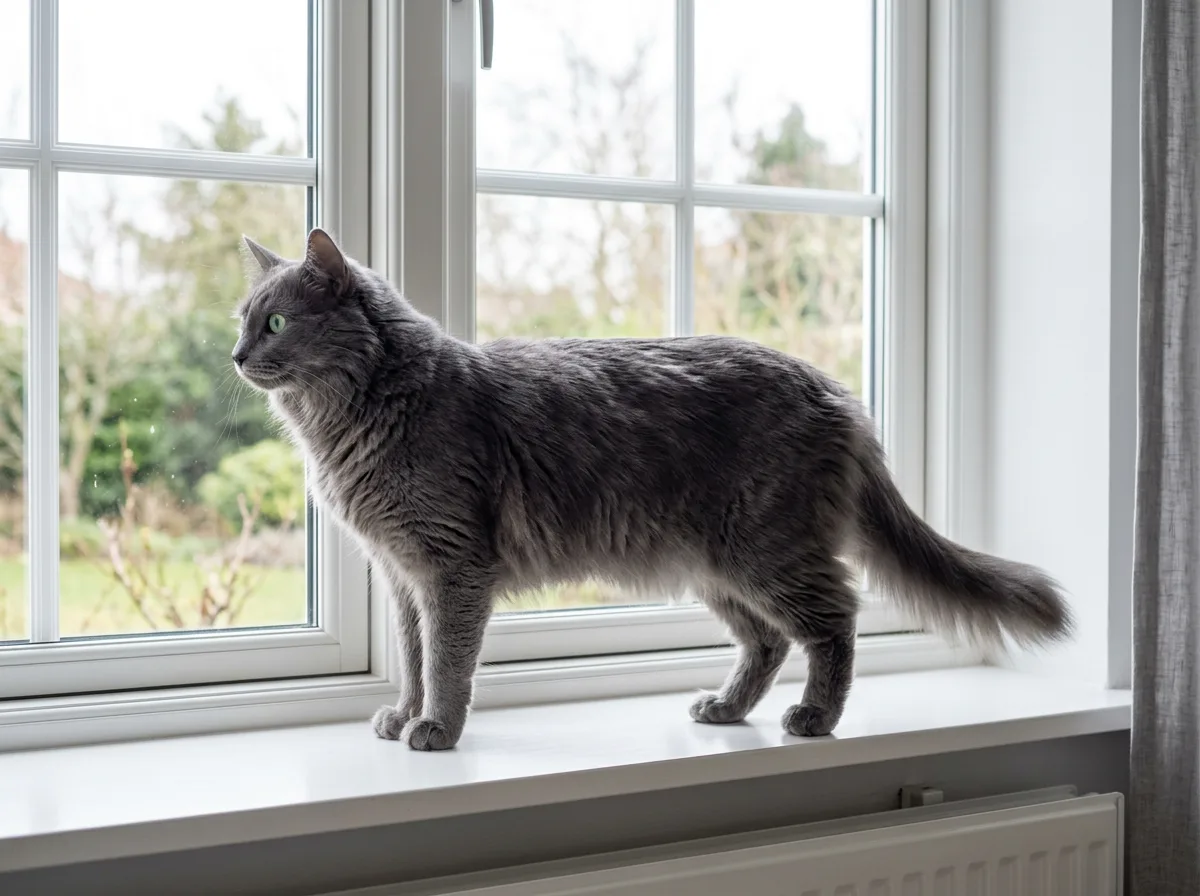
In raw weight the two breeds are close. Russian Blues typically run 7 to 12 pounds, fine-boned and elegant with a long, slender neck and that signature surprised-looking smile created by the upturned mouth corners. Nebelungs run 7 to 15 pounds and read as slightly larger, both because of the longer coat and because the breed standard calls for a long, sturdy, well-muscled body. The difference on a scale is modest, but the Nebelung often looks bigger than it weighs.
Both are long-lived. Russian Blues commonly reach 15 to 20 years with good care, among the longest-lived of pedigreed cats. Nebelungs are generally healthy and long-lived too, typically 13 to 18 years, with no signature breed-specific genetic disease documented in either breed. Routine veterinary care, dental attention, and weight management matter more to lifespan than breed for both cats.
Price and availability
Both breeds are uncommon in the United States, and the Nebelung is the rarer of the two. Expect a Russian Blue kitten from a registered breeder to run roughly 400 to 1,000 USD depending on lines and region. Nebelung kittens, with far fewer active breeders, more often land in the 600 to 1,200 USD range and can carry waitlists of many months. Because the Nebelung is so rare, look-alike domestic longhairs are frequently sold or rehomed as Nebelungs, so a documented pedigree from a TICA-registered breeder is the only way to be sure. Adoption is also worth considering for both, since reserved blue cats do turn up in shelters, often misidentified. Petful’s guide to Russian Blue cat prices breaks down breeder, adoption, and lifetime costs.
- Because true Nebelungs are scarce, many grey longhaired cats are advertised as Nebelungs without papers. If pedigree matters to you, insist on TICA registration documents rather than the seller's word.
How to tell which one you have
If you already share your home with a blue cat and you are not sure which breed it is, work through these tells in order. First, hair length: short and plush points to Russian Blue, semi-long and flowing points to Nebelung. Second, the tail: a plumed, feathered tail is the strongest single Nebelung marker. Third, ear and toe tufts: longer hair sprouting from the ears and between the toes favors Nebelung. Fourth, the neck: a visible ruff or collar of longer hair is a Nebelung trait. Fifth, papers: only a pedigree confirms a true purebred of either breed, and most blue cats are in fact mixed-breed domestics that simply carry the same handsome dilute coloring.
Walnut shell clumping cat litter that excels at odor control, lasts up to 3x longer than clay, and is a top pick for multi-cat households.
Petful may earn a commission when you click through to Chewy, at no extra cost to you.
Be honest about that last point. The majority of grey cats people wonder about are neither purebred Russian Blue nor purebred Nebelung. They are domestic shorthairs or longhairs in a blue coat, which is wonderful but is not the same as a registered breed. The tells above describe breed standards, not a DNA test.
Which breed is right for you?
If you want the lowest-maintenance version of this elegant blue cat, choose the Russian Blue. The temperament you love comes with a coat that asks for almost nothing. If you are drawn to the flowing, fairy-tale look of a semi-longhaired blue and you do not mind brushing two or three times a week, the Nebelung delivers that same gentle personality in a more dramatic package. Neither is a good fit for a loud, crowded, unpredictable home, and both reward patience with deep, lasting loyalty. The decision really does come down to the coat: how much hair you want to admire, and how much you are willing to brush.
To go deeper on either breed, see our full Nebelung cat breed profile and our Russian Blue cat profile. If you are budgeting for a kitten, our Nebelung cat price guide breaks down what to expect, and our Nebelung kitten guide covers what to ask a breeder. For the full range of blue and grey shades, see our Nebelung cat colors overview, and if you love a plush longhaired blue, the Siberian is worth a look too.
Common look-alikes and mix-ups
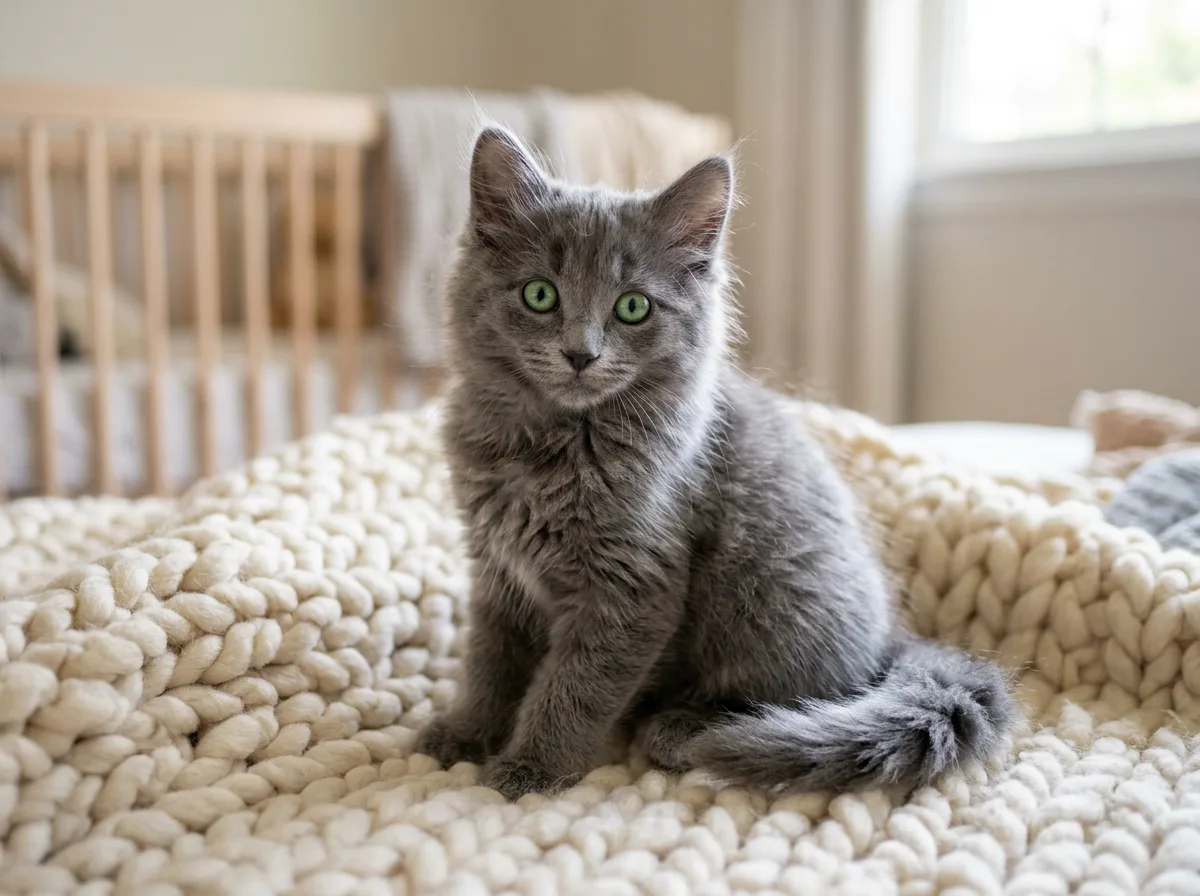
The Nebelung and Russian Blue are not the only blue cats people confuse. The Chartreux, a French breed, is also a short-haired blue, but it has copper or gold eyes rather than green, which is an instant tell. The Korat is another small blue breed with green eyes and a heart-shaped face, but it has a single coat that lies close. The British Shorthair comes in blue too, but it is rounder, chunkier, and has a much denser, crisper coat. Among longhairs, a blue domestic medium hair or a Siberian in blue can look strikingly Nebelung-like, which is exactly why the plumed tail, the neck ruff, and a pedigree matter so much when identification really counts. There is more on this in Petful’s guide to Korat cat.
Living with either breed
Whichever blue cat joins your home, plan for a sensitive, intelligent companion that thrives on routine. Provide vertical space, since both breeds love to survey their territory from a high perch. Keep feeding and play schedules consistent, because both dislike abrupt change. Offer puzzle toys and interactive play to satisfy a sharp mind, and expect a slow, deliberate bonding process that pays off in years of quiet devotion. The Nebelung simply adds a brush to the daily ritual, which many owners come to enjoy as bonding time rather than a chore.
If you are weighing other gentle, family-friendly breeds against these two, our profiles on the Norwegian Forest cat and the Burmilla cover two more calm, affectionate options worth comparing.
Side by side: a feature-by-feature appearance breakdown
The glance table earlier in this guide gives the headline differences, but if you are standing over a blue cat trying to make a confident call, it helps to walk the body part by part. Breeders and TICA judges score these breeds on the same points, so the same checklist that decides a show ribbon works just as well on your living-room floor.
Coat texture and lay
Start with how the coat behaves, not just how long it is. The Russian Blue's short double coat is famously dense and resilient: press it down and it springs straight back, and the guard hairs stand out from the body so a brush leaves visible plush tracks. The Nebelung's semi-long coat does the opposite. It lies down and flows with gravity, draping over the flanks and falling into soft waves on the hindquarters. Run a finger along the back and the Russian Blue feels like crushed velvet, while the Nebelung feels like fine silk that parts and resettles.
Body shape and bone
Both breeds are built on the same foreign, athletic frame, long in the leg and lean through the body, but they are not identical under the coat. The Russian Blue is the more refined of the two, fine-boned and graceful, with a long slender neck that the short coat shows off plainly. The Nebelung carries slightly heavier bone and reads as a longer, more substantial cat, partly real and partly an illusion created by the extra hair. Both stand high on their toes, which gives them a light, dancing gait that many owners notice before they notice anything else.

108-oz stainless steel pet fountain with quiet pump and water-level window. Bengals are notoriously water-obsessed; a flowing fountain encourages hydration and pulls them away from sinks and toilets.
Petful may earn a commission when you click through to Chewy, at no extra cost to you.
Eyes and expression
Here the two breeds are deliberately matched. Both should have large, wide-set, rounded eyes in a vivid emerald green by adulthood. Kittens of both start with yellow or amber eyes that deepen to green over the first year, so eye color alone will not separate a young Nebelung from a young Russian Blue. The Russian Blue's slightly upturned mouth corners create the famous gentle smile, and because the Nebelung was bred to the same head standard, it inherits that same softly smiling expression.
Ears, tail, and feet
The extremities are where the longhair gene shows itself most clearly. On a Russian Blue the ears are large, pointed, and almost bare, with thin skin that can look translucent at the tips. The Nebelung carries tufts of longer hair inside and behind the ears and feathered furnishings between the toes. The tail is the single most decisive feature: the Russian Blue's is moderately long and evenly furred end to end, while the Nebelung's is a full, feathered plume that fans out when the cat is relaxed and trails like a banner when it walks.
| Body part | Russian Blue | Nebelung |
|---|---|---|
| Coat lay | Stands out, plush, springy | Lies flat, silky, flowing |
| Neck | No ruff, sleek line | Visible ruff or collar of longer hair |
| Ears | Large, pointed, nearly bare | Tufted inside and behind |
| Tail | Even, moderately furred | Full feathered plume |
| Feet | Smooth, neat | Tufts between the toes |
| Adult eye color | Vivid green | Vivid green |
A closer look at the breeding that linked the two
The short version of the Nebelung story is that Cora Cobb wanted a longhaired Russian Blue and built one. The longer version explains why the two breeds still track so closely on every standard except coat, and it is worth telling because it is the reason the comparison in this guide holds up.
When Cobb registered her foundation cats with TICA in the mid-1980s, the organization needed a written standard to judge them against. Rather than invent one, Cobb and TICA geneticist Dr. Solveig Pflueger adapted the existing Russian Blue standard almost word for word, changing the coat-length clause and little else. That decision is the structural reason the breeds remain near-twins: every Nebelung bred to standard is, by definition, being judged against a Russian Blue template wearing a longer coat.
Outcrossing kept the link alive in the gene pool, not just on paper. To widen a tiny founding population and to reinforce the correct blue color and reserved temperament, early Nebelung breeders were permitted to cross to Russian Blues. That practice has been tightened over the decades as the Nebelung population grew, but the genetic overlap baked in during those first generations is exactly why a well-bred Nebelung shares the Russian Blue's color depth, silver tipping, eye shape, and quiet personality so faithfully. The fog-grey coat did not arrive by coincidence; it was selected for, generation by generation, against a Russian Blue yardstick.
- Because the Nebelung standard was adapted directly from the Russian Blue standard, the two breeds are judged on the same body, head, eye, and color points. Coat length is the deliberate exception, which is why everything else lines up.
Vocalization, energy, and daily rhythm
Personality was covered earlier, but two practical living traits deserve their own note because they shape what sharing a home with each breed actually feels like day to day.
On voice, both breeds are quiet, and neither is a chatterbox in the way an Oriental or Siamese is. They tend to communicate in soft, infrequent trills and chirps rather than loud demanding meows, and they reserve most of that voice for their chosen person. If a silent or near-silent cat appeals to you, either breed delivers, with the Russian Blue often described as the quieter of the two by a small margin.

Color-changing crystal litter that flags pH shifts in your cat's urine, an early warning sign of UTIs, kidney issues, and more.
Petful may earn a commission when you click through to Chewy, at no extra cost to you.
On energy, both are moderately active rather than hyper. They enjoy a daily burst of climbing, chasing, and interactive play, then settle into long, contented stretches of rest, usually somewhere high up with a view of the room. Neither is a couch ornament, and a bored Nebelung or Russian Blue will invent its own entertainment, so a few puzzle feeders and a tall perch go a long way. Their intelligence shows in how quickly they learn routines, open cabinets, and fetch a favorite toy, traits both breeds share thanks to that common foundation.
Health, longevity, and what to budget for over a lifetime
Both breeds are fortunate in the health department. Neither the Russian Blue nor the Nebelung carries a documented signature genetic disease, which is unusual and welcome among pedigreed cats. That clean slate is part of why both are so long-lived, with the Russian Blue regularly reaching the upper teens or even twenty years and the Nebelung commonly living into its mid-to-late teens.
That does not mean either breed is maintenance-free over a lifetime. Both are prone to the same garden-variety feline concerns that good husbandry manages: dental disease, which a yearly cleaning and at-home brushing hold at bay; weight gain, since both are food-motivated and will overeat if free-fed; and the routine vaccinations, parasite prevention, and senior bloodwork that any indoor cat needs. The Nebelung's heavier coat adds one extra line item, an occasional sanitary trim or de-matting if grooming lapses, while the Russian Blue's biggest long-term cost tends to be dental care as it ages. Budgeting for annual veterinary visits, quality food, and a modest emergency fund matters far more to either cat's lifespan than the breed label on its pedigree.
- Both breeds are long-lived, which means more years in which an accident or age-related illness can strike. Setting up pet insurance or a dedicated savings buffer while the cat is young and healthy is cheaper than scrambling later.
Family fit: kids, other pets, and the right household
Because both breeds share the same sensitive, reserved nature, they fit the same kinds of homes. They do best with respectful older children who understand that a cat which retreats wants to be left alone, and they can be overwhelmed by toddlers or by a constant stream of visitors. In a calm household they form a deep, almost shadowing bond with one or two people and tolerate the rest of the family politely.
With other animals, both breeds are adaptable when introductions are slow. They generally accept a calm resident cat or a cat-savvy dog, and a same-breed or similarly mellow companion can keep a Nebelung or Russian Blue content during long workdays, since neither enjoys being truly alone for extended stretches. What neither breed handles well is chaos: a loud, crowded, unpredictable home will keep either cat stressed and hidden. If your household runs quiet and your schedule is reasonably consistent, both breeds thrive. If it does not, the gentle temperament you are buying for will rarely get the chance to show itself.
Making the decision: matching the cat to your life
Earlier this guide framed the choice around grooming, which is the single biggest practical difference. It is worth widening that out into a short self-check, because the right pick depends on more than how much you like brushing.
Choose the Russian Blue if you want the lowest-effort coat, a slightly quieter voice, the longest likely lifespan, and a marginally easier cat to find from a reputable breeder. It is the more practical of the two near-identical options, and it gives you the full reserved-but-devoted personality with almost no grooming overhead. For more, see Petful’s guide to Russian Blue lifespan.
Choose the Nebelung if the flowing, misty, plumed-tail look is what made you fall for these cats in the first place, and if two or three brushing sessions a week sound like welcome bonding time rather than a chore. Be ready for a longer search, a higher price, and the real risk of mislabeled look-alikes, and insist on TICA papers if pedigree matters to you.
For most homes the honest answer is that either breed will be wonderful, because the temperament, intelligence, and devotion are the same. The deciding questions are practical: How much grooming do you want to do? How long are you willing to wait and how much are you willing to spend for the rarer of the two? And, just as importantly, is your home calm enough to let a sensitive blue cat become the loyal companion it wants to be? Answer those honestly and the choice between the Nebelung and the Russian Blue makes itself.
- If your priority is easy care, go Russian Blue. If your priority is the dramatic semi-long coat and you do not mind the extra brushing, search costs, and price, go Nebelung. The personality you want comes with both.
The bottom line
The nebelung vs russian blue debate has a clean answer: same cat, two coat lengths. They share color, eyes, build, temperament, and even much of their genetics, because the Nebelung was deliberately bred from Russian Blue lines to be its longhaired equal. Choose the Russian Blue for easy grooming, the Nebelung for that flowing, misty coat, and accept that with either one you are signing up for a reserved, loyal, long-lived companion that will pick its favorite person and adore them quietly for the better part of two decades.
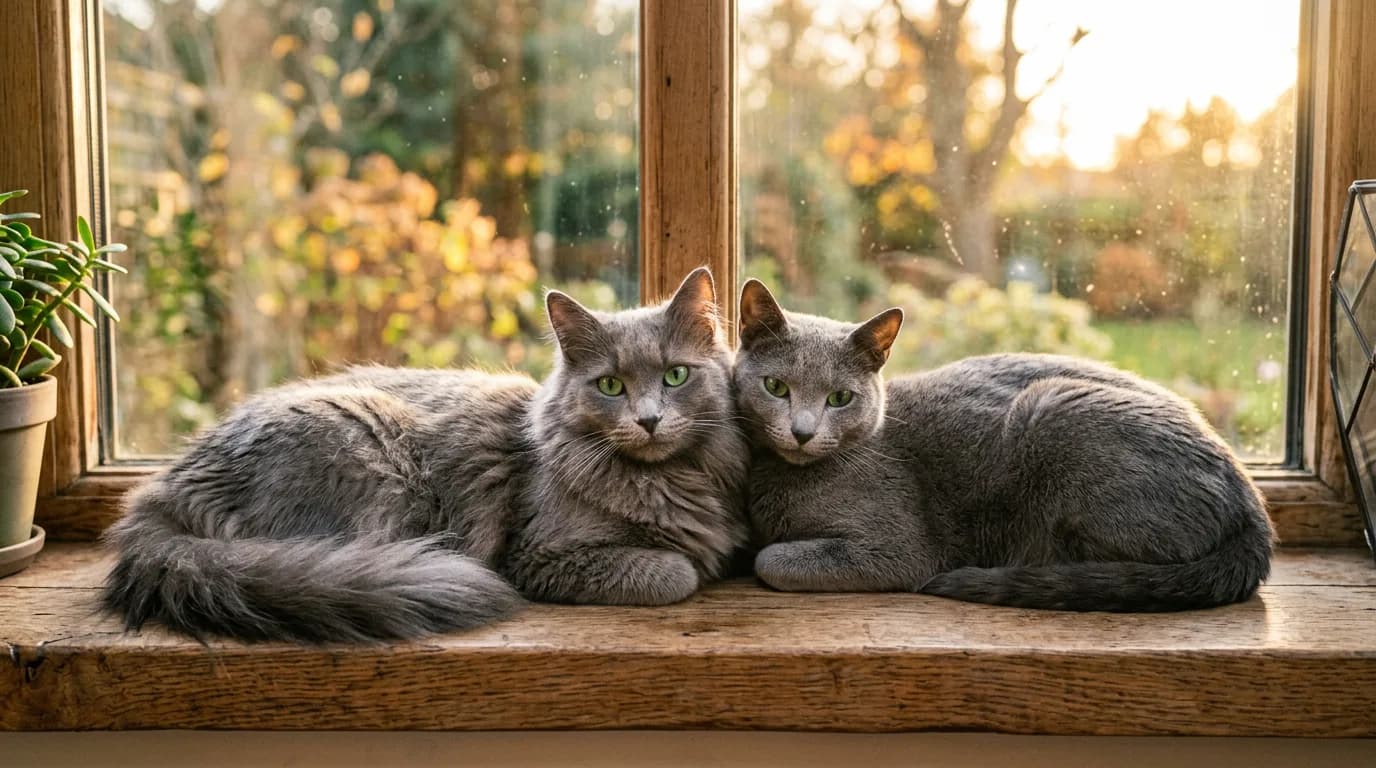
Look for three Nebelung markers: a semi-long, silky blue-grey coat, a full plumed tail, and longer hair forming a ruff around the neck plus tufts on the ears and toes. A short, plush coat means Russian Blue instead, and only a TICA pedigree confirms a true purebred Nebelung.
The Nebelung is the breed most often mistaken for a Russian Blue, because it shares the same blue coat, silver tipping, and green eyes and differs mainly in hair length. Blue Chartreux, Korat, and British Shorthair cats are also confused with the Russian Blue.
Yes, the Nebelung is rare, especially in the United States, with only a small number of active registered breeders. Because true Nebelungs are scarce, many grey longhaired domestic cats are mislabeled as Nebelungs without pedigree papers.
The original Nebelungs came from a black domestic shorthair mother bred to a blue domestic longhair father, producing the longhaired blue foundation cats Siegfried and Brunhilde in 1984 and 1985. Russian Blue lines were then used in the breeding program to set the correct color, build, and temperament.
Check the coat length first: short and plush is Russian Blue, semi-long and flowing is Nebelung. The tail is the clearest single tell, since a feathered, plumed tail points to Nebelung while a sleek even tail points to Russian Blue, and most blue cats without papers are actually domestic mixes.
The Ragdoll is widely considered the floppiest cat breed, named for its tendency to go limp and relaxed when picked up. Neither the Nebelung nor the Russian Blue is a floppy breed; both are reserved and prefer to stay on their own four feet rather than be carried.
The Ragdoll, British Shorthair, and Persian are often ranked among the calmest cat breeds. The Russian Blue and Nebelung are also notably calm and quiet, though their calm comes with a reserved, one-person nature rather than the easygoing sociability of a Ragdoll.

Coreen Saito is a pet writer and longtime shelter volunteer with more than a decade in animal rescue. She covers cat behavior, breed care, and the small, ordinary science of sharing a life with companion animals, with a particular focus on honest takes about the products and decisions that actually matter. At home in Arizona, she's outranked by Mac (a dog with the loudest opinion in the house), Rebel (a cat who governs by quiet authority), and Meri (an orange tabby who runs the late shift and the laundry basket). She writes about all three, plus the rescues that keep coming through her life, at LifeWithMinty.com.
Sign up for expert-backed reviews and safety alerts all in one place.