Minskin Cat: Breed Profile, Price, Health & Care
The Minskin is a rare, short-legged, part-hairless cat that stays kitten-like for life. Get the verified facts on Minskin price, size, coat variations, personality, health, lifespan, hypoallergenic status and day-to-day care.

Veterinarian · BVMS, MRCVS
Petful is reader supported. As an affiliate of platforms like Amazon and Chewy, we may earn a commission when you buy through links on this page. There is no extra cost to you.
Minskin Cat: Breed Profile, Price, Health and Care
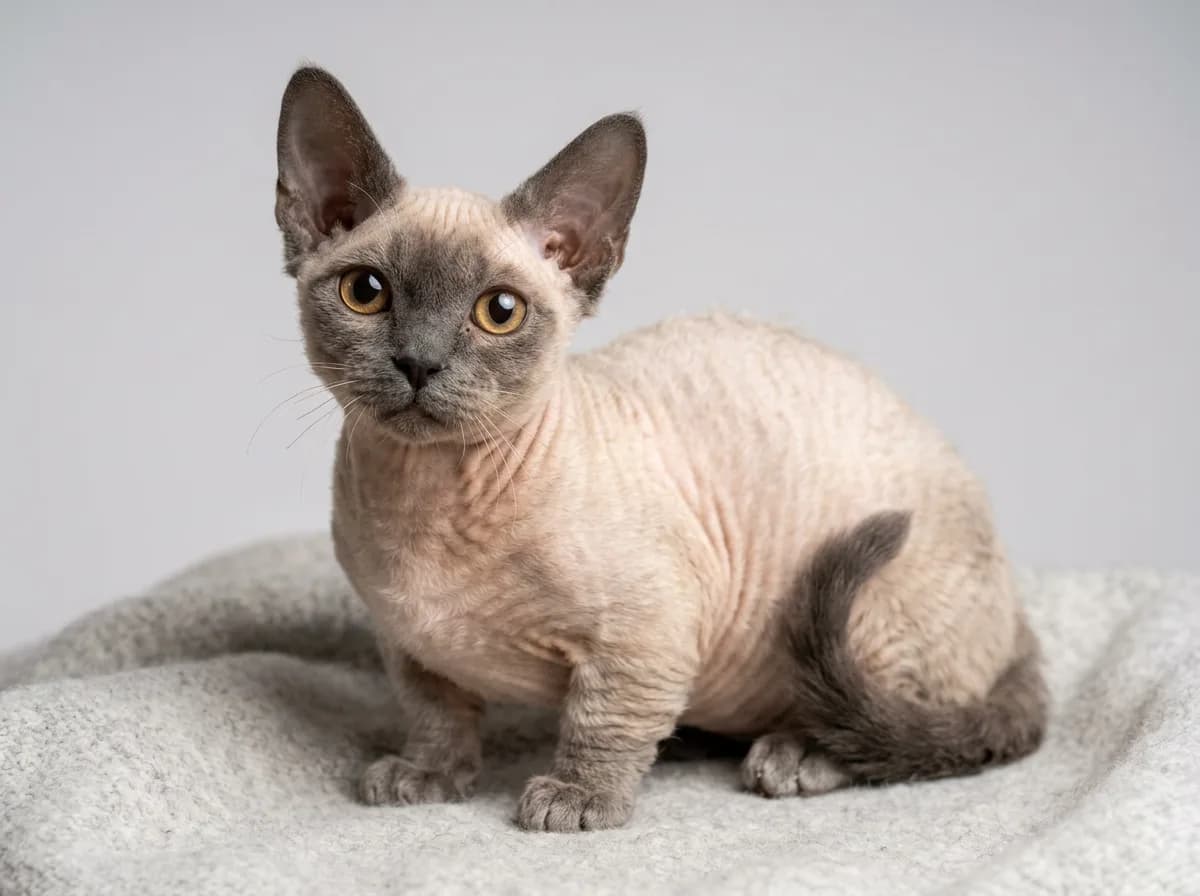
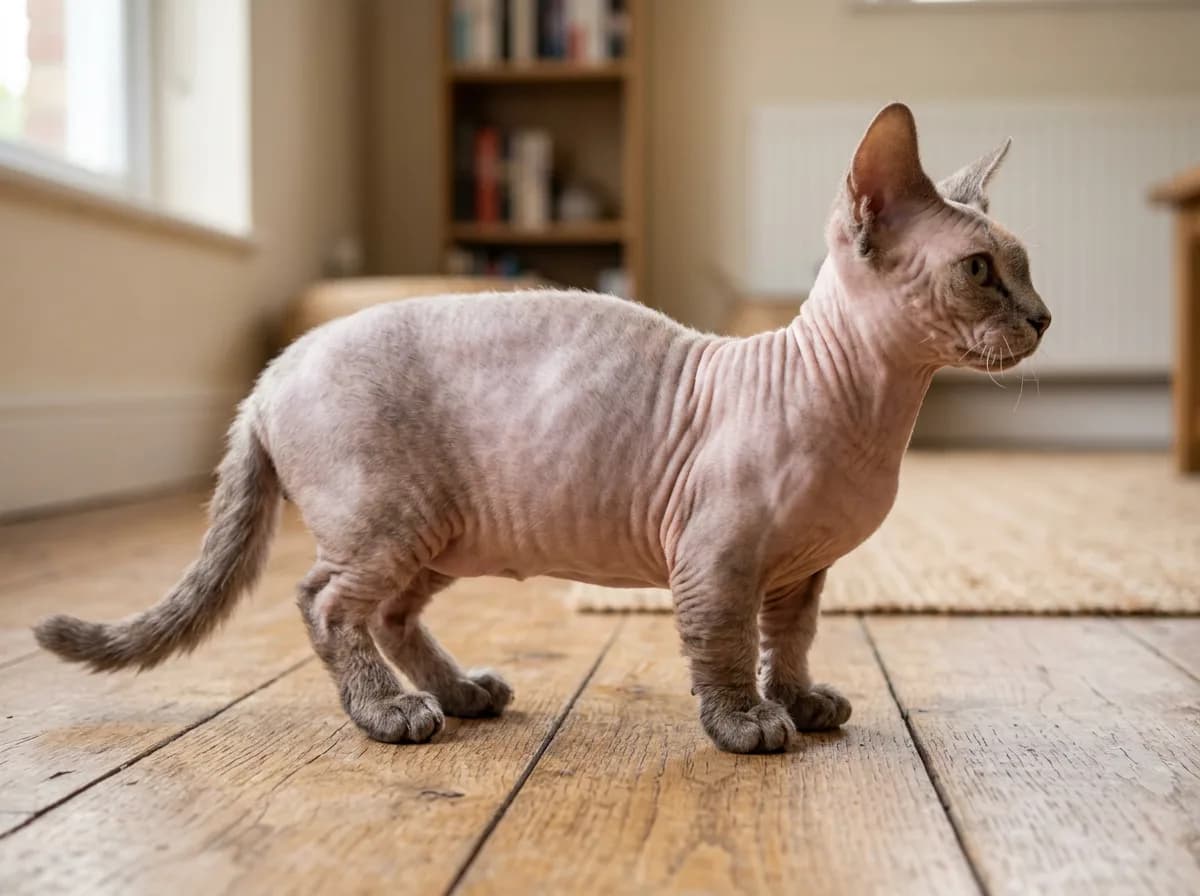
A Minskin cat is a rare, small, part-hairless breed with very short Munchkin-style legs, a near-bare wrinkled body, and soft tufts of fur on the face, ears, lower legs and tail. Created in Boston in 1998 by crossing the Munchkin with the Sphynx, Burmese and Devon Rex, the Minskin cat stays kitten-sized and kitten-faced for life. Expect to pay roughly $1,500 to $5,000, a lifespan of about 12 to 15 years, and a sociable, people-loving temperament.
Because the breed is so uncommon, solid information about Minskin cats is hard to find. This guide pulls together the verified facts on the Minskin's origin, size, coat variations, personality, price, health and day-to-day care, so you know exactly what owning one of these unusual little cats involves before you commit.
- 1The Minskin is a designer breed: short Munchkin legs plus a near-hairless Sphynx-style body, finished with fur-points on the face, ears, legs and tail.
- 2It is genuinely rare and costs roughly $1,500 to $5,000, with premium or show lines going higher.
- 3Minskins typically stand 7 to 8 inches tall, weigh 4 to 6 pounds, and live about 12 to 15 years.
- 4Near-hairless does NOT mean hypoallergenic. Minskins still produce the Fel d 1 allergen in saliva and skin oils.
- 5They are warmth-seeking and need bathing every week or two to manage the skin oils a coat would normally absorb.

Sign up for expert-backed reviews and safety alerts all in one place.
What Is a Minskin Cat?
A Minskin cat is a hybrid breed that combines two unusual traits: the short legs of the Munchkin and the sparse, near-hairless coat of the Sphynx. The result is a small, low-slung cat with a soft, suede-like body and distinctive points of fur, sometimes called fur-points, on the face mask, the ears, the lower legs and the tail. Owners often describe the look as part hairless cat, part teddy bear.
The breed was developed by Paul McSorley, a Boston-area breeder who began the project in 1998. He wanted a cat with the short stature of the Munchkin cat and the hairless quality of the Sphynx cat, so he crossed those two breeds and added Burmese and Devon Rex blood to refine the body type and coat texture. The International Cat Association (TICA) accepted the Minskin as a Preliminary New Breed, and the first cat to meet the written standard appeared in July 2000.
- Munchkin tells you the legs, Sphynx tells you the skin. A Minskin is essentially a short-legged cat wearing a sparse, fur-pointed version of the Sphynx coat. Neither parent breed on its own is a Minskin.
| Trait | Detail |
|---|---|
| Height | 7 to 8 inches at the shoulder |
| Weight | 4 to 6 pounds (small) |
| Lifespan | About 12 to 15 years |
| Coat | Near-hairless body with fur-points on face, ears, legs and tail |
| Body type | Short Munchkin legs, low-slung muscular body |
| Temperament | Affectionate, social, energetic, people-oriented |
| Price | Roughly $1,500 to $5,000 (premium lines higher) |
| Origin | Boston, USA; developed by Paul McSorley from 1998 |
Those numbers make the Minskin one of the smaller cat breeds. A typical adult tops out around the size of a 6-month-old kitten of an ordinary breed, which is a big part of the appeal for people who want a cat that keeps its kitten proportions.
Because a near-hairless cat tracks more skin oil and litter dust than a furred cat, a low-dust, health-monitoring litter is a sensible choice for a Minskin household. PrettyLitter changes color to flag early signs of urinary or kidney trouble, which is useful for a small breed you want to catch problems in early.
Color-changing crystal litter that flags pH shifts in your cat's urine, an early warning sign of UTIs, kidney issues, and more.
Petful may earn a commission when you click through to Chewy, at no extra cost to you.
Appearance and Coat Variations
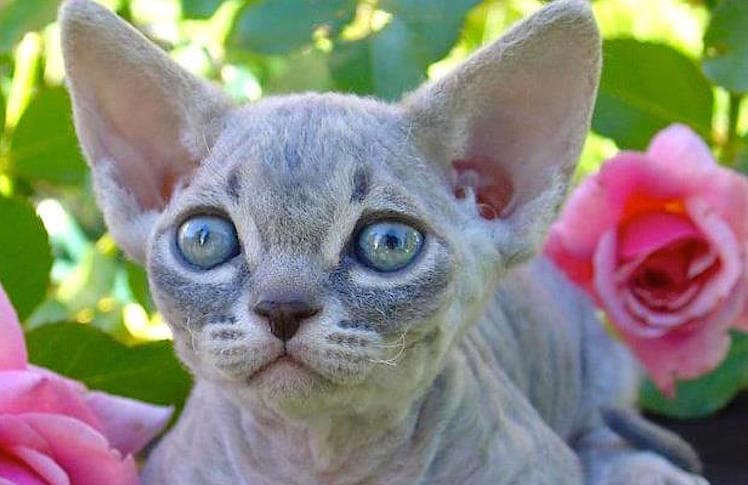
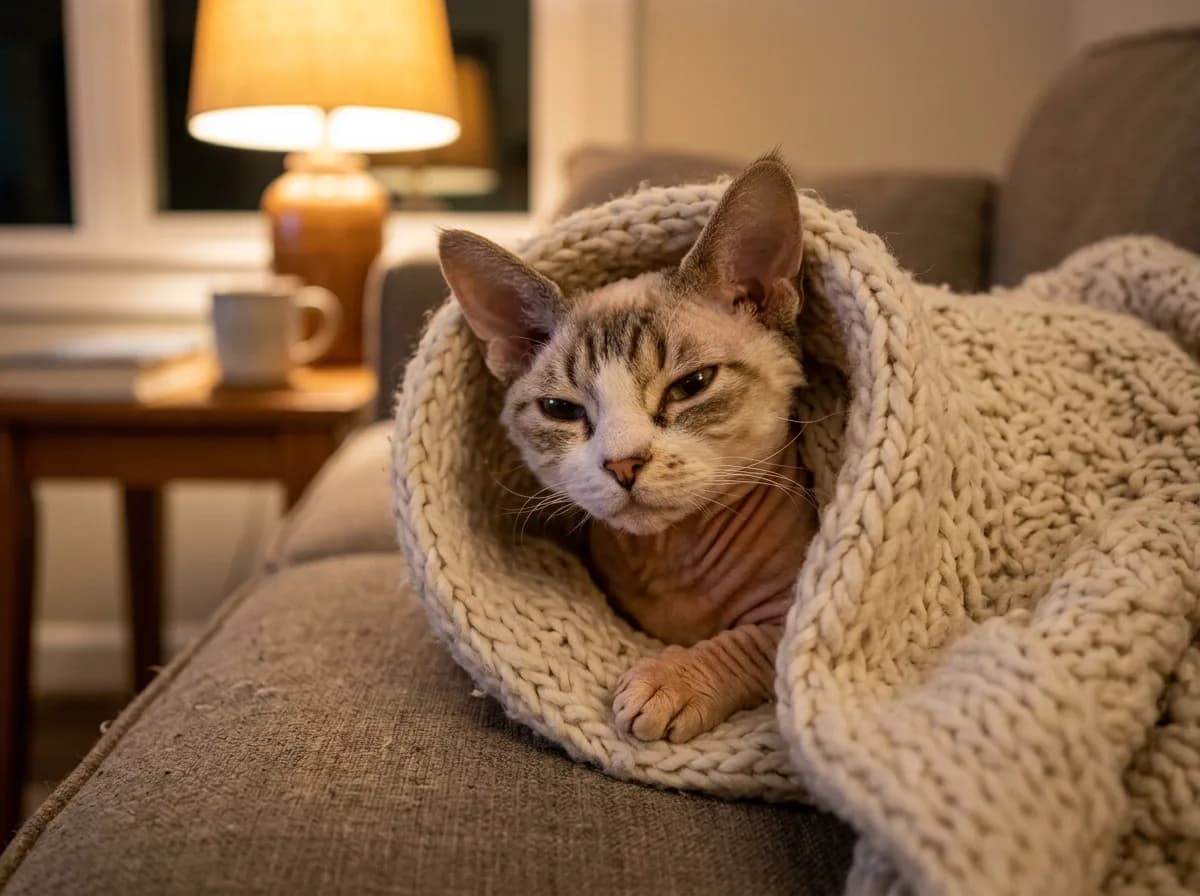
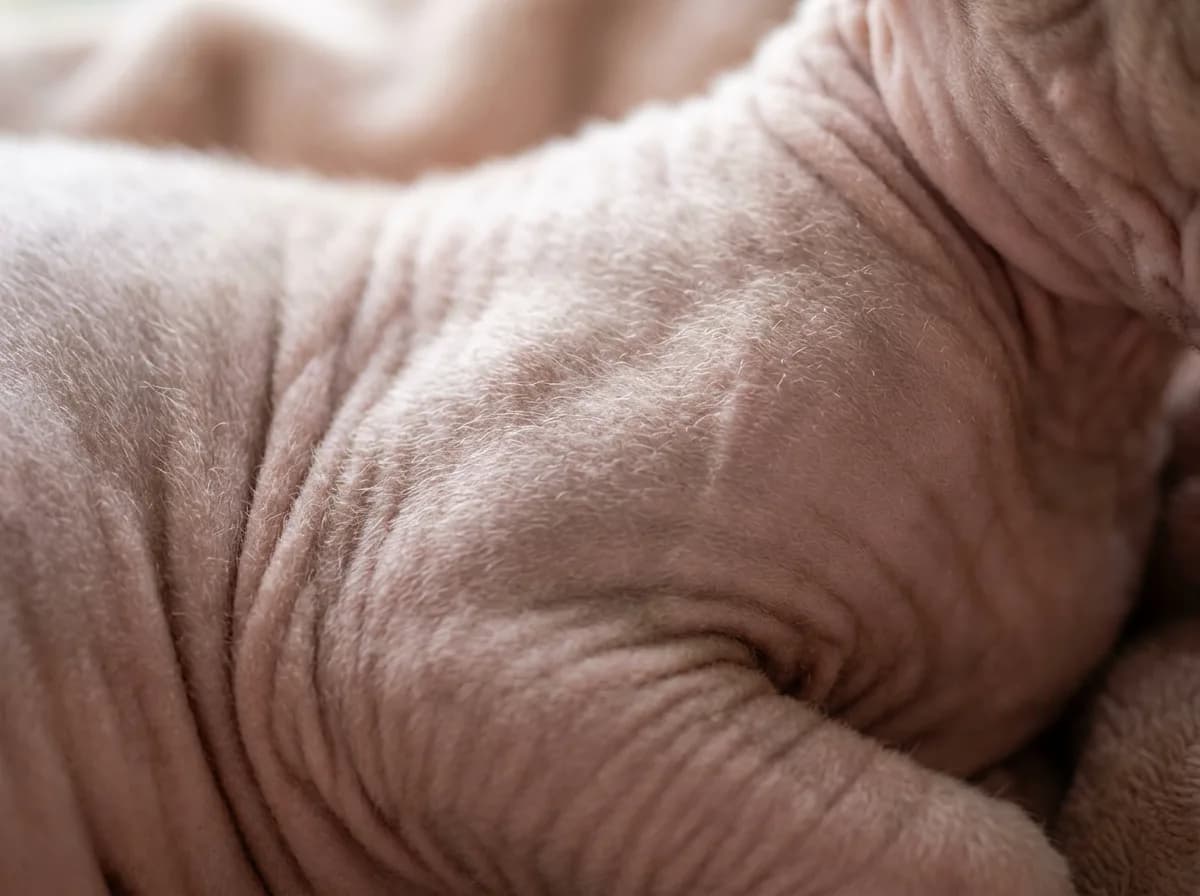
At first glance a Minskin looks like a tiny, wrinkled cat standing on stubby legs. The body is firm and muscular with a rounded belly, the head is round with large, wide-set ears, and the eyes are big and expressive. The skin feels warm and soft, like chamois or peach fuzz, and is usually loose enough to form gentle wrinkles around the neck, shoulders and legs.
Fur-pointed, rex-coated and fuzzy variants
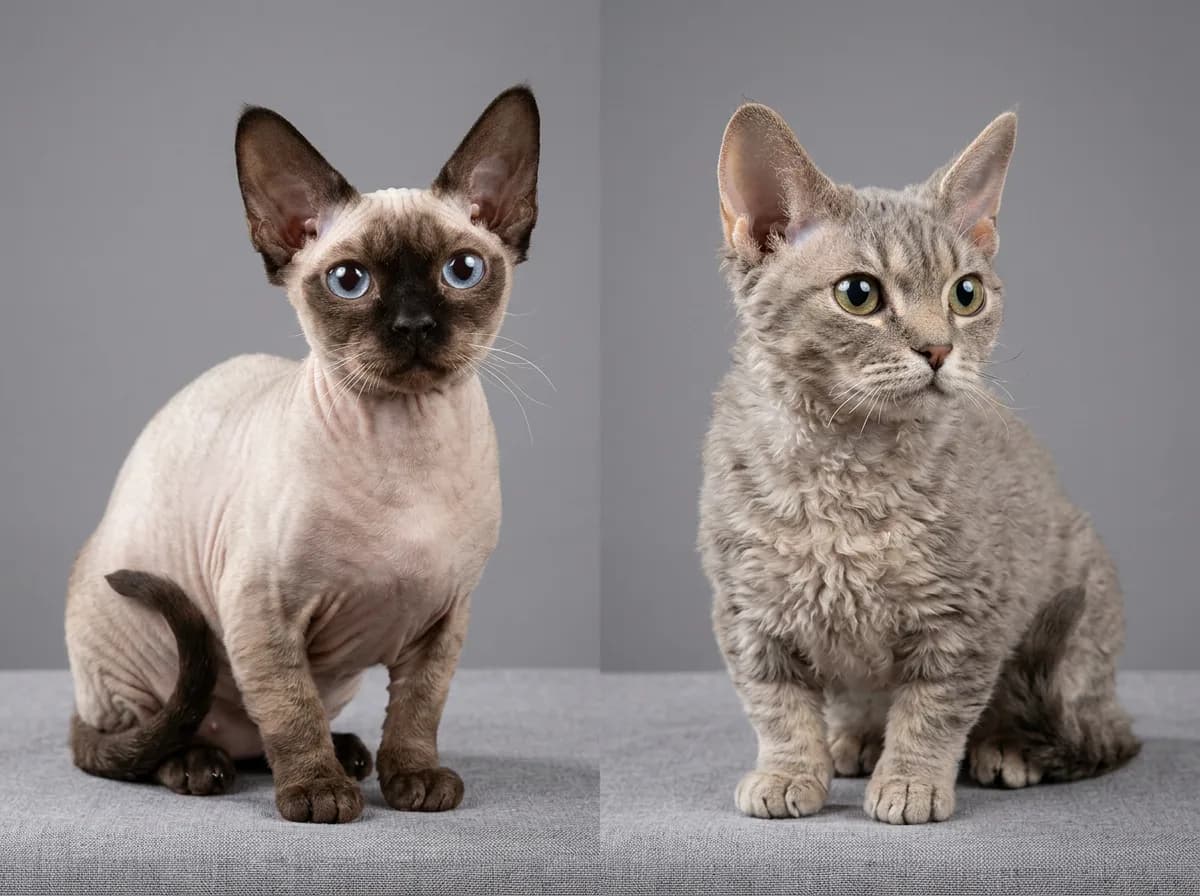
Minskins are not uniformly bare. The classic look is fur-pointed: a near-naked body with denser fur concentrated on the extremities. Some Minskins, often labeled rex-coated or Teddy Rex, carry a short, soft, slightly wavy down over more of the body. Others, sometimes searched as a Minskin cat with hair, show a fuzzier coat overall. All three are the same breed; the amount and placement of hair simply varies from cat to cat.
Colors and patterns
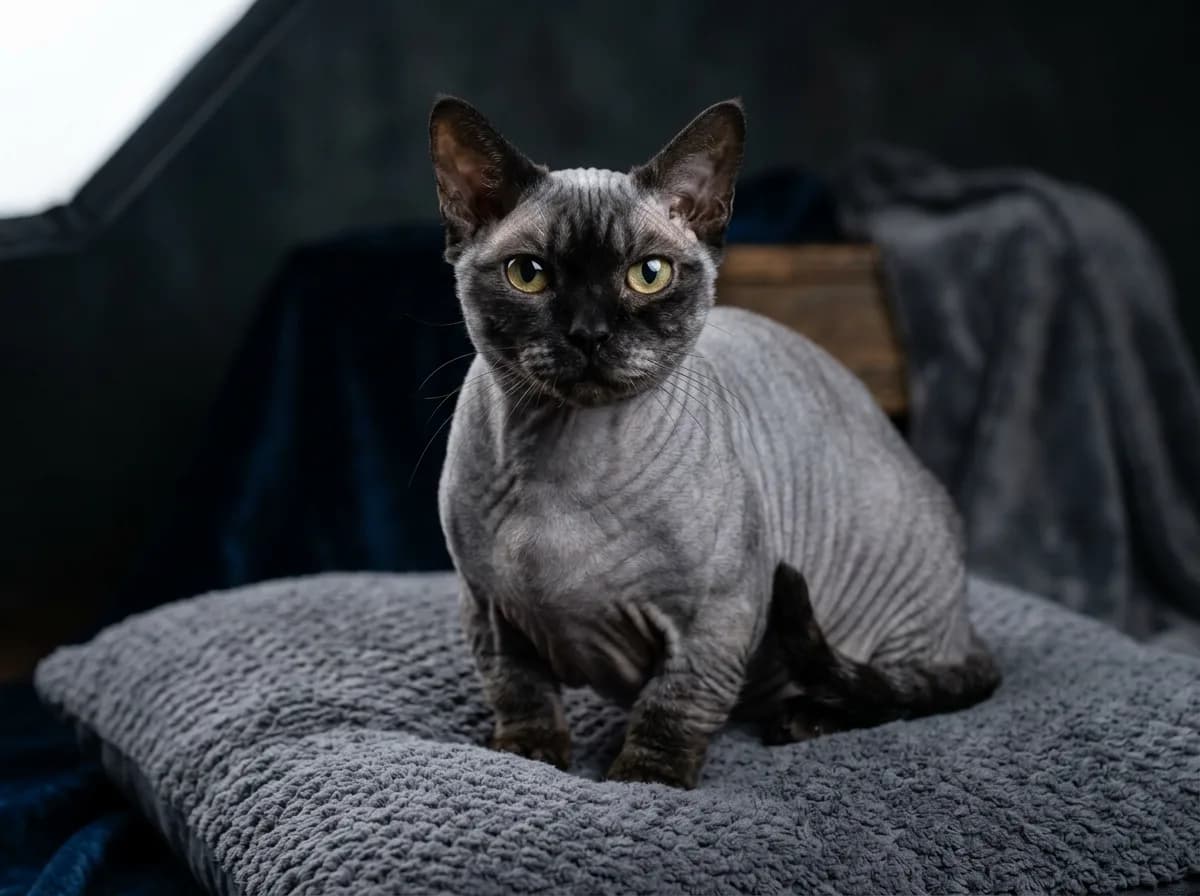
Because the skin carries the pigment a coat normally would, a Minskin can appear in essentially any color or pattern. You will see black, blue (grey), cream, tabby-patterned and pointed Minskins, with the markings showing through the skin and the fur-points. A black Minskin cat shows dark slate skin with charcoal points, while a blue tabby shows soft grey patterning.
Is a Minskin's face a sign of Down syndrome?
Some people search whether a Minskin has Down syndrome because the wrinkled skin, wide-set eyes and unusual face can look striking. The honest answer is no. Cats do not have the chromosome structure that causes Down syndrome in humans, so the term does not apply to any cat. A Minskin's appearance is simply the normal result of its hairless, short-legged genetics, not a disorder or a defect.
Petful may earn a commission when you click through to Chewy, at no extra cost to you.
Personality and Temperament
Minskins are famously affectionate and social. They tend to bond closely with their people, follow them from room to room, and ask for laps and shoulders. The Burmese ancestry shows in their friendly, confident nature, while the Munchkin and Sphynx lines add playful, curious energy. Most Minskins greet visitors rather than hide from them and get along well with children, dogs and other cats.
They are intelligent and active despite their short legs. A Minskin will climb, chase toys and learn simple games, though it jumps a little lower than a long-legged cat. Their people-first temperament means they do not like being left alone for long stretches; a companion pet or an enriched environment helps if you work away from home.
- A Minskin is a warmth-seeking lap cat by design. If you want an aloof, independent cat that ignores you, this is the wrong breed. If you want a small shadow that wants to be on you, it is close to ideal.
Size and Growth: Why Minskins Look Like Kittens Forever
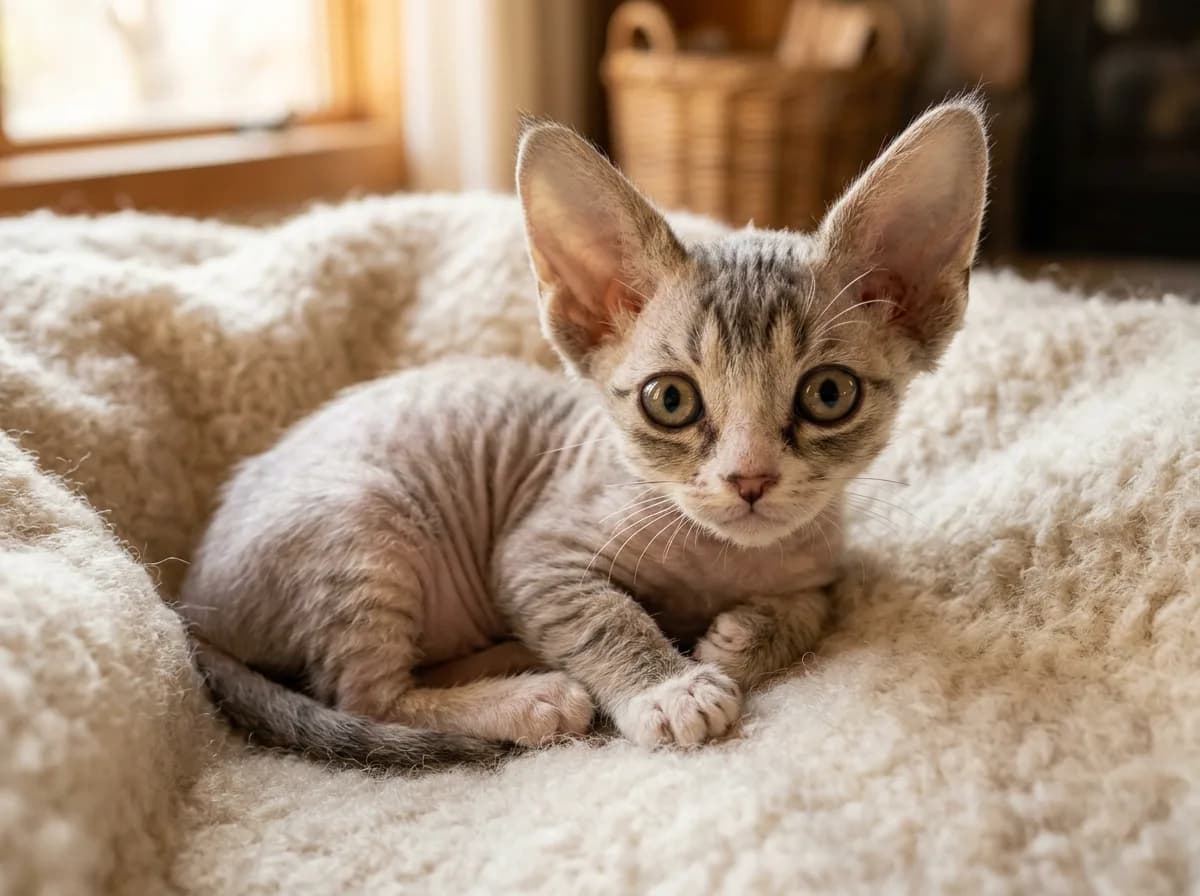
A full-grown Minskin cat is small. Adults usually weigh 4 to 6 pounds and stand 7 to 8 inches tall, with the short Munchkin legs keeping them low to the ground. Because the legs stay short and the body stays compact, an adult Minskin keeps the proportions of a kitten throughout its life, which is the trait most owners fall for.
| Age | Approx. Weight | What to Expect |
|---|---|---|
| 8 to 12 weeks | 1 to 2 lb | Tiny, wrinkled, oversized ears, very short legs already obvious |
| 6 months | 2.5 to 4 lb | Body lengthening, skin texture and points developing |
| 1 year | 4 to 5.5 lb | Close to adult size, still kitten-like in face and proportion |
| 2 years and up | 4 to 6 lb | Full mature size; stays small and kitten-shaped for life |
Small, near-hairless breeds run a little warm and benefit from steady hydration, which supports the urinary and kidney health that matters in a tiny cat. A circulating water fountain encourages a Minskin to drink more than a still bowl does.

108-oz stainless steel pet fountain with quiet pump and water-level window. Bengals are notoriously water-obsessed; a flowing fountain encourages hydration and pulls them away from sinks and toilets.
Petful may earn a commission when you click through to Chewy, at no extra cost to you.
Health Problems and Lifespan
A Minskin cat typically lives about 12 to 15 years, comparable to other small breeds, and is reasonably healthy overall. Because it descends from the Munchkin and Sphynx, though, it can inherit conditions linked to short legs and hairlessness. Responsible breeders screen for these, and a vet check at the time of purchase is wise for any rare designer breed.
Conditions to watch for
Minskins can be affected by chondrodysplasia, the gene behind the short legs, which is associated with skeletal issues such as lordosis (an inward curve of the spine) and pectus excavatum (a sunken chest). These are not present in every cat, but they are the conditions most often discussed in the breed. Like other Sphynx-derived cats, Minskins can also be prone to skin problems and, in some lines, heart conditions such as hypertrophic cardiomyopathy, so periodic veterinary screening is sensible.
Skin and temperature care
The near-hairless coat means a Minskin cannot regulate its temperature the way a furred cat can. They get cold easily, sunburn through thin coats, and accumulate skin oils that a coat would normally wick away. None of these are diseases, but they are daily realities that affect the cat's comfort and health, covered in the care section below.
- Buy only from a breeder who health-tests for cardiac and skeletal issues and lets you meet the kitten's parents. A defensible price is no substitute for documented screening in a breed built on the short-leg and hairless genes.
Are Minskin Cats Hypoallergenic?
No, Minskin cats are not hypoallergenic. A near-hairless coat sheds less visible fur, but the allergen most people react to is Fel d 1, a protein in cat saliva, skin oils and dander, not in the hair itself. Because a Minskin still grooms, still produces skin oils, and actually has more exposed skin than a furred cat, it can trigger allergies just as a coated cat does.
If you have a mild allergy, regular bathing and wiping down the skin can lower the allergen load on a Minskin, and less loose hair around the home may help symptoms feel milder. But no cat is truly allergen-free, and anyone with a serious cat allergy should spend time with a Minskin before buying rather than assuming hairless equals safe.
Care, Grooming and Diet
Caring for a Minskin is more hands-on than caring for a typical cat, because the lack of a full coat shifts work onto you. The three big jobs are skin care, warmth, and a quality diet sized for a small, active cat.
Bathing and skin care
Without a full coat to absorb them, skin oils build up on a Minskin and can leave a greasy film or clog pores. Most owners bathe their Minskin every one to two weeks with a gentle, cat-safe shampoo, and wipe the skin and ear folds in between. Keep the cat out of direct sun to avoid sunburn, and check the skin regularly for redness, blackheads or irritation.
Warmth and environment
A Minskin gets cold quickly, so warmth is not a luxury. Provide soft bedding, heated cat beds or warm spots near a radiator, and many owners use lightweight cat sweaters in winter. Keep the home draft-free and comfortable, and expect your Minskin to seek out your lap or the sunniest chair in the house.
Diet
Feed a high-quality, protein-rich cat food appropriate to your Minskin's life stage and small size, in portions that keep it lean. A near-hairless cat burns a little extra energy staying warm, so do not underfeed, but a small breed also gains weight easily, so measure meals and ask your veterinarian for a target. Fresh water, ideally from a fountain, supports the urinary health that matters in a tiny cat.
A self-cleaning litter box keeps a Minskin's sensitive skin away from soiled litter and reduces the dust that can irritate a near-bare body. The Litter-Robot automates scooping and helps a small, clean-conscious cat stay comfortable using the box.
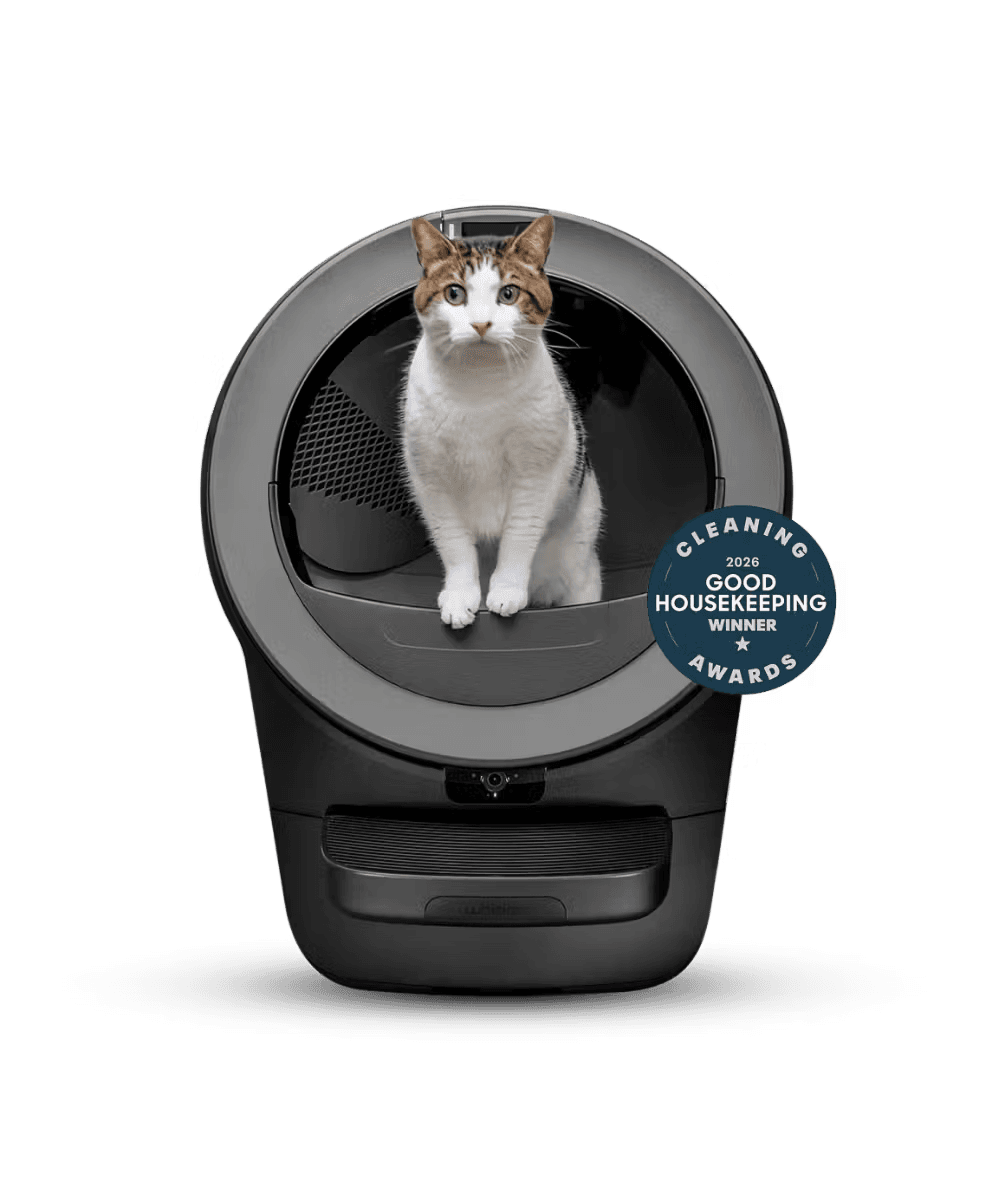
Never Scoop Again® with the Whisker Litter-Robot, the smart self-cleaning automatic litter box. Monitor visits and track weights for better overall care in the Whisker® app. Multi-cat friendly.
Petful may earn a commission when you click through to Whisker, at no extra cost to you.
Price and Where to Find a Minskin
A Minskin cat usually costs between $1,500 and $5,000 from a registered breeder, with premium, show-quality or rare-color lines priced higher. The wide range reflects how rare the breed is: there are very few active Minskin breeders worldwide, demand outpaces supply, and the cost of health-testing the short-leg and hairless genetics is built into the price.
Treat any unusually cheap Minskin with caution, because legitimate, health-tested kittens are expensive to produce. Beyond the purchase price, budget for ongoing costs: bathing supplies, warm bedding or sweaters, a good diet, and routine vet care for a breed that benefits from regular screening.
Finding a reputable breeder
Because the Minskin is a TICA-recognized but still-developing breed, look for a breeder registered with TICA who health-tests for cardiac and skeletal conditions, raises kittens underfoot in the home, and lets you meet the parents. Ask to see screening paperwork, a written health guarantee, and the kitten's vaccination records. Rescue Minskins are rare, but checking hairless-cat and Munchkin rescues is worth doing if adoption appeals to you.
If you are still comparing short-legged or hairless breeds, it is worth reading up on the Minskin's two parent breeds and the wider cat breeds library before you decide.
A Minskin cat typically costs between $1,500 and $5,000 from a registered breeder, with premium, show-quality or rare-color lines priced higher. The breed is genuinely rare, so demand outstrips supply, and health-testing the short-leg and hairless genetics adds to the cost. Be wary of unusually cheap kittens, which often skip proper screening.
Yes. The Minskin is one of the rarest cat breeds in the world. It was only created in 1998, is still a developing TICA breed, and has very few active breeders globally. That scarcity is the main reason prices are high and waiting lists are common.
Minskins are generally healthy but can inherit conditions tied to their parent breeds. Because of the short-leg (chondrodysplasia) gene, some are prone to skeletal issues such as lordosis or pectus excavatum, and like other Sphynx-derived cats they can have skin problems and, in some lines, heart conditions. Buying from a breeder who health-tests reduces the risk.
No. No cat is truly hypoallergenic, and a Minskin is no exception. The Fel d 1 allergen lives in saliva and skin oils rather than in hair, and a Minskin actually has more exposed skin than a furred cat. Regular bathing can lower the allergen load, but anyone with a serious allergy should spend time with one before buying.
A Minskin cat usually lives about 12 to 15 years, similar to other small breeds. Good genetics from a health-testing breeder, a quality diet, indoor living, attentive skin care, and routine veterinary checks all help a Minskin reach the upper end of that range.
Minskins are not fully hairless. They have a near-bare body with denser fur-points on the face, ears, lower legs and tail. Some, called rex-coated or Teddy Rex, carry a soft wavy down over more of the body, and others are fuzzier overall. The amount of hair varies from cat to cat, but pure bareness like a full Sphynx is uncommon.
Yes. Minskins are affectionate, social and people-oriented, and they usually do well with children, dogs and other cats. They want to be involved in family life and dislike being left alone for long. As long as you can meet their skin-care and warmth needs, they make devoted, interactive companions.
An adult Minskin stands about 7 to 8 inches tall at the shoulder and weighs roughly 4 to 6 pounds, making it one of the smaller cat breeds. The short Munchkin legs keep it low to the ground and the compact body keeps it kitten-sized for life.
A Minskin is a small, part-hairless designer cat with very short legs. It was created by crossing the Munchkin (for the short legs) with the Sphynx (for the hairless coat), then adding Burmese and Devon Rex to refine the body and skin. The result is a low-slung, fur-pointed cat that looks like a kitten its whole life.
Two genetics keep a Minskin looking kitten-like: the Munchkin short-leg gene keeps the legs stubby and the cat low to the ground, and the small, compact body stays around 4 to 6 pounds. Combined with the round face and big ears, an adult Minskin keeps the proportions of a young kitten throughout its life.

Kristine Lacoste has been researching dog and cat breeds for nearly a decade and has observed the animals up close at dog shows in both the United States and the United Kingdom. She is the author of the book One Unforgettable Journey, which was named as a finalist for a Maxwell Award from the Dog Writers Association of America, and was host of a weekly pet news segment on the National K-9 Academy Radio Show. In addition, she was the New Orleans coordinator for Dogs on Deployment, a nonprofit that helps military members and their pets, for 3 years. Kristine has researched and written about pet behaviors and care for many years. She holds a bachelor’s degree in psychology, another bachelor’s degree in English and a Master of Business Administration degree.
Veterinarian · BVMS, MRCVS
Dr. Pippa Elliott, BVMS, MRCVS, is a veterinarian with nearly 30 years of experience in companion animal practice. Dr. Elliott earned her Bachelor of Veterinary Medicine and Surgery from the University of Glasgow. She was also designated a Member of the Royal College of Veterinary Surgeons. Married with 2 grown-up kids, Dr. Elliott has a naughty Puggle named Poggle, 3 cats and a bearded dragon.
Sign up for expert-backed reviews and safety alerts all in one place.