Lykoi Cat: The Complete Werewolf Cat Breed Guide
The Lykoi cat, or werewolf cat, is a partially hairless breed with a roan coat and a wolfish face. Here is the full breed profile: origin, temperament, care, health, hypoallergenic facts, cost, and the myths worth debunking.
Petful is reader supported. As an affiliate of platforms like Amazon and Chewy, we may earn a commission when you buy through links on this page. There is no extra cost to you.
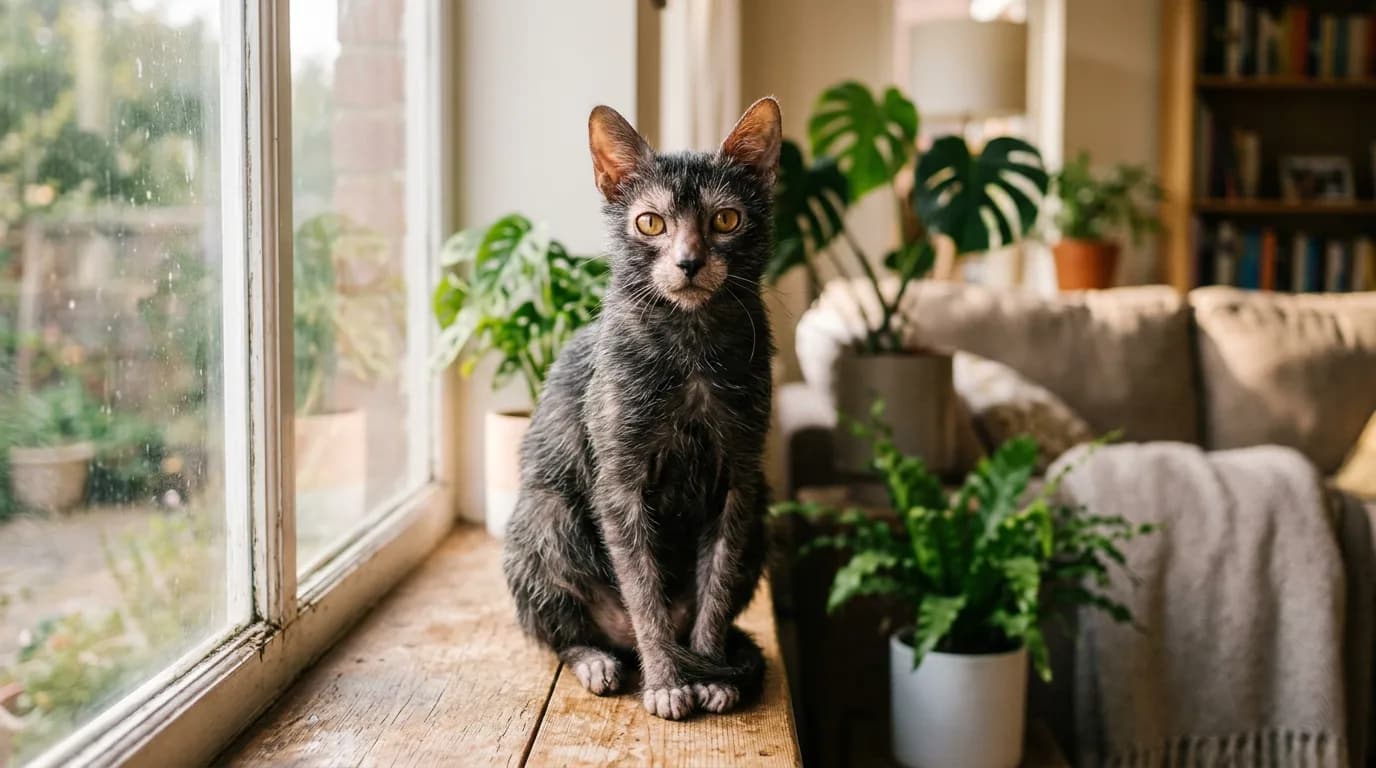
The Lykoi cat, recognized by The International Cat Association (TICA) as a championship breed since 2017, is a partially hairless cat famous for its wolfish "roan" coat and the nickname "werewolf cat." Born from a natural genetic mutation first developed into a breed around 2010 in the United States, the Lykoi looks unlike any other cat: patchy black-and-silver fur, bald patches around the eyes and muzzle, and bright amber eyes that finish the spooky picture. Despite the eerie looks, breeders and registries describe these cats as warm, dog-like companions that bond hard with their people.
- 1The Lykoi is a partially hairless cat created from a natural recessive mutation, not crossbreeding or designer engineering
- 2Its signature roan coat (colored hairs mixed with white) plus bald "masking" around the face is what earns it the werewolf cat nickname
- 3TICA recognized the Lykoi as an Advanced New Breed in 2012 and granted Championship status in 2017
- 4Lykoi cats are generally healthy with a 12 to 15 year lifespan, but they are NOT hypoallergenic and typically cost 1,500 to 2,500 USD or more

Sign up for expert-backed reviews and safety alerts all in one place.
What Is a Lykoi Cat?
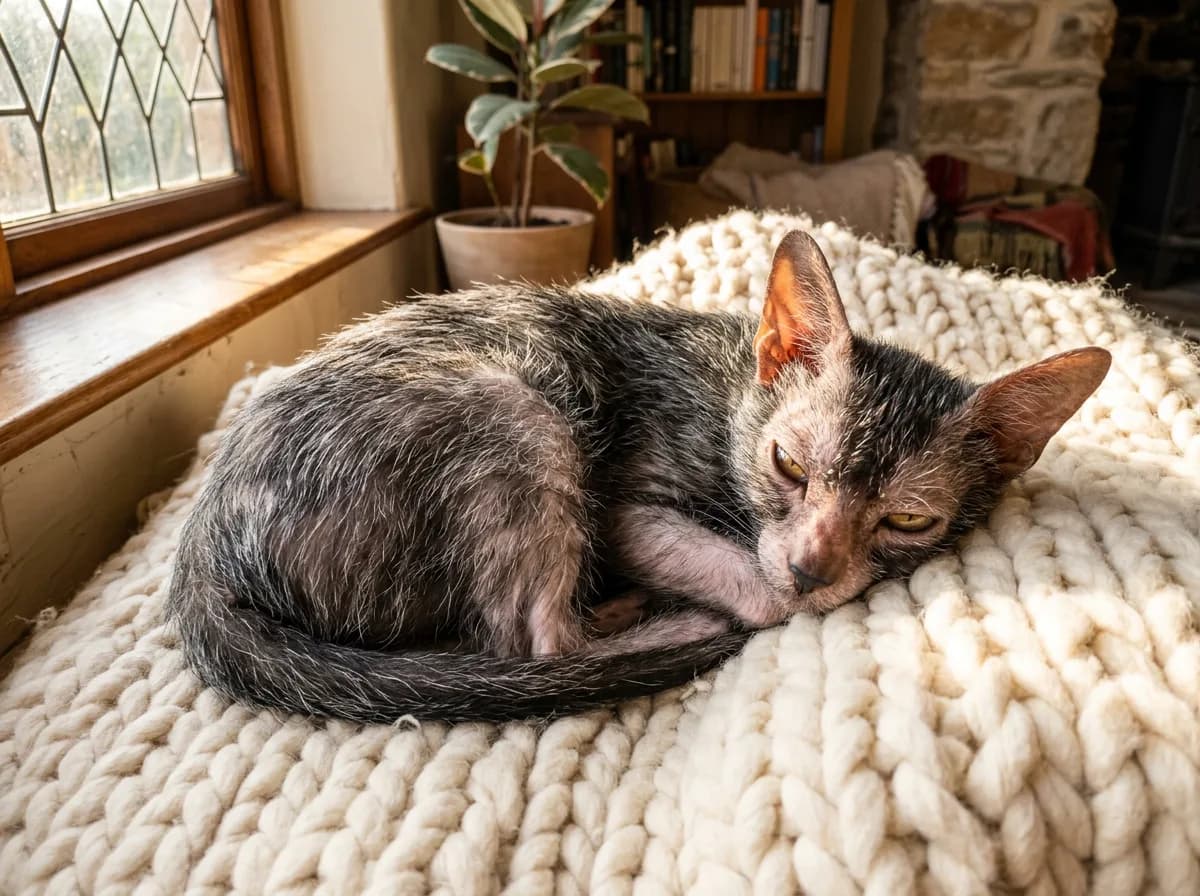
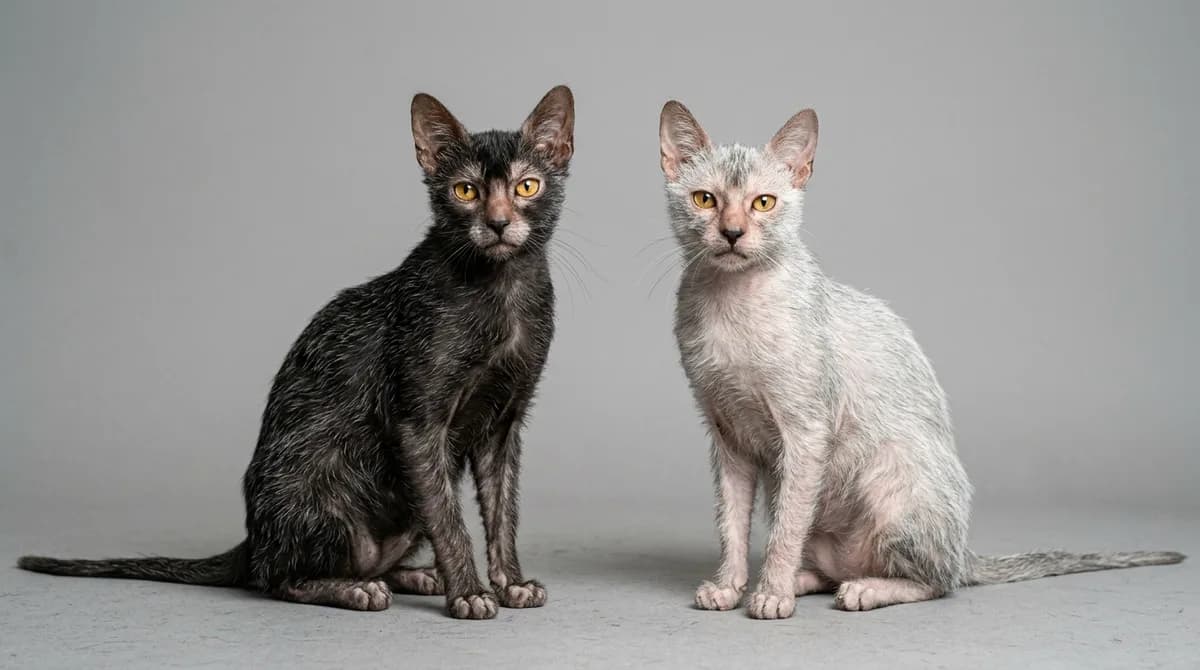
A Lykoi cat is a breed of domestic cat defined by a natural mutation that causes a form of hypotrichosis, meaning sparse or incomplete fur. The result is a cat with a thin, single coat, no undercoat, and bare skin around the eyes, nose, muzzle, ears, chin, and lower legs. That distinctive "masked" look, paired with a grizzled coat, is why people call it the werewolf cat.
The name "Lykoi" comes from the Greek word for wolf. According to TICA, the breed traces to two unrelated litters of kittens presented to the founders as unique cats, and was established as a breeding program around 2010 to 2011 in the United States. The mutation is recessive, so both parents must carry the gene for kittens to inherit the Lykoi look.
Unlike a Sphynx, which is typically fully bald, the Lykoi keeps some hair across most of its body. It just keeps it sparsely and unevenly, which is what creates the half-wild, half-tame appearance.
- The Lykoi is a small to medium cat, usually 6 to 12 pounds, with a lean, muscular body, large upright ears, and amber to gold eyes.
Why Is It Called the Werewolf Cat?
The "werewolf cat" nickname is the single most-searched thing about this breed, and it comes down to two features working together: the roan coat and the partial hairlessness.
The roan coat
A Lykoi's coat is "roan," a pattern where solid colored hairs are intermixed with white or amelanistic (pigment-free) hairs. The classic and show-standard version is black roan: black guard hairs scattered through silvery-white ones, giving an overall grizzled, salt-and-pepper look. TICA notes the ideal degree of roaning is around 50 percent, and in TICA Championship competition only solid black roan is shown. The roan effect makes the cat look weathered and wild rather than sleek.

Never Scoop Again® with the Whisker Litter-Robot, the smart self-cleaning automatic litter box. Monitor visits and track weights for better overall care in the Whisker® app. Multi-cat friendly.
Petful may earn a commission when you click through to Whisker, at no extra cost to you.
The masking and molting
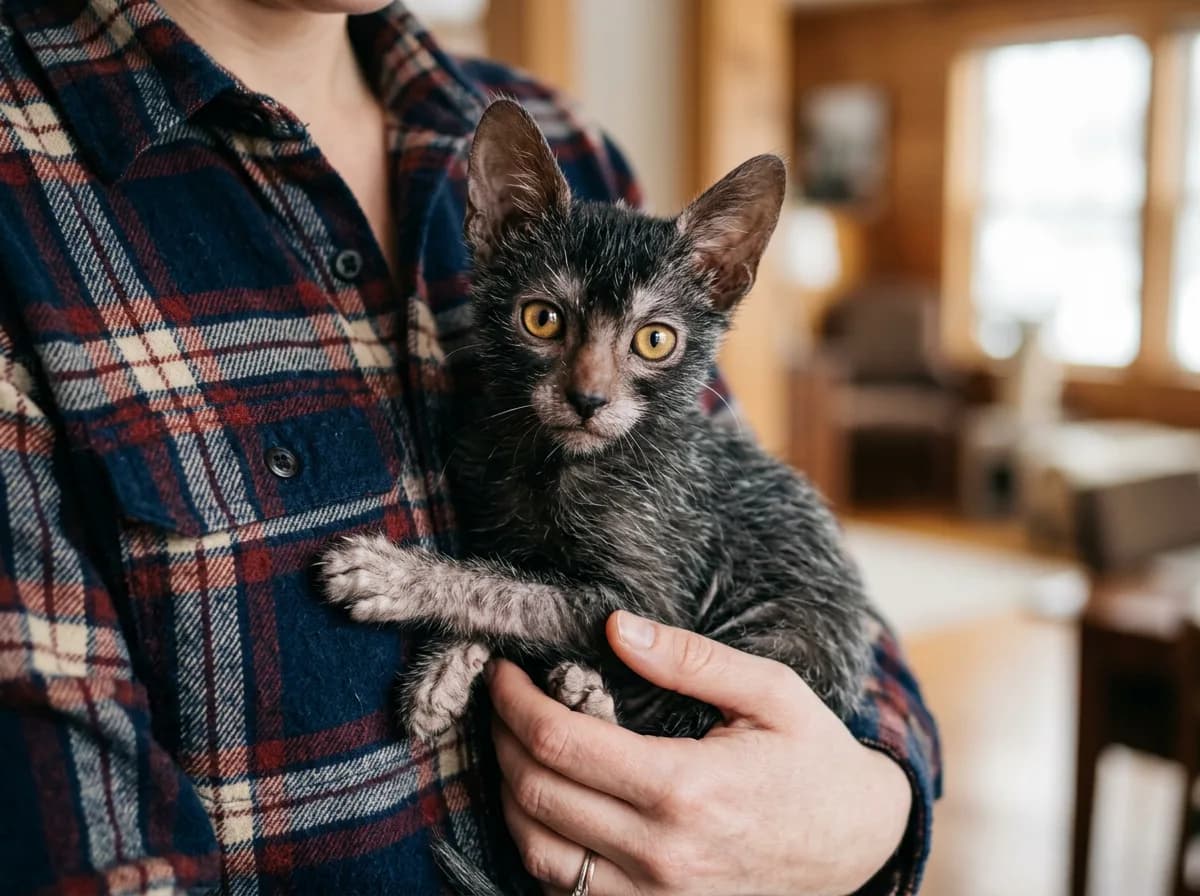
Lykoi kittens are usually born looking nearly solid black and almost normal. Within one to two weeks, the hairlessness and roan pattern begin to emerge. As the cat matures it molts, sometimes going partially or even fully bald, then regrows a sparse coat. The fur stays permanently thin or absent around the eyes, muzzle, ears, and legs, creating the "masked" wolfish face. That combination of a grizzled body and a bare, expressive face is exactly the silhouette of a movie werewolf, which is how the nickname stuck.
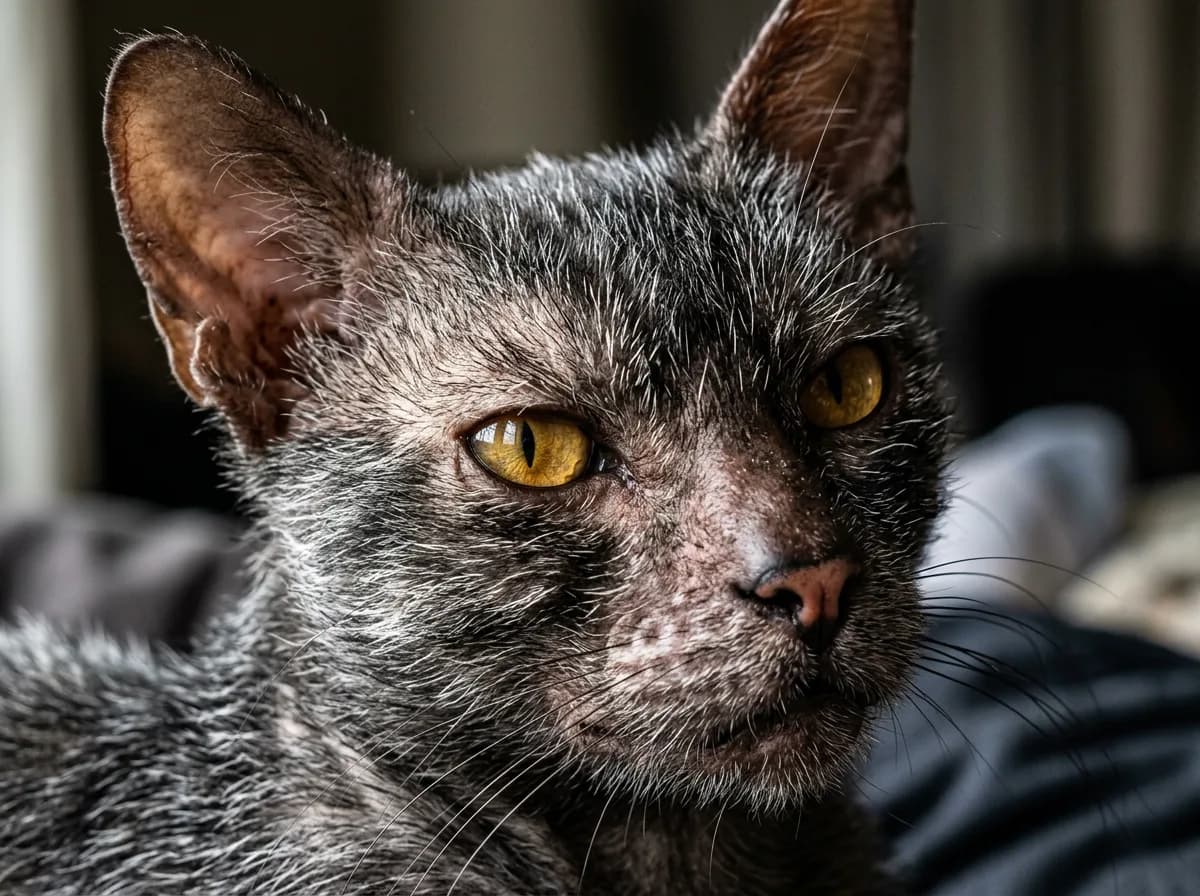
- If you see a near-solid-black Lykoi kitten, do not panic that it looks wrong. The signature roan coat and bald masking develop over the first weeks and through the cat's first molts.
Origin and History of the Lykoi Breed
The modern Lykoi breed was developed in the United States starting around 2010, after two separate, unrelated litters of partially hairless kittens were identified. The founding breeders most often credited are Patti Thomas and the husband-and-wife team of Dr. Johnny Gobble, a veterinarian, and Brittney Gobble. Early Lykoi were unusual enough that some people worried they were sick, so the founders had them tested.
Geneticists at UC Davis and dermatologists at the University of Tennessee examined the founding cats. The testing confirmed the coat came from a natural hair-follicle mutation, not disease, and that it was distinct from the genes behind the Sphynx, Devon Rex, and Cornish Rex. In other words, the Lykoi is its own thing, not a hairless cat relabeled.
Recognition followed quickly for such a new breed. TICA accepted the Lykoi as an Advanced New Breed in 2012 and advanced it to full Championship status in 2017. The Cat Fanciers' Association (CFA) accepted Lykoi for registration in 2018 and granted Championship status in 2023.
- The Lykoi was not engineered by crossing two existing breeds. It comes from a spontaneous genetic mutation that breeders then developed responsibly, with health screening built in from the start.
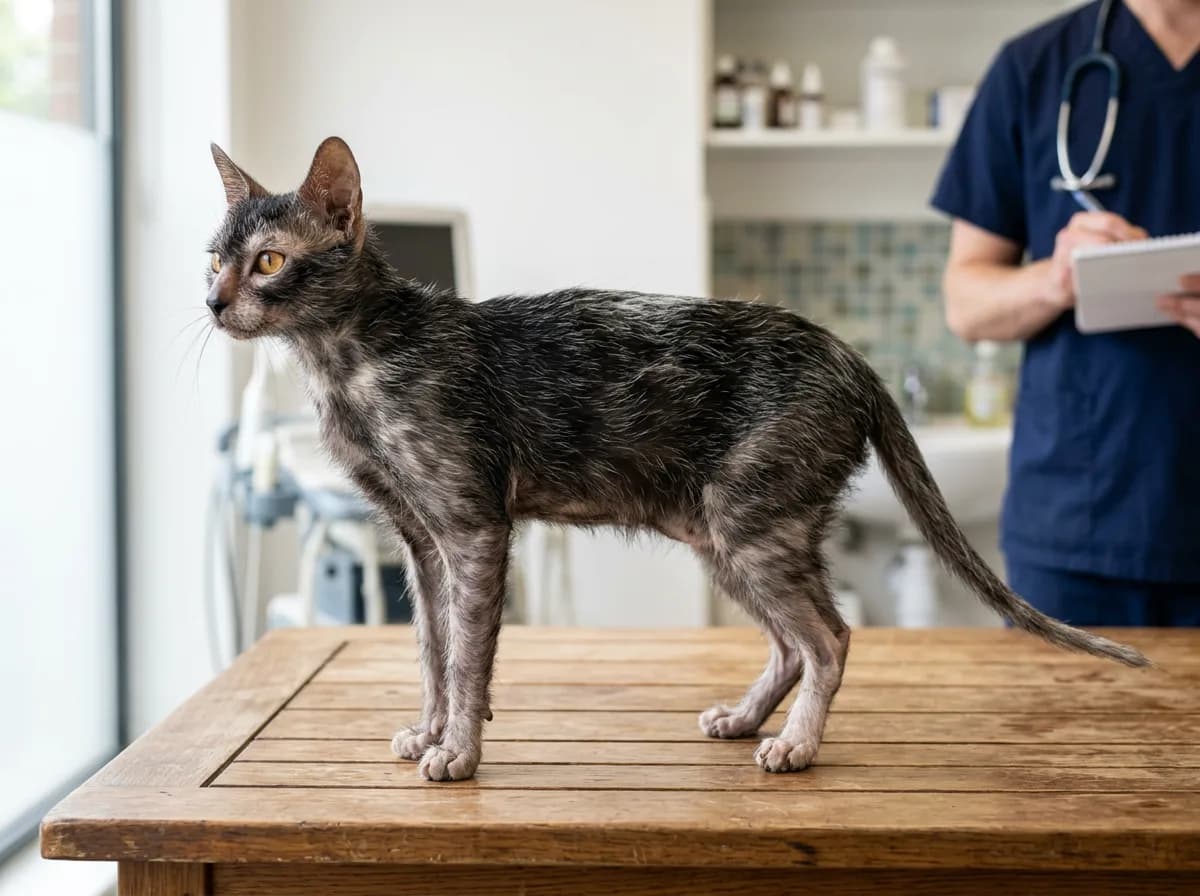
If you are drawn to unusual coats, it is worth comparing the Lykoi against other low-coat cats. See our guides to hairless cat breeds and the fully bald Sphynx cat to see how the Lykoi's partial coat sets it apart.
Lykoi Temperament and Personality
For a cat that looks like it belongs in a horror movie, the Lykoi is remarkably affectionate. Registries and breeders consistently describe these cats as active, curious, intelligent, and deeply attached to their people. They tend to bond strongly with their families and often follow their humans from room to room.
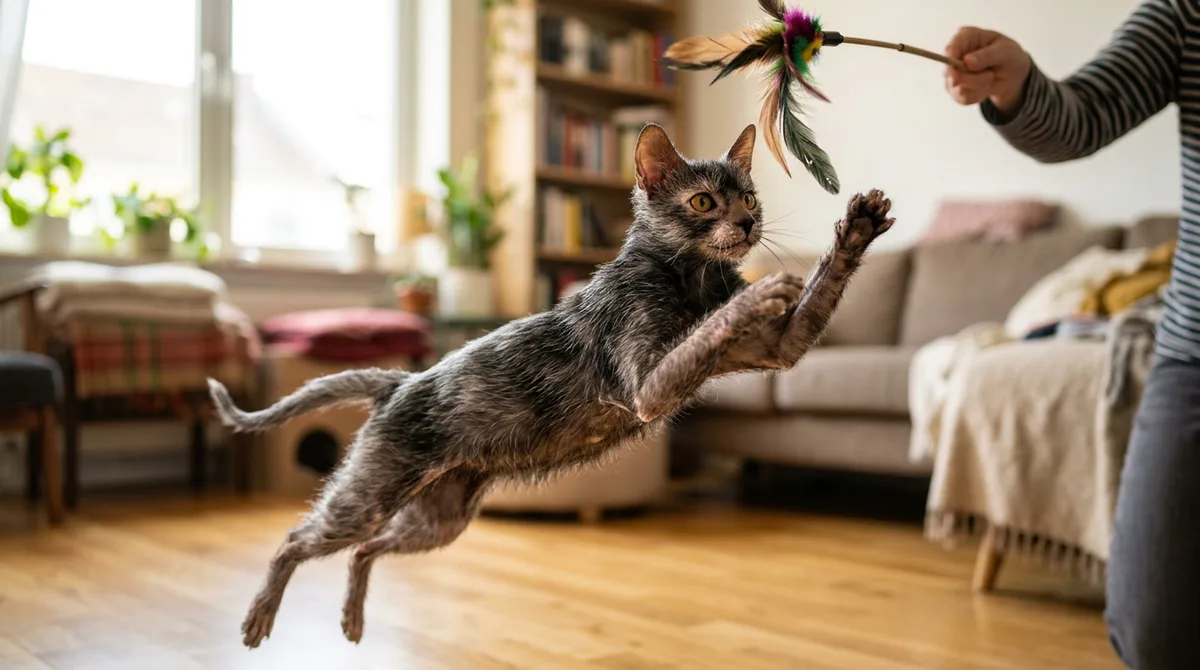
The Lykoi also has a notably dog-like streak. TICA's description highlights that they will fetch, hunt, and chase, with a strong prey drive that reflects their wolfish nickname. They are confident with other cats and frequently with dogs too, which makes them a flexible fit for busy, multi-pet homes. Many owners report a chatty cat with a wide vocabulary of chirps, trills, and meows.
A Lykoi that bonds with you wants to be involved in what you are doing. That makes them rewarding companions, but it also means they do not love being left alone for long stretches. If your household is gone all day, a second pet or plenty of enrichment helps.
- Because Lykoi are playful and people-focused, they do well in active households and pair nicely with another social pet. Rotate puzzle feeders and wand toys to keep that sharp mind busy.
Care and Grooming for a Lykoi Cat
Here is the twist most people miss: a sparse coat does not mean low maintenance. Because the Lykoi has little to no undercoat and bare skin in places, its skin behaves a lot like a Sphynx's. The skin can get oily, and that oil, plus environmental dirt, collects on the skin and in skin folds.
Bathing and skin care
Most Lykoi benefit from occasional bathing, often every few weeks, with a gentle cat-safe shampoo to manage oil buildup. Their large ears also produce wax that can accumulate quickly on bare skin, so routine ear cleaning is part of normal care. Check the skin for irritation or, during molts, the occasional ingrown hair.

63-inch multi-level cat tree with scratch posts, hammock, plush perches, and dangling toys. Vertical territory is non-negotiable for high-energy climbing breeds like the Bengal.
Petful may earn a commission when you click through to Chewy, at no extra cost to you.
Temperature and sun protection
Sparse fur means a Lykoi feels cold more easily than a fully coated cat, and exposed skin can sunburn. Keep them indoors, provide warm spots and soft beds in cooler weather, and avoid long stretches of direct sun through windows. Many owners use a light sweater for chilly rooms.
Shedding and molting
Day to day, shedding is minimal because there is so little coat. The big change comes with molts, when a Lykoi may shed heavily or go partly bald before regrowing. This is normal breed behavior, not illness, though a sudden change outside a molt is always worth a vet visit.
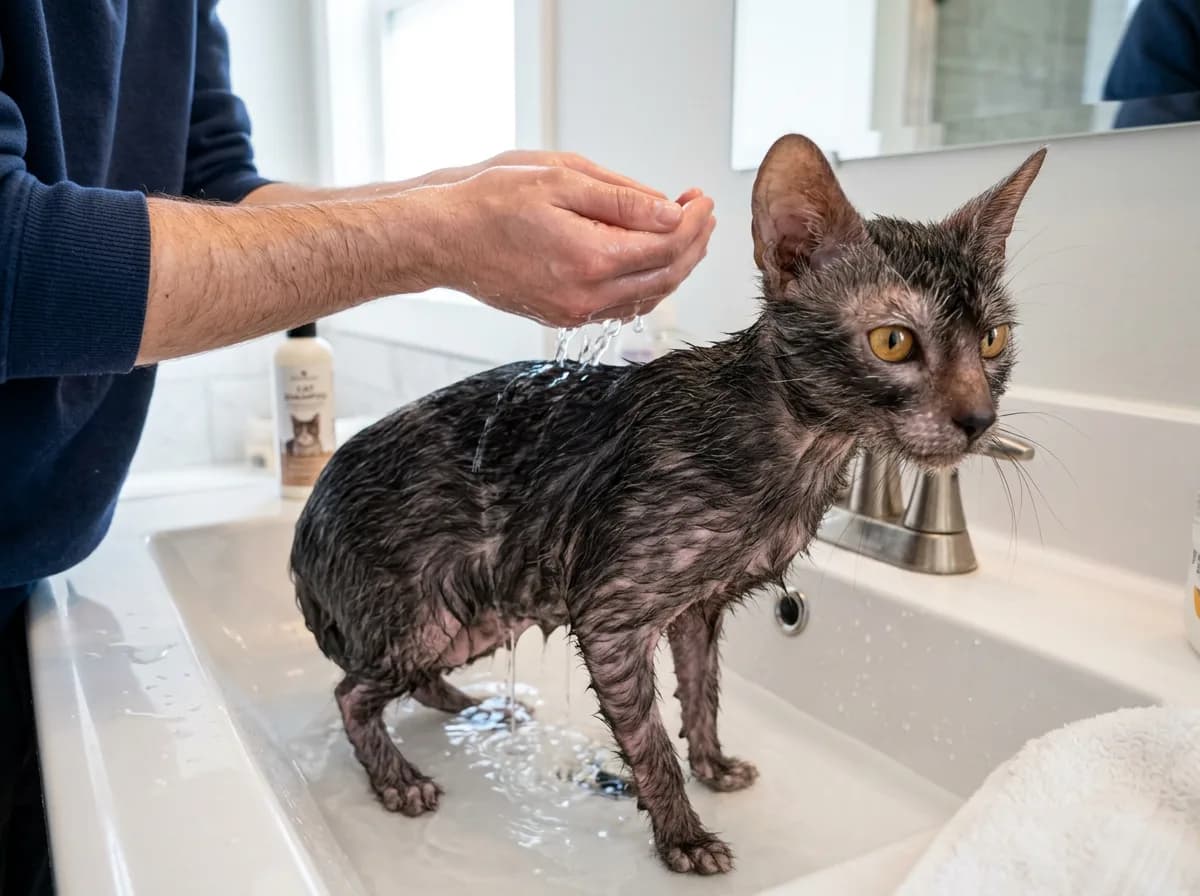
| Care Task | How Often | Why It Matters |
|---|---|---|
| Bathing | Every 2 to 4 weeks | Removes oil buildup on bare skin |
| Ear cleaning | Weekly check | Large ears collect wax quickly |
| Sun and warmth | Daily | Sparse coat means cold and sunburn risk |
| Skin check | Weekly | Catch irritation or molt ingrown hairs early |
Lykoi Cat Health Overview
The good news for buyers: the Lykoi is generally considered a hardy, healthy breed. Because the founders had the cats screened by university geneticists and dermatologists before establishing the breed, the mutation itself is not linked to any known disease or disorder. Responsible breeders continue to screen, and many run cardiac (HCM) screening and offer genetic-health guarantees on kittens.
The most common health-related quirks are skin and coat related: oily skin that needs managing, possible ingrown hairs during heavy molts, and a need for warmth and sun protection because of the thin coat. None of those are serious when care is consistent.
A well-bred, well-cared-for Lykoi typically lives about 12 to 15 years, in line with many domestic cat breeds. For a deeper look at screening and what to ask a breeder, see our Lykoi cat health guide.
- Because the Lykoi is rare and in demand, always confirm a breeder does cardiac and genetic screening and provides a written health guarantee. Skipping this is the biggest avoidable risk with any uncommon breed.
Are Lykoi Cats Hypoallergenic?
No. The Lykoi is not hypoallergenic. This is one of the most common misconceptions, and it matters for allergy sufferers making a real decision.
Cat allergies are driven mostly by a protein called Fel d 1, which is produced in saliva and skin glands, not by fur volume alone. A Lykoi still produces Fel d 1, still grooms itself with allergen-laden saliva, and still sheds loose hair, especially during molts. A thinner coat may spread slightly less hair around your home, but it does not make the cat allergen-free. If someone in your home has cat allergies, spend time with a Lykoi before committing.
Walnut shell clumping cat litter that excels at odor control, lasts up to 3x longer than clay, and is a top pick for multi-cat households.
Petful may earn a commission when you click through to Chewy, at no extra cost to you.
How Much Does a Lykoi Cat Cost?
Expect to pay a premium. The Lykoi is rare, slow to breed, and in high demand, so prices run roughly 1,500 to 2,500 USD for a standard pet kitten, with premium or show-quality lines reaching 3,000 USD and up. Reputable breeders often require a deposit (commonly several hundred to over a thousand dollars) and maintain waitlists.
What you are paying for is more than scarcity. A responsible Lykoi breeder folds in veterinary checks, vaccinations, FIV and FeLV testing, cardiac screening, and a written health guarantee. A suspiciously cheap "Lykoi" is a red flag for either a mislabeled cat or a breeder cutting corners on health. For current price ranges and what is included, see our dedicated Lykoi cat price breakdown.
- Plan for setup and ongoing costs too: warm bedding, gentle shampoo, ear cleaner, quality food, and routine vet care. The skin-focused grooming is cheap, but it is constant.
Finding a Lykoi Cat
Because the breed is uncommon, the realistic path is a reputable, registered breeder rather than a pet store or random listing. Start with TICA or CFA breeder directories and look for breeders who screen for HCM, test for common feline diseases, raise kittens underfoot, and provide a contract with a health guarantee. Expect a waitlist measured in months, not days.
Rescues do occasionally have Lykoi or Lykoi-mix cats, so breed-specific and Sphynx-focused rescues are worth contacting if you are open to an adult or a mix. Wherever you look, meet the cat or its parents, ask to see health records, and never wire a deposit to an unverified seller. If you want to start by browsing kittens and what they look like at each stage, our Lykoi kitten guide walks through it.
Lykoi Myths, Debunked Honestly
A cat this strange-looking collects myths fast. Here are the big ones, set straight.

108-oz stainless steel pet fountain with quiet pump and water-level window. Bengals are notoriously water-obsessed; a flowing fountain encourages hydration and pulls them away from sinks and toilets.
Petful may earn a commission when you click through to Chewy, at no extra cost to you.
Myth: Lykoi cats are sick or "diseased"
This is the most damaging myth, and it is false. The Lykoi's appearance comes from a natural hair-follicle mutation that university geneticists and dermatologists confirmed is not tied to any disease. Early founders specifically tested for this so the breed could be established responsibly. A Lykoi is a healthy cat that happens to look unusual.
Myth: It is a "Down syndrome cat"
You will see this phrase online attached to Lykoi photos. It is inaccurate and should never be used. Cats do not have the chromosomal condition the term describes, and the Lykoi's look is simply its coat genetics. Repeating it spreads misinformation and stigma.
Myth: The Lykoi is just a Sphynx or a Rex
No. The Lykoi mutation is genetically distinct from the genes behind the Sphynx, the Devon Rex, and the Cornish Rex. The breeds can look superficially similar in their low coats, but the Lykoi is its own recognized breed with its own gene. Compare it side by side with the Cornish Rex and you can see the difference in coat and build.
Myth: Hairless means hypoallergenic
Covered above, but worth repeating because it leads to heartbreak: a thinner coat does not remove the Fel d 1 allergen. The Lykoi is not a safe bet for allergy sufferers.
- Calling a Lykoi "diseased" or a "Down syndrome cat" is both wrong and harmful. The breed is healthy by design, screened from the start, and deserves to be described accurately.
Is a Lykoi Cat Right for You?
A Lykoi suits an owner who wants a striking, conversation-starting cat and is happy to handle skin-focused grooming, keep the cat warm and indoors, and pay a premium up front. In return you get an affectionate, dog-like, playful companion that bonds tightly with its family.
It is a poorer fit for allergy households, for people who want a hands-off cat, or for anyone expecting a bargain. If the partial coat and werewolf face appeal to you but you want options, our hairless cat breeds overview lines up the Lykoi against the alternatives so you can choose with open eyes.
Lykoi Cat FAQ
Keep exploring the Lykoi cluster: Lykoi cat colors, Lykoi kitten care, Lykoi cat price, and Lykoi cat health. For another one-of-a-kind breed, meet the Singapura cat.
A pet-quality Lykoi typically costs about 1,500 to 2,500 USD, while premium or show lines can reach 3,000 USD or more. Reputable breeders also require a deposit and maintain waitlists because the breed is rare.
The Lykoi is generally a hardy, healthy breed because the founders screened the mutation with university geneticists and dermatologists, and it is not tied to a known disease. The main considerations are skin care for oily, sparse-coated skin and warmth and sun protection.
Cats show affection through slow blinks, head bunting, kneading, purring near you, following you around, and grooming you. A people-bonded breed like the Lykoi tends to be especially demonstrative, often trailing its owner and chatting in chirps and trills.
Yes. Lykoi are affectionate, active, intelligent, and dog-like, bonding strongly with their families and getting along with other cats and often dogs. They suit interactive households as long as you can handle their skin-care grooming and keep them warm indoors.
Among the most expensive cat breeds, the Ashera or Savannah, the Bengal, and the Persian or Sphynx are often cited near the top, with some Ashera and Savannah cats selling for many thousands of dollars. The Lykoi is pricey at roughly 1,500 to 3,000 USD but sits below those record-setting breeds.
A well-cared-for Lykoi cat typically lives about 12 to 15 years, similar to many domestic cat breeds, with good nutrition, indoor living, and routine veterinary care supporting the upper end of that range.
No, Lykoi cats are not known to be aggressive. They are described as friendly, curious, and people-focused, with a strong play and prey drive that comes out in fetching and chasing games rather than hostility toward people.
The Ragdoll is widely considered the floppiest cat breed because it tends to go limp and relaxed when picked up, which is how it got its name. The Lykoi is active and muscular rather than floppy, so it does not share that trait.

Coreen Saito is a pet writer and longtime shelter volunteer with more than a decade in animal rescue. She covers cat behavior, breed care, and the small, ordinary science of sharing a life with companion animals, with a particular focus on honest takes about the products and decisions that actually matter. At home in Arizona, she's outranked by Mac (a dog with the loudest opinion in the house), Rebel (a cat who governs by quiet authority), and Meri (an orange tabby who runs the late shift and the laundry basket). She writes about all three, plus the rescues that keep coming through her life, at LifeWithMinty.com.
Sign up for expert-backed reviews and safety alerts all in one place.