Lykoi Cat Colors: The Roan Coat and Every Color Explained
Lykoi cat colors are defined by roan, not a single shade. Here is how the roan coat works, why black roan is the classic werewolf look, the full range of color variations, the rules around white markings, and the growing long-haired Lykoi variant.
Petful is reader supported. As an affiliate of platforms like Amazon and Chewy, we may earn a commission when you buy through links on this page. There is no extra cost to you.
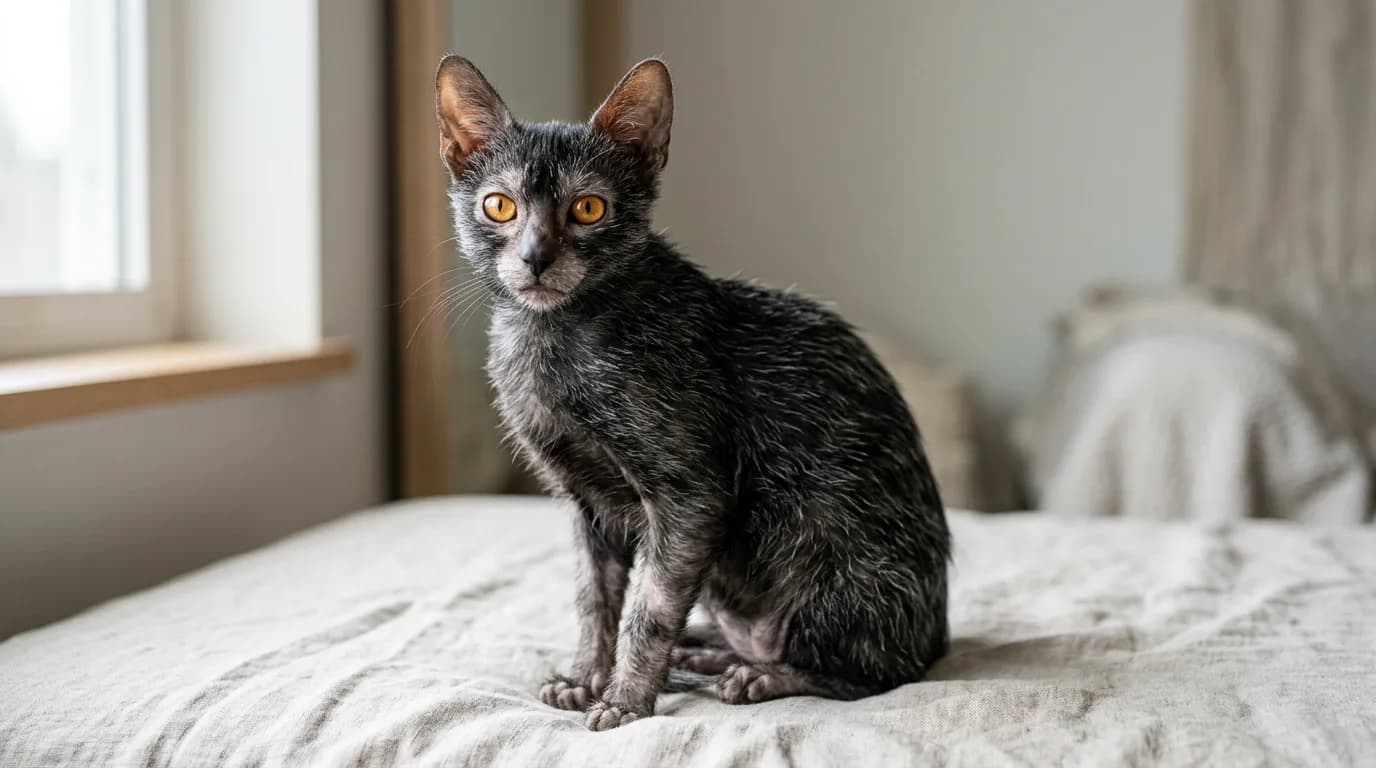
When people picture lykoi cat colors, they almost always picture the same thing: a wiry, grizzled, salt-and-pepper "werewolf cat" in black. That image is accurate but incomplete. According to The Cat Fanciers' Association (CFA), which advanced the breed to championship status in 2023, "all base colors are accepted" in the Lykoi standard, and the trait that actually defines the look is not a color at all. It is a pattern called roan, and the Lykoi is the only known cat breed that carries it. This guide breaks down how roan works, why black roan dominates the photos you see online, the full range of color variations, the rules around white, and the newer long-haired Lykoi that is quietly growing in catteries around the world.
- 1Roan, not color, is the defining trait: it is a mix of fully white and fully colored hairs, and the Lykoi is the only cat breed known to carry it.
- 2Any base color is accepted (TICA and CFA), but black roan is by far the most common and the most striking, which is why it looks like the breed's "official" color.
- 3Registries want roughly 30 to 70 percent colored hair, with about 50 percent considered ideal; true white patches and bicolor markings are a fault in standard Lykoi.
- 4A long-haired (semi-long) Lykoi is now CFA-recognized in all colors and patterns, and it is a real, growing variant, not a myth.

Sign up for expert-backed reviews and safety alerts all in one place.
What "Lykoi Cat Colors" Really Means
Here is the most important thing to understand before you compare a black Lykoi to a blue one or a red one: with this breed, color and pattern are two separate questions.
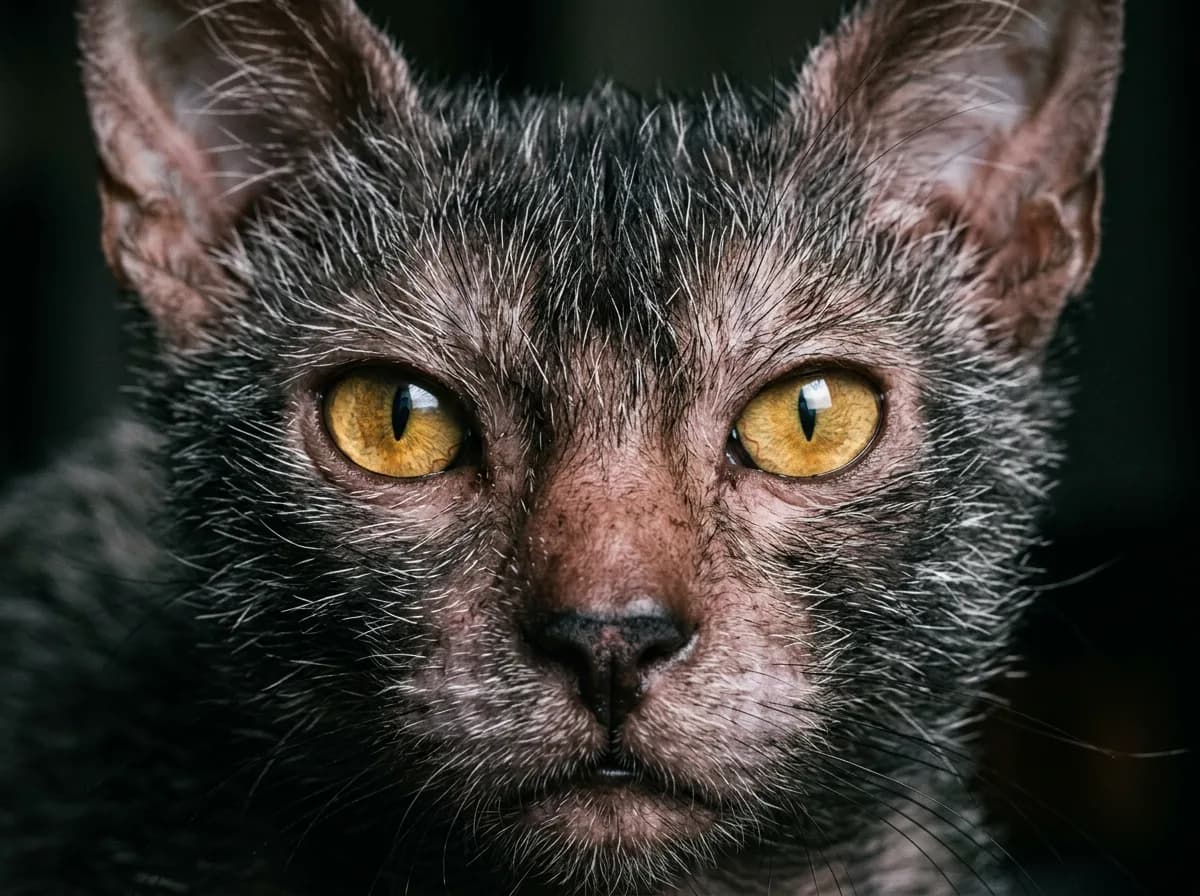
The color is the base pigment in the cat's colored hairs, the same genetics that produce a black cat, a blue (gray) cat, or a red (ginger) cat in any other breed. The pattern is roan, which is a specific intermixing of fully colored hairs with fully white, unpigmented hairs across the body. CFA describes the Lykoi's signature as "roaning, an amelanistic color pattern of intermixed white and colored guard hairs." Amelanistic simply means lacking pigment, so those scattered white hairs have no melanin in them at all.
So when someone asks about lykoi cat colors, the honest answer is layered. Almost any color you can name in cats can technically appear in a Lykoi, but every one of them is delivered through that same roan filter, which is why even a dramatic black Lykoi looks more like dark gray static than a glossy solid black.
- Roan is the trait that makes a Lykoi a Lykoi. The base color underneath, black, blue, red, cream, and more, only changes the shade of the salt-and-pepper effect, not the effect itself.
How the Roan Pattern Works
In horse coats, "roan" is a familiar word: white hairs evenly mixed into a colored coat to create a frosted, grizzled effect. The Lykoi borrows the same idea, and the breed standard borrows the same word. The Governing Council of the Cat Fancy (GCCF) defines it plainly: a base colored coat, such as black or red, interspersed with white hairs, where each individual hair is either fully colored or fully white from root to tip. There is no banding or ticking on a single hair. The frosted look comes entirely from the mix of two hair types sitting side by side.
That intermixing is what gives the breed its salt-and-pepper, grizzled, "wolf pelt" appearance. The more evenly the white and colored hairs are distributed, the more convincing the werewolf effect.
The 30 to 70 Percent Rule
Registries put numbers on it. GCCF lists an accepted range of 30 to 70 percent colored hair, with 50 percent considered ideal. CFA likewise treats roughly even roaning, about 50 percent, as the target. Think of it as a dial:

Never Scoop Again® with the Whisker Litter-Robot, the smart self-cleaning automatic litter box. Monitor visits and track weights for better overall care in the Whisker® app. Multi-cat friendly.
Petful may earn a commission when you click through to Whisker, at no extra cost to you.
- Too little white (closer to 30 percent white) and the cat reads as a near-solid colored cat with only a faint frost.
- Too much white (closer to 70 percent white) and the colored pigment gets washed out, weakening the contrast.
- Around 50/50 is the sweet spot where the salt-and-pepper grizzle pops.
This is also why two black Lykoi from the same litter can look noticeably different from each other. They share a base color, but the ratio and distribution of their white hairs is not identical, so one can look distinctly darker than the other. It is the roan ratio talking, not a different color.
- Two black roan Lykoi can look like different shades simply because one carries a higher percentage of colored hairs relative to white. Coverage and molting stage change the look too.
No Undercoat, Sparse Mask
Roan is only one of three traits CFA uses to define the breed. The other two are a complete lack of undercoat and sparse guard hair, most noticeably on the ears, face, legs, and feet. That sparse coverage is what produces the bald "masking" around the eyes, muzzle, nose, and lower legs that makes the Lykoi look like it is wearing a wolf's face. The roan handles the color story; the hairlessness handles the silhouette. Together they create the werewolf look. If you want the full picture of how those traits come together in the cat overall, our complete Lykoi cat breed profile walks through temperament, history, and care alongside the coat.
The Genetics: Why Two Hair Types Sit Side by Side
It helps to picture roan at the level of a single follicle. In a normal black cat, every hair carries melanin, so the whole coat reads as solid black. In a roan Lykoi, the same body grows two distinct populations of hair from the same skin: fully pigmented guard hairs that carry their base color from root to tip, and amelanistic guard hairs that never receive pigment and grow in pure white. There is no in-between hair. A roan hair is not a faded or silvered version of the colored hair; it is a separate, unpigmented strand growing right next to its colored neighbor. Your eye blends the two at a distance, and that optical mixing is what creates the frosted, grizzled tone people read as "gray werewolf" even though no individual hair is gray.
This is genetically different from the ticking you see in an Abyssinian or the silvering you see in a smoke or chinchilla cat. Ticking and silver both happen along the length of one hair (bands of pigment and non-pigment on the same strand). Roan happens between hairs, not within them. That distinction is the whole reason the pattern looks crisp and salt-and-pepper rather than soft and shaded, and it is why registries describe roan as "intermixed white and colored guard hairs" rather than as a dilution or a tipping pattern.
Why Roan Percentage Varies From Cat to Cat
The ratio of white to colored hair is not a fixed number stamped on the breed. It varies between individual cats, between littermates, and even across the body of one cat. A Lykoi can carry denser roaning along the spine and back, where coat coverage tends to be heaviest, and far more bare skin or pale frosting on the face, ears, and legs, where guard hair is naturally sparse. So a single cat can read as a richer color over the saddle and a paler, balder tone over the mask in the very same photo.
Several things push the ratio around. Genetics set the baseline, so some lines simply produce heavier or lighter roaning than others. Age matters, because the roaning emerges and intensifies after kittenhood rather than being present at birth. And the molt cycle matters most of all, since a cat shedding its colored coat down to skin will temporarily read as far more "white" or bare than the same cat in full coat. None of this is a flaw in the cat. It is the expected behavior of a coat built from two hair types layered over partially bare skin, and it is exactly why breeders judge color on a settled adult coat rather than on any one frame.
Black Roan: The Lykoi Color Everyone Knows
If the Lykoi has an unofficial signature color, it is black roan. The two original 2010 litters that founded the modern breed, developed in Tennessee by Patti Thomas with Dr. Johnny Gobble and Brittney Gobble, were black-based roan cats, and for years black roan was effectively the only color the public ever saw.
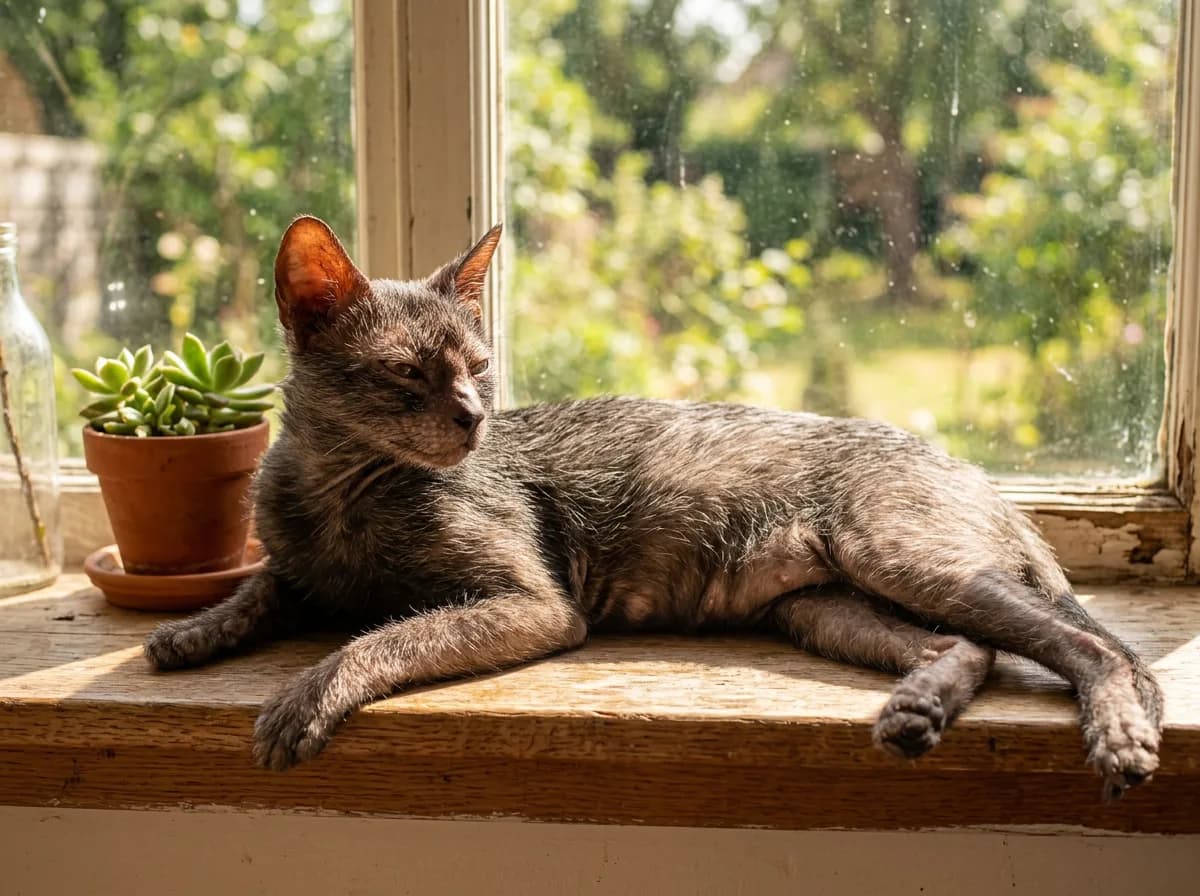
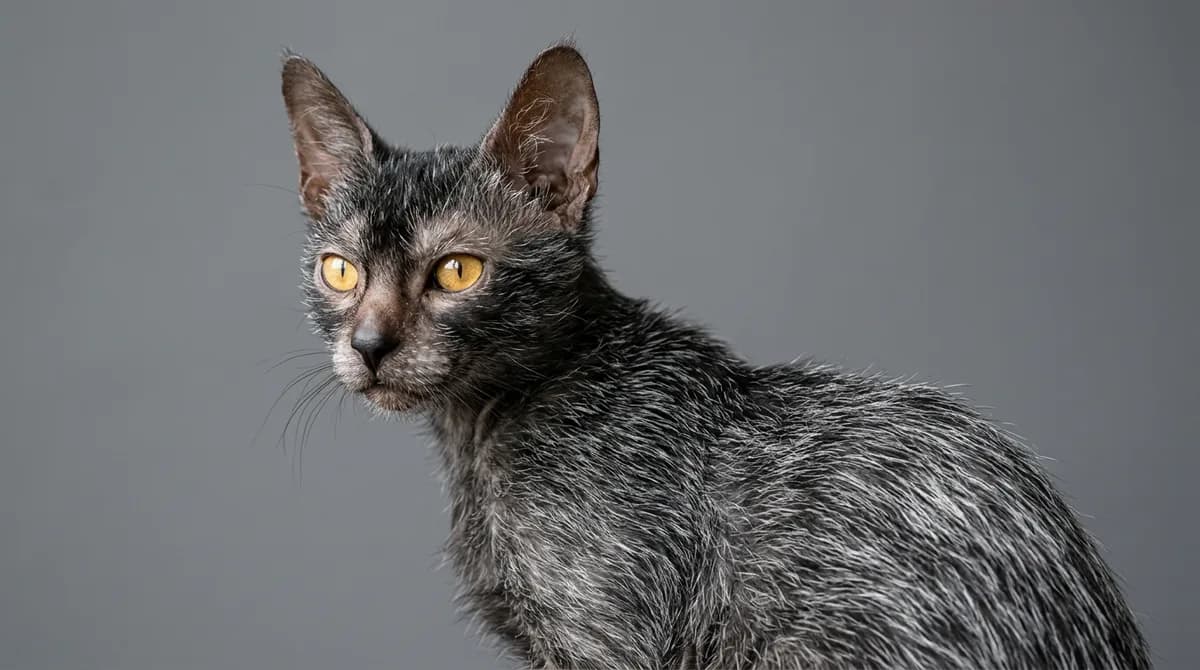
There is a good reason black roan became the face of the breed: contrast. GCCF notes that the roan pattern varies in appearance depending on the base color, and that black is probably the most striking. Black pigment against white amelanistic hairs gives the sharpest salt-and-pepper grizzle of any color, which is exactly the dramatic, slightly spooky look that made the breed go viral as the "werewolf cat." It is also why nearly every famous Lykoi photo you have seen is a black roan.
A black Lykoi also has a party trick that has nothing to do with hair. The exposed skin on the bald areas is pink, but with sun or heat exposure it can tan and darken, sometimes turning nearly black within days, then fading back toward pink when the cat is kept out of strong light. TICA documents this on the breed's skin. It is a sun response, not a permanent color change, but it does mean the same black Lykoi can photograph lighter or darker depending on how much sun it has been getting.
The Full Range of Lykoi Color Variations
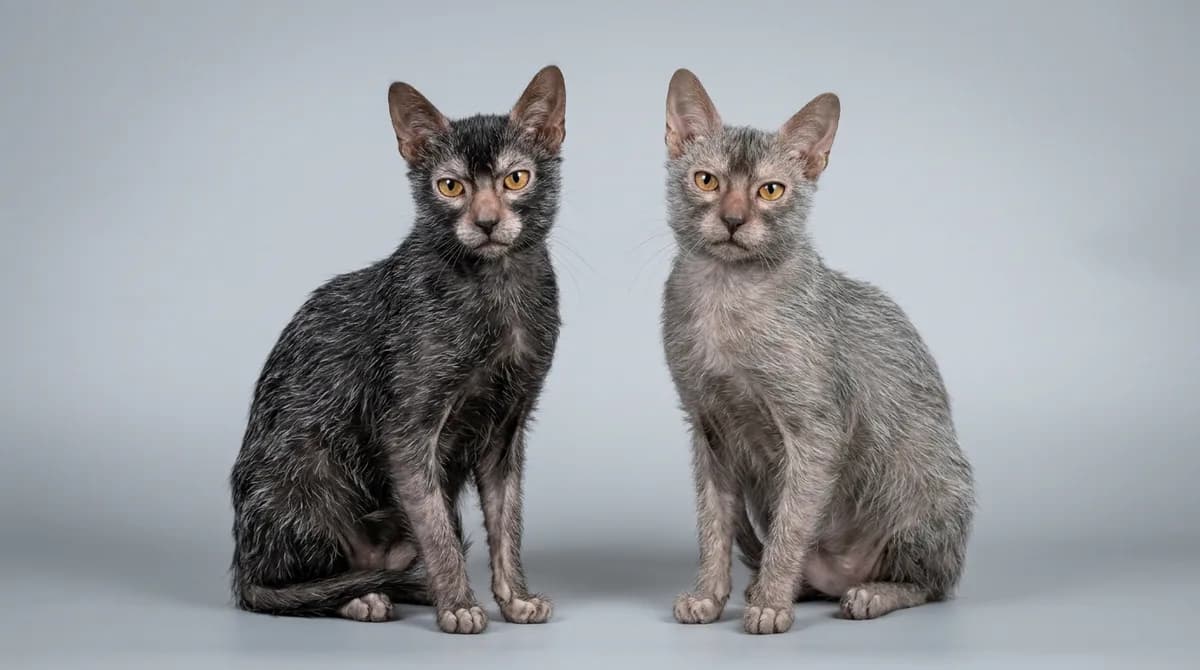
Black roan may be the headliner, but it is not the whole cast. Both TICA and CFA accept all base colors in the standard Lykoi, and breeders have steadily expanded the palette as the gene pool has grown. The roan pattern is the constant; the base color is the variable.
Common and emerging lykoi cat colors include the following base colors, each expressed through roan:
| Color | What It Looks Like | How Common |
|---|---|---|
| Black Roan | High-contrast salt-and-pepper grizzle, the classic werewolf look | Most common, breed signature |
| Blue Roan | Softer gray base frosted with white, a muted version of black roan | Uncommon but established |
| Red Roan | Warm ginger base with white intermixing, lower contrast | Rarer, growing |
| Cream Roan | Pale, dilute warm tone with subtle frosting | Rare |
| Black Colorpoint Roan | Roan body with darker points, sometimes called ebony colorpoint | Uncommon |
A few things to keep in mind reading that table. Because lower-contrast colors like red and cream do not pop against white the way black does, their roan effect is subtler, which is part of why black still dominates photos even as the palette widens. "Rarity" here is about how many breeders are producing a given color, not about a different gene, since the roan pattern and the underlying hairless trait stay the same across colors.
A Note on "Rare" Lykoi Colors
"Rare lykoi cat colors" is a popular search, and it is worth a reality check. Almost every Lykoi is rare in the sense that the breed itself is uncommon, with breeder waitlists the norm. Within the breed, the rarer colors are simply the ones fewer catteries are actively producing yet, such as cream or dilute reds. None of them is a separate "type" of Lykoi, and a healthy cattery will not charge a premium just because a kitten happens to carry a less common base color without the roan and temperament to back it up, though genuinely rare colors and patterning can move the Lykoi cat price higher. If you are weighing a kitten, our guide to choosing a healthy Lykoi kitten covers what actually matters beyond color.
Each Accepted Roan Color, Up Close
The table above is the quick read. It is worth walking each color individually, because the same roan filter lands very differently depending on the pigment underneath it.
Black roan is the high-contrast benchmark. Black is the densest pigment a cat can carry, so against pure white amelanistic hairs it produces the sharpest, most defined salt-and-pepper grizzle. This is the look the breed went viral on, and it is the one most buyers picture.

63-inch multi-level cat tree with scratch posts, hammock, plush perches, and dangling toys. Vertical territory is non-negotiable for high-energy climbing breeds like the Bengal.
Petful may earn a commission when you click through to Chewy, at no extra cost to you.
Blue roan is dilute black. The same black-based cat carrying two copies of the dilution gene grows soft gray (blue) colored hairs instead of true black ones. Mixed with white, that gray base reads as a smoky, muted version of black roan: still clearly grizzled, but gentler and more silver than stark. Side by side, a blue roan looks like someone turned the contrast dial down on a black roan.
Red roan swaps the black series for the red (ginger) series entirely. The colored hairs are warm orange rather than black, so the white intermixing produces a frosted apricot or strawberry-and-cream effect rather than salt-and-pepper. Because warm tones sit closer in brightness to white than black does, the contrast is naturally lower, which is part of why red roans photograph as subtler even when their roan percentage is identical to a black cat's.
Cream roan is dilute red, the warm-series counterpart to blue. The base is a pale, buttery tone, and once it is frosted with white the whole cat reads as a soft, washed pastel. Cream is one of the quietest roan looks because a pale base and white hairs are so close in value that the grizzle barely separates. It is also one of the rarer colors simply because fewer catteries breed for it.
Black colorpoint roan, sometimes described as an ebony colorpoint, layers the roan body pattern with darker points on the extremities, the way a Siamese-type cat carries darker color on the face, ears, legs, and tail. The result is a roan-bodied cat with deeper coloring concentrated on the points. It is uncommon and shows how the roan pattern can coexist with other inherited color patterns rather than replacing them.
- Every accepted Lykoi color is just a familiar feline base color (black, blue, red, cream, colorpoint) seen through the roan filter. Name the base color, then remember the white frosting sits on top of it, and any color description makes sense.
Roan vs. Solid and Tuxedo: Telling the Patterns Apart
A common point of confusion is whether a roan Lykoi is the same thing as a regular gray cat, a solid cat, or a black-and-white tuxedo. It is not, and the difference is structural, not just a matter of shade.
A solid cat has one hair type: every hair carries the same pigment, so the color is uniform and continuous. A solid black cat is black everywhere, with no white hairs woven in. A roan Lykoi can never be solid, because the defining trait is precisely that second population of white hairs scattered through the colored ones. If a cat reads as a clean, even, single color with no frosting, it is not displaying roan.
A tuxedo or bicolor cat has white, but in the wrong way for a Lykoi. Tuxedo white is localized and blocky: a white chest, white paws, a white belly, sharp boundaries between colored zones and white zones. That is white spotting, a completely separate genetic mechanism from roan. Roan white is the opposite of blocky. It is diffuse, hair-by-hair, with no clean borders anywhere, which is why a true roan coat looks frosted all over rather than patched. A Lykoi showing tuxedo-style blocks of white is displaying a fault, not a roan variation.
The simplest mental test: if you can draw an outline around the white, it is spotting (tuxedo or bicolor). If the white has no edges and just melts evenly into the color, it is roan. A standard Lykoi should only ever show the second kind.
- If you can trace a border around a patch of white, that is spotting (tuxedo or bicolor) and a fault. If the white has no edge and blends hair by hair into the color, that is true roan. Borders bad, blending good.
White Markings and the Lykoi: What the Standard Allows
This is where new owners get confused, because white is everywhere on a Lykoi, just not in the way people expect.
The white in a Lykoi coat is supposed to be diffuse: individual white hairs scattered evenly through the colored hairs to create roan. What the standard does not want is localized white, meaning solid white patches, a white bib, white mittens, or a clear bicolor pattern. GCCF's standard prohibits white and bicolor patterns of that localized kind in standard Lykoi. In other words, white mixed in (roan) is the whole point; white blocked out in patches (spotting) is a fault.
- Evenly scattered white hairs create the desirable roan. Solid white patches, a white chest blaze, or white feet are considered a fault in standard Lykoi, not a color "option." A reputable breeder will tell you the difference.
There is nuance, though. Because the Lykoi's bald masking and molting can leave bare skin and uneven coverage, a cat can look patchy without actually carrying true white spotting genetics. That is a coverage effect from the sparse coat, not a white marking. The distinction matters most for show cats; for a pet, a little extra white frosting does not change how wonderful the cat is to live with.
The Long-Haired Lykoi: A Growing Variant
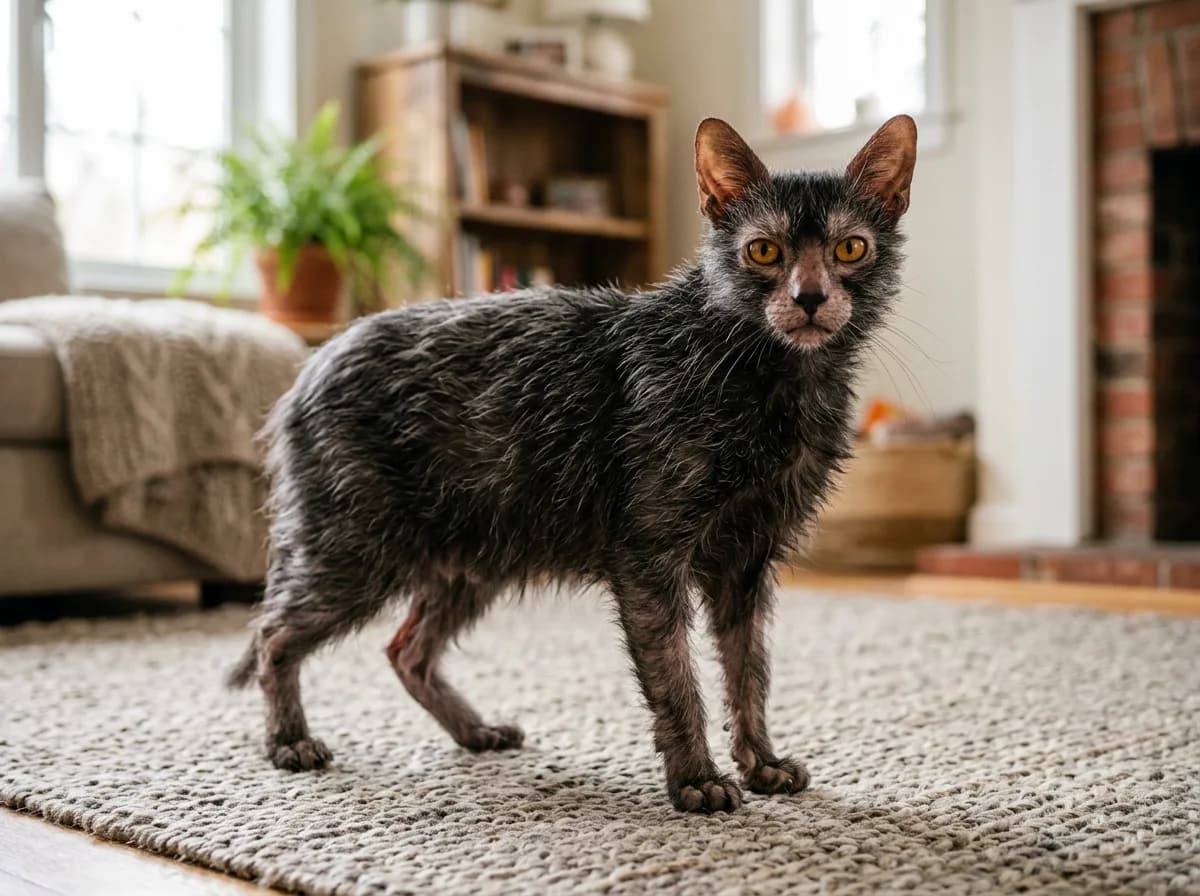
For years the Lykoi was understood as a short-to-medium coated cat. That is changing. CFA now recognizes a long-haired (semi-long) Lykoi variety, with all colors and patterns accepted, and breeders are actively working with it. This is one of the most important and least understood developments in the breed's recent history, so it is worth being precise.
Walnut shell clumping cat litter that excels at odor control, lasts up to 3x longer than clay, and is a top pick for multi-cat households.
Petful may earn a commission when you click through to Chewy, at no extra cost to you.
A long-haired Lykoi still carries the same roan pattern and the same partial hairlessness; the difference is hair length on the coated areas. The result is a softer, shaggier werewolf look rather than the close, wiry grizzle of the standard coat. Because length is independent of color, a long-haired Lykoi can be black roan, blue roan, red roan, or any other accepted color, just like its short-haired counterparts.
- CFA recognizes a semi-long-haired Lykoi in all colors and patterns. It is a legitimate, growing variant of the breed, not a crossbreed or a myth. The roan and the hairless mask still apply, only the coated hair is longer.
It is also a useful myth-buster. The Lykoi has long been dogged by the false claim that it is a "diseased" or "Down syndrome" cat. It is neither. The breed's founders did cardiac and general health screening from the start, and the sparse, roan, sometimes longer coat is the result of a single natural recessive mutation affecting the hair follicle, not illness. The expanding long-haired line is just one more sign of a healthy, deliberately developed breed, not a damaged one.
How Length Changes the Way Color Reads
Coat length does not add a new color, but it does change how an existing color presents, which matters when you compare a long-haired Lykoi photo to the short-haired cats most buyers have seen. On a standard short coat, the roan sits close to the body and the white and colored hairs interlace tightly, giving that crisp, wiry, static-like grizzle. On a semi-long coat, the same two hair types are simply longer, so the frosting spreads over more surface and softens. A long-haired black roan can therefore look hazier and more silvered than a short-haired black roan of the identical genetic color, because the eye is blending color and white across a longer, looser strand.
Length can also make the masking read differently. The bare areas of the face, ears, and legs stay sparse regardless of length, so a semi-long Lykoi often shows an even sharper contrast between its shaggier, fuller body coat and its still-bald mask. That heightened body-to-mask difference is part of what gives the long-haired variant its distinctive shaggy-werewolf silhouette. Crucially, none of this is a separate color line. A long-haired cream roan is still a cream roan, just rendered in longer fur, so when you read a description, treat length and color as two independent labels that stack rather than one combined "type."
How Lykoi Coat Color Changes With Age
One reason lykoi cat colors can be confusing is that they are not static. The coat goes through a journey.
Lykoi kittens are typically born looking almost normal, with a fuller, more conventional coat and minimal roaning. Within weeks the roaning emerges and the cat begins to molt. Many Lykoi then go through dramatic coat cycles throughout life, shedding heavily and sometimes going nearly bald before regrowing, so coverage ranges, as CFA puts it, "from almost completely hairless to almost fully coated." A black Lykoi can therefore look like a different shade of itself from one season to the next simply because its ratio of colored hair to bare skin has shifted.
- A single Lykoi can look darker, lighter, balder, or fuller across the year as it molts and regrows. Judge color by the cat's typical adult coat, not a single molting-phase photo.
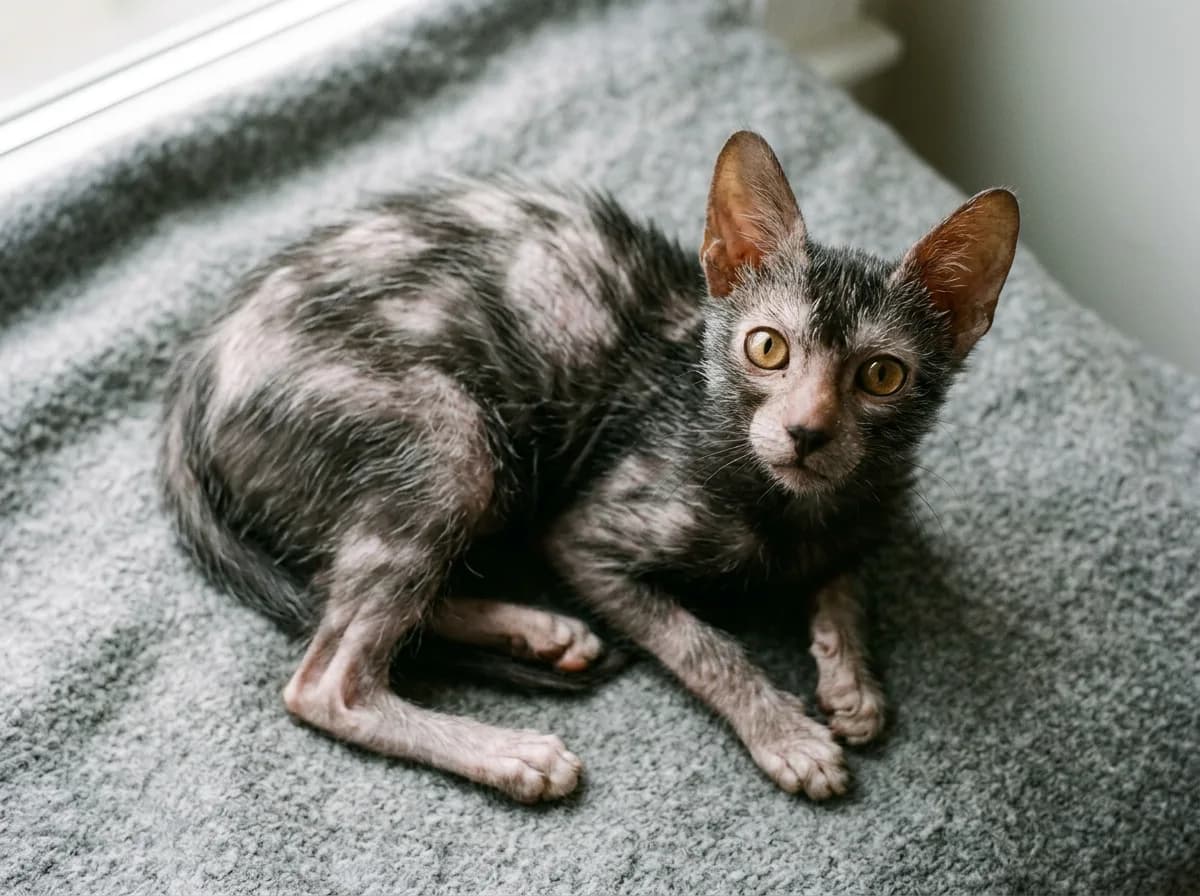
This molting behavior, plus the lack of undercoat, is why the Lykoi shares grooming needs with other sparse-coated breeds. Like the Sphynx, the exposed skin can get oily and benefits from occasional bathing and ear cleaning, and the bald areas need sun and cold protection. If you are comparing unusual-coated cats, our roundup of hairless and sparse-coated cat breeds puts the Lykoi in context next to its better-known cousins.

108-oz stainless steel pet fountain with quiet pump and water-level window. Bengals are notoriously water-obsessed; a flowing fountain encourages hydration and pulls them away from sinks and toilets.
Petful may earn a commission when you click through to Chewy, at no extra cost to you.
The Masking and Molting Cycle Across One Year
Age explains the broad arc of a Lykoi's coat, but the masking and molting cycle explains why the same adult cat can look like several different colors across a single year. The Lykoi does not simply shed and regrow like a normal cat. Many individuals run a rolling cycle: they molt out the colored guard hairs in a wave, pass through a balder, more "unmasked" stretch where exposed skin dominates the look, then regrow the coat and tip back toward full coverage. Because the white amelanistic hairs and the colored hairs do not always shed and regrow in perfect lockstep, the apparent ratio of color to white shifts as the cycle turns.
Picture one black roan cat across the seasons. In full coat it looks like a dense, evenly grizzled werewolf, plenty of color, crisp salt-and-pepper. Mid-molt, with colored guard hairs dropping and bare skin showing through, the very same cat can read as paler, patchier, and almost "washed out," not because its genetics changed but because there is temporarily less colored hair on the body. As regrowth comes in, the color deepens again. Owners new to the breed sometimes panic that their cat is "losing its color" or "going white." It is not. It is moving through a phase, and the color returns.
This is also why a responsible breeder will not let you judge a kitten or young cat on one snapshot. The cat you see at eight weeks, mid-molt at six months, and in settled adult coat at two years can look like three different shades of the same color. Layer in the sun-driven skin tanning that black-based cats show on their bald areas, and you have a coat whose surface appearance is genuinely seasonal. The underlying color, the thing written in the cat's genes, never moves.
- A Lykoi mid-molt can look dramatically lighter, balder, or patchier than the same cat in full coat. Ask a breeder for photos across the molt cycle and at settled adult coat before you judge a cat's true color.
Lykoi vs. Other Unusual Coats
It is easy to lump the Lykoi in with other rex and hairless breeds, but the coat genetics are different.
The Lykoi's look comes from a hair-follicle mutation that is distinct from the genes behind the Sphynx, the Cornish Rex, and the Devon Rex. A Sphynx is largely bald; a Cornish or Devon Rex has curly, soft coats; the Lykoi is partially coated with the unique roan pattern none of the others have. So while they can all look "unusual," only the Lykoi gives you that specific grizzled, masked, werewolf result, and only the Lykoi carries roan.
- The Lykoi's roan-and-mask look comes from its own recessive mutation, unrelated to the Sphynx or the Cornish and Devon Rex genes. It is partially coated, not curly-coated and not fully bald.
How to Read a Breeder's Color Description
Once you start contacting catteries, you will see color described in a shorthand that can look intimidating. It is actually a simple stack of labels, and reading it correctly tells you more about a kitten than any single photo can.
Work through a listing in this order. First, find the base color: black, blue, red, cream, or a colorpoint. That is the underlying pigment and the foundation of everything else. Second, confirm the word roan (or "roaning") is present, because in a standard Lykoi it always should be. A description that lists a flat color with no mention of roan, or that advertises white patches or a tuxedo pattern, is describing a non-standard or pet-quality coat, and an honest breeder will say so. Third, note the coat length, short or semi-long, remembering that length stacks on top of color rather than changing it. A "semi-long blue roan" is just a blue roan in longer fur.
A few phrases deserve translation. "High contrast" or "well-defined roan" usually means a black-based cat near that ideal 50/50 ratio, the dramatic look. "Soft," "muted," or "silvered" points toward a dilute color like blue or cream, or toward heavier white coverage. "Patchy" or "uneven coverage" most often refers to molt-stage bare skin, not true white spotting, but it is fair to ask the breeder to clarify which they mean. And any claim of a "rare color" deserves the reality check covered earlier: rarity in this breed is about how few catteries produce a color, not about a separate or more valuable gene.
| Phrase You Will See | What It Usually Means | What to Ask |
|---|---|---|
| "Black roan" | Classic high-contrast werewolf coat | Photos in full adult coat |
| "Blue roan" or "dilute" | Soft gray base, muted grizzle | Whether both parents carry dilution |
| "Red/cream roan" | Warm, lower-contrast frosting | How settled the adult color is |
| "Semi-long" | Longer body fur, same roan and mask | Length of both parents |
| "Patchy" or "molting" | Coat-cycle bare skin, not white spotting | Photos across the molt cycle |
| "Rare color" | Fewer breeders make it, same genetics | Why any price premium applies |
The takeaway is that a trustworthy color description should let you reconstruct the cat in your head: a base color, the roan pattern on top, a coat length, and an honest note about coverage and molt. If a listing leans on hype words and hides the molt-cycle and adult-coat photos, that tells you more about the breeder than about the color. For the wider cost picture that color and rarity feed into, our Lykoi cat price guide breaks down what actually drives the number.
Is the Lykoi Coat Hypoallergenic?
Because the Lykoi is sparsely coated, people assume it must be hypoallergenic. It is not. The breed still produces the Fel d1 protein that triggers most cat allergies, and because Lykoi molt and shed loose hair during their coat cycles, there is still dander and hair in the home. A roan coat is striking, but it is not allergy-proof. Anyone with a serious cat allergy should spend time with an actual Lykoi before committing.
Frequently Asked Questions
Any base color is accepted under TICA and CFA standards, including black, blue, red, and cream, but every color is expressed through the roan pattern, a mix of fully white and fully colored hairs. Black roan is by far the most common and the most striking, which is why most Lykoi photos show a black cat. The Lykoi is the only cat breed known to carry the roan pattern.
Cats show affection in several ways beyond purring: they rub against you, roll over to expose their belly, lick you, head-bunt you, and give the slow eye-blink. Returning a slow blink is a simple way to say "I love you" back. None of this is unique to the Lykoi; the breed is described as affectionate and dog-like, but it bonds the same way other cats do.
Breeds widely praised for friendly temperaments include the Ragdoll, Siamese, Maine Coon, Sphynx, Abyssinian, Burmese, Scottish Fold, and Birman. The Lykoi is not usually on those lists only because it is rare, but owners describe it as social, playful, and people-oriented, so it tends to fit the same friendly, interactive profile.
Cats can see in color, but they have far fewer red-sensitive cones than humans, so their world skews toward blue, gray, and yellow and they likely do not perceive our faces in the same detail or color we do. They rely heavily on scent, voice, and body language to recognize us rather than facial features alone.
A Lykoi typically costs roughly 1,500 to 2,500 US dollars, and some breeders start around 1,000, with unusual colors or unusual patterning pushing rare cats to 3,000 dollars or more. The breed is uncommon and most catteries keep waitlists, so price reflects rarity as much as color. See our dedicated Lykoi cat price guide for a full cost breakdown.
Among all cats, true albino is one of the rarest colors, requiring two copies of a recessive albinism gene so the cat produces no melanin at all. In the Lykoi specifically, the rarest looks are dilute and warm-toned roans such as cream, simply because fewer breeders produce them yet, not because they involve a different gene.
Common irritations include waving toys in their face, expecting them to obey on command, ignoring them, smothering them with too much attention, harsh reprimands, and stale food or water. Sparse-coated cats like the Lykoi can also dislike being cold, so respecting their warmth and space keeps them happy.
A friendly greeting in cat is a soft, slow eye-blink combined with a gentle, relaxed posture and a calm voice; many cats also offer a short "meow" as a greeting to people. With a Lykoi, a slow blink and a quiet approach work just as well as with any other cat.

Coreen Saito is a pet writer and longtime shelter volunteer with more than a decade in animal rescue. She covers cat behavior, breed care, and the small, ordinary science of sharing a life with companion animals, with a particular focus on honest takes about the products and decisions that actually matter. At home in Arizona, she's outranked by Mac (a dog with the loudest opinion in the house), Rebel (a cat who governs by quiet authority), and Meri (an orange tabby who runs the late shift and the laundry basket). She writes about all three, plus the rescues that keep coming through her life, at LifeWithMinty.com.
Sign up for expert-backed reviews and safety alerts all in one place.