Lykoi Kitten Guide: From Birth to Bald to Regrown Coat
Everything to know about a Lykoi kitten: the dramatic born-furred-then-bald molting cycle, month-by-month development stages, skin and temperature care, health and lifespan, and how to find a healthy werewolf cat from a registered TICA breeder.
Petful is reader supported. As an affiliate of platforms like Amazon and Chewy, we may earn a commission when you buy through links on this page. There is no extra cost to you.
A Lykoi kitten is one of the strangest sights in the cat world: born looking like an ordinary black kitten, it can go partly bald within weeks, then regrow a patchy coat, then shed it again. The International Cat Association (TICA), which advanced the Lykoi to full Championship status in 2017, recognizes this dramatic molting cycle as a signature of the breed, not a defect. There are only a few hundred breeding Lykoi worldwide, which is why a healthy, well-bred kitten typically runs 1,500 to 2,500 USD and often comes with a breeder waitlist.
- 1A Lykoi kitten is born near-normal, then molts and can go partially or fully bald before regrowing a sparse roan coat, and repeats this cycle for life
- 2The breed comes from a recessive natural mutation in domestic shorthairs, developed into a breed in the US from 2010 by Patti Thomas and Dr. Johnny and Brittney Gobble
- 3Lykoi are generally healthy, with a roughly 12 to 15 year lifespan, but their sparse coat means oily skin that needs occasional bathing and sun and cold protection
- 4Expect to pay about 1,500 to 2,500 USD from a registered TICA breeder, and never buy from anyone who calls the molt a "sick" or "Down syndrome" cat

Sign up for expert-backed reviews and safety alerts all in one place.
What Is a Lykoi Kitten?
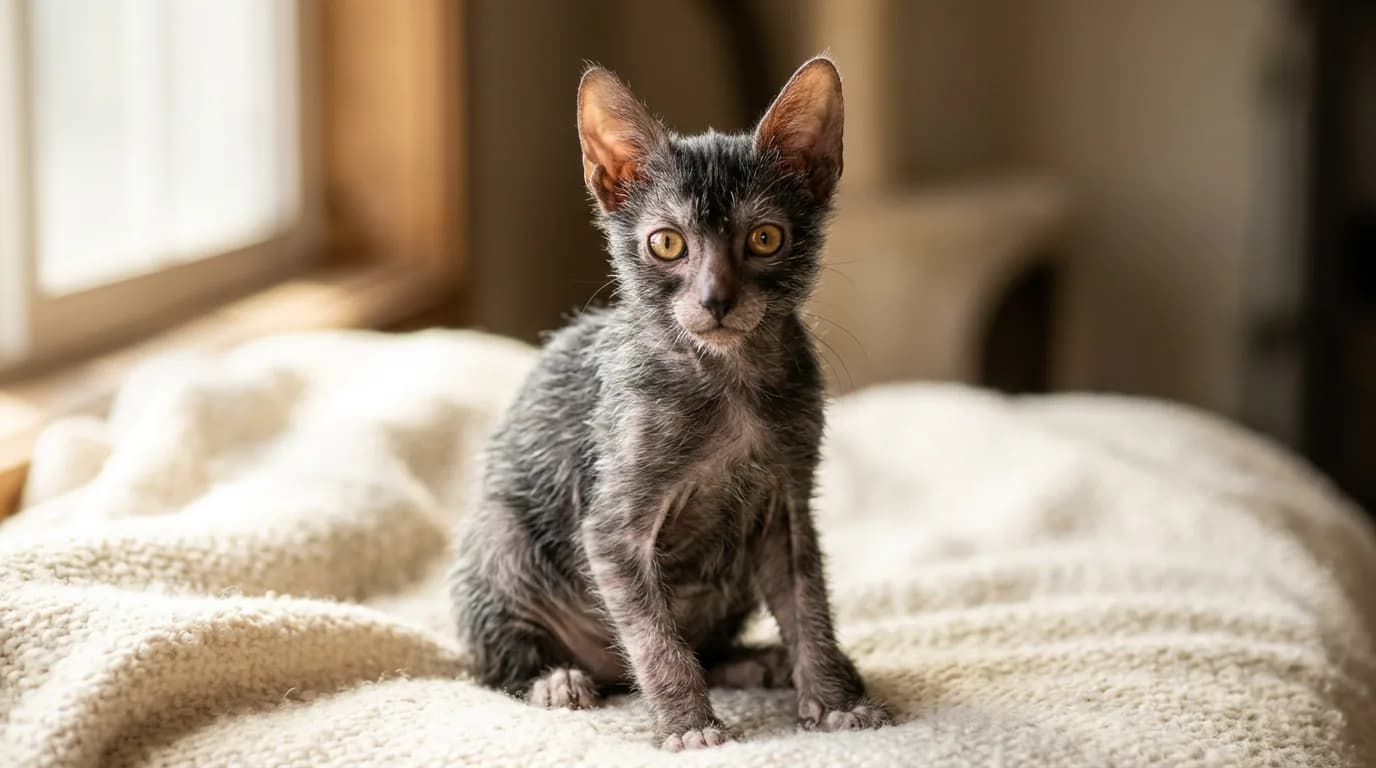
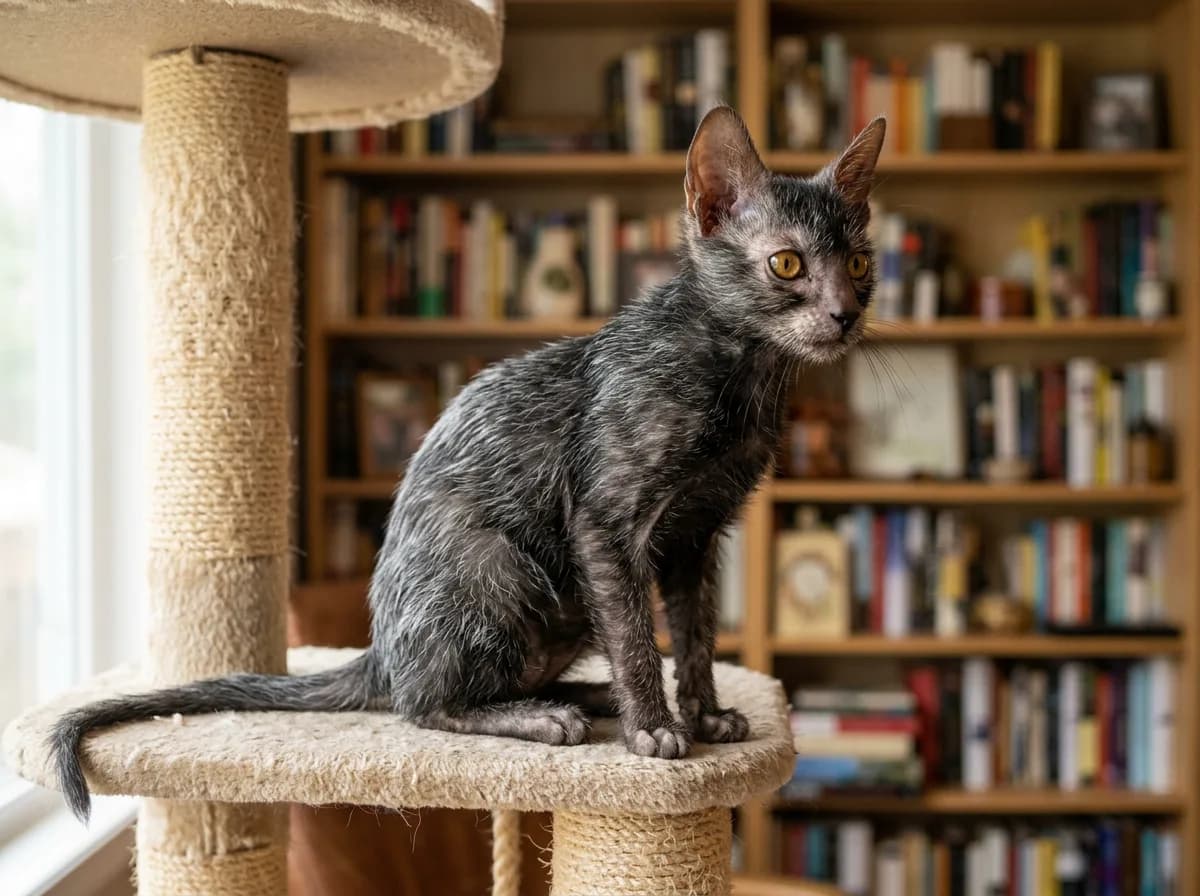
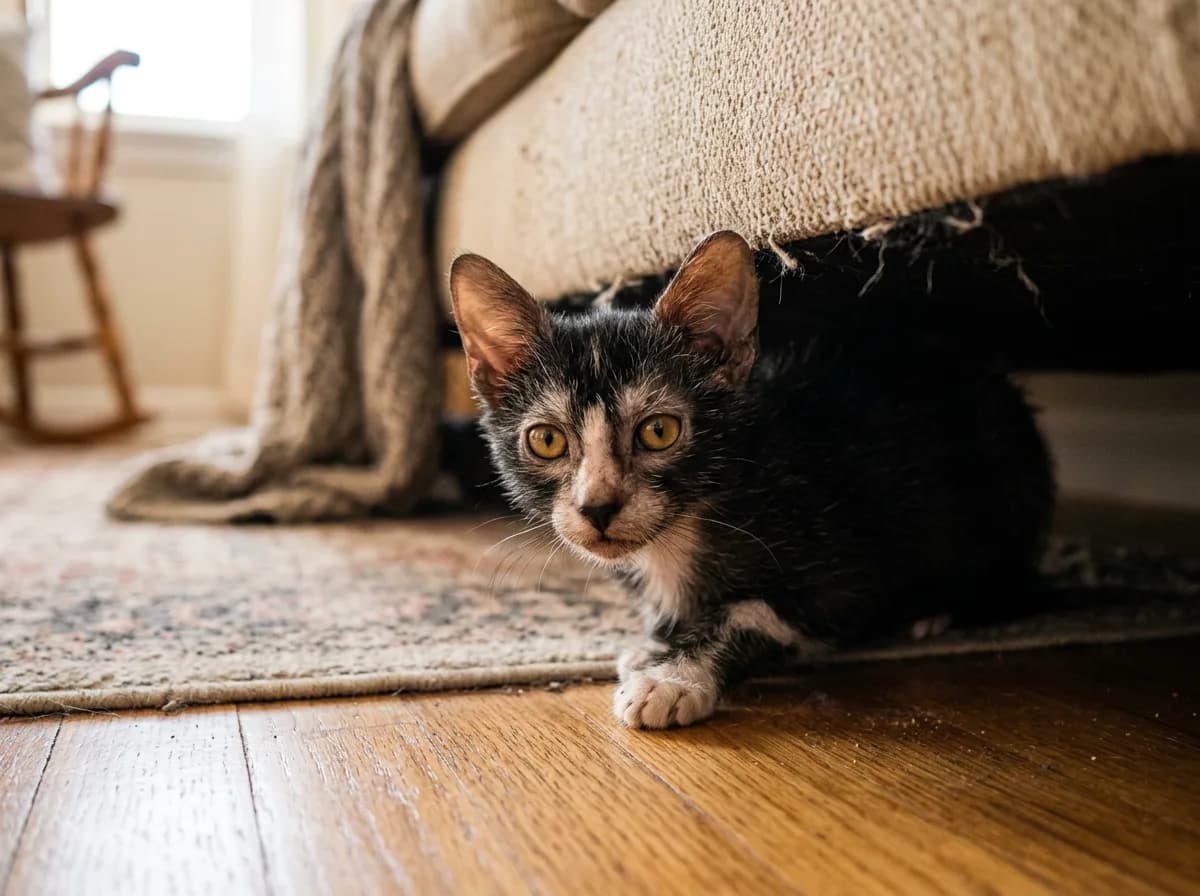
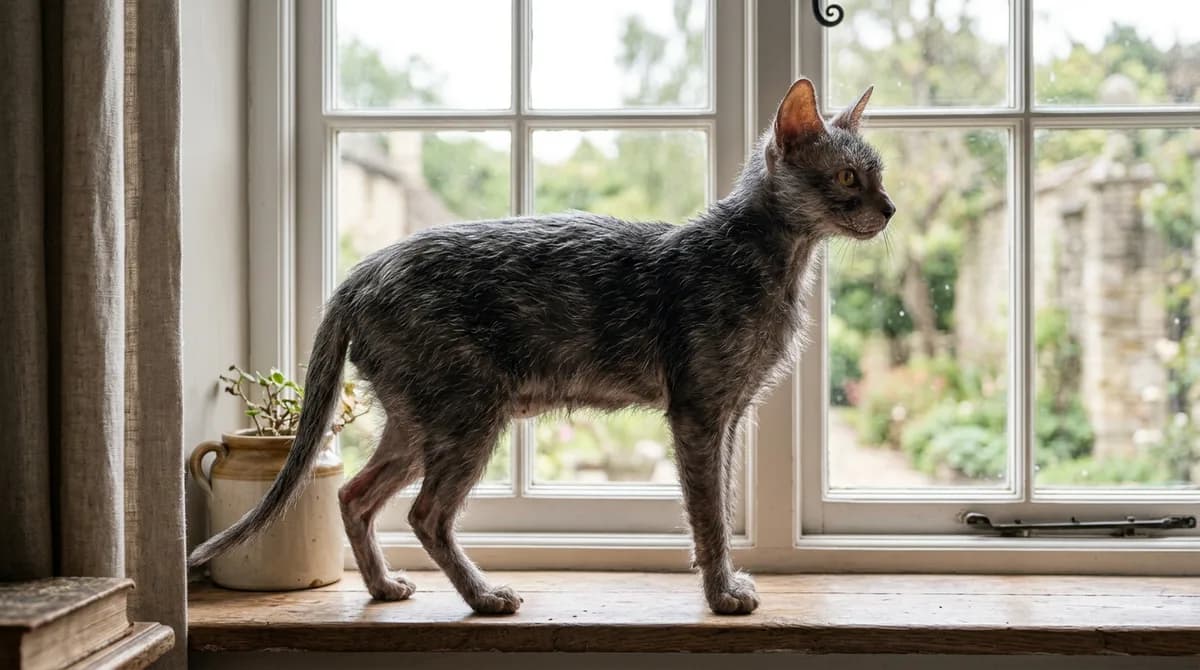
The Lykoi, nicknamed the "werewolf cat," is a breed built around a single odd trait: a hair-follicle defect that leaves the cat with a thin, wiry coat and bald patches around the eyes, muzzle, ears, chin, and legs. That bare "mask" is what gives the face its wolfish, almost feral look. The name comes from the Greek word for wolf.
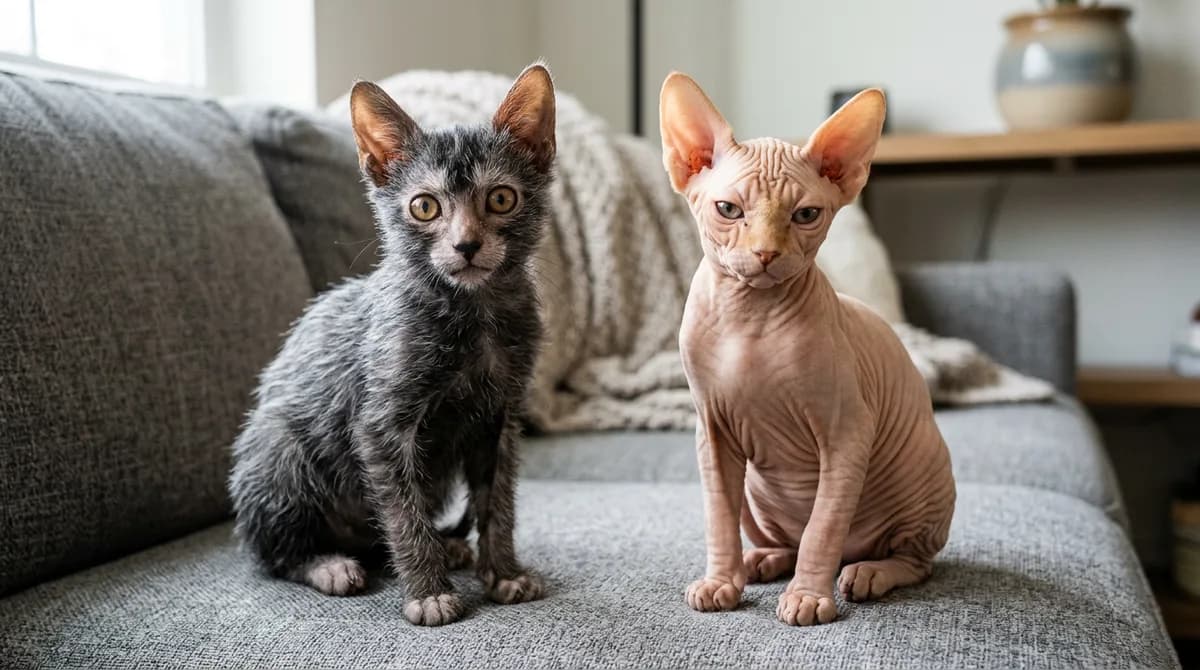
A Lykoi kitten does not look like a Sphynx. A Sphynx is essentially bald all over. A Lykoi has hair, just not enough of it, and never an undercoat. The coat that does grow is a "roan" pattern: black or colored hairs mixed evenly with white and pigment-free (amelanistic) hairs, which produces a salt-and-pepper, slightly grizzled appearance. Classic Lykoi are black roan.
If you want the full breed background, history, and personality profile, our Lykoi cat breed profile covers the adult cat in depth. This guide focuses on the kitten: the molt, the development stages, day-to-day care, and how to find a healthy one.
- The Lykoi did not come from crossing a Sphynx with anything. It is a separate natural mutation in ordinary domestic shorthair cats, and genetic testing confirmed the gene is unrelated to the Sphynx, Devon Rex, or Cornish Rex coat genes.
The Lykoi Kitten Molting Cycle: Born Furred, Goes Bald, Regrows
This is the part that surprises every first-time owner, so it is worth walking through carefully. The molt is normal. It is the defining feature of the breed.
Stage 1: Born Looking Normal
A Lykoi kitten is born with what looks like a full, fairly ordinary coat. Newborns can be mistaken for a standard black domestic shorthair. At this point the werewolf look has not appeared yet.
Stage 2: The First Molt (Around 2 Weeks and Onward)
Within the first couple of weeks, the roaning pattern begins to emerge and the kitten starts to lose hair, especially across the face. The Cat Fanciers' Association (CFA) describes it plainly: kittens appear normal at birth, but "in a week or two, the roaning pattern emerges." Over the following weeks the kitten can shed a large portion of its coat and go partially, or sometimes nearly fully, bald. New owners often panic here, thinking the kitten is sick. It is not.
Never Scoop Again® with the Whisker Litter-Robot, the smart self-cleaning automatic litter box. Monitor visits and track weights for better overall care in the Whisker® app. Multi-cat friendly.
Petful may earn a commission when you click through to Whisker, at no extra cost to you.
Stage 3: Regrowth and the Lifelong Cycle
After molting, the coat regrows, but never as a thick, undercoated coat. From then on the cat cycles: it can range from almost fully coated to almost hairless and back again, often molting most of the coat at least once and frequently shedding seasonally. The bare mask around the eyes, muzzle, ears, and lower legs is permanent. No two molts look exactly alike, and the same cat can look noticeably different month to month.
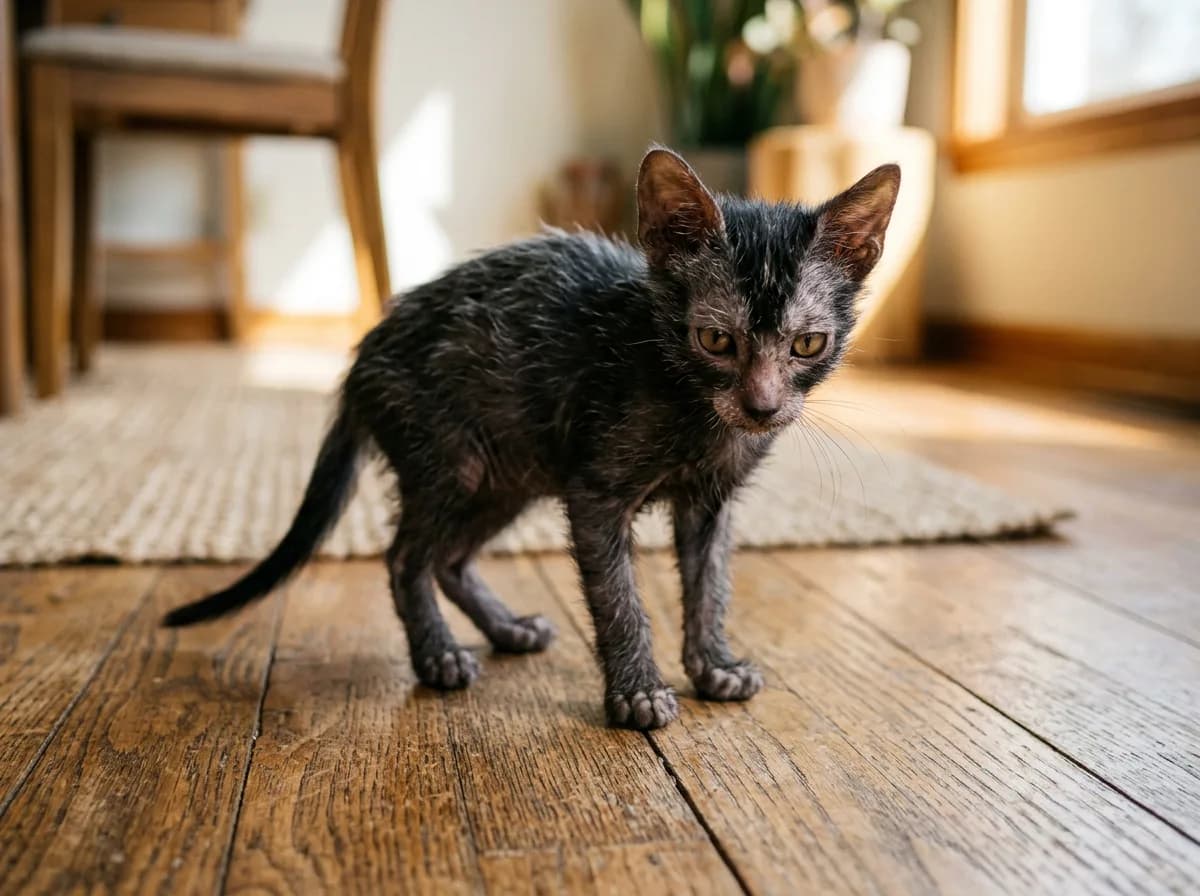
- A molting Lykoi kitten that looks scraggly, balding, or "mangy" is healthy and behaving exactly as the breed should. Never let a breeder, vet, or seller frame the molt as illness, a "Down syndrome cat," or a defect. That claim is a myth, and it is the single most common reason owners worry needlessly.
The molt depth is influenced by hormones and season, which is why an intact cat, a pregnant queen, or a cat going through seasonal change may strip down more dramatically. For a deeper look at how coat color and roan percentage vary across the breed, see our guide to Lykoi cat colors. The molt depth is influenced by hormones and season, which is why an intact cat, a pregnant queen, or a cat going through seasonal change may strip down more dramatically than a spayed or neutered pet.
Lykoi Kitten Development Stages: What to Expect Month by Month
Here is a realistic timeline so you know what is normal at each age. Individual kittens vary, and reputable breeders will not send a kitten home until it is well socialized and through its early development.
| Age | Coat and Appearance | What to Expect |
|---|---|---|
| Birth to 2 weeks | Looks like a normal furred black kitten | Eyes opening, nursing, no werewolf look yet |
| 2 to 8 weeks | Roan pattern emerges, first molt begins, face starts to bare | Weaning, first vaccinations, growing fast |
| 2 to 4 months | Patchy, scruffy, may look near-bald during a heavy molt | Litter trained, very playful, socialization window |
| 4 to 6 months | Coat regrows in a roan pattern, mask is set | Ready to go home from most breeders, spay or neuter planned |
| 6 to 12 months | Adult roan coat with lifelong molt cycles | Approaching full size, settled personality |
Most registered Lykoi breeders keep kittens until 12 to 16 weeks old. That is later than many cat breeds, and it is on purpose: it lets the kitten complete early vaccinations, finish socialization, and get through the unsettling first molt under the breeder's care so you are not managing it alone.
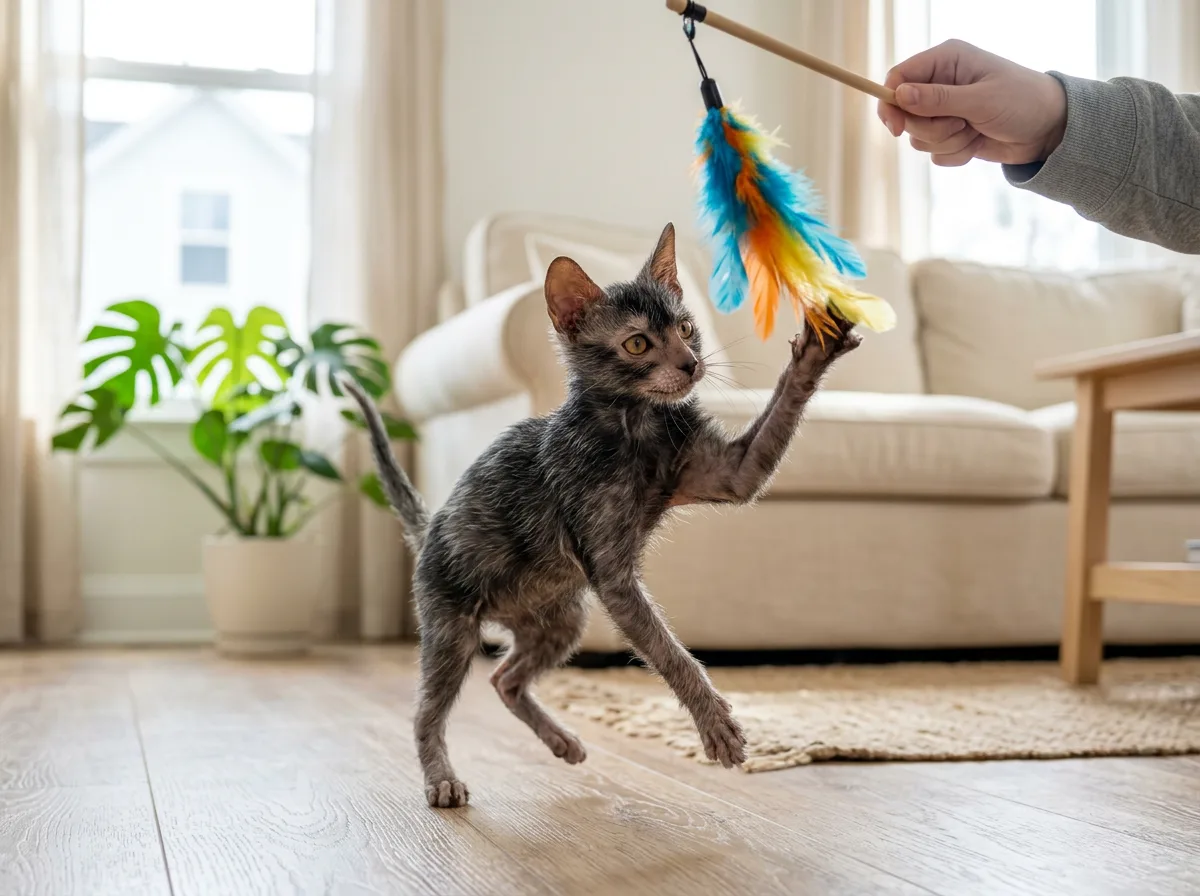
Coat and molt patterns are inherited, so when you visit a breeder, ask to see or get photos of the kitten's parents. They tell you a lot about how your kitten's roan coat is likely to develop as an adult.
Where the Lykoi Came From: A Quick History
Understanding the breed's origin helps you spot a responsible breeder. The modern Lykoi traces to two unrelated litters of feral and rescued cats in the United States in 2010. The breed was developed from about that year by Patti Thomas alongside Dr. Johnny Gobble and Brittney Gobble in Tennessee, who confirmed through testing that the coat trait was caused by a recessive genetic mutation, not by disease, and that it was unrelated to existing hairless or rex breeds.
The first intentionally bred Lykoi kitten, named Daciana, was born in September 2011, and the founders deliberately outcrossed to black domestic shorthairs to keep the gene pool healthy and diverse. TICA accepted the Lykoi as an advanced new breed in 2012 and granted full Championship recognition in 2017. The CFA accepted the breed for registration in 2018 and advanced it to Championship in 2023.
Because the breed is young and the gene is recessive, the global breeding population is still small, which directly affects price and availability. A kitten only shows the werewolf coat if it inherits the gene from both parents, which is part of why true Lykoi kittens are uncommon and why breeders maintain careful pedigrees and waitlists. For the full money picture, our Lykoi cat price breakdown walks through costs from kitten purchase to lifetime care.
Lykoi Kitten Care: Skin, Bathing, and Temperature
A sparse coat with no undercoat changes the care routine. Less fur does not mean less maintenance. In several ways it means more.
Oily Skin and Bathing
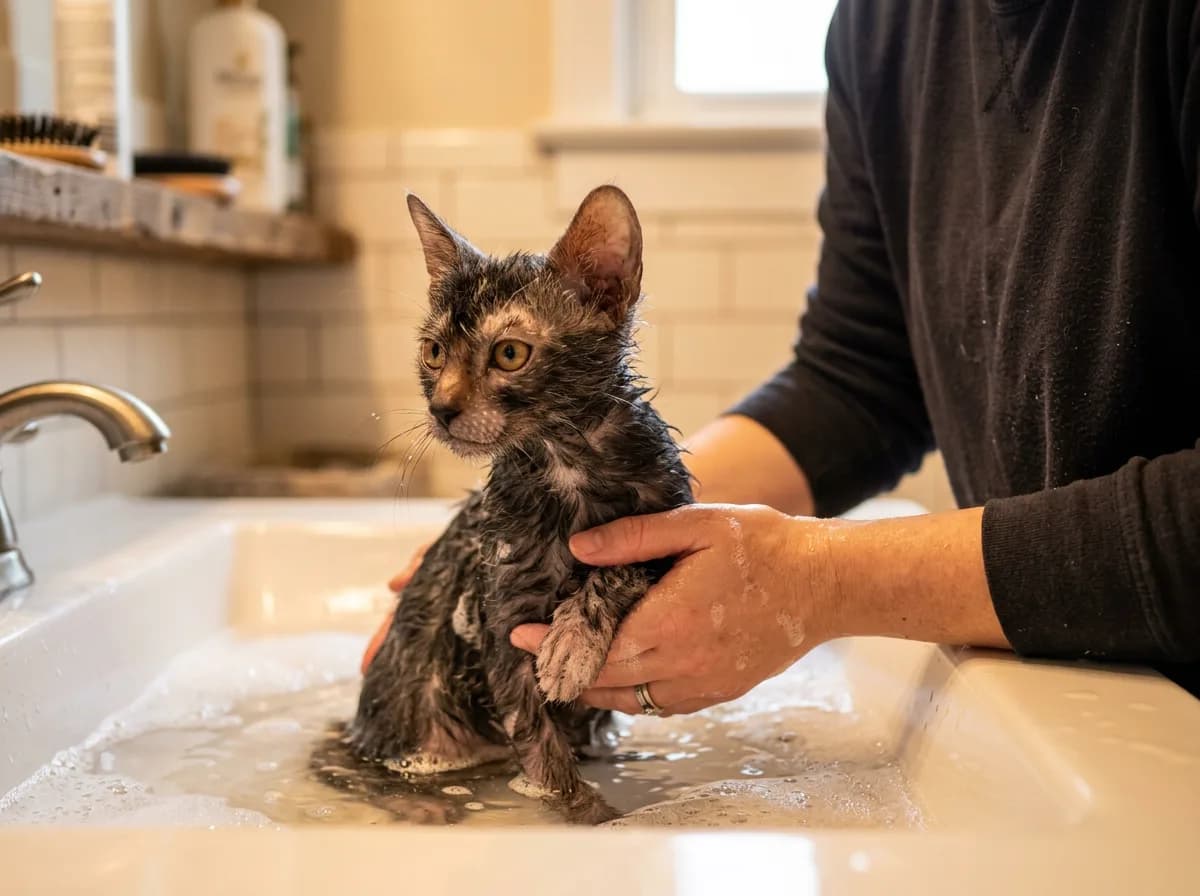
Like the Sphynx, a Lykoi produces skin oils that would normally be absorbed by a full coat. With little hair to soak them up, oil can build up on the skin and inside the ears, and some cats develop blackheads. Plan on an occasional bath, anywhere from every few weeks to a couple of times a month depending on how oily your individual cat runs, using a gentle cat-safe shampoo. Wipe the ears clean on a regular schedule too.
Temperature: Sun and Cold
Bare skin burns and chills. A Lykoi kitten should not be left in direct sun for long stretches, especially on the exposed mask and ears, and should have warm, draft-free spots in cold weather. Many owners add a soft cat sweater in winter and keep the cat indoors, which also protects that thin coat from scrapes.
Nutrition and Vet Care
Feed a complete, high-quality kitten diet and follow your vet's vaccination and deworming schedule. Schedule the spay or neuter your breeder contract requires. Routine wellness care is the same as any kitten, with extra attention paid to skin and ears.
- A thin coat does not make the Lykoi safe for allergy sufferers. Lykoi still produce the Fel d1 protein that triggers cat allergies, and they shed loose hair during molts. If allergies are your reason for choosing this breed, spend time with an adult Lykoi before committing.
Lykoi Kitten Health and Lifespan
The good news for buyers is that the Lykoi is generally a healthy breed. The founders prioritized health from the start, running cardiac and general health screening on foundation cats, and to date no breed-specific hereditary disease has been firmly established. Lifespan runs roughly 12 to 15 years with good care, in line with other domestic cats.

63-inch multi-level cat tree with scratch posts, hammock, plush perches, and dangling toys. Vertical territory is non-negotiable for high-energy climbing breeds like the Bengal.
Petful may earn a commission when you click through to Chewy, at no extra cost to you.
The main practical health considerations are not genetic diseases but consequences of the coat: skin and ear oil buildup, occasional skin irritation, and vulnerability to sunburn and cold. All are manageable with the care routine above. A good breeder will provide a health guarantee and proof of veterinary checks. For a fuller treatment of breed health concerns, see our Lykoi cat health guide.
- Before bringing a Lykoi kitten home, ask for vaccination records, a recent vet health certificate, and the breeder's written health guarantee. Reputable TICA breeders provide all three without being pushed.
Lykoi Kitten Temperament: What These Cats Are Like
Despite the spooky looks, Lykoi are known for being affectionate, intelligent, and playful, with an energy that owners often compare to a dog. They tend to bond closely with their people, enjoy interactive play and problem-solving toys, and many get along well with other pets and respectful children. They are curious, sometimes a little mischievous, and they like to be involved in whatever you are doing.
That dog-like, people-focused nature is a big part of why owners fall for them, and it is also why a Lykoi does best in a home where someone is around and engaged rather than one where the cat is left alone for long stretches.
How to Find a Healthy Lykoi Kitten From a Registered Breeder
This is where buyers get burned, so take it slowly. The Lykoi's rarity attracts both excellent dedicated breeders and opportunists selling unhealthy cats or, worse, scammers selling cats that do not exist.
Start With a TICA-Registered Breeder
Look for a breeder registered with TICA (and ideally CFA), because registration ties them to a pedigree and a code of ethics. Ask for the cattery's registered name and verify it. A legitimate Lykoi breeder will be transparent about their cats, their lines, and their health testing.
Questions to Ask Every Breeder
| Ask About | A Good Answer | A Red Flag |
|---|---|---|
| Registration | TICA or CFA registered cattery with a verifiable name | Vague, unregistered, or refuses to name a registry |
| Health testing | Cardiac and general screening on parents, written health guarantee | "They are too healthy to need testing" or no paperwork |
| The molt | Explains born-furred, molts, regrows as normal breed behavior | Calls the molt a defect, illness, or "Down syndrome" |
| Go-home age | 12 to 16 weeks, after vaccinations and socialization | Offers kittens at 6 to 8 weeks |
| Contract | Spay or neuter clause, return policy, support after sale | No contract, cash-only, pressure to decide fast |
Watch for Scams
Because Lykoi are searched far more than they are available, "Lykoi kittens for sale near me" turns up a lot of fake listings. Never send a deposit before a video call where you see the actual kitten and a parent, never pay by untraceable methods, and be suspicious of prices far below the 1,500 to 2,500 USD range. A waitlist is a good sign, not a hassle: it means the breeder produces kittens in limited, planned litters.
Consider Related Breeds While You Wait
If a Lykoi waitlist is long, some buyers explore other unusual-coat cats. The Sphynx offers a fully hairless look with similar skin-care needs, while the curly-coated Devon Rex shares the big-eared, playful, people-loving temperament. None are a true Lykoi substitute, but they scratch a similar itch.
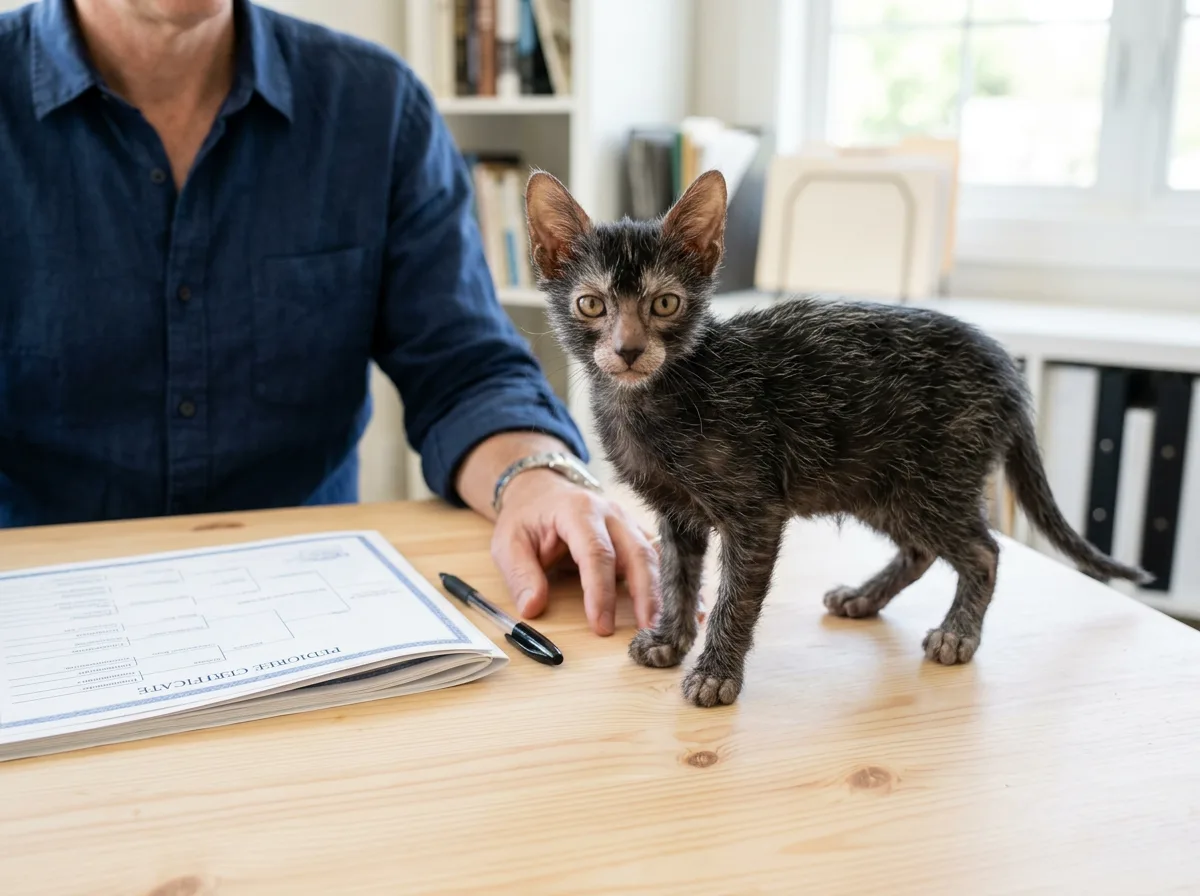
- The most common Lykoi scam is a deposit request for a kitten you have only seen in stock photos. Insist on a live video call with the specific kitten and at least one parent before any money changes hands.
Lykoi Kitten Pricing and Availability
A healthy, registered Lykoi kitten typically costs about 1,500 to 2,500 USD, and show-quality or particularly well-roaned kittens can run 3,000 USD or more. The price reflects scarcity, the careful breeding required for a recessive trait, and the health testing good breeders do. Pet-quality kittens sit toward the lower end, and you will often join a waitlist of several months. Budget beyond the purchase price too: bathing supplies, ear care, quality food, vaccinations, spay or neuter, and routine vet care all add up over a 12 to 15 year life.
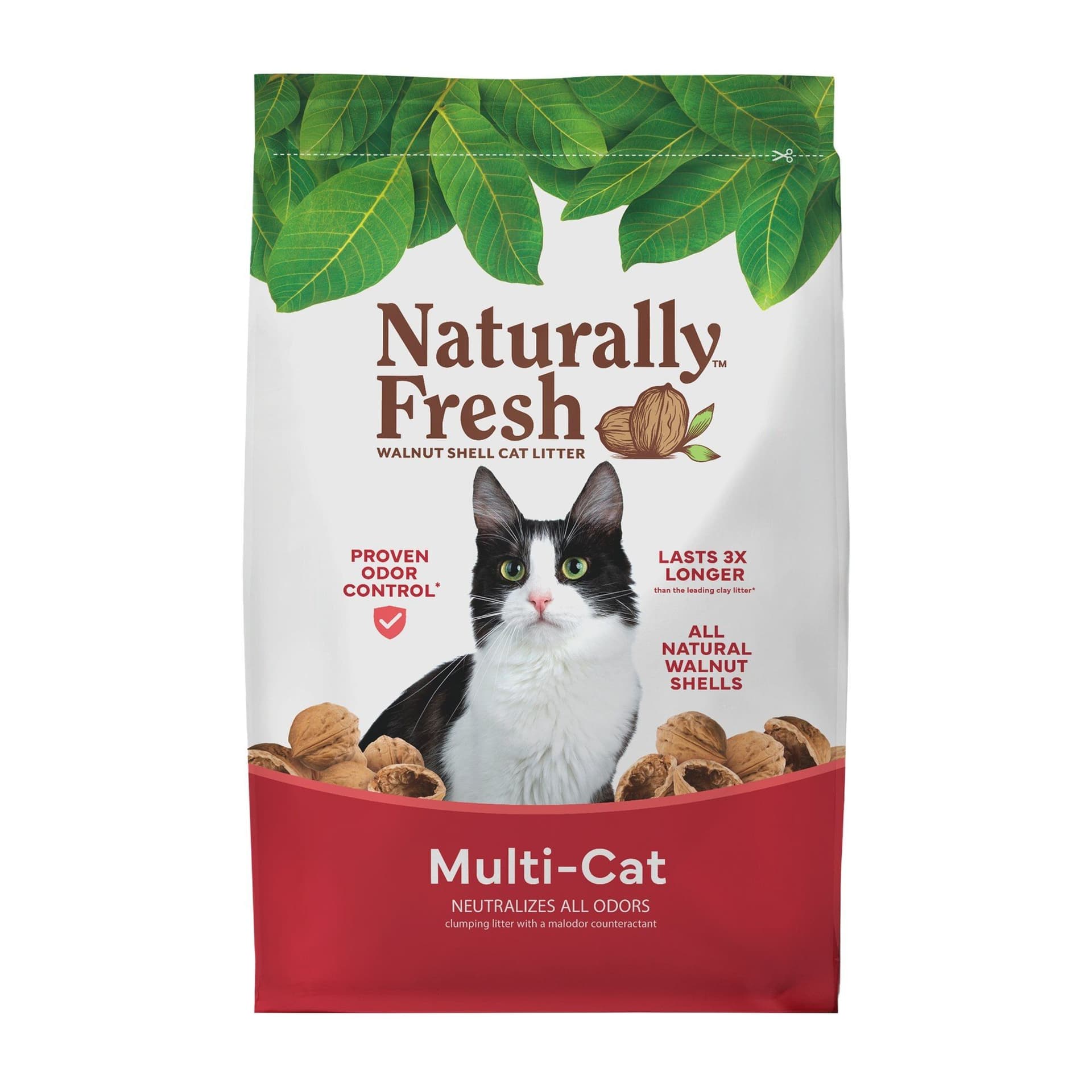
Walnut shell clumping cat litter that excels at odor control, lasts up to 3x longer than clay, and is a top pick for multi-cat households.
Petful may earn a commission when you click through to Chewy, at no extra cost to you.
How a Lykoi Kitten Compares to Other Hairless and Rex Cats
It is easy to confuse the Lykoi with other unusual-coat breeds, but the genetics and look differ in important ways.
| Breed | Coat | Key Difference |
|---|---|---|
| Lykoi | Partial, patchy roan, no undercoat, bare mask | Born furred then molts and regrows, recessive gene |
| Sphynx | Essentially hairless all over | No molt cycle, suede-like skin, different gene |
| Devon Rex | Soft wavy short coat | Has a coat, curly not sparse, big ears and elfin face |
| Cornish Rex | Fine wavy down coat | Soft curls, no bald mask, distinct rex gene |
For a broader overview of low-coat options, our roundup of hairless cat breeds compares the full field side by side.
Bringing Your Lykoi Kitten Home: A Short Checklist
When the day comes, set up before the kitten arrives so the transition is calm. Prepare a warm, draft-free space with soft bedding and hiding spots. Stock gentle cat shampoo, ear wipes, and the quality kitten food your breeder recommends. Schedule a vet visit within the first week and confirm the vaccination and spay or neuter timing. Keep the kitten indoors and out of direct sun, and give it patient time to settle using the 3-3-3 adjustment pattern described in the FAQ below.
A Lykoi kitten settling into a new home goes through the same emotional adjustment as any cat: cautious at first, then increasingly bold and affectionate as trust builds. Give it space, a predictable routine, and plenty of gentle interaction, and the dog-like personality this breed is loved for will show itself quickly.
A Closer Look at the Grooming Routine
Because grooming is the single biggest difference between raising a Lykoi kitten and raising a typical furred kitten, it is worth going beyond the basics. The goal is simple: keep skin oil and ear wax in check without stripping the skin or stressing the kitten.
Start handling and bathing early, while the kitten is young and impressionable, so baths become routine rather than a battle. Use warm (not hot) water and a small amount of gentle, cat-formulated shampoo, lather the body while avoiding the eyes and inner ears, rinse thoroughly, and dry the kitten well in a warm room so it does not get chilled. Most Lykoi do not need a bath as often as a Sphynx, but oilier individuals benefit from one every couple of weeks. Between baths, a damp cloth wipe-down handles surface oil.

108-oz stainless steel pet fountain with quiet pump and water-level window. Bengals are notoriously water-obsessed; a flowing fountain encourages hydration and pulls them away from sinks and toilets.
Petful may earn a commission when you click through to Chewy, at no extra cost to you.
Ears deserve special attention. With sparse hair, the ear leather and canal can collect a brown, waxy buildup faster than in a furred cat. Wipe the outer ear with a cat-safe ear cleaner on a cotton pad on a regular schedule, never push anything into the canal, and ask your vet to show you the technique at the first visit. Watch the nail beds and the skin folds of the mask for trapped grime too. A short, calm grooming session a few times a week keeps everything under control and doubles as bonding time.
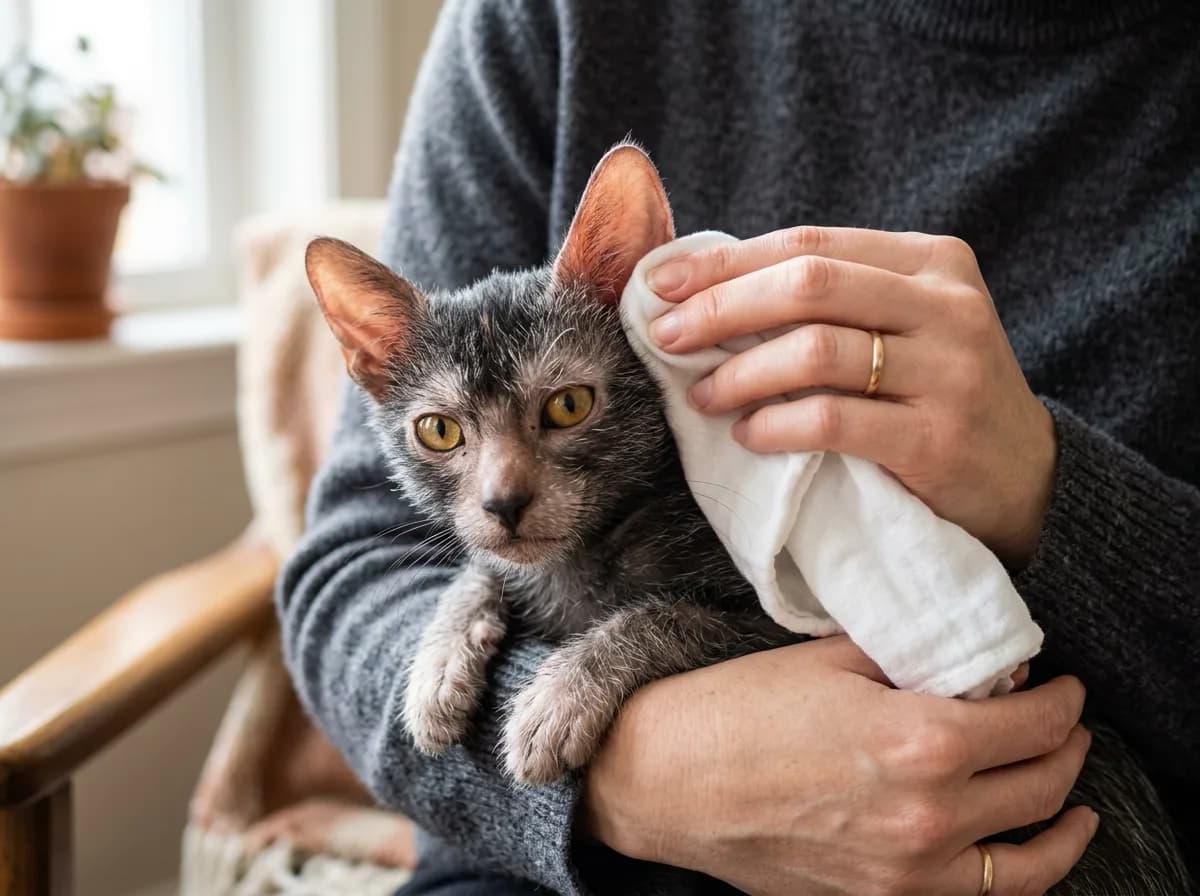
Kittens that are bathed, ear-cleaned, and handled gently from a young age grow into adults that tolerate grooming calmly, so start the routine the week your Lykoi kitten comes home, keep sessions short, and pair them with praise and a treat.
Living With a Lykoi Kitten Day to Day
A Lykoi kitten is busy. These cats are athletic, curious, and clever, and a bored Lykoi will invent its own entertainment, often involving climbing, opening, or knocking things off shelves. Give it outlets: a tall cat tree, puzzle feeders, wand toys for interactive play, and rotating novelty so the same toys do not go stale. Many Lykoi enjoy fetch and learn simple tricks, which fits their dog-like reputation.
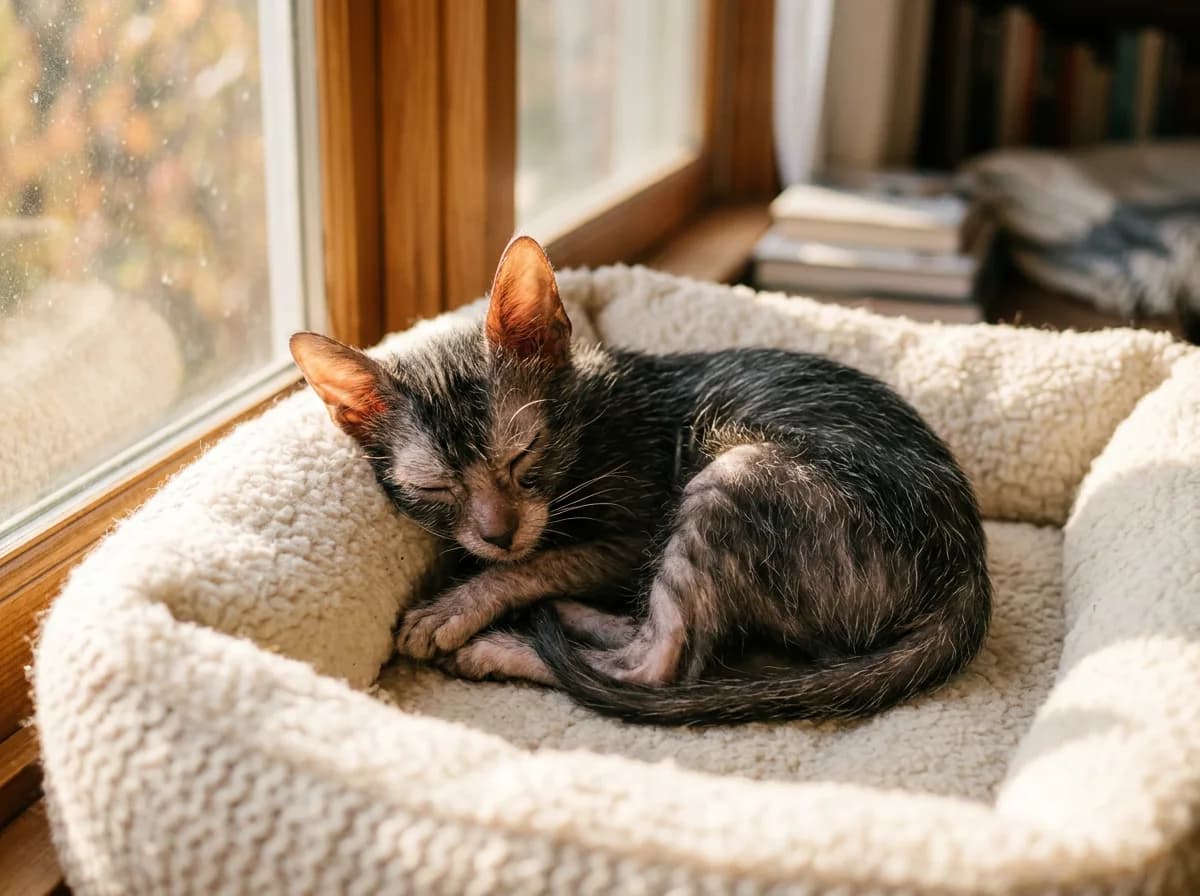
Socially, they want to be part of the household. They tend to follow their people from room to room, settle nearby while you work, and greet you with chirps and head-bumps. They usually do well with other cats, cat-savvy dogs, and gentle children, though early, positive introductions matter. Provide warm sleeping spots, because a thin-coated cat seeks out heat, and you will often find your Lykoi kitten curled in a sunbeam, on a heated bed, or against you under a blanket.
Keep the litter box scrupulously clean, give the kitten predictable mealtimes, and carve out daily play. Meet those needs and a Lykoi rewards you with one of the most engaged, interactive personalities in the cat world.
What to Expect From a Lykoi Litter
If you are working with a breeder, it helps to understand the litter side of things. Lykoi litters are typically small, and because the coat gene is recessive, not every kitten in a pairing will necessarily be a fully expressed Lykoi. Breeders plan pairings carefully and outcross to domestic shorthairs to protect genetic diversity, which means available werewolf-coated kittens in any given litter can be limited.
This is why waitlists exist and why a deposit often reserves a spot in an upcoming litter rather than a specific kitten you can take home next week. A good breeder will keep you updated with photos as the litter develops and the molt reveals each kitten's roan pattern, and will match you with a kitten whose temperament suits your home. Patience here is a feature, not a flaw: it is the same careful process that keeps the breed healthy.
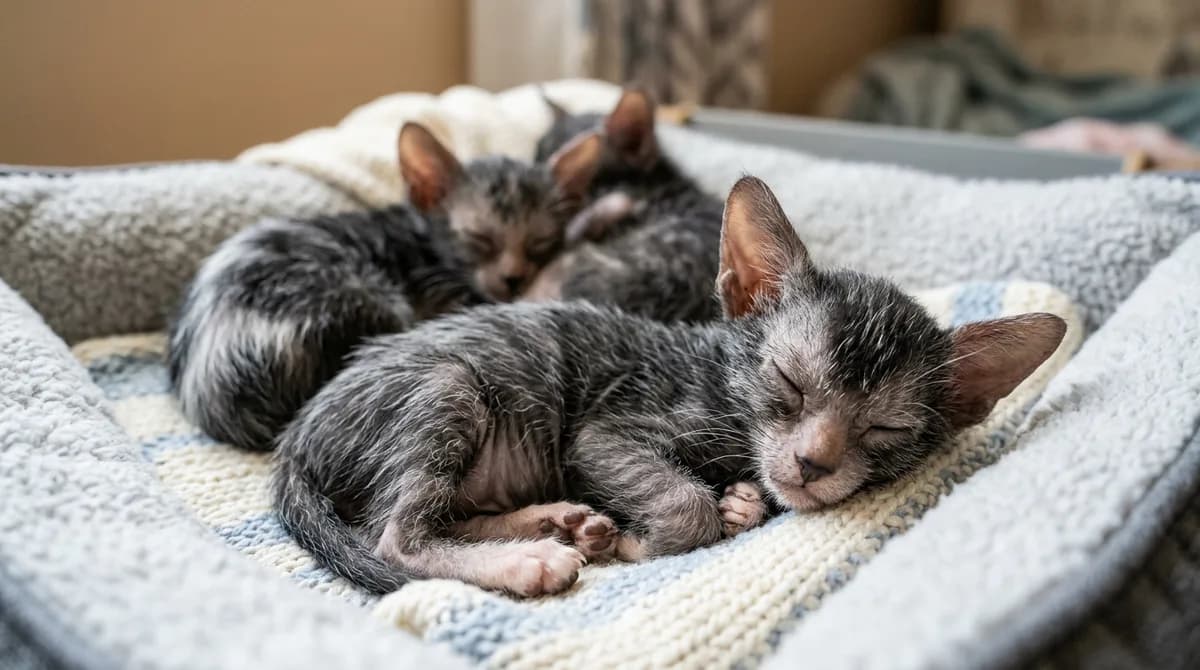
- Lykoi litters tend to be modest in size, and the number of werewolf-coated kittens per litter can be small because of the recessive gene. A breeder telling you to wait for the right kitten is usually a sign of responsible practice.
Common Lykoi Kitten Mistakes to Avoid
A few missteps come up again and again with new owners, and all are easy to sidestep once you know about them. Do not panic and rush to the vet for "fur loss" during a normal molt, but do see a vet if the skin is red, scabbed, itchy, or has bald patches with broken skin, which point to a real problem rather than a molt. Do not skip skin and ear care just because there is barely any fur to brush. Do not leave a Lykoi kitten in direct sun or a cold draft. Do not buy on impulse from an unverified seller or wire a deposit for a kitten you have not seen on video. And do not assume the thin coat makes the cat hypoallergenic; it does not.
Get those right, lean on your breeder and vet, and you set your Lykoi kitten up for a healthy, happy, dog-like life.
Frequently Asked Questions
Cats show affection through slow blinks, head bunting, kneading, purring, following you around, and exposing their belly. Lykoi kittens are especially demonstrative and dog-like, so expect a Lykoi to seek out lap time, greet you at the door, and "talk" to you more than many breeds.
The 3-3-3 rule is a guideline for a new cat's adjustment: about 3 days to feel overwhelmed and hide, 3 weeks to settle into a routine and show personality, and 3 months to feel fully at home and bonded. It applies well to a Lykoi kitten, which may be shy during its first days in a new home before its confident, playful nature emerges.
Breeds often called the clingiest include the Siamese, Sphynx, Ragdoll, and Devon Rex, and the Lykoi belongs in that company. Lykoi are people-focused and dog-like, bonding tightly to their owners and preferring company over long stretches of being alone, so they suit households where someone is usually home.
Yes. Lykoi are affectionate, intelligent, energetic, and generally healthy, with a roughly 12 to 15 year lifespan. They get along with respectful children and other pets and form strong bonds with their people. The main commitments are skin and ear care for their sparse coat, sun and cold protection, and accepting their dramatic, normal molting cycle.
Cats dislike dirty litter boxes, loud or chaotic environments, sudden handling, strong scents, and being startled. For a Lykoi specifically, add cold drafts and rough handling of their thin skin to that list. A calm, predictable routine with a clean litter box keeps a Lykoi kitten happy and confident.
To greet a cat in its own language, make eye contact and give a slow, deliberate blink, which signals friendliness and trust, then let the cat approach and sniff your hand. A sociable Lykoi kitten will often slow-blink back, head-bump your hand, and follow up with a chirp or trill.
Most cats strongly dislike citrus, vinegar, strong mint, eucalyptus, and many essential oils, several of which are also toxic to cats. Keep these scents and oils away from a Lykoi kitten in particular, because its bare skin has more direct contact with surfaces and there is little coat to act as a barrier.

Coreen Saito is a pet writer and longtime shelter volunteer with more than a decade in animal rescue. She covers cat behavior, breed care, and the small, ordinary science of sharing a life with companion animals, with a particular focus on honest takes about the products and decisions that actually matter. At home in Arizona, she's outranked by Mac (a dog with the loudest opinion in the house), Rebel (a cat who governs by quiet authority), and Meri (an orange tabby who runs the late shift and the laundry basket). She writes about all three, plus the rescues that keep coming through her life, at LifeWithMinty.com.
Sign up for expert-backed reviews and safety alerts all in one place.