Lykoi Cat Health: A Vet's Honest Guide to the Werewolf Cat
Lykoi cat health, explained honestly by a vet: why the werewolf cat is a genuinely healthy breed, the truth behind the diseased and Down syndrome myths, real skin and sun care needs, the hypoallergenic question, and a 12 to 15 year lifespan.

BVMS, MRCVS
Petful is reader supported. As an affiliate of platforms like Amazon and Chewy, we may earn a commission when you buy through links on this page. There is no extra cost to you.
Lykoi cat health is one of the most searched and most misunderstood topics in the feline world, and the honest answer surprises most people: the Lykoi is a generally healthy breed. A landmark 2020 genetics study published in the journal Genes (Buckley et al.), which sequenced the breed alongside dozens of others, concluded that no health concerns had been identified in the Lykoi other than a skin condition called lymphocytic mural folliculitis. TICA, which granted the breed full Championship status in 2017, and the breed's founding veterinarian, Dr. Johnny Gobble, both built early cardiac and DNA screening into the program. So before you read a single scary headline, hold onto that number: zero documented breed-specific diseases beyond the coat itself. That does not mean a "werewolf cat" needs no care, and it does not mean the breed is free of myths. I am Dr. Pippa Elliott, and below I separate the evidence from the folklore, point by point, so you can decide with clear eyes.
- 1The Lykoi is a genuinely healthy breed, with the only documented breed-specific condition being a benign skin issue called lymphocytic mural folliculitis
- 2The "diseased" and "Down syndrome cat" claims are myths, the coat comes from one recessive hair-follicle gene, not illness
- 3Typical lifespan is 12 to 15 years, in line with other domestic shorthairs
- 4The sparse coat needs Sphynx-style skin, ear, sun, and cold care, not medication
- 5No cat is truly hypoallergenic, including the Lykoi, because they still make the Fel d1 protein

Sign up for expert-backed reviews and safety alerts all in one place.
Are Lykoi Cats Actually Healthy?
When people ask about Lykoi cat health, what they usually mean is, "Did breeders create a sick animal on purpose?" The evidence says no. The Lykoi is a natural genetic mutation that has appeared spontaneously in random-bred domestic shorthair cats for decades, long before anyone gave it a name. The modern breed was developed from around 2010 in Tennessee, when Patti Thomas, Dr. Johnny Gobble, and Brittney Gobble took two unrelated 2010 litters that carried the same look and proved, through test breeding, that a single recessive gene was responsible.
That distinction matters enormously. A recessive natural mutation is not a disease. It is the same category of genetic event that gave us the orange tabby, the curl of a Rex coat, or a polydactyl "mitten" paw. The founders did something most novelty breeds never bother with: they ran the cats through cardiac ultrasound and broad health screening early, specifically to rule out the kind of hidden defects that sometimes ride along with a striking new coat. They found none.
The most authoritative confirmation comes from peer-reviewed genetics. The 2020 study in the journal Genes, archived in the NIH PMC database, looked directly at the hairless-associated variants behind the Lykoi and stated plainly that no health concerns had been identified in the breed apart from lymphocytic mural folliculitis, the skin finding I cover below. Independent science writers reached a similar verdict, with the caveat that the breed is still young, so very-long-term data is limited.
- The Lykoi coat is caused by a single recessive gene affecting the hair follicle, not by inbreeding, engineering, or illness, and a 2020 study in the journal Genes found no breed-specific disease beyond a benign skin condition.
 Sponsored
Have a health question about your cat?
Talk to a licensed vet at Dutch over video or message, including nights and weekends.
Use code Pets30
Plans start at $11/month · covers up to 5 pets
- Licensed vets in most states
- Rx for 150+ conditions
- 4.7 on Trustpilot
What the coat gene actually does
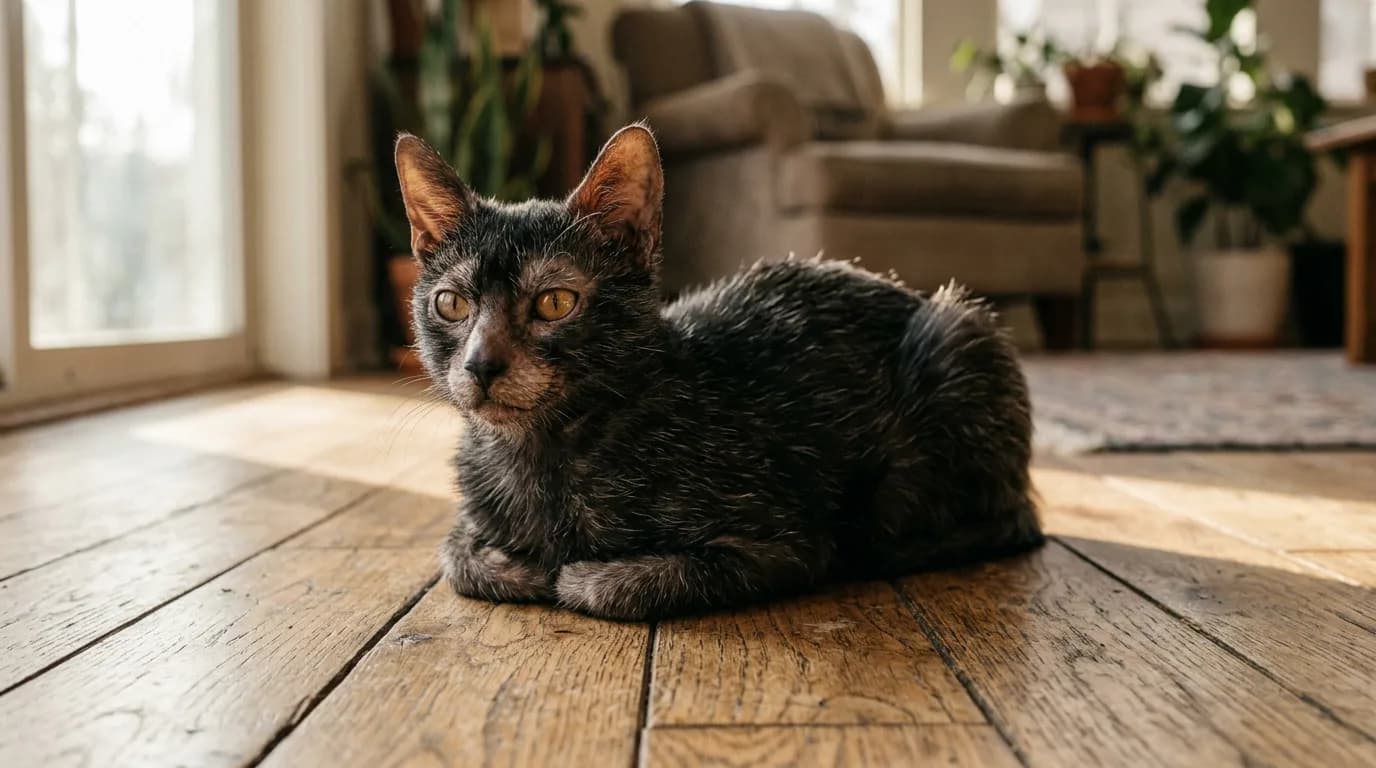
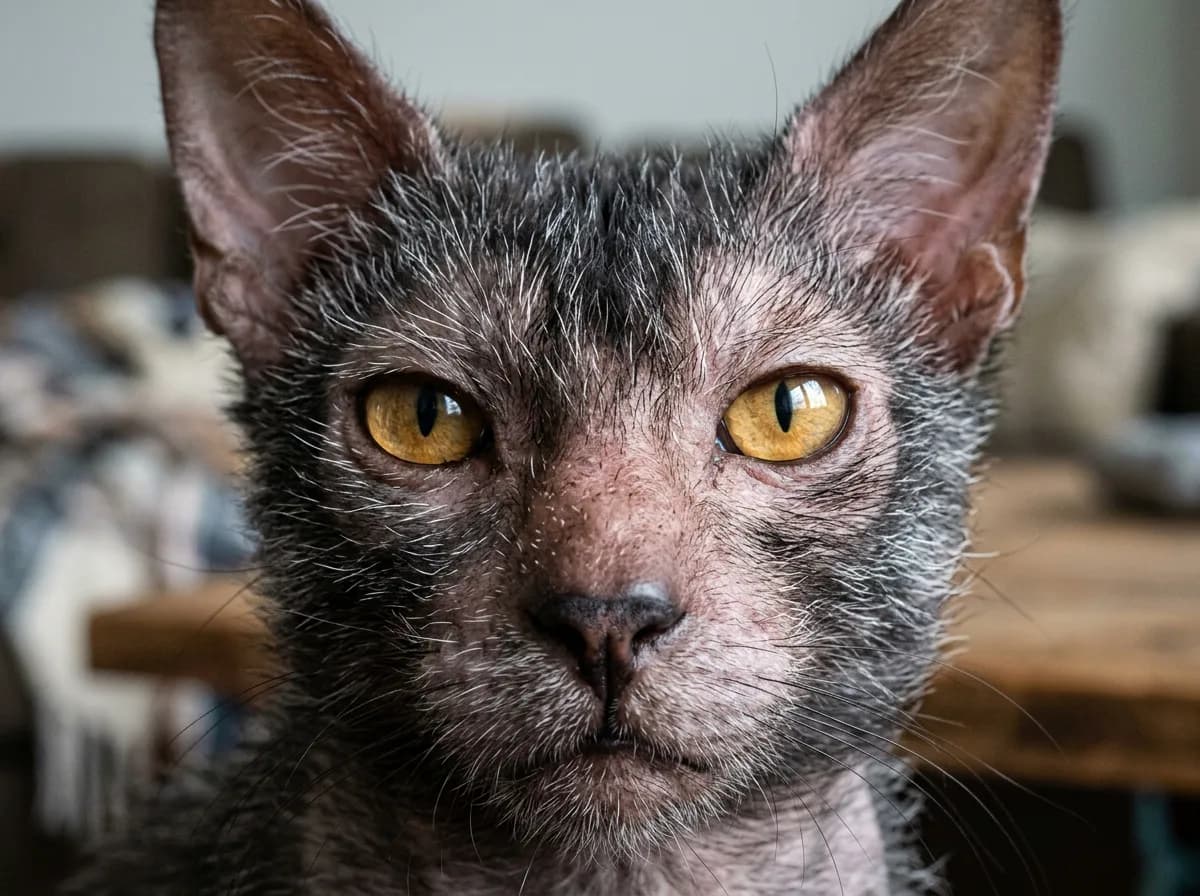
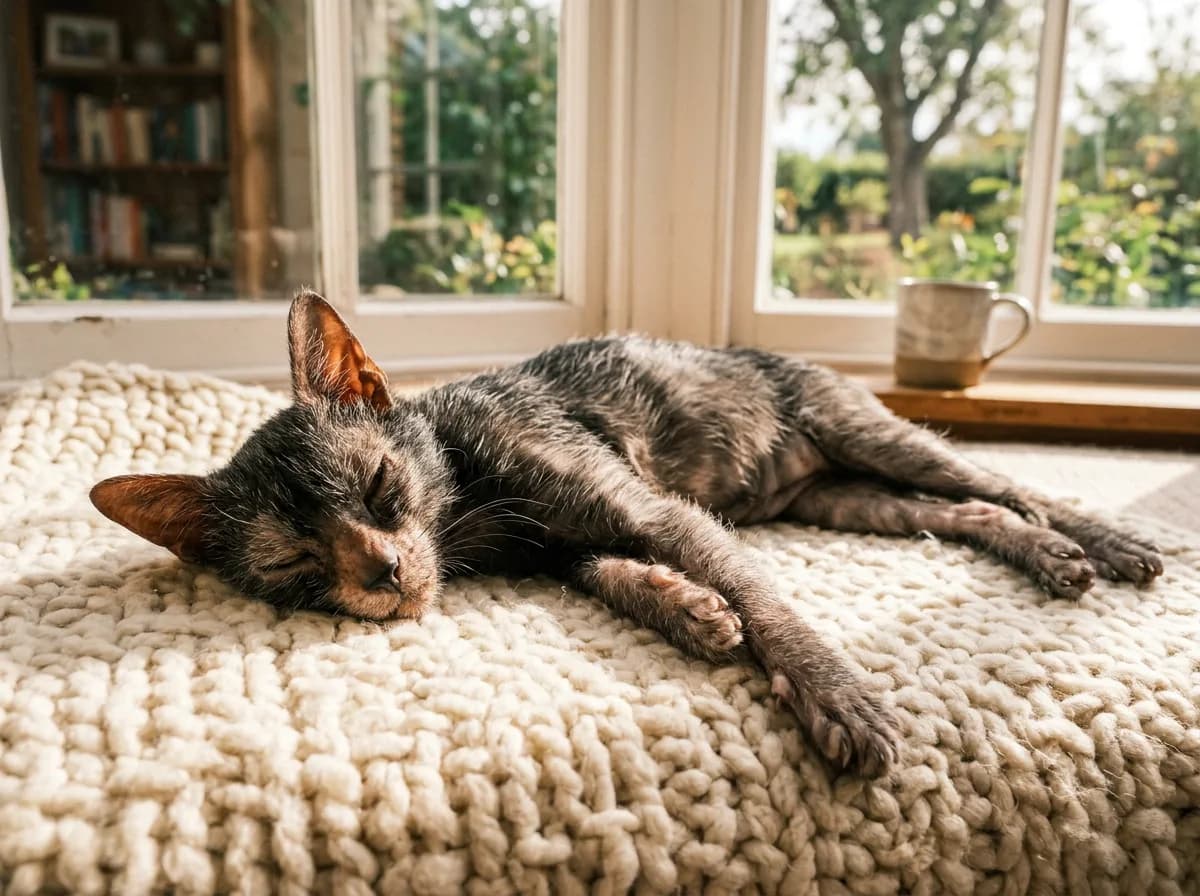
The Lykoi mutation creates a hair-follicle defect. Kittens are usually born looking close to normal, then go through dramatic molts where they can lose most or all of their coat, sometimes turning nearly bald, before regrowing a sparse covering. The hair that returns is permanently thin around the eyes, muzzle, nose, ears, chin, and lower legs. That pattern of bare "masking" against patchy fur is exactly what gives the breed its wolfish, werewolf-cat look. The fur that does grow in is a roan coat, a salt-and-pepper blend of black and unpigmented hairs that gives most Lykoi their grizzled, silvered appearance. Crucially, the follicles are not absent, they are simply unable to maintain a normal coat or any undercoat. This is a cosmetic and care issue, not a painful or progressive one.

Never Scoop Again® with the Whisker Litter-Robot, the smart self-cleaning automatic litter box. Monitor visits and track weights for better overall care in the Whisker® app. Multi-cat friendly.
Petful may earn a commission when you click through to Whisker, at no extra cost to you.
It is worth stressing that the Lykoi is genetically its own thing. It is not a Sphynx, which carries a different hairlessness gene, and it is not a Devon Rex or Cornish Rex, which carry their own separate coat mutations. People who want to compare hairless and sparse-coated breeds can read our overview of hairless cat breeds to see how the genetics differ.
Debunking the "Diseased" and "Down Syndrome Cat" Myths
If you have spent any time in cat forums, you have seen the claims: the Lykoi is "deformed," "diseased," or even a "Down syndrome cat." As a vet, I want to be direct and honest here, because dismissing the question glibly does not help anyone. The claims are wrong, but they come from understandable confusion, so let me address each.
First, "Down syndrome" does not exist in cats. Down syndrome is a human condition caused by an extra copy of human chromosome 21. Cats have a completely different chromosome set, so the diagnosis is biologically impossible in any feline, Lykoi or otherwise. When people use the phrase, they are usually reacting to an unusual face or wide-set features, not to any real genetic syndrome.
Second, "diseased." The Lykoi's appearance reads as sickly to eyes used to plush, fully-furred cats, sparse hair, a bald mask, and a lean body can look like a cat recovering from mange or ringworm. But the look is the stable, healthy resting state of the breed, not a symptom. A vet examining a typical Lykoi finds normal skin under the sparse areas, normal body condition, and no infection. The breed is partially hairless by design of its single gene, the same way a Sphynx is bald or a Manx is tailless.
- "Down syndrome cat" is not a real diagnosis, cats cannot have Down syndrome because they do not have the human chromosome involved, so never accept it as a reason to call a Lykoi unhealthy.
I will not pretend the breed is flawless, no breed is, and I cover the genuine care needs below. But the honest, evidence-based bottom line is that a well-bred Lykoi from a screening breeder is a normal, healthy cat in a striking wrapper. If you are weighing this breed against other unusual cats, our profiles of the Sphynx cat and the Donskoy show how each hairless or sparse breed carries its own real, separate considerations.
Known and Possible Lykoi Cat Health Considerations
A clean genetic record does not mean zero care. Most Lykoi health considerations flow directly from one fact: there is very little coat to protect the skin underneath. Below are the issues vets actually watch for, ranked roughly by how often they come up in practice. None of these are guaranteed in any individual cat, and several are simply the consequences of a sparse coat rather than inherited disease.
| Consideration | Why It Happens | What Owners Do |
|---|---|---|
| Lymphocytic mural folliculitis | The follicle defect tied to the coat gene | Usually benign, monitor skin, vet check if irritated |
| Skin oil buildup and infection | No coat to wick away sebum, like a Sphynx | Occasional gentle bathing, watch for redness |
| Sunburn and skin cancer risk | Bare skin has little UV protection | Keep indoors or shaded, avoid midday sun |
| Heat loss and chill | No undercoat to insulate | Warm bedding, sweaters in cold homes |
| Ear wax buildup | Sparse fur means more exposed wax | Routine gentle ear cleaning |
Lymphocytic mural folliculitis
This is the single condition the genetics literature actually links to the breed. It is an inflammatory finding around the hair follicles and is, in most Lykoi, part of why the coat is sparse rather than a separate painful disease. For most cats it requires monitoring rather than treatment. If a patch of skin becomes red, crusty, or itchy, that warrants a vet visit, because secondary infection, not the folliculitis itself, is the thing to catch early.
Skin oil, irritation, and infection
Like the Sphynx, a Lykoi has no real coat to absorb the natural oils the skin produces. Those oils can build up, especially in skin folds and on the belly, and can leave a slightly greasy feel and a faint odor. Left alone, that film can occasionally lead to clogged pores or minor skin infections. This is the most common reason a Lykoi sees a vet, and it is almost entirely manageable at home with routine cleaning.
- Because the coat cannot do its protective job, almost every Lykoi care task, bathing, sun protection, warmth, comes back to looking after the skin directly, the same playbook experienced Sphynx owners already know.
Sun and cold sensitivity
Bare skin cuts both ways. In sun, a Lykoi has little protection from UV light, which over years raises the risk of sunburn and, in chronically exposed cats, skin cancers such as squamous cell carcinoma on the ear tips, nose, and eyelids. In cold, the lack of an insulating undercoat means a Lykoi loses body heat faster than a fully-coated cat and can become genuinely chilled. Neither risk is mysterious, both are managed by keeping the cat indoors, out of harsh midday sun, and warm in winter.

63-inch multi-level cat tree with scratch posts, hammock, plush perches, and dangling toys. Vertical territory is non-negotiable for high-energy climbing breeds like the Bengal.
Petful may earn a commission when you click through to Chewy, at no extra cost to you.
What is NOT specifically a Lykoi disease
It is just as important to say what the breed does not carry. Despite scary listicles, there is no good evidence that the Lykoi is prone to inherited heart disease, kidney disease, or the dwarfism-linked joint problems that affect some unrelated breeds. Those conditions can appear in any cat, but they are not breed signatures of the Lykoi. Treating a healthy Lykoi as a ticking time bomb does the breed, and worried owners, a disservice.
Skin and Ear Care for a Sparse Coat
This is where a Lykoi owner spends most of their effort, and the good news is that the routine is simple and infrequent once you learn it. Think of Lykoi grooming as skin care rather than fur care.
SponsoredVet care that's always there
Unlimited video calls and messaging with licensed vets for less than a typical vet visit. One membership covers up to five pets.
Use code Pets30
Plans start at $11/month · covers up to 5 pets
- Licensed vets in most states
- Rx for 150+ conditions
- 4.7 on Trustpilot
Bathing
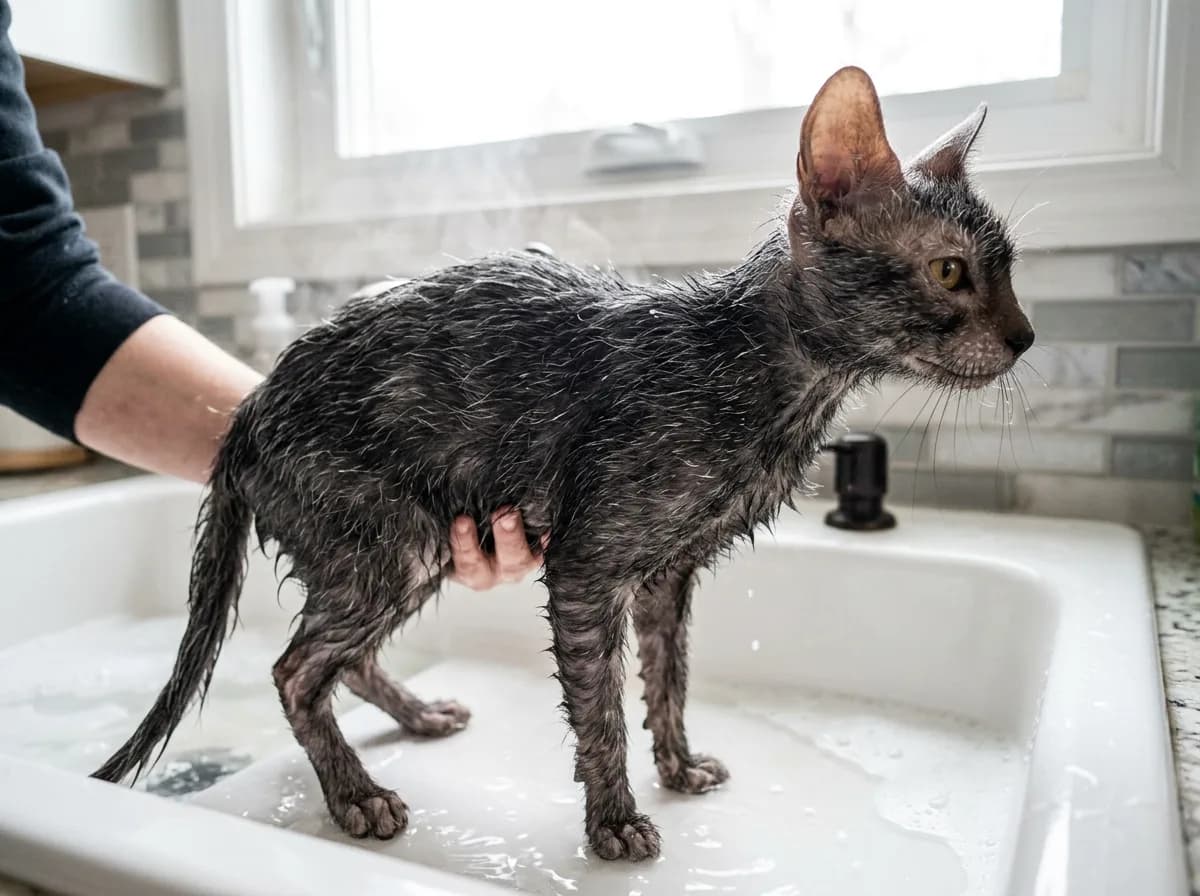
Most Lykoi do well with an occasional bath, often every few weeks to a couple of times a month, depending on how oily their skin runs. Use a gentle, cat-specific shampoo, never a human or dog product, and rinse thoroughly. The goal is to lift excess oil and any grime trapped against the skin, not to strip it bare, so over-bathing is its own mistake. Dry the cat gently and keep it warm afterward, since a wet, sparsely-coated cat chills quickly.
Ear cleaning
With less fur funneling and absorbing wax, a Lykoi's ears can collect debris faster than a typical cat's. Check them weekly and clean them only when you see buildup, using a vet-approved ear cleaner on a cotton pad, never a cotton swab pushed into the canal. Clean, odor-free ears with healthy pink skin are the target. A sudden bad smell, dark discharge, or head-shaking means a vet visit, not more home cleaning.
Walnut shell clumping cat litter that excels at odor control, lasts up to 3x longer than clay, and is a top pick for multi-cat households.
Petful may earn a commission when you click through to Chewy, at no extra cost to you.
Skin checks and nails
Because you can actually see most of a Lykoi's skin, you have a built-in early-warning system most cat owners lack. Run your hands over the body during cuddle time and look for new lumps, scabs, redness, or sore spots, and check the bare ear tips and nose for any rough or ulcerated patches. Trim nails as you would for any cat, and keep the bare areas moisturized only if your vet recommends it for a specific dry patch.
- The ear tips, nose, and eyelids of a Lykoi have the least protection and the highest long-term sun-related cancer risk, so check these spots during grooming and ask your vet about any patch that stays rough, scabbed, or ulcerated.
For readers comparing day-to-day upkeep across low-coat breeds, the maintenance rhythm here is very close to what we describe for the Cornish Rex and the Devon Rex, even though those breeds have more hair than a Lykoi.
Are Lykoi Cats Hypoallergenic?
Short answer: no, and this is one of the most important myths to retire. People assume that because a Lykoi has so little hair, it must be safe for allergy sufferers. The biology does not support that hope.
The main cat allergen is a protein called Fel d1, produced mostly in a cat's saliva and skin glands, not in the hair itself. When a cat grooms, it spreads Fel d1-laden saliva across its body, and the protein then sheds into the environment on skin flakes and the hair that is present. A Lykoi makes Fel d1 like any other cat. On top of that, the breed actively molts and sheds loose hair during its coat cycles, so there is real hair in the home, just less of it overall.
- Cat allergies are driven by the Fel d1 protein from saliva and skin, which every cat including the Lykoi produces, so a sparse coat lowers the amount of shed hair but does not make the cat hypoallergenic.
That said, some individual allergy sufferers do report milder reactions to low-coat cats simply because there is less hair carrying the allergen around the house. That is a personal, unpredictable response, not a breed guarantee. If you have allergies and your heart is set on a Lykoi, the only honest test is to spend extended time with an adult cat of the breed before committing, ideally over several visits. No breeder can promise you an allergy-free cat, and any who does is overselling.
How Long Do Lykoi Cats Live?
The typical Lykoi lifespan is about 12 to 15 years, squarely in the normal range for a domestic shorthair and a direct reflection of the breed's underlying health. Because the Lykoi descends from sturdy random-bred domestic cats and has been screened by its founders, it does not carry the lifespan-shortening inherited conditions seen in some heavily line-bred pedigrees.

108-oz stainless steel pet fountain with quiet pump and water-level window. Bengals are notoriously water-obsessed; a flowing fountain encourages hydration and pulls them away from sinks and toilets.
Petful may earn a commission when you click through to Chewy, at no extra cost to you.
As with any cat, the practical levers that actually extend a Lykoi's life are within an owner's control: keeping the cat indoors or safely contained, staying current on veterinary checkups and vaccines, feeding an appropriate complete diet, preventing obesity, and addressing dental disease, which is common across all cats and easy to overlook. Give a Lykoi the same conscientious care you would give any beloved cat, plus the skin-and-sun attention its coat demands, and it has every reason to reach the upper end of that range.
Choosing and Living With a Healthy Lykoi
The biggest single factor in your future cat's health is the breeder, not the breed. Because the Lykoi is uncommon and demand is high, with waitlists common and pricing often in the range of roughly 1,500 to 2,500 US dollars and sometimes higher, the market attracts both excellent dedicated breeders and opportunists. A responsible breeder screens their breeding cats, raises kittens in the home, is transparent about the breed's real care needs, and welcomes your questions about lineage and health testing. If you want a fuller picture of cost and what drives it, see our breakdown of Lykoi cat price.
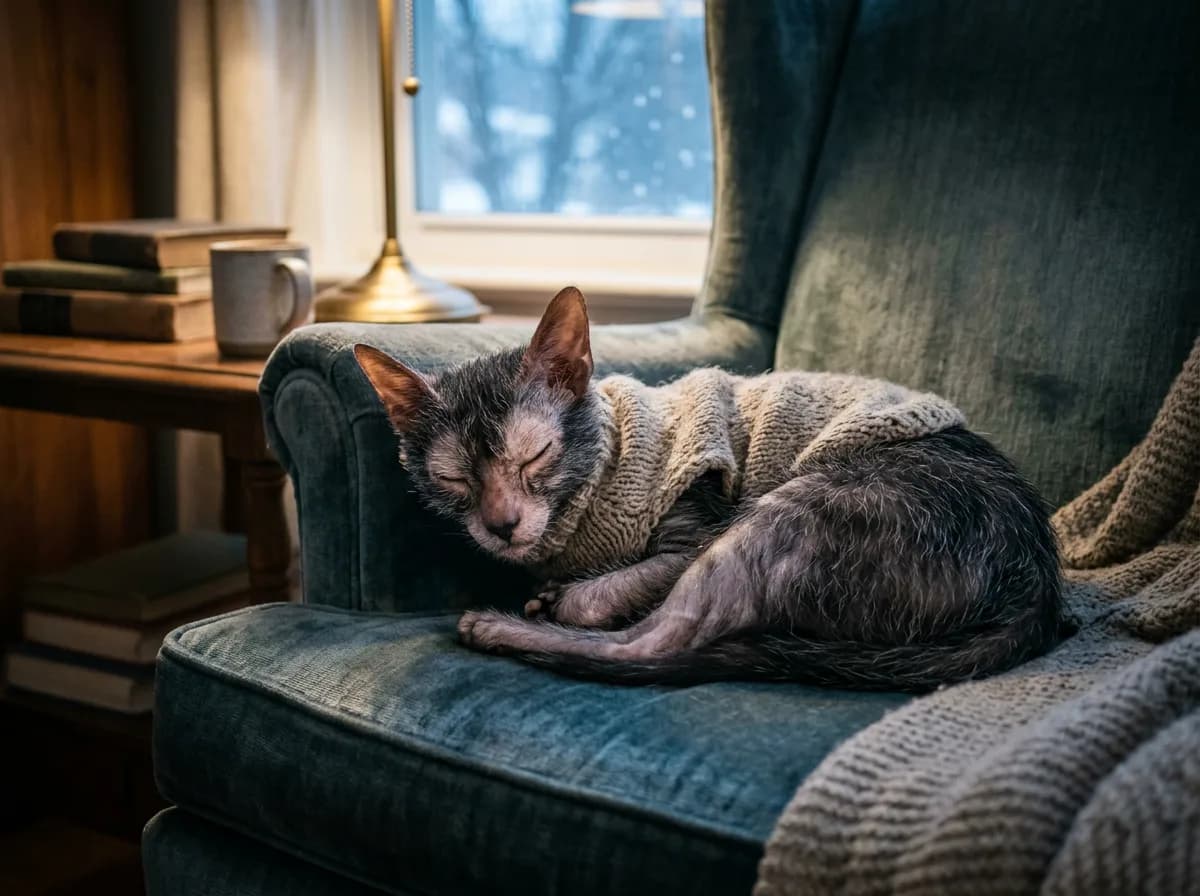
Once home, a Lykoi is reported to be an affectionate, dog-like, people-oriented cat. From a health standpoint, your job is straightforward: an indoor or carefully supervised life to protect that bare skin from sun, cold, and predators, a simple skin-and-ear care routine, routine veterinary care, and a quality diet. Do those things and you are giving the breed exactly what its genetics ask for.
- Since the Lykoi has no major inherited disease, the surest way to a healthy cat is choosing a transparent breeder who screens their cats, raises kittens in the home, and is honest about the breed's skin and sun care needs.
The Bottom Line on Lykoi Cat Health
If you take one thing from this guide, let it be this: the Lykoi looks far more fragile than it is. The science is reassuring, a young but well-studied breed, born from a natural recessive mutation, with no documented inherited disease beyond a benign skin condition, and a normal 12-to-15-year lifespan. The "diseased" and "Down syndrome" labels are misunderstandings, not diagnoses. What the breed genuinely needs is skin care, sun and cold protection, and a thoughtful breeder, the same honest commitment any cat deserves, just pointed at its remarkable coat. For the full breed picture beyond health, our main Lykoi cat profile ties together appearance, personality, and care in one place.
Frequently Asked Questions
Not breed-specific ones beyond a benign skin condition. A 2020 genetics study in the journal Genes found no health concerns in the Lykoi other than lymphocytic mural folliculitis, the follicle change tied to its coat. The practical issues owners manage, oily skin, sunburn risk, and chill, all stem from the sparse coat, not from inherited disease.
About 12 to 15 years, the same as a typical domestic shorthair. The breed descends from sturdy random-bred cats and was health-screened by its founders, so it does not carry the lifespan-shortening conditions seen in some heavily line-bred pedigrees.
This is a fair question to ask of any novelty breed. The case in the Lykoi's favor is that the coat comes from a natural, spontaneous mutation rather than human engineering, the founders screened for hidden health defects and found none, and the cats live normal healthy lives with attentive skin and sun care. The strongest ethical lever is choosing a transparent, health-focused breeder over an opportunist.
The Lykoi is not that breed. Cats with the heaviest documented inherited-disease burdens tend to be heavily line-bred pedigrees, for example breeds prone to inherited heart disease or kidney disease, not natural-mutation breeds like the Lykoi, whose only breed-linked finding is a benign skin condition.
It is a general guide for any newly adopted cat, including a Lykoi: roughly 3 days to decompress and hide, 3 weeks to settle into a routine, and 3 months to feel fully at home. For a sparse-coated Lykoi, use that settling period to also establish a gentle bathing, ear-cleaning, and warmth routine.
It is the same adoption guideline, 3 days, 3 weeks, 3 months, describing how long a cat typically needs to decompress, learn the household routine, and become fully comfortable. The phrasing varies but the meaning is identical for a Lykoi as for any cat.
Cats, Lykoi included, show affection through slow blinks, head bunting, kneading, following you around, and relaxed body language. The Lykoi is often described as especially people-oriented and dog-like, so expect a breed that seeks out closeness and warmth, which also helps a sparse-coated cat stay cozy.
No single meat is universally forbidden, but raw or undercooked pork and any raw meat carry the highest risk of dangerous bacteria and parasites for cats, so they should be avoided. Feed a Lykoi a complete, balanced, properly prepared diet rather than raw scraps, which supports the healthy lifespan the breed is capable of.
BVMS, MRCVS
Dr. Pippa Elliott, BVMS, MRCVS, is a veterinarian with nearly 30 years of experience in companion animal practice. Dr. Elliott earned her Bachelor of Veterinary Medicine and Surgery from the University of Glasgow. She was also designated a Member of the Royal College of Veterinary Surgeons. Married with 2 grown-up kids, Dr. Elliott has a naughty Puggle named Poggle, 3 cats and a bearded dragon.
Sign up for expert-backed reviews and safety alerts all in one place.